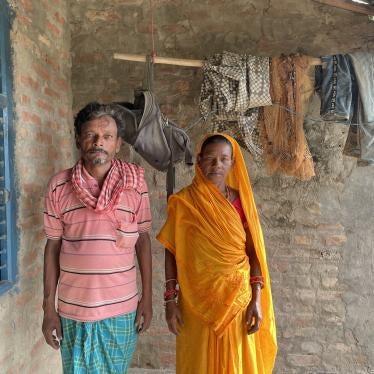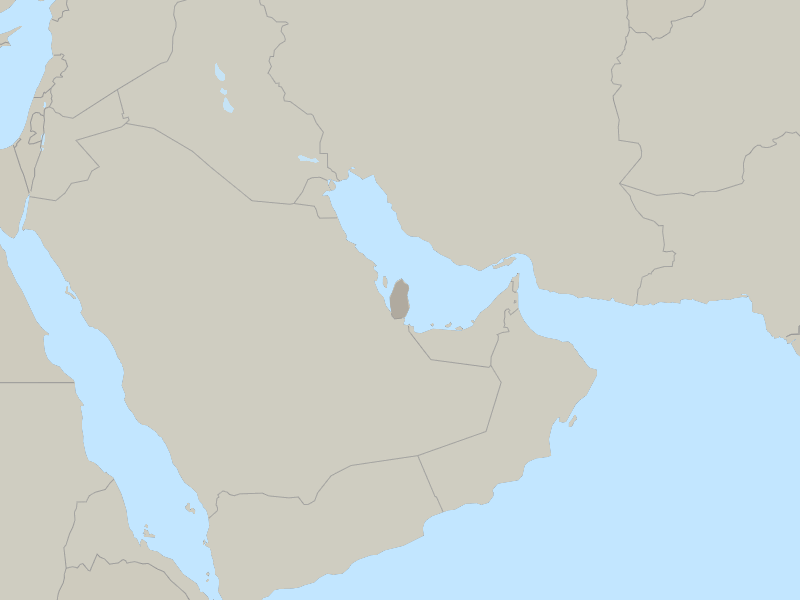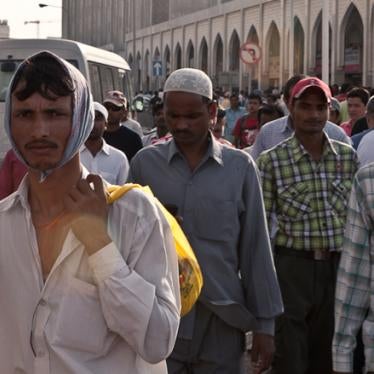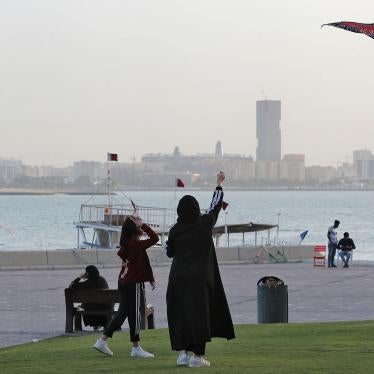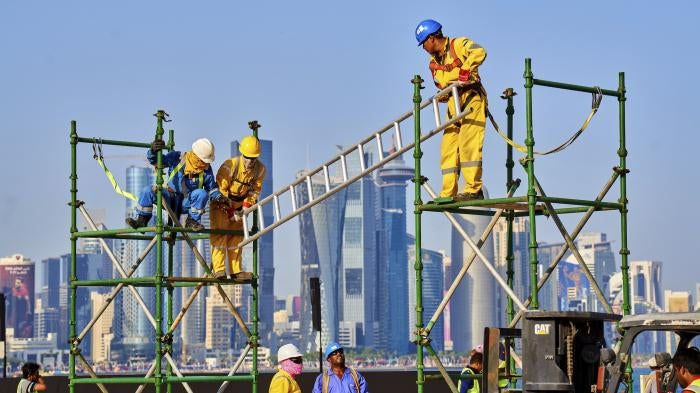

• In 2012, Qatar’s population grew nearly 5 percent, to 1.95 million, primarily due to an influx of foreign labor for the booming construction sector in advance of the 2020 World Cup. Qatar has the highest ratio of non-citizens to citizens in the world, with nationals comprising approximately 12 percent of the population. Forced labor and human trafficking are serious problems. A new draft media law was passed that may jeopardize Qatar's reputation as a center for media freedom, and a poet was sentenced to life imprisonment. Local media tend to self-censor, and the law permits criminal penalties, including prison terms, for defamation.

  • Feb 7, 2013
    Qatar has not delivered on its pledges to improve migrant workers’ rights, Human Rights Watch said today at a news conference in Doha about its World Report 2013. More than two years after it won the right to host the 2022 World Cup, It is high time for Qatar to deliver on its promises for reforms to prevent the trafficking and forced labor of migrant workers, Human Rights Watch said. The Qatar Supreme Committee for Qatar 2022 – the tournament’s quasi-governmental delivery committee – has made encouraging pledges on workers’ rights, but these lack detail. Nor do they mask the failure of the Qatari authorities either to reform exploitative laws, such as the kafala system of sponsorship-based employment and the prohibition on trade unions, or to enforce the prohibition on illegal recruitment fees and the confiscation of passports.
  • Dec 4, 2012
    A Qatari court’s life sentence for the poet Muhammad Ibn al-Dheeb al-Ajami after a grossly unfair trial flagrantly violates the right to free expression. Putting Ibn al-Deeb on trial badly undermined Qatar’s efforts to present itself as a free speech haven.

Reports

Qatar

  • Feb 7, 2013
    Qatar has not delivered on its pledges to improve migrant workers’ rights, Human Rights Watch said today at a news conference in Doha about its World Report 2013. More than two years after it won the right to host the 2022 World Cup, It is high time for Qatar to deliver on its promises for reforms to prevent the trafficking and forced labor of migrant workers, Human Rights Watch said. The Qatar Supreme Committee for Qatar 2022 – the tournament’s quasi-governmental delivery committee – has made encouraging pledges on workers’ rights, but these lack detail. Nor do they mask the failure of the Qatari authorities either to reform exploitative laws, such as the kafala system of sponsorship-based employment and the prohibition on trade unions, or to enforce the prohibition on illegal recruitment fees and the confiscation of passports.
  • Dec 4, 2012
    A Qatari court’s life sentence for the poet Muhammad Ibn al-Dheeb al-Ajami after a grossly unfair trial flagrantly violates the right to free expression. Putting Ibn al-Deeb on trial badly undermined Qatar’s efforts to present itself as a free speech haven.
  • Oct 30, 2012
    Qatar’s ruler should not approve a draft media law unless loosely worded provisions penalizing criticism of Qatar or neighboring governments are removed.
  • Sep 6, 2012
    We are writing to you to express our concerns over the continued detention of Qatari poet Muhammad Ibn al-Dheeb al-Ajami, and the inconsistency of this action with Qatar’s international obligations and its burgeoning global reputation as a center for media freedom.
  • Jul 12, 2012
    The Qatari government routinely and rigorously enforces some of its laws - those that grant employers extensive control over migrant workers. Its most problematic regulations include the kafala system of sponsorship-based employment, which ties workers to one employer; and an exit visa requirement, which allows employers to prevent workers from leaving the country without their permission.
  • Jun 12, 2012
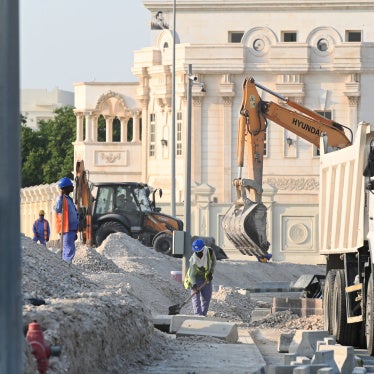
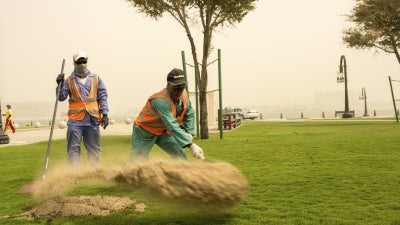
    Hundreds of thousands of mostly South Asian migrant construction workers in Qatar risk serious exploitation and abuse, sometimes amounting to forced labor. Both the government and the Fédération Internationale de Football Association (FIFA) need to make sure that their commitments to respect workers’ rights in preparation for the 2022 World Cup are carried out. Construction contractors should also make specific, public commitments to uphold international labor standards.
  • Oct 5, 2011
    The stench of mold in the dormitory was overpowering. A dozen bunk beds hugged the perimeter, lest one centimeter of potential sleeping space be wasted. Wooden planks served as mattresses for some of the men who called that barrack home.This was not a prison or a housing complex in one of the world’s poorer regions. It was a company-built dormitory for Bangladeshi workers in the state of Qatar, the world’s wealthiest nation in terms of gross domestic product per capita. And it took only 15 minutes to get there from Doha’s breathtaking downtown.
  • Jun 8, 2011
    Iman Obeidi became famous in March when she burst into the Rixos Hotel in Tripoli and accused Libyan forces of raping her. She was quickly taken by authorities, but eventually found her way to Qatar to seek refugee status in the West. Last week, Qatari authorities inexplicably sent her back to Libya. She has since begun the process of moving to the U.S., where she will apply for refugee status. Her story has highlighted a growing problem – the use of rape as a tool in war zones. [Note: This interview took place before news broke that Obeidi is headed to the U.S.]
  • Jun 5, 2011
    The call was urgent, the news shocking: Qatar, a close US ally and supporter of the NATO campaign in Libya, had forced a Libyan woman who said she was raped onto a plane back to Libya.
  • Jun 2, 2011
    The Qatari government forcibly returned Eman al-‘Obeidy, a recognized refugee, to rebel-held Benghazi in eastern Libya on June 2, 2011, Human Rights Watch said today. Al-‘Obeidy and the UN High Commissioner for Refugees (UNHCR) both repeatedly protested her forcible return but were ignored, Human Rights Watch said.