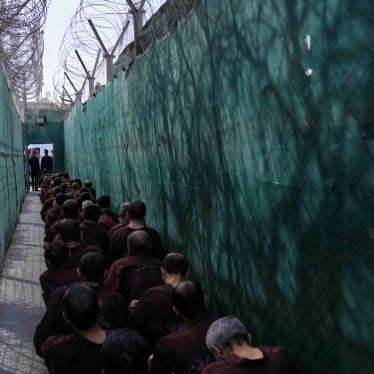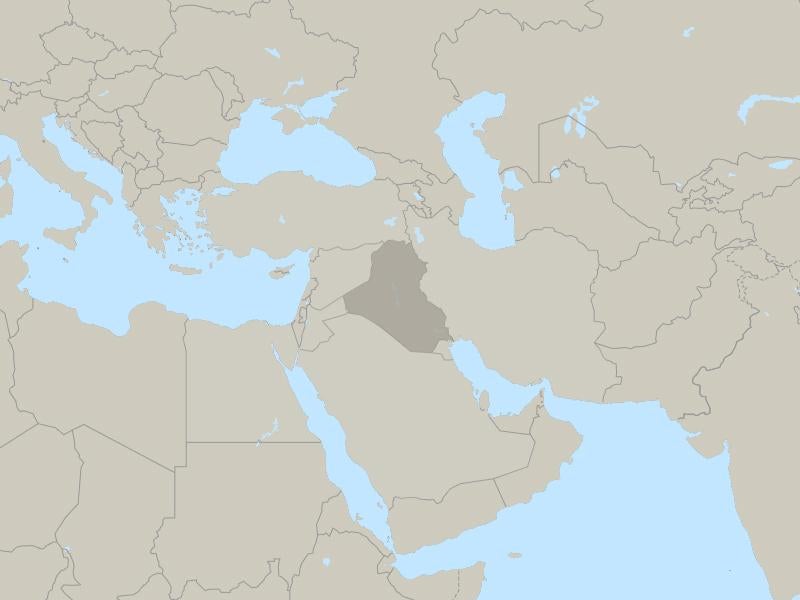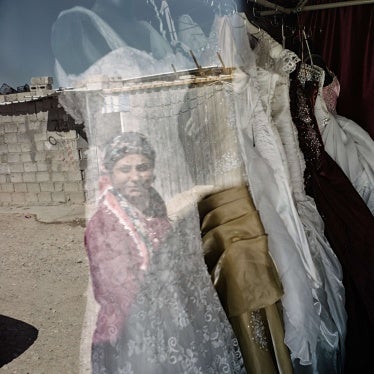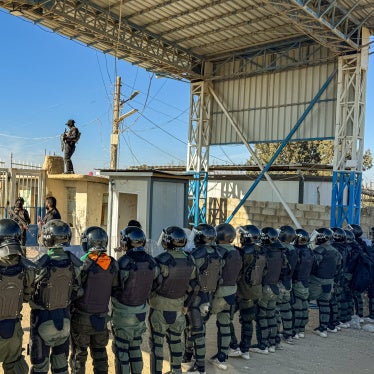
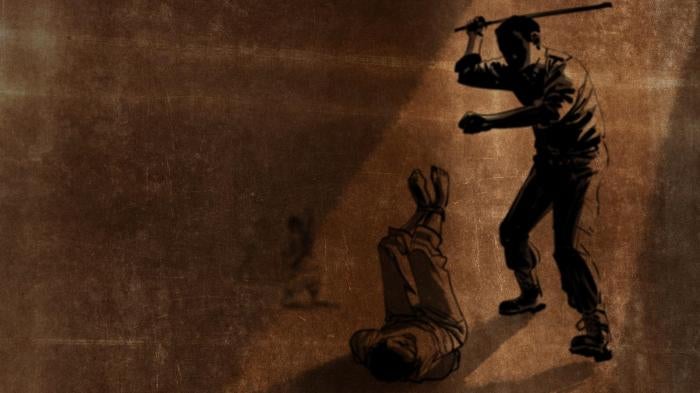
• Human rights conditions in Iraq remain poor, particularly for detainees, journalists, activists, and women and girls. Security forces continued to arbitrarily detain and torture detainees, holding some in secret jails. Iraq security forces respond to peaceful protest with intimidation, threats, violence, and arrests. Journalists and media organizations critical of the government face harassment. A new law criminalizing human trafficking has yet to be effectively implemented, and the Kurdistan Regional Government has not taken steps to implement a 2011 law banning female genital mutilation. Hundreds of civilians and police were killed in bomb attacks by armed groups and other violence amid a political crisis that has dragged on since December 2011.
  • Iraq’s media commission should immediately reverse the license suspensions for ten satellite television stations and allow them to continue broadcasting. A senior official has admitted the suspension was not according to any law, nor could the commission produce any evidence of direct incitement to violence by any of the stations, leading to the conclusion that the suspension was arbitrary.

Featured Content

Reports

Iraq

  • Apr 30, 2013
    Iraq’s media commission should immediately reverse the license suspensions for ten satellite television stations and allow them to continue broadcasting. A senior official has admitted the suspension was not according to any law, nor could the commission produce any evidence of direct incitement to violence by any of the stations, leading to the conclusion that the suspension was arbitrary.
  • Apr 25, 2013
    A striking increase in executions in Iraq points out the failure of Iraq’s justice system to meet international fair trial standards.
  • Apr 24, 2013
    Iraqi authorities should ensure that a promised investigation into a deadly raid on April 23, 2013, in Haweeja, near Kirkuk, examines allegations that security forces used excessive and lethal force.
  • Mar 19, 2013
    After 10 years, Washington should have learned that it cannot improve a government's human rights conduct when it joins that government in demonstrating indifference to basic rights.
  • Mar 19, 2013
    On the 10th anniversary of the fall of Saddam Hussein, violence and political crisis plague Iraq. The government blames its problems on regional interference, the unceasing threat of terrorism and the specter of Saddam Hussein’s Baathism. Implicit in their thinking is the idea that rights violations are justified by the state’s responsibility to prevent terrorism.
  • Mar 19, 2013
    The US legacy in Iraq reflects abuses committed with impunity by American and Iraqi forces throughout the US-led occupation. The abuses set in motion over 10 years ago by the Bush administration’s ‘torture memos,’ and the brutal detention policies that followed, facilitated Iraq’s creation of a system that is today either unwilling or incapable of delivering justice to its citizens.
  • Mar 15, 2013
    Iraqi authorities should order an immediate, transparent, and independent investigation into lethal police and army shootings of anti-government protesters on March 8, 2013, and others in recent weeks. The authorities should also ensure that those responsible for unlawful killings or excessive force are brought to justice.
  • Feb 14, 2013
    Iraqi authorities should complete promised investigations into the army killings of nine protesters in Fallujah on January 25, 2013, and make the results public. The authorities need to ensure that there will be independent investigations into the deaths, in addition to the promised inquiries by a parliamentary committee and the Defense Ministry, and that if there is evidence of unlawful killing, those responsible are prosecuted.'
  • Feb 10, 2013
    Iraq's semi-autonomous Kurdistan Regional Government (KRG) should stop arbitrarily detaining journalists, activists, and political opposition figures, and end its prosecution of journalists for insulting or defaming public figures. The Asayish – the Kurdistan Security Agency – and police arrested without warrants journalists and others who published articles criticizing public officials, and detained them without charge or trial for periods ranging from several weeks to a year.
  • Jan 31, 2013
    Iraq’s leadership used draconian measures against opposition politicians, detainees, demonstrators, and journalists, effectively squeezing the space for independent civil society and political freedoms in Iraq, Human Rights Watch said today in its World Report 2013.