• Jun 4, 2013
    Oral statement
    Human Rights Watch is deeply concerned by the escalating level of violence in Syria.In particular, we express grave concern for the safety of the remaining civilian population in al-Qusayr as well as wounded and captured fighters on all sides. Local opposition activists told Human Rights Watch that recent government attacks on fleeing civilians, including a reported attack on May 31, have made it difficult to escape and put remaining civilians, including many wounded, at great risk.
  • May 17, 2013
    Press release
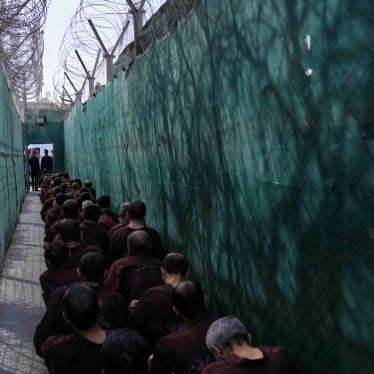
    Government security branches in Raqqa city hold documents and potential physical evidence indicating that detainees were arbitrarily detained and tortured there while the city was under government control. Human Rights Watch researchers visited the State Security and Military Intelligence facilities in Raqqa, now under the de facto control of local armed opposition groups, in late April 2013.
  • May 13, 2013
    Press release
    Human Rights Watch has reviewed graphic evidence that appears to show a commander of the Syrian opposition “Independent Omar al-Farouq” brigade mutilating the corpse of a pro-government fighter. The figure in the video cuts the heart and liver out of the body and uses sectarian language to insult Alawites. The same brigade was implicated in April 2013 in the cross-border indiscriminate shelling of the Lebanese Shi’a villages of al-Qasr and Hawsh al-Sayyed
  • May 13, 2013
    Commentary
    Even by the standards of Syria's ever-worsening stream of atrocity and massacre videos, the latest footage from the country cannot fail to shock for its sheer savagery. The video, posted on May 12 but filmed on March 26 near the Syrian town of Qusayr, on the border with Lebanon, opens by calmly filming a rebel commander cutting open the chest of what we assume is a deceased pro-Bashar al-Assad fighter, removing his heart and liver with surgical precision and sang-froid.
  • Apr 30, 2013
    Commentary
    Syrian men don’t usually cry. But for Yasser, the memory of his son, Mohammed, hurt too much. Sitting in the dark inside his shop on a bustling market street in Aleppo, the 63-year-old, hunched over in his chair, kept asking me: “Why did he deserve to die that way?” Yasser’s grief over his son who was apparently executed is shared by far too many Syrians caught up in this grisly war.
  • Apr 26, 2013
    Press release
    New Syrian government air and missile strikes are causing high civilian casualties in opposition-controlled areas of Aleppo in violation of the laws of war. A Human Rights Watch team in northern Aleppo province has investigated recent attacks that killed scores of civilians and destroyed dozens of civilian homes without damaging any apparent opposition military targets.
  • Apr 16, 2013
    Commentary
    Life in Aleppo is not easy. People here have suffered from shortages of food, electricity and running water, and there has been little humanitarian assistance. The long, cold winter months were particularly rough. The only possible consolation was that there were fewer air strikes because of the cloudy, rainy weather. The government’s jets only seem to fly – and drop bombs – when the sky is blue.
  • Apr 10, 2013
    Press release
    The Syrian Air Force has repeatedly carried out indiscriminate, and in some cases deliberate, air strikes against civilians. These attacks are serious violations of international humanitarian law (the laws of war), and people who commit such violations with criminal intent are responsible for war crimes.
  • Feb 26, 2013
    Press release

    The Syrian government launched at least four ballistic missiles that struck populated areas in the city of Aleppo and a town in Aleppo governorate during the week of February 17, 2013, Human Rights Watch said today. The attacks killed more than 141 people, including 71 children, and caused immense physical destruction.

  • Feb 19, 2013
    Letter

    We write to request that your government support an initiative led by Switzerland calling on the United Nations (UN) Security Council to refer the situation in Syria to the International Criminal Court (ICC). The letter, delivered by Switzerland on January 14, 2013, points to a record of severe human rights violations in Syria with no prospect of justice at the local level, and appeals to the Security Council to therefore take up the issue of accountability. It is time Kuwait joins the over 50 nations, including Tunisia and Libya, that have supported this call and signal to all sides in Syria that the days of absolute impunity for these severe human rights violations are at an end.