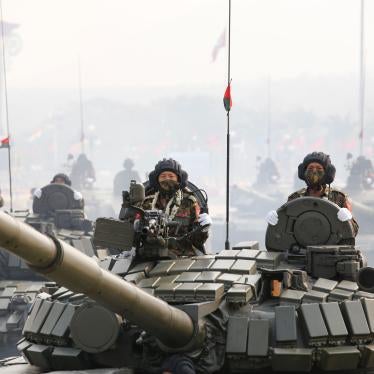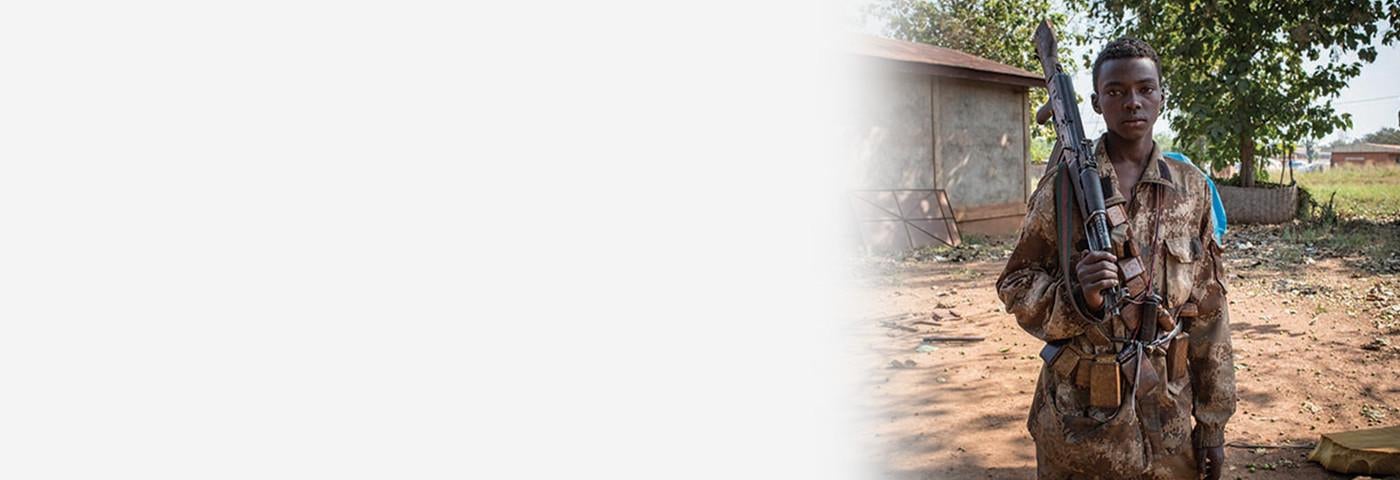

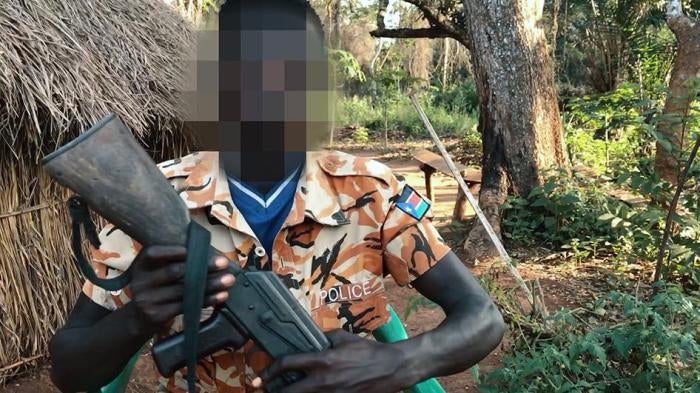
• This year, the Red Hand Campaign is pressing for universal ratification of the treaty banning the use of child soldiers. The treaty, known as the Optional Protocol to the Convention on the Rights of the Child on the involvement of children in armed conflict, prohibits the use of children under age 18 in hostilities or their forced recruitment. Since it was adopted ten years ago, 131 governments-two-thirds of the world's countries have ratified it.

Reports

Child Soldiers

  • Oct 4, 2011
    The US government should reverse its decision to continue military assistance to governments using child soldiers.
  • Apr 14, 2011
    Child soldiers recruited by the Yemeni army are now being used by a breakaway unit to protect anti-government protesters. The United States and other governments should call for an immediate end to the use of children as soldiers or in other security forces, whether for the Yemeni government or the opposition.
  • Apr 12, 2011
    Human Rights Watch, Amnesty International, Open Society Foundations, and World Vision write to President Obama regarding US implementation of the Child Soldiers Prevention Act of 2008, and specifically, the failure of your administration to fulfill its pledge to secure concrete progress by the governments of Chad, the Democratic Republic of Congo (DRC), (South) Sudan, and Yemen in ending their use of children as soldiers.
  • Feb 14, 2011
    The scale and severity of the crimes during the intense fighting in Somalia in recent months demonstrates the need for an international commission of inquiry.
  • Nov 9, 2010
    Until recently, the United States might have been considered a world leader in combating the use of child soldiers. But after events last month, children victimized in war may need to look elsewhere for help.
  • Nov 5, 2010
    A group of NGOs, including Human Rights Watch, writes to express deep disappointment with President Obama's decision to grant blanket national interest waivers and allow all forms of US military assistance to Chad, the Democratic Republic of Congo (DRC), Sudan, and Yemen, despite their continued use of child soldiers in violation of the Child Soldiers Prevention Act of 2008 (Title IV of the William Wilberforce Trafficking Victims Protection Reauthorization Act).
  • Nov 5, 2010
    The Military Commissions Act of 2009, though an improvement over the Bush-era law governing military commission proceedings at Guantanamo, has a number of problematic provisions. While in principle it bars the prosecution from relying on statements obtained via torture or other abuse, developments in the Omar Khadr trial suggest that this protection is not entirely effective.
  • Nov 4, 2010
    As I left the isolated military base Monday afternoon after the sentencing of Omar Khadr, the Canadian citizen who was only 15 when he was captured by US forces in Afghanistan, it was hard not to see decay everywhere I turned.
  • Oct 27, 2010
    As I sat watching the sentencing hearing at Guantanamo Bay of Omar Khadr, a former child soldier, I wondered how his being detained here for eight years without trial could actually be used against him. But that was the thrust of the testimony on Tuesday before the military commission of the prosecution’s expert witness on Khadr’s future dangerousness.
  • Oct 25, 2010
    The military commission sentencing jury at Guantanamo should fully take into account Omar Khadr’s status as a former child soldier captured when he was 15. According to media reports, Khadr accepted a plea deal on October 25, 2010, to purported war crimes and other charges, making the US the first Western nation since World War II to convict someone for acts committed as a child in a war crimes tribunal.