![]() | ![]() ![]() | |
|
| ||
|
|
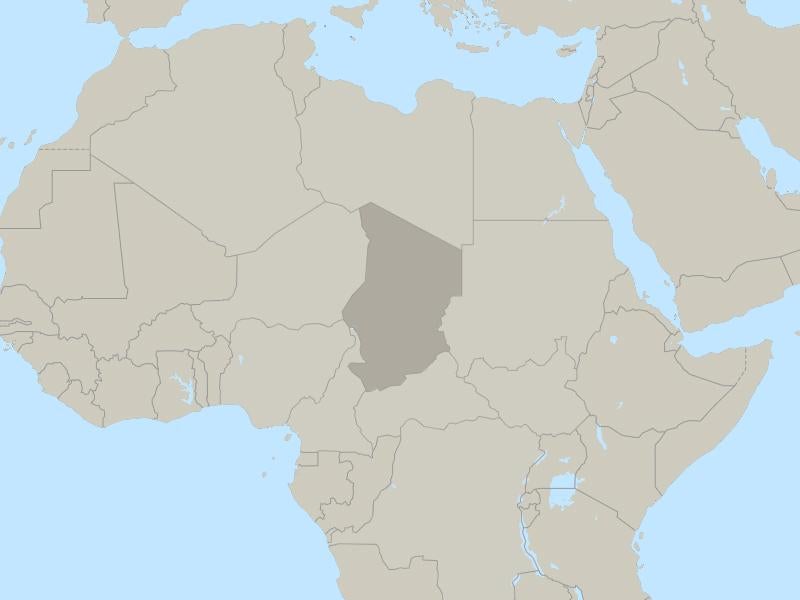
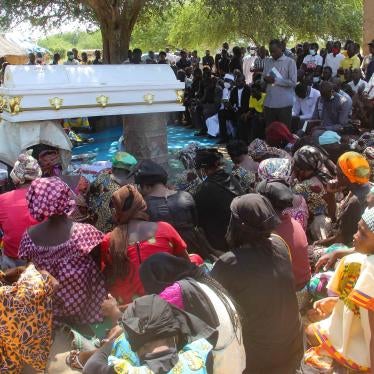
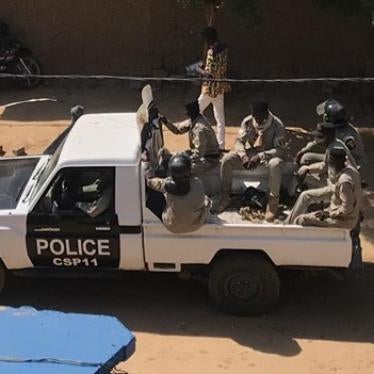
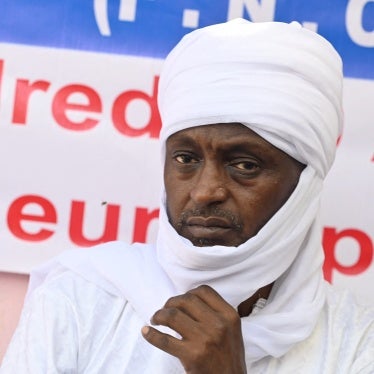
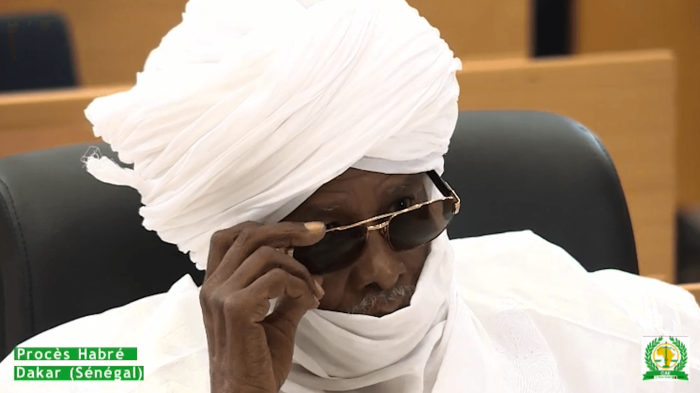
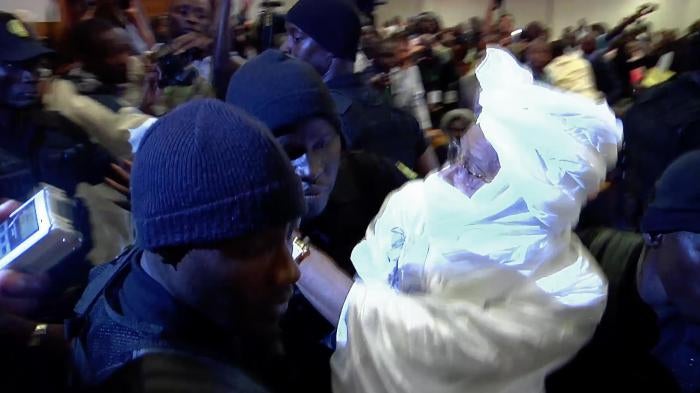
Justice comes to Chad by Reed Brody* March 20, 2002 Photographs from Judge Fransen's recent trip to Chad N'Djamena, Chad- "Since when has justice come all the way to Chad?" asked a former political prisoner three years ago when a group of torture victims discussed the idea of prosecuting the country's exiled ex-dictator Hissène Habré. Habré, who brutalized this impoeverished, landlocked African country from 1982 to 1990, was then living safely in a seaside villa across the continent in Senegal, enjoying the 14 million dollars he reportedly took from the treasury on his way out. Half covered by the Sahara desert, Chad may indeed be one of the last places one might look for justice. Its eight million people have an average annual income of about $200 and most people live by subsistence farming. An artificial state throwing together northern Muslim tribes who have ruled for the last 20 years and southern Christians who were dominant during the French colonial period, Chad has never known democracy. Indeed, Chad has never been of much interest to outsiders, except during the 1980's when France and the United States built up Habré as a Cold War rampart against the greedy Moammar Quadafi of Libya, Chad's northern neighbor. Yet, this month justice finally did come to Chad. It came in the form of a young Belgian judge, a Brussels prosecutor, four strapping police officers, and a court clerk, who arrived in this sleepy capital to investigate charges filed by Habré's victims in a Belgian court pursuant to Belgium's long-arm "universal jurisdiction" law of 1993, which permits prosecution of the worst human rights crimes no matter where they took place. Habré allegedly killed thousands of real and suspected opponents before he was deposed by his former army chief Idriss Deby, the current president. Until news of the Belgian judge's arrival was announced, few Chadians actually believed that the case against Habré would go anywhere. Two years ago, inspired by the London arrest of Chile's ex-dictator August Pinochet, a group of Habré's victims had began their quest for justice by taking the circuitous flight to Senegal to file complaints in Habré's place of exile. Even they were surprised when a bold young Senegalese judge, Demba Kandji, immediately listened to their testimony and shortly thereafter indicted Habré on charges of crimes against humanity and torture and placed him under house arrest. But then Habré's lawyer became chief advisor to the new president of Senegal, and a presidential panel removed Demba Kandji from the case, confirming the skepticism of many here regarding the much-vaunted independence of Senegal's judiciary. No one was surprised when the Senegalese courts then ruled that Habré could not be brought to justice in Senegal for crimes allegedly committed in Chad. Even though the victims immediately announced that they would seek the intervention of the international-minded Belgian courts, most Chadians thought the victims were just tilting at windmills. The actual arrival of the seven Belgians with their computers, camcorders, cameras and police equipment, however, turned the abstract case against Habré in far-off courts into a concrete reality and touched off a minor revolution in a country where Habré's most brutal henchman still occupy most of the key security posts. Many of Habré's people feared that the judge had come to arrest them, while others boldly proclaimed their innocence. Habré 's victims, meanwhile, began to line up at the courthouse to tell their stories. The judge, Daniel Fransen, and his team visited the five N'Djamena jails, including one in the presidential compound, where Habré's U.S.-trained political police, the Documentation and Security Directorate (DDS), systematically tortured prisoners. Souleymane Abdoulaye showed the judge the sweltering underground cell where, as a boy of fourteen arrested as part of a purge against Idriss Deby's Zaghawa tribe, he was crowded in with 72 other prisoners, only eleven of whom survived the near-starvation regimen. Those left alive rested their heads on the cool stomachs of the newly dead for some relief from the heat. As Abdoulaye talked, the Belgian policemen snapped photos and took measurements of the cells. Clement Abaifouta took the judge to a clearing on the outskirts of town where he was forced to dig graves for more than 500 fellow prisoners, many from the Hadjerai ethnic group, who died in custody. The judge spent a day examining the newly-unearthed files of Habré's DDS. Habré used the DDS as his personal Gestapo, filling key posts with members of his small Gorane tribe, including his nephew who was its director. The DDS files had been left strewn about the DDS headquarters until last year, when the Deby government for the first time allowed the victims and their supporters to look at them. The documents, including chilling reports to Habré on the arrest and detention of rival ethnic groups and hundreds of memos addressed to Habré on suspected political opponents, suggest that Habré was kept informed of every minor detail of the abuses his regime visited on Chad. The United States helped Habré take power in the first clandestine operation launched by Ronald Reagan's CIA chief, William J. Casey, when he took over the agency in 1981. The purpose, according to Secretary of State Alexander Haig, was to "bloody Khadaffi's nose." The United States later provided Habré with tens of millions of dollars per year in military assistance, even after it became clear that Habré was committing atrocities against his own people. According to a 1992 Chadian Truth Commission report, U.S. embassy staff visited DDS headquarters -- whose headquarters were across the street from the USAID offices -- on a regular basis, and helped train intelligence agents. One newly-discovered DDS report reveals that some of Chad's most vicious torturers went on a training mission in 1985 to the United States. Four days after the report, other documents show, several of the trainees were promoted to leadership positions with the DDS. * * * * If there is one person responsible for Judge Fransen's being here, it is probably Souleymane Guengueng. Guengueng, 54, looks just like the midranking civil servant that he is - unexeptional in every physical way, tall and thin, his face dominated by thick, owlish eyeglasses, a result of months spent in a dark cell without any light whatsoever. Guengueng, falsely accused of theft, almost died of dengue fever during two years of mistreatment in Habré's prisons, and watched hundreds of others succomb to malaria, exhaustion, malnutrition and torture. When Habré fell, Guengueng and other former prisoners founded the Association of Victims of Political Repression and Crime (AVCRP) which gathered testimony from 792 victims, widows and orphans, hoping to use them to bring Habré to justice and win compensation for the victims or their survivors. When the Deby government recycled many of Habré's accomplices, however, and made clear that it was not going to pursue justice for the victims, Guengueng hid the files underneath the mud-brick home where he lives with the 24 members of his family, including nine children. That is where the files stayed for eight years until Guengueng personally brought copies to Senegal to use in the complaints filed there. Since then, Guengueng, a deeply religious Christian, has never given up hope of seeing Habré on trial, traveling to Senegal, Belgium and France. For Guengueng, Judge Fransen's visit is already a major victory. "Everyone thought I was crazy but now they can see that justice is on the march." Since the judge's visit, dozens of victims have been visiting the AVCRP on a daily basis, asking to file complaints in Belgium or to become part of the trial. But in a ominous sign that Habré's accomplices are feeling vulnerable, Guengueng's car has been followed through N'Djamena by military officers and one night another car filled with unknown men parked in front of Guengueng's house all night. * * * * Ismael Hachim, the president of the AVCRP, couldn't stop telling his friends the story of how he had just confronted the man who had ordered his detention and torture 13 years ago. Hachim, a Zaghawa like Idriss Deby, was rounded up along with thousands of his tribesmen when Deby took up arms against Habré in 1989 and Habré unleashed his forces in a spree of arrests and killings against the Zaghawa. In 17 months in the "Piscine," a former swimming pool for French military officers transformed into an underground prison, Hachim watched scores of friends and relatives die. Like many other prisoners, Hachim was subjected to the "Arbatachar," in which a prisoner's four limbs were tied together behind his back, leading to loss of circulation and paralysis. When Hachim got out of jail upon Habré's overthrow, the three officers who took him into custody told him that it was Touka Haliki, Habré's Director of Intelligence, who had ordered his arrest and torture, but it was only last year when Hachim got a hold of his DDS files that he could be sure. Haliki, still a police supervisor, was one of those called in by Fransen to testify, and when Haliki denied involvement in the persecution of the Zaghawa, the judge called Hachim to encounter Haliki face-to-face. When Haliki still claimed his innocence, Hachim whipped out the DDS document in which Haliki ordered his arrest and another in which Haliki signed off on Hachim's interrogation. "In that moment, he became very small, and I became very tall," gloated Hachim to all who would listen. "Even if he is never prosecuted, I now feel like some justice has been done. That's what this is really about, isn't it?" * * * * Everyone here now hopes that Fransen will now seek Habré's extradition from Senegal. After the Senegalese courts said they could not try Habré, Senegal's president Abdoulaye Wade announced that he was asking Habré to leave the country. Worried that Habré would go somewhere like Iraq, where he would be out of the reach of justice, Habré's victims, led by Souleymane Guengueng, petitioned the United Nations. Responding to a plea by UN Secretary General Kofi Annan, President Wade agreed that he would hold Habré pending his extradition to a country such as Belgium where he could get a fair trial. No one thinks that a trial of Habré here in Chad would be appropriate. Indeed, after a group of victims, emboldened by Habré's arrest in Senegal, filed criminal complaints in Chad last year against a number of alleged Habré-era torturers, the office of the prosecutor handling the file was ransacked and the victims' lawyer, Jacqueline Moudeïna, was badly injured when a police squad commanded by an ex-DDS defendant threw a grenade at her. Belgium thus looks like the only place where the Chadian victims may get their day in court. Ironically, Judge Fransen's visit comes as Belgium's long-arm law is under legal and political attack, and the United States continues its assault on the emerging International Criminal Court and other forms of international justice. Last year, in a widely-acclaimed trial, four Rwandans were convicted by a Belgian jury of involvement in the 1994 genocide in their country. Since then, however, Belgian politicians have grumbled as cases have piled up against leaders such as Ariel Sharon, Yasser Arafat and Fidel Castro. In February, after the Democratic Republic of Congo challenged an arrest warrant against its foreign minister, the International Court of Justice in The Hague said Belgium had gone too far by not respecting the immunity of sitting office holders. The Habré case poses no such problems, however, because Habré is no longer in office and because both Chad, where the crimes were committed, and Senegal, where Habré resides, are ready to see him tried in Belgium. Habré's victims say rather that the Habré case shows that "universal jurisdiction" laws like Belgium's, properly applied, can be an important tool to curtail impunity for the perpetrators of the worst atrocities and provide a forum for their victims. * Reed Brody, Special Counsel with Human Rights Watch, coordinates the international campaign to bring Hissène Habré to justice.
|
|
Contribute to Human Rights Watch
Home | About Us | News Releases | Publications | Info by Country | Global Issues | Campaigns | Community | Bookstore | Film Festival | Search | Site Map | Contact Us | Press Contacts | Privacy Policy © Copyright 2006, Human Rights Watch 350 Fifth Avenue, 34th Floor New York, NY 10118-3299 USA |