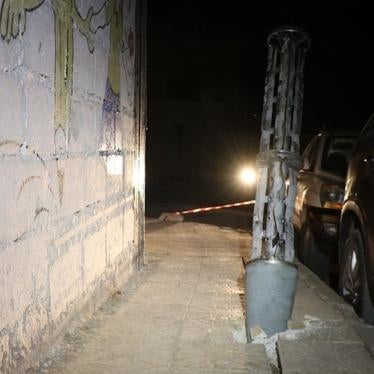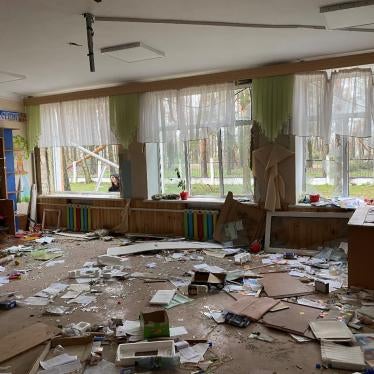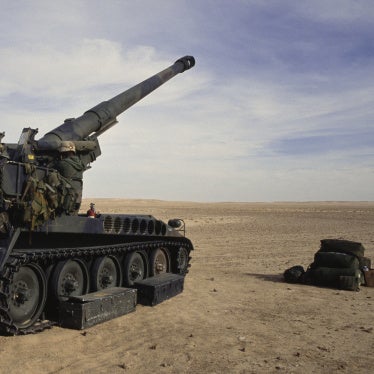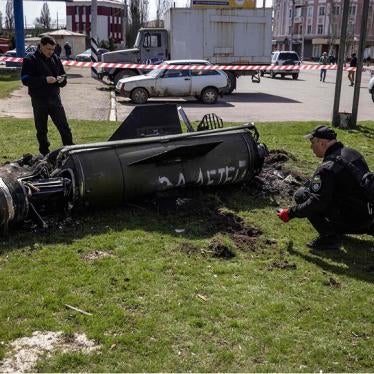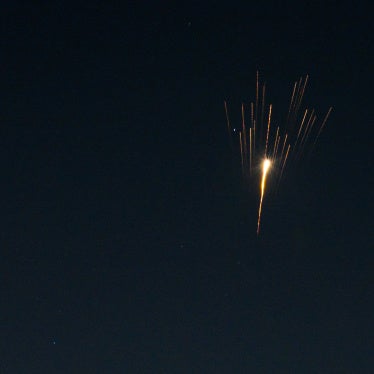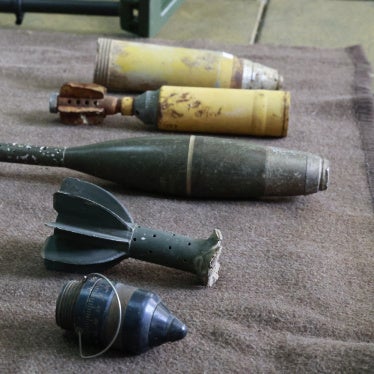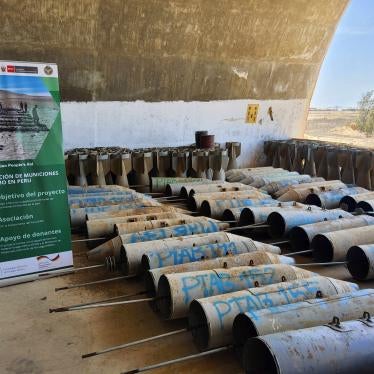
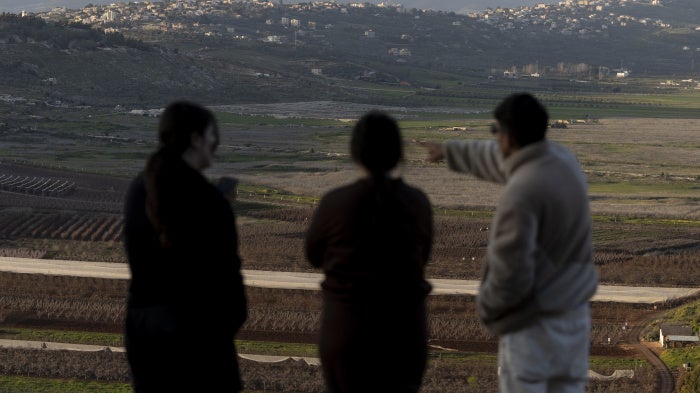
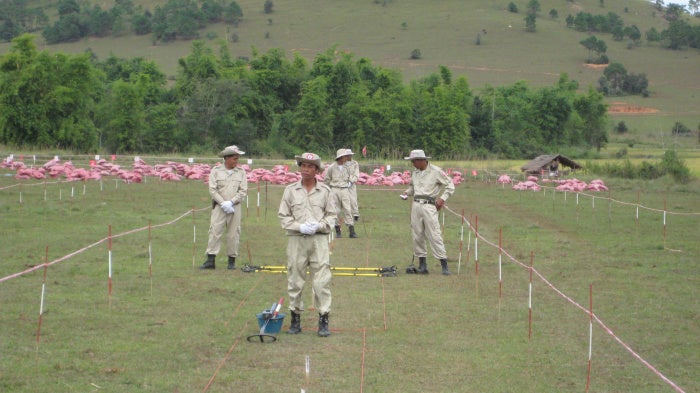
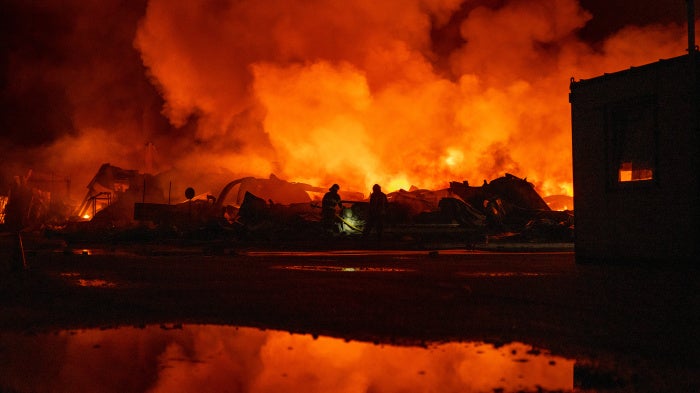
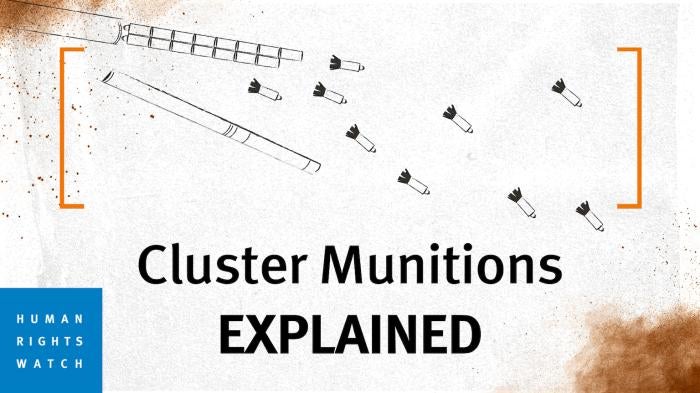
• Cluster munitions are inaccurate and unreliable weapons that by their very nature pose unacceptable dangers to civilians.  They pose an immediate threat during conflict by randomly scattering thousands of submunitions or "bomblets" over a vast area, and they continue to take even more civilian lives and limbs long after a conflict has ended, as hundreds of submunitions may fail to explode upon impact, littering the landscape with landmine-like "duds." Governments responded to this humanitarian threat by creating the 2008 Convention on Cluster Munitions, an international treaty prohibiting the use, production, stockpiling, and transfer of cluster munitions. The treaty requires destruction of stockpiles of the weapon within eight years and clearance of affected areas within 10 years, and also establishes a strong framework for assistance to cluster munition victims. More than 110 states have joined the Convention on Cluster Munitions and are working to implement its provisions. Human Rights Watch is campaigning to ensure that more states join the Convention on Cluster Munitions and that it is implemented strongly and without delay.
    Read more about which states have taken action to eliminate cluster munitions in Cluster Munition Monitor. 
     

  • May 24, 2012

    The Sudanese government should investigate the discovery of a cluster bomb in Southern Kordofan, a conflict zone hit by government bombing

  • Nov 25, 2011

    An attempt by the United States and others to weaken the comprehensive ban on cluster munitions has failed. The effort by the US and other users and stockpilers of cluster munitions to create a new protocol to the 1980 Convention on Conventional Weapons (CCW) was rejected on November 25, 2011, in Geneva after more than 50 states said there was no consensus for adopting it.  

Reports

Cluster Munitions

  • May 24, 2012

    The Sudanese government should investigate the discovery of a cluster bomb in Southern Kordofan, a conflict zone hit by government bombing

  • Apr 19, 2012

    Steve Goose, arms division director at Human Rights Watch and chair of the Cluster Munition Coalition (CMC), delivered a statement on compliance with the Convention on Cluster Munitions.  compliance comp

  • Apr 18, 2012

    Steve Goose, arms division director at Human Rights Watch and chair of the Cluster Munition Coalition (CMC), delivered a statement on cluster munitions retained for training under the Convention on Cluster Munitions. compliance comp

  • Apr 18, 2012
    Mark Hiznay, senior researcher in the Arms division, delivered a statement on Convention on Cluster Munitions stockpile destruction issues at the convention's Intersessional Meetings.
  • Nov 25, 2011

    An attempt by the United States and others to weaken the comprehensive ban on cluster munitions has failed. The effort by the US and other users and stockpilers of cluster munitions to create a new protocol to the 1980 Convention on Conventional Weapons (CCW) was rejected on November 25, 2011, in Geneva after more than 50 states said there was no consensus for adopting it.  

  • Nov 24, 2011

    Steve Goose, arms division director at Human Rights Watch and chair of the Cluster Munition Coalition (CMC), delivered a statement on the Draft CCW Protocol on Cluster Munitions.

  • Nov 23, 2011
    Steve Goose, arms division director at Human Rights Watch and chair of the Cluster Munition Coalition (CMC), delivered a statement on the Chair's Second Revised Draft CCW Protocol on Cluster Munitions.
  • Nov 21, 2011

    The proposed CCW protocol poses a threat to the ban on cluster munitions that has been much discussed and should continue to be. But the problem does not end there. The proposed protocol would also have serious implications for international law.   

  • Nov 21, 2011

    Steve Goose, arms division director at Human Rights Watch and chair of the Cluster Munition Coalition (CMC), delivered a statement on the Chair's First Revised Draft CCW Protocol on Cluster Munitions.

  • Nov 18, 2011

    The belief that the draft Protocol VI would have an immediate and significant humanitarian impact requires a leap of faith. That is because little real evidence has been presented. There have been a lot of assertions, but very few facts.