

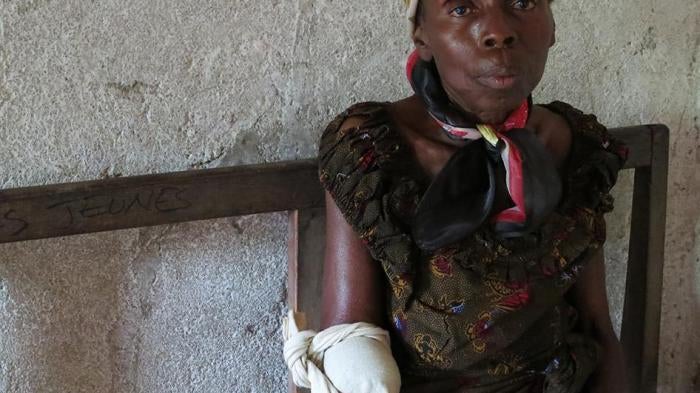
I’ve seen people get their hands cut off, a ten-year-old girl raped and then die, and so many men and women burned alive . . . So many times I just cried inside my heart because I didn’t dare cry out loud.

fourteen-year-old girl, abducted in January 1999 by the
Revolutionary United Front, a rebel group in Sierra Leone


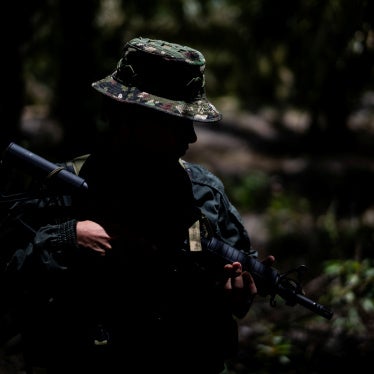
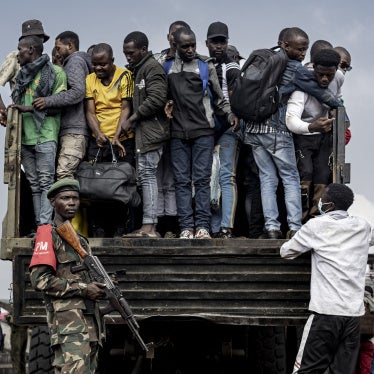
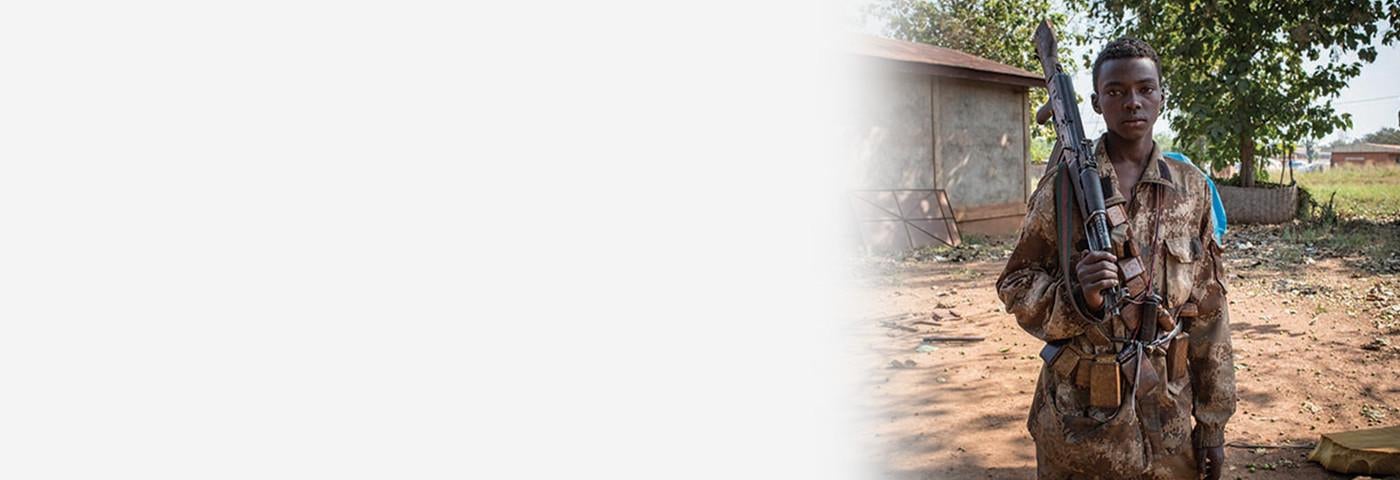
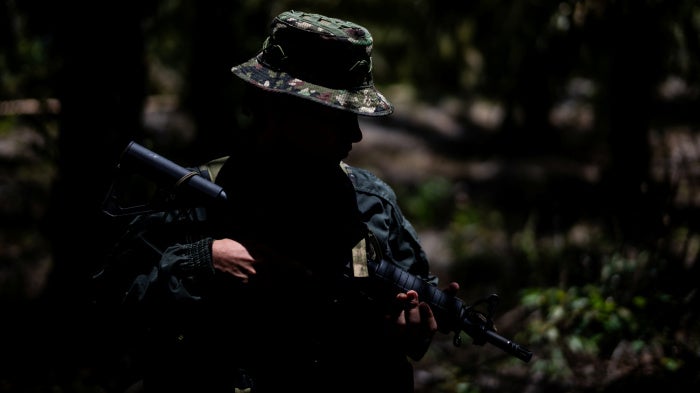
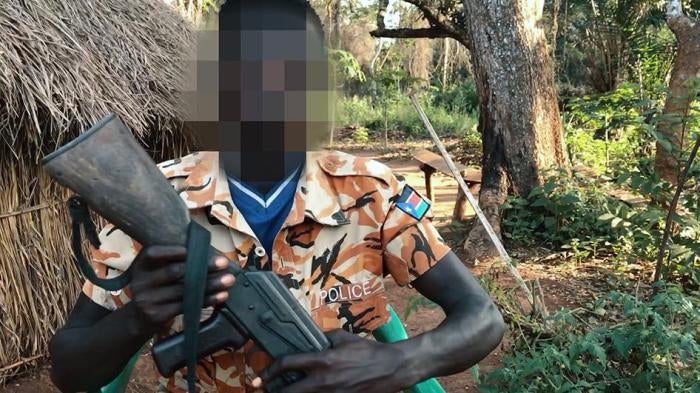
In dozens of countries around the world, children have become direct participants in war. Denied a childhood and often subjected to horrific violence, some 300,000 children are serving as soldiers in current armed conflicts. These young combatants participate in all aspects of contemporary warfare. They wield AK-47s and M-16s on the front lines of combat, serve as human mine detectors, participate in suicide missions, carry supplies, and act as spies, messengers or lookouts.
Physically vulnerable and easily intimidated, children typically make obedient soldiers. Many are abducted or recruited by force, and often compelled to follow orders under threat of death. Others join armed groups out of desperation. As society breaks down during conflict, leaving children no access to school, driving them from their homes, or separating them from family members, many children perceive armed groups as their best chance for survival. Others seek escape from poverty or join military forces to avenge family members who have been killed.

Child soldiers are being used in more than thirty countries around the world. Human Rights Watch has interviewed child soldiers from countries including Angola, Colombia, Lebanon, Liberia, Sierra Leone, Sudan and Uganda. In Sierra Leone, thousands of children abducted by rebel forces witnessed and participated in horrible atrocities against civilians, including beheadings, amputations, rape, and burning people alive. Children forced to take part in atrocities were often given drugs to overcome their fear or reluctance to fight.

In Colombia, tens of thousands of children have been used as soldiers by all sides to the country’s ongoing bloody conflict. Government-backed paramilitaries recruit children as young as eight, while guerrilla forces use children to collect intelligence, make and deploy mines, and serve as advance troops in ambush attacks.

In southern Lebanon, boys as young as twelve years of age have been subject to forced conscription by the South Lebanon Army (SLA), an Israeli auxiliary militia. When men and boys refuse to serve, flee the region to avoid conscription, or desert the SLA forces, their entire families may be expelled from the occupied zone.

Girls are also used as soldiers in many parts of the world. In addition to combat duties, girls are subject to sexual abuse and may be taken as “wives” by rebel leaders in Angola, Sierra Leone and Uganda. In Northern Uganda, Human Rights Watch interviewed girls who had been impregnated by rebel commanders, and then forced to strap their babies on their backs and take up arms against Ugandan security forces.

Under the Convention on the Rights of the Child, the definition of a child is any person under the age of eighteen, unless under the law applicable to the child majority is attained earlier. However, article 38, governing children and armed conflict, uses fifteen as the minimum age for recruitment and participation in hostilities. This low standard of protection is a glaring and troubling anomaly among the convention’s other strong provisions.

Several years after the convention’s adoption, a U.N. working group was created to draft an optional protocol to the convention, that would raise the minimum age for recruitment and participation in hostilities to eighteen. However, as the 10th anniversary of the convention’s adoption arrives, agreement on the optional protocol still has not been reached, largely because of opposition by governments who continue to recruit minors.

The United States has emerged as the most vigorous opponent of establishing eighteen as the minimum age for military service, even though fewer than 3,000 members of its 1.3 million active duty force are minors. Other Western countries also recruit under-18's, most notably the United Kingdom, where approximately forty percent of its military forces joined when they were just sixteen or seventeen years of age.

In 1996, a U.N. study on the impact of armed conflict on children, conducted by Graça Machel of Mozambique, stressed the urgent need to stop the use of child soldiers and recommended the speedy conclusion of the optional protocol. The report raised international concern about the use of child soldiers and prompted the appointment of a special representative to the secretary general on children and armed conflict in 1997. That representative, Olara Otunnu, has secured commitments not to recruit children from several parties involved in armed conflict; monitoring and enforcement of these commitments, however, has been difficult.

Efforts to stop the use of child soldiers continue to grow. In 1998, the recruitment of children under the age of fifteen and their use in hostilities was identified as a war crime in the statute of the International Criminal Court. Once established, the court will have jurisdiction to prosecute those responsible for the use of child soldiers. The use of children as soldiers has also been recognized as a child labor issue. A new international treaty banning the worst forms of child labor, adopted in June of 1999 by the International Labour Organization, prohibits the forced recruitment of children for use in armed conflicts.

In 1998, the Coalition to Stop the Use of Child Soldiers was set up in order to campaign for a strong optional protocol to the Convention on the Rights of the Child which would prohibit any recruitment or use of children under the age of eighteen in armed conflict. Formed by six international nongovernmental organizations (NGOs), the coalition now works with national campaigns in more than thirty countries around the world, mobilizing political will and public pressure for an end to the use of children as soldiers. Its activities have included a series of high profile regional conferences focused on the use of children as soldiers in Africa, Latin America, and Europe.

Despite this growing momentum, efforts to stop the use of child soldiers have not yet reached fruition. The recruitment of child soldiers continues around the world, those responsible for their recruitment escape justice, and key governments continue to resist efforts to establish and enforce the prohibitions necessary to end the use of children as soldiers.
Introduction
The Use of Children as Soldiers
The International Criminal Court
Refugee Children
Police Abuse and Arbitrary Detention of Street Children
Children in Conflict with the Law
Orphans and Abandoned Children
Child Labor
Sexual Abuse and Exploit Color ation
Education
Conclusion
Convention on the Rights of the Child
Related Publications
Coalition to Stop the Use of Child Soldiers
Impact of Armed Conflict on Children
Report of Graça Machel, Expert of
the Secretary General of the United Nations
Swedish Save the Children database
on children and war
U.S. Campaign to Stop the Use of Child Soldiers
United Nations High Commissioner for Human Rights
contains relevant international human rights treaties
United Nations High Commissioner for Human Rights
contains relevant international human rights treaties
United Nations High Commissioner for Human Rights
contains relevant international human rights treaties
United Nations High Commissioner for Human Rights
contains relevant international human rights treaties


HRW Home Page