

![]() |
||||||||||||
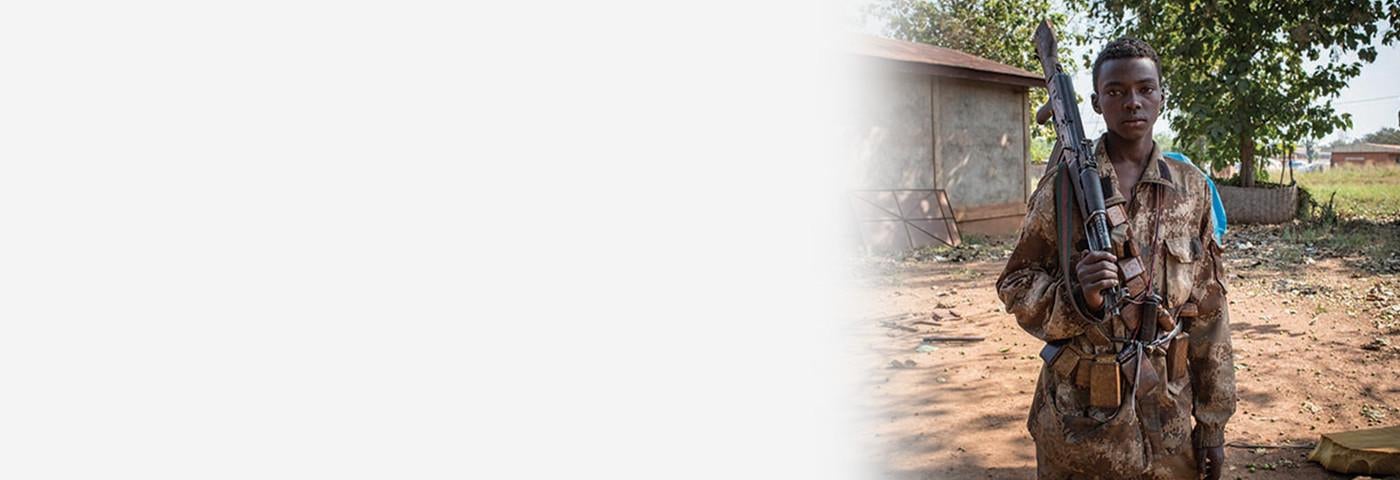
| On July 17, 1998, in Rome, delegates representing 160 countries voted by an overwhelming majority to establish a permanent International Criminal Court (ICC) to try persons charged with committing war crimes, crimes against humanity, and genocide. Upon its establishment, the court will provide a powerful deterrent to the conscription, enlistment, or use in hostilities of children under the age of fifteen years conduct defined as a war crime in the ICC statute. The treaty also includes other important measures to protect children in armed conflict: it recognizes intentional attacks on educational institutions as a war crime, provides special arrangements for children as victims and witnesses, and exempts children below the age of eighteen from prosecution by the court. The ICC treaty gives the court jurisdiction over the war crime of conscripting children under the age of fifteen years into national armed forces or armed groups, or using them to participate actively in hostilities. In drafting the treaty, the delegates agreed that the terms using and participate would prohibit not only childrens direct participation in combat, but also their active participation in military activities linked to combat such as scouting, spying, sabotage, and the use of children as decoys, couriers, or at military checkpoints. Also prohibited would be the use of children in direct support functions such as carrying supplies to the front line. Despite appeals by UNICEF and others to make the recruitment and participation in hostilities of children under the age of eighteen, rather than fifteen, a war crime, the ICC treaty reflects the lower standard set by the Protocols Additional to the Geneva Conventions. The protocols, which govern the treatment of civilians and prisoners of war during armed conflict, protect only children under the age of fifteen from recruitment or participation in hostilities. During the debates over the ICC treaty, several countries pointed out that their own armed forces allowed children under the age of eighteen to enlist voluntarily. As with the efforts to adopt an optional protocol to the U.N. Convention on the Rights of the Child, these countries proved unwilling to bring their domestic legislation and practice into compliance with a higher standard. In other respects, the ICC treaty substantially advances international law relating to the protection of children in armed conflict and the prosecution of violence against children. The treatys list of war crimes includes intentional attacks on educational institutions and schools among other civilian buildings, which have been frequently targeted in recruitment drives or as part of campaigns to terrorize civilian populations. In addition, the treaty acknowledges the need for judges with legal expertise on violence against women and children, and requires the appointment of prosecution advisors having such expertise. Because child victims or witnesses may be vulnerable to secondary traumatization, the treaty authorizes closed proceedings in their cases and the presentation of evidence by electronic or other special means. A major breakthrough at the Rome conference was the delegates agreement that children under the age of eighteen would not appear before the court as defendants. Many states had previously supported setting an age of criminal responsibility below eighteen, or allowing the court discretion to try minors based on subjective criteria such as the defendants maturity. Human Rights Watch and other NGOs successfully argued that the extraordinary nature and punitive function of the ICC was incompatible with the rehabilitative goals of international juvenile justice standards. The ICC will come into existence once sixty countries have ratified the treaty, a process that could take several years. As of mid-September 1999, however, eighty-six countries had indicated their intent to ratify by signing the treaty, and four countries had already ratified it. The United States has indicated that it will oppose the treatys ratification unless some form of veto power is reserved for the state of nationality of the accused a condition that would leave the court unviable. While the treaty that emerged from the Rome conference was weaker in some areas than most NGOs favored, it nevertheless represents a landmark achievement for the international community. The court, if successfully realized, could help end the impunity that often accompanies the commission of war crimes, crimes against humanity, and genocide. It could also strengthen national legal systems and greatly extend the protections for children in armed conflict. NGOs and other concerned associations can help realize the early establishment of the court by calling on their governments to ratify the treaty and by raising public awareness of the ICC. |
||||||||||||
|
||||||||||||
|
||||||||||||