

![]() |
|||||||||
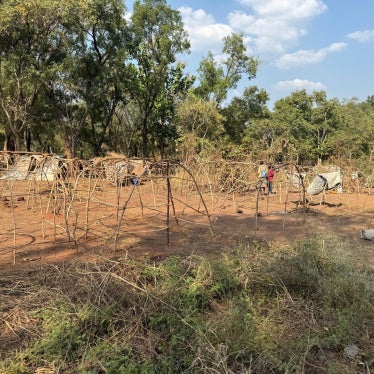
Education is a fundamental right for all children, guaranteed by articles 28 and 29 of the Convention on the Rights of the Child. The goal of universal primary level education has not yet been reached, but many advances have been made. Overall primary enrollment has risen around the world, and the gender gap in primary enrollment has declined, with girls enrollment approaching parity with boys in many parts of the world, although completion rates are still lagging. Nevertheless, 130 million children of school age in the developing world 21 percent of all school age children in the world had no access to basic education in 1998 and millions more received substandard educations resulting in little learning. An estimated 855 million people today are functionally illiterate as a result of having been denied an education as children. Often the denial of education is directly linked to civil and political rights violations of children such as the illegal employment of children in hazardous and exploitative labor, the detention of children in prisons, and discrimination against children from ethnic, linguistic or religious minority groups, or based on gender, disability, or other status. Thus effective protection of children requires addressing these rights issues for children simultaneously. Human Rights Watch has been particularly concerned with the impact of the lack of decent education on groups who are already marginalized including street children, children in detention, minority children, orphans, child laborers, children affected by armed conflicts, including refugee children, gay and lesbian children, and girls. Children in all of these groups are frequently vulnerable to other types of human rights violations as well and, without education, face even poorer prospects for their future. Children in poor rural areas often face economic barriers to education that may seem insurmountable. In many communities, even if school fees are not a problem, the cost of a pencil or clothing can keep a child from school. Girls in many countries are frequently kept at home, away from school, to do domestic work, or simply because education of girls is not valued. Among Sierra Leonean refugee children in Guinea, Human Rights Watch found that some girls were permitted to attend school but few were able to get an education. Many testified that they were only able to attend school one or two days a week because they had to work on other days. Girls are frequently pulled out of school to work once they reach adolescence. A refugee teacher in Guinea explained that parents know that girls are more useful in the homes, more careful with small children. Girls make up two out of every three children of school age in the developing world who do not receive a primary education (73 million of the 130 million out-of-school children). Children in detention, including street children whose only crime may be vagrancy, are frequently denied access to education while in the states custody. Even the few who do have access rarely receive an appropriate education. In Pakistan, detained children have access to some education but only 10 percent pass a standard examination at the conclusion of tenth grade. The reasons they do not succeed include the dismal conditions of schools in the facilities, emphasis on religious rather than secular subjects, and the fact that many of these children come from poor backgrounds and had little access to education before their detention. Children detained in adult criminal facilities, as is frequently the case in many states in the United States, may have no access to any education at all. Children belonging to ethnic minorities in many countries are likewise especially at risk of being denied access to adequate education. In some countries, they may be relegated to substandard educational facilities, poorer quality of instruction, fewer teaching materials, and fewer opportunities for higher education than for the rest of the population. In the Czech Republic and Bulgaria, Roma children, commonly referred to as gypsies, are disproportionately confined to schools designated for mentally retarded children. Minority children are also sometimes denied the right to speak their own language or to practice their own culture in schools, in violation of article 30 of the Convention on the Rights of the Child. The content of instruction may also be used to advance political goals of the state at the expense of development of the childs fullest potential and respect for the childs cultural, religious, or ethnic identity. In Tibet, for example, the Chinese government has taught Tibetan children the backwardness of Tibetan culture in comparison to Han Chinese culture, to promote state and ethnic unity in China. Children in orphanages may also face extreme hurdles to gaining an education. In Russia, Human Rights Watch has found that the state conducts an examination of children at age four, using what experts have found to be an extremely unreliable and flawed methodology, to determine their lifetime potential. If classified as oligophrenic, or ineducable at age four, children are condemned to life in a facility where their right to education will be permanently denied. For many children, violence is a regular part of their school experience. Human Rights Watch found that teachers in Kenya used caning, slapping, and whipping to maintain classroom discipline and to punish children for poor academic performance. The infliction of corporal punishment is often routine, arbitrary, and brutal. In extreme cases, beatings by teachers have caused children to drop out of school altogether or have left children permanently disfigured, disabled, or dead. Students perceived to be gay, lesbian, bisexual, or transgendered too often experience school as a place that accepts intolerance, hatred, ostracization, and violence against youth who are perceived as different. For the most part, school officials refuse to intervene to protect these students, and what begins as harassment may escalate to physical violence. Students who are subjected to harassment and violence at the hands of their peers frequently suffer from depression, low self-esteem, and an inability to focus on schoolwork; a 1989 U.S. Department of Health and Human Services study concluded that gay, lesbian, bisexual, and transgendered youth are two to three times more likely to attempt suicide than their heterosexual counterparts. The denial of education in and of itself can be devastating for children. Whats more, it can lead to continued denial of their rights as children and, later, as adults. Without access to education, for example, many children have no choice but to continue working under exploitative, hazardous conditions, and have little hope of ever participating fully in the political life in their societies. Proper education could give children hope for the future and skills to ensure that they have options in life besides living on the streets, laboring under exploitative, hazardous or abusive conditions, or a life of crime. |
|||||||||
|
|
|||||||||
|
|||||||||