

![]() | ![]() ![]() | |
|
| ||
|
|
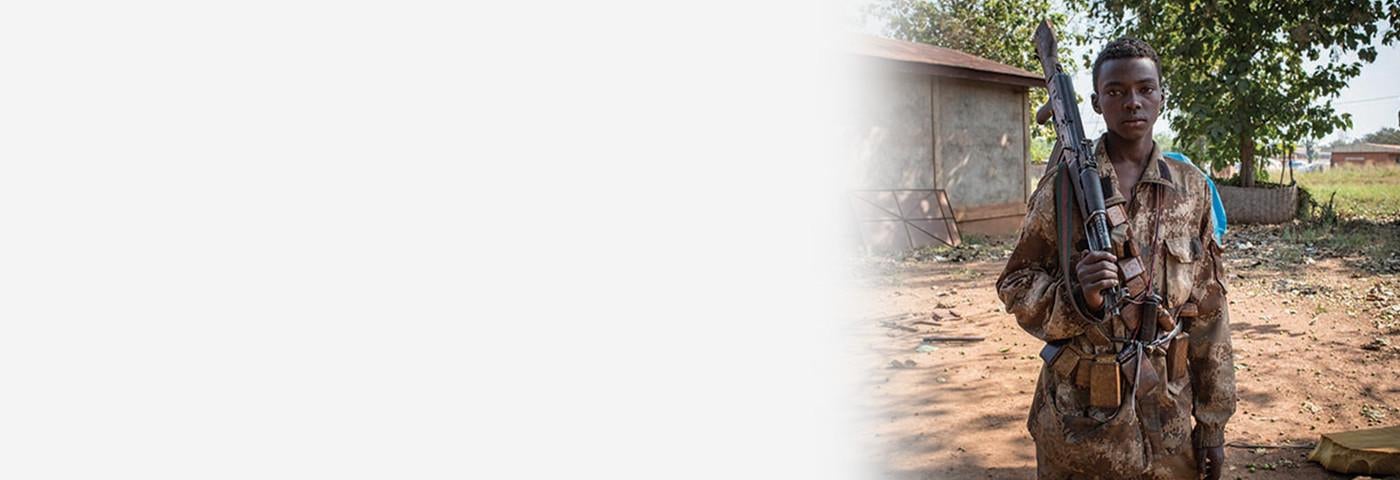
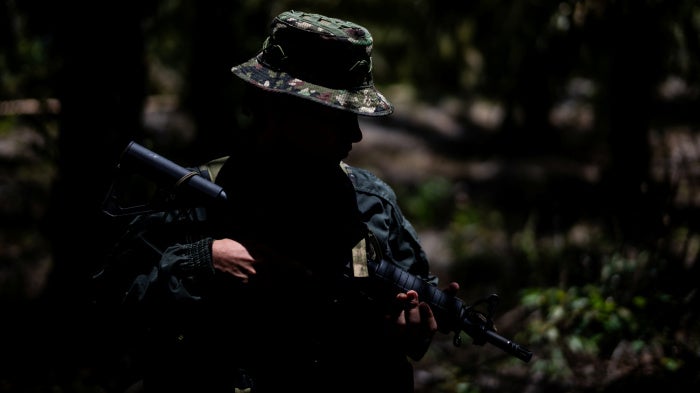
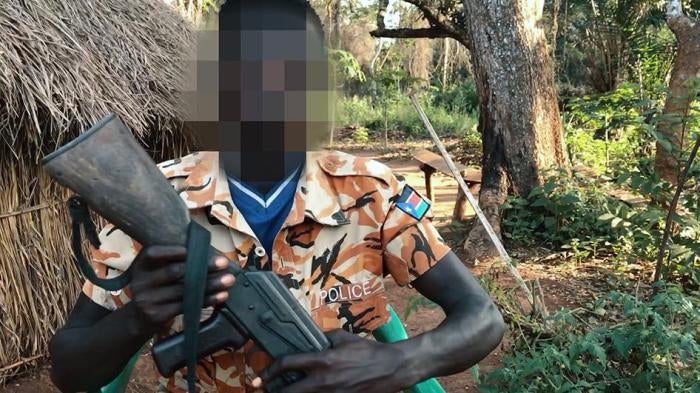
Recent Human Rights Watch Reports On The Use Of Child Soldiers Africa Letting Them Fail: Government Neglect and the Right to Education for Children Affected by AIDS October 2005 Governments in sub-Saharan Africa have failed to address the extraordinary barriers to education faced by children who are orphaned or otherwise affected by HIV/AIDS. An estimated 43 million school-age children do not attend school in the region. HIV/AIDS has caused unprecedented rates of adult mortality, leaving millions of children without parental care to ensure their access to education. While providing limited support to community efforts that support orphans, governments have failed to address the unique disadvantages faced by AIDS-affected children, with the result that these children are less likely than their peers to enroll, attend, or advance in school. This form of de facto discrimination places AIDS-affected children—whether orphans or those whose parents are terminally ill—at higher risk of sexual exploitation, unemployment, hazardous labor, and other human rights abuses, as well as at higher risk of HIV infection. More Sri Lanka Living in Fear: Child Soldiers and the Tamil Tigers in Sri Lanka February 2004 For Tamil families in the North and East of Sri Lanka, the February 2002 cease-fire that has brought an end to the fighting between the government and the Liberation Tigers of Tamil Eelam (LTTE) has brought little relief from one of the worst aspects of the twenty-year conflict: the LTTE’s recruitment and use of children as soldiers. Despite an end to active hostilities and repeated pledges by the LTTE leadership to end its recruitment of children, the practice has continued not only in LTTE controlled areas, but now reaches into government areas in the North and East where the LTTE previously had little access. This report focuses on continued LTTE recruitment of children during the cease-fire period, including re-recruitment of children released from the LTTE’s eastern faction in 2004. More LIBERIA How to Fight, How to Kill: Child Soldiers in Liberia February 2004 How to Fight, How to Kill:Child Soldiers in Liberia, doucments how more than 15,000 child soldiers fought on all sides of the Liberian civil war, and that many units were composed primarily of children. The report argues that establishing a firm peace in the West African nation will depend on the successful reintegration of child soldiers into civil society. The report details the many abuses committed against child soldiers and the violations that children were forced to commit against civilians-as described by the children themselves. These children, who were often victims of abuse, became fierce fighters in Liberia's civil war. Many were beaten upon recruitment and given scant training before being sent to the frontlines. Some were also used as porters and laborers charged with looting from the civilian population. More CHILD SOLDIER USE 2003: A Briefing for the 4th UN Security Council Open Debate on Children and Armed Conflict January 2004 Throughout 2003 thousands of children were deployed as combatants, to commit abuses against civilians, as sex slaves, forced labourers, messengers, informants and servants in continuing and newly erupting conflicts. Children were usually used to perform multiple roles, and girls in particular often acted as combatants as well as being sexually exploited. More COLOMBIA "You'll Learn Not to Cry": Child Combatants in Colombia September 2003 More than 11,000 children fight in Colombia's armed conflict, one of the highest totals in the world. Both guerrilla and paramilitary forces rely on child combatants, who have committed atrocities and are even made to execute other children who try to desert. The first comprehensive report published on this issue, "You'll Learn Not to Cry":Child Combatants in Colombia, documents how Colombia's illegal armies have recruited increasing numbers of children in recent years. Only Burma (Myanmar) and the Democratic Republic of Congo are believed to have significantly larger numbers of child combatants than Colombia. More ANGOLA Forgotten Fighters: Child Soldiers in Angola April 2003 Child soldiers who fought in the Angolan civil war have been excluded from demobilization programs. April mark 2003 marked the one-year anniversary of the agreement that brought peace to mainland Angola in 2002. Both the largest opposition group, National Union for the Total Independence of Angola (UNITA), and the government used child soldiers in the war. Children's rights groups have estimated that as many as 11,000 children were involved in the last years of the fighting. Some children received weapons and arms training and fought in the conflict. Many others acted as porters, cooks, spies and laborers. More UGANDA Stolen Children: Abduction and Recruitment in Northern Uganda March 2003 Children are abducted in record numbers by the Lord's Resistance Army (LRA) in northern Uganda and subjected to brutal treatment as soldiers, laborers, and sexual slaves. Since June of 2002, an estimated 5,000 children have been abducted from their homes and communities-a larger number than any previous year of the sixteen-year-old conflict and a dramatic increase from the less than 100 children abducted in 2001. More BURMA "My Gun Was as Tall as Me" Child Soldiers in Burma October 2002 Burma is believed to have more child soldiers than any other country in the world. The overwhelming majority of Burma's child soldiers are found in Burma's national army, the Tatmadaw Kyi, which forcibly recruits children as young as eleven. These children are subject to beatings and systematic humiliation during training. Once deployed, they must engage in combat, participate in human rights abuses against civilians, and are frequently beaten and abused by their commanders and cheated of their wages. Refused contact with their families and facing severe reprisals if they try to escape, these children endure a harsh and isolated existence. Children are also present in Burma's myriad opposition groups, although in far smaller numbers. Some children join opposition groups to avenge past abuses by Burmese forces against members of their families or community, while others are forcibly conscripted. Many participate in armed conflict, sometimes with little or no training, and after years of being a soldier are unable to envision a future for themselves apart from military service. More ISRAEL/OCCUPIED WEST BANK AND GAZA STRIP/PALESTINIAN AUTHORITY TERRITORIES Erased in a Moment Suicide Bombing Attacks Against Israeli Civilians October 2002 This 170-page report is the first full-fledged examination of individual criminal responsibility for suicide bombings against civilians in Israel and the Israeli-occupied territories. The report, Erased in a Moment: Suicide Bombing Attacks against Israeli Civilians, also provides the most thorough study to date of the suicide bombing operations of Hamas, Islamic Jihad, the al-Aqsa Martyrs' Brigades and the Popular Front for the Liberation of Palestine (PFLP), the groups that have claimed responsibility for almost all recent suicide bombings. The report documents several cases of children carrying out suicide bombings, and calls on all armed groups to end all recruitment or use of children under the age of eighteen. It also calls on the Palestinian Authority to take all feasible measures to prevent the recruitment and use of children, including the adoption of legal measures to criminalize such practices. More WORLD REPORT 2002 Global efforts to end the use of child soldiers continued to advance during the year. Following the United Nations' adoption in May 2000 of a new treaty to end the participation of children under the age of eighteen in armed conflict (an optional protocol to the Convention on the Rights of the Child), the number of countries signing the treaty grew to eighty-seven, and the number of ratifications increased to ten. Having achieved the ten ratifications needed, the protocol will enter into force on February 12, 2002. GLOBAL REPORT 2001 More than half a million children are recruited into government forces and armed groups in more than 87 countries, the Coalition to Stop the Use of Child Soldiers said today in a new global survey. At least 300,000 of these children are actively fighting in 41 countries. BURUNDI TO PROTECT THE PEOPLE The Government-sponsored "self-defense" program in Burundi December 2001 The transitional government of Burundi, installed November 1, inherited an eight-year-old civil war in which the government clashed with two armed opposition movements, the Force for the Defense of Democracy (Forces pour la Défense de la Démocratie, FDD) and the National Liberation Force (Forces Nationales pour la Libération, FNL). The rebel groups did not participate in the protracted negotiations that produced the new government, a carefully engineered compromise among political parties and between the two major ethnic groups of Burundi, the majority Hutu and the minority Tutsi. The FDD and FNL are predominantly Hutu while the government, the army, and the business community have been dominated by Tutsi. More DEMOCRATIC REPUBLIC OF CONGO Democratic Republic of Congo: Reluctant Recruits: Children and Adults Forcibly Recruited for Military Service in North Kivu Report, May 2001 The Use of Child Soldiers in the Democratic Republic of Congo HRW Campaign Page The war that broke out in August 1998 in the Democratic Republic of Congo has been marked by widespread recruitment of child soldiers by both President Kabila's forces and the rebel Congolese Rally for Democracy. BURUNDI: Emptying the Hills: Regroupment Camps in Burundi July 2000 Beginning in late September 1999, the Tutsi-dominated government of Burundi began forcing civilians in the area around the capital into so-called "protection sites" or "regroupment camps". Burundian authorities claimed the measure was intended to protect the civilians, most of them Hutu, from attack by the rebel National Liberation Forces (Forces Nationales pour la Libération, FNL) who were becoming increasingly well-entrenched in the area. In fact, they meant to deprive the FNL of support from local people who helped them, sometimes willingly, sometimes under duress. LEBANON Civilians Expelled from Lebanon for Refusal to Serve in Militia July 1999 In southern Lebanon, boys as young as twelve years of age have been subject to forced conscription by the South Lebanon Army (SLA), an Israeli auxiliary militia. When men and boys refuse to serve, flee the region to avoid conscription, or desert the SLA forces, their entire family may be expelled from the occupied zone. COLOMBIA Child Soldiers Used by All Sides in Colombia's Armed Conflict October 1998 Guerrillas call child combatants "little bees" (abejitas), able to sting before their targets realize they are under attack. Paramilitaries call them "little bells" (campanitas), referring to their use as an early-alarm system. SIERRA LEONE New Regime, but Continued Human Rights Violations: Despite Promises, the Use and Abuse of Child Soldiers Continues in Sierra Leone July 1998 Between February and June 1998, both the government's Civilian Defense Forces and the ousted Armed Forces Revolutionary Council (AFRC) and the Revolutionary United Front (RUF) continued to use children on a large scale in Sierra Leone. UGANDA The Scars of Death: Children Abducted by the Lord's Resistance Army in Uganda September 1997 Background and action suggestions on one of the most egregious examples of the use of child soldiers -- the abduction of some 10,000 children by the Lord's Resistance Army in Northern Uganda. BACK TO: Children's Rights > Stop the Use of Child Soldiers! |
|
||||||||||||||||||||||||||||||
|
Contribute to Human Rights Watch
Home | About Us | News Releases | Publications | About HRW | Info by Country | Global Issues | Campaigns | Free Mailing Lists | Community | Store | Film Festival | Search | Site Map | Contact Us | Press Contacts | Privacy Policy © Copyright 2006, Human Rights Watch 350 Fifth Avenue, 34th Floor New York, NY 10118-3299 USA |