Reports

School Fees and other Barriers to Education in Liberia

The 75-page report, “‘Without Education, There Will Be Nothing’: School Fees and Other Barriers to Education in Liberia,” documents that mandatory fees—despite a legal guarantee of free and compulsory education for grades 1 to 9—place a heavy financial burden on families and violate children’s right to education. Children in Liberia often enroll in school years late and are sent home when their parents are unable to pay their fees, or work to help pay them. Many drop out entirely or never attend school.

Photo of schoolchildren at their desks
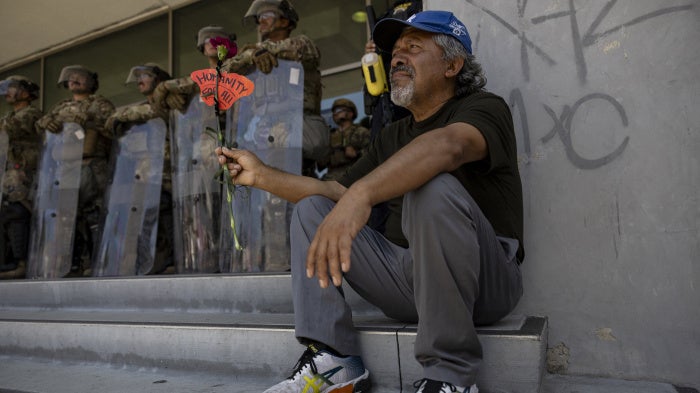
A man holds a flower and the message "Humanity for All" in front of a line of soldiers

Search

  • July 20, 2020

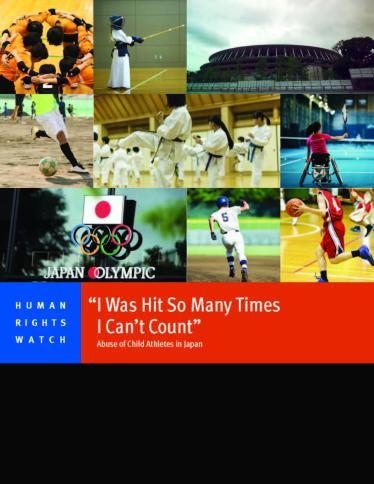
    Abuse of Child Athletes in Japan

    The 67-page report, “‘I Was Hit So Many Times I Can’t Count’: Abuse of Child Athletes in Japan,” documents Japan’s history of corporal punishment in sport – known as taibatsu in Japanese – and finds child abuse in sports training throughout Japanese schools, federations, and elite sports. In interviews and a nationwide online survey, Japanese athletes from more than 50 sports reported abuses that included being punched in the face, kicked, beaten with objects like bats or bamboo kendo sticks, being deprived of water, choked, whipped with whistles or racquets, and being sexually abused and harrassed.

    video content
    Japan sports report cover
  • July 8, 2020

    Young People, Sexual Health Education, and HPV in Alabama

    The 65-page report, “‘It Wasn’t Really Safety, It Was Shame’: Young People, Sexual Health Education, and HPV in Alabama,” documents the Alabama state government’s failure to provide young people with comprehensive, inclusive, and accurate information on sexual and reproductive health. Human Rights Watch also found that the state is not addressing barriers to the human papillomavirus (HPV) vaccine – an effective tool to prevent several types of cancer – and that vaccination rates throughout Alabama remain low.

    video content
    202006us_alabama_sexed_cover
  • June 30, 2020

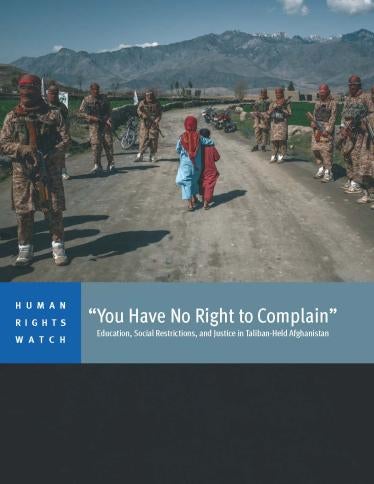
    Education, Social Restrictions, and Justice in Taliban-Held Afghanistan

    The 69-page report, “‘You Have No Right to Complain’: Education, Social Restrictions, and Justice in Taliban-Held Afghanistan” focuses on the everyday experiences of people living in Taliban-held districts and Taliban restrictions on education, access to information and media, and freedom of movement. The Taliban’s widespread rights abuses in areas it controls raise concerns about their willingness and ability to keep commitments on rights in any future peace agreement

    map content
    202006mena_afghanistan_education_cover
  • June 26, 2020

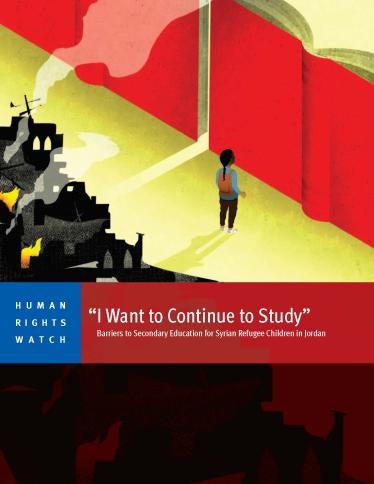
    Barriers to Secondary Education for Syrian Refugee Children in Jordan

    The 61-page report, “‘I Want to Continue to Study’: Barriers to Secondary Education for Syrian Refugee Children in Jordan,” documents increasingly difficult obstacles to education the further Syrian refugee children progress in school, with enrollment rates collapsing from nearly 90 percent in primary classes to just 25 to 30 percent in secondary school, according to governmental and United Nations data. With UN support, Jordan has created humanitarian education plans for Syrian refugees that aim to increase enrollment overall, but without specific secondary-school enrollment goals. Few foreign donors support secondary education. Informal education programs hosted by nongovernmental groups only reach a tiny fraction of children, Human Rights Watch found.

    202006mena_jordan_syria_kids_cover
  • June 18, 2020

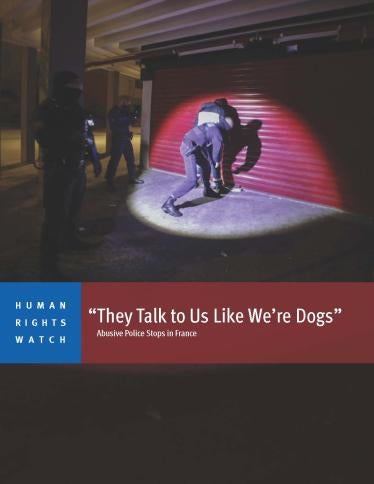
    Abusive Police Stops in France

    The 44-page report, “‘They Talk to Us Like We’re Dogs’: Abusive Police Stops in France,” documents repetitive, baseless police stops targeting minorities including children as young as 10, older children, and adults. These stops often involve invasive, humiliating body pat-downs and searches of personal belongings. Most stops are never recorded, the police don’t provide written documentation or usually tell people why they were stopped, and measures to improve accountability have been ineffective. Several of the children and adults interviewed said police used racial slurs.

    video content
    202006eca_france_police_cover
  • May 27, 2020

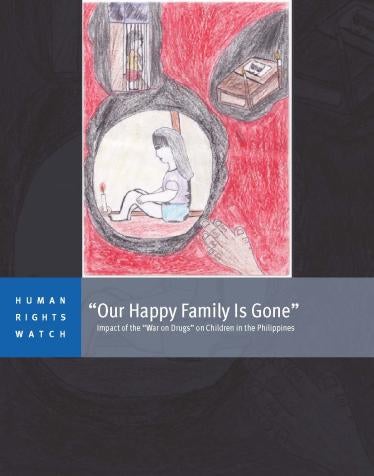
    Impact of the “War on Drugs” on Children in the Philippines

    The 48-page report, “‘Our Happy Family Is Gone’: Impact of the ‘War on Drugs’ on Children in the Philippines,” details the plight of children whose parents or guardians have been killed. Many children have suffered psychological distress, and all experienced economic hardship made worse by the death of a family breadwinner. The increased poverty and trauma have led many children to leave school or compelled them to work. Some children who lost a family member have faced bullying in their school and community. Some were forced to live on the streets.
    202005Asia_Philippines_cover
  • May 26, 2020

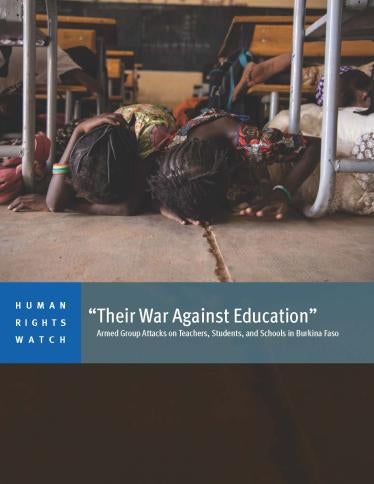
    Armed Group Attacks on Teachers, Students, and Schools in Burkina Faso

    The 102-page report, “‘Their War Against Education’: Armed Group Attacks on Teachers, Students, and Schools in Burkina Faso,” documents scores of education-related attacks by armed Islamist groups in 6 of the country’s 13 regions between 2017 and 2020. The groups have killed, beaten, abducted, and threatened education professionals; intimidated students; terrorized parents into keeping children out of school; and damaged, destroyed, and looted schools.
    photo gallery
    map content
    202005Africa_BurkinaFaso_cover
  • March 23, 2020

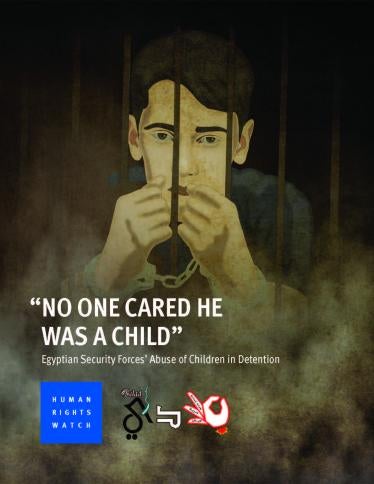
    Egyptian Security Forces’ Abuse of Children in Detention

    The 43-page report, “‘No One Cared He Was A Child’: Egyptian Security Forces’ Abuse of Children in Detention,” documents abuses against 20 children between the ages of 12 and 17 when they were arrested.


    video content
    202003mena_egypt_cover
  • March 4, 2020

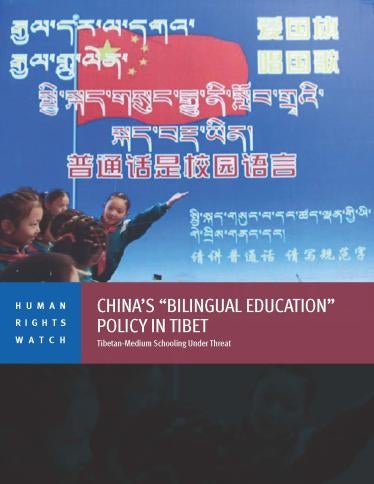
    Tibetan-Medium Schooling Under Threat

    The 91-page report, “China’s ‘Bilingual Education’ Policy in Tibet: Tibetan-Medium Schooling Under Threat,” examines the Chinese government’s rollback of minority education rights in Tibet under the guise of improving access to education. It highlights compulsory “bilingual” kindergartens that immerse Tibetan children in Chinese language and state propaganda from age 3, in the name of “strengthening the unity of nationalities.” These developments reflect an assimilationist policy for minorities that has gained momentum under President Xi Jinping’s leadership.

    202003Asia_Tibet_cover
  • January 27, 2020

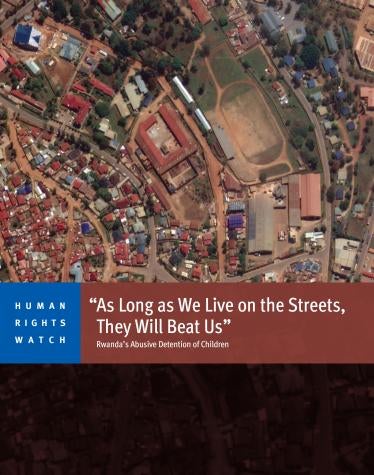
    Rwanda’s Abusive Detention of Children

    This report documents the arbitrary detention of street children for periods of up to six months at Gikondo Transit Center, in Kigali, the capital. It follows three Human Rights Watch reports in 2006, 2015, and 2016 on transit centers, including Gikondo, where ill-treatment and beatings are common. Since 2017, a new legal framework and policies under the government’s strategy to “eradicate delinquency” have sought to legitimize and regulate detention in so-called transit centers. But in reality, this new legislation provides cover for the continuing arbitrary detention of, and violations against, detainees, including children.

    202001AFR_Rwanda_cover
  • December 16, 2019

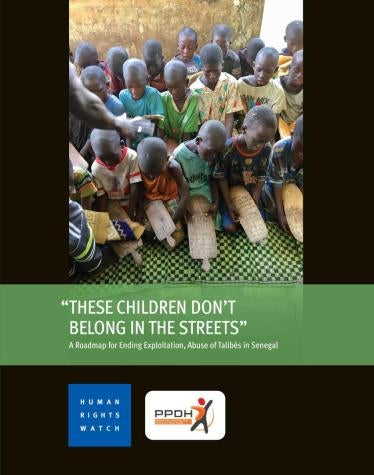
    A Roadmap for Ending Exploitation, Abuse of Talibés in Senegal

    This report analyzes the Senegalese government’s policy, programming, and judicial efforts from 2017 to 2019 to address abuses against talibé children living in traditional Quranic boarding schools. It sets out a roadmap to end forced begging and abusive conditions in the Quranic schools, known as daaras.

    map content
    201912AFR_Senegal_cover
  • December 3, 2019

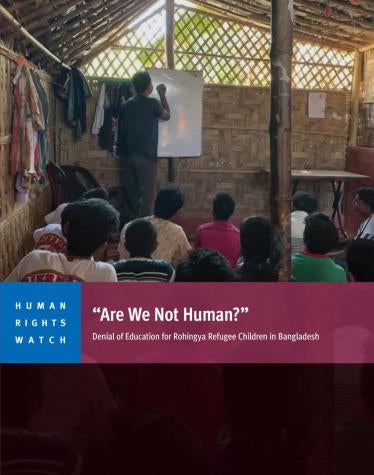
    Denial of Education for Rohingya Refugee Children in Bangladesh

    This report documents how Bangladesh prohibits aid groups in the refugee camps in the Cox’s Bazar district from providing Rohingya children with accredited or formal education. There is no secondary-level education, and groups are barred from teaching the Bengali language and using the Bangladesh curriculum. Rohingya children have no opportunity to enroll in or continue their education at private or public schools outside the refugee camps.

    video content
    201912CRD_Bangladesh_cover
  • October 2, 2019

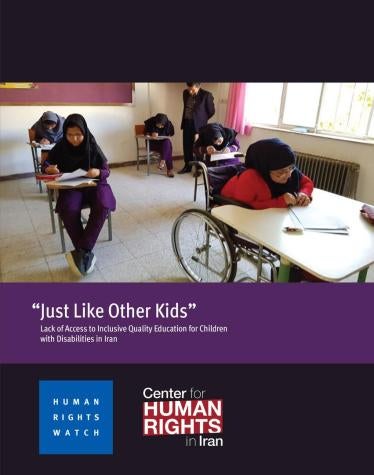
    Lack of Access to Inclusive Quality Education for Children with Disabilities in Iran

    This report documents discrimination and barriers to education in the country’s public school system for most children with disabilities. A major obstacle is a mandatory government medical test that can exclude them from education altogether, the groups found. Additional barriers include inaccessible school buildings, discriminatory attitudes of school staff, and lack of adequate training for teachers and school administrators in inclusive education methods.

    201909MENA_Iran_cover
  • September 10, 2019

    Military Detention of Children for Suspected Boko Haram Involvement in Northeast Nigeria

    This report documents how Nigerian authorities are detaining children, often based on little or no evidence. Children described beatings, overwhelming heat, frequent hunger, and being packed tightly in their cells with hundreds of other detainees “like razorblades in a pack,” as one former detainee said.

    video content
    nigeria0919_reportcover_web
  • September 5, 2019

    The Treatment of Unaccompanied Migrant Children in the French Hautes-Alpes

    The 80-page report found that examiners whose job is to certify a child’s status as a minor – that is, under age 18 – do not comply with international standards. Human Rights Watch found that examiners use various justifications to deny children protection. These include children’s minor mistakes with dates, their reluctance to discuss particularly traumatic experiences in detail or work they did in home countries or while in transit, and what examiners deem as unrealistic life goals.

    video content
    201909CRD_France_reportcover