Reports

France’s Persistent Education Shortcomings in Mayotte

The 73-page report, “Exceptional Failure: France’s Persistent Education Shortcomings in Mayotte,” finds that Mayotte’s municipalities often impose significant and arbitrary barriers to school enrollment, including by demanding documentation not required by law. Children who are enrolled often attend overcrowded schools ill-equipped to meet their basic needs, such as access to drinking water, sanitation, nutritious food, and a safe learning environment. Children living in informal settlements known as bangas, are particularly affected, as are children from migrant families.

A boy looks over a school fence
A woman looks out of the window of a damaged building

Search

  • July 14, 2016

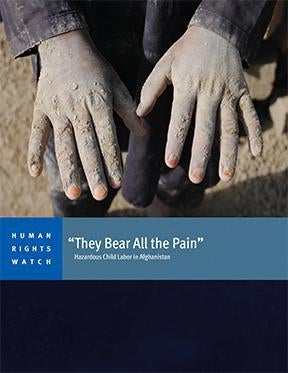
    Hazardous Child Labor in Afghanistan

    This report documents how child workers work dangerous jobs in Afghanistan’s carpet industry; as bonded labor in brick kilns; and as metal workers. They perform tasks that could result in illness, injury, or even death due to hazardous working conditions and poor enforcement of safety and health standards. Many children who work under those conditions combine the burdens of a job with school, or forego education altogether. Working compels many children in Afghanistan to leave school prematurely. Only half of children involved in child labor attend school.

    photo gallery
    video content
    cover image for Afghanistan
  • June 9, 2016

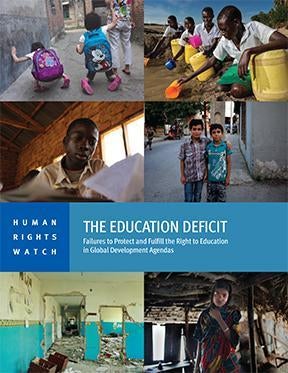
    Failures to Protect and Fulfill the Right to Education through Global Development Agendas

    This report says that governments around the world made a commitment two decades ago to remove barriers to education for their children. But Human Rights Watch found that discriminatory laws and practices, high fees, violence, and other factors keep children and adolescents out of school in many countries. The report is based on Human Rights Watch research in more than 40 countries, covering nearly two decades. The United Nations Educational, Scientific and Cultural Organization, UNESCO, has reported that 124 million children and adolescents are out of school.


    photo gallery
    report cover
  • May 5, 2016

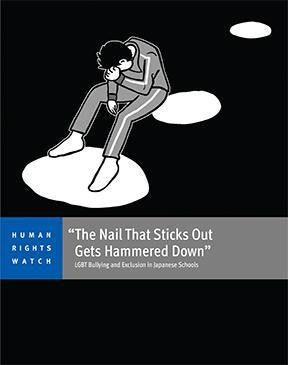
    LGBT Bullying and Exclusion in Japanese Schools

    This report examines the shortcomings in Japanese government policies that expose LGBT students to bullying and inhibit access to information and self-expression. Bullying is widespread and brutal in Japan’s schools, yet government policies addressing bullying do not specifically address LGBT students, who are among the most vulnerable to bullying. Instead, the national bullying prevention policy promotes social norms at the expense of basic rights. LGBT students told Human Rights Watch that teachers have told them that by being openly gay or transgender, they are being selfish and should expect not to succeed in school.
     

    photo gallery
    video content
    manga drawing by Taiji Utagawa of a transgender man with head down in the dark with three white spots leading into the distance
  • April 11, 2016

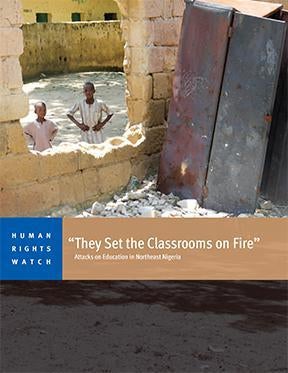
    Attacks on Education in Northeast Nigeria

    This report documents Boko Haram’s increasingly brutal assaults on schools, students, and teachers since 2009 in Borno, Yobe, and Kano states. Between 2009 and 2015, Boko Haram’s attacks destroyed more than 910 schools and forced at least 1,500 more to close. At least 611 teachers have been deliberately killed and another 19,000 forced to flee. The group has abducted more than 2,000 civilians, many of them women and girls, including large groups of students.

    photo gallery
    map content
    video content
    cover
  • February 11, 2016

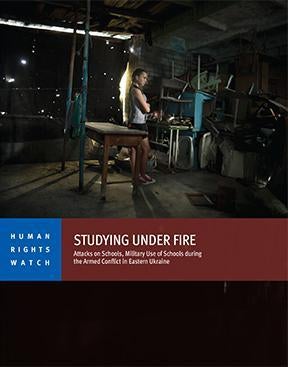
    Attacks on Schools, Military Use of Schools During the Armed Conflict in Eastern Ukraine

    This report documents how both Ukrainian government forces and Russia-backed militants have carried out indiscriminate or deliberate attacks on schools. Both sides have used schools for military purposes, deploying forces in and near schools, which has turned schools into legitimate military targets. The resulting destruction has forced many children out of school and many schools to stop operating or to operate under overcrowded and difficult conditions, Human Rights Watch found.


    photo gallery
    map content
    A former student, 13, stands in a damaged school in Vuhlehirsk.
  • November 8, 2015

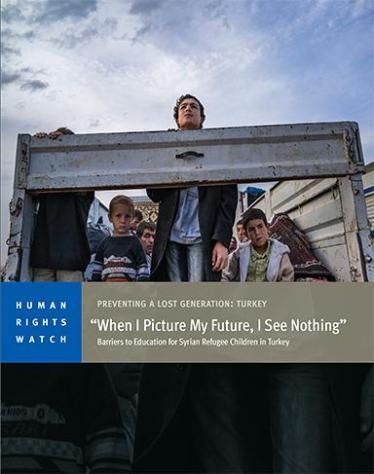
    Barriers to Education for Syrian Refugee Children in Turkey

    This 62-page report documents the major obstacles that prevent Syrian refugee children from getting formal education in Turkey, which is hosting more than 2 million refugees from the Syrian conflict that began in 2011. The government adopted an important policy in September 2014 that formally grants Syrian children access to public schools, but key obstacles including a language barrier, social integration issues, economic hardship, and lack of information about the policy, remain one year later, Human Rights Watch found.

    turkey cover image
  • September 1, 2015

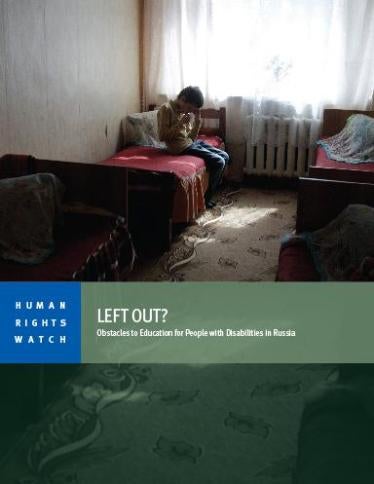
    Obstacles to Education for People with Disabilities in Russia

    The 45-page report found many barriers that can prevent children with disabilities from studying in mainstream schools. These include a lack of ramps or lifts to help children enter and move within buildings and the absence of accommodations such as large-print textbooks for children with low vision, assistive technology, or teachers’ aides. Infrastructure barriers and limited accessible transportation prevent some children from leaving their homes and reaching school.

    russia cover
  • August 18, 2015

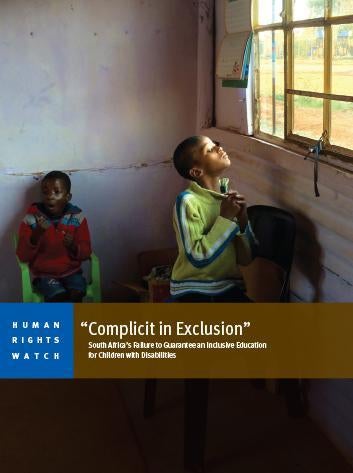
    South Africa’s Failure to Guarantee an Inclusive Education for Children with Disabilities

    This 94-page report found that South Africa has failed to guarantee the right to education for many of the country’s children and young adults due to widespread discrimination against children with disabilities in enrollment decisions. Human Rights Watch research in five out of South Africa’s nine provinces showed that children with disabilities face discriminatory physical and attitudinal barriers, often beginning early in children’s lives when government officials classify them according to their disabilities. 

    video content
    children's rights south africa
  • April 22, 2014

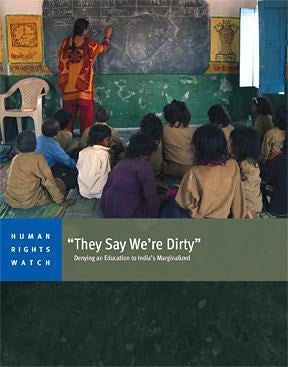
    Denying an Education to India’s Marginalized

    The 77-page report documents discrimination by school authorities in four Indian states against Dalit, tribal, and Muslim children. The discrimination creates an unwelcome atmosphere that can lead to truancy and eventually may lead the child to stop going to school.
    video content
  • March 19, 2014

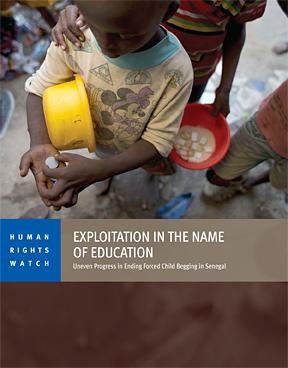
    Uneven Progress in Ending Forced Child Begging in Senegal

    The 43-page report examines Senegal’s mixed record in addressing the problem in the year since a fire ripped through a Quranic boarding school in Dakar housed in a makeshift shack, killing eight boys.
  • July 15, 2013

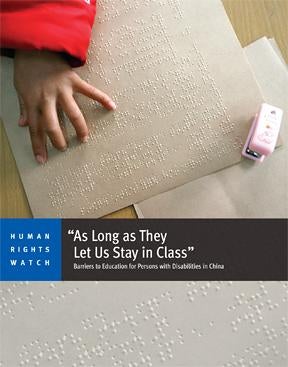
    Barriers to Education for Persons with Disabilities in China

    This 75-page report documents the struggles of children and young people with disabilities to be educated in mainstream schools in their communities.

  • May 1, 2013

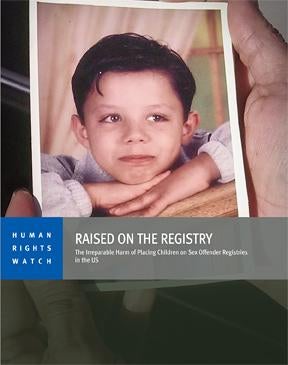
    The Irreparable Harm of Placing Children on Sex Offender Registries in the US

    This 111-page report details the harm public registration laws cause for youth sex offenders. The laws, which can apply for decades or even a lifetime and are layered on top of time in prison or juvenile detention, require placing offenders’ personal information on online registries, often making them targets for harassment, humiliation, and even violence.
  • March 7, 2013

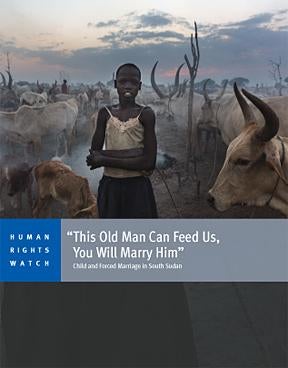
    Child and Forced Marriage in South Sudan

    The 95-page report documents the consequences of child marriage, the near total lack of protection for victims who try to resist marriage or leave abusive marriages, and the many obstacles they face in accessing mechanisms of redress.
  • September 11, 2012

    Military Use of Schools in Yemen’s Capital

    This 46-page report details the occupation of schools by government security forces, militias, and opposition armed groups, risking the lives and education of tens of thousands of students. Forces on both sides used schools as barracks, bases, surveillance posts, and firing positions.

  • February 20, 2012

    Child Recruitment, Forced Marriage, and Attacks on Schools in Somalia

    This 104-page report details unlawful recruitment and other laws-of-war violations against children by all parties to the conflict in Somalia since 2010. The report is based on over 164 interviews with Somali children, including 21 who had escaped from al-Shabaab forces, as well as parents and teachers who had fled to Kenya.