Reports

Discriminatory Fines Target Black and Arab Youth in France

The 60‑page report, “Paying the Price of Police Harassment: Discriminatory Fines Target Black and Arab Youth in France,” documents the experiences of the boys and young men from low-income households receiving abusive and discriminatory fines for allegedly committing offenses of noise nuisance, littering, and illegal discharge of unsanitary liquids, when they are simply carrying out ordinary activities such as talking outside their homes or playing sports in a neighborhood park. These fines are issued based on police officers’ subjective observations, without judicial scrutiny, while the fined person has no basic fair trial guarantees.

A mother faces her sons’ unpaid fine debt of tens of thousands of euros resulting from dozens of fines they received throughout their childhood, Paris, France, June 2026.
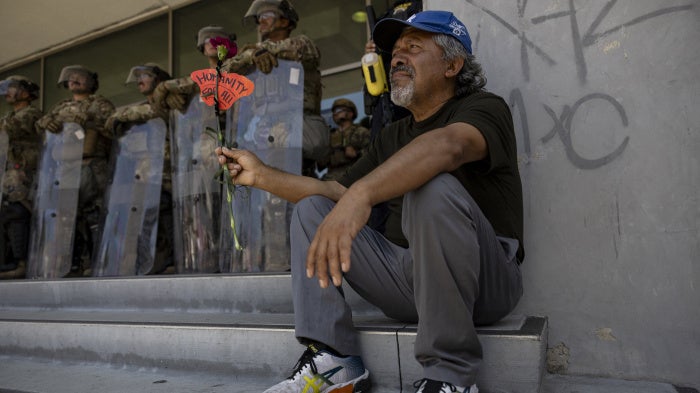
A man holds a flower and the message "Humanity for All" in front of a line of soldiers

Search

  • November 21, 2022

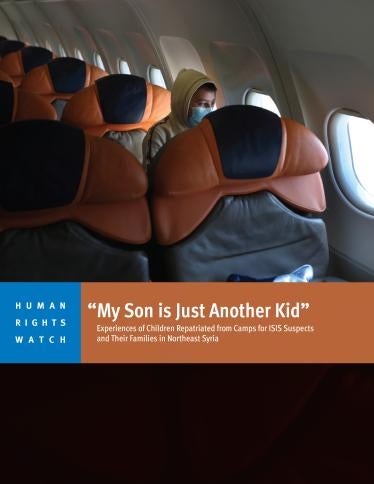
    Experiences of Children Repatriated from Camps for ISIS Suspects and Their Families in Northeast Syria

    The 63-page report, “‘My Son is Just Another Kid’: Experiences of Children Repatriated from Camps for ISIS Suspects and Their Families in Northeast Syria,” documents the experiences of approximately 100 children who have been repatriated or returned to France, Germany, Kazakhstan, the Netherlands, Sweden, the United Kingdom, and Uzbekistan between 2019 and 2022. Human Rights Watch found that despite years of detention in life-threatening conditions with insufficient water, fresh food, and health care, and little to no access to education, many of the children appear to be adjusting well and performing well in school. Many have reintegrated smoothly and enjoy a wide range of activities with their peers, including football, skating, cycling, dancing, crafts, and music.

    video content
    202211crd_mena_syria_cover
  • November 17, 2022

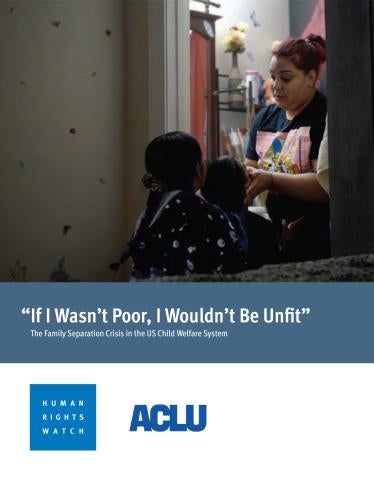
    The Family Separation Crisis in the US Child Welfare System

    The 147-page report, “‘If I Wasn’t Poor, I Wouldn’t Be Unfit’: The Family Separation Crisis in the US Child Welfare System,” documents how conditions of poverty, such as a family’s struggle to pay rent or maintain housing, are misconstrued as neglect, and interpreted as evidence of an inability and lack of fitness to parent. Human Rights Watch and the ACLU found significant racial and socioeconomic disparities in child welfare involvement. Black children are almost twice as likely to experience investigations as white children and more likely to be separated from their families.

    video content
    202211crd_us_welfare_cover.jpg (5
  • September 8, 2022

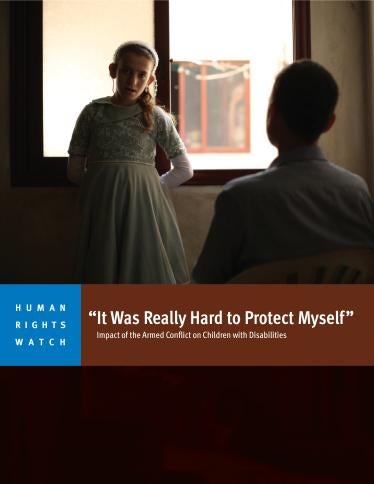
    Impact of the Armed Conflict in Syria on Children with Disabilities

    The 71-page report, “‘It Was Really Hard to Protect Myself’: Impact of the Armed Conflict in Syria on Children with Disabilities,” details the abuses faced by children with disabilities, including a heightened risk during attacks and a lack of access to the basic support services they need. The absence of inclusive and universal programs – including in education, delivery of humanitarian aid, and mental health and psychosocial support services – compounds the difficulties children with disabilities in Syria already experience.

    map content
    202209drd_mena_syria_cover
  • May 25, 2022

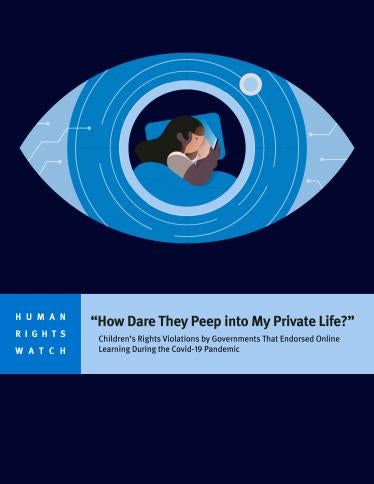
    Children’s Rights Violations by Governments that Endorsed Online Learning During the Covid-19 Pandemic

    The 99-page report, “’How Dare They Peep into My Private Life?’: Children’s Rights Violations by Governments that Endorsed Online Learning during the Covid-19 Pandemic,” is grounded in technical and policy analysis conducted by Human Rights Watch on 165 education technology (EdTech) products endorsed by 49 countries. It includes an examination of 294 companies found to have collected, processed, or received children’s data since March 2021, and calls on governments to adopt modern child data protection laws to protect children online.

    video content
    202205crd_edtech_cover
  • May 12, 2022

    Efforts to Ban Gender and Sexuality Education in Brazil

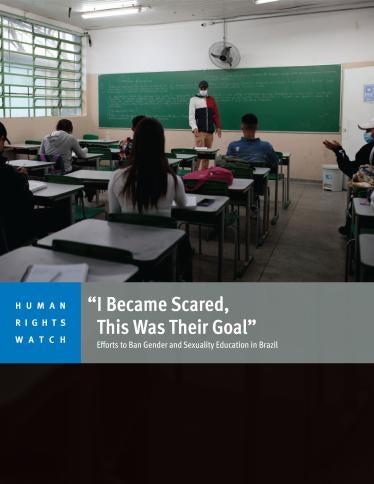
    The 77-page report, “‘I Became Scared, This Was Their Goal’: Efforts to Ban Gender and Sexuality Education in Brazil,” analyzes 217 bills and laws presented between 2014 and 2022 designed to explicitly forbid the teaching or sharing of gender and sexuality education, or ban so-called “gender ideology” or “indoctrination,” in municipal and state schools. Human Rights Watch also documented a political effort to discredit and restrict gender and sexuality education, bolstered by the administration of President Jair Bolsonaro, who has personally amplified this message for political effect, including as recently as March 2022.

    202205lgbt_americas_brazil_education_cover
  • January 17, 2022

    Families in Temporary Accommodation in London, UK

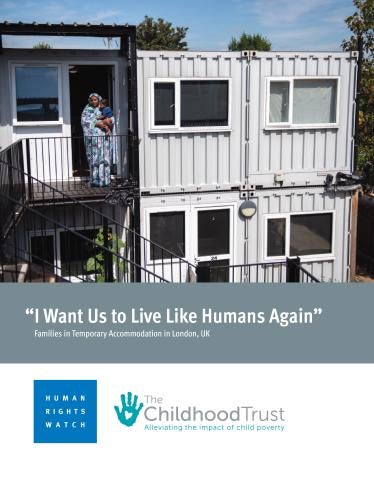
    The 51-page report, “I Want Us to Live Like Humans Again”: Families in Temporary Accommodation in London, UK,” examines how families across London are being placed in poor quality and uninhabitable accommodation, significantly violating their rights. The situation is due to a combination of reduced funding for local authorities, austerity-motivated cuts to the welfare system, and a lack of affordable permanent housing.

    video content
    202201crd_uk_temporary_accommodation_cover
  • December 16, 2021

    Armed Separatist Attacks on Students, Teachers, and Schools in Cameroon’s Anglophone Regions

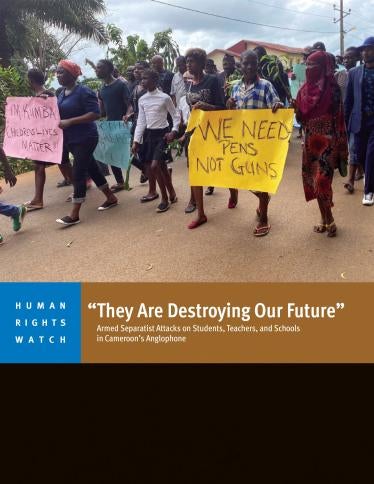
    The 131-page report, “They Are Destroying Our Future: Armed Separatist Attacks on Students, Teachers, and Schools in Cameroon’s Anglophone Regions,” documents scores of education-related attacks by armed separatist groups in the English-speaking North-West and South-West regions between March 2017 and November 2021. The groups have killed, beaten, abducted, threatened, and terrorized students and education professionals; harassed and intimidated families into keeping their children out of school; and burned, destroyed, damaged, and looted school buildings.

    video content
    202112africa_cameroon_education_protest_cover
  • October 7, 2021

    The Degrading Treatment of Migrant Children and Adults in Northern France

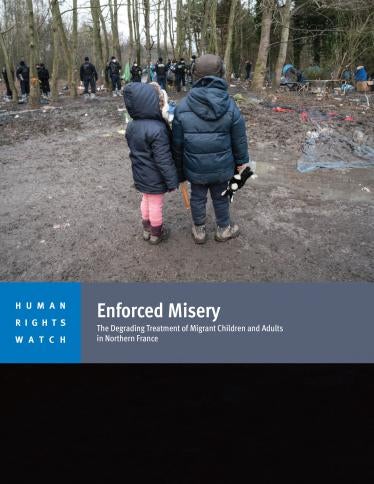
    The 81-page report, “Enforced Misery: The Degrading Treatment of Migrant Children and Adults in Northern France,” documents repeated mass eviction operations, near-daily police harassment, and restrictions on provision of and access to humanitarian assistance. The authorities carry out these abusive practices with the primary purposes of forcing people to move elsewhere, without resolving their migration status or lack of housing, or of deterring new arrivals.

    photo gallery
    map content
    202110eca_france_calais_migrant_cover
  • September 14, 2021

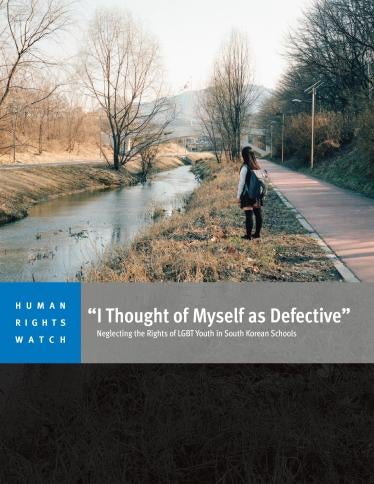
    Neglecting the Rights of LGBT Youth in South Korean Schools

    The 76-page report, “‘I Thought of Myself as Defective’: Neglecting the Rights of LGBT Youth in South Korean Schools,” finds that bullying and harassment, a lack of confidential mental health support, exclusion from school curricula, and gender identity discrimination are particularly pressing concerns for LGBT students. The South Korean government should implement antidiscrimination protections and ensure that LGBT youth have supportive resources to safeguard their health and education

    video content
    202109lgbt_southkorea_cover
  • May 26, 2021

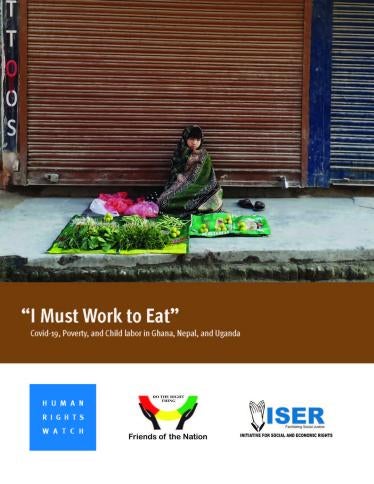
    Covid-19, Poverty, and Child Labor in Ghana, Nepal, and Uganda

    The 69-page report, “I Must Work to Eat”: Covid-19, Poverty, and Child labor in Ghana, Nepal, and Uganda,” was co-published with Initiative for Social and Economic Rights (ISER) in Uganda, and Friends of the Nation in Ghana. Researchers examined the rise in child labor and poverty during the Covid-19 pandemic, and the pandemic’s impact on children’s rights. Children described working long, grueling hours for little pay after their parents lost jobs or income due to the Covid-19 pandemic and associated lockdowns. Many described hazardous working conditions, and some reported violence, harassment, and pay theft.

    video content
    202105crd_childlabour_cover
  • May 17, 2021

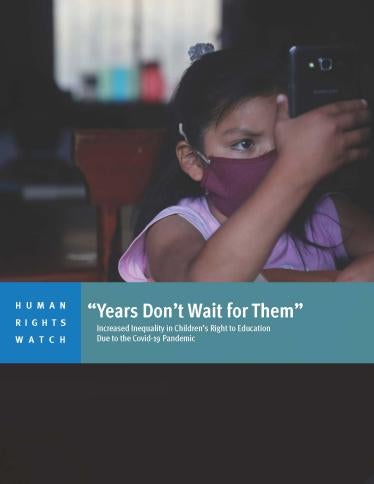
    Increased Inequalities in Children’s Right to Education Due to the Covid-19 Pandemic

    The 125-page report, “‘Years Don’t Wait for Them’: Increased Inequalities in Children’s Right to Education Due to the Covid-19 Pandemic,” documents how Covid-related school closures affected children unequally, as not all children had the opportunities, tools, or access needed to keep on learning during the pandemic. The heavy reliance on online learning exacerbated the existing unequal distribution of support for education, Human Rights Watch found. Many governments did not have the policies, resources, or infrastructure to roll out online learning in a way that ensured that all children could participate on an equal basis.

    video content
    202105crd_covid_education_cover
  • March 18, 2021

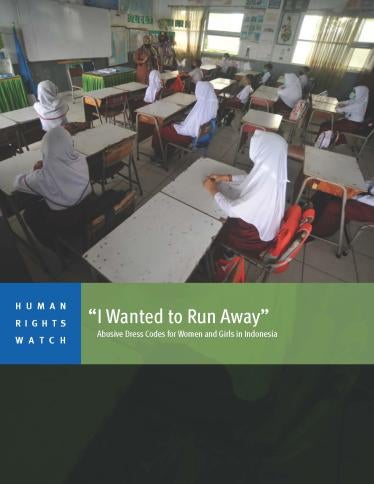
    Abusive Dress Codes for Women and Girls in Indonesia

    The 98-page report, “‘I Wanted to Run Away’: Abusive Dress Codes for Women and Girls in Indonesia,” documents government regulations that require girls and women to wear the jilbab, Muslim apparel that covers the head, neck, and chest. Human Rights Watch describes the historical imposition of discriminatory regulations on clothing, and the widespread bullying to wear a jilbab that causes women and girls psychological distress. Girls who don’t comply have been forced to leave school or have withdrawn under pressure, while female civil servants have lost their jobs or resigned to escape constant demands to conform.
     

    photo gallery
    video content
    202103asia_indonesia_jilbab_cover
  • March 11, 2021

    The Human Rights Consequences of Parental Notice of Abortion in Illinois

    The 73-page report, “‘The Only People It Really Affects Are the People It Hurts’: The Human Rights Impacts of Parental Notice of Abortion in Illinois,” is the product of a collaboration between Human Rights Watch and the ACLU of Illinois. The groups found that young people often seek judicial bypass because they fear physical or emotional abuse, being kicked out of the home, alienation from their families or other deterioration of family relationships, or being forced to continue a pregnancy against their will. The groups also documented the hardships faced by young people forced to involve unsupportive family members in their abortion decision or navigate an unfamiliar court system to obtain a judicial bypass, and the additional stress and delays in seeking care this caused.

    video content
    202103us_illinois_abortion_cover
  • January 6, 2021

    Children and Families Sent to Harm by the US ‘Remain in Mexico’ Program

    The 103-page report, “‘Like I’m Drowning’: Children and Families Sent to Harm by the US ‘Remain in Mexico’ Program,” is a joint investigation by Human Rights Watch, Stanford University’s Human Rights in Trauma Mental Health Program, and Willamette University’s Child and Family Advocacy Clinic. Children and adults interviewed described being sexually assaulted, abducted for ransom, extorted, robbed at gunpoint, and subjected to other crimes under the US Migrant Protection Protocols (MPP), known as the “Remain in Mexico” program. In many cases, they said these attacks occurred immediately after US authorities sent them to Mexico to await US immigration court hearings on their asylum applications, or as they returned from hearings. Witnesses said that Mexican immigration officers or police committed some of these crimes.

    map content
    202101americas_mexico_us_border_cover
  • December 9, 2020

    School-Related Sexual Violence and Young Survivors’ Struggle for Justice in Ecuador

    The 75-page report, “‘It’s a Constant Fight’: School-Related Sexual Violence and Young Survivor’s Struggle for Justice in Ecuador,” documents sexual violence against children from preschool through higher secondary education, and the serious obstacles young victims and their families face when seeking justice. Human Rights Watch found that teachers, school staff, janitors, and school bus drivers have committed sexual violence against children of all ages, including children with disabilities, in public and private schools. Ongoing cases show that sexual violence against students continues.

    video content
    202012crd_ecuador_sexual violence_cover