• Progress continued in Rwanda in 2011 in the fields of development, delivery of public services, health, and the economy. Draft revisions of the laws on genocide ideology and media contained some positive amendments, but leave open the possibility for inappropriate prosecutions for “genocide ideology.” Moreover, freedom of expression and political space are still severely restricted. Members of opposition parties, journalists, and other perceived critics of the government were arrested, detained, and tried, some solely for expressing their views. Charges such as endangering state security and inciting public disobedience were increasingly used to prosecute government critics. 

Featured Content

Reports

Rwanda

  • Dec 6, 2011

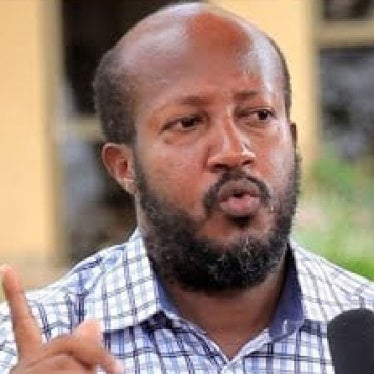
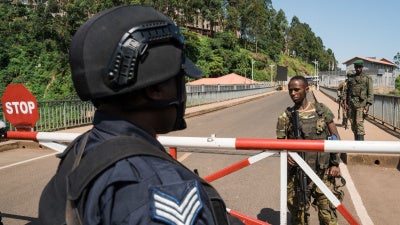
    The Ugandan authorities should open an effective and transparent investigation into the murder of a Rwandan journalist on November 30, 2011, and identify and bring those responsible to justice. The Ugandan government should also provide protection for Rwandan journalists and other critics of the Rwandan government who are living in Uganda.

  • Oct 10, 2011
    Governments around the world should intensify efforts to bring to justice those responsible for grave abuses documented in the United Nations’ October 2010 “mapping report,” Human Rights Watch said today. One year after the UN Office of the High Commissioner for Human Rights published the report, there has been insufficient follow-up by governments in Africa’s Great Lakes region and by the UN itself.
  • Aug 23, 2011

    The Rwandan authorities should immediately stop intimidating human rights defenders and allow them to work freely.

  • Jul 29, 2011

    A few weeks ago, a British journalist called me to discuss the human rights situation in Rwanda. We began by talking about the 2010 elections, in which President Paul Kagame was re-elected with 93% of the vote after three opposition parties had been excluded from the race; one opposition leader had been imprisoned; another opposition party member and an independent journalist were murdered; and a prominent government opponent narrowly escaped assassination in exile. After a few minutes, the journalist interrupted me and asked, in a puzzled tone: “Why does our government continue supporting Kagame? What is so special about Rwanda?”

  • Jun 23, 2011
    Human Rights Watch's submission to the International Development Committee (IDC) focuses primarily on the role of the UK’s Department for International Development (DFID) in Rwanda, given the UK's particularly important role in that country and Rwanda’s critical role in the Great Lakes region.
  • Jun 15, 2011
    Jack Chapman's Think Africa Press article "Are Kagame's human rights abuses justified?" epitomises the blinkered approach of many commentators towards Rwanda. Its principal argument is based on a fallacy: that in some contexts, human rights and economic development are antagonistic or mutually exclusive.
  • Jun 7, 2011
    Human Rights Watch welcomes the outcome of the UPR of Rwanda, in particular its recommendations on freedom of expression, legal reforms and the independence of the judiciary. However, Human Rights Watch remains seriously concerned that freedom of expression is not respected in practice.
  • Jun 3, 2011
    The four case studies in this document are taken from Human Rights Watch's report Justice Compromised: The Legacy of Rwanda's Community-Based Gacaca Courts, published on May 31, 2011 and should be read in conjunction with that report.
  • May 31, 2011
    Rwanda’s community-based gacaca courts have helped communities confront the country’s 1994 genocide but have failed to provide credible decisions and justice in a number of cases, Human Rights Watch said in a report released today. As the gacaca courts wind down their work, Rwanda should set up specialized units in the national court system to review alleged miscarriages of justice.
  • May 2, 2011
    On Wednesday, May 4, 2011, judges in a local court in Stuttgart, Germany, will start hearing evidence against two Rwandan rebel leaders, Ignace Murwanashyaka and Straton Musoni, for war crimes and crimes against humanity carried out thousands of kilometers away, in the Democratic Republic of the Congo (DRC).