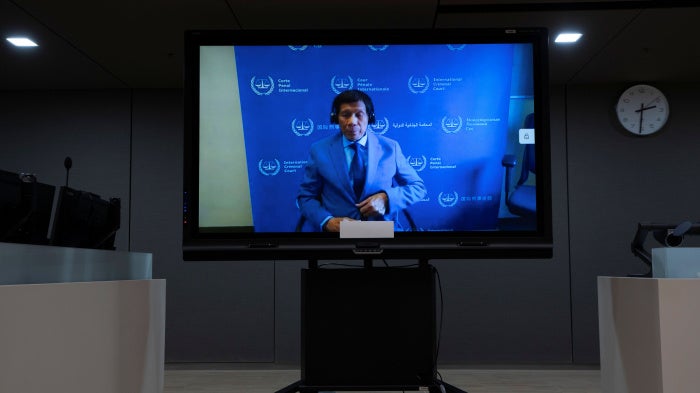
In a historic step toward justice, Philippine authorities in March arrested former President Rodrigo Duterte for his alleged role in thousands of extrajudicial killings and transferred him to the International Criminal Court (ICC) in the Hague.
Despite repeated assurances by President Ferdinand Marcos Jr. that his administration was prioritizing human rights, serious violations continued, including extrajudicial killings, enforced disappearances, and harassment and threats against activists and journalists. Government security forces implicated in abuses were rarely held accountable.
Extrajudicial and Targeted Killings
Police killings during drug raids and killings by unidentified assailants persisted in the Philippines throughout 2025. Monitoring by Dahas shows that 238 people were killed in “drug war” related incidents across the Philippines between January and November. Since Marcos took office on July 1, 2022, more than 1,000 people have died as part of the anti-drug campaign.
Other targeted killings by “death squads” or hired assassins—often riding in tandem on riding pillion on motorcycles—occurred in Manila and other urban areas. On June 23, a hooded gunman shot dead Ali Macalintal, a transgender rights activist who worked as a radio commentator, on the southern island of Mindanao.
Ahead of mid-term elections in May, political violence surged, especially in the Bangsamoro Autonomous Region of Muslim Mindanao.
“Red-Tagging,” Harassment of Activists
“Red-tagging,” which involves state harassment, intimidation, and threats against individuals and organizations accused of being supporters or sympathizers of the communist insurgency, continues despite a Supreme Court ruling in 2024 that declared the practice a threat to “right to life, liberty, and security.” Red-tagging targets leftist activists, land rights defenders, labor leaders, and youth activists and has a chilling effect on freedom of expression and association.
In February, the Philippine army released a video red-tagging members of the Cordillera People’s Alliance, an Indigenous rights network in the northern Philippines.
Relatives of red-tagging victims killed on “Bloody Sunday” in March 2021—when Philippine security forces killed nine activists during raids against alleged communist insurgents—reported that government officials had pressured them to cease their efforts to seek to hold accountable those responsible for the deaths of their loved ones.
The Philippine government has rejected calls from UN rights experts to disband the National Task Force on Ending the Local Armed Conflict, an agency under the president’s office and supervised by the National Security Council, that is often responsible for red-tagging. In September, the Department of Interior and Local Government proposed a 340 percent increase in the agency’s budget for 2026.
Abuse of Terrorism Financing Charges
The broad powers conferred on the government by the Anti-Terror Act allow authorities to designate organizations and individuals as “terrorists” and recommend the freezing of bank accounts linked to alleged money laundering or terrorism financing.
Although the Philippines has had a law on terrorism financing since 2012, no one had been convicted of the offense until the global Financial Action Task Force (FATF) placed the Philippines on its “grey list” of countries under increased monitoring for taking insufficient measures to curb terrorism financing. The FATF action coincided with a spurt of new terrorism financing cases against civil society organizations and activists, despite specific FATF guidance aimed at preventing governments from targeting legitimate nongovernmental organizations.
In January 2025, FATF representatives visited the Philippines and in February the task force removed the country from the grey list.
Even after the delisting, there have been new cases of terrorism financing charges against civil society groups and activists. In April, Philippine authorities charged six activists in Luzon with terrorism financing.
Courts have dismissed other cases for lack of evidence. In July, a prosecutor dropped terrorism financing charges against activist Myrna Zapanta for lack of credible evidence. However, Frenchie Mae Cumpio, a community journalist in the central Philippines, remains in pretrial detention five years after police arrested and charged her with illegal firearms and terrorism financing charges.
Enforced Disappearances
Activists, including land rights and environmental defenders, have been at risk of enforced disappearance. On March 2, Indigenous leader Genasque Enriquez was reportedly arrested in Surigao del Sur, in the southern Philippines; his whereabouts remain unknown. On March 5, in the neighboring Agusan del Sur province, another Indigenous activist, Michelle Campos, went missing. She and three others then surfaced in a nearby hospital where they were being effectively detained while being treated under military guard for unspecified injuries.
Families of victims of enforced disappearance often struggle to secure any information about their missing relative. In 2025, the Supreme Court granted temporary protection to the wife of James Jazmines, the brother of a leader of the communist movement who was forcibly disappeared in August 2024, and directed senior security officials to disclose information about Jazmines. The court had heard a similar petition from the family of Felix Salaveria Jr., a friend of Jazmines who was reportedly abducted in the central Philippines five days after Jazmines. At time of writing, neither family had received information on their loved one from Philippine authorities.
The Philippines is not a party to the UN Convention Against Enforced Disappearance. Congress passed a law against enforced disappearances in 2012, but the government has not enforced it and has failed to allocate funds for implementation.
Accountability and Justice
Philippine authorities arrested Duterte in Manila on March 11, acting on an ICC arrest warrant sent to Interpol. Since then, he has been detained in the Hague awaiting possible trial—a preliminary hearing slated for September to confirm the charges against him was postponed.
The ICC prosecutor sought Duterte’s arrest for the crime against humanity of murder in relation to extrajudicial killings committed from November 2011 to June 2016, including in Davao City while Duterte was mayor and elsewhere as part of his nationwide “war on drugs” after he was elected president.
Domestic accountability for the killings remains woefully inadequate, with only five cases involving nine police officers convicted nationwide. One of the cases was the September conviction of a police colonel for homicide—he shot a man at home in Baguio City during a “buy-bust” operation in July 2016.
Indigenous Rights
Across the Philippines, Indigenous communities—even those with ancestral domain titles—struggled to protect their land rights due to weak implementation of the principle of free, prior, and informed consent.
Indigenous peoples in Palawan have resisted efforts by the government and the San Miguel Corporation—a Philippine conglomerate—to evict them from their customary land for an eco-tourism project. Tensions increased in recent years after staff from a private security company were deployed to Marihangin island, where Indigenous residents fear forced eviction and have a pending ancestral domain claim. In April, numerous additional private security guards appeared on the island.
In May, Philippine authorities arrested 10 community members on “grave coercion” charges related to a complaint filed by a former director of the National Commission on Indigenous Peoples, whom Marihangin residents obstructed from visiting the island in June 2024. Authorities also arrested another Indigenous leader on an old illegal fishing charge. In July, a court rejected the community’s request for a restraining order against the private security company. In early August, guards from the company left the island but residents still do not have a land title proving the territory is their ancestral domain.
Attacks Against Journalists, Freedom of Expression
The Philippines remains a deadly place to be a journalist. Three journalists were killed in 2025: Juan Dayang on April 29, Erwin Labitad Segovia on July 21, and Noel Bellen Samar on October 20.
In July, an anti-graft court convicted former Palawan provincial governor Joel Reyes, alleged to be behind the 2011 killing of journalist and environmental defender Gerry Ortega. The corruption conviction relates to irregularities in the Malampaya gas fund, as covered by Ortega on his radio program before his killing, for which Reyes is separately facing murder charges. In April, a court acquitted the suspects in the 2023 murder of broadcaster Juan Jumalon, who was shot to death while live on air.
Irene Khan, the United Nations special rapporteur on freedom of expression, in her 2024 country visit report on the Philippines, called on the government to end intimidation, threats, and attacks on journalists, including by investigating and holding perpetrators responsible.
Women’s and Girls’ rights
Abortion remains prohibited in the Philippines with no exceptions. The number of pregnancies among girls ages 10-14 rose to 3,433 in 2023 from 2,113 in 2020, a 58 percent increase. In July, opposition lawmakers reintroduced a bill that would provide support services to pregnant adolescent girls and integrate compulsory comprehensive sexuality education in school curricula.
The Philippines is the only country apart from the Vatican without divorce laws. In July, legislators reintroduced a bill to legalize divorce in the Philippines. In 2024, the House of Representatives approved a limited divorce bill, but the Senate did not pass it.
Sexual Orientation and Gender Identity
Congress again failed to enact legislation that would prohibit discrimination based on sexual orientation, gender identity, and sex characteristics, and has not yet passed a civil partnership bill that would protect some rights for same-sex couples.