In 2025, the Kyrgyz government charged and convicted several journalists, media outlets, and a human rights defender with speech related offenses. Legal reforms also curtailed the rights of citizens to information, expression, and belief.
Gender-based violence remained a critical issue, with domestic violence on the rise.
A historic border deal was signed between Kyrgyzstan and Tajikistan following a border conflict in 2022, in which the forces of both countries committed apparent war crimes.
Kyrgyzstan was part of a core group on development and promotion of the new optional protocol to the UN Convention on the Rights of the Child on free pre-primary and free secondary education.
Speech-related Prosecutions
In April, authorities detained human rights defender Rita Karasartova on suspicion of “close ties” with defendants awaiting trial on charges of “fomenting of mass riots.” The police arrested Karasartova after she published a letter from a political activist on her Facebook page, which she said the prosecution claimed was a signal to start coordinated actions to seize power. In September, a district court in Bishkek found Karasartova guilty and sentenced her to five years’ non-custodial restricted freedom and a fine of 50,000 Kyrgyz soms (US$570).
In July, independent journalist Kanyshai Mamyrkulova was found guilty of inciting mass riots and racial, national, and religious enmity. The court sentenced Mamyrkulova to four years’ non-custodial restricted freedom, during which she is prohibited from posting on social media. Mamyrkulova was detained in March for Facebook posts criticizing the lack of transparency around a border demarcation deal between Kyrgyzstan and Tajikistan.
In July, a district court in Bishkek ordered the closure of independent media outlet April TV after the Prosecutor General’s Office charged the outlet with spreading negative information about the authorities accompanied by “sarcasm and mockery,” which may “destabilize public order” in the country.
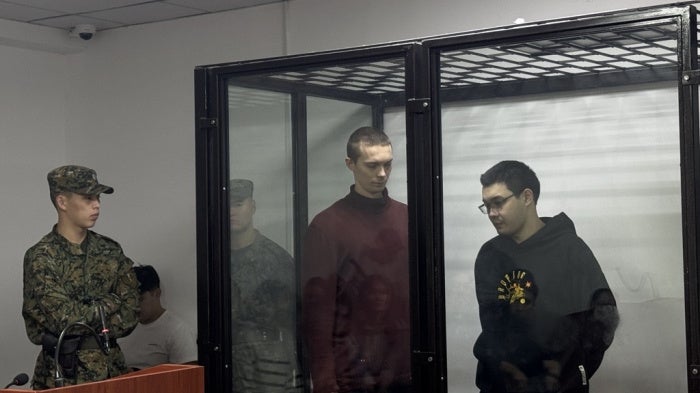
In September, four staffers of independent news outlet Kloop were found guilty of calling for mass unrest; two videographers were sentenced to five years in prison and two accountants to three years’ non-custodial restricted freedom. The four were detained in May in a sweeping security service operation along with four other staffers, who were later released. The prosecution claimed the staffers on trial collaborated with Temirov Live, an investigative outlet that exposes allegations of high-level corruption in government, in producing “distorted information that called for regime change.”
Freedom of Information and Expression
In January, amendments to the Kyrgyz Code of Offenses came into force that recriminalize libel and insult and empower the Ministry of Culture to impose fines of up to 200,000 Kyrgyz soms ($2,000) for dissemination of “false or erroneous information” that harms the reputation of an individual via mass media, the internet, or social media. The ministry will have the power to determine who should be fined, without judicial approval.
In June, the parliament passed the “Law on Mass Media,” which expands state control over independent media by requiring mandatory registration for all media outlets and online platforms. The law gives the government authority over development of criteria and procedures for registration, re-registration, or refusal to register. The law also limits foreign ownership in media to 35 percent.
Amendments to the code of offenses, which went into effect in July, penalize the spread of “false or unreliable” news via mass media or the internet. Individuals found to have violated the law will be fined 20,000 Kyrgyz soms ($230) and media outlets – 65,000 Kyrgyz soms ($740).
In July, amendments to the criminal code and the code of offenses went into effect that toughen sanctions for existing extremism-related offenses, for production and distribution of extremist materials, as well as for calls for violent seizure of power, while eliminating the option of fines for the latter. The amendments also reintroduced the crime of possession of extremist materials, which had been previously decriminalized due to its frequent misuse against non-violent individuals. The new offense is punishable by up to three years in prison, even without intent to disseminate the materials. The amendments also criminalize public calls for extremist activity using the internet or mass media, which carries a three to five-year prison sentence.
Prosecution of Political Opposition
In April, a district court in Bishkek convicted Temirlan Sultanbekov, leader of the Social Democrats political party, and party members Irina Karamushkina and Roza Turksever, of vote-buying and sentenced them to three years’ non-custodial restricted freedom. They were detained in November 2024 ahead of municipal elections.
Sexual Orientation and Gender Identity
In April, police forcibly entered an apartment without a search warrant where five transgender women were residing, including a transgender rights activist. They allegedly beat the women before taking them to a medical center, where they underwent medical examinations, including of their genitals, without their consent. The authorities also reportedly forced them to undergo HIV and hepatitis tests at an AIDS center. A district court found the women guilty of minor hooliganism and sentenced them to five days’ administrative detention.
Gender-Based Violence
According to the Kyrgyz Interior Ministry, in the first six months of 2025, the police registered 10,164 cases of domestic violence, which is a 35 percent increase compared to the same period in 2024.
Following the rape and murder of a girl in September, President Japarov’s administration in October proposed a referendum to amend the constitution to allow the death penalty for murder committed in a cruel manner, murder of a minor, and murder involving rape. In December, the Constitutional Court ruled that reintroducing the death penalty through a referendum would be unconstitutional.
Disability Rights
The law on “Rights and Guarantees of People with Disabilities,” which went into effect in August, aligns the country’s legislation with the UN Convention on the Rights of People with Disabilities. Under the law, the state has a responsibility to support Kyrgyz citizens with disabilities to acquire, develop, and maintain skills for independent living.
In another positive development, in February, President Japarov signed into law the legal amendments to the criminal code introducing harsher penalties for sexual violence offenses committed against persons with disabilities, recognizing disability as an aggravating factor, and eliminating exemptions from imprisonment for persons convicted of having committed sexual violence against a person with disabilities. Similar amendments were made in 2024 with harsher penalties for sexual violence offenses committed against children. While these changes respond to the heightened risk of sexual violence faced by many women and girls with disabilities, care will be needed in implementation and future reforms to ensure that protections promote equal protection and autonomy, and do not unintentionally reinforce paternalistic attitudes and stereotypes of vulnerability.
Freedom of Belief
Amendments to the Law on Freedom of Religion, which went into effect in January, make registration requirements for religious associations even more difficult, prohibit religious teaching outside recognized religious education institutions, ban dissemination of religious literature and other materials in public, as well as proselytism outside religious institutions, and prohibit the wearing of religious face-coverings in public such as the niqab.
Conflict at the Kyrgyzstan-Tajikistan Border
In March, Kyrgyzstan and Tajikistan reached an agreement over the contested border between the two countries. The agreement includes a plan for land swaps of equal size and the shared management and use of water resources and facilities, as well as a commitment not to fly drones or station any heavy military equipment and auxiliary forces along the border. This follows a border conflict in 2022, during which both countries committed apparent war crimes leading to the deaths of at least 37 civilians and the deliberate destruction of homes. Neither side has publicized information indicating that perpetrators from their own forces were held to account for violations they committed during the conflict.