Jordanian authorities banned the Muslim Brotherhood organization in April, though its political party continued to operate and maintained representatives in parliament. In January, the State Security Court sentenced political activist Ayman Sandouka to five years in prison for a critical 2023 Facebook post. Jordanian authorities blocked 12 media websites in May for reports about Jordanian aid to Gaza, characterizing them as false and incorrect.
Jordanian authorities forcibly evicted residents for development purposes in Amman and Petra in late 2024 and in 2025 without adequate consultation, notice, compensation, and relocation assistance.
Human Rights Watch has operated a local country office in Jordan since 2014.
Freedom of Expression
Jordan’s 2023 amendments to the cybercrimes law increased penalties for imprecise, vague, and undefined offenses, such as “fake news,” “promoting, instigating, aiding or inciting immorality,” “online assassination of personality,” “provoking strife,” “undermining national unity,” and “contempt for religions” to at least three months in jail and/or fines between 5,000 and 20,000 Jordanian dinars (US$7,000-$28,000). Jordan has yet to review the amendments despite public criticism and recommendations from the UN Human Rights Council. Jordan’s National Center for Human Rights (NCHR) reported in December 2024 that there were 3,170 prosecutions in 2024 under the new cybercrime law using vague charges from articles 15,16, and 17, with the vast majority for online defamation.
Jordanian authorities blocked the websites of 12 news outlets on May 14 under the draconian cybercrimes law for “spreading media poison and attacking Jordan.” Government-affiliated al-Rai reported that the blocked media outlets include Middle East Eye, Tunis-based Meem Magazine, Raseef22, Arabi21, Istanbul-based Arabi Post, Rassd, Al-Shoub TV, and Voice of Jordan.
On January 7, Jordan’s State Security Court sentenced Ayman Sandouka, secretary of a now-dissolved political party, to an unprecedented five-year prison term under the Penal Code and Cybercrimes Law for “incitement to oppose the political regime” based on a Facebook post in October 2023 addressed to the King on Israeli-Jordanian diplomatic relations.
Jordanian authorities detained and harassed numerous pro-Palestine protesters and online activists since October 2023. Authorities reportedly continued the crackdown on speech critical of Jordan’s stance on the situation in Palestine as well as mobilization of pro-Palestine protests and other activism throughout 2025.
Freedoms of Assembly and Association
Jordanian authorities continued to require organizations and venues to seek approval from the Interior Ministry or General Intelligence Department to hold public meetings despite the absence of a legal requirement to obtain government permission for public gatherings.
Refugees and Migrants
Jordan hosted over 500,000 UNHCR-registered asylum seekers and refugees in 2025 from various countries including Syria, Iraq, Yemen, and Sudan. As of August 2025, over 460,000 of the asylum seekers and refugees in Jordan were Syrian.
Following the ouster of Bashar al-Assad’s government in Syria in December 2024, Human Rights Watch called on neighboring countries that host sizable numbers of Syrian refugees, including Jordan, not to rush to deport or otherwise expel Syrians from their territories.
Jordan hosted an estimated 55,000 registered domestic workers in 2025, primarily from South-East Asia and East Africa. Rights organizations repeatedly referred cases of domestic worker abuse to the Labor Ministry for labor violations that include wage theft, identity document confiscation, and physical, sexual, and verbal abuse.
Women’s Rights
Women in Jordan face discrimination both in law and practice. Jordanian law requires women under 30 to obtain their male guardian’s permission to marry for the first time, and women can lose spousal maintenance for disobeying their husbands or leaving the marital home without “legitimate” reason. Authorities have also detained women based on complaints from male guardians, with some held for over a decade. Women cannot travel abroad with their children without male guardian approval.
Jordanian law does not recognize marriages between Muslim women and non-Muslim men. Additionally, Jordanian women married to non-Jordanians cannot pass their nationality to their children or spouses.
Sexual Orientation and Gender Identity
Jordanian law does not explicitly criminalize same-sex relations, but vague "immorality" laws can be used to target LGBT people. The law does not have provisions that protect against discrimination based on sexual orientation and gender identity.
Social, Economic, and Cultural Rights
In late 2024, Jordanian authorities forcibly evicted residents and demolished homes and shops in al-Mahatta camp, an informal Palestinian refugee camp in East Amman, as part of a road expansion project, without proper notice, consultation, or fair compensation. The evictions violated international standards and left over 100 people displaced, with vague verbal promises of inadequate “donations” instead of lawful compensation.
The demolitions disrupted access to education, jobs, and housing, pushing many into financial hardship. Despite claims that the properties were illegal and part of a broader urban plan, residents reported lack of formal notice and no meaningful alternatives.
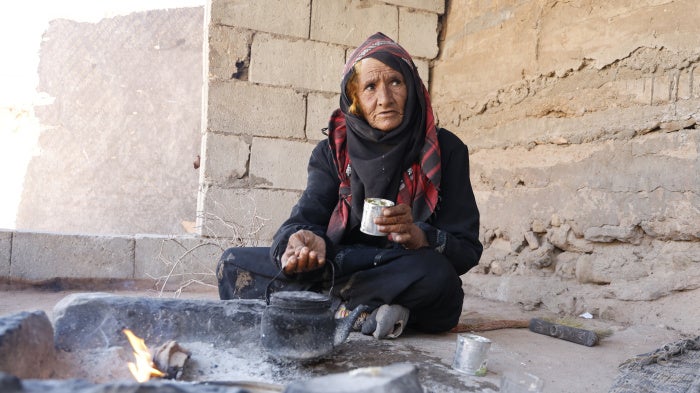
By late September, the Jordanian government was forcibly removing the Bedul community from Petra through coercive tactics such as cutting water access, halting wages, and detaining residents, violating their rights to housing and cultural preservation. While authorities claim the evictions aim to protect the archaeological site, they have failed to obtain the community’s consent or follow international legal standards.
Jordanians continues to experience high rates of unemployment along with rising poverty and living costs. Despite years of IMF programs, government debt remains high, and subsidy cuts led to price hikes without adequate support. In 2023, Human Rights Watch found that a World Bank–funded cash transfer program was flawed by errors and bias, leaving many without needed assistance.
Criminal Justice System
Local governors continued using the 1954 Crime Prevention Law to place individuals in administrative detention for up to a year, bypassing the Criminal Procedure Law. Jordan’s NCHR reported in 2024 that 20,437 people were administratively detained in 2024, marking a significant decrease from the 37,395 administrative detentions in 2022.
In April 2025, the Cabinet approved draft penal code amendments to expand non-custodial sentences such as community service, rehabilitation, and electronic monitoring, later passed by the Lower House and Senate committee. As of 2024, the National Center for Human Rights reported that despite existing provisions, courts have made very limited use of such alternatives in practice.