In May, Karol Nawrocki won the presidency, keeping the office in the hands of the right-wing Law and Justice (PiS) party, and setting up conflict with the reform agenda of Prime Minister Donald Tusk’s coalition government. Maintaining abusive migration policies, the government temporarily suspended the right to seek asylum, citing national security concerns, and continued its pushbacks at the Belarus border. Abortion remains virtually banned, and there are shortcomings in safeguarding media freedom.
Rule of Law
The government continued to struggle to restore the independence of the judiciary, dismantled by the previous PiS government, facing persistent obstruction by the PiS-aligned presidency. In April, Poland’s Justice Ministry outlined plans to address the status of approximately 2,500 judges appointed by the previous PiS-controlled National Council of the Judiciary (KRS). The plan proposes categorizing judges into three groups: “green” for recently appointed judges who would have their positions confirmed by a restored, legitimate KRS; “yellow” for judges promoted to more senior positions who would be demoted back to their previous roles; and “red” for judges whose appointments would be annulled, potentially returning them to their prior professions or assigning them to junior court roles. Submitted to the Council of Europe’s Venice Commission, the proposal aims to address concerns about the legitimacy of PiS-era judicial appointments. In May, the Commission expressed concern over its proportionality and fairness, stressing that changes to judges’ legal status must respect due process and European standards.
In July, Justice Minister Waldemar Żurek initiated dismissal proceedings against 46 presidents and vice-presidents of courts and nine Justice Ministry officials, as part of what he described as a mandate from Prime Minister Tusk to “clean up” the judiciary left impaired by the previous government. Żurek also started the removal of over 40 judges appointed as electoral commissioners whom he deemed lacking credibility, suspended another PiS-appointed judge, and declared that Małgorzata Manowska would no longer be referred to as the Supreme Court chief justice, but as its acting head, due to concerns over her appointment process.
In September, the PiS politically compromised Constitutional Tribunal ruled that its judgments should be considered legally binding and enforceable, regardless of the government's refusal to publish them. The government has withheld publication of over 40 rulings, challenging the tribunal's legitimacy due to judges’ manner of appointment under the previous PiS government.
Also in September, the Court of Justice of the European Union ruled that a Supreme Court chamber created under the PiS government is illegitimate, declaring its judgments “null and void” because its judges were unlawfully appointed.
In January, senior Israeli officials participated in events commemorating the Auschwitz concentration camp’s liberation. However, against a backdrop of protests and concern, Prime Minister Benjamin Netanyahu, sought on an arrest warrant by the International Criminal Court for alleged crimes in Gaza, did not take part, which would have violated Poland’s legal obligations as an ICC member.
Freedom of Media
Efforts to restore media freedom continued at a slow pace.
In January, Maciej Świrski, the then-head of Poland’s media regulator, the National Broadcasting Council, appointed under PiS, cancelled a scheduled interview with journalist Marta Gordziewicz of independent TVN24, demanding she provide proof of full-time employment and documents showing that her broadcaster was not in arrears on social security contributions. Gordziewicz had reported that the pro-PiS channel Telewizja Republika received millions in state advertising despite low viewership and was controversially awarded a public broadcasting license in 2024, while a competitor was denied. Świrski had previously drawn criticism for obstructing license renewals of outlets critical of PiS.
In May, then-presidential candidate Nawrocki sued news outlet Onet over reports accusing him of procuring sex workers and involvement in a dubious property deal, allegations he denied. Onet stood by its reporting.
Sexual Orientation and Gender Identity
In June, Poland’s Left party submitted a draft bill to the Sejm introducing civil partnerships for same-sex couples that would grant them many of the rights of marriage, including inheritance and social security. This followed an earlier bill presented by the government in October 2024. At time of writing, neither proposal had advanced to full adoption.
In April, the last local authority in Poland repealed its anti-LGBT “charter of family rights,” effectively ending the existence of all such discriminatory resolutions across the country, establishing so-called “LGBT-ideology free zones.” Over previous years, more than 100 municipalities and counties had enacted “LGBT-ideology-free” or “family charter” resolutions.
Also in April, President Andrzej Duda referred a government-proposed bill that would have expanded hate crime protections to include sexual orientation, gender, age, and disability to the Constitutional Tribunal, citing concerns that it could infringe freedom of expression.
In March, the Supreme Court issued a landmark ruling that eliminates the requirement for trans people to involve their parents in gender recognition proceedings.
Women’s and Girls’ Rights
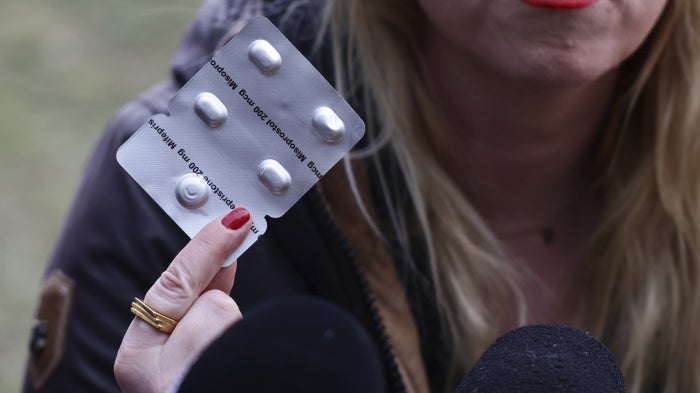
Abortion remains virtually banned, with abortion services only available in cases of risk to the pregnant person’s life or health, or when the pregnancy is the result of rape or incest.
In February, the definition of rape in the penal code was reformed to be based on lack of consent, not only violence, threat, or deception.
In March, the non-governmental organization Abortion Dream Team opened a center in Warsaw, which provides counseling, pregnancy tests, and assistance for people considering an abortion, including by helping them access medical abortion pills.
Attacks on Civil Society
In September, a court in Hajnówka acquitted five activists who had been charged with assisting migrants. The defendants were initially charged in March 2022 after they helped a group of Middle Eastern migrants, including a family with seven children, who had irregularly crossed the Belarus border. Prosecutors originally accused four of the activists of organizing illegal border crossings, a crime carrying up to eight years in prison. The charges were later reduced to enabling illegal stay in Poland, carrying up to five years’ imprisonment.
A Warsaw appeals court in February ordered a retrial in the case against women’s rights activist Justyna Wydrzyńska, who had been previously convicted for sending abortion pills to a pregnant woman. The court annulled the earlier ruling on procedural grounds tied to the improper appointment of one of the judges.
Asylum Seekers and Migrants
In March, Poland adopted a law empowering the government to temporarily suspend the right to seek asylum in designated zones along the Belarus border, citing the “instrumentalization of migration” by Belarus and Russia. The measure was immediately put into effect, blocking asylum applications from people crossing the border irregularly. In May, parliament voted to extend the suspension for another 60 days, and another 60 days in July. Although the law includes exemptions for children, pregnant women, those in urgent need of medical care, and individuals at risk of harm if returned, human rights groups stated these safeguards were not respected in practice and unlawful pushbacks continued.
The UN’s refugee agency in February warned that the draft law breaches nonrefoulement obligations by denying access to territory and fair procedures. In February, the Polish Helsinki Foundation for Human Rights said the draft law violates the constitution, entrenches pushbacks, and contravenes Poland’s obligations under EU law to guarantee the right to asylum. The Council of Europe’s human rights commissioner in March criticized the law for violating human rights standards.
Pushbacks, sometimes violent, on the border with Belarus continued. Between January and July, the We Are Monitoring rights group recorded 1,790 pushbacks at the Belarus border.
In August, President Nawrocki vetoed a bill that would have extended social support programs to Ukrainian refugees, arguing it overly privileged foreigners, and instead submitted his own proposal for making Ukrainian refugees’ access to social security and free health care conditional on being employed and contributing a share of their incomes. Nawrocki further proposed increasing penalties for illegal border crossing that would apply to all foreigners.