Despite some reforms, Malaysia continues to wield repressive laws to criminalize dissent, censor critical speech, and harass human rights defenders. Refugees and migrants face indefinite detention in overcrowded, unhygienic conditions.
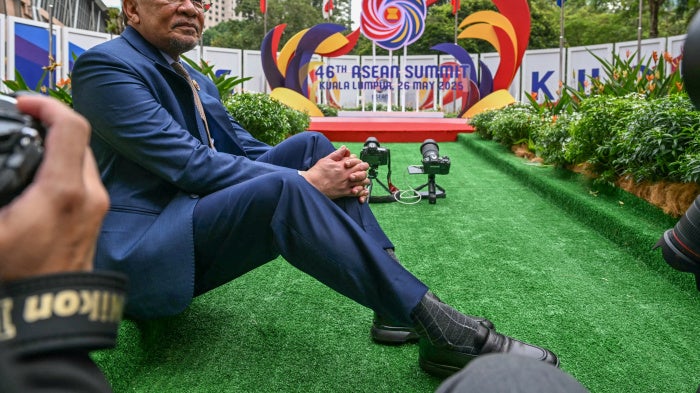
In 2025, Malaysia assumed the rotating chair of the Association of Southeast Asian Nations (ASEAN).
Freedom of Expression, Assembly, and Religion
On February 12, police arrested Sevan Dorsaisamy, executive director of the human rights organization SUARAM, for allegedly trespassing in a peaceful attempt to engage the Home Ministry regarding detention conditions at Sungai Buloh prison.
In February, the government announced plans to amend the Peaceful Assembly Act 2012 (PAA) and a moratorium on ongoing investigations. On July 1, Malaysia’s highest court unanimously ruled unconstitutional section 9(5) of the act, which penalizes organizers if they fail to notify police at least five days before a peaceful assembly. On July 22, civil society groups and human rights defenders were prevented from protesting on Parliament grounds by police and riot control forces.
In December 2024, the Malaysian parliament approved amendments to the Communications and Multimedia Act 1998 that give officials expanded authority to censor online content. In August, the Appeal Court ruled unconstitutional the words “offensive” and “annoy” in section 233, which has been regularly used to criminalize dissent.
Malaysia’s government widely censors books, including titles discussing gender and sexuality, under section 7(1) of the Printing Presses and Publications Act 1984.
New laws in Terengganu state threaten prison terms of up to two years for Muslim men who miss Friday prayers without a valid reason.
Refugees, Asylum Seekers, and Migrants
Malaysia is not a party to the 1951 Refugee Convention and lacks domestic asylum procedures. About 210,000 refugees and asylum seekers—including over 124,000 ethnic Rohingya Muslims and some 64,800 children—are registered with the United Nations Refugee Agency (UNHCR) but not granted legal status, unable to formally work or enroll in government schools.
In 2025, Malaysian authorities significantly escalated immigration raids. Between January and May, authorities arrested an estimated 34,000 individuals.
The Malaysian government was detaining about 18,000 migrants, refugees, and asylum seekers in immigration detention centers without judicial oversight, as of July 2025. Detainees are at risk of indefinite detention. Since 2019, the government has denied UNHCR access to immigration detention centers and Baitul Mahabbah centers, dedicated facilities for children ages 10 and younger. The home minister told parliament 10 percent of detainees were children as of July 2025.
Criminal Justice System
Malaysia abolished the mandatory death penalty in 2023. Re-sentencing processes have significantly reduced the number of people on death row. As of January 2025, the total was 140, down from 1,300 in November 2023.
Malaysia retains the death sentence for drug trafficking under the Dangerous Drugs Act 1952. Forty people remain on death row for drug-related offenses. Corporal punishment, which amounts to torture under international law, remains a mandatory alternative punishment to the death penalty for some offenses.
Malaysia detains individuals without trial under restrictive laws, such as the Security Offenses (Special Measures) Act 2012 (SOSMA). Following civil society pressure, the Home Ministry was finalizing its review of SOSMA at time of writing, with proposed amendments to be debated in parliament.
Sexual Orientation and Gender Identity
State-sponsored discrimination against LGBT people remains pervasive, including government funding of “conversion” practices. Malaysian law as well as state and federal territory Sharia (Islamic law) criminalize same-sex activity and gender nonconformity.
In June, Malaysian authorities in Kelantan State raided an alleged “gay party,” arrested 20 men, and charged three with “possession of homosexual pornographic material.” The Malaysian AIDS Council and the Health Ministry confirmed the event was a health outreach program providing HIV-related information. The Kelantan police chief confirmed authorities found no evidence of sexual activity.
In November, local authorities raided a gym and sauna in Kuala Lumpur suspected of “operating as a front for organizing same-sex activities.” 202 people were arrested in the raid; 171 Malaysian men were released after 24 hours, while 31 foreigners were remanded for immigration processing.
In May, organizers were forced to postpone a workshop titled “Pride Care: Queer Stories and Sexual Health Awareness” following public condemnation from the religious affairs minister, a police investigation, and online harassment.
Women’s Rights
In June, the Federal Court partially overturned a 2014 fatwa against Sisters in Islam (SIS), a women’s rights organization.
Malaysia launched its first National Women’s Policy and Women’s Development Plan in March 2025, which addresses access to education, health care, and economic and political participation.
Advocates continue to highlight flaws in Malaysia’s Persons with Disabilities Act 2008. The Malaysia Bar has called for an amendment to the Federal Constitution explicitly prohibiting disability-based discrimination.
Environment and Indigenous Peoples’ Rights
In February, the Sarawak State government announced it would no longer grant provisional leases to palm oil companies, nearly seven years after the federal government capped the expansion of oil palm plantations nationwide.
In August, Malaysia launched its first National Action Plan on Business and Human Rights (NAPBHR), which commits the government to new legislation including a climate change bill and a freedom of information act enabling access to environmental impact assessments.