Summary
White phosphorus munitions produce fire when their chemical contents react with oxygen. Due to their incendiary effects, these munitions cause painful and penetrating burns as well as respiratory damage and organ failure. Individuals who survive initial exposure experience long-term physical, psychological, and socioeconomic harm. The use of airburst white phosphorus munitions over populated areas, such as Israel’s attacks in southern Lebanon from 2023-2026, is indiscriminate and violates international humanitarian law, also known as the laws of war. The impacts of white phosphorus munitions have been described by states and a range of experts as cruel, excruciating, horrific, and unacceptable.
White phosphorus munitions, however, fall within a legal gap because they are not covered by specific international law. The 1980 Protocol III to the Convention on Conventional Weapons (CCW) regulates incendiary weapons, which it defines as being “primarily designed” to set fires and burn people. This definition excludes weapons that are designed for other purposes even if they produce the same incendiary effects. It does not encompass white phosphorus munitions—generally designed to be used as obscurants or illuminants—although their humanitarian consequences are comparable to those of weapons defined by the protocol as incendiary.
This report assesses white phosphorus munitions as exemplars of so-called “weapons with incendiary effects” under the Martens Clause. The clause dates back to the 1899 Hague Convention and has since appeared in international humanitarian and disarmament law treaties, including Additional Protocol I to the 1949 Geneva Conventions, adopted in 1977, and the CCW.
The Martens Clause is triggered when there is no treaty dedicated to a topic, as is the case with white phosphorus munitions. The clause sets out that in such cases, established custom, the principles of humanity, and the dictates of public conscience provide protection for civilians and combatants. This report finds that white phosphorus munitions violate both the principles of humanity and dictates of public conscience. Stronger and more specific law is, therefore, needed to bolster humanitarian protections from munitions containing white phosphorus.
The Martens Clause provides an appropriate framework for examining white phosphorus munitions given the clause’s role in the history of the CCW and its protocols. Concerns about the principles of humanity and dictates of public conscience helped motivate the drafters of Protocol III on incendiary weapons; these concerns are equally applicable to white phosphorus munitions. In addition, the CCW’s preamble includes the Martens Clause, suggesting that it is a fitting rationale for future regulation.
White phosphorus munitions run afoul of the principles of humanity because they inflict a terrible human cost. Those principles require the humane treatment of others, which involves compassion, and respect for human life and human dignity. White phosphorus munitions fail on both counts. The weapons endanger civilians, particularly when airburst, and cause severe and painful wounds that are difficult to treat and cure. In addition, white phosphorus munitions undermine human dignity, harming survivors’ perceptions of self and participation in society and disproportionately affecting women and children, especially young girls, due to the social consequences of an altered appearance and permanent scarring.
White phosphorus munitions also contravene the dictates of public conscience, moral guidelines based on an understanding of what is right and wrong. Many states have expressed serious humanitarian and legal concerns about the use of white phosphorus munitions and recommended taking steps to address them. International organizations have used similarly strong language in their critiques and calls for action. Civil society groups and medical professionals have condemned white phosphorus due to its egregious impacts and urged states to adopt more effective legal protections. Finally, some financial institutions have decided not to invest in white phosphorus munitions after finding them as “controversial” as certain banned weapons, such as antipersonnel landmines and chemical weapons, due to their effects on civilians.
States have raised the issue of incendiary weapons and white phosphorus munitions in CCW meetings since 2010. The forum operates by consensus, however, so opposition, particularly by Russia, has prevented the allocation of dedicated time for discussions, something many states have called for. It is, therefore, time for states to move beyond the CCW. They should take up the topic elsewhere—whether at the United Nations or in an independent forum—so they can achieve meaningful humanitarian results.
Recommendations
To address the humanitarian consequences posed by incendiary weapons and weapons with incendiary effects, including white phosphorus munitions, Human Rights Watch and the International Human Rights Clinic at Harvard Law School urge states to:
Adopt stronger international law that closes existing legal loopholes and further stigmatizes the use of incendiary weapons and weapons with incendiary effects, including white phosphorus munitions. A complete ban on the production, transfer, stockpiling, and use of these weapons would have the greatest humanitarian benefits.
Condemn and continue to raise awareness about the production, transfer, stockpiling, use, and humanitarian consequences of these weapons.
Highlight that white phosphorus munitions violate the principles of humanity and dictates of public conscience, given that the Martens Clause has motivated the development of disarmament law in the past.
Address the issue of incendiary weapons and weapons with incendiary effects at the UN General Assembly’s First Committee on Disarmament and International Security, a forum that is inclusive and not bound by consensus decision-making.
Continue addressing the issue at Convention on Conventional Weapons meetings, including agreeing at the 2026 Review Conference to dedicate time to discuss the adequacy of Protocol III’s definitions and regulations.
Consider convening an independent meeting to discuss options for responding to the humanitarian consequences of incendiary weapons and weapons with incendiary effects.
Methodology
In this jointly researched and published report, Human Rights Watch and the International Human Rights Clinic at Harvard Law School (IHRC) apply the legal framework of the Martens Clause to the issue of white phosphorus munitions, examining in a new light a topic they have worked on for more than 15 years. Their findings are based on a combination of legal analysis, open-source investigation, in-person and remote interviews, monitoring of diplomatic procedures, and desk research.
For the history and interpretation of the Martens Clause, Human Rights Watch and IHRC drew from a joint report they published in 2018 about the Martens Clause and autonomous weapons systems, Heed the Call: A Moral and Legal Imperative to Ban Killer Robots.[1] The Martens Clause does not define the “principles of humanity” and “dictates of public conscience,” but the terms have been the subject of much legal and academic discussion. In Heed the Call, Human Rights Watch and IHRC did an in-depth study of relevant law and scholarship and identified key elements of those two prongs of the Martens Clause. The current report applies the same understanding of those terms to white phosphorus munitions. Given that customary law, the third prong of the Martens Clause, is applicable even without the provision, this report does not consider that body of law.
To verify new incidents of the use of white phosphorus munitions in southern Lebanon in 2025 and 2026, Human Rights Watch worked with Ahmad Baydoun, a researcher at TU Delft in the Netherlands and editor of the platform WhitePhosphorus.info which monitors white phosphorus use in Lebanon. In total, Baydoun analyzed and verified 11 videos and 31 photographs from 2025-2026, which Human Rights Watch corroborated. These photographs and videos were either uploaded to social media by local news organizations or witnesses or filmed by news agencies. Where possible, researchers confirmed the exact locations where the photographs or videos were captured and uploaded times to determine when they were captured.
Human Rights Watch and IHRC conducted interviews with 16 survivors, witnesses, medical personnel, researchers, and other experts to gather testimony about specific incidents and document the harm caused by incendiary weapons and white phosphorus. Research in medical journals provided further details about the nature of short- and long-term injuries, which are closely examined in Section IV on the Principles of Humanity.
Human Rights Watch and IHRC have also participated in and tracked the UN discussions of incendiary weapons and white phosphorus since 2010. Their monitoring and analysis of the positions of states, international organizations, and civil society groups contributed to Section V on the Dictates of Public Conscience. Additional evidence of the public conscience came from desk research.
I. White Phosphorus: Harm, Use, and Law
Incendiary weapons produce heat and fire through the chemical reaction of a flammable substance, causing excruciating immediate injuries and death and, for those who survive, long-term physical, psychological, and socioeconomic harm.[2] International law regulates incendiary weapons that are “primarily designed” to set fires and burn people.
Other weapons with incendiary effects, which are multipurpose but have the same humanitarian consequences, fall through a legal loophole and escape specific regulation. White phosphorus munitions are the most well-known of these weapons with incendiary effects used in contemporary conflicts. Human Rights Watch has documented their use in at least eight armed conflicts, including most recently in Lebanon in 2026.[3]
White Phosphorus and Its Incendiary Effects
White phosphorus is a chemical substance, dispersed by artillery shells, bombs, rockets, or grenades, that ignites and burns on contact with oxygen.[4] It can create light and intense heat, reaching around 815°C/1,500°F, and produces a dense, white smoke that lasts about seven minutes. The substance, which has a distinctive garlic-like odor when ignited, continues to burn until it is deprived of oxygen or has consumed itself. Because white phosphorus munitions are designed to be used for their ability to burn, not for their toxicity, they are not considered chemical weapons and are not covered by the Chemical Weapons Convention.[5]
White phosphorus munitions can have multiple purposes. They are frequently used on the battlefield by militaries for creating smokescreens, illuminating targets, marking and signaling, and igniting fuel supplies, ammunition, and other military materiel. Armed forces have also used white phosphorus munitions to “smoke out” enclosures or fortifications, causing anyone inside to flee the smoke and fire by going outside, where they can be attacked by direct gunfire or high explosive rounds.
Weapons containing white phosphorus raise humanitarian concerns because they cause harm as horrific as traditional incendiary weapons or worse.[6] As detailed in Section IV on the Principles of Humanity, white phosphorus inflicts severe burns that are slow to heal and highly susceptible to infections. If white phosphorus fragments remain in a wound, they can create a deeper burn and enter the bloodstream, leading to the failure of multiple organs.
White phosphorus also produces hot air and thick smoke that can damage the respiratory system. The inadequate medical resources available in armed conflict settings and limited knowledge about the distinctive properties of white phosphorus can exacerbate the already challenging process of treating serious burns.
Individuals who survive their initial injuries often experience lifelong effects. Contractures—the permanent tightening of muscles and other tissue—impede mobility, while the trauma of the initial attack, painful treatments, and severe scarring can lead to psychological harm and potential social exclusion due to attitudinal barriers and prejudice. The fires caused by white phosphorus can also destroy civilian structures and other property, damage crops, kill livestock, and contribute to displacement.
Recent Uses of White Phosphorus
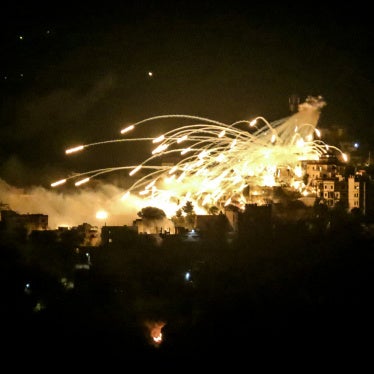
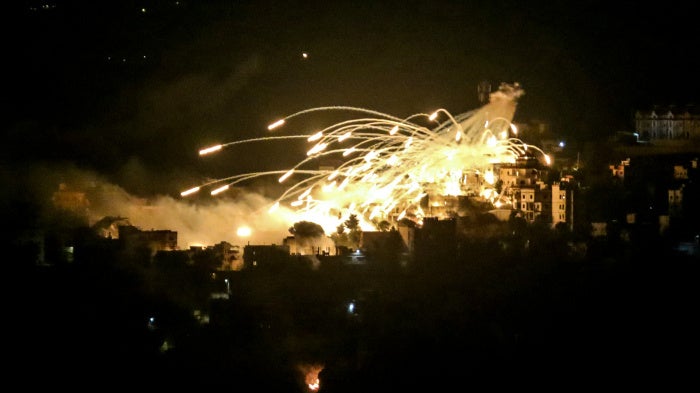
White phosphorus munitions have been used in numerous conflicts over the past two decades. Human Rights Watch confirmed that Israeli forces unlawfully used at least two artillery-fired white phosphorus munitions over homes in the southern Lebanese town of Yohmor on March 3, 2026. It verified and geolocated eight images over the town. Some of the photographs show workers extinguishing fires on residential rooftops and in a car and smoke emerging from the balconies of a home, which civil defense workers attributed to white phosphorus.[7]
Additional attacks in southern Lebanon have been reported in 2026 by Ahmad Baydoun, a researcher at TU Delft in the Netherlands, who has done extensive open-source verification and geolocation of white phosphorus use in Lebanon, archived on WhitePhosphorus.info.[8] Baydoun verified video and photographs showing 22 incidents involving the use of 33 white phosphorus munitions in Israeli attacks in the region between March and May 2026. Baydoun geolocated 17 of those incidents to the towns of Al Khiam, Arnoun, Yohmor, and Zawtar. Human Rights Watch independently verified and geolocated these incidents and another one Baydoun reported in 2025. Baydoun’s online archive documents a total of 286 white phosphorus “strikes” (bursts of individual munitions) in southern Lebanon between October 2023 and May 2026 using videos and photographs.[9] Human Rights Watch has not independently verified the strikes from 2023-2024.
Other reports of the use of white phosphorus munitions since 2000 include that by Israel in Gaza in 2023 and 2008-2009; by US-led coalition forces against the Islamic State in Iraq and Syria in 2017; by Saudi Arabia-led coalition forces in Yemen in 2016; by Ethiopian forces in Somalia in 2007; by NATO forces, primarily from the United States, and anti-government forces in Afghanistan between 2005-2011; and by the United States in Iraq in 2004.[10]
International Law on Incendiary Weapons
Protocol III to the Convention on Conventional Weapons (CCW), adopted in 1980, is the only international law specifically dedicated to regulating incendiary weapons. As of August 2026, it had 117 high contracting parties, states that had ratified or acceded to the convention. The protocol prohibits the use of air-dropped incendiary weapons in “concentrations of civilians.”[11] It has two major loopholes, however, which reduce its ability to protect civilians.
First, Protocol III adopts a narrow definition of incendiary weapons, covering only those that are “primarily designed” to set fires and inflict burns. It thus leaves multipurpose weapons with incendiary effects unregulated. As a result, Protocol III does not clearly encompass weapons like those containing white phosphorus, which are “primarily designed” to create smokescreens or provide illumination.[12]
Second, Protocol III imposes more stringent standards on air-dropped incendiary weapons than ground-launched ones. Incendiary weapons and weapons with incendiary effects, however, cause the same kinds of harm regardless of their delivery method.[13]
International State of Play
The continued threats to civilians along with Protocol III’s two major loopholes have motivated dozens of states, nongovernmental organizations (NGOs), and others at UN meetings to call for reassessing the protocol and strengthening international protections for civilians from incendiary weapons and weapons with incendiary effects.
Following the Israeli military’s extensive use of white phosphorus munitions in Gaza, CCW high contracting parties, at their annual meeting in 2010, took up the issue of incendiary weapons and white phosphorus munitions for the first time since the adoption of Protocol III 30 years earlier. Every year since then, as detailed in Section V on the Dictates of Public Conscience, high contracting parties have made statements and submitted working paper
s criticizing the use of incendiary weapons and weapons with incendiary effects and expressing outrage at the human cost. From 2011-2021, the final reports of CCW annual meetings and review conferences included language to reflect states’ concerns.[14]
States have also called for setting aside time to discuss the humanitarian consequences of incendiary weapons and the adequacy of Protocol III, but the CCW’s consensus-based decision making has presented an obstacle to concrete progress.[15] High contracting parties agreed to make Protocol III a separate agenda item at their 2017 and 2018 annual meetings. Russia, however, blocked renewal of the agenda item after that.
At the 2021 Sixth Review Conference, Ireland put forward a proposal for the CCW chair to conduct informal consultations on the implementation and universalization of Protocol III before the next annual meeting. Despite the widespread support for that proposal or some form of dedicated discussions, the idea has yet to achieve consensus, largely due to opposition by Russia.
Given that the consensus process has led to a stalemate, states should look elsewhere to address the problems raised by white phosphorus munitions, and incendiary weapons more broadly. As a starting point, they should devote more attention to the issue at the UN General Assembly’s First Committee on Disarmament and International Security and consider convening informal independent meetings to discuss options for responding to this grave humanitarian matter.
II. The Martens Clause
The Martens Clause, a key provision of international humanitarian law, offers protections for civilians and combatants in the absence of a dedicated treaty.[16] It states that under such circumstances, these groups are protected by customary international law, the principles of humanity, and dictates of public conscience. If weapons fail to meet these criteria, as is the case with white phosphorus munitions, stronger and more specific legal protections are needed.
History of the Martens Clause
The Martens Clause, named for the prominent Russian international lawyer Fyodor Fyodorovich Martens, first appeared in the preamble of the 1899 Hague Convention (II) with Respect to the Laws and Customs of War on Land. In that iteration, the Martens Clause reads:
Until a more complete code of the laws of war is issued, the High Contracting Parties think it right to declare that in cases not included in the Regulations adopted by them, populations and belligerents remain under the protection and empire of the principles of international law, as they result from the usages established between civilized nations, from the laws of humanity, and the requirements of the public conscience.[17]
The clause thus creates protections for civilians and combatants where no specific law exists.
The Martens Clause has since evolved and became more established.[18] In 1948, the US Military Tribunal at Nuremberg described it as a “legal yardstick to be applied if and when the specific provisions of [existing law] do not cover specific cases occurring in warfare.”[19]
Additional Protocol I to the 1949 Geneva Conventions, adopted in 1977, includes the modern iteration of the Martens Clause, and the version used in this report, as one of its “general principles”:
In cases not covered by this Protocol or by other international agreements, civilians and combatants remain under the protection and authority of the principles of international law derived from established custom, from the principles of humanity and from the dictates of public conscience.[20]
Disarmament Treaties
The Martens Clause has also informed and featured in disarmament treaties. During the League of Nations process leading to the 1925 Geneva Gas Protocol, for example, states frequently emphasized the inhumane nature of poison gas in language reminiscent of the principles of humanity. A League of Nations subcommittee concluded that such means of warfare would be “too horrible for use” given their “terrible nature.”[21] Colombia referred to the weapons as “methods of barbarism” that should be abolished,[22] and the United States and Poland proposed text that stated the treaty’s goal was to “ameliorat[e] the suffering of humanity.”[23]
With regard to the dictates of public conscience, a League of Nations subcommittee found that the use of poison gas would provoke a revolt of “the conscience of mankind,”[24] while Canada found it “hopeful” that there was “a large measure of unanimity in our desire to outlaw chemical warfare.”[25] The final protocol also notes the importance of public conscience.[26]
Since 1925, most treaties containing prohibitions on weapons include the Martens Clause.[27] The clause is referenced in various forms in the preambles of the 1972 Biological Weapons Convention,[28] 1980 Convention on Conventional Weapons,[29] 1997 Mine Ban Treaty,[30] 2008 Convention on Cluster Munitions,[31] and 2017 Treaty on the Prohibition of Nuclear Weapons.[32] The clause has also been repeatedly invoked during UN discussions of autonomous weapons systems.
Significance of the Martens Clause
Interpretations of the legal significance of the Martens Clause vary.[33] Some experts adopt a narrow view, asserting that the Martens Clause serves merely as a reminder that if a treaty does not expressly prohibit a specific action, the action is not automatically permitted. In other words, states should refer to customary international law when treaty law is silent on a specific issue.[34] This view addresses only one aspect of the clause—established custom. Treating the principles of humanity and the dictates of public conscience as simply elements of established custom would render them meaningless.
Others argue that the Martens Clause is itself a distinct source of law.[35] They contend that the plain language of the Martens Clause elevates the principles of humanity and the dictates of public conscience to independent legal standards against which to judge unanticipated situations and emerging forms of military technology.[36] On this basis, a means or method of warfare that conflicts with either standard is per se unlawful.
The position taken in this report is that the Martens Clause provides guidance by which to assess weapons. Weapons should be judged for their ability to uphold the “principles of humanity” and the “dictates of public conscience.” If they raise concerns under these prongs of the clause, adopting new, more specific law that eliminates doubts about the legality of the weapons can increase protections for civilians and combatants.
III. The Martens Clause and White Phosphorus
The Martens Clause is an appropriate provision of international humanitarian law to apply to white phosphorus munitions for several reasons. First, multipurpose weapons fall within a loophole in existing law, triggering the clause, because CCW Protocol III only deals with incendiary weapons that are “primarily designed” to set fire or burn people. Second, as discussed in Sections IV and V, white phosphorus munitions raise serious concerns under the principles of humanity and dictates of public conscience. Finally, the Martens Clause played an important role in the history and text of the CCW and Protocol III, demonstrating that states have seen the relevance of the principles of humanity and dictates of public conscience to this issue before.
Origins of the CCW
In the lead up to the 1980 CCW, states, international organizations and civil society referenced the Martens Clause implicitly and explicitly. Concerns about the use of incendiary weapons—from states, international organizations, NGOs, and the UN secretary-general—generated a strong push for international regulation, particularly in light of the US war in Southeast Asia.[37] Two conferences of government experts, convened by the International Committee of the Red Cross (ICRC) in Switzerland—one in Lucerne in 1974, one in Lugano in 1976—initiated discussions of an international framework to govern the use of weapons, including incendiary ones.
Role of the Martens Clause
The Martens Clause played a central role in these meetings of government experts, which led to the negotiations of the CCW and its first three protocols.[38] The report from the ICRC on the Lucerne Conference said that “[i]n the quest for further criteria governing the use of weapons, reference was repeatedly made to the Martens clause.”[39]
Many conference participants emphasized the cruel and inhumane nature of incendiary weapons and white phosphorus, characteristics inconsistent with the principles of humanity. According to the ICRC report, “[a]ll experts agreed that … generally speaking, severe burn wounds were probably the most painful type of wound and frequently remained so for long periods of time.”[40] Moreover, some burn experts testified that they believed napalm and white phosphorus burns posed extraordinary harm. They said, “[Such] burns were generally more severe and deeper, and hence more painful, with a greater risk of mortality and permanent disability, than would be expected of wounds resulting from any other burn injury.”[41] Participants were alarmed that white phosphorus could inflict extensive injuries and then continue burning, exacerbating existing wounds.[42]
According to the ICRC, the dictates of public conscience also played “an important role in the debate.”[43] Public outrage at the US use of napalm in Vietnam motivated many negotiators to advocate for prohibitions to incendiary weapons.[44] When discussing the public opinion against incendiary weapons, participants described the “abhorrence … provoked by the use of certain weapons, such as napalm and other incendiary weapons.”[45]
Final Result
An absolute prohibition on incendiary weapons proved impossible due to the pressures of the Cold War, but states favoring a ban accepted a weaker regulatory instrument to restrict weapons they considered unacceptable.[46] These states as well as civil society groups, nevertheless, expressed the hope to revisit Protocol III and strengthen its provisions in the future.[47] Some states specifically sought to expand the protocol’s scope, voicing concern over the exclusion of white phosphorus munitions due to “the characteristics of [their] burn injuries.”[48]
Reflecting the role of the Martens Clause in the process leading to the treaty, the clause itself appears in the CCW’s preamble, in which high contracting parties:
[Confirm] their determination that in cases not covered by this Convention and its annexed Protocols or by other international agreements, the civilian population and the combatants shall at all times remain under the protection and authority of the principles of international law derived from established custom, from the principles of humanity and from the dictates of public conscience.[49]
The language illustrates the importance with which drafters viewed the Martens Clause. Moreover, by including it, the drafters established a framework to assess weapons in the future. States have already invoked the Martens Clause when negotiating Protocol IV on Blinding Laser Weapons.[50] Applying the Martens Clause to weapons with incendiary effects, including white phosphorus munitions, is not only appropriate now—it is called for.
IV. Principles of Humanity
The humane treatment of others and respect for human life and dignity are key components of the principles of humanity. Failure of a means or method of war to meet these two standards highlights the need for stronger law in that area. Due to the egregious harm they cause, white phosphorus munitions are inconsistent with both. As a result, the weapons run counter to the Martens Clause and warrant new regulation to strengthen humanitarian protections.
Humane Treatment
Criteria
The first component of the principles of humanity is the humane treatment of others. “Humanity” is often defined as “the quality of being humane.”[51] The obligation to treat others humanely is a key element of international humanitarian law and international human rights law.[52] It appears, for example, in Common Article 3 of the Geneva Conventions and the International Covenant on Civil and Political Rights.[53] To treat others humanely, one must exercise compassion.[54]
Jurist and legal practitioner Jean Pictet’s description of compassion in the context of international humanitarian law provides a useful framework for analyzing whether the use of a weapon is consistent with the humane treatment of others. Pictet explains that acting with compassion builds on the premise (1) “that non-combatants shall be spared as far as possible”; (2) “that wounds inflicted be [as] light as possible”; (3) “that the wounds cause the least possible pain”; and (4) that the wounds are such “that the injured can be treated and cured.”[55] White phosphorus munitions fail on all four counts.
Indiscriminate Use of White Phosphorus
The use of white phosphorus munitions does not meet the criteria “that non-combatants shall be spared as far as possible” when it involves indiscriminately airbursting the munitions in a populated area. Such attacks violate the principles of humanity as well as international humanitarian law’s principle of distinction.
Airbursting white phosphorus munitions in populated areas, which involves detonating the munitions in the air, fails to distinguish between civilians and combatants due the wide area effect that results. Burning felt wedges impregnated with white phosphorus disperse over an area between 125 and 250 meters in diameter.[56] The smoke from white phosphorus is also vulnerable to the wind and can affect neighboring villages.[57]
White phosphorus munitions are especially dangerous when employed in cities. The Israeli military has repeatedly used such munitions in Gaza, one of the most densely populated areas in the world. They airburst white phosphorus in Gaza following the Hamas-led attacks on Israel on October 7, 2023.[58]
The Israeli military also made extensive use of white phosphorus munitions in Gaza in 2009 causing significant civilian harm and generating international and domestic outrage. For example, the Israeli military airburst these munitions over the UN Relief and Works Agency for Palestine Refugees in the Near East (UNRWA) Headquarters Compound in Gaza City. The attack injured a UN worker and two other civilians, while fires destroyed warehouses containing US$3.7 million in medical supplies in addition to humanitarian food aid, blankets, and hygiene kits.[59]
Muhammad Abu Shamla, an UNRWA security guard who was on the scene at the time of the attack, told Human Rights Watch that he went outside to help a colleague when he heard fire was threatening fuel trucks:
The smell was terrible, like garbage. There was fire in the garage. We started moving the cars that hadn't caught fire. There were clouds of black smoke everywhere. I saw one shell in the ground that hadn't exploded. I didn't sleep at all that night; I kept running around to fight the fire. The fires were still raging on and off when I left the compound the next morning at 9 a.m.[60]
Use of white phosphorus munitions can also be indiscriminate when they are airburst over smaller towns and villages. As noted in Section I, Human Rights Watch verified the use of white phosphorus munitions by the Israeli military over homes in southern Lebanon from 2023-2026.[61] From October 2023 to June 2024, specifically, Human Rights Watch verified their use in at least 17 municipalities. In at least five of those municipalities, Human Rights Watch documented through photographs and video evidence that white phosphorus landed on the roofs of residential buildings.[62] These attacks affected civilians in numerous ways, including by causing smoke inhalation, damaging crops, and contributing to displacement.[63]
White phosphorus munitions also leave behind remnants that can harm civilians after an attack, exacerbating the inability to spare non-combatants “as far as possible.” In 2024, the Mines Advisory Group encountered white phosphorus remnants that had yet to ignite in southern Lebanon. The Mines Advisory Group reported, “[w]hite phosphorus contamination can be difficult and dangerous to deal with, requiring specialist skills and equipment. Its impact on the environment and agricultural land can be serious and long-lasting.”[64]
Severity and Extent of Harm
White phosphorus munitions also run contrary to the principles of humanity because the severity and extent of the harm they inflict are inconsistent with the second criteria of humane treatment. These munitions produce wounds that are not “as light as possible.”
White phosphorus causes deep burns, sometimes to the bone. Because white phosphorus reacts when it comes into contact with oxygen, if any particles remain after treatment, they can reignite when bandages are removed. White phosphorus burns are particularly grave so burns over a 10 percent total body surface area (TBSA) can lead to sudden death.[65] Given that burns of the same size cover a greater percentage of a child’s body, burns in children typically have a higher TBSA percentage than adults with the same amount of exposure.[66] Burns that are deep, can reignite, and are especially lethal cannot be considered “light” wounds.
White phosphorus can cause a range of other injuries. Burns to the head and neck can inflame the upper airway, making it difficult to breathe.[67] Carbon monoxide and carbon dioxide cause poisoning and respiratory or organ failure when inhaled, even when no burns occur.[68] Respiratory damage is particularly serious with white phosphorus because it produces a heavy smoke, which the researcher Ahmad Baydoun compared to a “storm or a fog.”[69] White phosphorus can also irritate the eyes and make them highly sensitive to light.[70]
The experience of the Abu Halima family exemplifies the severity and extent of harm caused by white phosphorus—and represents the opposite of humane treatment. On January 4, 2009, three 155mm artillery projectiles fired by Israeli forces and containing white phosphorus hit their home in the northern part of the Gaza Strip. Five members of the family died in the attack. Muhammed, the family’s 24-year-old son, said he found the bodies of his father and three brothers completely charred.[71]
The white phosphorus also set the clothes of Muhammed’s wife, Ghada, 21, and their 2-year-old daughter, Farah, aflame. The injuries likely had a high TBSA because Ghada reported that her “whole body was burned.”[72] She was transferred to an Egyptian hospital, where she “underwent a series of treatments including surgery, disinfection of the burns, and skin grafts.” Ghada died nearly three months later.[73]
Farah was medically evacuated. She had scars covering 80 percent of her body and required years of treatment.[74]
Intense Pain
White phosphorus munitions are also problematic under the principles of humanity because their burns are excruciatingly painful as well as severe. Doctors often describe burns as among the most painful injuries an individual can face. Patients with severe burns “require maximum doses of pain medications … once or twice a day,” said Dr. Stephanie Nitzschke, a surgeon at Brigham and Women’s Hospital in Boston, Massachusetts, and director of the hospital’s burn center.[75]
White phosphorus munitions only worsen these factors. White phosphorus causes “a tube of burn tissue going all the way inside” of a patient’s body, according to British-Palestinian physician Dr. Ghassan Abu Sittah, who treated survivors of weapons containing the substance at al-Shifa Hospital in Gaza in 2009 and 2023. [76] In so doing, white phosphorus can exacerbate the impact of a wound. Dr. Abu Sittah explained that the depth of the burns means they often result in far more severe and complex impairments than those caused by other weapons.[77] The physical and psychological pain from an injury can last for the rest of a survivor’s life.
Treatment and Curing Challenges
Raising further concerns under the principles of humanity, the use of white phosphorus munitions also fails the fourth criteria of humane treatment: that the wounds are such “that the injured can be treated and cured.” Injuries caused by white phosphorus are extremely difficult to treat and rarely, if ever, cured.
Treatment Challenges
Burn injuries, including those caused by white phosphorus, present distinct treatment challenges. In the immediate aftermath of being injured, survivors of severe burns frequently require “liters and liters of fluid,” breathing tubes, pain medication and sedatives, and feeding tubes to provide nutrition.[78] The long-term care, which involves repeated surgeries, physical therapy, and psychological support, has been described as “one of the most complex, time-consuming, and costly endeavors in rehabilitation medicine.”[79]
Armed conflict exacerbates the challenges of treating burns. People injured in warfare lack access to specialized health care. There are fewer medical personnel; insufficient supplies, equipment, and intensive care facilities; and gaps in care as patients are transferred to other hospitals without thorough documentation. These limitations can interfere with the ability of even highly skilled physicians to provide adequate care.[80]
Treating white phosphorus injuries in particular presents even greater difficulties. The potential for the substance to reignite when exposed to oxygen creates dangerous complications. In 2009, Razia, an 8-year-old Afghan girl, arrived at the US hospital at Bagram Air Base outside Kabul, having been seriously injured by a white phosphorus munition. The medical team treating her did not know that she still had white phosphorus on her face and in her throat. When they placed an oxygen mask over her mouth, the oxygen reignited the remnants, and the mask quickly melted. As the doctors attempted to scrape the dead tissue from what remained of Razia’s skin, flames came out of her wounds, endangering the medical staff as well as the girl. Over the next three months, Razia received around-the-clock care and more than 15 surgeries.[81]
In addition to facing difficulties identifying white phosphorus, medical personnel may not have previous experience treating the injuries it inflicts. In the wake of the 2009 white phosphorus attacks in Gaza, for example, many doctors and nurses had not previously encountered white phosphorus burns and initially treated them as ordinary burns.[82] Had the staff known the source of the wounds, they could have applied specialized care and taken precautions, such as removing white phosphorus particles and wearing protective equipment, to help protect their patients and themselves.[83]
These challenges to treatment provide yet another indication of how white phosphorus munitions are inconsistent with the principles of humanity.
Curing Challenges
The injuries caused by white phosphorus are as hard to cure as they are to treat, raising additional concerns under the principles of humanity. Survivors can experience physical impairments and psychological effects for the rest of their lives. According to Dr. Rola Hallam, a British-Syrian doctor who treated people injured in an incendiary weapon attack in Syria, said that the incendiary effects “tend to kill you either immediately or pretty quickly, or you survive but with … the need for ongoing medical attention and care.”[84]
Burns to the neck or head can cause difficulty in swallowing and speaking,[85] while facial burns can cause nasal and ear passages to “abscess with unbearable pain to the patient.”[86] Long-term skin damage includes malignant skin lesions,[87] dryness, and hypersensitivity, or loss of sensation.[88] Burns can also destroy the oil glands and tiny hairs in the skin so that it becomes “like a piece of paper that has no ability to protect itself.”[89] The likelihood of permanent physical disability, including loss of mobility,[90] is higher for those with burns covering a large part of their body.[91] Children are likely to sustain long-term disabilities and, because their bodies are still developing, scarring may restrict their growth and lead to a loss in skin elasticity.[92]
In addition, survivors face lifelong mental and emotional harm. Dr. Nitzschke said the mental health effects of burn injuries “include but are not limited to anxiety, depression, post-traumatic stress disorder (PTSD), despondence, helplessness, and loneliness.”[93] The combination of severe burn injuries and the social, environmental, and psychological challenges that survivors may encounter can contribute to feelings of hopelessness or thoughts of wanting to die.[94]
Respect for Human Life and Dignity
Criteria
The second component of the principles of humanity requires that weapons not undermine respect for human life and dignity. To respect human life, actors should take steps to minimize death and injury within the framework of international law.[95] The 1966 International Covenant on Civil and Political Rights states that “[n]o one shall be arbitrarily deprived of his life.”[96] It limits the use of lethal force to circumstances in which it is absolutely necessary to protect human life, constitutes a last resort, and is applied in a manner proportionate to the threat.
During armed conflict, international humanitarian law determines what constitutes arbitrary or unjustified deprivation of life. It requires that actors comply with the rules of distinction, proportionality, and military necessity in situations of armed conflict.
Respect for human dignity considers not only whether humans are killed or hurt, but also how.[97] Dictionaries define dignity as “the quality of being worthy or honourable”[98] and “the importance and value that a person has, that makes other people respect them or makes them respect themselves.”[99] Humans should be recognized as unique individuals and not reduced to objects with instrumental or no value.[100]
The importance of human dignity is expressed in numerous international instruments, including the Universal Declaration of Human Rights, the International Covenant on Civil and Political Rights, and the African Charter on Human and Peoples’ Rights.[101] Common Article 3 of the Geneva Conventions prohibits, in non-international armed conflicts, “outrages upon personal dignity.” The ICRC commentary on that article interprets the term as “an act in which ‘[t]he perpetrator humiliated, degraded or otherwise violated the dignity of one or more persons.’”[102]
Failure to Respect Life or Dignity
The use of white phosphorus munitions raises concerns under the respect for human life criteria because of the threats they pose to civilians. As discussed above, their use when airburst in populated areas is indiscriminate. In addition, using a smokescreen or illuminant with known indiscriminate and grave incendiary effects suggests a failure to take all feasible precautions to avoid or in any event minimize civilian harm as required under international humanitarian law.[103] Such effects are particularly unacceptable for a munition purportedly “primarily designed” to obscure forces or illuminate the battlefield, not to kill or injure.
The dehumanizing nature of munitions containing white phosphorus indicates a lack of respect for human dignity and the inherent value of the individual. White phosphorus poses a significant threat to bodily integrity through the nature of the injuries it causes. Twenty-one-year-old Ghada, injured in the 2009 attack on the Abu Halima family in Gaza, said that she could smell her own flesh burning and that she ripped her burning clothes off her body, standing naked and screaming in front of everybody in the home.[104] Ghada’s mother-in-law, Sabah, stated that her 15-month-old baby had “melted in [her] arms.”[105] White phosphorus strips people of their identity as individuals and human beings by exposing them to others or making their bodies unrecognizable.
White phosphorus munitions can harm survivors’ perceptions of themselves and interfere with their participation in society. The severity of white phosphorus burns can cause significant health impacts, produce permanent scarring, or otherwise alter the physical appearance of individuals. As a result, it can have harmful and long-term psychological, emotional, and socioeconomic consequences. Changes in appearance and the social attitudes, stigma, and barriers that may accompany them can have adverse mental health consequences and lead to social stigma and negative self-esteem. According to one study on burn injuries in general, “the pain caused by a devastating experience, functional and aesthetic impairment, and altered body image and social roles” can negatively affect a survivor’s “self-concept.”[106] These effects together with social exclusion, discrimination, and other barriers that survivors may encounter can restrict relationships, employment, education, and social activities.[107]
The impact on dignity is heightened for women and children because of the disproportionate societal stigma, discrimination, and unequal opportunities that accompany an altered appearance and visible scarring. Young girls are especially affected by the impacts of white phosphorus. Razia, the Afghan girl burned by white phosphorus when she was 8 years old, sustained severe burns to 40-45 percent of her body that permanently changed her appearance and limited her mobility.[108] She survived thanks to extensive specialized care, but her range of motion diminished significantly due to burns that covered her face, head, neck, chest, and arms.[109] A decade later, her father reported that Razia continued to struggle socially and psychologically and had grown “shy and withdrawn.” She was reluctant to go to social events, such as weddings, as a result of her injuries and never returned to school to learn to read for fear of being bullied.[110] Razia’s situation may have additionally interfered with her access to employment or prospects to marry. Her experience illustrates how stigma, exclusion, and inaccessible social environments can affect life opportunities following severe burn injuries.
Such disrespect for life and dignity underscores the threats that white phosphorus munitions pose to the principles of humanity.
V. Dictates of Public Conscience
The “dictates of public conscience” refer to shared moral guidelines that shape the actions of states and individuals.[111] The adjective “public” indicates they reflect the perspectives of a range of people and entities. The term “conscience” suggests the dictates are based on an understanding of what is right and wrong.[112] By including the dictates of public conscience as one of its prongs, the Martens Clause merges its legal protections with moral ones. It complements protections provided by customary international law with widely embraced moral standards. Violations of the dictates of public conscience can be addressed by filling the legal gap left by the absence of a treaty with stronger and specific law.
This report examines the opinions of governments regarding white phosphorus munitions derived from official statements, such as interventions and submissions to CCW meetings. It also considers the opinions of other members of the public found in the views of international organizations, NGOs, medical professionals, and financial institutions. These groups’ widespread opposition to the use of white phosphorus munitions demonstrates that the weapons contravene the dictates of public conscience and warrant better safeguards.
Opinions of Governments
The regulation of incendiary weapons and weapons with incendiary effects has been a recurring topic among states at the international level, particularly at annual CCW meetings, since 2010. From the 2021 CCW Review Conference to the October 2025 Meeting of High Contracting Parties, at least 30 states individually as well as dozens of other states in groups raised the issue of incendiary weapons.[113] Some states have explicitly referred to both incendiary weapons and weapons with incendiary effects, while others have spoken more generally about incendiary weapons, implying that they were using the term to encompass both. As shown by the following examples, which represent just a small sampling of statements and working papers, states have criticized the humanitarian consequences, expressed legal concerns, and called for action. (For a more detailed breakdown of positions in the past five years, see the Annex.)
Humanitarian Critiques
Many states have condemned the use of white phosphorus munitions in language that reflects concerns under the dictates of the public conscience. They have emphasized the cruelty and human cost of incendiary weapons and white phosphorus munitions in particular. States have thus made a normative argument that these weapons are wrong on humanitarian grounds.
States have used strong language to describe the impacts of incendiary weapons and weapons containing white phosphorus. At the 2021 Review Conference, for example, Mexico highlighted the “horrific loss of life” and “horrendous humanitarian effects” of the weapons.[114] In its statement of condemnation to that conference, Panama described white phosphorus as a “substance that causes injuries as cruel as those produced by other incendiary weapons.”[115] Austria said the next year that it was “deeply concerned about the humanitarian impact caused by use of incendiary weapons and in particular the unacceptable suffering these weapons inflict.”[116] Citing specific examples of use, Austria emphasized the increasing prevalence of white phosphorus and called for closer consideration of regulations to “prevent the insidious harm caused by these weapons.”[117] Words such as horrific, horrendous, cruel, unacceptable, and insidious are signs that the humanitarian effects of incendiary weapons and white phosphorus munitions offend the conscience of these states.
States have similarly criticized incendiary weapons and weapons with incendiary effects in joint statements and working papers. In 2024, for example, Austria, Belgium, Brazil, Costa Rica, Ireland, Mexico, New Zealand, Norway, the Philippines, and Switzerland referred to the weapons as “among the most inhumane in warfare” and highlighted the “severe humanitarian concerns around the use of incendiary weapons and uses of weapons with incidental incendiary effects.”[118]
In 2024, following reports of use of white phosphorus munitions by Israeli forces in Gaza and Lebanon, states from the Arab Group said that white phosphorus has “result[ed] in civilian casualties, destruction of civilian objects, and widespread fires in agricultural lands and forests, causing long-term environmental damage.”[119] Its focus on civilian harm echoed other high contracting parties’ concerns about the humanitarian consequences of white phosphorus.
Legal Concerns
Some states have objected to the use of white phosphorus munitions on legal as well as humanitarian grounds, a further indication that the weapons run counter to the public conscience. For example, Palestine, speaking on behalf of 63 countries at the 2023 CCW Meeting of High Contracting Parties, stated:
We are alarmed at the reports of the use of white phosphorus by Israel in areas of high concentration of civilians…. We echo the UN’s Secretary General that even wars have rules. Israel has blatantly flouted these rules with impunity.[120]
The statement then invoked the Martens Clause, continuing: “the High Contracting Parties have undertaken the commitment to uphold the principles of humanity, the dictates of public conscience, and prevention of superfluous injury or unnecessary suffering.”[121] The Non-Aligned Movement delivered a similar statement expressing "alarm” at the same meeting.[122]
Calls for Action
States’ calls for action in response to these concerns suggest that they have found the use of white phosphorus munitions so problematic that they believe more should be done to ensure civilians are adequately protected. Between 2021 and 2025, at least 27 high contracting parties, almost all that have spoken on the topic, have called for dedicated discussions on incendiary weapons and weapons with incendiary effects.
While the 2025 annual meeting dealt only with procedure and did not allow for substantive statements, five state working papers addressed Protocol III. The European Union, Albania, Georgia, Iceland, Montenegro, North Macedonia, Norway, the Republic of Moldova, and Ukraine condemned the “indiscriminate use [of incendiary weapons] causing cruel effects and unacceptable suffering” and called for Protocol III to be returned to the CCW agenda.[123]
A 10-state working paper argued that CCW high contracting parties had a “responsibility to take action” and called for incendiary weapons to be on the agenda of the 2026 Seventh Review Conference with informal consultations in the intersessional period.[124] Canada, Ireland, and the United Kingdom, also submitted working papers supporting such discussions.[125]
Over the past five years, at least 10 states have made even stronger statements urging amendment of existing law to close the loopholes of Protocol III, including by expanding its definition. At the 2021 Review Conference, for example, Mexico said that “strengthening of Protocol III on incendiary weapons and weapons with incendiary effects” was one of its priorities for the CCW. Panama stated that “the definition of incendiary weapons should focus on the effects that these weapons have on people, regardless of their purpose.”[126] The Philippines said, “we see value in strengthening Protocol III, including its adequacy in dealing with the humanitarian harm posed by white phosphorus.”[127]
Expanding the definition of Protocol III would be one way to fill the legal gap that triggers application of the Martens Clause to white phosphorus munitions.
International Organizations
The concerns white phosphorus munitions raise under the dictates of public conscience extend beyond states. The 2009 report of the UN Fact-Finding Mission on the Gaza Conflict (the “Goldstone Report”) and ICRC statements provide examples of international organizations’ critiques of the weapons and calls for revisiting existing international law.[128]
The Goldstone Report
In the Goldstone Report, the UN fact-finding mission documented and condemned the devastating consequences of the use of white phosphorus munitions against civilians. Finding that white phosphorus munitions posed “very substantial risks,” it highlighted the “severity and sometimes untreatable nature of the burns caused by [white phosphorus]” and the damage to infrastructure and agriculture.[129] The mission concluded that the use of these munitions in civilian areas was “reckless and not justifiable to any military advantage sought in the particular circumstances.”[130] The strength of its conclusions suggest the mission considered the use of white phosphorus munitions unconscionable.
The mission’s findings led it to recommend new regulations on the use of white phosphorus munitions. It warned of the many risks of the use of the weapons even as an obscurant.[131] It stated:
While accepting that white phosphorus is not at this stage proscribed under international law, the Mission considers that the repeated misuse of the substance by the Israeli armed forces during this operation calls into question the wisdom of allowing its continued use without some further degree of control.… The Mission therefore believes that serious consideration should be given to banning the use of white phosphorus as an obscurant.[132]
The mission called on the UN General Assembly to reexamine the “future legality of the use of certain munitions referred to in this report, and in particular white phosphorus.”[133]
International Committee of the Red Cross
The ICRC has also voiced grave concern over the significant human cost of weapons with incendiary effects, such as those containing white phosphorus. In its working paper to the 2025 CCW Meeting of High Contracting Parties, the ICRC noted that it had “raised this ongoing humanitarian concern for many years.”[134] It has repeatedly stated that “[w]eapons with incendiary effects … continue to inflict horrific wounds, set civilian infrastructure and property alight and spread fires that are difficult to control.”[135]
Motivated by these concerns, the ICRC has called for discussions at CCW meetings regarding Protocol III. It has noted that information sharing could help “minimize [these weapons’] indiscriminate effects on civilians and prevent … unnecessary suffering for combatants.”[136] In 2025, the ICRC urged high contracting parties to “provide a dedicated space for an in-depth discussion of the humanitarian impacts of weapons with incendiary effects and Protocol III.”[137]
Civil Society
Civil society groups have long condemned the use of white phosphorus munitions in armed conflict. Dozens of NGOs, collectively and individually, have highlighted the terrible suffering white phosphorus munitions can inflict, denounced the use of the weapons in contravention of international humanitarian law, and called for stronger dedicated law. Civil society’s widespread objections and growing demands for change support the conclusion that white phosphorus munitions violate the dictates of public conscience.
Joint Statements
Civil society groups routinely join forces to express their opposition to the use of incendiary weapons, a term they often use broadly to encompass all weapons with incendiary effects, including white phosphorus munitions. For example, 35 civil society organizations signed the fifth annual joint civil society statement on incendiary weapons at the UN General Assembly’s First Committee in 2025. The statement explained that the protocol has “not adequately addressed the humanitarian consequences of incendiary weapons.” It continued: “The weapons cause excruciating burns, severe scarring, long-term pain, lifelong psychological harm, socioeconomic exclusion, and damage to the environment. It’s clear that stronger international action is needed.”[138]
NGOs have made similar annual joint statements at CCW meetings dating back to at least the 2021 Review Conference. At that conference, nine organizations explained that “Protocol III was intended to prevent others from experiencing such suffering, but it has not.” They “call[ed] on states to address the human cost of incendiary weapons by working to close these loopholes,” including the protocol’s exclusion of multipurpose weapons with incendiary effects like white phosphorus munitions.[139]
Outside the United Nations, the Lebanon Humanitarian INGO Forum, which coordinates 70 international NGOs working in in the country, has critiqued the use of munitions containing white phosphorus. The forum works to develop common positions among INGOs in Lebanon and formulate recommendations on core humanitarian concerns. It stated in March 2024 that “the unlawful use of white phosphorus munitions [in southern Lebanon poses] a threat to civilian lives and agricultural lands, particularly in a region heavily reliant on agriculture for livelihood.”[140]
Individual Statements
Civil society organizations have also decried the cruel effects of white phosphorus munitions, characterized their use as unlawful, and made concrete calls to strengthen legal frameworks on an individual basis. Since its first report on Israel’s use of white phosphorus munitions in Gaza in 2009, Human Rights Watch has documented use of the weapons, highlighted their grave human cost, and advocated for better protection for civilians.[141] Many other NGOs have joined in its condemnation over the years, and their dozens of statements reflect further concerns under the dictates of public conscience.
Like Human Rights Watch, Amnesty International has documented and expressed opposition to the use of white phosphorus munitions since the 2009 attacks in Gaza.[142] After the attacks in 2023, Amnesty International said, “It is beyond horrific that the Israeli army has indiscriminately used white phosphorus in violation of international humanitarian law. The unlawful use of white phosphorus ... has seriously endangered the lives of civilians.”[143]
Civil society groups have also criticized the use of white phosphorus munitions and called for stronger protections for civilians at CCW review conferences and annual meetings for more than a decade. At the CCW’s Fifth Review Conference in 2016, the Women’s International League for Peace and Freedom stated that “[i]ncendiary weapons ... cause horrific humanitarian harm” and called for “an effects-based definition of these weapons that includes white phosphorus.”[144] PAX, a Dutch peace organization, urged states at the 2022 CCW annual meeting to “take concrete action toward stronger protection against the use of incendiary weapons. The immediate and lifelong suffering inflicted by these weapons in conflicts around the world show that Protocol III has failed to achieve its humanitarian goal of protecting civilians.”[145] In 2024, Article 36, a UK-based disarmament organization, encouraged states “to expand the scope and strengthen the rules of Protocol III to better protect civilians and reinforce the stigma that rightfully adheres to incendiary weapons.”[146]
Norwegian People’s Aid (NPA), a mine action operator and disarmament NGO, called out CCW states at their 2023 meeting. NPA said that states had a “responsibility to address incendiary weapons, including white phosphorus munitions,” given that “Protocol III was created … among others, to stop the horror of burning people, infrastructure and the environment.” It urged states not only to discuss the issue but also to “consider a comprehensive ban on all incendiary weapons, including white phosphorus.”[147]
While merely representative, such statements exemplify civil society’s demands for change. Underlying their push for new law is the belief that the effects of the weapons run afoul of the public conscience.
Medical Professionals
The views of medical professionals provide further insight into the dictates of public conscience regarding weapons with incendiary effects, including those containing white phosphorus.
Individual doctors and nurses who have treated white phosphorus injuries have raised awareness of and responded to the distinctive and devastating injures they cause. Based on his experience treating white phosphorus burns at al-Shifa Hospital in Gaza in 2009 and 2023, Dr. Ghassan Abu Sittah described how the fragments of the substance “drill their way through the body until they reach the very deep part.”[148] Another doctor who worked at the same hospital in 2009 similarly described encountering, “for the first time,” burns that were “very deep to the bone,” which “cause a bacterial infection unlike anything else.”[149]
US Air Force Capt. Christine Collins was deeply moved by her experience serving as critical care nurse to Razia, the 8-year-old Afghan girl treated for white phosphorus burns at Bagram Air Base. Collins told Human Rights Watch in her personal capacity that she believes that “with those types of weapons, there has to be some kind of control. Absolutely, 100 percent.”[150]
Other medical professionals have echoed the concerns of their peers who worked on the front lines. An “Open Letter on Incendiary Weapons from Healthcare Professionals and Burn Survivor Organizations” was signed by 54 individuals and 8 organizations across 11 countries, beginning in November 2021. The signatories included burn specialists who have the expertise to understand the impacts of incendiary weapons and weapons with incendiary effects and burn survivors who can “empathize with those who suffer the immediate and lifelong consequences of incendiary weapons.”
The letter declares the signatories’ opposition to “any use of incendiary weapons due to the excruciating harm they cause.” It urges states to recognize the weapons’ “unnecessary human cost” and to strengthen existing legal frameworks, calling action a “humanitarian imperative.” The open letter explicitly calls for states to close the loophole in CCW Protocol III with regard to weapons with incendiary effects, including white phosphorus munitions.[151] Such strong statements reflect concerns under the dictates of public conscience from those who can speak most authoritatively to the consequences of white phosphorus: people who have treated or experienced white phosphorus burns or analogous injuries.
Financial Institutions
Certain financial institutions have also taken a stand against white phosphorus munitions. The Dutch NGO PAX, which has done extensive work on divestment in the humanitarian disarmament sphere, documented this trend in its 2021 report Put Out the Fire: Strengthening International Law and Divestment Policies on Incendiary Weapons.
PAX’s report finds that “[a] scan through the divestment policies of financial institutions known for excluding controversial weapons from their portfolios shows that many financial institutions have excluded producers of incendiary weapons or white phosphorus for years.” The report shows that the financial sector has determined that ties to those weapons are “not desirable” because they cause civilian harm.[152]
Several research providers that assess the impacts of investment decisions for financial institutions have determined that incendiary weapons and white phosphorus munitions are “controversial.”[153]
Sustainalytics, which provides research on environmental, social, and governance (ESG) issues for investors, stated, for example, “[C]ertain weapons are considered controversial due to their disproportionate and indiscriminate impact on civilians, even years after a conflict has ended.”[154] It then identified several reasons that financial institutions choose not to invest in “companies involved in controversial weapons,” including “[c]ompliance with international and national legislation” and “[t]heir own ethical convictions.”[155]
ISS STOXX Sustainability, which provides investors with research to inform responsible investing, identifies:
nine categories of weapons that are seen under international humanitarian law as being particularly controversial because of their indiscriminate effects and the disproportionate harm, superfluous injury or unnecessary suffering they cause and/or because they are prohibited by specific national legislation or international arms control instruments.[156]
While most of those weapons are banned by a specific treaty, the list also includes incendiary weapons and white phosphorus.
In its assessments, V.E. (a merger between former Vigeo and Eiris), another ESG research provider:
identifies ten weapon types that are “illegal, regulated, or considered as controversial”, and screens companies involved in cluster munitions, anti-personnel landmines, nuclear weapons, biological weapons, chemical weapons, blinding laser weapons, incendiary weapons, non-detectable fragments, depleted uranium weapons and white phosphorus weapons.[157]
By employing these methodologies, PAX writes, these companies are choosing to ascribe the same label of controversial to white phosphorus and incendiary weapons as they do to weapons widely condemned and banned under international law, such as antipersonnel landmines and chemical weapons. They also focus on the impact of the weapons on civilians rather than “reputational risks.”[158] These policies notably encompass both incendiary weapons and weapons with incendiary effects.
The PAX report provides a non-exhaustive list of nine financial institutions—from Canada, Germany, the Netherlands, Spain, and the United States—that have adopted policies that prohibit investments in incendiary weapons or white phosphorus.[159]
Other institutions beyond those referenced in PAX’s report have pledged to divest from white phosphorus production. King’s College London, for example, committed to investigating potential investments in companies involved in white phosphorus procurement.[160] After continued calls from its students for divestment, King’s College “announced plans to revise its investment policy on arms companies”[161] and took steps to add a clause to their governance framework stating that the university will:
not hold any direct or indirect (via pooled funds) investments in companies deemed to be engaged in controversial weapons…. [I]n this context, controversial weapons are defined as cluster bombs, land mines, depleted uranium weapons, chemical and biological weapons, blinding laser weapons, non-detectable fragments and incendiary weapons (white phosphorus). Exposure to any such investments will be monitored regularly.[162]
A Japanese air conditioner company also pledged to halt white phosphorus production.[163] The decision apparently came “in the wake of mounting pressure from investors, who have raised humanitarian concerns about the smoke-producing munitions.”[164]
These examples demonstrate that some institutions have found white phosphorus munitions too controversial for investment. They suggest that these institutions, like other groups discussed in this section, consider the effects of white phosphorus unacceptable, or recognize that their investors will. The cases are thus indicative of concerns under the dictates of public conscience within industry.
VI. Conclusion
The Martens Clause provides a standard for judging white phosphorus munitions, which are not governed by specific existing law. White phosphorus munitions contravene the principles of humanity due to the excruciating and extensive harm they cause. They offend the dictates of public conscience because they generate outrage from different regions and different sectors. The serious concerns raised under these prongs of the Martens Clause underscore the need for stronger legal safeguards.
Given the ongoing use of white phosphorus munitions and breadth of support for addressing its human cost, states should seize this moment to act. They should not be deterred by the procedural hurdles at recent CCW meetings. Instead, states should look for new avenues for advancing their goals. They should start by shifting discussions on white phosphorus munitions elsewhere in the United Nations or to an independent forum. These discussions should ultimately lead to the development of more effective humanitarian protections from this exceptionally horrific weapon.
Acknowledgments
The lead author of this report was Bonnie Docherty, senior arms advisor in the Crisis, Conflict, and Arms Division of Human Rights Watch as well as lecturer on law at the International Human Rights Clinic at Harvard Law School (IHRC) and director of the Clinic’s Armed Conflict and Civilian Protection Initiative. Talish Babaian, Siri Beck-Friis, Sumaya Daghestani, Sofia Fruet, and Luisina Kemanian-Leites, then IHRC students, contributed significantly to the research, analysis, and writing of this report.
At Human Rights Watch, Verity Coyle, deputy arms director; Mark Hiznay, senior arms advisor; Ida Sawyer, director; and Richard Weir, senior advisor; all of the Crisis, Conflict, and Arms division, edited the report. Sarah Jackson, deputy program director, and Anagha Neelakantan, senior editor, provided programmatic review. James Ross, legal and policy director, provided legal review.
Specialist reviews were provided by Adam Coogle, deputy director, Middle East and North Africa Division; Sam Dubberley, director, Technology, Rights, and Investigations Division; Patricia Gossman, senior associate director, Asia Division; Ramzi Kaiss, researcher, Middle East and North Africa Division; Elizabeth Kamundia, director, Disability Rights Division; Carlos Ríos Espinosa, associate director, Disability Rights Division; Subhajit Saha, senior coordinator, Women’s Rights Division; and Bill Van Esveld, associate director, Children’s Rights Division.
Research and production assistance was provided by the arms associate in the Crisis, Conflict, and Arms division. Nia Knighton, senior associate, Crisis, Conflict and Arms Division, provided additional production assistance. The report was prepared for publication by Travis Carr, publications manager. Kathleen Rose, senior editor, reviewed the news release accompanying the report.
Human Rights Watch wishes to thank Ahmad Baydoun, a researcher at TU Delft in the Netherlands and editor of the platform WhitePhosphorus.info, who provided information about incidents of white phosphorus use in southern Lebanon that he analyzed and verified.