
Summary
In the Republic of Korea, women are disadvantaged by social attitudes limiting their education, unfair treatment in hiring, disruption to careers due to family responsibilities, limited promotion and glass ceilings, sexual harassment, and gender pay and pension gaps. As South Korean women get older, work opportunities narrow to a handful of low-paid, precarious jobs that often cause them physical and mental harm. Mandatory retirement and reduction of their wages through a “peak wage” system compound this. The system is stacked against them at every stage, because they are women and because they are older.
This report examines systemic gender and age discrimination against women in South Korea throughout their working lives. It is based on interviews with 41 South Korean women ages 28 to 87, consultations with 59 experts, including researchers, academics and trade union workers, and analyses of government data, national legislation, and reports by research institutions. It focuses on the domestic laws and policies that affect women’s rights, rather than individual employers’ actions, or women’s choices, competence or skills. The findings build on Human Rights Watch’s 2025 report on South Korea’s discriminatory age-based employment policies, “Punished For Getting Older.”
Systemic discrimination is the entrenched and often unchallenged social attitudes, laws, policies, and practice that disadvantage and cause harm to particular groups of people.
Human Rights Watch found that women in South Korea face systemic gender discrimination at each stage of their working lives. Its adverse impact accumulates as they get older, and is compounded by systemic age discrimination, causing them significant harm.
The accumulation of this disadvantage can start early, with social and economic pressures affecting girls’ education. In 1972, Choi Gap-rae left school at age 13 in Jeollanam-do, a rural province in the south of the country, and went to work in Seoul, the capital, to support her parents and two brothers and three sisters. She worked as a nanny, in a factory, and did piece work at home for a pharmaceutical company. At that time the government encouraged young women to work to support the country’s industrial development. Families expected them to support their brothers’ education. “My family was poor,” Choi Gap-rae said. “I still wanted to learn more.”
At first, she gave all her wages to her mother. When she was 20, she gave them all to her brother who went to study in Germany. After getting married at 27, she stayed at home to raise children, returning to work after four years to a succession of low-paying jobs, including in a supermarket and restaurant. By the time she turned 55, her youngest son had been called up for military service, and she found there were few jobs she could do as an older woman. So, she became a self-employed street vendor. At 66, with a Basic Pension of just KRW340,000 (US$238) per month, she told Human Rights Watch she planned to work until she was 80.
Human Rights Watch found that systemic gender discrimination—through employment practices as well as entrenched social pressures and cultural norms—limits South Korean women’s opportunities from hiring onward and pushes them out of work when they marry or have children. J. Mi-sook, 53, was one of the top 10 candidates for a large company when she graduated from university in the mid-1990s. She worked hard. After three years, she got married and became pregnant. “I heard a lot of insulting words like, ‘If you get married, why don’t you stay at home so you can do your housework.’ It was always the male supervisors who said these things,” she said. Under pressure from others, she left the company, but not voluntarily. In 2024, Statistics Korea, the government statistics bureau, reported that over half of women in their early 50s whose work had been disrupted did not work for 20 years or more.
The range of jobs available to women who want to return to work in their 40s and 50s is narrower than when they started working, and the positions lower paid and more precarious. Yang Myung-ju, 55, worked in the headquarters of an insurance company in her 20s, assessing insurance claims. She left to raise her sons and decided to go back to work at 41. The only job she could find was in a call center, on a temporary contract with no sick pay, earning KRW1.5 million (US$1,047) per month after tax. “When I tried to go back to work in a large company, the positions had already gone to younger workers and there was no spot for middle-aged women,” she said. “Only the call center had no age limit.”
Women told Human Rights Watch that work disruption, gendered norms about men as breadwinners, and men dominating managerial positions, all affected their chances of promotion. After 10 years in her second job, J. Mi-sook said she hit a glass ceiling: “I had been promoted as far as I could. Above me they were all men. They didn’t want women in that executive level, so I had to leave.”
Women spoke about the sexual harassment they experienced during working hours and after-work drinks. Um Mi-shim, 53 and a golf caddy for 27 years, said golfers would touch her inappropriately when they checked her name badge pinned to her jacket, or when they were taking clubs out of a golf bag. “In the past, sexual harassment was very common,” she said. “If you complained about it to the employer, you would be ignored. I didn’t complain. I just cried.” Such sexual harassment continues today. A 2025 survey found 88 percent of golf caddies had experienced verbal sexual harassment, and 68 percent sexual assault.
Unfair treatment in hiring, work disruption and limited promotion affect women’s pay. In 2024, women in South Korea earned, on average, 31 percent less than men. This gender pay gap is not because of women’s individual competence or skills; it is systemic. Wages are lower and the gender pay gap wider in industries where women predominate, such as health and social work, and education. The gap also increases with age. By the time women are in their late 50s they are earning 50 percent less than men their age, and when they are 60 and older, over 46 percent less.
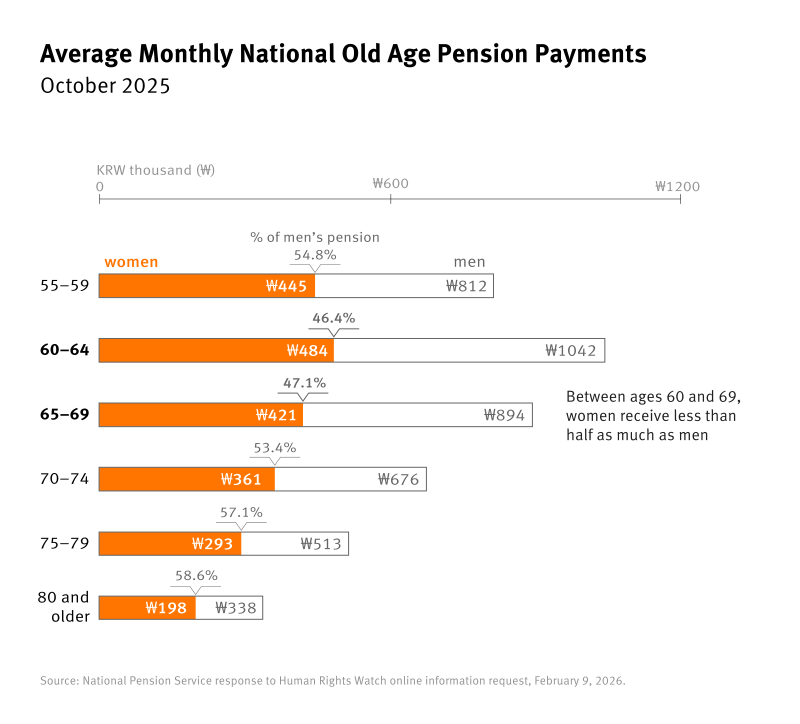
Over time this gender pay gap accumulates into a gender pension gap. In 2025, women’s monthly National Old Age Pension payment was, on average, just 53 percent of men’s, amounting to a gender pension gap of 47 percent for this particular program. The program’s regulations compound this. “Childbirth credits” are additional periods of non-contributory pension‑subscription for the birth of each child. Regulations allowing either parent to claim the credit, rather than the child’s primary caregiver, disadvantage women since the monthly payment is based on the recipient’s income at pension eligibility age when men, on average, earn 46 percent more than women. In 2025, only 3 percent of childbirth credit recipients were women, despite women being the overwhelming majority of their children’s primary caregivers.
Women are also more likely than men to get a reduced National Old Age Pension because they have not contributed for the 20 or more years necessary to qualify for a full one. When they return to work in their 40s and 50s, the contribution age cap of 59 means they only have a few years left to contribute to the National Pension Program through their workplace. They are also contributing when the gender pay gap is reaching its height. Jung Kyong-sook, 55, went back to work in her mid-40s and will be eligible for the National Old Age Pension when she is 65 but expects to work longer. “The pension is so little,” she said. “I assume I'll get KRW500,000 to KRW600,000 ($349 to $419) per month. That's why we need to work till 70.”
Despite older women saying work gives them a sense of purpose and belonging, Human Rights Watch found that as women get older, they can also be subjected to ageism—stereotypes, prejudice and discrimination based on older age. The combination of ageism and sexism creates a unique form of prejudice—gendered ageism—that women said was deeply embedded in South Korean work culture. “Nobody likes older women at work,” said C. Eun-jung, a 55-year-old transport worker. She described how younger male colleagues called older women “kkul ajumma” – honey auntie. “It’s very mocking,” she said, “and has negative connotations, that [older] women take the benefits that men should have, like sucking honey.”
The older women get, the fewer work opportunities they have. Women from various backgrounds and educational attainment levels said that the range of jobs available to them narrowed as they got older. Jobs for women in their 50s, they said, were limited to call center workers, supermarket cashiers, school cooks, cleaners, and care workers, all extensions of their gendered and age-based family roles. These opportunities narrowed even further, to cleaning and care work, for those in their 60s and 70s. For some, even these jobs were not available. Chung Sun-cha, 87, started work collecting cardboard and other recycling materials off the street in her mid-70s. “I couldn’t find any other work because of my age,” she said.
As the type of work available to older women narrows, their conditions of work deteriorate. Older women said their working conditions became increasingly precarious as they got older, with short-term contracts, hourly pay, low wages, limited or no social security, and little union representation. Kim Ju-ran, 59, a care worker, is paid the minimum wage, KRW9,860 ($7) per hour, with a bonus if she works the nightshift. She told Human Rights Watch she was quite young among her co-workers. “A lot are in their late 60s and 70s. Young people are not entering our industry because, compared to the workload, the income is so low.”
Human Rights Watch found the work available to older women can cause significant harm to their physical and mental health. The occupational segregation of older women as care workers puts them at disproportionate risk of exposure to inappropriate sexual behavior and abuse. The intense physical workloads of school cooks, cleaners, care workers and those working on the street take their toll. There is no statutory paid sick leave in South Korea, and few older women have permanent contracts with public sector or large companies that may provide some voluntary sick pay. Women experiencing perimenopause and menopause have no right to reasonable adjustments at work to mitigate the adverse impact of their symptoms. Yang Myung-ju, 55, a call center worker, was experiencing menopause and said the stress of handling aggressive customer complaints aggravated her symptoms: severe headaches and stomach aches. “You’re not able to take a break,” she said. “There’s no policy at all to support women going through menopause.”
South Korea’s mandatory retirement age at 60 or older and peak wage system, two age-based employment policies that Human Rights Watch found to discriminate against both women and men on the basis of age, disproportionately impact women subject to them.
Under the mandatory retirement age, employers force women already affected by the gender pay and pension gaps to retire from their main job before they are eligible for the National Old Age or Basic pensions, and into even lower paid, more precarious work or re-employment under less favorable conditions. Park Jae-soon, 61, was forced to retire from her job at a utility company when she was 60 and earning KRW55 million ($38,000) per year. She now earns just KRW15.6 million ($11,000) per year as a part-time care worker. “The mandatory retirement age is unfair,” she said. “The system says we can work till we are 60. But life expectancy is getting much longer and if you're fully healthy, you still have to stop working.”
Women’s wages can be further reduced under the peak wage system where employers can lower workers’ wages in the three to five years before their mandatory retirement. C. Eun-jung’s wages will be cut by 45 percent for the two years before her mandatory retirement at 60 from the transport company where she has worked for nearly 30 years.
This systemic discrimination not only affects older women. Human Rights Watch found that younger women today may still have to choose between their careers and getting married or having children. C. Su-bin, 33, is a lawyer and not prepared to “sacrifice her career for marriage.” The loss to her career would be too great, she said. Younger women still face barriers to promotion that limit their pay and future pensions. Those who delay marriage and childbirth and whose work is disrupted may find it increasingly difficult to reenter the workforce unless negative attitudes toward older women change. Those who work in sectors where women predominate will find their gender pay gap widening as they age unless these structural factors are addressed. Younger women in jobs subject to a mandatory retirement age will be forced to leave their main, permanent job and into lower paid, more precarious work unless the mandatory retirement age is abolished.
The government has launched initiatives to improve women’s working conditions and to try to meet its legal obligations to support them to return to work, including when they are older. However, Human Rights Watch found these efforts perpetuate harmful gender and age stereotypes about the work women should do since work opportunities promoted by or available through the programs are gendered and progressively narrow as women get older.
The Ministry of Gender Equality and Family’s Women’s Re-employment Support Centers have shifted their focus from supporting “career interrupted women” to promoting all women’s economic activity without career breaks. This shift widens their remit to include older women. They claim to provide age-specific programs. However, the proportion of participants on their successful training and internship programs in 2024 decreased with age, peaking for women in their 40s and decreasing thereafter to just 5 percent for women 60 and older on the training program and 6 percent on the internship program. Staff at the support centers’ headquarters said that the jobs women get after using the centers’ services follow a pattern of increasing occupational segregation into low-paid, precarious jobs as they age. Occupational segregation based on age and gender is a form of systemic discrimination.
The Ministry of Employment and Labor contributes to the narrowing of work opportunities for women as they get older through its promotion of a limited range of jobs on “Work24,” its online employment portal. The jobs the ministry promotes for women in their 30s to 50s on Work24 reinforce gender stereotypes, revolving predominantly around beauty, care work, education, and relationship support.
Human Rights Watch’s analysis of data on Work24 also found that in November 2025 and February 2026, the ministry promoted a limited range of jobs to older people by categorizing certain jobs under the themes of “middle aged and older people,” and “senior citizens,” and by allowing employers to indicate a preference for applicants 50 or older in the advertisements. Sixty percent of jobs tagged for those 50 or older were in-home caregiving jobs, and 90 percent fell under just four categories: health care, care and support; cleaning services; building security and management; and food service. These jobs were low-paid, required little education or work experience, were often part-time and paid hourly, and substantially different to those not targeted at older applicants.
There were also distinct gender disparities in the types of jobs applicants applied for among those targeted at older people, mirroring deeply entrenched gendered norms about the work older women and men should do, and how these jobs are compensated. The majority of applicants for care, building cleaner, kitchen assistant, cook, and social worker jobs were older women. The majority of applicants for higher paid security, building caretaker, and maintenance positions were older men.
Older women were also disadvantaged when using the Ministry of Health and Welfare’s employment program for people ages 60 and older on low incomes. In 2022, 82 percent of participants in its public service care program were women, earning on average KRW270,000 ($188) per month. The majority of participants in its internship program were men, earning on average KRW2,086,269 ($1,456) per month. Women also earned significantly less than men in the small business program.
South Korea has failed to live up to its domestic law and international legal obligations to protect women from systemic gender and age discrimination. It should take steps to ensure their equality at work and equal access to pensions.
Such steps include dismantling gender and age stereotypes regarding the traditional roles of women and work. The government should establish the legal basis for mandatory disclosure of pay data by all employers to help close the gender pay gap. It should also review and amend its employment support services for women whose work has been disrupted and for older people to ensure women have equal access to job opportunities and wages throughout their working lives.
The government should abolish the mandatory retirement age and the peak wage system. It should adopt a comprehensive anti-discrimination law to provide equal protection against all forms of discrimination, including systemic, multiple and cumulative discrimination, and a duty to eliminate ageism. It should also amend the calculations of the National Old Age and Survivor Pensions and the Basic Pension to ensure they provide at least a living wage.
South Korea’s failure to take such steps neglects its constitutional and international obligations and responsibilities, and traps women in a system of ever-decreasing pay, increasing occupational segregation, and inadequate income in older age with little hope of improvement.
Recommendations
To South Korea’s National Assembly
Gender Pay Gap
Establish the legal basis for the proposed Equal Pay Disclosure System, including the mandatory disclosure of all data, disaggregated by age, from employers in the public and private sectors.
Gender Pension Gap
Remove the contribution age cap of 59 in article 6 and subsequent articles of the National Pension Act so that all years of employment or voluntary contributions can result in higher pension entitlements.
Remove article 9(1) of the National Pension Act so that all non-income earners are eligible to contribute regardless of the status of their spouse.
Amend article 19 of the National Pension Act so that the child’s primary caregiver is entitled to childbirth credits—the National Pension Program benefit that grants additional periods of non-contributory pension‑subscription for the birth of each child—and that these credits are based on the income of the higher-earning parent.
Amend article 19 of the National Pension Act to increase childbirth credits to effectively improve gender pension equality.
Add an additional participation period for family caregiving to the National Pension Act to recognize unpaid care for adult family members.
Add an additional participation period for vocational training to the National Pension Act to recognize time spent in vocational training and re-training.
Amend article 2(4) of the Enforcement Decree of the National Pension Act so that those employed for less than 60 hours per month are eligible to contribute to the National Pension Program through their workplace.
Age-based Employment Policies
Remove article 4(5) of the Act on Prohibition of Age Discrimination in Employment and Elderly Employment Promotion, which allows exceptions to the prohibition on age discrimination without reasonable grounds, so that all differential treatment based on age in employment is subject to justification on reasonable grounds.
Abolish the mandatory retirement age of 60 or older by removing article 19 of the Act on Prohibition of Age Discrimination in Employment and Elderly Employment Promotion.
Amend article 21 of the Act on Prohibition of Age Discrimination in Employment and Elderly Employment Promotion to prohibit employers from imposing less favorable working conditions on older workers because of their older age.
Amend article 6.3 of the Act on the Protection of Temporary Agency Workers to limit the time workers age 55 and older may be employed under temporary agency contracts so that the same limits exist for older and younger workers.
Abolish the peak wage system.
Prohibition of Discrimination
- Adopt a comprehensive anti-discrimination law that provides equal protection against all forms of discrimination, including systemic, multiple and cumulative discrimination, and codifies a government duty to eliminate ageism.
Amend article 11 of the Constitution to include age as a prohibited ground for discrimination in political, economic, social, or cultural life.
Other Working Conditions
Amend the Labor Standards Act to include statutory paid sick leave.
Amend the Labor Standards Act to require employers to put in place and implement workplace menopause policies.
Ratify International Labour Organization Convention No. 190 concerning the elimination of violence and harassment in the world of work.
To the Ministry of Employment and Labor
In collaboration with the Ministry of Gender Equality and Family, dismantle gender and age stereotypes regarding the traditional roles of women and work through conducting awareness-raising campaigns on gender and age equality targeted at employers and the public.
Review the range of jobs promoted to women whose work has been disrupted on the ministry’s web portal, Work24, and amend to ensure jobs promoted do not perpetuate harmful gender stereotypes.
Review the tagging of vacancies with a preference for applicants age 50 or older and classification of jobs suitable for older people on the ministry’s employment web portal, Work24, and amend so that older women, and men, are encouraged to apply for a similar range of job opportunities as other job seekers.
Review and adjust the national minimum wage so that it provides at least a living wage.
Promote and foster the unionization of older women workers.
Provide guidance to employers to introduce workplace menopause policies that include reasonable adjustments for staff experiencing menopause symptoms, and training for managers.
Monitor implementation of newly introduced workplace menopause policies.
To the Ministry of Gender Equality and Family
In collaboration with the Ministry of Employment and Labor, dismantle gender and age stereotypes regarding the traditional roles of women and work, through conducting awareness-raising campaigns on gender and age equality targeted at employers and the public.
Ensure all employers are required to disaggregate by age all data to be disclosed under the proposed Equal Pay Disclosure System.
Promote, and make accessible to all, data disclosed by employers under the proposed Equal Pay Disclosure System.
Ensure employers provide regular workplace sexual harassment prevention training that is tailored to the specific conditions of work, and support for victims.
Promote and increase the use of Women’s Re-employment Support Centers by women 60 and older.
Monitor the impact of the Women’s Re-employment Support Centers on occupational segregation by collecting, analyzing and making available data on women’s previous employment and that secured after using the centers’ services.
To the Ministry of Health and Welfare
Conduct a gender impact assessment on access to social security tied to employment, including health, pension, unemployment and industrial accident compensation insurance.
Conduct a gender impact assessment on re-employment services for older people to identify ways to ensure older women’s access to equal job opportunities and wages.
Conduct a gender impact assessment of National Pension Program regulations, including childbirth credits, to identify ways to reduce the gender pension gap.
Conduct a gender impact assessment of the Basic Pension to identify ways to reduce the gender pension gap.
Amend the calculation of the National Old Age Pension and Survivor Pension to ensure they provide at least a living wage, regardless of number of contributing years.
Amend the calculation of the Basic Pension to ensure it provides at least a living wage.
To Trade Unions
Promote and foster the unionization of older women workers.
Methodology
Human Rights Watch interviewed 41 South Korean women, ages 28 to 87, between February 2024 and November 2025. The age listed for each interviewee is their age when interviewed. There is no definition of an “older person” in international human rights law. Legislation prohibiting age discrimination at work in South Korea defines “middle-aged people” as between 50 and 54, and “older people” as 55 or older. Human Rights Watch interviewed 26 women age 55 and older, and 6 between 50 and 54, Human Rights Watch also interviewed 10 women age 49 and under to understand their experience of gender and age discrimination in their earlier working lives and how this contributes to the cumulative discrimination they may experience in older age.
Interviewees were identified largely through referrals by South Korean civil society organizations working with women. The majority of interviews were in person in Seoul, except two in Incheon, one in Suwon, and one online. Interviews were conducted privately and individually, except one with two interviewees, and in Korean with English interpretation, except three in English. Human Rights Watch obtained verbal consent from all interviewees and used pseudonyms, indicated by given names and surname initials, as desired. Interviewees did not receive compensation for participating in the interviews. Human Rights Watch covered transportation costs where necessary.
Human Rights Watch consulted 59 Korean researchers, academics, human rights experts, trade union workers, international journalists, and representatives of domestic and international nongovernmental organizations. The research included data analysis of official statistics, and extensive consultation of secondary sources. Human Rights Watch used AI translation tools to translate reports and online articles from Korean into English. A Korean speaker checked all references to information obtained in this way in the original Korean.
Human Rights Watch scraped the data on the Ministry of Employment and Labor’s online employment portal, Work 24, on two separate dates, November 24, 2025, and February 3, 2026. This data was de-duplicated using job identification numbers and analyzed to produce a point-in-time snapshot of job listings posted on the portal during this time period.[1]
All of the text data was translated from Korean using DeepL, a translation algorithm, and then spot-checked for accuracy. To analyze the types of jobs offered to older applicants, each listing was categorized into one of 15 sectors by Human Rights Watch. Using a standardized occupation field with approximately 2,000 unique values, researchers applied a language model to assign sectors — validated through several iterations of manual review — rather than classifying all 200,000 listings individually.
The site hosts job postings that job seekers can apply for through the site’s own application portal, and postings from other platforms that users can apply to by linking to external sites. There were over 250,000 unique job postings available on the site at these two moments. Over 113,000 postings included an application portal locally and about 136,000 linked to external sites. The postings with an application portal include demographic information on the people that had already submitted applications through the site. Human Rights Watch analyzed this information to understand more about the types of jobs advertised to older applicants and the types of jobs for which older applicants apply. We compare these results with the jobs not targeting older applicants as well as jobs for which applicants age 49 or younger apply. All analysis of applicant demographics includes only the postings that allow for applications on the site.
Human Rights Watch did not investigate individual employers. Instead, it documented how current laws, policies and practices perpetuate women’s experience of systemic gender and age discrimination at work. Our research aims to support advocacy to reform the system that allows this discrimination.
Human Rights Watch sent letters requesting information and meetings to the Ministry of Gender Equality and Family, Ministry of Employment and Labor, Ministry of Health and Welfare, and the National Pension Service. All replied, except the National Pension Service, which later responded to an online information request, and the information they provided is reflected in the report. None agreed to meet in person or by phone.
In May 2026, Human Rights Watch provided the Ministry of Employment and Labor, the Ministry of Gender Equality, the Ministry of Health and Welfare, and the National Pension Service with a summary of its findings and invited their response. None had responded at time of writing.
At time of writing, 1,000 Korean Republic Won (KRW) was worth US$0.7, and one US dollar (US$) was worth KRW1,429.
Background
Women and Aging
South Korea has one of the highest life expectancies in the world.[2] Women live longer than men: girls born in 2025 can expect to live until they are 87, boys until they are 81.[3] According to the World Bank, South Korea also has the lowest fertility rate in the world, at 0.75 in 2024.[4] This high life expectancy and low fertility rate contribute to South Korea’s population aging, with 25 percent of the population 65 and older in 2025.[5] This compares to an average of 20 percent for all high-income countries and 14 percent in all East Asian/Pacific countries.[6] Fifty-seven percent of those 65 and older were women.[7] The United Nations projects that the proportion of the population that is 65 and older will continue to grow.[8]
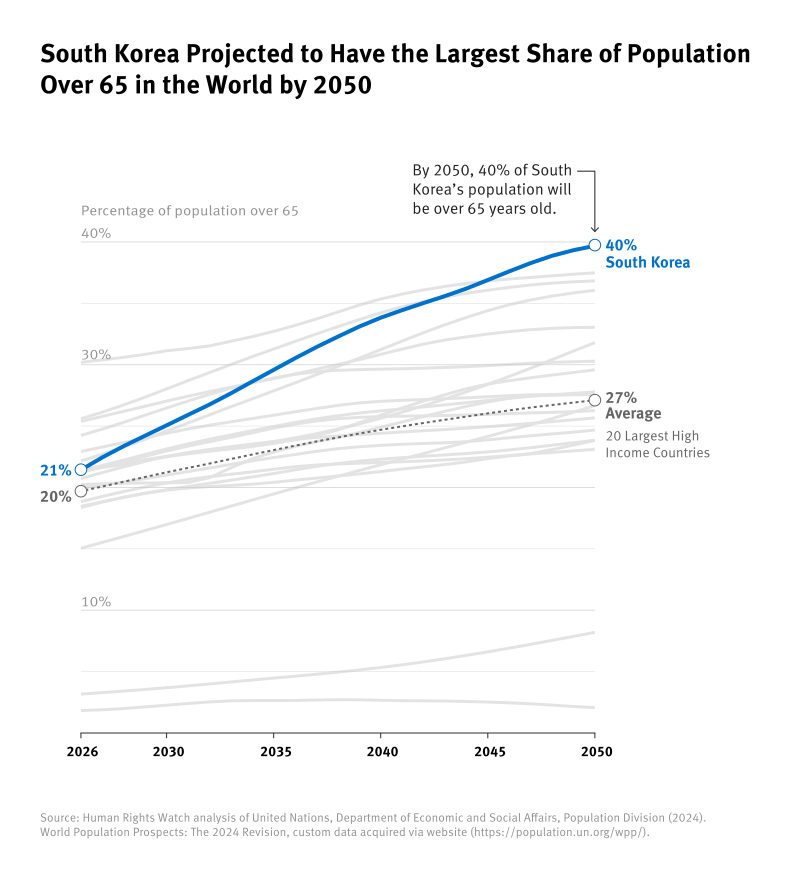
Attitudes towards women as they age reflect the age- and gender-based social norms in South Korean society. Women from their 30s onwards may be referred to as ajumma (아줌마), a term meaning a married or middle-aged woman that can be considered derogatory.[9] In 2024, media outlets reported that a gym owner in Incheon, a city on the northwest coast, banned ajummas, saying that only “refined and elegant women” were allowed to use the gym.[10] The country’s sizeable beauty industry adds to the pressure on women to stay young looking, with social media influencers and dermatology and plastic surgery clinics heavily promoting “anti-aging” products and procedures.[11] Roles for older women actors in popular Korean dramas are often limited to mothers or grandmothers.[12] Women’s unpaid care work persists as they age: in middle age, caring for both children and older parents, in older age doing the majority of housework, caring for grandchildren, and becoming the primary caregiver for their spouse – a gendered social expectation engrained in Korean family culture.[13]
Older women are disproportionately affected by poverty. The Organisation for Economic Cooperation and Development (OECD), a standard-setting intergovernmental organization, estimates that 40 percent of people age 66 and older in South Korea live in relative income poverty, which is significantly above that of the country’s total population and the OECD average, both at 15 percent in 2022.[14] The share is even higher among older women, with 45 percent of women age 66 and older living in relative poverty, compared to 33 percent of men.[15]
Women and Work
South Korea underwent rapid economic development between 1961 and 1996.[16] In the 1960s and 70s, the government utilized the traditional image of “dutiful daughters” to encourage young women to leave their families and move from rural to urban areas to work in low-paid, short-term, factory jobs to support the country’s economic development and their male siblings’ education.[17] By the end of the 1970s, young women made up more than half of workers in light manufacturing industries.[18] Men worked in factory supervisory or managerial roles, mirroring the hierarchical relationship between genders outside the workplace.[19]
Industrial development was not confined to light manufacturing industries. Family-owned conglomerates, chaebols, dominated the heavy chemical industry, employing mainly men with men as the family breadwinners and women confined to roles within the home.[20]
From the 1980s onwards, with the decline of light manufacturing industries, women’s employment predominantly focused in the service sector, including retail, accommodation and food services, where social security entitlements were limited and contracts often informal.[21] Women still dominate this sector. In 2024, 58 percent of those working in the business, personal, and public service sectors were women.[22] Far fewer women than men worked in manufacturing, construction, communication, transport, finance, and electricity sectors.[23]
South Korea has a dual labor market. The law recognizes both “regular” and “non-regular” work.[24] Regular jobs have permanent, full-time contracts.[25] Non-regular work includes fixed-term, part-time or on-call work, temporary agency work, and subcontracted work.[26] Although women made up 44 percent of the economically active population in 2024, women were the majority of non-regular workers, at 4.92 million women compared to 3.65 million men in 2025.[27]
Company size impacts labor conditions. Large companies, including chaebols, pay higher wages and are more likely to offer regular contracts.[28] Women are less likely to work in high-paying companies. A 2023 study by the Korea CXO Institute found that only 24 percent of employees in the top 10 Korean companies (by sales) were women.[29] Small and medium-sized enterprises, where women and older workers are concentrated, are also where non-regular work is most prevalent and union presence weakest.[30]
Responsibility for Protection Against Gender and Age Discrimination at Work
South Korea’s Constitution guarantees nondiscrimination and the right to work to all citizens.[31] The Labor Standards Act guarantees equal treatment in employment on the grounds of gender, nationality, religion, and social status.[32]
The Framework Act on Gender Equality requires state and local governments to ensure gender equality in all aspects of employment, conduct gender impact assessments on statutes or regulations to determine their potential impact on gender equality, prevent and research sexual violence, including sexual harassment, and promote a “gender equal culture.”[33] The act requires state agencies and employers to take the necessary steps to create gender equal working conditions and conduct education to prevent sexual harassment.[34] The Act on Prohibition of Age Discrimination in Employment and Elderly Employment Promotion prohibits age discrimination in all aspects of employment and includes employment support for people age 55 or older.[35] The Welfare of Senior Citizens Act states that national and local government shall endeavor to provide job opportunities for people age 65 or older.[36] Both apply to women.
The National Human Rights Commission of Korea Act established the National Human Rights Commission of Korea to carry out inquiries into and find remedies for violations of human rights guaranteed under the Constitution and discriminatory acts, including those based on sex and age.[37] Human Rights Watch could find no cases in which the National Human Rights Commission of Korea examined systemic, multiple or cumulative discrimination, including on the grounds of age and gender.[38]
There is no comprehensive anti-discrimination law in South Korea that addresses all forms of discrimination, including systemic and multiple, and cumulative discrimination based on gender and age.
The National Assembly, South Korea’s 300-member elected legislature, has the power to enact, amend, and abolish national laws.[39] In January 2026, 21 percent of members were women.[40] The South Korean judiciary operates a three-instance trial system through district courts, high courts and finally the Supreme Court, the country’s highest court.[41] Human Rights Watch could find no cases in which the Supreme Court of Korea examined systemic, multiple or cumulative discrimination, including on the grounds of age and gender.[42]
Age-based Employment Policies
Mandatory Retirement Age
The Act on Prohibition of Age Discrimination in Employment and Elderly Employment Promotion allows employers to set a mandatory retirement age “under labor contracts, rules of employment, collective agreements, etc.”[43] The government amended the act in 2013 so that employers, if they use a mandatory retirement age, “shall set the retirement age of workers at 60 years of age or older.[44] The amendment came into force in 2016, is the same for women and men, and applies in both the public and private sectors.[45] In 2025, the ruling Democratic Party proposed raising the mandatory retirement age to 65 or older by 2039 to eliminate the gap between the age at which someone is forced to retire and the age at which they are eligible for their National Old-Age Pension.[46] At time of writing in March 2026, the Ministry of Employment and Labor, according to media reports, was planning to start drafting legislation to this end.[47] The eligibility age for a National Old‑Age Pension is 65 for those born from 1969 onwards, and 60 for those who wish to claim it early at a lower rate.[48]
In its 2025 report “Punished For Getting Older,” Human Rights Watch found the mandatory retirement age to be discriminatory.[49] As a named exception to the prohibition on age discrimination without reasonable grounds in the Act on Prohibition of Age Discrimination in Employment and Elderly Employment Promotion, the law removes the requirement for employers to justify this differential treatment of workers based on their age as reasonable.[50] International human rights law provides that differential treatment is discrimination unless it can be justified as having a legitimate aim, is proportionate and necessary, and is not based on stereotypes.[51] Human Rights Watch found that the financial and mental harm the mandatory retirement age causes to older workers outweighs its limited impact on its intended benefit of keeping older people in work, and that less harmful ways to keep older people in jobs for which they are skilled and trained exist.[52]
Peak Wage System
The peak wage system is a policy that allows employers to reduce older workers' salaries in the years leading up to their mandatory retirement age.
When the government amended the Act on Prohibition of Age Discrimination in Employment and Elderly Employment Promotion in 2013, it also legislated for employers to restructure their wage systems “in consideration of the conditions at the relevant business or place of business.”[53] The savings made from reducing the salary of the older employee would be used to pay for the younger employee. Institutions were free to decide the exact rate and duration of the salary reductions.[54] In 2015, the Ministry of Economy and Finance produced guidelines to accelerate the adoption of a peak wage system among public institutions to reduce workers’ wages in the three to five years before their mandatory retirement age.[55] By the end of 2015, all 313 public institutions had decided to adopt it.[56] While not compulsory for private companies, the government encouraged them to also adopt it.[57] By mid-2024, 47 percent of private companies with a mandatory retirement age and more than 300 employees, and 16 percent of private companies with a mandatory retirement age and fewer than 300 employees, had adopted it.[58]
The aim of the peak wage system was to increase productivity by creating new jobs for younger employees with the savings from reducing older workers’ wages.[59] However, studies on age and productivity in South Korea have shown that aging is not associated with lower productivity at work.[60] Concluding that all older workers are less productive than younger ones is an ageist stereotype. Differential treatment is discrimination under international human rights law when based on stereotypes.[61] Human Rights Watch also found no evidence that the government was achieving its aim of hiring younger workers under the peak wage system.[62] The system has, however, caused older workers mental and financial harm, and can have a negative knock-on effect on other financial entitlements, such as pensions, severance pay, and unemployment payments. It is also unnecessary as there are other options for increasing youth employment that do not cause such harm for South Korean authorities to explore.[63] As such, in its 2025 report “Punished For Getting Older,” Human Rights Watch found this peak wage system to be discriminatory.[64]
Pensions
South Korea has several overlapping pension programs with different eligibility criteria and levels of payment.
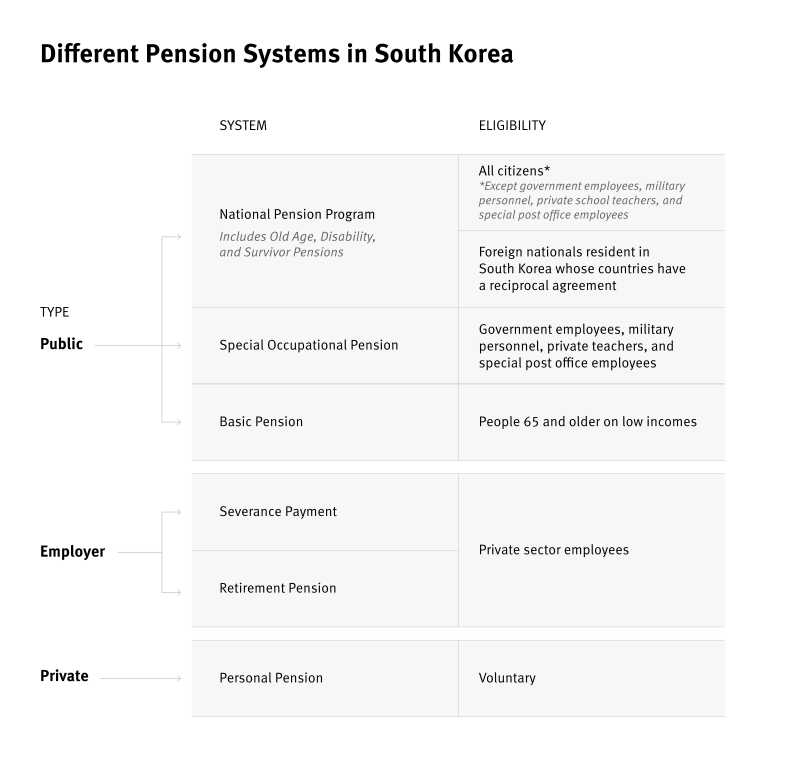
South Korea introduced an insurance-based National Pension Program in 1988, expanding its coverage from workplaces with 10 or more full-time employees to all workplaces by 2006.[65] Government officials, military personnel, private school teachers, and special post office employees are eligible for separate occupational pension plans.
The National Pension Program encompasses old age, disability, and survivor pensions. In October 2025, 10 million women were insured, 46 percent of all those insured.[66] In 2025, the National Assembly amended the National Pension Act to increase the contribution rate for the National Pension Program from 9 to 9.5 percent of income in 2026, with further increases projected to raise the rate to 13 percent by 2033.[67] Employees will contribute 4.75 percent while their employers will contribute the other 4.75 percent.[68] People who are not eligible to join through their workplace or because they are not employed can apply to join as an individual on a “voluntary” basis and pay the full contribution themselves.[69] The pension eligibility age, the age at which contributors are eligible to receive the National Old Age Pension, depends on the year of birth. It is 65 for those born in 1969 onwards.[70]
The Basic Pension provides financial support for people 65 and older on low incomes, including those on low pension incomes from the National Old Age Pension, but not those in receipt of special occupation pensions.[71] To be eligible, the older person’s income must fall below an income threshold set annually by the Minister of Health and Welfare to cover at least 70 percent of those age 65 or older.[72] In 2024, 60 percent of recipients were women.[73] In 2026, the eligibility threshold was KRW2,470,000 (US$1,724) per month or less for a single person, and KRW3,952,000 per month or less ($2,758) for a couple.[74]
Other pensions include private sector employee pensions and personal pensions. Private companies must provide a severance payment paid to employees who have worked for at least one year when they leave.[75] However, if the majority of employees (or applicable trade union) consent, the employer can convert the severance payment policy into a retirement pension program.[76] In February 2026, the Tripartite Task Force on Strengthening the Retirement Pension System, comprised of representatives from labor, business and government, agreed on reforms to employer pensions, including their gradual introduction to all workplaces, and management of pension savings in pension plans external to the company.[77]
I. Accumulating Gender Discrimination Against Women at Work
Women in South Korea face gendered social norms and systemic discrimination throughout their working lives. The accumulation of disadvantage from these can start early, with girls’ education, and continue through each stage of their working lives.
Impact of Social Norms on Women Entering the Workforce
Education
In the 1960s and 70s, girls and young women in low-income families often went to Seoul or other cities to work in factories since the government encouraged them to work in industrial jobs and families expected them to support their brothers’ education.[78] At the time, parents expected their sons to support them when they were older; daughters would marry into other families.[79]
Choi Gap-rae, born in 1959, was 13 when she left school in Jeollanam-do, a rural province in the south of the country, and went to Seoul to work to support her parents and five siblings, including two older brothers, as a nanny, doing piece work at home for a pharmaceutical company and working in a drinks factory. At first, she gave all her money to her mother. At 20, she gave it all to her brother who went to study in Germany. “My family was poor,” she said. “I still wanted to learn more.”[80]
This sacrifice of their education would affect women’s work prospects for the rest of their lives.[81] After getting married, Choi Gap-rae stayed at home to raise her children until her husband lost his job, and she had to become the main breadwinner. Returning to work in 1990, she had a succession of low-paid jobs, including in a supermarket and a restaurant. At age 55, once her youngest son had been called up for military service, she said that she found few jobs she could do as an older woman, and so she became a self-employed street vendor. At 66, with a Basic Pension of KRW340,000 (US$238) per month, she said she planned to work until she was 80.[82]
Social norms about what subjects girls should study could also limit their work choices and prospects.[83] J. Mi-sook, born in 1971, wanted to go to a university to study politics and foreign affairs, but she said her family followed traditional Confucian values and felt this was not a suitable subject for a woman. She studied Korean literature instead and went on to work in human resources. “I haven’t done the work I love from the very beginning,” she said at age 53.[84]
In South Korea, women’s higher educational attainment has surpassed men’s since the 1980s.[85] Despite this, the subjects women study are still often affected by gendered norms. In 2025, 56 percent of master’s degree graduates were women, but they made up 77 percent of education and only 28 percent of engineering master’s degree graduates.[86] These persistent gendered patterns of study reflect and contribute to expectations about the type of work women should do.
Hiring
Women often face gender discrimination at the hiring stage. Prominent Supreme Court cases against three banks – KB Kookmin, KEB Hana, and Shinhan – and Korea Gas Safety Corporation in 2018 found manipulation of applicants’ entrance exam scores to favor male candidates or unfair gender ratios quotas for accepted applicants.[87]
Women are also more likely than men to be asked personal questions during the hiring process about marriage, childbirth, or childcare, as some employers assume that these considerations mean that women will need to take leave, which could harm their chances of being hired.[88]
A strict ranking system is applied to job positions denoting level of seniority.[89] N. Kyung-ok, now 42, was 25 when she applied to work as an analyst for a financial corporation at the same time as a male college friend. Although she believed she was more qualified than him, they applied for the same position and when they were hired, he got a higher position than she did. “Men got general jobs, while women only got [lower] office worker roles,” she said. “Even women with better education than me who had gone to university and had better qualifications were treated in the same way.”[90]
Work Disruption
Before J. Mi-sook graduated in the mid-1990s, she applied for a position with a heavy industries company in Seoul. As one of the top 10 candidates, the company gave her first choice of department, a sign the company valued her highly. She worked overtime, and during the holidays. After three years, she got married and became pregnant. She said: “I heard a lot of insulting words like, ‘If you get married, why don’t you stay at home so you can do your housework.’ It was always the male supervisors who said these things.”[91]
Under pressure from others, she left the company. “I didn’t leave voluntarily,” she said.
J. Mi-sook’s experience of an “interrupted career,” as it is known in South Korea, is common.[92] Jung Kyong-sook, 55, said that many women would have experienced such work disruption. “There is a slight difference depending on jobs and where you work, but I believe most women in their 40s, 50s and 60s are pretty similar,” she said.[93] South Korean law defines “career interrupted women” as those who have stopped working “for reasons such as marriage, pregnancy, childbirth, childcare, care of family members, or working conditions” or who are looking for work without any previous work experience.[94]
In 2024, the Ministry of Data and Statistics reported that nearly half of women in their 40s whose work was disrupted experienced gaps in paid employment for between 10 and 19 years, and over half of those age 50 to 54 were not employed for 20 years or more.[95] These gaps are not always a matter of choice. Yoon Il-gu, 59, stopped working as a bookkeeper for a large company because her husband insisted she focus on raising their children. She fought the decision, but eventually gave in. “I thought raising my kids would be another type of work I could do,” she said.[96]
Jung Kyong-sook, 55, graduated from high school and worked as a bookkeeper in a small company. She stopped working in 1994 to raise her three children. At that time, she said, small and medium companies did not provide adequate parental leave and she had no access to childcare. “It was up to the individual,” she said. “Society did nothing for us.” She went back to work in 2013, 19 years later.[97] Even today, the length of women’s work disruption is partly due to the structure of the school day, since elementary school ends in the early afternoon, limiting the opportunities for women with children this age to work.[98] The premium placed on education means that women may also be unable to work due to ongoing responsibilities for their children’s education, such as taking them to and from after-school classes at so-called private cram schools, educational centers that focus on test preparation.[99]
Not every woman whose work is disrupted leaves because of marriage or to raise children. For some, their work is already precarious. The airline for which B. Young-mi, 46, worked as cabin crew refused to rehire her on a regular, permanent contract after she had worked for two years on a temporary one. “I liked the job and the company, but I wasn’t allowed to renew my contract,’ she said.[100] A 2018 study found women in small-sized workplaces most frequently cited low wages as the reason for leaving their jobs; those in large-size workplaces, like B. Young-mi, cited contracts ending.[101] B. Young Mi was 35 and applied for a number of other jobs. She was rejected each time. In the interviews, she was told it was “very risky” to hire her because she might get married. By the time she got married, she had given up looking for work. Despite applying for jobs since then, she has not worked for 11 years.[102]
Younger women currently face the same trade-off, as marriage and family planning are often framed as incompatible with career development.[103] C. Su-bin, 33, a lawyer, said she regularly sees women colleagues return to work on reduced hours, limiting their progression. “It makes me not want to get married,” she said. “If I were to sacrifice my career for marriage, I should do it now. But the loss to my career would be too great and that is the most important thing for me at the moment.”[104]
For many younger women, the expectation that they will eventually shoulder childcare pushes them into jobs that are seen as “compatible” with marriage and motherhood. L. Soon-ah, 32, has worked for nine years as a nursing assistant in a large hospital. She wanted a stable job that she could keep after marriage, and one that provided maternity leave. “It wasn’t my dream job,” she said. “When I was about 20, I looked for a secure job rather than go to college.”[105]
L. Soon-ah’s experience illustrates how so‑called “choices” are made within the context of social expectations around marriage, motherhood, and job security. This can steer women into particular roles and sectors that are often low-paid with limited opportunities for advancement. Under international human rights law, notably the Convention on the Elimination of All Forms of Discrimination against Women, states have obligations to address these structural constraints, including to modify social and cultural patterns of conduct in order to eliminate prejudices and stereotyped roles for women and men.[106]
Limited Opportunities Going Back to Work
Long periods of time out of the workforce can have a significant impact on the type of work women in their 40s and 50s are able to return to. The range of jobs available to them is often narrower, and the jobs lower paid and more precarious than their previous ones.[107] Yang Myung-ju, 55, graduated from a high school that specialized in business and worked in her 20s in the headquarters of an insurance company, assessing insurance claims. She left to raise her two sons and decided to go back to work at 41. The only job she could find was in a call center, on a temporary contract, with no sick pay, earning KRW1.5 million ($1,047) per month after taxes. Yang Myung-ju estimated that about 80 percent of the workers at the call center were women. “When I tried to go back to work in a large company, the positions had already gone to younger workers and there was no spot for middle-aged women. Only the call center had no age limit,” she said.[108]
The gap between the average time women and men the same age spend on employment increases after women go back to work. In a nationwide time-use survey in 2024, Statistics Korea found that women in their 20s spent on average just 13 minutes less on employment on weekdays than men the same age.[109] However, in their 50s, women spent on average two hours less.[110]
Jeong Jun-young, 55, wanted to go back to her job as a dental assistant but said each time she tried, she was rejected because they considered her too old. Instead, she found work as a part-time after-school caregiver for children whose parents are working. The work is paid hourly and the salary is low, at KRW2.1 million ($1,466) per month. All of her colleagues are women, and she has never seen any men apply.[111]
Younger women today who delay marriage may find it increasingly difficult to reenter the workforce. Government data, captured in a graph synonymous with women’s work disruption and which resembles the letter “M” and is known as the “M curve,” show that the age at which women’s economic participation levels drop to their lowest point rose from age 35 to 39 in 2021 to age 40 to 44 in 2023, reflecting trends in later marriage and childbirth.[112] While the number of women whose work is disrupted is decreasing overall, the number in their 40s has been increasing since 2020.[113] Unless negative attitudes to workers’ older age changes, women wishing to return to work after marrying or having children at older ages will continue to face older-age and gender barriers to their re-employment.
Employment Services Perpetuate Harmful Gender Norms
South Korea has made efforts to support women’s reentry into the workforce. In 2022, Women’s Re-employment Support Centers, established under the Act on the Promotion of Women’s Economic Participation and the Prevention of Career Interruption of Women, shifted their focus from supporting “career-interrupted women” to promoting all women’s economic activity without career breaks.[114] This shift widens their remit to include older women.
Their success is mixed. The 159 centers across the country provide career counseling, vocational training, job placement, post-employment follow-up, and career interruption prevention programs with companies.[115] While employment rates through their internship program and vocational training were high in 2024, at 97 and 72 percent respectively, the combined number of participants on these programs was just 4 percent of the 590,000 women seeking jobs through the centers, the overall employment rate for which was just 29 percent.[116]
The centers claim to provide age specific programs, dividing women’s working lives into youth, marriage/childbearing, career recovery, and midlife.[117] However, staff at the Central Women’s Re-employment Support Headquarters told Human Rights Watch that the jobs women got after using the centers’ services followed a pattern based on their age.[118] They said women in their 20s and 30s mostly got accounting and office-based jobs, those in their 40s and 50s jobs in social welfare and the social sector, and those in their 60s jobs in public health and care, since it was common for women to move from office work to nursing home and caregiving services as they got older.[119]
Human Rights Watch requested information from the Ministry of Gender Equality and Family in November 2025 on the type of jobs and wages women got, disaggregated by age, after completing vocational training and how they compared to their previous jobs and wages.[120] The ministry had not provided this information at time of writing.[121]
Human Rights Watch also requested information on the employment support that the centers provided to women as they get older.[122] The ministry informed Human Rights Watch that the proportion of participants in the approximately 700 vocational training courses it ran in 2024 decreased with age, peaking for women in their 40s, at 40 percent, then decreasing to 26 percent for women in their 50s, and 5 percent for women 60 and older.[123] The proportion of participants on the internship program followed the same pattern, peaking at 36 percent for women in their 40s, decreasing to 23 percent for those in their 50s, and 6 percent for 60 and older. Despite women 60 and older constituting 27 percent of users of the support centers, there are disproportionately few participating in the programs with high employment rates.[124]
The Ministry of Employment and Labor promotes jobs for women in their 30s to 50s that reinforce gender stereotypes about the type of work women are suitable for. The jobs the ministry suggests for “Women 3050” on its “Work24” employment support website predominantly revolve around beauty, care work, education and relationship support, such as makeup artist, dietary instructor, caregiver, cook, nursery teacher, and wedding planner.[125]
Other positions suggested have limited decision-making responsibilities, such as accounting clerk and information and reception staff. The ministry also promotes certain jobs as specifically suitable for women, such as insurance planner, because it was part-time and had flexible hours so women could balance their work with their housework, and marriage consultant—helping people to meet their future spouse—as suitable for housewives with extensive social networks.[126] Occupational segregation based on gender is a form of systemic discrimination.[127] Narrowing women’s work opportunities when they wish to return to work in their 30s to 50s reinforces a lifelong disadvantage in access to decent work.
Limited Promotions and Glass Ceilings
Work disruption can affect promotion. J. Mi-sook, 53, got a job in a small company after she left her job when she got married and had a baby. The small company did not recognize the three years she had worked and started her at entry-level on a lower salary than she had earned before. She felt depressed and upset when she saw her male colleagues at her former company progress faster than she did. After 10 years in her second job, she saw no chance of further promotion and decided her only option to advance her career was to find another position. “I had been promoted as far as I could,” she said. “Above me they were all men. They didn’t want women at that executive level, so I had to leave.”[128]
In 2024, according to government data, only 18 percent of managers were women.[129] The vast majority of these in 2023 were in small or medium enterprises, particularly in the wholesale and retail trade, real estate, and accommodation and food service industries.[130]
Gendered social norms, such as men’s role as breadwinners, can affect promotion even where work disruption plays no role.[131] “Men are promoted faster than even single women with no children because they think men are the breadwinners,” said C. Eun-jung, 55.[132] Such attitudes are so prevalent that women themselves accept them as normal. When B. Young-mi and her women colleagues were given lower performance grades than their male counterparts at the department store where she had worked as an assistant buyer, she thought it was normal practice. “I didn’t take it very seriously,” she said. “There was a norm that men were promoted more easily.” She left after two and a half years without being promoted.[133]
As a result of women’s unequal promotion, those who decide who should be promoted are often men. H. Kyung-ok, 57, works at a government institution where she says women hold only one in five of the most senior positions. “Those who decide if you will be promoted or not are all men,” she said. “It’s not easy to spot among civil workers but there is a glass ceiling because the most important positions, the directors of human resources, planning and policy, are all men.”[134] In 2024, just five out of the 38 senior civil servants in South Korea were women.[135]
“Glass ceilings” – the invisible barriers that prevent qualified women from advancing to higher level positions – are not confined to civil servants. In 2025, South Korea ranked 28 out of 30 countries in the Economist’s “Glass Ceiling Index,” ranking 27th and 28th for women in managerial positions and women on company boards respectively.[136]
K. Hye-jin, 45, a gynecology professor, said she had done the same clinical work as her male colleagues, but the all-male senior faculty felt more comfortable working with other men. When she was offered a position in a medium-sized hospital, her supervisor advised her to accept it. “He told me it wasn’t a big hospital, and they didn’t have big cases so it wouldn’t be too difficult for a woman,” she said.[137]
Younger women today still face barriers to promotion. K. Hyun-sook, 33, said that at the daily newspaper where she was a reporter, men were more easily promoted than women in the most prestigious departments, including politics, justice, and business. The advantage was not just about skill, she said. “Men are able to excel more easily in a culture that favors men. When they say you're a competent reporter, it means you’re good at drinking and building rapport with people in the institution in a male way,” she said.[138] A 2024 study from the Reuters Institute for the Study of Journalism found that only 7 percent of top editorial positions in South Korea were held by women.[139]
Human Rights Watch asked the Ministry of Employment and Labor in November 2025 to describe what it was doing to reduce gender discrimination in promotions and the results of any programs it supported.[140] The ministry had not provided this information at time of writing. The Ministry of Gender Equality and Family informed Human Rights Watch that it provided support to companies to improve their proportion of women managers, and in 2025 conducted four Diversity, Equity and Inclusion training sessions involving 446 companies.[141]
Sexual and Other Workplace Harassment
There is a lot of sexual harassment. It happens all the time.
– C. Eun-jung, 55, transport worker, February 2024
Sexual harassment, gendered social pressure, and workplace bullying have long been intertwined in South Korean workplaces.
The Framework Act on Gender Equality defines sexual harassment as making someone “feel sexual humiliation or aversion with verbal or physical behavior of a sexual nature, sexual demand, etc., utilizing his or her position or in relation with his or her duties, etc.,” and expressing an intention to disadvantage someone or not grant them benefits if they do not comply with sexual demands or behavior.[142]
In 2024, 25 percent of calls to the Equality Hotline, a counseling service for women in the workplace run by the Korean Women Workers’ Association, were about sexual harassment.[143] Only 37 percent of workplaces where this sexual harassment was reported conducted sexual harassment training, despite the legal obligation for workplaces with one or more regular workers to do so at least once a year.[144]
Sexual Harassment After Working Hours
The culture of hoesik (회식), after-work eating and drinking sessions, is declining in frequency and coerciveness but has historically provided occasions for workplace sexual harassment and remains embedded in South Korean corporate culture.[145] C. Eun-jung recalled how hoesik functioned as a space where gender hierarchies were openly enforced when she first joined the transport company where she had worked for 30 years.[146] “Men would make women sit next to the manager and pour the drinks or ask them to dance. It's harder to do this nowadays but we can't say it doesn't still exist,” she said.[147]
The pressure to participate in hoesik carried professional consequences. H. Kyung Ok, 57, a civil servant, described feeling obliged to go out drinking with colleagues after work in her 30s, instead of going home to her young daughter. “Single men spend more time out than women like us who need to go home and be with their family,” she said. She found that promotion depended less on performance than on cultivating a personal relationship with managers, usually male, who were more comfortable working with male colleagues. “Doing your job well is not enough,” she said.[148]
The boundary between socializing and sexual harassment was also blurred for C. Eum-jung, the transport worker. She described being sexually harassed when she first joined her company. “The manager tried to do a handshake with me and stroke the inside of my palm with one of his fingers,” she said.[149]
Sexual harassment at work remains a part of younger women’s working lives.[150] C. Su-bin, 33, said the way she was treated was not because she was a colleague but because she was a young woman. Senior male lawyers still put pressure on younger female lawyers to sit with them at company dinners. “Sometimes I think it would be better if I were older and people would no longer see me as a woman and an object,” she said.[151]
Offices and workplace dinners were still the most common settings for sexual harassment in 2025, according to a Ministry of Gender Equality and Family survey.[152] K. Hyun-sook, 33, observed a town leader at a dinner party ask a woman reporter to pose with him linking arms and drinking in an intimate way usually reserved for couples. “If the reporter were a man, the town leader would never suggest this,” she said.[153]
Sexual Harassment During Working Hours
Women’s experience of sexual harassment at work is not confined to after-work drinking. Um Mi-shim, 53, has worked for 27 years as a golf caddy in a country where 80 percent of caddies are women.[154] She said she has experienced a lot of sexual harassment over the years. Golfers touched her inappropriately when they checked her name badge pinned to her jacket or when she was taking clubs out of the golf bag. “In the past, sexual harassment was very common,” she said. “If you complained about it to the employer, you would be ignored. I didn’t complain. I just cried.”[155]
The harassment continues on golf courses today. Choi Myoung-mi, 54, has been a caddy for 32 years. “Even now they still harass us,” she said. “They will say, ‘Today’s caddy is very fat,’ or ‘Today’s caddy is very pretty.’”[156] In October 2025, Assembly Member Son Sol, the National Assembly's Culture, Sports and Tourism Committee, and the National Service Industry Workers' Union Federation published a survey of golf caddies, women and men, that found 88 percent had experienced verbal sexual harassment, and 68 percent sexual assault.[157]
Beyond physical and verbal sexual harassment, women described dismissive attitudes toward the work women do and insulting forms of address that undermined their professional standing.[158] D. Young-sook, 59, a nurse, found the way many patients addressed her as offensive, using a term, agassi, meaning “miss,” but which in this context is used in a dismissive and sexualized way that undermined her professional role.[159] “It was because I was a nurse,” she said.[160]
In 2025, the Ministry of Gender Equality and Family found that 75 percent of victims of workplace sexual harassment stayed silent about the abuse due to fear, mistrust, or discomfort.[161] A 2022 survey by Gapjil 119, a South Korean organization that assists victims of workplace harassment, found that 83 percent of those who had reported sexual harassment at work faced retaliation.[162] Human Rights Watch asked the Ministry of Employment and Labor and the Ministry of Gender Equality and Family in November 2025 to describe the complaints mechanisms available to women who experience sexual harassment in the workplace, what the ministries were doing to end sexual harassment against women in the workplace, and the results of any programs they ran or supported others to run to this end.[163] Neither ministry had provided this information at time of writing.
Workplace Bullying
Workplace bullying, another form of harassment, is also a widespread problem in South Korea, with almost 40,000 cases against women and men reported between 2019 and 2024 according to the Ministry of Employment and Labor.[164] A December 2025 survey conducted by Global Research on behalf of Gapjil 119 polled 1,000 workers nationwide and found that a third had experienced workplace bullying in the past year, of which 15 percent had experienced verbal abuse or physical assault, and 18 percent insults, defamation, or being ignored.[165] More than half said they “endured it or pretended not to notice,” while only a third said they had filed a complaint. The percentage of those who had been bullied was higher among women (35 percent) than men (31 percent), and highest in the health and social care sector (39 percent), where women workers predominate.[166]
South Korea has not ratified the International Labour Organization’s Convention on Violence and Harassment (No. 190), which outlines international legal standards for preventing and responding to violence and harassment in the world of work.[167]
Gender Pay Gap
There is always an income gap between women and men.
– A. Hyun-joo, 47, web designer, March 2024
The Ministry of Gender Equality and Family reported that in 2024 women in South Korea earned, on average, 31 percent less than men.[168] This gender pay gap is the highest among OECD countries, the average of which was 10 percent in 2024.[169] Although gradually decreasing, it has been the highest since 1992, the first year data was available for the country.[170]
The gap is widest for women working in private companies and apparently increasing. The government’s analysis of 2,980 companies that disclosed data found that men were paid, on average, 26 percent more than women in 2023 but 31 percent more in 2024.[171] The gap in public institutions was 20 percent in 2024, a reduction from 23 percent in 2023.[172]
A. Hyun-joo, 47, worked for 16 years as a web designer for a company sub-contracted to provide services to a larger one. As a small company with just seven workers, there was no systematic promotion or pay increases. A. Hyun-joo only learned her salary had been lower than that of her male colleagues when the business folded and she lost her job. “But this was not just for our company,” she said. “It’s everywhere.”[173]
B. Young-hee, 67, worked as office manager for five different politicians for 18 years. “If I were a man I would have earned KRW3 million per month ($2,094) but because I’m a woman, I earned KRW2 million ($1,396),” she said.[174]
Systemic, Not Individual
Women are not paid less than men because of their individual competence or skills. Rather, the Ministry of Gender Equality and Family informed Human Rights Watch that occupational segregation between women and men, the concentration of women in low-wage industries, disruptions to women’s work, and institutional and cultural discrimination within organizations drive the gender pay gap.[175]
Wages are lower in industries where women predominate, such as health and social work, and education, sectors in which women comprised 82 and 67 percent of South Korean workers respectively in 2024.[176] While women tend to be overrepresented in these fields globally, the concentration in South Korea is particularly pronounced and contributes to the persistent gender pay gap.[177] Human Rights Watch has calculated that average monthly wages with bonuses that year were below the national average by 28 percent in health and social work, and by 13 percent in education regardless of gender.[178] There was also a higher than average gender pay gap. Women working in health and social work earned on average 46 percent less than men. Women in education earned 32 percent less.[179]
The Ministry of Gender Equality and Family aims to reduce the gender pay gap by introducing an “Equal Pay Disclosure System” in 2026 that would require public disclosure of gender pay gaps by both public and private sector employers.[180] The ministry told Human Rights Watch that it was consulting labor and management sectors to refine the system, and would make every effort to ensure it was introduced and implemented as quickly as possible in 2026.[181]
Gap Widens with Age
The gender pay gap widens as women get older. Low-level hiring, work disruptions and occupational segregation, limited promotion, and glass ceilings impact women’s wages and contribute to an increasing gender pay gap. Government data shows women’s wages, on average, peak when they are in their late 30s and then steadily decline.[182] Data for 2024 shows women age 25 to 29 earned 8 percent less than men the same age.[183] This gap steadily widened until women were earning, on average, 50 percent less than men in their late 50s and 46 percent less when they were 60 and older.[184]
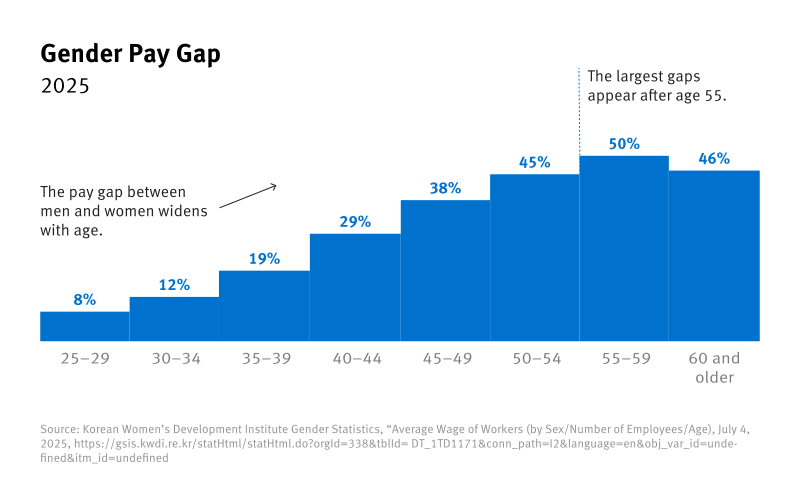
A 2023 study by the Korean Women’s Development Institute also found that there was a reduction in the gap between women and men’s wages after the mandatory retirement age of 60 or older when men’s wages drop and the number of non-regular workers is particularly high.[185] However, even taking this into account, women in their 70s were still paid 23 percent less than men.[186]
Human Rights Watch asked the Ministry of Gender Equality and Family in November 2025 for information, disaggregated by age, on the gap in pay for women and men in the same position and doing work of an equal skills level, such as women working as cleaners and men working as janitors.[187] The ministry had not provided this information at time of writing.
Younger women who currently work in sectors where women predominate will find the gender pay gap widening as they age unless these systemic factors are addressed. Cho Ara, 28, a librarian, earned KRW2.2 million ($1,536) per month with little chance, she said, of promotion. Maternity leave is guaranteed, she said, and she plans to stay in the job until she retires. After five years she will get a pay raise of KRW50,000 ($35) per month. “Most of the librarians are women,” she said. “I would say only 10 percent are men. There are so few because the salary is very low. There weren't many men in college doing the courses you need to be a librarian, and those that were took a double major with computer science, so they followed a different path than us [women].”[188]
Despite the attractiveness of the security and maternity leave that comes with permanent positions like this, such occupational segregation traps women in a lifetime of increasingly lower paid work than men. Nor does higher education immunize younger women from gender pay gaps. One 2024 study found that one year after college graduation, women graduates were already earning 22 percent less than their male counterparts.[189]
Gender Pension Gap
The gender pay gap, work disruption, limited promotion, and part-time and insecure work accumulate into a gender pension gap.[190] In 2024, only 25 percent of the total amount paid out through the National Old Age Pension went to women.[191] In October 2025, women received on average just 53 percent of the monthly National Old Age Pension of men, amounting to a gender pension gap of 47 percent for this particular program.[192]
Pension Regulations Disadvantage Women
National Pension Program regulations, including who qualifies as an employee, qualification for a full or reduced pension, voluntary subscribers, eligibility of spouses, the contribution age cap, and access to childbirth credits disadvantage women and contribute to the gender pension gap.
Who qualifies as an employee: Women make up the vast majority, 72 percent in 2025, of people who work part-time for less than 60 hours per month.[193] Workers on less than 60 hours per month are not deemed an employee in relation to the National Pensions Act and are therefore not eligible to make contributions through their workplace.[194]
Qualification for a full or reduced pension: Women work for fewer years in stable employment, limiting the number of years they can make contributions as employees. Statistics Korea 2025 data shows that women spend eight years less than men on average in their longest serving job, at 13 years, and that women quit their longest serving job on average four years before men, at age 51.[195] Those who have contributed for more than 20 years receive the basic pension amount; those contributing for 10-19 years, a reduced one of half the basic pension amount plus an additional 5 percent of it for each year over 10 years of contribution.[196] In August 2025, just 17 percent of those getting the full basic pension amount, based on 20 years or more of contributions, were women.[197]
Voluntary subscribers: People who are not employed can apply to join as an individual on a “voluntary” basis and have to pay the full contribution themselves.[198] Women who are not employed, self-employed, working in the informal sector, or in unpaid work may not be able to afford to contribute.[199]
Eligibility of spouses: Some women are not eligible at all, including women not earning an income and whose spouses are covered by the National Pension or other public pension programs.[200] Such women would be eligible for a Survivor Pension when their spouse dies.[201]
Contribution age cap: The National Pension Program’s contribution age cap also disadvantages women whose work has been disrupted and/or are on low pay. People cannot continue to contribute through their workplace after age 59.[202] At 60 they can, under certain conditions, continue to contribute voluntarily until age 65 to increase their future pension payments or enrollment period if insufficient.[203] However, their employer no longer pays half of the monthly premium, so they have to pay the full contribution themselves.[204]
Access to childbirth credit: In 2025, only 3 percent of “childbirth credit” recipients were women.[205] Childbirth credits are a National Pension Program benefit that grants additional periods of non-contributory pension‑subscription to parents for the birth of each child.[206] The National Pension Service considers them one way to extend pension income to women whose work has been disrupted.[207] Until 2025, parents who had only one child were not eligible for childbirth credits. In 2025, the National Assembly extended them to the first child, for 12 months, and abolished the credit cap of 50 months, amendments that came into effect on January 1, 2026.[208] While an improvement, the additional 12 months’ credit for the first child will have a limited impact in offsetting the gender pension gap. In 2024, 30 percent of women whose work had been disrupted, for reasons including childbirth, stopped working for 10-19 years, and 12 percent for over 20 years.[209]
Either parent can claim the credits which are applied at pension eligibility age and are based on income at that time.[210] This disadvantages women since men, on average, earn 46 percent more than women at age 60 and older.[211] In addition, National Old Age Pension eligibility requires a minimum of 10 years of contributions into the National Pension Program.[212] Women are children’s primary caregivers. In 2023, a Ministry of Health and Welfare survey found that the primary caregiver of 90 percent of nearly 6,000 children was their mother, 6 percent their father, and the rest other adults, including grandparents and siblings.[213] Due to work disruption, unpaid care, and the contribution age cap, some women may not accrue 10 years of contributions to be eligible, or only the 10 to 19 years for a reduced pension. National Pension Service data shows that as of October 2025, 66,455 women had received a lump sum refund of their premiums on reaching pension eligibility age because they had not contributed for the required minimum of 10 years.[214] The National Pension Service does not hold information on the number of these women who had children.[215]
Applying the credits to the primary caregiver and basing it on the income of the higher-earning parent would increase the number of women benefiting from childbirth credits and help close the gender pension gap.
Inadequate National Old Age Pension
Because pension payments are tied to lifetime contributions, the gender pay gap means that women are likely to receive on average less in pension payments than men. The value of the monthly National Old Age Pension takes into account the individual’s average earnings, the average earnings of everyone insured under the program, an income replacement rate set at 41.5 percent in 2025, rising to 43 percent in 2026, and the number of years the individual has contributed into the program for.[216] In August 2025, National Pension Service data on the National Old Age Pension show that 95 percent of women recipients, compared to 64 percent of men, received less than KRW800,000 ($558) per month.[217] To compare, the monthly national minimum wage was KRW2,096,270 ($1,392).[218] Only 2 percent of those who received more than KRW2 million ($1,396) per month were women.[219]
Jung Kyong-sook, 55, went back to work in her mid-40s after raising her children. She worked as a school cook and became a union worker. She becomes eligible for the National Old Age Pension when she is 65 but expects to work longer. “We can't stop working as we have to make a living,” she said. “The pension is so little. I assume I'll get KRW500,000 to 600,000 ($349 to $419) per month. That's why we need to work till 70.”[220]
The widening of the gender pay gap as women get older disproportionately affects women who return to work in their 40s or 50s. They have fewer years to contribute through their workplace and are contributing when the gender pay gap is reaching its height.
The number of years women have worked limits the value of their pension. In August 2025, just 17 percent of those getting a full pension, based on 20 years or more of contributions, were women, the average amount of which was KRW1,121,281 ($783).[221] This was equivalent to 53 percent of the national minimum wage and 46 percent of the Seoul Living Wage.[222] In South Korea, the relative poverty line is set at half the national median income.[223] In 2025, the national median income for one person was KRW2,392,013 ($1,660).[224] Individuals living on an average full Old Age Pension were, therefore, living in relative poverty, on 47 percent of the national median income.
In August 2025, the average monthly “reduced pension” for those contributing for 10 to 19 years was KRW442,026 ($309).[225] This was equivalent to just 21 percent of the national minimum wage, 18 percent of the Seoul Living Wage, and 18 percent of the national median income.[226] Fifty-two percent of those getting this reduced pension were women.[227]
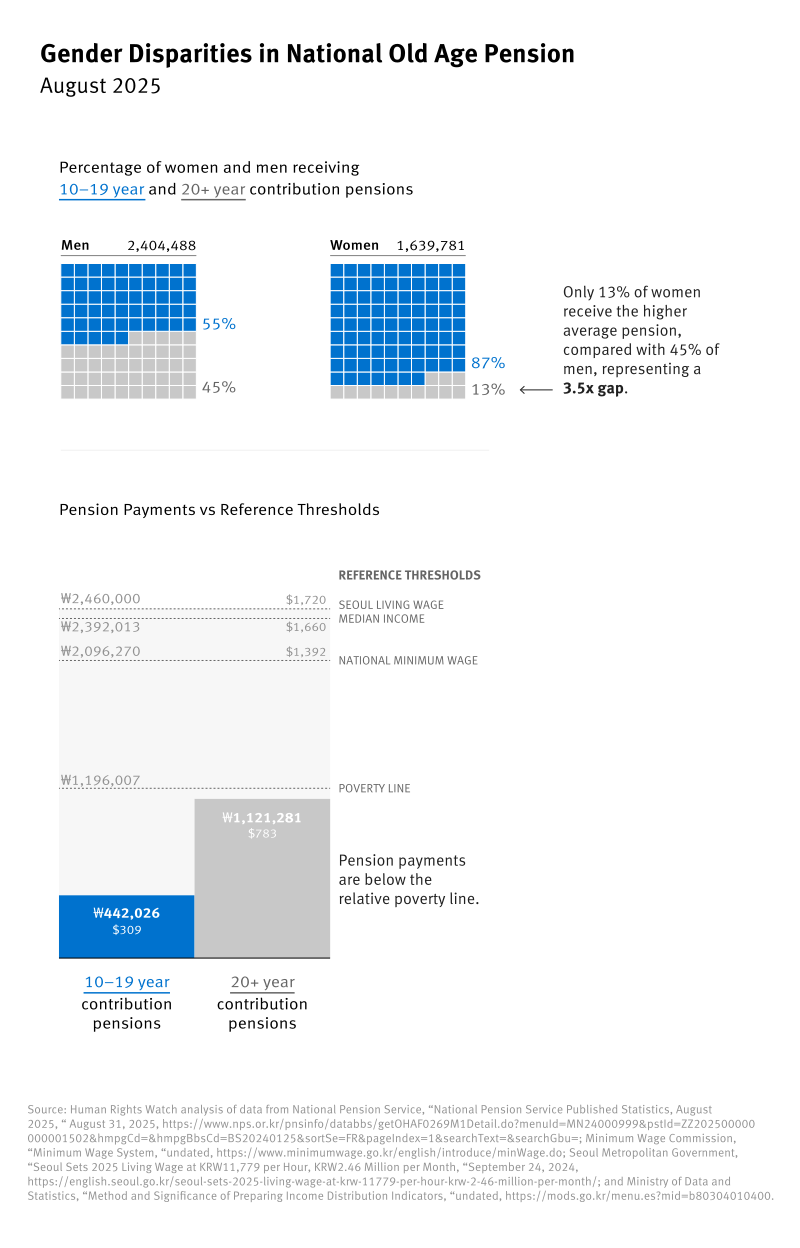
The number of hours women work also affects the value of their pension. The legal cap on a working week is 52 hours: 40 regular hours and up to 12 in overtime.[228] In 2024, 63 percent of those employed for less than 36 hours a week were women.[229]
The type of pension women are eligible for affects the income they receive when they reach pension eligibility age. Women only eligible for the Survivor Pension are particularly disadvantaged. In 2023, only 38 percent of recipients of the National Old Age Pension were women, the average monthly payment of which was KRW620,300 ($433).[230] In contrast, women made up 90 percent of recipients of the Survivor Pension that in 2023 was, on average, 45 percent less at KRW342,283 ($239) per month, and just 16 percent of the national median income.[231]
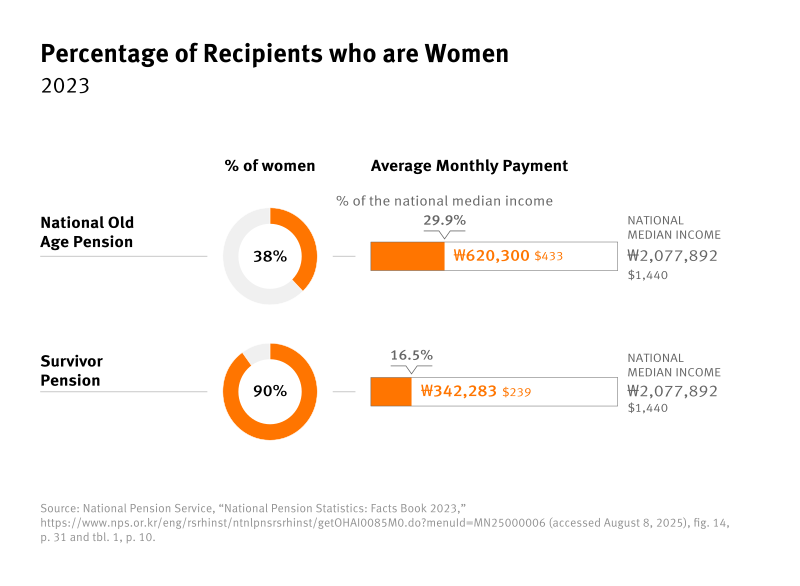
Inadequate Basic Pension
In 2026, those who had not contributed to the National Old Age Pension, whose National Old Age Pension was KRW524,550 ($363) or less, who received a survivor or disability pension, or who received financial support through the National Basic Living Security program were eligible for the standard amount of the Basic Pension.[232] Others whose income falls below the eligibility threshold set by the government but who do not meet these criteria are subject to a reduction in the Basic Pension amount.[233]
In 2023, 60 percent of Basic Pension recipients were women.[234] In 2026, the standard Basic Pension amount was KRW349,700 ($239), just 16 percent of the national minimum wage, 14 percent of the Seoul Living Wage, and 14 percent of the national median income.[235] Even those in receipt of a monthly National Old Age Pension of KRW524,550 ($363) and a standard Basic Pension of KRW349,700 ($239) would have a monthly income of KRW874,250 ($606), falling 32 percent below the relative poverty line of KRW1,282,119 ($888).[236]
The National Pension Service did not respond to Human Rights Watch’s request for data on monthly Basic Pension payments disaggregated by gender.[237] Human Rights Watch also asked the National Pension Service for the results of any gender impact assessments conducted on the National Pension Service and what impact recent pension reforms would have on women.[238] The service informed Human Rights Watch it held no data on gender impact assessments and that none had been done on the proposed pension reform.[239]
II. Intersecting Age and Gender Discrimination Against Older Women at Work
Years of systemic gender discrimination put women at an increasing disadvantage as they age. They can then be subjected to stereotypes, prejudice, and discrimination based on their older age, known as “ageism.”[240] This can also be systemic, embedded in social attitudes, laws, policies, and practice. When sexism and ageism intersect, they create a unique form of systemic discrimination against older women based on older age and gender, known as gendered ageism.[241]
Gendered Ageism
Nobody likes older women at work.
– C. Eun-jung, 55, transport worker, February 2024
Older women interviewed by Human Rights Watch said work gave them a sense of purpose, belonging, and self-fulfillment.[242] However, Human Rights Watch found that gendered ageism—negative attitudes towards older women based on their age and gender—can have a harmful impact on older women in the workplace.
Workplace culture in South Korea reflects wider social norms around hierarchy and respect linked to social status and age. The more formal, polite level of speech in the Korean language (jondaetmal), is used with strangers, older people, and in formal situations, is always used when speaking to superiors or to colleagues who are older. The less formal level (banmal), usually used among friends and family and in casual settings, can be used by managers with those they manage or with younger colleagues.[243] However, older women in the workplace said that colleagues and clients frequently speak to them with contemptuous language, and not with the respect prescribed by these social norms.
C. Eun-jung has worked for a transport company for nearly 30 years. “In [South] Korea, we have this culture that hates older women,” she said. “There is a preference for younger women. They call married women ‘ajumma,’ and we can easily see that culture in our workplace.”
Ajumma means a married or middle-aged woman. While not inherently a pejorative term, ajumma can be used in a derogatory way to refer to an entrenched, negative, and mocking cultural stereotype of middle-aged and older women as aggressive, pushy and lacking in femininity.[244] When women are called ajumma in the workplace, it effectively strips them of their professional title and assigns them an identity defined by contempt. [245]
C. Eun-jung described how younger male colleagues in her workplace called older women “kkul ajumma”—honey auntie. In South Korea, military service is mandatory for men, and in military slang “to suck honey” refers to someone who is resting or has an easy task while others are working hard.[246] By combining the two words, male colleagues use language uniquely prejudicial toward older women. “It’s very mocking,” C. Eun-jung said, “and has negative connotations, that [older] women take the benefits that men should have, like sucking honey.”[247]
Jung Kyong-sook, 55, also experienced this harassment in the school where she worked as a cook. “To the school’s principal or to the teachers, we women who work as cooks are just ajumma,” she said. “The way they talk to us and their attitude is different to how they treat regular workers.”[248]
Care workers said they were also offended by the way clients and their families called them ajumma. L. Mi-kung, 72, has been a certified care worker for older people for 17 years. Certification requires a total of 320 hours of theory, skills, and practical training, and passing written and practical exams.[249] Despite this necessary qualification, L. Mi-kung described disrespectful relationships with her clients’ families. “Families look down on us and [verbally] mistreat us,” she said. “They don’t call us by the name for a care worker [yoyangbohosa] but call us ajumma.”[250]
For care workers and school cooks, being called ajumma is not only a denial of their professional identity but an assertion of authority, a phenomenon known as gapjil, by clients, families, and colleagues who feel superior to them and view their work as low status.[251]
The UN Committee on the Rights of Persons with Disabilities has stated that the use of words that perpetuate “difference and oppression,” including based on age, is harassment, a form of discrimination that creates hostile environments where people feel offended, degraded, or humiliated.[252] The World Health Organization and International Labour Organization have recognized that discrimination and harassment at work, including related to age, pose a risk to, and undermine, mental health.[253] Studies show that workplace age discrimination increases job-related stress and worsens older workers’ mental health.[254]
Gendered ageism in South Korea is also embedded in workplace structures that push older women out of their careers. Where South Korean workplace culture traditionally rewards seniority, older women who remain in professional roles can find that, instead of being treated as experienced and authoritative, they are perceived as transgressive. J. Mi-sook, 53, a human resources manager said that in the company where she worked, older women were usually excluded from working on new projects. “Many women who experience this know their work is getting less and less and have a hard time accepting it, so they quit their job,” she said.[255] J. Mi-sook also found that those in charge of companies that she works with feel uncomfortable communicating with her because she is older. “It’s embedded in the way Korean people think that when an older women works for a long time, she is strong and aggressive,” she said.[256]
Deepening Occupational Segregation
As I’m getting older, the choices are getting scarce.
– B. In-sook, 51, lifeguard and online platform worker, August 2024
Women in their 40s onwards who told Human Rights Watch that they wanted to work did so for several reasons. For some, it was financial. They said they needed to make a living, had become the family breadwinner after a divorce or their husband’s illness, wanted a job that provides access to social security and covered their health insurance and national pension, had to supplement the pension they would get, or wanted to earn money to spend on themselves.[257] Some said they liked working, that it was meaningful, rewarding, motivating and gave them a sense of pride or achievement. Others said work helped them stay active.[258]
However, South Korean women returning to work in their 40s and 50s have more limited employment opportunities than when they started work in their 20s. Those in their 60s and 70s have even fewer options. The older women get, the fewer work opportunities they have.
Narrowing Work Opportunities
Women from various backgrounds and educational attainment levels said that jobs available to women in their 50s were limited to a small range of jobs: support roles in education such as cooks, customer service in call centers, cashiers in supermarkets, cleaning, and care work.[259] These opportunities narrowed even further, to cleaning and care work, for those in their 60s and 70s.[260]
A university degree offered little protection against these narrowing job options. B. In-sook studied Japanese at university and worked as an editor after she graduated. Despite her university education, work disruption limited her work options in her 30s and 40s to self-employed, part-time work she could fit around raising her children. At 51, she said her older age limited her options further. Working as a part-time lifeguard and online platform worker, she said, “If I can’t do this for a long time, probably my next job will be caregiving. There are no other options that I know about for women in their 50s.”[261]
Women without university education also described narrowing work options. Jung Kyong-sook, 55, graduated from high school and worked as a bookkeeper in a small company. She stopped working in 1994 to raise her three children and went back to work in 2013. “Most of us [women] in our 50s go to work in supermarkets as a cashier or cook in schools. We can’t really pursue our career. That’s why I ended up [cooking] in schools.”[262]
That older women should be considered too old for many jobs is so deeply embedded in social norms that women themselves may accept this even in their 40s. After an early career as a flight attendant, B. Young-mi, 46, said she was retraining to become an interpreter. “For some jobs, I’m too qualified and too old,” she said. She had no response to her applications to work as interpreter in the plastic surgery industry, despite her fluent English and customer service skills. “There's no mention of age in the application process, but you know they will hire someone who meets their appearance and age criteria,” she said. “I've never thought of challenging or asking companies why I'm not qualified, why I haven't been selected or why I've failed the screening. I have internalized the concept.”[263]
Kim Ju-ran, 59, said that she did not get much education. As a young woman she worked in a factory, on a sewing machine, and then as a masseuse and in a skincare shop. “When I was in my mid-50s, I realized that there were not many things I could do, just cleaning or caregiving.” She has since worked as a care worker in a nursing home and in people’s homes.[264]
The work available to older women is an extension of their gendered and age-based roles in the family, as cooks, cleaners, and care providers. The skills that society expects women to develop without pay at home become the only skills the labor market will pay them for when they are older.
L. Mi-kung, 72, moved to Seoul from the southern province of Jeollanam-do when she got married. When she was 56, she had to become the breadwinner for her family after her husband collapsed, was hospitalized, and could no longer work. She cared for her husband in hospital for six months but needed to find a paid job. “It wasn’t easy to find work as an older woman,” she said. “A couple of months’ experience was a good reason for me to become a caregiver.” She is now a care worker visiting clients in their homes.[265]
For some, even these jobs are not available. J. Seo-yoon, 75, has been distributing leaflets outside Seoul subway stations for 20 years. “I would like to do something else,” she said. She earns KRW75,000 ($52) per day. In 2022, she took the government caregiving training course but said she failed the test to get a license. “I didn’t have enough time to study because I was working,” she said.[266]
Chung Sun-cha, 87, started work collecting cardboard, plastic, and other recycling materials off the street when she was in her mid-70s. Until spring 2025, when she fell and broke her arm while working, Chung Sun-cha worked six days a week, sometimes seven, going out in the wind and the rain and the snow, and at night when she said there was less competition from other recycling collectors. “I couldn’t find any other work because of my age,” she said.[267]
A Ministry of Health and Welfare survey of 15,000 recycling collectors in 2024 found their average age was 78, 56 percent were women, and their monthly income was KRW766,000 (US$535).[268]
Jung Kyong-sook, 55, said the work older women could get was also a reflection of the value placed on this type of work and those who do it. “These jobs are for people who are considered trivial or not important,” she said.[269]
Government Employment Online Portal Perpetuates Occupational Segregation
The Ministry of Employment and Labor has a duty under the Act on Prohibition of Age Discrimination and Elderly Employment Promotion to support middle-aged and older people to find work by sharing information about job opportunities, providing vocational training, and supporting employers to hire them.[270] The act prohibits age discrimination in recruitment, including the use of explicit age criteria in job advertisements.[271]
Limited Range of Jobs
Work24, South Korean government’s online job search portal, is made available through the Ministry of Employment and Labor. It includes job postings that allow applicants to directly apply for jobs through the site and also shares postings that link to other external application portals. While older job seekers can apply for all jobs listed on the portal, Work24 also categorizes vacancies under themes, including “middle-aged and older people,” as the government presents it, “preparing for their second life,” and senior citizens “preparing for a new future.”[272] In addition to the categories, when searching for open positions for which to apply, job seekers can also filter for jobs for which the employer has specifically indicated a preference for hiring someone 50 or older.
Human Rights Watch analyzed over 250,000 unique job postings that were advertised on the site on two snapshot dates: November 24, 2025, and February 3, 2026.[273] Human Rights Watch’s analysis of the site found that the ministry was promoting a limited range of jobs to older people through its categorization of certain jobs under the middle-aged and older people, and senior citizens themes, and by allowing employers to indicate a preference for applicants 50 or older in the advertisement. These jobs were low-paid, required little education or work experience, were often paid hourly, part-time or flexible, and often without access to social security, all factors that can lower the amount of pension payments.[274] Analysis reveals that there are stark differences in the types of jobs for which older and younger applicants apply and that, among jobs targeted to older applicants, there are distinct gender disparities in the types of jobs applicants apply to.
Occupational Segregation
The Work24 site presented very limited opportunities for older applicants. Fewer than 3 percent of the jobs advertised (about 6,700 of over 250,000) were tagged with a preference for older candidates.
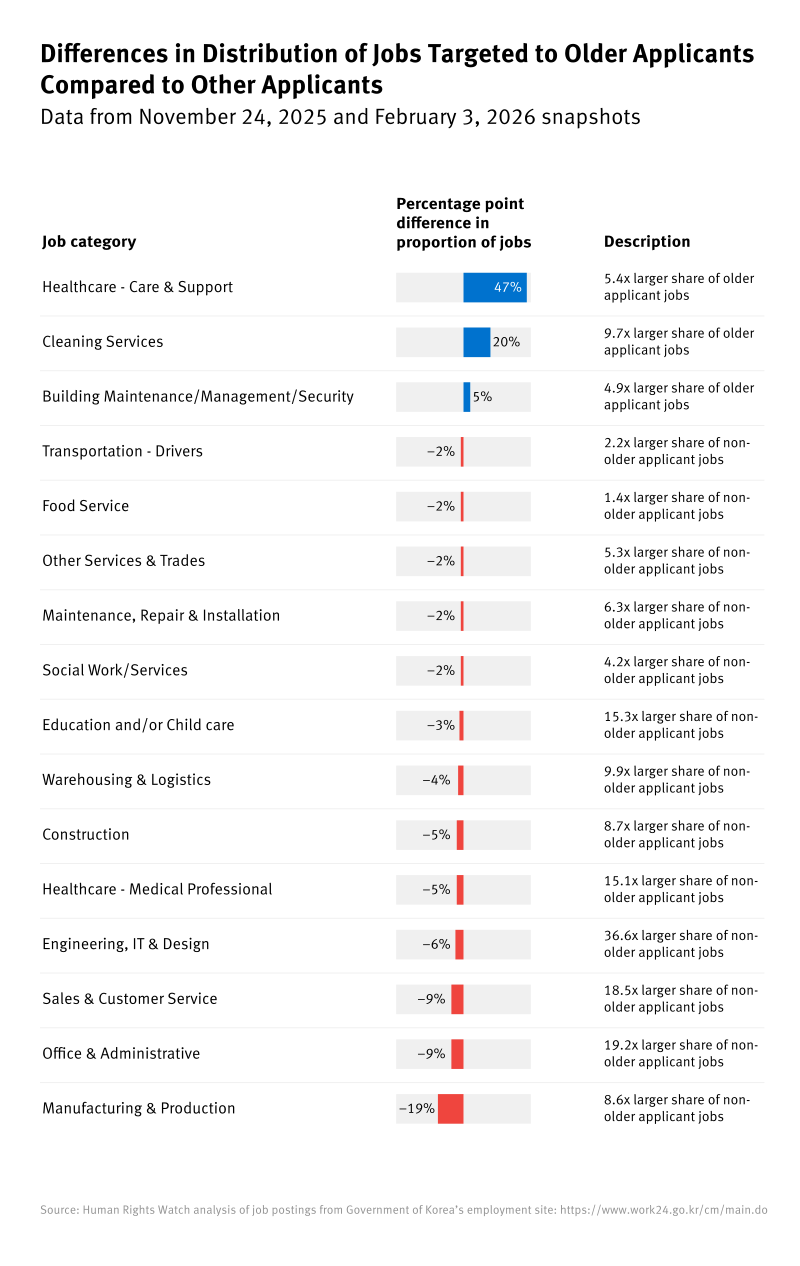
Human Rights Watch found that about 60 percent of jobs advertised indicating a preference for applicants 50 or older were in a single sector, in-home caregiving, and 90 percent were in just four categories of jobs: health care, care and support; cleaning services (mainly building cleaners); building caretakers/management/security; and food service. A low percentage of these required applicants to have any education (3 percent) or previous work experience (15 percent).[275]
These types of jobs were substantially different from those advertised without indicating a preference for applicants age 50 or older. For example, healthcare, care and support jobs made up a five times larger share of available jobs with a preference for older applicants than they did for jobs without that preference.[276] In other job categories, very few jobs were marketed to older candidates. For example, manufacturing and production jobs, one category, made up 21 percent of all job postings but only 2 percent of those tagged for older applicants. Office and administrative and sales or customer service jobs accounted for 10 percent of all postings but less than 1 percent (0.5 percent) of those tagged for older candidates. Of the thousands of job postings in the engineering, IT and design, and education or childcare categories, almost none were tagged for older applicants.
Age and Gender Segregation of Applicants
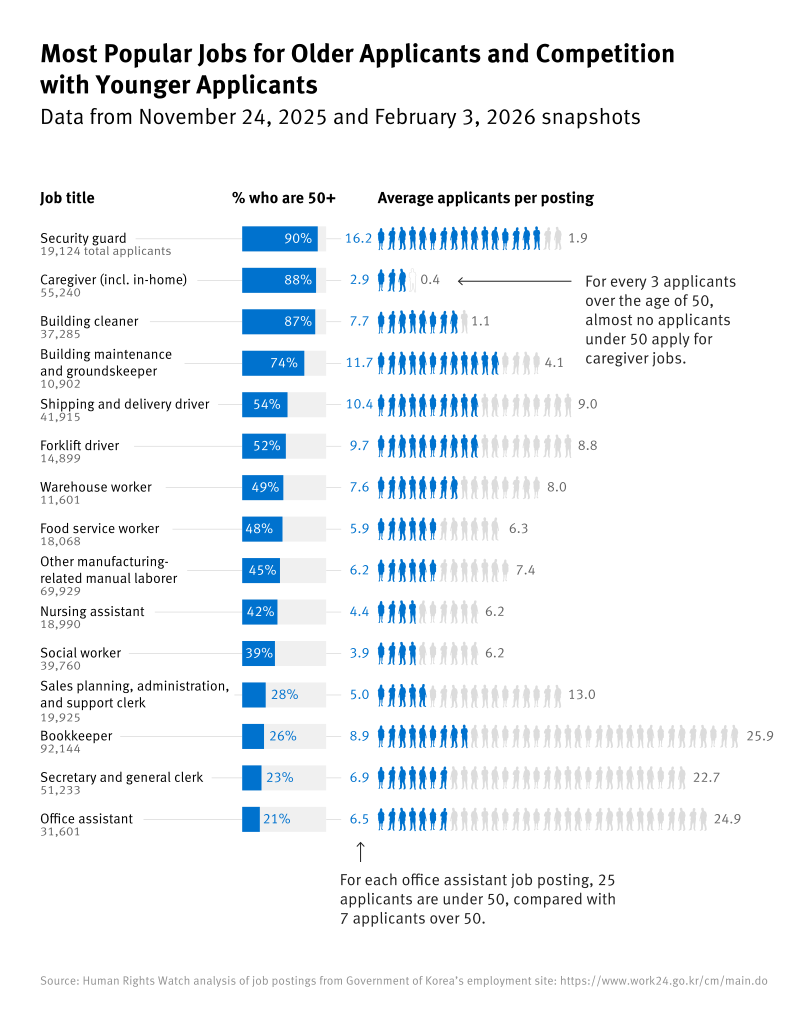
Human Rights Watch analyzed application data for the nearly 110,000 job postings that applicants could apply for directly through the Work24 employment portal. Eighty-nine percent of applicants for the jobs advertised with a preference for applicants 50 or older were in fact age 50 or older. Nonetheless, older applicants were also interested in jobs not explicitly marketed to them. Over 95 percent of all applicants over the age of 50 applied to a job that was not tagged for older candidates. Of postings not marked for older candidates, the most popular jobs that older applicants applied for included manufacturing workers, bookkeepers, shipping and delivery drivers, secretaries and clerks, and nursing assistants.
Certain jobs were dominated by older applicants: 88 percent of all care worker job applicants, 87 percent of cleaners, and 90 percent of security guards were 50 or older compared to just 39 percent of social workers and 26 percent of bookkeepers.[277] However other jobs with high numbers of older applicants also received many applications from younger workers. For example, for every 10 older people who applied to an office assistant posting, 38 younger people applied.
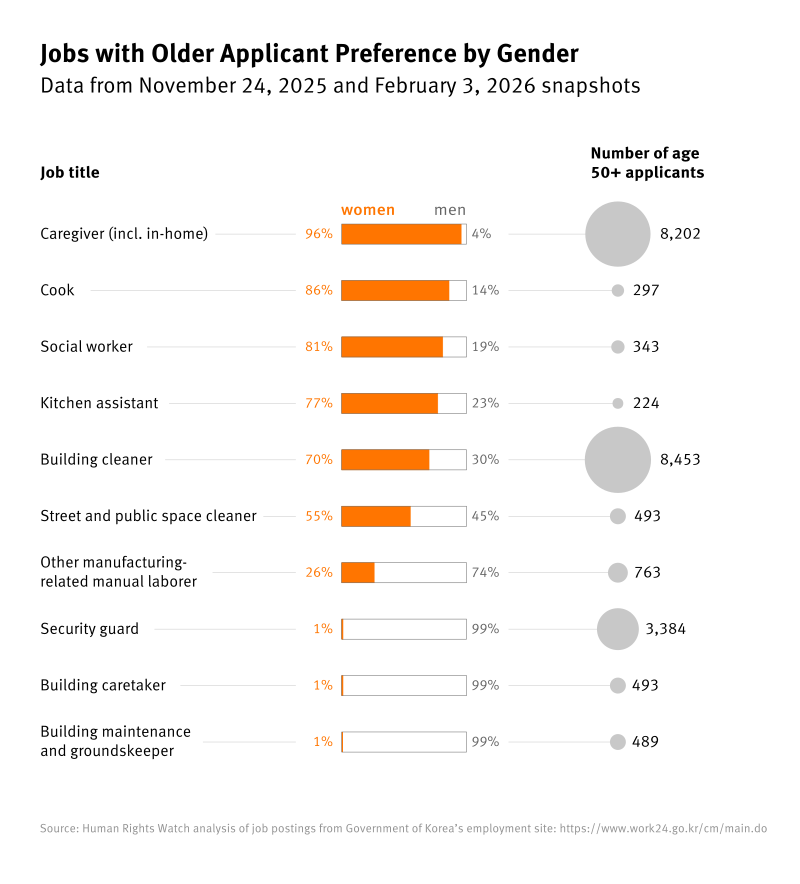
Gendered norms about the work older women do were also reflected in applicant data for jobs with a preference for applicants 50 or older. Care, cleaner, kitchen and social worker jobs were dominated by women applicants, while men were nearly all applicants for security jobs, building managers and maintenance positions.[278]
Low Wages Reflect Gendered Norms
The majority of the postings for older applicants were jobs paying the national minimum wage of KRW10,030 ($7) per hour in 2025 and KRW10,320 ($7) in 2026, and at such a high proportion that the median job for older applicants was a minimum wage paying job. However, median wages were lower for those jobs older women predominantly applied for, care and support, cleaning and social services, and higher for those older men applied for, security and safety, transportation and maintenance.
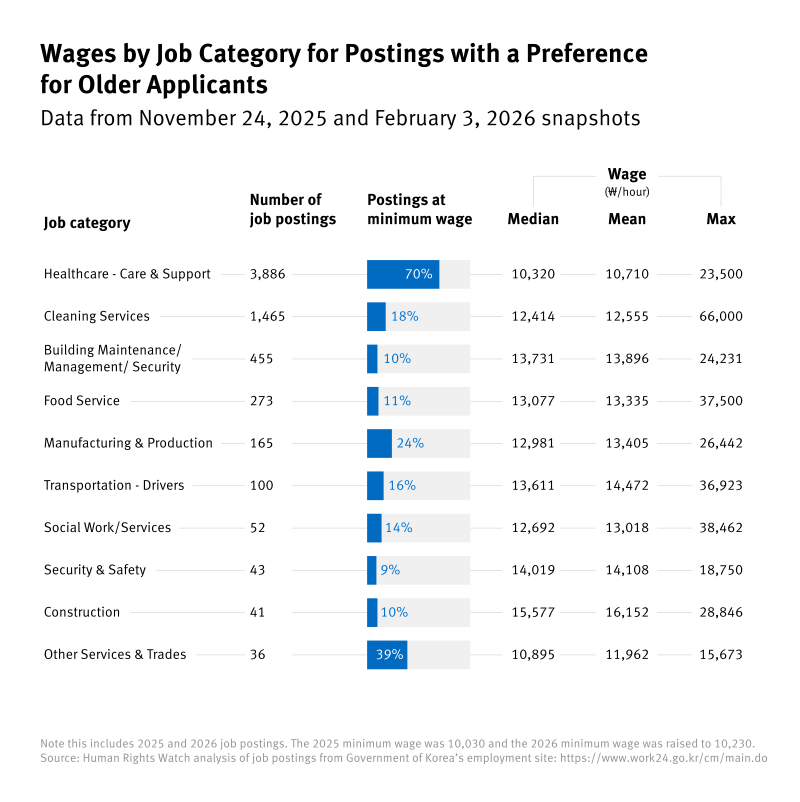
The low wages offered by these jobs likely impact pension payments as do other conditions of the positions. Fewer than half of all postings advertised to older applicants advertised full-time employment contracts with most being part-time. Only 17 percent of postings explicitly stated working hours of 40 or more hours a week but at the same time 85 percent of postings required the position to work five or more days per week. Very few postings offered, conditions, or wages that would increase pension payments. Only 22 percent of postings marketed towards older applicants mentioned pension entitlements.
By promoting certain jobs as “suitable” for people 50 or older, and allowing a stated preference for applicants 50 or older, the ministry is contributing to occupational segregation and the narrowing of job opportunities for women as they age. Occupational segregation based on age and gender is a form of systemic discrimination.[279]
Gender Disadvantage in Government Older People’s Employment Program
Older women are also disadvantaged when using the Ministry of Health and Welfare’s employment program for people age 60 and older on low incomes. Under the Welfare of Senior Citizens Act, the health and welfare ministry has a responsibility to increase opportunities for older people to participate in community services and provide job opportunities for older people.[280]
In 2022, a program run by the Korea Labor Force Development Institute for the Aged (KORDI) on behalf of the ministry—the Senior Employment and Social Activity Support Program (SESAP)—placed 881,535 older people nationwide in employment and volunteering roles.[281] Women made up 82 percent of the participants in its public service “Elderly-To-Elderly Care” program, earning an average of just KRW270,000 ($188) per month.[282] In contrast, 66 percent of those in the senior internship program were men, earning an average of KRW2,086,269 ($1,456) per month.[283]
Women were also at a disadvantage in the small business program. Women made up 93 percent of those involved in store businesses, earning an average of KRW369,245 ($277) per month, while 85 percent of those in transport businesses were men, earning on average KRW603,830 ($421) per month.[284]
The ministry does not appear to take any responsibility for gender equality in these programs. In November 2025, the Ministry of Health and Welfare announced a recruitment drive for 1.1 million “senior jobs” for people 60 and older.[285] When Human Rights Watch asked the ministry in November 2025 what it was doing to ensure gender equality in access to employment through re-employment support services for older people, and the results of any gender impact assessment of these services, it replied that these matters fell under the jurisdiction of the Ministry of Gender Equality and Family.[286]
Training options under the program often reinforce the domestic roles women have occupied throughout their lives. Park Jae-soon, 61, was forced to retire from her job after 20 years with a utility company at the mandatory retirement age of 60. She looked at the training courses available under the employment support program, including, she told Human Rights Watch, sewing, carpentry, wallpapering, knitting, and making curtains. She chose to obtain three certificates in caregiving since she felt there would be a demand for caregivers. She now provides care for older people in their own homes, working five and a half days a week for KRW1.3 million ($908) per month, less than a third of her previous salary. “At first, I approached it as a job, but now I feel that [because the salary is so low] you can't do it without having a love for the work and a volunteering spirit.”[287]
Human Rights Watch asked the Ministry of Employment and Labor in November 2025 for information on the types of employment that were open to and most taken up by women 50 and older, the results of any gender impact assessments of re-employment services for people 50 and older, and what it was doing to ensure women in their 50s and older were not segregated into occupations that were low-paid, precarious, and deemed “suitable” for older women based on harmful gender and age stereotypes.[288] The ministry had not responded to these questions at time of writing.
Precarious Work
We should work in a more stable working environment by switching from non-regular to regular workers.
– Yang Myung-ju, 55, call center worker, February 2024
As the type of work available to older women narrows, their conditions of work deteriorate. Older women often face working conditions that are precarious due to temporary or short-term contracts, hourly pay, and low wages.
Insecure Contracts
Older women workers told Human Rights Watch that short term or no contracts leave them with little job security. Yang Myung-ju, 55, lives in constant fear she will be laid off from her job at a call center. She is not employed by the call center but by a company it sub-contracts work to. “Our sub-contractor changes every two years and when the company changes, it’s possible that they won’t keep the original crew,” she said. “We don’t know if we will be laid off or not. I always feel very insecure when the company changes.”[289]
B. Young-hee, 63, has worked for three companies sub-contracted to provide cleaning services: the first for 14 years until the company ended her contract, the second in 2023 for one year when the company again ended the contract, and the third starting in 2024. Each time the contract changed, she said, her vacation days were reduced, and she lost those she had not taken. “When the contract was renewed all the previous vacation days that I had accumulated had gone and I started with only 11 days,” she said.[290]
Under the Act on the Protection of Temporary Agency Workers, temporary agency contracts are limited to one year, renewable once, before the employer must convert the worker to permanent status. However, workers 55 and older are explicitly exempted and can be kept indefinitely on temporary agency contracts, with no right to conversion, keeping older temporary agency workers in precarious employment.[291]
Some older women described working arrangements that fell entirely outside any formal employment framework. When L. Mi-kung, 72, worked as a hospital caregiver in her 50s, she had no contract. In South Korean hospitals, family members provide bedside care for their sick relatives, feeding, dressing and taking them to the bathroom.[292] Families that cannot do this themselves hire caregivers.[293] L. Mi-kung found her job through an agency that she paid a membership fee to join. After completing some training, the agency connected her to families looking for a caregiver, who paid her directly by the hour. She had no job stability, no contract, and no social security, including unemployment insurance. “When a patient passed away, you could wait for days until you got another one,” she said.[294]
Low Wages
Jobs available to older women are concentrated in low-paid work and often paid by the hour. Government data show that in 2023, more women than men are low-wage earners, which they defined as earning at or below two-thirds of the national hourly median wage.[295] The percentage of women on low wages rose steadily from 6.5 percent in their 30s to 75 percent at 70 and older. The rise in men did not occur until they were in their late 50s, at 6.5 percent, rising to 55 percent at 70 and older.[296] Women age 60 and older earn, on average, 46 percent less than older men (see section on the gender pay gap above).[297]
In 2024, according to the National Health Insurance Service, 93 percent of certified care workers were women.[298] Kim Ju-ran, 59, is a care worker and was paid the minimum wage, KRW9,860 ($7) per hour, with a bonus if she worked the nightshift. She said that among her co-workers she was quite young. “A lot are in their late 60s and 70s. Young people are not entering our industry because, compared to the workload, the income is so low,” she said.[299] P. Hyun-sa, 69, a cleaner, worked 15 hours a week and was paid the minimum wage, her weekly earnings amounting to roughly KRW 148,000 ($103).[300]
Some older women working outside formal employment earn even less. Unable to find other work, Chung Sun-cha, 87, had been collecting recycling materials to sell to recycling depots since her mid-70s. Before she had an accident in 2025, she earned around KRW10,000 per day ($7) collecting cardboard, plastic and other materials from the street and garbage cans.[301]
Lack of Union Representation
In 2024, South Korea’s overall unionization rate was 13 percent, below the OECD average of 15 percent.[302] Union membership is concentrated in the public sector, with a unionization rate of 72 percent, compared to just 10 percent in the private sector.[303] Only 6.6 percent of non-regular workers, who are disproportionately women, were eligible to join a union in 2025, and of those eligible, only 49 percent joined one.[304] Unionization is higher in large companies, with 89 percent of union members working for companies with over 300 employees.[305]
Government data show only 35 percent of all union members were women in 2023.[306] Among women workers, the unionization rate was just 8 percent, compared to 19 percent among men, according to a 2021 Ministry of Employment and Labor report.[307] The main barriers were the concentration of women’s employment in low-paid, precarious, non-regular jobs, often in small and medium sized companies with no unions.[308]
Human Rights Watch asked the Ministry of Employment and Labor and the Ministry of Gender Equality and Family in November 2025 for information on women’s membership in labor unions by age, industry and company size, including their unionization rate, and what they were doing to promote women’s membership.[309] The ministries had not provided this information at time of writing.
The older women who had union representation said it had transformed their working conditions, including pay and working hours.[310] Son Kyung-hee, 54, has worked as a school cook for 15 years. She said the vast majority of school cooks were women. “To begin with, I had to renew my contract every year, but now I have a permanent contract because the union got involved to improve the working conditions,” she said. The union also negotiated the value of a biannual payment for a medical check-up.[311]
Um Mi-shim, 53, and a golf caddy, said she experienced a lot of sexual harassment in the past but did not complain. “I just cried,” she said. “Now if I speak up, the union is behind me,” she said.[312]
Even if older women are unionized at the same rate as women of all ages (8 percent), given their concentration in non-regular work, the actual rate is likely much lower. For the vast majority of older women in non-regular jobs, the protections that union membership provides, from better pay and permanent contracts to recourse against harassment, remain out of reach.
Physical and Mental Harm
Older women's bodies bear the cost of discriminatory employment structures. Concentrated in the most physically demanding and least protected work, many older women face chronic injury, illness, and psychological harm, with little or no institutional support when their health breaks down.
Physical Risk
School kitchens are dangerous workplaces in South Korea. The Korea Times reported in September 2025 that workplace injuries in school kitchens were six times the national average and included slips, burns, heat exhaustion, and respiratory diseases.[313]
Jung Kyong-sook, 55, described how school cooks work eight hours per day with no break, with three hours to prepare lunch for 1000 students and two to three hours to wash the dishes afterwards. Many older women who worked as cooks, she said, had acupuncture or medical treatment during the school vacation. “There’s even a nickname for our job,” she said. “We’re known as the department store of skeletal muscular diseases.”[314]
Older women working on the streets face different but equally punishing physical conditions. Chung Sun-cha, 87, who collected recycling materials, has arthritis and said her whole body ached because of the work. The physical conditions she worked in were hazardous. After she fell and broke her arm in 2025, she had to stay in bed for three months. Her work also exposed her to danger. When she went out at night, young men would scare her, demanding money or her phone, and she would have to run away. “It’s made me feel very, very depressed,” she said.[315]
No Support When Health Suffers
There is no statutory paid sick leave in South Korea. Few older women have permanent contracts with public sector or large companies that may provide some voluntary sick pay.[316] For most, illness means choosing between recovery and income.
B. Young-hee, 63, a cleaner, got 11 vacation days per year. If she became sick, she had to use them.[317] Kim Jung-nam, 52, was working as a personal assistant for people with disabilities for the now-closed, government-run Seoul Public Agency for Social Services. She was entitled to sick leave but said it was effectively unusable. “Even though there is a system, it’s hard to use because they think we pretend to be sick,” she said.[318]
Employers offer little accommodation for women as they age. Women experiencing perimenopausal and menopausal symptoms do not enjoy the same right to time off as those eligible for menstrual leave, one day per month under South Korean law, despite the negative impact perimenopausal and menopausal symptoms can have on women’s physical and mental health and ability to work.[319]
Yang Myung-ju, 55, has dealt with customer complaints in a call center for 14 years. She gets no sick leave. Since experiencing menopause, she said the stress of handling aggressive customer complaints aggravated her symptoms, including severe headaches and stomach aches. “You’re not able to take a break,” she said. “There’s no policy at all to support women going through the menopause.”[320]
Harassment and Violence as Occupational Hazard
The occupational segregation of older women as care workers puts them at disproportionate risk of exposure to sexual harassment, inappropriate sexual behavior, physical violence, and abuse. A 2024 study by the Veterans Medical Research Institute and Seoul National University found that personal care workers in South Korea were 7 to 10 times more likely to experience unwanted sexual attention, sexual harassment and physical violence than office or service workers.[321] Some forms of dementia result in a loss of inhibition resulting in sexual behavior that may be inappropriate; other people with dementia may have a desire for affection they find hard to communicate or behave in a way that is misunderstood as sexual.[322] This can cause distress to the person with dementia and those around them.
L. Mi-kung, 72, a care worker, said one older man had embraced her while she was giving him a bath and told her she was pretty. She put up with it, she said, because she could not afford to lose her job. Another older man she was supporting would swear at women when he watched television. “He also said horrible things to me,” she said. “I couldn’t stand it, so I told him to stop.”[323]
L. Mi-kung said that when she told the director of her agency, he asked her what she was making a fuss about. “I argued with the director,” she said. “His reaction should have been how embarrassing it was for me.” Instead, he told her this would happen frequently to women because they worked with people with dementia. L. Mi-kung continued working, saying when she heard other care workers’ experiences, she felt hers was “not so bad.”[324] Studies estimate that between 7 and 25 percent of people with dementia exhibit some form of inappropriate sexual behavior.[325]
Care workers’ employers are legally required to take steps to resolve care workers’ grievances of verbal abuse, physical assault, or sexual harassment by a service user or member of their family.[326] When C. Ji-yoon, 67, a care worker, reported to her agency that one of her clients had regularly masturbated in front of her, she said her employer immediately changed her to another client.[327]
The physical injuries, chronic illness, and mental harm older women endure are the foreseeable consequence of occupational segregation that channels older women into physically demanding jobs with few protections.
Discriminatory Age-based Employment Policies
The mandatory retirement age is unfair. The system says we can work till we are 60. But life expectancy is getting much longer and if you're fully healthy, you still have to stop working.
– Park Jae-soon, 61, care worker, November 2025
South Korea’s mandatory retirement age of 60 or older and peak wage system, both of which Human Rights Watch found to be discriminatory, cause disproportionate harm to women.
Mandatory Retirement Age
By the time women reach the minimum mandatory retirement age of 60, the gender pay gap means they are earning, on average, 46 percent less than men.[328] For women whose work was disrupted when they were younger, mandatory retirement, when employers choose to apply it at 60 or older, means losing the jobs they returned to in their 40s or 50s. For many, this would have been the first stable employment they had had in years or decades. Being forced to retire removes their opportunity to make up for lost earnings or gaps in their pension contributions.
Being forced to retire also pushes women who wish to or have no choice but to continue working into more precarious and lower paid work.[329] Park Jae-soon, 61, was forced to retire from her full-time job at a utility company when she was 60 and earning KRW55 million ($38,390) per year. She now earns just KRW15.6 million ($10,889) per year, a 72 percent pay cut, as a part-time care worker.[330]
Mandatory retirement can affect women already in low-paid jobs. Son Kyung-hee, a 54-year-old school cook, faces mandatory retirement at 61. She values the stability of a permanent contract and a monthly wage but is already preparing to work as a caregiver after she is forced to retire because she has heard there is no retirement age for caregiving.[331] Jeong Jun-young, 55, earns just KRW2.1 million ($1,466) per month as an afterschool caregiver. She faces mandatory retirement at 60 and hopes that the National Assembly will extend the mandatory retirement age to 65. “Not raising the mandatory retirement age is my biggest concern. My children are still in college and I need an income,” she said.[332]
Younger women in jobs subject to a mandatory retirement age will still be forced to leave their main, permanent job and take lower-paid, more precarious work unless the mandatory retirement age is abolished.
Peak Wage System
The peak wage system also compounds the damage to careers already shaped by job disruptions and the gender pay gap. Women arrive at peak wage age earning less than men, and then have those already lower wages cut further.
C. Eun-jung, 55, has worked at a transport company on a permanent contract for 30 years. Her wages will be cut by 45 percent for the two years before her mandatory retirement at 60.[333] Lee Hyun-jin, a 46-year-old flight attendant, plans to work until her airline’s mandatory retirement age of 60. Her wages will be cut by 10 percent each year from the age of 55.[334]
Those forced to retire can be re-employed, but under less favorable working conditions. Y. Kyung-hee, 59, is a professor at a public research institute that will reemploy staff part-time for one year after mandatory retirement at 60. If she stays on for another year, her salary will be KRW30 million ($20,963) per year, 60 percent less than it was before it was reduced under the peak wage system.[335]
Human Rights Watch asked the Ministry of Employment and Labor in November 2025 for the results of any gender impact assessments of the use of the mandatory retirement age of 60 or older and the peak wage system, as well as information disaggregated by age on reductions of wages under the peak wage system, and the position and wages of women at time of their mandatory retirement. The ministry had not provided this information at time of writing.[336]
III. South Korea’s International Legal Obligations
South Korea’s government has legal obligations under international human rights law to guarantee women their rights to work, nondiscrimination, and social security on an equal basis with others.
Relevant International Human Rights Law
Right to Work
Article 6 of the International Covenant on Economic, Social and Cultural Rights (ICESCR), which South Korea ratified in 1990, enshrines “the right of everyone to the opportunity to gain his living by work which he freely chooses or accepts,” thus guaranteeing women, including older women, the right to work on an equal basis with others.[337] The ICESCR also guarantees the right to “just and favourable” conditions of work, including fair wages and safe working conditions.[338] The Convention on the Elimination of All Forms of Discrimination against Women (CEDAW), which South Korea ratified in 1984, guarantees women’s right to work on an equal basis with men.[339]
In 2017, the United Nations Committee on Economic, Social and Cultural Rights (CESCR), which monitors state compliance with the ICESCR, recommended that South Korea address the root causes of the gender pay gap and non-regular forms of employment.[340]
Right to Nondiscrimination
The UN Human Rights Committee, which monitors the implementation of the International Covenant on Civil and Political Rights (ICCPR) which South Korea ratified in 1990, has defined discrimination as any distinction, exclusion, restriction or preference that is based directly or indirectly on a number of identified grounds, and which has the purpose or effect of nullifying or impairing the recognition, enjoyment or exercise by all persons, on an equal footing, of all rights or freedoms.[341]
The Human Rights Committee and the UN Committee on the Elimination of Discrimination against Women (CEDAW Committee), which monitors compliance with CEDAW, have recommended that South Korea adopt comprehensive anti-discrimination legislation explicitly addressing, among others, intersectional discrimination on grounds including age and gender.[342] The Human Rights Committee also recommended that South Korea strengthen its efforts aimed at eradicating stereotypical prejudices based on prohibited grounds, which include age and gender.[343]
Systemic Discrimination
The CESCR has defined systemic discrimination as discrimination against groups as:
pervasive and persistent and deeply entrenched in social behaviour and organization, often involving unchallenged or indirect discrimination. Such systemic discrimination can be understood as legal rules, policies, practices or predominant cultural attitudes in either the public or private sector which create relative disadvantages for some groups, and privileges for other groups.[344]
The CESCR has also called on states to eliminate “systemic discrimination and segregation in practice,” including in the workplace, and address traditional gender roles and other structural obstacles that perpetuate gender inequality.[345]
Under CEDAW, states have an obligation “to modify the social and cultural patterns of conduct of men and women” to eliminate prejudices and other practices based on stereotyped roles for women and men.[346] In 2024, the CEDAW Committee expressed concern about stereotypes that overemphasize women’s role as mothers and wives and undermine their employment opportunities.[347] The committee recommended that South Korea take steps to dismantle such gender stereotypes and conduct awareness-raising campaigns on gender equity targeted at employers.[348]
Multiple and Cumulative Discrimination
Discrimination can be “multiple” when someone is subjected to discrimination on two or more prohibited grounds. The CESCR has recognized this can have “a unique and specific impact on individuals and merits particular consideration and remedying.”[349]
The CEDAW Committee has recognized multiple discrimination against women based on their age and gender in many aspects of their lives including at work.[350] It stated “that gender-based discrimination in employment throughout women’s lives has a cumulative impact in older age, forcing older women to face disproportionately lower incomes and pensions, or even no pension, compared with men.”[351] It has said states should facilitate the participation of older women in paid work without discrimination based on their age and gender, ensure women are not forced into early retirement, and monitor the impact of gender-related pay gaps on older women.[352]
The CESCR has also stated that workers should be protected from gender and age discrimination and that states should implement measures to prevent gender and age discrimination at work.[353] The CESCR recognizes that accumulated disadvantages against women have a negative impact on their right to work and other rights. The CESCR said that states should address occupational segregation, equal pay for work of equal value, and equal opportunity for promotion and emphasized that “any assessment of the ‘value’ of work must avoid gender stereotypes that could undervalue work predominantly performed by women.”[354]
In 2025, the UN independent expert on the enjoyment of all human rights by older persons, Claudia Mahler, said that states should address gender gaps in employment and wages.[355]
Right to Social Security
Older women have the right to social security under the ICESCR and CEDAW.[356] The right to social security includes sick pay, parental leave, unemployment payments, work-related injuries and disability, survivor, and old age pensions.[357] The CESCR has clarified that the social security system should cover everyone, and social security entitlements should be sufficient to realize everyone’s right to an adequate standard of living.[358] Relatedly, the International Labour Organization’s Recommendation No. 202 on social protection floors states that governments should guarantee basic income for older people at a level that allows for a dignified life.[359]
The CESCR has made clear that states need to ensure “that women receive equal benefits in both public and private pension schemes.”[360] States should either eliminate the factors that prevent women from making equal contributions to contributory pension programs, including work disruption due to family responsibilities, and unequal pay outcomes, or take account of these factors in how pension payments are calculated, for example considering time taken to raise children.[361] In 2024, the CEDAW Committee recommended that South Korea extend social security coverage to those employed for less than 15 hours per week, the majority of whom are women.[362]
The CEDAW Committee emphasized that states have an obligation to ensure that that pension policies are not discriminatory in any manner, including against women who opt to retire early, and that older women have equal access to men to an adequate non-contributory pension.[363]
The UN independent expert on older people’s rights has said that older women should have equal access to pensions, states should address gender pension gaps, and that work as an informal caregiver should be taken into account in the calculation of and participation in contributory pensions.[364] If unable to contribute, informal caregivers “must have access to adequate non-contributory pensions.”[365]
Acknowledgments
This report was researched and written by Bridget Sleap, senior researcher on the rights of older people. Audrey Gregg, senior coordinator in the Asia and Disability Rights divisions, and Brian Root, senior advisor, and Damir Khairat, research technologist, in the Technology, Rights and Investigations Division, provided additional research and analysis. The report was reviewed by Elizabeth Kamundia, director of the Disability Rights Division, and Sarah Jackson, deputy program director. James Ross, legal and policy director, provided legal review.
Lina Yoon, senior Koreas researcher, assisted with strategy, specialist review, and outreach. Lena Simet, senior advisor, Economic Justice and Rights Division; Brian Root, senior advisor, Technology, Rights and Investigations Division; and Susanné Seong-eun Bergsten, acting research assistant in the Women’s Rights Division, provided specialist review.
Audrey Gregg provided production assistance and support. Layout and production were done by Travis Carr, publications manager, Fitzroy Hepkins, senior administrative manager, and Jose Martinez, administrative officer. Visuals for the report were designed and prepared by Victória Sacagami, information designer, and Brian Root.
The Belonging Forum (formerly the Samuel Centre for Social Connectedness) and AARP generously supported this work. We offer our deepest thanks to the Belonging Forum for their unwavering partnership and to AARP for their steadfast commitment.
The findings, conclusions, and recommendations in this report are those of Human Rights Watch alone.
Most importantly, Human Rights Watch thanks the women who courageously shared their personal stories and experiences for this report.