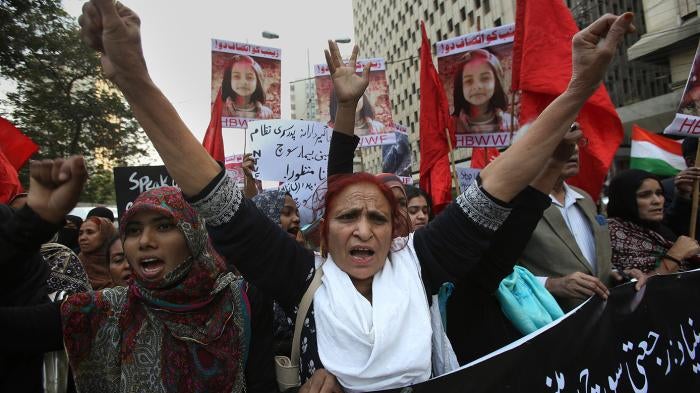
Protests have erupted in countries across South Asia in response to recent horrifying case of sexual violence that have been badly mishandled by governments.
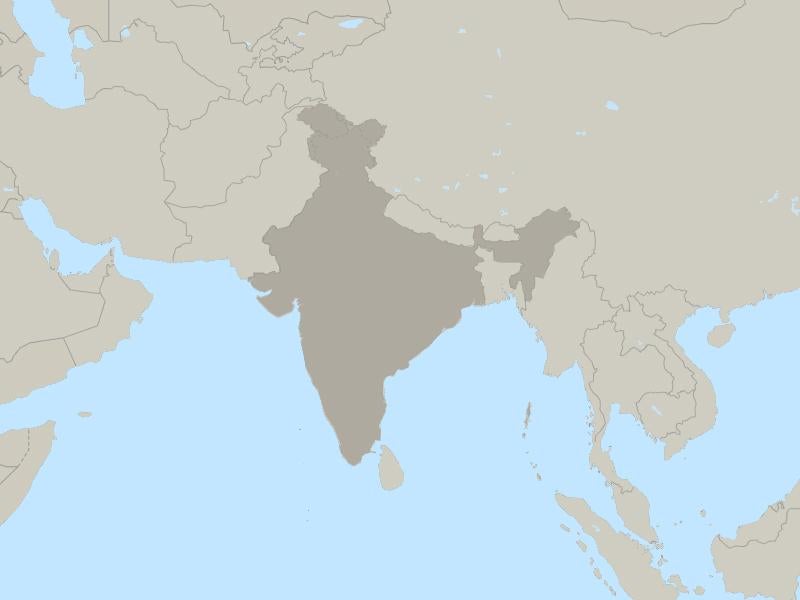
From Afghanistan to Bangladesh to India and the Maldives to Nepal, Pakistan and Sri Lanka, there is remarkable agreement across the region amongst experts on sexual violence about what needs to change.
Survivors of sexual violence, especially girls and women from marginalized communities, face sometimes insurmountable barriers to justice.
Vrinda Grover, Lawyer, India
If you overlay gender with the location of the victim survivor woman, through her caste, working class women, women who are from the religious minority, she finds it almost impossible to access justice because overlaid with all the structural and systemic hurdle is institutional bias.
When governments fail to respond effectively to sexual violence, survivors suffer and the abuses continue.
Ikleela Hameed, Founder of Voice of Children, Maldives
When somebody is speaking about their experience, there are people in the community who would go and bully them. You know, make them believe that it’s their fault.
Vrinda Grover, Lawyer, India
When she is trying to push her complaint forward, we see that at the police station, even there the pressure to withdraw or to go silent.
Shabnam Salehi, Human Rights Commissioner, Afghanistan
The judges still consider the victim as a criminal, and they ask a lot of the questions that is against the human dignities.
Dr. Lhamo Yangchen Sherpa, Expert, Nepal
It’s not only that the police registers the case. You then have to go to the court which might take years and years. That’s why most of the people, they either do not report or the cases are resolved outside the court.
In Bangladesh, it is estimated that less than 1 percent of rape cases investigated by police lead to conviction.
Umama Zillur, Founder and Director of Kotha, Bangladesh
At the village level, where you have an informal justice system, one of the most common ways of resolving rape cases there is by deciding that let’s marry off the victim survivor to the rapist.
Ambika Satkunanathan, Former Human Rights Commissioner, Sri Lanka
Women do not want to make complaints and seek redress because of the socio-cultural pressures. But what this does, it also causes great trauma
Some government leaders in the region have argued that the solution is to execute rapists.
Pakistan’s prime minister called for rapists to be executed in public.
Bangladesh recently amended a law to add the death penalty for rape and Indian law already permits this in certain circumstances.
The experts agree that this is no solution.
Shabnam Salehi, Human Rights Commissioner, Afghanistan
As a human rights activist, I’m not in favor of the death penalty.
Farieha Aziz, Co-Founder of Bolo Bhi, Pakistan
Just a few years ago, a child was raped and murdered and her convicted rapist and murderer was given the death penalty, but that has not stopped other cases of child abuse or of sexual violence.
Umama Zillur, Founder and Director of Kotha, Bangladesh
Since it is a severe form of punishment for an and all type of rape it will reduce conviction rate across the board.
Ikleela Hameed, Founder of Voice of Children, Maldives
When our justice system is not so strong, a death penalty sentence may actually result in the death of an innocent person.
Vrinda Grover, Lawyer, India
Death penalty is not a deterrent for any crime, including sexual violence. It lets the state off the hook from doing the work that the state needs to do in order to ensure that women and girls live free lives in this country.
Governments need to do more to prevent sexual violence, proved services and support to survivors, and remove barriers to justice.
Umama Zillur, Founder and Director of Kotha, Bangladesh
One thing we have been advocating for and fighting for is comprehensive sexuality education to be made mandatory in all our schools.
Farieha Aziz, Co-Founder of Bolo Bhi, Pakistan
We do have laws and we do have certain procedures. What is necessary is that they are implemented.
Ambika Satkunanathan, Former Human Rights Commissioner, Sri Lanka
We do need more health services geared towards survivors, we need the legal services, we need the police to be sensitized. Hence, it’s not a short-term project as it were, but something that requires long-term change to tackle the problem.
Activists Perform Chilean Protest Song, “A Rapist in Your Path.”
Governments need to do more to prevent sexual violence, provide services and support to survivors, and remove barriers to justice.