In 2025, allegations of corruption, criminality, and political interference within South Africa’s criminal justice system prompted the president to set up a Commission of Inquiry. Enduring issues related to xenophobia and migrants’ rights to health and education continued. Vigilante groups prevented migrants from accessing public health services and education. The government failed to adequately protect children from violence, including sexual violence and neglect from parents and others, while human rights defenders and whistleblowers faced repression and killings.
Rule of Law
February 14 marked the 30th anniversary of South Africa’s Constitutional Court. Born out of the South Africa’s democratic transition in 1994, and through its landmark cases, the court has protected constitutional democracy, rule of law, and human rights.
In July, President Cyril Ramaphosa established a “Judicial Commission of Inquiry into Criminality, Political Interference, and Corruption in the Criminal Justice System,” the Madlanga Commission. This followed allegations on July 6 by KwaZulu-Natal provincial police commissioner, Lieutenant General Nhlanhla Mkhwanazi that a criminal syndicate, linked to international drug cartels, had infiltrated the criminal justice system, including the police, prosecutors, the judiciary, intelligence services, and politicians. Mkhwanazi accused high ranking political figures of protecting syndicates, including former Police Minister Senzo Mchunu, who he said improperly disbanded the Political Killings Task Team. This police unit had been tasked with investigating political killings in the KwaZulu-Natal province.
Xenophobia and the Rights of Migrants
South Africa's constitution guarantees the right to health care and basic education, including for migrants, refugees, and asylum seekers, and prohibits refusal of emergency medical treatment. However anti-immigrant vigilante groups such Operation Dudula and March for March blocked migrants access to health in public health facilities and public education.
On 31 July, a one-year-old Malawian boy died after Operation Dudula blocked him from accessing treatment at two local government clinics in Alexandra because the family did not have a South African identity card. Economic Freedom Fighters, a political party, has lodged a murder charge against Operation Dudula for the boy’s death.
In July, the South African government issued a statement expressing concern at the violations of migrants’ constitutional rights. They committed to strengthen collaboration between the police and the departments of Health and Home Affairs, and to prosecute individuals who take the law into their hands. However, more incidents of blocking migrants’ access to health services, in particular, and more recently education have continued.
The latest GovDem Survey of the Inclusive Society Institute found that South Africans harbor high levels of mistrust towards African foreign nationals and anti-immigration sentiments are rising. Seventy-three percent of respondents reported not trusting immigrants from Africa “at all” or “not very much”. These attitudes drive harmful rhetoric, misinformation, and vigilante campaigns against foreign nationals. The report concludes that, if left unaddressed, societal divisions may deepen.
Violence Against Women and Girls
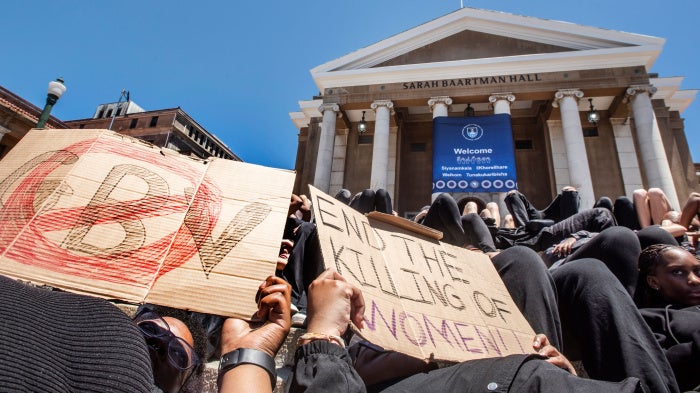
Violence against women and girls continues to be a concern as rape, intimate partner violence, and femicide continued. A May 2025 report by the Centre for the Study of Violence and Reconciliation noted that access to justice for survivors of gendered violence remains elusive. It found that systemic inefficiencies in the criminal justice system hinder the speedy and successful procession of cases, and support, including psychosocial, for victims is limited. The report finds that implementation of South Africa’s progressive laws remains a challenge. This is consistent with a report by the Commission for Gender Equality.
Children’s Rights
As South Africa commemorated Child Protection Week in April, an annual campaign to raise awareness about the safety and wellbeing of children, spates of violent attacks against children were on the rise, including child neglect and abuse. Despite legislation that protects the rights of children, including the constitution, the Children’s Act, and the National Plan of Action for Children, reported cases of violence against children in South Africa continued unabated.
Approximately 30 percent of children aged 3 to 5 years are not enrolled in any early learning program. Only a third of such programs receive government funding, and caregivers say that fees are the primary barrier to enrollment.
Older People’s Rights
Another year of minimal government increases to social security left millions of older people with less than half the national minimum wage. The Older Person’s Grant was not enough to cover one full day of support a month for those requiring full-time care at home.
Repression of Whistleblowers and Human Rights Defenders
On February 15, Muhsin Hendricks, an openly gay imam, Islamic scholar and lesbian, gay, bisexual, and transgender (LGBT) rights activist was shot and killed in Gqeberha, in Eastern Cape province, as he was leaving to officiate an interfaith marriage. Hendricks came out publicly as a gay imam in 1996 and established a support network and later a mosque for LGBT and other marginalized Muslims. He dedicated his life to helping LGBT Muslims reconcile their sexual orientation and gender identity with their faith, amid backlash from other members of the Islamic faith.
On March 7, Pamela Mabini, a community activist and whistleblower was shot and killed outside her home in Gqeberha. Mabini was known for her activism to restore dignity and reduce crime and violence in her community. She played an instrumental role in the arrest of televangelist Timothy Omotoso and others, who were on trial for rape, racketeering, and human trafficking. Before her murder, she was a regular attendee at the trial, participating in protests and providing support to victims and witnesses.
Five years after the murder of environmental activist, Fikile Ntshangase, in October 2020 in Ophondweni, KwaZulu-Natal, there has been no accountability. Ntshangase advocated against the expansion of coal mining operations in her community that harm the environment, including air and water quality.