Summary
They’re casting us aside to die. There’s no help; we can’t work because we don’t have papers. They don’t give us anything, nothing…. How are we supposed to eat, to pay rent?
—Harold A., Cuban national, 58, deported to Mexico in February 2026
Between January 20, 2025 and March 9, 2026, the United States deported Harold and almost 13,000 other third-country nationals (people who are neither citizens of the United States nor Mexico) to Mexico. The deportations were ongoing at the time of writing.
Among third-country nationals deported to Mexico in 2025, Cubans represent the largest nationality group, with an estimated 4,353 deportations between January 2025 and March 2026. For years, Cuban nationals were not a primary target of US deportation policy, in part because Cuba often refused to accept certain deportees, leaving many with longstanding but unexecuted removal orders. As a result, many had lived in the United States for years or decades, building families, working, and putting down roots, often with US-citizen partners and children.
That changed sharply under the second administration of US President Donald Trump, which made mass deportation a central policy objective. During the 2024 campaign, Trump pledged to begin “the largest deportation program in American history,”[1] and after taking office his administration moved to expand both deportation pathways and agreements with third countries willing to receive deportees from elsewhere. Neither the United States nor Mexico has made public the agreement or arrangement under which these deportations are taking place.
This report documents abuses by the US government against Cubans and other third-country nationals deported to Mexico between early 2025 and 2026. People interviewed for this report described inhuman conditions of detention in the United States that echo wider trends Human Rights Watch has documented since 2025.[2] This report also describes how the US government has violated their due process rights by failing to conduct individualized screenings prior to deportation. Most were removed to Mexico without documentation, money, or other personal belongings.
This report focuses especially on the conditions Cubans face upon deportation to Mexico, where the almost complete absence of government support means that many find themselves without access to shelter or food, and vulnerable to high levels of violence. Some described being unable to access healthcare, including older people who could not access essential medications. Once in Mexico, the avenues for regularizing their status are largely limited to seeking asylum. Numerous barriers, including lack of phones or email accounts, delays in appointments, and practical obstacles that make it difficult to comply with procedural requirements, such as regular check-ins with authorities, make it extremely difficult for many deported people to effectively access the asylum system.
In any case, asylum should not be the only avenue the Cubans have open to them to regularize their status in Mexico. Mexico’s government agreed to admit Cubans knowing that their home country had already refused to allow them to repatriate. Mexican authorities should not now leave them suspended in legal limbo unless they seek and are granted asylum. Instead, Mexico should at least create a pathway for them to access permanent resident status. The alternative is to render many of the Cubans to a permanent and deeply harmful state of legal limbo.
Human Rights Watch interviewed 41 Cuban men, as well as 12 people from Venezuela, Haiti, Honduras, El Salvador, Nicaragua, and Jamaica. Most described experiences marked by trauma—being abruptly uprooted from their lives in the United States and sent to a country where they are not from, often without family support and with no clear prospects, in some cases after having expressed fear of being sent there.
While our research was based in Mexico and focused mostly on Cubans who have no prospect of being accepted for repatriation to their country of origin, other people, particularly Guatemalans, Salvadorans, and Hondurans, are subjected to chain deportations whereby the United States first deports them to Mexico, and then Mexico deports them onward to Guatemala or their home countries through its southern border. Haitians, Venezuelans, and Nicaraguans are also deported to Mexico, though they do not seem to face the same obstacles to repatriation that Cubans do.
Many of the Cubans interviewed by Human Rights Watch were age 60 or older and had lived in the United States for decades, predominantly in Florida. Half of the Cuban interviewees had arrived during in the 1980 Mariel boatlift or in the 1990s through el bombo, a lottery system that allowed Cuban citizens to legally enter the United States. Many said they fled from the repression of the Cuban government, or left Cuba due to lack of food, jobs, or a future for their children there.
While all but one of the Cubans interviewed said they had previously held lawful permanent resident status in the United States, 35 of the 41 said they lost their green cards following a criminal conviction in the United States. While in most cases the conviction was for a non-violent offense, such as driving under the influence, document forgery, or small drug-related charges, at least six men had been convicted of more serious offenses such as assault or weapons-related crimes. Many had served out their sentences, living in the United States with pending removal orders against them for years and even decades before they were deported.
The absence of cooperative deportation agreements with Cuba meant that these Cubans could not be removed to their home country. Instead, they had been allowed to continue building lives in the United States and many had come to believe that deportation was no longer possible. Many lived for years under orders of supervision requiring regular check-ins with US Immigration and Customs Enforcement (ICE), but were issued work permits and allowed to continue living with their families.
During 2025, many of these Cuban nationals were arrested during ICE check-ins; others at their homes or on the way to work, or upon the completion of criminal sentences. All interviewees were held in immigration detention prior to their deportation, often for several months and across multiple facilities.
Many interviewees said they were subjected to harsh conditions in US immigration detention. They reported overcrowding, poor access to medical care, extreme temperatures, inadequate quality and quantity of food and lack of access to information. Human Rights Watch also documented episodes of physical and verbal violence in US immigration detention.
Only three of the interviewees accepted deportation to Mexico. Human Rights Watch documented at least three cases of individuals who, prior to deportation, had told US officials they feared being deported to Mexico, including two who said they had family members who had been kidnapped or killed there.
None of the people interviewed, including those who expressed fear of removal, had been given an interview or hearing to examine their claims for protection or to challenge their deportation to a country that was neither their own nor the country an immigration judge designated for their removal.
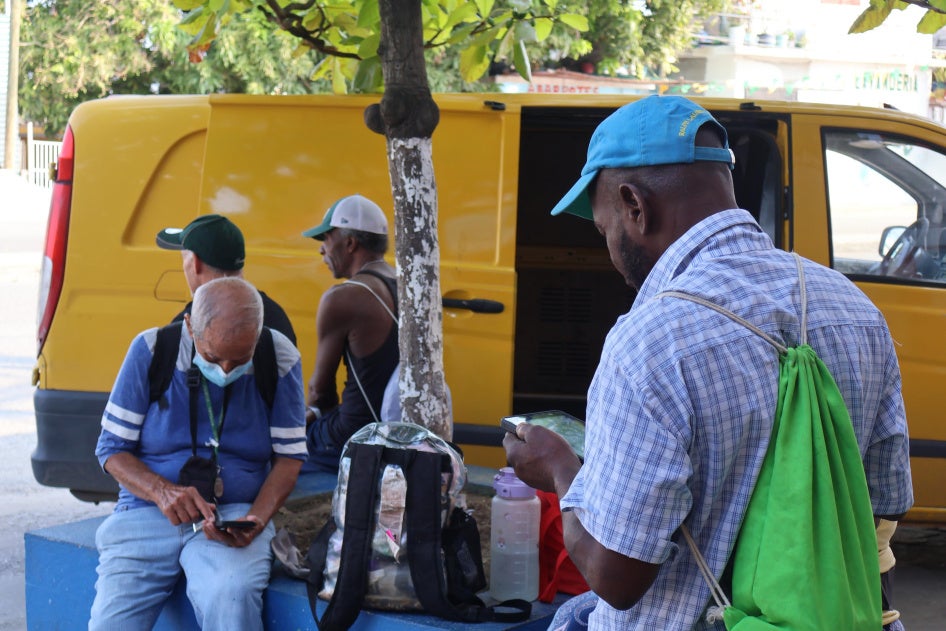
The third-country nationals deported to Mexico have no clear legal status in Mexico, effective access to the Mexican asylum system or to other forms of protection, or a path to permanent legal and social integration in Mexico. Some of the people we interviewed were forced to live on the streets upon arrival and, at the time of the interview, were sleeping outside hospitals or in parks. Twenty-two of the Cubans we interviewed, in particular older people, had chronic health conditions requiring treatment or medication that they were unable to access in Mexico due to the barriers in accessing healthcare and the high cost of some of their medications. Among those Human Rights Watch interviewed were elderly people who were dropped off in unfamiliar Mexican cities in the middle of the night, sometimes seriously ill and without medication, shelter, or any means of support.
“If you’re 60, 70-years-old, why would you be sent here?” asked Mario, a 60-year-old grandfather who could hardly continue the interview with Human Rights Watch through his tears. “They’re sending [us] here to die.”
All those interviewed told Human Rights Watch that, prior to releasing them, Mexican migration authorities notified them that they had limited permission to stay in Mexico—in most cases, for the duration of 10 days—and advised them to start a process with the Refugee Assistance Agency (Comisión Mexicana de Ayuda a Refugiados, COMAR), the Mexican agency responsible for processing refugee claims.
Despite refugee and immigration laws that look excellent on paper, there is a significant gap in Mexico between official procedures and the ability of asylum seekers to access that system and have fair and full consideration of their claims. Testimonies revealed significant obstacles to accessing COMAR or pursuing any other mechanism for regularizing their status, including prolonged processing delays.
Under Mexican law, people who initiated an asylum claim with COMAR are required to stay in the state where they filed the claim while it is pending. In practice, this leaves Cuban deportees trapped without support in cities where organized crime and other security risks are high. Tapachula, in Chiapas near the Guatemalan border, is a known transit hub where migrants are routinely targeted by smuggling networks, extortion rings, and human traffickers; Villahermosa, in Tabasco, has experienced sustained violence linked to disputes between rival cartels and was one of the states with the highest homicide rates in Mexico in recent years. “We are stranded here,” said Camilo, a 51-year-old Cuban man deported to Tapachula after 21 years in the United States. “They left us here like dogs.”
In part due to United States funding cuts to the UN Refugee Agency (UNHCR) under the current Trump administration, COMAR’s capacity has been drastically weakened since the beginning of 2025. Where the United States provided US$46 million to UNHCR Mexico in 2023 and $50 million in 2024, it contributed only $8 million in 2025. The impact has been significant because of the importance of UNHCR funding: in 2023, for example, UNHCR provided more than twice as much funding for COMAR as the Mexican federal government did.[3] In 2025, funding cuts to UNHCR resulted in the agency reducing its funding of COMAR by 20 percent.
By continuing to accept deportations but failing to offer deportees meaningful access to asylum or alternative ways to legalize their stay in the country, Mexico is effectively leaving them in an indefinite legal limbo. It is unclear what options, if any, deported individuals whose asylum claims are denied by COMAR but whose countries of origin will not accept them, like Cubans, may have in Mexico.
Any removals of third-country nationals from the United States to Mexico should be pursuant to formalized, transparent agreements that guarantee access to a full and fair procedure for determining claims for asylum or equivalent protection, as well as a pathway to effective and durable legal status for persons who might not qualify as refugees but whose home countries refuse to allow them to repatriate. To the extent possible under existing law, US authorities should also consider a person’s age, and ties to the communities they call home, like family connections, when exercising their discretion over whether to enforce final orders of removals. The principle of nonrefoulement—that no one should be sent to a country where they would likely be at risk of persecution or torture—should be scrupulously respected.
Recommendations
To the Government of the United States
Publish any agreements with Mexico related to transfers or deportations of third-country nationals.
Stop the removal of Cubans and other third-country nationals to Mexico in the absence of a formal, transparent agreement with the Mexican government that people transferred will have access to a full and fair process for determining a claim for asylum or equivalent protection, as well as a pathway to effective and durable legal status for persons who might not qualify as refugees but whose home country refuses to repatriate them.
Consistently carry out credible fear screenings to ensure that individuals who articulate an affirmative fear of being removed to a third country are given an opportunity to state their case and are not removed to a country where they have a credible fear of being persecuted, abused, or exposed to a threat of serious harm.
If transfers of third-country nationals are to continue, provide full information to Mexican migration authorities of any deported individual’s need for international protection, and humanitarian assistance. In particular, US authorities should solicit the voluntary disclosure of information regarding deported individual’s health conditions and relay that information to third-country authorities to better ensure continuity of care, including access to required medications.
Do not use physical restraints when transporting noncitizens for immigration enforcement purposes in the absence of a reasonable, individualized basis for regarding the person as a danger to themselves, the crew, or other passengers. Ensure that noncitizens being detained or transported are treated humanely and with dignity, including by providing them with food and water, and are kept in reasonable temperatures with sufficient air circulation.
Always return passports and other possessions to individuals removed from the United States.
Consider a person’s age, disability, mental and physical health, and other humanitarian factors when exercising discretion to decide whether to enforce a final order or removal that would involve transferring the individual to a third country.
Determine that it is “impracticable, inadvisable, or impossible to remove” a third-country national to each of the six country-of-removal alternatives as outlined consecutively in Immigration and Nationality Act 241(2)(E)(i-vi) before removing that person to a third country willing to accept them.
To the Government of Mexico
- Ensure that transfers of third-country nationals from the United States only occur pursuant to a public, transparent agreement that stipulates strict adherence to due process and respect for international law, including full respect of the principle of nonrefoulement by ensuring full and fair protection examinations.
- Comply with the requirement under the 2011 Migration Law and restart the issuing of the Tarjeta de Visitante por Razones Humanitarias (TVRH, card of a visitor for humanitarian reasons) to people seeking asylum and to others that qualify under the law. Ensure that people deported from the United States have access to free, quality, and rights-respecting medical, psychosocial, and mental health care and support services.
- Establish an effective pathway to permanent resident status for third country nationals who were removed to Mexico pursuant to agreements with the United States or other governments and whose home governments refuse to allow them to repatriate.
Ensure immediate access to the asylum system, including by allowing people to file claims promptly with COMAR without informal or unnecessary barriers, such as pre-registration requirements that delay the process.
- Suspend or adapt reporting and check-in requirements that are impossible or unduly burdensome for people who are homeless, lack transportation, have disabilities, are older, or have serious health conditions, and ensure that failure to comply does not automatically result in case closure or detention.
- Allow asylum seekers to relocate within Mexico when necessary for safety, health, family unity, shelter, or access to services, including when remaining in the state where they filed their claim exposes them to organized crime, homelessness, or other serious risks.
- Ensure access to emergency shelter, food, healthcare, and essential medication for deported people, with particular attention to older people, people with disabilities, people with chronic illnesses, pregnant people, children, and others at heightened risk.
- Adopt specific protection protocols for older people and people with serious medical conditions, including screening upon arrival, referrals to public health services, continuity of care, and access to necessary medication.
- Increase funding and staffing for COMAR and relevant protection institutions, particularly in cities receiving large numbers of deported or transferred people, to reduce delays and ensure timely, fair, and accessible asylum procedures.
To the Government of Cuba
Respect the rights of all Cubans to their nationality and to return to their country, as established under international human rights law.
Ensure that Cuban consular authorities in Mexico provide all Cuban nationals—regardless of migratory status, manner of arrival, or reason or date of their prior departure from Cuba—with timely access to consular services, including the issuance and renewal of passports, identity documents, civil registry records, and travel documents necessary to obtain permanent residency in Mexico or to return voluntarily to Cuba.
Methodology
Human Rights Watch conducted in-person research for this report from February 17 to March 4, 2026 in the cities of Tapachula (Chiapas), Villahermosa (Tabasco), and Mexico City.
Two Human Rights Watch researchers interviewed 53 third-country nationals deported from the United States to Mexico, 47 adult men and six adult women. Their countries of origin were Cuba (41), Haiti (3), Honduras (4), Nicaragua (2), Venezuela (1), El Salvador (1), and Jamaica (1). While most of the interviews were conducted in person in Mexico, some were carried out by phone.
None of the interviewees were in detention at the time of the interview. Most interviews in Tapachula took place in the Miguel Hidalgo Park. In Villahermosa, most interviews took place at Oasis de Paz del Espíritu Santo Amparito (from here on, Amparito), a privately run shelter, or outside the Juan Graham Hospital. One interview conducted in Mexico City took place at a shelter. In Villahermosa, we coordinated with Amparito shelter to identify most interviewees. In Tapachula, we met some initial interviewees at Miguel Hidalgo Park, who then introduced us to other interviewees. In some cases in Tapachula, interviewees approached us after they saw us interviewing other recent deportees.
Human Rights Watch also conducted 27 interviews with Mexican government officials, lawyers, journalists, and members of civil society organizations.
Interviews in Villahermosa at Amparito shelter were held in private. Interviews in Tapachula and outside the Juan Graham Hospital in Villahermosa were conducted in public spaces. Except for a few interviews in English, most interviews were conducted in Spanish. In all cases, Human Rights Watch explained to interviewees that they would not receive personal services or benefits for their testimonies and that the interviews were completely voluntary and confidential.
The names of all interviewees in this report are pseudonyms with no relation to the person’s actual name; interviewee names are withheld for their protection. Ricardo del Pino’s real name is used because his death has been publicly documented.
Human Rights Watch conducted data analysis on data released by both the US and Mexican governments via public records requests.[4] The US Immigration and Customs Enforcement (ICE) Enforcement and Removal Operations (ERO) deportations (“removals” by ICE’s definition), arrests, and detentions data analyzed in the report primarily come from datasets that ICE released in response to a Freedom of Information Act (FOIA) request made by the UCLA Center for Immigration Law and Policy, made public by the Deportation Data Project.[5]
The data on removals is supposed to include every deportation made by ICE ERO. The most recent data includes removals through March 10, 2026. However, there is an anomaly in the recently released data. Compared to previous FOIA data releases, as well as to officially released data on ERO removals covering the same periods, the newest dataset released through FOIA by ICE ERO includes a substantially higher number of “removals” for certain months without any data flag or explanation for what these additional removals are. The months with the highest number of these additional removals are between November 2023 and May 2025. Most are people who appear to be removed by Customs and Border Protection (CBP) had not been in ICE detention. Many were removed from international airports not typically used by ICE for removals.
Human Rights Watch developed a methodology to estimate which removals in the data are “normal” ERO removals and which represent this other group. The “other removals” cannot all be cleanly categorized into specific types and have been filtered out from this analysis because it is impossible to know which of them constitute third-country-national deportations from a legal standpoint, the focus of this research.[6]
Third-country nationals are identified within the traditional ICE removals data by flagging deportations where both the citizenship and the birth country differs from the country deported to. Criminal history data from the ICE releases includes the most serious charge of conviction that ICE has in its databases and is standardized according to National Crime Information Center (NCIC) codes.
Analysis on arrests and detentions is released under the same FOIA requests and is linked to the deportation data by an anonymous identification variable.
The Mexican National Institute for Migration (INM) provided data in response to a request filed by the Institute for Women in Migration (Instituto para las Mujeres en la Migración, IMUMI) asking for “the number of foreign persons deported from the United States who have been received by the Mexican government.”[7] INM did not provide data directly to Human Rights Watch when we filed a separate information request. In response to Human Rights Watch’s request, INM only stated that they “could not find the data requested.”[8] The INM released data to IMUMI, noting “that this Administrative Unit refers to the presumed number of foreign persons that the INM detected in the field obtained from rapid counts near the northern border and who arrived on national territory through said border, clarifying that these are not persons ‘rescued nor placed at the disposal of the INM.’”[9]
The above definition does not clarify whether the numbers provided by INM represent third-country national deportations from the United States or whether those within the data had a final order of removal or were an ICE ERO deportation or some other type of removal.
The INM provided monthly disaggregated data for the months between January 20 and November 15, 2025. Later, they provided a second dataset which included the entirety of the year 2025 through December, but without providing monthly counts. Human Rights Watch applied weights from the earlier period to the later period to estimate the monthly counts by nationality, gender, age and state for the final six weeks of the year.
Background
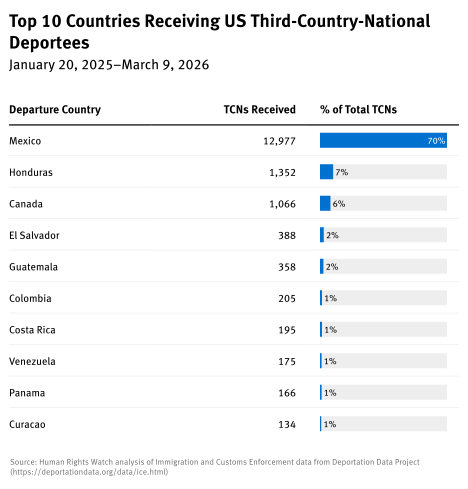
Between January 2025 and March 2026, the US Trump administration reportedly negotiated 27 bilateral agreements providing for the removal of migrants, including asylum seekers, to third countries.[10] These agreements have enabled a surge in the number of third-country removals, increasing by 90 percent as compared to removals under the Biden administration.[11] Seventy percent of the total number of third-country-national removals were to Mexico.[12] Analysis of the limited data released by US Immigration and Customs Enforcement (ICE) shows that, between January 20, 2025 and March 9, 2026, the US government deported 12,977 third-country nationals to Mexico.[13] According to this data, since the beginning of the second Trump administration, there has been a 42 percent increase in average monthly deportations of third-country nationals to Mexico.[14]
Removals of third-country nationals to Mexico fit within a broader US government strategy of pursuing bilateral third-country-transfer agreements as part of an agenda of mass deportation.[15] Since his first day in office, President Trump committed to “marshal[ling] all available resources and authorities to stop [the] unprecedented flood of illegal aliens into the United States,”[16] directing the departments of homeland security, state, and justice to “take all appropriate action to facilitate additional international cooperation and agreements” that would support his sweeping immigration crackdown.[17]
Despite accounting for the biggest share of third-country removals, Mexican government authorities have avoided admitting the existence of any arrangement. In June 2025, when asked about Mexico’s response to US immigration policies, President Claudia Sheinbaum stated that Mexico “has not agreed to be a third country” and that “if migrants are transferred to its territory,” Mexico receives them “for humanitarian reasons.”[18] President Sheinbaum did not clarify whether bilateral cooperation had been formally consolidated into an agreement. As of May 2026, neither the US Department of Homeland Security nor the State Department had made public any third-country-national deportation agreements with Mexico.
US-Mexican cooperation on immigration enforcement is not new. For decades, the United States has handsomely funded Mexican border security and migration-control programs, relying on its southern neighbor to act as a buffer against the flow of northward migration.[19] For instance, under the Migration Protection Protocols,[20] a signature of President Trump’s immigration policy during his first term in office,[21] any national of a Spanish speaking country or Brazil who arrived at the US-Mexico border requesting asylum was issued a notice to appear before an immigration court and returned to Mexico pending their hearing date.[22]
Under the Biden administration, an agreement with Mexico allowed US authorities to return to Mexico migrants who irregularly entered the United States from Mexico between ports of entry, including up to 30,000 Cubans, Haitians, Nicaraguans, and Venezuelans per month.[23] This agreement was tied to the parallel CHNV Parole Program (parole program for Cubans, Haitians, Nicaraguans, and Venezuelans), a program which allowed citizens of these countries to enter the United States on parole and live and work there for up to two years. President Trump terminated the CHNV Parole Program on the first day of his second term in office.[24]
The use of opaque agreements lacking a clear or publicly articulated legal basis to uproot thousands of third-country nationals with a long history of living in the United States and deport them to Mexico represents a significant shift in practice. In March 2026, the Department of Justice (DOJ) submitted briefs in a habeas petition that referred to a “standing (unwritten) agreement” with Mexico, under which ICE removed “approximately 6,000 Cuban nationals to Mexico in the last year.”[25] DOJ did not identify a legal basis for these removals.[26]
Statistical Overview of Deportations of Third-Country Nationals to Mexico
Data on ICE and CBP arrests and ICE detentions and removals has become increasingly difficult to obtain since President Trump took office in January 2025. This includes data on third country national deportations. Data that was previously released on monthly or quarterly bases has frequently not been released.[27] Congressionally mandated data releases have regularly been delayed from their usual release schedule.[28] Some DHS FOIA officers have been fired or otherwise removed.[29] The public ICE statistics dashboards have not been updated since December 2024.[30] Because of this lack of transparency, analysis of third-country-national deportations must rely on ICE data obtained through FOIA litigation.[31]
The Mexican National Migration Institute (INM) also collects data on third-country nationals deported or who have voluntarily departed from the United States, but this data is not normally published by the government. Public records requests have only yielded the most basic pre-aggregated numbers from the Mexican government. The INM has not been responsive to questions submitted by Human Rights Watch asking for clarification of the data nor has the INM been able to provide more detailed or disaggregated data. The INM has not publicly released any disaggregated data on people received by Mexican authorities following deportation from the United States.
Overall, third country national deportations have spiked since Trump regained office in January 2025, and Mexico has received more deported third-country nationals than any other country. Out of the 18,453 third-country nationals deported from the United States between January 29, 2025 and March 9, 2026, 12,977 were removed to Mexico.
Since the beginning of the second Trump administration, there has been a 42 percent increase in average monthly deportations of third-country nationals to Mexico compared with the previous 27 months.[32] Since September 2025, numbers have stayed consistently high, peaking with over 2,000 deportations in January 2026.
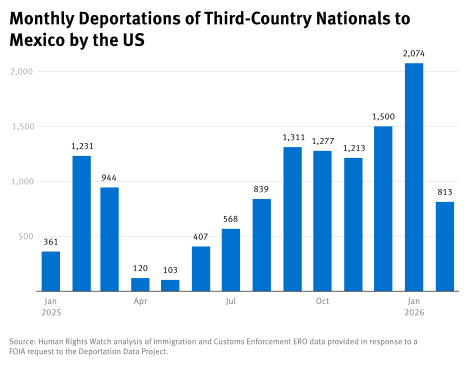
Eighty-two percent of those sent to Mexico during this period were men. At least 300 third-country-national children have been deported to Mexico, though this number is far lower than the numbers reported by Mexican authorities.[33]
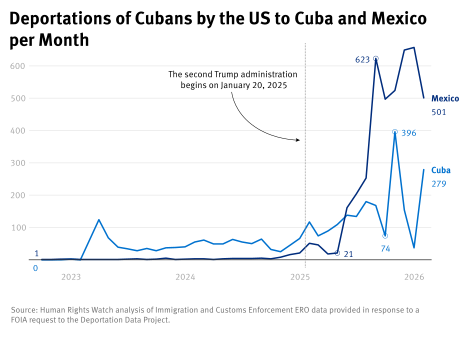
Cuban nationals represent the largest group of third-country nationals deported to Mexico. The deportation of Cubans to Mexico was not a US practice prior to Trump’s second inauguration. Since June 2025, more Cubans have been deported to Mexico every month than have been deported to Cuba.[34] Approximately 78 percent of the Cubans sent to Mexico were arrested by ICE in Florida or Texas—41 percent and 37 percent, respectively. The remaining 22 percent were apprehended across 42 other states. Nearly all of those sent to Mexico—97 percent—had been held in ICE immigration detention prior to removal.
Two Types of Removals: Mexico as Final Destination and Chain Deportations via Mexico
While this report focuses specifically on the deportations of Cubans to Mexico, those deportations are only one of the two kinds of removals to Mexico. Human Rights Watch research shows that the arrangement between Mexico and the United States leads to different outcomes depending on the deported individual’s nationality. For many Cubans, Haitians, Nicaraguans, and Venezuelans, Mexico appears to be the final destination. According to our research, Mexican authorities provide people of these nationalities just 10 days to start a refugee claim with the Refugee Assistance Agency (Comisión Mexicana de Ayuda a Refugiados, COMAR). This appears contrary to Mexican migration law, which grants people 30 working days from their entry into Mexican territory to apply for asylum.[35]
Hondurans, Salvadorans and Guatemalans, however, appear to face a different scenario. While they’re bused alongside Cubans and others to the south of the country, they are not released with them. Instead, after being briefly detained and processed in migration detention stations by Mexican migration authorities, they are generally deported via land across Mexico’s southern border.[36] Human Rights Watch requested permission from Mexican authorities to visit migration detention facilities in Tapachula and Villahermosa; as of May 2026, access had not been granted.
Andrea, a 34-year-old Honduran trans woman who had been granted withholding of removal under the Convention Against Torture in the United States in November 2024, was chain-deported to Honduras via Mexico in November 2025. Andrea described how Central Americans were separated from the other deportees:
I don’t know what happened with the Cubans, because we [people from Honduras and Guatemala] were put [in the migration detention station in Villahermosa] in Mexico. They put me in a cell with another trans woman from Tegucigalpa [Honduras].[37]
Shortly after arriving in Mexico, Mexican migration authorities detained Andrea and other Hondurans at Villahermosa’s migrant detention center, and deported her to Honduras, where they handed Andrea over to Honduran migration authorities. Before her removal to Mexico, however, a US immigration judge had found that Andrea had a well-founded fear of persecution in her home country based on her gender identity.[38]
At least two of the Cuban men interviewed by Human Rights Watch and one civil society group with presence in the south of Mexico said they believed that Central Americans, unlike Cubans, were deported back to their home countries.[39]
The Cubans Who Are Being Deported to Mexico
Of the 53 third-country nationals Human Rights Watch interviewed, 41 were Cuban. Human Rights Watch identified commonalities among them, including their typically long residence in the United States and deep ties to US communities, as well as similarities in the journeys that brought them to the United States, their legal status, and the circumstances leading to their deportation.
All the Cubans interviewed by Human Rights Watch were men. Seventeen were age 60 or older; the oldest was 83 years old. Human Rights Watch analysis of ICE ERO data similarly shows that over 21 percent of the Cubans deported to Mexico were age 55 or older. The vast majority had lived most of their adult lives in the United States, arriving as young adults and, in some cases, even as children.
Manuel, 63, from West Palm Beach, Florida, described leaving Cuba with his family when he was only six years old.[40] Manuel’s father was granted asylum, which allowed him to bring Manuel and his mother and siblings to the United States in 1968. For the next 58 years, Manuel built his life in Florida. He said that most of the Cubans he met in immigration detention had also been living in the United States for a long time: “You know, some of these other people I had met—33, 50 years, 40-something years in the United States—it’s crazy.”[41]
Javier, 62, from Orlando, Florida, described his life in the United States as one of continuous effort to achieve the American Dream. “I’ve been in the United States for 44 years. I went to school and I just kept working and working.” After arriving alone at the age of 18, Javier enrolled in university in Wisconsin, all while working as a restaurant busboy. At the time of his arrest, he was balancing two jobs, working at a car dealership and a convention center.[42]
Thiry-five of the 41 interviewees had been living in the United States for 15 years or longer, predominantly in Florida. In most cases, prior to deportation these men had developed strong community ties, raising families, building careers, and paying taxes.
Reasons for Leaving Cuba and Arrival to the United States
Many Cuban interviewees described arriving in the United States in one of two ways. Eleven of the Cubans interviewed arrived as marielitos, that is, during the 1980 Mariel Boatlift.[43] Another nine entered in the 1990s through the Special Cuban Migration Program (SCMP), also known as the Cuban lottery, or el bombo, a lottery system that allowed Cuban citizens to legally enter the United States.[44]
In five cases involving arrivals in 2020 or later, the people interviewed described overland journeys spanning multiple countries and involving significant risks. Gonzalo, a 38-year-old Cuban man who traveled from Cuba through South America and Central America reported crossing the Darién Gap in 12 days, during which he witnessed sexual violence and was robbed multiple times.[45] Others described repeated encounters with violence and abuse by both criminal actors and state authorities along the route. One interviewee reported being robbed by police in Honduras, Guatemala, and Mexico, while another described extortion by members of the Mexican National Guard—the main federal law enforcement agency charged with public security operations—during transit.[46]
Five of the Cuban nationals Human Rights Watch interviewed described fleeing persecution in their home country. These people said they suffered repeated detentions, threats of imprisonment, or had family members arrested. Among them:
- A 66-year-old man from Camagüey, who lived more than four decades in the United States, described being detained multiple times from a young age and harassed by authorities before leaving Cuba during the Mariel boatlift in 1980.[47]
- A 50-year-old former military member from Guantánamo said he was detained multiple times for opposing the government before he fled in 2018. “I left because if they don’t imprison you, they make you disappear.”[48]
- A 46-year-old man from Trinidad, in the province of Sancti Spíritus, said Cuban police repeatedly beat him and confiscated merchandise from the small business he had opened, after he protested what he described as abuses by the local “chief of sector.” Fearing imprisonment, he sold his house and his motorcycle to fund his journey out of Cuba. He left in 2013 and crossed the Darién Gap before reaching Mexico. “They wouldn’t let me live,” he said. “They were going to imprison me.” He also described acute shortages: “There is no food… people are starving.”[49]
Economic hardship was also a central driver of emigration to the United States. At least seven people referred to difficult economic conditions, including lack of food, limited employment opportunities, and their inability to enjoy their economic, social, and cultural rights. A 42-year-old man from Havana described leaving because “there’s no food.”[50] Some said they left because they were unable to provide for their children.[51]
Human Rights Watch has documented ongoing repression in Cuba, where authorities continue to punish dissent and arbitrarily detain critics and protesters.[52] Widespread food shortages, prolonged blackouts, deteriorating living conditions, and rising costs of public services have fueled public discontent and contributed to a surge in emigration. Cuba has lost approximately 10 percent of its population to such emigration in recent years, with independent estimates suggesting the decline may be even greater.[53]
Recent US policy measures have further strained the country’s fragile economy. Sanctions targeting Cuba’s access to oil—particularly restrictions on shipments from Venezuela and measures against fuel transport—have contributed to acute shortages, exacerbating blackouts, disrupting transportation and agricultural production, and limiting access to services essential for human rights, such as health care and food distribution.[54]
Criminal Background and Immigration Status Prior to Deportation
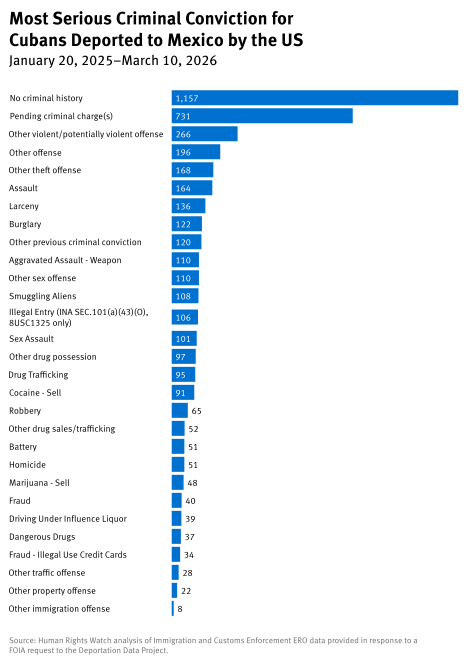
According to the analysis of ICE ERO data conducted by Human Rights Watch, out of 4,353 Cubans deported to Mexico, 27 percent had no US criminal records. Fifty-six percent had a previous criminal conviction in the United States, while 16 percent had a pending criminal charge but no recorded conviction. Among those with prior convictions, the most serious conviction was most commonly for assault, larceny, or burglary. Just 16 percent of all Cubans deported to Mexico had a violent or potentially violent offense listed as their most serious conviction.
Some Cubans reported being granted asylum in the United States, or gaining status after one of their parents won asylum. Most significantly, almost all the Cubans we interviewed said they had at one point been a lawful permanent resident—green-card holder. Nearly all individuals interviewed by Human Rights Watch had lost their permanent residence following criminal convictions in the United States.
Six had not been sentenced for any crime in the United States. Around twelve had been convicted of non-violent offenses many years prior, such as driving under the influence, document forgery, or minor drug-related charges. At least six cases involved more serious offenses, such as assault or weapons-related charges. Around twelve individuals acknowledged having a criminal record, but shared only limited information on their offenses. Several reported that their convictions dated back decades. In most cases, they described only having one past criminal conviction.
Antonio, 55, expressed frustration at the stigma he carried because of his conviction:
I had a felony conviction in 2022, and I served only a year and three months because of good behavior and because I got [my General Educational Development diploma]. I simply got one of Trump’s PPP loans in 2020, and the guy who was taking care of it for me forged some documents, so I was involved.… I’ve never used a gun. I’ve never taken any drugs.… I’m not a murderer.… They destroyed me completely. Completely. Because I made a stupid mistake, that’s all.[55]
Alex, a 60-year-old Cuban man, who entered the United States in 2023, said he had no criminal history. He reported having had a credible fear interview and court proceedings in which his claims were rejected, and he received a final order of removal.[56] Alex said that when he appeared for his scheduled check-in on June 26 at an immigration office in San Bernardino, California, ICE agents detained him and placed him in immigration custody. He was later deported. “We were accused of being criminals,” he said.[57]
Almost every individual interviewed by Human Rights Watch was stripped of their lawful permanent resident status and ordered removed by an immigration judge following their criminal conviction. Under US law, a lawful permanent resident can be placed in removal proceedings and be deported if their actions fall within criteria set forth in the US Immigration and Nationality Act.[58] Grounds for deportation include certain criminal offenses, such as certain types of felonies, drug-related offenses, and some firearm offenses.
However, the lack of cooperative deportation arrangements between the United States and Cuba meant that the individuals we interviewed were not removed back to their country of origin. Instead, they were released from detention and, in most cases, US authorities issued them a form I-220B, or order of supervision.[59] Form I-220B allowed these Cuban nationals to remain in the United States, provided that they complied with requisite ICE check-ins and other reporting requirements. Individuals under orders of supervision were also allowed to apply for a temporary work permit.
The majority of Cubans we interviewed had lived in the United States for years under I-220B or supervision orders, contributing to a widespread perception that they would not be removed. For example, a 29-year-old Cuban man, who had lived in the United States for over 20 years, said that he had been under a final order of removal for approximately five years while continuing to live and work in Miami under immigration supervision. “They didn’t deport Cubans back then.”[60]
Health Conditions
At least 20 of the 41 Cubans interviewed said they had a health condition or illness, 14 of which were chronic. Several interviewees described having multiple health conditions that required regular treatment. Roughly two-thirds of those reporting chronic health conditions were 60 or older.
Nine interviewees had diabetes, seven had high blood pressure or hypertension, and several other people reported conditions such as cholesterol-related ailments, urinary tract infections, asthma, or hearing impairments. Multiple interviewees said they had developed respiratory illnesses while in immigration detention. In some cases, people described serious health conditions, including cancer, neurological conditions, or significant mobility impairments.
Two interviewees reported having schizophrenia, including Adrián, 60, from Miami. We interviewed Adrián at Amparito, a shelter in Villahermosa, where he had been brought after some strangers found him lying on the street and took him to the local hospital for help. “[I]t’s a life I don’t wish upon anyone, the migrant life,” he told Human Rights Watch. “Now I’m here alone, I don’t know anyone, I don’t know the area, I don’t know anything.”[61]
Miguel Ángel, 67, from Naples, Florida, described the long list of health conditions affecting him:
I’m a diabetic with hypertension…. And I have a disease in my bones called osteoporosis…. I’m also almost going to lose sight in this eye because of my diabetes…. Separately, I also had to undergo a procedure because I had colorectal cancer. They took out two tumors and one of them was cancerous, I had to get chemotherapy…. I have to get a check-up every three years. I had the procedure done in 2020.[62]
At least four Cuban nationals described being depressed, anxious, or having experienced severe psychological stress, often linked to detention, family separation, and uncertainty following deportation.[63] Several described difficulty sleeping, persistent fear, or feelings of despair. Matías, a 68-year-old man, who had lived in the United States for decades, said, “I want to eat and I cannot… I want to sleep and cannot sleep.”[64]
Ricardo del Pino Olivera, 67, was deported from the United States on July 3, 2025, after serving a 17-year sentence.[65] On July 31, he applied for refugee status in Mexico. After being deported, Ricardo faced severe hardship, despite applying for refugee status. He struggled to find formal employment and access services essential for his rights. Only after the Amparito shelter, which provided him with some care, started advocating on his behalf did he receive access to advanced medical treatment. He was repeatedly hospitalized for medical issues beginning on December 12. According to Josué Leal, who oversees the Amparito shelter, by early January, Ricardo was severely malnourished and remained without legal documentation. Ricardo died on February 21, 2026. Human Rights Watch reviewed his death certificate, which listed his nationality as “unknown.”[66] |
Uprooted from Families and Communities
Among the 41 Cubans interviewed, at least 27 reported having family in the United States, including children, spouses, siblings, or extended family members who are US citizens or lawful permanent residents. The deportations have uprooted people from the families, homes, and support networks they had built in the United States.
Mario, a 59-year-old man who lived in Detroit, Michigan, is married to a US citizen; together, they had five US-citizen children and eleven US-citizen grandchildren. Mario struggled to discuss being away from his family: “Sometimes I cry at night. I don’t even want to talk about [my family] because it makes me cry. It hurts, it does.”[67] Breaking into tears, Mario continued. “How do you think they feel, my grandchildren, my daughters? My wife, my sisters who got [to the United States] as little kids and are now citizens? How do you think they feel, knowing that I can’t go back?”[68]
The harm is compounded by the conditions people face in Mexico. Limited access to employment, housing, and communication resources further restricts their ability to maintain contact with family members in the United States. Several reported relying on relatives to send money for basic needs, while others described periods without consistent communication. Fernando, a 66-year-old man who lived in Phoenix, Arizona, relied on financial help from his loved ones to survive in Mexico. He expressed frustration and disappointment with himself at being dependent on his children: “It goes against everything I believe in.”[69]
Arrest and Detention in the United States[70]
The vast majority of Cuban interviewees said they were apprehended by US immigration authorities while they were complying with required ICE check-ins. Those interviewees identified the arresting officers as ICE officials. Some were arrested at their workplaces or in public spaces, while in four cases individuals were taken directly from prison where they had been serving criminal sentences to immigration detention facilities. In the few cases where individuals were arrested at home, the identity and institutional affiliation of the arresting officers could not be easily determined.[71]
Miguel Ángel was apprehended at his house in Naples, Florida, where he had lived for over 20 years. “It was a Sunday, …they knocked loudly on the door. [T]hey just showed up unannounced.”[72] Miguel Ángel said he believes ICE agents arrested him, but he said they did not show him any identification.
Julio, a 48-year-old plant seller, was apprehended on June 7, 2025. He had complied with his required yearly ICE check-in just four months before. He said that he thought he was not at risk of being deported, so he did not understand what was happening at the time of arrest:
I was outside and I saw a van pull up very, very slowly. I saw [a man] staring at me. But I had work authorization, I had my driver’s license, [I thought] everything is okay. Suddenly it’s four vans that are driving towards me. I look at them and I don’t run or anything. I don’t leave because, supposedly, I’m [in the United States] legally. They ask for my identification, and I give them my license and my work authorization card too. When [an officer] looks at my information, he turns to another officer and says, ‘It’s him.’ Like they’ve been looking for me.[73]
All the individuals we interviewed were held in immigration detention prior to their deportation to Mexico. This is consistent with broader data analysis that shows that nearly all (97 percent) of the Cubans sent to Mexico were incarcerated in immigration detention by ICE prior to removal.[74]
The vast majority of the men we interviewed who had been sentenced for a crime said they had served their sentences. In at least four cases, as noted above, individuals said they were directly transferred from the prisons where they had served their criminal sentences to immigration detention. At least one of the individuals we interviewed said he was transferred to ICE detention in the middle of serving his sentence.
One interviewee described being taken into custody following a criminal trial in which the charges against him were dismissed. Fernando, 66, had been charged with possession of a controlled substance and drug paraphernalia in Phoenix, Arizona. He told Human Rights Watch that a judge dismissed the charges against him on June 6, 2025. Yet, as he exited the courthouse that day, he said, ICE officers arrested him. Fernando’s family was not informed of his arrest by ICE; his criminal defense attorney tried to find him in the Executive Office for Immigration Review (EOIR) detainee locator, but no record appeared. “They disappeared me,” Fernando said, “It was as if I had never existed.”[75]
Most were detained in immigration facilities for approximately two to five months, with some detained up to up to a year. Many were shuffled between different facilities during their time in ICE custody, often without knowing they were being moved or knowing beforehand that they would be transferred.
Interviewees generally reported harsh conditions in detention, including overcrowding, inadequate hygiene and medical attention, exposure to extreme temperatures, and 24-hour lighting.
Fermín, 52, who spent two months in the notorious Alligator Alcatraz detention facility in Florida, described the conditions at the detention center as “inhumane”:
The water is contaminated, the food is raw… [The water] tasted like toilet water… I saw so many people get sick, I don’t know if it was the food or the water, but people kept getting sick. I myself had to lie in my bed all the time, because I would get nauseous whenever I stood up.[76]
Fermín, who said he has type II diabetes, complained that he did not receive meaningful treatment for his condition at Alligator Alcatraz. He said that the doctors there “didn’t act like professionals…. If you’re diabetic, they’ll just give you smaller portions of food, that’s the treatment.”[77]
Miguel Ángel, who was also detained at Alligator Alcatraz, shared a similar account: “The water was infected, the water carried feces, and you could see them on the floor when you went to take a shower…. People would get spots all over their bodies, their fingers would rot— that’s Alcatraz.”[78] Miguel Ángel said he developed respiratory symptoms that he believed to be caused by pneumonia while in detention but did not receive treatment despite complaining repeatedly about strain in his chest and lungs, and putting in numerous requests for medical attention.[79]
At least fifteen interviewees described episodes of verbal and physical violence, including beatings and prolonged isolation, in different immigration detention facilities. Alejo, a 50-year-old car wash owner, told us he spent 15 days in solitary confinement in an ICE facility in El Paso, Texas: “Fifteen days without seeing the light of day. Fifteen days without leaving, with no calls, getting your food through a slit on the door. I was alone, isolated. They make you go crazy, they won’t tell you how long you will be [in isolation] for.”[80]
Camilo, a 51-year-old man who worked as a marble installer, was transferred directly to ICE custody in December 2025 upon release from a state prison in Florida, where he had served a sentence of approximately two years for driving with an expired license and a unlicensed firearm in his vehicle.[81] He was held for more than three months in immigration detention across multiple facilities, including Alligator Alcatraz.
Camilo said guards in Alligator Alcatraz regularly used physical force against detainees when conducting searches inside the cell. “They would hit people,” he said, adding that he was beaten multiple times.[82] He was placed twice in what he said were disciplinary cells, for periods of 9 to 15 days, where he said he was kept in confinement and required to move in handcuffs and leg restraints, including to use the bathroom.
At least three interviewees reported witnessing or being in close proximity to deaths in US immigration detention, including cases involving alleged use of force by guards and failures to provide medical care. In one case, Antonio and Julio, two men who were deported to Tapachula separately but who met while in custody at Krome Detention Center, provided similar accounts of an older man who died after being forced to sleep on the floor. Antonio recounted sharing a cell with him:
I spent six days sleeping on the floor. And with me there was a 70-something-year-old man who died from pneumonia. Because we were sleeping on the cold floor. In a hielera[83], you know they call [detention centers] hieleras …. We slept on the floor six, seven days, and from putting his back on the cold floor, the man got pneumonia …. I saw it. I saw it when he died. He went stiff …. There were no doctors there. There, in the hielera, there were no doctors there …. 70 something years old and he just died there, in the hielera. On the floor.[84]
According to Julio, the man was taken to the hospital on June 25, 2025 and was returned to Krome Detention Center on June 26, where he died.[85]
In another case, Gonzalo, a 38-year-old man who spent approximately two months in immigration detention in El Paso, Texas, described a violent incident that occurred during a protest by detainees over detention conditions.[86] Gonzalo said in the course of the incident he saw guards violently restraining a detainee with whom he shared a cell. “They put a foot on his neck,” he said. The detainee later died of his injuries.
Gonzalo’s account is consistent with reporting about a death in ICE custody at a detention facility in El Paso in early January 2026.[87] According to The Guardian, an autopsy later classified the death of a Cuban detainee, Geraldo Lunas Campos, as a homicide caused by “asphyxia due to neck and torso compression” during restraint by guards.[88]
Deportation to Mexico
Cuba has historically refused to accept back its removable nationals.
— White House Fact Sheet, Presidential Proclamation 10949 (June 4, 2025)[89]
Interviewees expressed despair at being removed to Mexico, a country most of them had never even visited. Almost every interviewee reported being given the same answer by US immigration officials when they asked why they would be deported to Mexico instead of Cuba: “Cuba does not accept you.” US court rulings and official documents have long acknowledged Cuba’s historic refusal to accept the return of its nationals deported from the United States.[90]
Cuban authorities have for the most part refused to accept the return of their nationals, particularly those who left the country decades ago or who have criminal records. Human Rights Watch data analysis show that higher proportion of Cubans sent to Mexico had a previous criminal conviction (57 percent) than those deported to Cuba (29 percent).[91]
Valentín, 32, who had lived in the United States for over 20 years, had a final order of removal issued in 2020 following a conviction for drug possession, for which he served a three-year prison sentence.[92] He was not deported to Cuba at the time because, as he explained, “Cuba did not receive us.”[93] Instead, he was released under supervision and required to regularly check in with ICE.
On June 3, 2025, Valentín said, he was detained during a routine ICE check-in in Florida. On July 31, 2025, US authorities placed him on a flight to Cuba with more than 130 other individuals. Upon arrival, Cuban authorities refused to admit him and 15 others. “We didn’t know why, but they wouldn’t let us enter,” he said. He was returned to the United States and remained in detention until he was deported to Mexico on October 17, 2025.
It is unclear what criteria the Cuban government uses to accept the return of some people and reject others. A Mexican lawyer familiar with these cases told Human Rights Watch that Cuban authorities do not accept the return of people who left the country before 2017. For the Cuban government, she said, “these people are not Cubans.”[94]
Transfer from US to Mexican Immigration Custody
With few exceptions, interviewees said they were not brought before an immigration judge before being deported to Mexico. As noted, the vast majority had already received final orders of removal years prior, and were given notice while in detention that ICE intended to remove them to Mexico. Only three of the interviewees said they agreed to sign an order of removal to Mexico.
Some individuals said that US officials pressured them to accept deportation to Mexico by threatening them with deportation to countries perceived to be more dangerous than Mexico. José Miguel, a 62-year-old man who still has family in Cuba, reported being told he would be deported to Egypt or El Salvador if he refused to go to Mexico.[95] In a similar case, Julio, who was eventually removed to Tapachula, described being threatened with deportation to Guantánamo if he continued to refuse to sign.[96]
In other cases, interviewees reported being threatened with prolonged detention. In one instance, an interviewee said ICE officers told him that he could be deported to Cuba, but that doing so would require him to remain detained for “three to six months,” whereas he could be sent to Mexico “in a week.”[97] Francisco, a 61-year-old man who had lived in the United States for more than three decades, was detained for approximately one year at the Krome Detention Center in Florida in 2025.[98] After months in detention, he agreed to deportation, describing himself as “exhausted.”
In other cases, officials employed the threat of physical violence. Many interviewees were told they would be removed to Mexico “the easy way or the hard way.”[99] Fernando, who refused to sign his deportation order, said “officers told me they were going to put me in a room with four or five thugs, and that they would force me to sign.”[100] Fermín, deported to Tapachula in February 2026, said US officials told him “if [he] didn’t want to go [to Mexico], he would be taken there by force.”[101]
While individuals were generally given notice that they would be deported, no one interviewed by Human Rights Watch was given an opportunity to express their opposition to removal, a violation of due process rights provided for under US immigration law.[102] Protection screenings were not conducted—even for individuals who articulated an affirmative fear of torture or other serious harm upon deportation to Mexico and who were told by immigration officials they would receive one.[103]
Individuals deported to the south of Mexico from the United States are not transported directly to their final destination. Instead, ICE authorities transfer them by land to the US-Mexico border, where they are handed over to Mexican immigration authorities. From there, Mexican authorities typically move them internally via bus, usually to southern cities such as Tapachula or Villahermosa.
During the transfer from US detention facilities to the border, detainees are shackled by their wrists, feet, and waists.[104] Human Rights Watch identified four main deportation routes along the US-Mexico border: In Arizona, via the Nogales-Sonora border; in Texas, through El Paso-Juarez and Port Isabel-Matamoros; and in California, through San Ysidro-Tijuana.
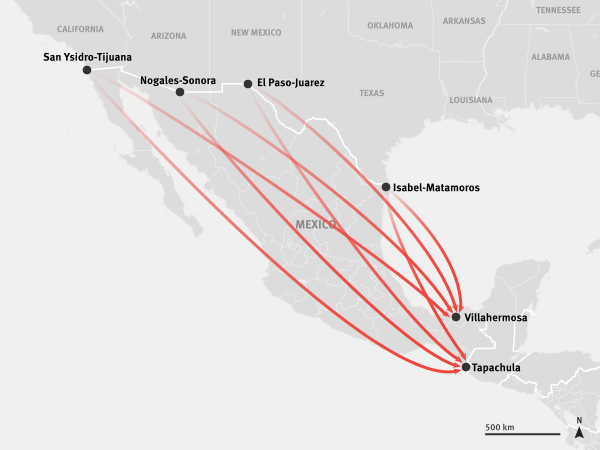
Fernando, who was deported through Nogales-Sonora, described witnessing how an older Cuban man was transported “naked, tied up” on the bus to Mexico.[105] At the border, US immigration authorities asked paramedics to get the man off the bus but, according to Fernando, the paramedics said they could not take responsibility for him. Fernando got off the bus as instructed and never saw the older man again.
Regardless of how the deportations were carried out, US immigration authorities appeared to give no consideration for the potentially devastating impact of deportation on older people and those with health conditions. Human Rights Watch interviewed older people, including one older man who was 83.[106] Human Rights Watch also interviewed people who were running out of medication that they depended on to treat sometimes life-threatening conditions, as described in the previous chapter, and many others who had been unable to access food and shelter. “If you’re 60, 70-years-old, why would you be sent here?” asked Mario, the grandfather who could hardly continue the interview with Human Rights Watch through his tears. “They’re sending [Cubans] here to die.”[107]
Due Process Violations
International human rights law provides all migrants, regardless of status, the right to due process. The International Covenant on Civil and Political Rights (ICCPR) guarantees fair trial rights, including due process, which applies in the removal context.[108] Due process includes a meaningful opportunity to present one’s case and seek remedies through established legal processes. The policy of removing third-country nationals to Mexico without notice or without giving them an opportunity to articulate fear-based claims does not comply with this procedural safeguard.
US law establishes a sequential framework for removals: to determine the removal destination, the government must consider in order a series of potential removal destinations. At the top of this list of possible destinations are those with which a noncitizen has direct national connections—their country of citizenship, birth, or their prior residence. Only after those potential destinations have been considered and rejected, may the government turn to fallback options such as countries with which the noncitizen has no ties.[109]
This sequential framework can, if followed, afford due process protections of a kind that are consistent with the United States’ obligations under the ICCPR. First, the statutory framework gives a noncitizen in deportation proceedings the opportunity to raise legal or factual objections at each stage, including risk of persecution or unwillingness of a country to accept them. Second, and interrelatedly, it safeguards the noncitizen’s right to challenge the proposed removal destination. Third, the framework requires that removal be fixed to a specified destination within the context of immigration proceedings, rather than left undetermined or subject to unilateral change by the government outside the proceedings. In this sense, the sequential framework promotes the central components to due process: transparency, notice, and an opportunity to be heard. Finally, adhering to the sequenced steps governing removal helps to ensure United States compliance with the prohibition against refoulement under international human rights law.
Set forth in the 1951 Refugee Convention and made binding on the United States through its accession to the 1967 Protocol, the principle of nonrefoulement prohibits states from expelling or returning a person from their jurisdiction or effective control to territories where their life or freedom would be threatened, on account of their race, religion, nationality, membership of a particular social group or political opinion.[110] Additionally, under the Convention against Torture and the ICCPR, the obligation of nonrefoulement prohibits sending a person to a country where there are substantial grounds for believing that they would be in danger of being subjected to torture or other serious human rights violations.
The prohibition on nonrefoulement requires procedural safeguards for identifying and preventing risk in practice, including the risk of chain refoulement. Significantly, in the context of deportations of third-country nationals, US law specifies that the US Department of Homeland Security (DHS) identify as the removal destination a country that has agreed to accept the third-country national and that is capable of protecting them, if needed.[111] This requirement ensures that an immigration judge can hear and consider an individual’s objections to being removed to a specific third country; to verify that the specified country is willing to accept all its responsibilities to provide full and fair examination of asylum claims and to provide effective protection, as needed; and, thus, to ensure that the individual’s fear-based claims are respected and that procedural guarantees against chain refoulement are afforded.
In the context of deportations of third-country nationals, minimum procedural safeguards also bar DHS from designating as the deportation destination a third country not specified in the underlying removal order without first providing notice and giving the noncitizen the opportunity to articulate any fears of persecution, torture, or death.[112] Immigration courts will only assess the risk of persecution or torture in countries that DHS designates as the deportation destination.[113] Thus, for a noncitizen to be able to raise fear-based claims regarding a third country, the government must identify the country as a removal destination during the deportation proceedings.
As Human Rights Watch finds in this report, the US government designates Mexico as a country of removal for third-country nationals outside of the confines of an immigration proceeding, often—as in the case of many Cuban nationals—decades after any official immigration proceedings. As the current US-Mexico arrangement functions, individuals are never given the opportunity to contest their removal to Mexico, including by articulating fears of harm or persecution, or of risk of chain-refoulement. These practices thus effectively serve to circumvent the procedural safeguards required by the ICCPR.
Reception and Conditions for Cubans in Mexico
Upon arrival in Mexico, ICE agents removed detainees’ shackles and handed them over to Mexican officials.
Several interviewees described a reception process at or near the northern border. Jean, a Haitian man who had recently entered the United States seeking asylum, said that Mexican immigration officers appeared to have a list of the people they were expecting to receive.[114] He described being fingerprinted at a migration station by the northern border before being placed on a southbound bus.
Other interviewees reported being transferred directly onto Mexican buses without being processed at the northern border. For instance, Andrés, deported to Tapachula after almost 20 years in the United States, told us that at no point during the deportation process did Mexican officials verify his identity.[115]
Mexican migration authorities, escorted by Mexican National Guard then transported people south. According to the people we spoke to, southward transfers usually involved a convoy of at least three buses and happened three times per week. Interviewees reported that the trip lasted between two to three days, during which they were not allowed to leave the buses and were only given a minimal amount of food. Harold, who was deported to Tapachula in February 2026, described the physical toll of the journey:
You don’t know what it’s like to come all the way here [Tapachula] by bus from the United States. It’s inhumane, I didn’t even know how to sit so [my body] wouldn’t hurt. My feet, my ankles, they were like this [gestures to indicate swollen]. [We had] nothing but bread and water.[116]
Human Rights Watch visited two destinations in the south, Tapachula (Chiapas) and Villahermosa (Tabasco), and identified at least two other final deportation sites: Palenque (Chiapas) and Tenosique (Tabasco). One Mexican government official stated that these transfers to the south are intended to make it harder for people to return north toward the US border.[117]
Violence and Crime in Tapachula and Villahermosa
Tapachula and Villahermosa are key destinations for people deported from the United States. Both are locations with a prevalence of organized crime and violence where migrants are frequently targeted for exploitation, including extortion, kidnapping, sexual violence, forced recruitment, and trafficking.[118]
In Chiapas, the National Institute of Statistics and Geography (INEGI) recorded 932 homicides in 2024, corresponding to a rate of 16 per 100,000 people, the highest level on record and a 47 percent increase compared to 2023.[119] Full-year 2025 INEGI data is not yet available. Violence was concentrated in a small number of municipalities, including Tapachula.[120] In April 2025, the US Department of State reported a “sharp rise in violence” in Chiapas since 2022.[121]
High levels of violence in Chiapas have been largely driven by a territorial dispute between the Sinaloa Cartel and the Jalisco Cartel New Generation (CJNG), particularly over the area covering the southern border with Guatemala, key to drug trafficking and migrant routes.[122] In 2024, tensions flared up as both groups escalated their use of violence to secure territorial strongholds, displacing hundreds of residents who fled across the border to Guatemala.[123]
In Tabasco, 2024 marked a sharp increase in violence. The state recorded 839 homicides, corresponding to a rate of approximately 34 per 100,000 people, the highest on record and a 204 percent increase compared to 2023—the largest increase nationwide.[124] Violence was highly concentrated geographically: the municipalities of Centro (which includes Villahermosa) and Comalcalco accounted for 53 percent of all killings.[125]
The Cártel Jalisco Nueva Generación (CJNG) has traditionally been the dominant criminal organization in Tabasco, operating in part through a local armed group known as La Barredora.[126] Tabasco is also the site of northward routes for migrants, drug trafficking and fuel theft, making it a fertile ground for territorial disputes between criminal groups.[127] In December 2023, La Barredora itself fractured: one faction remained aligned with CJNG, while another launched a campaign of resistance, igniting open conflict over fuel-theft territory, migrant smuggling, and drug markets.[128] Roadblocks, attacks on convenience stores and bars, and arson have all become commonplace in the state.[129]
Deportees and migrants in these areas, with little or no money and no connections to help them, face heightened exposure to violence, extortion, and other abuses.[130]
“In southern Mexico,” Josué Leal, who oversees the Amparito shelter in Villahermosa, said, “migrants are the commodity of organized crime.”[131] Migrants in the south, Leal explained, approach coyotes who work for organized crime, paying fees to move northward; the same criminal groups then detain and kidnap them in order to extort their families in the United States, who they know are the source of the money. Deportees suffer similar abuses: criminal groups know that someone removed after years or decades of life in the United States almost certainly has family there, and that those family members are likely the only people in a position to pay ramson, he said.[132]
“Criminal groups capitalize on the vulnerability of those who become stranded,” Leal said, “They are sleeping in the streets, without resources, without legal status—and [criminal groups] recruit them into the retail drug trade.”[133]
Two deportees told Human Rights Watch that members of organized crime groups tried to recruit them.
Emiliano, a 47-year-old Cuban man who had lived in the United States for over two decades, was deported to Villahermosa on June 5, 2025.[134] He said Mexican migration authorities transported him by bus and dropped him off at night without any assistance. Emiliano described feeling trapped in “migration limbo.” “They left us on a bus at 11 at night … [cartels] could have killed me.” He said that, days later, in Villahermosa, individuals he believed to be members of a cartel offered him work and money. “Without access to work and legal status, what option does one have?” he said.
Pablo, 47, fled El Salvador in 1995 after gangs killed his brother and had been granted withholding of removal under the Convention Against Torture.[135] On December 6, 2025, ICE deported him to Villahermosa before his scheduled court hearing and kept his identity documents. In February, nine men who he said identified themselves as cartel members approached him at the barber shop where he worked in Villahermosa and tried to recruit him.
In April, Amparito, the only available shelter for migrants and deportees in Villahermosa, announced that it was suspending its operations due to increase violence in its surroundings.[136] The people Amparito had been serving—primarily elderly Cuban men deported after decades in the United States, many with chronic health conditions and no Mexican ties—will be left without alternative lodging options. Lack of available shelter will likely mean that newly arrived deportees are forced to sleep in the streets, parks, or industrial zones surrounding the migration detention center—the same locations where, according to Leal, organized crime is most active in identifying and abusing vulnerable people.[137]
Arrival and Release into Tapachula and Villahermosa
Upon arrival in the south, third-country nationals are transferred to the migration detention centers of Tapachula (also known as Siglo XXI) and Villahermosa.
Cubans, are generally released within hours, or the morning after their arrival. Some are not held at migration detention centers at all, instead they are released directly from the bus.
The Cuban deportees Human Rights Watch spoke with said they were released with no support and little or no guidance, sometimes in the middle of the night, left to find food and shelter on their own. Almost all Cuban interviewees who initially were dropped at migrant detention centers said Mexican immigration officials told them to just leave, without providing any information on where they could sleep or access assistance. Four interviewees expressed some version of what one put particularly starkly: “[Mexican immigration officials treated us] like dogs thrown onto the street.”[138]
The sense of being stranded is exacerbated by the remote location of the detention centers in Tapachula and Villahermosa, far from shelter and public services like health care. In Tapachula, the Siglo XXI facility sits on the side of a highway over an hour away by foot from the Miguel Hidalgo park, in the city center. In Villahermosa, the detention center is found in an industrial park, an almost three-hour walk from the Amparito shelter, the only migrant shelter in the city.
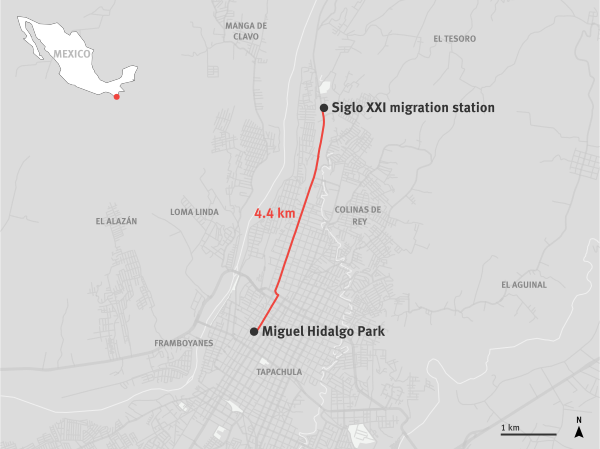
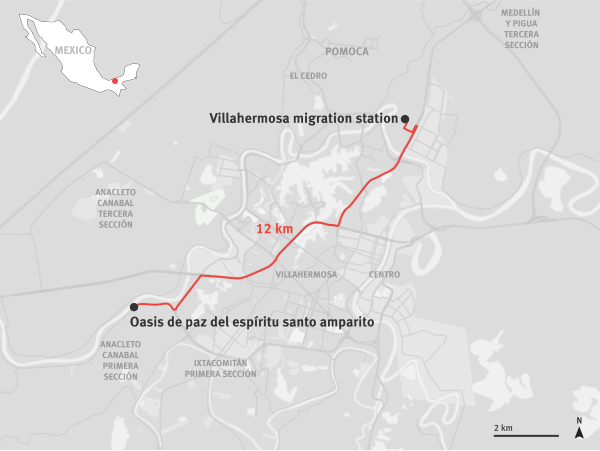
Despite accepting thousands of Cubans and other third-country nationals, Mexican government authorities have not set up any sort of reception infrastructure to support them. Such infrastructure—including reception centers and financial assistance programs—exists for deported Mexican citizens.[139]
Interviewees deported to the detention center in Tapachula said that before being released from Siglo XXI migration authorities gave them an oficio de salida. This INM-issued document identifies the holder’s name and nationality, the date of entry into Mexico, and place where it was issued. Human Rights Watch reviewed many such documents, which order the holder to “regularize their migration status” in Mexico within 10 days. An oficio de salida does not serve as proof of legal presence in Mexico.
None of the people we interviewed who were deported to Villahermosa received such documents. It is unclear why.
Fermín, deported to Tapachula in February 2026, explained that oficios de salida are prepared when deported individuals arrive at the detention center, as the preparing officer will simply fill in a template by asking the deported individual their name, date of birth, and nationality.[140] During this process, Fermín was never asked whether he had been granted asylum in the United States or elsewhere or had any other form of humanitarian protection. Like other deported individuals, authorities told Fermín he needed to show up at the office of the Refugee Assistance Agency (Comisión Mexicana de Ayuda a Refugiados, COMAR) and advised him to seek asylum.
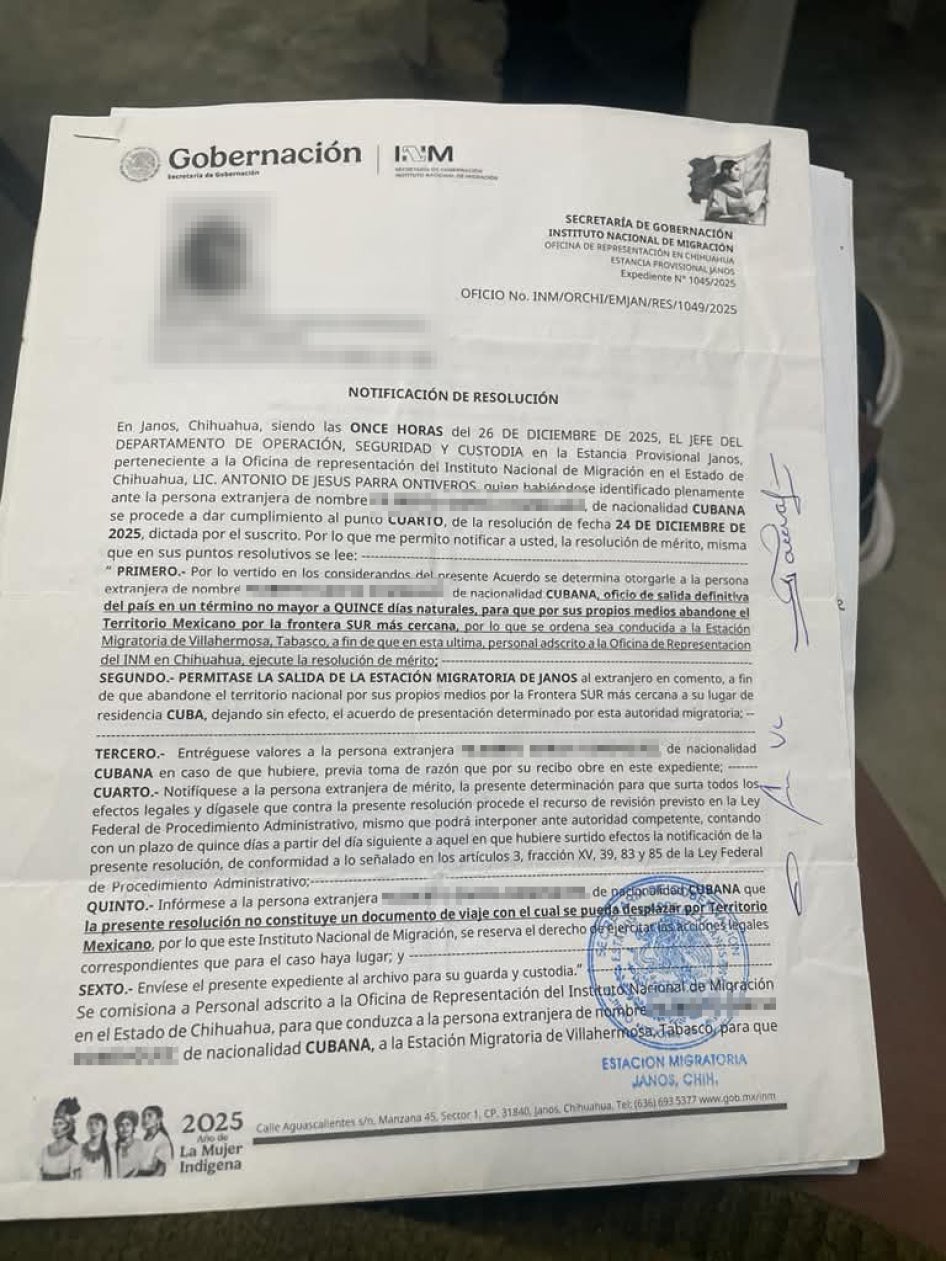
In one case, Human Rights Watch reviewed an official INM document ordering a 61-year-old Cuban man to leave Mexico “within a period not exceeding 15 days, by his own means, through the nearest southern border.”[141] A lawyer in Villahermosa with knowledge of these cases told Human Rights Watch that many of the people she advised said Mexican migration authorities had also told them verbally that they should leave the country.[142]
Moreover, civil society organizations, that previously provided significant services to migrants in southern cities like Tapachula, have had to substantially reduce their work in the face of US funding cuts to the Office of the United Nations High Commissioner for Refugees (UNHCR) and the closing of the United States Agency for International Development (USAID). The case of the Jesuit Refugee Service (JRS) is illustrative. Funding cuts have significantly affected the organization’s capacity, with the number of JRS staff in Tapachula dropping significantly since the beginning of the second Trump administration; the office now provides much more limited humanitarian support, focusing only on the most at risk populations such as individuals with heightened psychosocial needs.[143] JRS in Tapachula has also had to discontinue psychosocial support and food assistance programs.
In Tapachula and Villahermosa, Human Rights Watch interviewed 11 people who were homeless, or who had been sleeping on the street for a period of time following their deportation. Javier, a 62-year-old man who has diabetes-related vision impairments, described living in a “little cave of sorts” by a gas station in Villahermosa. “I shake out my shirt, I put some pieces of cardboard on the ground,” he explained, describing his preparations for going to sleep, “I use the shirt to cover myself up …. I’m sleeping on the street. Like a dog.”[144]
We heard similar accounts from others. Fermín, who had been homeless since his deportation to Tapachula in February 2026, told us he had been staying around the Miguel Hidalgo park. “For the most part, I don’t sleep. I haven’t slept in three days. I can’t find water, I don’t know where to get food. Nothing.”[145]
In April 2026, a confrontation occurred in Tapachula between Cuban migrants deported from the United States and municipal public services employees in Parque Miguel Hidalgo. According to reports, the incident began when municipal workers attempted to forcibly disconnect migrants’ mobile phones from public electricity outlets.[146] The situation escalated into a physical altercation, leaving at least four people injured.[147]
Ruben, a 52-year-old man deported to Villahermosa who was homeless for 20 days before he started renting an apartment with other Cuban men, expressed frustration at the absence of any governmental programs to house and support deportees:
Villahermosa does not have the infrastructure. People are living on the streets. How am I supposed to integrate into society, if I don’t have [a place] to eat and sleep! Why bring so many people here, if they [the Mexican government] have nowhere to put them?[148]
People who lack family or friend support networks in the United States who are able to send them money are more likely to find themselves homeless upon deportation.
Access to housing is only the first problem faced by individuals upon deportation. In most cases, interviewees reported that US immigration authorities had confiscated their phones, wallets, and identification documents prior to deportation. The INM-issued oficios de salida cannot be used as identification, nor do they directly serve to obtain a residence permit or similar identification documents, increasing vulnerability to detention or abuse. As Harold, deported to Tapachula, said: “I’m walking around, nothing on me— if a police officer stops me, what am I supposed to tell him? I have no identification.”[149]
Cubans’ lack of legal documentation affects every aspect of their lives in Mexico. It significantly limits access to banking systems, particularly when individuals have had their phones taken away, cutting them off from mobile banking apps. In Mexico, a Unique Population Registry Code (Clave Única de Registro de Población, or CURP), a form of personal ID, is required to open a bank account.[150] Without it, many deported individuals are unable to receive or manage funds independently.
As a result, some interviewees described having to rely on others to access money sent by family members in the United States. Those without support networks found themselves completely cut off from their only source of income and uncertain how to regain access.
Ernesto, an 83-year-old Cuban man deported to Villahermosa, and the oldest person Human Rights Watch interviewed, described frustration at having lost access to his mobile phone and therefore access to his bank account.[151] Without access to his mobile banking app, he said he could no longer access his private retirement payments. Ernesto, who at the time of his interview was staying at the Amparito Shelter and who was not receiving financial support from his family, was unsure how he would sustain himself once he has to leave Amparito.
Lacking any legal documentation, including work authorization, deported individuals are also unable to enter the formal job market. Some older deportees, in particularly those with chronic health conditions, told Human Rights Watch that they felt it was harder for them to find a job than for younger deportees due to their age and health conditions. Felipe, a 70-year-old man with diabetes and diabetes-related complications that affect his ability to walk, described being unable to find a job in Villahermosa: “Who do you think is going to want to employ [me] given all the problems I have with my legs?”[152]
In Villahermosa, Sebastián, 61, explained that in exchange for working at a parking lot he is allowed to sleep inside a small metal shed next to it.[153] Sebastián does not, however, receive monetary compensation. Those interviewees who had managed to find paid jobs repeatedly emphasized that they were underpaid, with daily compensation as low as US$3, significantly below the minimum wage of $17,27 per day.[154] Harold, 58, from Tampa, said:
They’re casting us aside to die. There’s no help; we can’t work because we don’t have papers. They don’t give us anything, nothing.… We don’t have work permits. How are we supposed to eat, to pay rent?[155]
The lack of legal documentation also makes it difficult for Cubans and other third-country nationals to access health care in Mexico, which was especially harmful for those interviewed with chronic health conditions. Although Mexican law does not condition access to health services on migration status, government officials told Human Rights Watch that, in practice, hospitals frequently deny care to individuals who lack a CURP.[156] Similarly, civil society members who provide assistance to deportees said that while some foreign nationals may be able to access emergency healthcare services they are effectively excluded from accessing longer-term treatment for chronic conditions or serious illnesses due to their lack of documentation.[157] This gap leaves many without access to sometimes life-sustaining healthcare goods and services.
Many interviewees said they were deported with a limited supply of the medications they use to manage their chronic health conditions and were concerned about how they would obtain more once it ran out. Some said the loss of access to US-based health insurance limited their ability to pay for medication and treatment. Fernando, who had his thyroid removed due to a combination of hypothyroidism and inflamed lymph nodes years before his deportation, requires a medicine that he was able to pay for while in the United States because of partial coverage by both Medicare and Medicaid, two public health insurance programs primarily for older people and people with low incomes, respectively.[158] Without the help from these programs, Fernando is no longer able to afford the high cost of his medicine. “I’m going to have to choose between paying my rent and paying for the medication,” he said.[159]
Insulin, in particular, was so prohibitively expensive that many interviewees who relied on medication prior to their deportation said that paying for it was not an option.[160] Without it, people who require insulin may experience high blood sugar, or hyperglycemia, which can lead to serious and even life-threatening complications.[161] Several interviewees, like Miguel Ángel, described experiencing progressive vision loss since his deportation as a result of discontinuing treatment for his diabetes because of cost:
I ran out of insulin…because it is very expensive, too expensive…. I paid for everything.… I had nothing to treat my diabetes for two days and by the third day my vision was failing me. When my blood sugar spikes, it takes a toll on my eyesight.… Of course, I’m worried. If I go blind here, who is going to take care of me? I don’t have family here. I don’t have anyone.[162]
Cubans and other people deported to Tapachula and Villahermosa find themselves in high-risk locations where they face significant barriers to just and safe conditions of work, and health care, and where the majority of those interviewed by Human Rights Watch were temporarily or indefinitely homeless. Yet, at the time Human Rights Watch conducted research in Mexico, deported individuals were not allowed to leave Tapachula or Villahermosa. Until April 15, 2026 to travel internally in Mexico, the law required having valid identification: roads were controlled by law enforcement checkpoints, where anyone lacking travel documents would be removed from the vehicle and sent back to their designated city.[163] While a court ruling recently overturned this travel restriction, it is unclear whether law enforcement continues to target those without identification at checkpoints.[164] In Tapachula and Villahermosa, where interviewees were acutely aware of their inability to leave the city where they had been deported, some interviewees compared their restricted movement and helplessness to being imprisoned. “We are prisoners here,” said Harold. “There’s a lot of people here who are older. We are here to die… they want to throw us in hell.”[165]
Barriers to Asylum or Regularization of Status
There is no real protection system in place. Instead, people are pushed through bureaucratic and violent processes: more end up homeless, migration procedures are delayed, causing uncertainty ... In that process, people are exposed to labor exploitation and other forms of violence. In the end, it breaks them.
—América Pérez, general coordinator, Jesuit Refugee Service, Tapachula, February 2026.
Cuban and other third-country nationals deported to Mexico have no clear legal status, face daunting barriers to access to asylum or other forms of protection, or a path to permanent legal residency and social integration in Mexico. Because their own country refuses to allow them to return, Cubans removed to Mexico are de facto stateless persons. All those interviewed told Human Rights Watch that, prior to releasing them, Mexican migration authorities notified them that they had limited permission to stay in Mexico—in most cases, 10 days—and advised them to start a process with the Refugee Assistance Agency (Comisión Mexicana de Ayuda a Refugiados, COMAR)—that is, to request asylum. Most, however, encountered significant obstacles to accessing COMAR or pursuing any other mechanism for obtaining legal status.
The main sources of protection for migrants and asylum seekers in Mexican law are found in the Law on Refugees, Complementary Protection, and Political Asylum and its Regulations. This law provides broader protections, on paper, than those guaranteed by the Refugee Convention, recognizing three distinct categories: (a) refugee status, (b) political asylum, and (c) complementary protection.[166]
Individuals are eligible for refugee status, if they meet the Refugee Convention’s “well-founded fear of being persecuted” definition,[167] or if they “have fled their country because their lives were threatened by generalized violence, foreign aggression, internal conflicts, or a massive violation of human rights,” the expanded refugee definition in Latin America’s Cartagena Declaration.[168] Individuals whose situation does not make them refugees under this definition may nonetheless be eligible for complementary protection if they would be in danger of being subjected to torture or other cruel, inhuman, or degrading treatment if they returned to their home country.[169]
Beyond humanitarian protection, Mexican law contemplates three general categories under which a non-citizen may transit through and stay in Mexico: visitor, temporary residency, and permanent residency.[170]
Mexican law, therefore, does not provide a specific avenue for permanent residency for Cuban and other third-country nationals who it has accepted for removal to Mexico, nor does it guarantee that they will be granted some form of status in Mexico. As it stands, deported individuals’ best chance at permanent residency is by requesting (and hoping to be granted) refugee status, according to the expanded refugee definition, or complementary protection.
But asylum or refugee status should not be the Cubans’ only available option for regularizing status. Mexico agreed to admit the Cubans, knowing that their home country had already refused to allow them to repatriate. In many cases, Cuban authorities also refuse to provide these Cuban nationals with consular services, including the issuance of passports–rendering them de facto stateless people. The UN Refugee Agency (UNHCR), whose mandate includes stateless persons,[171] defines de facto stateless persons as “persons outside the country of their nationality who are unable or, for valid reasons, are unwilling to avail themselves of the protection of that country.”[172] In UNHCR’s view, “Persons who are unable to return to the country of their nationality will also always be de facto stateless even if they are otherwise able in part or in full to avail themselves of protection of their country of nationality while in the host country (i.e. diplomatic protection and assistance).”[173]
Illustrative of the likely inability of many of the Cubans removed to Mexico to access consular support is the experience of Miguel Ángel, who contacted the Cuban consulate in Cancun. He said that a consular officer told him that Cuba would not accept him because he “had been out of the country for over 40 years and was a deportee.”[174] He said that his family in the United States also contacted a Cuban consulate in Mexico to try to get him help and that they were told by another consular officer that his duties did not involve facilitating or arranging for him to be allowed to visit a consulate. Miguel Ángel also said that INM officials told him that if he bought a plane ticket to Cuba and went to the migration station 72 hours before the flight, they would arrange for his return, but when he did so, he said, the Mexican migration authorities told him that they could not help him.[175]
Because Mexican authorities admitted these de facto stateless people, knowing fully that their country of origin refuses to accept them, Mexico should now offer them a pathway to regularize their status whether or not they qualify as refugees.
The only avenue Cuban deportees currently have for refugee status has become a grueling process. In part due to United States funding cuts to UNHCR under the second Trump administration, COMAR’s processing capacity has been drastically weakened since the beginning of 2025. Where the United States provided US$46 million to UNHCR Mexico in 2023,[176] and $50 million in 2024,[177] the US contribution dropped dramatically to only $8 million in 2025.[178] Due to this financial toll, UNHCR, which in 2023 provided twice as much funding for COMAR as the Mexican federal government,[179] had to reduce its financial support to the agency.
While neither the Mexican government nor UNHCR has published official funding statistics, Mexican media reported that in 2025 UNHCR’s contribution to COMAR was cut by 20 percent,[180] resulting in mass staff layoffs that have driven the rapid erosion of the agency’s processing power.[181] This is particularly significant given that UNHCR provided around 21 percent of COMAR’s funding between 2021 and 2023.[182]
COMAR has offices in both Tapachula and Villahermosa, but people interviewed by Human Rights Watch said the one in Villahermosa did not operate as a full asylum-processing office. In Villahermosa, people seeking asylum must file their paperwork through the local office of the INM. Having to engage with INM, broadly known to be the enforcement arm of Mexican migration and deportation, likely discourages some third-country nationals from even starting the process.[183]
In response to its diminished capacity, and in an attempt to better channel the number of requests received, COMAR now requires that people seeking asylum complete an additional step not contemplated by the text of the law.[184] Before filing their claim, individuals must pre-register with COMAR and wait until their claim is admitted to initiate proceedings.[185] Following the pre-registration period, and once their claim is admitted, the applicant can start the lengthy, formal legal process for requesting asylum.[186]
To pre-register, however, individuals must have a personal mobile device with a personal email address. Given that US immigration authorities generally took away people’s phones prior to deportation, many interviewees, particularly those without family support in the United States, found themselves without a device to start their asylum claim. Pedro, a 60-year-old man who was homeless in Tapachula at the time of the interview, described being “kicked out” by COMAR, and being denied service because he did not have a mobile phone or an email address.[187] At the time he was interviewed he had not yet been able to pre-register with COMAR: “If you don’t have a family that can send you money to buy a phone, I’m not sure what you’re supposed to do,” he said.[188]
Even though Mexican law dictates that asylum requests must be heard and resolved within 45 business days, or within 90 days if the process needs to be extended,[189] the significant reduction in COMAR’s capabilities has drastically slowed down the timeline. A senior officer with an international organization operating in Chiapas and Tabasco told Human Rights Watch that the entire process, from initial pre-registration to final resolution, now frequently takes over a year.[190]
Pending the admission of their claim, individuals are required to comply with check-in requirements by going in person to sign in at a COMAR office every 10 days. Missing a single signing appointment could result in COMAR deeming that a claim has been abandoned and administratively closing the case.[191]
The requirement to sign-in in person is particularly burdensome to older individuals with limited mobility and chronic health conditions or who lack resources to travel to immigration offices. Felipe, a 70-year-old Cuban man who has multiple health conditions, described the strenuous process of complying with the required check-ins:
I have problems getting [to the office]. Because I have to walk there, and my legs can’t withstand that. I need to take a bus, I need to get off and start walking, and walk yet another block. And when I get to the migration office, there’s a tremendous line. There’s nowhere for me to sit down. So I have to sit on a stoop. And then, [the security guards] will start trying to pick a fight, like, “Hey, you can’t sit there.” But I have problems with my feet, with my legs. Where am I going to sit? Are they just going let me collapse and lie on the ground?[192]
COMAR does not seem to consider individuals’ health conditions or disabilities when requiring in-person check-ins, which Human Rights Watch found to have a particular impact on older people. Javier, a 66-year-old Cuban man, struggles to comply with this requirement due to vision loss in one eye caused by diabetes and is frequently disoriented.[193] Since his deportation to Villahermosa in September, his case has been administratively closed twice for failing to show for required check-ins. Even though COMAR acknowledged that Javier is an older person with a chronic health condition when granting his petition to reopen the case, the agency still required that he report in person or abandon his claim.
Severe delays during the pre-registration stage contribute directly to deported individuals’ lack of identification. Under Mexican law, once COMAR admits an asylum claim it is required to issue a constancia de solicitud de trámite, a document that serves as proof that they have submitted an application with COMAR that protects them from being deported.[194] The constancia also allows the holder to apply for a temporary CURP ID, lasting up to 180 days, renewable once for the same time, which is required to access public services such as health care.[195] In practice, the pre-registration stage appears to delay the formal admission of claims, and therefore delays issuance of the Constancia.. Instead, they must wait until their application is formally admitted before the document is issued, leaving many without valid identification or access to services during this period, which could take five to six months.[196]
A member of a civil society organization that provides assistance to migrants in Tapachula described significant barriers to accessing the refugee procedure:
A large number of people abandon their claims.... Applicants are required to check in every 15 days at a migration office after initiating the process. Sometimes they are unable to do so, and authorities close the case. In other cases, people miss their first appointment because COMAR records their email addresses incorrectly or notifications go to spam.... The system fails people.[197]
Under Mexican law, INM is required to issue a Visitor Card for Humanitarian Reasons (Tarjeta de Visitante por Razones Humanitarias, TVRH) for victims or witnesses of crimes committed in Mexican territory, unaccompanied migrant children, and asylum seekers awaiting a determination.[198] The Migration Law also grants the Secretariat of the Interior (Ministerio de Gobernación) discretion to issue the TVRH for “humanitarian causes or public interest.”[199] The Migration Law’s regulations explicitly reference as a “humanitarian ground” those cases were people suffer a “risk to their own health or life, or due to their condition of vulnerability, cannot be returned to their country of origin.”[200] Holders of TVRH receive temporary legal status and authorization to work in Mexico.[201]
The TVRH is, however, a temporary permit, not a pathway to permanent residency. Only two categories of TVRH holders have a pathway to permanent residency under the Migration Law: crime victims, who may apply once the criminal process has concluded, and asylum seekers whose claims are granted.[202] For all other categories the law does not provide a route from temporary humanitarian status to permanent legal residence in Mexico. Each renewal of the TVRH requires the holder to demonstrate that the humanitarian grounds on which it was originally issued still apply.[203]
Even within these limits, the TVRH is largely not being issued. According to the INM, between October 2024 and June 2025 INM issued only 5,191 TVRH, down sharply from approximately 83,000 issued per year between 2019 and September 2024. TVRH cards, which had represented 28 percent of all migration cards issued between 2019 and September 2024, fell to approximately 4 percent of cards issued in the October 2024–June 2025 period.[204]
Numerous sources told Human Rights Watch that INM has largely stopped issuing those cards since 2023.[205] TVRHs are fundamental; they grant access to employment, health care, education, and other public services.[206] Officials have justified halting the issuing of TVRHs on the grounds that some migrants were using the card to travel onward through Mexico rather than to remain while their asylum claims were pending.[207]
By failing to offer Cubans and other third-country nationals meaningful access to asylum or alternative ways to permanent residency, yet continuing to accept their deportations, Mexico is effectively sentencing them to indefinite legal limbo.
It is unclear what options, if any, deported individuals whose asylum claims are denied but whose countries of origin will not accept them, like Cubans, may have in Mexico. Will they be left as de facto stateless persons in the country, with no identification or right to work, at risk of exploitation by employers, and criminal organizations? Will Mexico deport defacto stateless Cubans to other countries, where the cycle may repeat itself? Neither the US government nor Mexican authorities have provided an answer.
Acknowledgments
This report was researched and written by Alcira Silva Hava, the Leonard H. Sandler fellow in the Refugee and Migrant Rights Division of Human Rights Watch. The report was also researched and written by a staff member whose identity is withhold for security reasons. It was edited by Bill Frelick, Refugee and Migrant Rights director. Brian Root, senior advisor in the Technology, Rights, and Investigations Division, conducted data analysis and contributed research and writing support. Michael Bochenek, senior counsel in the Children’s Rights Division provided legal analysis. Tanya Greene, US Program director, Carlos Ríos Espinosa, associate Disability Rights director; Juan Pappier, Americas deputy director; Bridget Sleap, Rights of Older People senior researcher, and Cristian González Cabrera, senior researcher in the Lesbian, Gay, Bisexual, and Transgender Rights Program provided specialist review. Chris Albin-Lackey, senior legal advisor, provided legal review. Joseph Saunders, deputy program director, provided programmatic review.
Michelle Randhawa, senior officer in the Refugee and Migrant Rights Division, and Valentina Gómez, associate with the Americas Division contributed to the production of the report. The report was prepared for production by Travis Carr, publications manager.
We would like to thank the individuals who made this report possible by sharing their experiences with us or otherwise talking with us at length despite the difficult circumstances and often trauma they were experiencing at the time of the interviews.