Summary
Susikala was working as a daily wage earner at a flower garden in Hatton, a hilly area in central Sri Lanka, when in April 2022 the government defaulted on its debt. The default sent the economy into a tailspin, and like millions of Sri Lankans, Susikala lost precious wages as her employer struggled to pay her. The family had to rely on her husband’s LKR 1,500 (US$5) daily wage at a tea plantation.
Food prices doubled by September. After the government began reducing energy subsidies in October 2023 as part of an effort to reduce spending under an International Monetary Fund program, the cost of electricity and transportation soared. Her 5-year-old son missed school for three months and her older daughter, who was 11, walked the two kilometers to school to save the bus fare. Susikala has only a few electrical devices—a rice cooker, phone, and light—but their power supply was cut as unpaid bills accumulated, forcing her to pawn jewelry to get reconnected.
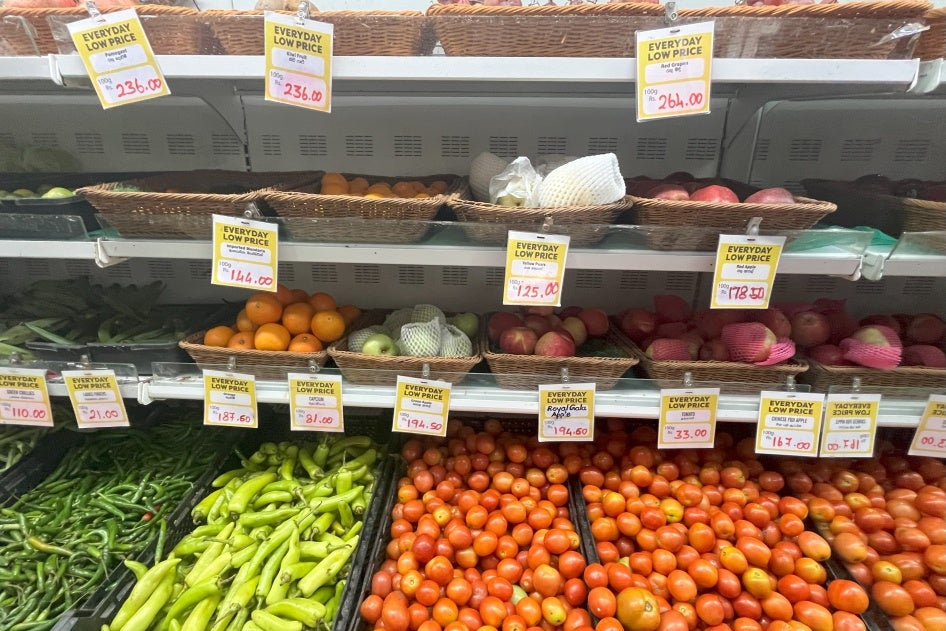
Susikala’s experience was similar to that of countless other Sri Lankans during the acute phase of the economic crisis, the worst since the country’s independence in 1948, and the hardship continues to the present. More than a million Sri Lankans lost their jobs during the crisis and a million households lost power following electricity price increases. More than four million people were pushed below the national poverty line. The least well-off bore the brunt, as those who are poorer reduced their consumption by more than those who are wealthier.
Practically speaking, an economic crisis’s impact on people is almost invariably a crisis for human rights. In Sri Lanka, among the root causes of the crisis were government policy choices that led to extremely low tax revenues. Disastrous tax policy choices just prior to the crisis compounded bad policy choices that had unfolded over decades: chronically inadequate tax revenues have long stunted the growth of government spending on rights-essential services such as health, education, and social security.
This report examines how Sri Lanka’s tax policies have impacted human rights by starving the treasury of revenue for essential social spending, with particular focus on impacts that affect children’s right to education. It is based on a comprehensive analysis of secondary data; a review of literature including a large body of economic research; and interviews with 70 people including those impacted by the economic situation and a wide spectrum of Sri Lankan economic experts.
It finds that a combination of the widespread use of corporate tax incentives, low taxation of personal income and wealth, and key gaps in tax enforcement have contributed to a tax system that undermines human rights in two significant ways. First, these policy failures have contributed to and exacerbated an economic crisis with disastrous impacts on the human rights of the population. Second, over the course of several decades they have generated inadequate revenues to drive the progressive realization of economic, social and cultural rights. The report focuses in particular on describing how Sri Lanka has failed to make progress in realizing the right to education that is commensurate with its resources. In addition, the regressivity of Sri Lanka’s tax system further risks undermining rights, since it is highly reliant on “indirect” taxes, that is, taxes on goods and services such as value-added taxes that tend to claim a higher share of one’s income the poorer one is, since everyone pays the same rate regardless of income.
A decline in Sri Lanka’s tax-to-gross domestic product (GDP) ratio that began in the late 1970s has contributed to a steady decline in education spending relative to GDP. Particularly after steep tax cuts in 2019, this ratio has fallen to among the lowest in the world. This report documents how this inadequate funding has undermined children’s right to education, including by forcing schools to rely on fees from parents for materials as basic as exam paper.
The central role that tax policy has played in Sri Lanka’s economic crisis and its human rights fallout highlights the urgent need to reform both domestic and international tax systems to ensure they align with human rights imperatives. All governments that are parties to the International Covenant on Economic, Social and Cultural Rights (ICESCR), including Sri Lanka, are obligated to enact policies that ensure the progressive realization of economic, social and cultural rights. This includes tax policies that help generate the "maximum available resources” governments are obliged to mobilize towards meeting that obligation. This report describes how its own failures notwithstanding, the Sri Lankan government is constrained by an international tax system that impairs its ability to raise revenues from wealthy individuals and multinational companies.
Sri Lankans elected a new government led by President Anura Kumara Dissanayake in September 2024, rejecting established political parties they considered responsible for the economic crisis. Dissanayake and his supporters played a prominent role in the protests after the 2022 economic crisis. To uphold the economic and social rights of Sri Lankans, including to education, the government should institute tax reforms to increase revenues through progressive measures and curtail regressive taxes, including by increasing tax revenues from personal income and wealth. It should also end corporate tax incentives that are not tied to a specific and compelling policy rationale and subject to public cost-benefit analysis.
Tax Policy Through a Human Rights Lens
International human rights law obligates governments to take steps, to the maximum of their available resources, to progressively realize the full enjoyment of economic, social and cultural rights. These include the rights to health, education, social security, and an adequate standard of living. This obligation necessarily implicates states’ fiscal practices, including tax policy. International law also requires states to act not only domestically but also through international assistance and cooperation.
In an April 2025 statement, the United Nations Committee on Economic, Social and Cultural Rights (CESCR), a UN human rights body charged with interpreting the ICESCR, offered guidance on how states should align tax policies with human rights obligations. The CESCR maintained that tax systems should be adequate, progressive, and non-discriminatory, and effective at preventing illicit financial flows and tax abuse. Policymaking should be inclusive, transparent, participatory, and evidence based.
Moreover, governments’ obligation to act through international assistance and cooperation should also inform their approach to tax policy. States, particularly those with the most power in international rulemaking, should support the development of equitable global tax rules that enable all governments to raise adequate revenues from tax for the fulfillment of rights. In the same vein, governments should work to ensure that the extraterritorial impacts of their tax policies do not undermine other governments’ ability to raise sufficient tax revenues to realize rights.
Sri Lanka’s 2022 Default on Debt and the IMF Deal
By the time the government defaulted on its debt in April 2022, foreign reserves had dropped to $1.9 billion, amounting to about one month of imports. Debt-to-GDP had hit 114 percent, far above recommended levels for a lower-middle-income country. A year later, the International Monetary Fund (IMF) and the Sri Lankan government agreed on a $3 billion bailout that set a target of reducing debt to 95 percent of GDP by 2032. Several economists criticized this as giving creditors too good a deal and leaving Sri Lanka with interest payments that would continue to consume an enormous share of its revenues. Indeed, in 2024, interest payments amounted to 57 percent of Sri Lanka’s total revenue. Although debt is beyond the scope of this report, this staggering figure reflects the far-reaching impact debt service payments can have on government budgets and on the availability of funds for social spending that improves wellbeing and advances rights.
In August 2025, the UN High Commissioner for Human Rights released a report on Sri Lanka noting that the “the severe impacts of the economic crisis and debt burden on the public ... underscore the need for Sri Lanka’s external creditors to provide the Government with the fiscal space needed to realise economic, social and cultural rights and to ensure austerity measures do not undermine Sri Lanka’s ability to fulfil its human rights obligations.” As Ahilan Kadirgamar, a political economist at Jaffna University, noted, “[t]axes alone won’t get us out of this crisis.”
At the same time, taxes were a major factor in driving Sri Lanka into crisis. In March 2022, Sri Lanka’s tax-to-GDP ratio was 7.4 percent of GDP, among the lowest in the world. Experts – and ultimately Sri Lanka’s Supreme Court – blamed this for playing a decisive role in the government’s inability to meet its debt obligations. Around 90 percent of Sri Lanka’s revenues come from taxes. There is no international tax benchmark for revenues, but research by World Bank economists has identified 15 percent as a “tipping point” for countries “to generate sufficient domestic resources that can be invested in health, education, and infrastructure.” However, this is a low threshold from a human rights perspective, as prevailing international benchmarks call for governments to spend 5 percent of GDP on health and around 4 to 6 percent on education alone.
A key requirement of the IMF program put into effect following Sri Lanka’s default on its debt was for the government to achieve a minimum tax-to-GDP ratio of 15 percent. While the program included some important measures to address gaps in corporate taxes and those of high earners, it made tax revenues even more highly reliant on value-added taxes, which, when broad-based, are regressive.
Between 2021 and 2024, the government increased VAT from 8 to 18 percent and removed exemptions on products like food staples and school stationery, exacerbating the impact of cost increases on struggling families in the midst of soaring inflation. It also removed subsidies on electricity and fuel without adequate compensatory measures to help people cope with increased costs.
Government Tax Policy: Current Challenges have been Decades in the Making
One of the key factors that catastrophically pushed down Sri Lanka’s tax-to-GDP ratio were 2019 tax cuts implemented by then President Gotabaya Rajapaksa, who argued that they would spur economic growth. Once the crisis hit, a group of organizations including the Sri Lanka chapter of Transparency International sued dozens of senior officials responsible for the country’s economy around the time of the crisis, including officials at the Ministry of Finance and the Central Bank, blaming the 2019 tax cuts in particular for precipitating the crisis. In November 2024, the Supreme Court issued a ruling in favor of the petitioners, calling the 2019 tax cuts an “imprudent decision” that “brought about a domino effect” that led to the crisis. The International Monetary Fund made a similar assessment when it approved a bailout in March 2023, estimating revenue losses from the 2019 tax cuts “exceeding 2 percent of GDP,” which “further exacerbated vulnerabilities.”
In truth, the sharp downward slope of Sri Lanka’s tax-to-GDP ratio has been decades in the making, and can be traced back to an economic shift that began in November 1977 when Sri Lanka began liberalizing its economy. These reforms were effective in achieving sustained growth. However, since companies and individuals benefiting from this growth were not effectively taxed, tax as a share of GDP consistently declined over time. Prior to the shift, revenue-to-GDP ranged from 20 to 25 percent; around 90 percent of revenues were comprised of taxes, although tax-to-GDP was not reliably tracked as an independent metric at that time. By 1980, when tax-to-GDP data is available, it declined to 15 percent and hovered at around 11 percent in the decade before the 2019 tax cuts, dropping to 7.4 percent in 2022.
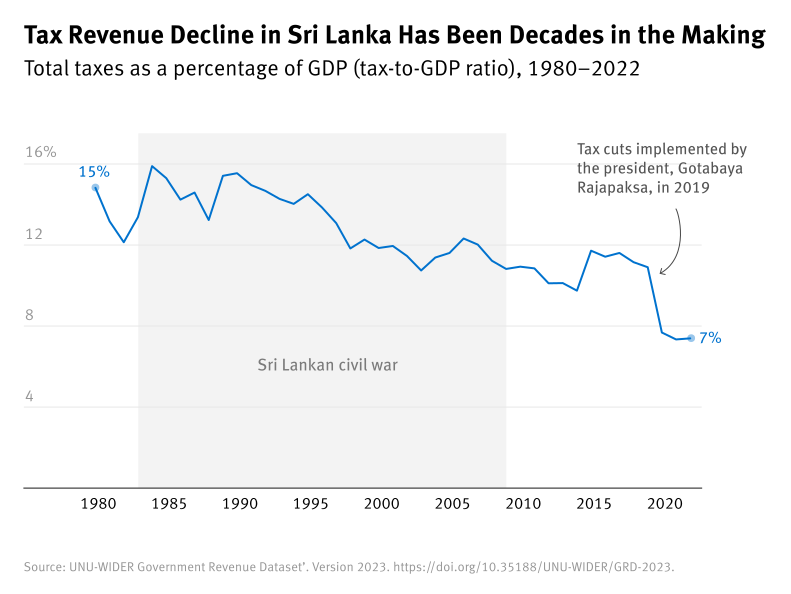
Beginning in 1983, Sri Lanka experienced a civil war that would last 26 years, with tens of thousands of people killed, widespread destruction, and whole communities displaced, especially in the north and east. Despite the enormous humanitarian toll of the war, it appears to have had remarkably little impact on the overall trajectory of Sri Lanka’s tax revenues, or the overall downward trajectory of tax revenues and social spending relative to GDP. The economy continued to grow at an average annual rate of 5 percent during the war years, but government tax revenues and social spending declined as a percentage of GDP before, during, and after the war. Tax revenues and education spending as a share of GDP started decreasing in 1977, decreased further during the 1983-2009 war, and, rather than improving after the end of the conflict, declined still further after 2009. The 2019 cuts should thus be understood as the final blow following decades of flawed tax policy that left the government with inadequate revenues.
Tax Revenues are Inadequate to Meet Rights Obligations and are Regressive
From a human rights perspective, two important components of taxes are their adequacy (they should raise enough revenues for the country to do its best at delivering on rights) and progressivity (taxes as a share of income and/or wealth should generally be higher the wealthier a person is). In Sri Lanka, government policies have left tax revenues inadequate by every rights-informed benchmark. The inadequacy reflects three main longstanding gaps in Sri Lanka’s tax policies: the unreasonably widespread use of corporate tax incentives, low taxation of personal income and wealth, and tax abuse enabled by lack of administrative capacity and corruption. These gaps contribute to making Sri Lanka unable to meet its human rights obligations and they make the system regressive.
Corporate tax incentives have long been central to Sri Lanka’s strategy for attracting and spurring investment. The Board of Investments (BOI), a body of five commissioners appointed by the president first established with more limited scope in 1978, is empowered to grant tax incentives with little oversight or procedural guardrails. It can grant tax exemptions to individual companies or projects under the Strategic Development Projects (SDP) Act with no requirement to publish the terms. In 2021, the government established Port City, a zone within Colombo where companies benefit from tax incentives so far-reaching that even employees are exempt from income taxes. Despite a government commitment under the IMF program not to grant new tax incentives, between January and September 2024 the previous government approved exemptions for 24 new companies in Port City, and the current government plans to approve four more pending requests, according to an IMF staff report published in June 2025.
The historical cost of these incentives is difficult to assess because of lack of transparency, but IMF staff reports dating at least as far back as the 1990s have established the lost revenue to be as much as 2 percent of GDP. In March 2024 the government published a detailed accounting of the value of all tax exemptions for FY2022, a requirement under the IMF program, which revealed a total cost of LKR 978 billion (US$2.7 billion). That figure is equivalent to 56 percent of the total tax revenue collected that year and nearly three times the education budget.
Many governments seek to attract investment by offering tax incentives, including full or partial exemptions from corporate income tax, value added taxes, customs taxes, and other taxes, including even the personal income tax of employees. A substantial body of economic research has long questioned the effectiveness of such incentives, given their impact on public revenues and evidence that non-tax factors such as political stability, rule of law, and market opportunities are stronger determinants of where companies choose to locate.
From a human rights perspective, the lost revenue can undermine governments’ ability to meet their human rights obligations, and risks increasing the tax share borne by people with lower incomes. Moreover, when a government offers corporate tax incentives, it creates pressure on other governments to do the same, fueling tax competition that erodes public revenues in all countries trapped in this spiral. Reflecting this concern, in 2017, the CESCR in its General Comment 24 stated that “[l]owering the rates of corporate tax solely with a view to attracting investors encourages a race to the bottom” and is “inconsistent with the duties of the States parties to the Covenant.”
This illustrates the urgent need for improved international cooperation, including for example through a global minimum corporate tax, to prevent harmful tax competition. Negotiations are ongoing for a first-ever UN treaty on international tax cooperation, a historic opportunity for establishing robust rules to prevent a race to the bottom.
Lost revenues from corporate tax exemptions are compounded by extremely low revenues from taxes on personal income and assets. Here, too, the government’s ability to raise revenues is to some degree constrained by an international system that enables people to avoid such taxes, surfacing the need for stronger international tax cooperation. Nonetheless, there are steps governments can take to increase taxation on personal income and wealth. In 2022, Sri Lanka had only 204,467 personal tax filers in a country of 22 million people.
Under the IMF program, the government reintroduced a system requiring employers to withhold income taxes to increase compliance (a system that had been abolished alongside the 2019 cuts); decreased the minimum income tax threshold from LKR 250,000 ($825) to 150,000 ($500) monthly (which still only captures a small percent of highest earners); and doubled the maximum marginal rate from 18 to 36 percent. The government also committed to introduce a tax akin to a property tax, although that effort is complicated by a constitutional provision that gives provincial councils the power to collect property taxes. According to the Tax Justice Network, a non-governmental organization that advocates for progressive tax reforms, if Sri Lanka imposed a wealth tax on the wealthiest 0.5 percent at a progressive rate of between 1.7 and 3.5 percent—a rate based on Spain’s “solidarity charge,” enacted in 2002—it would generate $450 million annually, which amounts to nearly half Sri Lanka’s total education budget in 2022.
Faltering revenues from corporate and personal taxes—called “direct” taxes—has made Sri Lanka unusually dependent on indirect taxes, such as VAT. Direct taxes accounted for 33 percent of tax revenues in 1977, but averaged just 19 percent between 1980 and 2018. That share rose to 30 percent prior to the crisis, but budget documents indicate that fiscal reforms are projected to bring it down to around one-quarter of total tax revenues. These reforms also increased the share of revenues from VAT. Whereas VAT made up around 25 percent of revenues between 2010 and 2023, according to budget documents, it is estimated to rise to more than one-third for 2024 through 2027. A 2024 World Bank review of Sri Lanka’s fiscal reforms described its reforms of VAT as “particularly regressive,” noting it contributed to a poverty increase of 3.9 percentage points.
Compounding all of this, a lack of administrative capacity and corruption in revenue agencies further depletes tax revenues. An IMF review of governance in the country found, for example: “There is virtually no culture of integrity observed [in revenue agencies], with corruption allegedly found at every level – including top management.”
As with corporate tax incentives, a strong UN tax treaty could support these efforts by enabling governments to identify assets and prevent illicit financial flows. It could also address another major source of revenue loss that is beyond the scope of this report: profit shifting and offshore tax abuse by multinational companies, which costs Sri Lanka, conservatively, an estimated $413 million annually, according to the Tax Justice Network.
Inadequate and Regressive Taxes Impede the Realization of Rights: Education as Case Study
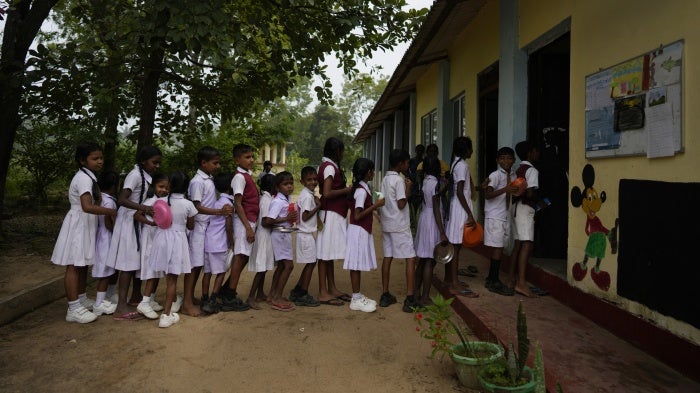
Sri Lankan law provides for free primary and secondary education. However, Human Rights Watch found that inadequate tax revenues have contributed to chronic underfunding of Sri Lanka’s education system, which undermines children’s right to education. While ostensibly free, public schools in Sri Lanka often charge families “development” fees, exam fees, and even assessments for water and electricity. Principals and education officials told Human Rights Watch that schools had no choice but to charge these fees because the money they receive from the government is not enough to cover basic things like cleaning and supplies. When parents do not pay, schools are forced to go without these resources, while schools with wealthier families have access to more resources, creating significant disparities between schools based on parents’ income.
Geethma, a teacher at a (government) boys’ primary school in Colombo, described how her school has smart boards and labs for biology, chemistry, and physics. “The government isn’t providing this,” she clarifies, it’s paid for by alumni donations and fees. A second teacher, Kushmi told us: “[public education] is free in name only.”
Susikala, the woman whose experience during the economic crisis opens this report, told us things have improved since the worst days of the crisis—she has found a new job as a domestic worker and is happy with the quality of her son’s primary school and teachers—but she also said she struggles to pay various fees that amount to around LKR 500 (US$1.65) per month that the school charges for items such as exam paper. “When teachers ask for books and papers I can't get those things,” she said. “I even struggle to give nutritious food to my children.”
Moreover, interviewees told Human Rights Watch that resource-related problems with public schools were at least in part driving the proliferation of “tuition classes,” a system of private classes after the end of the formal school day. While 97 percent of students are enrolled in public schools, tuition classes are so widespread that Tara de Mel, the former secretary of education, described it as “almost like a mainstream part of the education system,” noting it is sometimes referred to as “the tuition mafia.” De Mel, as well as parents, teachers, and union and education officials told Human Rights Watch that low teacher salaries and gaps in the public education system are what is driving the upsurge of enrollment in the tuition system.
Susikala told Human Rights Watch she pays LKR 5,000 ($17) per month for both children, which she and her husband struggle to afford. But she said she was forced as a child to quit school due to her economic situation, and she does not want her children to share that fate. “If my child studies well, they won’t have the economic problems I’m facing,” she said.
Even with many families bearing high education costs, there are various signs that the learning outcomes are faltering. The impact of inadequate spending on the right to education often goes beyond what is easily measured; it can be hard to capture in numbers the ways students’ experience could be improved with more funding. However, available data indicates that despite Sri Lanka’s early edge in education, it now appears to be falling behind peer countries. It is difficult to compare Sri Lanka with other countries since it does not participate in international education assessments, but available data indicates, for example, that students are failing qualifying exams at higher rates than lower-middle-income countries. Moreover, the gap between learning outcomes for wealthier and poorer students is widening.
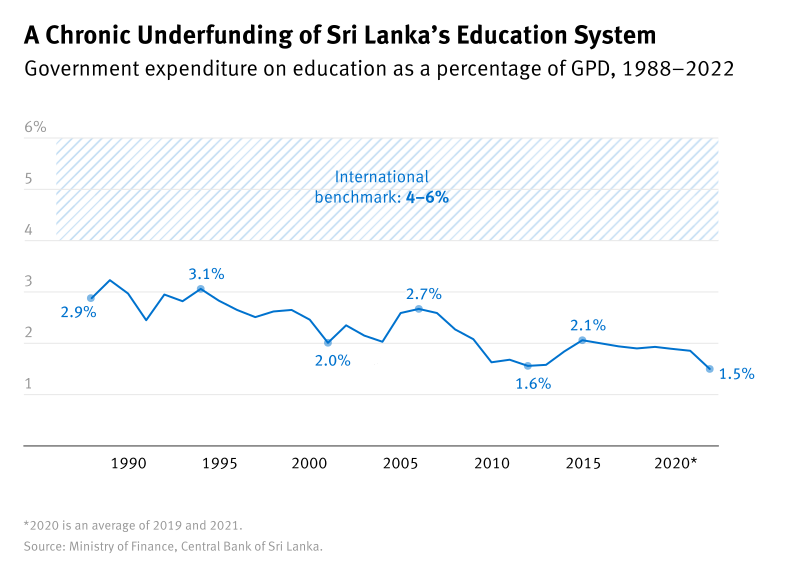
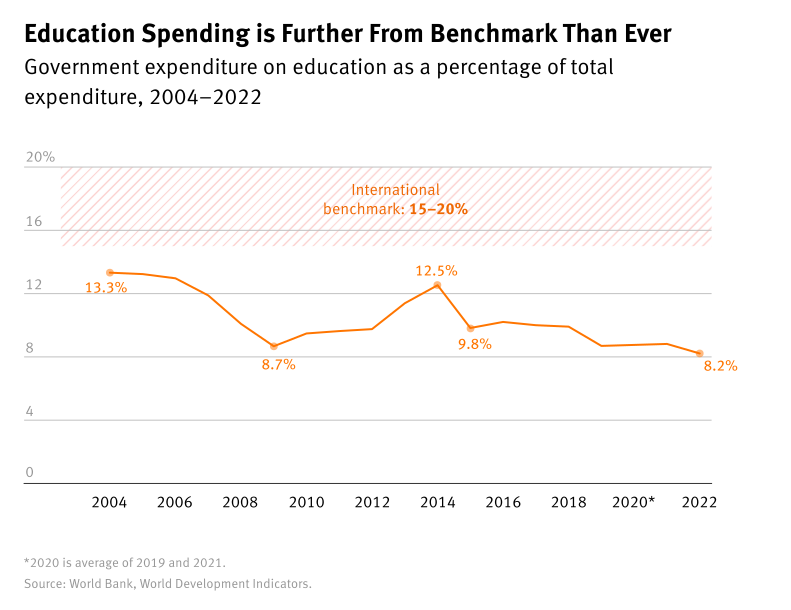
The barriers to children’s right to education in Sri Lanka are multiple, but they stem at least in part from chronic underfunding of public education. In 2022, spending on education made up a paltry 5 percent of government expenditures and 1.5 percent of GDP, the third lowest in the world, behind only Laos and Haiti. This is far short of the goals set by international benchmarks that call for at least 15 to 20 percent of public expenditure and/or 4 to 6 percent of GDP.
It was not always this way. Sri Lanka was a global pioneer in enacting free public education for children ages 5 to 16 in 1945, although Tamils of Indian descent, like Susikala, whose ancestors were brought by the British to work on tea plantations, were excluded from this policy until 1977. Available data indicate that from 1955 to 1970, around 15 percent of government expenditures—3 to 5 percent of GDP—went toward education. Studies from that time find that the increased access to education, along with other social investments, helped to improve social mobility and remediate colonial policies that had concentrated wealth.
It also produced impressive results: A comparison of social indicators in 59 countries that extended from the mid-1940s through the early 1970s found that in each case Sri Lanka had the best indicators relative to its income. School enrollment rates, for example, more than doubled from 41 percent in 1946 to 86 percent in 1971, compared to 57 percent in all South Asia as a whole and 37 percent in low-income countries globally.
The 1977 reorientation of economic policies included a deprioritizing of education spending and other areas of social spending. From 1975 to 1977, education made up between 10 to 11.4 percent of total government expenditures, equivalent to between 3.1 and 3.6 percent of GDP. In 1979, four years before the civil war started, these numbers had dropped to around 7 percent of government expenditures and 2.7 percent of GDP.
While Sri Lanka experienced periods of strong GDP growth in the ensuing decades, this growth—while raising education spending in real terms—did not translate into gains commensurate with the economy’s growth, and so it has fallen behind countries in its income group.
New Government, New Approach
In the months following the debt default, amid rocketing inflation and acute shortages of imported goods, especially fuel, hundreds of thousands of people took to the streets, forcing the resignation of the president, Gotabaya Rajapaksa, on July 9, 2022. Ranil Wickremesinghe became acting president and was later elected president by members of parliament and inaugurated on July 21. On September 21, 2024, Sri Lanka held its first presidential elections since the economic crisis, which were won by Anura Dissanayake of the National People’s Power (NPP).
Dissanayake ran on a platform promising to increase social spending, reduce regressive taxes, and root out corruption. Education spending was a particularly salient issue in the 2024 presidential election campaign, and the NPP’s manifesto committed to “incrementally” raise education spending to 6 percent of GDP and make teaching “one of the 10 highest paying professions in Sri Lanka.” The new prime minister, Harini Amarasuriya, who is simultaneously serving as education minister, is a veteran education activist, including in a movement fighting to increase education spending to 6 percent of GDP. On tax, the NPP promised to exempt essential food, health care, schoolbooks, and other items from VAT.
In the year since coming to power, the new government has taken some steps to fulfill these commitments, including expanding the free midday meal to all primary schools and disbursing a one-time payment of LKR 6,000 ($20) for the school-aged children of recipients of Aswesuma, a means-tested cash transfer program, to assist with increased costs of stationery and other school expenses. It has also proposed reforms to the education system that go beyond funding. However, the 2025 budget increased the budget of the Ministry of Education, Higher Education, and Vocational Training by only 3.5 percent compared to 2024, and projected additional increases of around 10 percent for each of the next two years will not meet the promised goal of spending 6 percent of GDP on education.
The government is also in the process of establishing a database necessary for implementing an effective property tax, a process that had stalled under the previous government. It also has published data on the names of firms receiving tax incentives and their total value and committed to amending laws that enable tax incentives to make them transparent and adhere to specific criteria.
The government has a historic opportunity to build on these initial steps and take durable steps to raise the revenue it needs to support social spending, including on education, that benefits everyone. Sri Lanka’s decades-long neglect for tax revenues and social spending has culminated in misery and crisis. The time is ripe to try a new approach centered on human rights.
Recommendations
To the Sri Lankan Government
On Taxes and Public Financial Management
Rescind the Strategic Development Projects Act and Port City Act and replace it with laws that only permit corporate tax exemptions in situations that meet clearly defined criteria beyond a generalized goal of attracting investment, including:
A defined strategic objective that could not be achieved through alternative, less costly means;
A published cost/benefit analysis prior to approval and during the course of the incentive;
Parliamentary approval of all requests;
Approval for clearly defined time periods accompanied by clear justifications; and
Regular publication of the full costs of all tax incentives.
Request the auditor general to conduct a full public audit of existing corporate tax exemptions, assess benefits and costs against human rights, and take action on the basis of this, including by considering fully or partially suspending their implementation where warranted.
Implement reforms to make the tax system more progressive, including by increasing revenues from direct personal taxes, such as property, inheritance, or wealth tax, and by lowering indirect taxes such as VAT rates.
Ensure consumption taxes on items such as on food staples, educational materials, and other goods essential for rights do not impede access to these goods, or eliminate those taxes.
Work towards the provision of adequate, universal social security financed through progressive and sustainable means.
Enhance efforts to tackle corruption and improve the capacity of the Inland Revenue Department and the Customs Agency to effectively collect all taxes owed.
Actively support ongoing negotiations for the United Nations Framework Convention on International Tax Cooperation, including provisions that will effectively address harmful tax competition, tax evasion and avoidance, and illicit financial flows, and help enable the realization of human rights, in particular economic, social and cultural rights.
On Education
Prioritize social spending in budgets in line with international benchmarks, including a plan to reach spending equivalent to 4 to 6 percent of GDP on education and 5 percent on health.
Allocate adequate funds to maintain school infrastructure and equipment.
Strengthen monitoring and evaluation to ensure that allocated funds are fully and appropriately spent and to assess and address disparities between schools.
Improve monitoring of learning outcomes and ensure adequate funding for education reforms and teacher training to ensure quality and inclusive education.
Consider increasing teacher salaries to make them competitive with other professions requiring equivalent levels of training and experience.
Publish spending by provincial councils on education, as well as data on per student spending by district.
Abolish all fees, in law and in practice, for government schools at least from pre-primary and primary education.
Work to provide at least one meal per day to all primary and secondary schools, and consider adding a second daily meal in economically deprived areas.
Work to provide students with free transportation to school.
To the International Monetary Fund
Ensure that debt sustainability assessments leave governments with adequate means to meet their human rights obligations and take into account the economic benefits of increased public spending, including on health and education, during and after the debt restructuring.
Conduct and publish distributional impact assessments, including of fiscal policies, that measure the impact of measures enacted under the program by income decile, as well as on women and economically marginalized groups.
Strengthen efforts to increase direct taxation, in particular by supporting the curtailment of corporate tax exemptions and revisiting existing agreements, and increasing taxes on high incomes and wealth.
Support the reduction of regressive taxes, including by reducing VAT rates.
Ensure all transparency measures are met, including publication of the value and beneficiaries of tax incentives.
Include spending floors in loan programs covering all rights, including on education with a view toward achieving international benchmarks of 4 to 6 percent of GDP. These floors should be structural benchmarks, which require a waiver from the IMF Board if unmet, rather than indicative targets to increase compliance
Ensure that IMF advice and policy positions do not hinder ongoing negotiations for the United Nations Framework Convention on International Tax Cooperation.
Methodology
This report is based on extensive review of the literature and data on tax policy in Sri Lanka and in-depth interviews with economic policy experts and individuals affected by the policies, with particular focus on students, teachers, and administrators in the education sector.
In researching this report, Human Rights Watch reviewed thousands of pages of documents, including decades of IMF staff reports, as well as many Sri Lanka Central Bank annual reports and World Bank and academic articles on Sri Lanka’s economy. Human Rights Watch also gathered and analyzed available economic data related to tax and education since the 1970s and interviewed 15 economic policy experts deeply familiar with the Sri Lankan context, with many providing multiple interviews over the course of the research. This report uses data from UNU-WIDER’s Government Revenue Dataset and World Income Inequality Database wherever it is available, sometimes also noting alternative sources.
The interviewed policy experts include all three members of a presidential advisory committee appointed in April 2022 to help respond to the country’s economic crisis: Indrajit Coomaraswamy, former governor of Sri Lanka’s Central Bank; Sharmini Coorey, former senior IMF official; and Shantayanan Devarajan, former acting chief economist at the World Bank and currently a professor of international development at George Washington University. They also include Jayati Ghosh, a development economist; Ahilan Kadirgamar, a political economist at the University of Jaffna; and two successive IMF mission chiefs to Sri Lanka.
To inform our analysis of the realization and policy dimensions of the right to education in Sri Lanka, Human Rights Watch conducted 51 interviews, including with 6 education officials in three zones, 2 teachers union officials, 2 principals, 15 teachers, 10 parents, and 7 students. It also included Dr. Tara de Mel, former secretary to the minister of education.
Human Rights Watch wrote letters to the Sri Lankan government and to the IMF on August 6, 2025. The government did not respond and the IMF also declined to write a formal reply.
Human Rights Watch informed all interviewees of the purpose of the interview, its voluntary nature, and the ways in which the information would be collected and used. Human Rights Watch assured participants that they could end the interview at any time or decline to answer any questions. Human Rights Watch did not offer any remuneration. Most names of educators, parents and students have been changed to protect interviewees.
I. Brief History of Tax Policy and Social Spending: Sri Lanka’s Transformation from Global Leader to Global Laggard
Social Spending at the Heart of a Post-Colonial Economy: 1948-1977
Sri Lanka’s public services were once the envy of South Asia. In the decades following independence in 1948, the government pursued a development strategy that prioritized free education, free medical care, and subsidies for food staples, particularly rice, as well as public transportation and housing. By the 1970s, social indicators improved to among the highest of any low-income country, while economic inequality dropped dramatically.
A comparison of social indicators in 59 countries that extended from the mid-1940s through the early 1970s found that in each case Sri Lanka had the best indicators relative to its income.[1] School enrollment rates, for example, more than doubled from 41 percent in 1946 to 86 percent in 1971[2], compared to 57 percent in all South Asia and 37 percent for low income countries.[3] Adult literacy rose from 58 percent to 78 percent, with striking gender parity.[4] In contrast, the average global literacy rate was 66 percent in 1976, and 48 percent in of all South Asia.[5] Similarly, life expectancy increased from 43 to 66 during those years, and infant mortality decreased from 141 per thousand in 1946 to 46 in 1973, compared to an average of 110 for low-income countries and 89 for South Asia as late as 1990.[6]
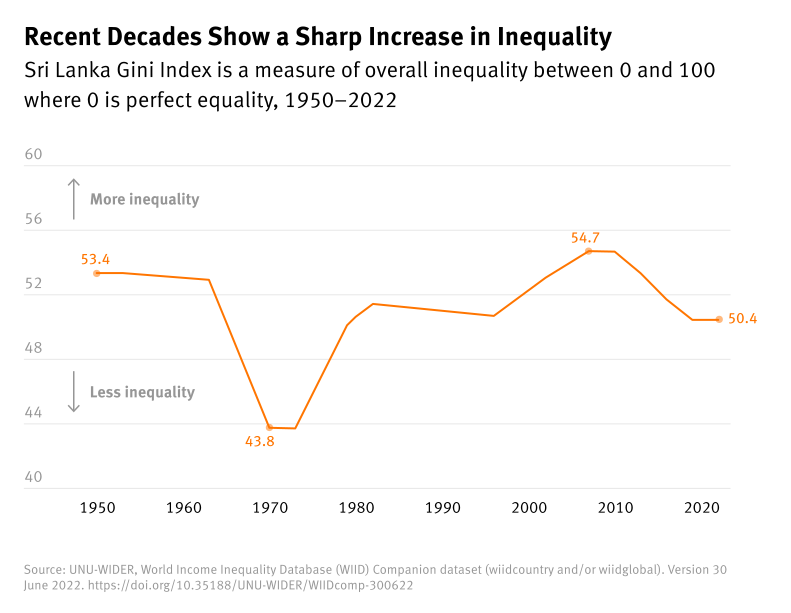
At the same time, the strength of public services helped to sharply reduce income inequality, remediating colonial policies that had concentrated wealth and political power among a small class of ruling elite.[7] The GINI coefficient, a measure of inequality where zero means perfect equality and 1 is extreme inequality, dropped from 0.53 in 1953 to 0.44 in 1972, according to the World Income Inequality Database.[8] Put another way, the share of income of the highest decile dropped from 43 percent to 30 percent of total income, meaning in 1973 it was 70 percent of what it had been in 1953.[9]
The greatest reduction in inequality was in rural areas, where 75 percent of the population lived but which had been largely neglected under colonial rule with the exception of the plantation estates that produced lucrative tea, rubber, and coconut for export.[10] The expansion of free education was particularly important in this regard. One study examining income distribution in the 1970s and 1980s in Sri Lanka identified lack of access to education as the most significant determinant of income inequality,[11] while another noted improvements in the country’s “open access to education” as contributing “to social and economic mobility and, thus, to a weakening of the political and economic power of the traditional landed elite.”[12]
Spending on food subsidies, health, and education, which ranged from 6.4 to 13.6 percent of GDP,[13] was largely financed by tax revenues. Although tax-to-GDP was not consistently tracked as an indicator, taxes made up about 90 percent of revenues, and the revenue-to-GDP ratio ranged between 20 and 25 percent of GDP in this period.[14] During colonial rule, tax revenue was heavily reliant on export duties, but following independence the government enacted a spate of reforms to generate revenues through progressive measures, including introducing a wealth tax, gift tax, and business turnover tax, and exempting basic goods such as essential food items while increasing taxes on luxury items.[15] It also improved tax collection by establishing a “pay as you earn” (PAYE) scheme in 1971, which sought to increase tax compliance by deducting income tax directly from paychecks.
An Economic Shift: Prioritizing “Growth” over Social Spending
The 1970s brought numerous economic challenges to Sri Lanka, with domestic issues such as political disturbances and drought[16] compounded by global pressures such as inflation stemming from the global 1973 oil embargo.[17] Sri Lanka’s growth rate slowed from an average of 4.4 percent in the 1960s to 3 percent in the early 1970s,[18] and deficit spending grew, with the cost of food subsidies taking up an increasingly large share of public spending.[19] These economic pressures buttressed calls to change Sri Lanka’s economic approach away from prioritizing social spending to an “indirect strategy” that placed “a greater weight on the objective of economic growth”; specifically, by reorienting spending and removing restrictions on trade.[20] In November 1977, a newly-elected government began to rapidly implement this new economic approach.
This shift reflected a neoliberal economic view that gained dominance at the time, particularly within the World Bank and International Monetary Fund (IMF). This school of thought maintained that economic growth would yield better social outcomes than direct social spending.[21] Several studies published around this time, mostly by World Bank economists, wrestled with applying this approach to Sri Lanka given the strength of its social outcomes. Some pointed to slowing growth and an increase in deficits as reason to reorient spending toward industry that would promote “growth,”[22] or argued that the country’s social outcomes were less impressive when considered under different metrics.[23] Other economists countered that external factors were at fault for Sri Lanka’s economic challenges[24] and that the benefits to growth of reorienting spending would be minimal.[25] A World Bank economist, Paul Inesan, argued that in Sri Lanka social expenditures and growth had been shown to be “complementary” rather than “tradeoffs”: “Sri Lanka has accomplished more in meeting basic needs than most countries with three or four times its per capita income and appears to have average or better growth prospects.”[26]
The debate also had geopolitical and ideological dimensions. Western powers and the international institutions and agencies they control long pressured for neoliberal reforms and actively supported them, particularly the IMF, which conditions its loans on specific economic and fiscal reforms.[27] Indeed, while the IMF had approved six one-year Stand-By Arrangements (a short-term lending facility with relatively fewer conditionalities) to Sri Lanka between 1965 and 1974 ranging from $19.5 to $30 million, in December 1977, one month after the new government came to power, the IMF approved a $93 million Stand-By Arrangement, followed by a $260 million 3-year Extended Fund Facility in January 1979, the first of several such IMF programs in the country.[28] In all, Sri Lanka has had 17 IMF programs since 1965.[29]
The economic shift brought steady economic growth to Sri Lanka, but the strategy for achieving growth was accompanied by an increase in economic inequality. In addition, throughout this period and despite stretches of strong GDP growth, the economic shift was also accompanied by steady and dramatic declines in both social spending and tax revenues as a percentage of GDP.
As noted, the revenue-to-GDP ratio, of which taxes comprised roughly 90 percent, ranged between 20 to 25 percent before 1979. By 1980, according to UNU-WIDER’s Government Revenue Dataset, tax-to-GDP dropped to 15 percent. It is possible that methodological or other changes account for some of this difference, but the trend is unmistakably one of decline, even beginning in 1980. Despite some fluctuations since then, never again did the ratio reach 16 percent.[30]
There is no international tax benchmark, but the World Bank has identified 15 percent of GDP as a minimum tax threshold, or “tipping point,” for countries “to generate sufficient domestic resources that can be invested in health, education, and infrastructure.”[31] But this is a rather low threshold: under human rights norms, governments are expected to take steps, to the maximum of their available resources, towards the realization of rights. If states were to meet international benchmarks, it would mean spending equivalent to a combined 10 percent of GDP on health and education alone. The global median in 2023 was 22 percent and the average for OECD countries was 34 percent.[32]
Social spending fell in tandem with declining tax-to-GDP ratios both due to a shift away from social spending and a decline in total and social spending relative to GDP. Figures from the Central Bank indicate that the reorientation of spending in 1977 resulted in spending on health, education, and food immediately declining from roughly one-third of total public expenditure in previous decades to around 8 percent in the early 1980s.[33] They also show that education spending dropped from around 15 percent of government expenditure—the minimum under the internationally recommended benchmark—to under 4 percent, although a World Bank Public Expenditure Review from 1993 suggests a more modest decline to 8 percent.[34] From a per capita perspective, Central Bank data shows that public social spending fell by more than half from 1978 to 1982,[35] with the bulk of this drop due to the sharp reduction in food subsidies.[36]
These figures fluctuate somewhat over time, shaped by the changing tides of economic realities and public policy responses. In real terms, both tax revenues and social spending have also grown considerably in past decades, which is to be expected given Sri Lanka’s economic growth. However, as this report documents, as a share of its economy, in recent decades the trajectory of both taxes and education is one of steady and steep decline.
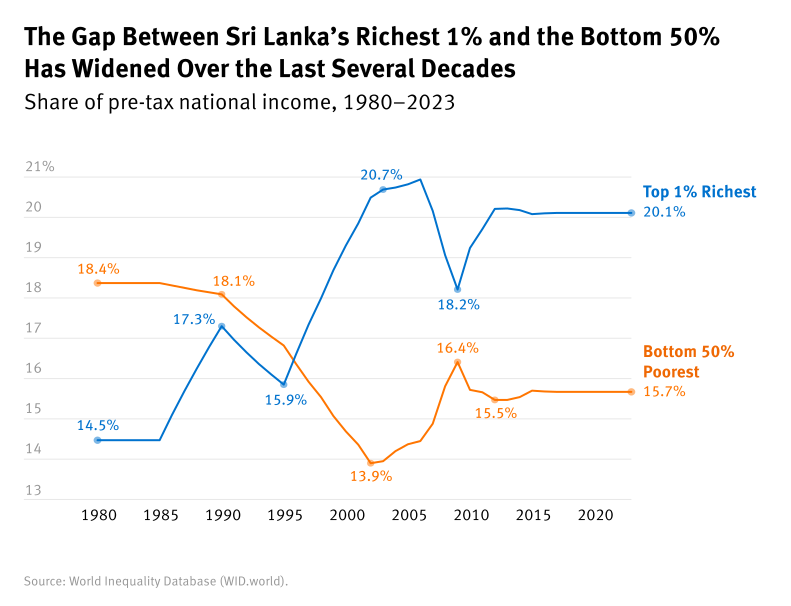
This period also saw a sharp increase in inequality. The GINI coefficient, which already increased in the late 1970s to reach 0.5 in 1978, according to the World Income Inequality Database, climbed to .55 in 2009, higher than it was at independence.[37] It then declined in the ensuing decade,[38] but World Bank data, which is based on income rather than consumption, show a more modest and uneven decline in the 2010s, with inequality levels remaining significantly elevated compared to the 1980s and 1990s.[39] IMF reports, which use World Bank data on GINI coefficients, also indicate that the GINI coefficient rose between 2019 and 2022.[40] During these years, earnings of the top one percent grew to exceed that of the bottom 50 percent. Whereas in 1985 the top one percent earned 14.5 percent of total income compared to 18.4 percent earned by poorest half of the population, by 2002, 20 percent of income was going to the top one percent and the bottom 50 percent’s share had declined to 13.9 percent.[41]
Civil War and Its Aftermath
In 1983 in Sri Lanka, a civil war broke out that would last 26 years, killing thousands of people and causing widespread destruction and displacement amid widespread human rights abuses and violations, especially in the north and east. The war was a humanitarian and human rights catastrophe, and also had an economic cost. Military spending rose from 1.1 percent of GDP in 1982 to 3.5 in 2008, peaking at 6 percent of GDP in 1996.[42] As a percentage of government expenditure, it rose from 3.1 percent in 1982 to over 20 percent in 1996.[43] These figures have significantly decreased since the end of the war: in 2023, military spending was 1.6 percent of GDP and 7 percent of government expenditure. These are in line with global averages but higher than in 1982, before the war.
The war had other direct and indirect economic costs. A 2001 study that sought to estimate the cost of factors such as military expenditures, destruction of infrastructure, foregone investment, and loss of lives, injuries, and displacement from 1983 to 1996 found that the cumulative impact over that time period amounted to LKR 978 billion (US$17.7 billion in 1996).[44]
Nevertheless, between 1983 and 2008, the economy continued to grow at an annual average growth rate of 5 percent,[45] even while tax revenues continued their decline relative to GDP. These factors contributed to the government increasingly relying on debt to finance its budget, including its social spending. Averaging 10 percent of Gross National Income (GNI) between 1950 and 1976, external debt stocks spiked to 55 percent of GNI in 1978 and remained above 35 percent since then, reaching at times more than 70 percent of GNI.[46] Debt-to-GDP ratios, which include domestic debt, averaged 44 percent between 1950 and 1976, rose to above 80 percent by 1982. They only decreased below that rate in the decade following the end of the civil war.[47]
The end of the war in 2009 could have enabled increased economic investment and renewed attention to social spending, including on education, particularly in the most conflict-affected areas. Yet, declines in education spending relative to GDP continued both in real terms and as a percentage of GDP. Following the war, the tax-to-GDP ratio fell 3 points in five years: from 12.8 percent in 2009 to 9.7 in 2014. It then partially recovered to 11.7 percent, where it roughly stayed for the next five years.[48] Education spending followed a similar trajectory, falling from 2.8 percent of GDP in 2009 to 1.8 in 2014, with a partial recovery the following year bringing it to around 2 percent for the next five years. But these small improvements were short-lived. As detailed in Chapter III, in 2019, a new government led by President Gotabaya Rajapaksa went to disastrous extremes in his embrace of low taxes as a strategy for growth, introducing steep and broad cuts that pushed revenues off a cliff. The tax-to-GDP ratio fell to among the lowest in the world, contributing to an economic crisis unprecedented since the country’s independence.
II. Tax Policy and Human Rights
Realization of Economic, Social and Cultural Rights
The International Covenant on Economic, Social and Cultural Rights (ICESCR) obligates states parties to take steps, to the maximum of their available resources, to progressively achieve the full realization of economic, social and cultural rights. This includes, among others, the rights to health, education, social security, and an adequate standard of living.[49] States are obliged not only to act individually, but also through international assistance and cooperation. This implicates, among other things, their actions within international fora such as international financial institutions (IFIs).
This framework recognizes the financial and other practical constraints many states face in moving rapidly towards the full realization of economic, social and cultural rights. At the same time, it requires that they act with real ambition and prioritize resources and efforts to achieve progress.
In addition, there is a “strong presumption” that any deliberate “retrogressive measures”—that is, measures that impair the enjoyment of or roll back progress towards the full realization of economic, social and cultural rights— are prohibited under the Covenant. States parties bear the burden of proving that any deliberately retrogressive measures were “introduced after the most careful consideration of all alternatives and that they are duly justified by reference to the totality of the rights provided for in the Covenant, in the context of the full use of the maximum available resources of the State Party.”[50]
The Human Rights Economy For decades, a range of human rights experts from civil society, academia, and international institutions have called for a holistic vision for aligning economic systems with human rights, referred to as “human rights economy.”[51] This entails making economic policy decisions based on what would best advance the realization of human rights. Economic growth becomes not an end in itself, but rather is seen as a potential means of protecting and advancing the full realization of human rights. The UN High Commissioner for Human Rights has said that a human rights economy “anchors all economic, fiscal, monetary, business and investment decisions in human rights by using human rights obligations that Governments already have agreed to.”[52] Proponents emphasize that doing so would require sweeping reforms to both domestic economies and the global system within which they operate. Many urge the development of a new set of indicators that incorporate human rights to measure economic progress to remedy the overwhelming reliance on Gross Domestic Product (GDP) as a metric, which does not capture the distribution of resources within a society or the extent to which resources are used to improve people’s wellbeing. |
Human Rights and Tax Policy
States’ economic, social and cultural rights obligations necessarily implicate their fiscal practices and tax policy, including their efforts to raise revenue to fund the protection and realization of rights. An April 2025 Human Rights Council Resolution acknowledged “the importance of States’ economic, social and cultural rights obligations in the context of the promotion of efficient and progressive taxation and fiscal policies that mobilize national economic resources” to realize rights and fight poverty.[53] The resolution also called upon states to “take into consideration their economic, social and cultural rights obligations when promoting inclusive and effective international tax cooperation, as it enables countries to effectively mobilize their domestic resources, and to continue to engage constructively in the process towards developing a United Nations framework convention on international tax cooperation.”[54]
Civil society organizations such as the Center for Economic and Social Rights have also contributed to working through the policy implications of human rights obligations, such as in the 2021 Principles for Human Rights in Fiscal Policy. UN human rights treaty bodies–the mechanisms established by UN human rights treaties to monitor the implementation of states’ obligations under those treaties–have provided 184 recommendations to 98 states regarding their tax policies between 2007 and 2024 in the context of their monitoring of states’ human rights records.[55] These recommendations address the content of tax policies–they are cognizant of the amount of tax revenues (adequacy), their design (e.g., progressivity), and their impacts on various groups and rights–in addition to procedural issues, such as around transparency and participation in policymaking.[56]
In March 2025, the CESCR published a statement on tax policy and economic, social and cultural rights. The statement asserts that while states have the right to design tax policies in accordance with their national priorities, “this prerogative must be exercised in a manner consistent with their obligations under international human rights law.”[57]
Drawing on UN tax treaty bodies and human rights scholarship, the statement sets out characteristics that align with states’ obligation to design policy frameworks that are well-suited for mobilizing “maximum available resources” towards realizing their economic, social and cultural rights obligations:
Adequate: Governments’ spending geared towards the realization of human rights should be commensurate with the resources available to them, and governments should mobilize resources adequate to that task. Tax and other fiscal policy are for many states an important or primary means by which they can do so. These policies should therefore be designed to ensure adequate resources to meet governments’ human rights obligations. Factors to consider in assessing adequacy include tax and other revenue as percentage of GDP, as well as social spending as a percentage of GDP and total government expenditures.[58] International social spending benchmarks for health and education, which have been widely endorsed by states and the leading relevant UN agencies, provide an important concrete spending metric.[59]
Progressive: In a progressive tax system, those with greater income or wealth contribute a larger share of their resources in taxes than those with less.[60] A progressive system helps to ensure that resources are adequate, without unduly undermining the standard of living of people with lower incomes. It is also important for reducing inequality and ensuring that tax policies are non-discriminatory, since regressive taxes can disproportionately harm women and disadvantaged and marginalized groups.
Non-discriminatory: Tax policies should not discriminate, and neither should they disproportionately disadvantage particular groups, such as women or marginalized groups. They also offer an important opportunity to promote substantive equality.[61]
Inclusive, transparent, participatory and evidence-based: The CESCR has argued that states should conduct human rights impact assessments of their tax policies that analyze factors such as the tax-to-GDP ratio, as well as the distributive impact of tax policies, including on marginalized groups and women.[62]
Effective and prevents illicit financial flows and tax abuse: Tax evasion and avoidance, and illicit financial flows, create a significant drain on the financial resources states can deploy towards the protection and realization of rights. International cooperation is particularly important to address this since, as noted by the CESCR, “Tax evasion and tax avoidance by corporations and high-net-worth individuals are often transboundary in nature.”[63]
International Cooperation and the UN Tax Convention
As noted above, the ICESCR requires states to take steps to realize rights not only individually but also through international assistance and cooperation. In a 2025 statement, the CESCR asserted that this gives rise to extraterritorial obligations requiring “States parties to ensure that their national tax policies do not undermine the capacity of other countries to raise public revenues to implement economic, social and cultural rights.” It also states that this entails an “obligation to strengthen international cooperation to build an inclusive, fair and effective global tax governance and to combat tax-related illicit financial flows.”[64]
Ongoing negotiations that aim to produce a new UN framework convention on international tax cooperation present a historic opportunity to align the international tax system with governments’ human rights obligations.[65] Initiated in 2022 by the African Group, made up of the 54 African Union member states at the United Nations, the terms of reference were adopted in August 2024.[66] These include the requirement that efforts to achieve the treaty’s objective should “in the pursuit of international tax cooperation be aligned with States’ obligations under international human rights law.” They also aim towards the “fair allocation of taxing rights, including equitable taxation of multinational enterprises; addressing tax evasion and avoidance by high-net worth individuals; . . . [and] international tax cooperation approaches that will contribute to the achievement of sustainable development in its three dimensions, economic, social and environmental, in a balanced and integrated manner.”
Eight governments voted against the terms of reference—Australia, Canada, Israel, Japan, New Zealand, South Korea, the United Kingdom, and the United States—and 44 governments, largely European, abstained.[67] Negotiations on the framework convention and two protocols are ongoing and are expected to conclude by July 2027.
The case of Sri Lanka also surfaces the interplay between domestic and international tax policies. While all governments are expected to enact policies that ensure adequate and progressive revenue generation, many, including Sri Lanka, are constrained by an international tax system that impairs their ability to raise revenues from wealthy individuals and multinational companies. Sri Lanka’s capacity to raise tax is for instance limited by the use of tax havens and other opaque practices, and developing countries are generally impacted by international tax competition that pushes them to lower their taxes to attract investments as part of a phenomenon often referred to as “race to the bottom.”
Particularly salient in this regard are the human rights implications of corporate tax exemptions, which reduce or eliminate corporate taxes, often with the stated aim of attracting investors. Beyond forgoing potential revenue in the country that grants them, such exemptions create tax competition that can pressure other countries to follow suit. For this reason, in its General Comment 24, the CESCR notes that ““[l]owering the rates of corporate tax solely with a view to attracting investors encourages a race to the bottom” and is “inconsistent with the duties of the States parties to the Covenant.”[68]
Direct and Indirect Taxes
Taxes are generally divided into two categories. “Direct taxes” are those on personal or corporate income or assets, such as capital gains, wealth, property, and inheritance. They are central to ensure the adequacy and progressivity of tax systems, although the extent of progressivity depends on factors such as minimum thresholds and rate structures. “Indirect taxes,” such as value-added taxes, are on goods and services. Unless carefully targeted, they are generally regressive as those with lower incomes will often spend a bigger percentage of their income on such taxes than those with higher income.
For this reason, the CESCR has called on states to “shift[] focus to a more direct income taxation approach rather than relying on indirect taxes.” Toward that end, it urges states to ensure that corporations and wealthy individuals pay a “proportionate and appropriate” share of tax, and minimize consumption taxes like value-added tax (VAT) which “can have adverse impacts on disadvantaged groups such as low-income families and single parent households, who typically spend a higher percentage of their income on everyday goods and services.”[69]
Many countries have increased reliance on VAT in recent years, but the increase has been particularly dramatic for low-income countries. For example, for both low- and high-income countries, VAT made up around 11 percent of total revenues in the 1980s, but that increased to an average of 28 percent in the 2020s for low-income countries compared to 18 percent for high-income countries.[70]
Where VAT is, for example, limited to luxury items, it may not be regressive, but that is rarely the case; indeed, recent IMF advice, including in Sri Lanka, has been to remove VAT exemptions for food and other staples.[71] Some contend that VAT is not a regressive tax because, in absolute terms, higher-income households make up a higher share of the total revenue raised because they consume more.[72] Others consider VAT to be regressive but make the case that it is nevertheless necessary or that its regressive nature could be adequately mitigated via social protection programs.[73]
Even those who argue in favor of higher VAT often recognize that it would be preferable to increase taxes through higher direct taxes, such as personal income taxes, yet see VAT as an immediate and efficient way to raise revenues in countries with weak infrastructure. For example, the IMF’s webpage on VAT notes: “Many developing countries cannot operate effective income tax systems … for a host of reasons, such as weak institutions, concentration of power, corruption, and politics.”[74] In practice, this has led to a significant increase in VAT in developing countries, rather than a focus on improving domestic systems of direct taxation, as well as the international tax rules that exacerbate the challenges of effective implementation.
Taxation and Rights in Times of Economic Crisis
IFIs and governments have human rights obligations to respond to economic crises in ways that protect and advance rights in both the short and long term. In March 2019, the UN Human Rights Council adopted a set of principles, developed by Juan Pablo Bohoslavsky, the UN independent expert on foreign debt, to guide states and financial institutions in their response to economic crises to ensure they pursue recovery measures that further “the benefit of the whole population, instead of only a few.”[75] These principles urge that debt servicing should not come at the expense of rights, and that fiscal policies—including in relation to revenue collection, budget allocations and expenditure—should align with international human rights standards and principles.
As part of IFIs’ and governments’ obligation to engage in a meaningful public dialogue, particularly with those most likely to be affected, they are expected to conduct human rights impact assessments “that demonstrate that their proposed economic reform measures will realize, not undermine” human rights.[76]
III. Tax Policy and Sri Lanka’s Economic Crisis
In April 2022, Shanthi was a cleaner at a pharmacy that makes traditional herbal medicine in a small town an hour drive from Colombo, Sri Lanka’s capital.[77] It was not easy to live on her earnings of around LKR 650 ($2) per day, particularly since her husband had passed away a few years earlier, and at 55, she also struggled with poor eyesight. But the situation was manageable, she told Human Rights Watch: she lived with one of her three children in public housing and received benefits through Samurdhi, a public cash transfer program.
Then the Sri Lankan government announced that it was unable to make payments on its debt for the first time in its history. Already struggling two years into the Covid-19 pandemic, the resulting default sent the economy into a tailspin. Like more than a million Sri Lankans, Shanthi lost her job.[78] After a few months, she found work as a housecleaner earning LKR 300 (US$1) per day. While her wages were halved, costs were soaring, particularly for food: by September 2022 food prices were nearly double the previous year’s.[79]
In March 2023, the government struck a deal with the IMF for a bailout, but its terms exacerbated Shanthi’s difficulties.[80] The government eliminated subsidies on fuel and electricity. Her electricity bills increased three-fold. In July 2023, her power was shut off due to unpaid bills, making hers one of a million households to lose power following the price increases.[81] In an effort to raise revenues to meet IMF targets, the government also increased the VAT rate several times, eventually from 8 percent all the way to 18 percent, and removed exemptions for many basic items such as school stationary, further increasing costs. At the same time, an effort financed by the World Bank to overhaul the country’s social security program meant that she lost her Samurdhi benefits for several months while awaiting a response to her application for the new program, Aswesuma.
To cope, she limited her diet to rice and dal and moved with her son to sleep in her mother’s living room. Her son sometimes missed school because she could not afford a second uniform and she began to rely on others to pay for his notebooks. “I became completely destitute,” she told Human Rights Watch in August 2023. “Sometimes I feel it's impossible to live.”
The Human Rights Toll of the Crisis
Shanthi’s experience is common across Sri Lanka. A World Bank April 2025 update shows that between 2021 and 2024 malnutrition increased from 12.2 to 17.0 percent (underweight) and stunting increased from 7.4 to 10.5 percent.[82] According to the World Food Programme, in August 2023, one-quarter of households were food insecure and 62 percent of their expenditures went to food.[83] Estimates from an October 2022 government report indicated that roughly 43 percent of children under the age of five suffered from malnutrition, as did a growing number of pregnant and lactating women.[84] A World Bank update from October 2024 noted that neonatal, infant, and under-5 mortality rose sharply following the crisis.[85]
Poverty soared. The World Bank updates found that the number of people living below the poverty line measured as below $3.65 (PPP) per day doubled from 13.1 percent in 2021 to 25.9 percent in 2023, and remained at 24.5 percent in 2024.[86] Extreme poverty below $1 per day increased from less than 1 percent in 2019 to above 5 percent.[87] Even the higher of these poverty lines are very low, which is why the World Bank has developed a new measure called the “prosperity gap,” based on a standard of $25 per person per day (adjusted for purchasing power across countries).[88] In 2019, Sri Lanka’s “prosperity gap” was 4.1, meaning, on average, incomes would need to increase more than four-fold to attain a “prosperity standard” of $25 per day, but there is no more recent data.[89]
An analysis by LIRNEasia, a regional think tank, found that 4 million Sri Lankans were pushed below the national poverty line between 2019 and 2023.[90] That benchmark is based on the cost of goods and services considered “basic” and adjusted for inflation based on the Colombo consumer price index. More than half of Sri Lanka’s 22.2 million people are now grappling with “multidimensional vulnerabilities,” a composite of twelve indicators developed by the UN Development Program that measures deprivations related to health, education, and living standards.[91]
Economic inequalities also widened. World Bank show an increase in the GINI index from 37.7 in 2019 to 38.3 in 2024[92] And following the crisis the poorest decreased their consumption by a higher share than the wealthier, indicating a disproportionate share of the burden fell on the least well off.[93] In 2022, consumption declined by 9.5 percent among the bottom 40 percent of the population by income, compared to a decline of 7.1 percent for the top 60 percent, according to World Bank data.
To some extent, a severe economic crisis’ impact on people is inevitably a crisis for human rights. While a constellation of factors contributed to the crisis, government policy choices that led to low tax revenue, which had led to low social spending as a percentage of GDP, is a central part of the story.
Tax as a Driving Factor of the Crisis
Debt levels were already high, at 80 percent of GDP, and foreign reserves relatively low at $7.8 billion, when, in November 2019, newly elected president Gotabaya Rajapaksa implemented deep tax cuts, including slashing corporate and personal income tax rates.[94] Citing these cuts, the credit rating agency Fitch Ratings downgraded Sri Lanka from B stable to B negative, reflecting concerns over the country’s debt sustainability.[95] The Covid-19 pandemic exacerbated Sri Lanka’s economic distress. In 2021, Sri Lanka’s tax-to-GDP ratio fell to 7.3 percent, among the lowest in the world. By March 2022, foreign reserves had dropped to $1.9 billion, amounting to about one month of imports, and debt-to-GDP hit 114 percent, far above recommended levels for a lower-middle-income country.[96]
On April 7, 2022, the president formally requested an IMF program and five days later announced a suspension of payments on all foreign debt, precipitating an economic crisis unprecedented since independence.[97] The delay in seeking an IMF program was compounded by a protracted negotiation with creditors for debt restructuring.[98] Amid rocketing inflation and acute shortages of imported goods, especially fuel, hundreds of thousands of people took to the streets, leading to the forced resignation of President Rajapaksa on July 9. Ranil Wickremesinghe took over as president.
Sri Lanka’s tax policies came into sharp focus following the economic crisis, including in the courts. In November 2024, Sri Lanka’s Supreme Court ruled on a highly unusual case brought against dozens of senior officials responsible for the country’s economy around the time of the crisis, including at the Ministry of Finance and the Central Bank. The petitioners, which included the Sri Lanka chapter of the international anti-corruption organization Transparency International, argued that these officials’ economic decisions—and particularly the 2019 tax cuts—precipitated the economic crisis and therefore made them responsible for the ensuing violations of the public’s fundamental constitutional rights.
In a 4-1 decision, the court ruled in favor of the petitioners, calling the 2019 tax cuts an “imprudent decision” that “brought about a domino effect” that led to the crisis.[99] The court emphasized that while it provides officials with a margin of deference on economic decision-making, these decisions must still be “for the long-term sustainable development and for the public benefit.”[100] The IMF made a similar assessment when it approved an Extended Fund Facility in March 2023. It estimated revenue losses from the 2019 tax cuts “exceeding 2 percent of GDP,” which “further exacerbated vulnerabilities.”[101] It explicitly dismissed high spending as the culprit, noting the deficit “reflected substantially low tax revenues and high debt service costs, while non-interest government expenditures were not excessively high. Indeed, the tax revenue to GDP ratio was among the lowest in the world, at only 7.3 percent in 2021.”[102]
A Bitter Deal
After Ranil Wickremesinghe took over as president, he initiated fresh negotiations with the IMF and with creditors. The IMF eventually approved a $3 billion loan program to Sri Lanka in March 2023 that set a target of reducing debt to 95 percent of GDP by 2032.[103] Several economists criticized this target for risking another crisis and giving creditors too good a deal, emphasizing that those creditors had charged high interest rates that reflected their investment risks. Although the IMF does not directly determine the terms for restructuring debt, creditors are typically unlikely to reduce the amount owed by the borrower below the point at which the IMF declares debt to be “sustainable.” To illustrate this point, in an op-ed published in the Financial Times titled “Is the IMF setting Sri Lanka Up for Second Car Crash?,” economists Theo Maret and Brad Setser, whose research has focused on Sri Lanka, calculated that the target effectively would require the government to spend at least one-third of its revenues on servicing debt interest, and likely much more.[104] Indeed, in 2024, interest payments consumed 57 percent of Sri Lanka’s total revenue.[105]
Although debt is beyond the scope of this report, this staggering figure points to the fact that depending on its terms, the resolution of a debt crisis can further jeopardize debtor governments’ ability to meet their obligations to adequately fund social programs essential to the fulfillment of human rights. In August 2025, the UN High Commissioner for Human Rights released a report on Sri Lanka noting that the “the severe impacts of the economic crisis and debt burden on the public ... underscore the need for Sri Lanka’s external creditors to provide the Government with the fiscal space needed to realise economic, social and cultural rights and to ensure austerity measures do not undermine Sri Lanka’s ability to fulfil its human rights obligations.”[106] Ahilan Kadirgamar, a political economist at Jaffna University, noted in reference to Sri Lanka’s debt burden: “Taxes alone won’t get us out of this crisis.”[107]
At the same time, the 2023 IMF program sets a target of a 2.3 percent fiscal surplus from 2025 onwards, meaning that government expenditures, including debt servicing, should be at least 2.3 percent below revenues.[108] To achieve this, a central emphasis of the program is the urgent need to raise revenues, with a minimum target of 15 percent of GDP by 2025, from 7.3 percent of GDP in 2021. Around 90 percent of Sri Lanka’s revenues come from taxes.[109] Although the IMF program includes some steps toward progressive revenue generation, including reforming corporate tax exemptions and lowering the threshold for paying personal income tax, VAT makes up an even greater share of increased revenues than in the past. Under the program, the VAT rate was incrementally raised from 8 percent to 18 percent, and the “vast majority” of exemptions—including on items considered “basic,” such as school stationary—were removed.[110]
Other measures to increase revenue heavily focus on improving transparency and administrative capacity. For example, the government committed to move toward exclusively using an electronic system for processing tax collection, streamline the online process for paying individual income taxes, establish a unit within the Inland Revenue Department dedicated to reviewing high net worth individuals, and publish public procurement contracts.
These are undoubtedly critical steps for ensuring corporations and individuals pay a proportionate and appropriate share of taxes. However, it is also important to improve the progressivity of the tax system, including by ending corporate tax exemptions that are solely intended to attract investment, and considering the introduction of new taxes on high incomes or wealth. The program does include some measures in this regard, but they fall far short of what is needed and have largely not yet been implemented by the government, as is discussed in detail in the following chapter.
In addition to raising revenues, the government agreed to a number of cost-cutting measures under the IMF program, including eliminating subsidies for both fuel and electricity.[111] This is a common conditionality in IMF programs given the high cost of these subsidies. Moreover, it is important for governments to phase out subsidies for fossil fuels as part of a just transition to environmentally sustainable economies. However, research, including by Human Rights Watch, has shown that without adequate compensatory measures, the increase in costs associated with subsidy removal can undermine rights for many people.[112] It is therefore critical that it is done in a way that does not erode the enjoyment of rights, for example through measures that ensure those with lower incomes are able to maintain access to electricity or by reallocating savings toward universal social security systems and public services.[113]
IMF programs typically include a “social spending floor” that directs governments to spend a minimum amount on specified social programs, in part to mitigate the harm of measures such as subsidy removal. Human Rights Watch research in Sri Lanka and elsewhere has documented serious flaws with these floors that make them largely ineffective.[114] The social spending floor in Sri Lanka’s program committed the government to spend a mere 0.6 percent of GDP on cash transfer programs, which is less than the government had spent in the past.[115] In the first year of the program, the government failed to meet even this low target, but because it is included in the agreement as an “indicative target” rather than a “structural benchmark,” the IMF Board did not need to waive the requirement for the government to receive the next tranche of money.[116] In 2025, the government met the target.[117]
The program also requires the government to keep any increase in public wages below inflation, effectively reducing real salaries, and to reduce total spending on wages from 5 to 3.6 percent of GDP. The pursuit of these targets, rather than alternatives that would be less detrimental to rights, as well as the absence of an impact assessment, creates a real risk of human rights retrogression. The cap on public wages, and effective reduction in real salaries, also risks further eroding the competitiveness of teacher salaries, which, as Chapter V documents, is a contributing factor in hurting children’s right to education.
IV. Sri Lankan Tax Policy: Inadequate and Regressive
While the 2019 tax cuts played a central role in triggering the economic crisis, they were only the latest step in a long-term decline of Sri Lanka’s tax-to-GDP ratio. This chapter analyzes Sri Lanka’s tax policies in relation to the government’s responsibility to raise adequate revenues that allow it to deliver on its human rights obligations. It pays attention not only to domestic policy but also to obstacles and perverse incentives created by global financial rules and by the practices of other governments. It also explains how Sri Lanka’s tax system is fundamentally regressive, and the rights implications of that reality.
Inadequate Tax Levels: Sri Lanka’s Rock-Bottom Revenues
Sri Lanka’s tax-to-GDP ratio has been in decline for decades. That process can be traced back to an economic shift beginning in November 1977 to “open” the economy to more investment and trade, as described earlier in this report.
Over the years, a number of tax reforms were introduced that eroded the tax base; the decline in trade taxes from 8 percent of GDP in 1980 to 1.4 percent in 2022 is particularly dramatic.[118] However, successive governments did not put a system in place to replace those revenues. On the contrary, they have consistently pursued a strategy of granting companies wide-ranging tax incentives intended to draw investment and neglected to effectively tax the personal income and wealth that flowed from increased investment. In fact in 1985, the government did away with inheritance and gift taxes.[119]
As early as 1982, the Central Bank’s Annual Report highlighted the drop in revenue-to-GDP ratio to the lowest point in a decade—which, according to UNU-WIDER data, was 12 percent that year—as “signaling an inherent deficiency in the existing tax system.”[120] Over the next several decades, inflation-adjusted tax revenue increased more than threefold in real terms, but the economy grew significantly faster. As a result, the tax-to-GDP ratio only continued to fall, averaging a paltry 11 percent in the decade prior to the 2019 tax cuts. Tax revenue then collapsed in both real terms and relative to GDP in the run-up to Sri Lanka’s economic crisis, precipitated by the government’s disastrous moves to slash taxes.
As taxes make up roughly 90 percent of Sri Lanka’s revenues, when the tax-to-GDP ratio is very low (such as the 7.3 percent figure reached in 2023), it undermines Sri Lanka’s ability to realize its obligations under international human rights law. Indeed, the World Health Organization and others have found that governments need to spend at least 5 to 6 percent of their GDP just to achieve universal health coverage.[121] Rigorous international benchmarks recommend allocating 4 to 6 percent of GDP to education.[122] Together, these expenses alone require a budget representing at least 9-12 percent of GDP.
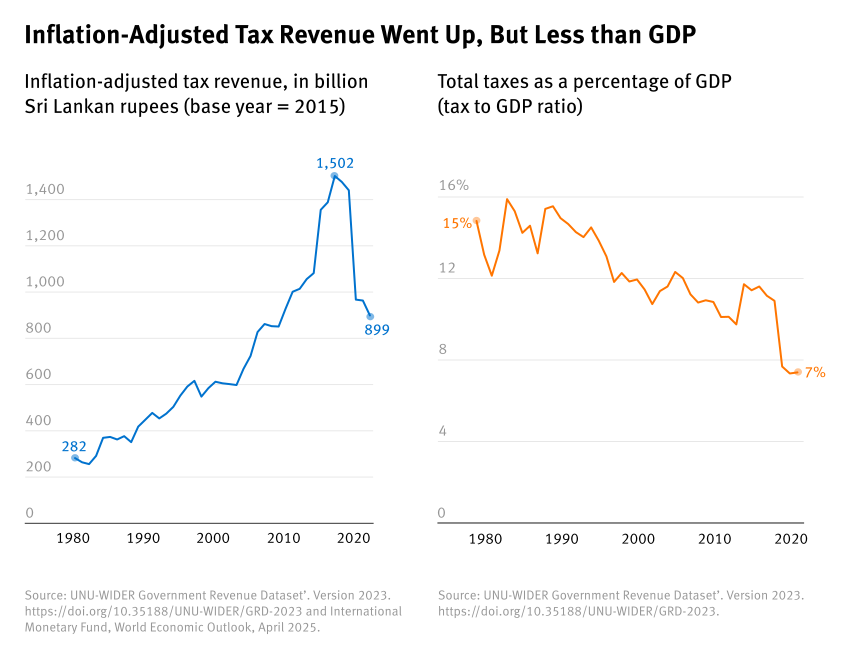
Other social expenses are also required to realize rights, such as social security, food, and housing. These require significant public funding, as do the institutions and processes to fulfill many civil and political rights. Having no other major source of income, Sri Lanka’s low tax revenues put the realization of these rights hopelessly out of reach
Significantly, the decline in revenue relative to GDP persisted even in periods when the government raised corporate or personal income tax rates. In November 2022, the IMF published a paper on mobilizing revenue in Sri Lanka that, noting this anomaly, identified two drivers behind low revenues: “high tax exemptions and low tax collection efficiency.”[123] In addition to looking at corporate and personal income tax rates, assessment of government revenue shortfalls thus requires examination of corporate tax exemptions and insufficient enforcement of the tax rules, the latter two of which are discussed below in the Sri Lankan context.
Corporate Tax Exemptions
Corporate tax incentives have been a central feature of Sri Lanka’s approach to attracting investment since the shift to a neoliberal economic model in 1977. The Board of Investment (BOI), a body of five commissioners appointed by the president that was first established under a different name and with limited scope in 1978, is empowered to grant tax incentives with little oversight or procedural guardrails.[124] Tax rules shift regularly, but they grant many sector-wide tax reductions—in some cases, to zero percent—and establish several investment zones.[125]
The BOI can also grant tax exemptions to individual companies or projects under the Strategic Projects Development (SDP) Act with no requirement to publish the terms. According to a governance diagnostic conducted by the IMF in 2023:
There is no definition of what criteria need to be satisfied for a project to be of strategic relevance, and the revenue forgone from such projects is not systematically contrasted against their potential benefit in a transparent process. Crucially, the [Department of Fiscal Policy] is not involved in the selection or evaluation of projects, and any data that may exist is not shared with the department.[126]
While the terms vary between companies that receive exemptions, the IMF notes that all “receive a corporate income tax exemption for 10 to 25 years, typically followed by time-bound reduced rates and exemptions from many other taxes and fees.” Many also receive personal income exemptions for their highest paid employees. In addition to enabling company-specific incentives, the SDP also allows for the establishment of geographical “zones.”
In 2021, Port City was established under the SDP, a zone in Colombo that will “grant wide ranging exemptions for up to 40 years to offshore financial services, information technology and communication operations, and the tourism sector.”[127] Exemptions under Port City are so far-reaching, they cover even the income tax of employees.[128]
The historic secrecy of these tax agreements made it hard to calculate the cost to public revenues and created fertile ground for corruption and conflicts of interest to thrive. In March 2024, in keeping with a requirement in the IMF program, the government published for the first time a detailed accounting of the value of tax exemptions for FY2022, which revealed a total cost of LKR 978 billion ($2.7 billion),[129] equivalent to 56 percent of the total tax revenue collected that year and nearly three times the education budget.[130] In 2025, the Ministry of Finance published much more limited data on value of certain tax exemptions under the BOI and SDP extending back to 2022, along with the names of 606 firms awarded concessions prior to 2024 that are still in effect.[131] It later published data on select exemptions for 2024 and early 2025 for Port City.[132]
The Treasury’s publications reflect a total value of exemptions that is significantly lower than the figure in the March 2024 report, which included all tax exemptions, not only those approved under these laws.[133] An IMF program review published in June 2025 noted that between January and September 2024 the government granted exemptions to 24 new companies in Port City and four more were pending approval that the government planned to grant “considering the legal and reputational risks.”[134] The report specifies that these exemptions were granted “without consulting IMF staff, despite commitments to undertake such consultations.”
As part of the IMF program, the government also committed to submit amendments to the SDP Act and Port City Act including for “introducing transparent, rules-based eligibility criteria” by the end of February 2025, but those were postponed in later reviews until end-August 2025 for the SDP Act and end-October 2025 for Port City.[135] The June 2024 review also notes that “efforts are underway” to amend the SDP Act and establishes a new structural benchmark—a requirement the government is obligated to meet—to amend Port City Act by end-October 2025, “in consultation with IMF staff, to introduce transparent, rules-based, best-practice aligned eligibility criteria for time-bound incentives.”[136]
Commitments under the IMF program also do not address the revenue costs of existing contracts. Several economists with whom Human Rights Watch spoke stressed that these deals should be revisited. “Of course they say there are contractual obligations,” Indrajit Coomaraswamy, governor of Sri Lanka’s Central Bank from 2016 to 2019, told Human Rights Watch, “but then we had contractual obligations to our creditors and we set those aside.”[137]
Corporate tax exemptions have long been identified as a serious problem in Sri Lanka. The IMF identified tax exemptions as a key culprit behind Sri Lanka’s low revenues as early as 1990. It urged the government to lower the baseline corporate tax rates while refraining from granting exemptions. In 1995, under an IMF program, Sri Lanka did just this, lowering the corporate tax rate in a bid to eliminate waivers and exemptions that would increase GDP by 2 percent.[138] But corporate tax revenues only worsened: between 1996 and 2001, corporate taxes declined from 1.73 percent of GDP (10.2 percent of tax revenues) to 1.47 percent (9.66 percent), compared to a 2021 OECD average of 3.2 percent (16 percent of tax revenues).[139] The practice of granting exemptions continued.
Subsequent IMF programs yielded similar results. In 2002, the IMF estimated that exemptions granted by the BOI amounted to 1 percent of GDP. To address this, the government removed a corporate surcharge tax and reduced the top corporate income tax bracket from 35 to 30 percent “to encourage better tax compliance and investment,” and committed that “no new tax holidays will be granted.”[140] But, as the IMF noted in its 2005 review of the program, “tax incentives continue” and “the BOI retains its power to override tax legislation.” Yet between 2001 and 2004, corporate—and total—tax revenues declined not only as a percentage of GDP but in real terms.[141]
While the IMF had become highly critical of Sri Lanka’s tax exemptions, it is important to note that many governments, particularly governments of Global South countries, often adopted such exemptions under the auspices of IMF programs, creating a “race to the bottom” that makes it difficult for governments to later abandon the approach.[142] A 2001 IMF staff report noted that Sri Lanka continued to grant new tax holidays “against the advice of [Fund] staff … arguing that the scale of tax incentives granted in the region meant they needed to have some measure available” to also provide some incentives.[143]
While arguments in favor of tax incentives may be colored by vested interests that benefit from them, Sri Lanka’s argument points to an urgent need for global coordination to avoid such a race to the bottom. Ongoing negotiations for a UN convention on international tax cooperation present an historic opportunity to counter the pernicious effect of tax competition by equitably implementing a global corporate minimum tax.[144]
Gaps in International Tax Cooperation Fuel “Race to the Bottom”
Many governments seek to attract investment by offering tax incentives, including full or partial exemptions from corporate income tax, value added taxes, customs taxes, and other taxes, even the personal income tax of employees as in Port City.[145] Yet research has long called into question the effectiveness of tax incentives in driving beneficial investment and highlighted their high cost to public revenues and vulnerability to corruption. While governments may use tax incentives to advance certain policy goals, such as the development or protection of particular industries, human rights guidance advises against their use solely for the purpose of drawing investment.
Indrajit Coomaraswamy, governor of Sri Lanka’s Central Bank from 2016 to 2019, told Human Rights Watch: “In my view there’s absolutely no excuse for companies not to pay tax after they start making profits.” Murtaza Jafferjee, a Sri Lankan businessman who was formerly a director of the Colombo Stock Exchange and whose family business exports tea and apparel, and has interests including solar power generation, was even more emphatic: “Tax exemptions, tax concessions, are significantly down the list of what I would want. It is a complete myth that you need tax concessions to do business,” he told Human Rights Watch. “It is a complete waste to lose this tax.... It's an instrument of privilege, an instrument of vested interests, and an instrument of corruption.”
As early as 1998, an IMF study concluded that “[t]ax incentives have not by and large been successful in attracting investment, especially [Foreign Direct Investment]” and are a “pure windfall” for investors.[146] Many studies, as noted by the World Bank’s Global Investment Competitiveness initiative, have similarly found that “other factors such as good investment climates, political stability, regulatory quality, and market opportunities are more critical to investors’ initial location considerations than are tax rates and incentives.”[147]
Major economic institutions like the World Bank, IMF, and Organisation for Economic Co-operation and Development (OECD), while not outright opposing tax incentives, have increasingly cautioned governments to be much more judicious in their use given their questionable effectiveness and significant impact on domestic revenues.[148] Indeed, the IMF’s most recent review of Sri Lanka’s program emphasized this point: “A tax exemptions framework should give reasonable incentives for foreign investment but cannot substitute for labor, legal, governance, land, and other reforms to provide a welcome and stable investment environment.”[149]
From a human rights perspective, any assessment of the value and impact of tax incentives should consider their impact on revenues available for the realization of rights and their risk of increasing taxes borne by people with lower incomes. In 2014, the UN special rapporteur on extreme poverty argued that tax incentives “warrant a heightened level of scrutiny in human rights terms, because they restrict the State’s revenue and therefore the resources it is able to devote to rights realization.”[150]
In 2015, 162 civil society organizations signed on to the Lima Declaration on Tax and Human Rights which states that “socially-useless tax incentives and relief for business and the wealthy that have the effect of shifting the tax burden to those less able to pay while relieving those more able to pay, are inconsistent with the human rights principles of non-discrimination and equality.”[151] Even where tax incentives may be effective at advancing domestic policy goals, they tend to perpetuate global tax competition that drains public revenues from all governments. Reflecting this concern, in 2017, the CESCR issued General Comment 24 stating that “[l]owering the rates of corporate tax solely with a view to attracting investors encourages a race to the bottom” and is “inconsistent with the duties of the States parties to the Covenant.”[152]
Tax incentives remain stubbornly prevalent. In fact, their use increased between 2022 and 2024 in 52 of the 70 countries that the OECD tracks.[153] The difficulty governments face in resisting tax competition despite its high cost illustrates the urgent need for a robust UN treaty on international tax cooperation.
That treaty could also be critical to closing other gaps that cost huge sums in lost revenue to governments, including Sri Lanka, but are largely beyond their control. For example, the Tax Justice Network estimates that Sri Lanka loses $413 million every year—or 4.6 percent of its 2023 tax revenues—due to profit shifting by multinational corporations and offshore “hidden” wealth.[154] Similarly, the treaty has the potential to address the difficulty many governments, including Sri Lanka, face in taxing high incomes and wealth for fear of capital flight.[155]
Low Taxes on Personal Income and Wealth
Despite tax reforms that eroded corporate and other tax revenues, “a proper system of income taxation was never set up,” Sharmini Coorey, a Sri Lankan economist who was a member of the presidential advisory committee appointed in April 2022 at the start of the crisis, told Human Rights Watch.[156] As a result, low tax revenues from personal income and wealth particularly on the highest earners and wealthiest remains another key gap. “The rich get away with paying very little taxes in this country,” said Shantha Devarajan, a Sri Lankan economist who was also a member of the advisory committee and was previously acting Chief Economist of the World Bank:
Driving around Colombo, that vast wealth is very evident and you are bound to think, ‘These people aren’t paying any taxes on all that wealth’ which is really very troubling because the lack of taxation, the lack of tax revenue, means that there isn’t enough money to pay for some of the public services that the poor need, like health or education or social transfers.”[157]
Ravi Rannan-Eliya, a Sri Lankan economist who is also a physician and heads the Institute for Health Policy, put it more bluntly to Human Rights Watch: “Tax rich people,” he said, especially through income tax. He recounted the absurd difficulties he faced to pay his own income taxes when he moved back to Colombo from the United States in 1997. His income stayed the same, he said, but his effective tax rate went from 30 percent to 3.5 percent, even though his cost of living dramatically declined. “It is immoral that [rich] people don’t pay more taxes,” he told Human Rights Watch.
There are different ways to tax high-income earners to make the tax system progressive: taxing their personal income or earnings, such as capital gains; taxing their total wealth or assets, such as property; and taxing the transfer of assets such as inheritance and gifts.
The rates for personal income tax have changed several times in recent years. In 2019, the government cut rates, and raised the minimum threshold for paying income taxes, as part of the broader tax cuts that helped precipitate Sri Lanka’s economic crisis. It also abolished pay-as-you-earn (PAYE), a system that increases compliance by having employers withhold income taxes from paychecks. The minimum threshold for paying income taxes was raised to a monthly income of LKR 250,000 ($830), with rates set at 6 percent, increasing to a maximum of 18 percent depending on income level.
In 2022, there were only 204,467 personal tax filers in a country of 22 million.[158] Under the IMF program, the government reduced the minimum threshold to LKR 100,000 monthly ($330)—a rate that still exempts many public servants, including teachers—and set a new rate schedule that started at 6 percent and was capped at 36 percent. However, citing inflation, the government raised the minimum tax threshold again in April 2025 so that only those making at least LKR 150,000 ($500) monthly would be subject to income tax—which captures a small percent of top earners—and revised the tax schedule to lower taxes across all income groups. In 2019, the most recent year for which there is data, the median income in Sri Lanka was less than LKR 30,00 ($100) monthly, meaning half of Sri Lankans earned below that.[159] Anyone with an income higher than LKR 79,000 ($260) was in the top 10 percent of earners.[160] While recent inflation may have increased these figures, the share of earners who meet income tax thresholds remains small.
Devarajan urged “something like a wealth tax or a tax on housing, which would be one way of capturing some of that huge wealth.” According to the Tax Justice Network, a non-governmental organization that advocates for progressive tax reforms, if Sri Lanka imposed a wealth tax similar to the “solidarity charge” that Spain enacted in 2022, taxing the top 0.5 percent of earners between 1.7 and 3.5 percent depending on net wealth, it would generate $450 million annually, which amounts to half the budget allocated to the Education Ministry in 2025.[161]
The IMF program also introduced other tax measures on wealth, but these have yet to be implemented. The initial program obligated the government to introduce gift and inheritance taxes—both of which were abolished in 1985—and a nationwide real property tax by January 2025.[162] But, in the third review of the IMF program published March 2025, the government said it is unable to meet these requirements due to “constitutional restrictions on sharing revenues between the central and local authorities and the lack of adequate information on property values.”[163]
It is unclear what restrictions would apply to gift or inheritance taxes, but the Sri Lankan constitution grants provincial councils, rather than the federal government, the power to collect property taxes. Since successive governments have not sought to strengthen provincial councils (despite occasional commitments to do so), they generally do not collect property tax, despite their constitutional power to do so. Under the IMF program, the tax is designed as an “imputed rental income tax” on owner-occupied and vacant residential property to circumvent this constitutional provision.[164] A June 2024 review expected the government to begin implementing this tax by April 2025, but the March 2025 review assumed there would be no income from this tax through 2026.[165] The new government appears to have renewed commitment to enacting such a tax, and has agreed to establish the requisite database by September 2025, in preparation for implementing the tax in 2027.[166]
Tax Abuse, Corruption, and Enforcement Capacity
As in many countries, low revenues in Sri Lanka are not only a function of the tax code, but also the result of lack of implementation due to inadequate investment in administrative capacity as well as corruption. The IMF’s Governance Diagnostic is scathing in its description of corruption permeating the revenue administration “at every level”:
Sri Lankan revenue administration has a reputation of being highly prone to corruption and rent-seeking…. While corruption vulnerabilities appear to permeate Sri Lankan revenue administration, there appears to be little, if any, accountability, or consequence for such actions. There is virtually no culture of integrity observed, with corruption allegedly found at every level – including top management. In fact, promotions are almost exclusively based on seniority with no regard to merit, skill, or leadership ability, or whether the person has compromised integrity in any way… Both Customs and [Inland Revenue Department] officials acknowledge the rampant state of corruption in their institutions with little risk or consequence of exposure, and similarly few if any consequences when corruption allegations are made.
The Governance Diagnostic report provides one example of how gaps in legislative requirements for transparency can be exploited to benefit specific companies:
In October 2020, the finance minister reduced the levy on several goods, including sugar, from LKR 50 to LKR 0.25 overnight. Subsequently, an unusually large amount of sugar was imported by a well-connected entrepreneur. As the consumer price of sugar remained unchanged, the levy reduction led to large windfall gains for the importer. The Auditor-General quantified revenue losses within the first 5 months at LKR 16 billion [US$54 million], raising questions on the intent of the policy change.[167]
The IMF program has some measures to address corruption vulnerabilities, such as moving toward an exclusively electronic revenue collection system. The third review of the program approved in March 2025 notes that “[l]imited progress has been made in digitizing processes in tax and customs.” The government agreed in the fourth review in July 2025 to begin publishing quarterly progress of anti-corruption measures including digitization and automation for each revenue department beginning in the second quarter.[168] Echoing this, several interviewees with knowledge of this initiative told Human Rights Watch that digitization of the tax administration faces opposition from within the bureaucracy, which they see as an attempt to preserve opportunities for corruption. It will require a dramatic shift in institutional culture, including ending impunity for corruption, to address the root of the problem.
Sri Lanka’s Tax System is Regressive
In addition to its failure to raise adequate revenues, Sri Lanka’s tax system heavily relies on indirect taxes, such as VAT, which unless carefully targeted to luxury goods tend to be regressive because they tax people at the same rate, regardless of their means. By allowing corporations and wealthy individuals to pay little or no taxes based on their revenue or income, past governments reduced revenues to unsustainably low levels and effectively shifted the tax burden onto those with lower income by relying more heavily on indirect taxes on goods and services.
This shift was apparent as early as 1978, when the Central Bank’s Annual Report noted that indirect taxes rose from 67 percent of tax revenues in 1977 to 79 percent in 1978, and warned that the shift “would reduce the progressive nature of the tax system.”[169] The following year, the Central Bank reiterated this concern: “There is no ambiguity that all indirect taxes, in one form or the other, have a built-in-element of regressivity, especially in a context where there is skewed distribution of income.”[170] Yet Sri Lanka’s tax system continued to be dominated by indirect taxes, making it regressive. While indirect taxes accounted for 67 percent of tax revenues in 1977, they averaged 83 percent between 1979 and 2019, with a range of 89 to 76 percent, according to Ministry of Finance data.[171] This is largely consistent with UNU-WIDER data, with indirect taxes averaging 81 percent between 1980 and 2018.
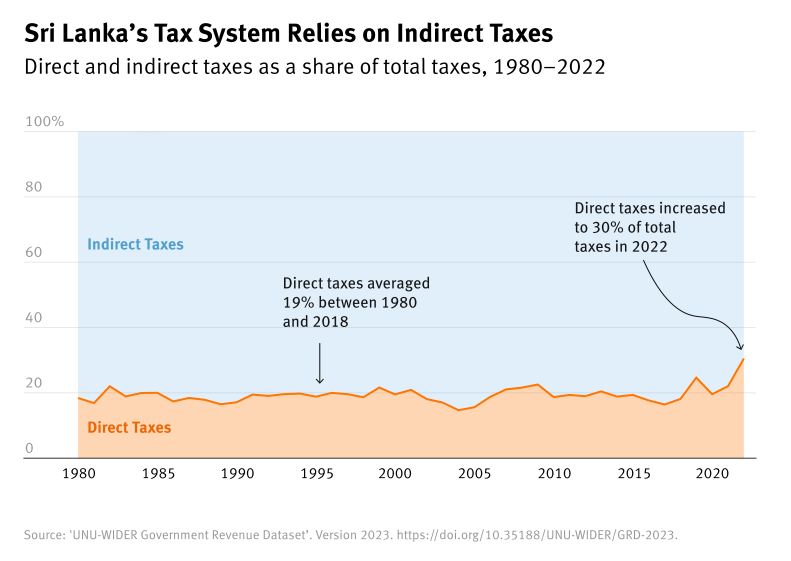
While the share of direct taxes rose to 30 percent prior to the crisis, the latest fiscal reforms are projected to bring the share down to roughly one-quarter of revenues, according to budget documents. This falls below the average for OECD countries; in 2019, taxes on income and profits (personal and corporate) in those countries averaged 32.8 percent.[172] Moreover, these reforms increase reliance on value-added taxes, raising the cost of goods and services at a time of soaring inflation and widespread reductions or loss in income.
Between 2021 and 2024, the VAT rate was incrementally raised from 8 to 18 percent and exemptions on basic items were removed. As a result, whereas VAT made up around 25 percent of revenues between 2010 and 2023, according to public budget documents, it is estimated to rise to more than one-third for 2024 through 2027.[173] A 2024 World Bank review of Sri Lanka’s fiscal reforms described its reforms of VAT as “particularly regressive,” estimating that it contributed to a poverty increase of 3.9 percentage points.[174]
Prior to the crisis, the proportion of taxes coming from indirect taxes were already high. Taxes from goods and services more broadly made up nearly 60 percent of total tax revenues, on average, between 2000 and 2020.[175] Some wealthy countries also collect relatively high rates of consumption taxes—the average share of tax revenues from VAT for OECD countries, for example, was 20 percent in 2022—but they raise significantly higher share of revenues from direct taxes and also mitigate the regressivity of consumption taxes with highly progressive spending policies.[176] However, as the next chapter makes clear, relative to GDP Sri Lanka’s social spending in areas such as education has steadily declined for decades and reached abysmal lows in recent years.
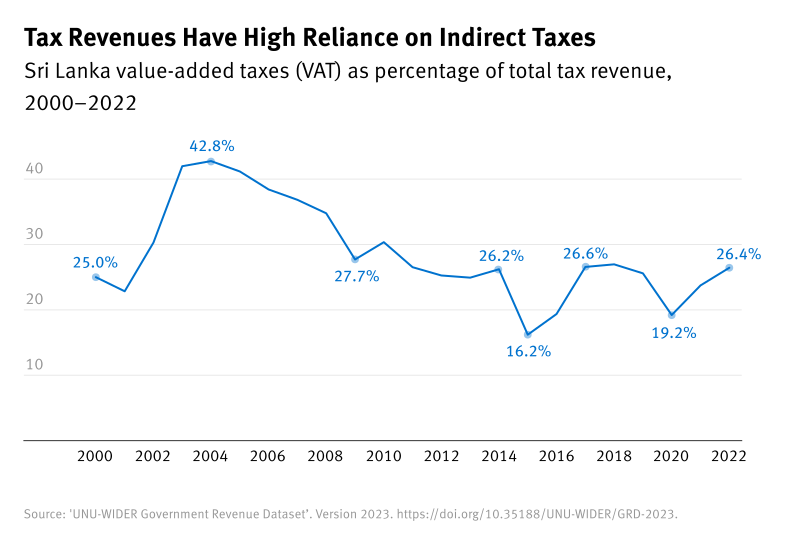
Sri Lanka also demonstrates another problem with high reliance on indirect taxes: when prices increase the government has frequently offered “relief” from consumption and other taxes to ease the cost of living, often following cuts to subsidies under IMF programs. This further erodes public revenues, forcing the government to make ever deeper cuts to social programs. For example, as a 2002 IMF staff report noted: “to offset some tax rate concessions granted to reduce the cost of living, the government has identified additional spending cuts.”[177]
V. Case Study: The Impact of Chronic Austerity on Education
Sri Lanka’s public primary and secondary schools serve over 4 million students. While realizing the right to education goes well beyond funding, adequate resources are indispensable to providing children with quality and inclusive education. This chapter examines public spending on education in recent decades and documents the experiences of educators, parents, and students in Sri Lanka’s public education system. It finds that chronically low spending undermines children’s right to education, and that broader deficiencies in Sri Lanka’s social services exacerbate poverty and inequalities and create their own barriers to education access. Although this report focuses on primary and secondary education, higher education has also been severely impacted by underfunding.
In recent decades, Sri Lanka’s education spending fell farther from international benchmarks and was one of the lowest among lower-middle-income countries. Local education officials, principals, teachers, parents, and students described to Human Rights Watch how such a barebone budget affects them, and research indicates that these experiences reflect nationwide trends.
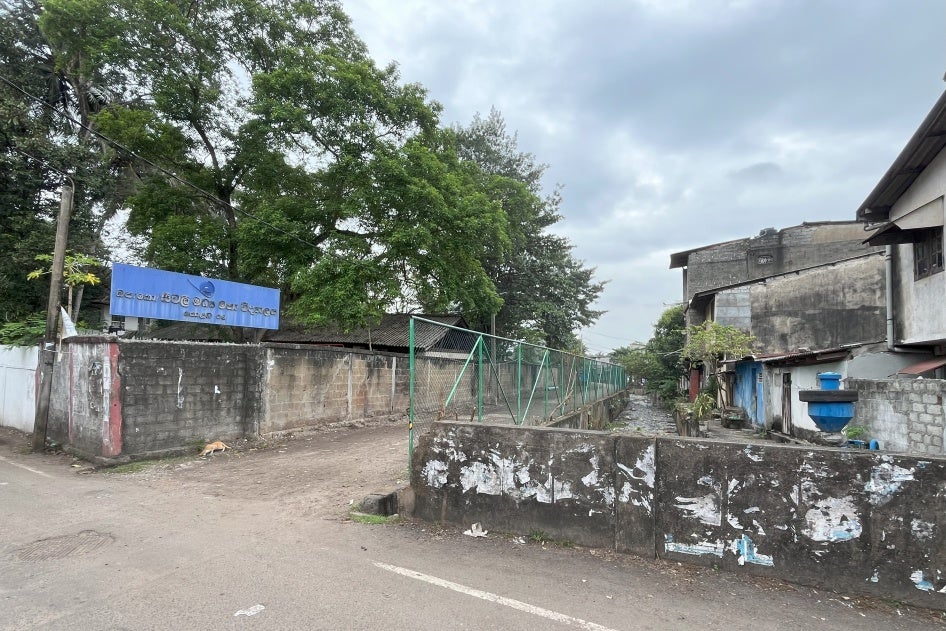
Principals described lacking funds for basic supplies or to keep buildings and furniture in good repair. This means not only that they had no choice but to charge fees, despite the financial hardship this poses for many families, but that wealthier students had much better resourced public schools. Parents, even those who were very poor, were desperate to give their children the best chance of doing well on exams, even though it meant paying often significant shares of their income to a booming “tuition industry,” for-profit after school system, which they said was necessary in part because teachers used it to complete the curriculum. Teachers said that their salaries were so low they had to take second jobs, often giving tuition classes. Indeed, research indicates that Sri Lankan students are failing qualifying exams at higher rates than the average for lower-middle-income countries and a widening gap between wealthier and poorer students.
This problem has become substantially worse in the wake of the country’s economic crisis, highlighting the inadequacy of the government resources mobilized to fund not only education, but the kind of broader social safety net that is, practically speaking, essential to education access for many lower-income families.
Education with a Price Tag: The View from a Tea Estate Susikala, the woman whose experience in the aftermath of Sri Lanka’s default in 2022 opens this report, lives with her husband, 14-year-old daughter, and 8-year-old son in Hatton, a hilly area in the center of Sri Lanka where the economy continues to be dominated by colonial-era tea plantations. When Human Rights Watch spoke with her, she was working as a domestic worker, earning LKR 300 (US$1) for 3 hours of work on weekdays, and LKR 1,000 (US$3.25) for a full day of work on weekends. Her husband works in agriculture, earning LKR 1,500 (US$5) per day. Since the economic crisis, she said, educating her children has become much harder. Sri Lankan law guarantees free universal primary and secondary education, in accordance with international human rights standards, but in practice public schools do not receive adequate funding and cover some of their costs by charging parents fees, such as for exam papers, and annual facility or “School Development Committee” fees. Ministry of Education rules, which generally prohibit fees, make an exception for “facility and service fees.”[178] Violations of the right to education, and in particular increasing education costs, also has a myriad of impacts on other rights. For example, Susikala said she spends roughly LKR 500 (US$1.65) per month for various school fees. “When teachers ask for books and papers I can't get those things. I struggle to give nutritious food to my children,” she said. Despite charging fees, many schools are still strapped for cash. Susikala is happy with her son’s primary school, where she says teachers “make every effort to do a good job,” but she is concerned about her daughter’s secondary school, which she described as “overcrowded.” “It's difficult to find a seat in class. Two children share a chair,” she told Human Rights Watch. “The library is one cupboard, and students can’t take books home and need to queue for books.” In addition to fees for public schools, Susikala, like the vast majority of Sri Lankan parents of schoolchildren, pays a hefty sum to send both of her children to “tuition classes,” a system of private classes after the end of the formal school day.[179] While 97 percent of students are enrolled in public schools, tuition classes are so widespread that they form what some have called a “shadow” education system, often referred to as “the tuition mafia.”[180] Susikala pays LKR 5,000 ($16.50) per month for both children, which she and her husband struggle to afford, particularly amidst the soaring cost of living. When electricity tariffs spiked, her power was shut off for failure to pay, and a friend pawned jewelry to help. But she said she was forced as a child to quit school due to her economic situation, and she does not want her children to share that fate. “If my child studies well, they won’t have the economic problems I’m facing,” she said. |
Human Rights Standards
Education is a human right enshrined in a range of international treaties, including the ICESCR and the Convention on the Rights of the Child (CRC), which is the most widely ratified human rights treaty in history. Sri Lanka is a party to both.[181] These instruments establish that all children have a right to free, compulsory, primary education, free from discrimination. States parties should also ensure that different forms of secondary education are available and accessible to every child, and make it free through the progressive introduction of free education.[182]
The right to education is guaranteed for all, and states have an obligation, under the ICESR and other treaties, to take steps, “to the maximum of [their] available resources” towards its realization, as with all economic, social and cultural rights. The CESCR, in its seminal 1990 General Comment 3 stated that states must “move as expeditiously and effectively as possible” towards the full realization of rights.[183]
In considering whether a budget aligns well with a state’s human rights obligations, other considerations may also come into play. For example, the “4S” framework developed by right to education advocates considers the following to determine whether a budget aligns with human rights: the size of the budget relative to GDP; the share of spending relative to overall government expenditures; the sensitivity of the budget to educational inequalities; and scrutiny over the budget to ensure money is appropriately allocated and spent.[184]
The right to education must be free from discrimination on any grounds. Governments are obliged to take positive steps to include children who are often excluded from education systems and who experience multiple and often intersecting forms of discrimination, including girls, people with disabilities, refugee and immigrant children, LGBT children, children living in rural areas, children living in poverty, and children affected by armed conflict.[185]
According to the UN Committee on the Rights of the Child, “Every child has the right to receive an education of good quality which in turn requires a focus on the quality of the learning environment, of teaching and learning processes and materials, and of learning outputs.”[186]
Under the Convention Against Discrimination in Education, which Sri Lanka has accepted but not formally ratified, states must “ensure that the standards of education are equivalent in all public educational institutions of the same level, and that the conditions relating to the quality of the education provided are also equivalent.”[187]
As part of the 2030 Agenda for Sustainable Development, governments made a commitment at the 2015 World Education Forum in Incheon, Republic of Korea to allocate 4 to 6 percent of gross domestic product (GDP) to education and/or to allocate at least 15 to 20 percent of public expenditures to education.[188] The 2021 Paris Declaration on Education Financing reaffirmed these international benchmarks.[189]
Indirect education costs constitute disincentives to the enjoyment of the right to education and may jeopardize its realization. The UN Committee on Economic, Social and Cultural Rights has said that therefore governments have to take measures to eliminate financial barriers to ensure education is “free of charge.”[190]
Education Spending
Human rights law requires that states take steps, to the maximum of their available resources, to progressively realize economic, social and cultural rights. Human rights experts and scholars have used a number of indicators when considering a government’s spending in light of its human rights obligations. These include: First, taking GDP as a proxy of “available revenues,” comparing spending as a share of GDP against established benchmarks, which, as noted, for education, is 4 to 6 percent of GDP and/or 15 to 20 percent of the budget. Second, considering the evolution of these metrics over time. Third, comparing spending as a percentage of GDP and as a percentage of government expenditures with peer countries. Finally, considering revenue-to-GDP, since states must mobilize resources to meet their obligations, inadequate revenues are likely to indicate inadequate spending.
Sri Lanka’s education spending both as a share of GDP and of the budget are below widely-adopted education benchmarks, even though Sri Lanka was among the 184 UNESCO member states that approved the Incheon Declaration that set the education spending benchmark and does not have any record of opposing it.[191] Moreover, that gap widened over time, and, as its economy grew, Sri Lanka has fallen farther behind peer countries. Finally, its low tax-to-GDP ratio generated inadequate revenues.
Spending Below the Benchmark
Sri Lanka is widely credited as being a global pioneer in providing free education, having enacted a law as early as 1945 establishing free nationwide education for all children between the ages of 5 and 16. While the reality is more complex—for example, Tamils of Indian descent, like Susikala, whose ancestors were brought by the British to work on tea plantations, were excluded from this policy until 1977—in the decades after independence, the government poured resources into building the country’s education infrastructure, particularly in rural areas.
Early data is spotty and there are at times inconsistencies between different sources, but available data indicate that from 1955 to 1970, around 15 percent of government expenditures—and 3 to 5 percent of GDP—went toward education.[192] This is in the same range as the current international benchmarks.[193] However, following the 1977 reorientation of economic policies toward “growth”, that had the immediate impact of deprioritizing education and other areas of social spending in the budget, Sri Lanka has consistently spent significantly below these benchmarks.
From 1975 to 1977, education made up between 10 to 11.4 percent of total government expenditures and between 3.1 and 3.6 percent of GDP.[194] In 1979, these numbers dropped to around 7 percent of government expenditures and 2.7 percent of GDP,[195] and averaged about 2.6 percent for the next decade.[196] Although these amounts fluctuated in the ensuing years, the consistent trend was to widen the gap below this benchmark. In 2022, Sri Lanka hit a nadir of 5 percent of government expenditures and 1.5 percent of GDP, among the lowest in the world.[197]
In other words, while Sri Lanka experienced periods of strong GDP growth since the 1970s, declining revenues as a percentage of GDP meant that this growth did not translate into commensurate gains in education spending.[198] As a result, the gap between its education spending and international benchmarks widened over time.
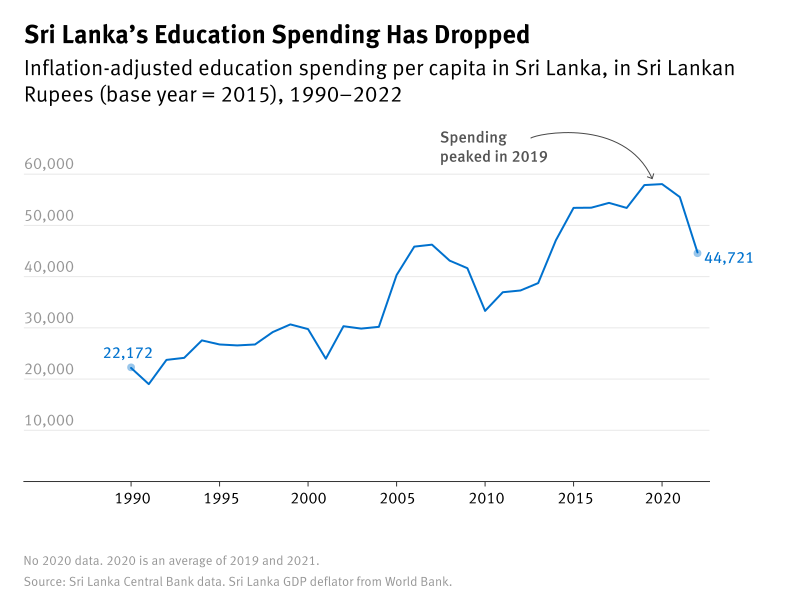
Below Average Spending Compared with Peer Countries
Sri Lanka’s education spending relative to GDP is lower than that of many peer countries. In 1997, Sri Lanka graduated from low- to lower-middle-income country, yet, according to UNESCO data, its spending lagged behind other countries in that income group, suggesting that education spending was falling behind its potential. A World Bank analysis published in 2017 noted that Sri Lanka’s education spending at 2 percent of GDP was the lowest among low- and middle-income countries, which averaged 4.5 percent of GDP and 17.3 percent as a share of government spending.[199] Indeed, in 2010, Sri Lanka’s education spending was 1.7 percent of GDP, whereas the average for lower-middle-income countries was 4.5 percent.[200] After 2010, countries such as Morocco, Kyrgyzstan, Senegal, and Tajikistan frequently spent above 5 percent, often two to three times more than Sri Lanka.[201]
The same trend is evident in education spending as a percentage of the budget. From 1998 to 2000, for instance, where there are data available, Sri Lanka was spending 11.7 percent of its budget on education, while Benin peaked at 18.5 percent, Côte d’Ivoire at 18.8 percent, and Morocco and Tunisia over 25 percent.[202] These trends worsened. For example, in 2009, Sri Lanka’s education spending as a share of the budget was the third lowest among lower-middle-income countries, and hovers close to that ranking around that time.[203] The average for lower-middle income countries, which includes crises countries and regions, was 13.3 percent in 2000, and increased to between 17.4 percent in 2006 and 15.3 percent in 2012.[204]
A similar gap appears when comparing Sri Lanka’s education spending in real terms. Taken on their own, the increase in per capita education spending, which roughly doubled between 1990 and 2022, may appear substantial. But when compared with countries with a similar size economy, the gap between its spending and potential become clear. For instance, in 2010, a year where data is available, excluding foreign aid, Sri Lanka was funding 516 PPP USD per primary student, whereas Morocco was spending double at 1,278; Namibia more than three times more at 1,711; and Bolivia reached 2,121.[205] And, by way of comparison, the gap with high income countries remained enormous: the UK, a former colonial power, allocated 11,192 PPP USD per primary student in 2010, more than 21 times that of Sri Lanka.
Low Revenues Hamper Education Spending
Government spending is inextricably linked to government revenues. As a result, the extent to which a government is mobilizing revenues can be an important indicator in assessing whether it is taking steps to the maximum of its available resources toward the progressive realization of rights, including the right to education. The analysis of Sri Lanka’s tax policies in the previous chapter demonstrates that had Sri Lanka’s tax revenues as a share of GDP been on par with the average for other countries, it could have brought significantly more resources to bear to fund rights such as education.
Government revenues also heavily influence the overall size of the budget, which is an important factor to weigh when looking at the adequacy of government spending on education as a share of total spending.
Inadequate revenues also led the government to finance more of its budget through debt, including, for education, relying heavily on the World Bank and other development banks for education-sector loans, although the impact of their involvement in education is beyond the scope of this report.[206]
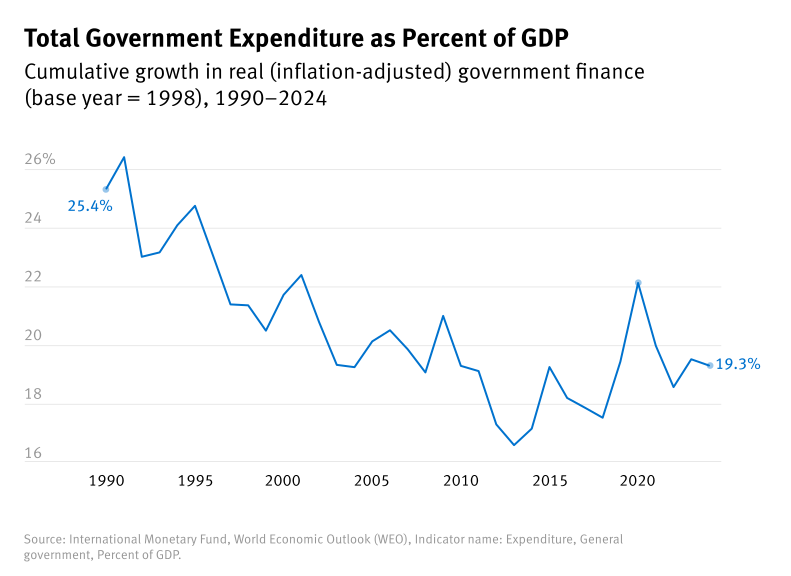
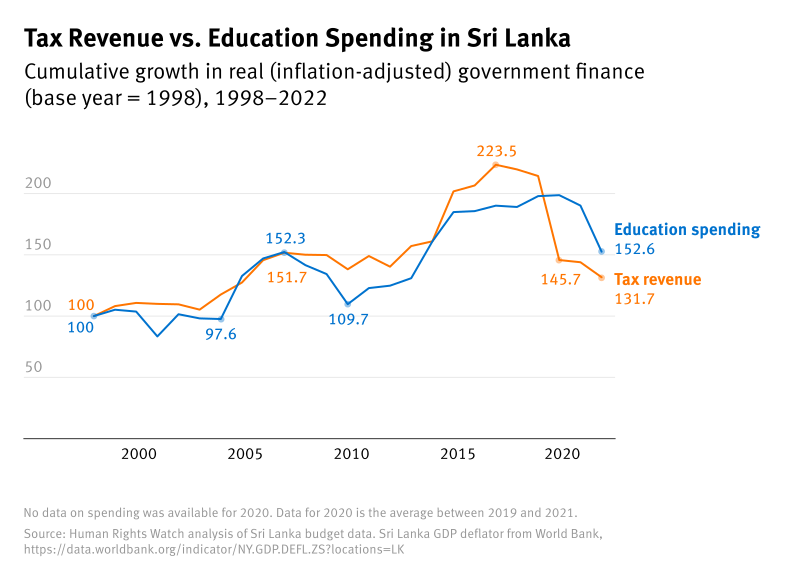
The Civil War and Its Aftermath
In 1983 the civil war between the separatist Tamil Tigers of Tamil Eelam and government forces began, with most fighting in the north and east. Also during the 1980s, thousands of lives were lost in the south, to a leftist insurgency by the Janatha Vimukthi Peramuna. While it might be expected that the economic impacts of the war, including increased military spending, could drive down education spending, it in fact rose slightly in the 1990s to around 2.9 percent of GDP.
While this chapter focuses on the impact of inadequate spending on the right to education, it is important to note that the dislocation, destruction of infrastructure, and psychological trauma from the war had devastating impacts on children’s education, particularly in the northeast.[207] The slight uptick in spending may reflect the substantial development assistance Sri Lanka received at the time,[208] as well as the start of the World Bank involvement in education in Sri Lanka that continues today.[209]
The end of the war in 2009 brought with it the hope of a reorientation of the budget towards increased social spending, including on education, yet education spending only further declined as a percentage of GDP.[210] In fact, a 2017 World Bank analysis found that between 2007 and 2012, public investment in education declined in real terms.[211] Human Rights Watch analysis of Sri Lanka Central Bank data shows that decline was significant, at 6.5 percent. During this period, Sri Lanka’s growth rate averaged 6.9 percent, compared to 5.7 for lower-middle-income countries.
In 2012, the Federation of University Teachers’ Association went on a 100-day strike to demand education spending be increased to 6 percent of GDP. The percentage only continued to decline in subsequent years.[212] From 2010 to 2015, Sri Lanka spent between 1.5 and 2 percent of its GDP on education. The election of a new president, Maithripala Sirisena of the United National Party, who narrowly defeated Mahinda Rajapaksa of the Sri Lanka Freedom Party in 2015, came into office with the promise of a sharp increase in education spending, although actual spending fell far below budget commitments.[213]
In 2019, Gotabaya Rajapaksa (brother of Mahinda) was elected president, implementing deep tax cuts while urging ministries and agencies “to go slow on public spending to manage fiscal imbalance.”[214] Unsurprisingly, education spending declined further. A joint UNICEF-Verité reports finds that “the 2021 budget estimate for the education sector decreased by 5% in real terms compared to the 2019 actual education sector expenditure.”[215] In 2022, education spending was just 1.5 percent of GDP, the third lowest in the world, behind only Laos and Haiti.[216] As a share of government spending, it made up a mere 5 percent.
Promises to increase education spending were a key issue in the 2024 presidential election campaign, with voters handing the presidency to Anura Dissanayake of the NPP, a party whose manifesto commits to raise education spending to 6 percent of GDP. The prime minister, Harini Amarasuriya, is simultaneously serving as education minister. She is a veteran education activist, including in the fight for 6 percent. Yet the 2025 budget increased the budget of the Ministry of Education, Higher Education, and Vocational Training by only 3.5 percent compared to 2024. The budget projected additional increases of around 10 percent for each of the next two years, which might seem large but, given the very low baseline, are nowhere near what would be needed to bring spending close to a 6 percent of GDP target.[217] In 2025, the estimated budget for the Education Ministry was LKR 272.9 billion ($900 million) out of a total budget of LKR 8.8 trillion ($29.2 billion).[218] There are not yet official figures projecting total education spending as a percentage of GDP for 2025.
Impact on Schooling and the Right to Education
Funding inadequacies have negative impacts on the right to education in Sri Lanka, in various ways, of which this report examines three. First, chronic underfunding of education is leading to higher costs for families, and for many making education effectively not “free.” Schools regularly charge “school development” and other fees, which are permitted under government regulations, and which interviewees said was necessary to cover costs like exam paper and building maintenance. In recent decades, “tuition classes”—for-profit classes that students take after the end of the official school day—have proliferated to such a degree that experts now describe them as a “shadow education” system. Interviewees said that their rise is at least in part driven by resource-related issues in the public school system, and that their cost posed serious financial hardship. Second, public schools’ reliance on fees and alumni support has led to vast and widening disparities in school resources based on the socio-economic status of students, the impacts of which are compounded by the rise of tuition classes. And third, the impact of spending on quality of education are impacting learning outcomes and attendance rates.
While adequate funding plays a crucial role in ensuring schools have the resources they need to provide a quality education, the enjoyment of the right to education depends on a multitude of additional factors, including effective pedagogical approaches, accommodations for students with disabilities and diverse learning styles, relevant and culturally appropriate curriculum and teaching methods, the inclusion of marginalized groups, and transparency and accountability mechanisms. Many interviewees expressed profound reservations about the pedagogical approach in Sri Lankan public schools, particularly an extreme focus on testing.[219] Although this goes beyond resources, and therefore the scope of the report, there is also a resource element as it requires funding to develop and train teachers in new pedagogical approaches, and more experiential forms of learning can also be more resource-demanding.
Finally, rising costs for essentials such as food and transportation are making it harder for parents to afford sending their kids to school, and the broader inadequacy of social spending, reflected in underfunding of targeted programs such as school meals and subsidized transportation, have made the situation worse.
“Free in Name Only”: School Fees and the Rise of the Tuition System
School Fees and Alumni Support
Kamala teaches design and construction in a secondary school in Kokkadicholal, near Batticaloa in Eastern Province. She is supposed to teach mechanics, construction, and electricity, but she says she is only able to teach construction because her lab lacks even basic materials like electrical wires.[220] Meanwhile, Geethma, a teacher at a boys primary school in Colombo, says her school has smart boards and labs for biology, chemistry, and physics. “The government isn’t providing this,” Geethma clarifies.[221] The money, rather, comes from the “old boys club,” meaning alumni donations, and fees paid by parents. A second teacher at the school, Kushmi, adds: “it’s free in name only.”[222]
In schools examined by Human Rights Watch, interviewees said that that public funding for schools is so low that many rely on a combination of fees and alumni support for basic things like exam paper, school cleaning, even electricity. While the Ministry of Education rules generally prohibit fees, they make an exception for “facilities and service charges.”[223] Indeed, “teachers' salaries, text books, and uniforms account for nearly 95 percent of total recurrent expenditure in the Sri Lankan school system,” according to a report compiled by a committee appointed by the Minister of Education to draft proposals for a new Education Act.[224] The report also noted schools generate “significant budgets” through school development societies.[225]
A principal at a school on a tea estate in Hatton, Senthilan, echoing others with whom Human Rights Watch spoke, said that, besides teachers and facilities, the government provides little else for costs beyond textbooks and a meal for primary students and that he relies on development and exam fees to cover the cost of office supplies, cleaning, exam papers, the transportation of textbooks, and Internet connection.[226] While children do not appear to be excluded for failure to pay, the missing funds leave schools unable to cover basic expenses, generating considerable pressure on parents to pay them. This creates both significant financial hardship for parents and vastly unequal resources between schools which leaves many schools badly under resourced, as discussed in the next subsection.
There is a considerable range in the fee amounts that parents told Human Rights Watch schools charged. For example, the development fee at Geethma’s school is LKR 11,ooo per ($36) month, according to a parent whose child attends.[227] An 8th grade student in Batticaloa said her school charges LKR 2,500 ($8) annually in development fees, as well as a LKR 300 exam fee, and additional fees on sports day and for utilities.[228] She also said she pays LKR 600 ($2) annually toward water and electricity at the school. “They shouldn't charge us for that,” she told Human Rights Watch.[229] A parent in Colombo said that her child’s school development fee was raised this year to LKR 2,500 ($8) per month.[230] She doesn’t work and her husband is a welder, earning LKR 6,000 per ($20) month. “It is a difficulty, but because children need education we go through it,” she said.
When students are unable to pay these fees, it exacerbates schools’ resource shortage. For example, Senthilan said that only around 60 percent of students paid the development fee at his school, and that when parents do not pay it leaves his school unable to cover basic expenses. Several parents and teachers said that they feel under significant pressure to pay the fees even when they cannot afford them. Two students in Batticaloa told Human Rights Watch that they know children who stay home “out of shame” when their parents cannot afford to pay fees.[231]
Several teachers, principals, and education officials said that alumni support also provides critical funding, advantaging schools with a wealthier student body. In some schools, parents are also expected to donate their time. A primary schoolteacher said that in her school “parents are very much involved in providing what’s lacking,” including light bulbs, painting the building, and repairing the building.[232] In some schools Human Rights Watch visited, particularly on tea plantations, nongovernmental organizations such as World Vision filled some of the gaps.
But this still leaves many schools without the resources they require to function effectively. For example, Darshan Ambalavanar, the director of an educational non-profit, noted that some of his students when they were in public school did not have teachers for several subjects. “Kids will say things like they haven't had a math teacher for a five-year period,” he said. “Certainly, they're very unlikely to have an English teacher.”[233] He stressed that these problems predate the 2022 economic crisis: “The economic crisis has exacerbated a problem that was already there, the scale got bigger but there is an underlying chronic underfunding due to a long period of underinvestment by the state.”
Students take a highly competitive exam in fifth grade to qualify for in-demand schools—often referred to as “popular” schools—and an accompanying bursary. Parents, children, teachers, principals, and education officials all described how the vast disparity in resources puts enormous pressure on students to do well in the scholarship exam. The general secretary of the Ceylon Teachers' Union offered a dramatic illustration of contrasting resources: “There are swimming pools in ‘popular’ schools that use drinking water, while some schools don’t even have water to drink. That’s why parents are trying so hard to get into the popular schools; because other schools are so under-resourced.”
The Rise of the Tuition System
One of the most consistent complaints raised by parents, students, teachers, and education officials about Sri Lanka’s education system is the high cost—and sense of necessity—of tuition classes. While 97 percent of students attend public school, many also attend private classes after the end of the formal school day and during school holidays.[234] There is little recent data on how many students attend such classes, but Dr. Tara de Mel, the former secretary to the education minister, described it as “almost like a mainstream part of the education system.” As noted, tuition classes are sometimes referred to as a “shadow” education system, and those involved in running it as “the tuition mafia.”[235]
In 2024, the finance minister said that parents annually spend LKR 122 billion ($402 million) on tuition fees for their children, which is equivalent to about 40 percent of total public education spending.[236] A survey conducted by the Institute for Policy Studies (IPS) found that between 1995 and 2016 the share of households with school age children that spent money on private tuition increased from 41 to 65 percent in urban areas; from 19 to 62 percent in rural areas; and from 15 to 36 percent among families living on tea estates, the poorest segment of Sri Lanka’s population.[237] An IPS survey conducted during the Covid-19 pandemic found that families with income levels below LKR 30,000 ($92) spent between LKR 3-7,000 ($9-22) on tuition classes, while those earning above LKR 200,000 ($615) spent LKR 18-20,000 ($55-60).[238]
While the factors that are driving the rapid rise in tuition schools are complex—and it is a phenomenon occurring across many countries—interviews suggest that resource-related issues are at least partially responsible, meaning low public education spending is effectively transferring education costs to even very poor households. People interviewed by Human Rights Watch gave several reasons for the persistence and prevalence of tuition classes, even among families struggling to pay for adequate food or electricity. One is low teacher pay. Teachers are paid based on their education level, ranging from LKR 53,060 ($163) monthly for entry-level teachers with only a high school education to LKR 66,880 ($205) for teachers with subject-matter graduate degrees and specialized teacher training.[239] Nearly half of teachers have both graduate degrees and training.[240]
A 2017 World Bank analysis of the education sector in Sri Lanka notes that “Public school teachers seem to be paid less in Sri Lanka than in other countries in South and Southeast Asia. Average pay is equal to national per capita income, while in other South Asian countries teacher salaries are two to three times national per capita income.” Echoing this, the head of a teacher’s union told Human Rights Watch that teachers “need the extra income so they are doing tuition [classes] for little money.”[241] Geethma, who also gives tuition classes, agreed: The salaries are “very poor,” she said, “that’s why teachers are doing tuition.”[242]
Teachers told Human Rights Watch that low pay is both pushing people away from the profession and affecting their ability to be present for students because they are forced to take on second jobs, particularly since the economic crisis.
Indeed, teacher attrition rates were rising even before the crisis, particularly for male teachers, whose attrition rate was 16 percent for male primary school teachers in 2021, compared to around 4 percent for other lower-middle income countries that year.[243] “Becoming a teacher in a school like ours is a last resort,” one teacher told Human Rights Watch.[244] The head of a teachers’ union identified teacher salaries as their “main problem,” saying that previous promises for increases have not materialized.[245]
Many teachers depend on these classes to supplement their salaries, and some expressed concern that it affected their public school teaching, both by increasing their work burden and by creating perverse incentives. For example, one principal noted that “The teachers are not working efficiently because ... they have to do other work, like tuition or farming, because their salary is not enough.”[246] Others noted that some teachers provide tuition classes for their own students after school hours, and that parents feel pressured to pay these fees to ensure their children learn the complete curriculum or get good grades. While some districts have banned the practice of teachers giving paid classes to their own students, an effort to do so in the district of the Colombo was quickly reversed.[247]
A second reason people cited was related to the quality of public education classes. Concerns about quality led them to believe students need tuition classes to pass their exams. A parent in Colombo who said she pays LKR 5,600 ($17) monthly in tuition for her 11-year old daughter told Human Rights Watch: “we wouldn’t send them for tuition if the schools have proper education, and that would save a lot.”[248] Interviewees said that students received practice exams that they cannot access through school.[249] Some also said that there is not enough time to finish the curriculum during the school day, and teachers use these classes as extra time.[250]
A recent study analyzing the contribution of public schools and tuition classes to academic performance supported that impression. It concluded that the “allocation of instructional time in public schools is far behind the minimum teaching time needs to be allocated for each subject at each level. All these issues verify that private tutoring significantly contribute [to] the academic performance of students in public schools.”[251] Dr. Isuru Senarath, who has been studying the tuition industry in Sri Lanka for over a decade and conducted hundreds of interviews on the subject, echoed these findings: “the public school system is starting to depend on the tuition classes,” he told Human Rights Watch.[252]
While to some extent these issues are closely tied to pedagogical concerns, they are also linked to resources in a number of ways. A zonal education official said that the intense focus on test-taking was itself a result of inadequate spending, as it demands resources to develop curricula, train teachers, and equip classrooms for a more “hands on” or holistic approach to learning.[253] Tara De Mel described the “rote learning system, with predictable exams and predictable answers” as a “field day” for tuition schools, but said that the needed “overhaul of pedagogy” required the government “to pump in much more than they are spending on education.”[254]
Some also said that the vast disparity in school resources intensifies competition for better exam scores to be admitted to better resourced schools.[255] Moreover, some noted that the low teacher salaries strengthened the political clout of the tuition industry or created a perverse incentive that made it harder to improve public education in a way that would reduce the perceived need for tuition schools.[256]
Although in many cases student-teacher ratios are higher in tuition classes than in public schools, interviewees said that students received practice exams that they cannot access through school.
Human Rights Watch interviewed several parents who described how the cost of tuition classes places enormous strain on them and contributes to the deep inequality within Sri Lankan education. A woman in Batticaloa with two daughters, aged 7 and 14, told Human Rights Watch that she makes hats out of palmera leaves to supplement her husband’s daily wages in construction:
Every month, I have to give LKR 1,400 ($4.60) to the young child and LKR 2000 ($6.60) to the older child. The school study is not enough for studying, because of that I give them tuition classes. The teachers also teach in the government school.
The woman living in Colombo who said she pays LKR 5,600 ($17) a month for her son’s tuition classes, echoed this sentiment:
The education they get in school is not enough, so we send the children for tuition and the fees are very high. If their education was enough we wouldn’t send them to tuition, but we have no choice.... Almost everyone sends their children for tuition. We wouldn’t send them for tuition if the schools have proper education, and that would save a lot.
Another woman living in Batticaloa with two sons, age 6 and 14, also said she makes hats to supplement her husband’s daily wage of LKR 2,000 ($6):
Sometimes I make hats to sell, from palmera leaves. I have trouble sending my kids to school every day. My husband sometimes doesn’t have work.… He gives me LKR 1,200 ($4). It’s not enough to feed the kids. They go to tuition classes, I pay LKR 800 ($2.50) per week for my older child and LKR 400 ($1.20) for the younger. I sell hats for LKR 150 ($0.50), sometimes I sell 3 hats in a day – that’s LKR 450 ($1.50). It pays for their tuition classes.”
Another woman who lives with her daughter and two grandchildren said:
Both kids are going to school – grade 3 and 10. Every day, we need LKR 300 for transportation and food. My daughter earns LKR 800-1,200 ($3-4) per day. We spend the money from my daughter’s earnings but it’s not enough to cover all our expenses. For example, we have to send them to tuition classes – 3 times per week LKR 200 ($0.65) for one, both together is LKR 600 ($2) per week.
Parents said they were willing to do whatever they can, “even steal,” one mother said, to pay for these classes because they believed it was indispensable to their children’s education. A mother in Batticaloa told Human Rights Watch: “Education is important for their future because we did not study properly. If the children complete their education, it protects their future.... I hope that our children never struggle like we have.”
Socio-Economic Disparities in School Resources
The high reliance on fees and alumni support have led to vast and widening disparities in resources based on students’ socio-economic background, and research indicates that these disparities are reflected in learning outcomes. A 2017 World Bank report assessing the quality of Sri Lanka’s education found significant disparities in outcome across the country based on resources. The World Bank notes that “the gap has widened between the quality of education available in more affluent areas and that in many remote locations, especially the plantations. This results in severe inequality in secondary education outcomes.”[257] For example, net enrollment rates for senior secondary “range from 64 percent for the poorest [areas] to 78 percent for the richest.” The same study found that gaps in allocation of funding between urban and rural areas could make a major contribution: “About 95 percent of schools in Sri Lanka are in the provinces and are attended mostly by poor rural children, but public investment in provincial education is only about 65 percent of total general education spending. The 35 percent spent by the central government goes mainly to national schools, which only account for about 5 percent of schools and are typically attended by affluent urban children.”[258]
A study by the Institute of Policy Studies (IPS) found that resources correlate with school outcomes, and particularly with quality of teachers, which is better at more privileged schools.[259] It used a five-tier designation of a school’s relative privilege (from “highly underprivileged to highly privileged”) that is based on factors that include access resources such as electricity and water, presence of certain equipment such as computers, and quality of facilities. It found a large disparity of resources between national and provincial schools and between provinces. Among national schools, 58 percent are “highly privileged,” as are over half in the Southern and Western Provinces, which are among the wealthiest. In contrast, less than a third are “highly privileged” in the Northern and Eastern provinces, the two poorest. Highly privileged schools have a higher share of teachers with experience in their field and students have significantly better outcomes.
Most schools in Sri Lanka fall under the purview of provincial councils, with funding routed from the Treasury through the Finance Commission to the country’s nine administrative provinces.[260] However, some 396 schools—4 percent of the total public schools—are “national schools,” funded directly through the central government.[261] There is no publicly available data on education spending on the provincial level, but, according to a joint report by UNICEF and Verité on Sri Lanka’s education system, national schools “are typically better resourced than provincial schools.”[262] They also have better education outcomes and are clustered in Colombo and other major urban centers.[263] A senior staffer in a Zonal Education Office in the Eastern province echoed this finding: “Free education means every child should receive it, but it's not like that. In national schools, they have everything, but the provincial schools can't get it.”[264]
Because provincial-level spending is not public, it is difficult to assess disparities between provinces. The UNICEF-Verité report used right-to-information laws to obtain data for 2015 to 2018.[265] It found that per capita public funding was higher in poorer provinces reflecting “government’s effort to promote balanced regional development.” That public schools in wealthier provinces are significantly more resourced than those in poorer districts despite these additional funds suggests the impact of school fees and alumni support in driving these inequalities and the overall inadequacy of public funding.
Quality Education: Learning Outcomes, Attendance, and Infrastructure
Learning Outcomes
There is a robust body of research linking education spending to outcomes,[266] but it is one of many factors that influence student learning. These include accountability and quality of spending, pedagogical and other education-related policies, and factors outside of school such as the socio-economic background of students.[267]
Moreover, learning outcomes do not capture the full picture of whether a state is fulfilling the right to education. Sri Lanka has long done well on the most basic indicators that are tracked for all countries, such as enrollment and literacy rates. It does not participate in international assessments that could provide a more sophisticated benchmark for learning outcomes, such as Programme for International Student Assessment (PISA), Trends in International Mathematics and Science Study (TIMSS), and Progress in International Literacy Study (PIRLS).
Available research raises significant concerns. A 2017 World Bank report assessing the quality of Sri Lanka’s education noted that “Low public spending undermines the effectiveness of Sri Lanka’s education system.”[268] It found pass rates for the General Certificate of Education examinations (GCE O-levels), an exam that students take at the end of 11th Grade, were below the average of lower-middle-income countries average; in 2013, the year included in the report, it was 63 percent compared with 71 percent.[269] A study by the Institute of Policy Studies (IPS) notes that in 2015 nearly half of students either failed or only conditionally passed the O-Levels due to failing mathematics.[270]
The World Bank found that only about half of students who take the O-levels go on to higher education or vocational training. On the tertiary education level, “Sri Lanka has clearly fallen behind over time”:
In 1960, the proportion of Sri Lankans aged 15 or over with secondary education was comparable to that of Malaysia and higher than that of the Republic of Korea, and the proportion of the population with tertiary education was similar to that in those countries. Fifty years later, in 2010, Sri Lanka’s tertiary education completion rate was substantially lower than that of Malaysia and Korea.
The World Bank found in 2017 that insufficient learning outcomes were linked to funding. According to them, “Sri Lanka spends much less per pupil, and its learning outcomes trail those of middle- and high-income countries.”[271]
Attendance
Several local education officials, principals, and teachers told Human Rights Watch that official statistics often do not reflect the challenges they are observing in the classroom, particularly with respect to school attendance. Some said students remain officially enrolled, but do not regularly attend school. According to administrative data for 2023, 6.5 percent of lower secondary-aged children and 21.5 percent of upper secondary-aged children were out of school.[272] These figures are only slightly higher than before the crisis, when 5.2 percent of lower secondary and 18.9 percent of upper secondary students were out of school. At the same time, only around half of children in Sri Lanka completed secondary school in 2022, the only year for which there is data.[273] The huge gap between these numbers appear to reinforce anecdotal observations that official attendance rates mask a serious problem.
Interviewees noted that the increased cost of living, covered in the following chapter, was exacerbating an unofficial decline in attendance. For example, Asmita said the economic strain has had “an impact on attendance. If there are three children in a family they don’t all come on the same day, because that costs the family more.”[274] She added: “Children are reluctant to come to school now. They remain enrolled just for the name [i.e., in name only].”
It is difficult to assess the extent of the problem. A zonal official who focuses on school attendance said that children, especially boys, who drop out in grades 9, 10, 11 are looking for work. Another zonal official said that dropouts in grades 10 and 11 are the “main problem,” but was unable to provide precise numbers. A principal in his zone, at a school on a tea estate, showed Human Rights Watch the enrollment statistics for his school where, beginning in Grade 8, girls begin to significantly outnumber boys, and in some grades by double or more. The enrollment for both boys and girls halves from Grade 10 (66 students) to Grade 13 (35 students). “Dropouts have increased,” he said. “There are approximately 12 to 20 a year. After grade 9 they drop out to work. Previously the dropout rate would be two to four students. Mostly boys who go to work.”
The zonal official said that “for girls, the parents are trying to get early marriage.” Kamala, who teaches Grade 9, said that three of her 31 students dropped out: “all girls, to get married.” She cited three factors driving school drop-out rates: the economic crisis, families choosing between which children should go to school, and early marriage. The acting head of a rural school near Batticaloa said that in the 2023/2024 school year, 33 students dropped out from a total of 290.[275]
Infrastructure Problems
The deterioration of school buildings and other infrastructure-related issues is another consequence of chronic underfunding of education that impacts quality of education. Some parts of Sri Lanka experience heavy rains during monsoon season, but principals and local zonal officials said there was no budget to fix any resulting damage and that some schools have leaking roofs. A zonal official in Batticaloa said that in December 2024, he visited students taking the A-level exams. “When I visited the exam centers, I saw that some schools were flooded, some were in the dark. Some used torchlight. In some the roof was leaking.” As a result of the flooding, the exam had to be postponed by a week, he said.[276]
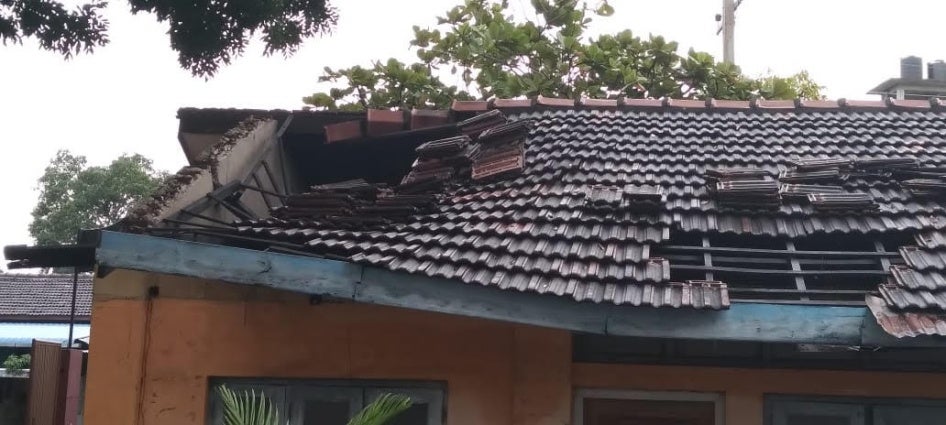
A zonal education official in a different zone showed Human Rights Watch a photo of a roof that had been badly damaged by rain two days earlier, as an example of the type of damage they struggle to repair. He also noted there has not been any new school construction in the past eight years, leading to overcrowding and inadequate bathroom facilities, as well as a lack of furniture. “We have a shortage of chairs. For the last 10 years we didn't get any new supply. No furniture has come to us.”[277] He told Human Rights Watch that students use makeshift plywood benches or damaged chairs and that older children sometimes use chairs made for small children.
A zonal education officer familiar with estate schools told Human Rights Watch that many schools are struggling with infrastructure because “there is no allocation for maintenance.”[278] Whereas flooding can make the wet season difficult for some schools, Senthilan, the principal in Hatton, said that for his school the problem was dry season.[279] His school, like many of the schools on tea estates, was built by the Swedish government’s aid agency around 25 years ago, but there has never been proper water connection. As a result, they rely on rainwater, or a temporary solution they implemented with the support of parents and former students to draw water from a pond on the estate. But this only works when there is adequate rainfall. As a result, “in the dry season children don't come to school, teachers are struggling [because of a lack of water],” he said. UNESCO data show that in 2018, 86 percent of Sri Lankan primary schools had access to basic drinking water, whereas many lower-middle-income countries, like Cabo Verde and Tunisia, had achieved nearly 100 percent.
Paltry Funding for Pre-Primary Schools Under Sri Lankan law, free education begins at five years old. As a result, preschools for children younger than five are privately run, although the government provides teachers with a small stipend of LKR 6,000 (around US$20) per month as a salary. In some places, local governments provide some additional funding. For example, the Colombo municipal government pays LKR 20,000 ($67) or 30,000 ($100) more, depending on the type of school, according to three pre-school teachers, including one who is the school director. There is no additional public funding for facilities or materials, so preschools charge parents fees. The amount of fees vary widely, as does the quality of the education, which is unregulated. Only 39 percent of preschool teachers have received at least one year of training, according to UNICEF.[280] A staffer in a zonal education officer told Human Rights Watch there is a provincial preschool system syllabus, but no budgetary allocation. “If you can’t afford to pay there is no space in the system,” he said. “Only the families that have money can send their children to preschool.”[281] Darshan Ambalavanar noted that “the lack of state funded preschool sets up inequalities that will run through the system, especially in rural areas.”[282] The regional director of Alliance Development Trust, a non-profit organization that supports education, said that around 70 percent of the children in the primary school in a rural area near Batticaloa where he runs an enrichment program had never been to preschool, citing it as a reason they face learning challenges. He noted that he pays LKR 14,000 ($46) monthly to send his son to pre-school from 8:30 to 11:30.[283] Human Rights Watch spoke to a preschool teacher in a poor neighborhood in Colombo who said that her school charges LKR 1,000 ($3.30) monthly, but many parents are unable to pay. In her class of 20, she said only 10 to 15 attend, and in January 2025 only three paid in full:
She added that the cost of materials also causes hardship for children:
|
Cost of Living as a Barrier to Education
Families that cannot meet the cost of housing, healthcare, or other rights are often faced with a difficult choice about whether to continue bearing the expense of sending their children to school. As discussed above, the economic crisis precipitated sharp increases in the cost of living, in some cases alongside reduced family income. Interviewees in all locations Human Rights Watch visited consistently said such costs had undermined many children’s access to education. Interviewees also consistently noted that these harms compounded the difficulties stemming from the pandemic. Schools were closed for a total of 17 months, “one of the longest periods in the world,” according to an article assessing Sri Lanka’s Covid response.[286] Tara de Mel also said online learning was not possible for many students because devices and internet access were not widely available, adding that there is “a learning crisis coupled with a nutrition crisis coupled with a social and emotional crisis, and none of those crises have left us yet.”
The main costs that people described as barriers to education, beyond school fees, is the cost of food and of stationary, uniforms, food, and transportation. “Our salary doesn’t increase but everything else went up,” one mother of two in Colombo said. Another told Human Rights Watch: “I have difficulty sending [my daughter] to school every day because I don’t earn enough money…. I need to choose between food and my daughter’s education.”[287] Several teachers said they can see the strain on their students. Asmita, a teacher in Colombo said:
It can be seen in their uniforms, their bags, what’s in their lunch box. It’s all worn out. They can’t afford to buy new ones [uniforms].
The increased cost of food since the economic crisis described in Chapter III, and related increase in malnutrition rates, is a serious problem that many interviewees said also harms children’s ability to learn. A teacher at a school for the children of public employees in Colombo said:
It has come to the point where they steal food. Before the crisis they would go to the canteen and buy food. There are anger issues coming out of hunger. If they see someone else eating good food they become jealous.[288]

Primary schools provide students with one meal per day. Previously, only select schools benefitted from this program, but the government expanded it in March 2024.[289] Although this government-provided meal is described as “lunch,” many schools said they serve it in the morning to ensure children are not learning on an empty stomach. Principals and teachers described the lengths they go to feed hungry students in secondary school, as well as primary school students whose families are unable to provide a second meal at lunch time. A school principal in Hatton explained that the school had been able to help a family with four daughters—the mother was ill and the father worked in Colombo as a daily wage worker—by providing one meal a day for the kids , but noted: “There are many such families here [and] we can't give for all of them…. Sometimes teachers identify who doesn't have food and bring extra.”[290] He added: “Some children will never tell [that they haven’t eaten]. But in the morning assembly they feel faint so we realize.”
Teachers spoke of children having difficulty concentrating or appearing lethargic, while parents spoke of the difficulties they face: “Sometimes it’s hard to provide food to send them to school, it’s not possible to keep money in our hands every day,” one mother said.[291]
In addition to the cost of food, Many parents identified the cost of stationary and school books, as well as uniforms, as an expense that posed a significant hurdle to their children’s education.[292] As with virtually all goods in Sri Lanka, the cost of paper and other supplies drastically increased following the economic crisis.[293] A 2016 household survey found that, on average, households spent LKR 290 monthly on “exercise books and stationaries” for school children, but interviewees and media reports said prices more than doubled in the wake of the crisis.[294] At the same time, in early 2024, the government removed the VAT exemption from school stationary, which further increased prices by 18 percent, highlighting how regressive taxes can exacerbate the financial obstacles to the realization of rights.[295]
The vice principal of a school on a tea estate remarked that “many students are doing all of their lessons in a single exercise book.”[296] Several students with whom Human Rights Watch spoke raised a lack of exercise books as a serious issue for them. “Day by day the price of books is increasing,” said one. Another student added: “The main problem is exercise books.” A parent in Colombo complained that costs had more than doubled: “An exercise book costs 380; used to be 150.”[297]
In December 2024, the new government began a program allocating LKR 6,000 ($20) to children from families that receive Aswesuma, a means-tested cash transfer program, to help with the higher stationary costs.[298] A mother in Batticaloa said that she could not afford to buy books for her children without the help of a neighbor, but since receiving the stipend she can afford it on her own.[299]
Other costs that parents consistently raised were for uniforms and transportation. The government provides fabric for one uniform, but parents need to pay to have it sewn, a cost which several parents said is difficult for them to bear. Students who are unable to afford additional uniforms can face difficulty going to school, such as when their uniform, which is all white, is dirty, or they grow out of it. One mother explained that she washes her son’s uniform in the evening, but if it’s not dry by the next morning, her son misses school.[300]
As noted, under the IMF program Sri Lanka removed subsidies and tax exemptions on gas, causing the cost of public transportation to increase. As many students rely on public transportation, this has impacted the cost of sending children to school for many parents. Susikala said she now has to spend 200 a day on bus fare for herself and her two children, whereas before it was 100.[301] A teacher in Colombo said: “Kids come from far, it is difficult for them to pay for transport, which makes attendance go down.” Another teacher in a rural area outside of Batticaloa which experiences high rainfall noted that the problem with transportation goes beyond cost: “the cost of transportation is a challenge. There isn’t proper infrastructure, roads or public transportation.”[302]
Acknowledgments
This report was jointly researched and written by Sarah Saadoun, senior researcher in the Economic Justice and Rights division of Human Rights Watch, and a researcher in the Asia division, and written by Sarah Saadoun.
It was reviewed and edited by Sylvain Aubry and Arvind Ganesan, deputy director and director of the Economic Justice and Rights division, respectively; Meenakshi Ganguly, deputy director of the Asia division; Jo Becker, advocacy director of the children’s rights division; Joseph Saunders, deputy program director; and Chris Albin-Lackey, senior legal advisor. Brian Root, senior quantitative analyst, Digital Investigations Lab in the Technology, Rights and Investigations division, provided data analysis. Alex Cobham, executive director of Tax Justice Network, provided external review of the report.
Additional editorial and production assistance was provided by Jack Spehn, economic justice and rights senior coordinator. The report was prepared for publication by Travis Carr, publications manager, and Laura Navarro Soler, information designer, prepared the data visualizations.
Human Rights Watch is grateful to the individuals and organizations that helped to facilitate this research, including those that have generously supported our work. Human Rights Watch would particularly like to thank the parents, students, and educators who shared their stories. We would like also to thank Indrajit Coomaraswamy, former governor of Sri Lanka’s Central Bank; Sharmini Coorey, former senior IMF official; Shantayanan Devarajan, former acting chief economist at the World Bank and currently a professor of international development at George Washington University; Ahilan Kadirgamar, a political economist at the University of Jaffna; Niyanthini Kadirgamar, a member of Sri Lanka’s Feminist Collective for Economic Justice whose research focuses on the education sector; Raj Prabu Rajakulendran, lead economist at Verité Research, a Colombo-based economic think tank; Yolani Fernando, executive director of Arutha; and Iromi Perera, director of Colombo Urban Lab.
We are grateful for input into the report’s recommendations provided by Shantha Kulathunge, national coordinator of the Coalition for Educational Development Sri Lanka;Rene Raya and K M Enamul Hoque of the Asia South Pacific Association for Basic and Adult Education; Maria Ron Balsera, executive director of the Center for Economic and Social Rights; Carolina Rodrigues Finette, human rights and education researcher and advocate, Tax Justice Network; and Tove Maria Ryding, senior policy analyst on tax justice, European Network on Debt and Development.
