
February 18, 2026
After the Storm
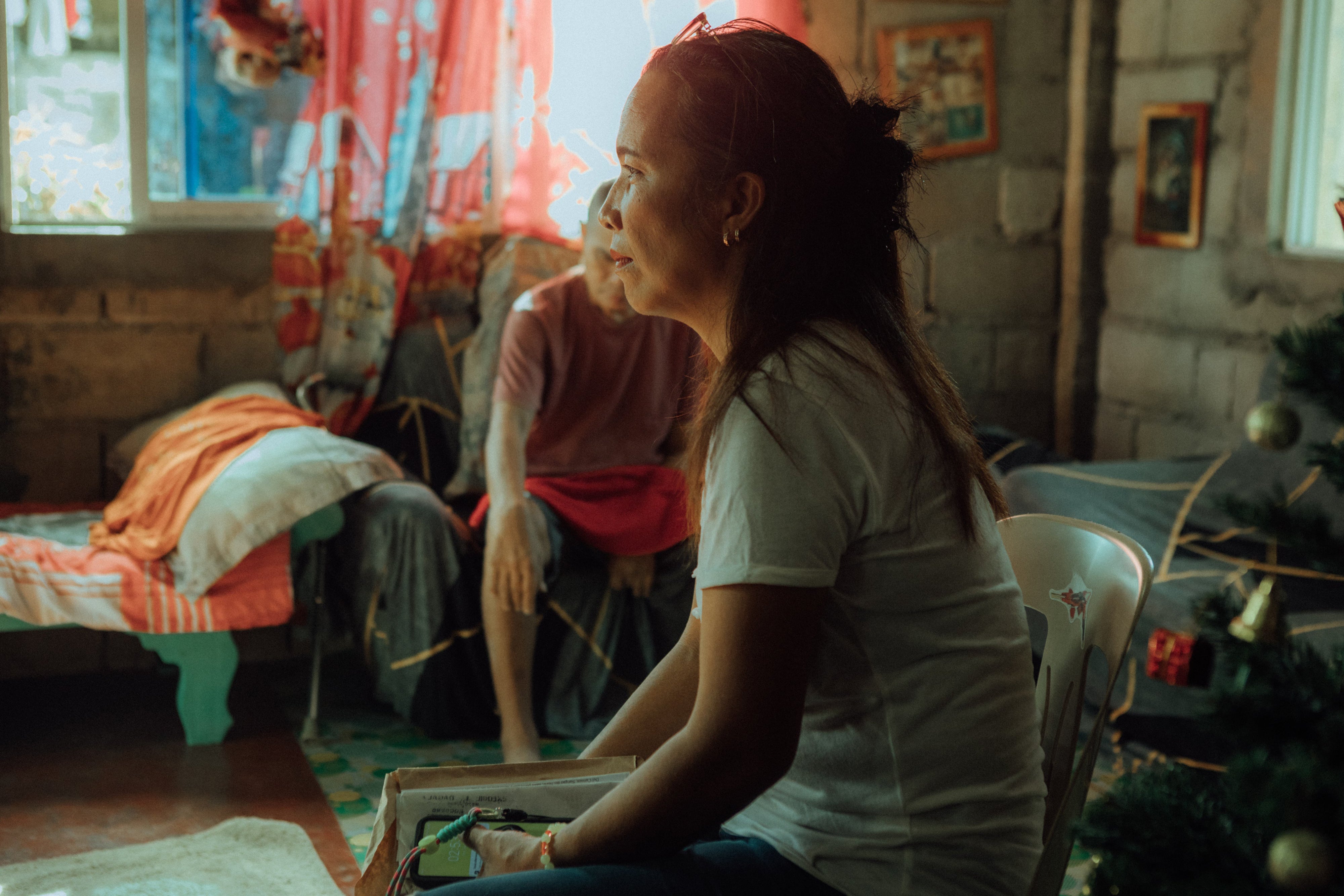
Climate Change, Planned Relocation, and People with Disabilities in Siargao, Philippines
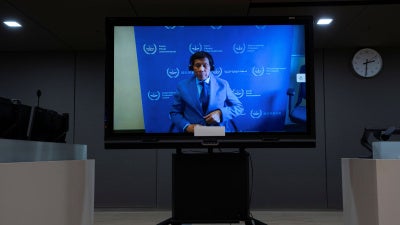
Since President Ferdinand Marcos Jr. took office in June 2022, serious human rights violations have continued in the country largely unabated, including arbitrary arrests, extrajudicial killings and enforced disappearances by the security forces. The murderous “war on drugs” has continued though with fewer killings. Leftist civil society activists, journalists, environmentalists, Indigenous leaders, trade unionists, and left-wing politicians remain under serious, at times deadly, threat from “red-tagging” – claims of links to or support for the communist New People’s Army. Police or soldiers implicated in abuses are rarely held to account. In a historic step toward justice, Philippine authorities in 2025 arrested former President Rodrigo Duterte for his alleged role while Davao City mayor and as president in thousands of extrajudicial killings during the “war on drugs,” and transferred him to the International Criminal Court in the Hague.
Climate Change, Planned Relocation, and People with Disabilities in Siargao, Philippines
People with Disabilities on Typhoon-devastated Siargao Island Face Severe Risks
Harassment Threatens Unions; Foreign Companies Risk Complicity in Abuses


Dismiss Companies’ Baseless Complaints; End Criminal Libel
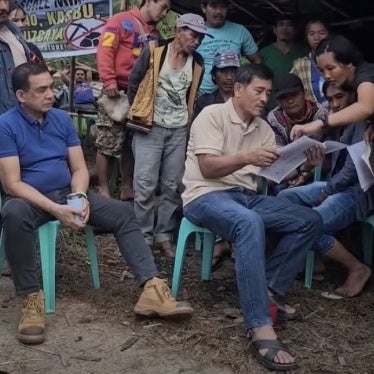
Under Marcos, Extrajudicial Killings, Arbitrary Arrest, Impunity

Proposed Law Would Grant Authorities Sweeping Power to Regulate Online Speech
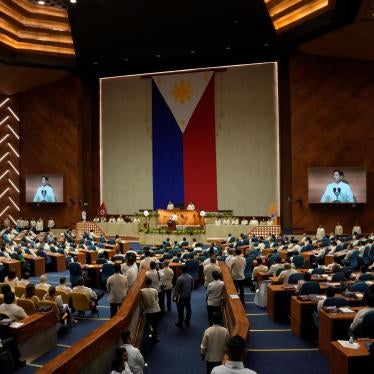
Counter-Terrorism Laws Used to Target, Harass Civil Society

Ex-Philippines President to Be Tried on Crimes Against Humanity Charges
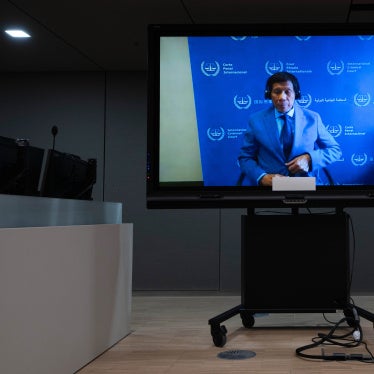
Hearing Offers Long-Denied Accountability, but Ending Impunity Must Begin in the Philippines
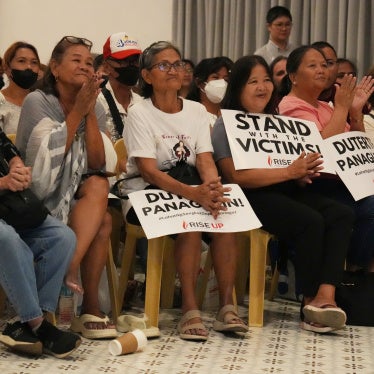
Lawmakers Should Pass Legislation to Ensure Equal Rights for All Relationships

Q&A on Proceedings to Confirm Charges Against Former President