Where the third floor used to be
The streets of Havana are filled with garbage, the sign of a crisis that has been worsening for years. Garbage trucks are barely operating, and every few blocks, the stench re-emerges, near a children’s playground or beneath signs warning residents they will be fined for leaving trash there.
Places across the city carry remnants of the lives people used to lead. A collapsed apartment. A closed down store. An empty pharmacy. The house where a neighbor used to live, before being detained and put in prison for protesting.
“The bathroom used to be there,” says Armando, pointing to the exposed wooden beams on what used to be the third floor of a house his family lived in for generations. A former artist, Armando once made a good living from selling his work alongside limited edition movie posters.
Things changed after the COVID-19 pandemic. As tourist numbers fell, so did the number of people walking into his studio, and his income steadily declined. Three years later, his home collapsed after years of neglect and deterioration.
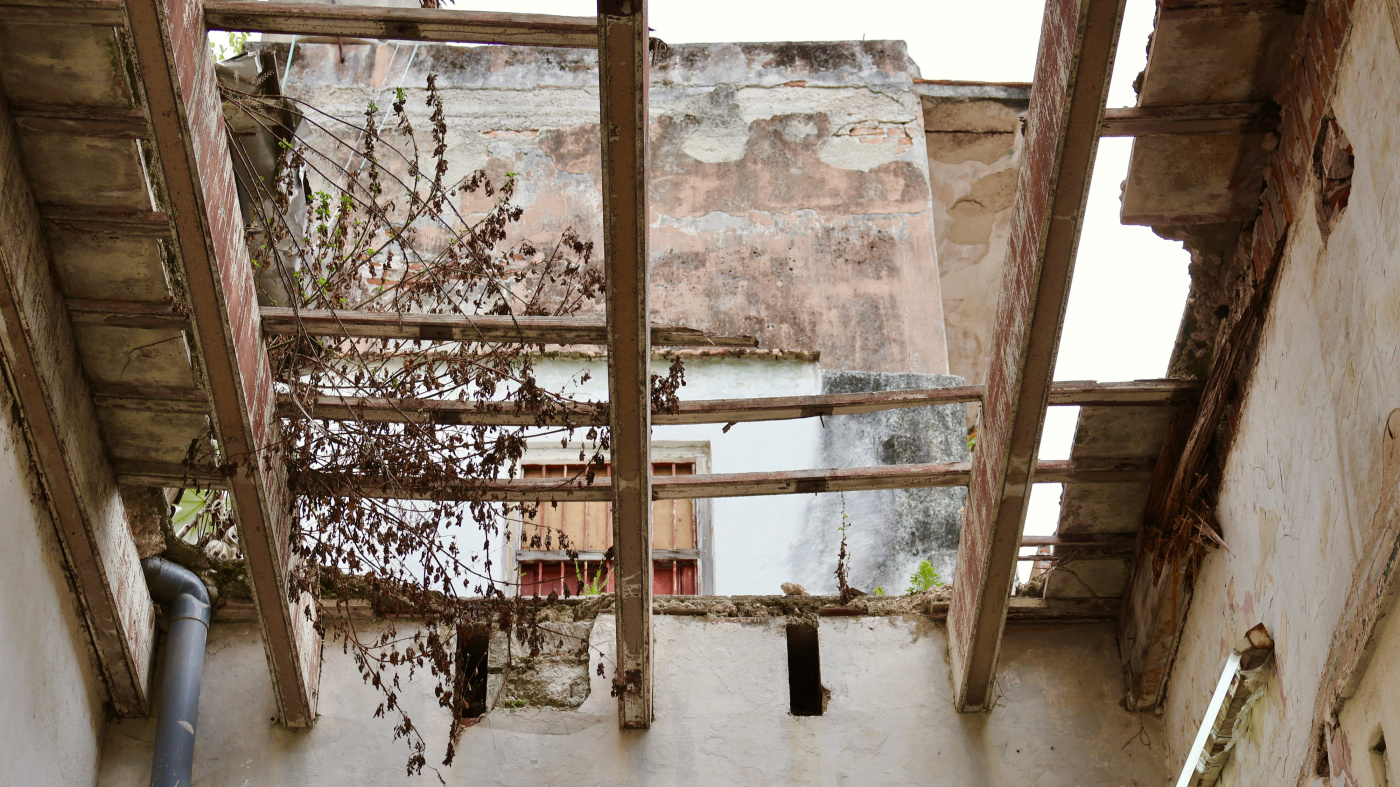
The exposed beams of a collapsed building in Havana, Cuba.
© 2026 Human Rights Watch
His life collapsed along with the house. He now lives in a makeshift shelter inside an old office building. “There’s no bathroom there,” he says. “I use a plastic bag.” Displacement following building collapses are common. Nearby, an abandoned school now provides shelter for another 76 people.
According to the government, Cuba had a deficit of more than 900,000 homes in March 2026. In 2019, government figures indicated that Havana alone had to build over 43,000 homes for people living in shelters. Years of adverse weather and neglect have contributed to the deterioration of the country’s housing. Housing construction is largely state-controlled in Cuba, and private property ownership remains highly restricted.
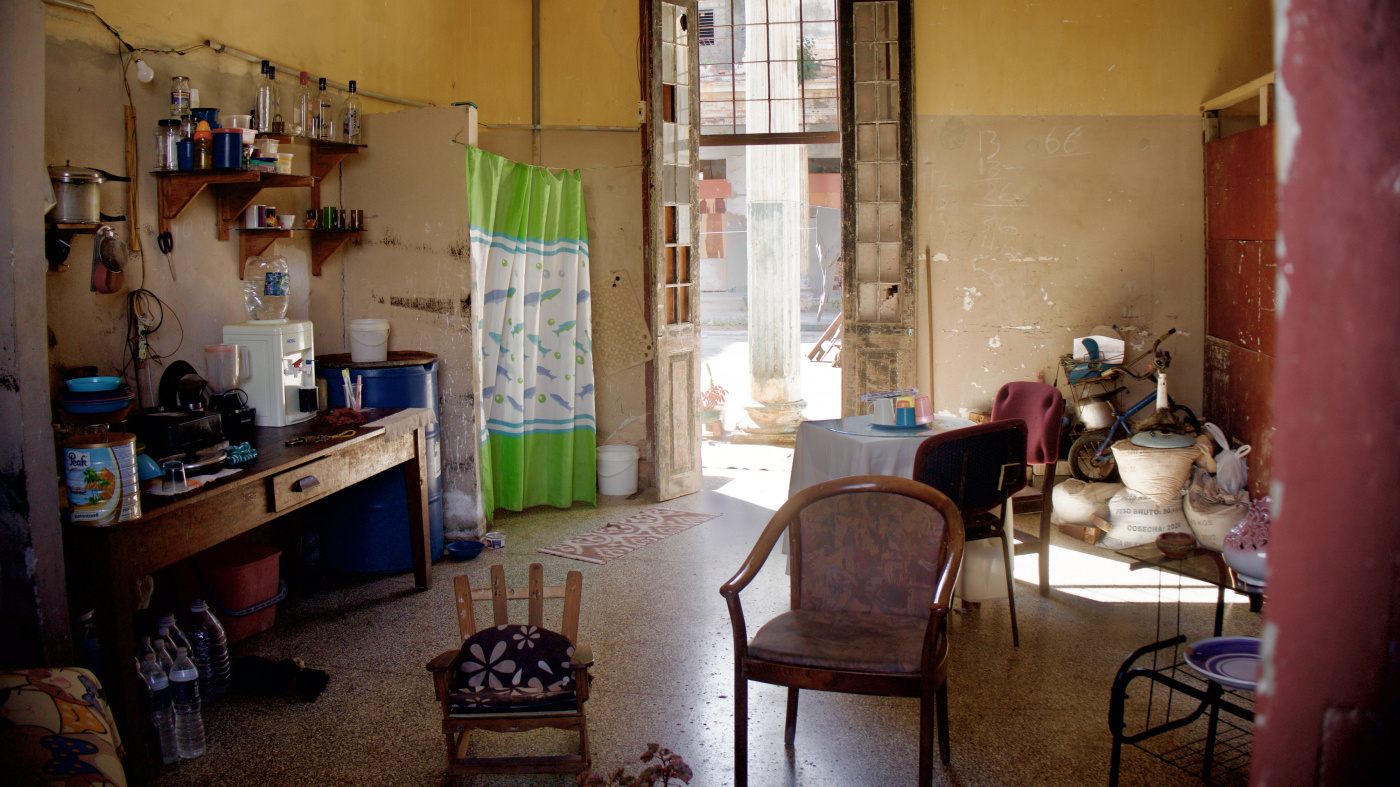
The interior of a family’s home, inside an abandoned school where they are sheltering in Havana.
© 2026 Human Rights Watch
Buckling infrastructure
These visible signs of decay sit within a broader economic and infrastructural erosion that has developed over decades. A combination of external shocks and longstanding domestic economic policies led to chronic shortages of essential goods and services.
Cuba’s economy has been under sustained strain since the end of Soviet-era subsidies in the early 1990s, when the country lost its primary source of cheap fuel and preferential trade. Public services have since deteriorated under the combined weight of structural inefficiencies in a highly state-controlled economy and the long-standing US embargo, which restricts financing, trade, and investment. Additional shocks, including tightening US sanctions and the collapse of tourism during the COVID-19 pandemic, only worsened access to public services.
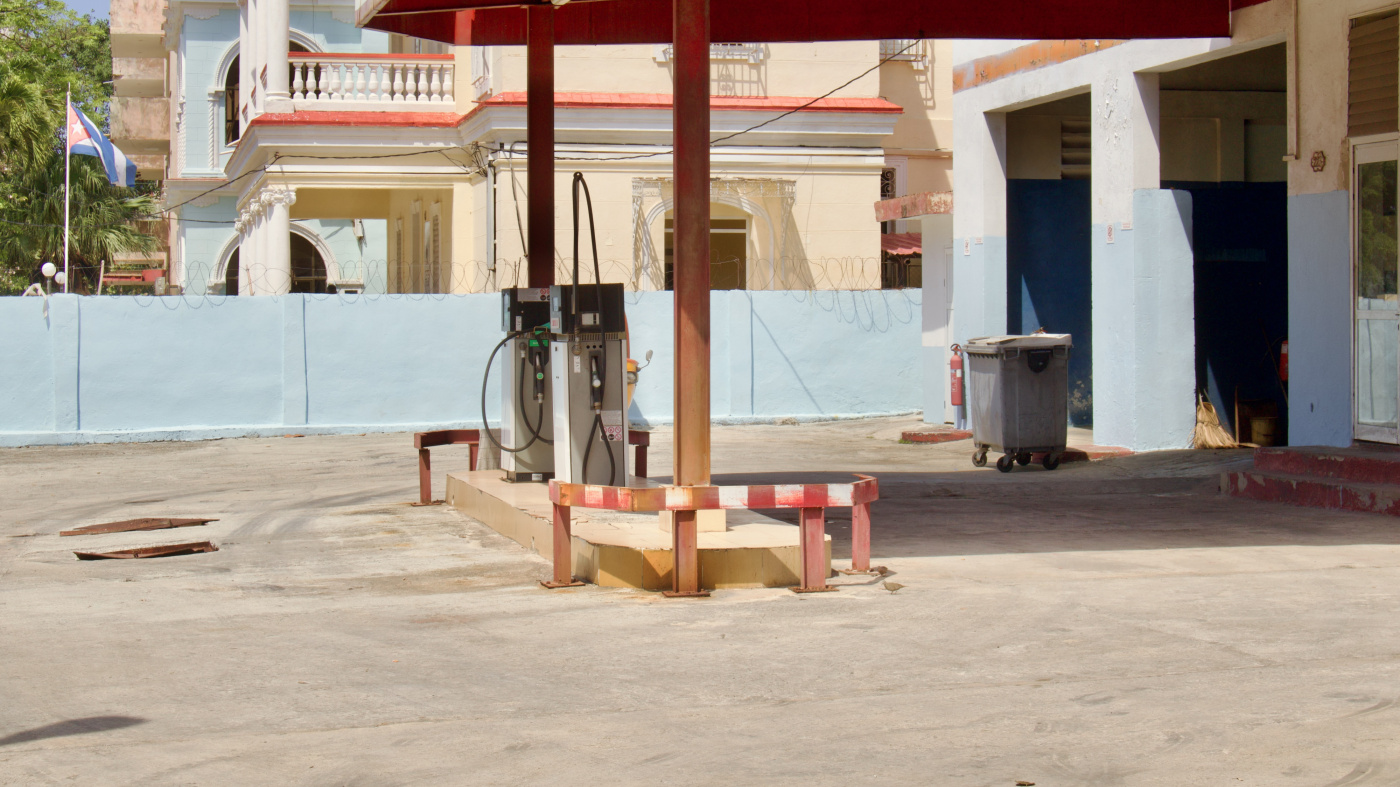
An empty gas station in Havana, Cuba.
© 2026 Human Rights Watch
The crisis entered a new phase in January 2026, when the US imposed an oil blockade on Cuba, effectively preventing countries like Venezuela and Mexico—its main suppliers—from shipping oil to the island. Since Cuba produces less than one-third of the oil that it needs and relies on petroleum for most of its energy consumption, the blockade deepened the country’s energy crisis, exacerbating blackouts, water shortages, and slowing public services. These disruptions have affected nearly every aspect of daily life.
Garbage collection is one example. While shortages of personnel, garbage trucks, and waste containers are long-standing problems in Cuba’s capital, lack of fuel for the trucks has exacerbated the situation.
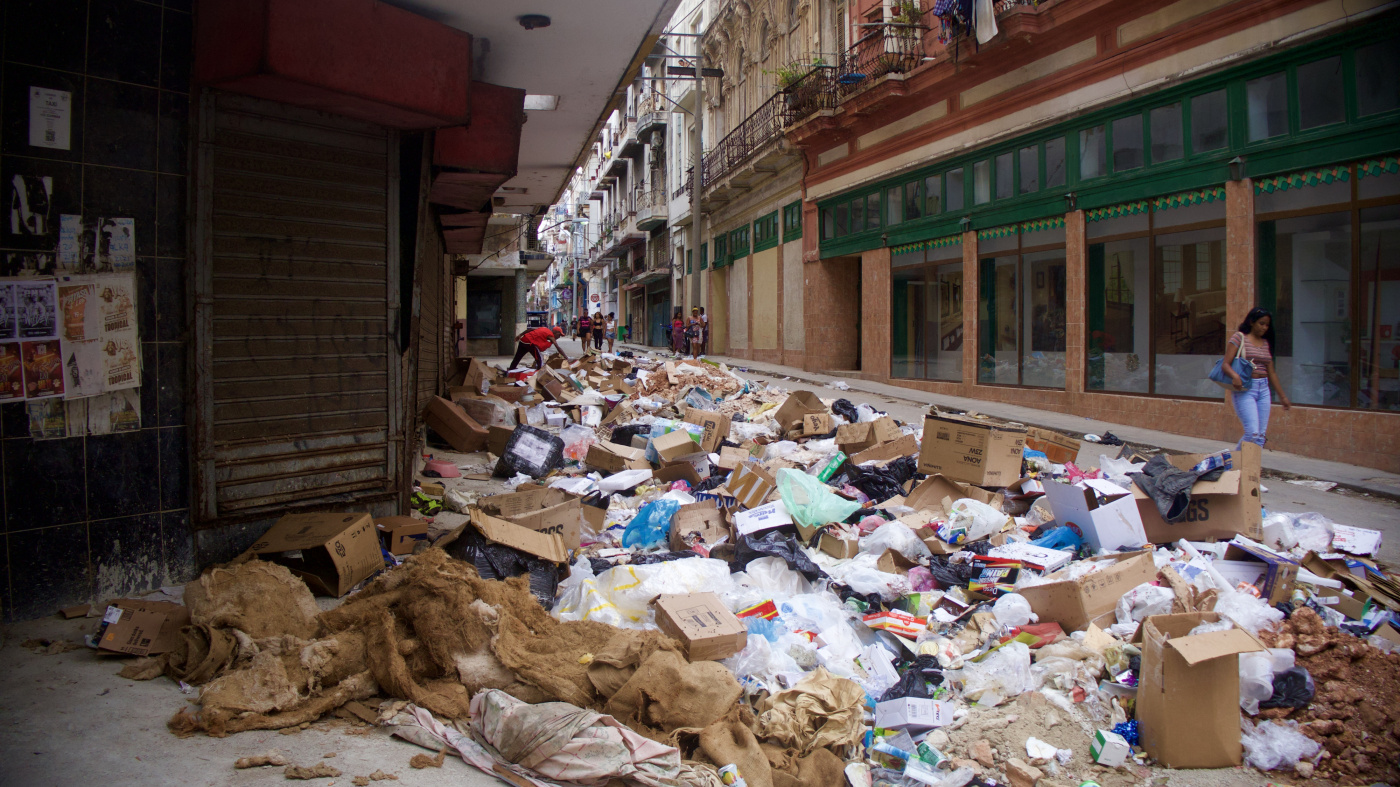
Discarded trash on the streets of Havana, 2026.
© 2026 Human Rights Watch
24-hour shifts
A Human Rights Watch researcher traveled to Cuba, spoke with dozens of people across Havana, and visited collapsed homes, abandoned buildings sheltering families, hospitals, empty pharmacies and state-subsidized stores. Crumbling infrastructure, severe shortages of food and medicine, prolonged blackouts, and deteriorating living conditions are pushing many Cubans into a daily struggle for survival.
In some neighborhoods, electricity is only available for two or three hours a day. “I don’t count the hours without electricity, I count the few hours when it returns,” said one hospital worker, who is scared to walk home in the dark streets after her shifts. A baker working in a government-subsidized bakery said he now works 24-hour shifts because the flour arrives at unpredictable times due to fuel shortages.
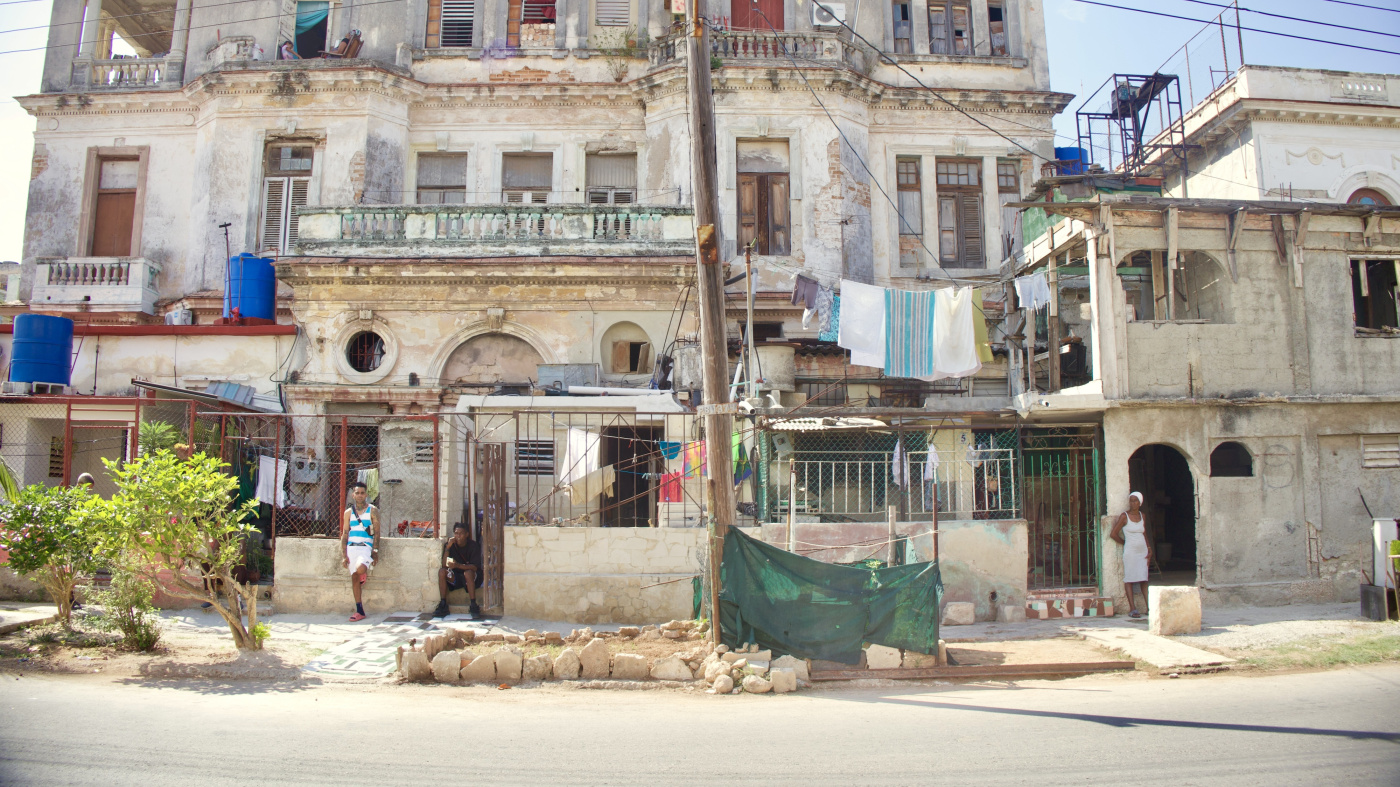
Residents stand outside their homes during one of the many hours without electricity in Havana, Cuba.
© 2026 Human Rights Watch
The streets are constantly buzzing with conversations about the impact of electricity cuts and people’s exhaustion from adapting to them. Many turn the lights on before going to bed so that if power briefly returns in the middle of the night, they can wake up to cook for their families. Doctors described struggling to concentrate at work after a sleepless night in the heat. A woman said that her mother, who is in her seventies, had not left their 11th floor apartment since February, when their elevator stopped working.
Without power, running water is no longer getting pumped to many homes. Some households stay awake at night waiting for the water to arrive. “The water only came on at 4 a.m. last night,” says one of Armando’s friends, Yisel. “But at least it came this time, I was able to shower.” She also saves some of the water in buckets to wash the dishes and clean the house.
Other families receive running water at more unpredictable intervals—only once every 10 or 20 days—forcing them to purchase water tanks some struggle to afford. Some live in multi-storied buildings and can only carry more modestly sized bottles into their apartment.
These realities have transformed daily life into an exercise in improvisation. Most Cubans describe waking up every morning “buscando vida” (“looking for life” or “finding a way to survive”). In addition to waiting for electricity and water, many spend the days looking for food, a source of income, and medicine. They work odd jobs, some reselling whatever they can: cigarettes, bread, a place in line.
“A carton of eggs is nearly my monthly salary”
Yisel explains that Cubans used to purchase food from government-subsidized shops, known as bodegas. They have been growing emptier for years and the oil blockade has dealt them an additional blow. Now Cubans are increasingly buying their food from privately owned stores, which the government recently authorized. While a wide range of goods are available there, they are far more expensive.
“There is food, but my issue is seeing how much of it I can afford to put on the table,” Yisel, who works as a cleaner to support her four children, explains. “A carton of eggs is nearly my monthly salary. We eat a lot of rice. I can’t remember the last time I had meat.”
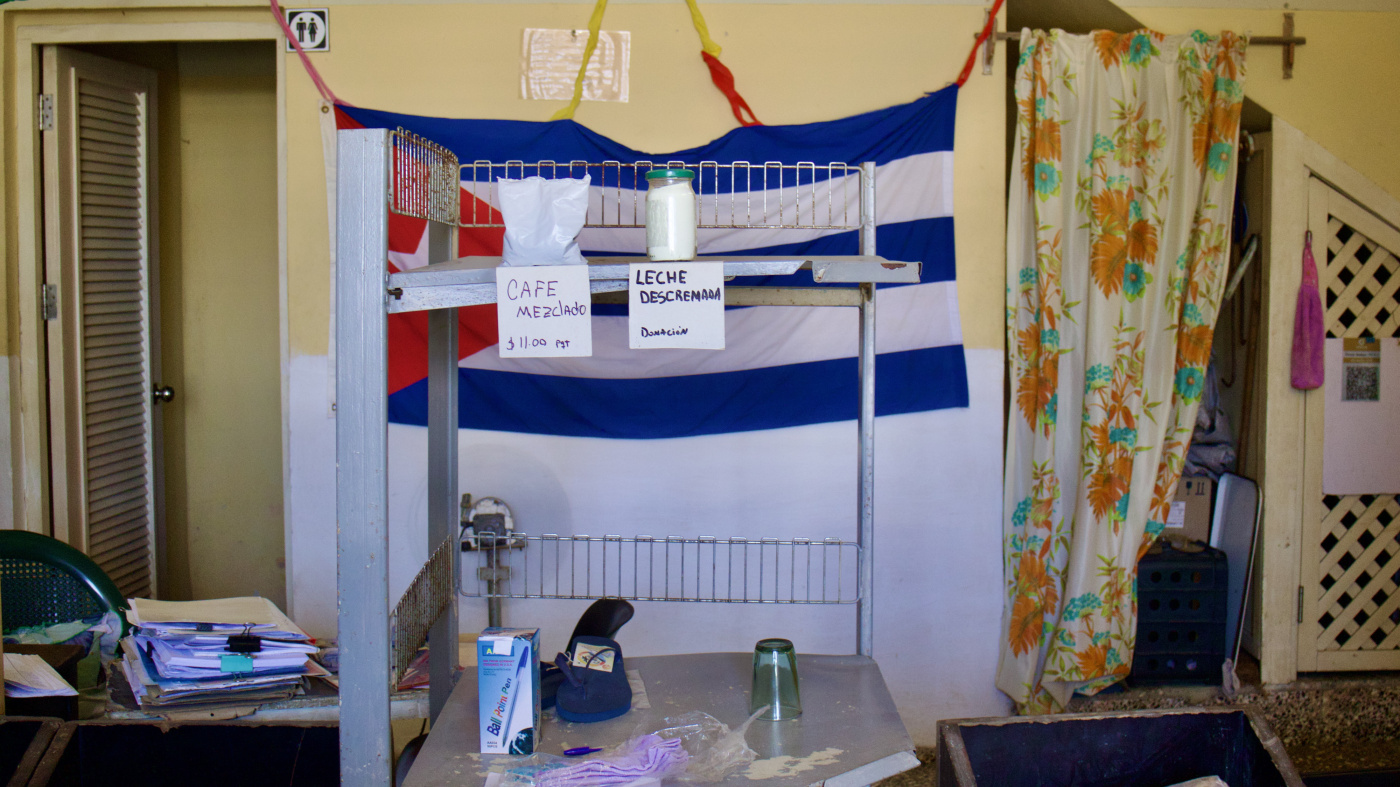
A Cuban bodega with nearly empty shelves, offering a single bag of coffee and donated powdered milk.
© 2026 Human Rights Watch
A doctor that spoke to Human Rights Watch said that he was seeing a growing number of malnourished patients arrive at the hospital, and that healthcare professionals often tried to bring in their own food to donate to families.
For years, engineers, teachers, pharmacists and technicians have also taken on jobs as waiters in restaurants frequented by tourists and wealthy Cubans, allowing them to earn in a day what they would have earned in a month exercising their profession. The government employees that Human Rights Watch spoke to earned between US $4 and $8 a month—enough to purchase one or two cartons of 30 eggs from a privately owned store.
Empty shelves
Cuba’s healthcare system, once held up as one of the revolution’s defining achievements, is also increasingly strained. By the government’s own admission, only 30 percent of the medicine on its national list of essential medicines can be found in the country.
Most pharmacies that Human Rights Watch visited in Havana were nearly empty. One sold only herbal tea and insect repellent. Another only had oregano and other spices displayed across otherwise empty shelves.
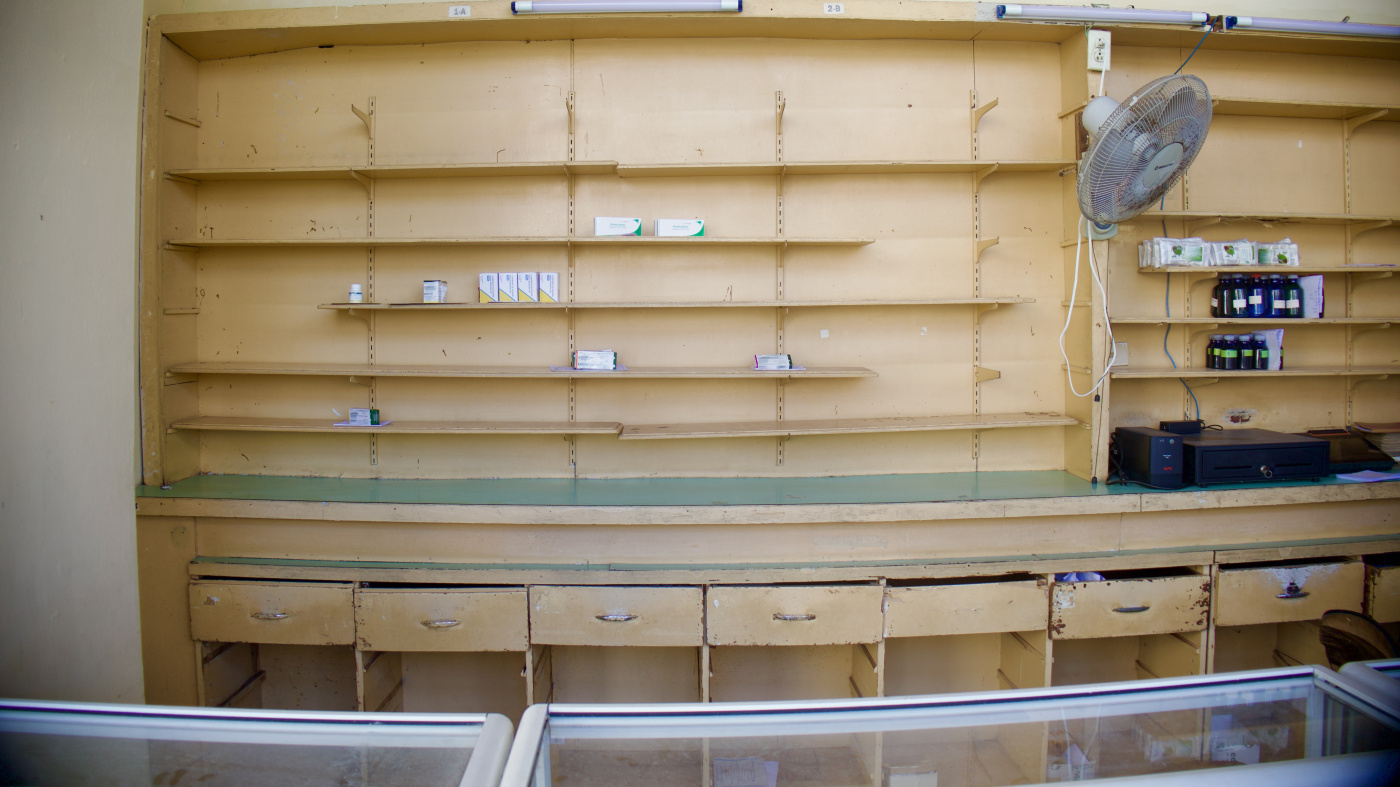
A pharmacy shelf lies almost empty in Havana, Cuba, 2026.
© 2026 Human Rights Watch
If they can afford it, people buy their medication on the street from people who resell imported products. “I had to bring my own supplies to the dentist recently,” a retired teacher said. “Cotton balls, filler … everything. Some people bring gifts now, too. Maybe it helps them receive better treatment.”
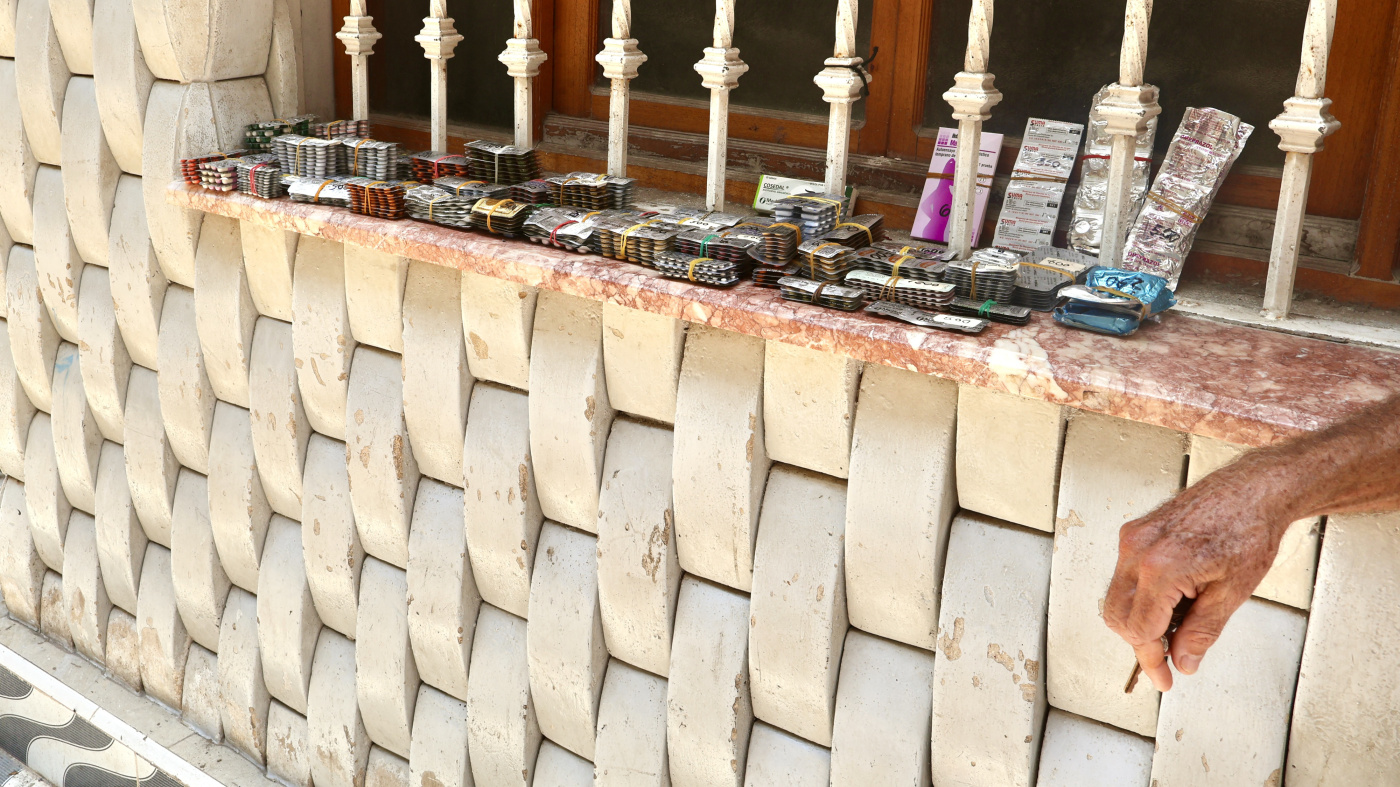
People reselling medicine on the street in Havana, Cuba.
© 2026 Human Rights Watch
Armando was trying to find money to buy a urinary catheter for his aunt who is in the hospital. They didn’t have one the right size to give her there.
A Human Rights Watch researcher observed unsanitary hospital facilities with few resources. In one hospital, patients lie in a room of twelve beds with a single bathroom, hidden only by a poorly hung shower curtain. That bathroom, like many others in the building, doesn't have running water. Patients here also bring their own sheets, pillows, and fans.
Hospitals stretched thin
The lack of functioning medical equipment is another major challenge in hospitals. One pediatric hospital appeared eerily devoid of equipment. It had scales, an oxygen tank, tables, and desks, but no ultrasound, no X-ray machine, no electrocardiogram.
“I live in constant anxiety,” a doctor at the pediatric hospital said. “In constant fear that, one day, a kid who is seriously sick will come here and we won’t be able to help because we don’t have the equipment to actually help.” Moments later, the doctor wrote a note referring a sick child to another hospital. “Cannot perform tests, blood gas analyzer broken,” the note read.
A medical student there explained that the number of patients in the hospital is low because families know the hospital doesn’t have adequate medical equipment. Only those who are unaware of how much the hospital is lacking go there. They quickly become frustrated when doctors say they can’t provide the required help, the student said.
US sanctions on the country make it difficult for technicians to find replacement pieces for medical equipment. One former medical equipment technician, who now works as a waiter, said this affected doctors’ capacities to provide adequate health care. “People don’t necessarily die immediately. But maybe their illness doesn’t get diagnosed. Maybe treatment comes too late because the hospital only has one machine,” he said.
The lack of regular, available electricity and fuel due to the US blockade have also contributed to deteriorating conditions in medical facilities. While hospitals have back-up generators, doctors said the transition from the electricity grid to the generator during blackouts can damage medical equipment.
Like many others, doctors said the blockade has severely restricted their access to fuel, as official supplies require months-long waits and are distributed in strictly limited quantities, while black market fuel is prohibitively expensive. They said this made it far more difficult for both them and patients to get to and from the hospital.
Many healthcare professionals spend a significant proportion of their salary on transportation, doctors explained, adding that several hospitals are now working at reduced capacity given how difficult it is for them to come in to work. “It’s not like we’re doing it for the money,” one doctor said. “We’re barely making ends meet, and we’re so tired. We don’t have electricity at home either, just like everyone else. We don’t sleep, we don't have fuel to drive to work, and then we come in to work only to face a whole other set of shortages.”
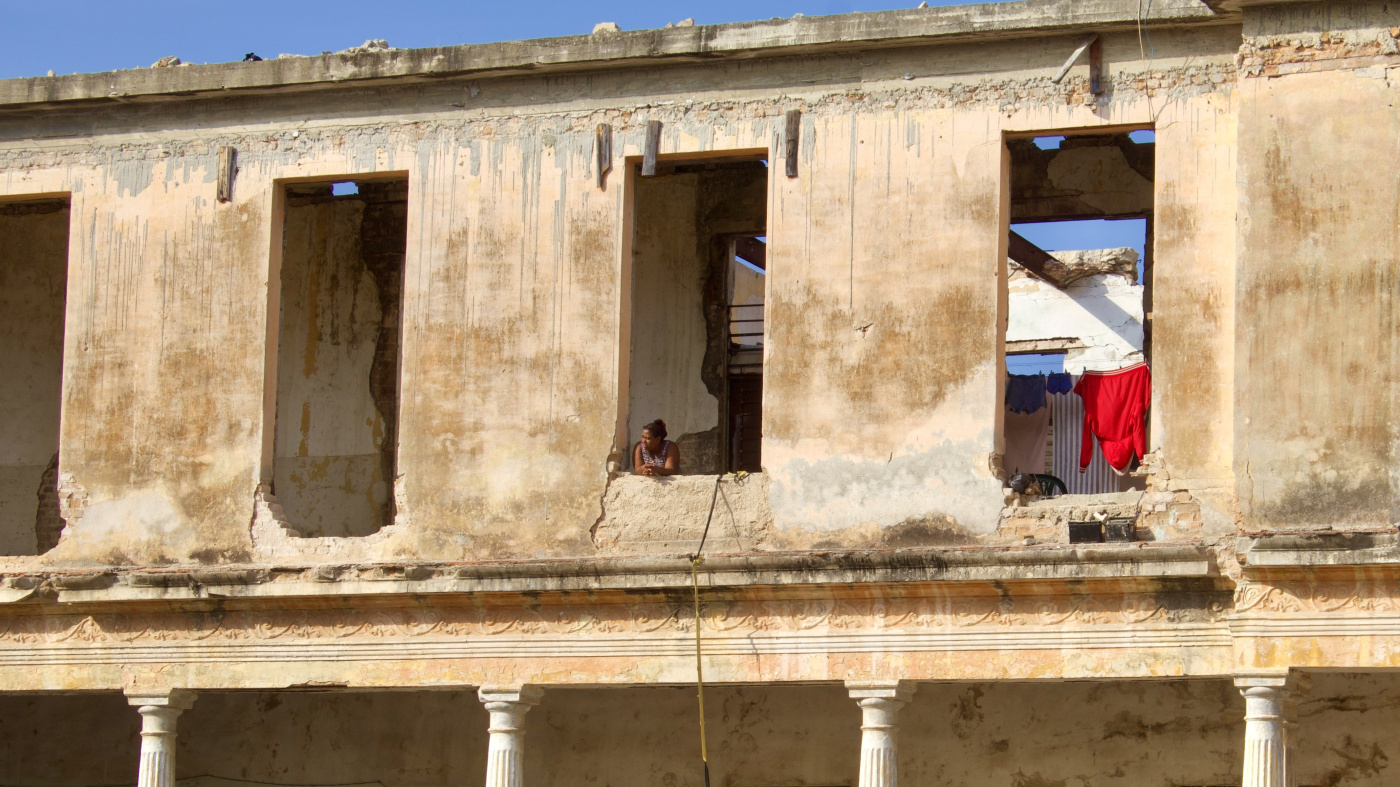
A woman looks out of a window in an abandoned school now used as a shelter for dozens of families in Havana.
© 2026 Human Rights Watch
The cost of speaking out
However daunting their lives, Cubans are not free to express their discontent. The government imprisons people who speak out. Thousands of Cubans took to the streets in July 2021, only to be arbitrarily detained, and tortured, and beaten in prison.
Leonard Richard González Alfonso was sentenced to seven years in prison in March for “propaganda against the constitutional order” after having painted variations of the sentence “how long, they are killing us” on buildings in Havana. He is one of the roughly 800 people behind bars who Cuban human rights groups identify as political prisoners. Many people outside of prison face ongoing threats, surveillance, and harassment.
Armando knows the cost of speaking out. “What’s the point? I’m already hungry here. If I speak out, I’ll just end up being hungry in prison,” he said.
“People living two blocks from me went out for a pot-banging protest,” Yisel added. “[State security] detained several of them. I don’t know what happened, I haven’t seen them since.”
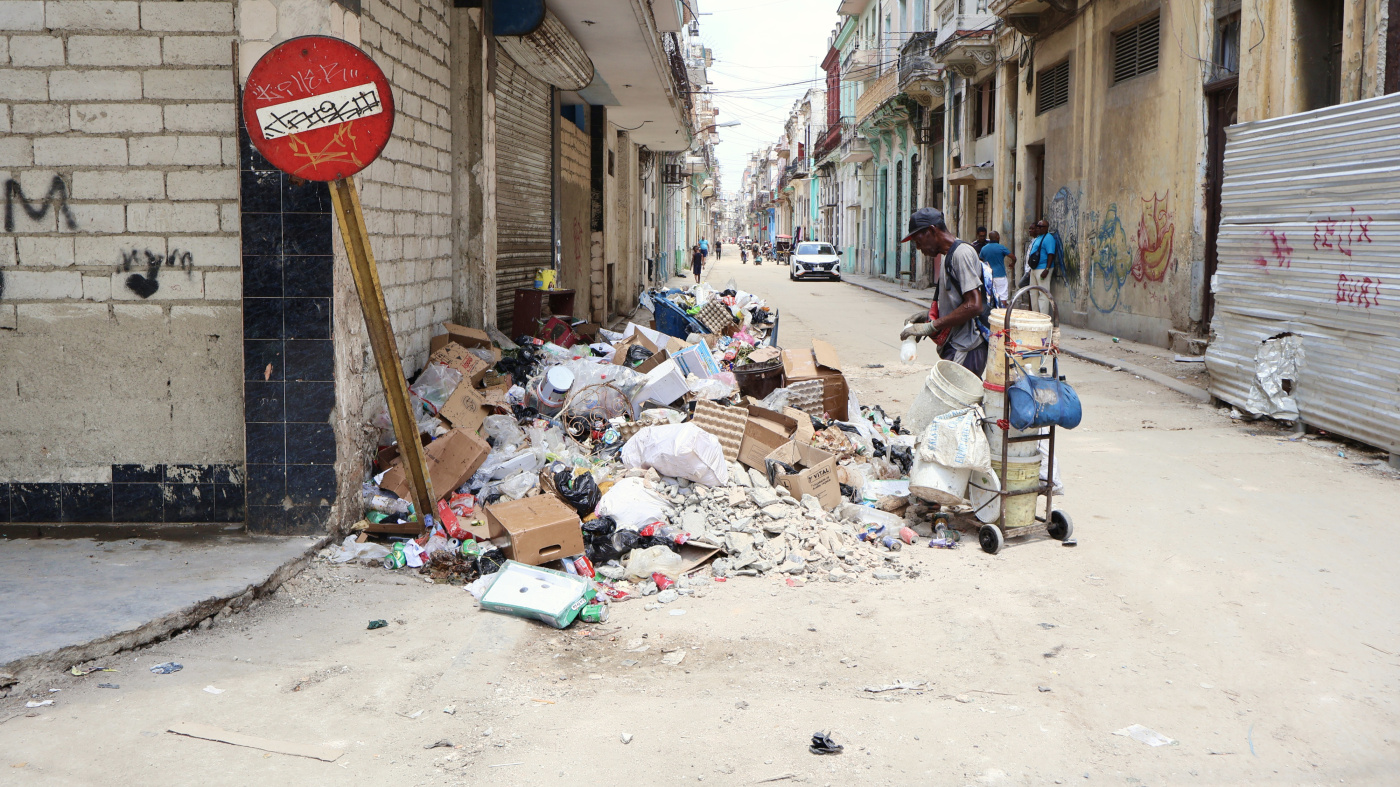
A man collects garbage from a pile of trash on the streets of Havana, Cuba.
© 2026 Human Rights Watch
“I don’t have anything left here, but I’m Cuban”
Both Cuba’s shortages and repression are long-standing. The collapse of the Soviet Union in the 1990s marked the beginning of a similar era of especially difficult scarcity known as the Special Period. Many older people remember it but say that this time their circumstances feel harder because they have lost hope that things will improve.
“We’re going to have to choose between two colonizers,” Armando said. “Whether it’s the US or some continuation of the Cuban regime, these are [both] extractive powers who aren’t going to care about us.”
And yet residents continue to find ways to adapt. Families create makeshift homes, start informal businesses, and search for opportunities abroad. Moments of joy and solidarity persist amid the hardship and fatigue.
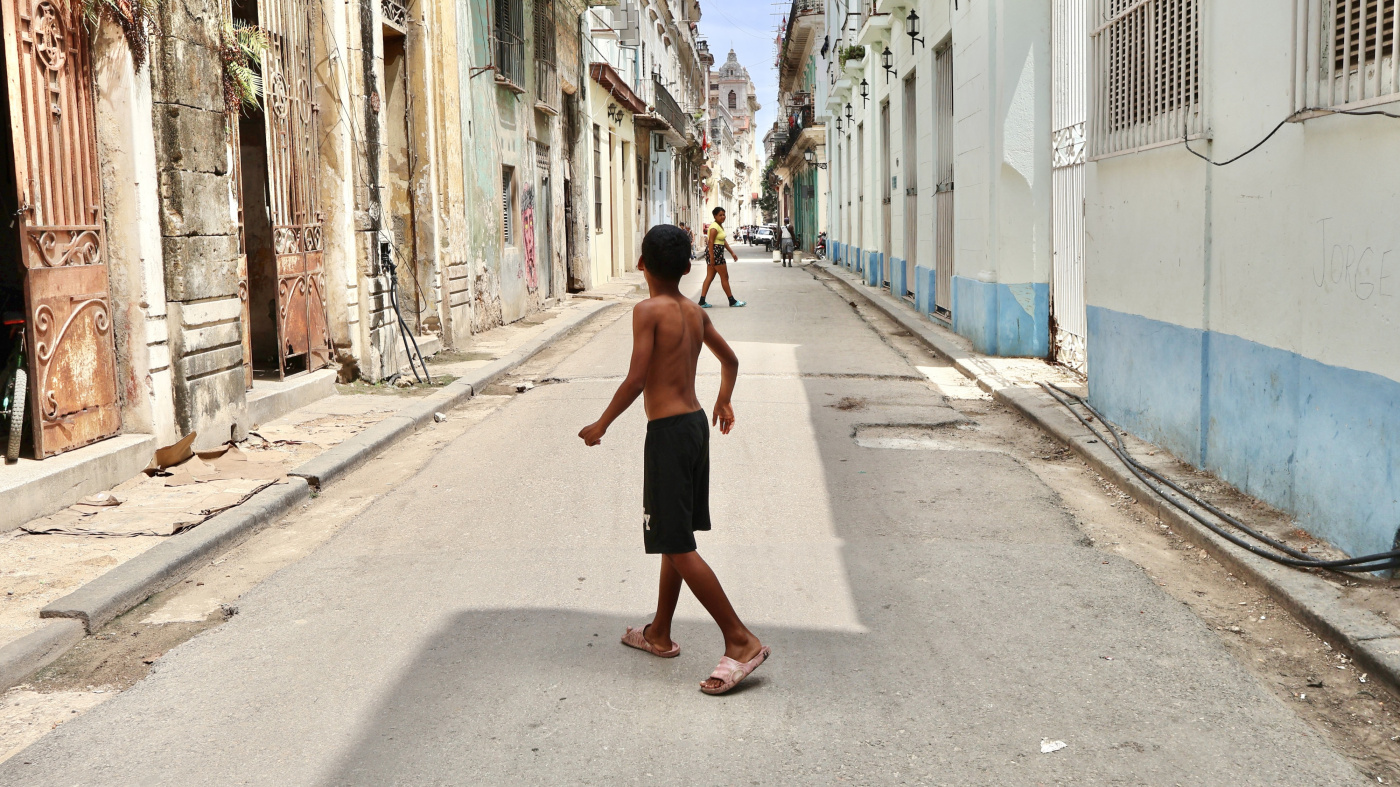
Yisel pointed to what used to be her friend’s house, before her friend emigrated to the United States, like thousands of other Cubans in recent years. The facade of the building is crumbling like many others nearby, its paint worn and its structure visibly compromised. Through a slightly ajar front door, a narrow staircase is visible, its concrete badly chipped. In the street outside, children play, kicking a broken piece of cement to each other in front of the bright blue house.
Despite everything, Yisel does not want to leave. “I don’t have anything left here, but I’m Cuban,” she says. “I don’t want to live in a new country. I want to live in a better version of this country.”