A man in a wheelchair holds a protest sign at a demonstration

Remedies Abandoned

US Civil Rights Enforcement Under the Trump Administration

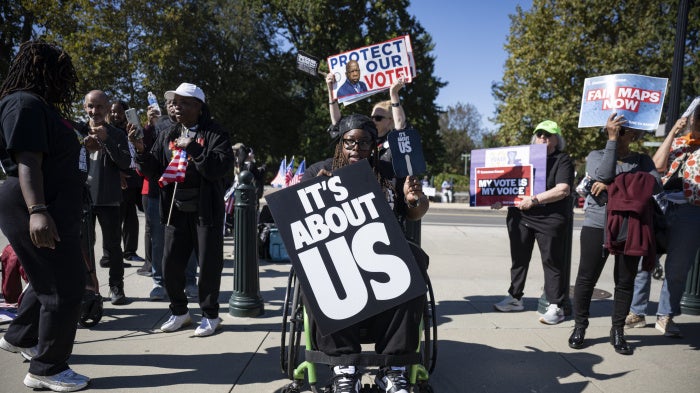
Demonstrators hold signs in support of voting rights outside the US Supreme Court in Washington, DC, on October 15, 2025.  © 2025 Celal Gunes/Anadolu via Getty Images


Summary

When people called the Department of Housing and Urban Development’s fair housing hotline in the spring of 2025, they heard an automated recording: “The number you reached is no longer in use.” The people calling had experienced discrimination. Perhaps a landlord refused to rent to them because of their appearance, or a lender turned them away based on a protected characteristic. These people had looked up the number of an agency Congress built to investigate these situations and dialed, seeking a remedy. The recording they heard was emblematic of a hollowing out across federal agencies in 2025. Many of them had nowhere else to call.

The federal government is the primary enforcer of anti-discrimination law in the US. Indeed, Congress began building the federal civil rights enforcement agencies because state and local governments were not addressing discrimination. The Department of Justice (DOJ) was founded in 1870 in large part because Black Americans were being shot at and lynched for registering to vote, and Southern states would not intervene. The Department of Education’s Office for Civil Rights (OCR), the Office of Fair Housing in the Department of Housing and Urban Development (HUD), the Equal Employment Opportunity Commission (EEOC), and the other civil rights enforcement offices across federal agencies were built on the same logic, that people in need of protection could not always count on the governments closest to them. The federal infrastructure was built to provide a remedy.

Between January 20, 2025, and the spring of 2026, the Trump administration dismantled much of that infrastructure. Across the agencies examined in this report, attorneys and investigators were pushed out and left in droves, regional offices were closed without notice, and active cases were dismissed or went quiet. Staff who had spent decades learning how discrimination works, building strong cases, and holding institutions accountable were now gone.

This dismantling was only part of the story. In some cases, key enforcement agencies were redirected towards dubious ideological projects. In many cases, this meant lining them up against the very communities that had until recently counted on them as protectors. Pending complaints from workers and families of color sat unprocessed while resources were moved towards investigating the programs designed to support them. The Justice Department, for example, abandoned plaintiffs in voting rights cases and then filed briefs against them.

This report documents what was lost and what it is costing victims of discrimination. It is based on extensive review of publicly available records, as well as interviews conducted with more than 40 people, including current and former staff at the agencies examined, civil rights attorneys, complainants, and discrimination experts. The agencies examined here were chosen from among more than a dozen with federal civil rights enforcement authority. These specific agencies were chosen because they carry the largest enforcement purview, suffered what we believe to be the most far-reaching cuts, and most clearly illustrate the damage being done across the federal civil rights infrastructure. The key findings are organized in four parts: how enforcement capacity was dismantled, how people experiencing discrimination were abandoned, how those left without federal protection have no real alternative remedies, and how the enforcement machinery has been warped in the service of the administration’s ideological priorities and in some cases, turned against the communities it was built to serve.

Gloria A. had spent years as a lawyer in the Justice Department’s Civil Rights Division. Early in President Trump’s second term, she received a message from DOJ leadership asserting all of the department’s lawyers—including its civil rights attorneys— needed to be fully on board with the President’s agenda. Career attorneys in an agency that had long regarded independence as the bulwark of its integrity saw this as deeply ominous signal, and they were right. “[I]t just flew out the window right then and there,” Gloria said, “everything that I had been taught about what it meant to be a DOJ attorney.” Nicole P., another lawyer in the division, resigned in March 2025 after she was reassigned to carry out administrative rather than substantive work, and feeling concerned she would be asked to do something unlawful. “We viewed ourselves as attorneys for the United States,” she said. “Which is different.”

On January 28, the Office of Personnel Management emailed two million federal employees encouraging them to resign by February 6 and receive paid leave through September. About 75,000 accepted, according to White House officials. At the Justice Department, that offer landed on top of political reassignments already underway—senior career managers moved to processing Freedom of Information Act (FOIA) requests and sanctuary city work, a tactic career staff read immediately as designed to force departures. By June, the Civil Rights Division was down to 110 attorneys from about 400. The Voting Rights Section, which had once employed dozens of lawyers, was left with three.

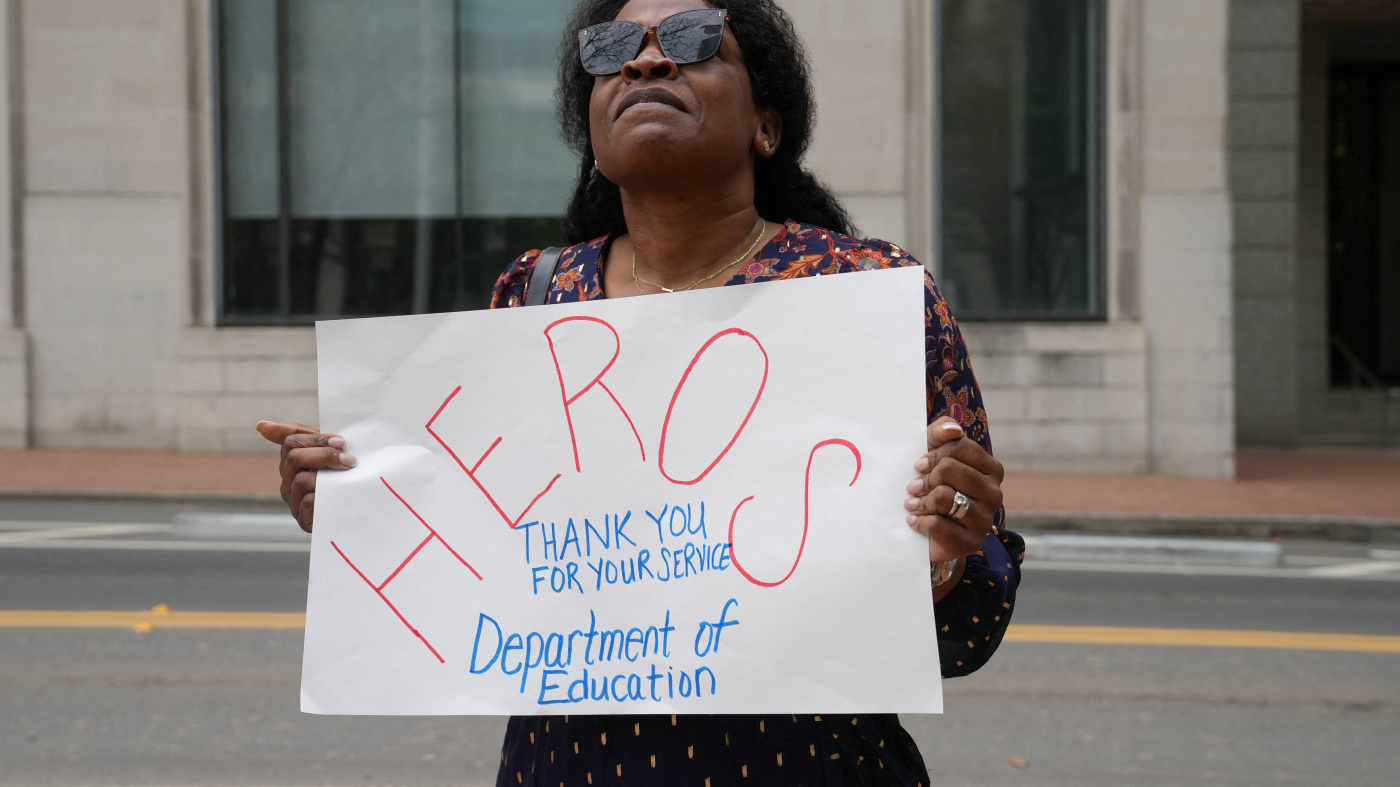
At the Department of Education’s Office for Civil Rights (OCR), an order arrived in the administration’s first weeks: “pencils down.” Vince L., a career OCR attorney, described what followed: “Stop all work. Decimate staffing. Divert resources to political witch hunts. Seven of twelve regional offices shut with no notice. Some people didn’t even know until their computers didn’t work. You’d come in the next morning and your badge wouldn’t work. That’s how you’d find out you were being terminated.”

On March 11, 2025, the administration cut about 1,300 Education Department employees in a single day—299 of them from OCR, more than half its staff. Seven regional offices closed without notice or cases being transferred: Chicago, Philadelphia, New York, Dallas, San Francisco, Boston, and Cleveland. On an identical US$140 million budget, OCR reached just 112 resolution agreements in 2025, down from 507 in 2024. It let $14.2 million in congressionally appropriated funds lapse rather than spend them on investigators. The Government Accountability Office (GAO) found the department had spent approximately $38 million on severance and administrative costs to achieve the shutdown. This was money paid to eliminate the capacity Congress had funded and authorized.

At HUD, the Office of Fair Housing shrank from 31 staffers to 11. Three-quarters of the Violence Against Women Act (VAWA) enforcement team were reassigned, and the Complex and Trauma-Informed Investigations Branch was dissolved. Career attorneys filed a whistleblower complaint in September 2025 documenting a gag order barring fair housing attorneys from contacting complainants or the Justice Department and showing HUD had closed, or halted, at least 115 fair housing cases in violation of federal regulations that require investigation of every complaint. Seven weeks after the complaint became public, they were fired.

The Heritage Foundation’s Project 2025 had called for such actions. The policy document said the Trump administration should reclassify career civil servants, consolidate presidential control over the Justice Department, and eliminate disparate impact enforcement. On December 9, 2025—the 68th anniversary of the Civil Rights Division’s founding—more than two hundred former Division attorneys signed a public letter decrying the changes as extraordinary and destructive. One former section chief told Human Rights Watch it was like “someone [was] taking an axe to the place.”

Tamika Palmer was sitting outside a courthouse in Louisville on March 21, 2026, when the Justice Department dropped the last criminal charges against two police officers who had lied on the warrant that sent them through her daughter’s door, shooting; Breonna Taylor was killed on March 13, 2020. A federal judge granted the motion in December. “She was killed because of their lies and negligence,” Palmer told reporters outside the courthouse, “and somebody should be held accountable for that.” Taylor’s killing was inextricably bound up with larger concerns about policing: a two-year DOJ investigation documented a pattern of racially discriminatory force by the Louisville Metro Police Department (LMPD), and in December 2024, the department signed a consent decree with the city to reform LMPD. The Justice Department moved to dismiss it in May 2025.

Louisville was not the only city where discriminatory policing went unaddressed. A similar consent decree in Minneapolis—built on a multi-year investigation and 2,300 community testimonies submitted by community members documenting Minneapolis police discriminated against Black and Native American people—was dismissed in May 2025, one week before the fifth anniversary of George Floyd’s murder. At least four other consent decrees to reform police departments across the US were dismissed in the same period. In each case, the department withdrew before any independent finding that the underlying violations had stopped.

In voting rights, too, the federal government abandoned communities it had been supporting. The DOJ filed a lawsuit in Houston County, Georgia in January 2025, challenging at-large election systems in a county with more than 30 percent Black voters that had produced one successful Black candidate in 50 years. The Justice Department dropped the case in March. In Texas redistricting litigation, DOJ attorneys who had argued since 2021 that redrawn maps diluted Black and Latine voting strength reversed their position in March 2025 and filed a brief supporting those same maps.

In education, the shuttered offices left families seeking redress for discrimination complaints mid-process with nowhere to go. In Lubbock, Texas, OCR had been investigating nine complaints of racial harassment. These included white students allegedly playing whipping sounds on their phones as Black classmates passed in the hallway, and a 12-year-old Black boy who said he was interrogated by school officials without his parents present and falsely accused of a sexual offense. “People kept on messing with me about it,” Ja’Maury told the Texas Tribune in December 2025. “After that I almost hated life. I didn’t even want to live no more after that.” OCR had been close to a determination in JM’s discrimination complaint when the Dallas office closed in March 2025. An attorney for the Lubbock families emailed the assigned federal investigator in July and received an autoreply saying the employee no longer had access to the account.

Numbers illustrate the scale of abandonment. With 11,985 education-related civil rights cases pending when the administration took office, OCR reached just 112 resolution agreements across all of 2025—1 percent of the caseload, and 78 percent fewer than the year before on the same budget. OCR reported no resolution agreements for sexual harassment, none for sexual violence, none for racial harassment, none for discriminatory school discipline, and none for seclusion and restraint of students with disabilities. The 2025 case resolution number is low, even compared to previous years when the agency was not adequately staffed or funded.

At HUD, at least 115 fair housing complaints were closed or halted without findings, at least in some cases in apparent defiance of federal regulations. Kennell S., a gay Black man in Arkansas, told ProPublica he filed a complaint in 2024 after a landlord told him he was “too flamboyant” and refused to rent to him. Two days later, HUD sent a letter saying his allegations were “not subject to federal law.” This reflected a reversal of the agency’s established policy which interpreted statutory sex discrimination provisions to prohibit discrimination on the basis of sexual orientation and gender identity. “I went through pure hell just to get turned away,” Kennell S said.

People like Kennell S., JM, and Tamika Palmer, who had filed civil rights-related complaints that were thrown out or halted mid-process, had nowhere else to go for relief. The federal government is the primary enforcer of anti-discrimination law in the US.

A pattern-or-practice investigation looks beyond individual incidents to document how a law enforcement agency operates overall, examining if misconduct such as discriminatory stops, excessive force, or other rights violations occur so frequently that they have become the department’s standard practice. If the Justice Department demonstrates this pattern, it sues and forces reforms, usually in the form of a consent decree enforced by a federal judge and tracked by an independent monitor. The power to initiate a pattern-or-practice investigation belongs exclusively to the US Attorney General under 34 U.S.C. § 12601, which does not allow private plaintiffs, state attorneys general, or municipalities to sue for systemic police misconduct.

When the Justice Department adopted a posture of hostile skepticism towards that authority and largely abandoned its use, communities with documented patterns of discriminatory policing had to turn to individual lawsuits, which are expensive, slow, and structurally incapable of reaching the systemic violations that pattern-or-practice cases address. The Special Litigation Section, which had employed over 70 attorneys working on police reform issues, was down to fewer than 20 as of April 2026, according to a report by the MacArthur Justice Center.

The Fair Housing Act imposes a non-discretionary duty on HUD to investigate every complaint it receives. In many states, fair housing enforcement agencies do not exist or cover narrower ground than the federal statute. Disparate impact claims under Title VI—which address discriminatory effects rather than discriminatory intent—carry no private right of action after the Supreme Court’s decision in Alexander v. Sandoval. Disparate impact was the legal framework through which the Education Department’s OCR had identified school districts that suspended Black students at double the rate for identical conduct, segregated English learners into separate buildings, and screened students of color out of gifted programs.

Private lawyers cannot absorb all the work the agencies have stopped doing, and the administration has worked to ensure external entities cannot fill the gap. The Fair Housing Initiatives Program (FHIP), which has funded most state and local fair housing nonprofits for a generation, was cut by $30 million. Executive orders targeting major law firms—Perkins Coie, WilmerHale, Jenner & Block—revoked security clearances and restricted access to federal buildings. Those firms had collectively logged hundreds of thousands of civil rights pro bono hours annually. Nine major firms negotiated pre-emptive settlements with the White House and agreed to direct nearly a billion dollars in pro bono capacity toward work aligned with the administration’s priorities. In practice, this would reduce the pro bono capacity many of these firms had devoted previously to civil rights priorities.

The administration did not only stop enforcing civil rights law and limit avenues for protected classes to seek remedies from discrimination. In some cases, it has twisted the enforcement machinery to pursue the administration’s ideological goals—in some cases pitting it against the same communities it had recently been working to protect.

The Education Dept OCR received an estimated record 23,879 discrimination complaints in fiscal year 2025 yet resolved just 1 percent of its pending caseload through enforceable agreements. Meanwhile, it directed what capacity remained at investigating universities for hosting programs designed to increase the number of Black, Hispanic, and Native American doctoral graduates and at school districts for magnet integration programs, under the theory these programs discriminate against white and Asian students. In April 2025, the DOJ dismissed a school desegregation consent decree in Plaquemines Parish, Louisiana that had been in place since 1966. Department officials told reporters they intended to extend the approach to other desegregation orders across the South.

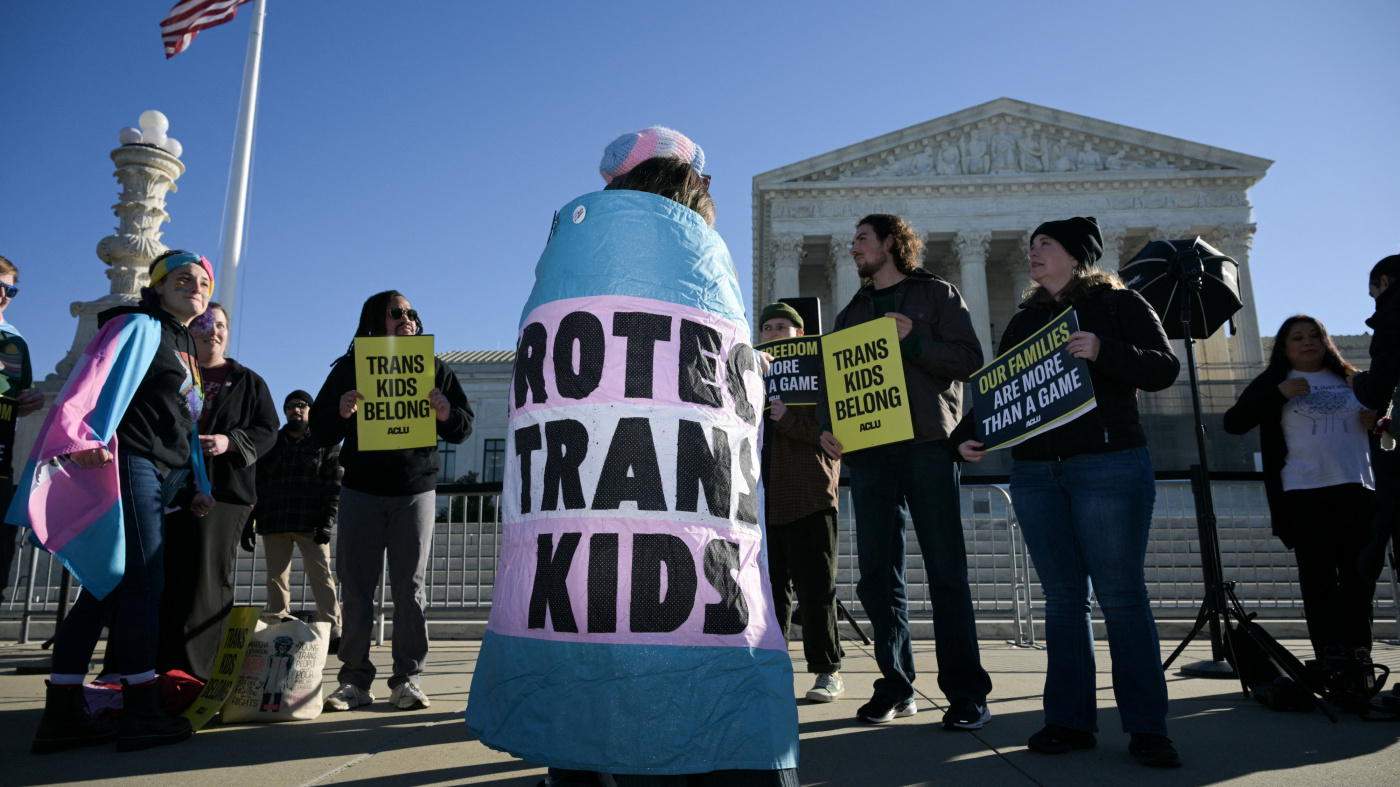
In April 2025, the Department of Education and the DOJ jointly launched a Title IX Special Investigations Team to investigate schools that permit transgender girls to compete on girls’ sports teams. On April 30, 2026, the DOJ escalated its efforts, launching investigations into 36 Illinois school districts that extended well beyond sports eligibility to discourage schools from teaching about sexual orientation and gender identity in any pre-K–12 class, and encourage them to prohibit allowing students to use facilities consistent with their gender identity.

In December 2025, Equal Employment Opportunity Commission (EEOC) chair Andrea Lucas posted on X: “Are you a white male who has experienced discrimination at work based on your race or sex?” Former commissioners said that at the same time, charges from workers of color were not moving forward.

On April 23, 2025, President Trump signed Executive Order 14281, directing every federal agency to eliminate disparate impact analysis “to the maximum degree possible.” The DOJ formally rescinded its Title VI disparate impact regulations in December 2025. A former OCR attorney said efforts to address school discipline disparities, provide equal opportunities for English learner students, and to integrate schools were all at risk of being ineffective. The executive order did not resolve the underlying disparities and made the legal system less likely to unearth them.

At the DOJ, the inversion extended to active litigation. The department abandoned plaintiffs it had represented in Voting Rights Act cases and adopted the positions of the states it had been suing. In Louisiana v. Callais, the DOJ notified the Supreme Court in January 2025 that its prior argument—that Louisiana had justifiably drawn a second majority-Black congressional district—“no longer represented its position.” In Texas, the department filed a brief arguing majority-minority congressional districts were themselves unconstitutional racial gerrymanders. No career attorneys signed either filing.

Congress built the federal civil rights enforcement infrastructure because states and localities were not protecting populations at risk. When Southern governments refused to prosecute Klan violence, for example, federal prosecutors brought the charges. When school boards defied desegregation orders after the Brown v. Board of Education decision, federal courts compelled compliance. The infrastructure is critical because there are people most in need of protection who cannot count on the governments closest to them to provide relief from harm.

The Trump administration disputes its actions are a retreat from civil rights enforcement. It argues the new priorities are a more faithful execution of civil rights and antidiscrimination protections. Human Rights Watch wrote to the White House and each agency covered in this report, summarizing out findings and requesting a response. Only the Justice Department’s Civil Rights Division replied. It told Human Rights Watch it would “address and deter unlawful discrimination wherever it exists,” and described the nonpartisan career attorneys who left as “activists” who had used the agency’s powers to benefit certain groups they deemed underprivileged.

The administration presents a reality in which it is actually rescuing civil rights by ending race-conscious programs and remedies that it insists are themselves a form of discrimination and redirecting federal enforcement capacity towards certain Americans in the US that it says have been overlooked. The facts and analysis set out in this report do not bear that account out. Regardless of its stated goals, the administration’s actions have weakened the offices meant to address discrimination, and left victims and communities across the country who have experienced discrimination without anywhere to turn.

The International Covenant on Civil and Political Rights (ICCPR) requires effective remedies for human rights violations—including government action to protect people from discrimination and other harms by private actors. Article 6 of the International Convention on the Elimination of all Forms of Racial Discrimination (CERD) requires effective protection against racial discrimination. The Trump administration, however, is busily dismantling the most important pillars of its efforts to ensure remedies for systemic patterns of discrimination.

In Louisville, the police department found to have abusive and discriminatory practices is not being held accountable for those actions. Ja’Maury and Kennell S. remain in the dark about the status of their investigations at the Education Department and HUD. Black communities in Houston County, Georgia, continue to be underrepresented in the political system. They are just a few of the thousands of people who trusted that when they experienced discrimination—unequal treatment based on protected traits—the system built by Congress would address it. That infrastructure has been dismantled, and in some cases, used to harm them.


Recommendations

To the United States Congress

  • Conduct oversight hearings on the collapse of enforcement capacity at key federal agencies, including the Justice Department, the Education Department, the Department of Housing and Urban Development, and the Equal Opportunity Employment Commission. Subpoena agency records on case closure rates, staffing levels, regional office closures, and the internal directives and guidance that produced them. Make this record publicly available.

  • Make appropriations for the agencies named in this report that are explicitly directed to civil rights enforcement.

  • Pass legislation creating a private right of action for disparate impact claims under Title VI of the Civil Rights Act of 1964.

To State Legislatures

  • Pass or strengthen state statutes with disparate impact standards to help fill part of the gap created by waning federal enforcement.

  • Create or fund state fair housing enforcement agencies with investigative authority covering fair housing violations, and pass any needed enabling legislation modeled on the federal Fair Housing Act of 1968.

  • Establish state pattern-or-practice authority enabling attorneys general to investigate systemic violations by law enforcement agencies, with adequate resources.

  • Create private rights of action under state law for discrimination claims previously only covered by federal enforcement.

  • Consider increasing funding to legal aid and other organizations so they can help make up for some of the investigative capacity lost by federal agencies.

To State Attorneys General

  • Investigate and bring enforcement actions under state civil rights statutes for discrimination that federal agencies are no longer addressing.

  • Consider mounting challenges to federal agency decisions including case closure policies that harm state residents and violate federal statutory obligations.

  • Establish transparent complaint intake mechanisms to capture some of the civil rights complaints federal agencies are no longer investigating.

To State and Local Civil Rights Enforcement Agencies

  • Expand intake capacity to receive complaints federal agencies are not processing.

  • Publish complaint data by geography, discrimination category, and other metrics annually to document the volume of violations unaddressed by federal agency withdrawal.

To the United Nations, CERD, and Relevant Special Procedures

  • CERD and relevant special rapporteurs should help document the anti-discrimination enforcement rollback. Mandate-holders who should consider engaging include:

    • The UN Special Rapporteur on Contemporary Forms of Racism, Racial Discrimination, Xenophobia and Related Intolerance;

    • Working Group of Experts on People of African Descent;

    • Special Rapporteur on the rights of persons with disabilities;

    • Special Rapporteur on the right to education;

    • Special Rapporteur on adequate housing as a component of the right to an adequate standard of living, and on the right to non-discrimination in this context;

    • Special Rapporteur on the rights of Indigenous Peoples;

    • Special Rapporteur on minority issues;

    • Independent Expert on protection against violence and discrimination based on sexual orientation and gender identity.

A Note on Federal Executive Agencies

This report does not include formal recommendations to the White House, the Department of Justice, the Department of Education, the Department of Housing and Urban Development, or the Equal Employment Opportunity Commission. The leadership of these agencies have not demonstrated good faith interest in improving anti-discrimination enforcement in the US. The immediate remedies lie with Congress, state and local actors, the media and civil society, and international bodies. A future administration will need to rebuild what has been dismantled by this executive branch. The record compiled in this report will help provide a roadmap. 
 

Methodology

Research for this report was conducted from August 2025 through May 2026. Human Rights Watch interviewed 43 individuals, including current and former staff of federal civil rights enforcement agencies, complainants and affected family members, civil rights attorneys in private practice and nonprofit organizations, legal experts and community organizers. Interviews were conducted remotely over video. No compensation was paid to interviewees. Researchers obtained informed consent from interviewees and explained the purpose of the research, how interviewees’ accounts would be used, that interviewees did not need to answer all questions, and they could stop the interview at any time.

Human Rights Watch reviewed thousands of pages of documents including agency guidance documents and press releases, whistleblower complaints, government reports, legal filings and court opinions, as well as social media posts by agency officials and staff, news reporting, and other documents provided to Human Rights Watch.

Researchers sent letters summarizing the findings of this report, posing questions, and soliciting feedback to the White House Counsel’s office, the Department of Justice Civil Rights Division, the Department of Education Office for Civil Rights, the Department of Housing and Urban Development Office of Fair Housing and Equal Opportunity, and the Equal Employment Opportunity Commission. The Justice Department’s Civil Rights Division responded and that response is incorporated at relevant points in the report. No other agencies responded in time for publication.

Pseudonyms are used for all interviewees who are former or current federal employees, complainants or plaintiffs, and certain community members, to minimize any risk of retaliation. Many interviewees expressed concern regarding a hostile climate for individuals choosing to speak out against the current administration. Pseudonyms are not used for individuals who requested their real names be used as part of their activism. Where publicly reported quotes are used, the original source is cited.
 

The Origins of Federal Civil Rights Enforcement in the United States

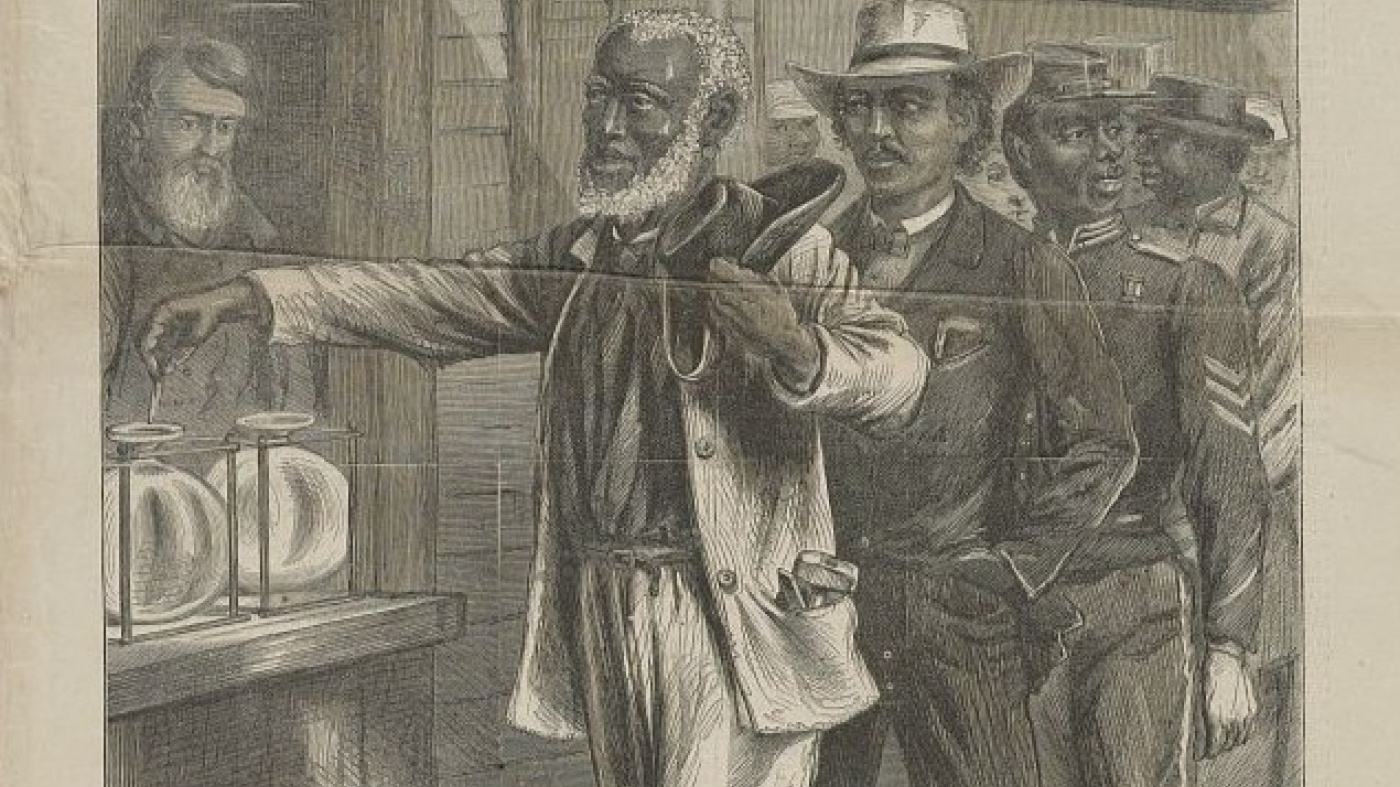
The federal government’s civil rights enforcement infrastructure was built, from its inception, to protect Black Americans.[1]

In 1870, Congress passed the Act to Establish the Department of Justice to handle the growing volume of post-Civil War litigation involving the federal government. The Act gave the Justice Department control over all federal law enforcement, all criminal prosecutions, and all civil suits in which the United States had an interest.

President Ulysses S. Grant wanted the new department’s initial mandate to focus on countering groups in the South that had used intimidation and violence to oppose the Thirteenth, Fourteenth, and Fifteenth Amendments.[2] Those amendments abolished slavery, entrenched equal protection as a key constitutional principle, and prohibited racial discrimination in voting. Groups like the Ku Klux Klan (Klan) regularly executed acts of violence and terror against Black Americans exercising their right to vote, running for public office, and serving on juries.[3] Because state and local law enforcement were very often complicit, only federal intervention could counter the violence.

At Grant’s urging, Congress passed the Enforcement Acts of 1870 and 1871 and the Ku Klux Klan Act, which Grant signed on April 20, 1871. The laws gave Amos Akerman, the first attorney general of the department, unprecedented tools to subdue white supremacist violence.[4] In the early years, the department secured over 1,000 indictments against Klan members and more than 550 convictions, and by late 1871, there were more than 3,000 indictments and 600 additional convictions.[5] Historian William McFeely wrote that “perhaps no attorney general since [Ackerman’s] tenure…has been more vigorous in the prosecution of cases designed to protect the lives and rights of black Americans.”[6]

The Justice Department’s early civil rights work did not last. Reconstruction[7] collapsed as political will in the North evaporated and white supremacist violence largely succeeded in restoring racial subjugation across the South. In the disputed presidential election of 1876, Republicans essentially traded away their commitment to federal enforcement of civil rights in exchange for a better chance at winning the presidency. Under the Compromise of 1877, all remaining federal troops were withdrawn from the South, eliminating a key enforcement mechanism that had protected Black Americans and Reconstruction governments. White former Confederates, who called themselves “Redeemers,” swiftly regained control of state governments across the region.[8]

The Supreme Court then dismantled the legal framework Reconstruction had erected. In United States v. Cruikshank (1876), the Court gutted the Enforcement Acts and overturned the convictions of white men who had massacred Black citizens in Louisiana. In the Civil Rights Cases of 1883, the Court struck down the Civil Rights Act of 1875, which had prohibited racial discrimination in public accommodations, ruling the Fourteenth Amendment restricted only state action, not the conduct of private individuals or businesses. Frederick Douglass called the decision a “heavy calamity upon seven millions of the people of this country” that left them “naked and defenceless against the action of a malignant, vulgar, and pitiless prejudice.”[9] In Plessy v. Ferguson (1896), the Court upheld racial segregation under the doctrine of “separate but equal,” cementing Jim Crow as the law of the land for the next 58 years.[10] These decisions stripped the Reconstruction Amendments of their force. The Justice Department, created to prosecute the Klan and protect rights of newly emancipated Black people, had no tools left to use and no political mandate to use them.

What followed was a sustained period of federal abandonment of civil rights. Southern states imposed a system of racial hierarchy through poll taxes, literacy tests, and “grandfather clauses”[11] to disenfranchise Black voters. Segregation was enforced by law and by extreme violence.[12] The Department of Justice maintained a small Civil Liberties Unit within the Criminal Division, but the unit lacked the authority and resources to mount meaningful enforcement.[13] For nearly 80 years, the promise embedded in the founding of the department—that the federal government would use its power to protect the rights of Black Americans—went unfulfilled.

The civil rights enforcement infrastructure that exists today was rebuilt in the middle of the 20th century. In 1947, a committee appointed by President Harry Truman proposed the creation of a standalone Civil Rights Division within the Department of Justice, finding federal civil rights enforcement would lack the “prestige, power, and efficiency” it needed as long as it was restricted to a unit within the Criminal Division. A decade later President Dwight Eisenhower signed the Civil Rights Act of 1957, establishing the Civil Rights Division and elevating the federal government’s commitment to civil rights enforcement for the first time since Reconstruction. The creation of the Division was broadly understood to be in part a response to the horrors of the Holocaust and to a Cold War reality in which the US’s treatment of Black people was a steady source of international criticism.[14]

In its early years, the Civil Rights Division’s work was almost entirely to protect the ability of Black people in the South to register to vote. Landmark legislation soon followed expanded its mandate.[15] The Civil Rights Act of 1964 prohibited discrimination in public accommodations, education, and employment.[16] The Voting Rights Act of 1965 enforced the right to vote free from discrimination for racial minorities.[17] The Civil Rights Act of 1968, known as the Fair Housing Act, prohibited discrimination in the sale, rental, and financing of housing.[18] Together, these laws gave the Civil Rights Division the statutory authority to enforce anti-discrimination protections across fundamental domains of US life: where people lived, where they worked, where their children went to school, and whether they could participate in democracy.

The legislation also established a constellation of federal agencies to carry out enforcement, including those discussed in this report: the Civil Rights Division of the Department of Justice (DOJ), the Office for Civil Rights in the Department of Education (OCR), the Office of Fair Housing and Equal Opportunity in the Department of Housing and Urban Development (HUD), and the Equal Employment Opportunity Commission (EEOC).[19]

These agencies spread out across the country, opened regional offices, hired lawyers, investigators, and analysts, and began the work of translating the promises of the statutes into reality. Over the next 60 years, they sued to desegregate schools, to protect racial voting rights for racial minorities, to enforce fair housing laws, to ban employment discrimination, and to ensure people with disabilities had access to public institutions. These agencies also came to recognize sexual orientation and gender identity as grounds for civil rights protection, working to guarantee lesbian, gay, bisexual, and transgender (LGBT) people equal access to housing, employment, and education.[20] There were failures and setbacks, but the mandate was clear: to use federal power to constrain the power of states, localities, and private actors to discriminate.

This changed in January 2025, when the second Trump administration assumed power.

2025 Executive Orders

In his first days in office, President Donald Trump signed a series of executive orders declaring diversity, equity, and inclusion programs across the federal government to be a form of unlawful discrimination and ordering their immediate termination. On January 20, 2025, inauguration day, Executive Order 14151, “Ending Radical and Wasteful Government DEI Programs and Preferencing,” directed the Office of Management and Budget to terminate all DEI mandates, policies, programs, and activities throughout the executive branch, describing DEI as “illegal and immoral discrimination” that had been forced into “virtually all aspects of the Federal Government.”[21] It required agencies to close their DEI offices, place DEI staff on administrative leave, and submit plans for reduction-in-force actions against employees who had worked in DEIA[22] offices within four days.

The next day, Executive Order 14173, “Ending Illegal Discrimination and Restoring Merit-Based Opportunity,” revoked Executive Order 11246, a directive signed by President Lyndon B. Johnson that had required federal contractors to implement affirmative action programs since 1965.[23] Executive Order 14173 instructed the attorney general to identify private-sector companies with “egregious and discriminatory” DEI programs, and to submit a report within 120 days recommending measures to press publicly traded corporations, large nonprofits, foundations, medical schools, and institutions of higher education with endowments exceeding $1 billion to end their DEI programs.[24]

The effects came quickly. The Education Department removed or archived hundreds of guidance documents, cancelled over $2.6 million in DEI training contracts, withdrew its Equity Action Plan, and identified more than 200 web pages for removal.[25] Agencies across the federal government compiled lists of employees who had worked in DEI-related roles or participated in diversity training.[26] An internal report obtained by the Washington Post outlined a three-phase process the Department of Government Efficiency would use to purge DEI from the federal workforce, beginning with the dissolution of offices and moving to the mass firing of individual employees deemed “DEI-related.”[27] By February 2025, the Department of Education had placed at least 100 employees on administrative leave to await termination.[28] The dismantling that followed these orders is documented in detail in the first section of this report.

Disparate Impact

On April 23, 2025, President Trump signed a third executive order, “Restoring Equality of Opportunity and Meritocracy,” targeting the disparate impact doctrine—the legal framework that allows discrimination to be proven by its effects rather than by evidence of discriminatory intent.[29] The doctrine originated with the Supreme Court’s 1971 decision in Griggs v. Duke Power Co., which interpreted Title VII to extend to employment practices; Congress codified this for employment in the Civil Rights Act of 1991, and through separate statutes, regulations, and legal precedents the framework has been extended to housing, education, and other federally funded programs.[30] For more than half a century disparate impact has been a primary mechanism of civil rights enforcement in the US.[31] It is a tool that allows people to challenge hiring criteria, lending practices, school discipline policies, and housing regulations that produce discriminatory outcomes even when no one can identify a smoking gun like a policy that explicitly says “exclude Black applicants.”[32]

As Patricia F., former DOJ attorney, told Human Rights Watch:

There are a lot of ways in which discrimination presents itself, and there are some instances where discrimination is present but there may be barriers, for whatever reason, to really being able to hone in on and identify the intent. Disparate impact is a tool that allows us to get at the full range of discrimination.[33]

The executive order directed all federal agencies to deprioritize enforcement of disparate impact liability to the maximum degree possible, review all pending investigations and legal matters relying on the theory, and take steps to unwind existing consent decrees and permanent injunctions based on it. It also directed the attorney general to assess whether federal authority preempts state laws imposing disparate impact liability.

The order cannot, by itself, eliminate disparate impact from federal law. The doctrine remains embedded in Title VII by act of Congress, and courts will continue to hear disparate impact claims brought by private litigants.[34] But the order attempted to withdraw the federal government from the field and to explore whether the administration could force state governments to do the same. The regulatory action that followed—including the DOJ’s December 2025 rescission of its Title VI disparate impact regulations and HUD’s proposed rescission of its Fair Housing Act disparate impact rule in January 2026—is documented later in this report.

The Students for Fair Admissions v. Harvard Case

The administration and its allies have used the Supreme Court’s 2023 decision in Students for Fair Admissions v. Harvard (SFFA) to drive and justify policy shifts much broader than the ruling required.

The SFFA decision addressed the question of whether race-conscious admissions programs at Harvard University and the University of North Carolina violated the Equal Protection Clause of the 14th Amendment. The Court held they did, but the majority opinion was explicit that “nothing in this opinion should be construed as prohibiting universities from considering an applicant’s discussion of how race affected his or her life, be it through discrimination, inspiration, or otherwise.”[35] Moreover, the holding spoke only to the consideration of race as a relevant factor in university admissions decisions. It did not address DEI programs in a broader sense; it did not apply to race-related initiatives more broadly, including in kindergarten through high school education; and it did not alter federal civil rights enforcement obligations under the Civil Rights Act of 1964, the Voting Rights Act of 1965, or the Fair Housing Act of 1968.

On February 14, 2025, the Department of Education’s Office for Civil Rights issued a “Dear Colleague” letter asserting that “Although SFFA addressed admissions decisions, the Supreme Court’s holding applies more broadly.” The letter asserted educational institutions, from preschool through graduate school, must eliminate what the administration called “race-based preferences” in admissions, hiring, promotion, compensation, financial aid, scholarships, prizes, discipline, housing, graduation ceremonies, and “all other aspects of student, academic and campus life.”[36] The letter described DEI programs as having “toxically indoctrinated students with the false premise the United States is built upon ‘systemic and structural racism.’”[37] It warned the department would begin assessing compliance only 14 days after issuance, and it threatened to withhold federal funding from institutions that did not comply.[38]

The chilling effect was immediate. Universities began scrubbing DEI references from their websites.[39] School districts suspended diversity-related programs before any enforcement action was filed.[40] Legal scholars noted the letter’s claims were in places went quite far beyond what the SFFA majority had actually held—suggesting, for example, that it was unlawful for institutions to eliminate standardized testing to “achieve a desired racial balance or increase racial diversity.”[41]

On April 24, 2025, three federal courts in different parts of the country enjoined the department from enforcing the Dear Colleague letter, its accompanying FAQ, and a subsequent certification requirement.[42] The NAACP Legal Defense Fund, in a lawsuit filed on behalf of the NAACP, argued the letter presented “a legally flawed and unsupported interpretation” of Title VI and was itself an act of intentional discrimination against Black students.[43] The administration ultimately dropped the letter in the face of these legal challenges, but has continued to pursue essentially the same enforcement agenda through other agencies including the Department of Justice.[44]

Creating an Environment for Discrimination

The Trump administration has also reframed its definition of discrimination itself to deliberately conflate it with DEI and erased historical information that explains why discrimination persists and why civil rights protections exist.

Conflating DEI with Prohibited Discrimination

The administration has advanced an idea of “discrimination” that conflates it with DEI, critical race theory, and disfavored facets of anti-discrimination law itself, treating these as part of a single idea or program, and working to delegitimize all of it. Conservative activist Christopher Rufo laid the groundwork for this during Trump’s first term. In 2020, after a Seattle city employee leaked diversity training materials, Rufo publicized them on Fox News and positioned himself as the leading voice against what he called the “infiltration” of critical race theory into US institutions. His appearance on Fox prompted a call from Trump’s chief of staff the following morning, and weeks later, the White House issued an executive order banning certain topics from federal diversity training.[45]

Rufo was explicit about his strategy. In March 2021, he wrote in a post on X: “We have successfully frozen their brand—’critical race theory’—into the public conversation and are steadily driving up negative perceptions. We will eventually turn it toxic, as we put all of the various cultural insanities under that brand category.” He continued: “The goal is to have the public read something crazy in the newspaper and immediately think ‘critical race theory.’ We have decodified the term and will recodify it to annex the entire range of cultural constructions that are unpopular with Americans.”[46] Rufo’s communications strategy was designed to collapse distinctions between an academic legal framework some scholars use to explain how they understand racism to operate in the law (critical race theory), corporate training programs that aim to make workplaces more diverse and welcoming (DEI), K–12 curricula that celebrate different cultures and histories, and disfavored aspects of federal enforcement of anti-discrimination statutes. This meant that opposition to any one of them could be mobilized against all of them.

The Trump administration adopted this approach. Executive orders, agency guidance, and public statements treated DEI programs, racial sensitivity training, equity initiatives, affirmative action, and the academic study of systemic racism as interchangeable and as illegitimate. The January 20 executive order described DEI as encompassing everything from airline safety to federal grant-making, without distinguishing between programs.[47] The Dear Colleague letter dismissed as “toxic indoctrination” the premise that systemic racism exists. The effect was to delegitimize the premise that racial discrimination remains a structural problem requiring structural remedies. The Manhattan Institute, where Rufo is a senior fellow, produced model legislation for state legislatures seeking to eliminate DEI.[48]

Erasing Historical Records

The Trump administration has removed and undermined historical information that helps people in the US understand the origins and manifestations of systemic discrimination.

In March 2025, President Trump signed an executive order titled “Restoring Truth and Sanity to American History,” directing the Smithsonian Institution and the Secretary of the Interior to identify sites that included what the order termed “improper partisan ideology.”[49] In May 2025, Interior Secretary Doug Burgum launched a review of materials across the National Park System. What followed was an extensive removal of exhibits discussing chattel slavery, genocide and displacement of Indigenous peoples, civil rights, and LGBT history from national parks and federal sites.[50]

At the Selma to Montgomery National Historic Trail in Alabama, officials flagged approximately 80 items for removal.[51] At Harpers Ferry National Historical Park, the Park Service removed information about abolitionist John Brown’s raid and more than 30 signs referencing racial discrimination and white hostility toward formerly enslaved people.[52] At Fort Pulaski National Monument in Georgia, the Park Service removed the “Scourged Back” photograph, one of the most widely recognized images documenting the physical brutality of slavery, showing the scarred back of an enslaved man named Peter.[53]

The administration also flagged nearly 200 words for limitation or avoidance on government websites and materials, including “women,” “tribal,” “disability,” “LGBT,” “transgender,” and “race and ethnicity.”[54]

In February 2026, a coalition of conservation and historical organizations sued the administration, alleging the removals violated federal law. The lawsuit described an active effort to reshape the public record—to make it harder for people to understand why civil rights protections are necessary.[55]


First, they dropped all the cases that were affirmative in advancing civil rights. And now they are really trying to roll it back, and they’re doing it in the most overtly political and unprincipled way.


— Stephen T., virtual interview with former DOJ attorney, February 2026

This Time Was Different

Transitions between Republican and Democratic administrations have often produced changes in civil rights enforcement priorities, including more aggressive pursuit of certain cases and less attention to others. What the Trump administration did beginning January 20, 2025, was different. It was a deliberate gutting of civil rights enforcement agencies, unprecedented in both nature and scope.[56]

Two months in, journalists and civil rights lawyers began describing what they were watching as the most severe rollback of federal civil rights enforcement since Reconstruction.[57] Within weeks, the enforcement apparatus that had enforced the Civil Rights Act, the Voting Rights Act, the Fair Housing Act, and Title IX for six decades was being taken apart from the inside.

The dismantling began with downsizing the workforce. On January 28, 2025, the Office of Personnel Management sent an email titled “Fork in the Road” to approximately two million federal employees, offering them paid administrative leave through September 30 if they resigned by February 6.[58] Those who stayed, the email warned, would face unspecified “workforce reforms.”

The program was pushed through the newly created Department of Government Efficiency, or DOGE, by Elon Musk, one of the president’s largest political donors.[59] Career staff and labor unions described the email as a coercive move meant to push out civil servants rather than a voluntary workforce reduction.[60] A federal judge briefly blocked the program.[61] Nonetheless, approximately 75,000 employees accepted the offer before it closed.[62] The “Fork in the Road” offer applied across the entire federal workforce, but as detailed in the sections that follow, was layered with measures specifically aimed at civil rights staff including political reassignments and reductions-in-force that ultimately led to mass resignations from civil rights offices.

By the end of 2025, the New York Times reported that DOGE had driven thousands of federal workers from their positions while achieving almost none of its claimed budgetary savings.[63] The deferred resignation program was the first of several tools the administration used to hollow out the federal civil rights workforce.

Against this backdrop, political appointees supportive of the administration’s agenda were placed in positions of authority, while career civil rights staff who pushed back were removed. Restructuring made it difficult to carry out investigations that required sustained institutional knowledge. Line attorneys understood the administration was changing the purpose, and not just the priorities, of the agency in a significant way.

The Department of Justice Civil Rights Division

At the beginning of January 2025, the Civil Rights Division had about 365 attorneys.[64] These were career professionals who had spent years or decades investigating and prosecuting civil rights violations. Some had joined during previous administrations and served under multiple presidents. As was the case more broadly across the Justice Department, these attorneys understood their role as representing the United States government and enforcing the law, not representing the president or advancing his political agenda.

Under the Trump administration, a new charge from political leadership was delivered on day one. Attorney General Pam Bondi sent a memo to Justice Department staff describing government attorneys as the president’s lawyers and strongly rebuked Justice Department lawyers who refused to advance legal arguments or other actions they viewed as legally indefensible, mischaracterizing such actions as essentially a form of illegitimate political resistance to the President.[65] One law professor wrote the memo communicated: “You have to put your loyalty to Donald Trump above your oath.”[66]

Career staff were shocked by the implications. Gloria A., a long-time lawyer in the division, described to Human Rights Watch:

The message [in] Bondi’s memo—that we were the president’s lawyers. I remember it just flew out the window right then and there, everything that I had been taught about what it meant to be a DOJ attorney.[67]

Nicole P., who had served in the division for nearly a decade, resigned in March 2025. She told Human Rights Watch the Bondi memo felt like “a punch in the stomach” and said career staff had never viewed themselves as the president’s lawyers: “We viewed ourselves as attorneys for the United States, which is different.”[68]

New political appointees treated career staff as adversaries from the outset. Section chiefs were reassigned to the FOIA office and the HR complaints office—demotions, in effect, that signaled to line attorneys that senior leadership would no longer be there to protect them.[69]

Career attorneys were told that that one political appointee did not want to hear “lawyer talk” from them, and they reportedly had their legal process concerns dismissed as “deep state” obstruction.[70] Margaret D., a career attorney in the Disability Rights Section, said the new political leadership had demanded to know how disability rights work furthered the president’s executive orders. Between two-thirds and three-quarters of the section’s attorneys resigned by the fall, she said.[71]

The mass exodus that followed was mostly driven by resignations rather than direct terminations. Many attorneys understood new assignments to politically charged issues or work outside their expertise as a sign that new leadership wanted them to leave and was applying pressure for those not personally aligned with the administration’s policies to quit.[72] Some left because they thought the new enforcement priorities subverted the division’s mission, and others left because they did not want to be asked to develop or defend positions they viewed as legally unsound.[73] Leadership chose not to hire to replace the leaving staff and instead solicited attorneys who stayed to transfer into certain sections to cover priority areas.[74]

By June, the Civil Rights Division was down to 110 attorneys.[75] By fall, it had lost close to 400 people, including about 75 percent of its attorneys.[76] The voting rights section, which on the eve of President Trump’s second inauguration had employed dozens of lawyers enforcing the Voting Rights Act, was reduced to three lawyers.[77]

On December 9, 2025, more than two hundred former attorneys signed a public letter describing what had happened as a coordinated effort to undermine career staff.[78] One former section chief compared it to someone “taking an axe to the place.”[79]

The institutional knowledge lost was, in Gloria A.’s words, “decades and decades worth of work—absolutely immeasurable.”[80] Victoria S., another former career attorney, described civil rights enforcement as an apprenticeship model: “You learn by working alongside people with decades of experience. All of that institutional knowledge is now gone.”[81] The Division lost the attorneys as well as the capacity to conduct the investigations it had carried out over six decades.

The Justice Department disputed this characterization in its response to Human Rights Watch. It wrote the division had been populated by “activists” who used the agencies authority to benefit groups deemed “underprivileged,” and wrote the departures of these attorneys gave “fairness and equal application of the law room to breathe.”[82]

Most of the attorneys who left were career civil servants, not political appointees. They served through multiple presential administrations and were obligated to enforce the law under the same standards and protocols regardless of who occupied the White House.[83] The work often moved forward after layers of internal review, supervisory sign-off, and collaboration between political appointees and nonpartisan civil servants.[84] In a December 2025 open letter signed by more than 200 former DOJ attorney, they wrote the administration’s characterization of them as being in “resistance mode” was inaccurate, and that, “We left because this Administration turned the Division’s core mission upside down, largely abandoning its duty to protect civil rights.”[85]

The Collapse of DOJ Independence

The Civil Rights Division’s destruction was part of a broader collapse of the Department of Justice’s institutional independence. Independence had long been a cornerstone of the department’s identity; although it is an executive agency, Presidents from both parties have long respected the principle that the department should act independent of political interference or direction from the White House.[86] There was a long-established bipartisan consensus that this was essential to upholding the rule of law. The Bondi memo formalized a new posture: government attorneys were now the president’s lawyers.[87]

The White House coordinating with DOJ litigation came in ways that broke with long-established practices designed to safeguard independence. One clear, early illustration came in a Texas redistricting case.[88] In July 2025, a Republican map-drawer named Christopher Kincaid testified that he had been at the White House and seen a draft of a DOJ enforcement letter before it was sent, and had spoken to DOJ about it.[89] The letter, signed only by political appointees without career attorneys, argued that Texas’s majority-minority[90] congressional districts were themselves unconstitutional racial gerrymanders.[91] The argument contradicted positions DOJ was taking at the same time in other active litigation. After direct pressure from the President and the DOJ letter, Texas legislators approved a new map that would result in the loss of a majority-minority Congressional seat.[92]

On July 29, 2025, a group of Senators sent a letter to the Office of Special Counsel requesting a Hatch Act investigation into the coordination between the White House and DOJ on the Texas letter.[93] The letter noted that “DOJ’s letter conflates and confuses basic legal concepts and makes claims about racial predominance unsupported by evidence—out of character for usually careful DOJ legal analysis.”[94] In November 2025, a three-judge federal panel blocked the Texas map. Judge Jeffrey Brown, a Trump appointee, wrote: “It’s challenging to unpack the DOJ Letter because it contains so many factual, legal, and typographical errors.”[95] Judge Brown’s opinion found that “substantial evidence shows that Texas racially gerrymandered the 2025 Map.”[96] In December 2025, the US Supreme Court overturned the lower court ruling, allowing Texas to implement the contested map.[97] 

Stephen T., a former DOJ attorney, said:

When I was at the Justice Department ... they fiercely guarded their independence. We would never, ever have even dreamed of sending an enforcement letter to the White House before it was sent [out more broadly]. And this just shows that the Justice Department is no longer an independent law enforcement agency. They act as the political henchmen for the Trump administration.[98]

Justice Department legal filings have also earned rebukes from federal judges. A tracking project by Lawfare, a nonpartisan media outlet dedicated to legal analysis, identified what it said were serious defects in the government’s representations in more than 300 habeas corpus cases alone,[99] including misrepresentations to courts, missing filings, unauthorized transfers of detainees, and basic factual errors.[100] A magistrate judge rebuked interim US Attorney Lindsey Halligan for proceedings that were “infected with constitutional error.”[101] The criticism extended to the Civil Rights Division. The redistricting letter described above was signed by division leadership, and a federal judge in another case faulted the division for misleading the court in a voter-roll lawsuit and stretching statutes beyond their stated purpose.[102]

Gloria A., the former lawyer in the civil rights division, described what had been lost:

Federal judges—and this includes judges across the ideological spectrum—would say, “I don’t care what anybody else in this courtroom says, I want to hear what DOJ says.” That presumption of regularity—built over decades of career attorneys showing up and being straight with courts—has been destroyed. It will take decades to rebuild.[103]

The apparent increase in shoddy work coming out of the DOJ may be partially explained by handing work that was previously done by experienced civil rights lawyers to political loyalists without regard to their objective qualifications for the work. Constitutional law scholar Justin Levitt, in July 2025 testimony to the US Senate, said he saw a “notable difference in quality of care and legal analysis” between DOJ letters signed by political appointees and the filings of career attorneys.[104] By March 2026, nearly 300 current and former DOJ employees had signed an open letter describing the department as “taking a sledgehammer” to long-standing work “to protect communities and the rule of law.”[105] Even further, by Spring 2026, some federal judges across the country appeared to be questioning whether they could take Justice Department lawyers at their word, eroding the “presumption of regularity” where courts assume good faith on the part of attorneys acting on behalf of the government, according to a report from the New York Times.[106]

Gloria A. said having experience made one a liability:

The people now running the division are better off without people who actually know how problematic this enforcement is.[107]

The Department of Housing and Urban Development

At the Department of Housing and Urban Development (HUD), the Office of Fair Housing went from 31 staffers to 11 by summer 2025, a nearly 70 percent cut.[108] The broader Office of Fair Housing and Equal Opportunity (FHEO), which had approximately 550 staff entering the year, was set to shrink by more than a third.[109] During the October 2025 government shutdown, HUD sent reduction-in-force notices to 114 FHEO employees, 98 of whom were field-office investigators, with their final dates set for December 9, 2025.[110] The restructuring was not limited to a specific caseload or priority. For example, 75 percent of the Violence Against Women Act team was reassigned, leaving just 2 attorneys in the unit, and the Complex and Trauma-Informed Investigations Branch, which had specialized in cases requiring sensitivity to psychological trauma and intersecting forms of discrimination, was eliminated entirely.[111]

John C., a former fair housing investigator in HUD’s Denver regional office described the consequences:

The Denver regional office went from 40 to 50 people down to 8 to 12… [Complainants] were left in limbo, redirected to another region, where staff suddenly doing double duty.[112]

The administration changed staffing as well as the decision-making structure for fair housing enforcement. Conciliation agreements that regional offices had negotiated over months, built on detailed findings and reflecting the interests of complainants and respondents, now required sign-off from political appointees in Washington D.C. This kind of centralization was a break from past practice. “It is now at the whim of some DC staffer,” John told Human Rights Watch. “I’m not going to… tell an individual that, because of this current administration’s interpretation of their law, that a claim does not exist. That’s for courts and investigators to decide. Not me.”[113]

On August 27, 2025, a group of HUD attorneys filed a detailed whistleblower complaint. They documented what they called a gag order forbidding fair housing attorneys from communicating with complainants or with the Department of Justice.[114] The Fair Housing Act requires HUD to investigate every complaint it receives; the agency does not have statutory discretion to pick and choose which cases deserve investigation.[115] But internal communications documented in the whistleblower complaint showed that HUD had nonetheless closed or halted at least 115 fair housing cases by intercepting referrals to DOJ that had already been prepared and withdrawing charges without issuing findings of discrimination. The whistleblowers alleged that this was a direct violation of federal regulations.[116]

Two of the whistleblowers whose names were public, Paul Osadebe and Palmer Heenan, were fired on September 29, 2025, one week later.[117] The message was clear that individuals who attempted to sound the alarm about potentially unlawful actions would be punished. One HUD staffer told Human Rights Watch, “The message wasn’t subtle. If you speak out, you’re out.”[118]

The Federal Unionists Network, the labor organization representing career federal employees, described the Osadebe and Heenan terminations as a “stunning act of illegal retaliation.” It said the dismantling of HUD was part of a larger plan to “create chaos, end civil rights protections, legalize segregation and exert unitary executive power.”[119]

HUD has not attempted to hide its about-face. On its website, the department describes its prior enforcement as having “strongarmed housing providers, appraisers, and localities” through “radical policies” that made housing “less affordable, less accessible, and less safe.” The site announces that a “priority memorandum” issued by the Trump-appointed head of the Office of Fair Housing and Equal Opportunity will now review every fair housing case before the agency takes action.[120] The statement essentially confirms the policy reversal the whistleblower complaint described.

The 1968 Fair Housing Act requires HUD to administer its programs “in a manner affirmatively to further” fair housing policies, an affirmative obligation to dismantle segregation. HUD carried out that duty through its Affirmatively Furthering Fair Housing framework, which required jurisdictions taking federal funds to identify local segregation patterns and take clear steps to unwind them. The elimination of Affirmatively Furthering Fair Housing enforcement priorities reduces the work HUD is actually doing in that vein.[121]

Miriam E., a former HUD housing attorney, told Human Rights Watch it was painful to watch the agency she had worked in stop investigating discrimination and start, in her view, protecting the institutions accused of it.[122] Many former staff shared they wrestled with the ethical dilemma of staying or leaving the agency as its mandate began to shift in ways that violated their personal understanding of the role.[123]

The Department of Education Office for Civil Rights

The Department of Education’s Office for Civil Rights (OCR) was the primary federal mechanism for enforcing civil rights in schools. OCR handled investigations under Title VI of the Civil Rights Act, which prohibits discrimination on grounds of race, color, and national origin in federally funded education programs; under Title IX of the Education Amendments of 1972, which prohibits sex discrimination in education; and under Section 504 of the Rehabilitation Act and the Americans with Disabilities Act, which prohibits discrimination on grounds of disability.[124]

Entering 2025, OCR had 568 employees and 12 regional offices. As of March 11, 2025, the administration had fired at least 1,300 Department of Education (ED) employees; 572 others had already taken buyouts.[125] At least 240 of these came from OCR—almost half its workforce.[126] Seven of the twelve regional offices were closed with no notice: Boston, Chicago, Cleveland, Dallas, New York, Philadelphia, San Francisco.[127] The closed offices had covered half the states in the country, serving about 60,000 public schools, and more than 30 million K–12 students.

In February 2026, the Government Accountability Office (GAO) released a report examining the administration’s personnel actions at the Education Department. It reported the department had paid OCR staffers up to $38 million during the layoff process, through severance payments, unused leave payouts, and administrative costs associated with the terminations. The large spending drew congressional attention.[128]

The underlying GAO report documented the fallout of the administrative dismantling.[129] Between March 11 and September 23, 2025, OCR received more than 9,000 discrimination complaints and “resolved” over 7,000 of them, with about 90 percent dismissed without review. Dismissals were not unprecedented at the agency, and the GAO noted in its report that complaints closed by dismissal had risen from 49 percent in the 2010-2011 school year to 81 percent in 2019-20, at least partly a consequence of guidance narrowing over time what the office would investigate. However, the 2025 dismissals were an acceleration in speed and scale. This was a 90 percent dismissal rate in six months, a significant portion of which staff who would have reviewed those complaints were barred from working.[130] The Education Department had not, as of the GAO’s review, made public any information about the nature of the investigations it had opened, including the type of discrimination involved, and had not updated its public list of institutions under investigation since January 2025.[131]

Vince L., a career attorney who had worked in OCR for years, said the initial order from new OCR leadership was “pencils down.”[132] He described three phases: “Stop all work, decimate staffing, divert resources to political witch hunts.… Some people didn’t even know [their offices had been shut] until their computers didn’t work.”[133]

The “pencils down” paradigm was wide reaching in practice. Leadership forbade OCR staff from communicating with any external parties, including the families and schools involved in open investigations.[134] For families who had filed complaints expecting investigation, the silence was disorienting.[135] In the first weeks of the administration, only 20 new investigations were opened, compared with more than 250 during the same period the year before. Approximately 12,000 cases were pending when the freeze began.

When case processing resumed, certain categories of cases were explicitly deprioritized. Racial harassment cases were initially “totally off the table,” Vince said. This meant that Black, Native American, and Latine[136] students facing discrimination would not have their cases prioritized for investigation. Vince said that when these cases were finally allowed to move forward, they required approval from headquarters before investigation could begin. However, the headquarters was essentially nonfunctional. Only two people at the national OCR office had authority to approve investigations for the entire country, he said. “It was a deliberate bureaucratic bottleneck,” Vince explained to Human Rights Watch.[137] The effect was to make the investigations almost impossible even when they were technically permitted. Analysis from The Brookings Institution found that in 2025, OCR did not address any Title VI racial-discrimination cases on behalf of Black students.[138]

Long-term monitoring agreements—commitments that school districts made in writing to address discrimination and that OCR agreed to monitor for compliance—were another issue. These agreements were “[n]ot rescinded formally,” Vince told Human Rights Watch. While he was at the department until fall 2025, he witnessed “[j]ust nobody working on them.”[139]

Jonathan C., a civil rights attorney who works with schools and families on education civil rights matters added: “Thirteen months of no enforcement under Title VI for students of color—after the Office for Civil Rights was literally created to do that exact thing.”[140] A report from the US Senate Health Education Labor and Pensions (HELP) Committee supported this claim.[141] In 2025 the office reached 6 Title VI resolution agreements out of 3,248 pending cases, a 92.9 percent drop from the 85 it resolved the prior year.[142] It resolved none of the 949 pending racial harassment cases and none of the 473 pending cases of discriminatory school discipline.[143]

The substantive rollback was as significant as the staffing collapse. After its reliance on the Supreme Court’s decision in Students for Fair Admissions v. Harvard to justify threats to cut federal funding to any school, college, or university that continued to operate race-conscious diversity programs, on February 25, 2025, OCR published a revised Case Processing Manual that removed the internal guidance that had enabled staff to expand individual complaints into systemic investigations, according to analysis from education outlet K12 Dive.[144] The manual is the internal document that guides OCR staff in conducting investigations, evaluating evidence, making determinations, and negotiating resolutions.

A class action complaint in Carter v. US Department of Education, filed March 14, 2025, alleged various legal violations, including that the secretary had acted outside her legal authority, that the administration’s actions violated the Administrative Procedure Act,[145] and that OCR had “politicized its work and undermined its credibility as a neutral fact finder,” abdicating its responsibility to enforce civil rights protections in specific, judicially cognizable terms.[146]The Department of Education rescinded the March 2025 reduction-in-force in January 2026, and at the time of this report’s publication, the case is stayed while the parties negotiate a potential settlement, according to the National Center for Youth Law, a plaintiff in the litigation.[147]

The Patterns Across Agencies

Across all three agencies, Human Rights Watch documented similar patterns. Staffing was slashed through direct layoffs, forced resignations, and reassignments. Political appointees moved aggressively to override nonpartisan career staff to effect radical shifts away from longstanding enforcement efforts. Gag orders at HUD and the Education Department prevented communication with complainants. Many cases were closed without investigation or findings. New investigations were disallowed, curtailed, or made functionally impossible to advance.

Disappearing Enforcement Efforts

Across agencies, the administration’s actions defeated the intent of statutes that govern civil rights enforcement, and some actions may have violated the law.

HUD’s gag order required Office of Fair Housing attorneys to obtain approval from a political appointee before issuing subpoenas, taking depositions, discussing settlements, or communicating with attorneys inside or outside government.[148] Because that approval rarely came, staff said, investigations died on the vine. The National Low Income Housing Coalition characterized the arrangement as an “unprecedented gag order” and alleged that it directly violated the Fair Housing Act’s mandate that HUD investigate every complaint.[149] At the Department of Education, the “pencils down” approach had the same effect: complainants emailed and called asking about their cases and were met with silence, while career staff reported they had been “essentially muzzled.”[150]

HUD withdrew eight fair housing guidance documents effective September 17, 2025, citing the president’s deregulation executive orders.[151] HUD support hotlines played recordings telling callers, “the number you reached is no longer in use.”[152] HUD closed or halted at least 115 fair housing cases, withdrawing charges and intercepting DOJ referrals without findings of no discrimination, in what some experts allege was a contravention of 24 C.F.R. § 103.200.[153]

On January 22, 2025, DOJ leadership issued an internal memo halting all new civil rights cases and flagging existing consent decrees for reassessment.[154] The Lawyers’ Committee for Civil Rights Under Law called the freeze unprecedented. In May 2025, the department moved to cancel police reform consent decrees negotiated with Minneapolis and Louisville in response to notorious police killings of unarmed Black people.[155]

The DOJ’s Civil Rights Division publications webpage lists the enforcement reports, findings letters, and guidance documents the Division has historically issued. That archive has rarely been updated since early 2025, across multiple categories, further bolstering the evidence of waning enforcement efforts.[156]

Justice Department leadership disputes this characterization of its enforcement activity. In a June 15, 2026 letter responding to Human Rights Watch, Assistant Attorney General Harmeet Dhillon wrote the Civil Rights Division "will address and deter unlawful discrimination wherever it exists," and wrote the notion it had not adequately addressed discrimination facing Black, Latino, and Native American communities was "factually incorrect."[157] The division attached a list of 127 cases it said showed its continued enforcement on behalf of "racial, ethnic, and other minority groups."[158]

Human Rights Watch analyzed the list of cases provided by the Civil Rights Division, which shows the division remains active across a range of issues. The largest category, 27 of the 127 cases shared, involved the prosecution of police officers and corrections officials for abusing people in their custody.[159] The Division has pursued important disability rights work, including a $125 million lawsuit against a transportation company for service refusals, a lawsuit against recreational parks for banning mobility devices, and settlements requiring prisons in Arizona, Arkansas, and North Carolina to accommodate incarcerated people with disabilities.[160] It has prosecuted at least 18 human trafficking and forced labor cases, and settled at least 15 cases protecting the rights of members of the military under the Servicemembers Civil Relief Act.[161]

The cases provided to Human Rights Watch also appear to confirm the Civil Rights Division’s priorities have shifted. Of the 55 cases on the list that were opened under the Trump administration, the focus appears to be on combatting antisemitism, protecting military service members, and prosecuting human trafficking.[162] Shifting enforcement priorities at the agency is standard when administrations change, and thus is not, on its own, cause for concern.

However, with regard to discrimination faced by the communities who have historically faced the lion’s share of discrimination, segregation, and exclusion in the United States, the record is concerning and confirms the finding in Human Rights Watch’s research. The list of cases shared by the Civil Rights Division does very little to dispute this claim. Very few of the cases shared appear to address discrimination by Black, Latino, and Native American people.[163] Fewer than a third of the cases were systemic matters challenging a policy or practice affecting an entire class of people. And of those, there were no police pattern-or-practice investigations, school desegregation cases, or voting rights cases.[164] These mechanisms were historically used to dismantle structural discrimination against these communities.

Tellingly, the Division did not identify any cases where it affirmatively initiated structural race-discrimination cases on behalf of Black, Latino, or Native American communities under the Trump administration.[165] The only instance of systemic relief for any of these groups came in a fair-lending case involving Hispanic homebuyers in Colony Ridge near Houston, Texas, a case that was opened in December 2023, inherited from the prior administration.[166] On the issues that remain important for civil rights enforcement for people of color today--the right to vote, systemic abuses in policing, ongoing residential segregation, and discrimination in housing, lending, and education--the Civil Rights Division’s self-curated list shows little to no current activity. The cases it put forward confirm, rather than contradict, these communities have been deprioritized for antidiscrimination enforcement and civil rights remedies.[167]

A Culture of Fear and Overcompliance

The dismantling produced a knock-on chilling effect that compounded its direct impacts. Schools, universities, and employers began unwinding their own diversity and civil rights programs preemptively, out of fear of federal investigation.

The February 14, 2025 Dear Colleague Letter threatened institutions with loss of federal funding within fourteen days if they maintained programs the department characterized as discriminatory under Title VI.[168] The Attorney General’s March 21, 2025 memo implementing Executive Orders 14151 and 14173 directed federal agencies to dismantle DEI initiatives and flagged the administration’s intent to target the doctrine of disparate impact.[169] Executive Order 14173 revoked Executive Order 11246, which had governed affirmative action by federal contractors since 1965.

Institutions responded before any enforcement action could harm them. For example, North Carolina public universities dropped DEI graduation requirements, the University of Akron canceled a twenty-year-old diversity forum, and the University of Colorado took down its DEI webpage.[170] The University of Michigan terminated its flagship DEI program, citing “increasing pressure from the Trump administration.” Harvard renamed its DEI office the same day its legal team met with the administration.

A former DOJ attorney described this preemptive compliance:

The government has a lot of soft power… Even if this is a legally incorrect interpretation—that somehow Title VI prevents all DEI programs—because the federal government is saying this, people are incentivized to adjust their programs, to adjust the way they operate, to come into compliance.[171]

The same overcompliance dynamic reached community organizations whose missions made them feel they were possible direct targets. Alisa D., a leader at an LGBT services organization in Texas, described vetting her organization’s public-facing materials after the Trump administration began publishing lists of flagged terms used to screen federal grants.[172] Staff bios were edited to remove references to trans identity. The organization rewrote a years-old federal mental health grant proposal in September 2025 to scrub any language identifying the LGBT community as the population served, in order to remain eligible for renewal funding.[173] “We made sure that we could be the most innocuous organization that we could possibly be,” Alisa said, “without any super triggering words.”[174] She said it was a strategy her team adopted to protect the survival of the organization, which they thought was a likely candidate to attract scrutiny because of its programming.

The dismantling of federal civil rights enforcement operated on two levels. Inside the agencies, staffing was allowed to dwindle and traditional priorities were set aside. Outside the agencies and across the country, federal signals that remedial civil rights programs were no longer required, or were even legally suspect, prompted schools, employers, and other institutions to preemptively abandon programs designed to remedy discrimination.


There is a deep wound that has been created that even when this administration is gone will still be there. This is going to take generations to heal.


— Alisa D., LGBT service provider in Texas

In March 2022, the Houston Home Journal reported on the story of Jacqueline Rozier, who moved to Houston County, Georgia in 1975. She had enlisted in the United States Air Force and served for 33 years at Robins Air Force Base. She raised her children in Houston County. For half a century, Houston County had been her home. [175]

In 2022, at the age of 67, Rozier ran for the Houston County Board of Commissioners as an independent candidate but lost by a margin of nearly two to one to her opponent, a white man named Tal Talton.[176] Jacqueline Rozier had little chance of succeeding from the outset. Houston County is more than 30 percent Black, but the Board of Commissioners is elected at-large, meaning that all five seats are chosen by voters countywide rather than by district.[177] In places where voting is racially polarized and white residents form the majority, an at-large system allows the majority to decide every seat. In a district system, Black voters concentrated in a given area could make up a majority in at least one district and theoretically have a stronger opportunity to elect their preferred candidate. At-large voting has its merits and some strong proponents, but in the particular context of struggles around voting rights in the US, it was regularly used as a tool for diluting the Black vote in the South after the Voting Rights Act of 1965.[178] In practice, the result of the at-large system is often that Black candidates have a more difficult time getting elected to office.

Black residents comprise 32.4 percent of Houston County’s voting-age population; white residents comprise 55.7 percent. Since 1980, just one Black candidate has won a seat on the five-member Board of Commissioners: Houston Porter Jr., who won in 1980, 1984, and 1988. Since Porter’s last victory in 1988, Black candidates, including Rozier, have run and lost in 1992, 1994, 2002, 2016, 2020, and 2022.[179]

The county’s at-large system has to be seen in the context of local history. Houston County sits on ground where Georgia enforced, throughout the twentieth century, what the complaint in Rozier’s case describes as “draconian laws that rigidly segregated communities across the state and relegated Black communities to second-class status.”[180] Between 1877 and 1950, there were at least four documented lynchings of Black residents in Houston County, according to research by the Equal Justice Initiative.[181] In the 1890s, groups of white residents conducted “whitecapping” raids—organized night-time violence intended to keep Black residents in a subjugated position. During the Jim Crow era, Black residents of Houston County were disenfranchised through poll taxes, literacy tests, and all-white primary elections.[182] Houston County schools remained segregated long after school de jure racial segregation of schools was declared unconstitutional in 1954, and the county did not take proactive steps to desegregate them until 1970, when a federal court ordered officials to do so. In the 1940s, the federal government built Jody Town outside Robins Air Force Base as a segregated residence for the base’s Black civilian employees; residents built a thriving community there, but in the 1970s, the county demolished it under the banner of urban renewal and relocated the residents.[183]

This history helps explain the atmosphere in which Black residents were unlikely to win at-large elections. Nor was racism simply an artifact of local history. The year before Rozier became the lead plaintiff in a federal voting rights case, a group of white Houston County high school students were filmed imitating the Ku Klux Klan in an incident that drew national coverage, and the Houston County school district settled two OCR racial harassment complaints against a cheerleading coach found to have created a racially hostile environment for two Black students.[184]

On January 16, 2025, mere days before Trump’s second inauguration, the Department of Justice sued Houston County, alleging that its at-large system violated Section 2 of the Voting Rights Act.[185] In practice, Black voters backed their candidates cohesively and white voters voted as a bloc in favor of others.[186] Since 2016, fewer than one in ten white voters had supported a Black-preferred candidate and this meant these candidates were not elected.[187] On March 24, 2025, just two months after it had brought the case, the department abruptly dropped its own case without providing much in the way of explanation. The Civil Rights Division filed a one-sentence notice of voluntary dismissal that did not give a public rationale for dropping the case: “Pursuant to Federal Rule of Civil Procedure 41(a)(1)(A)(i), the United States respectfully gives notice that it dismisses United States v. Houston County, No. 5:25-cv-25.”[188] The division did not issue a press statement, as it has done in some other cases it walked away from, and the public affairs office declined to comment to some reporters who covered the move.[189] 

On October 30, 2025, lawyers filed Rozier v. Houston County Board of Elections on behalf of Rozier and Hiram Morgan, a Black resident who has lived in Houston County since 1974.[190] The new case was a private suit where Rozier and Morgan were trying to advance a legal effort similar to the one DOJ had first brought forward. This meant individuals carrying a significant burden that had previously been partially carried by the country’s largest law enforcement institution.[191]

Rozier told a local television station that she hoped the suit would force the commissioners to reconsider the system that had elected them: “I believe that they in their heart believe that they’re doing the best job, and I believe that they think they are; the problem is how they got elected.”[192] That Rozier had to bring her case as a private action, rather than benefit from federal enforcement as plaintiffs often did in previous years, illustrates the broader decline in federal civil rights enforcement.

This chapter documents what the recent federal withdrawal looks like across four enforcement areas—voting, policing, education, and housing—from the perspective of people whose rights are at stake.

Voting

Houston County, Georgia

Community members have pressed the significance of the Houston County case publicly. Local news report that at a county commissioners’ meeting in April 2025, Gregory C., a Black resident, spoke about the at-large system that has kept Black candidates off the five-member board. He said that if the county replaced its countywide seats with single-member districts, a candidate like him would at least have a chance to run for the office in a competitive race. He acknowledged the commissioners could not promise him victory, but he said he only wanted rules written to “give me the chance.” Under the at-large system, he did not have one, “and that’s a problem.”[193]

The same local outlet also quoted Michael J., a Black Houston County resident, as saying:

Intention versus impact is an incredible thing, right? So even if you’re not purposely doing it, the impact is still there. I think that whether they have our best interest in mind doesn’t really matter if we’re still not getting representation.[194]

The attorney who represents Rozier and Morgan explained in another local media interview their proposed remedy is single-member districts; five districts in which each community elects its own commissioner. At least one of these districts would be majority-Black.[195]

Carlos A, a civil rights attorney, told Human Rights Watch the impact of DOJ withdrawal from voting cases was profound:

When DOJ brings litigation in the voting rights section, it sends out a guiding light—an indication of what the law means, and of what those in power must do to comply. Without them there, it leaves a large leadership gap.[196]

Texas Redistricting

In 2025, the DOJ reversed its position in a key Texas voting rights redistricting case, eventually arguing majority-minority congressional districts the state had created to try and ensure that minority populations could elect some of their preferred candidates to Congress were themselves unconstitutional racial gerrymanders.[197] The case centered on Texas’s mid-decade congressional map, which broke apart existing districts where Black and Latino voters would constitute a majority and have more electoral power. DOJ first opposed those changes as discriminatory. Then, after Trump’s inauguration, it adopted Texas’s view that the districts designed to help ensure minority representation were unlawful uses of race.

Texas State Senator Borris Miles, who represents a predominantly Black district in Houston, criticized the bill before the Texas House Select Committee on the redistricting. When sharing video from his testimony on Facebook, he wrote:

This redistricting map is a slap in the face to Black, Latino and any voter who calls Texas home. We’ve witnessed an unrelenting and massive assault on our voting rights, aimed at silencing the voices of Black, Brown and marginalized communities — unlike anything we’ve seen since the Jim Crow Era. This mid-decade RIG-DISTRICTING is just Jim Crow in a new Cadillac.[198]

Turtle Mountain and the Importance of Private Actions

Throughout the history of the Voting Rights Act’s Section 2, private citizens and groups brought many of the lawsuits that enforced it. Recently, some courts have ruled these private actions are not authorized by the statute—sharply increasing the importance of the same government-led enforcement efforts the Trump administration has moved to abandon.

In 2023, the Eight Circuit Court of Appeals held that private parties have no implied right to sue under Section 2 of the Voting Rights Act.[199] In May 2025, a panel of that court went further, ruling that private parties could not enforce Section 2 through Section 1983 either.[200] This leaves the Department of Justice as the only party able to bring a Section 2 case anywhere in the circuit’s seven states. But since January 2025, the Civil Rights Division has been hollowed, dismissed pending Section 2 cases, and turned its voting work towards what it claims to be widespread voter fraud.

Private enforcement is more than supplementary to the government’s work on Section 2. Of the more than 1,500 Section 2 challenges filed between 1982 and 2024, private plaintiffs brought over 90 percent of them and accounted for nearly 90 percent of all successful cases, according to an April 2026 draft research paper by Professor Christopher Seaman at Washington and Lee University School of Law.[201] His research found the Justice Department filed about 114 Section 2 cases across more than four decades, which is fewer than three a year.[202] Private lawyers and civil rights groups brought the remainder.[203]

The Turtle Mountain case began in 2022, rising from a challenge brought by the Turtle Mountain Band of Chippewa and the Spirit Lake Nation to a North Dakota redistricting map that split the two tribal communities into separate districts. After a trial, a federal court ruled in November 2023 the map violated Section 2, because it diluted Native voting strength by splitting the two tribes so that neither could elect its preferred candidates, and ordered a new map.[204] Under that new map, voters elected Collette Brown, the first Spirit Lake Nation member elected to the North Dakota legislature and a plaintiff in the case.[205] In May 2025, the Eighth Circuit panel held the plaintiffs did not have the legal right to bring the case in the first place.[206]

After the ruling, the Campaign Legal Center quoted Wes Davis, a plaintiff in the case and chair of North Dakota Native Vote, as saying:

We went to court because the map the state passed made it harder for Native voters like me to have a real voice. The court agreed and gave us a fair chance to elect candidates. Now, the Eighth Circuit wants to take away my right to question maps that silence votes, not because we were wrong, but because they say the Voting Rights Act does not create rights. That’s not justice and we’re going to keep fighting for that.[207]

The Center’s press release also centered Zachery S. King, another plaintiff:

I joined this case because I saw firsthand how the state’s map silenced Native voters in our community. It split us up in ways that made it nearly impossible to elect people who understand our lives… The court says that we never had the right to challenge it in the first place and that no North Dakota voter has that right anymore. That’s not just disappointing — it’s dangerous.[208]

Stephen T., a former DOJ attorney, described what the DOJ’s retreat means for Section 2 enforcement:

The Eighth Circuit’s Turtle Mountain case—if it’s upheld, private parties can’t sue under Section 2 of the Voting Rights Act at all. Only DOJ can sue. And DOJ won’t. That’s the end of Section 2 enforcement in the Eighth Circuit.[209]

Abandonment in Other Cases  

The Department of Justice has dropped other important Voting Rights Act cases, including a separate single-member district case in Pennsylvania. In Pennsylvania, DOJ had sued the city of Hazleton in January 2025, arguing that its at-large city council elections denied Hispanic residents equal opportunity to elect candidates of their choice.[210] Hispanic voters were about 43 percent of the city’s voting age population yet they had never elected a council member.[211] The DOJ had originally asked the federal court to order single-member districts as a remedy, but voluntarily dismissed the case about three months later without a clearly stated reason.[212]

In several matters, DOJ has switched sides and appeared against the plaintiffs it previously supported. In Texas, the department had sued since 2021 to block congressional maps it found to dilute Black and Latino votes, only to argue in 2025 that those districts drawn to address this vote dilution amounted to unconstitutional discrimination.[213] In Louisiana, the department withdrew a Supreme Court brief it had filed defending a majority-Black district and joined the white plaintiffs who argued the district violated their voting rights; the US Supreme Court struck this district down in 2026.[214] the Lauren P., a longtime voting rights attorney, described the pattern:

The Georgia and Pennsylvania single-member district cases were bread-and-butter VRA cases. They were dropped. And it’s not only that DOJ is missing in action—they’re engaging on the other side.[215]

The Red Line for Civil Rights Project, led by former Justice Department staff, has catalogued more than 100 cases across the Civil Rights Division’s docket in which it says the administration had shut down, dismissed, or reversed its position, including at least seven Section 2 cases it had been litigating to protect minority voters.[216] The division has instead pursued its new enforcement priority: alleged voter fraud. Since January 2025, it has opened approximately three dozen lawsuits against states across the country demanding voter registration files, meaning the staff and resources previously used to address racial discrimination in voting would be deployed to execute the administration’s efforts to stop unsubstantiated voter fraud.[217] At the time of publication, no federal district or appellate judges had ruled in favor of the Justice Department in these cases.

Policing

Louisville, Kentucky

In March 2023, after a two-year investigation, the Justice Department found the Louisville Metro Police Department “discriminate[d] against Black people in its enforcement activities,” used excessive force, and conducted searches on invalid warrants.[218] The investigation was sparked by the 2020 police killing of Breonna Taylor. Officers shot and killed Taylor, a Black woman, after bursting into her home in the middle of the night on a “no-knock” warrant. In the final weeks of the Biden administration, the DOJ and the city signed a consent decree on December 12, 2024.[219]This decree, like many others, was a significant step towards reform. It outlined limits on police use of force, enhanced de-escalation and other forms of training, required comprehensive data collection and retention to analyze racial disparities, and required ongoing oversight by an independent monitor to ensure the changes were implemented over time.[220]

The Trump DOJ moved to dismiss the consent decree in May 2025, arguing the previous administration wrongly equated statistical disparities with discrimination, the decree would have required unnecessary federal “micromanagement,” and took away control from local elected officials.[221] A federal judge dismissed the case on December 31, 2025. In March 2026, the DOJ moved to drop the remaining federal criminal charges against two officers involved in the warrant that led to Taylor’s death.[222]

Breonna Taylor’s mother, Tamika Palmer, responded to the motion to dismiss the criminal charges, telling ABC News that:

She was killed because of their lies and negligence, and somebody should be held accountable for that. Breonna doesn’t get to come back. She doesn’t get to put it behind her. There’s no putting it behind me. Every day since that day has been March 13th.[223]

Lonita Baker, the Taylor family’s attorney, told reporters:

We take away at this point—the consent decree gone… and now dismissing the case where there is clear evidence, where another officer agreed to testify. If you can’t be held accountable when there’s clear evidence as a police officer, when can you be held accountable?[224]

For Cassia H., a community organizer who helped pass a ban on no-knock warrants[225] in Louisville in 17 days during the 2020 protests against Taylor’s killing, the dismissal was devastating. The city has since replaced the enforceable federal decree with what the mayor calls a “community commitment.” Cassia H. told Human Rights Watch:

I am personally afraid of police. I don’t want my children to grow up that way. My son is 17, six feet, 200 pounds, he has locks in his hair. He’s a beautiful young man in my opinion, but he’s probably scary to some other folks. It’s been hard to have that conversation with him…. Our mayor has adopted 90 percent of the consent decree as a “community commitment” but there is no enforcement mechanism. It is a promise with no teeth.[226]

Minneapolis, Minnesota

The Minneapolis consent decree came after a DOJ investigation that found the Minneapolis Police Department engaged in a pattern of excessive force and unlawfully discriminated against Black and Native American people. The agreement was the culmination of years of advocacy and 2,300 documented community testimonies submitted by Communities United Against Police Brutality (CUAPB).[227] The decree, signed in the last days of the Biden administration, required the Minneapolis Police Department to reform its use-of-force policies, restrict military-style tactics at protests, prohibit officers from handcuffing children under 14, expand training and community engagement, and submit regular updates to an independent monitor, among other measures.[228]

When the Trump DOJ dismissed the decree in May 2025, one week before the fifth anniversary of George Floyd’s murder, it said the decree was part of Biden Civil Rights Division’s “failed experiment of handcuffing local leaders and police departments with factually unjustified consent decrees.”[229] A federal judge approved DOJ’s dismissal soon after, citing concerns about the strength of the investigation’s data and the ongoing cost of the external monitor.[230]

Michelle G., a longtime CUAPB organizer, explained to Human Rights Watch what her group had contributed and how it was undone:  

We founded this organization 26 years ago after Lucas Sanders was killed—shot 37 times, not armed. We collected 2,300 experiences from residents. We organized around two dozen community events. We created a people’s consent decree. We knew that the only way any of this would be implemented is if the DOJ was involved.[231]

Minneapolis Mayor Jacob Frey announced the city would continue implementing the terms of the consent decree voluntarily, but residents were skeptical.[232]

Policing In Other Jurisdictions

A number of cities had received DOJ “pattern or practice” findings under the prior Justice Department documenting systematic excessive force and racial discrimination by law enforcement before the Trump DOJ dismissed important police reform efforts.[233] Phoenix offers a useful example. In June 2024, the Justice Department had concluded that Phoenix police used excessive force, discriminated against Black, Hispanic, and Native American residents, and violated the rights of unhoused people.[234] In May 2025, the department closed the investigation and formally retracted its prior findings without the city agreeing to reforms.[235] The Civil Rights Division said the prior findings incorrectly equated statistical disparities with intentional discrimination and criticized consent decrees as a general practice for taking away local control of policing.[236] At the same time, the Justice Department dropped consent decrees in other jurisdictions, including Memphis, Mount Vernon (New York), Oklahoma City, Phoenix, Trenton (New Jersey), Louisiana State Police.[237] In each case, the DOJ investigation was the primary mechanism pushing reform.

In May 2025, the DOJ closed its investigation of the Memphis Police Department and retracted the findings it had issued in December 2024, which had documented a pattern of constitutional violations following the death of Tyre Nichols, an unarmed 29-year-old Black man brutally beaten by officers in the department during a January 2023 traffic stop.[238] Nichols died days later from blunt force injuries. The Justice Department claimed that its prior findings of abusive practices lacked adequate factual basis and that court-enforced oversight represented expensive and unneeded micromanagement of local policing.[239]

Kristen Clarke, former leader of the Civil Rights Division told the Associated Press the extensive findings were compiled using data, body camera footage, and information provided by officers within the department.[240] She said, “To wholesale ignore and disregard these systemic violations, laid bare in well-documented and detailed public reports, shows patent disregard for our federal civil rights and the Constitution.”[241] The message to police departments across the country was the federal government would not hold them accountable for abuse.

Jessica B., a civil rights attorney and former DOJ attorney, explained to Human Rights Watch:

The private bar cannot replicate what DOJ brings to policing work—the sophisticated technology, the data analysis, the pattern-and-practice subpoena power. States are being emboldened. I certainly wouldn’t direct anybody to my old agency now.[242]

Education

Cottonwood-Oak Creek, Arizona

In January 2025, the Department of Education’s Office for Civil Rights closed a three-year investigation into the Cottonwood-Oak Creek Elementary District in Arizona.[243] OCR found the district had made “minimal and ineffective” attempts to address racial and sexual harassment. The findings documented a deeply harmful environment including students who were groped, a kindergartener using the N-word in front of a teacher, swastikas being drawn on student notebooks, and students saying, “slavery is good” and “white power.” One child was subjected to a mock “baptism” by classmates. LGBT students reported anxiety attacks and “considering harming themselves” after sustained harassment.[244] Human Rights Watch has documented an increase in hostile school environments for LGBT students and a proliferation of efforts to pass anti-LGBT laws in the United States in recent years.[245]  

Kate Sierras, the mother of a gay seventh grader who was “baptized,” described what happened to her daughter in an interview with ProPublica:

Almost immediately my daughter’s whole personality changed. She just went from a vibrant, happy, confident person to a person with dark circles under her eyes. She started having panic attacks every day. It got to the point where I would drive her to school, and she wouldn’t get out of the car.[246]

In January 2025, the district agreed to extensive staff training, student training, and two years of monitoring. After the agreement was reached, the district did not hear from OCR again, a district official told reporters.[247] This collapse in communication happened in multiple jurisdictions after the change in administration, leaving the compliance promises from the school districts to go unmonitored.[248]  

Lubbock, Texas

Through 2024, OCR was actively investigating nine complaints in the Lubbock-Cooper Independent School District concerning racial discrimination. According to media reports, White students played whipping sounds on their phones when Black students walked through the halls, Black students were subjected to repeated racial slurs, two students with no prior disciplinary records were sent to the county’s detention school on disputed charges. Reporting described one student as “so fearful of authority figures that he repeatedly wet himself rather than challenge being denied access to a bathroom.”[249]

The grandfather of the boy at the center of one of those cases—Ja’Maury, a 12-year-old Black student—alleged that he was falsely accused and interrogated by school officials without his parents present. Ja’Maury said in an interview with the Texas Tribune that:

[The police officer] was yelling and threatening to send me to juvie if I didn’t say I did it. I was scared. It was a white person’s word against a Black person’s word. People kept on messing with me about it, saying I was a pedophile, saying I was a pervert. After that I almost hated life, I didn’t even want to live no more after that. That was horrible.[250]

Tracey B., a white Lubbock parent whose son witnessed the harassment of Black classmates, described the changed environment of the schools:

Things have absolutely gotten worse. People are more emboldened. People have always had racist ideas, but now there’s no consequences for being racist.[251]

In 2025, the Trump administration closed the Dallas OCR office and terminated the investigator assigned to the Lubbock cases. Paige D., an attorney representing Lubbock families, emailed the investigator in July 2025. The autoreply informed her that “the employee no longer has access to the email.”[252] Paige told one reporter that OCR had been “close to making a determination.” Now, she said, “There has been no outreach, no communication, nothing. Period.”[253]

Phyllis G., a leader in the Lubbock NAACP chapter and area native, described the combined effect of federal withdrawal and the political environment created by the Trump administration as “breaking” people in the Black community. Phyllis explained to Human Rights Watch the chapter now receives frequent calls from parents seeking help for racial incidents they no longer bother reporting to the Department of Education, believing nothing will come of it.[254]

Another NAACP community leader in Lubbock, Milton L., described a wider set of consequences to Human Rights Watch:

The kids don’t know their rights. The parents don’t know about policy changes. And the phone ban in Texas schools is targeting the one tool families had to document what was happening to their children—video evidence of discrimination. ‘We the People’—we [Black people] for a long time were not really a part of the Constitution. But we should be.[255]

Rapid City, South Dakota

In April 2025, OCR terminated its Voluntary Resolution Agreement with Rapid City Area Schools.[256] The agreement had been reached after a 14-year-long federal investigation found that Native American students in Rapid City were approximately four times more likely to be suspended and five times more likely to be arrested than white peers, and were systematically excluded from advanced coursework.[257] The terminated plan had mandated new staff training, improved data tracking protocols, a stakeholder feedback committee composed of Native American community members, and advanced course placement opportunities.[258]

The school district had supported the agreement in a July 2024 statement:

The Board acknowledges that there is a great deal of work to be done to ensure Native American students are treated equitably in the district, and we will not shy away from this work… The OCR Agreement and the actions it requires serve as proactive steps toward continuous improvement in the District.[259]

Nick T., a leader on Native rights, discussing the termination, told local news:

This decision to roll back a previous mandate to ensure the district complies with the implementation of the 1964 Civil Rights Act when it comes to the treatment of Native students is flat out racist, unjust, discriminatory and deprioritizes Native children in this community.[260]

One former Justice Department attorney now working in civil rights for a nonprofit told Human Rights Watch about the impact on families at risk:

It’s like a double punch—we’re not getting what we need, and also they’re attacking the programs we still have left. People will self-censor, and we’ve seen it. School districts getting rid of programs before anyone comes after them because they don’t want to be the subject of investigation. And the reality is: even if they do put it back when this administration ends, what’s going to happen to the kids who are learning right now? They will never be able to get those years back.[261]

Springfield, Massachusetts; Carteret County, North Carolina; and Other Jurisdictions

Across the country, OCR had entered resolution agreements with districts where racial harassment had been documented in detail. In several of these cases, the agreements have not been followed up with ongoing monitoring under the Trump administration because of inadequate staffing and shifts in enforcement priorities.[262]

In Springfield, Massachusetts, a Black family filed a federal civil rights complaint with OCR in 2024, which remains unresolved.[263] In this case, white students held a mock “slave auction” on Snapchat, bidding for the sale of Black students. Allyson L., the mother of Skyla, the eighth-grade Black student who was “sold” in the mock auction, filed the discrimination complaint. She told one local organization that:

I am deeply saddened and hurt by what my daughter has experienced at Southwick Regional School. We’re living through trauma and stigmatization.[264]

Bishop Talbert Swan II of the Greater Springfield NAACP told reporters that he worries about a generation learning that discrimination is acceptable: 

When you’re talking about 13-year-olds holding a slave auction, it lets you know that these racist attitudes are not dying. They’re being reproduced over and over again from generation to generation.[265]

In Carteret County, North Carolina, two Black teenage brothers were repeatedly harassed by white classmates. In February 2025, citing “dramatic changes underway in Washington, D.C.,” the school district asked OCR to “nullify its findings and the deal” it had just reached, according to emails obtained by ProPublica.[266] OCR reportedly has neither responded to the district’s request to dismiss nor any reform measures.[267] In Colorado, according to the same ProPublica investigation, students played whipping sounds on phones and said Black classmates should be shot “to make us a better race.”[268] In Ohio, the only two Black students in a district were called the N-word starting on their first day, called “porch monkey,” and told to pick cotton.[269] In Illinois, white students put Confederate flags in class PowerPoints and shook a school bus to knock Black students down.[270]These are each cases where discrimination was followed by a civil rights complaint, investigation, and agreement that was not followed up on after President Trump took office.[271] After learning about these incidents of alleged discrimination, it appears the bodies established by Congress to address these issues through impartial investigation and efforts towards redress and reform, have gone missing in action.

The statistics bear out these stories. In the first six months under Trump, OCR required changes or monitoring in just 59 cases, down from 336 during the same period the prior year.[272] Zero new racial harassment resolution agreements have been reached since Trump took office.[273]

One civil rights attorney, Matthew P., told Human Rights Watch the message that non-enforcement, specifically the lack of correspondence and oversight of previously finalized reform agreements, sends to school districts:

It does send a message to districts that they don’t have to try to comply with these things, that they won’t be subject to meaningful compliance enforcement. That’s a really scary reality.[274]

Shirley O., a civil rights attorney, observed that even within recent administrations, there was a precedent and procedure for handling long-running desegregation cases that has not held this time:

Even in the first Trump administration, there was a change in priorities, but there was an understanding that for desegregation cases, there is well-established law about how you go about closing those cases, and there was adherence to that precedent and to those processes and procedures in a way that has not proven to be true this time around.[275]

Housing

Environmental Justice and Housing Cases

In July 2025, HUD dropped seven major housing discrimination and environmental justice cases involving communities of color that had been ongoing for up to seven years, including three in which HUD had formally found violations.[276]

In Chicago, the city had pressured a recycling company, General Iron, to close its plant in the white neighborhood of Lincoln Park and reopen in a neighborhood on the Southeast Side that is 83 percent Black and Hispanic. HUD found in 2022, the move would bring “environmental benefits to a neighborhood that is 80% White and environmental harms to a neighborhood that is 83% Black and Hispanic.”[277] In July 2025, HUD reportedly told the city it would stop monitoring the civil rights agreement that required Chicago to reform zoning and land-use practices that concentrated industrial pollution in Black and Latino neighborhoods.[278] According to reporters, department leadership said it would no longer treat environmental harms as fair housing violations in situations without explicit indication of intentional discrimination, in line with President Trump’s April 2025 order seeking to end disparate impact enforcement.[279]

Cheryl J. of People for Community Recovery, a community organization on the Southeast Side, told the Chicago Sun-Times that:

It’s terribly wrong for the federal government to drop these cases, because the cases have proven that the city of Chicago has made discriminatory practices against the Southeast Side of Chicago.[280]

The department also closed or reversed multi-year investigations into municipal housing discrimination in 2025. In Cincinnati, Ohio, federal investigators had been investigating a complaint alleging that local land-use and zoning policies concentrated new low-income housing complexes in poor Black neighborhoods, cementing racial segregation.[281] In other cases, the department closed investigations in which it had previously determined there was enough evidence to open a formal civil rights investigation. In Memphis, HUD was probing if and how the city coerced residents in a poor Black neighborhood to sell homes under market value for a city facility.[282]

Rather than addressing the underlying complaints or making final determinations in Cincinnati or Memphis, new HUD leadership circulated a memo that it would find no cause on the merits in Cincinnati and other cases, and in Memphis, rescind letters documenting its prior findings.[283] Leadership cited President Trump’s executive order ending disparate impact enforcement to justify its decision in the Chicago case, gave no reason for halting its work on the other complaints.[284]

One HUD staffer who was particularly interested in environmental justice said that while her cases had not been officially deprioritized, she has struggled to advance the casework due to a fear of drawing attention to the case and being under the gag order restricting communication. “It’s just sort of that feeling of you don’t want to draw attention to this case, so might as well not work on it,” Miriam E. told Human Rights Watch.[285]

LGBT Fair Housing

Kennell S., a gay Black man in Arkansas, filed a fair housing complaint with HUD alleging discrimination by a landlord who had refused to rent to him. Two days later, HUD sent him a letter informing him that his allegations were “not subject to federal law,” a reversal of the department’s prior position on the statute’s coverage.[286] No investigation was conducted.

While no federal law explicitly protects LGBT people from housing discrimination, the Biden administration took executive actions designed to close that gap. Following the Supreme Court’s 2020 decision in Bostock v. Clayton County—which held that Title VII’s prohibition on sex discrimination in employment extends to sexual orientation and gender identity—HUD concluded the Fair Housing Act’s sex discrimination provisions are comparable to those of Title VII and likewise prohibit discrimination on the basis of sexual orientation and gender identity.[287] A February 2021 memo directed HUD to accept and investigate all such complaints. The Trump administration’s reversal of this interpretation left LGBT people without a federal avenue to challenge housing discrimination.

For Kennell, living in Arkansas—one of eighteen states with no explicit state-level housing protections for LGBT people—left him with nowhere to turn.[288] He described to a reporter what the landlord had told him:

She said I was too flamboyant. That it’s a whole bunch of older people staying there and they would feel uncomfortable seeing me coming outside with a dress or skirt on.[289]

He explained that when he went to HUD for support, “I went through pure hell just to get turned away.”[290] Kennell was working to find stable housing and after being denied by the landlord, felt that this rejection from HUD set him back to the beginning of his struggle.

A nonprofit fair housing group in Colorado told Human Rights Watch that it has also been receiving increased complaints of discrimination against LGBT couples seeking to buy or rent homes.[291] The organization sends independent “testers” to verify potential discrimination and then supports victims of discrimination who wish to file complaints with HUD. This group said that it no longer hears from HUD in a timely manner after years of a collaborative relationship to address potential rights violations.

The Ongoing Harms

The impacts of federal rollback of enforcement across the four domains of enforcement activity described above—voting rights, policing, education, and housing—share some common patterns. Agreements built over years were withdrawn, monitoring has ground to a halt, families who once trusted federal agencies are losing faith, and the human, financial, and civic costs of discrimination are compounding.

Agreements Withdrawn, Monitoring Stopped

Without an independent federal monitor and without a federal court order, there is no mechanism to verify whether institutions that entered agreements are following through. In Carteret County, the school district urged OCR in February 2025 to unwind its findings and the agreement, citing “shifts in federal policy and leadership in Washington.”[292] A developer in North Carolina walked away from a housing discrimination settlement agreement, citing the Supreme Court’s decision in Students for Fair Admissions v. Harvard as grounds for refusing to consider race at all.[293] Such agreements typically include compensatory damages for the victims, policy changes by the housing provider, fair housing and nondiscrimination training, and ongoing monitoring. The dropped consent decrees and reconciliation agreements were the product of years-long investigations and community organizing, investments that were wiped out in the course of months.

One HUD fair housing lawyer told Human Rights Watch a respondent rescinded all their offers because of the change in policy base made remediation a voluntary process.[294]

Collapse of Trust

Multiple interviewees described a collapse in trust that goes beyond any individual case. Families who filed complaints in good faith shared information about their vulnerability, their children’s experiences, and their political identities. That information is now in the hands of an administration that some worry may use it against them. One civil rights lawyer described the dilemma:

I think it could take a really long time to rebuild the trust lost with people who are seeking help. OCR, if you want to get help, you basically have to share your story and share your consent and accept that it’s going to be a black box from there on out. And that was already a pretty big thing to ask of people. But we’re now in a situation where people have turned over that information—including that they are a part of a vulnerable group, or that they may have certain political ideologies that have subjected them to threat—and that information is now in the hands of an administration that is weaponizing it against people. To actually have the risk that your vulnerable information that you shared at a time of need could be used to harm you is a whole other thing that’s so much worse.[295]

The federal agencies were the last resort for many families, especially in states without strong civil rights agencies or in politically hostile jurisdictions. OCR investigations are free, making them a key source of relief for families who cannot afford private lawyers.[296] Vince L., former OCR lawyer said there aren’t good alternatives:

When people say [discrimination victims] could go to the state civil rights division or find a lawyer, they’re either naive, misinformed, or pulling your leg. States have 60-day statutes of limitations compared to the federal 180 days. They don’t have the expertise, no published decisions, no funding carrot-and-stick. These people have nowhere to go.[297]

Amber C., an advocate for racial justice in Kentucky, explained:

It really pisses me off because it wasted so much time and money. It’s going to take lifetimes to undo so much of this.[298]

Kendra R., a person who filed a disability accommodations complaint in Colorado, said:

I went into a very deep, dark depression after all of this happening. You process for months on whether or not you should even do anything. Is it even worth the hassle?[299]

Abandoned

The harm to children and families is significant. Media reports documented students, whose experiences are described in this report, who discussed experiencing fear, depression, and suicidal ideation after discrimination went unaddressed. And the psychological toll is not confined to children. Kendra R. sought mental health treatment after being fired for what she believed was disability-based discrimination and enduring a drawn-out complaint process with the EEOC. She is on medication and attends therapy after losing months of work and finding little help.[300]

Communities that had spent years—sometimes decades—securing a federal remedy watched that remedy evaporate in a matter of weeks. In many of the cases decribed in this report, the underlying conduct is now likely to continue because the reform efforts were ended without evidence the original misconduct had ended.

In a dissenting opinion, Supreme Court Justice Jackson warned that race-blindness would “entrench” inequality rather than end it. “Deeming race irrelevant in law,” she wrote, “does not make it so in life.”[301] What the families and communities documented in this chapter have lived is the other side of that warning. None of the harms documented in this chapter ceases to exist because a federal agency has stopped investigating them. They become, instead, harms without a remedy.

The families and communities documented here followed all the right, often complicated, steps to achieve remedy. They filed complaints, gathered testimony, sat for interviews, negotiated and entered into formal agreements, trusted federal attorneys, investigators, and monitors, organized their neighbors, and turned over information about their most vulnerable moments. Then, the system they relied on told them, essentially, their rights no longer mattered.


There really is no substitute for the power of the federal government in enforcing civil rights laws.


— Lauren P., voting rights attorney

The Trump administration abandoned active cases, consent decrees, and the complainants who depended on them. This section considers what, if anything, can take the federal government’s place. Civil rights lawyers, advocates, former career officials, and community members across every enforcement area covered in this report consistently offered one answer: nothing can. The federal civil rights apparatus, for many forms of discrimination, was the only option Congress built.

Three features of the federal enforcement system, taken together, make it irreplaceable: the unique legal and institutional advantages that federal agencies hold; the limited authority and capacity of state governments, especially in the states where discrimination is most severe; and the collapse of the private bar and nonprofit sector as a backstop. When each of those layers fail at once, victims of discrimination are stranded.

The Federal Agencies Enjoyed Unique Advantages

Exclusive Statutory Authority

For several key mechanisms to address civil rights violations, Congress gave the federal government exclusive enforcement authority. If the federal government declines to act, private parties cannot step in. The consequences of the administration’s retreat fall hardest on the communities these statutes were designed to protect.

The clearest example is disparate impact liability under Title VI. In Alexander v. Sandoval, 532 U.S. 275 (2001), the Supreme Court held that private parties have no right of action to enforce the disparate impact regulations promulgated under Section 602 of the Civil Rights Act of 1964. Under Section 601, private parties may sue only for intentional discrimination. Claims based on discriminatory effects—the kind most commonly proved with statistical evidence of disparate outcomes—can be brought only by federal agencies.

In April 2025, President Trump issued an executive order directing all federal agencies to “deprioritize enforcement” of disparate impact liability wherever possible. One civil rights attorney explained the order “aims to destroy the foundation of civil rights protections in this country.”[302] Because Sandoval foreclosed private suits, the executive order closes one of the only open doors to enforce disparate impact.

The Equal Protection Clause of the Fourteenth Amendment provides a constitutional alternative, enforceable against state actors through 42 U.S.C. § 1983. But since the Supreme Court’s 1976 decision in Washington v. Davis, plaintiffs bringing constitutional discrimination claims must prove the government acted with discriminatory intent or purpose, not only that its actions had discriminatory effect.[303] The Court extended this to housing discrimination the next year in Village of Arlington Heights v. Metropolitan Housing Development Corp.[304] Practically speaking, the intent standard makes many structural discrimination impossible to address through constitutional litigation, even when its disparate effects are well documented.[305]

The same structure applies to pattern-or-practice investigations of police departments. Under 34 U.S.C. § 12601, only the Attorney General may bring suit. Private plaintiffs pursuing constitutional claims against police face the doctrines of qualified immunity and Monell v. Department of Social Services, which together impose legal burdens that few individual plaintiffs can meet.[306] When the Civil Rights Division stops enforcing pattern-or- practice investigations, no one else has the legal authority, or the resources, to take its place.

Resources and Subpoena Power

Effective federal civil rights enforcement requires tools only the federal government possesses: subpoena power, multi-state jurisdiction, in-house forensic and statistical expertise, and the capacity to sustain complex investigations over years. The DOJ’s Civil Rights Division used these tools to conduct pattern-or-practice investigations under 34 U.S.C. § 12601.[307] The statute makes it unlawful for government authorities to “engage in a pattern or practice of conduct by law enforcement officers” that deprives persons of federal rights, and it gives the Attorney General exclusive civil enforcement authority. No private right of action exists.

A pattern-or-practice investigation is a multi-year review of written policies, training curricula, thousands of individual incident files, and interviews across a police department. In Minneapolis, for example, the DOJ’s investigation ran for over two years and entailed an extensive review of evidence including documentation, body camera footage and interviews with people in the community.[308] Because the investigations depend on subpoena power and significant financial resources, no private lawyer or nonprofit can replicate that scope.[309]

Institutional Credibility 

Beyond their statutory authority, the federal agencies carried an intangible but important asset: they were widely perceived as neutral and extremely professional enforcers.

That perception of neutrality has collapsed. Margaret D, a DOJ attorney, told Human Rights Watch:

You wouldn’t take for granted anymore that the DOJ is an entity that’s built on respecting and following the law, let alone enforcing it properly.[310]

Cassia H., a Louisville activist, explained to Human Rights Watch:

In a city this politically polarized, with a police department that had deflected local accountability for years, DOJ involvement provided an external check that our city couldn’t provide for itself. That’s gone.[311]

For at least four decades, federal courts largely deferred to federal agencies’ reasonable interpretations of ambiguous statutes they administered, under the doctrine articulated in Chevron U.S.A., Inc. v. Natural Resources Defense Council.[312] The doctrine was cited in about 70 Supreme Court cases and more than seventeen thousand lower court decisions.[313]

In June 2024, the Supreme Court overruled Chevron. In Loper Bright Enterprises v. Raimondo, a six-to-three majority directed federal courts to “exercise their independent judgment” in interpreting federal statutes, rather than defer to agency interpretations. Chief Justice John Roberts wrote for the majority: “Chevron is overruled.”[314]

The timing is significant. Before Loper Bright, the Department of Justice’s and the Department of Housing and Urban Development’s interpretations of the Fair Housing Act, Title VI, and related civil rights statutes shaped how courts resolved contested legal questions. The institutional weight of federal expertise was a form of leverage no private litigant, nonprofit, or state attorney general possessed in the same way. Loper Bright stripped that interpretive authority just before the Trump administration began to gut the agencies’ enforcement capacity.

Federal Funding Leverage

Federal civil rights statutes give federal agencies a compliance tool no other actor possesses: the power to condition, suspend, or terminate federal funds. Under Title VI, each federal agency providing financial assistance is “authorized and directed” to enforce nondiscrimination requirements, including by terminating funding to recipients found in violation.[315] Under the Fair Housing Act, HUD is required to ensure that recipients of federal housing funds “affirmatively further” fair housing, and is empowered to withhold Community Development Block Grant dollars from communities that do not.[316]

The difference this leverage makes is substantial. A federal agency investigating a school district can threaten to terminate federal funding as leverage to secure an agreement to implement reforms. Federal education funding is substantial—Title I funding alone exceeds $20 billion annually. Because of this threat, a school district will typically negotiate rather than risk losing millions in federal funds. Without that leverage, the main mechanism left is litigation, which takes years and requires the school district to agree to enter settlement negotiations.

HUD’s leverage over housing programs is also substantial. HUD administers the Community Development Block Grant program, Section 8 vouchers, public housing funding, and other housing assistance programs that collectively represent tens of billions in annual funding. When HUD threatens to withhold or terminate funding, jurisdictions pay attention. Without that leverage, fair housing enforcement depends on litigation or on voluntary compliance—a mechanism that is insufficient when a jurisdiction does not want to comply.

Mark W., a former DOJ attorney, told Human Rights Watch what happens when federal pressure disappears:

Guidance withdrawn signals [to schools] “you don’t have to do this.”[317]

Lauren P., a voting rights lawyer, said:

There really is no substitute for the power of the federal government in enforcing civil rights laws.[318]

States Cannot Fill the Federal Vacuum

A common response to federal retreat is that state governments will step in. The record does not bear out this assumption. States that provide strong remedies for these violations can offer them alongside federal relief. Most states lack the statutory authority, institutional capacity, or political will to enforce civil rights at scale. The enforcement gap tends to be worst in the states where marginalized people experience discrimination most severely.

Statutory and Institutional Gaps

Some states have pattern-or-practice statutes: California, Illinois, Massachusetts, Colorado, Nevada, and Virginia. These laws do not exist in Mississippi, Louisiana, Georgia, Texas, Alabama, or Tennessee— states where federal pattern-or-practice intervention has been directed.[319] As one study observed, “Pattern-or-practice investigation authority originated at the federal level when Congress passed the Violent Crime Control and Law Enforcement Act of 1994. It remains primarily a federal tool.”[320]Even where state civil rights agencies exist, they generally operate under shorter statutes of limitations, with narrower authority and fewer resources.

Kendra R. was terminated from her position in a rural Colorado town government on March 20, 2025. She alleges this was because she raised concerns about her workplace’s failure to accommodate her disability and spoke up about other inappropriate conduct inside the organization.[321] She filed a complaint with the EEOC nine days before her termination. She waited but said that she had not heard back from the agency for months. She continued to seek a remedy, filing complaints with the Department of Justice, OSHA, and eventually the Colorado Civil Rights Division, who opened an investigation in October 2025. During the months the EEOC was silent, Kendra remained unemployed as she watched news of the EEOC’s shifting enforcement priorities, wondering if this was contributing to the delay. When the EEOC finally responded, it told Kendra she could return for federal review if she was unsatisfied with the state result, a practice that is not uncommon.[322]

The geography of the enforcement gap is also unequal: many states that experience severe discrimination have not implemented state-level disparate impact doctrines and in all likelihood will not do so anytime soon. When federal enforcement stops in those states, enforcement stops.

Local Efforts Are Also Insufficient Substitutes

In some jurisdictions, local accountability mechanisms exist—civilian review boards, city council oversight, municipal consent agreements. These mechanisms bring important value but in practice, are usually too weak to address systemic misconduct. Louisville and Minneapolis, the two DOJ pattern-or-practice investigations at the center of this report’s policing chapters, both had local oversight structures before the federal investigations began. In each case, DOJ documented those local structures were inadequate to address the patterns of misconduct displayed by the police departments.[323]

The New York Times described the historical reason for federal intervention: “Since the civil rights era, the federal government has worked to ensure that investigations into high-profile instances of police violence and misconduct are credible, stepping in when local authorities seem either unwilling or incapable of holding their law enforcement agencies accountable.”[324] That framework was built on the lessons of racial justice struggles in Selma and Birmingham, when Southern sheriffs and governors refused to protect Black Americans working to integrate public facilities.

Michelle G., in Minneapolis, told Human Rights Watch, “The city has never had effective police oversight.”[325]

The Private Bar and Nonprofit Sector Cannot Fill the Gap

The nonprofit civil rights bar was always a supplement to federal enforcement, never a substitute. Its capacity is now under new strain.

The Fair Housing Initiatives Program is Being Defunded

The Fair Housing Initiatives Program—the federal grant program that has funded most state and local fair housing nonprofits for the past generation—was cut by $30 million under the administration. The cuts eliminated the ability of dozens of local organizations to conduct testing, receive complaints, and represent fair housing victims in state-level cases.[326] In a letter signed by 108 members of Congress, Representative Maxine Waters and Senator Elizabeth Warren warned the cuts would “embolden housing discrimination” and jeopardize “people’s lives,” particularly for “seniors, individuals with disabilities, and people of color.”[327] This represents a targeting of the nonprofit infrastructure that carries out parallel private enforcement in discriminatory housing.

Law Firms Are Being Pressured Out of Pro Bono Civil Rights Work

Beginning in March 2025, the Trump administration issued executive orders targeting Perkins Coie, WilmerHale, Jenner & Block, and other major law firms, revoking security clearances, restricting access to federal buildings, and directing federal agencies not to hire them.[328] Some of the firms were among the country’s most consistent providers of civil rights pro bono work. In 2024, Jenner & Block, Covington & Burling, and WilmerHale together dedicated more than 400,000 pro bono hours to civil rights, LGBT rights, voter suppression, and immigration cases, according to the American Lawyer scorecard.[329]

Nine major firms, including Paul Weiss, negotiated preemptive settlements with the White House, collectively agreeing to provide $940 million in pro bono work for causes aligned with the administration’s priorities and agenda.[330] Practically speaking, this means less private pro bono capacity on anti-discrimination cases.

A Reuters investigation published in July 2025, drawing on interviews with more than 60 attorneys, a review of 50 law firm websites, more than 70 nonprofits, and millions of court documents, found that “numerous major law firms, concerned about potential political backlash, have diminished their pro bono efforts, diversity initiatives, and litigation that could put them at odds with the Trump administration.” Fourteen civil rights organizations then reported difficulty finding firms willing to partner with them.[331] Juan Proaño, chief executive of the League of United Latin American Citizens, told Reuters: “The sea has parted. There are some firms that are much more reserved about their engagement.” A senior law firm partner told the same publication that civil rights organizations “are having a hell of a time finding firms to partner with. Firms are really gun shy to take on cases that may upset the administration.” The Texas Civil Rights Project, seeking pro bono assistance to represent detained immigrants, was turned down by every major firm it approached.[332]

Lauren P., a civil rights lawyer who has collaborated with pro bono lawyers at large firms, explained the effect:

The chilling effect was enormous…. Big firms that built civil rights practices over decades are shifting resources.[333]

The long-term implications of the White House’s targeting of law firms remain to be seen. Federal judges blocked the initial order, which the Justice Department soon appealed.[334] The department caused confusion when it filed to drop its own appeals in March 2026, only to about-face less than 24 hours later and resume defending the order. The legal battle reached the US Court of Appeals for the D.C. Circuit in May 2026, where a panel of judges expressed skepticism towards the government’s position, indicating the freeze on the orders will continue until the matter is decided.[335]

The American Bar Association (ABA) filed an amicus curiae brief in the case, arguing the executive order violates free speech and separation-of-powers principles.[336] The ABA referenced its own lawsuit against the administration, in which it documented that multiple law firms have rewritten their pro bono policies to avoid triggering retaliation.[337] Other law firms said they have found difficulty finding co-counsel willing to sign onto cases, especially those opposing the Trump administration.[338] The brief also reports that some firms have diverted significant time and resources to shielding themselves from potential harmful executive actions, time that could otherwise be spent protecting the rights of individuals needing legal remedy.[339]

Private Litigation Is Unaffordable

Federal OCR and HUD complaint processes are free. Private civil rights litigation is expensive. Many lawyers who handle civil rights cases work on contingency, meaning they take the case without upfront payment and are paid from the judgment or settlement. But contingency lawyers usually only take cases they are confident they can settle or win, and where damages are likely to exceed their costs.

Bureau of Justice Statistics data from 2000 to 2006 show median awards in civil rights trials ranging from $71,500 in bench trials to $154,500 in jury trials—numbers that don’t capture the substantial costs of reaching a verdict and that often fall below the threshold at which contingency-fee lawyers will take a case.[340]

In fair housing litigation specifically, compensatory damages are frequently too low to attract private counsel on a contingency basis; most plaintiff-side civil rights attorneys prefer to pursue employment discrimination cases because damages are higher.[341] The Equitable Housing Institute has documented the broader effect: “low- and moderate-income Americans who suffer from the effects of economically exclusionary housing practices generally have no such remedy” unless the practice also violates a civil rights law that includes guarantees the winning side will have its legal fees paid by the losing side.[342]

Kendra R., after she was terminated from her Colorado municipal position for what she believed was disability-based discrimination, and her complaints to the EEOC went unanswered for months, met with a local civil rights attorney who quoted her between $300 and $400 for an initial consultation and $2,500 to provide paralegal-level support through the state administrative process.[343] In an interview with Human Rights Watch, Kendra said she has been out of work since March 2025, and she and her husband now raise their two children on his income.[344] Kendra was attempting to have her claims investigated and heard in an impartial venue, without financial burden. The attorney she consulted told her that wait times for many of his clients were lengthier under the current administration and that she should pursue other avenues instead.

The federal administrative process is a free pathway for relief that is now effectively closed to many kinds of claims. For families who cannot afford private counsel—many families who experience discrimination—the administrative complaint system was the remedy. The impact falls hardest on people with low incomes, who are more likely to be racial minorities, immigrants, or people with disabilities.[345]

Stranded

The US anti-discrimination infrastructure assumes an active federal enforcer. Without this, remedy for many forms of discrimination is unavailable. The communities protected by these statutes now face a crisis. The current federal government will not enforce; the states, in the jurisdictions where discrimination is most severe, cannot or will not enforce sufficiently; the nonprofit sector is being defunded; the private bar has been pressured into silence or reassignment; and for most victims, private litigation is not an affordable option.

A right international human rights law, the US Constitution, and Congress promised—the right to be free from discrimination—is under intense strain. The infrastructure to protect and fulfill key dimensions of that right is a shadow of itself. People whose rights have been violated find themselves now stranded by this deliberately dismantled system.


What’s important to understand is that this administration is not simply pulling back the federal role in civil rights. It is simultaneously expanding the federal role in new ways—ways that are not at all aligned with their stated principles about states’ rights or limited government. The federal government is more involved in what schools teach, who gets to compete in sports, and what employers are allowed to value in hiring than it has ever been. The hollowing out and the expansion are two sides of the same project.


— Rachel P., virtual interview with education and civil rights expert, March 2026

The Reorientation of Civil Rights Enforcement

The federal government’s civil rights enforcement infrastructure was built over six decades to protect historically marginalized groups from systemic exclusion. The Trump administration has warped and redirected it. The Equal Employment Opportunity Commission (EEOC) under Andrea Lucas signaled that its enforcement priorities would include cases the administration characterized as anti-white and anti-male.[346] The Department of Education’s Office for Civil Rights began pursuing complaints against diversity programs rather than investigating the discrimination those programs were designed to address. ProPublica reported in May 2025 about what appears to be the agenda of the now-shrunken Department of Education: dismissing ongoing discrimination oversight in the pursuit of “restoring local control” and efforts to force schools to prohibit transgender students from competing on sports teams that align with their gender identity.[347] The Department of Justice Civil Rights Division was tasked with investigating and penalizing “illegal DEI [Diversity, Equity, and Inclusion] and DEIA [Diversity, Equity, Inclusion, and Accessibility] preferences” in the private sector and in educational institutions receiving federal funds.

Patricia F., a former DOJ attorney, described what she saw happening:

We’re seeing new interpretations being assigned to existing federal statutes, and those interpretations being deployed in ways that harm the very communities that statutes were intended to protect. Interpretations that are expanded in ways that are legally unsound, and with that, a failure to follow the types of processes and procedures that have been established for even how the federal government enforces those statutes—there’s just been a complete disregard of those sorts of guardrails.[348]

The civil rights enforcement infrastructure was repurposed. The Civil Rights Act, the Fair Housing Act, and the Voting Rights Act remain good law, but the offices implementing them have in some cases been pointed in a hostile manner at communities the laws were originally written to protect.[349]

What the administration describes partly as a retreat from federal overreach is, to some degree, an assertion of federal power in service of a different politics.

The shift is not subtle. On December 8, 2025, the Department of Justice formally amended its Title VI regulations to rescind the disparate impact rules that prohibited recipients of federal funds from implementing policies that have the effect of discrimination based on race, color, or national origin.[350] Attorney General Pam Bondi announcing the change said: “No longer. This Department of Justice is eliminating its regulations that for far too long required recipients of federal funding to make decisions based on race.”[351] Assistant Attorney General for Civil Rights Harmeet Dhillon framed the rollback as a restoration of equal protection: “Our rejection of this theory will restore true equality under the law by requiring proof of actual discrimination, rather than enforcing race- or sex-based quotas or assumptions.”[352]

Former Justice Department staff described the new priority differently. They told CBS News the Civil Rights Division’s focus is now on protecting white people from alleged “reverse discrimination.”[353] A DOJ spokesperson said, “the DEI insanity that took hold of our country over the past decade or so has led to blatant, widespread race and sex discrimination in violation of federal law.”[354] The spokesperson did not point to evidence that DEI programs increased discrimination.

This section describes the inversion across four areas: voting, education, employment, and housing, and the regulatory action that ties them together—the rollback of disparate impact analysis across every federal agency, and the redeployment of federal statutes originally written for very different purposes.

Voting: The Justice Department Switches Sides

In active Voting Rights Act cases, the Department of Justice abandoned the plaintiffs it had been representing and adopted the positions of the states it had been suing.

On January 25, 2025, the DOJ notified the Supreme Court that its earlier position in Louisiana v. Callais—that Louisiana had sufficient evidence to justify a second majority-Black congressional district—”no longer represented its position.”[355] The Supreme Court subsequently ordered re-argument in the case.

In July 2025, the department went further in Texas by sending a letter arguing the state’s majority-minority congressional districts were themselves unconstitutional racial gerrymanders—the opposite of the department’s historical position, and a position simultaneously contradicted in other active litigation.[356]

Stephen T., a former DOJ staffer and voting rights lawyer, said:

I feel like a salmon swimming upstream—the Supreme Court is hostile to voting rights and the Justice Department is hostile.[357]

The reversals meant the federal government switched from being the legal advocate for Black voters in two active Voting Rights Act Section 2 cases to being a bystander or an adversary, in cases where the affected communities had recently relied on the Department as their representative.[358]

Schools: Civil Rights Acts Turned Against Integration

The Department of Education’s Office for Civil Rights and the DOJ Civil Rights Division have opened investigations, cut funding, and filed suits against school districts and universities for programs that support Black, Latine, Native American, and transgender students. The enforcement mechanism in nearly every case is Title VI or Title IX, the statutes that were enacted to prohibit discrimination against those very students.

Programs Designed to Remedy Discrimination, Recast as Discrimination

On March 13, 2025, OCR announced Title VI investigations into 45 universities for partnering with The PhD Project, a program that has helped increase the number of Black, Hispanic, and Native American business school PhD graduates from 294 to 1,700 since its founding in 1994.[359]

The investigation letter was based on a Dear Colleague Letter from Acting OCR Director Craig Trainor sent on February 14, 2025, which gave schools 14 days to eliminate diversity programs or face loss of federal funding. Education Secretary Linda McMahon framed the investigations as simply being about merit: “Students must be assessed according to merit and accomplishment, not prejudged by the color of their skin.”[360] The PhD Project says its mission is “to create a broader talent pipeline of current and future business leaders.”[361]

In September 2025, the Department of Education accused Chicago Public Schools of civil rights violations over its Black Student Success Plan, an effort to recruit Black male teachers and increase Black students’ access to advance placement classes.[362] A spokesperson from the department said the federal government would not “rubber-stamp” civil rights compliance while the districts “blatantly discriminate against students based on race and sex.” The Black Student Success Plan is an example of a program addressing the issues Title VI was written to correct.

In February 2026, the DOJ joined a lawsuit originally brought by the 1776 Project Foundation, a conservative nonprofit organization, alleging the Los Angeles Unified School District’s desegregation policy discriminated against white students.[363] The department invoked Title VI as its enforcement authority--using the Civil Rights Act of 1964 to challenge a district’s affirmative desegregation program.

Patricia F., a former DOJ employee, told Human Rights Watch:

They’re targeting for Title VI enforcement programs that are actually for Title VI compliance. They’re attacking things that are necessary for us to protect students’ rights.[364]

The Title IX Special Investigations Team

On April 4, 2025, the Department of Education and the DOJ announced the formation of the Title IX Special Investigations Team, a cross-agency task force drawing attorneys from the Civil Rights Division, OCR, and the Department of Education General Counsel, assembled specifically to investigate schools that allow transgender girls to participate in girls’ sports.[365]

Education Secretary Linda McMahon announced the team in combative terms: “To all the entities that continue to allow men to compete in women’s sports and use women’s intimate facilities: there’s a new sheriff in town.” Attorney General Pam Bondi added: “Protecting women and women’s sports is a key priority for this Department of Justice.”[366]

Minnesota sued the Department of Justice on April 22, 2025, becoming the first state to bring a lawsuit challenging the administration’s enforcement letters threatening to pull federal funding for schools that allowed trans girls to compete on girls’ teams. State Attorney General Keith Ellison argued the enforcement letters “infringe upon the state’s rights as outlined in the 10th Amendment, overstep Congressional authority, and contravene the Administrative Procedure Act.”[367]

The DOJ counter-sued Minnesota in March 2026, seeking a court order blocking the state from allowing transgender athletes to compete on girls’ teams.[368] The department used Title IX—a statute enacted to protect students from sex discrimination in federally funded education—to reduce transgender students’ rights rather than to protect these students from discrimination.

Plaquemines Parish: Desegregation Reframed as “Historical Wrong”

On April 28, 2025, the DOJ dismissed a half-century-old school desegregation consent decree in Plaquemines Parish, Louisiana. The case had been in the federal court system since 1966, when the United States sued to desegregate the district under the Civil Rights Act.[369]

In its announcement, the Justice Department said that Dhillon had “righted a historical wrong, freeing the local school district of federal oversight.”[370] Leo Terrell, Senior Counsel to the Civil Rights Division, added that Louisiana “got its act together decades ago, and it is past time to acknowledge how far we have come.”[371]

Desegregation orders are designed to end when a district reaches “unitary status”—a finding, after regular federal monitoring and court review, that the district has dismantled a two-tiered system and eliminated the vestiges of de jure segregation to the extent practicable. Describing the desegregation oversight established after the civil rights movement as “a historical wrong” is a repudiation of the crucial desegregation efforts that have been among DOJ’s proudest achievements. The enforcement of desegregation orders is reframed as the injustice to be corrected.[372]

Desegregation orders are powerful tools to address historical and ongoing discrimination. First, the orders operate on a legal presumption that favors historically discriminated against students and their families. Once an order is in place, a civil rights attorney told Human Rights Watch, “the burden is on the school district to get out of it.”[373] Families no longer hold the burden of proof, and a district must show that that it has eliminated the remnants of segregation before federal oversight ends. Second, desegregation orders were a broad remedy. Because segregation harms whole racial groups rather than single students, these cases were brought on behalf of classes and the consent decrees provided systemic relief.[374]

Over decades, federal monitoring and local communities worked to ensure the desegregation orders were effective. They issued rules about how districts assigned students to schools, hired and retained teachers, disciplined children, and spent money on different pupils. In one Louisiana case, Shirley O., an education attorney told Human Rights Watch, that a school district wanted to bus children out of a neglected, historically Black community to preserve a nearby school that had remained about 90 percent white.[375] The desegregation order let the families stop the transfer and instead secure $13 million in federal funds for the schools where they lived.[376] In another district, Shirley told Human Rights Watch, the official in charge of discipline required only Black students to attend an assembly about behavioral issues, and acknowledged that he did so because he believed Black students were more likely to misbehave.[377] Desegregation orders were intended to correct these types of harms.

By April 2026, DOJ had formally joined in dismissing at least four decades-old school desegregation cases beyond Plaquemines: DeSoto Parish (Louisiana), Hendry County (Florida), Copiah County (Mississippi), and Dyersburg City (Tennessee).[378] DOJ and state attorneys general have publicly stated their intent to dismiss the remainder.[379]

Employment: Changes at the EEOC

The Equal Employment Opportunity Commission was created by the Civil Rights Act of 1964 to enforce workplace anti-discrimination law. Under the current administration, it has been partially reoriented to attack DEI programs as discrimination against white workers.

Crowdsourcing from Political Base

On December 17, 2025, Chair Andrea Lucas posted a video on X directly soliciting complaints from white men: “Are you a white male who has experienced discrimination at work based on your race or sex? You might have a claim for compensation under federal civil rights laws.”[380] The video received over 6 million views and was boosted by Vice President JD Vance, who posted that DEI was “discrimination primarily against white men.”[381] Lucas responded: “And precisely widespread, unlawful, primarily harmed men, elites didn’t just ignore it; they celebrated it. This is absolutely unacceptable, unlawful, and immoral.”

A former commissioner described the shift to Human Rights Watch:

The EEOC is using press releases and subpoenas as a bullying campaign—pressure on employers to drop DEI, with press releases used as a weapon when companies don’t comply. The chair is requiring no-cause findings in priority cases to come to her directly. And the agency is investigating weak charges on behalf of white men with expanded data requests, while charges from workers of color sit in a pile marked “not to be investigated.”[382]

On February 17, 2026, the EEOC filed its first lawsuit of the Trump administration challenging a diversity program: EEOC v. Coca-Cola Beverages Northeast, Inc. The complaint targeted a regional Coca-Cola bottler for hosting a women-only networking event in September 2024 and argued that male employees had suffered “damages” as a result. The EEOC’s acting general counsel stated the agency “remains committed to ensuring that all employees—men and women alike—enjoy equal access.”[383]

The EEOC’s own regulations expressly authorize the programs it is now investigating as potential violations. Title 29 C.F.R. Part 1608, issued in 1979 under the authority of Section 713 of Title VII,[384] identifies three permissible bases for voluntary affirmative action programs: actual past discrimination, a significant statistical disparity, or a manifest imbalance in traditionally segregated job categories. The EEOC began subpoenaing and suing employers for programs that its own unrescinded regulations permit, without having undertaken the rulemaking required to change the governing rules.

In February 2026, the EEOC announced it was investigating Nike for “DEI-related race discrimination” against white workers and job seekers. It filed a motion in federal court to compel Nike to comply with a subpoena. Lucas personally initiated the investigation.[385]

Lucas said: “It’s evident that addressing race and sex discrimination stemming from DEI is among my priorities.” She said her mission was to reverse years of “aggressive focus by DEI activists.” [386]

In March 2025, Lucas sent letters to 20 of the nation’s largest law firms, including Perkins Coie, Latham & Watkins, Kirkland & Ellis, and Sidley Austin, demanding they produce information about their DEI hiring practices and suggesting they may have discriminated against white applicants.[387] Lucas’s public statement said: “The EEOC is ready to confront discrimination wherever it surfaces, including within our nation’s top law firms. No one is above the law.”[388]

Housing: Deprioritizing Race, Gender, and LGBT Claims

HUD’s shift in fair housing enforcement priorities under Secretary Scott Turner has deprioritized race- and gender-based discrimination. Kennel S.’s case documented in the “Abandoned” section, is a clear example of how this impacts ordinary people: a gay Black man from Arkansas filed a fair housing complaint and received a rejection letter two days later informing him that his allegations were “not subject to federal law.”[389] The rejection reversed the department’s prior position that the Fair Housing Act’s sex discrimination protections extend to LGBT people.[390]

HUD proposed in January 2026 to formally remove its Fair Housing Act disparate impact rule entirely, the rule that for 40 years has been the primary tool for combatting facially neutral policies with racially discriminatory effects.[391] Removing the rule would eliminate the regulatory framework that undergirds the vast majority of enforcement actions targeting systemic housing discrimination.

The change touched HUD-funded organizations. An LGBT service organization in Texas was awarded a HUD grant in 2024 to provide rental assistance, deposit and utility support, and case management for LGBT clients facing housing instability.[392] By the time the grant became active under the new administration, her organization could no longer tailor the program to its intended population. “Our HUD grant is no longer queer specific,” the director told Human Rights Watch. Because the organization is now a general housing provider in the eyes of the federal government, it must compete against larger, more established housing providers for its grant renewal, risking its ability to address a specific need.[393]

On November 27, 2025, HUD announced that it would no longer offer materials in languages other than English, eliminating critical access for millions of limited-English-proficiency people who rely on HUD’s complaint processes.[394]

The National Fair Housing Alliance concluded: “HUD has abdicated its fair housing obligations.[395]

Harmful Regulations

Executive Order 14281 Against Disparate Impact

Disparate impact is a framework that allows discrimination to be proved by its effects rather than evidence of intent. A policy might be facially neutral (apply equally to everyone) but produce systematically unequal outcomes.

Disparate impact liability, the legal framework for identifying and remedying these effects, was developed by courts and civil rights litigation. The concept was codified in regulations by the Department of Justice and Department of Housing and Urban Development beginning in the 1970s. It was used for decades by Republican and Democratic administrations.

On April 23, 2025, President Trump signed Executive Order 14281, “Restoring Equality of Opportunity and Meritocracy,” establishing a policy “to eliminate the use of disparate-impact liability in all contexts to the maximum degree possible.”[396]

On December 8, 2025, the DOJ formally amended its Title VI regulations to rescind the disparate impact rules. Dhillon invoked an agency management exception to bypass the standard notice-and-comment process.[397]

HUD’s proposed rule to remove its disparate impact standard, issued in January 2026, would eliminate Fair Housing Act enforcement against policies that are racially neutral on their face but produce racially discriminatory outcomes in lending, zoning, and housing allocation.[398] The rule would prevent HUD from challenging redlining schemes that operate through neutral means, such as lending criteria that appear objective but have the effect of excluding borrowers from particular neighborhoods. It would also prevent HUD from enforcing the “affirmatively further fair housing” mandate—the requirement that federal agencies work affirmatively to reduce segregation rather than simply not engaging in discrimination themselves.

The knock-on effect was the collapse of pending enforcement cases in which disparate impact was the key legal theory. Housing, lending, employment, and education cases fell apart once the administration announced it would no longer pursue the theory. Defendants began citing the executive order to rescind settlement offers the same day it was signed.[399]

Vince L., a civil rights lawyer, described the scope of what was lost: “Without disparate impact, school discipline enforcement is potentially dead. English learner enforcement[400] is potentially dead. School segregation litigation is potentially dead. All of it.”[401]

The suite of executive orders had a broader effect than their legal force required. Alisa D., the Texas LGBT service provider described going line by line through federal grant guidelines after a shelter started turning away trans clients on the stated grounds that “the federal government wants this.”[402] She said her staff reviewed about 40 pages of the relevant federal materials and could not find the rule the shelter was citing. She told them that it was their rule. Alisa noticed the pattern at the congressional, county, and city levels, where officials told her they were applying federal requirements that, on closer inspection, were either non-binding executive guidance or did not exist.[403]

The False Claims Act as a Weapon

On May 19, 2025, then-Deputy Attorney General Todd Blanche issued a memorandum creating a Civil Rights Fraud Initiative.[404] The memorandum directs Justice Department attorneys to use the False Claims Act (FCA) against recipients of federal money that certify compliance with civil rights laws while running diversity, equity, and inclusion programs which the department considers discriminatory.[405] Congress first passed the False Claims Act in 1863 to punish contractors who frauded the Union Army during the Civil War.[406] The administration has added the law to the toolbox for its enforcement agenda, and has brought cases that allege federal-fund-recipient diversity programs carry out a form of fraud against United States taxpayers.

The initiative is run jointly by the Civil Rights Division and the Civil Division’s Fraud Section, although it leans heavily on private actors to support enforcement. The memorandum urges private parties to file what are known as qui tam suits: lawsuits brought by a private individual, called a relator, who sues on the government’s behalf and keeps a share of whatever the government recovers.[407] The potential penalties are daunting. A defendant found liable under the FCA pays three times the government’s damages plus a fine for each false claim.[408] On top of this, acting-Attorney General Blanche’s memorandum routes what it calls the most serious matters to the Criminal Division of the Justice Department for possible prosecution.[409]

About a year later, on April 10, 2026, the Justice Department announced the first settlement under its initiative. Tech company IBM agreed to pay the government $17,077,043 to resolve allegations that it discriminated against employees and job applicants on the basis of race, color, national origin, or sex while certifying that it followed the anti-discrimination terms of its federal contracts.[410] The DOJ had not accused IBM of fraud in the traditional sense, but alleged the company was engaging in fraud through its operation of diversity programs. The department claimed IBM tied bonus pay to demographic targets, used race-conscious and sex-conscious “diverse interview slates,” set demographic goals for its business units, and reserved some training and mentoring programs for employees of particular races or sexes. IBM then certified compliance with anti-discrimination rules it was allegedly breaking.[411] The settlement states that it was neither an admission of liability by IBM nor a concession by the government that its claims lacked merit, and a company spokesperson said that IBM was pleased to resolve the matter and that its hiring turned on finding people with the right skills.[412] 

A few weeks before, the administration had doubled down on its False Claims Act effort. An executive order signed by President Trump on March 26, 2026, requires federal contracts to carry a clause barring “racially discriminatory DEI activities” and ties any breach to liability under the False Claims Act.[413]

Universities appear to remain in the DOJ’s sights, though the results so far are inconclusive. The Justice Department opened a False Claims Act investigation into Harvard University over its admissions practices in mid-May 2025, about a week before announcing the broader initiative.[414] However, some courts have resisted the theory behind the effort. Earlier, an individual had sued Harvard for fraud, alleging it falsely certified compliance with civil rights law to obtain a federal grant, and the suit was dismissed.[415]

In a different case, about community-policing grants, a federal court in January 2026 blocked the DOJ from forcing the cities of Chicago, Illinois and Saint Paul, Minnesota to certify they run no diversity programs.[416] The administration has failed to precisely define what it considers diversity programming, meaning a wide range of activities can become targets for enforcement.[417]

The Justice Department responded to Human Rights Watch’s request for comment with a letter that ended:

The Civil Rights Division will address and deter unlawful discrimination wherever it exists. This is especially true when discriminatory acts are the result of explicit and overt policies, the kind of policies the Division largely disregarded in recent years. Gone are the days when the federal government ignored unabashed racism in the name of “equity.” And gone are the days in which we pretend federal civil rights laws protect only certain Americans instead of every American.[418]

Nearly every line of this passage could have come from those who built the country’s civil rights laws. The Constitution and the Reconstruction amendments theoretically provided everyone in the US equal protection under law, but the country had to enact more antidiscrimination statutes and erect an enforcement infrastructure because the promises of equality kept failing the same communities. The Trump administration says it will protect these people. Its record says otherwise.


International Human Rights Law

The United States is a party to the International Covenant on Civil and Political Rights (ICCPR) and to the International Convention on the Elimination of All Forms of Racial Discrimination (ICERD). Both treaties require the US to protect people against discrimination and to provide meaningful remedies when discrimination occurs. These obligations apply to the federal government and to state and local authorities, and they apply to every branch of government.[419]

Equality Before the Law and the Prohibition of Racial Discrimination

Article 26 of the ICCPR provides that “all persons are equal before the law and are entitled without any discrimination to the equal protection of the law.”[420] The provision prohibits discrimination on grounds of race, color, sex, religion, national or social origin, and other status, which has been interpreted to include sexual orientation and gender identity, and requires the law to “guarantee to all persons equal and effective protection” against discrimination.[421] The Human Rights Committee has made clear that Article 26 is a freestanding right. A state can violate it by passing a discriminatory law or by enforcing a neutral law in a discriminatory way.[422]

The ICCPR governs the conduct of states and not private individuals. However, the UN Human Rights Committee, which interprets the convention and monitors the compliance of state parties with its provisions, has clarified that states also have a duty to protect people from “acts committed by private persons or entities that would impair the enjoyment of Covenant rights…”[423] This should be understood to include a duty to protect people against acts of discrimination by private actors.

ICERD imposes clear obligations that apply specifically to racial discrimination. States parties commit “to engage in no act or practice of racial discrimination” and “not to sponsor, defend or support racial discrimination by any persons or organizations.”[424] ICERD is explicit about the obligations to address discrimination by private actors as well. They must “prohibit and bring to an end, by all appropriate means,” racial discrimination by any person, group, or organization.[425] They must “prevent, prohibit and eradicate” racial segregation.[426] They must guarantee the right to equality before courts and tribunals, the right to security of person, and the rights to housing, education, and access to public services, “without distinction as to race, colour, or national or ethnic origin.”[427]

The Committee on the Elimination of Racial Discrimination has issued two general recommendations that bear directly on the conduct documented in this report. General Recommendation No. 34 calls on states to strengthen the institutions that combat racial discrimination, to collect data on the enjoyment of rights, and to ensure effective access to justice for people of African descent.[428] General Recommendation No. 36 urges states to establish independent mechanisms to investigate complaints against law enforcement, to collect disaggregated data on policing, and to maintain structural-reform processes of the kind that the Department of Justice’s pattern-or-practice investigations represent.[429]

The federal agencies at the center of this report—the Civil Rights Division of the Department of Justice, the Office for Civil Rights at the Department of Education, and the Office of Fair Housing and Equal Opportunity at HUD—are the principal means by which the US executes key treaty obligations to combat discrimination under both the ICCPR and ICERD.

The record set out in this report indicates that federal civil rights enforcement has been significantly rolled back under the second Trump administration.

Disparate Impact

ICERD defines racial discrimination to include any distinction, exclusion, restriction, or preference that has “the purpose or effect” of impairing the equal enjoyment of rights.[430] This emphasis on discriminatory effect—including in situations where there is no clear evidence of discriminatory intent—is a defining feature of the Convention. Under US law, the doctrine of disparate impact has been the vehicle authorities have used to align with this facet of their obligations under the Convention.

Executive Order 14281, signed on April 23, 2025, directs all federal agencies to deprioritize enforcement of disparate-impact liability across federal civil rights laws.[431] The administration has not moved to develop any new, alternative framework to address acts that carry a “discriminatory effect.” Instead, the practical effect and indeed the actual intent of the administration’s rollback of disparate impact enforcement efforts is to sharply curtail efforts to protect people against actions with a discriminatory effect. For this reason, the administration’s actions are not consistent with the obligation the United States took on when it ratified CERD in 1994.[432]

In April, 2026, the US Supreme Court compounded these negative trends with its decision in Louisiana v. Callais.[433] In a 6-3 ruling, the court struck down a Louisiana congressional map that contained a second majority-Black district, holding the map was an unconstitutional racial gerrymander and that Section 2 had not required the state to draw it.[434] In its ruling, the Court reworked the framework that had governed vote-dilution claims for decades and signaled that Section 2 liability attaches only where the evidence supports a strong inference that a state acted with the intent to disadvantage minority voters because of their race. For more than forty years, Section 2 had turned on discriminatory results, not intent. Congress wrote that results test into law in 1982 to reach voting practices that harmed minority voters whether or not intent could be shown or proven.[435]

The Right to an Effective Remedy

Article 2(3) of the ICCPR requires the United States to ensure that any person whose rights are violated has an effective remedy; that the remedy is determined by competent judicial, administrative, or legislative authority; and that the authority enforces the remedy when granted.[436]

A remedy that exists only on paper, or in theory, is not a remedy. The UN Human Rights Committee, which monitors state compliance with the ICCPR, has made clear that remedies must be “accessible and effective,” that states must establish “appropriate judicial and administrative mechanisms to address claims of rights violations,” and that mechanisms must “investigate allegations of violations promptly, thoroughly and effectively through independent and impartial bodies.”[437]

The Committee has said that failure to investigate can itself give rise to a separate breach of the Covenant, and that “cessation of an ongoing violation is an essential element of the right to an effective remedy.”[438] Dismantling the bodies through which the state has investigated discrimination, reversing position to attack those the law means to protect, and closing cases in which violations had already been found, is inconsistent with these obligations.

Similarly, under ICERD, states must “assure” effective protection and remedies through “competent national tribunals and other State institutions” and secure the right to seek just and adequate reparation.[439]

This report documents a concerted effort by the administration to engage in conduct that is directly at odds with US obligations to ensure remedy under the ICCPR and ICERD. The Trump administration has initiated a broad reversal of efforts to secure remedy in important, ongoing cases; largely dismantled the capacity of key federal agencies to engage in new efforts to push for remedies; and repurposed key enforcement mechanisms to abandon core enforcement priorities in favor of dubious, highly politicized notions of discrimination.


Acknowledgments

This report was written by Trey Walk, researcher and advocate in the US Program at Human Rights Watch. Additional research was provided by Henry Hicks, US Program intern.

This report was edited by Tanya Greene, US Program director; Yasemin Smallens, LGBT researcher; Sarah Saadoun, poverty and inequality senior advisor; Carlos Ríos Espinosa, disability rights associate director; Michael Garcia Bochenek, children’s rights senior counsel; Chris Albin-Lackey, senior legal advisor; and Joseph Saunders, deputy program director. Alison Parker, former deputy director of the United States Program, and Nicole Widdersheim, acting Washington director provided valuable guidance and support.

Freddie Salas, US Program senior associate, provided critical research, editing, and production assistance. The report was prepared for publication by Travis Carr, publications manager.

Human Rights Watch thanks the individuals who shared their stories and expertise for this report. We are grateful to those who created systems in the US that address discrimination and provide remedies for rights violations, and to those continuing that effort today.


[1] The Justice Department was created in the same period as the Enforcement Acts of 1870-71, and President Grant and Attorney General Amos Ackerman immediately directed its power against the Ku Klux Klan, resulting in hundreds of convictions in its first years. Many historians of Reconstruction describe the Justice Department’s founding as part of the broader effort to protect Black Americans from white supremacist violence. Some scholars argue for a different interpretation, one in which the Act was primarily about more efficiently and economically handling the government’s post-Civil War litigation. See Bryan Greene, “Created 150 Years Ago, the Justice Department’s First Mission Was to Protect Black Rights,” Smithsonian Magazine, July 1, 2020, https://www.smithsonianmag.com/history/created-150-years-ago-justice-departments-first-mission-was-protect-black-rights-180975232 (accessed May 25, 2026); see Jed Handelsman Shugerman, “The Creation of the Department of Justice,” Stanford Law Review, Vol 66, January 2014, https://www.stanfordlawreview.org/wp-content/uploads/sites/3/2014/01/66_Stan._L._Rev._121_Shugerman.pdf (accessed June 25, 2026).

[2] US Department of Justice, “Creation of the U.S. Department of Justice and Civil Rights Enforcement, 1870-1872,” 150 Years of the Department of Justice, https://www.justice.gov/history/timeline/150-years-department-justice (accessed April 14, 2026).

[3] US Department of Justice, “Creation of the U.S. Department of Justice and Civil Rights Enforcement, 1870-1872,” 150 Years of the Department of Justice, https://www.justice.gov/history/timeline/150-years-department-justice (accessed April 14, 2026); Equal Justice Initiative, Reconstruction in America: Racial Violence after the Civil War, 1865-1876 (Alabama: Equal Justice Initiative, 2020), https://eji.org/report/reconstruction-in-america/ (accessed May 25, 2026).

[4] Akerman established the department’s headquarters in the Freedman’s Savings Bank Building to reflect how central the protection of the formerly enslaved population was to the institution’s founding mission. See Bryan Greene, “Created 150 Years Ago, the Justice Department’s First Mission Was to Protect Black Rights,” Smithsonian Magazine, July 1, 2020, https://www.smithsonianmag.com/history/created-150-years-ago-justice-departments-first-mission-was-protect-black-rights-180975232/ (accessed May 25, 2026).

[5] National Park Service, “Protecting Life and Property: Passing the Ku Klux Klan Act,” https://www.nps.gov/articles/000/protecting-life-and-property-passing-the-ku-klux-klan-act.htm (accessed May 25, 2026).

[6] Bryan Greene, “Created 150 Years Ago, the Justice Department’s First Mission Was to Protect Black Rights,” Smithsonian Magazine, July 1, 2020, https://www.smithsonianmag.com/history/created-150-years-ago-justice-departments-first-mission-was-protect-black-rights-180975232/ (accessed April 14, 2026).

[7] Reconstruction was the period after the Civil War, about 1865 to 1877, when the United States tried to readmit the former Confederate states and define the rights and status of newly freed Black Americans. During this period the US added the 13th, 14th, and 15th amendments to the US Constitution, outlawing slavery, guaranteeing equal protection under law, and forbidding laws that discriminate in voting based on race. Some scholars have called the Reconstruction a “Second Founding” of the United States, indicating the centrality of this period to the rest of the country’s history. See Equal Justice Initiative, Reconstruction in America.

[8] US Senate, “The Enforcement Acts of 1870 and 1871,” https://www.senate.gov/artandhistory/history/common/generic/EnforcementActs.htm (accessed April 14, 2026).

[9] Supreme Court Historical Society, “Civil Rights Cases,” https://civics.supremecourthistory.org/article/civil-rights-cases/ (accessed April 14, 2026).

[10] National Archives, “Plessy v. Ferguson (1896),” https://www.archives.gov/milestone-documents/plessy-v-ferguson (accessed April 14, 2026).

[11] Grandfather clauses said a person could only vote if his grandfather had been allowed to vote before the Civil War, which effectively excluded newly freed Black people. While the rule was ostensibly race‑neutral, it effectively prevented most Black people from voting.

[12] Equal Justice Initiative, Lynching in America: Confronting the Legacy of Racial Terror, 2nd ed., (Montgomery, AL: Equal Justice Initiative, 2015), https://lynchinginamerica.eji.org/report/ (accessed May 25, 2026). (Between 1877 and 1945, at least 4,400 Black American men, women, and children were killed through racial terror lynchings, many for registering to vote, running for political office, or otherwise participating in the electoral system.)

[13] Christy Lopez, “The Civil Rights Division: The Crown Jewel of the Justice Department,” Yale Law Journal Forum, Vol. 130 (2021), p. 473, accessed April 14, 2026, https://yalelawjournal.org/pdf/LopezEssay_cm8aabf5.pdf.

[14] Ibid, pp. 473–474.

[15] US Department of Justice, “Passage of the Civil Rights Act of 1957 & Creation of the Civil Rights Division,” “Civil Rights Act of 1964,” “Passage of the Voting Rights Act,” and “Civil Rights Act of 1968,” 150 Years of the Department of Justice, https://www.justice.gov/history/timeline/150-years-department-justice (accessed April 14, 2026).

[16] Civil Rights Act of 1964, Pub. L. No. 88-352, 78 Stat. 241 (1964) (codified as amended in sections of 42 U.S.C.).

[17] Voting Rights Act of 1965, Pub. L. No. 89-110, 79 Stat. 437 (1965) (codified as amended at 52 U.S.C. § 10301 et seq.).

[18] Fair Housing Act, Title VIII of the Civil Rights Act of 1968, Pub. L. No. 90-284, 82 Stat. 73, 81 (1968) (codified as amended at 42 U.S.C. § 3601 et seq.).

[19] Other executive branch agencies with civil rights offices who hold enforcement authority include: Department of Health and Human Services, Department of Labor, Department of Agriculture, Department of Transportation, Department of Homeland Security, Department of the Interior, and others. For a full list, see “Civil Rights Offices of Federal Agencies,” Department of Justice Civil Rights Division webpage, https://www.justice.gov/crt/fcs/Agency-OCR-Offices (accessed June 25, 2026).

[20] Executive Order 13988, “Preventing and Combating Discrimination on the Basis of Gender Identity or Sexual Orientation,” 86 Fed. Reg. 7023 (January 25, 2021), https://www.federalregister.gov/documents/2021/01/25/2021-01761/preventing-and-combating-discrimination-on-the-basis-of-gender-identity-or-sexual-orientation (accessed June 15, 2026).

[21] White House, “Ending Radical and Wasteful Government DEI Programs and Preferencing,” executive order, January 20, 2025, https://www.whitehouse.gov/presidential-actions/2025/01/ending-radical-and-wasteful-government-dei-programs-and-preferencing/ (accessed April 14, 2026).

[22] Diversity, equity, inclusion, and accessibility.

[23] White House, “Ending Illegal Discrimination and Restoring Merit-Based Opportunity,” executive order, January 21, 2025, https://www.whitehouse.gov/presidential-actions/2025/01/ending-illegal-discrimination-and-restoring-merit-based-opportunity/ (accessed April 14, 2026).

[24] White House, “Ending Illegal Discrimination and Restoring Merit-Based Opportunity,” executive order, January 21, 2025, https://www.whitehouse.gov/presidential-actions/2025/01/ending-illegal-discrimination-and-restoring-merit-based-opportunity/ (accessed April 14, 2026); In the same period, the administration issued a set of executive orders aimed at rolling back Biden administration policies that expanded sex and gender discrimination protections in federal law. First, Executive Order 14168 “Defending Women from Gender Ideology Extremism and Restoring Biological Truth to the Federal Government,” said the federal government would recognize only biological sex and not gender identity, and ordered agencies to strike gender identity from their policies, forms, and communications. White House, “Defending Women from Gender Ideology Extremism and Restoring Biological Truth to the Federal Government,” executive order, 90 Fed. Reg. 8615, January 30, 2025, https://www.federalregister.gov/documents/2025/01/30/2025-02090/defending-women-from-gender-ideology-extremism-and-restoring-biological-truth-to-the-federal (accessed June 15, 2026).

[25] “U.S. Department of Education Takes Action to Eliminate DEI,” US Department of Education news release, January 23, 2025, https://www.ed.gov/about/news/press-release/us-department-of-education-takes-action-eliminate-dei (accessed May 25, 2026).

[26] Eric Katz, “White House Collects Lists of Federal DEI Office Employees; Punishments Begin,” Government Executive, January 22, 2025, https://www.govexec.com/workforce/2025/01/white-house-collects-lists-federal-dei-office-employees-punishments-begin/402534/ (accessed May 25, 2026).

[27] Leslie Shapiro, “See inside DOGE’s Playbook for Eliminating DEI,” Washington Post, February 15, 2025, https://www.washingtonpost.com/politics/interactive/2025/doge-playbook-dei-trump/ (accessed May 25, 2026).

[28] “U.S. Department of Education Takes Action to Eliminate DEI,” US Department of Education news release, January 23, 2025.

[29] White House, “Restoring Equality of Opportunity and Meritocracy,” executive order 14281, April 23, 2025, https://www.whitehouse.gov/presidential-actions/2025/04/restoring-equality-of-opportunity-and-meritocracy/ (accessed April 14, 2026).

[30] Griggs v. Duke Power Co., 401 U.S. 424 (1971); Civil Rights Act of 1991, Pub. L. No. 102-166, § 105, 105 Stat. 1071, 1074–75 (1991) (amending Title VII to add Section 703(k), codified at 42 U.S.C. § 2000e-2(k)); also see Texas Department of Housing and Community Affairs v. Inclusive Communities Project, Inc., 576 U.S. 519 (2015), recognizing disparate impact claims under the Fair Housing Act; and, for federally funded programs under Title VI of the Civil Rights Act of 1964, see the disparate impact regulations issued under Section 602, 42 U.S.C. § 2000d-1

[31] NAACP Legal Defense Fund, “Griggs v. Duke Power Co.,” https://www.naacpldf.org/case-issue/griggs-v-duke-power-co/ (accessed May 25, 2026).

[32] Nigel Stinson, “Why We Need Disparate Impact in Civil Rights,” NAACP Legal Defense Fund, https://www.naacpldf.org/why-we-need-disparate-impact-civil-rights/ (accessed May 25, 2026).

[33] Human Rights Watch virtual interview with James H., October 28, 2025.

[34] Disparate impact also exists as an independent judicial framework that courts apply across multiple statutes and legal contexts, not only in federal civil rights regulations.

[35] Students for Fair Admissions, Inc. v. President and Fellows of Harvard College, Supreme Cour of the United States, 600 U.S. 181 (2023), June 29, 2023, https://www.supremecourt.gov/opinions/22pdf/20-1199_hgdj.pdf, p.39 (accessed May 25, 2026).

[36] US Department of Education, Office for Civil Rights, “Dear Colleague Letter: Title VI of the Civil Rights Act in Light of Students for Fair Admissions v. Harvard,” February 14, 2025, https://www.ed.gov/media/document/dear-colleague-letter-sffa-v-harvard-109506.pdf (accessed April 14, 2026); Dear Colleague letters are correspondence from federal agencies to the entities it regulates and offers explanation of how the current agency interprets a law. It often indicates what it expects institutions to do to comply, and signals enforcement priorities. Importantly, Dear Colleague letters are advisory, lacking the force of regulations or laws.

[37] Ibid

[38] Ibid

[39] “Tracking Higher Ed’s Dismantling of DEI,” Chronicle of Higher Education, https://www.chronicle.com/article/tracking-higher-eds-dismantling-of-dei (accessed May 25, 2026).

[40] “Orders, Lawsuits, Rulings: Districts Struggle with DEI Amid a Flurry of Legal Actions,” EdSurge, November 20, 2025, https://www.edsurge.com/news/2025-11-20-orders-lawsuits-rulings-districts-struggle-with-dei-amid-a-flurry-of-legal-actions (accessed May 25, 2026).

[41]Lawyers’ Committee for Civil Rights Under Law, “Response to February 14 Department of Education Guidance and FAQs,” March 2025, https://www.lawyerscommittee.org/wp-content/uploads/2025/03/Response-to-Feb.-14-ED-Guidance-and-FAQs-FINAL.pdf (accessed May 25, 2026).

[42] “Federal Courts Temporarily Block Enforcement of U.S. Department of Education Dear Colleague Letter Barring Illegal DEI in Education and Certification Requirements,” Ford Harrison, https://www.fordharrison.com/federal-courts-temporarily-block-enforcement-of-us-department-of-education-dear-colleague-letter-barring-illegal-dei-in-education-and-certification-requirements (accessed May 25, 2026).

[43] NAACP Legal Defense Fund, “What Does the Education Department’s Anti-Opportunity ‘Dear Colleague Letter’ Mean for Schools?” https://www.naacpldf.org/education-department-anti-opportunity-letter-federal-funding/ (accessed April 14, 2026).

[44] American Federation of Teachers v. US Department of Education, No. 1:25-cv-00628 (D. Md. Aug. 14, 2025) (vacating the “Dear Colleague” Letter), appeal dismissed, No. 25-2228 (4th Cir. Jan. 22, 2026), https://democracyforward.org/wp-content/uploads/2026/01/Joint-Stip-to-Dismiss-Appeal-25-2228-AFT-v-ED.pdf (accessed June 15, 2026).

[45] Benjamin Wallace-Wells, “How a Conservative Activist Invented the Conflict Over Critical Race Theory,” New Yorker, June 18, 2021, https://www.newyorker.com/news/annals-of-inquiry/how-a-conservative-activist-invented-the-conflict-over-critical-race-theory (accessed May 25, 2026).

[46] Christopher Rufo, post to X/Twitter, March 15, 2021, https://x.com/christopherrufo/status/1371540368714428416 (accessed May 25, 2026).

[47] White House, “Ending Radical and Wasteful Government DEI Programs and Preferencing,” executive order, January 20, 2025, https://www.federalregister.gov/documents/2025/01/29/2025-01953/ending-radical-and-wasteful-government-dei-programs-and-preferencing (accessed May 25, 2026).

[48] Christopher Rufo, “DEI and the ‘Lost Generation,’” post to christopherrufo.com (blog), December 19, 2025, https://christopherrufo.com/p/dei-and-the-lost-generation (accessed April 14, 2026) ; Manhattan Institute, “Abolish DEI Bureaucracies and Restore Colorblind Equality in Public Universities,” issue brief, https://manhattan.institute/article/new-issue-brief-abolish-dei-bureaucracies-and-restore-colorblind-equality-in-public-universities (accessed May 25, 2026).

[49] Executive Order No. 14253, “Restoring Truth and Sanity to American History,” 90 Fed. Reg. 14563, April 3, 2025, signed March 27, 2025, https://www.federalregister.gov/documents/2025/04/03/2025-05838/restoring-truth-and-sanity-to-american-history (accessed June 25, 2026).

[50] Center for American Progress, “The Trump Administration Is Erasing American History Told by Public Lands and Waters,” October 22, 2025, https://www.americanprogress.org/article/the-trump-administration-is-erasing-american-history-told-by-public-lands-and-waters/ (accessed April 14, 2026).

[51] National Parks Conservation Association, “Erasing History, Silencing Science,” October 1, 2025, https://www.npca.org/articles/10871-erasing-history-silencing-science (accessed May 25, 2026).

[52] Ibid.

[53] Adrian Florido, “Trump administration is erasing history and science at national parks,” NPR, February 18, 2026, https://www.npr.org/2026/02/18/nx-s1-5718006/trump-national-parks-lawsuit (accessed April 14, 2026); National Parks Conservation Association, “Erasing History, Silencing Science,” October 1, 2025, https://www.npca.org/articles/10871-erasing-history-silencing-science (accessed April 14, 2026).

[54] Center for American Progress, “The Trump Administration Is Erasing American History Told by Public Lands and Waters”

[55] “Examples of Censorship from National Parks Conservation Association et al. v. Department of the Interior, et al.,” Democracy Forward press release, February 17, 2026, https://democracyforward.org/news/press-releases/examples-of-censorship-from-national-parks-conservation-association-et-al-v-department-of-the-interior-et-al/ (accessed May 25, 2026).

[56] Nicholas Confessore et al., “How Trump Upended 60 Years of Civil Rights in Two Months,” New York Times Magazine, June 27, 2025, https://www.nytimes.com/2025/06/27/magazine/trump-civil-rights-law-discrimination.html (accessed April 14, 2026); Evan Perez, “Trump Turns Civil Rights Upside Down in ‘Biggest Rollback’ Since Reconstruction,” CNN, May 2, 2025, https://www.cnn.com/2025/05/02/politics/trump-civil-rights-rollback-justice-department (accessed April 14, 2026).

[57] Ibid.

[58] Office of Personnel Management, “Fork in the Road” email, January 28, 2025, https://www.opm.gov/about-us/fork/original-email-to-employees/ (accessed May 25, 2026).

[59] Eric Katz, “Project 2025 wanted to hobble the federal workforce. DOGE has hastily done more,” Government Executive, April 8, 2025, https://www.govexec.com/workforce/2025/04/project-2025-doge-workforce/404128/ (accessed April 14, 2026).

[60] Franklin Foer and Dina Litovsky, “The Purged,” The Atlantic, February 2026, https://www.theatlantic.com/magazine/2026/02/trump-federal-worker-layoffs-interviews/685321/ (accessed May 25, 2026).

[61] Peter Charalambous, Katherine Faulders, Steven Portnoy, “Judge Temporarily Blocks Trump’s Federal Government Employee Buyout,” ABC News, https://abcnews.com/US/judge-request-block-trumps-federal-government-employee-buyout/story?id=118535508 (accessed May 25, 2026).

[62] Rebecca Beitsch, “OPM: 75,000 Workers Took Trump, Musk Government Buyout,” The Hill, https://thehill.com/regulation/court-battles/5142311-opm-75000-workers-took-trump-musk-government-buyout/ (accessed May 25, 2026).

[63] Emily Badger, David Fahrenthold, Alicia Parlapiano, and Margot Sanger-Katz, “How Did DOGE Disrupt So Much While Saving So Little?,” New York Times, December 23, 2025, https://www.nytimes.com/2025/12/23/us/politics/doge-musk-trump-analysis.html (accessed May 25, 2026).

[64] Quinta Jurecic, “Justice Dept. Releases Slate of Memos from Attorney General Bondi,” Lawfare, February 6, 2025, https://www.lawfaremedia.org/article/justice-dept.-releases-slate-of-memos-from-attorney-general-bondi (accessed May 25, 2026).

[65] Office of the Attorney General, Memorandum, “General Policy Regarding Zealous Advocacy on Behalf of the United States,” February 5, 2025, https://www.documentcloud.org/documents/25514897-doj-zealous-advocacy-memo/ (accessed June 25, 2026); Quinta Jurecic, “Justice Dept. Releases Slate of Memos from Attorney General Bondi,” Lawfare, February 6, 2025, https://www.lawfaremedia.org/article/justice-dept.-releases-slate-of-memos-from-attorney-general-bondi (accessed May 25, 2026).

[66] Erin Mulvaney, “Bondi Raises Independence Concerns with Attorney Advocacy Memo,” Bloomberg Law, February 11, 2025, https://news.bloomberglaw.com/us-law-week/bondi-raises-independence-concerns-with-attorney-advocacy-memo (accessed May 25, 2026).

[67] Human Rights Watch virtual interview with Gloria A., October 31, 2025.

[68] Human Rights Watch virtual interview with Nicole P., October 28, 2025.

[69] Sarah N. Lynch and Dan Levine, “U.S. Justice Department Reassigns About a Dozen Civil Rights Attorneys Amid Shakeup, Say Sources,” Reuters, April 22, 2025, https://www.reuters.com/world/us/us-justice-department-reassigns-about-dozen-civil-rights-attorneys-amid-shakeup-2025-04-22/ (accessed April 19, 2026).

[70] Human Rights Watch virtual interviews with Joseph P., November 5, 2025, and Gloria A., October 31, 2025.

[71] Human Rights Watch virtual interview with Margaret D., October 31, 2025.

[72] Perry Stein and Jeremy Roebuck, Civil Rights Lawyers Leave En Masse as Justice Dept. Mission Shifts,

Washington Post, April 28, 2025, https://www.washingtonpost.com/national-security/2025/04/28/justice-civilrights-harmeet-dhillon-trump/ (accessed June 25, 2026); Sarah N. Lynch and Dan Levine, “U.S. Justice Department Reassigns About a Dozen Civil Rights Attorneys Amid Shakeup, Say Sources,” Reuters, April 22, 2025, https://www.reuters.com/world/us/us-justice-department-reassigns-about-dozen-civil-rights-attorneys-amid-shakeup-2025-04-22/ (accessed April 19, 2026); Justice Connection, “Dismantling of the DJ Civil Rights Division.”

[73] Justice Connection, “Dismantling of the DOJ Civil Rights Division.”; Sarah N. Lynch and Dan Levine, “U.S. Justice Department Reassigns About a Dozen Civil Rights Attorneys Amid Shakeup, Say Sources,” Reuters, April 22, 2025, https://www.reuters.com/world/us/us-justice-department-reassigns-about-dozen-civil-rights-attorneys-amid-shakeup-2025-04-22/ (accessed April 19, 2026); Human Rights Watch virtual interviews with Margaret D., October 31, 2025; Victoria S. November 3, 2025; Joseph P., November 5, 2025,; and Nicole P., October 28, 2025.

[74] Eric Katz, “After Shedding Most Employees, DOJ Looks to Shift Around Civil Rights Staff to Fill ‘Deep Need,’’ Government Executive, August 1, 2025, https://www.govexec.com/management/2025/08/after-shedding-most-employees-doj-looks-shift-around-civil-rights-staff-fill-deep-need/407175/ (accessed June 25, 2026).

[75] Justice Connection, “Dismantling of the DOJ Civil Rights Division.”

[76] Ibid.

[77] Matt Cohen, “DOJ Voting Section Has Just Three Lawyers Left,” Democracy Docket, May 12, 2025, https://www.democracydocket.com/news-alerts/doj-voting-section-has-just-three-lawyers-left-watchdog-estimates/ (accessed May 25, 2026).

[78] Justice Connection open letter, December 9, 2025.

[79] Human Rights Watch virtual interview with Stephen T., February 26, 2026.

[80] Human Rights Watch virtual interview with Gloria A., October 31, 2025.

[81] Human Rights Watch virtual interview with Victoria S., November 3, 2025.

[82] Letter from Harmeet K. Dhillon, Assistant Attorney General, Civil Rights Division, US Department of Justice, to Human Rights Watch, June 15, 2026 (on file with Human Rights Watch).

[83] Human Rights Watch virtual interviews with Nicole P., October 28, 2025; Gloria A., October 31, 2025; Margaret D., October 31, 2025; Erica N., October 31, 2025; Victoria S., November 3, 2025; Eli E., February 10, 2026; and Stephen T., February 26, 2026.

[84] Ibid.

[85] “The Destruction of DOJ’s Civil Rights Division: Why It Matters,” Open letter from former Civil Rights Division attorneys and staff, Justice Connection, December 9, 2025, https://www.thejusticeconnection.org/wp-content/uploads/2025/12/Civil-Rights-Division-Sign-On-Letter.pdf (accessed June 25, 2026).

[86] Bruce A. Green and Rebecca Roiphe, “Can the President Control the Department of Justice?,” Alabama Law Review, Vol 70, no. 1 (2018), https://law.ua.edu/wp-content/uploads/2018/12/1-Green-Roiphe-1-75.pdf, p.1 (accessed June 15, 2026); Andrew P. Nisco, “The Independent Attorney General: An Analysis of Why the Office Should Be Insulated from Presidential Political Imperatives,” Georgetown Journal of Legal Ethics, Vol 36 (2023), https://www.law.georgetown.edu/legal-ethics-journal/wp-content/uploads/sites/24/2024/03/GT-GJLE230038.pdf, p. 743 (accessed June 15, 2026).

[87] Attorney General Pamela Bondi, “General Policy Regarding Charging, Plea Negotiations, and Sentencing” and related Day-One memoranda, US Department of Justice, February 5, 2025, summarized in Jurecic, “Justice Dept. Releases Slate of Memos,” and Mulvaney, “Attorney Advocacy Memo.”

[88] Petteway v. Galveston County, 87 F.4th 721 (5th Cir. 2024) (en banc).

[89] Natalia Contreras, “Texas Contradicts Itself in Explaining Redistricting Move,” Votebeat, July 11, 2025, https://www.votebeat.org/texas/2025/07/11/redistricting-racial-gerrymandering-coalition-districts-trump-abbott/ (accessed May 25, 2026).

[90] Majority-minority districts describe an electoral boundary where racial minorities comprise the majority of the adult voting age population. As a remedy for discrimination in voting and political representation, these districts are drawn to provide racial minorities with the opportunity to elect a candidate of their choice.

[91] Yunior Rivas, “Trump DOJ’s ‘Ham-Fisted’ Letter Key to Ruling Blocking Texas Gerrymander,” Democracy Docket, November 18, 2025, https://www.democracydocket.com/news-alerts/trump-dojs-ham-fisted-letter-key-to-ruling-blocking-texas-gerrymander/ (accessed May 25, 2026).

[92] Andrew Schneider, “Texas Legislature Begins Mid-Decade Redistricting Under Pressure from Trump, Abbott,” Houston Public Media, July 21, 2025, https://www.houstonpublicmedia.org/articles/news/politics/2025/07/21/526668/texas-legislature-begins-mid-decade-redistricting-under-pressure-from-trump-and-abbott/ (accessed June 15, 2026)

[93] The Hatch Act, 5 U.S.C. §§ 7323(a)(1), 7324(a), restricts the political activity of federal employees. Letter on file with Human Rights Watch.

[94] Letter from Senator Alex Padilla, Ranking Member, Senate Judiciary Committee Subcommittee on the Constitution, et al., to Attorney General Pamela Bondi, July 29, 2025, on file with Human Rights Watch.

[95] League of United Latin American Citizens v. Abbott, No. 3:21-cv-00259-DCG-JES-JVB (W.D. Tex. Nov. 18, 2025) (three-judge court), ECF No. 1437, slip op. at 19 (“It’s challenging to unpack the DOJ Letter because it contains so many factual, legal, and typographical errors.”); id. at 2 (“Substantial evidence shows that Texas racially gerrymandered the 2025 Map.”). The 2–1 opinion was authored by Judge Jeffrey V. Brown and joined by Judge David C. Guaderrama; Judge Jerry E. Smith dissented. Available at https://redistricting.lls.edu/wp-content/uploads/TX-lulac-20251118-opinion.pdf (accessed June 25, 2026).

[96] League of United Latin American Citizens v. Abbott, No. 3:21-cv-00259-DCG-JES-JVB (W.D. Tex. Nov. 18, 2025) (three-judge court), ECF No. 1437, p. 19 slip op. (“It’s challenging to unpack the DOJ Letter because it contains so many factual, legal, and typographical errors.”) and p. 2 (“Substantial evidence shows that Texas racially gerrymandered the 2025 Map.”), https://redistricting.lls.edu/wp-content/uploads/TX-lulac-20251118-opinion.pdf (accessed June 25, 2026): The 2–1 opinion was authored by Judge Jeffrey V. Brown and joined by Judge David C. Guaderrama; Judge Jerry E. Smith dissented; Taylor Fishman, “Federal Court Blocks Texas from Using New Congressional Map in 2026 Elections,” CBS News 12, (https://cbs12.com/news/nation-world/federal-court-blocks-texas-from-using-new-congressional-map-in-2026-elections-house-gop-republicans-department-of-justice-midterm-elections-greg-abbott-president-donald-trump-voting-rights-act (accessed May 25, 2026).

[97] Abbott v. League of United Latin American Citizens, No. 25A608 (U.S. December 2025) (granting stay of the preliminary injunction and permitting Texas to use the 2025 map for the 2026 elections), https://www.supremecourt.gov/opinions/25pdf/25a608_7khn.pdf (accessed June 25, 2026); see also Abbott v. League of United Latin American Citizens, No. 25A608 (U.S. April 27, 2026) (summary reversal of the district court’s judgment).

[98] Human Rights Watch virtual interview with Stephen T., February 26, 2026.  

[99] Habeas corpus cases ask courts to review the lawfulness of a person’s detention in government custody.

[100] Katherine Pompilio, Benjamin Wittes, “Three Hundred Habeas Cases in Which the Government Has Defied Court Orders,” Lawfare, April 3, 2026, https://www.lawfaremedia.org/article/three-hundred-habeas-cases-in-which-the-government-has-defied-court-orders (accessed May 25, 2026).

[101] Eric Tucker, “Judge Scolds Justice Department for ‘Profound Investigative Missteps’ in Comey Case,” Associated Press, https://apnews.com/article/comey-halligan-justice-department-d663148e16d042087210d4d266ea10ae (accessed May 25, 2026); Memorandum Opinion, United States v. Comey, No. 1:25-cr-272 (E.D. Va.), ECF No. 191, https://storage.courtlistener.com/recap/gov.uscourts.vaed.582136/gov.uscourts.vaed.582136.191.0_1.pdf (accessed June 25, 2026).

[102] United States v. Weber, No. 2:25-cv-09149, C.D. Cal. January 15, 2026, Carter, J., order granting motions to dismiss, (“The Court does not take lightly DOJ’s obfuscation of its true motives in the present matter”), https://www.democracydocket.com/wp-content/uploads/2025/09/2026-01-15-Order.pdf (accessed June 25, 2026): The Justice Department filed the suit on September 25, 2025, seeking the unredacted personal data of about 23 million registered California voters under Title III of the Civil Rights Act of 1960, the National Voter Registration Act, and the Help America Vote Act; in a 33-page order, Judge David O. Carter rejected all three of the DOJ’s legal theories.

[103] Human Rights Watch virtual interview with Gloria A., October 31, 2025.  

[104] Justin Levitt, testimony at Senate Spotlight Forum, “Protecting the Future of American Democracy: Fighting a Surge in Voter Suppression,” July 30, 2025, p. 3, on file with Human Rights Watch.

[105] Justice Connection, “An Urgent Message from Recent DOJ Alumni,” press release, October 2025, https://www.thejusticeconnection.org/wp-content/uploads/2025/10/An-Urgent-Message-from-Recent-DOJ-Alum.pdf (accessed May 25, 2026); Ken B. Morales, David Armstrong, “Trump DOJ Dropped 23,000 Criminal Investigations in Shift to Immigration,” ProPublica, March 30, 2026, https://www.propublica.org/article/trump-doj-immigration-bondi-declinations-criminal-investigations (accessed May 25, 2026).

[106] Mattathias Schwartz, “Losing Trust in Justice Dept., Judges Call Out Its Lawyers’ Behavior,” New York Times, June 1, 2026, https://www.nytimes.com/2026/06/01/us/justice-department-lawyers-judges-trump.html (accessed June 15, 2026); Alan Feuer, “Judges Openly Doubt Government as Justice Dept. Misleads and Dodges Orders,” New York Times, August 4, 2025, https://www.nytimes.com/2025/08/04/us/politics/trump-justice-department-judges-courts.html (accessed June 15, 2026)

[107] Human Rights Watch virtual interview with Gloria A., October 31, 2025.

[108] Letter from Named and Anonymous OFH Attorneys to Senator Elizabeth Warren, Ranking Member, Senate Committee on Banking, Housing, and Urban Affairs, August 27, 2025, pp. 1–3, transmitted as enclosure to Letter from Senator Elizabeth Warren to Brian D. Harrison, Acting Inspector General, US Department of Housing and Urban Development, September 22, 2025, on file with Human Rights Watch: The Office of Fair Housing is located within HUD’s Office of General Counsel; it is separate from the Office of Fair Housing and Equal Opportunity (FHEO).

[109] Jesse Coburn, “Trump HUD Is Weakening Enforcement of Fair Housing Laws,” ProPublica, May 14, 2025, https://www.propublica.org/article/trump-hud-weakening-enforcement-fair-housing-laws (accessed May 25, 2026).

[110] Letter from Antonio Gaines, President, American Federation of Government Employees National Council of HUD Locals 222, to Andrew Hughes, Deputy Secretary, US Department of Housing and Urban Development, October 13, 2025, pp. 1-2, https://afgecouncil222.com/B/25RIF,PIH,FHEO,CPD,OffHsgd2b.pdf (accessed June 16, 2026)

[111] Letter from Named and Anonymous OFH Attorneys to Senator Warren, August 27, 2025, p. 4.

[112] Human Rights Watch virtual interview with John C., March 6, 2026.

[113] Ibid.

[114] Letter from Named and Anonymous OFH Attorneys to Senator Warren, August 27, 2025, pp. 4-5.

[115] Fair Housing Act, 42 U.S.C. § 3610; 24 C.F.R. § 103.200.

[116] National Low Income Housing Coalition, “Whistleblowers Reveal HUD’s Undercutting of Fair Housing and Civil Rights Laws,” September 28, 2025, https://nlihc.org/resource/whistleblowers-reveal-huds-undercutting-fair-housing-and-civil-rights-laws-nlihc-joins (accessed May 25, 2026).

[117] Debra Kamin, “Two HUD Civil Rights Lawyers Dismissed After Raising Concerns About Fair Housing Act Enforcement,” New York Times, September 29, 2025, https://www.nytimes.com/2025/09/29/us/politics/hud-lawyers-whistleblowers.html (accessed May 25, 2026).

[118] Human Rights Watch virtual interview with Danielle O., October 21, 2025.

[119] Federal Unionists Network, “HUD Whistleblower Report,” https://federalunionists.net/press/whistleblower-report (accessed April 14, 2026); Laura Flanders and the Real News Network, interview with Paul Osadebe and Palmer Heenan, 2025.

[120] US Department of Housing and Urban Development, “FHEO Initiatives and Programs,” https://www.hud.gov/stat/fheo/initiatives-program; “Fair Housing Act Overview,” https://www.hud.gov/helping-americans/fair-housing-act-overview (both accessed April 14, 2026).

[121] 42 U.S.C. § 3608(e)(5).

[122] Human Rights Watch virtual interview with Miriam E., October 21, 2025.

[123] Human Rights Watch virtual interviews with Miriam E., October 21, 2025; Danielle O., October 21, 2025; Nicole P., October 28, 2025; Margaret D., October 31, 2025; Erica N., October 31, 2025; Caroline R., November 25, 2025; Eli E., February 10, 2026; Sebastian F., March 8, 2026; Arthur R., March 8, 2026; and Vince L., March 18, 2026.

[124] Title VI of the Civil Rights Act of 1964, 42 U.S.C. §§ 2000d–2000d-7; Title IX of the Education Amendments of 1972, 20 U.S.C. §§ 1681–1688; Section 504 of the Rehabilitation Act of 1973, 29 U.S.C. § 794; Americans with Disabilities Act of 1990, 42 U.S.C. § 12101

[125] Michael C. Bender and Dana Goldstein, “Education Department Fires 1,300 Workers, Gutting Its Staff” New York Times, March 2025, https://www.nytimes.com/2025/03/11/us/politics/trump-education-department-firings.html (accessed May 25, 2026).

[126] Ibid.

[127] US Government Accountability Office, Department of Education: Full Costs and Savings Estimate Needed for Reduction-in-Force and Restructuring of the Office for Civil Rights, GAO-26-108320, January 29, 2026, https://www.gao.gov/assets/gao-26-108320.pdf (accessed May 25, 2026).

[128] Ibid., p. 1.

[129] US Government Accountability Office, Department of Education: Full Costs and Savings Estimate, GAO-26-108320.

[130] Ibid.

[131] Ibid., p.9.

[132] Human Rights Watch virtual interview with Vince L., March 18, 2026.

[133] Ibid.

[134] Jennifer Smith Richards and Jodi S. Cohen, “Education Dept. Lifts Pause on Some Civil Rights Probes, but not Race and Gender,” ProPublica, February 20, 2025, https://www.propublica.org/article/department-education-civil-rights-investigations-disability-gender-race-discrimination (accessed May 25, 2026).

[135] Human Rights Watch virtual interview with Vince L., March 18, 2026.

[136] Throughout this report, we use the term “Latine” as a gender-inclusive term to refer to people in the US with ethnic heritage in Latin America. We recognize that some prefer the terms “Latino” or “Latinx” and have chosen our terminology after considerable deliberation with key stakeholders.

[137] Human Rights Watch virtual interview with Vince L., March 18, 2026.

[138] Rachel M. Perera, “How the US Department of Education Has Turned Civil Rights Enforcement Into a Discriminatory Tool,” Brookings Institution, February 20, 2026, https://www.brookings.edu/articles/how-the-us-department-of-education-has-turned-civil-rights-enforcement-into-a-discriminatory-tool/ (accessed June 25, 2026); Office of US Senator Bernie Sanders, Ranking Member, Senate Committee on Health, Education, Labor and Pensions, Justice Denied: How Trump’s Office for Civil Rights Reached a 12-Year Low in Protecting Students from Discrimination (April 2026), https://www.sanders.senate.gov/wp-content/uploads/04.24.26-Justice-Denied-How-Trumps-Office-for-Civil-Rights-Reached-a-12-Year-Low-in-Protecting-Students-from-Discrimination_FINAL.pdf (accessed June 25, 2026): Finding that OCR resolved none of 949 pending racial harassment cases in 2025.

[139] Human Rights Watch virtual interview with Vince L., March 18, 2026.

[140] Human Rights Watch virtual interview with Jonathan C., April 8, 2026.

[141] Justice Denied: How Trump’s Office for Civil Rights Reached a 12-Year Low in Protecting Students from Discrimination, https://www.sanders.senate.gov/wp-content/uploads/04.24.26-Justice-Denied-How-Trumps-Office-for-Civil-Rights-Reached-a-12-Year-Low-in-Protecting-Students-from-Discrimination_FINAL.pdf (accessed June 16, 2026).

[142] Ibid.

[143] Ibid.

[144] “The Education Department’s Approach to Civil Rights Enforcement Is Changing. Here’s How,” K-12 Dive, April 2025, https://www.k12dive.com/news/education-department-OCR-civil-rights-enforcement-DOJ-rapid-investigations-directed/744777/ (accessed June 25, 2026).

[145] Administrative Procedure Act, 5 U.S.C. § 701 et seq.

[146] Carter v. U.S. Department of Education, No. 1:25-cv-744-PLF (D.D.C. filed March 14, 2025), class action complaint, on file with Human Rights Watch.

[147] National Center for Youth Law, “Carter v. U.S. Department of Education,” https://youthlaw.org/cases/carter-v-u-s-department-of-education/ (accessed June 16, 2026).

[148] Letter from Named and Anonymous OFH Attorneys to Senator Warren, August 27, 2025, pp. 1–5.

[149] National Low Income Housing Coalition, “Whistleblowers Reveal HUD’s Undercutting”; Fair Housing Act, 42 U.S.C. § 3610.

[150] Richards and Cohen, “Education Dept. Lifts Pause.”

[151] Orrick, Herrington & Sutcliffe LLP, “HUD Withdraws Fair Housing Guidance,” JD Supra, April 6, 2026, https://www.jdsupra.com/legalnews/hud-withdraws-eight-fair-housing-8645237/ (accessed May 25, 2026).

[152] Coburn, “Trump HUD Is Weakening Enforcement of Fair Housing Laws,” https://www.propublica.org/article/trump-hud-weakening-enforcement-fair-housing-laws (accessed May 25, 2026).

[153] Ibid.

[154] Glenn Thrush, “Justice Dept. Freezes New Civil Rights Cases,” New York Times, January 22, 2025, https://www.nytimes.com/2025/01/22/us/politics/justice-department-civil-rights-work.html (accessed May 25, 2026).

[155] Perry Stein and Devlin Barrett, “Justice Department to Drop Police Oversight Cases in Louisville and Minneapolis,” Washington Post, May 21, 2025, https://www.washingtonpost.com/national-security/2025/05/21/justice-department-policing-louisville-minneapolis-consent-decree/ (accessed April 19, 2026).

[156] US Department of Justice, Civil Rights Division, “Publications,” https://www.justice.gov/crt/publications (accessed May 25, 2026).

[157] Letter from Harmeet K. Dhillon, Assistant Attorney General, US Department of Justice, Civil Rights Division, to Human Rights Watch, June 15, 2026 (on file with Human Rights Watch).

[158] Ibid.

[159] Human Rights Watch analysis of the 127 cases provided by the Civil Rights Division in its June 15, 2026, letter (on file with Human Rights Watch).

[160] US Department of Justice, “Justice Department Sues Uber for Denying Rides to Passengers with Service Dogs, Wheelchairs,” press release, September 11, 2025, https://www.justice.gov/opa/pr/justice-department-sues-uber-denying-rides-passengers-service-dogs-wheelchairs (accessed June 21, 2026); US Department of Justice, “Justice Department Sues SeaWorld and Other Theme Parks over Wheeled Walker Ban,” press release, March 26, 2026, https://www.justice.gov/opa/pr/justice-department-sues-seaworld-and-other-theme-parks-over-wheeled-walker-ban (accessed June 21, 2026); US Department of Justice, “Justice Department Recognizes Arizona’s Successful Completion of Disability Access Reforms at Statewide Corrections Facilities,” press release, January 28, 2026, https://www.justice.gov/opa/pr/justice-department-recognizes-arizonas-successful-completion-disability-access-reforms (accessed June 21, 2026); US Department of Justice, “Justice Department Secures Agreement with Arkansas Division of Correction to Improve Medical Care and Mobility Services,” press release, September 5, 2025, https://www.justice.gov/opa/pr/justice-department-secures-agreement-arkansas-division-correction-improve-medical-care-and (accessed June 21, 2026); US Department of Justice, “Justice Department Secures Agreement with North Carolina Department of Adult Corrections to Improve Communication Access for Incarcerated People who are Deaf or Hard of Hearing,” press release, August 28, 2025, https://www.justice.gov/opa/pr/justice-department-secures-agreement-north-carolina-department-adult-corrections-improve (accessed June 21, 2026).

[161] Human Rights Watch analysis of the 127 cases provided by the Civil Rights Division in its June 15, 2026, letter (on file with Human Rights Watch).

[162] Ibid.

[163] Ibid.

[164] Ibid.

[165] Ibid.

[166] US Department of Justice, “Civil Rights Division Secures $68M Settlement in Predatory Land Sales and Lending Lawsuit,” press release, February 10, 2026, https://www.justice.gov/opa/pr/civil-rights-division-secures-68m-settlement-predatory-land-sales-and-lending-lawsuit (accessed June 21, 2026).

[167] Human Rights Watch analysis of the 127 cases provided by the Civil Rights Division in its June 15, 2026, letter (on file with Human Rights Watch).

[168] US Department of Education, Office for Civil Rights, “Dear Colleague Letter,” February 14, 2025.

[169] Attorney General Pamela Bondi, memorandum, US Department of Justice, March 21, 2025, https://www.justice.gov/ag/media/1409556/dl (accessed May 25, 2026).

[170] Sharon Otterman, Anemona Hartocollis, and Dana Goldstein “Some Schools Act After Trump’s D.E.I. Orders. Others Say They’ll Resist,” New York Times, February 13, 2025, https://www.nytimes.com/2025/02/13/nyregion/trump-dei-executive-orders-schools.html (accessed May 25, 2026); “Victories in Higher Education: Eliminating DEI,” US Department of Education news release, https://www.ed.gov/about/news/press-release/victories-higher-education-eliminating-dei (accessed May 25, 2026).

[171] Human Rights Watch virtual interview with Patricia F., April 8, 2026.

[172] Human Rights Watch virtual interview with Alisa D., April 30, 2026.

[173] Ibid.

[174] Ibid. 

[175] Tyler Meister, “Jacqueline Rozier Announces Bid for County Commissioner, Post 4,” Houston Home Journal, March 2022, https://hhjonline.com/jacqueline-rozier-announces-bid-for-county-commissioner-post-p17256-95.htm (accessed May 25, 2026).

[176] Tyler Meister, “Candidates Gottwals and Riley Set for Fight in General Election; Talton Takes Post 4 Seat,” Houston Home Journal, March 2024, https://hhjonline.com/candidates-gottwals-and-riley-set-for-fight-in-general-election-talton-takes-post-4-seat/ (accessed May 25, 2026).

[177] Complaint for Declaratory and Injunctive Relief, Rozier v. Houston County Board of Elections, No. 5:25-cv-00478-TES (M.D. Ga. filed Oct. 30, 2025), paras. 2–6 and 31–39, https://www.democracydocket.com/wp-content/uploads/2025/11/1-2025-10-30-Complaint.pdf (accessed May 25, 2026).

[178] Thornburg v. Gingles, 478 U.S. 30, 46–47 (1986): Description of how at-large or multimember districts can operate to dilute minority voting strength; US Congress, Senate Committee on the Judiciary, Voting Rights Act Extension, 97th Cong., 2nd sess., May 25, 1982, S.Rept. 97-417, p. 6, https://www.documentcloud.org/documents/23689943-senate-judiciary-committee-report-on-the-voting-rights-act-amendments-of-1982-senate-report-no-97-417/ (accessed June 15, 2026).

[179] Complaint, Rozier v. Houston County Board of Elections, No. 5:25-cv-00478-TES.

[180] Ibid., para. 42.

[181] Equal Justice Initiative, Lynching in America.

[182] Complaint, Rozier v. Houston County Board of Elections, No. 5:25-cv-00478-TES, para. 46.

[183] Ibid., para. 44.

[184] Ibid., para. 47.

[185] Complaint, United States v. Houston County, No. 5:25-cv-00025-MTT (M.D. Ga. filed January 16, 2025), paras. 17, 26, and 31, https://www.justice.gov/crt/media/1384926/dl(accessed June 16, 2026); Hansi Lo Wang, “Under Trump, the Justice Department Is Stepping Away from Some Voting Rights Cases,” NPR, March 24, 2025, https://www.npr.org/2025/03/24/nx-s1-5332145/voting-rights-act-1965-justice-department (accessed May 25, 2026): The framework for vote dilution claims under Section 2 of the Voting Rights Act comes from Thornburg v. Gingles (1986). A plaintiff must first prove three preconditions: first, that the minority group is large and geographically compact enough to form a majority in a single-member district; second, that the minority group is politically cohesive; and that the white majority vote sufficiently as a bloc usually to defeat the minority’s preferred candidate. Thornburg v. Gingles, 478 U.S. at 50–51. A court then asks whether, under the totality of the circumstances, minority voters have less opportunity than others to elect candidates of their choice, weighing the factors set out in the US Senate report on the 1982 Voting Rights Act amendments. US Congress, Senate Committee on the Judiciary, Voting Rights Act Extension, S. Rept. 97-417, pp. 28–29.

[186] Ibid.

[187] Ibid.

[188] Notice of Voluntary Dismissal, United States v. Houston County, No. 5:25-cv-00025 (M.D. Ga. Mar. 24, 2025) (dismissing pursuant to Fed. R. Civ. P. 41(a)(1)(A)(i), without stated reasons), https://www.documentcloud.org/documents/25868825-us-v-houston-county-2025-03-24-notice-of-voluntary-dismissal/ (accessed June 25, 2026).

[189] Hansi Lo Wang, “Under Trump, the Justice Department Is Stepping Away from Some Voting Rights Cases,” NPR, March 24, 2025, https://www.npr.org/2025/03/24/nx-s1-5332145/voting-rights-act-1965-justice-department (accessed June 25, 2026).

[190] Complaint, Rozier v. Houston County Board of Elections, No. 5:25-cv-00478-TES, pp. 1, 11–12; Democracy Docket, “Georgia: Houston County Board of Commissioners At-Large Electoral Method Challenge (Rozier),” https://www.democracydocket.com/cases/georgia-houston-county-board-of-commissioners-at-large-electoral-method-challenge-rozier (accessed May 25, 2026).

[191] After the Justice Department dismissed its suit, Black voters Courtney Driver and Mike Jones continued the original case, Driver v. Houston County Board of Elections, No. 5:25-cv-00025 (M.D. Ga.). The Rozier case was the second effort filed on behalf of Jacqueline Rozier and Hiram Morgan, also offering a Section 2 vote-dilution claim. Rozier v. Houston County Board of Elections, No. 5:25-cv-00478 (M.D. Ga. filed Oct. 30, 2025).

[192] Karmen Brown, “Former Commissioner Candidate Backs U.S. DOJ Lawsuit Against Houston County, GA,” 13WMAZ, January 18, 2025, https://www.13wmaz.com/article/news/local/former-candidate-backs-doj-lawsuit-against-houston-county/93-fb3986c4-cdec-424e-a02e-b9424e77e707 (accessed May 25, 2026).

[193] Carlos Stephens, “Black Voices Silenced: The Fight for Representation in Houston County’s Voting Debate,” WGXA, April 8, 2025, https://wgxa.tv/news/local/black-voices-silenced-the-fight-for-representation-in-houston-countys-voting-debate (accessed May 25, 2026).

[194] Gloria Ruth Finney, “Locals Speak on DOJ Lawsuit Against Houston County for Voting Rights Act Violation,” WGXA, January 24, 2025, https://wgxa.tv/news/local/houston-county-doj-lawsuit-voting-racism-allegations-commissioners-department-of-justice-voting-rights-elections-residents- (accessed May 25, 2026).

[195] Hunter King, “Houston County Faces Second Federal Voting Rights Lawsuit Over At-Large Election System,” 13WMAZ, November 4, 2025, https://www.13wmaz.com/article/news/local/warner-robins/houston-county-faces-second-federal-voting-rights-lawsuit/93-612d5612-ae15-47dd-86b3-58c8715b1f02 (accessed May 25, 2026); Complaint, Rozier v. Houston County Board of Elections, No. 5:25-cv-00478-TES, paras. 27–30.

[196] Human Rights Watch virtual interview with Carlos A, March 4, 2026.

[197] Letter from Assistant Attorney General Harmeet K. Dhillon and Deputy Assistant Attorney General Michael Gates, U.S. Department of Justice, Civil Rights Division, to Texas Gov. Greg Abbott and Attorney General Ken Paxton (July 7, 2025), https://electionlawblog.org/wp-content/uploads/7-7-2025-DOJ-Letter-re-Unconstitutional-Race-Based-Congressional-Distric.pdf (accessed June 25, 2026); also see United States v. Texas (consolidated into League of United Latin American Citizens v. Abbott), No. 3:21-cv-00259 (W.D. Tex. filed Dec. 6, 2021).

[198] Senator Borris Miles, testimony before Texas House Select Committee, Facebook video, August 23, 2025, https://www.facebook.com/watch/?v=788703943665922 (accessed June 26, 2026).

[199] Arkansas State Conference NAACP v. Arkansas Board of Apportionment, 86 F.4th 1204 (8th Cir. 2023).

[200] Turtle Mountain Band of Chippewa Indians v. Howe, 137 F.4th 710 (8th Cir. 2025).

[201] Christopher B. Seaman, Voting Rights and Private Rights of Action: An Empirical Study of Litigation Under Section 2 of the Voting Rights Act, 1982–2024, Fla. St. U. L. Rev. (forthcoming 2026), http://dx.doi.org/10.2139/ssrn.5386558 (accessed June 16, 2026).

[202] Ibid. p 54-55.

[203] Human Rights Watch virtual interviews with Joseph P., November 5, 2025; Stephen T., February 26, 2026; Caroline R., November 25, 2025.

[204] Turtle Mountain Band of Chippewa Indians v. Howe, [___ F. Supp. 3d ___] (D.N.D. 2023) (findings of fact dated Nov. 17, 2023).

[205] “Court Denies Rehearing Voting Rights Case; Group Calls Decision ‘Loss’ for Native American Voters.” North Dakota Monitor, July 8, 2025, northdakotamonitor.com/2025/07/08/court-denies-rehearing-voting-rights-case-group-calls-decision-loss-for-native-american-voters/ (accessed June 16, 2026).

[206] Ibid.

[207] Campaign Legal Center, press release, on file with Human Rights Watch.

[208] Ibid.

[209] Human Rights Watch virtual interview with Stephen T., February 26, 2026.

[210] Complaint, United States v. City of Hazleton, No. 3:25-cv-45-KM (M.D. Pa. filed Jan. 7, 2025), https://www.justice.gov/media/1383636/dl (accessed June 25, 2026).

[211] Ibid.

[212] Notice of Voluntary Dismissal, United States v. City of Hazleton, No. 3:25-cv-45-KM (M.D. Pa. Apr. 21, 2025) (dismissing under Fed. R. Civ. P. 41(a)(1)(A)(i) without stated reasons); “The Justice Department Is Shirking Its Responsibility to Voters,” Brennan Center for Justice, June 10, 2025, https://www.brennancenter.org/our-work/analysis-opinion/justice-department-shirking-its-responsibility-voters (accessed June 25, 2026).

[213] Letter from Assistant Attorney General Harmeet K. Dhillon and Deputy Assistant Attorney General Michael Gates, U.S. Department of Justice, Civil Rights Division, to Texas Gov. Greg Abbott and Attorney General Ken Paxton (July 7, 2025), https://electionlawblog.org/wp-content/uploads/7-7-2025-DOJ-Letter-re-Unconstitutional-Race-Based-Congressional-Distric.pdf (accessed June 25, 2026); also see United States v. Texas (consolidated into League of United Latin American Citizens v. Abbott), No. 3:21-cv-00259 (W.D. Tex. filed Dec. 6, 2021).

[214] Brief for the United States as Amicus Curiae, Louisiana v. Callais, Nos. 24-109 & 24-110 (U.S. Dec. 23, 2024), https://www.supremecourt.gov/DocketPDF/24/24-109/335860/20241223142254571_24-109%20Louisiana_US%20Amicus%20Merits_final.pdf (accessed June 25, 2026); Letter from the Acting Solicitor General Withdrawing the United States’ Brief and Request to Participate in Oral Argument, Louisiana v. Callais, Nos. 24-109 & 24-110 (U.S. Jan. 24, 2025), https://www.supremecourt.gov/DocketPDF/24/24-109/340108/20250124140523161_letter%2024-109%2024-110.pdf (accessed June 25, 2026).

[215] Human Rights Watch virtual interview with Lauren P., February 13, 2026.

[216] Red Line for Civil Rights, “Voting,” https://redlinecivilrights.org/voting/ (accessed June 25, 2026); “Former Justice Department Civil Rights Leaders Launch New Public Accountability Project: Red Line for Civil Rights,” Democracy Forward press release, February 2026, https://democracyforward.org/news/press-releases/ (accessed May 25, 2026).

[217] Red Line for Civil Rights, “Voting,” https://redlinecivilrights.org/voting/ (accessed June 25, 2026); State Democracy Research Initiative, Univ. of Wisconsin Law School, “Tracker: DOJ Lawsuits Seeking States’ Sensitive Voter Data,” https://statedemocracy.law.wisc.edu/our-work/tracker-doj-lawsuits-seeking-states-sensitive-voter-data (accessed June 25, 2026).

[218] US Department of Justice Civil Rights Division, “Investigation of the Louisville Metro Police Department and Louisville Metro Government,” March 8, 2023, www.justice.gov/crt/case-document/file/1572951/dl (accessed June 16, 2026).

[219] “Justice Department Secures Agreement with Louisville Metro Government to Reform Louisville Metro Police Department,” US Department of Justice press release, https://www.justice.gov/archives/opa/pr/justice-department-secures-agreement-louisville-metro-government-reform-louisville-metros (accessed May 25, 2026).

[220] United States v. Louisville Metro/Jefferson County Government, Civil Action No. 3:24-CV-00722-BJB, United States District Court for the Western District of Kentucky, December 12, 2024, US Department of Justice, www.justice.gov/crt/media/1379951/dl (accessed June 16, 2026).

[221] “U.S. Department of Justice’s Civil Rights Division Dismisses Biden-Era Police Investigations,” US Department of Justice press release, May 21, 2025, https://www.justice.gov/opa/pr/us-department-justices-civil-rights-division-dismisses-biden-era-police-investigations-and (accessed May 25, 2026).

[222] Sarah Lynch, “DOJ Moves to Dismiss Criminal Case Against Ex-Police Officers Charged for Role in Breonna Taylor’s Death,” CBS News, https://www.cbsnews.com/news/doj-breonna-taylor-ex-police-officers-civil-rights-violations/ (accessed May 25, 2026).

[223] Deena Zaru, Sabina Ghebremedhin, and Luke Barr, “Breonna Taylor’s Mother Criticizes DOJ’s Request to Dismiss Charges Against Officers,” ABC News, March 24, 2026, https://abcnews.com/US/breonna-taylors-mother-criticizes-dojs-request-dismiss-charges/story?id=131359628 (accessed May 25, 2026).

[224] Jamie Mayes, “Breonna Taylor’s Mother Speaks Out Against DOJ’s Move to Dismiss Former LMPD Officers’ Charges,” WLKY, March 21, 2026, https://www.wlky.com/article/breonna-taylors-mother-doj-dismiss-former-lmpd-officers-charges/70808215 (accessed May 25, 2026).

[225] No-knock warrant bans prohibit judges from issuing search warrants that let police enter a home without first knocking, announcing themselves, and giving residents a chance to respond.

[226] Human Rights Watch virtual interview with Cassia H., March 5, 2026.

[227] Communities United Against Police Brutality, “Community Leaders React to DOJ’s Findings on MPD Discriminatory Practices,” media release, 2024, https://assets.nationbuilder.com/cuapb/pages/44/attachments/original/1708290869/Media_Release_-_Community_Reaction_to_DOJ_Announcement.pdf (accessed May 25, 2026).

[228] Consent Decree, United States v. City of Minneapolis, No. 3:25-cv-00045-KM (D. Minn. Jan. 6, 2025), US Department of Justice, https://www.justice.gov/crt/media/1383116/dl (accessed June 26, 2026).

[229] US Department of Justice, “The U.S. Department of Justice’s Civil Rights Division Dismisses Biden-Era Police Investigations and Proposed Police Consent Decrees in Louisville and Minneapolis,” press release, May 21, 2025, https://www.justice.gov/opa/pr/us-department-justices-civil-rights-division-dismisses-biden-era-police-investigations-and (accessed June 26, 2026).

[230] Order Dismissing Case, No. 0:23-cv-00994-JRT-DLM (D. Minn. May 22, 2024), https://www.justice.gov/crt/media/1410696/dl (accessed June 26, 2026).

[231] Human Rights Watch virtual interview with Michelle G., March 6, 2026.

[232] Ibid.

[233] Ryan Gabrielson, “Trump DOJ’s Freeze on Police Reform Work Raises Fears of More Abuse,” ProPublica, April 13, 2025, https://www.propublica.org/article/trump-doj-freeze-police-reform-abuse-phoenix-trenton-louisville-minneapolis (accessed May 25, 2026).

[234] US Department of Justice, “Justice Department Finds Civil Rights Violations by the Phoenix Police Department and the City of Phoenix,” press release, June 13, 2024, https://www.justice.gov/opa/pr/justice-department-finds-civil-rights-violations-phoenix-police-department-and-city-phoenix (accessed June 26, 2026).

[235] US Department of Justice, “The U.S. Department of Justice’s Civil Rights Division Dismisses Biden-Era Police Investigations and Proposed Police Consent Decrees in Louisville and Minneapolis,” press release, May 21, 2025, https://www.justice.gov/opa/pr/us-department-justices-civil-rights-division-dismisses-biden-era-police-investigations-and (accessed June 26, 2026): Closing investigations and retracting findings in Phoenix, Trenton, Memphis, Mount Vernon, Oklahoma City, and the Louisiana State Police.

[236] Ibid.

[237] Ibid.

[238] US Department of Justice, Civil Rights Division, and US Attorney’s Office for the Western District of Tennessee, Investigation of the Memphis Police Department and the City of Memphis. December 4, 2024, https://www.justice.gov/crt/media/1379106/dl (accessed May 1, 2026).

[239] Steve Karnowski and Alanna Durkin Richer, “Justice Department Moves to Cancel Police Reform Settlements Reached with Minneapolis and Louisville,” AP News, 21 May 2025, https://apnews.com/article/justice-department-police-reform-george-floyd-9d7cf00be8477e3dcb2fe1a658d73667 (accessed June 17, 2026).

[240] Ibid.

[241] Ibid.

[242] Human Rights Watch virtual interview with Jessica B., February 27, 2026.

[243] Jennifer Smith Richards, Megan O’Matz, and Jodi S. Cohen, “Racial Harassment Against Black Students Ignored Under Trump,” ProPublica, December 19, 2025, https://www.propublica.org/article/trump-education-department-civil-rights-racial-harassment (accessed May 25, 2026).

[244] Ibid.

[245] Human Rights Watch, Why Do They Hate Us So Much?”: Discriminatory Censorship Laws Harm Education in Florida (New York: Human Rights Watch 2024), www.hrw.org/report/2024/06/19/why-do-they-hate-us-so-much/discriminatory-censorship-laws-harm-education-florida; “Human Rights Violations Against LGBTQ Communities in the United States,” May 28, 2025, www.hrw.org/news/2025/05/28/human-rights-violations-against-lgbtq-communities-united-states; “How They Defend the Freedom to Learn: Stories and a Blueprint from Florida,” July 18, 2024, www.hrw.org/feature/2024/07/18/how-they-defend-the-freedom-to-learn/stories-and-a-blueprint-from-florida.

[246] Richards, O’Matz, and Cohen, “Racial Harassment Against Black Students Ignored,” https://www.propublica.org/article/trump-education-department-civil-rights-racial-harassment (accessed June 26, 2026).

[247] Ibid.

[248] Ibid.

[249] Jeff Bliss, “Probes into racism in schools stall under Trump,” Hechinger Report, December 2025, https://hechingerreport.org/probes-into-racism-in-schools-stall-under-trump/ (accessed May 1, 2026).

[250] Meredith Kolodner from The Hechinger Report, “Probes of racism in Lubbock schools have stalled under Trump,” Texas Tribune, December 23, 2025, https://www.texastribune.org/2025/12/23/lubbock-racism-schools-investigations-trump (accessed May 25, 2026): In the original report, journalists withheld Ja’Maury’s last name to protect his privacy as a minor.

[251] Ibid.

[252] Richards, O’Matz, and Cohen, “Racial Harassment Against Black Students Ignored,” https://www.propublica.org/article/trump-education-department-civil-rights-racial-harassment (accessed June 26, 2026).

[253] Ibid.

[254] Human Rights Watch virtual interview with Phyllis G., March 25, 2026.

[255] Human Rights Watch virtual interview with Milton L., March 25, 2026.

[256] Annie Ma and Sarah Raza, “Education Department Withdraws from Plan to Address Discipline Disparities for Native Students,” Associated Press/KSAT, April 10, 2025, https://www.ksat.com/news/national/2025/04/10/education-department-withdraws-from-plan-to-address-discipline-disparities-for-native-students (accessed May 25, 2026).

[257] Email from Office for Civil Rights to Nicole Swigart, “Voluntary Resolution Agreement: Rapid City Area School District 51-4, OCR Case Number 07-11-5001”, May 29, 2024, https://ocrcas.ed.gov/sites/default/files/ocr-letters-and-agreements/07115001-a.pdf (accessed June 16, 2026); Associated Press, “Trump Administration Nixes Plan on Disparities for Native Students in Rapid City, South Dakota,” MPR News, April 10, 2025, https://www.mprnews.org/story/2025/04/10/trump-administration-nixes-plan-on-disparities-for-native-students-in-rapid-city-south-dakota (accessed May 25, 2026).

[258] Email from Office for Civil Rights to Nicole Swigart, “Voluntary Resolution Agreement: Rapid City Area School District 51-4, OCR Case Number 07-11-5001,” https://ocrcas.ed.gov/sites/default/files/ocr-letters-and-agreements/07115001-a.pdf.

[259] “Board of Education Response to OCR Resolution Letter,” Rapid City Area Schools, July 2, 2024, www.rcas.org/article/2017471.

[260] Stewart Huntingon, ““Trump Administration Ends Civil Rights Agreement for Native Students in South Dakota,” ICT News, April 4, 2025, https://ictnews.org/news/trump-administration-ends-civil-rights-agreement-for-native-students-in-south-dakota/ (accessed May 25, 2026).

[261] Human Rights Watch virtual interview with Patricia F., April 8, 2026.

[262] Richards, O’Matz, and Cohen, “Racial Harassment Against Black Students Ignored,” https://www.propublica.org/article/trump-education-department-civil-rights-racial-harassment (accessed June 26, 2026).

[263] Civil rights complaint filed by Lawyers for Civil Rights on behalf of Skyla Lopez with the US Department of Education Office for Civil Rights, May 2024, https://lawyersforcivilrights.org/our-impact/education/black-student-sold-at-mock-slave-auction-files-federal-discrimination-complaint-ag/ (accessed May 25, 2026); Basil Pursley ,“Civil Rights Complaint Filed Against Southwick Schools as a Result of Online Mock Slave Auction,” New England Public Media, May 3, 2024, https://www.nepm.org/regional-news/2024-05-03/civil-rights-complaint-filed-against-southwick-schools-as-a-result-of-online-mock-slave-auction (accessed June 26, 2026); Ross Cristantiello, “State Orders Southwick Schools to Take ‘Corrective Actions,’“ Boston.com, March 10, 2025, https://www.boston.com/news/local-news/2025/03/10/state-orders-southwick-schools-to-take-corrective-actions-after-mock-slave-auction-last-year/ (accessed June 26, 2026).

[264] Lawyers for Civil Rights, “Black Student Sold at Mock Slave Auction Files Federal Discrimination Complaint,” June 1, 2024, https://lawyersforcivilrights.org/our-impact/education/black-student-sold-at-mock-slave-auction-files-federal-discrimination-complaint-ag/ (accessed May 25, 2026).

[265] Richards, O’Matz, and Cohen, “Racial Harassment Against Black Students Ignored,” https://www.propublica.org/article/trump-education-department-civil-rights-racial-harassment (accessed June 26, 2026).

[266] Ibid.

[267] Ibid.

[268] Ibid.

[269] Ibid.

[270] Ibid.

[271] Jennifer Smith Richards and Jodi S. Cohen, “Trump’s Education Department Is Ignoring Discrimination Against Black Students,” ProPublica, December 2025, https://www.propublica.org/article/trump-education-department-civil-rights-racial-harassment (accessed June 26, 2026): OCR reached no new racial-harassment resolution agreement in the administration’s first year, and the Carteret district’s nullification request went unanswered.

[272] Laura Meckler, “Under Trump, the Education Dept. has flipped its civil rights mission.” Washington Post, August 18, 2025, https://www.washingtonpost.com/education/2025/08/18/trump-education-department-civil-rights/ (accessed May 25, 2026).

[273] Naaz Modan, “Trump’s OCR resolved no K-12 sexual harassment, assault complaints in 2025, data shows,” K-12 Dive, https://www.k12dive.com/news/trumps-ocr-resolved-no-k-12-sexual-harassment-assault-complaints-in-2025/811763/ (accessed May 25, 2026).

[274] Human Rights Watch virtual interview with Matthew P., April 8, 2026.

[275] Human Rights Watch virtual interview with Shirley O., April 8, 2026.

[276] Jesse Coburn, “Trump Administration Prepares to Drop Seven Major Housing Discrimination Cases,” ProPublica, July 18, 2025, https://www.propublica.org/article/trump-hud-drop-housing-discrimination-cases-housing-pollution (accessed May 25, 2026).

[277] Letter from the US Department of Housing and Urban Development to the Southeast Environmental Task Force et. al, July 19, 2022, https://www.fairhousingnc.org/wp-content/uploads/2022/12/Letter-of-Finding-05-20-0419-City-of-Chicago.pdf (accessed June 17, 2026).

[278] Coburn, “Trump HUD Prepares to Drop Major Housing Discrimination Cases,” https://www.propublica.org/article/trump-hud-drop-housing-discrimination-cases-housing-pollution (accessed June 26, 2026); Brett Chase, “Trump Administration to Dismiss Environmental Racism, Housing Discrimination Cases in Chicago,” Chicago Sun Times, July 18, 2025, https://chicago.suntimes.com/environment/2025/07/18/trump-reverses-environmental-racism-housing-discrimination-chicago-general-iron-hud-brandon-johnson (accessed June 26, 2026).

[279] Ibid.

[280] Maxwell Evans, “Trump Administration Drops Civil Rights Cases on Environmental Justice, Affordable Housing,” Chicago Sun-Times, July 18, 2025, https://blockclubchicago.org/2025/08/08/trump-administration-drops-civil-rights-cases-on-environmental-justice-affordable-housing/ (accessed May 25, 2026).

[281] Sydney Franklin and Victoria Moorwood, “‘Communities under siege’: Cincinnati accused of using federal housing funds to segregate,” Cincinnati Inquirer, March 21, 2024, https://www.yahoo.com/news/communities-under-siege-cincinnati-accused-021512112.html (accessed June 17, 2026); Federal Fair Housing Complaint Against the City of Cincinnati (2024), available at DocumentCloud, www.documentcloud.org/documents/24487946-hud-complaint-v-cincinnati-2024 (accessed June 17, 2026).

[282] Charge of Discrimination: Assistant Secretary for Fair Housing and Equal Opportunity v. City of Memphis, US Department of Housing and Urban Development (2025), available at Internet Archive, web.archive.org/web/20250225120632/https://www.hud.gov/sites/dfiles/FHEO/documents/City-of-Memphis-Charge-Redacted.pdf (accessed June 18, 2026).

[283] Coburn, “Trump Administration Prepares to Drop Seven Major Housing Discrimination Cases,” https://www.propublica.org/article/trump-hud-drop-housing-discrimination-cases-housing-pollution (accessed May 25, 2026).

[284] Ibid.

[285] Human Rights Watch virtual interview with Miriam E., October 21, 2025.

[286] Coburn, “Trump HUD Is Weakening Enforcement of Fair Housing Laws,” https://www.propublica.org/article/trump-hud-weakening-enforcement-fair-housing-laws (accessed May 25, 2026).

[287] Bostock v. Clayton County, Supreme Court of the United States, 590 U.S. 644, June 15, 2020, www.supremecourt.gov/opinions/19pdf/17-1618_hfci.pdf (accessed June 17, 2026); Jeanine M. Worden, “Implementation of Executive Order 13988 on Enforcement of the Fair Housing Act,” U.S. Department of Housing and Urban Development, Memorandum, February 11, 2021, www.fairhousingnc.org/wp-content/uploads/2021/02/Worden-Memo-EO13988-FHAct-Implementation-2-11-21-signed-final.pdf (accessed June 17, 2026).

[288] “Housing Nondiscrimination Laws,” Movement Advancement Project, 2026, www.mapresearch.org/equality-map/nondiscrimination-laws/#housing-2 (accessed June 16, 2026).

[289] Coburn, “Trump HUD Is Weakening Enforcement of Fair Housing Laws,” https://www.propublica.org/article/trump-hud-weakening-enforcement-fair-housing-laws (accessed May 25, 2026).

[290] Ibid.

[291] Human Rights Watch virtual interview with John C., March 6, 2026.

[292] Richards, O’Matz, and Cohen, “Racial Harassment Against Black Students Ignored,” https://www.propublica.org/article/trump-education-department-civil-rights-racial-harassment (accessed June 26, 2026).

[293] Human Rights Watch virtual interview with Danielle O., October 21, 2025.

[294] Ibid.

[295] Human Rights Watch virtual interview with Shirley O., April 8, 2026.

[296] Jennifer Smith Richards and Jodi S. Cohen, “Mass Layoffs Slash Department of Education’s Civil Rights Division,” ProPublica, March 12, 2025, https://www.propublica.org/article/education-department-civil-rights-division-eroded-by-massive-layoffs (accessed May 25, 2026).

[297] Human Rights Watch virtual interview with Vince L., March 26, 2026.

[298] Human Rights Watch virtual interview with Amber C., March 4, 2026.

[299] Human Rights Watch virtual interview with Kendra R., February 10, 2026.

[300] Ibid.

[301] Students for Fair Admissions, 600 U.S. at 336 (Jackson, J., dissenting).

[302] Erica L. Green, “Trump Seeks to Strip Away Legal Tool Key to Civil Rights Enforcement,” New York Times, May 9, 2025, https://www.nytimes.com/2025/05/09/us/politics/trump-civil-rights.html (accessed May 25, 2026).

[303] Washington v. Davis, 426 U.S. 229 (1976) (The Court held that proof of racially disproportionate impact is not sufficient to prove a violation of the equal protection component of the Fifth Amendment’s due process clause. This reasoning was applied to equal protection claims brought under the Fourteenth Amendment.)

[304] Village of Arlington Heights v. Metropolitan Housing Development Corp., 429 U.S. 252 (1977). (The Court here outlined a list of factors courts could consider in attempting to identify discriminatory intent. The Court has applied the intent requirement consistently since this ruling. This includes cases involving capital sentencing, despite rigorous evidence of racial disparities. See McCleskey v. Kemp, 481 U.S. 279 (1987).)

[305] Charles R. Lawrence III, “The Id, the Ego, and Equal Protection: Reckoning with Unconscious Racism,” Stanford Law Review, Vol 317, January 1987, https://scholarspace.manoa.hawaii.edu/server/api/core/bitstreams/6215b235-022e-4e14-b39b-55b996cd0805/content (accessed May 25, 2026). See also “Challenging the Intent Standard,” Equal Justice Society, https://equaljusticesociety.org/law/intentdoctrine/ (accessed May 25, 2026).

[306] US Department of Justice, “Addressing Police Misconduct Laws Enforced by the Department of Justice,” https://www.justice.gov/crt/addressing-police-misconduct-laws-enforced-department-justice (accessed May 25, 2026); Monell v. Department of Social Services, 436 U.S. 658 (1978) (Monell doctrine holds that individuals can sue state and local governments for discrimination caused by official acts, but these jurisdictions cannot be held liable for the actions of individual employees.)

[307] Violent Crime Control and Law Enforcement Act of 1994, Pub. L. No. 103-322, 108 Stat. 1796, originally enacted as 42 U.S.C. § 14141 (now codified at 34 U.S.C. § 12601).

[308] “Justice Department Finds Civil Rights Violations by the Minneapolis Police Department and the City of Minneapolis,” US Department of Justice press release, June 16, 2023, https://www.justice.gov/archives/opa/pr/justice-department-finds-civil-rights-violations-minneapolis-police-department-and-city (accessed May 25, 2026).

[309] Myriam E. Gilles, “Reinventing Structural Reform Litigation: Deputizing Private Citizens in the Enforcement of Civil Rights,” Columbia Law Review, vol. 100, no. 6 (2000), p. 1384, https://larc.cardozo.yu.edu/faculty-articles/651/ (accessed May 25, 2026).

[310] Human Rights Watch virtual interview with Margaret D., October 31, 2025.

[311] Human Rights Watch virtual interview with Cassia H., March 5, 2026.

[312] Chevron U.S.A., Inc. v. Natural Resources Defense Council, Inc., 468 U.S. 837 (1984).

[313] Legal Information Institute, Cornell Law School, “Chevron Deference,” https://www.law.cornell.edu/wex/chevron_deference (accessed May 25, 2026); Adam Liptak, “Justices Limit Power of Federal Agencies,” New York Times, June 28, 2024, https://www.nytimes.com/2024/06/28/us/supreme-court-chevron-ruling.html (accessed May 25, 2026)

[314] Amy Howe, “Supreme Court Strikes Down Chevron, Curtailing Power of Federal Agencies,” SCOTUSblog, June 27, 2024. https://www.scotusblog.com/2024/06/supreme-court-strikes-down-chevron-curtailing-power-of-federal-agencies/ (accessed May 25, 2026).

[315] Civil Rights Act of 1964, Title VI, 42 U.S.C. § 2000d-1.

[316] Fair Housing Act, 42 U.S.C. § 3608.

[317] Human Rights Watch virtual interview with Mark W., February 15, 2026.

[318] Human Rights Watch virtual interview with Lauren P., February 13, 2026.

[319] Leadership Center for Attorney General Studies, “Oversight Model: Pattern-or-Practice Investigations,” issue brief, July 2025, https://agstudies.org/publications/oversight-model-pattern-or-practice-investigations/ (accessed May 25, 2026); Michiko Lynch, “Filling the Gaps: How Some States Advance Civil Rights Enforcement Efforts,” post to Berkshire Associates (blog), January 28 2026, https://www.berkshireassociates.com/blog/filling-the-gaps-how-some-states-advance-civil-rights-enforcement-efforts (accessed May 25, 2026).

[320] Leadership Center for Attorney General Studies, “Oversight Model: Pattern-or-Practice Investigations,” https://agstudies.org/publications/oversight-model-pattern-or-practice-investigations/ (accessed May 25, 2026).

[321] Human Rights Watch virtual interview with Kendra R., February 10, 2026. 

[322] Ibid. 

[323] Minnesota Department of Human Rights, “Investigation into the City of Minneapolis and the Minneapolis Police Department,” April 27, 2022, https://mn.gov/mdhr/assets/Investigation%20into%20the%20City%20of%20Minneapolis%20and%20the%20Minneapolis%20Police%20Department_tcm1061-526417.pdf; “Justice Department Finds Civil Rights Violations by the Minneapolis Police Department,” US Department of Justice press release, June 16, 2023 https://www.justice.gov/archives/opa/pr/justice-department-finds-civil-rights-violations-minneapolis-police-department-and-city; “Justice Department Finds Civil Rights Violations by the Louisville Metro Police Department and Louisville/Jefferson County Metro Government,” US Department of Justice press release, March 8, 2023, https://www.justice.gov/archives/opa/pr/justice-department-finds-civil-rights-violations-louisville-metro-police-department-and (all accessed May 25, 2026).

[324] Mitch Smith, “Killings in Minneapolis Invert Usual Dynamic Over Policing the Police,” New York Times, January 26, 2026, https://www.nytimes.com/2026/01/26/us/politics/minneapolis-killings-federal-state-police.html (accessed May 25, 2026

[325] Human Rights Watch virtual interview with Michelle G., March 6, 2026,  

[326] Debra Kamin, “Housing Discrimination Groups Sue DOGE and HUD for Cutting Funds,” New York Times, March 13, 2025, https://www.nytimes.com/2025/03/13/realestate/fair-housing-discrimination-cuts-lawsuit.html (accessed May 25, 2026).

[327] US House Committee on Financial Services, Letter to Secretary Scott Turner, https://democrats-financialservices.house.gov/news/documentsingle.aspx?DocumentID=413078 (accessed May 25, 2026).

[328] White House, “Addressing Risks from Perkins Coie LLP,” Executive Order 14230, March 6, 2025, Federal Register, https://www.govinfo.gov/app/details/DCPD-202500332 (accessed May 25, 2026)

[329] Jenner & Block, “2024 Annual Pro Bono Report: The Heart of the Matter,” June 2, 2025, https://www.jenner.com/en/news-insights/publications/jenner-and-blocks-2024-annual-pro-bono-report-the-heart-of-the-matter (accessed May 25, 2026).

[330] Michael S. Schmidt, et. al., “Law Firms Made Deals with Trump. Now He Wants More from Them,” New York Times, April 16, 2025, https://www.nytimes.com/2025/04/16/us/politics/law-firms-deals-trump.html (accessed May 25, 2026).

[331] Mike Spector, et.al., “How Trump’s crackdown on law firms is undermining legal defenses for the vulnerable,” Reuters, July 31, 2025, https://www.reuters.com/investigations/trumps-war-big-law-leads-firms-retreat-pro-bono-work-underdogs-2025-07-31/ (accessed May 25, 2026).

[332] Ibid.

[333] Human Rights Watch virtual interview with Lauren P., February 13, 2026.

[334] Michael Schmidt, Jonah Bromwich, and Devlin Barrett, “Trump Administration, in Reversal, Tries to Continue Fight Against Law Firms,” New York Times, March 3, 2026, https://www.nytimes.com/2026/03/03/us/politics/trump-law-firm-orders-reversal.html (accessed June 17, 2026).

[335] Ryan Knappenberger, “DC Circuit signals Trump’s law firm sanctions likely unlawful,” Courthouse News Service, May 14, 2026, https://courthousenews.com/dc-circuit-signals-trumps-law-firm-sanctions-likely-unlawful/ (accessed June 17, 2026).

[336] Brief for Amicus Curiae American Bar Association in Support of Plaintiffs-Appellees and Affirmance. Perkins Coie LLP v. United States Department of Justice, US Court of Appeals for the District of Columbia Circuit, nos. 25-5241, 25-5265, 25-5277, 25-5310, April 2, 2026, https://www.justsecurity.org/wp-content/uploads/2025/06/ABA-Suit-.pdf (accessed June 16, 2026).

[337] American Bar Association v. Executive Office of the President, No. 1:25-cv-01888 (D.D.C.), Complaint, https://www.justsecurity.org/wp-content/uploads/2025/06/ABA-Suit-.pdf (accessed June 16, 2026).

[338] Ibid.

[339] Ibid.

[340] Bureau of Justice Statistics, “Civil Rights Complaints in U.S. District Courts, 1990–2006,” Table 6, at 8–9 https://bjs.ojp.gov/content/pub/pdf/crcusdc06.pdf (accessed May 25, 2026); Jean R. Sternlight, “The Supreme Court’s Denial of Reasonable Attorney’s Fees to Prevailing Civil Rights Plaintiffs,” N.Y.U. Review of Law & Social Change, Vol 17, no. 3 (1989): 535-601, socialchangenyu.com/wp-content/uploads/2017/12/Jean-Sternlight_RLSC_17.3.pdf (accessed June 16, 2026).

[341] Equitable Housing Institute, “Making Challenges to Exclusionary Housing Practices Feasible — The Role of Attorney’s Fees Awards,” memo, https://www.equitablehousing.org/images/PDFs/PDFs--2018-/Attys-fees-in_housing-related_litigation_EHI-memo-final.pdf (accessed May 25, 2026).

[342] Ibid.

[343] Human Rights Watch virtual interview with Kendra R., February 10, 2026. 

[344] Ibid. 

[345] People of color, immigrants, and people with disabilities are all more likely to be low income in the United States. See National Equity Atlas, “Poverty” (Mar. 9, 2022) (showing that Black, Latinx, Native, and other people of color experience poverty at substantially higher rates than white people), https://www.nationalequityatlas.org/indicators/poverty (accessed Apr. 28, 2026); Migration Policy Institute, A Profile of Low-Income Immigrants in the United States (Oct. 31, 2022) (finding that one-third of US immigrants—14.8 million people—are low income, with family incomes below 200 percent of the federal poverty level), https://www.migrationpolicy.org/sites/default/files/publications/mpi_low-income-immigrants-factsheet_final.pdf (accessed Apr. 28, 2026); and National Disability Institute, Financial Inequality: Disability, Race and Poverty in America (2019) (reporting that adults with disabilities have poverty rates more than twice those of adults without disabilities), https://www.nationaldisabilityinstitute.org/wp-content/uploads/2019/02/disability-race-poverty-in-america.pdf (accessed Apr. 28, 2026)

[346] Sarah Dean, “Equal Employment Opportunity Commission Head Asks White Men to Report Discrimination,” NBC News, December 19, 2025, https://www.nbcnews.com/politics/trump-administration/equal-employment-opportunity-commission-head-asks-white-men-report-dis-rcna249939 (accessed May 25, 2026).

[347] Annie Waldman, “A Gutted Education Department’s New Agenda: Roll Back Civil Rights Cases, Target Transgender Students,” ProPublica, May 1, 2025, https://www.propublica.org/article/education-department-civil-rights-donald-trump-discrimination (accessed April 14, 2026); Cory Turner, “Linda Mcmahon Defends Dismantling the Education Department, Shifting Its Work,” NPR All Things Considered, May 14, 2026, https://www.npr.org/2026/05/14/nx-s1-5815213/education-secretary-linda-mcmahon-house-hearing (accessed June 17, 2026); Dan Zaksheske, “Education Secretary Linda Mcmahon Rips California Trans Athlete ‘Compromise,’ Tells Newsom to ‘Pick a Side,’’ Fox News Outkick, June 1, 2026, https://www.foxnews.com/outkick-analysis/education-secretary-linda-mcmahon-rips-california-trans-athlete-compromise-gavin-newsom (accessed June 17, 2026).

[348] Human Rights Watch virtual interview with Patricia F., April 8, 2026.

[349] The Leadership Conference on Civil and Human Rights, “Trump Administration Civil and Human Rights Rollbacks” tracker, https://civilrights.org/trump-rollbacks/ (accessed May 25, 2026).

[350] “Rescinding Portions of Department of Justice Title VI Regulations to Conform More Closely with the Statutory Text and To Implement Executive Order 14281,” 90 Fed. Reg., December 10, 2025, (FR Doc. 2025-22448, rescinding 28 CFR §§ 42.104(b)(2), (b)(6), and (c)(2), https://www.federalregister.gov/documents/2025/12/10/2025-22448/rescinding-portions-of-department-of-justice-title-vi-regulations-to-conform-more-closely-with-the (accessed June 26, 2026).

[351] “Department of Justice Rule Restores Equal Protection in All Civil Rights Enforcement,” US Department of Justice press release, December 9, 2025, https://www.justice.gov/opa/pr/department-justice-rule-restores-equal-protection-all-civil-rights-enforcement (accessed May 25, 2026).

[352] Ibid.

[353] Scott MacFarlane, Jacob Rosen, and Julia Kimani Burnham, “Trump Administration’s Claims of So-Called ‘Reverse Discrimination’ Upend Civil Rights Efforts,” CBS News, January 17, 2026, https://www.cbsnews.com/news/justice-department-reverse-discrimination-civil-rights-division/ (accessed May 25, 2026).

[354] Ibid.

[355] Supplemental Brief for the United States as Amicus Curiae Supporting Appellees, Louisiana v. Callais, Nos. 24-109 & 24-110 (U.S. Sept. 2025).

[356] Letter from Assistant Attorney General Harmeet K. Dhillon and Deputy Assistant Attorney General Michael Gates to Texas Gov. Greg Abbott and Attorney General Ken Paxton, July 7, 2025, https://electionlawblog.org/wp-content/uploads/7-7-2025-DOJ-Letter-re-Unconstitutional-Race-Based-Congressional-Distric.pdf (accessed June 26, 2026); the Department’s prior, opposite position in United States v. Texas (consolidated into League of United Latin American Citizens v. Abbott), No. 3:21-cv-00259 (W.D. Tex. filed Dec. 6, 2021);

[357] Human Rights Watch virtual interview with Stephen T., February 26, 2026.

[358] Wang, “Under Trump, the Justice Department Is Stepping Away from Some Voting Rights Cases,” https://www.npr.org/2025/03/24/nx-s1-5332145/voting-rights-act-1965-justice-department (accessed June 25, 2026).

[359] “Office for Civil Rights Initiates Title VI Investigations of Institutions of Higher Education,” US Department of Education press release, March 14, 2025, https://www.ed.gov/about/news/press-release/office-civil-rights-initiates-title-vi-investigations-institutions-of-higher-education (accessed May 25, 2026); Stephanie Saul, “45 Schools Under Federal Investigation Over a Small Diversity Project,” New York Times, March 14, 2025, https://www.nytimes.com/2025/03/14/us/politics/phd-project-education-department.html (accessed May 25, 2026).

[360] Phil Tenser, “MIT Among Universities Facing Trump Administration Investigations Over DEI,” WCVB, https://www.wcvb.com/article/doe-investigation-phd-project-massachusetts/64186406 (accessed May 25, 2026).

[361] The PhD Project, https://phdproject.org/ (accessed May 25, 2026).

[362] Troy Closson, “3 School Districts to Lose $65 Million Over Gender and D.E.I. Policies,” New York Times, September 25, 2025, https://www.nytimes.com/2025/09/25/nyregion/trump-dei-schools-federal-money.html (accessed May 25, 2026); “White House Threatens to Withhold Funding to CPS Over Black Student Success Plan, Transgender Student Guidelines,” CBS Chicago, September 23, 2025, https://www.cbsnews.com/chicago/news/white-house-threatens-withhold-funding-cps/ (accessed June 17, 2026).

[363] Nick Visser, “Trump DoJ Bids to Join Lawsuit Alleging LA Schools Discriminate Against A ‘New Minority: White Students,’” Guardian, February 21, 2026, https://www.theguardian.com/us-news/2026/feb/21/la-school-district-lawsuit (accessed May 25, 2026).

[364] Human Rights Watch virtual interview with Patricia F., April 8, 2026.

[365] “U.S. Department of Education and U.S. Department of Justice Announce Title IX Special Investigations Team,” joint press release, April 4, 2025. https://www.justice.gov/opa/pr/us-department-education-and-us-department-justice-announce-title-ix-special-investigations (accessed May 25, 2026).

[366] Ibid.

[367] Office of Minnesota Attorney General Keith Ellison, “Attorney General Ellison Sues to ‘Stop Trump from Bullying Vulnerable Children’ In Minnesota,” April 22, 2025, https://www.ag.state.mn.us/Office/Communications/2025/04/22_EO_TitleIX.asp (accessed May 25, 2026).

[368] Bianca Quilantan, “Trump Administration Sues Minnesota Over Transgender Athlete Participation In Girls’ Sports,” Politico, March 30, 2026, https://www.politico.com/news/2026/03/30/doj-lawsuit-minnesota-trans-athletes-00850738 (accessed May 25, 2026).

[369] “Justice Department Dismisses Half-Century-Old Louisiana Consent Decree,” US Department of Justice press release, April 29, 2025. https://www.justice.gov/opa/pr/justice-department-dismisses-half-century-old-louisiana-consent-decree (accessed May 25, 2026).

[370] Ibid.

[371] Ibid.

[372] Associated Press, “Justice Department Ends Decades-Old School Desegregation Order in Louisiana; Others Are Expected to Fall,” WWNO, May 1, 2025, https://www.wwno.org/education/2025-05-01/justice-department-ends-decades-old-school-desegregation-order-in-louisiana-others-are-expected-to-fall (accessed May 25, 2026).

[373] Human Rights Watch virtual interview with Patricia F., April 8, 2026.

[374] Ibid.

[375] Human Rights Watch virtual interview with Shirley O., April 8, 2026.

[376] Ibid.

[377] Ibid.

[378] US Department of Justice, “Justice Department Ends Half-Century-Old Desegregation Cases in Florida and Mississippi,” press release, August 8, 2025, https://www.justice.gov/opa/pr/justice-department-ends-half-century-old-desegregation-cases-florida-and-mississippi; US Department of Justice, “Justice Department Closes 60-Year-Old Tennessee Desegregation Case,” press release, February 17, 2026, https://www.justice.gov/opa/pr/justice-department-closes-60-year-old-tennessee-desegregation-case; United States v. DeSoto Parish School Board, (W.D. La. Jan. 5, 2026) (order dismissing the case with prejudice) (All sources accessed June 17, 2026.).

[379] U.S. Department of Justice press releases, April 28, 2025, August 8, 2025, and February 17, 2026 (at least six dismissals, the actual number may be higher but press coverage is inconsistent, making it difficult to arrive at conclusive figures); Patrick Wall, “Judge Ends School Desegregation Order at Trump Administration’s Request,” Education Week, January 7, 2026, https://www.edweek.org/policy-politics/judge-ends-school-desegregation-order-at-trump-administrations-request/2026/01 (accessed May 25, 2026); Associated Press, “Justice Department Ends Decades-Old School Desegregation Order,” WWNO, May 1, 2025.

[380] Dean, “Equal Employment Opportunity Commission Head Asks White Men to Report Discrimination,” https://www.nbcnews.com/politics/trump-administration/equal-employment-opportunity-commission-head-asks-white-men-report-dis-rcna249939 (accessed May 25, 2026).

[381] Claire Savage, “Head of Workplace Rights Agency Urges White Men to Report Workplace Discrimination,” Associated Press, December 18, 2025, https://apnews.com/article/dei-white-men-discrimination-andrea-lucas-eeoc-2996e71763dd0fe4b7f377eb49036fbe (accessed May 25, 2026).

[382] Human Rights Watch virtual interview with former commissioners, April 1, 2026.

[383] EEOC v. Coca-Cola Beverages Northeast, Inc., No. 1:26-cv-00115 (D.N.H. filed Feb. 17, 2026), complaint, on file with Human Rights Watch.

[384] Civil Rights Act of 1964, Title VII, 42 U.S.C. § 2000e-12.

[385] Rebecca Davis O’Brien and Kim Bhasin, “Nike, Accused of Bias Against White Workers, Is Under Federal Investigation,” New York Times, February 4, 2026, https://www.nytimes.com/2026/02/04/business/eeoc-nike-white-employee-discrimination.html (accessed May 25, 2026).

[386] Rebecca Davis O’Brien, “Employment Commission Chair Recasts Workplace Discrimination in Trump’s Image,” New York Times, January 27, 2026, https://www.nytimes.com/2026/01/27/us/politics/eocc-dei-employment-discrimination.html (accessed May 25, 2026).

[387] Madeleine Ngo, “Trump Administration Questions Law Firms Over D.E.I. Employment Practices,” New York Times, March 17, 2025, https://www.nytimes.com/2025/03/17/us/politics/trump-dei-perkins-coie-law-firms.html (accessed May 25, 2026).

[388] “EEOC Acting Chair Andrea Lucas Sends Letters to 20 Law Firms Requesting Information About DEI-Related Employment Practices,” US Equal Employment Opportunity Commission news release, March 17, 2025, https://www.eeoc.gov/newsroom/eeoc-acting-chair-andrea-lucas-sends-letters-20-law-firms-requesting-information-about-dei (accessed May 25, 2026).

[389] Coburn, “Trump HUD Is Weakening Enforcement of Fair Housing Laws,” https://www.propublica.org/article/trump-hud-weakening-enforcement-fair-housing-laws (accessed May 25, 2026).

[390] Jeanine M. Worden, Acting Assistant Secretary for Fair Housing and Equal Opportunity, US Department of Housing and Urban Development, “Implementation of Executive Order 13988 on the Enforcement of the Fair Housing Act,” memorandum, February 11, 2021, https://www.fairhousingnc.org/wp-content/uploads/2021/02/Worden-Memo-EO13988-FHAct-Implementation-2-11-21-signed-final.pdf (accessed June 17, 2026).

[391] US Department of Housing and Urban Development, “HUD’s Implementation of the Fair Housing Act’s Disparate Impact Standard,” 91 Fed. Reg. 1742 (January 14, 2026), https://www.federalregister.gov/documents/2026/01/14/2026-00590/huds-implementation-of-the-fair-housing-acts-disparate-impact-standard (accessed May 25, 2026).

[392] Human Rights Watch virtual interview with Alisa D., April 30, 2026.

[393] Ibid.

[394] Eileen Sullivan, “Housing Agency to Offer Material Only in English, Official Says,” New York Times, August 18, 2025, https://www.nytimes.com/2025/08/18/us/politics/housing-agency-english-material-trump.html (accessed May 25, 2026).

[395] National Fair Housing Alliance, “Civil Rights Coalition Denounces HUD’s Abdication of its Fair Housing Obligations,” September 23, 2025, https://nationalfairhousing.org/civil-rights-coalition-denounces-huds-abdication-of-its-fair-housing-obligations/ (accessed May 25, 2026).

[396] White House, “Restoring Equality of Opportunity and Meritocracy,” https://www.whitehouse.gov/presidential-actions/2025/04/restoring-equality-of-opportunity-and-meritocracy/ (accessed April 14, 2026).

[397] “DOJ Rolls Back Anti-Discrimination Rules,” Politico, December 9, 2025; “Department of Justice Rule Restores Equal Protection in All Civil Rights Enforcement,” U.S. Department of Justice press release, December 8, 2025, https://www.justice.gov/opa/pr/department-justice-rule-restores-equal-protection-all-civil-rights-enforcement (accessed May 25, 2026) (The specific regulatory text eliminated by Reg. 1190-AA83 was 28 C.F.R. § 42.104(b)(2), which had prohibited conduct that “tends” to have a discriminatory effect even without a showing of intent, and 28 C.F.R. § 42.104(b)(6), which had prohibited policies producing differential racial effects).

[398] Ali Lehman, “What HUD’s Disparate Impact Proposal Means for Housing Justice,” post to “Georgetown Law Journal on Poverty Law and Policy” (blog), April 27, 2026, https://www.law.georgetown.edu/poverty-journal/blog/what-huds-disparate-impact-proposal-means-for-housing-justice/ (accessed May 25, 2026).

[399] Julian Mark and Laura Meckler, “Discrimination cases unravel as Trump scraps core civil rights tenet,” Poverty and Race Research Action Council, June 1, 2025, https://www.prrac.org/discrimination-cases-unravel-as-trump-scraps-core-civil-rights-tenet-june-1-2025/ (accessed May 25, 2026); Ali Lehman, “What HUD’s Disparate Impact Proposal Means for Housing Justice,” https://www.law.georgetown.edu/poverty-journal/blog/what-huds-disparate-impact-proposal-means-for-housing-justice/ (accessed May 25, 2026).

[400] English learner programs are language assistance services provided by schools to students with limited English proficiency so they can equally access the school curriculum. This obligation comes from Title 6 of the Civil Rights Act of 1964 which prohibits recipients of federal funds from discriminating on the basis of national origin. English-learner enforcement depends on disparate impact analysis rather than proving intentional discrimination. See Lau v. Nichols, 414 U.S. 563 (1974) and 42 U.S.C. § 2000d.

[401] Human Rights Watch virtual interview with Vince L., March 18, 2026.

[402] Human Rights Watch virtual interview with Alisa D., April 30, 2026.

[403] Ibid. 

[404] US Department of Justice, Office of the Deputy Attorney General, “Civil Rights Fraud Initiative,” memorandum, May 19, 2025, https://www.justice.gov/dag/media/1400826/dl?inline (accessed June 17, 2026); US Department of Justice, “Justice Department Establishes Civil Rights Fraud Initiative,” press release no. 25-524, May 19, 2025, https://www.justice.gov/opa/pr/justice-department-establishes-civil-rights-fraud-initiative (accessed June 17, 2026).

[405] US Department of Justice, Office of the Deputy Attorney General, “Civil Rights Fraud Initiative,” https://www.justice.gov/dag/media/1400826/dl?inline (accessed June 17, 2026).

[406] False Claims Act, ch. 67, 12 Stat. 696 (1863), codified as amended at 31 U.S.C. §§ 3729–3733.

[407] US Department of Justice, Office of the Deputy Attorney General, “Civil Rights Fraud Initiative,” https://www.justice.gov/dag/media/1400826/dl?inline (accessed June 17, 2026); False Claims Act, 31 U.S.C. § 3730(b), (d) (qui tam procedure and relator’s share).

[408] False Claims Act, 31 U.S.C. § 3729(a)(1) (treble damages and per-claim civil penalty).

[409] US Department of Justice, Office of the Deputy Attorney General, “Civil Rights Fraud Initiative,” https://www.justice.gov/dag/media/1400826/dl?inline (accessed June 17, 2026).

[410] US Department of Justice, “IBM Pays $17 Million to Resolve Allegations of Discrimination Through Illegal DEI Practices,” press release no. 26-345, April 10, 2026, https://www.justice.gov/opa/pr/ibm-pays-17-million-resolve-allegations-discrimination-through-illegal-dei-practices (accessed June 17, 2026); Settlement Agreement Between the United States and International Business Machines Corporation, April 10, 2026, https://www.justice.gov/media/1435761/dl (accessed June 17, 2026).

[411] Ibid.

[412] Settlement Agreement Between the United States and International Business Machines Corporation, https://www.justice.gov/media/1435761/dl (accessed June 17, 2026) (No admission of liability); Auzinea Bacon, “IBM to Pay $17 Million In Anti-DEI Settlement,” CNN, April 10, 2026, https://www.cnn.com/2026/04/10/business/ibm-settlement-dei-lawsuit (accessed June 17, 2026).

[413] Exec. Order No. 14398, “Addressing DEI Discrimination by Federal Contractors,” 91 Fed. Reg. 16147 (March 31, 2026), https://www.federalregister.gov/documents/2026/03/31/2026-06286/addressing-dei-discrimination-by-federal-contractors (accessed June 17, 2026).

[414] Karina Tsui and Andy Rose, “DOJ to use False Claims Act to crack down on diversity initiatives at colleges,” CNN, May 20, 2025, https://www.cnn.com/2025/05/20/us/doj-false-claims-act-dei-colleges-hnk (accessed June 17, 2026); Moriah Balingit and Michael Casey, “Trump Administration Sues Harvard, Saying It Violated Civil Rights Law and Seeking to Recover Funds,” Associated Press, March 20, 2026, https://www.latimes.com/world-nation/story/2026-03-20/trump-administration-sues-harvard-saying-it-violated-civil-rights-law-seeking-to-recover-funds (accessed June 17, 2026).

[415] United States ex rel. Low v. President and Fellows of Harvard College, No. 1:23-cv-02521-LLA, Memorandum Opinion and Order (D.D.C. Jan. 14, 2026) (denying the United States’ motion for relief from judgment under Fed. R. Civ. P. 60(b)(6), ECF No. 21),

[416] Sara Tenenbaum, “Chicago, St. Paul Sue Justice Department over Community Policing DEI Restrictions, Saying They’re Illegal,” CBS News Chicago, November 2025, https://www.cbsnews.com/chicago/news/chicago-st-paul-lawsuit-doj-community-policing-dei-restrictions-illegal/ (accessed June 17, 2026); City of Chicago v. U.S. Department of Justice, No. 1:25-cv-13863, Memorandum Opinion and Order, ECF No. 28 (N.D. Ill. Jan. 15, 2026).

[417] US Department of Justice, Office of the Attorney General, “Guidance for Recipients of Federal Funding Regarding Unlawful Discrimination,” July 29, 2025, https://www.justice.gov/ag/media/1409486/dl (accessed June 26, 2026) (Agencies under the administration have challenged everything from demographic hiring goals to scholarships to mentorship programs and cultural affinity groups).

[418] Letter from Harmeet K. Dhillon, Assistant Attorney General, Civil Rights Division, US Department of Justice, to Human Rights Watch, June 15, 2026 (on file with Human Rights Watch). Italics in original.

[419] International Covenant on Civil and Political Rights (ICCPR), adopted December 16, 1966, G.A. Res. 2200A (XXI), 21 U.N. GAOR Supp. (No. 16) at 52, U.N. Doc. A/6316 (1966), 999 U.N.T.S. 171, entered into force March 23, 1976, ratified by the US on June 8, 1992, art. 2(1); International Convention on the Elimination of All Forms of Racial Discrimination (ICERD), adopted December 21, 1965, G.A. Res. 2106 (XX), annex, 20 U.N. GAOR Supp. (No. 14) at 47, U.N. Doc. A/6014 (1966), 660 U.N.T.S. 195, entered into force January 4, 1969, ratified by the US on October 21, 1994, art. 2(1); UN Human Rights Committee, General Comment 31 (80), Non-discrimination (Eightieth session, 2004), The nature of the general legal obligation imposed on States Parties to the Covenant, UN Doc. CCPR/C/21/Rev.1/Add. 13, p. 2, para. 4.

[420] ICCPR art. 26.

[421] ICCPR art. 26; Office of the United Nations High Commissioner for Human Rights, Born Free and Equal: Sexual Orientation and Gender Identity in International Human Rights Law, HR/PUB/12/06 (New York and Geneva: United Nations, 2012), https://www.ohchr.org/sites/default/files/Documents/Publications/BornFreeAndEqualLowRes.pdf (accessed June 17, 2026).

[422] Human Rights Committee, General Comment No. 18, paras 7, 12.

[423] Human Rights Committee, General Comment No. 31, para. 8.

[424] ICERD art. 2(1)(a)–(b).

[425] ICERD art. 2(1)(d)

[426] ICERD art. 3.

[427] ICERD art. 5.

[428] UN Committee on the Elimination of Racial Discrimination (CERD), General Recommendation No. 34, Racial discrimination against people of African descent, U.N. Doc. CERD/C/GC/34, (2011),CERD Committee, paras 12–17, 55–58.

[429] UN Committee on the Elimination of Racial Discrimination (CERD), General Recommendation No. 36, Preventing and

combating racial profiling by law enforcement officials, U.N. Doc. CERD/C/GC/36, (2020), paras 30, 33, 37.

[430] ICERD, art. 1(1).

[431] White House, “Restoring Equality of Opportunity and Meritocracy,” https://www.whitehouse.gov/presidential-actions/2025/04/restoring-equality-of-opportunity-and-meritocracy/ (accessed April 14, 2026).

[432] CERD art. 1(1); CERD Committee, General Recommendation No. 14, para 2.

[433] Turtle Mountain Band of Chippewa Indians v. Howe, No. 25-253, 608 U.S. (2026) (granting certiorari, vacating, and remanding for reconsideration in light of Louisiana v. Callais) (Jackson, J., dissenting).

[434] Louisiana v. Callais, No. 24-109, 608 U.S. ___ (2026).

[435] S. Rep. No. 97-417, at 28–29 (1982). See also Background section of this report.

[436] ICCPR art. 2(3)(a)–(c).

[437] Human Rights Committee, General Comment No. 31, paras 15-16.

[438] General Comment No. 31, paras 15, 18.

[439] CERD art. 6.