


• Vulnerability to both HIV and TB infection is fueled by a wide range of human rights violations. People living with HIV/AIDS around the world continue to suffer abuse, stigmatization and discrimination and persons infected by TB and HIV/AIDS often face restrictions on their rights to freedom of movement.

  • Jun 25, 2013
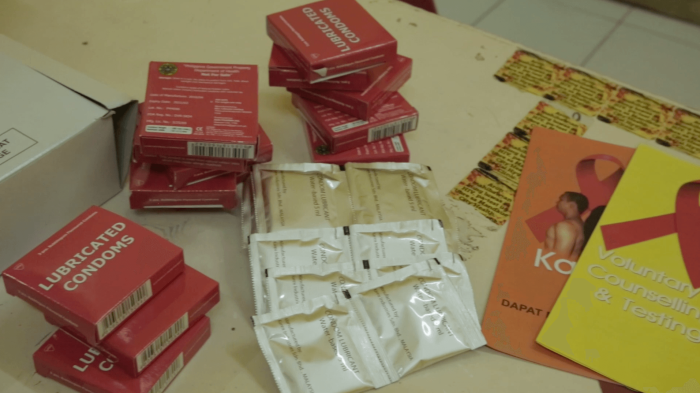
    (New York) – The New York State Assembly enacted a bill to end the use of condoms as evidence of prostitution-related offenses on the final day of the 2013 legislative session. Assembly bill 2736 was approved by a vote of 80 to 48 on June 21, 2013, and was delivered to the New York State Senate.
  • Jun 20, 2013
    (New York) –The New York State Assembly should enact a bill that would prohibit the use of condoms as evidence of prostitution-related offenses. Assembly bill 2736 was voted out of the New York State Assembly Rules Committee on June 20, 2013 and could be passed by the full assembly before the session ends on June 21.

Reports

HIV/TB

  • Jun 25, 2013
    (New York) – The New York State Assembly enacted a bill to end the use of condoms as evidence of prostitution-related offenses on the final day of the 2013 legislative session. Assembly bill 2736 was approved by a vote of 80 to 48 on June 21, 2013, and was delivered to the New York State Senate.
  • Jun 20, 2013
    (New York) –The New York State Assembly should enact a bill that would prohibit the use of condoms as evidence of prostitution-related offenses. Assembly bill 2736 was voted out of the New York State Assembly Rules Committee on June 20, 2013 and could be passed by the full assembly before the session ends on June 21.
  • Jun 19, 2013
    In 2012, Mwamini K. a sex worker in Dar es Salaam, was raped at gunpoint by a client who got angry when she asked him to use a condom. She did not report the case to the police nor seek medical assistance because she did not trust that she could get the help that she needed, she told me. (Mwamini’s name, like all others here, has been changed.) Mwamini explained that in 2011, she sought treatment for a sexually transmitted infection at Mwananyamala Hospital. The nurse refused to treat her unless she brought her sexual partner. Mwamini told the nurse that she was a sex worker and did not know who infected her. The hospital turned her away.
  • Jun 18, 2013
    Tanzanians who are most at risk of HIV face widespread police abuse and often can’t get help when they are victims of crime, Human Rights Watch and the Wake Up and Step Forward Coalition (WASO) said in a report released today.
  • May 30, 2013
    (New York) – Governments should ensure that efforts to reduce illicit drug use do not increase vulnerability to infection with Hepatitis C or impede access to treatment, Human Rights Watch said today in response to a report by the Global Commission on Drug Policy. The report, released on May 30, 2013, urges reform of existing drug policies to protect public health, minimize human rights violations, and ensure access to health care for drug users.
  • May 23, 2013
  • Apr 22, 2013
  • Apr 18, 2013
    This submission, by Affirmative Action, Alternatives-Cameroun, the Association for the Defense of Gay and Lesbian Rights (ADEFHO), Cameroonian Foundation for AIDS (CAMFAIDS), Evolve, Human Rights Watch, Humanity First Cameroon, and the International Gay and Lesbian Human Rights Commission (IGLHRC), highlights shortcomings in Cameroon’s human rights record related to its treatment of lesbian, gay, bisexual, and transgender people. It is based on research conducted in Cameroon in 2009 and 2010 by ADEFHO, Alternatives-Cameroun, Human Rights Watch, and IGLHRC and published in our 2010 report Criminalizing Identities: Rights Abuses in Cameroon based on Sexual Orientation and Gender Identity, and on follow-up investigations conducted between 2010 and 2012.
  • Mar 21, 2013
    Mississippi has one of the nation’s highest rates of HIV infection and deaths from AIDS. In March 2011, Human Rights Watch published "Rights at Risk: State Response to HIV in Mississippi." Since then, Mississippi has made progress in meeting the challenges of HIV; however, much remains to be done.
  • Jan 17, 2013
    On the Friday before Christmas, a federal judge in Alabama ordered an end to 25 years of segregation of HIV-positive prisoners in state prisons. District Court Judge Myron Thompson ruled that segregating HIV-positive prisoners in separate housing with unequal program opportunities, inferior mental health care and fewer work options violated the Americans with Disabilities Act. This landmark decision leaves South Carolina the only state in the Union that segregates prisoners with HIV. It is high time South Carolina abandoned this unnecessary, harmful and discriminatory policy.