3.1 Overview
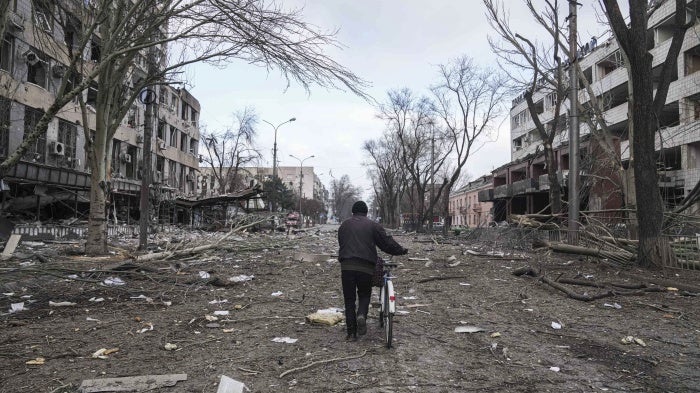
Human Rights Watch has concluded that Russian forces committed violations of international humanitarian law during their attacks and hostilities in South Ossetia and in undisputed Georgian territory. Russian forces attacked areas in undisputed Georgian territory and South Ossetia with aerial, artillery, and tank fire strikes, some of which were indiscriminate, killing and injuring civilians. All Russian strikes using cluster munitions were indiscriminate. With regard to many aerial and artillery attacks, Russian forces failed to observe the obligations to do everything feasible to verify that the objects to be attacked were military objectives (and not civilians or civilian objects) and to take all feasible precautions to minimize harm to civilians. In one case, Russia attacked medical personnel, a grave breach of the Geneva Conventions which is a war crime.
In several incidents involving military force against civilian vehicles, Russian forces may have intentionally targeted civilians. Deliberate attacks on civilians amount to war crimes.
In many of the incidents of aerial and artillery attacks documented in the next chapter Human Rights Watch found evidence of violations of humanitarian law. The mere fact of civilian casualties or destruction of civilian objects does not mean that a humanitarian law violation occurred. In each case, Human Rights Watch sought to determine whether there was evidence of a legitimate military target in the attack area, and if so how that target was attacked. In many cases Human Rights Watch researchers found no evidence of military objectives in the area under attack; other attacks did strike legitimate military targets, causing combatant and, in some cases, collateral civilian casualties.
With regard to attacks on ethnic Georgian villages in South Ossetia, since Georgian and Russian forces use some identical Soviet-era weapons systems including main battle tanks, Grad rockets, BMP infantry fighting vehicles, and tube artillery, Human Rights Watch could not always definitively attribute specific battle damage to a particular belligerent, especially for the attacks that happened on and after the late afternoon of August 8, when both Russian and Georgian troops were present in Tskhinvali. Human Rights Watch did not include such incidents in this report.
Several local residents told Human Rights Watch that many of the Russian servicemen who occupied Georgia behaved in a disciplined manner and in some cases even protected the civilian population from Ossetian forces, militia members, or looters. Nevertheless, Human Rights Watch documented four incidents in which Russian servicemen committed such violations as pillaging, destruction of civilian property, and using violence against civilians; we documented four cases where they did so jointly with Ossetian forces.
Russia failed in its duty as an occupying power to ensure as far as possible public safety and order in areas under its effective control in South Ossetia.[247] This allowed South Ossetian forces, including volunteer militias, to engage in wanton and widescale pillage and burning of Georgian homes and to kill, beat, rape, and threaten civilians. This violence is documented in Chapter 4.