Text on Screen:
WARNING
This video contains violent images and descriptions including people being shot at, and dead bodies. Viewer discretion advised.
Actor’s Voices have been used to protect the identity of the people Human Rights Watch interviewed for the film.
Audio recording, Actors’ Voice:
Even when I remember, I cry. I saw a guy calling for help, he lost both his legs. He was screaming and saying, “are you leaving me here? Please don’t leave me.” We couldn’t help him because we were running for our lives.
Voiceover:
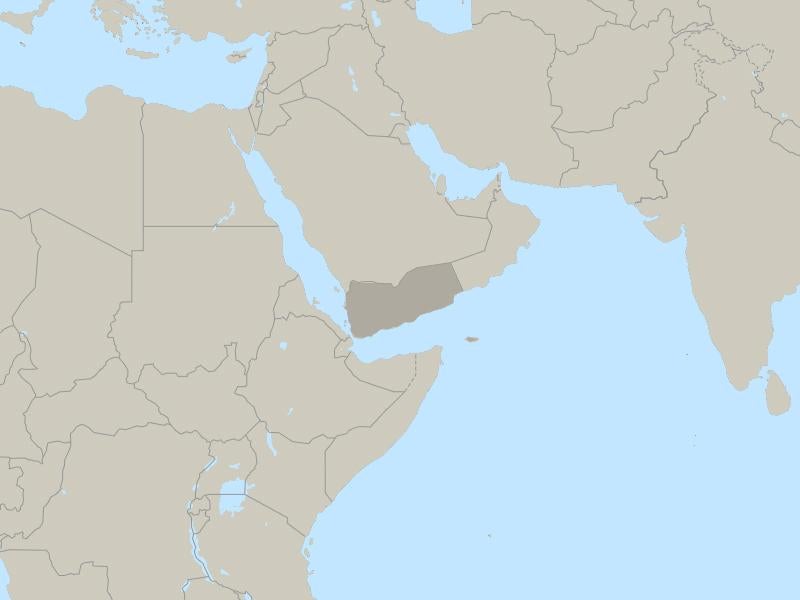
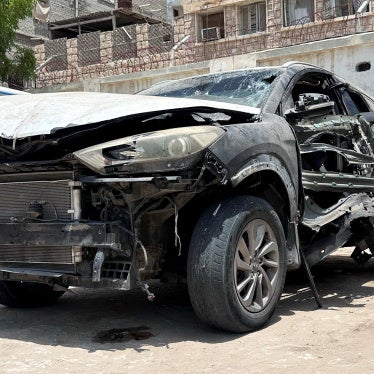
Ethiopian migrants and asylum seekers have been tortured, injured or killed by Saudi Arabian border guards at the Yemen-Saudi border. At least hundreds have been killed trying to make this crossing between March 2022 and June 2023.
Audio recording, Actors’ Voice:
When Saudi border guards see a group, they fire continuously, when they kill everyone, they go down to collect all those who didn't die. This is what happened to me. I survived, and they came to meet me and showed me the dead. Then they took us to a detention center and beat us all there.
Voiceover:
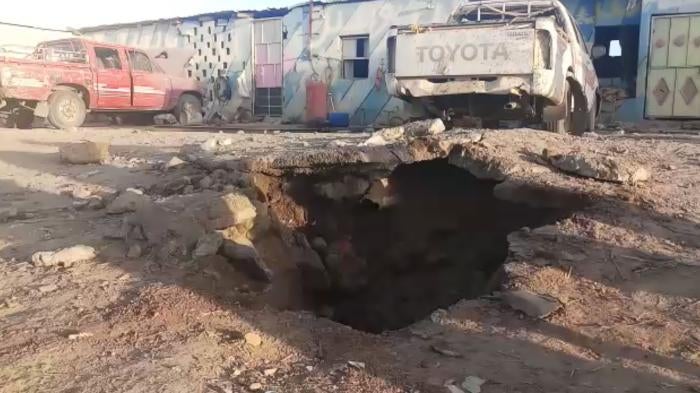
Human Rights Watch’s extensive investigation includes firsthand accounts from 42 people, and the verification and geolocation of over a hundred videos and photos and the analysis of hundreds of square kilometers of satellite imagery. We found evidence that Saudi border guards have used explosive weapons and shot people at close range. In what appears to be a policy targeting migrants and asylum seekers, including women and children, at the border. Human Rights Watch believes this may amount to crimes against humanity. Saudi Arabia’s border forces should stop intentionally using lethal force, to kill Ethiopian migrants and asylum seekers with explosive weapons.
Audio recording, Actors’ Voice:
It was during the night. We were traveling towards the Saudi border. Then we saw Saudi border guards. They told us to stop. While they walked towards us, they opened fire and fired bullets at us. One bullet hit a rock and hit my leg. My leg is broken around my knee.
Voiceover:
While many migrate for economic reasons, including drought, a number of Ethiopians have fled because of serious human rights abuses by their government, including during the recent, brutal armed conflict in northern Ethiopia.
Audio recording, Actors’ Voice:
When the firing stopped the Saudi border guards took us. In my group there were seven people, five men and two girls. The border guards made us remove our clothes and told us to rape the girls. The girls were 15 years old. One of the men refused. The border guards killed him on the spot. I participated in the rape, yes. To survive I did it. The girls survived because they didn’t refuse. This happened at the same spot where the killings took place.
Voiceover:
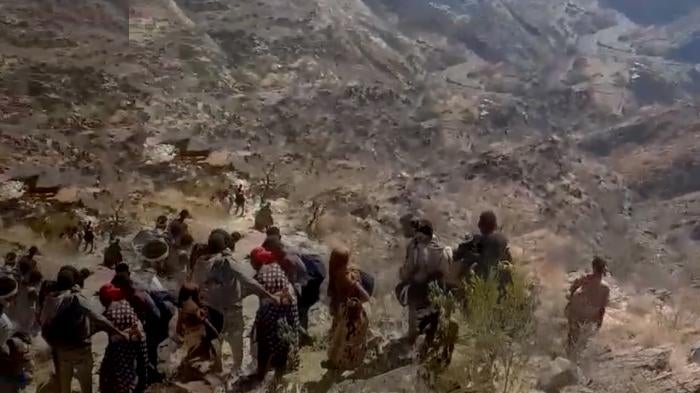
This dangerous migration route, often referred to as the 'Eastern route', spans from the horn of Africa, across the Gulf of Aden,
through Yemen and into Saudi Arabia. Migrants and asylum seekers
crossing into Saudi Arabia usually do so in the mountainous border area, aided by a network of smugglers and traffickers and facilitated by the Houthi forces
who control northern Yemen.
Audio recording, Actors’ Voice:
We walked in the mountains for about five days. We walked in groups, minimum 300 people, and most of the group was female. Then there was firing from the border guards, and they were firing big rocket launchers at us. It was like a bomb. Of the 300 people, 150 died.
Voiceover:
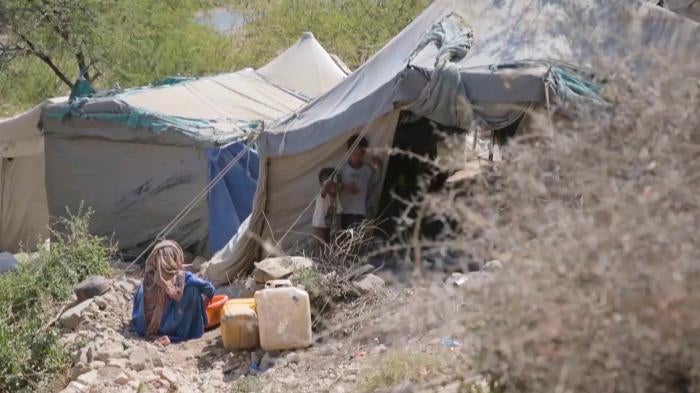
Smugglers operating in Yemen take people to two informal camps before attempting to cross the border. Al Thabit camp is located northwest of the border, and Al Raqw camp has only a river separating it from Saudi Arabia. Both camps act as holding areas with thousands of people preparing to cross the border. Many interviewees said Houthi forces controlled the entry and exit into the camps and would often extort bribes from the
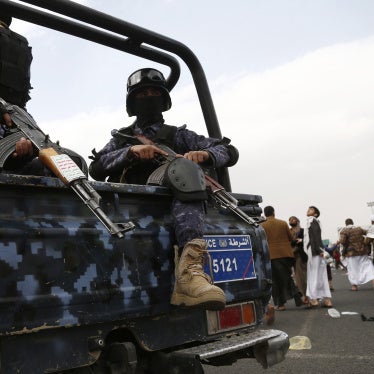
migrants or transfer them to detention centers. Migrants and asylum seekers often saw Saudi border guards patrolling the crossing points in large vehicles with what witnesses described as large objects mounted on the back of their vehicles, believed to be weapons. Human Rights Watch interviewed survivors who say they lost one or more limbs due to the use of explosive weapons or shootings at the border.
Audio recording, Actors’ Voice:
The Saudi border guards were firing big things like mortars at us. They fired from the back of a truck. We lost 130 people that day, the majority were women and children.
Voiceover:
Although the number of deaths has not been confirmed, Human Rights Watch has identified at least eight burial sites near Al Raqw camp and has counted at least 287 graves on satellite images as of June 2023. Many have described bodies being buried in remote areas or left unburied along the route. They describe a pattern of large scale violence and cross-border killings. This video was sent to and verified by Human Rights Watch. The video shows the bodies of at least two migrants hidden under bushes just north of the trail from Al Thabit camp in Saudi Arabia. A likely Saudi border guard post is visible approximately 1.3 kilometers away from where the bodies were found.
Voiceover:
Humanitarian assistance and safe passage should be provided to migrants and asylum seekers trying to cross the border from Yemen to Saudi Arabia, and those responsible for what may amount to crimes against humanity should be held accountable.