









|
|
|
The 1999 Human Rights Watch Annual Celebration honored four
human rights defenders – from Chile, Kosovo, Mozambique and Rwanda
– who have helped advance the cause of international justice. Since
1988, Human Rights Watch has honored 146 human rights defenders from around
the world for their courageous work, often at grave personal risk, promoting
the human rights cause. These men and women are among our closest allies.
We work intensively with them to conduct investigations and pursue advocacy
strategies to end abuses.
Sevdie Ahmeti (Kosovo), a veteran
human rights activist, risked her life during the Kosovo crisis by remaining
in Pristina to document human rights abuses against Kosovar Albanians,
especially the sexual assault of women. Sevdie’s name was put on
a blacklist for her human rights activities, forcing her and her family
into hiding. To the extent possible, she spoke out courageously about
the use of rape by Serbian troops as an instrument of terror against Albanian
women. Since the end of the conflict, Sevdie, the co-director of the Center
for the Protection of Women and Children in Pristina, has worked tirelessly
to support women who were assaulted in Kosovo. She has sought out and
counseled victims, taken their testimonies, and provided concrete assistance
to help them begin the healing process. Sofia Prats (Chile), the daughter of Carlos Prats, President Salvador Allende’s military commander who was slain while in exile in Argentina, has worked for many years to help bring a case against former Chilean leader Augusto Pinochet for the death of her father. She has spoken out in Chile on behalf of the thousands of other victims of Pinochet’s regime and contributed to the international case against Pinochet that was initiated in Spain and England. Sofia is the vice-president of Chile’s Party for Democracy and serves on various municipal, national, and international committees on women’s issues. Boia Efraime Junior (Mozambique)
works with children, families, and communities traumatized by the civil
war in Mozambique. As a teacher in the early 1980s, Boia found that some
of his students were not attending his class because they had been kidnapped
by armed groups or killed. He began training in psychology and has been
working with former child soldiers since 1984. His organization, Rebuilding
Hope, is a member of the International Coalition to Stop the Use of Child
Soldiers. Working with traditional healers and community leaders, Rebuilding
Hope uses therapy and self-help programs to rehabilitate former child
soldiers and assist their families. |



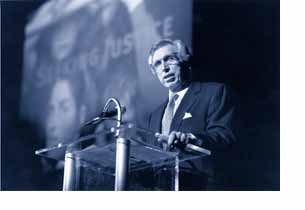 Peter
Osnos, Co-chair of the Annual Celebration in New York.
Peter
Osnos, Co-chair of the Annual Celebration in New York.