Paramilitaries’ Heirs
The New Face of Violence in Colombia
Glossary
AUC: Autodefensas Unidas de Colombia,United Self-Defense Forces of Colombia, a coalition of 37 paramilitary groups in Colombia that officially demobilized by 2006.
Colombian National Police, Division of Carabineers: Dirección de Carabineros de la Policía Nacional de Colombia, a division of the National Police that operates in rural regions and is tasked with confronting successor groups, as well as with providing security for eradication of illicit crops.
ELN: Ejército de Liberación Nacional, National Liberation Army, a left-wing guerrilla group.
FARC: Fuerzas Armadas Revolucionarias de Colombia, Revolutionary Armed Forces of Colombia, Colombia’s largest left-wing guerrilla group.
MAPP/OAS: Organization of American States’ Mission to Support the Peace Process in Colombia, a mission established in 2004 as part of an agreement between the Organization of American States and the Colombian government to monitor and verify the demobilization of the AUC paramilitary groups.
Office of the Attorney General of Colombia: Fiscalía General de la Nación, a Colombian state entity charged with conducting most criminal investigations and prosecutions. The Office of the Attorney General is formally independent of the executive branch of the government.
Office of the Inspector General of Colombia: Procuraduría General de la Nación, a Colombian state entity charged with representing the interests of citizens before the rest of the state. The office conducts most disciplinary investigations of public officials and monitors criminal investigations and prosecutions, as well as other state agencies’ actions.
Early Warning System of the Office of the Ombudsman of Colombia: Sistema de Alertas Tempranas de la Defensoría del Pueblo de Colombia. The Ombudsman’s Office (or Defensoría) is a Colombian state entity charged with promoting and defending human rights and international humanitarian law. The Early Warning System is a subdivision of the Ombudsman’s Office, charged with monitoring risks to civilians in connection with the armed conflict, and promoting actions to prevent abuses.
Permanent Human Rights Unit of the Personería of Medellín: Unidad Permanente de Derechos Humanos de la Personería de Medellín. The Personería is a municipal entity that is also an agent of the Public Ministry, and is charged with monitoring human rights and citizens’ rights in the city of Medellín. The Medellín Personería’s Permanent Human Rights Unit is a division of the Personería specifically charged with monitoring and protecting human rights in the city.
Presidential Agency for Social Action and International Cooperation (Social Action): Agencia Presidencial para la Acción Social y la Cooperación Internacional (Acción Social), a Colombian state entity that is charged with administering national and international resources for the execution of social programs for vulnerable populations under the authority of the Presidency of Colombia. Among other functions, Social Action oversees the registration of and assistance to internally displaced persons.
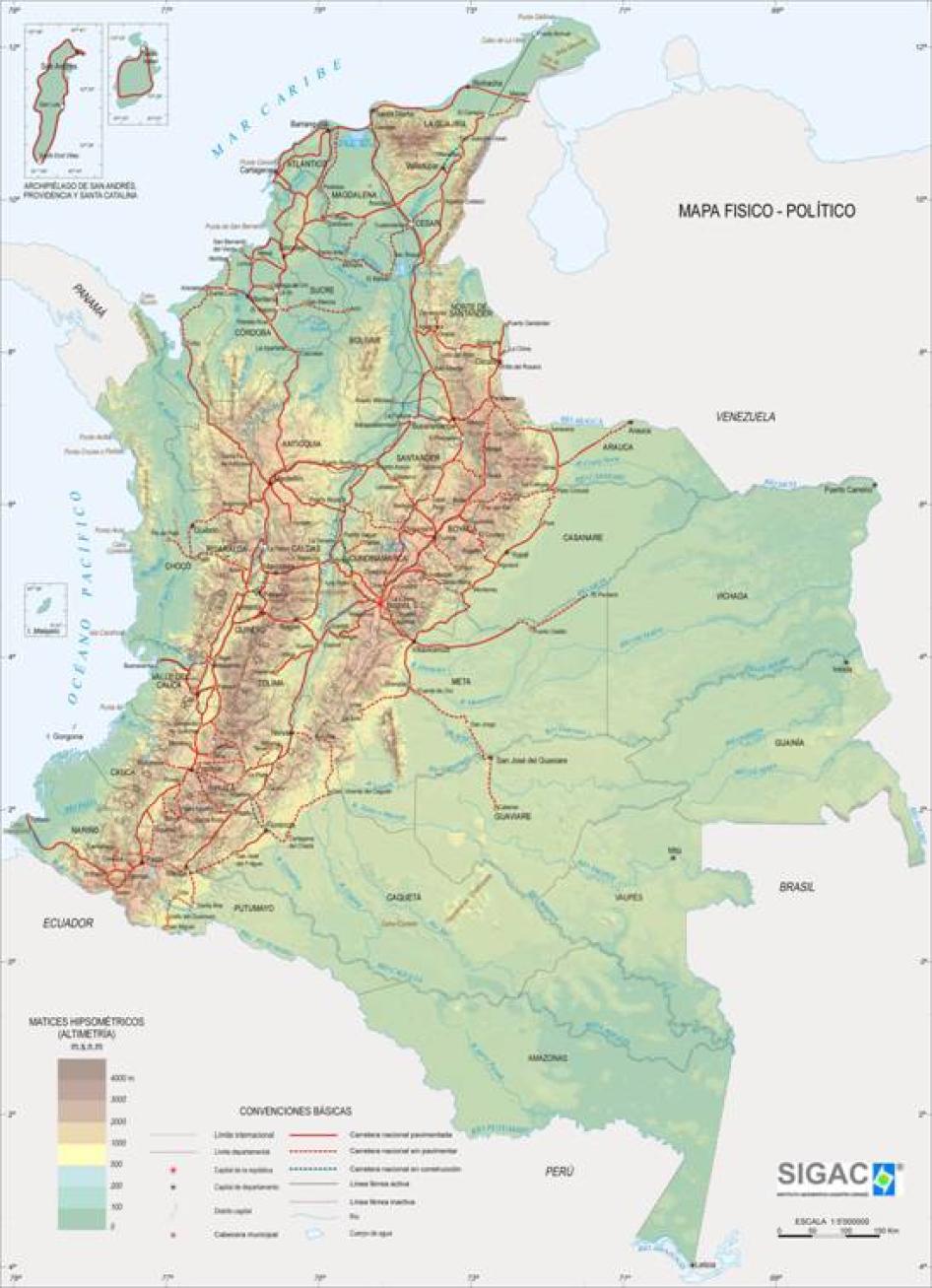
Map of Colombia
I. Summary and Recommendations
Between 2003 and 2006 the Colombian government implemented a demobilization process for 37 armed groups that made up the brutal, mafia-like, paramilitary coalition known as the AUC (the Autodefensas Unidas de Colombia, or United Self-Defense Forces of Colombia). The government claimed success, as more than 30,000 persons went through demobilization ceremonies, pledged to cease criminal activity, and entered reintegration programs offering them training, work, and stipends. Since then, the government has repeatedly said that the paramilitaries no longer exist.
But almost immediately after the demobilization process had ended, new groups cropped up all over the country, taking the reins of the criminal operations that the AUC leadership previously ran.
Today, these successor groups are quietly having a dramatic effect on the human rights and humanitarian situation in Colombia. Of particular concern, as documented extensively in this report, the successor groups are engaging in widespread and serious abuses against civilians, including massacres, killings, rapes, threats, and extortion. They have repeatedly targeted human rights defenders, trade unionists, displaced persons including Afro-Colombians who seek to recover their land, victims of the AUC who are seeking justice, and community members who do not follow their orders. The rise of the groups has coincided with a significant increase in the rates of internal displacement around the country from 2004 through at least 2007. And in some regions, like the city of Medellín, where the homicide rate has nearly doubled in the past year, the groups’ operations have resulted in a large increase in violence. To many civilians, the AUC’s demobilization has done little to change the conditions of fear and violence in which they live.
The threat posed by the successor groups is both serious and steadily growing. Colombia’s National Police estimates that they have more than 4,000 members. Non-governmental estimates run as high as 10,200. According to conservative police figures, the groups are quickly increasing their areas of operation and as of July 2009 had a presence in at least 173 municipalities in 24 of Colombia’s 32 departments. They are actively recruiting new members from among teenagers, demobilized individuals, and young men and women. In several cases, they have been known to recruit members from distant regions of the country, displaying a high level of organization at a national level. Increasingly, the successor groups have merged or have absorbed one another, so that fewer groups are operating in a more coordinated manner, covering a larger territory.
The police speak of eight major groups: the Urabeños, the Rastrojos, ERPAC, the Paisas, the Machos, New Generation, the group from the Magdalena Medio, and Renacer. Human Rights Watch also received credible reports of the existence of other groups, such as the Black Eagles in Nariño, which the police did not include in their list at the time.
A serious cause for concern is the fact that many eyewitnesses with whom we spoke reported that members of the security forces were tolerating successor groups’ activities in various regions.
The Colombian government and some analysts label the successor groups as “emerging criminal gangs at the service of drug trafficking” (bandas criminales emergentes or BACRIM), insisting that the successor groups are something new and very different from the paramilitaries. Other experts and many residents view them as a continuation of the AUC, or a new generation of paramilitaries.
Regardless of how the successor groups are categorized, the fact is that today they are frequently targeting civilians, committing horrific crimes including massacres, killings, rapes, and forced displacement. And the state has an obligation to protect the civilian population, to prevent abuses, and to hold perpetrators accountable.
Unfortunately, the government has yet to take strong and effective measures to fulfill these obligations. It has failed to invest adequate resources in the police units charged with combating the groups, or in the group of prosecutors charged with investigating them. It has done far too little to investigate regular reports of toleration of the successor groups by state agents or public security forces. And it has yet to take adequate measures to protect civilians from this new threat. Instead, the government has dragged its feet on funding for the Early Warning System of the Ombudsman’s Office, which plays a key role in protecting the civilian population, and state agencies have at times denied assistance to civilians who reported being displaced by successor groups.
This report addresses three main issues. First, it documents the extent to which the emergence of the successor groups is related to the government’s failure to effectively demobilize many AUC leaders and fighters. Second, it describes the groups’ frequent and brutal abuses against civilians, highlighting common patterns of behavior with particular attention to four regions where the groups have a substantial presence: the city of Medellín, the Urabá region of Chocó state, and the states of Meta and Nariño. Third, the report points out continuing shortcomings in the government’s response to the groups’ operations and abuses.
The report is based on nearly two years of field research in Colombia. Human Rights Watch conducted dozens of interviews with victims, demobilized paramilitaries, local and national law enforcement authorities and state agencies, members of the public security forces, and non-governmental organizations in the following regions: Sincelejo (Sucre); Barranquilla (Atlántico); Pasto and Tumaco (Nariño); Cúcuta (Norte de Santander); Barrancabermeja and Bucaramanga (Santander); Medellín (Antioquia); Villavicencio, Granada, Vistahermosa, and Puerto Rico (Meta); the humanitarian zones of Curvaradó and Andalucía (Chocó); and the capital, Bogotá.
The Successor Groups: A Predictable Outcome of a Flawed Demobilization
While there are differences between the AUC and its successors, the successor groups are in several respects a continuation of some of the AUC’s paramilitary “blocks” or groups. As reported by the police, a majority of the leaders of the successor groups are mid-level AUC commanders who never demobilized or continued engaging in criminal activity despite ostensibly having demobilized. The groups are active in many of the same regions where the AUC had a presence, and operate in similar ways to the AUC: controlling territory through threats and extortion, engaging in drug trafficking and other criminal activity, and committing widespread abuses against civilians.
The emergence of the successor groups was predictable, in large part due to the Colombian government’s failure to dismantle the AUC’s criminal networks and financial and political support structures during the demobilizations.
The demobilization process suffered from serious flaws, which Human Rights Watch documented extensively and reported on at the time. One problem is that the government failed to verify whether those who demobilized were really paramilitaries, and whether all paramilitaries in fact demobilized. As a result, in some cases paramilitary groups were able to engage in fraud, recruiting civilians to pose as paramilitaries to demobilize, while keeping a core segment of their groups active. This is particularly clear in the case of the Northern Block demobilization, in which there is substantial evidence of outright fraud. There are also signs of fraud in the demobilizations of groups in Medellín and Nariño.
But perhaps a more serious problem was the fact that the government failed to take advantage of the process to thoroughly question demobilizing paramilitaries about their knowledge of the groups’ assets, contacts, and criminal operations, to investigate the groups’ criminal networks and sources of support, and to take them apart. Thus, for example, even though Freddy Rendón, the commander of the Elmer Cárdenas block of the AUC, demobilized, his brother Daniel quickly filled Freddy’s shoes, continuing the block’s drug trafficking, extortion, protection of illegally taken lands held by people associated with the paramilitaries, and its harassment of civilians in the Urabá region.
With some exceptions, prosecutors have failed to thoroughly investigate the AUC’s complex criminal operations, financing sources, and networks of support. Thus, successor groups have been able to easily fill the AUC’s shoes, using the massive resources they already had or could readily obtain through crime to recruit new members and continue controlling and abusing the civilian population.
The Human Rights and Humanitarian Impact of the Successor Groups
The successor groups are engaged in widespread and serious abuses against civilians in much of the country. They massacre, kill, rape, torture, and forcibly “disappear” persons who do not follow their orders. They regularly use threats and extortion against members of the communities where they operate, as a way to exert control over local populations. They frequently threaten, and sometimes attack, human rights defenders, trade unionists, journalists, and victims of the AUC who press claims for justice or restitution of land.
For example, one human rights defender described how, while she was providing assistance to a victim of the AUC at the victim’s home, members of a successor group calling themselves the Black Eagles broke into the house, raped both women, and warned her to stop doing human rights work. “They told me it was forbidden for me to do that in the municipality. They didn’t want victims to know their rights or report abuses,” she told us.[1] When she continued her work, they kidnapped her and said that if she did not leave town, they would go after her family. She sought help from local authorities, who dismissed her saying she should have known better than to do human rights work, and so she eventually fled and went into hiding.
Similarly, Juan David Díaz, a doctor who leads the local Sincelejo chapter of the Movement of Victims of State Crimes, a non-governmental organization, has reported threats and attempts on his life by successor groups. Juan David has been pressing for justice for the murder of his father, Tito Diaz, a mayor who was killed by the AUC, with the collaboration of a former state governor (who was recently convicted).
Trade unionists, a frequent target of the AUC, are now targeted by successor groups. According to the National Labor School, the leading organization monitoring labor rights in Colombia, in 2008 trade unionists reported receiving 498 threats (against 405 trade unionists). Of those, 265 are listed as having come from the successor groups, while 220 came from unidentified actors.[2]
The successor groups are also forcibly displacing large numbers of civilians from their homes. Forced displacement by these groups likely has contributed to a substantial rise in internal displacement nationwide after 2004. According to official figures, after dropping to 228,828 in 2004, the number of newly displaced persons went up each year until it hit 327,624 in 2007. The official 2008 numbers are a little lower, at 300,693, but still substantially higher than at the start of the demobilization process.[3] The non-governmental organization Consultoria para los Derechos Humanos y el Desplazamiento (CODHES) reports different numbers, finding that around 380,863 people were displaced in 2008—a 24.47 percent increase over its number (305,966) for 2007.[4]
In fact, much of the displacement is occurring in regions where successor groups are active. CODHES says there were 82 cases of group displacement in 2008; the most affected departments were Nariño and Chocó, where the successor groups are very active.[5] Human Rights Watch spoke to dozens of victims who said they had been displaced by successor groups in Nariño, Medellín, the Urabá region, and along the Atlantic Coast.
Without exception, in each of the four major regions Human Rights Watch visited and examined closely for this report, the successor groups were committing serious abuses against civilians.
For example, inMedellín, successor groups (often made up of demobilized or non-demobilized AUC members) continued exerting control in various neighborhoods through extortion, threats, beatings, and targeted killings after the demobilization of the paramilitary blocks in the city. Despite his supposed demobilization, AUC leader Diego Murillo Bejarano (known as “Don Berna”), exerted what locals and many officials described as a monopoly over crime and security in the city, contributing to a significant but temporary reduction in homicides for a few years. But in the words of one city resident, the people in the city at the time were experiencing “peace with a gun to your throat.”[6]
Due to infighting in Don Berna’s group, as well as competition with other successor groups trying to enter the city, the last two years have seen a rapid rise in violence against civilians in Medellín. In the first ten months of 2009 there were 1,717 homicides in the city—more than doubling the 830 killings registered in Medellín for the same period in 2008. The groups have also caused a significant rise in internal displacement in the city. In one case Human Rights Watch documented, more than 40 people from the Pablo Escobar neighborhood of Medellín were forced to flee their homes between late 2008 and early 2009 as a result of killings and threats by the local armed group, which is partly made up of demobilized individuals. The victims, who were hiding in a shelter in Medellín, described living in a state of constant fear in the city: “We can no longer live in Medellín. They have tentacles everywhere.”[7]
In the southern border state of Nariño, massacres, killings, threats, and massive forced displacement of civilians occur on a regular basis, though they are significantly underreported. The successor groups in Nariño are responsible for a significant share of these abuses. For example, between June and July of 2008, almost all residents in three communities in the coastal municipality of Satinga were displaced after one of the successor groups (then using the name Autodefensas Campesinas de Nariño, or Peasant Self Defense Forces of Nariño) went into one of the towns, killed two young men, and reportedly caused the forced disappearance of a third.
A substantial portion of the Liberators of the South Block of the AUC remained active in Nariño and, under the name “New Generation,” violently took over important sectors of the Andean mountain range shortly after the demobilizations. More recently, New Generation has lost influence, but two other groups have gained in strength. Along most of Nariño’s coastline, the Rastrojos and the Black Eagles are active and frequently engage in acts of violence against civilians. Both groups are reported to have a growing presence in the Andean mountain range. In our interviews in the region, several residents, local officials, and international observers described cases in which public security forces apparently tolerated the Black Eagles.
As one man from the Andean town of Santa Cruz told Human Rights Watch: “In Madrigal ... the Black Eagles interrogate us, with the police 20 meters away... [Y]ou can’t trust the army or police because they’re practically with the guys... In Santa Cruz and Santa Rosa we have the Rastrojos. They arrived in March or April. They arrived ... in camouflaged uniform. They’re a lot, 100, 150, 300—they’ve grown a lot... They come in and tax the businessmen. It appears that they sometimes confront guerrillas and other times the Black Eagles and New Generation.”[8]
Colombia’s Obligations
Regardless of their label (whether as armed groups, paramilitaries or organized crime), the Colombian government bears specific responsibilities to address the threat that they pose to the civilian population. Those include obligations to protect civilians from harm, prevent abuses, and ensure accountability for abuses when they occur.[9]The level of state responsibility for the abuses of the successor groups will increase depending on the extent to which state agents tolerate or actively collaborate with these groups.
In addition, some of the successor groups could be considered armed groups for the purposes of the laws of war (international humanitarian law, IHL). Several successor groups appear to be highly organized and to have a responsible command and control structure, and an involvement in the conflict, such that they qualify as armed groups under IHL: for example, ERPAC, which operates on in Meta, Vichada, and Guaviare, and, arguably, some of the groups in Nariño, qualify.
Other groups, enjoying less territorial control or less organization, or that are not aligned to the conflict, may simply be “criminal organizations.” In relation to such groups, however, the state still has a legal duty to take reasonable steps to prevent the commission of human rights violations, to carry out serious investigations of violations if committed, to identify those responsible, to impose the appropriate punishment, and to ensure adequate compensation for victims.
State Response
The government has assigned the Colombian National Police’s Division of Carabineers the lead role in confronting the successor groups.
Government policies stipulate that the military is to step in to confront the successor groups only when the police formally request it, or in situations where the military happens to encounter the groups and must use force to protect the civilian population. But the Carabineers presently appear to lack the capacity and resources to effectively pursue the successor groups in all areas where the successor groups are engaging in abuses. In several areas where the groups operate, the police have no presence. Yet the military does not appear to be stepping in to fight the groups in those areas. In at least one case, Human Rights Watch found that police and army officials in the state of Meta each pointed to the other as the authority responsible for combating the successor groups. The army cited the government policy assigning responsibility to the police as a reason not to step in, and the local police said they had no jurisdiction.
Another problem is the failure of the government to invest adequate resources to ensure that members of the successor groups and their accomplices are held accountable for their crimes. The Office of the Attorney General created a specialized group of prosecutors in 2008 to handle cases involving the successor groups. But the group is understaffed, and is able to focus only on some of the successor groups.
One significant concern, raised by members of the police and the Office of the Attorney General, is corruption and toleration of successor groups by some state officials, which make it difficult to track down, confront, and hold accountable the groups.
The most prominent example of such concerns involves the current criminal investigation into allegations that the chief prosecutor of Medellín, Guillermo Valencia Cossio (the brother of Colombia’s minister of interior), collaborated extensively with successor groups. He has denied the allegations. As detailed in this report, Human Rights Watch also received reports in Nariño, Chocó, Medellín and Meta of situations in which members of the police or army appeared to tolerate the activities of successor groups.
With few exceptions, the government has failed to take effective measures to identify, investigate, and punish state officials who tolerate the successor groups. At times, public security forces appear to respond to allegations that their members are tolerating the groups by simply transferring the officials to other regions. The correct response would be to inform prosecutors of the allegations and suspend the officials in question while criminal investigations are conducted.
The state has also failed to take adequate measures to prevent abuses by the successor groups and protect the civilian population.
The Ministry of Interior’s longstanding protection program for human rights defenders, trade unionists, and journalists has provided much-needed protection to vulnerable individuals. But it does not cover victims of the AUC who are seeking justice, restitution of land, or reparation under the Justice and Peace Law (a 2005 law allowing paramilitaries responsible for atrocities and other serious crimes to receive dramatically reduced sentences in exchange for their demobilization, confession, and return of illegally acquired assets). The Constitutional Court has ordered that these victims receive protection from the state and the government has since implemented a decree providing for increased police security in regions considered to present high risks for victims participating in the Justice and Peace Law Process. Yet it remains unclear whether the program is effectively covering all victims who need protection. These programs also do not cover ordinary civilians in many regions who are continuously being threatened, attacked, and displaced by the successor groups.
In several instances, Human Rights Watch received reports that representatives of the Presidential Agency for Social Action and International Cooperation (Social Action) were refusing to register and provide assistance to internally displaced persons who reported that they were displaced by paramilitaries, on the grounds that paramilitaries no longer exist. While Social Action says that these cases do not reflect official government policy, it must take effective action to ensure that such rejections do not continue at a local level.
Finally, the Ombudsman’s Early Warning System (the EWS), which constantly monitors the human rights situation in various regions and regularly issues well-documented risk reports about the dangers facing civilian populations, has played a key role in reporting on the successor groups’ operations and likely abuses. But other state institutions that should be acting on the EWS’s recommendations often ignore or downplay them. The decision-making process on what actions to take based on the EWS’s risk reports lacks transparency and, as recommended by the US Agency for International Development, requires reform. The EWS has also suffered due to government delays in providing necessary funding.
Recommendations
To the Government of Colombia
On the Demobilization of Paramilitary Blocks
In light of the evidence of significant fraud in the demobilizations of some paramilitary blocks, and the failure of portions of the blocks to demobilize, the government should:
- Establish an ad-hoc independent commission of inquiry to provide a public accounting of what happened during the demobilizations, how many of the purportedly demobilized paramilitaries were really combatants, to what extent paramilitaries remain active today, and to what extent paramilitaries responsible for atrocities have evaded justice.
- Conduct a systematic and coordinated effort to identify land and illegal assets that paramilitaries or their accomplices may be holding, and ensure their recovery and restitution to victims. Among other steps, this will require adequately funding the Superintendence of Notaries and Registry, so that it can increase collection of information about land holdings and cross-reference it with displaced persons’ reports of land takings.
On Combating the Successor Groups
In light of the failure of government policies to prevent the continued growth of the successor groups, the government should:
- Ensure that the Carabineers unit of the police is adequately funded and staffed to confront the successor groups.
- Instruct the army that if its members observe or receive reports of successor groups operating in regions under their jurisdiction, they are to immediately inform the police and appropriate judicial authorities so that they can respond. The instruction should make clear that if the police have no presence in the area, the army should take steps to confront and arrest the successor groups’ members.
- Provide sufficient resources for the Office of the Attorney General to increase the number of prosecutors and investigators in its specialized group investigating successor groups.
On Alleged Toleration of Successor Groups by State Agents
In light of regular, credible allegations that state agents and members of the public security forces are tolerating successor groups, and the tendency of public security forces to address the allegations by simply transferring their members to other regions, the government should:
- Vigorously investigate and prosecute officials who are credibly alleged to have collaborated with or tolerated the successor groups.
- Instruct the police and army that, when they receive allegations of toleration of successor groups by their members, they should immediately report such allegations to the Office of the Attorney General for investigation and suspend the members against whom the allegations were made while investigations are conducted.
On Protection of and Assistance to Victims and Civilians
In light of the failure of current government policies to provide effective protection to victims of the AUC and civilians in regions where the successor groups operate, the government should:
- Put into operation an effective protection program for victims and witnesses of paramilitary crimes, as required by the Colombian Constitutional Court.
- Provide sufficient funding for the Office of the Ombudsman to expand and ensure the uninterrupted operation of the Early Warning System.
- As the US Agency for International Development’s inspector general has recommended, reform the Inter-Institutional Committee on Early Warnings to allow active participation by representatives of the Ombudsman’s Office, to ensure publicity of risk reports and transparency of the Committee’s decision-making, and to ensure appropriate and timely responses to risk reports.
- Issue directives to Social Action and other state agencies providing that Social Action should register persons who are victims of displacement by successor groups. Victims who refer to the perpetrators of abuses against them as paramilitaries should not be denied assistance on the grounds that paramilitaries no longer exist. The directive should provide for disciplinary action against officials who disregard these instructions.
To the Office of the Attorney General of Colombia
On the Demobilization of Paramilitary Blocks
- In light of a 2007 Supreme Court ruling that forbids pardons for crimes of “paramilitarism,” the Office of the Attorney General should open investigations into and take advantage of the opportunity to re-interview demobilized persons who did not receive pardons, and to inquire in greater depth about their groups’ structure, crimes, accomplices, and assets, as well as about the individual’s membership in the group.
- Thoroughly interrogate participants in the Justice and Peace Process about their groups’ financing streams, assets, and criminal networks; dismantle those networks; and recover assets under the control of the groups or their successors.
- Thoroughly investigate and prosecute demobilized mid-level commanders or others who had leadership roles in paramilitary groups and who may have remained active, as well as all high-ranking military, police, and intelligence officers, politicians, businessmen, or financial backers, against whom there is evidence that they collaborated with paramilitaries.
- In light of the high rate of impunity in cases involving forced displacement, substantially increase efforts to investigate and prosecute allegations of forced displacement and land takings by paramilitary groups and their successors.
On Investigation of Successor Group Abuses
- Review the number and distribution of prosecutors and investigators throughout Colombia to ensure that there are sufficient law enforcement authorities available in regions where the successor groups have a presence.
- Strengthen the specialized group focused on investigating the successor groups, by adding a sufficient number of prosecutors and investigators, and providing sufficient resources and logistical support to that group, so that it can effectively and systematically investigate the major successor groups.
- Instruct prosecutors to prioritize investigations of state agents who have been credibly alleged to have tolerated or collaborated with the successor groups.
To the United States
- Provide specific assistance for logistical support, equipment, and relevant training to the specialized group of prosecutors investigating the successor groups. Training should cover not only strategies for investigation and prosecution of the groups themselves, but also of state agents who have allegedly cooperated with or tolerated the groups.
- Urge the Colombian government to expand the Early Warning System of the Ombudsman’s Office, and to ensure that victims of displacement by the successor groups receive the assistance to which they are entitled.
- Because the paramilitary leaders with the most information about the groups’ criminal networks and financing sources were extradited to the United States, the US Department of Justice should instruct US prosecutors to create meaningful incentives for the extradited paramilitary leaders to disclose information about their criminal networks and links to the political system, military, and financial backers, as well as about the successor groups. The United States should use that information to prosecute all implicated persons that are within its jurisdiction and when appropriate should share the information with Colombian authorities to further prosecutions in Colombia.
- Condition not only military but also police aid on accountability for members of public security forces who collaborate with successor groups.
- Continue to delay ratification of the US-Colombia Free Trade Agreement until Colombia’s government meets human rights pre-conditions, including dismantling paramilitary structures and effectively confronting the successor groups that now pose a serious threat to trade unionists.[10]
To all Donor Countries to Colombia
- Press the Colombian government to expand the Early Warning System of the Ombudsman’s Office, and to ensure that victims of displacement by the successor groups receive the assistance to which they are entitled.
- Assist the Colombian justice system to put in place investigative procedures and strategies to ensure accountability for state agents who cooperate with the successor groups.
- Condition any aid to public security forces on accountability for members of public security forces who collaborate with successor groups.
- Delay consideration of free trade deals with Colombia until the Colombian government meets human rights pre-conditions, including dismantling paramilitary structures and effectively confronting the successor groups that now pose a serious threat to trade unionists.
II. Methodology
Human Rights Watch staff have closely monitored the paramilitary demobilization process in Colombia since it started in 2004, through trips several times a year to different regions in the country where paramilitaries operated and where demobilizations occurred, as well as interviews with demobilized paramilitaries, national, state and local officials, members of the public security forces, and victims of the AUC. The findings of this report are in part based on this long-term monitoring of the demobilization process.
In addition, starting in February of 2008, Human Rights Watch staff conducted intensive field research on the successor groups to the AUC, visiting Sincelejo (Sucre) in February 2008; Pasto (Nariño) in February and July 2008, and July 2009; Tumaco (Nariño) in September and October 2008; Cúcuta (Norte de Santander) in September 2008; Barrancabermeja and Bucaramanga (Santander) in September 2008; Villavicencio, Granada, Vistahermosa, and Puerto Rico (Meta) in March 2009; the humanitarian zones of Curvaradó and Andalucía (Chocó) in June 2009; and the cities of Medellín and Bogotá, on multiple occasions in 2008 and 2009.
Human Rights Watch representatives carried out more than 100 interviews with victims of successor groups to the AUC. In most regions, Human Rights Watch was also able to obtain meetings with local and sometimes national authorities, members of the public security forces, non-governmental organizations, and international organizations. In Barrancabermeja, Sincelejo, Cúcuta, Medellín, and Pasto, Human Rights Watch also interviewed individuals who had participated in the demobilization process. In Bogotá, Human Rights Watch met with diplomats, journalists, experts on Colombian security issues, and high-level government and law enforcement officials who are responsible for addressing the issues discussed in the report. Nearly all interviews were conducted in Spanish, the native language of the interviewees (the sole exceptions are interviews with diplomats, foreign journalists or foreign staff at international organizations).
Human Rights Watch received and reviewed documents, reports, books, and criminal case files, as well as photographs and video footage, from multiple sources. Most photographs in this report or included in the associated multimedia presentation, as well as audio testimony from persons in the field, were taken during the course of research for this report.
Interviewees were identified with the assistance of civil society groups, government officials, and journalists, among others. Most interviews were conducted individually, although they sometimes took place in the presence of family members and friends. Many interviewees expressed fear of reprisals by the successor groups, and, for that reason, requested to speak anonymously. Details about individuals have been withheld when information could place a person at risk, but are on file with Human Rights Watch.
II. The Successor Groups: A Predictable Outcome of a Flawed Demobilization
The successor groups, though different in important respects from the paramilitary United Self-Defense Forces of Colombia (Autodefensas Unidas de Colombia, or AUC), have taken on many of the same roles, often with some of the same personnel, in some cases with the same counterinsurgency objectives of the AUC. And whether categorized as new paramilitaries or organized criminal gangs, the successor groups are committing egregious abuses and terrorizing the civilian population in ways all too reminiscent of the AUC. As detailed in this chapter, the successor groups have been able to play this role in part because of serious flaws in the AUC demobilization process, which left portions of the paramilitary blocks active and failed to dismantle their criminal networks and sources of funding and support.
A Fundamentally Flawed Demobilization
Between 2003 and 2006 the Colombian government implemented a demobilization process for the AUC. The Colombian government reports that 31,671 paramilitaries demobilized as part of this process, meaning that they participated in “demobilization” ceremonies in which many of them turned over weapons, pledged to abandon their groups and cease criminal activity, and entered government-sponsored reintegration programs.[11] The majority of the persons who went through the ceremonies received pardons for their membership in the group, but were never investigated for other crimes. Since 2005, approximately 1,800 of the demobilized have begun a process of confessions in exchange for sentencing benefits under the “Justice and Peace Law”—a special law drafted by the Uribe administration to offer a single reduced sentence of five to eight years to paramilitaries responsible for serious crimes who fulfill various requirements.[12]
The demobilization process suffered from two basic problems. First, the government failed to take basic steps to verify who was demobilizing. As a result, in at least some regions there was fraud in the demobilizations, and a portion of the groups remained active. Second, the government failed to take advantage of the opportunity to interrogate demobilizing individuals about the AUC blocks’ criminal networks and assets, which may have allowed groups to hide assets, recruit new members and continue operating under new guises.
Failure to Verify Who Was Demobilizing
It is clear that many paramilitary combatants did in fact go through the demobilization process and abandoned their groups for good. However, there is substantial evidence that many others who participated in the demobilization process were stand-ins rather than paramilitaries, and that portions of the groups remained active. There is also evidence that members of the groups who supposedly demobilized continued engaging in illegal activities.
For example, Human Rights Watch has for years received reports that, during the demobilization of the Cacique Nutibara Block in Medellín in 2003, paramilitary forces recruited young men simply for the purpose of participating in the demobilization ceremony, luring them with promises of a generous stipend and other benefits. The reports of fraud were so widespread that Colombia’s High Commissioner for Peace, Luis Carlos Restrepo, stated that “48 hours before [the demobilization] they mixed in common criminals and stuck them in the package of demobilized persons.”[13] Officials from the Permanent Human Rights Unit of Medellín’s Personería said that, based on surveys in Medellín neighborhoods, they estimate that about 75 percent of the persons who demobilized as part of the Cacique Nutibara and Heroes de Granada Blocks in Medellín were not really combatants in those groups.[14]
Similarly, a demobilized man in Norte de Santander said that, in the demobilization of the Catatumbo block, while most of the group’s members did go through the process, “there were people who never belonged to the group but demobilized because they wanted a benefit. He claims they approached the commander, who said ‘if you want to you can enter.’”[15] In other regions, such as Nariño, Human Rights Watch has received reports that paramilitary commanders put on a show of demobilizing while in fact leaving behind a core group of members who could continue exerting territorial control.
In other cases, combatants and mid-level commanders who supposedly demobilized have continued engaging in the same activities. One demobilized individual told Human Rights Watch that his unit participated in the demobilization process “due to pressure from the high commanders, but our local commander told us that whoever wanted to return should just come back to [the region]. They’re still there. That hasn’t finished.”[16]
The most obvious case of fraud is that of the demobilization of the Northern Block, which had a strong presence in the coastal states of Cesar, Magdalena, Atlántico, and La Guajira. Between March 8 and 10, 2006, 4,759 supposed members of the Northern Block demobilized alongside their commander, Rodrigo Tovar Pupo, also known by his alias as “Jorge 40.”[17] But the next day, investigators from the Human Rights Unit of the Attorney General’s Office made a huge find: as part of a long-standing criminal investigation, they arrested Édgar Ignacio Fierro Flórez, also known as “Don Antonio,” a member of the Northern Block who had participated in the demobilization ceremonies but who was reportedly continuing to run the group’s operations in that part of the country.[18] In a search, the investigators found computers and a massive quantity of electronic and paper files about the Northern Block.
Human Rights Watch had access to internal investigative reports about the contents of a computer, hard drives, and files, which show that there was widespread fraud in the Northern Block’s demobilization.[19] The files reportedly contain numerous emails and instant messenger discussions, allegedly involving Jorge 40, in which he apparently gave orders to his lieutenants to recruit as many people as possible from among peasants and unemployed persons to participate in the demobilization. The messages include instructions to prepare these civilians for the day of the demobilization ceremony, so that they would know how to march and sing the paramilitaries’ anthem. They address details such as how to obtain uniforms, and include instructions to guide the “demobilizing” persons on what to say to prosecutors, telling them the questions prosecutors would ask, and how to answer. For example, the messages emphasize that these persons must make clear that there are no “urban” members of the organization—sectors of the group continued operating in urban areas like Barranquilla. One message says that the paramilitaries gave a list of individuals who were demobilizing to the National Intelligence Service (Departamento Administrativo de Seguridad or DAS) in advance, to see if any of them had criminal records, and that the DAS had said they did not. Other messages discuss the members of the group who would not demobilize, so that they could continue controlling key regions.
The Inter-American Commission on Human Rights of the Organization of American States, which was present at the Northern Block’s demobilization, described its concern over fraud:
[M]any persons claiming demobilization status did not appear to be combatants... [T]he delegation was concerned at the low number of combatants compared to the number of persons who said they were radio operators, food distributors, or laundresses.... They repeatedly claimed that they were following direct orders of the “maximum leader” of Bloque Norte, Jorge 40, and they provided no information to identify lower ranking officers of the armed unit, thus undermining the credibility of their statement.[20]
As Human Rights Watch has previously documented, the demobilization process lacked mechanisms designed to ensure that those who were going through the demobilization ceremonies were in fact paramilitaries or that all paramilitaries in each block in fact demobilized.[21] As noted by the Inter-American Commission on Human Rights with respect to the Northern Block’s demobilization, “there were no mechanisms for determining which persons really belonged to the unit, and were therefore entitled to social and economic benefits, nor for establishing consequences in case of fraud.”[22] The authorities failed to effectively interrogate the persons seeking demobilization benefits, or conduct even a cursory investigation of who they were and what they did.
Contrary to common belief, the vast majority of persons who have “demobilized” have not done so pursuant to the “Justice and Peace Law”—the specialized law designed to grant reduced sentences to demobilized persons responsible for serious crimes.[23] Rather, they have simply sought to receive economic benefits and pardons for their membership in the group pursuant to Colombian Law 782 of 2002 and Decree 128 of 2003.
Until July of 2007, the Colombian government interpreted Law 782 and Decree 128 to allow the government to offer a pardon or “cessation” of criminal proceedings for the crime of concierto para delinquir (conspiracy, the standard charge against paramilitaries) and related crimes such as illegal weapons possession.[24]
Thus, thousands of individuals going through the demobilization ceremonies were simply asked to answer a handful of questions by prosecutors, and later granted pardons or “cessation.”[25]They then entered reintegration programs that offered them stipends and other economic and social benefits, with no further scrutiny from the authorities.[26]
Because of the lack of rigor of the process, it is now very difficult to determine how many of the demobilized were combatants, or how many of the real paramilitaries remained active.
The government has had opportunities to restructure the demobilization process to address some of these problems, but so far has failed to do so. Specifically in July 2007, the Colombian Supreme Court ruled that paramilitaries’ crimes did not constitute “political crimes,” the only type of offense that is pardonable according to Law 782 of 2002 and Colombia’s Constitution.[27] Until the Supreme Court ruling, the government had been applying pardons for paramilitaries on the ground that their crimes were political.[28] The Court’s ruling, while not specifically addressing the application of Law 782, contradicted the government’s interpretation of “paramilitarism” as a political crime that could be pardoned.
But instead of taking advantage of this new opportunity to restructure the demobilization process and conduct more thorough interviews and investigations of the demobilized persons, President Uribe reacted to the ruling by accusing the Court of operating with an “ideological bias,” and claiming that the Court’s independence was only “relative” because “all the institutions of the State must cooperate with the good of the Nation.”[29] Uribe administration officials claimed that the ruling threatened to derail the demobilization process because approximately 19,000 individuals who had gone through demobilization ceremonies had not yet received pardons, and now they would be barred from doing so.[30]
To avoid having to investigate the demobilized paramilitaries, in July 2009 the Colombian Congress amended the country’s Penal Code to allow the Office of the Attorney General to apply what is known as the “principle of opportunity” (a form of prosecutorial discretion) to suspend investigations against or refuse to prosecute demobilized persons.[31]
Failure to Dismantle Paramilitaries’ Criminal and Financial Networks
To secure a genuine and lasting paramilitary demobilization, the government should have focused on the sources of their power: their drug trafficking routes and criminal activity, their assets, their financial backers, and their support networks in the political system and military.
But as Human Rights Watch has documented in past reports, the government actively resisted efforts to dismantle paramilitaries’ networks and to investigate their accomplices.[32] For example, the Justice and Peace Law, which offers reduced sentences to paramilitaries responsible for atrocities in exchange for their demobilization, as originally drafted by the government, did not provide for effective sanctions if paramilitaries seeking reduced sentences failed to confess their crimes or turn over illegally acquired assets.
Some of these problems were corrected thanks to a Constitutional Court ruling, which said that paramilitaries who wanted reduced sentences would be required to give full and truthful confessions and turn over illegally acquired assets, and that they would risk losing reduced sentences if they lied.[33] As a result, throughout 2007 and part of 2008, prosecutors began to obtain some valuable information from paramilitary commanders about their crimes and accomplices. At the same time, the Colombian Supreme Court began a series of unprecedented investigations of paramilitary collaborators in the political system.[34] Today, more than 80 members of the Colombian Congress have come under Supreme Court investigation or have been convicted for links to paramilitaries.[35]
Yet the implementation of the reformed Justice and Peace Law has continued to suffer from serious problems.[36] The vast majority of paramilitaries who demobilized are not actively participating in the Justice and Peace Law process, as only the ones who already had criminal records or were afraid they might be caught had a real incentive to participate—the overwhelming majority simply sought pardons under Law 782. The Attorney General’s Office lists 3,712 persons as having applied for benefits under the Justice and Peace Law.[37] Of these, only 1,836—less than half—have started their “versiones libres”—the statements to prosecutors in which they’re supposed to confess their crimes if they wish to receive reduced sentences. And only five are reported to have completed their confessions.[38] The leaders who probably had the most information to offer have been extradited to the United States, where they have, for the most part, ceased talking to Colombian authorities.[39]
The Colombian government has yet to make a serious nationwide effort to track down the AUC’s massive illegally obtained assets and wealth, which can easily be used to recruit new members and continue running criminal operations under new guises.
Among other illegal activities, the paramilitaries were responsible for widespread land takings, but the government has yet to identify the stolen land. “I left my land with my children because of threats and massacres in Ungía, Chocó,” one displaced woman told Human Rights Watch. “Those who didn’t leave are now dead... The majority of people from there left land that today the paramilitaries possess.”[40] Today, according to official statistics, more than 3 million people are registered as internally displaced in Colombia.[41] A recent national poll of displaced persons found that the largest group—37 percent—was pushed out by paramilitary groups.[42] Most left behind land or real estate.[43] Official estimates of the amount of land left behind by displaced persons range from 2.9 million hectares (between 2001 and 2006, according to the State Comptroller’s Office) to 6.8 million hectares (according to the Presidential Agency for Social Action and International Cooperation, or “Social Action,” in a 2004 study).[44] The takings have particularly affected Afro-Colombian and indigenous communities that have been pushed out of their traditional territories.[45]
As of February 2008, the National Reparations Fund, charged with holding land and assets turned over by paramilitaries during the Justice and Peace Process, contained only US$5 million worth of assets in the form of land, cattle, cash, and vehicles.[46] As of October 2009, only thirty-one paramilitaries, and six paramilitary blocks, had officially turned over assets to the government as part of the Justice and Peace Process.[47]
At least part of the problem is that the government itself decreed that individual paramilitaries could turn over illegal assets anytime before they were actually charged with crimes under the Justice and Peace Law—giving them little incentive to turn them over early on.[48] Once they were extradited, most leaders lost even that incentive.
Identifying and recovering the land that paramilitaries took by force is a complex task that will require a well-planned strategy and the investment of adequate resources. The Justice and Peace Law, various implementing decrees, and Constitutional Court rulings require the government to ensure land restitution.[49] But the government has only recently started to establish the regional commissions on land restitution required by the Justice and Peace Law.[50] And it has yet to invest adequate resources to collect basic information about the displaced persons and the land or other property that was taken from them.[51]
Unless the government takes effective measures to identify the land that paramilitaries took and return it to its owners, it will be leaving intact a significant source of wealth and power for paramilitary accomplices and front men. Due to the lack of investigation of this issue, it is difficult to know for sure to what extent AUC assets and financing sources have continued fueling the activities of the successor groups. However, as described in later sections, in regions such as Urabá landowners who benefited from paramilitary takings have been reported to be working with successor groups to threaten and even kill victims who seek to recover land.
Finally, as Human Rights Watch has documented before, despite the efforts of the Supreme Court and others to investigate and hold accountable paramilitary collaborators in politics and the military, the government has repeatedly taken steps that have undermined or limited progress in this area.[52] In particular, the Uribe administration has repeatedly launched public personal attacks on the Supreme Court and its members, in what looks like a concerted campaign to smear and discredit the court, and has proposed constitutional amendments to remove the so-called “para-politics” investigations from the court’s jurisdiction. It has also blocked meaningful efforts to reform Congress to eliminate paramilitary influence.[53] According to recent news reports, several of the politicians who have come under investigation and have resigned are supporting candidacies of their siblings and spouses to replace them, so that they may retain their influence in Congress.[54]
Links between the AUC and its Successors
There are differences between the successor groups and the AUC. First, the successor groups, for the most part, appear to operate independently from one another—they have yet to form a single coalition articulating their shared goals and interests or coordinating their criminal activities and, in some cases, military-like operations. Second, their leaders are less visible than some of the AUC leaders, such as Carlos Castaño, were. And third, the focus of most successor groups appears to be less on counterinsurgency. Nonetheless, they share with the AUC a deep involvement in mafia-like criminal activities, including drug-trafficking, as has been noted not only by the government but also by the OAS Mission to Support the Peace Process in Colombia (the MAPP/OAS).[55] And as described below, there are other significant ways in which these groups are a continuation of, and are similar to, the AUC’s blocks.
Leadership
Based on police reports about the structure of the successor groups, it appears that most are led by former mid-level commanders of the AUC who either never demobilized or simply continued their operations after supposedly demobilizing. This is true of Pedro Oliverio Guerrero (Cuchillo), the leader of ERPAC; several of the leaders of the groups operating in Medellín; and Ovidio Isaza in the Middle Magdalena region, among others. Daniel Rendón, who led the Urabeños until his arrest in 2009, was also an AUC member and the brother of Freddy Rendón, the leader of the Elmer Cárdenas block of the AUC. The main exception is the Rastrojos group, which is reported to have developed from an armed wing of the North of the Valley drug cartel, which was barred from participating in the demobilization process.
Drug Trafficking and Other Criminal Activity
Like the AUC blocks, the successor groups are deeply involved in drug trafficking and other criminal activities, including smuggling, extortion, and money laundering. In fact, the AUC was a descendant of “Muerte a Secuestradores” (Death to Kidnappers), an alliance formed in the 1980s by the drug lords Pablo Escobar, Fidel Castaño, Gonzalo Rodríguez Gacha, and others to free relatives or traffickers who had been kidnapped by guerrillas.[56]
In Norte de Santander, for example, even though the Catatumbo Block of the AUC engaged in horrific massacres and killings of civilians whom they labeled as “guerrilla sympathizers,” sources said they rarely confronted the guerrillas directly. One of their main activities was controlling the lucrative drug corridors and smuggling over the border with Venezuela, as well as extortion and other criminal activity.[57]
Many well-known paramilitary leaders like “Don Berna” or “Macaco” were known primarily as drug traffickers before they claimed the mantle of paramilitarism.[58]
One senior police officer went so far as to tell Human Rights Watch that he saw clear continuity between the paramilitaries and the successor groups, in the sense that the AUC’s blocks “were not paramilitaries; they were narcotrafficking mafias that latched on to paramilitarism. [The successor groups] are the product of a demobilization process that was full of lies. Those guys tricked all of us. They included young boys who were displaced. The ones who killed did not demobilize.”[59]
Counterinsurgency Operations
Human Rights Watch received information indicating that some of the groups (or sectors of them) occasionally engage in counterinsurgency operations and persecute persons whom they view as FARC collaborators, particularly in regions where the FARC still has a presence. For example, in Meta, residents reported that members of the successor groups had been seeking information about persons who might have helped guerrillas, and had threatened some people as “guerrilla collaborators.” In Nariño, too, Human Rights Watch received reports of possible confrontations between some of the successor groups and the FARC.
Many of the threats that trade unionists, human rights defenders, and others have received from the successor groups refer to their targets as guerrillas or guerrilla collaborators, using language similar to that used by the AUC. Similarly, threatening flyers that have appeared in many Colombian towns and cities in the last year or so, and which are sometimes signed by “Black Eagles” or other similar groups, often label their recipients “military objectives” and accuse them of being “guerrillas.”[60]
Most successor groups appear less focused on counterinsurgency than the AUC. In fact, government sources often speak of links between the successor groups and FARC or ELN guerrillas, at least for purposes of drug trafficking. Several sources told Human Rights Watch that in Nariño and Cauca, the Rastrojos (which were never part of the AUC) have developed an alliance with the ELN guerrillas against the FARC to control territory for drug trafficking.[61]
Yet the AUC itself included several groups that did not have a strong counterinsurgency focus, such as Don Berna’s groups in Medellín, which were to a large extent focused on controlling criminal activity. The same is true of the groups run by Carlos Mario Jiménez Naranjo (“Macaco”), the head of the Central Bolívar Block of the AUC; Rodrigo Pérez Alzate (“Pablo Sevillano”), the head of the Liberators of the South Block; and Francisco Javier Zuluaga (“Gordolindo”) who led the Pacific Block of the AUC.[62]
According to one of the specialized prosecutors charged with investigating the successor groups, these groups are “a development from the paramilitaries... That ideological base that the paramilitaries had, which was already very questionable, now they have it even less.”[63]
III. The Rise and Growth of the Successor Groups
The AUC demobilizations officially ended on August 15, 2006.[64] In their aftermath, scores of successor groups with close ties to the AUC appeared around the country.
The OAS Mission to Support the Peace Process in Colombia (or MAPP), tracking official information from the Colombian police, reported in early 2007 that it had identified “22 units, with the participation of middle-ranking officers—demobilized or not—the recruitment of former combatants... and the control of illicit economic activity.”[65] The MAPP estimated the groups had approximately 3,000 members.[66]
Since then, the groups’ membership and areas of operation have consistently grown. Estimates of the successor groups’ number and membership vary a great deal by source, but in some cases run as high as 10,200.[67] In mid-2008, the MAPP expressed concern “about the continued existence and even increase in these factions, despite actions taken by law enforcement agencies. This shows a significant resistance and revival capacity, with resources making possible ongoing recruitment and the persistence of corruption at the local level.”[68]
The police, who have the most conservative figures, say the total number of groups has dropped, as many have fused or absorbed one another and some have disappeared or been defeated.[69] But their membership and regional presence continues to grow. As of July 2009, the police reported that the groups had 4,037 members, an increase over the 3,760 they said existed a few months before, in February of 2009. They operate in 24 of Colombia’s 32 departments. Police figures also show that between February and July of 2009, the groups increased their areas of operation by 21 municipalities, jumping from 152 to 173.[70]
The Principal Successor Groups
As of mid-2009, police documents stated that eight successor groups were in operation.[71] According to sources in the police and the Office of the Attorney General, four of the groups are significantly stronger and are the main focus of attention of the authorities:[72]
- Los de Urabá or the Urabeños: This group was formerly run by Daniel Rendón (also known as “Don Mario”), a non-demobilized AUC member who was also the brother of Freddy Rendón Arias (“El Alemán”), the former leader of the “Elmer Cárdenas” Block of the AUC, which supposedly demobilized in 2006.[73] After Don Mario’s arrest in early 2009, the police reported that the group had come under the command of Juan de Dios Usuga David, also known as “Giovanni.”[74] However, in October 2009 the police reported the arrest of another man, Omar Alberto Gómez, known as “El Guajiro,” whom they identified as the group’s leader.[75] According to police documents, this group, which has in the past used other names such as “Heroes de Castaño” (the “Heroes of Castaño,” alluding to disappeared AUC chief Carlos Castaño) and “Autodefensas Gaitanistas de Colombia” (Gaitanista Self-Defense Forces of Colombia) has spread its area of operation from the Urabá region of Chocó and Antioquia to nine departments and seventy-nine municipalities. The group is reported to have 1,120 members.[76]
- The Rastrojos: According to multiple reports received by Human Rights Watch, the Rastrojos were an armed wing of the North of the Valley drug cartel, who have historically been tied to Wilber Varela (also known as “Jabón”), a drug trafficker who was reportedly killed in Venezuela in January 2008.[77] They were believed to have had links to demobilized paramilitary leader Carlos Mario Jiménez (also known as “Macaco”).[78] The group attempted to participate in the demobilization process but ultimately was not allowed to do so because the government considered it a criminal organization.[79] Official documents state that the Rastrojos now operate in 10 departments and 50 municipalities, have 1,394 members, and are commanded by Javier Antonio Calle Serna (also known as “El Doctor”).[80]
- The Paisas: Multiple sources told Human Rights Watch that the Paisas are the heirs of paramilitary leader Don Berna, and are related to his “Envigado Office,” a criminal organization in Medellín. Don Berna is reported to have retained control over these groups from prison. Since his extradition, there have been reports of substantial infighting and possible fracturing of the groups. Official documents state that the Paisas operate in 7 departments and 45 municipalities and have 415 members; their leader is said to be Fabio León Vélez Correa (also known as “Nito”).[81]
- Ejército Revolucionario Popular Antiterrorista Colombiano, or ERPAC (Colombian Revolutionary Popular Antiterrorist Army): This group is led by Pedro Oliverio Guerrero Castillo, also known as “Cuchillo.” Cuchillo is a long-running paramilitary leader, first operating in the private army of drug-trafficker Gonzalo Rodriguez Gacha, and then joining the AUC’s Centauros Block. He is reported to have killed the then-leader of the Centauros Block, Miguel Arroyave.[82] He participated in the demobilization process as the leader of the Heroes del Guaviare front of the Centauros Block, but continued his illegal activity. The ERPAC operates mostly on the plains east of Bogotá, in the departments of Meta, Casanare, Vichada, and Guaviare, though police reports state it also has a presence in Arauca and Guainia. Police estimate it has 770 members.[83]
In addition, the police report having identified the following other groups:
- Renacer (Rebirth): The police report that this group operates in 11 municipalities of the department of Chocó under the leadership of José María Negrete (also known as “Raúl”), and has 100 members.[84]
- Nueva Generación (New Generation): Human Rights Watch has received substantial credible information indicating that this group was created by members of the Liberators of the South Block of the AUC almost immediately after its supposed demobilization. The police report that this group operates in three municipalities in the department of Nariño, under the leadership of Omar Grannoble (also known as “El Tigre”) and has 114 members.[85]
- Los del Magdalena Medio (the ones from the Middle Magdalena region): The police report that this group operates in eight municipalities in four departments and has 80 members. Its leader, according to police documents, is Ovidio Isaza (also known as Roque).[86] Isaza is a former leader of the AUC in the Magdalena Medio region. He is also the son of Ramon Isaza, one of the first and most prominent AUC leaders. After participating in the demobilization process, he never went through the Justice and Peace Process, and was released by authorities due to lack of evidence.[87]
- The Machos: Like the Rastrojos, this group is reported to be the armed branch of a preexisting drug trafficking cartel. The police reports it operates in two municipalities of the Valle del Cauca department and has 44 members.[88]
Interviews with victims and local authorities around the country suggest that Colombian police figures underestimate the membership and number of the successor groups. In some regions, Human Rights Watch received reports about the existence of groups that the police did not recognize as such. For example, in an interview with Human Rights Watch, a senior member of the police said that the Black Eagles group in Nariño is “more mythical” than real.[89] Yet Human Rights Watch received repeated, consistent statements from people in Nariño about the operation of the Black Eagles, who controlled territory in several areas, threatened civilians, and were apparently engaged in a bloody turf war against the Rastrojos over control of the port city of Tumaco. Less than two months after denying the existence of the Black Eagles in meetings with Human Rights Watch, the police announced the arrest of 36 members of the Black Eagles in Nariño.[90] Similarly, even though the police list ERPAC as having 770 members, news reports cite the army and the investigative arm of the Office of the Attorney General as estimating that it has 1,120 members and is rapidly growing through active recruitment.[91]
What are the Black Eagles?
In many different parts of the country, witnesses that spoke to Human Rights Watch said that the persons who were controlling crime and killing, forcibly displacing, raping, or threatening them, had identified themselves as members of the “Black Eagles.” Often, flyers and written threats against human rights defenders and others are signed by the Black Eagles.
Yet members of the Police told Human Rights Watch that the “Black Eagles” was not a single group, but rather a convenient label that many groups, including local gangs, had appropriated to generate fear in the population.[92]
As described later in this report, in Nariño, Human Rights Watch received consistent reports by several residents and authorities that indicate that the Black Eagles in that region are in fact a single successor group with a high level of coordination, operating in many ways like a former AUC block. In Urabá, Human Rights Watch received reports that the local successor group (there called the Urabeños) at times has called itself the Black Eagles, using the name interchangeably with others. These groups, at least, are not simply local gangs. Nonetheless, Human Rights Watch did not receive substantial information indicating that the various groups using the label Black Eagles are a single national group.
Recruitment of New Members
The successor groups have been actively recruiting members, offering very high wages, and sometimes threatening people to get them to join. They often target demobilized persons.
According to one demobilized individual in Sucre, when he demobilized in 2005, his commander told the group that “whoever wanted to turn himself in should do so, but that whoever wants to return, should return” to their area of operation in Antioquia. “They’re there. That’s not over,” he said. In fact, “there are lots of active groups of the same paramilitaries. Even yesterday when I went to school a classmate told me that ‘Cucho’ called him so we would pick up some guys and go out there. They’re paying 500 or more. They’ve approached me several times, old commanders, friends... Lots of guys have gone.”[93]
Another demobilized man said that “there were people who went to the new groups... There are kids who ask me if I’d go again. You’re afraid to talk to anybody. Many have been killed because they’ve spoken about something. The self-defense forces aren’t finished.... There are other people who go too, new people. [The pay] doesn’t drop below half a million pesos. It’s easy to enter, but leaving is difficult.”[94]A local official in Sincelejo told Human Rights Watch that he knew of approximately 14 cases in which demobilized men had been approached by their former commanders to rejoin their groups.[95]
A member of an organization of demobilized paramilitaries in Barrancabermeja said that members of his organization had been murdered. “We’re in a tough moment because we are being threatened by people who want us to return to crime. It hurts because we’ve tried to organize, but we have received threats... [T]here are still criminal groups that see the demobilized as possible recruits and they do it through threats.”[96]
He recounted how, in mid-2008, when a group of demobilized men was attending a psychological support session outdoors as part of the reintegration program, armed men passed by in a motorcycle and shot at them, injuring the psychologist and three of the program participants.[97] A few days later, on August 19, he said he received a call from someone saying he should meet the “new company” at a soccer field. The demobilized man said they threatened his family. He did not go, but was afraid of what would happen.[98]
MAPP officials told Human Rights Watch that they estimated that more than 50 percent of the members of the successor groups were new recruits. Often, the groups use threats and deception to convince new members to join, according to the MAPP.[99] They said some of the strongest recruitment they had documented was taking place in the regions of Urabá, Cesar, La Guajira and the Middle Magdalena, Buenaventura, and the Nariño coast. “There are historic areas for recruitment, that the groups know,” said a MAPP representative.
Often recruits are taken to work in distant regions. For example, in the southern state of Nariño, Human Rights Watch received numerous reports that many members of the group that citizens identify as the Black Eagles had an accent characteristic of people from Antioquia, in the north of the country. Similarly, Human Rights Watch received reports that many young men from the western Urabá region were operating under Cuchillo’s command on the plains states, in the east of Colombia.
One man in the Urabá region of Chocó department described how the Black Eagles had taken 18 young men from Belen de Bajirá. “One was my grandson and he escaped. They took them to Guaviare to join the Black Eagles there. They’re new faces, not from here. And they send the ones from here to other places.”[100]
The groups’ frequent recruitment and movement of men from one part of the country to another suggests a high level of national integration and operation by the groups.
Human Rights Watch also received reports of young men who remained in the demobilization program but were simultaneously working for paramilitary groups. Sources that work with the reintegration program in the department of Norte de Santander said that many participants, especially in the towns of Tibú and Puerto Santander, “continue committing crimes. But we can’t do anything until somebody reports them... [T]he guys are with the police and pass in front of the police, and even the community itself seeks them out [instead of] going to the police to complain... It’s perverse... But there’s a situation of silence... even though it’s a widely known secret [secreto a gritos].”[101] One demobilized man living in Puerto Santander agreed, stating that “the ones in Puerto Santander have a strange monopoly... They go to the training sessions and meetings with the OAS but they’re working with the Black Eagles.”[102]
IV. The Successor Groups’ Human Rights and Humanitarian Impact
The successor groups are committing widespread and serious abuses, including massacres, killings, forced disappearances, rape, forced displacement, threats, extortion, kidnappings, and recruitment of children as combatants.
The most common abuses are killings of and threats against civilians, including trade unionists, journalists, human rights defenders, and victims of the AUC seeking restitution of land and justice as part of the Justice and Peace Process. They are one of the main actors responsible for the forced displacement of over a quarter of a million Colombians every year.
The MAPP has noted that in several regions people “do not perceive an improvement in their security conditions” as a result of the paramilitary demobilization.[103] Colombians in many different regions told Human Rights Watch that the climate of fear in which they lived had not meaningfully changed as a result of the demobilizations.
The government has occasionally acknowledged this fact, in an indirect manner. For example, in its 2007 report on human rights in Colombia, the Human Rights Observatory of the Vice-President’s Office stated that “[h]istorically the self-defense forces were the principal group responsible for massacres in the country, but with their disappearance... there is an increase in the percentage of cases with no known author... [S]everal of these cases ... are linked to the appearance of new criminal gangs linked to drug trafficking.”[104]
In fact, between 2007 and 2008 the number of yearly massacres in Colombia jumped by 42 percent, to 37 cases (involving 169 victims) from 26 cases (involving 128 victims). According to the Human Rights Observatory, the successor groups were using the massacres “as a means of revenge, to take control of territory, show power, and conduct ‘purges’ within their organizations, all of this directed towards controlling the drug business.”[105]
Violence and Threats against Vulnerable Groups
In every region Human Rights Watch visited, it received numerous reports of threats and killings by the successor groups. Often their targets are human rights defenders, trade unionists, journalists, and victims of the AUC who seek to claim their rights. Such threats often have a chilling effect on, or otherwise impair, the legitimate work of their targets.
For example, on November 4, 2007, Yolanda Becerra, president of the Popular Women’s Organization (Organización Femenina Popular or OFP) in Barrancabermeja, Santander department, reported being assaulted, beaten, and injured by armed men who broke into her home and told her that she had 48 hours to leave town or they would “finish off her family.” She had previously reported receiving a written death threat from “Black Eagles” and had been labeled an “enemy of the peace process” by a former paramilitary commander. As a result of the threats and attack Yolanda had to move from Barrancabermeja to Bucaramanga, where she continues leading the OFP, but has to take significant security precautions.[106]
A woman who coordinates a group on disappearances said “I live in a high-risk community where we coexist with the paramilitaries. This year people arrived at my house and said that I had to defend ... a demobilized paramilitary who was in jail. They threatened me.”[107]
In the first half of 2008 there was a wave of threats against human rights groups, trade unionists, and others, usually signed by Black Eagles or other successor groups. Several of the threats targeted people associated with a massive march against paramilitary violence and state crimes on March 6, 2008. For example, on March 11, 2008, the “Bogotá Block” of the “Black Eagles” sent one threat in three parts to various organizations and people involved in the march, calling for “death to the leaders of the march, guerrillas, and collaborators,” and declaring various organizations and individuals to be “military objectives.”[108] Another written threat circulated the following day to Semana magazine, the CUT trade union confederation, Peace Brigades International, indigenous groups, and human rights organizations. Signed by the head of the “Central Command of the Rearming Black Eagles,” this threat announced a “total rearming of paramilitary forces” and declared various groups to be military targets.[109] In the week following the march, four trade unionists were killed—some of them were reported to have been organizers of the march in their region.[110] The organization Nuevo Arco Iris, which has been deeply involved in monitoring paramilitary infiltration of the political system, reported a break-in by armed men who stole computer files. The UN High Commissioner for Human Rights also reported that on February 28, 2008, there was a shooting against the house of Luz Adriana González, a member of the Permanent Committee for the Defense of Human Rights and a promoter of the March 6 event in the department of Pereira.[111]
The threats have included international observers and foreign embassies. In March 2008, eight foreign embassies in Bogotá were reported to have received threats signed by the “Black Eagles.”[112] Similarly, in November 2007, a representative of the MAPP was threatened by successor groups operating in Medellín.[113]
In the southern part of Bolivar department, the Peace and Development Program of the Magdalena Medio, as well as various priests and non-governmental organizations and the trade union Fedeagromisbol, reported receiving threats in the first half of 2008 from “members of paramilitary structures that operate freely, publicly, and openly in the South of Bolivar.” Specifically, they had received e-mail threats signed by “Black Eagles, Northern Block of Colombia,” indicating that they were being followed and that the “annihilation plan against [them] could start at any moment.”[114]
Diro César González Tejada, a journalist in Barrancabermeja, Santander, who self-publishes a small local newspaper that reports on violence and human rights abuses in the city, described being displaced for a year after two armed men went looking for him at his house. After returning to Barrancabermeja, he said, “we have been permanently followed by armed men who are recognized paramilitaries.” Diro said that he receives threats at his office and that the successor groups “constantly call my wife, recounting to her where she has traveled and saying ‘we’re going to kill you’... Except for going to the office, I don’t leave my house. I don’t have a social life, I can’t go anywhere without my guards.” Diro said he had been able to protect himself through the support of non-governmental organizations and due to international attention to his case, but state authorities had regularly denied that anything was happening in Barrancabermeja. “If this is my case as a journalist, what can you expect when a peasant makes a complaint?” he said.[115]
In November 2009, several human rights and indigenous groups in Nariño received a written threat signed by the Rastrojos’ “Urban Commandos,” which associated the organizations with left-wing guerrillas and warned their members might be killed.[116]
Raped and Threatened for Helping Victims
“Lucía,” who asked not to be identified by name, described being raped by the Black Eagles in Eastern Antioquia in 2007 to punish her for her work supporting victims:
I was advising a woman [who had been a victim of the AUC]. It was raining and far from the buses so I spent the night. After midnight someone knocked on the door... Five men in hoods calling themselves the Black Eagles broke in and began interrogating me about my work... They told me it was forbidden for me to do that in the municipality. They didn’t want victims to know their rights or report abuses. Before leaving, two of the men abused the woman and me sexually, for a long time.[117]
Lucía got pregnant as a result of the rape, but said she eventually had a miscarriage “from the anger and depression... It’s the most horrible thing that can happen to you because you feel incompetent and completely vulnerable because you can’t do anything.... It’s their way of intimidating people.”[118] When Lucía continued her work, the Black Eagles found her again:
Each time I did less. [But then] a TV promo appeared [featuring some of my work. The next day] four armed men knocked on my door. They put me on their pick-up truck and blindfolded me. I thought I would never return home because there had been a lot of very tough killings, where they were leaving people chopped up... Only a short time before they had killed one of my friends and left her in pieces in a sack... [Another man] said they didn’t know how to talk to me, they asked if I didn’t have a family, and if it hadn’t been enough with the other lesson.... They gave me 15 days to leave the region.[119]
The threats against her family finally forced Lucía to try to report the crimes and leave town, but she faced numerous difficulties in getting assistance:
I went to the National Commission on Reparation and Reconciliation but they said they couldn’t do anything and sent me to the Justice and Peace prosecutors. The prosecutor ... said she couldn’t do anything because it happened after the demobilization process. I had to go home. [Later] I went to the Gaula to report it as a kidnapping... When they finally met with me, they laughed and said it was my fault because I knew human rights defenders get killed, and I shouldn’t have continued after the warning.... [Eventually] the Ombudsman’s Office in Medellín took the report and [I got protection as a human rights defender for three months through the Ministry of Interior.] Later, other NGOs and institutions have helped me. The investigation has gone nowhere... I now live in fear, because I don’t know who I can trust...[120]
Lucía had in fact been victimized before, but by FARC guerrillas, who kidnapped her in 1995 and held her for ransom for six months. She was finally released when her family bankrupted itself to pay her ransom.
Anti-Union Violence
Trade unionists, who were frequently targeted by the AUC, which stigmatized them as guerrilla fronts, have faced continued threats and violence from successor groups. According to the National Labor School, in 2008 39 trade unionists were killed. Complete numbers for 2009 were not yet available as of this writing, but as of December 7, the National Labor School had registered 36 killings of trade unionists in the year. Due to the widespread impunity in such cases, in most registered cases of anti-union violence the perpetrator remains unknown. However, there are good reasons to believe the successor groups are involved in many of the killings: in 2008 trade unionists reported receiving 498 threats (against 405 union members). Of those, 265 were identified as having come from the successor groups, while 220 came from unidentified actors.[121]
The threats have a chilling effect on union activity. For example, Over Dorado, from the ADIDA teachers’ union based in Medellín, said that in the first nine months of 2008 he had received 20-25 threats over the phone and email. In a recording of one such phone threat, which he played for Human Rights Watch, the perpetrator accused him of being a terrorist and mentioned a failed attack against him. Because of the overwhelming failure to hold perpetrators to account in past cases of anti-union violence, such threats are even more alarming to unionists. Dorado said one of his colleagues, Julio Gómez, a senior member of the union, was killed in 2007. “But they only came to interview me about the case three days ago. He was killed a year ago, and they are only investigating now because of pressure from the gringos... The death of union leaders has affected the organization a lot, because we were strengthening the union and having an effect on national politics.... But the threats have a silencing effect.”[122]
In Cúcuta, representatives of ASINORT, another teacher’s union for the state of Norte de Santander, said that even though there were fewer killings of union members than in the past, “the violence has transformed itself... [T]hey kill a few and threaten the rest. The threat is effective and people are afraid of speaking out.... Among the unionists, fear prevails, [and union activity] is almost underground. We keep the lowest profile we can.”[123]
Local Threats and Killings: a Constant Problem
The successor groups not only target human rights defenders, trade unionists, and journalists, but also ordinary citizens, including peasants, community leaders, small business persons, and simply neighbors who get in the way of the groups’ objectives.
In Cúcuta, sources described how successor groups had circulated flyers ordering curfews in certain neighborhoods, where they were seeking to control lucrative contraband and the drug business. “They control the neighborhoods through social cleansing. The flyers state that after 9 p.m. they can’t go out,” said an international observer in Cúcuta. “People see the drugs ... and behind this, there are other businesses, money-lending, police corruption. They handle the daily problems in the neighborhood.... They recruit young men.”[124]
Some sources said that, before the demobilization, the AUC had taken over the provision of “private security services” in the city, and the successor groups were pursuing the same strategy. “They began to kill the security guards in the communities to replace them with their own cooperatives of security guards and in that way control the community. They killed the security guard in our neighborhood,” said a representative of Fundación Progresar, a human rights organization in Cúcuta.[125] Another resident said “the security committees search people, mistreat them.... They threaten you, they get you with kicks and fists. There are informants about everything that’s going on in the neighborhood. Now we’re afraid to go out at night. The sense of anxiety continues.”[126]
The president of a neighborhood council in Cúcuta described narrowly escaping being killed by unknown assailants who may have belonged to successor groups: “I was afraid of joining the council because my wife had warned me that people who joined were ‘disappeared’ or killed... After the first meeting ... I was walking and young men approached.... The man walking next to me got shot in the shoulder and dropped to the ground. Then they shot me six times.... I don’t understand how I survived because the guy next to me ... died.”[127]
One demobilized man told us that in Puerto Santander (Norte de Santander) “people involved in contraband have to pay the Black Eagles.... They met with the gasoline carriers ... and made a list of the people who buy gasoline... [T]hey’re in drug trafficking too... They take care of coca crops ... and have labs and handle transportation. The police protect them.”[128]
A woman in Medellín said that she had been displaced from Turbo, Antioquia, after receiving threats from a group she identified as the Black Eagles. “They threatened us because we were selling drugs.... I think they are the same paramilitaries but they have changed names. The paramilitaries also used to persecute the people who sold drugs if they didn’t pay them a tax... They have killed dealers and young people... I was directly threatened: two men came on motorcycles and said that those people who sell drugs will be killed.”[129]
Threats and Violence against Victims of the AUC
Victims and relatives of victims of the AUC who have sought to obtain justice for the paramilitaries’ crimes have repeatedly been threatened, attacked, and even killed. Often, they point to successor groups as the sources of the threats.
The most prominent case involves Yolanda Izquierdo, who was shot to death alongside her husband outside their house in Córdoba in January 2007. Izquierdo had been representing families who were seeking the return of thousands of hectares of land under the Justice and Peace Process. She had repeatedly sought protection from the authorities, but her requests had gone unheeded. Police have since arrested Víctor Alonso Rojas (known by his alias as “Jawi”), an alleged member of the “Urabeños” and reported to be former close advisor of AUC leader Salvatore Mancuso, for the killing. Human rights prosecutors have also charged Sor Teresa Gómez, a sister-in-law of AUC leaders Carlos and Vicente Castaño, in connection with the assassination.[130] Gómez is known for controlling extensive tracts of land, reportedly taken from displaced persons by paramilitaries, in the Urabá region.[131]
A victim from the El Salado massacre told Human Rights Watch that she had not told her story to representatives from the Attorney General’s Office because she was afraid she or her children would be attacked if anyone found out what had happened to her: “[in my city] I don’t say I’m from El Salado because I have my kids.... Because [the city I live in] is very dangerous, at 6 p.m. we already have the door closed. I’m calm in the day but not at night because the Black Eagles are there.”[132]
A woman who had filed a complaint about her father’s disappearance described how a successor group forced her to move out of her home in 2006: “The group arrived at my house and threatened us... [T]hey took away my documents. They ... said that if I complained about disappearances or being displaced, they would kill me... [T]here were 35 of them and they were camouflaged.”[133]
Another group of relatives of persons killed in an AUC massacre in Santander said they had been threatened after seeking justice through the Justice and Peace Process, but they were too afraid to disclose details of the threats.[134] Similarly, the family of the members of an investigative commission from the Attorney General’s Office who were “disappeared” or executed by the Northern Block of the AUC have reported being threatened and harassed for seeking the truth about the fate of their loved ones.[135]
According to the Office of the UN High Commissioner for Human Rights, in 2007 the National Police reported 160 death threats against victims claiming their rights and the National Commission on Reparation and Reconciliation recorded 13 murders of victims pressing for restitution of their land and other assets.[136]
Juan David Díaz: Threatened for Seeking Justice
Juan David Díaz Chamorro is the son of Eudaldo “Tito” Díaz, who served as mayor of El Roble, Sucre, and was killed in April 2002 by paramilitaries, allegedly operating in collusion with local politicians. At a 2002 regional security meeting with President Uribe, senior officials from the public security forces, and several Sucre regional officials including governor Salvador Arana, Tito had complained that regional politicians were trying to take resources from the El Roble treasury to finance the AUC, and he reported how thousands of people in the department had been killed by the paramilitaries. Juan David claims Tito was later persecuted by paramilitaries and pushed out of office by corrupt officials. In a community council with President Uribe on February 1, 2003, Tito repeated his earlier statements and said he was going to be killed for what he had been reporting.
Three months later, on April 5, Tito was assassinated. Tito left home saying he was going to attend a political meeting with senior officials, but after the meeting he disappeared. On April 10, Tito’s body was found on the road with signs of torture and multiple bullet wounds. He was in a crucified position, with his mayor’s credentials on his head. In his shoe, the family found a letter from Tito dated April 8 and addressed to “commander Rodrigo” (known as “Cadena,” the local paramilitary chief). In the letter, Tito begged for a meeting with him and asked that Cadena spare his family.
“The disappointing thing is that all the politicians my father had denounced were rewarded. One of the men he accused was named military attaché in France.... Another was named ambassador to Chile.... No one is paying for their crimes,” said Juan David. President Uribe appointed the former governor of Sucre, Salvador Arana, ambassador to Chile shortly after the murder.
The day of his father’s murder, Juan David received threats from people who said he had 24 hours to leave Sucre. He left for two years, but returned and began working with the Movement of Victims of State Crimes. Since then, he has been engaged in a persistent and frustrating struggle to bring his father’s killers to justice. He has repeatedly received threats.
They have tried to kill me in the street. They have threatened me and persecuted me, and told me to leave the department or the same thing that happened to my father would happen to me for continuing to denounce the paramilitaries and working for justice. But I won’t leave Sucre because I have to lift the flag that my father tried to lift and was destroyed.[137]
Juan David says that 11 witnesses in the case have been assassinated, there have been attempts on the lives of two others, one has disappeared, and others have been threatened. In a recent message, Juan David said that “the threats against me and my family have increased, in the form of pamphlets, emails, and an attempt on my life that they tried to carry out on March 27, [2009,] all this to keep us from continuing to press for our right to justice.”[138] Juan David believes that the men who tried to kill him in March were members of the Paisas.[139] A recent threat arrived by e-mail, in October of 2009, and it warned that if Arana was convicted Juan David’s family would die.[140]
Nonetheless, six years after the murder, the Colombian Supreme Court has convicted Arana of collaborating with paramilitaries and of involvement in the murder of Tito Díaz, and has sentenced him to 40 years in prison.[141] According to Juan David, other officials and paramilitaries who may have been involved in the killing have yet to be tried.
Internal Displacement
Paramilitary groups are considered to have been responsible for more displacement than any other single actor in Colombia—37 percent according to a recent study done as part of the Colombian Constitutional Court’s monitoring of the plight of displaced persons.[142]
The demobilization process did not result in a significant and sustained decline in displacement, as one might have expected. On the contrary, according to Social Action, in the years following the demobilization, internal displacement rates went up in Colombia.
According to official figures, after dropping to 228,828 in 2004, the number of newly displaced persons went up each year until it hit 327,624 in 2007. The official 2008 numbers are a little lower, at 300,693, but still substantially higher than at the start of the demobilization process. [143]
A prominent organization monitoring displacement in Colombia, CODHES (Consultoria para los Derechos Humanos y el Desplazamiento), reports different numbers, finding that around 380,863 people were displaced in 2008—a 24.47 percent increase over its number (305,966) for 2007.[144]
In statements to human rights groups in mid-2009, the director of Social Action highlighted the fact that Social Action’s numbers for 2009 so far appeared to reflect a significant drop in displacement for the year: as of September 30, it had registered 86,397 new cases for 2009. Nonetheless, as of this writing it is too early to determine whether the 2009 numbers, once fully tallied, will show a drop in internal displacement.
The head of Social Action told Human Rights Watch that the reasons for the rise in displacement, at least between 2006 and 2007, might have included the victims’ “perception of violence” where there was no real threat, and “processes of manual eradication of coca crops, which led the [armed] groups to put pressure on the civilian population, as well as territorial disputes [among armed groups].”[145]
CODHES, meanwhile, attributes the increase in displacement through 2008 to many factors, but highlights in particular the growth of the successor groups.
Whether or not the successor groups are the main cause of the rise in displacement after 2004, it is clear that they are a significant factor causing displacement. Human Rights Watch received many reports of displacement by successor groups, usually due to threats. One woman described her experience in the south of Cesar department:
I left because of a group called the Black Eagles. My two 11-year-olds and another young boy had disappeared a week before. I looked for them... Then a group appeared from the Black Eagles.... The group said “you have to leave now or we will kill you.” My two kids were later found alive in Cúcuta and are under government care... The day before the disappearance, the boys had told me they had seen some men on a road dressed strangely and in black, but they didn’t say anything. I guess that they had my boys but turned them in because they were too young to be of use. The other kid is still missing.... The people who asked us to leave the town were dressed in black camouflage... Previously we had already been displaced by paramilitaries.... They told me that if I continued to walk around with papers saying I was displaced, they would kill me. I’m tired of moving around all the time without peace.[146]
Another woman who had been displaced by the same group said:
[W]e were displaced from Puerto Rico by a group called the Black Eagles. They said we had to collaborate with them or they would kill us. The previous day they had already displaced people from nearby. They arrived on August 30, [2008]... Men arrived at my house with large guns, camouflaged, and in black. Ten men arrived. I’m a single mother and was very afraid, and I ran with my girl. I thought they would kill me if I stayed. I was terrified.... I think they wanted the land and wanted me to collaborate, to work with them... There are few police or military there, and one doesn’t file complaints because of the fear. I left the farm and walked for nearly three days until I arrived here.[147]
In fact, much of the displacement is occurring in regions where successor groups are active. CODHES says there were 82 cases of group displacement in 2008; the most affected departments were Nariño and Chocó, where the successor groups are very active.[148]
According to the annual report by the International Committee of the Red Cross (ICRC), 66.5 percent of the displaced persons to whom the ICRC provided assistance in 2008 had been displaced because of death threats. Another 10.9 percent were displaced because of threats of forced recruitment into armed groups.[149]
Regional Examples
In each of the four regions that we examined in detail for this report, we found that successor groups had de facto control over territory, towns, and neighborhoods, and committed frequent and serious abuses against civilians by such groups. Our findings are described, by region, below.
Successor Groups in Medellín
“The dog that once bit us is now showing its fangs.”
—Local official in Medellín
In Medellín, it is clear that the demobilization process was incomplete, and that many persons who supposedly demobilized—including the head of the main paramilitary group in Medellín, Diego Fernando Murillo Bejarano, known as “Don Berna”—continued controlling criminal activity in the city.
Yet for years, the Colombian media, national and local authorities, and officials in the United States regularly cited Medellín as an exemplary city when it came to paramilitary demobilization and violence reduction.[150] In fact, between 2006 and 2008 the city became a favorite stop for U.S. congressional delegations arranged by the Office of the US Trade Representative and Commerce Department to promote a free trade deal with Colombia.[151]
Indeed, Medellín had experienced a significant decline in homicides between 2002 and 2007.[152]Yet as explained in the following sections, the decline was largely attributable to the fact that Don Berna held a monopoly over crime in the city, and was no longer engaged in turf wars with other groups. But members of his group—including supposedly demobilized individuals—continued killing community leaders and threatening and extorting residents.
As Don Berna’s group has splintered due to infighting, and as its control has been challenged by other successor groups coming into the city from outside, Medellín is once again experiencing a rapid rise in violence. Between 2008 and 2009, the homicide rate has more than doubled, rising to 1,717 killings in the first ten months of the year (a rate of 74.1 homicides per 100,000 inhabitants).[153] Internal displacement within the city has also more than doubled in the last year. In a few cases, prosecutors in Medellín have attempted to investigate the groups, but those investigations have been hampered by numerous difficulties, including the lack of adequate protection for witnesses. In addition, there have been serious allegations about toleration and, in one case, links between some of these groups and certain state agents, including the former chief prosecutor of Medellín, who is now under criminal investigation.
In a September 2008 interview, the current mayor, Alonso Salazar, said that the city was in a situation of “tension” and facing serious challenges, as it was difficult to “maintain governability with a phenomenon as destabilizing as drug trafficking.”[154] Part of the problem, he recognized, was that sectors of the paramilitary groups, including parts of their leadership, had continued engaging in criminal activity.
An Imposed Peace
The apparent peace that Medellín experienced for a few years was in part the result of Don Berna’s monopoly of crime in the city. In fact, homicides started dropping in Medellín well before the demobilization of the Cacique Nutibara Block in late 2003. The rate nearly halved between 2002 and 2003. The drop appears to have been closely linked to the defeat of the Metro Block of the AUC by Don Berna’s Cacique Nutibara Block, as well as the expulsion of guerrilla units from the city by the Colombian military and the paramilitaries.[155]By the time of the demobilization of 2,033 persons said to be members of the Granada Heroes (Heroes de Granada) Block in August 2005, the largest single demobilization in Medellín, homicides were already hitting record lows.[156] One low-level demobilized paramilitary told us, “when we demobilized, we had already won, everything was already under control.”[157]
Human Rights Watch heard similar comments from leaders of the Democracy Corporation (Corporación Democracia), an organization of demobilized members of the Cacique Nutibara and Granada Heroes Blocks through which the city regularly coordinated its interaction with demobilized paramilitaries. Democracy Corporation leaders said it was their “natural leader,” Don Berna, who brought peace to Medellín after his group had “regulated” all the different gangs and armed actors in the city, getting them to “stop killing each other.”[158] In fact, they said that the Democracy Corporation had continued to report to Don Berna while he was in prison awaiting sentencing benefits under the Justice and Peace Law.
“In the city there was a winner who now exerts hegemony,” said one official from the Permanent Human Rights Unit of Medellín’s Personeríain 2007. “In the comunas [neighborhoods on the hillsides of Medellín] and neighboring townships there is one actor who has ... the capacity to impose his rules by coercion. It’s threats, extortion... Sometimes they appear as an armed actor, others as a social actor. They combine forms of activity.”[159]
Former Mayor Fajardo also recognized in a September 2007 interview that paramilitaries retained power in Medellín after demobilization, though he said his administration tried to break that power through investment in reintegration:
There was a very powerful man with a group. We started to change that power. For the majority, they start to have a relationship with the city, psychologists, social workers... They start to distance themselves from the group... There are some who are cheating ... about 10 percent... They still have that power.... They’re probably charging [illegal] taxes... [But] many of the kids don’t want that to happen ... they cooperate with information.[160]
But while reintegration efforts in Medellín may have helped a number of young men who participated in the demobilization ceremonies (whether or not they were actually paramilitaries), many Medellín residents continued to perceive paramilitaries or persons linked to them as a very real threat. For example, one woman, who had in the past been a local community leader in the Comuna 13 neighborhood and had been forcibly displaced by paramilitaries in 2002, said she remained displaced because of the paramilitaries’ continued control: “the paramilitaries are still around there.... They’re still saying that if people return they will be killed.”[161]
These fears were well grounded. Despite the horrific record of violence in Medellín during the Cacique Nutibara’s takeover of the city, only 23 members of the Cacique Nutibara Block are on the list of paramilitaries who applied for benefits under the Justice and Peace Law.[162] Of the 2,033 members of the Heroes de Granada Block officially said to have demobilized, only 75 applied for Justice and Peace Law benefits.[163] Thus, the persons responsible for much of the massive violence that Medellín experienced until 2002 (and after) were not held accountable as part of the demobilization process.
Immediately after the Cacique Nutibara demobilization, experts reported that Don Berna continued to control crime in the city—to such a degree that when he was arrested for the alleged murder of a congressman, local transportation ground to a halt for several hours.[164]
Close associates of Don Berna are suspected of having taken over the day-to-day operations of what is known as the Envigado Office—an organization that provides assassination and enforcement services to organized crime in Medellín, and which the government had claimed was demobilizing as part of the Heroes de Granada Block.[165] “In one way or another, the paramilitary chiefs of Antioquia retain power,” said the newspaper El Espectador in February of 2007. “And in this scenario, the majority of roads lead you to a single person: Diego Fernando Murillo Bejarano, commonly known as ... Don Berna.”[166]
Continuing Control
Successor groups have continued exerting control over many neighborhoods in Medellín after the demobilization. This control has been expressed in killings and threats against community leaders, extortion of local businesses, the “punishment” through beatings of those who do not comply, and a monopoly over crime in the neighborhood.
In some neighborhoods the local “coordinators” of demobilized paramilitaries—who are themselves often demobilized local commanders—did not limit themselves to coordinating activities related to demobilization, but rather continued acting as local authorities, whose orders are backed by force. One demobilized man said that the coordinators viewed it as part of their job to “punish” the demobilized and to “kick them around a bit if they don’t pay attention.”[167]This form of enforcement also applied to “other persons in the community.”[168]The same individual said that there were groups in his neighborhood that included demobilized individuals and that “still [went] to extort people.”[169]
Another demobilized man said that “if someone does something bad, like stealing ... the [coordinators] scold him and if it happens a lot, they might take stronger measures like hitting him, kicking him... In the neighborhood everyone has to go in the same direction.”[170]
One now deceased community leader, Alexander Pulgarín, told Human Rights Watch in 2007 that a member of the Democracy Corporation, Antonio López, also known as “Job,” had ordered killings of coordinators in his neighborhood who didn’t “copy him”—that is, who did not follow orders.[171] He said each time a new coordinator arrived the Democracy Corporation member would intimidate or buy him off.[172] “Immediately, a dead king is a replaced king,”he said. “This is peace with a gun to your throat, and whoever steps out of the corral, loses.”[173]
At the time, Pulgarín had been running for the community action council, and he said Job had pressed him to be “their councilman.” According to Pulgarín, “he said ‘we want you to be with us... I will give you a car, bodyguards, and three million [pesos] a month... I will give you a logistical structure.’” When Pulgarín refused, he said he began receiving threats.[174]
Another person who does extensive community work in the Comuna 8 neighborhood agreed with Pulgarín’s general account, describing in mid-2008 how the neighborhood had come under the control of Job and another member of the Democracy Corporation, John William López, known as “Memín.” Both men, he said, had been managing all organized crime in the neighborhood.[175] In some sectors of the neighborhood, he said, armed men were engaging in extortion. “They continue with intimidation and punishments ... saying that snitches deserve to be disemboweled.”[176]
Memín in fact won election as the president of the community action council of Villatina.[177] In July 2008, Job was assassinated in an upscale restaurant in the Las Palmas district, on the road from Rionegro airport into Medellín.[178] And in March 2009, Memín was convicted of forced displacement, voter constrainment, and conspiracy.[179] Four witnesses were assassinated during the trial, in which Memín also accused Mayor Alonso Salazar of accepting paramilitary support in his run for office (Salazar has denied the allegations).[180] Later in the year, Alexander Pulgarín, who had also testified against Memín, was also assassinated.[181]
Human Rights Watch received multiple reports of local successor groups’ extortion of local businesses and residents, displacement of those who did not follow their orders, recruitment of children, and rape, in addition to drug trafficking and other organized criminal activity. “They’re grabbing kids who are eight or nine years old... If the kids don’t get involved, they threaten them,” one community leader in Comuna 13 said. “They’re still charging vacunas [taxes], threatening people who don’t do what they say ... beating them in front of everybody.”[182]
The groups have engaged in assassinations and threats, often targeting community leaders. In one case, the Personería’s Permanent Human Rights Unit reported that “the president of a community action council was forced to resign due to pressure from a well known demobilized individual.”[183] Elsewhere, the unit reported that “in one of the community action councils (JACs) they replaced the whole council with people who did their bidding.”[184]
“We’re afraid,” said a group of community leaders from the Northeast Zone of Medellín in 2008. “We don’t know how it’s going to blow up.... The ones who move the strings ... find their instrument [in] the local gangs but the ones who move this war are external actors.”[185]
In August 2006, assassins killed Haider Ramírez, a popular community leader from Comuna 13. A few months later, the Early Warning System of the Ombudsman’s Office prepared a “Risk Report” about Comuna 13.[186] The risk report warned about the threat posed by the existence of “armed groups derived from the demobilized of the Cacique Nutibara and Héroes de Granada Blocks, as well as the Black Eagles emerging criminal groups.”[187] It noted the risk that the groups could commit homicides, force people from their homes, use threats and force to recruit new members, and generate terror in the civilian population.[188] It said the murder of Haider Ramírez was “a premeditated act designed to create blanket fear in the area, especially in this year of municipal and regional elections, and [it represented] the elimination of ... social leaders who refuse to participate in the established order.”[189]
But the mayor’s office rejected the risk report, stating in its April 10, 2007, response that “in Comuna 13 there is no armed conflict; there are criminal gangs who are responsible for the majority of the crimes committed there. These groups are not part of any military structure, because in Comuna 13 there is no organized presence of guerrillas or paramilitaries.”[190]
Two weeks later, on April 23, 2007, Judith Vergara, a 33-year-old community leader from the El Pesebre neighborhood in Comuna XIII, and a mother of four, was shot to death by an unidentified assailant while riding on a bus from her neighborhood to work.[191] According to Luis Fernando Quijano, who worked closely with her, Judith, and one other member of her group had been detained and threatened by paramilitaries in July of 2005. Quijano says that Judith had been planning to run for higher political office, but that a few days before her death she had told him she was afraid of doing so because of the problems she had had with the paramilitaries in her part of town.[192]
According to a representative from the Ombudsman’s Office, “the two killings [Vergara’s and Ramirez’s] were linked... [T]hey had both had problems with the demobilized.”[193]
Mery del Socorro Naranjo and María del Socorro Mosquera, who held local office in Comuna 13, said they had come under pressure from persons linked to paramilitaries to approve projects, using resources from local budgets, that favored the paramilitaries.[194]
Another community leader from the Northeast Zone of Medellín said she had to give up her political work due to the pressure from the successor groups: “They threatened me and told me I had to leave the council. The pain it gives me is that they barred me from doing public service for a long time.” She also said the groups pressed the community to vote for their candidates for the community action council: “During the election they go door to door, to the most vulnerable people ... and tell them they have to vote for this list.”[195]
“The idea is to take control of local budgets through the neighborhood action councils,” said an official from the Medellín Personería’s Human Rights Unit, “they also infiltrate local educational institutions, pressuring school officials to give them contracts.”[196]
Representatives of CEDECIS, an organization working on education in poor areas of Medellín, told Human Rights Watch that in July of 2007 members of the Democracy Corporation appeared at one of CEDECIS’ schools. They said the men pressured school officials to send students to downtown Medellín the following week so they could participate in a celebration on the streets honoring “Don Berna” when he was taken to the city to give his “confession” to prosecutors.[197]Previously, when paramilitary commander “El Alemán” had been in Medellín for his confession, hundreds of people had “taken over the streets” to cheer for him in front of the Prosecutors’ Offices.[198] “They asked the director how many busloads he could fill [with students],” said the CEDECIS representatives. “When the director refused, they began making threats, saying that the school was worthless [and] that it has never supported them.”[199]
Shortly afterwards, the CEDECIS officials issued a press release about what had happened, which they believe resulted in city officials preventing the Democracy Corporation from holding a large event for “Don Berna’s” confession as originally planned.[200] The Democracy Corporation responded with a press release stating that “it had never had to force any person to attend the events expressing solidarity with [Don Berna],” that allegations that they had been pressing persons to attend the events were false, and that those who made them were “unscrupulous, ill-meaning persons who are against the peace process.”[201] CEDECIS officials say the school director received several more threats in later weeks.[202]
Threats by groups or persons who appear to be linked to paramilitaries also targeted the Medellín Personería’s Human Rights Unit. In one situation two staff members who were carrying out fieldwork in Comuna 1 had to seek police protection when a motorcyclist started following them around; on another occasion, a member of the Democracy Corporation publicly accused the unit of being a “guerrilla front.”[203]
The Youth Network of Medellín, a group of people under age 27 committed to non-violence, said that they had received threats after holding a concert outside the Democracy Corporation Offices. “A few hours after the concert, someone stabbed and killed a young guy at a nearby park... Two weeks later ... threats arrived by email telling us never to do the concert again. A list appeared with eight people from our organization. The people on the list were followed and photographed.... A month later a threat arrived at a ... newspaper that we worked with. The [new] emails were similar to the threats we had received except that the authors identified themselves as anti-guerrilla groups and not the Black Eagles.”[204] The youth organization continues doing its work, “but there is still a lot of fear.”[205]
In December of 2007, MAPP officials reported that a representative in the MAPP local office in Medellín had received a serious death threat.[206] A motorcyclist had entered the office and said that the local office director should no longer show up there or she would be killed.[207]
Power Struggles
In recent years, the power of Don Berna’s criminal structures has been challenged by other successor groups and by infighting within the Envigado Office.[208]
Two of Don Berna’s alleged associates, Gustavo Upegui and Daniel Alberto Mejía (a.k.a. “Danielito”), were killed in what appears to have been a power struggle within the organization.[209] Colombian National Police Chief General Oscar Naranjo stated in 2007 that the vice-president of the Democracy Corporation, Carlos Mario Aguilar, known by the alias “Rogelio,” had become the new head of the Envigado Office.[210]
“There are structures that at first ‘copied’ [followed the orders of] Berna but due to the disappearances of Danielito and Upegui, new power structures are starting to appear to seek their own benefit,” said one official from the Ombudsman’s Office in Medellín, in late 2007. “Rogelio has some control... [S]ome say that he’s working without Berna, others that they’re together.”[211] In a February 2008 interview, General Naranjo said that “[s]ince about eight months ago we noticed an effort from Urabá to get to Medellín through a group of assassins to force the submission of the Envigado Office,” which had resulted in killings.[212] Naranjo asserted that the Envigado Office appeared to have withdrawn and fractured, while other groups were restructuring.[213]
In May 2008 the Colombian government extradited Don Berna to the United States. “From then on, everything changed,” said General Roberto León Riaño, then director of the Carabineers unit of the police.[214] He explained that a confrontation broke out between Don Mario (of Urabá) and Rogelio. A couple of months later, Rogelio, who was once an investigator for the Office of the Attorney General, is reported to have turned himself in to US authorities.[215]
Since then, the Medellín groups have seen a succession of leaders—several of whom are supposedly demobilized paramilitaries, and some of whom have been arrested or killed.
For example, police arrested John William López Echevarría (also known as “Memín”), a supposedly demobilized member of the Cacique Nutibara block with whom Human Rights Watch had met at the offices of the Democracy Corporation in mid-2007. As previously explained, Memín was convicted of forced displacement, interfering with electoral processes by force (voter constrainment), and conspiracy (the charge usually applied to paramilitaries) in Comuna 8.[216]
Human Rights Watch had previously received reports that Memín was the right-hand man of Antonio López (known as “Job”), a senior Cacique Nutibara leader and Democracy Corporation member who worked closely with Don Berna. In mid-2008 a major scandal erupted when Semana magazine reported about Job’s meeting with senior advisors to President Uribe at the presidential palace, during which Job offered them material to smear Supreme Court assistant justice Iván Velásquez. Job was assassinated a few weeks later.[217]
Rising Abuses
The infighting and fracturing of the Medellín groups have been accompanied by rapidly rising violence in Medellín. In the first 10 months of 2009 there were 1,717 homicides, according to the Medellín Instituto de Medicina Legal (Forensic Medicine Institute). That is more than a 100 percent increase over the 830 cases in the same period in 2008.[218]
Many of the victims are supposedly demobilized paramilitaries. According to the Medellín Personería’s Human Rights Unit, 71 demobilized paramilitaries were killed in Medellín in 2008. Another 125 were killed through November 17, 2009.[219]
The number of persons who are becoming newly displaced within the city has also climbed. The Medellín Personería’s Human Rights Unit reports that in the first 10 months of 2009 it received reports of the displacement of 2,103 persons within the city of Medellín alone—nearly tripling the number of reports the Personería had received the previous year.[220]
The Personería told Human Rights Watch that, in their statements, the people who were forced from their homes in the first half of 2009 identified the following as perpetrators: paramilitary groups, 32 percent of the cases; gang members, 29 percent of the cases; unidentified armed groups, 24 percent of the cases; and demobilized persons, 10 percent of the cases. Only four percent attributed their displacement to common crime, one percent to guerrillas, and one percent to the army. In their statements victims point out that there is no real difference among many of these groups, due to the similarity in their behavior and the fact that their members move easily from one group to another. The Personería noted that many of the victims spoke of the “boss” who ran things in the neighborhood, and said there were similarities in the patterns of control and enforcement, suggesting the existence of broader hierarchical networks. The victims repeatedly reported that the groups were exerting social control, engaging in social cleansing, recruiting young men and children, and engaging in extortion and threats.[221]
Displacement from the Pablo Escobar Neighborhood
Between late 2008 and July 2009, more than 40 residents of the Pablo Escobar neighborhood (a small area covering only a few blocks) of Medellín became displaced as a result of threats and killings by a group run by former members of the AUC’s Cacique Nutibara and Heroes de Granada Blocks.[222] Human Rights Watch interviewed many of the displaced community members, who described strict and violent control of their activities by the group, which they believed had links to the Envigado Office.
One woman described how the group killed her son in May 2009: “When the war among the demobilized began, the gangs in Medellín were left without a law or leader, and in November 2008 they began to kill boys they weren’t allowed to kill before... On February 28, we received a threat, and [my son] got us a house so we could hide in another neighborhood.”[223] But the group tracked them down at their new home. “They were waiting for him on the patio. They killed him. I ran out in the middle of the shooting, they shot at me and at my little girl. I recognized one of the boys from the neighborhood,” she said. She said the group had become angry at them because she had started testifying about a crime she had witnessed. “If you stay you’re with them, and if you leave you’re an enemy because you’re a witness,” said another family member.[224] “It’s not fair that everybody pretends to be blind [to the crimes that are committed],” added the mother. “The gang has said that nobody can leave the neighborhood or they’ll chop them up... No authorities have responded and [the gang] was acting freely, and I said no more.”[225]
Several young men from the community said that they had received threats from the group stating that the men should either join them or leave. “In Medellín all the neighborhoods are hot. We have no security,” said one.[226]
“They’ve killed a lot of people, you see them beating people to death. They make the prettiest girls, who are 12 or 13 years old, be theirs. And if the girls don’t accept, they rape and kill them,” said another. Several community members described cases of young girls who had been raped, usually in a place they called the “escuelita,” an abandoned school. “Every Saturday they party and whatever girl they grab goes there. It’s a small hell there. They torture people,” said another man.[227]
Another woman described how her son had been killed and dismembered on April 17, 2009. “He said he was going to have lunch with me ... but he didn’t arrive.... The police called me to recognize the body.... They pulled a sack out of the trunk of the car [with his body in it].” Her son had been a taxi driver, and she thinks he was killed by the group because he wouldn’t work with them. “I started receiving threats, asking ‘How long are you staying, or are you going to go out like your son?’”[228]
According to several residents, members of the local police tolerate the groups. “The police are afraid of them, and since they get paid off, even though [police personnel] have been changed five times, it’s always the same,” said one community member. The group also manages the drug business in the neighborhood and forces taxi drivers to carry drugs for them, several community members told us. Some residents said that in recent months, the group had started working for a new leader, known as “Chaparro,” who originally was part of the Envigado Office and who they claimed now controls several groups in the Comuna 9 area of Medellín. “We can no longer live in Medellín. They have tentacles everywhere,” said one resident.[229]
The displaced people from the Pablo Escobar neighborhood had no place to go. The human rights personero of Medellín helped make arrangements so they could stay at a municipal shelter for displaced persons. However, many expressed dissatisfaction because they could not work while staying at the shelter, lest they be identified and killed.[230] One displaced man, Esneider Camilo Higuita, who decided to abandon the shelter was later assassinated in the Pablo Escobar neighborhood, on September 12, 2009.[231]
The persons at the shelter have faced uncertainty about their living situation. The prosecutor handling the investigation of the group’s abuses has repeatedly asked the Office of the Attorney General’s witness protection program to offer them protection, and Human Rights Watch sent a letter to the office supporting those requests.[232] But as of this writing the office had only approved protection requests for two community members. Meanwhile, Medellín municipal authorities claim that they are not responsible for protecting the community, because the displaced residents belong in the witness protection program. The city continues to allow them to remain at the shelter, but says that it is running out of resources.[233]
The investigation of the abuses in the Pablo Escobar neighborhood is being handled by a specialized prosecutor, who forms part of a group in the Attorney General’s Office charged with investigating successor groups. In October 2009, the prosecutor obtained the arrest of 18 men whom the community had identified as members of the gang responsible for abuses. However, three other men against whom arrest warrants are pending remain at large.
Successor Groups in the Urabá Region
The region around the Gulf of Urabá, which includes portions of the departments of Chocó and Antioquia, has historically suffered some of the worst atrocities in Colombia’s internal armed conflict. During the late 1990s, paramilitaries took over much of the region, operating with the toleration and even collusion of sectors of the 17th Brigade of the Army, including, according to multiple sources, General Rito Alejo del Rio.[234] Military and paramilitary operations in the region led to massive displacement of civilians, including many Afro-Colombians who abandoned their traditional lands.
The region is a strategic corridor for the movement of drugs and weapons because it is on the Pacific coast. It also has fertile land that was historically used to grow bananas. After the displacement of civilians, private companies and landowners—some with allegedly close links to the AUC—took over wide swaths of traditional Afro-Colombian land. They planted African palm, which produces profitable palm oil, and have also sought to exploit the land for lumber.[235]
Starting in the mid-1990s, the Urabá region of Chocó came under the control of the AUC’s Elmer Cárdenas Block, under the command of Freddy Rendón (also known as “El Alemán”). As described by the investigative news website VerdadAbierta.com, which has conducted extensive research on paramilitaries’ history:
[El Alemán’s] men killed and displaced hundreds of indigenous people and Afro-Colombians who refused to sell their lands for palm cultivation. The communities of Curvaradó, Cacarica and Domingodó, speak of at least 22,000 hectares that men from the Elmer Cárdenas block took from them. The area of Belen de Bajirá in Mutatá also has thousands of hectares planted with palm, which are also said to have been taken by the Elmer Cárdenas Block, and by Vicente Castaño, after they forced hundreds of peasants to turn over their territory. Yet all these takings have been presented by “El Alemán” and the men in his block as a social project ... that is designed to generate productive enterprises in remote areas. In reality, it’s part of a strategy of repopulation and territorial control that has as its axis a lumber and palm agroindustry that was designed by Vicente Castaño.[236]
In recent years, some of the displaced persons have sought to return and reclaim their lands, in some cases by creating “humanitarian zones”—de facto small communities where they have settled, on or near the land they used to farm.
In 2006 the Elmer Cárdenas Block supposedly demobilized. However, almost immediately a new group run by El Alemán’s brother, Daniel Rendón (“Don Mario”), who had also supposedly demobilized, started operating in the region and engaging in behavior very similar to that of the Elmer Cárdenas Block.
Continued Control and Abuses
Don Mario presented himself as the true heir to Carlos Castaño, a prominent former AUC leader (reportedly killed by his brother Vicente Castaño) who frequently portrayed the paramilitaries as engaged in an ideological fight against the guerrillas, and was responsible for horrific atrocities. Don Mario’s group used different names, including “Heroes de Castaño” (“Castaño’s Heroes”); “Autodefensas Gaitanistas de Colombia” (Gaitanista Self-Defense Forces of Colombia); and Black Eagles. The police call them “the ones from Urabá,” while others call them the “Urabeños.” In 2007 and 2008 the group appeared to grow rapidly and there were reports that it had started to have a presence in Medellín, where it was challenging Don Berna’s groups.
In April 2009, the police arrested Don Mario.[237] But others took over control of his organization.
Human Rights Watch visited two humanitarian zones—areas where displaced persons have settled, and which they claim as the territory that was taken from them—in Urabá, both along the Curvaradó river in the state of Chocó, and spoke with persons from other parts of Urabá who traveled to meet with us. Residents described a situation of constant threats by local armed groups, who residents believed to be serving the interests of some of the businesses and landowners who wanted to keep the Afro-Colombians from seeking recovery of their land.
Police sources we spoke with recognize that the successor groups in the Urabá region are closely involved in the palm business, and could be considered “private armies,” one of the officials noting that this phenomenon could also be seen elsewhere in the country, such as in the plains states.[238]
Generally, residents said the groups operating in the region identified themselves as the “Black Eagles” and were part of the structure that was previously managed by Don Mario.
“They have a very fierce control. In Brisas, Pavarandó, Curvaradó, Mutatá, wherever you go, they have control,” said one resident.[239] Residents described multiple checkpoints by the successor groups all over the region. “There’s a mobile checkpoint before leaving Mutatá to join the central road, where they impose a tax [vacuna] on all vehicles with loads,” said another. In addition to extorting such payments from community members and local businesses, most residents believe that the groups are making money through palm plantations and drug trafficking. “The guys take care of the palm crops. They’re part of the same structure [that existed before],” said a former national official who used to work in the area.[240]
One humanitarian zone that has been especially victimized recently is Caño Manso, along the Curvaradó river. On October 14, 2008, community members claim, the Black Eagles assassinated community leader Gualberto Hoyos of Caño Manso. “They killed him one block from the Caño Manso school,” said a resident, who charged that the Black Eagles were working closely with local businessmen and landowners.[241] According to the Inter-American Commission, “after the killing, the aggressors took the community’s cell phones to leave them incommunicado. The police only arrived at the location five hours after the events, and the army arrived seven hours after [the killing].”[242]
During a Human Rights Watch visit to the Curvaradó region on May 30, 2009, residents reported that there was a conflict between residents of the Caño Manso humanitarian zone and the administrator of the land for one of the persons who took it over, backed by the army. “The administrator said that we had to leave the humanitarian zone whether we wanted to or not. One of our friends was threatened. The army was present, they saw [men] cut the fence [that the displaced community had built to mark their territory] around the Caño Manso humanitarian zone,” said one resident. Another added that “we’re worried because we’re getting threats from the Black Eagles. There were two men from the Black Eagles there... They took video and photos... The ones who took the fence down work for the businessmen.”[243]
Threatened and Kidnapped for Defending the Community
Yimmy Armando Jansasoy, a young member of the Justice and Peace Inter-Ecclesiastical Commission, a non-governmental organization that works closely with the Afro-Colombian communities along the Curvaradó river, was forced to flee the region after being threatened and kidnapped by the “Black Eagles” in 2008. While in hiding, he told us his story:
Starting on August 24 we began to receive threats from the Black Eagles... The whole team at Curvaradó, eight human rights defenders, received threats that ordered us to leave the zone to stay alive.... In that area there are many interests... We help communities defend what is theirs through their ancestry.
[The threats] really affected our organization’s activities.... On September 3, I left to make some rounds and was abducted by four armed men. They put me in a truck, face down, with my hands tied behind my back. They intimidated me with a gun. They ordered me to give information about my co-workers and their families... I thought they were going to kill me because the threats had been serious. They said that by working for the organization, all I was asking for was death... [But they eventually released me.]
From that moment, I had to abandon the territory... On September 6 I received more threats on my cell phone. My colleague also received a threat on the same day... We understood that we were dealing with a big structure.
We saw that the groups act with impunity, and that’s what hurts. We saw that the human rights organizations are in danger because it is a big and strong structure... They are paramilitaries. They demobilized, but the demobilization was a worldwide publicity act. In reality, groups kept the same structure. They keep killing and exploiting the communities. They continue their presence within the community. The state does nothing to end these structures. The paramilitaries are hidden in their activities. They can’t be as visible as in the late [1990s], but the control continues. They assassinate community leaders, those who speak, they exploit the communities that work, the person that works. They exercise control over the territory with the justification that they are against the guerrillas, but they really are treating the communities as guerrillas, communities who have nothing to do with the national conflict... They do it to control territory, obtain wealth, and impose their agribusiness. They want to achieve a high economic level, but at the expense of blood, and the lives of communities. They terrorize communities so that they abandon their lands... The demobilization may have made the paramilitaries less visible, but paramilitary and military control under the same structure has continued.”[244]
Successor Groups in Meta
The states stretching east of Bogotá to the Venezuelan border—Meta, Vichada, Casanare, and Guaviare—and known collectively as “los llanos” or the plains, were among the worst hit by AUC violence. The territory has always been valuable for cultivation of coca as well as for moving drugs across the border, and also for the cultivation of biofuels, rubber, lumber, and natural resources, including oil and mining.
The plains states also present a clear example of continuation between the former AUC paramilitaries and their successor groups. The most active group there now, the ERPAC, is a large faction of the Centauros Block of the AUC, which remained active under the command of Pedro Oliverio Guerrero (Cuchillo), despite his supposed demobilization.
The FARC has maintained a presence in the region for years, and the plains—especially Meta—have a significant military presence.
In the early part of this decade, the plains became the stage for infighting among different paramilitary groups, which were each seeking control over territory. On one hand, the Autodefensas Campesinas del Casanare engaged in a bloody struggle against the Centauros Block of the AUC (under the control of Miguel Arroyave) in 2003-2004. The Centauros Block prevailed, and its leader, Miguel Arroyave, participated in demobilization negotiations in Ralito until he was assassinated in 2004, as a result of an internal struggle within the Centauros Block. That block was divided into two factions: the Héroes del Llano (Heroes of the Plains), led by Jesús María Pirabán (Pirata), and the Héroes del Guaviare (Heroes of Guaviare), led by Pedro Oliverio Guerrero (Cuchillo).[245] Officials claim that Cuchillo was responsible for Arroyave’s death.[246] Both Cuchillo and Pirata entered the demobilization process, but Cuchillo never turned himself in.
The Rise of ERPAC or the “Cuchillos”
Starting in 2007 a fight broke out over control of the plains between Cuchillo’s group and still active factions of other groups from the region. A risk report from the Early Warning System of the Ombudsman’s Office warned, in November 2007, that:
The non-demobilized Guaviare Block [a faction of the Centauros Block of the AUC]..., under the command of Pedro Oliverio Guarrero (“Cuchillo”) has constituted the group of the “Cuchillos," which has gradually been consolidating its control in Meta, Vichada, and Guaviare in the confrontation it is carrying out against the paramilitary group of the so-called “Paisas” or “Macacos.” As the group of the “Cuchillos” advances, it is also strengthening its presence in areas disputed with the FARC, stimulated by the resources of coca and by the forced taking of vast extensions of land..., they are establishing themselves violently on communities considered supportive of the guerrillas, a counterinsurgency strategy that accentuates the brutality of the human rights violations.[247]
Cuchillo’s people prevailed around October of 2007, and his group took control over much of the region, though Human Rights Watch received reports that other smaller groups operate there as well. Another actor operating in the region is the drug trafficker known as El Loco Barrera, who several sources—including the police—said was operating with Cuchillo.[248]
Government officials, nonprofit organization leaders, and church and community leaders repeatedly told Human Rights Watch that Cuchillo moves freely throughout the plains, despite the strong presence of the military. While the police report that ERPAC has 770 troops under its command, the news media has reported that the National Intelligence Service (the DAS) and the Office of the Attorney General’s Criminal Investigator Unit (the CTI) put the number at more than 1,200; other sources estimate it reaches as high as 2,500-3,000.[249] According to the regional ombudsman, in March 2009:
This territory is dominated by Cuchillo, who is in a process of expansion, taking the south of state and moving to Guaviare and Vichada. His presence is similar to that of the paramilitaries... He has a clear presence in Puerto Lleras, Puerto Rico, and Vistahermosa, with control over people. There’s no question it’s Cuchillo... It has a counterinsurgent element. There are confrontations between paramilitaries and guerrillas between Mapiripán and Puerto Gaitan. They have more than 1,000 members.
He added that Cuchillo is actively recruiting troops, including minors, in cities. “He’s offering 800,000 to 1 million pesos ... especially in Villavicencio.”[250]
Abuses against Civilians and Counterinsurgency Activity
Human Rights Watch visited sectors of Meta, including Puerto Rico, Vistahermosa, Granada, and the capital, Villavicencio. Puerto Rico and Vistahermosa have a strong presence of the Colombian army, with checkpoints along the roads and large military bases. Yet Human Rights Watch received multiple reports of successor groups, apparently under Cuchillo’s command, operating in the area, threatening and killing civilians. In the municipality of Vistahermosa, in particular, residents consistently reported that men calling themselves the “Black Eagles,” who said they worked for Cuchillo, were operating in the region and threatening civilians. In an October 2008 follow-up note to its risk report, the EWS warned of:
the consolidation of the expansion project of the paramilitary group known as the “Cuchillos” ... in a strategy that has focused on cutting the territorial, economic, and transit circuit considered strategic by the FARC fronts that maintain influence in rural areas of Puerto Rico and Vistahermosa, with the similar objective of controlling zones of coca production and trade. This has been reflected in a spiral of violence against the civilian population including threats, selective killings, forced displacement, recruitment or illicit use of children and adolescents, and intimidation and terror, especially against the leaders of the community action councils and peasant associations which are declared as military objectives by this armed group.[251]
A state official in Vistahermosa said that Cuchillo’s people had begun entering the area in significant numbers in October 2008.[252]
Vistahermosa residents consistently said that there was a group that answered to Cuchillo in the region, that it was threatening and killing people, and that its members often accused residents of being guerrillas, or spoke of their pursuit of guerrillas.
For example, residents of the town of Santo Domingo, near Vistahermosa, Meta, said that members of successor groups who sometimes called themselves Black Eagles, but who worked for Cuchillo, had arrived in their town in late 2008. The members had forced coca growers to sell to them, and were also threatening people, forcing the community to feed them and killing people. According to one community member: “it’s over control of territory. They’re from the south of Bolivar [department] ... and they say they work for Cuchillo. They dress in black. The army is there but does nothing.”[253]
Another resident said “there’s a lot of paramilitarism there ... They’re constantly rotating—15 to 20 of them.” The man had previously left the neighboring town of El Tigre because armed men came in one night and took people. “This is counterinsurgency: they said it there—that everything that smells like a guerrilla collaborator, they will kill. They say it in front of the people.... Those communities had been managed by guerrillas for many years.”[254]
Similarly, in Balconcitos, another small town in Vistahermosa, a woman said:
We lived under the pressure of the guerrillas [and] then the army came. [It left] and then the paramilitaries arrived in November 2008... When the paramilitaries arrived in November they said they were self-defense forces. They entered houses by force and said people had to let them stay.... Eight people were displaced. [The paramilitaries] didn’t do much. They would arrive and ask how many guerrilla troops had been there, what they were doing. They left on December 22 and the army arrived on the 24th. We didn’t tell the army... They say they’re with the army and their boss will know if someone talks about them... It’s the law of silence.[255]
Another woman who lived in Balconcitos said she had left “because the paramilitaries arrived and put two people in each house. They held meetings... The ones in Balconcitos said they were paramilitaries who worked for Cuchillo. That’s why many people left. A neighbor told us about a list that we were on, so we left.”[256]
“Cuchillo’s men came through the community. They call themselves the Black Eagles,” said a woman who had been displaced from La Cooperativa, Vistahermosa. “They said that anything that smells like guerrillas should leave the region. People were afraid and started abandoning town. There were lots of threats from Cuchillo’s men, against the Community Action Council and others.” The woman said she had left because she had heard that she was on a list that Cuchillo’s people had put together of 50 targets for assassination in Piñalito, Santo Domingo, la Cooperativa, El Tigre, Puerto Toledo, and Villa La Paz.
In Caño Amarillo, a resident said that successor groups had come into town and were extorting people: “A lot of unknown people arrive ... and they don’t come to work. They arrive more when public security forces are near. A few days ago four armed guys arrived in Caño Amarillo, and the security forces were near... They’re doing ‘cleansing’ of guerrilla redoubts. Last year there were threats against people who were accused of collaborating with guerrillas.”[257]
A resident of Mata de Bambú, Vistahermosa, said the groups called themselves Black Eagles and were uniformed. “They go in groups of 150 or so and camp in the mountains.... They asked us if we had seen the guerrillas.”[258]
On the basis of risk reports by the Ombudsman’s Office, an early warning was issued to cover the municipalities of Vistahermosa, Puerto Lleras, and Puerto Rico. But an official said that the warning was later lifted because “the Ministry of Defense complained ... and the departmental government opposed it. There was a meeting of the Interinstitutional Committee of Early Warnings where they decided to eliminate the warning, but it wasn’t because of lack of evidence.”[259]
Successor Groups in Nariño
The southwestern border state of Nariño is suffering from widespread violence that is taking a heavy human rights and humanitarian toll. FARC and ELN guerrillas, the army and navy, and successor groups to the paramilitaries are all active, as are various drug-trafficking groups. In 2008, according to the national Human Rights Observatory, there were 723 homicides in the state and 23,604 persons were displaced.[260] While these official numbers are among the highest in the country, the real numbers are likely much higher. According to local officials and international observers, the numbers of homicides and displaced persons are dramatically underreported, due to difficulties accessing the region, citizens’ fear of reporting abuses, and reports that armed actors often seek to hide bodies by dismembering them, burying them in common graves, or throwing them in rivers.[261]
Nariño is a primarily rural, agricultural state, flanked by a long coastline to the west and the Andes mountain range along the east. Its location and geographic conditions make it a strategic corridor for the transportation of drugs, with transport routes running both out to its seaports and through poorly controlled border crossings with Ecuador. Coca is also cultivated in the state, and substantial aerial fumigation has been conducted with Plan Colombia funds provided by the United States. It has large indigenous and Afro-Colombian communities, which have been severely affected by the violence. Nariño is also a resource-rich region, with substantial fertile land with potential for cultivation of industrial crops like African palm, as well as for mining in the mountains.
Demobilization of the Liberators of the South Paramilitary Block
The main paramilitary group that operated in Nariño was the Liberators of the South Block (Bloque Libertadores del Sur or BLS), which was part of the larger Central Bolivar Block (Bloque Central Bolivar or BCB). The BCB operated in many regions around the country under the command of Carlos Mario Jiménez Naranjo (“Macaco”). The brothers Rodrigo Pérez Alzate (“Julián Bolívar”) and Guillermo Pérez Alzate (“Pablo Sevillano”) were also important commanders of the BLS and BCB.
According to one demobilized BLS commander, the BLS first entered Nariño with the support of the Boyacá Battalion of the army in 2002, and the BLS conducted joint operations with the battalion.[262]
The BLS was heavily involved in the drug trade in Nariño. News reports cite one witness—a retired army lieutenant who claims to have worked closely with the BLS and BCB leadership for several years—who stated that the BLS had even conducted drug-related business with fronts of the FARC and ELN guerrillas in 2004 and 2005.[263] He claimed that as much as US$17 million was arriving in the region every week for coca purchases, and that BLS commanders ordered three massacres in the port town of Llorente in connection with coca.[264]
The BLS formally demobilized on July 30, 2005; 689 individuals participated in the demobilization ceremonies.[265] But several sources reported to Human Rights Watch that the BLS engaged in fraud during the demobilizations, inflating their ranks so as to allow portions of the paramilitary networks to remain intact. Local authorities said that for two or three months before the demobilization, paramilitaries were recruiting young men to participate in the ceremonies. Authorities heard reports from citizens who said they saw buses full of young men arriving in the area to have their hair cut and put on uniforms like the paramilitaries. “Not all the paramilitaries demobilized, and not all those who demobilized were paramilitaries,” said one local official.[266] The same official described how, a few weeks before the demobilizations, he ran into a group of young men in a rural area who told him that they had received an offer to enter the process so they could receive the government stipend available to demobilized paramilitaries (the minimum wage for 18 months).[267] An official at the local reference center for paramilitaries acknowledged that “some of the [demobilized] could be civilians who snuck in.”[268]
The Rise of Successor Groups
Since the BLS demobilization, Nariño has been plagued by violence from groups that operate in a manner similar to that of the AUC, by recruiting, threatening, raping, and killing civilians, engaging in drug trafficking, and competing with each other and the guerrillas over territory. Initially, the most prominent of these was the New Generation Organization (which has also gone by the acronym ACNG—Autodefensas Campesinas Nueva Generación or Peasant Self Defense Forces of the New Generation, and is now simply known as New Generation or NG).[269] Subsequently, the Rastrojos group gained increasing strength, and Human Rights Watch received numerous reports of the presence of a group known as the Black Eagles.
The groups are concentrated in three principal zones: NG has its largest presence in the mountains. The Rastrojos and Black Eagles operate along the Pacific coastline (and are reportedly fighting for control of the port city of Tumaco) and are increasingly appearing in the Andean region, along the Tumaco-Pasto highway, and in the municipality of Barbacoas.
An official from the local reference center for demobilized persons said he heard “lots of complaints that the [demobilized persons] are being recruited by the same guys. Some say they’re in touch with groups that remain active.... They’re trying to recruit persons with experience.”[270] The official said the reference center tries to keep track of them, but “we don’t know if at night they’re doing things” with the armed groups.[271]
The Ombudsman’s Office, in a risk report about Nariño issued in 2007, described the case of a demobilized young man from the BLS who had moved to the state of Córdoba. In April 2007 the young man sought help from officials in Nariño, telling them that he had accepted an offer from one of his former commanders to work on a logging project in Nariño earlier that year.[272] According to the report, he was instead being recruited again into an armed group with counterinsurgency aims:
When he arrived to the rural area of Iscuandé [on the northern coast of Nariño], he found nearly 200 persons there, 90 of them demobilized persons who, he said “were also brought through deception, as possible workers on the supposed logging project, without adequate weapons, which would soon arrive so the whole group would be armed.” These persons are being recruited for a second time to form a new paramilitary group, to reenter the coastal area of the Pacific to combat insurgents and their supposed social base; as well as to eventually joint the paramilitary group that is currently carrying out armed actions in the mountains of the state.[273]
The young man managed to escape and authorities helped him leave the state.[274]
All the successor groups are engaging in activities that have an impact on the civilian population, including targeted killings of civilians, threats, extortion, and forced displacement.
Several civil society groups, political leaders, and human rights activists in Nariño, including the Tumaco Social Pastoral, the Permanent Human Rights Committee, Avre, International Organization on Migration, the Norwegian Refugee Council, and others, have received email threats purporting to come from the New Generation paramilitaries. Threats were distributed in March and July 2007, and then again in early 2008, in connection with the march against paramilitary violence that was being organized for March 6, 2008. Another group calling itself the “Legion of the South Block of the AUC” has distributed an open letter to the population of Nariño, claiming that it is the true heir to the AUC, and announcing that it would begin to carry out actions in Nariño against guerrillas and criminal gangs.[275]
Nariño governor Antonio Navarro commented that “if they are not paramilitaries, they are very similar to these groups.”[276]
Successor groups in the Andean Region of Nariño
New Generation
After the BLS demobilization, reports began to emerge of successor groups operating in several municipalities in the Andean mountains of Nariño.[277]
In February 2007 the Organization of American States Mission to Support the Peace Process (MAPP) reported that New Generation (NG) was believed to have around 300 men operating in the region, and had solidified control of communities in the municipalities of Los Andes, Policarpa, Cumbitara, El Rosario, and Leiva.[278] The report noted that in rural areas the group wore camouflaged uniforms and bracelets with their insignia, and patrolled carrying long arms. The group was controlling the civilian population through checkpoints on highways, and was engaging in operations directed at civilians, including “extortion, selective murders, rape, and threats.”[279] The group had also engaged in combat against the FARC’s 29th Front, which had resulted in massive displacement of civilians.[280]
A report by the Ombudsman’s Office shortly afterwards noted that in addition to selective killings, disappearances, extortion, recruitment of minors, and forced displacement, NG could be using antipersonnel landmines.[281] The report described the violent entry of NG in the municipality of Policarpa in 2006, “announcing their intention to take over some sectors, without regard for the costs that that would entail, where the point is to position themselves strategically, blocking movements of the FARC, which operates in the municipality.” In the same region, the report says, NG raped several women, abused sex workers, and generated massive displacement of civilians.[282]
“They tortured the prostitutes for five days and raped them,” an international observer said. “We saw two bodies in the lower Patía river at the time, and heard of many more.”[283]
“In August 2006 the paramilitaries killed my son in Policarpa. They said he was a guerrilla... They tortured him, tied him up, ... and shot him three times in the head in front of everybody,” said one woman. “They said they would kill me, so I left.... They kill a lot of people.”[284]
In the neighboring municipality of Cumbitara, a local official said, the entry of NG resulted in many killings and forced displacement. “There were 180 families in Sánchez in mid-2006.... By August 2007 there were about 20 families,” said the local official, who visited the area. “It’s rumored that if you drained the Patía river, you would find thousands of bodies.”[285]
One man who was displaced from Sánchez in 2006 said: “The paramilitaries killed my boss and everyone who worked with him in October 2006.... They were 18 men and the paramilitaries killed all of them until they reached the boss and killed him.” The man said that at the time there had been frequent combat between paramilitaries and guerrillas that had resulted in many deaths. “On the Patía river it made you sad to see how many bodies were going down the river. But now they’ve found another way to hide the bodies. They open their stomachs and put stones inside. It’s impossible to count how many people disappeared there in the last two years.”[286]
A September 2007 report by investigators for the Office of the Attorney General, which Human Rights Watch viewed, listed the NG’s leader at the time as Guillermo Pérez Alzate (also known as Pablo Sevillano), the head of the BLS who supposedly demobilized and was later extradited to the United States. The report noted that NG arose immediately after the demobilization of the BLS. It also states that the group at some point split in two in an internal dispute. One of the sub-groups managed municipalities in the northern part of the Nariño mountains, and was led by a commander, Jhon Jairo García, known by his alias as “Nene.” Nene had been a BLS member but did not demobilize. His group was reported as having been organized into five counterguerrilla squads of 30 men each, who wore camouflage and uniforms and carried AK-47s, as well as 11 other squads of 12 men each. The other group, led by “El Rolo” had a presence in southern municipalities like Pasto and Ipiales. According to the same document, NG had 50 minors in its ranks, ranging in age from 14 to 17 years. The group financed itself by extorting the population and managing the coca business. The report also states that the NG was responsible for homicides, disappearances, forced displacement, and extortion.
Various sources told Human Rights Watch that in 2006 and 2007, sectors of the Colombian army, particularly the Boyacá Battalion (the same battalion that allegedly helped the BLS enter the state in 2002) appeared to be tolerating NG. But in 2008 the 19th Mobile Brigade of the army entered the region and began to confront NG, and police officers killed Nene. According to the Nariño Secretary of Government, Fabio Trujillo, the regional government had called on public security forces to carry out actions against NG, especially after a massacre in Leiva in late 2007.[287]
NG is reported to have been significantly weakened, though in mid-2009
sources living in the region said that NG remained active in the mountains, with a new commander known as “El Tigre” and with about 200 men operating between the municipalities of Cumbitara and Policarpa.
Rastrojos and Black Eagles
As NG has become weaker, the Rastrojos group (which reportedly is allied with factions of the ELN guerrillas) and the Black Eagles have increased their presence in the mountains.
According to a recent report by the Early Warning System of the Ombudsman’s Office, “in January 2009, the ‘Black Eagles’ and the ‘New Generation Self Defense Forces,’ the latter of which has been decimated by the blows from the Public Security Forces, joined efforts to contain the violent entry of the Rastrojos, which had established agreements with the ELN guerrillas to combat the FARC, in the northern zone of the western cordillera of Nariño.”[288]The report notes that in their effort to control territory and populations, the groups were “occupying the homes of residents and demanding ... services ... and the establishment of armed powers ... resulting in a series of mechanisms of psychological and physical violence against the civilian population, consisting of threats, extortion, extortive kidnappings, killings, disappearances, and displacements.”[289]
Nariño Secretary of Government Fabio Trujillo agrees that the Black Eagles seem to have joined forces with NG, and that the Rastrojos are allied with the ELN.[290] Similarly, an international observer said that “it’s clear that the Black Eagles are fighting the Rastrojos.” He estimated that today, between the two groups, there are easily 600 men around Policarpa. “All the groups are exerting strong pressure on the region controlled by the guerrillas—the Patía, El Charco. The army and navy are there. There are attacks between the guerrillas and these paras.”[291]
The police in Nariño, however, spoke only of Rastrojos and NG, claiming that the Black Eagles there were really just NG using the name of Black Eagles.[292]
One young woman from Madrigal described the tight control of her town by the Black Eagles, under the command of a man known as “Araña”:
[T]he Black Eagles operate openly in town. The Rastrojos are on the mountain. People say the guerrillas are on the other side of town. The Black Eagles have always been around but on June 1, they started to come into town. They used to come and take things from the town but now they live in the homes in town. After that, they began to kill boys who were 15 or 16... They charged taxes in the stores. I knew one of the boys they killed. They’re proposing that the young men go with them. One of my friends is going. At 6 p.m., everything closes and they go around in cars... They threaten the girls and propose that they go as prostitutes for them. In Madrigal, three girls went, and they killed one of them [in the neighboring town of Santa Cruz]... The other two have disappeared.... The police are with Araña, they know the situation.[293]
A man from Santa Cruz had a similar account:
In Madrigal, ... the Black Eagles interrogate us, with the police 20 meters away... you can’t trust the army or police because they’re practically with the guys. In Santa Cruz, there don’t appear to be Black Eagles, because they’re in Madrigal and Bajo Cumbitara...
In Santa Cruz and Santa Rosa we have the Rastrojos. They arrived in March or April. They arrived ... in camouflaged uniform. They’re a lot, 100, 150, 300—they’ve grown a lot. They’re in the town of Santa Rosa and then go into the countryside. They’re in Santa Cruz a couple of days at a time and then leave. They come in and tax the businessmen. It appears that they sometimes confront guerrillas and other times the Black Eagles and New Generation. They identify themselves as Rastrojos... They’ve done two meetings with the community in Santa Cruz and say that they’re Rastrojos. They set schedules...
Before the Rastrojos, we had NG. The army attacked NG about a year ago...The army stayed three weeks. They left, and a few days later the Rastrojos entered Santa Rosa and Santa Cruz. The NG did too, but as Black Eagles.... The Rastrojos do checkpoints in Santa Cruz.... The Black Eagles and Rastrojos are fighting over territory.[294]
Successor Groups along the Junín-Barbacoas Road
Several sources describe the presence of an armed group, believed to be Rastrojos, on the road from Junín (located alongside the Tumaco-Pasto highway) to Barbacoas, where as of July 2008 they were said to have had a checkpoint.[295] According to several sources, the group not only stopped vehicles, but also kidnapped civilians at the checkpoint. “The army is in Buenavista, and the Rastrojos are five to ten kilometers away. Officially, the army can’t confront them because they are the police’s responsibility. They’re not the government’s military objective,” said one international observer.[296]
Fabio Trujillo, the Nariño secretary of government, recognized that an armed group had been stopping buses on the Junín-Barbacoas highway and forcing people off—even committing selective killings in some cases. He also recognized that the groups were carrying out a census of populations in some towns, so they could keep track of who came in and who left, and in that manner maintain control over territory.[297]
Yet Nariño Police Chief Col. William Montezuma, said that “it’s a lie” that there are any checkpoints on the Junín-Barbacoas road, or that groups there had killed or detained people. He also said he had not heard of any census of the population: “It’s possible that the illegal armed groups have committed violations... but I don’t know of any formal reports.”[298]
Successor Groups on the Pacific Coast
There is a significant presence of Black Eagles, Rastrojos, and other groups along the coast. As of mid-July 2009, the Nariño police said there had been 154 killings in the municipality of Tumaco in 2009—an increase over the 132 recorded in the first seven months of 2007.[299] Residents of Tumaco, as well as international observers and national and regional authorities, including Fabio Trujillo, said that Rastrojos and Black Eagles are engaged in a major battle over control of Tumaco.[300]
A representative of persons displaced from the coast of Nariño told us that the groups in the rural area of Tumaco are killing not only each other but also civilians who refuse to sell them coca, and that civilians recognize some of the members of the successor groups as former BLS members and commanders.[301]
The groups have threatened and attacked human rights defenders in the area. For example, the organization Caritas reported on the killing, presumably by members of these groups, of Felipe Landazury, a member of a local community council who also worked for the Caritas Diocese in Tumaco helping displaced persons:
Armed men attacked Candelilla del Mar and captured Mr. Landazury. After two hours, the dead body of the Caritas worker was found with three gun wounds to the head. The armed men rounded up the local community and threatened them, accusing them of passing on information to the Colombian army and guerrillas about their activities in the area... The murder of Mr. Landazury comes in the context of death threats to Caritas staff and people who work with them, such as school teachers.[302]
A May 2007 report by the Ombudsman’s Office had described the increasing presence of successor groups in the municipalities of El Charco, La Tola, Iscuandé, and Olaya Herrera, on the Pacific coast.[303] Generally, these had been areas with a FARC and ELN presence, but the report stated that ACNG, Black Eagles, and Rastrojos were increasingly making an appearance in these areas, particularly in the municipal capitals, where they were seeking to influence local decisionmaking.[304] In 2008, Human Rights Watch received reports that armed group members had been seen wearing bracelets labeled ACN, for “Autodefensas Campesinas de Nariño,” in Satinga.[305] “They ordered that every boat going to Satinga had to stop in Pital for verification and to see if they’d let it through,” a community leader said.[306]
A woman from Satinga described ongoing harassment and attacks by the successor groups:
We see them coming, they talk to people, they ask for the vacuna (tax) and if there is cattle or a chicken, they take it. They kill people from the community when they don’t pay... It’s very high ... in a very poor area. People don’t have money to pay the vacuna. They have to leave, become displaced in Cali, Buenaventura, Tumaco... They fight the guerrillas: we hear the combats and [see] the dead. There are explosions. It’s not the army or infantry... They’re like criminals but they confront the guerrillas. They’re dressed the same as the army but have insignia on their shoulders or backs and six months or a year ago they wore a bracelet for the AUC. The AUC has turned itself in, but in the center of the country—not in the coast. One part turns itself in but the rest continues. Things change very little. The reality one lives is very different from how the government paints it.[307]
A person who works in the municipalities of Satinga, Olaya Herrera, and Mosquera said:
The violence continues but on a lesser scale, people disappear and a few days later the bodies come down the river. They use many young people to deliver the drugs and receive money and when they return they kill them so they don’t have to pay. In some cases they’ve threatened members of community councils, especially to start taking over the territory. It’s a force of para-narcos or narcos defended by paras.... In some communities it has generated displacement.[308]
Between June and July of 2008, more than two hundred families in three communities in Satinga (San José La Turbia, Herradura, and Gómez Jurado) became displaced after the killings of two young men and the forced disappearance of a third at the hands of ACN. “They tied people up, pushed them onto the floor, pulled people out and killed them in front of others... Nobody knows why. They were poor people.”[309]One source said 118 families from San José La Turbia, 53 from la Herradura, and 40 from Gómez Jurado were displaced. “They entered the urban area of Satinga... They emptied houses, turned over each room. They put graffiti on the houses, which said ACN—Autodefensas Campesinas de Nariño.”[310]
A community leader from the region described the events:
They called a meeting of the community [in the town], accusing them of assisting the guerrillas. They took one guy who didn’t appear again. The second night they took another one to the water and they killed him. Later they killed another on the street in front of the community. They were uniformed, with uniforms of the marine infantry but wearing ACN bracelets.... People say they were about 48-50 in a boat.... On the field the night of the killing there were 80 families.... After the first night they collected all the weapons in the community and said that nobody should inform the marine infantry because they were already informed.[311]
The community leader said that it’s generally believed that the group is from outside the region. Members of the community, he said, were very worried because there had been no investigation and nobody had been held accountable. “We feel we have to leave our territory, with the violence, fear... In Satinga every night there are two, three, four dead. Nobody says anything. It’s a way to finish us off quietly. We’re letting ourselves die off. For God’s sake, we can’t keep letting ourselves be killed in this way.”[312]
Another source said the groups “fill people with fear... They take the homes of displaced people. They exert control; they know about the movements of boats and drug trafficking. Some are counterguerrilla and others defend drug trafficking. The counterguerrillas point to the civilian population, or attack young people who look like guerrillas.”[313]
According to the community leader:
In Mosquera and Satinga they talk about Black Eagles and ACN but to us they’re paras—it’s the same barbarity, brutality, violence, weapons, uniform of the marines. In town they’re dressed as civilians but further up they’re uniformed or wearing black. They have checkpoints leaving Olaya Herrera and above... They supposedly kill collaborators of guerrillas to create terror. The thing in San José was imposed terror, a killing in front of the community... Lots of bodies come down the Sanguianga river and nobody picks them up. ACN sustains itself on the narcos but it’s a way to control the territory.
The Killings in El Roble
On September 15, 2008, armed men arrived in the small town of El Roble, on the outskirts of Tumaco, threw a grenade outside a house on the edge of town, broke into it, and shot at the inhabitants. Two men and an elderly woman were killed, and a baby was injured. Human Rights Watch was in another part of Tumaco at the time and in the following days interviewed survivors and local authorities, including the police, observed the bodies of the victims at the Tumaco cemetery, and attended a community meeting at El Roble.
Community members and others said the killers were members of an unknown group, possibly the Rastrojos, whom they described as “paramilitaries.” According to several witnesses, two days before the killings, on September 13, 2008, there had been a community meeting at which members of the community had complained of the pressure they were under from the FARC and the Rastrojos. That evening, four men, believed to be Rastrojos, had an argument with a man from El Roble. The argument had ended with the man from El Roble shooting at and wounding one of the Rastrojos. The community, in fear that the men would come back to seek revenge, asked the public security forces to come in to provide protection. Local civilian authorities told Human Rights Watch that the army went to the town for a couple of hours, but then left. The killings on September 15 were believed to have been committed by the same men who had come into the town on September 13.
One neighbor of the victims described her experience:
My father was out and I was at home with my brother when we heard a grenade shot almost in front of our house. Then we heard shots and a woman calling for help. I thought it was my aunt. I had my child in my arms and tried to escape... I ran into a wire that tore into me and I wanted to scream.... They shot a child and a woman who had nothing to do with it... My child who was in my arms said let’s run, they’re going to kill us... I told him not to cry.”[314]
According to another woman from the town:
The three people they killed were good neighbors... The [killers] were paras. They had entered the town before and the town had a meeting telling them they couldn’t enter or stay there. The paras took weapons from people in town and went around as civilians. The town is strong and when they heard shots they went to look for paras but by then the paras had left... The army didn’t protect the village. When the police arrived ... the paras had left.[315]
At the entrance to the hospital where the baby was being treated after the shooting, we spoke with a friend of the family that was attacked. She told us that “the people who died were the great-grandmother, her son, and another neighbor. The [survivors] had to go to the hospital in a canoe because they were afraid of going over land.” She added: “I feel impotent. People can’t do anything in cases like this. People who never bothered anyone, who were completely innocent, have to pay.”[316]
When Human Rights Watch went to the city morgue to find the bodies of the victims on September 17, 2008, it discovered that the police had left the bodies unattended outside of the morgue in the Tumaco cemetery, loosely wrapped in plastic bags. The bodies were surrounded by curious residents of Tumaco who would occasionally lift the plastic to look at the corpses. Officials from the Instituto de Medicina Legal, who would normally be in charge of conducting autopsies in such cases, told Human Rights Watch they did not even know the bodies were there, and in any case could not do anything about them because the police had not given them the appropriate paperwork to preserve the chain of custody (even though the chain of custody had already been broken when the police abandoned the bodies).[317] When Human Rights Watch asked the police why they had left the bodies there unattended, they were unable to give an explanation.[318]
On September 18, 2008, the mayor of Tumaco, as well as representatives from the navy, attended a community meeting in El Roble. Human Rights Watch observed as several community leaders complained about the killings and asked the authorities to provide them with better security: “We’re not violent; we’re working people who want a society without violence,” said one. The mayor of Tumaco told those in attendance that their basic problem was that there were people in the community who were growing coca. The community leaders said that many of them had ceased growing coca, and that in any case, they needed protection because the armed groups—both the guerrillas and the paramilitaries’ successors—were pressing them to grow the crop. “We demand immediate assistance because people are being displaced. We’re ready to abandon a crop that is not our work and because we know it brings us problems,” said one leader. [319]
IV. Colombia’s Response
Despite clear obligations to act against the rise and threat posed by the successor groups, the Colombian government’s response to date has been weak and ineffective. The government has yet to take adequate measures to confront and dismantle the groups, to protect the civilian population from abuses, or to prevent toleration of the successor groups by state agents, by investigating and vigorously prosecuting officials who are credibly alleged to have tolerated or in any way collaborated with the successor groups.
Obligations to Protect against the Successor Groups
The successor groups have been given various labels including paramilitaries, criminal gangs, illegal armed groups, and drug trafficking cartels. Various non-governmental organizations speak of a “new generation of paramilitaries” or “new paramilitary groups.”[320] The MAPP/OAS speaks of “illegal armed units of a criminal nature,” as well as “illegal armed groups,” and “armed factions closely linked to illegal economic activities.”[321] The UN High Commissioner for Human Rights speaks of “illegal armed groups that have emerged after the demobilization process began.”[322]
For its part, the Colombian government refuses to call the successor groups paramilitaries—asserting that the paramilitaries have demobilized—and instead labels them “emerging criminal gangs” (“bandas criminales emergentes” or BACRIM for short). Some sources have explained that the Colombian government’s refusal to label the groups paramilitaries is designed to prevent them from making future claims regarding entitlements and status as illegal armed groups in future negotiations.[323] But this explanation is inadequate, as the Colombian government has engaged in negotiations with criminal organizations—such as Pablo Escobar’s cartel—in the past, regardless of whether they were considered criminals or armed groups.
Yet, as noted by the Office of the UN High Commissioner for Human Rights, “whatever their denomination, [the groups] remain a legitimate source of concern because they continue to inflict violence on the civilian population.”[324] And irrespective of their label the Colombian government bears specific responsibilities to address the threat that they pose to the civilian population. Those include obligations to protect civilians from harm, prevent abuses, and ensure accountability for abuses when they occur.[325] The level of state responsibility for the abuses of the successor groups will increase depending on the extent to which state agents tolerate or actively collaborate with these groups.
Whether or not the Colombian government wishes to label the groups as paramilitaries, moreover, some groups could be considered armed groups for the purposes of the laws of war (international humanitarian law, IHL). In practice, the level of organization and territorial control enjoyed by the successor groups varies, and some are more closely linked to the conflict between the Colombian security forces and FARC and ELN guerillas than others.
Groups that can be said to be party to the conflict with the guerillas, operate under a responsible command, and exercise such control over territory “as to enable them to carry out sustained and concerted military operations” are considered armed groups for the purposes of international humanitarian law and should be bound by IHL.[326] Several of the successor groups, such as New Generation in Nariño, as well as groups operating in the departments of Meta, Vichada, and Guaviare, fit this description, according to the Office of the UN High Commissioner for Human Rights in Colombia.[327] Arguably, the other groups in Nariño, as well as the ones from Urabá, which have at times been reported to confront some of the guerrillas and which have a significant territorial presence, fit as well.
Other groups, enjoying less territorial control, less organization, or not aligned to the conflict may simply be “criminal organizations.” Yet in relation to those groups, the state still has a legal duty to take reasonable steps to prevent the commission of human rights violations, to carry out serious investigations of violations if committed, to identify those responsible, to impose the appropriate punishment, and to ensure victims adequate compensation.[328]
Combating the Groups
The Decision to Use the Police, not the Military, to Combat the Successor Groups
Through a directive issued in 2009, the Ministry of Defense has assigned the primary responsibility for combating the successor groups to the Colombian National Police, strictly limiting the role the military may play. This decision was based on the government’s position that the successor groups are simply criminal gangs (bandas criminales or BACRIM), and that it is the proper role of the police, not the military, to confront them.
The Ministry of Defense’s 2009 directive states that “the National Police will have primacy in the fight against the BACRIM. When it considers it to be necessary, it may request support from the Military Forces in accordance with the procedure established in [another section of the directive.]”[329] Specifically, when the police require assistance, the National Police director may request a meeting with an Advisory Group headed by the commander of the Armed Forces, which will determine the level of force that may be used in responding to such requests.[330] The directive also provides that the advisory group will determine which BACRIM may be the targets of military operations in support of the National Police, though it states that “in any case, in compliance with the Military Forces’ constitutional duty to protect the population, when military units carry out operations and have contact with a group that has not been identified as an object of operations... the use of force shall be applied [only] in legitimate defense....”[331]
The police unit charged with carrying out most operations against the successor groups is the Division of Carabineers and Rural Security.[332] Five zones have been prioritized as the main focus of the Carabineers’ operations. Each zone has several mobile squads of Carabineers (each of which is composed of 3 officers, 10 sub-officers, and 107 patrolmen).[333] Police sources said that there were 71 mobile squads in total, of which 20 belonged to the antinarcotics directorate and were used for eradication, not fighting the successor groups. The other 51 were in the Carabineers unit, and were assigned to the fight against the successor groups in rural areas.
There are some advantages to this approach, as the police are more likely to conduct investigations and carry out arrests. The military is more likely to use force, and has been known to commit extrajudicial executions, as has been extensively documented by many organizations and the UN special rapporteur on extrajudicial executions.[334]
But the current assignment of responsibilities has led to some problematic consequences in practice.
First, the police do not have a large territorial presence, particularly in rural areas, and so are simply not active in many regions where the successor groups are operating. Typically, the police operate in urban areas and only the Carabineers units are in rural areas. But in most of the rural areas that Human Rights Watch visited and where successor groups were active, residents had not seen any sign of the Carabineers units. This was true of sectors of Meta, Urabá, and Nariño. Although the police claim that they have sufficient resources to do their jobs, a former senior official in the Ministry of Defense contended that the police do not have the capacity or resources to effectively confront the successor groups in rural areas.[335] For example, in Meta, the Vistahermosa police told Human Rights Watch that they were assigned to work only within the urban areas, and were not responsible for handling the successor groups in neighboring rural areas, such as in the small town of Santo Domingo, where residents repeatedly complained of abuses by Cuchillo’s men. But there was no presence of a Carabineers unit nearby to confront this group.[336]
Second, although the directive provides that the military may combat the successor groups to protect the civilian population in areas where police are not present, at least some sectors of the army are failing to do so.
Human Rights Watch observed this in Meta, where despite numerous reports from residents and civilian authorities that Cuchillo’s men were operating in Vistahermosa, representatives of both the police and the army denied that Cuchillo had a strong presence in the area. Worse yet, each entity said the other was responsible for dealing with the groups. Vistahermosa police denied that there were any groups linked to paramilitaries in the area—just guerrillas. “Cuchillo is not in Vistahermosa—maybe in other parts of Meta,” said the commander of the Vistahermosa Police Department.[337] He said his police unit was not responsible for patrolling rural areas, as that is the responsibility of the army.
Col. Correa, Commander of the 12th Mobile Brigade, said there was some organized crime in the region, “but this is a situation the police have to handle—not the army—because these are criminal gangs. They’re not counterinsurgent groups.... If the groups grow a lot, then it would be expected that the police request help from the army, but the groups aren’t that big... There may be 15-20 men in arms, and another 20 informers. Cuchillo is in Guaviare, not Meta.”[338] The Colonel said that his Brigade had 1,600 troops in Vistahermosa.
Mixed Results and Obstacles to Progress in Combating the Groups
The police have produced some important results in the form of arrests of senior members of the successor groups. For example, the group known as “Los Nevados,” which operated along the Atlantic coast in areas formerly controlled by the Northern Block of the AUC, was significantly weakened after the death of one of its leaders, Victor Manuel Mejía Munera, and the arrest of his brother Miguel Ángel.[339] Similarly, the police arrest of “Don Mario” in Urabá, and the many arrests of leaders of the Envigado Office and other groups in Medellín have been important blows to those groups.
Yet the police appear engaged in a losing battle against the groups. In the words of one MAPP/OAS official, “a dead king is a replaced king.” As leaders of the organizations are arrested, they are often replaced by new leaders, as seems to have happened in Urabá after the arrest of Don Mario. And when groups are dealt major blows, other groups step in to fill their shoes. For example, according to one of the specialized prosecutors charged with investigating the successor groups, after the death and arrest of the Mejía Munera twins, the Nevados were absorbed by the Paisas in Magdalena and Barranquilla.[340] Ongoing recruitment means that the groups are able to easily replace lost members.
As previously described, official police figures indicate that the number of members in the groups has remained almost the same since 2006 (growing slightly from 4,000 to 4,037 between 2006 and mid-2009). But their territorial presence has grown, going from 110 municipalities to 173.
This is especially disturbing because during the same period, the security forces reported arresting 6,403 members of the successor groups and killing 1,184. (Of this total, the police arrested 4,244 members of the groups and killed 39, the army arrested 1,823 and killed 1,138, the navy arrested 155 and killed 1, the DAS arrested 179 and killed 6, and the CTI arrested 2.)[341]
The fact that the membership of the successor groups remains unchanged, despite more than 6,000 arrests of their supposed members, raises questions about the effectiveness of the state’s efforts to combat them.
One explanation of the numbers may be that some of the arrests are not well-grounded. One of the specialized prosecutors investigating the successor groups said in many cases, in an effort to produce results, the police had arrested people for various crimes that were unrelated to the successor groups’ activity (for example, failure to pay child support) and counted them as arrests of new group members.[342] It is also likely that the arrests will be insufficient to stem the growth of the groups if not accompanied by meaningful investigations that get to the groups’ sources of financing and disrupt their ability to replace arrested members and leaders.
Lack of Accountability
The Office of the Attorney General of Colombia has created a specialized group to investigate successor groups. The group started working with four prosecutors and seven or eight investigators in Bogotá in November 2008. It also has a few local prosecutors assigned to work with it in Medellín, Meta, and Antioquia. According to one of the specialized prosecutors, due to resource limitations the group started out by focusing on four main groups: the Nevados, ERPAC, the Urabeños, and the Paisas.[343] The prosecutor said they had yet to focus much on Nariño. “The groups mutate constantly. Six months ago the toughest were the Urabeños. Now it’s the Rastrojos. The judicial process is slow. We’re just now starting with Rastrojos.... The worst right now are Rastrojos, Urabeños, Paisas, and ERPAC.”[344]
The main difficulties the unit faces, the prosecutor said, are: first, a need for more prosecutors and investigators within the unit. One prosecutor per major group is not enough, the prosecutor said.[345] Sources in the police agreed, noting that the prosecutors in the unit are “fabulous” and that they could work with the number they had, but that it would be much better to have more.[346] Second, the prosecutor said the members of the unit often were unable to do their work effectively because officials in other state institutions, such as the police and military, were failing to do their jobs adequately (for example, with poor arrests). Third, the prosecutor said that links between the groups and various state institutions, including law enforcement authorities and public security forces, are a serious problem. The prosecutor explained that their unit also investigates such links, but it is difficult to initiate criminal proceedings against public servants, because “they have more to lose” than other people, so prosecutors are more cautious. Third, the prosecutor said the unit needed better access to wiretaps and other means of intercepting communications if it was to effectively pursue officials. “It’s our greatest investigative strength. Witnesses are difficult, they take things back, they get threatened, they refuse protection. But the technical proof is there. It’s difficult to get access to the system for intercepting communications because we don’t have a set number of [phone tapping] lines we can use.”[347] In other words, while certain agencies or units of the Office of the Attorney General have permanent access to phone tapping technology, through which the calls of officials can be intercepted, their group does not. As a result, it must often wait for the technology to become available before it can carry out legal interceptions.
From October 2008 to July 2009, the prosecutor said, the group had obtained approximately 300 arrest warrants, mostly for members of the Urabeños and ERPAC. They had also arrested 70-80 persons, and were in the process of plea bargaining with some of them. Other units of the Office of the Attorney General have also carried out some arrests (for example, the case against Don Mario is handled by the counternarcotics unit).
Prosecutions are also affected by general problems in the Attorney General’s Office. For example, Human Rights Watch has repeatedly received complaints from prosecutors about the difficulty of obtaining protection for their witnesses, even in highly sensitive cases involving the successor groups.
Toleration by State Agents
One explanation police gave for their failure to stem the growth of the successor groups is that their “power to corrupt is strong. It has touched the army ... [regional] prosecutors’ offices, not to mention Medellín. That creates problems when you arrest them.”[348]
One of the specialized prosecutors investigating the successor groups also pointed to alleged links between the groups and state agents as a problem in Urabá: “There are links with the public security forces, prosecutors, police, and DAS. They move like fish in the water. Whenever there’s an operation, they’re alerted and they leave. That makes it difficult to arrest them. They have a complex network of informants, going from the woman in the store to the guy driving the motorcycle taxi. With one phone call, that’s it. They’re very strong.”[349] The same problem, the prosecutor said, presented itself in Meta, where “there are links with the public security forces, which block the arrests of Cuchillo and [notorious drug lord] El Loco Barrera.... The problem of links is difficult because if it’s not one institution it’s another. In all the institutions there are good and very bad people. And at any level, the information can be very useful for them.”[350]
In each of the regions that Human Rights Watch visited, it received reports of toleration of successor groups by members of the public security forces or other state agents. But the Colombian government has yet to take effective action to investigate such allegations.
Representatives of the police, the MAPP/OAS, and the Office of the Attorney General also said that they had observed serious problems involving, at a minimum, toleration of successor groups and local corruption of state officials. What remains unclear is how widespread the problem is, and whether, in the public security forces, it extends up the chain of command.
For example, an international observer based in Cúcuta explained that, especially in Puerto Santander, a border town, demobilized men had been recruited by the police so they would join successor groups.[351] Other sources in Cúcuta said: “The big difficulty is the degree of corruption. At the Attorney General’s Office and at the police you don’t know who you’re talking with.... The most dangerous thing you can do is have the police next to you.”[352] Representatives of a non-governmental organization in Tibú, a few hours from Cúcuta, said that “the police serve only two purposes: requesting a commission from the gasoline distributors, and charging vacuna [tax] from the people selling drugs.”[353]
In Urabá, according to many residents, members of the army and local police regularly appear to tolerate the activities of the Urabeños, and the police sometimes seem to collaborate with the group. A 2008 report by the Inter-American Commission on Human Rights, based on a visit to the region, describes having received formal reports from the Colombian Office of the Inspector General recognizing “the existence of a permanent risk for the inhabitants of the valleys of the rivers Jiguamiandó and Curvaradó, derived among others, from the actions of illegal armed groups in collusion with members of the public security forces, which were reportedly forcibly displacing the population or impeding its access to the community territory.”[354]
“The public security forces don’t do anything. If you tell someone in the military, they let the group know. You can’t report anything here. They control everything that moves, and the public security forces are right there,” said one community member.[355]
A national official who until recently worked in the Urabá region said that “I haven’t noticed collaboration by the army with the [groups], but I have seen total toleration.” According to this official, the army was supposed to be responsible for combating the successor groups in rural areas, while the police were supposed to be in charge of urban areas. But the army “doesn’t confront them.” The same official reported that the police in one town, Belén de Bajirá, appeared to collaborate with the Black Eagles. “It’s all very evident... The police control the entry and exit [of town] and ... they share intelligence. The paras control the area. Belén de Bajirá is very important because that’s where the highway goes through. That’s also where the economic and political power of the region are concentrated..., the management of the palm cultivation, ranching, lumber.”[356] Another man agreed, adding that “in Pavarandó ... the Black Eagles hold meetings with the community in front of the police. In Belén de Bajirá, it’s the same, the police, army and Black Eagles.”[357] He said the Black Eagles had taken 18 young men, including his grandson, from Belén de Bajirá the week before he met with us. His grandson escaped.
On October 15, 2008, the Autodefensas Gaitanistas de Colombia (which locals say are the same as the Black Eagles) called for a regional armed strike “against the FARC” by distributing flyers in Turbo, Apartadó, and Carepa.[358] According to various sources, much of the Urabá region stopped working. “Everything stopped. We couldn’t do anything. If any businessperson opened and sold something they threatened you,” said one resident.[359] “The AGC announced the strike through pamphlets and by spreading the word on the streets,” said a former national authority who worked in the region at the time. The same authority said, “They put graffiti on the walls. It was their public introduction. The local authorities didn’t acknowledge that the strike had happened. The police in Apartadó helped them carry it out.”[360]
Several sources described a context of substantial corruption of local authorities in Urabá, who allegedly had been bought off by local businessmen and the successor groups. “They have the law and they stick it under their arms, because their law is money,” said one resident.[361]
Similarly, in Meta, several sources said that the army looked the other way when it came to Cuchillo’s groups. One official said he had received “constant complaints that the army threatens people, talking about how ‘the Cuchillos’ are coming behind. In some cases, the army leaves and the Cuchillos come in... The Cuchillos and the army are clearly present in Puerto Gaitán. Some of the Cuchillos are dressed as civilians and others are in uniform.”[362]
One witness said that members of the 12th Brigade had told her, “don’t be afraid of us, be afraid of the ones who come behind us,” alluding to Cuchillo’s group.[363] We received similar reports from a resident of Puerto Rico, Meta, who had previously been in Bajo Guaiamal. He said the army had accused him of being a guerrilla and told him that if he didn’t demobilize the paramilitaries would come: “They say ‘don’t be afraid of us, but be afraid of the men who come behind us.’ In that area, there are men patrolling, wearing the AUC insignia and identifying themselves as AUC members.”[364]
In late 2008, President Uribe publicly questioned whether the Fourth Division of the army was protecting “El Loco Barrera” and Cuchillo. According to Semana magazine, recordings of the Loco Barrera’s phone conversations showed that he was aware of various army movements, and suggested that he had contacts within the army.[365]
While the public security forces have been known to confront some of the successor groups in Nariño—particularly New Generation since 2008—numerous sources described instances in which soldiers and members of the police appeared to tolerate, and in at least one case—that of sectors of the Boyacá Battalion of the Army in 2006 described below—apparently actively collaborated with the successor groups in Nariño.
According to various sources, in May 2006, approximately 10,000 persons in Nariño participated in a massive demonstration—in some cases under coercion by the FARC. The Ombudsman’s Office reported that as residents of Policarpa and Cumbitara began traveling towards the municipality of Remolinos to participate in the May 15 demonstration on the Pan-American Highway, they were harassed by NG.[366] Once the demonstrators arrived at the highway, public security forces reportedly responded with force; 130 civilians were wounded and 17 “disappeared.”[367] Due to the response by the public security forces, the Ombudsman’s Office reported that 4,000 people were forced to go to Pasto, where they remained for several days, receiving assistance from various authorities and international organizations.[368] During the demonstration, witnesses claimed to have observed persons they identified as paramilitaries carrying weapons and moving around in army trucks.[369]
In addition, several days after the demonstration was over, several international organizations and local authorities formed a “humanitarian mission” to accompany the marchers to return to their homes.[370] Human Rights Watch received consistent reports that when the mission arrived at the town of Ejido and asked to speak to the military commander in the area, they were instead introduced to “Armando Paz,” who identified himself as the commander of New Generation and told them not to worry because he would guarantee their security so the marchers could go home.[371] The men under Armando Paz’s command then proceeded to lift two checkpoints that they had set up along the road. Nearby, the mission found bodies of NG members and civilians; apparently New Generation had been engaging in combat with the FARC in the area.[372]
All the witnesses to the encounter in Ejido said that the group was clearly working with members of the army. “They were traveling on army trucks,” said one. “And the army was also present at the entrance to Ejido,” so there was no possibility that they did not know about NG’s presence there, the witness said.[373]
More broadly, victims and others repeatedly described seeing members of the army and navy operating in close proximity to the successor groups—sometimes only ten minutes away on a single road—without confronting them or acknowledging their existence.[374]
In particular, observers said that in 2006 they had observed links between NG and members of the Boyacá Battalion of the Army. Since then, Human Rights Watch received reports that with the entry of a new mobile brigade of the army in the cordillera, the army had confronted NG. At the same time, the police carried out arrests of NG leaders. But, as New Generation has fallen apart, the Rastrojos and Black Eagles appear to be gaining strength. And Human Rights Watch received reports that, in several cases, sectors of the public security forces appeared to be tolerating the activities of these groups, especially the Black Eagles.
An international observer expressed concern over possible toleration of the Black Eagles by members of the army and police in the mountains of Nariño. “The police are 300 meters away and do nothing... The guys are with weapons right next to the police station in Policarpa and Madrigal. There’s a strong military push by the Black Eagles there.”[375] Similarly, the Early Warning System of the Ombudsman’s Office reported in a follow-up note to one of its risk reports that on March 17, 2009, the army’s Boyacá Battalion had confronted the Rastrojos in Santacruz, in the mountains. But after chasing out the Rastrojos, portions of the army had then apparently allowed the Black Eagles to come in and remain there:
According to multiple sources, the entry of the army coincided with the arrival of the new illegal armed group ... the “Black Eagles.” On Wednesday, March 18, the Ombudsman’s Office realized that after the Rastrojos had been removed from the town, the ... Black Eagles had occupied the homes, retaining and taking away one of the inhabitants.... Currently, the community is in a dilemma because if it leaves and becomes displaced, it will become more vulnerable, and hiding in the mountains means they would become the target of attacks by the armed actors. Their defenseless situation is made worse by the lack of effective protection and prevention by the public security forces. In a security council [a meeting of relevant authorities and community members to discuss security in the region] carried out on March 19, 2009, in the municipal capital of Policarpa, the municipal authorities and public security force members confirmed the presence of the Rastrojos in the area... At the same time, the public security forces denied the existence and presence of the Black Eagles in the municipality, even while the local authorities warned about the existence of graffiti of “Black Eagles” on the houses in Santacruz.[376]
As previously noted, when Human Rights Watch asked the Nariño police chief about the Black Eagles, he denied their existence. However, later the police have reported arrests of a number of members of this group.
On the coast of Nariño, multiple sources also described situations of possible toleration of the successor groups by members of the public security forces. “The problem is with all the authorities. In Satinga the police are very young and almost don’t move due to fear. In the community there are people dying close to the police and they say they [know nothing]. I think police are in connivance and receive money” from the groups, said one source from Satinga.[377] In Salahonda, another man told us, there were “some 30 paramilitaries living there...Those men, in that town know all of us because it is very small. The public security forces know about it and know that the men are there and who they are and they never do anything.”[378]
Unfortunately, the Colombian government has yet to take effective steps to prevent and punish such alleged toleration or possible links between members of the security forces or other state agents and the successor groups.
In some cases, the police seemed to respond to allegations of toleration by simply transferring members to different locations—as happened in the previously described displacement of residents in the Pablo Escobar neighborhood in Medellín, where community members said that even though the local police had been replaced on multiple occasions, the same patterns of behavior kept reestablishing themselves.
There have been few prosecutions of state agents for alleged toleration of or links to the successor groups. The exceptions usually have involved widely publicized allegations of collusion by high ranking civilian authorities, not public security forces.
For example, the governor of the state of Guaviare, Oscar de Jesús López Cadavid, has come under investigation for allegedly working with Cuchillo. López, who served three terms as a representative in the national congress, and was elected governor in 2007, is accused of having maintained relationships with paramilitaries beginning over six years ago. The Attorney General’s Office is reported to have uncovered evidence that Cuchillo threatened other candidates to the governorship and ordered voters to vote for López.[379]
A recent article in Semana reports that demobilized paramilitary boss Éver Veloza García, alias “H.H.,” said that Óscar López had worked with paramilitary leader Vicente Castaño to obtain vast tracts of land in Casanare to plant African palm. “While the paramilitaries intimidated or displaced peasants, supposedly López and his front men were buying them [off], reported the former paramilitary.” Semana also reports that López had been a partner of Cuchillo and one of his deputies in a mining company López created in 2005. According to Semana, López claimed that he accepted Cuchillo as a partner because he was demobilizing, and in any case Cuchillo later gave his interest in the company to someone else.[380]
Similarly, Semana reports that investigations by the Supreme Court and the Office of the Attorney General suggest that Cuchillo’s group had a role in supporting the election of former Army Colonel Blas Arvelio Ortíz Rebolledo as governor of Vichada. “They presumably helped him with resources, pressed persons to vote for him, and in some cases ... manipulated the elections and the results.” According to Semana, Ortíz, who had served as commander of the army brigade in Vichada, is facing numerous criminal complaints for supposedly benefiting from electoral fraud, winning by only nine votes.[381]
The former chief prosecutor in Medellín, Guillermo León Valencia Cossio, who is the brother of Colombia’s minister of the interior and justice, is now on trial before the Supreme Court for allegedly working with Don Mario’s group in Medellín.[382] Prosecutors have said they have 1,600 recordings of conversations involving Valencia and the accused drug trafficker John Freddy Manco (known by his alias “El Indio”), as well as businessman Juan Felipe Sierra, which allegedly implicate Valencia. In one of the intercepted calls, Valencia allegedly agreed to remove Manco from his spot on a police flow chart as the second most senior member of Don Mario’s group.[383] General Marco Antonio Pedreros, the commander of the police in Medellín, resigned from the police force as a result of the same scandal, after recordings revealed a conversation between him and Sierra, though Pedreros has denied involvement in criminal activity.[384]
For years, the Colombian government denied the existence of links between the AUC and important sectors of the military. In fact, investigations of high-ranking members of the military for those links continue to progress very slowly. And it is only thanks to the investigations of the Colombian Supreme Court that paramilitaries’ close links with many members of Congress are coming to light. In light of this history, allegations of toleration of or collaboration with successor groups by state agents are an issue that require continued monitoring and close attention, as well as strong preventive action by the government.
In particular, the government must ensure that allegations of toleration of successor groups by security forces result in meaningful criminal investigations, vigorous prosecution, and punishment of those found responsible—not just transfers to other regions. The Ministry of Defense should ensure that members of the public security forces who are credibly alleged to have collaborated with or tolerated the activities of successor groups are suspended while investigations proceed.
Failure to Adequately Protect Civilians
Through the Ministry of Interior and Justice, the Colombian government has for years managed a protection program for human rights defenders, trade unionists, and journalists who are deemed to be at risk. That program offers various levels of protection—from cell phones to bullet-resistant vests to police escorts—to its beneficiaries. The program has provided much-needed protection to persons who were at serious risk. But the program focuses on certain vulnerable groups and does not provide protection to former AUC victims seeking to assert their rights. Nor does it provide protection or assistance to the many ordinary Colombians who are now being threatened or attacked by the successor groups.
Questions about Protection for AUC Victims
More than 200,000 persons have registered as victims for purposes of the Justice and Peace Law.[385] Legally, these victims have the right to assistance, representation, and protection by the state.[386] In August 2007, in response to a petition by a group of victims, a judge ordered the government to “design, implement, and execute a Program for the Protection of Victims and Witnesses in the Justice and Peace Law” within thirty days.[387] In response, President Uribe issued a decree ordering the establishment of a protection program.[388] However, the decree has been controversial, in part because the initial protection is to be provided through assistance by the local police, which many victims do not trust because of what is often a long history of perceived collaboration between the paramilitaries and local police.[389] “We had one case of a person who had been threatened in Barranquilla ... but that person was being pursued by the police in the region,” complained one representative of a victims’ group. “The decree says that the police must protect them ... but with the context of complicity, it’s very difficult.”[390]
Moreover, the government appealed the ruling requiring the establishment of the program. Fortunately, after an initial reversal by the Council of State, the Constitutional Court upheld the initial court ruling requiring a victims’ protection program, and ordered the government to establish one that took into account the victims’ gender.[391]
Carlos Franco, who works in the Presidential Human Rights Program of Colombia, stated that the government is now implementing a protection program through the National Police, which has developed “risk maps” to determine what level of protection to provide to victims in the Justice and Peace process in different regions around the country.[392]
According to the Women’s Initiative for Peace (Iniciativa de Mujeres por la Paz, or IMP), the leading organization that brought the case demanding the establishment of a victims’ protection program, the Police have in fact developed risk maps to determine where to focus their attention. In municipalities with higher levels of risk, the police are supposed to increase their presence and activity. The maps, as described in IMP’s report, state that of Colombia’s 1,099 municipalities, the vast majority (889) present only “low” levels of risk, while in another 124 the risk is “non-existent”. In only 23 did they find “extraordinary” risk, and in only 40 did they find “high” risk. IMP also states that the government has provided direct protection to some victims. From October 2007 to September 2008, the government is reported to have reviewed the cases of 412 persons seeking protection. It provided assistance in 106 of those cases. [393]
It is positive that the government has taken some steps to provide protection to AUC victims in the Justice and Peace process, and to increase security in certain municipalities. Yet the number of municipalities considered to present a “high” level of risk, and of persons who received protection—at least as of mid-2008—appears relatively low, and raises some concern as to whether the program is effectively covering all victims participating in the Justice and Peace Law process who may be at risk. Also, not all AUC victims are participating in the Justice and Peace Law process, and they are not covered by the decree.
In response to a request from Human Rights Watch for more detailed information about the protection program, the Colombian government stated that, while it is implementing a protection program pursuant to the original decree, it has also drafted a new decree that is in the process of being approved. The government states that the new program will be centrally coordinated by the Ministry of Interior, and will have greater regional coverage.[394]
Failure to Adequately Register Displacement by the Successor Groups
Human Rights Watch received information from various sources indicating that in some cases local offices of Social Action were refusing to register as displaced persons people who said they were forced to leave their homes by paramilitaries. As reported by the Monitoring Commission on Forced Displacement in its report to the Constitutional Court:
[T]he reports of displacement caused by paramilitaries in the official information system have been dropping probably and among other factors, due to the difficulties that have arisen in the processes of registration ... due to the paramilitary demobilization process... As has been reported by many organizations ... some Territorial Units (TUs) of Social Action began to systematically refuse to register persons and homes who reported that paramilitaries were responsible for their displacement. According to the reports about the situation, the TUs were operating on the assumption that the paramilitaries, having demobilized, could not be accused of having caused the displacement.[395]
Similarly, Human Rights Watch received reports indicating that in some regions, Social Action was refusing to register persons as displaced when they claimed that they had been displaced by successor groups, on the grounds that those groups were “criminal.” For example, in Medellín alone, the Medellín Personería received 206 statements from victims of forced displacement within the city between January and June of 2009. Of those, 172 statements had been filed within the National Registry of Displaced Persons managed by Social Action. Yet, according to the Personería, 50 percent of those statements (involving 348 persons) had been rejected by Social Action. One of the main reasons for rejection, according to the Personería, was that the victims stated they had been displaced by actors that Social Action considered to be “common crime” or “organized crime.”[396] A representative of Lutheran World Relief told Human Rights Watch that their staff in the state of Córdoba had often observed the same problem, with state officials refusing to register persons as displaced if they reported having been forced out by successor groups.[397]
The state’s failure to register these persons could result in underestimation of the problem of displacement and difficulties in diagnosing its causes, rendering it more difficult to address the problem. And persons who are not registered as displaced do not receive the protection and assistance from the state to which they would otherwise be entitled.
In a meeting with human rights groups, the head of Social Action said that “there is no order not to register victims of the emerging gangs.... It’s not a substantive policy.”[398] Yet in light of the various reports that this was happening locally, he promised to look into the problem.
Inadequate Responses to and Resources for Early Warning System
One agency that has performed an important role in identifying risks to civilians posed by the successor groups is the Early Warning System (EWS) in the Ombudsman’s Office. Often, the regional analysts for the EWS are the first and almost the only civilian state officials traveling to remote regions when there is a humanitarian crisis, threats against the civilian population, or other human rights problems. The EWS regularly produces “risk reports” about threats to civilian populations in various regions. Those reports go to an inter-institutional government committee, composed of the vice-president of Colombia, the president’s high advisor for social action, the minister of interior and justice, the minister of defense, and the director of the National Intelligence Service (the DAS). That committee evaluates the risk and determines whether to issue an “early warning” on the basis of the risk report, issues recommendations to civilian authorities and public security forces to take preventive measures, and monitors the implementation of the measures and the evolution of the risk.[399] The committee has been criticized for often failing to issue early warnings based on serious risk reports, sometimes with fatal consequences.[400] In fact, between 2008 and 2009, the committee only issued Early Warnings based on half of the risk reports produced by the EWS (that is, there were 110 reports of risk, but the committee only issued 55 early warnings).[401]
The EWS has often produced risk reports about the threats posed by the successor groups. Between 2008 and 2009, the EWS listed the successor groups as the source of a risk an equal number of times as it listed the FARC guerrillas (88 times each) as sources of risk.[402] However, the reports have often been controversial and generated negative reactions from other parts of the government. For example, in Meta, various sources told Human Rights Watch that the inter-institutional committee had issued an early warning but then lifted it after local authorities complained.
The Office of the Inspector General of the US Agency for International Development (USAID) has noted that the independence of the EWS “has arguably been compromised by giving final decision-making authority to” the Inter-Institutional Early Warning Committee (the CIAT), and that there is “some evidence that CIAT’s involvement has reduced the number of warnings issued... According to several sources, human rights abuses have at times occurred even though a risk report has been forwarded by the EWS to CIAT.”[403] Accordingly, USAID has recommended that the Colombian government reform the system to ensure publicity of risk reports; provide for participation in and oversight of the CIAT by representatives of the Ombudsman’s Office and the Inspector General’s Office; implement procedures to ensure timely and effective communication between the EWS and the CIAT; and ensure that the EWS has internal timelines for preparing and forwarding risk reports.[404]
The EWS has also suffered due to insufficient or delayed funding, which has led to loss of personnel and difficulties for its analysts in carrying out their work. The EWS was created with significant US support, but over time USAID has drawn down funds, seeking the “colombianization” of the project. According to EWS representatives, as of December 21, 2009, USAID ceased to provide funding for the operating budget of the EWS (though it continued providing funding for some expenses such as cell phone use), transferring responsibility for the operating budget entirely to the Colombian government. Yet, the Colombian government has been slow to step in to cover the shortfall, and much of the staff of the EWS are now working with contracts that go only through July 2010. As a result, EWS officials expressed concern about their job security, stating they feared their positions might not be funded after July.[405]
Acknowledgments
This report was researched and written by the Americas Division of Human Rights Watch. Aisling Reidy, senior legal advisor, Joe Saunders, deputy program director, Daniel Wilkinson, Americas deputy director, and José Miguel Vivanco, Americas director at Human Rights Watch edited the report. Americas Division associates Paola Adriazola, Kavita Shah, and Eva Fortes contributed to research logistics, production, and editing. Anna Lopriore and Fitzroy Hepkins provided invaluable production assistance.
Human Rights Watch thanks the many brave Colombians throughout the country who agreed to speak with us, sometimes traveling great distances to see us, without whom this report would not have been possible. Many of them asked not to be named for security reasons.
[1] Human Rights Watch interview with “Lucía” (name changed at the request of the source), Bogotá, March 14, 2009.
[2] National Labor School, “Chart on Violations against Life, Liberty and Wellbeing against Trade Unionists: Killings, Threats and Disappearances by Perpetrator, 2002-2009,” undated, copy sent by email from National Labor School to Human Rights Watch on August 26, 2009.
[3] Presidential Agency for Social Action and International Cooperation, Sole Registry of the Displaced Population, General Charts of the Displaced population, cutoff date of November 30, 2009, http://www.accionsocial.gov.co/Estadisticas/publicacion%20noviembre%20de%202009.htm (accessed December 29, 2009).
[4] CODHES, “Codhes Informs: Emerging Victims, Displacement, Human Rights and Armed Conflict in 2008,” April 22, 2009, http://www.codhes.org/index.php?option=com_docman&task=cat_view&gid=35&Itemid=50 (accessed December 29, 2009), p. 3.
[5] Ibid., p. 4.
[6] Human Rights Watch interview with Alexander Pulgarín, Medellín, September 29, 2007.
[7] Human Rights Watch interview with displaced residents of Pablo Escobar neighborhood, Medellín, June 2, 2009.
[8] Human Rights Watch interview with a resident of Santa Cruz, Pasto (Nariño), July 21, 2009.
[9]Human Rights Committee, General Comment 31, Nature of the General Legal Obligation on States Parties to the Covenant, U.N. Doc. CCPR/C/21/Rev.1/Add.13 (2004), para. 8, Velásquez Rodríguez v Honduras, Judgment of 29 July 2988, Inter-Am. Ct. H.R., (Ser. C) No. 4 (1988), paras 172-175.
[10] Human Rights Watch’s position on the US-Colombia Free Trade Agreement is more fully described in: Human Rights Watch, Comments to the Office of the US Trade Representative Concerning the US-Colombia Free Trade Agreement, September 15, 2009, http://www.hrw.org/en/news/2009/09/15/human-rights-watch-comments-office-us-trade-representative-concerning-us-colombia-fr (accessed January 19, 2010).
[11] Office of the High Commissioner for Peace, Presidency of the Republic of Colombia, “Proceso de Paz con las Autodefensas: Informe Ejecutivo” (Peace Process with the Self-Defense Forces: Executive Report), December 2006, www.altocomisionadoparalapaz.gov.co/libro/Libro.pdf (accessed October 13, 2009), p. 99.
The number refers to paramilitaries who participated in “collective” demobilizations of their blocks. Another 3,682 are reported to have demobilized “individually”—that is, on their own and not as part of a larger block. Colombian National Police, Office to Coordinate with the High Advisor for Reintegration, Collectively and Individually Demobilized Persons: “Monitoring Report,” July 2009, http://www.altocomisionadoparalapaz.gov.co/web/noticias/2009/julio/documentos/37%20CONTROL%20DESMOVILIZADOS%20JULIO.pdf (accessed October 14, 2009), p. 3.
[12] “Justice and Peace Law,” Colombian Law 975 of July 25, 2005. Human Rights Watch criticized the law extensively when it first came out. Later, the Colombian Constitutional Court approved the law, but conditioned its approval on various modifications, which corrected some of the most serious problems Human Rights Watch and others had identified. As modified by the Court, the Justice and Peace Law requires full and truthful confessions, provides that reduced sentences may be revoked if paramilitaries lie or fail to comply with various requirements, and sets no time limits on investigations. The Court also struck down provisions that would have allowed paramilitaries to serve reduced sentences outside of prison and to count the time they spent negotiating as time served. Colombian Constitutional Court, Sentence C-370/2006, May 18, 2006.
[13] Néstor Alonzo López, “La Última Noche del Cacique” (The Last Night of the Cacique), El Tiempo, November 26, 2003, http://www.eltiempo.com/archivo/documento/MAM-1038048 (accessed October 29, 2009). Human Rights Watch interview with officials from the Permanent Human Rights Unit of the Personería de Medellín, Medellín, June 2, 2009. Human Rights Watch interview with a former member of the Catatumbo Block of the AUC, Cúcuta (Norte de Santander), September 2, 2008. Human Rights Watch interview with a former member of the Minero Block of the AUC, Sincelejo (Sucre), February 25, 2008.
[14] Human Rights Watch interview with officials from the Permanent Human Rights Unit of the Personería de Medellín, June 2, 2009.
[15] Human Rights Watch interview with a former member of the Catatumbo Block of the AUC, Cúcuta (Norte de Santander), September 2, 2008.
[16] Human Rights Watch interview with a former member of the Mineros Block of the AUC, Sincelejo (Sucre), February 25, 2008.
[17] The High Commissioner for Peace of Colombia reported two demobilizations of members of the Northern Block: one of 2,215 individuals on March 8, 2006, and another of 2,544 persons on March 10, 2006. Office of the High Commissioner for Peace, Presidency of the Republic of Colombia, “Proceso de Paz con las Autodefensas: Informe Ejecutivo” (Peace Process with the Self-Defense Forces: Executive Report), pp. 84, 86.
[18] “El Computador de ‘Jorge 40,’” Semana, September 2, 2006, http://www.semana.com/wf_InfoArticulo.aspx?idArt=96785 (accessed October 29, 2009); “Así Opera El Imperio Criminal de 40,” El Tiempo, October 8, 2006. http://www.eltiempo.com/archivo/documento/MAM-2231628 (accessed October 29, 2009).
[19] Office of the Attorney General of Colombia, National Directorate of the Technical Investigative Unit, Central Criminal Analysis Unit, “Report No. 299588 to 5th Specialized Human Rights Unit prosecutor,” August 10, 2006.
[20] Inter-American Commission on Human Rights, “Report on the Implementation of the Justice and Peace Law: Initial Stages in the Demobilization of the AUC and First Judicial Proceedings,” OEA/Ser/L/V/II.Doc.3, October 2, 2007, para. 13.
[21] Human Rights Watch, Colombia - Smoke and Mirrors: Colombia’s demobilization of paramilitary groups, vol. 17, no. 3(B), July 2005, http://hrw.org/reports/2005/colombia0805/.
[22] Inter-American Commission on Human Rights, “Report on the Implementation of the Justice and Peace Law: Initial Stages in the Demobilization of the AUC and First Judicial Proceedings,” para. 14.
[23] Human Rights Watch, Colombia - Smoke and Mirrors.
[24] Law 418 of 1997, as modified by Law 782 of 2002, establishes that “the National Government may grant, in each particular case, the benefit of a pardon to nationals who may have been convicted for acts that constitute political crimes when ... the illegal armed group with which there is a peace process ... has demonstrated its will to reincorporate itself to civilian life.” Law 418 of 1997, art. 50. The same article establishes that “the provisions in this title shall not be applied to those who carry out conduct constituting atrocious acts of ferocity or barbarity, terrorism, kidnappings, genocide, homicide outside of combat or putting the victim in a defenseless state.” In addition, Colombian Decree 128 of 2003, which regulates Law 782 for purposes of the collective demobilization of paramilitaries, establishes that “the demobilized who formed part of illegal armed groups who the Operative Committee for the Abandonment of Arms certifies as having demobilized ... shall have the right to a pardon, conditional suspension of the execution of the sentence, cessation of criminal proceedings, the closing of the investigation, or a resolution abandoning the investigation, according to the stage of the proceeding.” Colombian Decree 128 of 2003, art. 13 (English translation by Human Rights Watch).
[25] Human Rights Watch, Colombia - Smoke and Mirrors. The demobilizing individuals were photographed, fingerprinted, and issued government identification. They were also asked to answer a set number of questions from prosecutors, but as Human Rights Watch explained at the time, the questions were very superficial: To which block did you belong? When did you join? Who was your commander? Where did you operate? What was your role in the organization? And, why did you demobilize? After the release of Smoke and Mirrors, following our recommendations, the Colombian Attorney General’s Office altered the list of questions its prosecutors asked demobilizing individuals, adding a question about their aliases, as well as a few other essential questions. However, it never turned these interviews into effective interrogations, and the office did not re-interview those who had already gone through the process.
[26] Human Rights Watch, Colombia - Smoke and Mirrors.
[27] Supreme Court of Colombia, Ruling in Case No. 26945 on appeal, July 11, 2007.
[28] Justice and Peace Law, Law 975 of 2005, art. 69.
[29] “Uribe Accuses Justices of Supreme Court of having an ‘ideological bias,’” Semana, July 27, 2007.
[30] “Government presents bill to protect demobilized paramilitaries,” Caracol Radio, July 27, 2007; Amalia Morales, “Sedition bill submitted for consideration,” La Prensa, July 30, 2007; Untitled press release, Presidency of Colombia, July 27, 2007, http://www.presidencia.gov.co/prensa_new/sne/2007/julio/27/14272007.htm (accessed April 3, 2008).
[31] Law 1312 of 2009, July 9, 2009, art. 2(17).
[32] Human Rights Watch, Colombia - Smoke and Mirrors; Human Rights Watch, Breaking the Grip?: Obstacles to Justice for Paramilitary Mafias in Colombia, ISBN 1-56432-385-4, October 16, 2008, http://www.hrw.org/en/reports/2008/10/16/breaking-grip-0.
[33] Colombian Constitutional Court, Sentence C-370/2006, May 18, 2006.
[34] Human Rights Watch, Colombia - Smoke and Mirrors; Human Rights Watch, Breaking the Grip?.
[35] Indepaz Investigative Unit, Parapolítica Chart, Sept. 12, 2009, http://www.indepaz.org.co/index.php?option=com_content&view=article&id=332:nuevo-cuadro-de-parapolitica&catid=59:paras&Itemid=74 (accessed October 14, 2009).
[36] Human Rights Watch, Breaking the Grip?.
[37] Fiscalía General de la Nación, Postulados a la Ley 975/05, http://www.fiscalia.gov.co/justiciapaz/Documentos/Postulados975.pdf (accessed October 14, 2009).
[38] National Commission on Reparation and Reintegration of Colombia, Versiones Libres Programadas, http://www.cnrr.org.co/new09/vjr/veresta.html (accessed October 14, 2009).
[39]Juan Forero, “Colombian War Crimes Suspects Sit in US Prisons, Victims Protest,” The Washington Post, October 4, 2009; Human Rights Watch, Breaking the Grip?.
[40] Human Rights Watch interview with woman attending the Justice and Peace hearing of Rodrigo Tovar Pupo (aka “ Jorge 40”), Barranquilla, Colombia, October 1, 2007.
[41]The Colombian government reports that there are 3,292,666 internally displaced persons in Colombia as of November 30, 2009. Presidential Agency for Social Action and International Cooperation, Sole Registry of the Displaced Population, General Charts of the Displaced population, cutoff date of November 30, 2009, http://www.accionsocial.gov.co/Estadisticas/publicacion%20noviembre%20de%202009.htm (accessed December 29, 2009).
[42]Comisión de Seguimiento a la Política Pública Sobre el Desplazamiento Forzado, “Verificando el cumplimiento de los derechos: Primer informe de verificación presentado a la Corte Constitucional,” (“Verifying the fulfillment of rights: First verification report presented to the Constitutional Court”), pp. 52-53, January 31, 2008. Another 29 percent reported being displaced by the FARC, and 3 percent by the ELN; 22.5 percent either gave no answer or refused to answer the question. The same report notes that there is a discrepancy between this survey and the official information system about displaced persons, which attributes only 11.3 percent of cases of displacement to paramilitaries.
[43] According to the national poll, approximately 73.4 percent reported leaving behind land or homes. Comisión de Seguimiento a la Política Pública Sobre el Desplazamiento Forzado, “Verificando el cumplimiento de los derechos: Primer informe de verificación presentado a la Corte Constitucional,” p. 82.
[44]Comisión de Seguimiento a la Política Pública Sobre el Desplazamiento Forzado, “Verificando el cumplimiento de los derechos: Primer informe de verificación presentado a la Corte Constitucional,” p.81.The Office of Colombia’s Inspector General agrees with Social Action’s numbers. Office of the Inspector General of Colombia, “Project on Preventive Control and Monitoring of Public Policies with Regard to Reintegration and Demobilization,” vol. 1, p. 154. Assuming that paramilitaries took 37 percent of that land, they would have taken 2.5 million hectares.
[45] Office of the Inspector General of Colombia, “Project on Preventive Control and Monitoring of Public Policies with Regard to Reintegration and Demobilization,” p. 157.
[46]Human Rights Watch interview with Marlene Mesa, deputy director for Assistance to Victims of Violence—National Reparations Fund, February 22, 2008. Initially, the Office of the High Commissioner for Peace reported that during demobilization ceremonies the groups turned over 59 urban immobile properties, 149 automobiles, and 3 airplanes, and that the groups provided information about 334 rural properties (adding up to 25,601 hectares). Office of the High Commissioner for Peace, Presidency of the Republic of Colombia, “Proceso de Paz con las Autodefensas: Informe Ejecutivo” (Peace Process with the Self-Defense Forces: Executive Report), p. 101. An updated list of items that have been turned over is available on the website of Social Action. Social Action, Victims Reparation Fund, http://www.accionsocial.gov.co/contenido/contenido.aspx?catID=455&conID=1667 (accessed October 14, 2009).
[47]Social Action, Victims Reparation Fund; Plataforma de Organizaciones de Desarrollo Europeas en Colombia, “Informative Bulletin: Paramilitary Demobilization Process,” http://podec.org/index.php?id=396 (accessed October 14, 2009).
[48] Colombian Decree 3391 of 2006, September 29, 2006, art. 5, para. 1.
[49] By decree, the Colombian government ordered in 2006 that the CNRR design a Program on Restitution of Assets, with the assistance of the Commissions on Restitutions of Assets (although these commissions had not yet been created at the time). Colombian Decree 4760 of 2005, December 20, 2005, art. 21.
The government also provided, via decree, that the Superintendency of Notaries and Records (“Superintendencia del Notariado y del Registro”) would be charged with coordinating and implementing a system to cross-reference all records about land extension, ownership, and possession, and transfers of ownership from various state institutions. This system of information is supposed to include property registered in connection with declarations of a risk of imminent displacement or of forced displacement. The decree, which was issued in 2006, provided that the Superintendency would start implementing this system within one month of the issuance of the decree. Colombian Decree 3391 of 2006, art. 4.
However, that did not happen. In January 2008, the government issued another decree ordering the establishment of twelve Regional Commissions on Restitution of Assets. Colombian Decree 176 of 2008, January 24, 2008, art. 5. The Commissions are supposed to operate in Bogotá, Medellín, Sincelejo, Barranquilla, Bucaramanga, Valledupar, Pasto, Cali, Mocoa, Neiva, Quibdo and Cartagena.
[50] Presidency of the Republic of Colombia, Arranco Programa de Restitucion de Bienes, July 10, 2009, http://web.presidencia.gov.co/sp/2009/julio/10/05102009.html (accessed September 28, 2009).
[51] As of early 2008, officials from the Superintendency of Notaries and Records reported that there were only 191 offices to record property in Colombia, covering only 17 percent of the country’s municipalities.Human Rights Watch interview with Lida Salazar, Superintendent of Notaries and Records, February 22, 2008.
Much of the information the offices do have is insecure. Nearly half of the offices—93 of them according to SNR officials—still keep all their records only on paper. As a result, records are vulnerable to manipulation in local offices. In January 2006, for example, a fire was set in the records offices in Valledupar—a region where the Northern Block of the paramilitaries exerted control—in an apparent attempt to destroy records. “Effort to destroy by fire records of purchase and sale of land in Cesar,” Caracol Radio, January 30, 2006.
In many cases displaced persons had not registered the land they possessed, or they were forced to sell the land at low prices, so that it now appears registered under another person’s name. Paramilitaries have not necessarily kept the land under their own names, but may instead have used front men, or may have sold it. In addition, state agencies have been notorious for their mismanagement of land claims. For example, in 2006 the Inspector General’s Office issued a report finding 37,618 case files at the Colombian Institute of Rural Development (INCODER) involving adjudication of claims over land that had been stuck with no movement over the previous two years. Office of the Inspector General, Analysis of the Execution of the Social Agrarian Reform and the Management of the Colombian Institute of Rural Development, February 2006, pp.22-23.
There have also been reports that paramilitaries have infiltrated government agencies and altered land records. “‘Raponazo’ de paramilitares afectó política de tierras del primer gobierno de Álvaro Uribe,” El Tiempo, May 27, 2007, http://www.eltiempo.com/archivo/documento/CMS-3571846 (accessed November 4, 2009); “Paramilitaries convert public records offices into military objectives,” El Tiempo, July 29, 2006.
[52] Human Rights Watch, Breaking the Grip?.
[53] Ibid.
[54] “Silla vacia? Je, je,” Semana, http://www.semana.com/noticias-nacion/silla-vacia-je-je/129863.aspx (accessed October 14, 2009). A recent editorial in El Espectador also expressed concern over the continued influence of political parties and candidates linked to paramilitarism in upcoming congressional elections. “¿Persistirá la Captura del Estado?” (Will the Capture of the State Persist?), El Espectador, January 17, 2009, http://www.elespectador.com/opinion/editorial/articulo182626-persistira-captura-del-estado (accessed January 19, 2009).
[55] Organization of American States, “Eleventh Quarterly Report of the Secretary General to the Permanent Council on the Mission to Support the Peace Process in Colombia,” OEA/Ser.G, CP/doc.4321/08, June 25, 2008, http://www.mapp-oea.org/documentos/informes/Trimestrales%20MAPP/Eleventh_Quarterly_Report.pdf (accessed September 25, 2009).
[56] Human Rights Watch, Colombia - Colombia’s Checkbook Impunity: A Briefing Paper, September 22, 2003, http://hrw.org/backgrounder/americas/checkbook-impunity.pdf, p. 4.
[57] Human Rights Watch interview with representative of Fundacion Progresar, Cúcuta, Sept. 1, 2008.
[58] “Don Berna” is a former security chief for the Galeano family, associates of Escobar and members of the Medellín Cartel. Human Rights Watch, Colombia - Colombia’s Checkbook Impunity: A Briefing Paper, p. 10; “The Untouchable One” (“El Intocable”), Semana, June 9, 2007, http://www.semana.com/wf_InfoArticulo.aspx?idArt=104296 (accessed April 30, 2008).
[59] Human Rights Watch interview with senior official of the National Police, Bogotá, July 17, 2009
[60]“Personas mencionadas en panfletos de Aguilas Negras fueron asesinadas en Maicao y otras ciudades,” Cambio magazine, March 19, 2009, http://www.cambio.com.co/paiscambio/820/ARTICULO-WEB-NOTA_INTERIOR_CAMBIO-4885847.html (accessed October 14, 2009).
[61] The media has also reported on these links. Ariel Fernando Ávila, “Cómo se está dando la guerra en el Cauca Hoy,” Semana, October 20, 2009, http://www.semana.com/noticias-conflicto-armado/como-esta-dando-guerra-cauca-hoy/130267.aspx (accessed November 2, 2009).
[62] A retired army lieutenant who claims to have worked closely with the BLS and BCB leadership for several years has claimed that the BLS had even conducted drug-related business with fronts of the FARC and ELN guerrillas in 2004 and 2005. “The New ‘Ventilator’ of the Paras” (“El Nuevo ‘ventilador’ para”), Semana (Bogotá), March 8, 2008, http://www.semana.com/wf_InfoArticulo.aspx?idArt=110124 (accessed April 22, 2008). In May 2005, fifteen tons of cocaine were found on boats in Tumaco marked with symbols of both the FARC and paramilitaries. “Nariño, puerto de coca en el Pacífico” (“Nariño, coca port in the Pacific”), El Tiempo (Bogotá), http://www.eltiempo.com/archivo/documento/MAM-1676593 (accessed October 2, 2009).
[63] Human Rights Watch interview with a member of the Special Tasks Group (grupo de tareas especiales), National Unit on Criminal Gangs (Unidad Nacional Contra Bandas Criminales), July 23, 2009.
[64] Office of the High Commissioner for Peace, Presidency of the Republic of Colombia, “Proceso de Paz con las Autodefensas: Informe Ejecutivo” (Peace Process with the Self-Defense Forces: Executive Report), p.8.
[65] Organization of American States, “Eighth Quarterly Report of the Secretary General to the Permanent Council on the Mission to Support the Peace Process in Colombia,” OEA/Ser.G CP/doc. 4176/07, February 14, 2007, http://www.mapp-oea.org/index.php?option=com_content&view=article&id=22&Itemid=74 (accessed September 25, 2009), p.3.
[66] Organization of American States, “Eighth Quarterly Report of the Secretary General to the Permanent Council on the Mission to Support the Peace Process in Colombia,” p. 6. It specifically noted that it had verified cases of rearmament in the states of La Guajira, Cesar, Atlántico, Norte de Santander, Bolivar, Córdoba, Tolima, Casanare, Caquetá, and Nariño; and it issued “rearmament alerts” for other groups apparently operating in Cesar, Magdalena, Sucre, Santander, Antioquia, Meta, Nariño, and Putumayo. Ibid, pp. 7-11.
In subsequent reports the MAPP has continued to express concern over the activities and growth of these successor groups. Organization of American States, “Tenth Quarterly Report of the Secretary General to the Permanent Council on the Mission to Support the Peace Process in Colombia,” OEA/Ser.G, CP/doc.4249/07, October 31, 2007, http://www.mapp-oea.org/index.php?option=com_content&view=article&id=22&Itemid=74 (accessed September 25, 2009); “Eleventh Quarterly Report of the Secretary General to the Permanent Council on the Mission to Support the Peace Process in Colombia,” OEA/Ser.G, CP/doc.4321/08, June 25, 2008, http://www.mapp-oea.org/documentos/informes/Trimestrales%20MAPP/Eleventh_Quarterly_Report.pdf (accessed September 25, 2009); “Twelfth Quarterly Report of the Secretary General to the Permanent Council on the Mission to Support the Peace Process in Colombia,” OEA/Ser.G, CP/doc.4365/09 corr.1, February 9, 2009, http://www.mapp-oea.org/sites/default/files/images/twelfthquarterlyreport%20mapp.pdf (accessed August 6, 2009).
A few months later, the National Commission on Reparations and Reconciliation issued a report that also warned about the appearance of successor groups, noting that estimates of their members ranged from 3 to 5 thousand, and calling “on society and the government to recognize the severity of this situation which threatens with the possibility of new phenomena of violence in different regions.” National Commission on Reparation and Reconciliation of Colombia, Area on Demobilization, Disarmament, and Reintegration, “First Report: Dissidents, Rearmed Persons, and Emerging Groups: Criminal Gangs or a Third Paramilitary Generation?” May 2007, http://www.cnrr.org.co/new/interior_otros/informeDDR.pdf (accessed September 25, 2009), pp. 3, 5.
[67] In a July 2009 interview, MAPP-OAS representatives told Human Rights Watch that they estimated the successor groups had between 7,000 and 8,000 members, of which approximately 4,000 to 4,500 were formerly demobilized paramilitaries. Human Rights Watch interview with MAPP-OAS representatives, Bogotá, July 17, 2009.
The non-governmental organization Nuevo Arco Iris estimated in a December 2008 study that the groups had a presence in 246 municipalities and had a membership of at least 10,200 individuals. Mauricio R. Vidal and Angelica A. Ortíz, “‘Bandas Criminales,’ Seguridad Democrática y Corrupción” (“‘Criminal Gangs,’ Democratic Security and Corruption”), Arcanos Magazine, Corporación Nuevo Arco Iris, vol. 11, no. 14, December 2008, p. 45.
The NGO Indepaz reported in December 2008 that there were 53 groups in 31 departments, with a presence in 266 municipalities. Indepaz, “Presencia de Grupos Narco-paramilitares en el 2008” (“Presence of Narco-Paramilitary Groups in 2008”), Punto de Encuentro No. 52, December 2008, p. 48.
[68]Organization of American States, “Eleventh Quarterly Report of the Secretary General to the Permanent Council on the Mission to Support the Peace Process in Colombia,” p. 4.
The MAPP reiterated its concern in 2009, noting that it had observed the “capacity of ‘renewal’ that the illegal structures have, especially in connection with their commanders, which constitutes a challenge for authorities not to permit their reorganization or the resurgence of other leaders.” Organization of American States, “Thirteenth Quarterly Report of the Secretary General to the Permanent Council on the Mission to Support the Peace Process in Colombia,” [official number not available], October 21, 2009, http://www.mapp-oea.org/documentos/informes/XIII%20INFORME%20MAPP09.pdf (accessed October 30, 2009), p. 8.
[69] For example, police sources told Human Rights Watch that the Rastrojos had absorbed the Black Eagles in the department of Norte de Santander and in the southern region of the department of Bolivar. Similarly, the Alta Guajira group had been absorbed by the Paisas. Human Rights Watch interview with representative of the National Police, Bogotá, July 17, 2009.
[70]Policía Nacional de Colombia, Dirección de Carabineros y Seguridad Rural, Grupo de Seguimiento a Grupos Armados Ilegales, “Comparativo General Bandas Criminales Narcotraficantes,” July 17, 2009; Memorandum from Mesa Técnica de Conteo Bandas Criminales No. 9, Bogotá, June 29, 2009.
In a mid-2008 report the MAPP also described the existence of a “critically affected corridor which starts in Urabá and runs eastward through the southern part of Córdoba, Bajo Cauca, the south of Bolivar, Barrancabermeja and several villages, and the southern part of Ocana, in the municipality of Norte de Santander.” Organization of American States, “Eleventh Quarterly Report of the Secretary General to the Permanent Council on the Mission to Support the Peace Process in Colombia,” p. 4.
[71]Memorandum from Mesa Técnica de Conteo Bandas Criminales No. 9, Bogotá, June 29, 2009, Conclusions.
[72] Human Rights Watch interview with representative of the Colombian National Police, Bogotá, July 17, 2009. Human Rights Watch interview with representatives of the Office of the Attorney General, Bogotá, July 22, 2009.
[73] “Elmer Cárdenas Block Demobilized,” Office of the High Commissioner for Peace, Presidency of the Republic of Colombia news release, August 15, 2006, http://www.altocomisionadoparalapaz.gov.co/noticias/2006/agosto/agosto_15_06.htm (accessed September 25, 2009).
[74] Mesa Técnica de Conteo Bandas Criminales No. 9, Bogotá, June 29, 2009.
[75]“Cae Comandante de las Autodefensas Gaitanistas de Colombia,” El Espectador, October 26, 2009, http://www.elespectador.com/noticias/judicial/articulo168683-cae-comandante-de-autodefensas-gaitanistas-de-colombia (accessed November 5, 2009).
[76] The departments are: Chocó, Antioquia, Córdoba, Magdalena, La Guajira, Sucre, Cesar, Bolívar and Nariño. Memorandum from Mesa Técnica de Conteo Bandas Criminales No. 9, Bogotá, June 29, 2009.
[77] Chris Kraul, “Colombian drug lord shot dead,” Los Angeles Times, February 2, 2008, http://articles.latimes.com/2008/feb/02/world/fg-narco2 (accessed September 25, 2009).
[78] International Crisis Group, Colombia’s Successor groups, Latin America Report no. 20, May 10, 2007, pp. 12-13.
[79] “Rastrojos without law” (“Rastrojos sin ley”), Semana, May 30, 2009, http://foros.semana.com/noticias-nacion/rastrojos-ley/124547.aspx (accessed September 25, 2009).
[80]Memorandum from Mesa Técnica de Conteo Bandas Criminales No. 9, Bogotá, June 29, 2009, Conclusions.The departments are Chocó, Valle del Cauca, Cauca, Nariño, Antioquia, Cesar, Bolívar, Santander, and Caquetá.
[81]Ibid.
[82] VerdadAbierta.com, “Cuchillo, Pedro Oliveiro Guerrero,” http://www.verdadabierta.com/web3/victimarios/los-jefes/670-perfil-pedro-oliveiro-guerrero-alias-cuchillo (accessed August 6, 2009).
[83]Memorandum from Mesa Técnica de Conteo Bandas Criminales No. 9, Bogotá, June 29, 2009, Conclusions.
[84]Ibid.
[85]Ibid.
[86]Ibid.
[87]Gloria Castrillón, “The End of Ramón Isaza’s Bloody Saga” (“El Fin de la Sangrienta Saga de Ramón Isaza,”), El Espectador, May 17, 2008, http://www.elespectador.com/impreso/judicial/articuloimpreso-el-fin-de-sangrienta-saga-de-ramon-isaza (accessed August 7, 2009).
[88]Memorandum from Mesa Técnica de Conteo Bandas Criminales No. 9, Bogotá, June 29, 2009, Conclusions.
[89] Human Rights Watch interview with source in the National Police, Bogotá, July 2009.
[90] “National Police captured nine heads of the Black Eagles” (“Policía Nacional capturó a nueve cabecillas de las Águilas Negras”), Ministry of Defense, Republic of Colombia news release, September 8, 2009, http://www.mindefensa.gov.co/index.php?page=181&id=9417&PHPSESSID=cfe57542771465e06ac9c79c65f436d9 (accessed September 25, 2009).
[91]“‘Cuchillo’ ya tiene más de 1.100 paramilitares y ‘Martín Llanos’ reorganizó sus autodefensas,” El Tiempo, Sept. 20, 2009.
[92] Human Rights Watch interview with senior official of the National Police, July 17, 2009.
[93] Human Rights Watch interview with former member of the Minero Block of the AUC, Sincelejo (Sucre), February 25, 2008.
[94] Human Rights Watch interview with former member of the Central Bolivar Block of the AUC, Sincelejo (Sucre), February 25, 2008.
[95] Human Rights Watch interview with local official in Sincelejo, Sucre, February 26, 2008.
[96] Human Rights Watch interview with demobilized AUC member, Barrancabermeja, September 5, 2008.
[97] Ibid.
[98] Ibid.
[99] Human Rights Watch interview with MAPP/OAS officials, Bogotá, July 17, 2009.
[100] Human Rights Watch interview with man from Curbaradó region, Chocó, May 30, 2009.
[101] Human Rights Watch interviews with persons working with reintegration program in Norte de Santander, Cúcuta, September 2, 2008.
[102] Human Rights Watch interview with demobilized man from Puerto Santander, Cúcuta, September 2, 2008.
[103] Organization of American States, “Eighth Quarterly Report of the Secretary General to the Permanent Council on the Mission to Support the Peace Process in Colombia,” p.6.
[104] Presidential Program on Human Rights, Colombian Human Rights Observatory, “Indicators on Human Rights and IHL Colombia,” Year 2007, http://www.derechoshumanos.gov.co/observatorio_de_DDHH/documentos/Indicadores/obs_indicadores_dic2007.pdf (accessed November 9, 2009), p. 9.
[105] Presidential Program on Human Rights, Colombian Human Rights Observatory, “Indicators on Human Rights and IHL Colombia”, Year 2008, http://www.derechoshumanos.gov.co/observatorio_de_DDHH/documentos/Indicadores/obs_indicadores_dic2008_090330.pdf (accessed November 9, 2009), pp. 23-28.
[106] Human Rights Watch interview with Yolanda Becerra, director of the Organización Femenina Popular (Women’s Popular Organization), Bucaramanga September 6, 2008; Women’s Popular Organization, “Acción Urgente: Incursión de hombres armadas en vivienda de Yolanda Becerra e intimidación a Jacqueline Rojas” (“Urgent Action: Armed Men enter the home of Yolanda Becerra Vega and Threaten Her, Jackeline Rojas is Intimidated”), November 4, 2007, http://colombia.indymedia.org/news/2007/11/74541.php (accessed September 25, 2009).
[107] Human Rights Watch interview with victim of threats, Barrancabermeja, September 4, 2008.
[108] Threat sent by email by “Black Eagles” to various groups, March 11, 2008.
[109] Threat signed by the “Central Command of the Rearming Black Eagles” to various groups, March 12, 2008.
[110] Simon Romero, “Union Killings Peril Trade Pact with Colombia,” The New York Times, April 14, 2008.
[111] “Preocupación por amenazas y asesinatos de defensores de derechos humanos” (“Concern over Threats and Killings of Human Rights Defenders”), Office of the U.N. High Commissioner for Human Rights in Colombia press release, March 13, 2008, http://www.hchr.org.co/publico/comunicados/2008/comunicados2008.php3?cod=8&cat=73 (accessed April 30, 2008); Letter from 24 international non-governmental organizations to President Uribe, March 25, 2008, http://hrw.org/english/docs/2008/03/26/colomb18349.htm#ft1.
[112] “Ocho embajadas denuncian amenazas de Águilas Negras” (“Eight Embassies Report Threats from Black Eagles”), El Espectador (Bogotá), March 5, 2008, http://www.elespectador.com/noticias/judicial/articulo-ocho-embajadas-denuncian-amenazas-de-aguilas-negras (accessed March 8, 2008). The embassies in question represented the governments of Sweden, Spain, Canada, Norway, Venezuela, Ecuador, Bolivia, and Argentina.
[113] “Fue amenazada de muerte miembro de Misión de la OEA que verifica desmovilización de los ‘paras’” (“Member of the OAS mission verifying the demobilization of the ‘paras’ received a death threat”), El Tiempo (Bogotá), December 11, 2007, http://www.eltiempo.com/archivo/documento/CMS-3855351 (accessed September 25, 2009); “Death Threat Against OAS Representative,” Human Rights Watch news release, December 12, 2007, http://hrw.org/english/docs/2007/12/12/colomb17548.htm.
[114] “Persecution in the South of Bolivar,” Federación Agrominera del Sur de Bolívar and others press release, April 14, 2008, http://fedeagromisbol.org/index.php?option=com_content&task=view&id=33&Itemid=45 (accessed September 25, 2009). This “escalation in violence” prompted a statement from several UN experts in which they expressed their deep concern over the “the deteriorating situation of human rights defenders in recent months, in particular the killings, harassment and intimidation of civil society activists, trade-union leaders and lawyers representing victims.” “‘End Violence Against Defenders in Colombia’ the call of UN experts,” United Nations Office at Geneva press release, April 30, 2008, http://www.unhchr.ch/huricane/huricane.nsf/view01/3594FDD2EB3D23FFC125743B00576A22?opendocument (accessed September 25, 2009). The experts were the Special Representative of the Secretary-General on the situation of human rights defenders, Hina Jilani; the Special Rapporteur on extrajudicial, summary or arbitrary executions, Philip Alston; and the Special Rapporteur on the independence of judges and lawyers, Leandro Despouy.
[115] Human Rights Watch interview with Diro César González Tejada, Barrancabermeja, September 4 , 2008.
[116] The threat, which Human Rights Watch viewed, stated: “After a long and exhaustive intelligence process that included following and interception of communications, among other activities, of several organizations in Nariño that supposedly defend human rights, the Urban Comandos of the Rastrojos have reached the following conclusions: (1) to call on all these organizations to set aside the subversive archaic discourse in favor of the rights and ideologies of the narcoterrorists of the FARC and ELN… or we will go beyond threats; (2) declare as military objectives [several human rights and Awa indigenous groups]; (3) Immediately suspend the brainwashing campaign in which these groups are engaged… We can’t be held responsible for what may happen to the leaders of those organizations if they enter our territory.”
[117] Human Rights Watch interview with “Lucía” (name changed at the request of the source), March 14, 2009.
[118] Ibid.
[119] Ibid.
[120] Ibid.
[121] National Labor School, “Chart on Violations against Life, Liberty and Wellbeing against Trade Unionists: Killings, Threats and Disappearances by Perpetrator, 2002-2009,” sent by email from National Labor School to Human Rights Watch, August 26, 2009; E-mail from José Luciano Sanin, director of the National Labor School, to Human Rights Watch, December 7, 2009.
[122] Human Rights Watch interview with Over Dorado Cardona, Medellín, September 12, 2008.
[123] Human Rights Watch interview with representative of the Asociación de Institutores Nortesantandereanos (ASINORT), Cúcuta, September 2, 2008.
[124] Human Rights Watch interview with international observer, Cúcuta, September 1, 2008.
[125] Human Rights Watch interview with representative of Fundacion Progresar, Cúcuta, September 1, 2008.
[126] Human rights Watch interview with Cúcuta resident, Cúcuta, September 1, 2008.
[127] Human Rights Watch interview with President of a Junta de Acción Comunal in Cúcuta, September 1, 2008.
[128] Human Rights Watch interview with demobilized individual, Cúcuta, September 2, 2008.
[129] Human Rights Watch interview with displaced woman, Medellín, September 11, 2008.
[130]“Tras la muerte de Yolanda Izquierdo, gobierno intenta frenar cacería a víctimas de los paramilitares” (“After the Death of Yolanda Izquierdo, the Government Tries to Stem the Hunt Against Victims of Paramilitaries”), Semana (Bogotá), February 2, 2007; “Cae presunto asesino de la líder de desplazados de Córdoba, Yolanda Izquierdo” (“Alleged assasin of leader of displaced persons in Córdoba, Yolanda Izierdo, falls”), El Tiempo (Bogotá) August 15, 2009, http://www.eltiempo.com/colombia/caribe/ARTICULO-WEB-PLANTILLA_NOTA_INTERIOR-5859587.html; “Policía captura a ex jefe paramilitar acusado de matar a líder campesina,”EFE, August 15, 2009.
[131] “Acusan a representante de Fundación creada por Castaño de crimen de mujer líder de desplazados” (“Representative of Foundation Created by the Castaños charged with killing of woman leader of the displaced”), El Tiempo (Bogotá), February 2, 2007, http://www.eltiempo.com/archivo/documento/CMS-3422979 (accessed September 27, 2009).
[132] Human Rights Watch interview with victim from El Salado massacre, Barranquilla, October 1, 2007.
[133] Human Rights Watch interview with displaced person, Barrancabermeja, September 5, 2008.
[134] Human Rights Watch interview with group of relatives of massacre victims, department of Santander, September 5, 2008.
[135] VerdadAbierta.com, “Por Buscar la Verdad, Victimas de Valledupar Sufren Nuevos Riesgos,” September 25, 2009, http://www.verdadabierta.com/web31/justicia-y-paz/1699-victimas-amenazadas-en-valledupar (accessed September 30, 2009).
[136] Office of the UN High Commissioner for Human Rights in Colombia, “Report on the situation of human rights in Colombia 2007,” A/HRC/7/39, February 28, 2008, http://www.hchr.org.co/documentoseinformes/informes/altocomisionado/2007/Report%20High%20Commissioner%20English%20ADVANCE%20EDITION.htm#_ftnref37 (accessed April 30, 2008), para. 50.
[137] Human Rights Watch interview with Juan David Díaz, Sincelejo, Sucre, February 23, 2008.
[138] Email communication from Juan David Díaz to Human Rights Watch, September 19, 2009; Daniel Coronell, “La Mano Negra” (“The Black Hand”), Semana (Bogotá), January 19, 2009, http://www.semana.com/noticias-opinion/mano-negra/119733.aspx (Accessed September 27, 2009);VerdadAbierta.com, “La lista de posibles testigos silenciados en el caso Arana” (“List of possible witnesses silenced in the Arana case”), February 23, 2009, http://www.verdadabierta.com/web3/parapolitica/922-la-lista-de-los-testigos-silenciados-en-el-caso-arana (accessed September 27, 2009).
[139] Email communication from Juan David Díaz to Human Rights Watch and others, August 15, 2009.
[140] Email communication from Juan David Díaz to Human Rights Watch, December 29, 2009.
[141]”Condenan a 40 años de cárcel a Salvador Arana,” El Espectador, December 3, 2009, http://www.elespectador.com/noticias/judicial/articulo175577-condenan-40-anos-de-carcel-salvador-arana (accessed December 31, 2009).
[142]Comisión de Seguimiento a la Política Pública Sobre el Desplazamiento Forzado, “Proceso Nacional de Verificación de los Derechos de la Población Desplazadas: Primer Informe a la Corte Constitucional,” January 28, 2008, pp. 31-32. The same report notes that there is a discrepancy between this survey and data collected in the official information system about displaced persons, which attributes only 11.3 percent of cases of displacement to paramilitaries. The report notes that the reports of displacement caused by paramilitaries in the official information system have been dropping “probably because, among other factors, of the difficulties that have arisen in the process of registration…due to the paramilitary demobilization process…[because] as has been reported by many organizations… some Territorial Units (TUs) of Acción Social began to systematically refuse to register persons and homes who reported that paramilitaries were responsible for their displacement. According to the reports about the situation, the TUs were operating on the assumption that the paramilitaries, having demobilized, could not be accused of having caused the displacement.” Ibid.
[143] Presidential Agency for Social Action and International Cooperation, Sole Registry of the Displaced Population, General Charts of the Displaced population, cutoff date of November 30, 2009, http://www.accionsocial.gov.co/Estadisticas/publicacion%20noviembre%20de%202009.htm (accessed December 29, 2009).
[144] CODHES, “Codhes Informs: Emerging Victims, Displacement, Human Rights and Armed Conflict in 2008,” p. 3.
[145] Statements by Diego Molano, director of Social Action, at a meeting with US-based human rights groups at the Colombian Embassy in the United States, Washington, DC, November 6, 2009.
[146] Human Rights Watch interview with displaced person, Barrancabermeja shelter, September 5, 2008.
[147] Human Rights Watch interview with second displaced person, Barrancabermeja shelter, September 5, 2008.
[148]CODHES, “Codhes Informs: Emerging Victims, Displacement, Human Rights and Armed Conflict in 2008,” p. 3.
[149] International Committee of the Red Cross, “ICRC Annual Report 2008: Colombia,” May 27, 2009, p. 15.
[150] Octavio Pineda, “Avanza en Medellín Reinsercion de ‘Paras’” (“Reintegration of Paramilitaries Advances in Medellín”), Reforma (Mexico City), September 25, 2006; María Peña, “Alcalde Fajardo Vende en Washington el ‘Milagro’ de Medellín” (“Mayor Fajardo Sells ‘Miracle’ of Medellín in Washington”), EFE, July 10, 2007.
[151] Juan Forero, “In Colombia, a Washington Sales Pitch: Bush Administration Leads U.S. Lawmakers on Visit Aimed at Free Trade Pact,” The Washington Post, October 19, 2007; Peter Cohn, “Medellín's Darkest Days Are Gone As House Members Visit,” Congress Daily/A.M., April 9, 2008.
[152] The most dramatic drop happened between 2002 and 2003, when it fell from a rate of 184 homicides per 100,000 inhabitants to 98.2 per 100,000. The homicide rate continued dropping for several years, until it hit a low of 28.6 per 100,000 in 2007. Secretariat of the Municipal Government of Medellín, Common Homicides in Medellín 1989-2006. The city government claimed that the reduction in violence was a result of its policies, which included investing substantial resources in a reintegration program for demobilized individuals, and the creation of a project to provide psycho-social and legal assistance to victims. Office of the Mayor of Medellín, Peace and Reconciliation Program, Sistematización del Programa Paz y Reconciliación: Modelo de Intervención Regreso a la Legalidad (Sistematization of the Peace and Reconciliation Program: Return to Legality Intervention), (Medellín: Office of the Mayor of Medellín, 2007), pp. 22-67.
Sergio Fajardo, who served as mayor from 2003 to 2007, also received much praise for investing city resources in schools, libraries, and parks in a strategy that city officials claimed had moved citizens “from fear to hope.” María Peña, “Alcalde Fajardo Vende en Washington el ‘Milagro’ de Medellín,” EFE.
[153] Personeria of Medellín, Executive Human Rights Report for 2009, p. 6, http://www.personeriamedellin.gov.co/modules/publicaciones/item.php?itemid=56 (accessed December 23, 2009).
[154] Human Rights Watch interview with Alonso Salazar, Mayor of Medellín, Medellín, September 11, 2008.
[155] Human Rights Watch, Colombia – Smoke and Mirrors: Colombia’s Demobilization of Paramilitary Groups, p.40.
[156] Both the Cacique Nutibara and Heroes de Granada paramilitary Blocks were commanded by Diego Fernando Murillo Bejarano, also known by his aliases of “Don Berna” or “Adolfo Paz.” The Office of Colombia’s High Commissioner for Peace has listed final official numbers of demobilized individuals for each paramilitary Block. Office of the High Commissioner for Peace of Colombia, “Proceso de Paz con las Autodefensas: Informe Ejecutivo” (Peace Process with the Self-Defense Forces: Executive Report).
[157] Human Rights Watch interview with demobilized paramilitary, (name and details withheld by Human Rights Watch), Medellín, September 28, 2007.
[158] Human Rights Watch interview with Fabio Acevedo and Jovani Marin, Medellín, September 28, 2007.
[159] Human Rights Watch interview with officials from the Permanent Human Rights Unit of the Personería of Medellín, Medellín, September 28, 2007.
[160] Human Rights Watch interview with then-Medellín Mayor Sergio Fajardo, Medellín, September 28, 2007.
[161] Human Rights Watch interview with former community leader, December 3, 2007.
[162] Office of the Attorney General of Colombia, “Postulados a la Ley 975/2005” (“Applicants to Law 975 of 2005”), online database, http://www.fiscalia.gov.co/justiciapaz/Documentos/Postulados975.pdf (accessed October 15, 2009).
[163]Ibid.
[164] “Hijo de Orlando Benítez está decepcionado porque justicia absolvió a ‘don Berna’” (“Son of Orlando Benítez is disappointed by ‘Don Berna’s’ acquittal”), El Tiempo (Bogotá), June 15, 2007, http://www.eltiempo.com/justicia/juicio_paras/home/ARTICULO-WEB-NOTA_INTERIOR-3596406.html (accessed January 9, 2008); “Se normaliza el sistema de tranporte de Medellín” ((“Medellín’s transportation system returns to normal”), Caracol News (Bogotá), May 26, 2005, http://www.caracol.com.co/noticias/174875.asp?id=174875 (accessed January 9, 2008).
[165] “La infiltración ‘para’ en la Fiscalía de Medellín” (“Paramilitary infiltration in the Medellín Attorney General’s Office”), El Espectador (Bogotá), April 28, 2007, http://www.elespectador.com/elespectador/Secciones/Detalles.aspx?idNoticia=8972&idSeccion=22 (accessed January 9, 2008).
[166]“The Paramilitary Rebirth in Antioquia,” El Espectador (Bogotá), February 24, 2007.
[167] Human Rights Watch interview with demobilized individual in Medellín, September 28, 2007.
[168] Ibid.
[169] Ibid.
[170] Human Rights Watch interview with demobilized individual in Medellín, September 28, 2007.
[171] Human Rights Watch interview with Alexander Pulgarín, September 29, 2007.
[172] Ibid.
[173] Ibid.
[174] Ibid.
[175] Human Rights Watch interview with community member of Comuna 8, Medellín, July 21, 2008.
[176] Ibid.
[177] Mary Luz Avendaño, “Bajo Protección Testigos del Caso de Alias Memín” (“Witnesses in Case of Alias Memin Under Protection”), El Espectador (Bogotá), December 4, 2008, http://www.elespectador.com/impreso/nacional/articuloimpreso96387-bajo-proteccion-testigos-de-proceso-de-alias-memin (accessed August 18, 2008).
[178] “Asesinado jefe desmovilizado de las AUC” (“Demobilized boss of the AUC assassinated”), Semana (Bogotá), July 28, 2008, http://www.semana.com/wf_InfoArticulo.aspx?idArt=114017 (accessed September 28, 2009).
[179] Paula López, “Condenado ‘Memin’ a 22 años” (“‘Menim’ sentenced to 22 years”), El Colombiano (Medellín), March 14, 2009, http://www.elcolombiano.com/BancoConocimiento/C/condenado_memin_a_22_anos/condenado_memin_a_22_anos.asp (accessed August 18, 2009).
[180] Mary Luz Avendaño, “Bajo Protección Testigos del Caso de Alias Memín” (“Witnesses in Case of Alias Memin Under Protection”), El Espectador (Bogotá), December 4, 2008, http://www.elespectador.com/impreso/nacional/articuloimpreso96387-bajo-proteccion-testigos-de-proceso-de-alias-memin (accessed August 18, 2008); Paula López, “Condenado ‘Memin’ a 22 años” (“‘Menim’ sentenced to 22 years”), El Colombiano (Medellín), March 14, 2009, http://www.elcolombiano.com/BancoConocimiento/C/condenado_memin_a_22_anos/condenado_memin_a_22_anos.asp (accessed August 18, 2009).
[181] Human Rights Watch news release, “Colombia: Protect Witnesses in Paramilitary Cases,” December 23, 2009, http://www.hrw.org/en/news/2009/12/23/colombia-protect-witnesses-paramilitary-cases (accessed December 23, 2009).
[182] Human Rights Watch interview with Sister Rosa Cadavid, Comuna 13, Medellín, July 21, 2008.
[183] Permanent Human Rights Unit of Medellín’s Personería, “Situación de los Derechos Humanos en Medellín durante el año 2007” (“Report on the Situation of Human Rights in the City of Medellín in 2007”), July 8, 2009, http://www.personeriamedellin.gov.co/modules/publicaciones/item.php?itemid=52 (accessed September 28, 2009), p. 45.
[184] Ibid.
[185] Human Rights Watch interview with community leaders of the Zona Nororiental de Medellín, Medellín, September 12, 2008.
[186] Ombudsman’s Office of the Republic of Colombia, Early Warning System, “Informe de Riesgo numero 009-07” (“Risk Report No. 009-07”), March 21, 2007.
[187] Ibid.
[188] Ibid.
[189] Ibid.
[190] Office of the Mayor of Medellín, Secretary of Government, “La comuna 13 de Medellín: Del miedo a la esperanza, observaciones al informe de riesgo No 009 de 2007” (“Comuna 13 of Medellín: From Fear to Hope—Comments on Risk Report No. 009 of 2007”), March 30, 2007.
[191]“El asesinato de Judith Vergara siembra la zozobra en la comuna 13 de Medellín” (“The killing of Judith Vergara creates anxiety in Comuna 13 in Medellín”), Semana (Bogotá), April 25, 2007, http://www.semana.com/wf_InfoArticulo.aspx?idArt=102596 (accessed January 10, 2008); Glemis Mogollon Vergara, “La comuna 13 pierde otra líder a manos de violentos” (“Comuna 13 loses another leader at the hands of the violent ones”), El Colombiano (Medellín), July 2007.
[192] Human Rights Watch interview with Luis Fernando Quijano, Medellín, November 28, 2007.
[193] Human Rights Watch interview with official from the Medellín Office of the Ombudsman, Medellín, November 27, 2007.
[194] Human Rights Watch interview with Mery del Socorro Naranjo and María del Socorro Mosquera, Medellín, November 28, 2007.
[195] Human Rights Watch interview with community leader, Nororiental Zone, Medellín, September 12, 2008.
[196] Human Rights Watch interview with official from Permanent Human Rights Unit of Medellín’s Personería, Medellín, September 28, 2007.
[197] Human Rights Watch interview with CEDECIS representatives, Medellín, September 27, 2007.
[198]“Victimas del BCB Perdieron Espacio para Mostrar su Tragedia” (“Victims of the BCB Lost Space to Show their Tragedy”), Instituto Popular de Capacitación (IPC) Press Agency, June 13, 2007, http://www.semana.com/noticias-on-line/victimas-del-bcb-perdieron-espacio-para-mostrar-su-tragedia/104391.aspx (accessed September 28, 2009); Human Rights Watch interview with Gustavo Villegas, Secretary of Government of Medellín, Medellín, September 28, 2007.
Something similar happened during the confession of “Macaco,” according to one official from the Inspector General’s Office. “Because the plaza was closed, the supporters of Macaco went to another plaza across the street. They came on a bus and... supposedly received 100,000 pesos each.” Human Rights Watch interview with official of the Inspector General’s Office, Medellín, September 2007.
[199] Human Rights Watch interview with CEDECIS representatives, Medellín, September 27, 2007.
[200] Ibid.; “CEDECIS denuncia amenazas y cohersión por parte de paramilitares a los alumnos del colegio CEPEDRO” (“CEDECIS denounces threats and coercion against students of the high school by paramilitaries”), CEDECIS press release, July 13, 2007, http://www.derechos.org/nizkor/colombia/doc/cedecis.html (accessed September 28, 2009).
[201] Corporación Democracia press release, undated, http://corporaciondemocracia.org/comunicados.php?idb=66 (accessed January 10, 2008).
[202] Ibid.
[203] Permanent Human Rights Unit of Medellín’s Personería, “Situación de los Derechos Humanos en Medellín durante el año 2007” (“Report on the Situation of Human Rights in the City of Medellín in 2007”), p. 58.
[204] Human Rights Watch interview with representatives of the Red Juvenil de Medellín, Medellín, September 11, 2009.
[205]Ibid.
[206]“Fue amenazada de muerte miembro de Misión de la OEA que verifica desmovilización de los ‘paras’” (“Member of the OAS mission verifying the demobilization of the ‘paras’ received a death threat”), El Tiempo (Bogotá), December 12, 2007.
[207] Ibid.; “OEA denuncia amenazas a coordinadora de oficina de misión en Medellín” (“OAS denounces tretas against coordinator of office in Medellín”), Agencia EFE, December 12, 2007, http://terranoticias.terra.es/articulo/html/av22119703.htm (accessed September 28, 2009); “Death Threat Against OAS Representative,” Human Rights Watch news release, December 12, 2007, http://hrw.org/english/docs/2007/12/12/colomb17548.htm.
[208] “Ex agente del CTI concentra el poder máximo de la organización criminal ‘Oficina de Envigado’” (“Former CTI agent concentrates maximum power in the ‘Envigado Office’ Criminal Organization”), El Tiempo (Bogotá), September 10, 2007, http://www.eltiempo.com/archivo/documento/CMS-3715805 (accessed September 28, 2009).
Similar information was also reported by the Popular Institute of Capacitation (Instituto Popular de Capacitacion or IPC), an organization in Medellín that does research on the city. According to IPC reports, for several months there was a “high intensity war” between the Envigado Office and Varela, “who is seeking to take over control of Medellín, from where he hopes to feed his private armies and control much of the illicit business surrounding the production, commercialization and export of cocaine.” The IPC reported several examples of killings between the two groups, including the death of Fray Martin Zapata Castaño, a demobilized member of the Heroes de Granada Block who served as the “social coordinator” of the Democracy Corporation in Comuna 1, in apparent retaliation for his alleged involvement in an execution. “Cartel del Norte del Valle, tras la hegemonia armada en Medellín” (“Norte del Valle Cartel, Behind Armed Hegemony in Medellín”), IPC Press Agency, November 29, 2007, http://www.ipc.org.co/page/index.php?option=com_content&task=view&id=1130&Itemid=368 (accessed September 28, 2009); Chris Kraul, “Colombian drug lord shot dead,” Los Angeles Times.
[209] Ombudsman’s Office of the Republic of Colombia, Early Warning System, “Informe de Riesgo numero 009-07” (“Risk Report No. 009-07”), March 21, 2007.
[210] Naranjo stated that “Rogelio” had “direct control of the organization that belonged to Don Berna,” and that he was “linked to three groups: the Office of Envigado, La Union, and La Calatrava. And his area of activity is running hit men, extortion, and collecting debts.” Aguilar denied the charges and claimed that Naranjo’s statements and the transfer of “Don Berna” to another prison were an effort to “leave the [demobilization] process headless.” “Rogelio niega ser jefe de banda” (“Rogelio denies being head of gang”), El Colombiano (Medellín), September 4, 2007; “The Reshaping of the Envigado Office,” El Espectador (Bogotá), August 4, 2007, http://www.elespectador.com/elespectador/Secciones/Detalles.aspx?idNoticia=13430&idSeccion=22 (accessed January 10, 2008). Gustavo Villegas, then Medellín’s Secretary of Government, told Human Rights Watch that prosecutors had not issued an arrest warrant for “Rogelio,” and that the City would “work with the demobilized until it was told that there was an arrest warrant for them.” In any case, Villegas also noted, it was not the city but rather the national government that “at the demobilization signed a document recognizing the Democracy Corporation as the organization representing the demobilized.” Human Rights Watch interview with Gustavo Villegas, September 28, 2007.
[211] Human Rights Watch interview with representative of the Ombudsman’s Office in Medellín (Defensoría del Pueblo) who requested anonymity, Medellín, November 27, 2007.
[212] “Envigado Office is looking for a boss to survive: General Naranjo,” IPC Press Agency, February 15, 2008, http://www.ipc.org.co/page/index.php?option=com_content&task=view&id=1151&Itemid=368 (accessed April 30, 2008).
[213]Ibid.
[214] Human Rights Watch interview with General Roberto León Riaño, Director of Carabineers, Colombian National Police, Bogotá, July 16, 2008.
[215]VerdadAbierta.com, “‘Rogelio,’ Carlos Mario Aguilar,” http://www.verdadabierta.com/web3/victimarios/los-jefes/668-perfil-carlos-mario-aguilar-alias-rogelio (accessed September 21, 2009).
[216] Paula López, “Condenado ‘Memín’ a 22 años” (“‘Menim’ sentenced to 22 years”), El Colombiano (Medellín), March 14, 2009, http://www.elcolombiano.com/BancoConocimiento/C/condenado_memin_a_22_anos/condenado_memin_a_22_anos.asp (accessed November 5, 2009); Mary Luz Avendaño, “Bajo Proteccion Testigos del Caso de Alias Memín” (“Under Protection Witnesses in Case of Alias Memin”), El Espectador (Bogotá), December 4, 2008, http://www.elespectador.com/impreso/nacional/articuloimpreso96387-bajo-proteccion-testigos-de-proceso-de-alias-memin (accessed November 5, 2009).
[217] Human Rights Watch, Breaking the Grip?, pp. 122-125.
[218]Personería of Medellín, Executive Human Rights Report for 2009, http://www.personeriamedellin.gov.co/modules/publicaciones/item.php?itemid=56 (accessed December 23, 2009), p. 6.
[219] Ibid., p. 8.
[220] Ibid., p. 18.
[221] Information provided to Human Rights Watch via email from representatives of the Permanent Human Rights Unit of the Personería, August 10, 2009.
[222]Juan Guarnizo Alvarez, “Están desterrados dentro de su propia ciudad,” El Colombiano (Medellín), July 12, 2009, http://www.elcolombiano.com/BancoConocimiento/E/estan_desterrados_dentro_de_su_propia_ciudad/estan_desterrados_dentro_de_su_propia_ciudad.asp (accessed September 28, 2009).
[223] HRW interview with first woman from Pablo Escobar neighborhood, Medellín, June 2, 2009.
[224] HRW interview with second woman from Pablo Escobar neighborhood, Medellín, June 2, 2009.
[225] HRW interview with first woman from Pablo Escobar neighborhood, June 2, 2009.
[226] HRW interviews with displaced residents of Pablo Escobar neighborhood, Medellín, June 2, 2009.
[227] Ibid.
[228] HRW interview with first woman from Pablo Escobar neighborhood, June 2, 2009.
[229] HRW interviews with displaced residents of Pablo Escobar neighborhood, Medellín, June 2, 2009.
[230] Ibid.
[231] Email communication from Luz Patricia Correa Madrigal, General Manager for Attention to Forced Displacement of the City of Medellín, to Human Rights Watch, September 23, 2009.
[232] Letter from José Miguel Vivanco, Americas Director, Human Rights Watch to the Office of the Attorney General’s Witness Protection Program, June 19, 2009. The Attorney General responded, stating that it was reviewing the requests, noting that a number of requirements must be met for a witness to enter the witness protection program, and pointing out that even if a request were denied, citizens have a right to general protection from the State, which is ordinarily the Police’s duty to provide “as has happened so far in the shelter offered to them.” Letter from Attorney General Mario Iguarán to José Miguel Vivanco, June 30, 2009.
[233] Email communication from Luz Patricia Correa Madrigal to Human Rights Watch, September 23, 2009.
[234] Human Rights Watch, Breaking the Grip, pp. 45-47; “Colombia: US Congress Should Maintain Hold on Military Aid,” Human Rights Watch news release, October 17, 2007, http://www.hrw.org/en/news/2007/10/17/colombia-us-congress-should-maintain-hold-military-aid; “Colombia: Prosecution Problems Persist,” Human Rights Watch news release, March 10, 2004, http://www.hrw.org/en/news/2004/03/10/colombia-prosecution-problems-persist.
[235] In a 2005 interview with Semana, paramilitary chief Vicente Castaño acknowledged that the paramilitaries encouraged the cultivation of African palm in Urabá: “In Urabá we have palm crops. I myself got the businessmen to invest in those projects,” he said. “Habla Vicente Castaño” (“Vicente Castaño speaks”), Semana (Bogotá), June 5, 2005, http://www.semana.com/wf_InfoArticulo.aspx?IdArt=87628 (accessed April 30, 2008).
[236] VerdadAbierta.com, “El Bloque Elmer Cárdenas,” http://www.verdadabierta.com/web3/victimarios/los-bloques/416-bloque-elmer-cardenas-de-uraba-, undated (accessed September 28, 2009).
[237] “Con perros, capturan a ‘Don Mario,’” El Tiempo (Bogotá), April 16, 2009, http://www.eltiempo.com/archivo/documento/MAM-3401494 (accessed October 2, 2009).
[238] Human Rights Watch interview with National Police, Bogotá, July 17, 2009.
[239] Human Rights Watch interview with man from Curvaradó region, Chocó, May 30, 2009.
[240] Human Rights Watch interview with former national official who worked in the Urabá region, Bogotá, July 16, 2009.
[241]Human Rights Watch interview with resident of Caño Manso, Andalucía (Curvaradó), May 31, 2009; Inter-American Commission on Human Rights, “Informe sobre la visita al terreno en relación con las medidas provisioniales ordenadas a favor de los miembros de los miembros de las comunidades constituidas por el consejo comunitario del jiguamiandó y las familias del Curbaradó, municipio de Carmen del Darién, departamento del Chocó, República de Colombia,” February 20, 2009, http://www.cidh.org/countryrep/MPColombia2.20.09.sp.htm (accessed September 14, 2009),para. 37.
[242]Inter-American Commission on Human Rights, “Informe sobre la visita al terreno en relación con las medidas provisioniales ordenadas a favor de los miembros de los miembros de las comunidades constituidas por el consejo comunitario del jiguamiandó y las familias del Curvaradó, municipio de Carmen del Darién, departamento del Chocó, República de Colombia,” February 20, 2009, http://www.cidh.org/countryrep/MPColombia2.20.09.sp.htm (accessed September 14, 2009),para. 37.
[243] Human Rights Watch interview with resident of Caño Manso, Andalucía (Curvaradó), May 31, 2009.
[244] Yimmy’s case is also briefly described in the US Department of State, “Memorandum of Justification Concerning Human Rights Conditions with Respect to Assistance for Colombia’s Armed Forces,” September 8, 2009, p. 75.
[245] Human Rights Watch interview with former national official who worked in the plains, Bogotá, March 9, 2009.
[246] “Las dudas del Presidente,” Semana (Bogotá), November 6, 2008, http://www.semana.com/noticias-problemas-sociales/dinero-rapido-facil-embolatado/noticias-conflicto-armado/dudas-del-presidente/117414.aspx (accessed October 2, 2009).
[247] Ombudsman’s Office of the Republic of Colombia, Early Warning System, “Informe de Riesgo numero 032-07AI” (“Risk Report No. 032-07AI”),November 17, 2007, pp. 5-6.
[248] Human Rights Watch interview with senior official in the National Police, July 17, 2009.
[249] Human Rights Watch interview with former national official who worked in the plains, Bogotá, March 9, 2009.
[250] Human Rights Watch interview with regional ombudsman, Villavicencio, Meta, March 13, 2009.
[251] Ombudsman’s Office of the Republic of Colombia, Early Warning System, Nota de Seguimiento No. 032-08: Primera Nota al Informe de Riesgo No. 032-07 A.I. del 16 de Noviembre de 2007 (“Follow-up Note No. 032-08: First Note to Risk Report No. 032-07 of November 16, 2007”), October 3, 2008.
[252] Human Rights Watch interview with the personero of Vistahermosa, Vistahermosa, Meta, March 11, 2009.
[253] Human Rights Watch interview with resident of Vistahermosa, Vistahermosa, Meta, March 11, 2009.
[254] Human Rights Watch interview with resident of Vistahermosa, Vistahermosa, Meta, March 11, 2009.
[255] Human Rights Watch interview with resident of Vistahermosa, Vistahermosa, Meta, March 11, 2009.
[256] Human Rights Watch interview with resident of Puerto Rico, Puerto Rico, Meta March 12, 2009.
[257] Human Rights Watch interview with resident of Vistahermosa, Vistahermosa, Meta, March 11, 2009.
[258] Human Rights Watch interview with resident of Vistahermosa, Puerto Rico, Meta, March 12, 2009.
[259] Human Rights Watch interview with national official, Villavicencio, Meta, March 13, 2009.
[260] Presidential Human Rights and International Humanitarian Law Program Human Rights Observatory, Presidency of the Republic of Colombia, “Indicadores sobre derechos humanos y DIH Colombia Año 2008” (“Indicators on Human Rights and IHL Colombia: Year 2008”), December 2008, http://www.derechoshumanos.gov.co/observatorio_de_DDHH/documentos/Indicadores/obs_indicadores_dic2008_090330.pdf (accessed September 21, 2009).
[261] Human Rights Watch interviews with local authorities and international observers, Nariño, Colombia, February 27-29, 2008; Ombudsman’s Office of the Republic of Colombia, Early Warning System, “Informe de Riesgo No. 004-07” (“Risk Report No 004-07”), March 2, 2007; Human Rights Watch interview with Fabio Trujillo, Secretary of Government of Nariño, Pasto, July 21, 2009.
[262] VerdadAbierta.com, “Los Nexos Militares del Bloque Libertadores del Sur” (“The military links of the Liberators of the South Block”), December 17, 2008, http://www.verdadabierta.com/web3/nunca-mas/80-versiones-seccion/640-los-nexos-militares-del-bloque-libertadores-del-sur (accessed October 5, 2009).
[263] “El Nuevo ‘ventilador’ para” (“The New ‘Ventilator’ of the Paras”), Semana. In May 2005, 15 tons of cocaine were found on boats in Tumaco marked with symbols of both the FARC andparamilitaries. “Nariño, puerto de coca en el Pacífico” (“Nariño, coca port in the Pacific”), El Tiempo (Bogotá), http://www.eltiempo.com/archivo/documento/MAM-1676593 (accessed October 2, 2009).
[264] “El Nuevo ‘ventilador’ para” (“The New ‘Ventilator’ of the Paras”), Semana. The witness speaks of “between 10,000 million and 35,000 million pesos.” Calculated at an approximate exchange rate of 2,000 pesos to the dollar, approximately 17 million dollars could be at play.
[265] Office of the High Commissioner for Peace, Presidency of the Republic of Colombia, “Proceso de Paz con las Autodefensas: Informe Ejecutivo” (Peace Process with the Self-Defense Forces: Executive Report), p. 42.
[266] Human Rights Watch interview with local official, Pasto, Nariño, February 28, 2008.
[267] Ibid.
[268] Human Rights Watch interview with official at Nariño reference center, February 28, 2008.
[269] Shortly after the demobilizations ended a variety of successor groups appeared, using the names “Men in Black,” “Black Hand,” “New Generation Organization (NGO), and “Rastrojos”; Ombudsman’s Office of the Republic of Colombia, Early Warning System, “Informe de Riesgo No. 016-07 (Nariño)” (“Risk Report No 016-07 (Nariño)”), June 29, 2007. However, Men in Black and Black Hand appear to have faded, changed names, or joined other groups.
[270] Human Rights Watch interview with official at reference center, Pasto, Nariño, February 28, 2008.
[271] Ibid.
[272] Ombudsman’s Office of the Republic of Colombia, Early Warning System, “Informe de Riesgo No. 010-07” (“Risk Report No 010-07”), May 23, 2007.
[273] Ibid.
[274] Ibid.
[275]Human Rights Watch interview with Antonio Navarro, Governor of Nariño, Pasto, February 28, 2008.
[276]Ibid.
[277] Organization of American States, “Eighth Quarterly Report of the Secretary General to the Permanent Council on the Mission to Support the Peace Process in Colombia,” p.3; International Crisis Group,“Colombia’s New Armed Groups,” Latin America Report no. 20, May 10, 2007, pp. 12-13.
[278] Organization of American States, “Eighth Quarterly Report of the Secretary General to the Permanent Council on the Mission to Support the Peace Process in Colombia,” pp. 9-10.
[279] Ibid.
[280] Ibid.
[281] Ombudsman’s Office of the Republic of Colombia, Early Warning System, “Informe de Riesgo No. 004-07” (“Risk Report No 004-07”), May 23, 2007.
[282] Ibid.
[283] Human Rights Watch interview with international observer, Pasto, Nariño, February 28, 2008.
[284] Human Rights Watch interview with victim, Pasto, Nariño, February 27, 2008.
[285] Human Rights Watch interview with local official, Pasto, Nariño, February 27, 2008.
[286] Human Rights Watch interview with victim, Pasto, Nariño, February 27, 2008.
[287] Human Rights Watch interview with Fabio Trujillo, July 21, 2009.
[288] Office of the Ombudsman of Colombia, Early Warning System, “Nota de Seguimiento No. 003-09—Primera Nota sobre Informe de Riesgo No. 024-08-A.I. de 31 de octubre, 2008” (“Follow-up Note No. 003-09—First Note on Risk Report No. 024-08-A.I. of October 31, 2008”), March 21, 2009.
[289] Ibid.
[290] Human Rights Watch interview with Fabio Trujillo, July 21, 2009.
[291] Human Rights Watch interview with international observer, Pasto (Nariño), July 21, 2009.
[292] Human Rights Watch interview with Col. William Montezuma, chief of police of Nariño, Pasto (Nariño), July 21, 2009.
[293] Human Rights Watch interview with former resident of Madrigal, Pasto (Nariño), July 21, 2009.
[294] Human Rights Watch interview with resident of Santa Cruz, Pasto (Nariño), July 21, 2009.
[295] Human Rights Watch interviews with indigenous groups, local authorities and international observers, Pasto (Nariño), July 20-21, 2009.
[296] Human Rights Watch interview with international observer, Pasto (Nariño), July 21, 2009.
[297] Human Rights Watch interview with Fabio Trujillo, July 21, 2009.
[298] Human Rights Watch interview with Nariño Police Chief, Col. William Montezuma, Pasto (Nariño), July 21, 2009.
[299] Ibid.
[300] Human Rights Watch interview with Fabio Trujillo, July 21, 2009.
[301] Human Rights Watch interview with representative of displaced persons from the coast, Pasto, February 28, 2008.
[302] “Caritas mourns murdered Colombian colleague,” Caritas press release, July 1, 2008, http://www.caritas.org/newsroom/PressRelease01_07_08.html (accessed July 10, 2008); “Asesinado Felipe Landázur, de la Junta de Consejos Comunitarios del bajo Mira, Tumaco,” Proceso de Comunidades Negras en Colombia press release, June 25, 2008, http://www.redcolombia.org/index.php?option=com_content&task=view&id=202&Itemid=59 (accessed October 4, 2009).
[303] Ombudsman’s Office of the Republic of Colombia, Early Warning System, “Informe de Riesgo No. 010-07 (Nariño)” (“Risk Report No 010-07 (Nariño)”), May 23, 2007.
[304] Ibid.
[305] Human Rights Watch interviews with community members, Tumaco (Nariño), September 15, 2008.
[306] Human Rights Watch interview with community leader, Tumaco (Nariño), September 15, 2008Ibid.
[307]Human Rights Watch interview with woman from Satinga, Tumaco (Nariño), September 17, 2008,
[308] Human Rights Watch interview with person who requested anonymity, Tumaco (Nariño), September 17, 2008.
[309] Human Rights Watch Interview with woman from Satinga who requested anonymity, Tumaco (Nariño), September 17, 2008.
[310] Human Rights Watch Interview with person who requested anonymity, Tumaco (Nariño), September 17, 2008.
[311] Human Rights Watch interview with man from Santinga who requested anonymity, Tumaco (Nariño), September 17, 2008.
[312] Ibid.
[313] Human Rights Watch interview with person from the Nariño coast who requested anonymity, Tumaco (Nariño), September 17, 2008.
[314] Human Rights Watch interview with displaced resident of El Roble, Tumaco, (Nariño), September 18, 2008.
[315] Human Rights Watch interview with relative of El Roble residents, Tumaco, (Nariño), September 18, 2008.
[316] Human Rights Watch interview with friend of victims in El Roble killings, Tumaco, (Nariño), September 17, 2008.
[317] Human Rights Watch interview with officials from the Forensic Medicine Institute, Tumaco (Nariño), September 17, 2008.
[318] Human Rights Watch interview with officials from the SIJIN, Tumaco (Nariño), September 17, 2008.
[319] Statements by local officials at community meeting in El Roble, Tumaco (Nariño), September 18, 2008.
[320]León Valencia, Fundación Nuevo Arco Iris, “¿Empezó el declive de la seguridad democrática?” (Did the decline of democratic security begin?), November 23, 2009; “Autodefensas Gaitanistas de Colombia aparecen también en Nariño,” Consultoría para los Derechos Humanos y el Desplazamiento press release, October 27, 2008, http://www.codhes.org/index.php?option=com_content&task=view&id=362 (accessed September 25, 2009).
[321] Organization of American States, “Twelfth Quarterly Report of the Secretary General to the Permanent Council on the Mission to Support the Peace Process in Colombia,” p. 2.
[322]Office of the UN High Commissioner for Human Rights in Colombia, “Annual Report on the Situation of Human Rights in Colombia, 2007,” A/HRC/7/39, February 29, 2008, http://www.hchr.org.co/documentoseinformes/informes/altocomisionado/2007/Report%20HC%202007%20Advance%20Edited.pdf (accessed January 24, 2010), para. 94(a).
[323] Human Rights Watch interview with senior official of the National Police, Bogotá, July 17, 2009. E-mail communication from former Ministry of Defense official to Human Rights Watch, received on January 19, 2010.
[324] Office of the United Nations High Commissioner for Human Rights in Colombia, “Annual Report on the Situation of Human Rights in Colombia, 2007,” para. 40.
[325]Velásquez Rodriguez v Honduras, Judgment of 29 July 1988, paras 172-175.
[326] Protocol Additional to the Geneva Conventions of 12 August 1949, and Relating to the Protection of Victims of Non-International Armed Conflicts (Protocol II), 1125 U.N.T.S. 609, entered into force December 7, 1978, ratified by Colombia August 15, 1995, art. 1(1).
[327] Office of the UN High Commissioner for Human Rights in Colombia, “Annual Report on the Situation of Human Rights in Colombia, 2007,” para. 39.
[328]Velásquez Rodriguez v Honduras, Judgment of 29 July 1988, para. 174.
[329] Ministry of National Defense of Colombia, Permanent Directive No. 208, section 3(b)(10)(f).
[330] Ibid., section (3)(b)(a)(b).
[331] Ibid., section 3(b)(10)(f).
[332] Letter from Col. Ricardo Alberto Restrepo Londoño, Director of Carabineers and Rural Security of the National Police of Colombia, to Human Rights Watch, September 9, 2009. The letter states that Directive No. 019 of April 16,2009, issued by the Police’s Planning Office, delegates responsibility for combating the “criminal gangs” to the Carabineers Directorate.
[333] Ibid. The zones are:
Zone 1: Urabá (Antioquia and Chocó) Zone 2: Córdoba, Sucre, and the Bajo Cauca region of Antioquia Zone 3: Casanare, Meta, Vichada, Guaviare, Guainia Zone 4: Southern region of Cesar, Southern región of Bolivar, Norte de Santander
Zone 5: Nariño, Valle del Cauca, Cauca.
[334]Statement by Professor Philip Alston, UN Special Rapporteur on extrajudicial executions, Mission to Colombia 8-18 June 2009, June 18, 2009,http://www.hchr.org.co/documentoseinformes/documentos/relatoresespeciales/2009/relatores.php3?cod=2&cat=80 (accessed November 5, 2009).
[335] Email communication from former senior Ministry of Defense official to Human Rights Watch, received January 19, 2010.
[336]Human Rights Watch interview with Lieutenant Lizcano, Commander of Vistahermosa Police Department, Vistahermosa, Meta, March 11, 2009.
[337] Ibid.
[338] Human Rights Watch interview with Colonel Edgar Correa, Commander, 12th Brigade of the Army, Vistahermosa, Meta, March 11, 2009.
[339] Colombian Presidential Program on Human Rights and International Humanitarian Law, Indicators on Human Rights and IHL, 2008, p. 51.
[340] Human Rights Watch interview with specialized prosecutor, July 23, 2009.
[341] Memorandum from Mesa Técnica de Conteo Bandas Criminales No. 9, Bogotá, June 29, 2009, Conclusions. The high number of reported killings of new group members by the Army is particularly disturbing and raises questions in light of the scandals over widespread extrajudicial executions of civilians by the Army.
[342] Human Rights Watch interview with specialized prosecutor, July 23, 2009.
[343] Ibid.
[344] Ibid.
[345] Ibid.
[346] Human Rights Watch interview with senior member of the National Police, July 17, 2009.
[347] Human Rights Watch interview with specialized proseuctor, July 23, 2009.
[348] Human Rights Watch interview with senior member of the National Police, July 17, 2009.
[349] Human Rights Watch interview with specialized prosecutor, July 23, 2009.
[350] Ibid.
[351] Human Rights Watch interview with international observer in Cúcuta, September 1, 2008.
[352] Human Rights Watch interviews with persons working with reintegration program in Norte de Santander, Cúcuta, Sept. 2, 2008.
[353] Human Rights Watch interview with non-governmental organization based in Tibú, Cúcuta, Sept. 2, 2008.
[354] Inter-American Commission on Human Rights, “Informe sobre la visita al terreno en relación con las medidas provisioniales ordenadas a favor de los miembros de los miembros de las comunidades constituidas por el consejo comunitario del jiguamiandó y las familias del Curbaradó, municipio de Carmen del Darién, departamento del Chocó, República de Colombia,” February 20, 2009, http://www.cidh.org/countryrep/MPColombia2.20.09.sp.htm (accessed September 14, 2009), para. 8.
[355] Human Rights Watch interview with man from Curbaradó, May 30, 2009.
[356] Human Rights Watch interview with former national official who worked in Urabá, Bogotá, July 16, 2009.}
[357] Human Rights Watch interview with man from Curbaradó, May 30, 2009.
[358] “Alarma por Rearme Paramilitar en el PaÍs,” El Espectador (Bogotá), October 24, 2008, http://www.elespectador.com/node/85934 (accessed September 14, 2009); “Parálisis en Urabá por amenazas de grupo armado ilegal,” Caracol, October 15, 2008, www.caracol.com.co/nota.aspx?id=690679 (accessed September 27, 2009).
[359] Human Rights Watch interview with resident of Turbo, June 1, 2009.
[360] Human Rights Watch interview with former national authority who worked in Urabá region, Bogotá, July 16, 2009.
[361] Human Rights Watch interview with resident of Caño Manso, Andalucía (Curbaradó), May 31, 2009.
[362] Human Rights Watch interview with official, Villavicencio, Meta, March 13, 2009.
[363] Human Rights Watch interview with woman from La Cooperativa, Granada, Meta, March 12, 2009.
[364] Human Rights Watch interview with resident of Puerto Rico, Puerto Rico, Meta, March 12, 2009.
[365] “Las dudas del Presidente,” Semana (Bogotá), November 6, 2008, http://www.semana.com/noticias-problemas-sociales/dinero-rapido-facil-embolatado/noticias-conflicto-armado/dudas-del-presidente/117414.aspx (accessed October 2, 2009).
[366] Office of the Ombudsman of Colombia, Early Warning System, “Informe de Riesgo No. 004-07” (“Risk Report No 004-07”), March 2, 2007.
[367] Ibid.
[368] Ibid.
[369] “Boletín de denuncia n. 2—movilización en Nariño” (“Second Public Complaint: Mobilization in Nariño”), Permanent Committee for the Defense of Human Rights—Nariño press release, May 20, 2006, http://colombia.indymedia.org/news/2006/05/43297.php (accessed October 4, 2009).
[370] Human Rights Watch interviews with international observers and local authorities, Pasto, Nariño, February 27-28, 2008.
[371] Ibid.
[372]Ibid. Office of the Ombudsman of Colombia, Early Warning System, “Informe de Riesgo No. 004-07”) (“Risk Report No. 004-07), March 2, 2007.
[373] Human Rights Watch interview with local authority, Pasto, Nariño, February 27, 2008.
[374] Human Rights Watch interviews with local officials, international observers, victims, Pasto, Nariño, February 27-28, 2008; July 20-21, 2009.
[375] Human Rights Watch interview with international observer, Pasto, Nariño, July 21, 2009.
[376] Office of the Ombudsman of Colombia, Early Warning System, “Nota de Seguimiento No. 003-09, Primera Nota al Informe de Riesgo No. 024-08A.I. del 31 de octubre de 2008” (“Follow-up Note No. 003-09, First Note to Risk Report No. 024-08A.I. dated October 31, 2008), March 21, 2009.
[377] Human Rights Watch Interview with resident of the Nariño coast who requested anonymity, Tumaco, Nariño, September 17, 2008.
[378] Human Rights Watch interview with resident of the Nariño coast who requested anonymity, Tumaco, Nariño, September 15, 2008.
[379]“Para-politica a la Llanera”, Semana (Bogotá), March 21, 2009, http://www.semana.com/noticias-nacion/parapolitica-llanera/121995.aspx (accessed October 2, 2009).
[380]Ibid.
[381]Ibid.
[382] “Guillermo Valencia Cossio se declara inocente,” El Espectador (Bogotá), January 21, 2009, http://www.elespectador.com/noticias/judicial/articulo110062-guillermo-valencia-cossio-se-declara-inocente (accessed September 24, 2009); “Comienza juicio contra Guillermo León Valencia” El Espectador (Bogotá), November 3, 2008, http://www.elespectador.com/impreso/articuloimpreso87823-comienza-juicio-contra-guillermo-leon-valencia (accessed September 24, 2009); “Fiscalía pidió retirar dos delitos a Valencia Cossio,” El Espectador (Bogotá), December 18, 2008, http://www.elespectador.com/noticias/judicial/articulo100215-fiscalia-pidio-retirar-dos-delitos-valencia-cossio (accessed September 24, 2009).
[383]“Guillermo Valencia Cossio se declara inocente,” El Espectador (Bogotá), January 21, 2009, http://www.elespectador.com/noticias/judicial/articulo110062-guillermo-valencia-cossio-se-declara-inocente (accessed September 24, 2009).
[384] “General Pedreros es el quinto funcionario que cae por cuenta de su cercanía con Felipe Sierra,” Cambio magazine (Bogotá), August 28, 2008, http://www.cambio.com.co/portadacambio/791/ARTICULO-WEB-NOTA_INTERIOR_CAMBIO-4470441.html (accessed September 24, 2009).
[385] National Commission on Reparation and Reconciliation, “Versiones Libres Programadas,” http://www.cnrr.org.co/new09/vjr/veresta.html (accessed October 14, 2009). The Commission reports that 219,818 victims had registered as such as of May 31, 2009.
[386] The Justice and Peace Law provides that the State must “guarantee the access of victims to the administration of justice.” Law 975 of 2005, art. 37. It also states that state officials must “adopt the adequate measures and all appropriate actions to protect the security… well-being, dignity, and private life of victims and witnesses.” Ibid., art. 38. However, several specific provisions of the law in fact restricted victims’ rights to fully participate in the proceedings. Accordingly, the Constitutional Court modified many of them in its ruling to ensure that victims would have a right to be heard, to access information in case files, to present evidence, and generally to participate in every part of the legal proceedings involving their cases. Constitutional Court of Colombia, DecisionNo. C-370 of 2006, section 6.2.3.2.1.
[387]Administrative Tribunal of Cundinamarca (Tribunal de lo Contencioso Administrativo de Cundinamarca), Case No. A.T. 25000-23-15-000-2007-00876-01, August 13, 2007. The lawsuit was filed in July 2007. Patricia Buriticá, one of the commissioners on the National Commission on Reparations and Reconciliation and head of the organization Women’s Initiative for Peace, filed the appeal on behalf of 12 women victims of paramilitary groups.
[388] Colombian Decree 3570 of September 18, 2007.
[389] Ibid., art. 19.
[390] Human Rights Watch telephone interview with representative of victims’ groups, March 26, 2008.
[391] Constitutional Court of Colombia, Decision T-496 of 2008
[392] Statements by Carlos Franco, Director of the Presidential Program on Human Rights of Colombia, at a meeting with US-based human rights groups at the Colombian Embassy in the United States, Washington, DC, November 6, 2009.
[393] Colombian Women’s Initiative for Peace (Iniciativa de Mujeres Colombianas por la Paz), Public Document No. 4: Justice and Security for the Victims of Armed Conflict, Analysis from a Gender Perspective (Documento Publico No. 4: Justicia y Seguridad para las Victimas del Conflicto Armado, Analisis con Perspectiva de Genero), April 2009, pp. 68-87.
[394] Email communication from Claudia Cuevas, Second Secretary, Embassy of Colombia in the United States, to Human Rights Watch, received January 19, 2010.
[395]Comisión de Seguimiento a la Política Pública Sobre el Desplazamiento Forzado, “Verificando el cumplimiento de los derechos: Primer informe de verificación presentado a la Corte Constitucional,” January 31, 2008, p. 53.
[396] Information provided to Human Rights Watch via email from representatives of the Permanent Human Rights Unit of the Personería, August 10, 2009.
[397] Email communication from Annalise Romoser, Acting Director of Public Policy and Advocacy, Lutheran World Relief, to Human Rights Watch, received January 19, 2010.
[398] Statements by Diego Molano, director of Social Action, at a meeting with US-based human rights groups at the Colombian Embassy in the United States, Washington, DC, November 6, 2009.
[399] Colombian Presidential Decree 2862, 2007, arts. 2-3, http://www.presidencia.gov.co/prensa_new/decretoslinea/2007/julio/27/dec2862270707.pdf (accessed October 5, 2009).
[400] “Colombia: FARC Kills 17 from Indigenous Group,” Human Rights Watch news release, February 10, 2009, http://www.hrw.org/en/news/2009/02/10/colombia-farc-kills-17-indigenous-group (accessed September 28, 2009). See also USAID Office of the Inspector General, Audit of USAID/Colombia’s Human Rights Program, Audit Report No. 1-514-09-007-P, March 6, 2009.
[401] Office of the Ombudsman of Colombia, Early Warning System, Informe SAT Audiencia de Rendicion de Cuentas (“EWS Report Accountability Hearing”) powerpoint presentation, undated, sent via email by officials from the Ombudsman’s office to Human Rights Watch, January 5, 2010
[402] Ibid.
[403] USAID Office of the Inspector General, Audit of USAID/Colombia’s Human Rights Program, Audit Report No. 1-514-09-007-P, March 6, 2009, pp. 6-8.
[404] Ibid.
[405] Statements by EWS official, sent via email to Human Rights Watch, January 6, 2010.