
“Generation FESCI”: Implications for the Future
Many of those interviewed by Human Rights Watch, including police, judges, professors, students, and officials from the ministries of higher education and of justice, noted that FESCI in its current violent and hegemonic form could not survive for long without the impunity from university disciplinary measures and criminal prosecution its members enjoy.260 However, even if the impunity were stopped tomorrow, many of those interviewed worry about the effect that “generation FESCI” will have on the future political life of Côte d’Ivoire.261
FESCI appears to have become a training ground for emerging Ivorian leadership. Guillaume Soro, the head of the New Forces rebels and current prime minister in a unity government, headed FESCI from 1995 to 1998. Charles Blé Goudé—head of Côte d’Ivoire’s Young Patriots ultranationalist pro-government group and one of three Ivorians currently subject to UN Security Council sanctions—headed FESCI from 1999 to 2001. The youth wings of several major political parties either are or have been headed by former FESCI leaders. And recently, former FESCI leaders, including Martial Ahipeaud, FESCI’s first secretary general, and Doumbia Major, leader of the 2000-2001 “dissidence” have formed their own political parties.
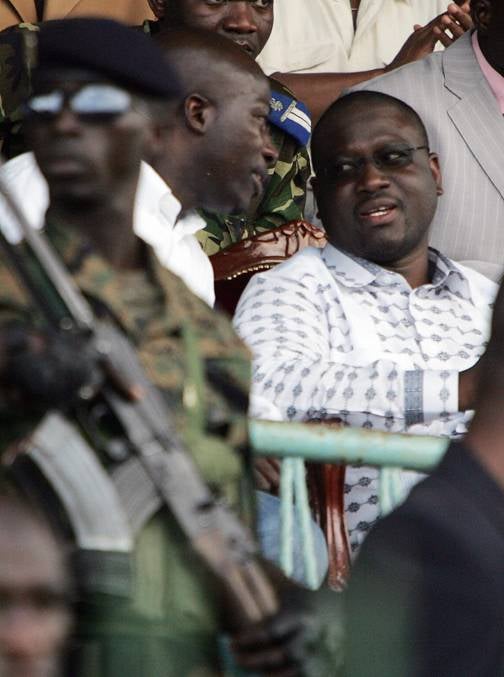
Ivory Coast's Prime Minister Guillaume Soro (R) speaks with the leader of the Young Patriots, Charles Ble Goude (L), during a visit in the western town of Gagnoa, October 20, 2007. Both leaders once served as secretary general of FESCI. © 2007 AFP
Beyond these “headliners,” former members of FESCI are increasingly represented within the administration of different government ministries, and within security forces such as the police and the gendarmerie. Many of those interviewed, from police to professors and students, complained about the favoritism they allege FESCI members have had since 2000 in gaining entry to the training schools for the police and the gendarmerie, as well as the prestigious National School of Administration (ENA), an elite institution intended to train high-level civil servants.262 One high-ranking policeman told Human Rights Watch:
Many of the recruits today into the police are former FESCI members and you can see it in the way they respond to things. They didn’t get in on merit. And they are too violent. I have friends who are soldiers who complain all the time about these FESCI guys coming into the ranks. They say they didn’t have the qualifications to get in.263
Côte d’Ivoire’s higher-educational system thus appears to be producing a generation of leaders who have cut their political teeth in a climate of intimidation, violence and impunity, an environment in which dissent and difference of option are brutally repressed. It remains to be seen whether these young leaders can move beyond this “training” as they enter their professional lives.