
<<previous | index | next>>
III. Background: Youth on Trial
Juvenile Justice Trends in the United States
Two hundred years ago, when the United States was still in its infancy as a nation, child offenders aged fifteen and over were charged and tried in adult criminal courts.15 As the nineteenth century progressed, children’s welfare advocates argued that children’s potential for rehabilitation should influence the response to their criminal behavior. By 1899, many states considered it counter-productive to incarcerate children along with adult convicts and began to establish reform houses for child offenders. In addition, reformers advocated establishing a separate system of justice for children, which removed them from adult criminal courts and instead employed “open-ended, informal, and highly flexible policies to rehabilitate” youth offenders.16 Illinois created the first juvenile court in the United States in 1899.17 By 1925, all but two states had followed suit.18
Until the 1970s, children accused of criminal conduct were almost exclusively brought before juvenile courts. A child could be transferred to stand trial in adult criminal court only if the juvenile court decided that such a transfer served the best interests of the child and of the public. At the request of the prosecutor or at the initiative of the juvenile court judge, the court would hold an adversarial hearing to determine whether the case should be transferred to adult criminal court. The transfer would not be approved unless the juvenile court determined that the adult court was best equipped to adjudicate the case and appropriately address the needs of society and of the offender.19
Starting in the mid-1980s, the United States experienced a steep and troubling increase in violent crime, including violent crime by adolescents.20 In the ten years prior to 1986, the number of homicides committed with guns by offenders aged fourteen to seventeen remained around 965 homicides per year. The number then began a steady rise, peaking in 1994 at 3,337 homicides. Youth homicides then began to drop; by 2002, the number of youth homicides with guns was lower than in 1976.21
Before it became apparent that dramatic increases in youth violent crime were a short-lived problem, the nation was consumed by anxiety that bordered on panic. In 1996, Princeton University professor John DiIulio coined the term “super-predator,” warning that in the United States, “by the year 2010, there will be 270,000 more juvenile super-predators on the streets than there were in 1990.”22 Politicians and pundits throughout the country told Americans to “brace” themselves “for the coming generation of ‘super-predators.’”23 Public confidence in the juvenile justice system began to wane as concern about youth crime grew. States embraced harsher criminal justice policies for children just as they did for adults, without stopping to ascertain whether or not they would prove effective. Racial disparities grew more pronounced as criminal sentencing became more punitive.
Figure 1, below, presents the relative percentages of black and white youth admitted to adult prisons in the United States, showing that from the early 1980s until the mid-1990s, the relative percentage of black youth offenders admitted to prison grew steeply, while declining for whites. During this same period, however, the rates at which both black and white youth were arrested for serious crimes such as murder increased.24 Starting in the mid-1990s, the admissions of black youth to adult prison began to decline, although it remained higher than the percentages from the early 1980s.
Figure 1
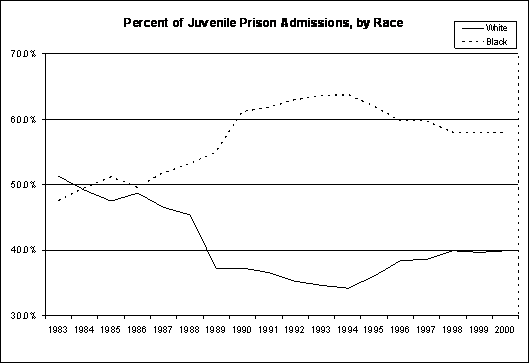
Source: Data from the National Corrections Reporting Program (NCRP). The NCRP is sponsored by the Bureau of Justice Statistics (BJS), U.S. Department of Justice, and evolved from the need to consolidate data on corrections at the national level. Its objective is to provide a consistent and comprehensive description of prisoners entering and leaving the custody or supervision of state and federal authorities. NCRP data downloads are available online at: http://www.icpsr.umich.edu/NACJD/NCRP/, accessed on September 6, 2005. Note that races other than white and black made up anywhere from 1.1 percent (in 1983) to 7.7 percent (in 1989) of the total prison admissions in any given year. Also, due to overlapping Census 2000 definitions between race (black or white) and ethnicity (Hispanic or non-Hispanic), Hispanics are often (though not always) included in black or white race counts and classifications.
Adult Trial of Children
Legislatures seized upon a simple formula: youth who commit “adult” crimes (e.g., murder, robbery, drug dealing) should be tried like adults. By 1997, all states but three (Nebraska, New York, and Vermont) had changed their laws to make it easier and more likely that child offenders would stand trial and be sentenced in adult criminal courts.25 Three mechanisms have been used to increase the adult trial of juvenile offenders:
- Withdrawal of Juvenile Jurisdiction: Legislation precludes juvenile court jurisdiction in certain cases, typically depending on the age of the child and the nature of the offense. For example, in some states, juvenile courts do not have jurisdiction over a child accused of first degree murder; such crimes may only be tried in adult criminal court.26
- Discretion to Direct File: Legislation gives prosecutors the discretion to file charges against child offenders accused of serious crimes in adult criminal court rather than beginning in juvenile courts. If they have this option, prosecutors typically choose to proceed with the prosecution of children as adults.27
- Lowering the Age for Adult Court Jurisdiction: Legislation simply lowers the age at which offenders are subject to adult trials.
As of 2005, all states and the federal government have the capacity to try certain youth as adults in criminal court. As Table 1 (below) reveals, these provisions vary from state to state, based on offense and age criteria.
Table 1: Minimum Age for Adult Prosecution and for Life without Parole Sentencing by State
|
State |
Lowest age at offense for which adult prosecution is possible |
Minimum age at offense for LWOP sentencing |
|
State |
Lowest age at offense for which adult prosecution is possible |
Minimum age at offense for LWOP sentencing |
|
Alabama |
14 |
16 |
Montana |
12 |
12 |
|
|
Alaska |
0 |
No LWOP |
Nebraska |
0 |
0 |
|
|
Arizona |
0 |
14 |
Nevada |
8 |
8 |
|
|
Arkansas |
14 |
14 |
New Hampshire |
13 |
13 |
|
|
California |
14 |
16 |
New Jersey |
14 |
14 |
|
|
Colorado |
12 |
12 |
New Mexico |
15 |
No LWOP |
|
|
Connecticut |
14 |
14 |
New York |
13 |
No <18 LWOP |
|
|
Delaware |
0 |
0 |
North Carolina |
13 |
13 |
|
|
District of Columbia |
0 |
No <18 LWOP |
North Dakota |
14 |
14 |
|
|
Florida |
0 |
0 |
Ohio |
14 |
14 |
|
|
Georgia |
12 |
13 |
Oklahoma |
7 |
13 |
|
|
Hawaii |
0 |
0 |
Oregon |
0 |
No <18 LWOP |
|
|
Idaho |
14 |
14 |
Pennsylvania |
0 |
0 |
|
|
Illinois |
13 |
13 |
Rhode Island |
0 |
0 |
|
|
Indiana |
0 |
16 |
South Carolina |
0 |
0 |
|
|
Iowa |
14 |
14 |
South Dakota |
0 |
10 |
|
|
Kansas |
10 |
No LWOP |
Tennessee |
0 |
0 |
|
|
Kentucky |
14 |
No <18 LWOP |
Texas |
14 |
No LWOP |
|
|
Louisiana |
14 |
15 |
Utah |
14 |
14 |
|
|
Maine |
0 |
No LWOP |
Vermont |
10 |
10 |
|
|
Maryland |
0 |
0 |
Virginia |
14 |
14 |
|
|
Massachusetts |
14 |
14 |
Washington |
0 |
15 |
|
|
Michigan |
0 |
0 |
West Virginia |
0 |
No LWOP |
|
|
Minnesota |
14 |
14 |
Wisconsin |
0 |
10 |
|
|
Mississippi |
13 |
13 |
Wyoming |
13 |
13 |
|
|
Missouri |
12 |
12 |
Federal |
15 |
15 |
Source: National Center for Juvenile Justice, State Juvenile Justice Profiles, available online at: http://www.ncjj.org/stateprofiles, accessed on June 6, 2005; Second Chances: Juveniles Serving Life without Parole in Michigan Prisons (American Civil Liberties Union (ACLU) of Michigan, 2004), p.3, available online at: www.aclumich.org/pubs/juvenilelifers.pdf, accessed on September 13, 2005; Juvenile Offenders and Victims: 1999 National Report, p. 106; and state statutory research.
 In addition, in ten states youth may only receive a life
without parole sentence if they are one or several years older than the minimum
age for adult prosecution. In other words, minors may be prosecuted as adults
in Alabama from the age of fourteen, but they may only be sentenced to life without
parole if they were sixteen or older at the time of the offense. By contrast,
in Colorado children as young as twelve are eligible both for trial as adults
and for the life without parole sentence.
In addition, in ten states youth may only receive a life
without parole sentence if they are one or several years older than the minimum
age for adult prosecution. In other words, minors may be prosecuted as adults
in Alabama from the age of fourteen, but they may only be sentenced to life without
parole if they were sixteen or older at the time of the offense. By contrast,
in Colorado children as young as twelve are eligible both for trial as adults
and for the life without parole sentence.
 In
most states that provide prosecutors the discretion to file cases in adult
court, there is no judicial supervision or public accountability for their
decisions, and prosecutors are not required to submit in writing the reasons
for the direct charge in criminal court. However, at least six states and the
federal government do attempt to limit prosecutorial discretion in some way.28
In
most states that provide prosecutors the discretion to file cases in adult
court, there is no judicial supervision or public accountability for their
decisions, and prosecutors are not required to submit in writing the reasons
for the direct charge in criminal court. However, at least six states and the
federal government do attempt to limit prosecutorial discretion in some way.28
Transfer hearings would at least offer the possibility of a judicial examination in juvenile court of the justification for sending a child offender to be tried in criminal court.29 These hearings are becoming increasingly rare.The available data indicate the proportion of children who have had a transfer hearing before being tried in criminal court has been steadily declining. In 1996, approximately 36 percent of child offenders in adult court had a prior transfer hearing in juvenile court; by 2000 the percentage had fallen to an estimated 13 percent.30
Moreover, U.S. juvenile court transfer hearings do not meet the international law standard that children accused of crimes should be dealt with, whenever appropriate, outside the realm of judicial proceedings in a criminal court.31 U.S. transfer hearings often also give short shrift to the duty “to ensure that children [accused of crimes] are dealt with in a manner appropriate to their well-being and proportionate both to their circumstances and the offense.”32 Transfers routinely occur even in cases that appear not to merit the more punitive treatment that often results from trial and conviction in a criminal court.
When children are tried in criminal courts, little or no accommodation is made to take into account their youth. Whether eleven or seventeen, the child offender must participate in all the same pre-trial and trial procedures and confront all the same decisions that adult defendants do. Contrary to popular belief, it is the child and not his or her parent or guardian who must decide what to tell the police and defense attorneys, whether or not to follow attorney instructions, whether to testify, whether to give information to the prosecution, and whether to go to trial or accept a plea bargain.
Although common sense would suggest that many children are simply too young to undertake such weighty legal responsibilities, it is rare for courts to consider whether children lack the competence to stand trial because of their age.33 To shed light on thechallenges children tried as adults face in court, the MacArthur Foundation Research Network on Adolescent Development and Juvenile Justice, whose members include leading legal and scientific professionals as well as academic experts, has been conducting a long term study of children’s trial competency. The study has examined a broad range of factors, including children’s understanding of basic elements in the judicial process and of their rights as defendants, their ability to put facts together and draw logical conclusions, and their ability to make decisions independent of pressure from authority figures.34 The research indicates that many young adolescents, particularly those fifteen and under, are not developmentally and intellectually mature enough to be legally “competent” to stand trial.35
Any criminal defendant can make bad decisions. However, child offenders contacted for this report described a variety of errors in judgment in their dealings with police and during their adult criminal trials that may have been related to their youth. We found some child offenders who:
- Waived their constitutional rights and made confessions, including confessions they later said were false: For example, Gary C. from Menard, Illinois said that he falsely confessed to a murder that occurred when he was fourteen years old. The police interrogated him for several hours in the company of his mother. But after his mother left the room, the interrogation continued. Gary said he was “alone” and “scared” and ultimately told the police what they wanted to hear. When he left out details or failed to make statements that fit with the version of the crime already developed by the police, he said that they helped him along, saying things such as: “[Y]ou used the ladder to get in, right?” Afterwards, no one double checked the statement. Gary said he did not know what would happen once he confessed, but he had no idea he could be sentenced to life without parole.36
- Did not recognize bad advice from defense attorneys: Thomas M. is serving life without parole for a felony murder committed in Colorado when he was fifteen years old. Before trial, Thomas’s trial attorney, Eydie Elkins, convinced him to write a letter of remorse.37 Elkins went to the same church as the victim’s family and delivered the letter to her pastor, who gave it to his congregant, the victim’s mother, who then turned it over to the prosecutor. Although the letter was not a direct confession, it was the primary piece of evidence used to convict Thomas of the felony murder, in which a young man was shot and killed during a botched robbery.
- Were hampered by low levels of education, including illiteracy: Clifford S., who was convicted for a murder committed when he was sixteen years old, is serving life without parole in Arkansas. Clifford was illiterate. When he was interviewed for this report, he said that when he was being questioned about the crime, a detective said he could take a polygraph test if he signed a form. Clifford said that the detective “wrote stuff down on this piece of paper you know . . . You know, I can’t read and write.” Clifford continued, “When he got that piece of paper, you know and I signed my name on it, he stepped out and told the police that I confessed to the crime. And I heard it and I was like, ‘No I didn’t!’” When asked if the detective told him what the paper said, Clifford answered: “No ma’am. When I went to trial, they told him to read it and that was when I first heard what he wrote. . . . And he said in court that he wrote it. Only thing I did was sign my name on it.”38
- Did not understand what was at stake during their trials: An Illinois defense attorney who represented a youth sentenced to life without parole said: “[My] client understood the proceedings. I’ve been a defense attorney for many years and he was a smart kid, he pretty much got what was going on. But it was still very difficult for him to comprehend where he might end up, to really grapple with the sentence and understand how important it was to work with me. It’s the same as a bunch of young soldiers going off to battle when they’ve never met or had anyone die before.”39
The trial of children as adults often fails to provide children with the special safeguards and care to which they are entitled under international law. Juvenile justice advocates in the United States widely recognize that decisions to send youth to adult court are often arbitrary and unfair and pay scant attention to the goal of rehabilitation. Once in the adult system, adolescents are deprived of the wide variety of rehabilitative sentencing options that they might be eligible to receive in the juvenile court system—sentencing options that are designed to give them the tools they need to turn their lives around and become law-abiding members of society. In Florida, for example, children transferred to adult court were shown to be a third more likely to re-offend than those sent to the juvenile system for the same crime and with similar prior records.40 In 2000, Florida had more children in adult state prisons than any other state, yet Florida’s violent juvenile crime rate was 54 percent higher than the national average.41
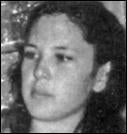
Case Study: Samantha L.
Samantha L. was age
seventeen both in this photo and when she committed her crime.
© 2005 Private.
Samantha L. had already spent nineteen years behind bars when she was interviewed for this report. Samantha said that her parents divorced when she was two years old and that her father “was an alcoholic” who had “raped my mom and my sister.”42 At seventeen, Samantha was unemployed and had a baby son. She had been charged as a juvenile with assault, two burglaries, and auto theft.
Samantha said she spent most of her time with her older sister, and they often dated older men. One of these men, Rick, involved her in selling marijuana. She sold marijuana to an undercover policeman and was arrested and sent to a juvenile center as a result. When Samantha was released from the juvenile center, she re-started her relationship with Rick and moved in with him.
One night, Rick talked about wanting to leave town and asked if Samantha knew of anybody who would lend her money. She suggested her closest friend’s grandfather, whose house she sometimes cleaned to earn money. They drove to his house, and Samantha and Rick went in to ask for the money. Her friend’s grandfather reminded her that she still owed him a housecleaning because of some money he had already paid her, so she decided not to ask for the money. She told Rick she wanted to leave, but he said he wanted to stay to talk to “grandpa” some more. Samantha says she went outside and waited in the truck for Rick. “Rick didn’t come out and I knew if I went in it would take him longer to leave, so I honked the horn. Rick didn’t come out so I started the truck thinking he would hear it and come out. He didn’t. I pulled around to the front of the house and Rick came out. He got into the truck and started yelling ‘I killed him!’ I thought he was just making it up . . . because Rick didn’t have any blood on him, I really thought he was lying . . . Rick drove the truck back to the man we had borrowed it from.”
Samantha and Rick were arrested later that night. Samantha told a researcher for this report that she was not questioned by the police about the details of the crime, because immediately after her arrest Rick took full responsibility for the crime. Subsequently, however, he accused Samantha of the murder, claiming he had initially lied about his role in the crime, because he thought Samantha was pregnant with his child. Samantha wrote that Rick fabricated this explanation for his changed story in order to justify his altered theory of defense. She continued, “I was never pregnant by him, and my only son was seven months old at the time of the crime.” Evidence introduced at Rick’s trial appeared to corroborate Samantha’s description of events.
Samantha was sentenced to life without parole for aiding and abetting first degree murder. Rick was sentenced to life without parole for first degree murder. 43 Samantha told a researcher for this report, “I know I did something wrong, but not as wrong as Rick because I wasn’t there, in the house. I wasn’t there during all of that. Rick admitted [when he was first questioned by the police] I wasn’t there, he told them I didn’t make those decisions. . . . I didn’t even hold the knife. But, I know it doesn’t matter to them.”
[15] Although the criminal justice system was harsh, compassionate societal attitudes toward child offenders tempered the outcomes—prosecutors frequently decided not to prosecute accused children, and juries often refused to convict them when a draconian sentence would result. See Randall G. Shelden and Michelle Hussong, “Juvenile Crime, Adult Adjudication, and the Death Penalty: Draconian Policies Revisited,” Justice Policy Journal, vol. 1, no. 2 (Spring 2003).
[16] Barry C. Feld, “The Juvenile Court Meets the Principle of the Offense: Legislative Changes in Juvenile Waiver Statutes,” Criminal Law & Criminology, vol. 78, no. 471 (1987), p. 474.
[17] Anthony M. Platt, The Child Savers: The Invention of Delinquency, 2nd ed. (Chicago: University of Chicago Press, 1977), p. 3-4, 138.
[18] See Howard N. Snyder and Melissa Sickmund, Juvenile Offenders and Victims: 1999 National Report (U.S. Department of Justice, Office of Justice Programs, Office of Juvenile Justice and Delinquency Prevention, September 1999), p. 86, available online at: http://www.ncjrs.org/html/ojjdp/nationalreport99/toc.html, accessed on September 13, 2005 (Juvenile Offenders and Victims: 1999 National Report).
[19] In Kent v. U.S., 383 U.S. 541, 566-67 (1996), the Supreme Court articulated the eight factors juvenile courts were to weigh in transfer hearings: “1) The seriousness of the alleged offense to the community and whether the protection of the community requires waiver; 2) Whether the alleged offense was committed in an aggressive, violent, premeditated or willful manner; 3) Whether the alleged offense was against persons or against property, greater weight being given to offenses against persons especially if personal injury resulted; 4) The prosecutive merit of the complaint, i.e., whether there is evidence upon which a Grand Jury may be expected to return an indictment to be determined by consultation with the United States Attorney; 5) The desirability of trial and disposition of the entire offense in one court when the juvenile's associates in the alleged offense are adults who will be charged with a crime in the U.S. District Court for the District of Columbia; 6) The sophistication and maturity of the juvenile as determined by consideration of his home, environmental situation, emotional attitude and pattern of living; 7) The record and previous history of the juvenile, including previous contacts with the Youth Aid Division, other law enforcement agencies, juvenile courts and other jurisdictions, prior periods of probation to this Court, or prior commitments to juvenile institutions; and 8) The prospects for adequate protection of the public and the likelihood of reasonable rehabilitation of the juvenile (if he is found to have committed the alleged offense) by the use of procedures, services and facilities currently available to the Juvenile Court.”
[20] The National Center for Juvenile Justice, “Juvenile Arrest Rates by Offense, Sex, and Race (1980-2002),” August 1, 2004, available online at: http://ojjdp.ncjrs.org/ojstatbb/crime/excel/JAR_20040801.xls, accessed on: July 2, 2005.
[21] James Alan Fox, “Homicide Trends in the United States: 2000 Update” (U.S. Department of Justice, Bureau of Justice Statistics, January 2003), available online at: http://www.ojp.usdoj.gov/bjs/pub/pdf/htus00.pdf, accessed on September 13, 2005. See also Franklin E. Zimring, American Youth Violence (New York: Oxford University Press, 1999).
[22] John DiIulio, How to Stop the Coming Crime Wave (New York: Manhattan Institute, 1996), p. 1.
[23] House Committee on Economic and Educational Opportunities, Subcommittee on Early Childhood, Youth and Families, Hearings of the Juvenile Justice and Delinquency Prevention Act, Serial no. 104-68, 104th Congress, 2nd session., 1996, p. 90 (“Statement of Rep. Bill McCollum, chairman, Subcommittee on Crime, House Judiciary Committee”).
[24] See Howard N. Snyder, Juvenile Arrests 2003 (Juvenile Justice Bulletin, Office of Juvenile Justice and Delinquency Prevention, August 2005), p. 9, available online at: http://www.ncjrs.gov/html/ojjdp/209735/contents.html, accessed on September 13, 2005.
[25] Juvenile Offenders and Victims: 1999 National Report, p. 89.
[26] The following states have automatic transfer provisions: Alabama, Alaska, Arizona, Delaware, Florida, Georgia, Idaho, Illinois, Indiana, Iowa, Louisiana, Maryland, Massachusetts, Minnesota, Mississippi, Montana, Nevada, New Mexico, New York, Oklahoma, Oregon, Pennsylvania, South Carolina, South Dakota, Utah, Vermont, Washington, and Wisconsin. See Patrick Griffin, et al., Trying Juveniles as Adults in Criminal Court: An Analysis of State Transfer Provisions (U.S. Department of Justice, Office of Justice Programs, Office of Juvenile Justice and Delinquency Prevention, December 1998) p. 1, available online at: http://ojjdp.ncjrs.org/pubs/tryingjuvasadult/toc.html, accessed on September 13, 2005 (Trying Juveniles as Adults in Criminal Court).
[27] The following jurisdictions give prosecutors discretion to file directly in adult court: Arizona, Arkansas, Colorado, District of Columbia, Florida, Georgia, Louisiana, Massachusetts, Michigan, Montana, Nebraska, Oklahoma, Vermont, Virginia, and Wyoming. See Trying Juveniles as Adults in Criminal Court, p. 1.
[28] See Trying Juveniles as Adults in Criminal Court, p. 1. For example, before exercising direct file authority to prosecute juveniles as adults in Nebraska and Wyoming, prosecutors are required to give consideration to the same kinds of enumerated “factors” that are ordinarily weighed by juvenile courts making waiver determinations. Ibid. The federal government requires all cases filed against juveniles to proceed through a hearing to determine whether prosecution should continue in criminal court, in which several factors are weighed and written findings are entered into the record before prosecution may proceed. See 18 U.S.C. 403, Sec. 5032. Florida weighs the scales in favor of trying juveniles in adult court: in specified age or offense categories, prosecutors must either attempt an adult prosecution or provide the juvenile court with written reasons for failing to do so.See Trying Juveniles as Adults in Criminal Court, p.1.
[29] The United States is party to the International Covenant on Civil and Political Rights (ICCPR), which states in article 14 that governments should establish procedures that take “account of [children’s] age and the desirability of promoting their rehabilitation.” See ICCPR, 999 U.N.T.S. 171, entered into force March 23, 1976, ratified by the United States on September 8, 1992, article 14(3)(g). If more U.S. states insisted upon transfer hearings weighing several factors before a child could be charged in adult court, U.S. obligations under the ICCPR would be better upheld.
[30] In 1996, state prosecutors tried 27,000 child offenders in adult court, of whom 9,760 had been transferred from juvenile court.Bureau of Justice Statistics, Prosecutors in State Courts, available online at: http://www.ojp.usdoj.gov/bjs/pubalp2.htm#P, accessed on July 1, 2005 (Prosecutors in State Courts).In 2000, we estimate 55,000 child offenders were tried in adult court, of whom an estimated 7,100 had been transferred from juvenile court. These estimates are calculated from data contained in the following reports: Trying Juveniles as Adults in Criminal Court; Prosecutors in State Courts; and A. Stahl, H. Snyder, T. Finnegan, Easy Access to Juvenile Court Statistics: 1985-2000 (Pittsburgh: National Center for Juvenile Justice (producer); Washington, D.C.: Office of Juvenile Justice and Delinquency Prevention (distributor), 2002), available online at: http://www.ojjdp.ncjrs.org/ojstatbb/ezajcs, accessed on July 1, 2005.
[31] Convention on the Rights of the Child (CRC), Art. 40(3)(b).
[32] CRC, Art. 40(4).
[33] A competent defendant is one who has a basic understanding of the roles of her own and opposing attorneys; comprehends the functions of the judge and jury; is able to consult with her attorney in a meaningful way; and can weigh the consequences of the decisions she has to make, such as whether or not to accept a plea. See, e.g.,, Dusky v. United States, 362 U.S. 402 (1960).
[34] Phase I of the MacArthur study occurred between 1997 and 2002 and involved an examination of 927 children aged eleven to seventeen who were compared with a group of 466 young adults aged eighteen to twenty-four. Half of the children and half of the young adults were in jail or juvenile detention centers when they were tested, and half were not. The study used two main instruments to measure competency. The first, the MacCAT-CA, measures responses along three subscales: understanding, reasoning, and recognition of the relevance of information. The second instrument, MacJEN, measures responses to vignettes that present legal scenarios and choices. MacJEN also has three subscales: risk appraisal, future orientation, and resistance to peer influence. The study controlled for characteristics of the respondents such as social class and intelligence. SeeThomas Grisso, Laurence Steinberg, Jennifer Woolard, Elizabeth Cauffman, Elizabeth Scott, Sandra Graham, Fran Lexcen, N. Dickon Reppucci, Robert Schwartz, “Juveniles’ Competence to Stand Trial,” Law and Human Behavior, vol. 27 (2003) (“Juveniles’ Competence to Stand Trial”).
[35] “Juveniles’ Competence to Stand Trial.”
[36] American Civil Liberties Union (ACLU) Michigan Life without Parole Project interview with Gary C., Tamms Supermax Correctional Facility, Tamms, Illinois, September 21, 2004 (on file with Human Rights Watch).
[37] Human Rights Watch telephone interview with Mr. Tom Carberry, October 25, 2004. Carberry is Thomas’ appeals attorney. According to Carberry, Elkins allowed “her faith” to affect her professional judgment. Human Rights Watch also interviewed Thomas M., Colorado State Penitentiary, Cañon City, Colorado, July 27, 2004 (pseudonym) (Human Rights Watch interview with Thomas M.).
[38] Human Rights Watch interview with Clifford S., Maximum Security Unit, Tucker, Arkansas, June 22, 2004 (pseudonym).
[39] Human Rights Watch telephone interview with Dennis Doherty, November 22, 2004. In another apparent example of a youth offender not understanding what was at stake during his trial, Donald Lambert, who was fifteen at the time of his crime, decided to forgo a trial and plead guilty to first degree murder, resulting in a life without parole sentence, after a conference with his attorney that lasted “somewhere between five and twenty minutes.” See Lambert v. Blodgett, 393 F.3d 943 (9th Cir. Mar. 2, 2004).
[40] Bishop, Donna M. et al. "The Transfer of Juveniles to Criminal Court: Does it make a difference?" Crime & Delinquency, vol. 42, no. 2 (April 1996).
[41] Vincent Shiraldi and Jason Ziedenberg, “The Florida Experiment: Transferring Power from Judges to Prosecutors,” American Bar Association, Criminal Justice Magazine, vol. 15, issue 1 (Spring 2000) (“The Florida Experiment: Transferring Power from Judges to Prosecutors”).
[42] Human Rights Watch interview with Samantha L., Iowa Correctional Institute for Women, Mitchellville, Iowa, April 5, 2004 (pseudonym) (unless otherwise noted, all statements attributed to Samantha L. in this case study were obtained during this interview).
[43] State v. Nebinger, 412 N.W.2d 180 (Iowa Ct. App., 1987) (finding no abuse of discretion by trial court in finding defendant guilty of first degree murder and first degree robbery of a seventy-nine-year-old man and showing that Nebinger attempted to argue that Samantha L. was guilty of the crime).
| <<previous | index | next>> | October 2005 |