
HUMAN RIGHTS VIOLATIONS IN THE UNITED STATES
MODERN
CAPITAL OF HUMAN RIGHTS?
Abuses
in the State of Georgia
Copyright © July 1996
by Human Rights Watch.
All rights reserved.
Printed in the United States
of America.
ISBN 1-56432-169-X
Library of Congress Catalog
Card Number: 96-77034
This report was edited by HRW program director Cynthia Brown and HRW senior researcher Allyson Collins and formatted by HRW associate Nandi Rodrigo. The authors of each chapter offer their acknowledgments below.
Police Abuse
The author, HRW senior researcher Allyson Collins, wishes to thank interviewees from the Office of Professional Standards of the Atlanta Police Department, the Georgia Bureau of Investigations, the Federal Bureau of Investigation, the U.S. Justice Department's Civil Rights Division, the Federal Public Defender's office in Atlanta, the Fulton County Public Defender's office, the Atlanta City Public Defender's office, the U.S. Attorney's offices, the Fulton County District Attorney's office and the Office of Community Affairs of Atlanta. The author would also like to thank community activists who provided valuable information and insights, and attorneys Brian Spears and George Weaver. Special thanks to the American Civil Liberties Union of Georgia and the Transactional Records Access Clearinghouse of Syracuse, New York.
Death Penalty
The author, attorney Stephen Bright, wishes to thank the entire staff of the Southern Center for Human Rights, where he serves as director. He also wishes to thank his capital punishment class at Yale Law School.
Race and Drug Law Enforcement
The author, HRW associate counsel Jamie Fellner, wishes to thank Chief Justice Robert Bentham, District Attorney Daniel Porter, District Attorney Spencer Lawton, Police Maj. William Shannon, Walter Britt, Gregory Smith and the other prosecutors, defense attorneys and police personnel in Georgia who provided critical insights and information. We also wish to acknowledge the generous assistance and data provided by Timothy Carr, of the Department of Corrections, and Willene White-Smith of the Crime Information Center of the Georgia Bureau of Investigations. Dr. Joseph Katz provided invaluable help with the statistical analyses that are the core of this chapter.
Treatment of Prisoners
The author, HRW associate counsel Joanne Mariner, gratefully acknowledges the help of Bob Cullen, counsel for the plaintiffs in innumerable Georgia prison cases; Robert Bensing and Robin Toone, staff attorneys with the Southern Center forHuman Rights; John Cole Vodicka, director of the Prison and Jail Project, and Gerry Weber, legal director of the American Civil Liberties Union of Georgia.
Sexual Abuse of Women Prisoners
The author, HRW associate counsel Joanne Mariner, wishes to thank Bob Cullen and Lisa Boardman Burnette, counsel for the plaintiffs in the federal class action Cason v. Seckinger, whose generous provision of time and information greatly facilitated the preparation of this chapter. Deborah Blatt, a former consultant with the Women's Rights Project of Human Rights Watch, conducted the original research that was updated for this chapter. Dorothy Q. Thomas, director of the Women's Rights Project of Human Rights Watch, edited the chapter.
Children in Confinement
The author, HRW consultant Mina Samuels, wishes to thank the many organizations and individuals in Georgia and other parts of the United States who assisted us in researching this issue. In particular, we would like to thank Judge Virgil Costley, Kathleen Dumitrescu, Richard McDevitt, Dorothy Murphy, George Napper, Linda Pace and Professor Janet Pratt. We also appreciate the assistance and suggestions provided by members of the advisory committee of the Children's Rights Project of Human Rights Watch.
Lesbian and Gay Rights
The author, attorney Suzanne Goldberg, wishes to thank Larry Pellegrini, John Greaves, Johnny Fambro, Chip Rowan, Jane Morrison, Pat Hussain, Duncan Teague, Stephanie Swann, Melanie Rosen, Phillip Rush, Phil Rashoon, Donna Narducci, Charles Gossett, Dr. James Stark, Lyn Stoesen, Donna Drumm, Lisa Kung, Phillip Rush and Walter Reeves. The organization for which the author works, Lambda Legal Defense and Education Fund, plans to open a Southern Regional office in Atlanta next year.
Attacks on Freedom of Expression
The author, HRW on-line research associate Karen Sorensen, wishes to thank Julie Edelson at Planned Parenthood in Atlanta, Donna Pistolis in the Office for Intellectual Freedom at the American Library Association in Chicago, and Alison Biers of People for the American Way in Washington, D.C.
When Atlanta set out to host the 1996 Summer Olympic Games, its application stated that "for many," the city is "the modern capital of human rights." This is big talk, even for a city that in many respects symbolizes the social progress of the American South since the civil rights movement of the 1960s. A claim so large begs for evaluation. In this report, one of a series on the United States, Human Rights Watch offers an assessment of how Atlanta, and the state of which it is capital, actually treat human rights.
Human rights issues may seem unrelated to a sporting event, but the Olympic Games have historically showcased the international community's respect for what Atlanta's application called the "justice and equality inherent in fair play." At the same time, the Olympics have often been a lightning rod for political controversy-for Nazi racist supremacism (Berlin 1936), for black-power salutes (Mexico City 1968), for anti-Israeli terrorism (Munich 1972), and for reciprocal boycotts by the U.S. and Soviet Union (Moscow 1980 and Los Angeles 1984), among others.
Beijing lost its bid to host the 2000 Olympics because of China's gross and systematic violations of human rights, and Human Rights Watch was among the organizations that campaigned for taking its human rights record into account. As the world's attention focuses on an Olympic site, it follows naturally that the host country's human rights record is of interest. And so it should be: as South Africa under apartheid discovered, a country that wishes to participate in the world sporting system should also participate in the international human rights system and strive to meet the standards of that system.
It may interest visitors to Atlanta to know that the likely invisibility of homeless people will be largely due to city ordinances that prohibit entering a vacant building or crossing a parking lot without owning a car parked there; ordinances that assist police in clearing homeless people off the downtown streets. And controversy has already arisen this year, due to local politics in the U.S. that contradict Olympic principles. By decision of the organizing committee, the Olympic torch, on its journey from Los Angeles to Atlanta for the opening of the games, will bypass at least one county in Georgia because of a county resolution that denigrates gay people. This, and much else about Atlanta, the state of Georgia, and the U.S., will become more widely known because of the games.
It is to be hoped that world attention may lead to improvements. For Human Rights Watch finds that state officials and public policies contravene fundamental human rights principles in a wide range of settings in Georgia. For example:
* Atlanta police officers have used excessive force, including unjustified shootings and severe beatings, and have otherwise abused their power without coming before external civilian review and without punishment through internal department procedures, such that in Atlanta the performance of the police is now a controversial and divisive issue.
* Georgia's death penalty law, upheld by the U.S. Supreme Court in 1976, has led to capital punishment primarily for the poor and for African-Americans-particularly when the victim of the crime is white-and this discriminatory impact compounds the abuse inherent in the death penalty itself.
* Drug laws are enforced disproportionately against black drug offenders, who, for example, are arrested for cocaine-related offenses at seventeen times the rate of whites (even though more whites are cocaine offenders) and who receive 98 percent of the life sentences handed down in drug cases.
* State-run jails are so overcrowded and physically deteriorated, and local jail officials have neglected prisoners' welfare so shamefully in so many areas, that the U.S. government has threatened to sue eleven Georgia counties over jail conditions.
* Women in prison suffer sexual harassment and intimidation, and sometimes rape, at the hands of their guards, a situation which has improved greatly since an amended lawsuit was brought against the state in 1992 but which continues to be serious.
* Minors in state custody face extremely poor custodial conditions, are subjected to cruel restraints and punishment forbidden by international standards, are held in overcrowded facilities with little educational or other programs to occupy them, without appropriate psychological attention, and are virtually ignored as candidates for rehabilitation, which is supposed to be the goal of juvenile confinement.
* Lesbians and gay men face hostility that ranges from harassment under the state's anti-"sodomy" law, to openly discriminatory firing of gay employees by state officials and others, to verbal threats and physical attacks. Victims of discriminatory treatment in most parts of Georgiahave no effective recourse because the state does not prohibit discrimination on the basis of sexual orientation.
* Freedom of expression is undermined by local school boards, in contravention of federal law but without federal action to end it, and by state Assembly resolutions that have condemned the state's public broadcasting system and have opened up broad new possibilities to prosecute Internet users for a variety of hitherto common practices.
These problems are not unique to the city of Atlanta or to Georgia. The custodial abuse, official neglect, discrimination and intolerance we have found in Georgia occur in many other parts of the United States, and those who commit abuses often go unpunished. The death penalty is available in thirty-eight of the fifty states; twenty-five of these permit the execution of offenders who were under eighteen at the time of the crime. Forty states lack laws to prohibit discrimination based on sexual orientation, and no state is immune from police brutality.
In Georgia, as elsewhere in the U.S., the federal government's and courts' performance is uneven. There have been some successes in Georgia, like state court-orders that have reduced prison guards' previously flagrant sexual abuse of women inmates. But there have also been setbacks; efforts by local groups to improve the treatment of children in confinement have not been successful to date. As to the death penalty, the abuse is permitted by the U.S. Supreme Court, though some local features of its application are peculiarly Georgian. And regarding discrimination against lesbians and gay men or local actions against certain books or topics in art, the federal government is distant from the events, when it should be acting to protect vulnerable groups and crucial rights, and to challenge restrictive state laws and resolutions.
Several pieces of legislation passed by the U.S. Congress during the current 104th session and signed by President Clinton, have undermined basic human rights protections throughout the U.S. For example, despite the fact that deplorable prison and custodial conditions and abusive treatment are routinely ignored by officials in Georgia and other states until lawsuits are successful, the Prison Litigation Reform Act, which is now law, makes initiating lawsuits to improve treatment and monitoring of court orders to improve conditions stemming from those lawsuits more difficult. The Communications Decency Act, signed into law as part of the Telecommunciations Act of 1995, criminalizes on-line communication that is "obscene," "indecent," or "patently offensive" if the recipient of the communication is a minor. The constitutionality of the law is now being challenged by groups, including Human Rights Watch, arguing that"indecent" speech is protected by both the U.S. Constitution and international law. Finally, as described more fully in this report's chapter on the death penalty, the federal government recently passed new habeas corpus restrictions that are unprecedented. The new law limits the ability of death row prisoners and other inmates to appeal state-court decisions to federal courts on constitutional grounds, despite the large number of state-court decisions that are currently overturned by federal courts due to state-court errors.
Several of the most persistent practices we found contradict Georgia state law and/or U.S. federal law and the Constitution. They also violate international human rights law, which is grounded in principles that the United States, and the state of Georgia, are presumed to share-principles like the individual's guarantee of free expression, the prohibition on cruel and unusual punishment, the right to due process of law, and the right to be free from discrimination. We hold the state of Georgia accountable for abusive practices under international law because the commitments made by the United States to the international community are binding on all its states and municipal governmental units. We also hold the federal government accountable because, under international human rights law, the national government is responsible to the international community for compliance with international obligations by all entities within its jurisdiction. Federal arrangements for the distribution of power are not an excuse for non-compliance.
International Law: Americans Need Not Apply
The standards of international law cited throughout this report in some cases offer better human rights guarantees than U.S. law. Over the past fifty years, the principles adopted by the United Nations in 1948-as the Universal Declaration of Human Rights-have been formalized in treaties and protocols, reflecting an increasingly unified international consensus that basic rights must be guaranteed for all. After the treaties are ratified by a country, they become domestic law.
The United States has helped create these standards, but has been slow to apply them to itself. And when the United States has ratified key covenants, it has done so with such important reservations that U.S. citizens cannot use international law for their own protection.
In recent years, the United States has ratified the International Covenant on Civil and Political Rights (ICCPR), the Convention Against Torture or other Cruel, Inhuman or Degrading Treatment or Punishment, and the International Convention on the Elimination of all Forms of Racial Discrimination (CERD). The administration of President George Bush saw to the ratification of the ICCPR, and the incumbent Clinton administration pushed through Congress the ratification of the Torture Convention and CERD. But both administrations, Republican andDemocratic, have imposed reservations, declarations and understandings that carve away any expanded protections for Americans. Principal among these is the declaration that none of the provisions are self-executing, meaning that they are not automatically available for Americans to invoke upon ratification. They require passage of implementing legislation before they can be applied by courts. At the same time, the Executive Branch specifically declares that no implementing legislation is necessary. The effect is that ratification is more or less meaningless for Americans who would invoke the treaties to see their rights protected.
If, for example, residents of Georgia could invoke CERD's provisions, the disproportionate impact on African-Americans in the application of the death penalty and dramatic racial discrepancies in arrests and sentencing of blacks and whites for drug offenses could be challenged in court, because to prove discrimination under CERD requires proof of discriminatory intent or effect, while the U.S. Constitution has been interpreted by courts to require proof of both intent and effect. The Torture Convention prohibits "cruel, inhuman and degrading treatment," as does the U.S. Constitution's Bill of Rights in slightly different language-but regarding the specifics of what constitutes such treatment, international standards that are considered the authoritative definition of minimally decent conditions for detainees and prisoners are more specific and protective of rights than is U.S. law; so are international standards regarding the treatment of juveniles in confinement. And the ICCPR, which has been interpreted as covering discrimination based on sexual orientation, could help to protect lesbians and gay men from such discrimination and lead to the invalidation of Georgia's "sodomy" prohibition.
While it is not the primary subject of this report, the U.S. government's unwillingness to fully adopt international human rights standards is a denial of full rights to U.S. citizens and other U.S. residents. We urge that the federal government reconsider its position and remove its reservations to the ICCPR, the Torture Convention and CERD. We also urge early and unreserved ratification of pending human rights instruments-including the Convention on the Elimination of All Forms of Discrimination Against Women (CEDAW), the Convention on the Rights of the Child, the American Convention on Human Rights, and the International Covenant on Economic, Social and Cultural Rights.
Findings
Police Abuse
Police officers and sheriffs' deputies in Georgia who commit human rights violations are subjected only to the public scrutiny provided by the media. This is particularly notable in the case of Atlanta, the state's capital and largest city, wherethere has been no functional citizen review agency for the past several years. Most of the smaller cities and rural areas are entirely dependent upon internal review by police and sheriffs' departments. This lack of transparency protects abusive officers and poor police managers.
State criminal prosecution of police officers in Georgia is made more difficult than in most other states by the use of special grand jury proceedings that benefit accused officers and reduce the number of indictments in police brutality cases. The chief of special litigation of the Georgia Attorney General's office objects to the special treatment given police accused of misconduct, and has labeled it "outrageous." These procedures contribute to impunity for police officers accused of serious abuses, as described in this report.
Federal criminal civil rights prosecution of law enforcement officers is rare in the United States generally, but the rate of prosecution appears to be particularly low in Georgia. Since 1994, the U.S. Justice Department reports that only two civil rights cases were prosecuted in Georgia. Despite the difficulties in prosecuting these cases successfully-because jurors are predisposed to believe police officers, and the legal standard is rigorous in requiring willful deprivation of the victim's civil rights-this is an alarmingly low number of prosecutions in light of the serious abuses we describe in this report.
Death Penalty
The application of the death penalty in Georgia is discriminatory, characterized by a denial of due process that particularly affects the poor and black defendants. It follows on a tradition of unequal justice for African-Americans that results in capital punishment being sought and imposed most frequently in that small portion of homicides where the victim is white and the accused is black. That such partiality in the justice system leads to unequal sentencing is serious enough; when it leads to execution it blatantly violates the most basic principles of international human rights law and the U.S. Constitution.
Like race, poverty can be a serious handicap for the accused in a capital case in Georgia. The system fails to provide adequate legal representation for the indigent, and in trial after trial, where decent representation could have led to a reduced sentence, poor defendants have been given the death penalty. Poor, mentally impaired defendants in capital cases have received the death penalty because court-appointed lawyers have failed to offer evidence about mental impairments that might have resulted in reduced sentences
Drug Law Enforcement
Drug laws in Georgia are not enforced equally against black and white drug offenders. Official arrest and incarceration data analyzed by Human Rights Watch demonstrate the starkly disproportionate impact of the state's efforts to use the criminal law to curtail the consumption and distribution of illicit drugs. Both African-Americans and white Georgia residents use and distribute drugs, but black offenders have a much greater likelihood of being arrested and incarcerated.
Although more whites than blacks use drugs, including cocaine, blacks account for two-thirds of the arrests for drug possession and 84 percent of the arrests for cocaine possession. The disproportionate impact of arrest patterns is mirrored in imprisonment rates: African-Americans account for three-quarters of the persons admitted to prison for drug offenses. They also received the most onerous sentences: 98 percent of all life sentences for drug offenses were given to African-Americans, in most cases for offenses involving miniscule drug amounts.
Federal and Georgia state law enjoins discrimination on the basis of race. International human rights law is also implicated: one of the overarching principles of international human rights is that of equality before the law. The International Convention on the Elimination of All Forms of Racial Discrimination (CERD), to which the U.S. is signatory, calls on national governments to take steps to eliminate discrimination in practice. The shocking statistics found in Georgia lead us to believe that, at least in this state, the U.S. is not in compliance with CERD's provisions.
Jail and Prison Conditions
At adult facilities, and particularly in local jails, prisoners are held in dangerous, filthy and deteriorating conditions. In one county jail investigated by the U.S. Justice Department, inmates were left unsupervised up to six hours of every eight-hour shift. If there had been a fire, medical emergency or prisoner unrest of any kind, the prisoners (and surrounding communities) would have been in danger. The jail was also filled to twice its capacity, and prisoners were forced to sleep on dilapidated mats on the concrete floor. Prisoners at the jail were not housed to separate dangerous inmates from vulnerable ones, but the jail was racially segregated by the authorities.
During the past decade, Georgia experienced explosive growth in its prison population; in the last three years alone, the number of inmates has increased by about 9,000-one of the fastest rates of growth in the nation. This dramatic growth has been accompanied by tougher treatment of prisoners, and by allegations of physical abuses during intensive searches, described as "shakedowns," held atcorrectional facilities around the state and designed to uncover weapons, drugs, money and other contraband.
Sexual Abuse of Women Prisoners
Prior to a federal class action lawsuit in 1992, state officials entrusted with custodial power over the women's prison population in Georgia engaged in flagrant sexual abuse of their charges, abuse that included rape, sexual assault, sexual harassment and violations of the right to privacy. Although Georgia criminal law formally prohibited sexual contact between prison officials and prisoners, the law was not enforced, and the efficacy of departmental policies intended to prevent such abuse was belied by the impunity with which prison staff, including supervisory staff, engaged in sexual relations with prisoners.
Following the 1992 lawsuit, there was significant public and judicial attention to the spectacle of custodial sexual abuse, compelling Georgia to take meaningful steps to put a stop to it. Because of these efforts, the overall atmosphere in its women's prisons has greatly improved from that existing prior to the suit. Nonetheless, sexual contact between officers and prisoners remains a recurring problem and, in some instances, amounts to rape or sexual assault. Moreover, prisoners who report sexual misconduct still face a persistent bias against their testimony and may suffer punishment. This is in contrast to the officials and guards accused of sexual assaults, most of whom have escaped full criminal prosecution and all of whom have avoided prison sentences.
Children in Confinement
Georgia officials refused access to children's facilities by Human Rights Watch investigators. Nonetheless, through our research we were able to ascertain that many children are confined in shamefully overcrowded, squalid and unsanitary conditions in detention and correctional facilities in Georgia. As a result of overcrowding, institutions are dangerous places for younger children who are sometimes preyed upon by older offenders. In some facilities four boys share housing space intended for one.
Inappropriate and excessive disciplinary measures are used, including an overuse of isolation (sixty-three days in one case) and locking children in their cells for long periods of time. In addition, four-point restraints, with children bound to a bed by wrists and ankles, are used as disciplinary measures; the same practice is used to restrain children who are believed to be suicidal. Educational and other programming is inadequate. Children with psychological disorders have been punished or ignored instead of being treated by medical personnel. Despite at least one successful lawsuit against officials responsible for abysmal conditions at oneof the facilities, neither the federal government nor state officials have implemented enforceable standards to ensure the safety and well-being of children in the custody of the state.
Lesbians and Gay Men
Lesbians and gay men in Georgia, as in many parts of the country, are confronted with animosity from fellow residents and officials, and most lack even basic protections from discriminatory treatment. A so-called "sodomy" law that criminalizes certain sexual behavior, and state and local resolutions that condemn "gay lifestyles," promote an atmosphere of hostility; this is reinforced by the state's unwillingness to provide anti-discrimination protections to gays and lesbians. As a result, gay men and lesbians, except for public employees in Atlanta and two surrounding counties, have no recourse if they are fired from their jobs on grounds of their sexual orientation. One large restaurant chain fired all known gay men and lesbians in 1991. Soon after that, the state's attorney general dismissed a newly hired lawyer after learning she was a lesbian.
As state and local politicians pass laws and resolutions condemning lesbians and gay men, attacks against members of the gay community have continued, often escalating from verbal taunts to physical violence, and sometimes murder. The police response to these crimes has been uneven. There have been some welcome convictions of assailants who targeted lesbians or gay men, but in other cases the police have not responded adequately.
Freedom of Expression
In recent years, socially conservative groups, parents, and elected officials have sought to restrict Georgia residents' freedom of expression in several areas, especially artistic freedom of expression and sex education. These efforts have resulted in attacks on freedom of expression by state, country and local governments, and at public schools and public libraries. The situation in Georgia is consistent with a national trend.
Reductions in Georgia state funding for the arts have targeted groups or artists that discuss homosexuality or AIDS and HIV. Art exhibits focusing on contemporary social issues have been removed from public spaces, and books and other literary works with sexual themes have been banned by directors of public libraries under pressure from school boards and parents. The free flow of information via electronic communication has also been curtailed: citing concerns ranging from terrorism to trademark theft, Georgia lawmakers have recently passed laws that restrict rights to free expression and privacy on-line.
Conclusion and Recommendations
As described thoroughly in this report, for many-particularly the poor, racial minorities, gays and lesbians, and virtually anyone jailed or imprisoned in the state-Georgia is hardly a human rights mecca. In addition to the specific recommendations found in each chapter, we make the following recommendations:
Improving Accountability
· Effective complaints procedures must be established and adequate outreach must be initiated to inform individuals about their right to file complaints when their rights have been violated by police and corrections officers.
· In light of the inaction of Georgia authorities to complaints of abuse that are made, unless those complaints are part of a successful lawsuit, officials should consider instituting citizen review boards or creating a governmental agency or commission dedicated to receiving and investigating abuse complaints involving police and corrections officers. Furthermore, the mandate of Atlanta's long-moribund Civilian Review Board, now newly tasked with reviewing the department's own investigation of complaints, should be revised dramatically by allowing it to receive initial complaints from alleged victims, granting it subpoena power, and providing it with staff and resources to carry out its responsibilities, among other necessary reforms.
· Supervisors must be responsible for the actions of their subordinates. Abusive police or corrections officers must be disciplined appropriately and consistently. If local prosecutors fail to prosecute, federal prosecutors must consider whether criminal civil rights violations have occurred and should prosecute accordingly.
· Local detention facility administrators must be held accountable for ignoring deplorable living conditions. The Justice Department's recent reports on its investigation of conditions at county jails in Georgia are a clear indication that local officials have abdicated their responsibility to provide humane conditions. If federal investigations are necessary to bring about essential improvements in adult or children's facilities, they should continue, but local personnel who have engaged in misconduct or management that has failed to protect inmates' or detainees' basic rights must not go unpunished.
· Independent human rights investigators should be allowed access to both adult and juvenile facilities.
The Death Penalty and Discrepancies in the Criminal Justice System
· Georgia should abolish the death penalty.
· An independent, state-wide public defender system should be established to take responsibility for indigent defense in the state to ensure that impoverished defendants are represented by lawyers able and willing to devote the time, resources and skills necessary in capital cases. At the very least, the pre-existing Multi-County Defender's office should be provided with the staff and other resources necessary to fulfill its duties in representing poor defendants in capital cases.
· Georgia's public officials, lawmakers and the public at large should scrutinize the means used to enforce drug laws and then assess the necessity of these means in light of the state's drug objectives. The inquiry should consider how the current disparate racial impact could be reduced by adopting policy alternatives. As part of this examination, officials should review reporting mechanisms and data collection to ascertain whether sufficient information has been compiled to be able to ascertain the racial impact of drug law enforcement.
Discrimination and Intolerance
· Georgia should repeal O.C.G.A. Sec. 16-2-2 (the criminal prohibition of "sodomy").
· Georgia communities should repeal all explicitly anti-gay ordinances and restrictions.
· The U.S. Congress should pass the Employment Non-Discrimination Act, which prohibits discrimination based on sexual orientation in employment.
· Freedom of expression should not be inhibited unnecessarily by individuals or groups who have been allowed to arbitrarily choose which artworks, books or theater productions are suitable for the community at large.
· To ensure that artistic expression in Georgia is protected from political interference, Georgia lawmakers should reject content-based restrictions on funding or other forms of support for the arts.
International Human Rights Protections
· The U.S. Congress should introduce implementing legislation for the International Covenant on Civil and Political Rights, the Convention Against Torture and Cruel, Inhuman and Degrading Treatment and theInternational Convention on the Elimination of all Forms of Racial Discrimination.
· The U.S. should ratify all relevant international human rights treaties not yet approved, including Convention on the Elimination of All Forms of Discrimination Against Women, the American Convention on Human Rights, the International Covenant on Economic, Social, and Cultural Rights, and the Convention on the Rights of the Child.
Georgia's law enforcement agents have committed serious human rights violations, including unjustified shootings, severe beatings, and other applications of excessive force. Yet, according to the information available to the public, officers are rarely disciplined adequately by police management for such offenses and are even less likely to be prosecuted criminally. In these ways, Georgia's police abuse problem is typical of states throughout the nation.
Georgia is unusual, however, in that there is little independent review of its police forces. This is particularly notable in the case of Atlanta, its capital and largest city, where there has been no functional citizen review agency for the past several years. State criminal prosecution of police officers in Georgia is made more difficult than in most other states by grand jury proceedings that grant accused officers special procedural privileges that are unavailable to other persons who may be targets of grand jury investigations, reducing the number of indictments in police brutality cases. And, although federal civil rights prosecution of abusive police officers is rare in the United States generally, the rate of prosecution appears to be particularly low in Georgia.
In the first section of this chapter we examine police abuse and accountability problems within Atlanta by describing: incidents of alleged abuse by Atlanta police officers; the newly formed Civilian Review Board; the role of the Atlanta Police Department's internal affairs unit (which is responsible for investigating police misconduct); and efforts to prosecute Atlanta police officers accused of criminal offenses. The next section describes police brutality cases from around the state that illustrate flawed practices and procedures leading to impunity for abusive officers. The federal government's role in addressing police abuse in Georgia is then examined. Finally, we provide recommendations to the relevant government authorities to improve accountability for brutal officers and reduce incidents of abuse.
Constitutional and International Standards
In addition to violating state and federal law, as described below, police abuse also violates constitutional rights and international norms and treaties to which the U.S. is party. The Eighth Amendment of the U.S. Constitution prohibits the infliction of "cruel and unusual punishment," and the Fifth and Fourteenth Amendments prohibit any state from depriving "any person of life, liberty, or property, without due process of law." Furthermore, the Fourth Amendment forbids the "unreasonable" seizure of any person.
Two major international human rights treaties pertain to police abuse. In 1993, the U.S. ratified the International Covenant on Civil and Political Rights. Article 7 of the covenant states: "No one shall be subjected to torture or to cruel, inhuman or degrading treatment or punishment...."1 Similar protections are included in the Convention Against Torture and Other Cruel, Inhuman or Degrading Treatment or Punishment, which the U.S. ratified in 1994.2
Atlanta
On December 7, 1995, plainclothes Atlanta police officer Willie T. Sauls entered a motorcycle shop, his gun drawn. Sauls and his fellow officers reportedly suspected a robbery was in progress, and when he entered the store, shouting obscenities, an employee thought the police surrounding the store were themselves robbers, thus leading to a gunfight. By the time the shooting stopped, a customer at the store, Jerry Jackson, was dead and two others, including Officer Sauls, were wounded.3
What began as a botched raid became a significant scandal when witnesses who viewed some of the incident from a nearby building contacted reporters weeks after the shooting stating that they had attempted to provide police investigators with their eyewitness accounts but were ignored. The witnesses claimed that police spokespeople quoted in the press were misleading the public because they did not want to acknowledge what the witnesses had seen: Sauls's partner, Officer Waine Pinckney, shooting Jackson as he lay prone and unarmed on the sidewalk outside the store, apparently posing no risk.4
The shooting exposed serious shortcomings in investigative procedures used by the Atlanta Police Department.5 It raised questions about the training of Atlanta's police officers because so many mistakes were apparently made during this one incident. The December shooting also highlighted the absence of any external check on the police department generally, because unlike most U.S. major cities, Atlanta had no functional citizen review mechanism.
Perhaps because of Atlanta's promotion as a "convention" city and the related need for a positive image, the Atlanta Police Department and the city's leaders appear eager to dismiss charges of police brutality as insignificant. In January, Mayor Bill Campbell boasted of a low complaint rate of just forty-five complaints for 1995.6 He correctly stated, "For a police department our size, percapita, that's a phenomenally low record."7 While such a low rate of complaints may indicate an extraordinarily well-behaved police force, an unusually low complaint rate often indicates that citizens have lost faith in the police department's interest in pursuing abuse allegations and have stopped filing complaints.
It is difficult to gauge how prevalent the problem of police abuse is in Atlanta because the complaint-intake process is flawed and the police department resists public disclosure of information about the cases it has received and investigated. According to the department's internal affairs unit, the Office of Professional Standards (O.P.S.), each precinct is allowed to decide which cases are serious enough to submit to the O.P.S. without any set guidelines. And, as in many cities around the United States, there is a public perception that the internal affairs unit is not interested in pursuing complaints against police officers, resulting in distrust of the O.P.S. in many affected communities. Because victims of police abuse may not believe the O.P.S. will handle their cases properly, many do not file formal complaints. Another important contributing factor in the low number of complaints filed with the O.P.S. may be its requirement that only the victim of abuse may file a complaint. Since many victims have criminal charges pending against them, they fear providing information in their complaint that may be used against them.
One attorney who handles many civil cases on behalf of victims of police abuse in Atlanta told Human Rights Watch that he receives between five and fifteen police abuse complaints from around the state each week.8 The city's PublicDefender's Office reports that many of its clients claim abuse.9 Yet no independent agency, commission or nongovernmental organization regularly monitors police brutality allegations or attempts to tally the number and types of complaints in Atlanta. Some sort of consistent external review would seem to be in order, as in most major cities in the country.10
Civilian Review Board
In response to many Atlantans' outrage over the Jackson shooting, Mayor Campbell called for the creation of a civilian review board, apparently without realizing one already existed (thus proving how marginal the pre-existing board had become). Once the existence of the board was acknowledged, the mayor signed an administrative order to "continue" the Civilian Review Board (C.R.B.).11 As proposed, the C.R.B. will not receive initial complaints of brutality from the public, will not have a staff, will not have subpoena power, will not meet in public and will not necessarily make its findings or recommendations available to the public.12 The review board will "receive reports from the O.P.S. and may receive requests for review from citizens who are dissatisfied with the result of the O.P.S. review."13 After its "investigation" without its own investigators, the board will recommend to the mayor whether there is "probable cause for [administrative]charges to be brought by the City against the affected officer[s]...."14 If administrative charges have been proffered against the affected officer(s), the review shall be made only by the C.R.B. chair to determine whether department policy changes should be recommended. There is no possibility for the C.R.B. to review cases where victims or others protest the leniency of any administrative charges applied.
In addition to awaiting the conclusion of O.P.S.'s own investigation into brutality claims, the C.R.B. will be prohibited from completing its review while any "litigation arising from the complaint against the City, its officers, or employees" is pending.15 Since the C.R.B.'s mandate is limited to allegations of excessive force, serious bodily injury, and death, nearly all of the cases it is authorized to review will involve civil suits and some will lead to criminal charges; such delay renders the C.R.B. useless, since litigation in these cases may span several years. If the C.R.B. is intended to ease public anxieties following cases like the Jackson shooting, it will have little effect in practice, since, according to its own mandate, it would not be permitted to review the Jackson case until the federal criminal civil rights investigation, now underway, is completed and any civil actions are concluded.
In explaining why the C.R.B. does not need subpoena power, which would require the Atlanta Police Department and Department of Corrections, over which the C.R.B. has jurisdiction, to provide all relevant files or access to "problem officer" tracking systems, the mayor's Office of Community Affairs explained that such power was not necessary because O.P.S. has always been cooperative.16 Yet a sergeant in the O.P.S. told Human Rights Watch that he had little knowledge of the review board and stated he "never had any interest in the Civilian ReviewBoard."17 A former member of the C.R.B. told Human Rights Watch that, at some point, O.P.S. stopped forwarding relevant cases to the board and that recommendations made by C.R.B. members were often ignored by police management.18
The absence of any provision for public disclosure of information regarding complaints of abuse or any public access to the hearings that the C.R.B. may hold undermines one of the central goals of civilian review-improving public confidence through enhanced information about police handling of abuse complaints. Despite the appointment of prominent and respected members of the community, this sort of secrecy and the board's staff and mandate limitations, as described above, will not enhance police/community relations in Atlanta. While some in the community derided the C.R.B. as a "paper tiger" when it was announced in January, that label would suggest that, on paper, the board has powers that it will not have in practice.19 In fact, its powers as described are hardly impressive; the C.R.B. requires major revisions to live up to its name and stated goal.
Office of Professional Standards
The O.P.S., the internal affairs division of the Atlanta Police Department (A.P.D.), is divided into units that investigate allegations of corruption, brutality and other serious misconduct. O.P.S. currently has a staff of twenty that is tasked with investigating the 1,500-officer police force.
The aftermath of the Jackson case and widespread criticism of the A.P.D. emerging from that case coincided with the trial of officers, primarily from Zone 3 (one of six police zones in the city), who were accused of corruption. The trial raised new questions about O.P.S.'s effectiveness. One sergeant, in his testimony against another officer, explained that members of the "bad cop ring" did not fearan O.P.S. investigation because they knew how to circumvent it: "As a supervisor, I knew my processes and I knew O.P.S.'s processes....It'd be the officer's word versus the citizen's and the officer would win out since there were no witnesses."20
At least six officers involved in the corruption scandal had personal experience with O.P.S. procedures and had good reason to believe O.P.S. would ignore or tolerate their criminal behavior, according to an investigation by the Atlanta Journal-Constitution.21 Despite many allegations of brutal treatment or violent behavior, these officers remained on the force until they faced corruption charges. While specific information about abuse complaints usually is not made available to the public, this information was sought and revealed as a result of the corruption prosecution of the officers; this unusual glimpse into the A.P.D.'s apparent tolerance of violent behavior is cause for concern.
One of the officers, Edgar Allen Jr., was the subject of five brutality complaints. One complainant alleged that Allen and his partner drove him to a deserted location where Allen unzipped the man's pants and Allen's partner grabbed the suspect's testicles and squeezed while asking questions; the officers also reportedly kicked and choked the man. Despite similar complaints by other suspects, O.P.S. dismissed all five complaints as unfounded because there were no witnesses other than police officers.22
Another officer involved in the corruption ring, Michael D. Williams of Zone 6, also had a record of brutality. In July 1991, he was charged with battering his live-in girlfriend, and in March 1993 faced the same charge from another girlfriend.23 According to newspaper reports, both times he was suspended with pay and reinstated when the women chose to drop the charges.24
A leader of the ring, Ronald B. Grimes, was arrested in DeKalb County for allegedly battering his wife, leading to a court-ordered psychological profile, which stated that Grimes had been in seventy-five fistfights, on and off duty. Hiswife recanted, and prosecutors dropped charges against him. After the corruption scandal broke, Atlanta police reopened an internal investigation into the 1993 shooting death of a criminal suspect, Christopher Eugene Smith. Smith was shot five times by Grimes after a foot chase, three times in the back at a distance of two and a half feet. Nonetheless, despite a file full of complaints, Grimes was praised by superiors in annual performance reports for his "gung ho" attitude.
Three more officers involved in the corruption ring-Willie D. Jackson, Marquis Wadley and David Entrekin-had been cleared by O.P.S. in a 1993 shooting incident that crippled Sameth Svay. Svay was shot by police during an investigation into illegal gambling. In files turned over to the Atlanta Journal-Constitution, Svay's sworn statement about the incident was missing (he had been charged with assaulting an officer and illegal gambling, but charges were later dropped), and the files show that he was never interviewed by O.P.S. during its inquiry that led to the officers' exoneration.25
When Human Rights Watch asked Lieutenant Lyle of O.P.S. how these officers consistently avoided serious disciplinary sanctions or termination for these alleged abuses, Lyle suggested that the brutality complaints helped to spur the federal corruption investigation. If this is the case, it raises an obvious question: Why did brutality complaints lead to a corruption investigation instead of a civil rights probe? This comment may reveal a great deal about the priorities of both federal investigators and the Atlanta Police Department.26
There are reasons to believe that the O.P.S. is not neutral in its investigations. An O.P.S. representative told Human Rights Watch during an interview in November 1995, "People make complaints to get out of trouble."27 When Human Rights Watch questioned the low number of complaints received by the Atlanta police and the O.P.S.'s assertion that the sustained rate is very low,O.P.S. asserted, "We don't have a brutal police force here."28 The same sergeant from O.P.S. was not aware of any brutality case leading to dismissal.
The O.P.S. does maintain an early warning system. If three or more maltreatment complaints are filed against an officer in a one-year period, whether or not the complaints are sustained, a review is initiated. Similarly, four firearms discharges by an officer in a five-year period result in a review. Of course, if the review of an officer results in no re-training or disciplinary sanction (as seems to have been the case with the "bad cop ring" in Zone 3), procedures leading to review may not be sufficient.
In Atlanta, as in many police departments around the United States, there is no linkage between the filing or settling of civil lawsuits alleging police brutality and the involved officer's personnel or disciplinary record. This means that a plaintiff may win a large civil settlement, either pre-trial or post-verdict, but neither the officer's supervisor nor the O.P.S. is officially notified. An effective early warning system to identify problem officers would benefit from the automatic initiation of an O.P.S. investigation upon the filing of each brutality lawsuit, or at least following a substantial settlement or after a jury finds in favor of the plaintiff by the "preponderance of the evidence," the standard used in civil cases.
The City Attorney's office does not maintain readily accessible data regarding the amount paid by the city to settle police brutality lawsuits, revealing an apparent lack of interest in the financial implications of such lawsuits. In response to a Human Rights Watch request, the City Attorney's office pulled together a compilation of pre- and post-verdict settlements for 1994 and 1995. Atlanta paid $610,368 in police brutality settlements in 1994, and $67,000 in 1995, a relatively small figure. As a representative from the City Attorney's office notes, the city "litigates aggressively."29 The settlements are paid out of general funds, not by an insurer, which may contribute to the city's interest in fighting such lawsuits vigorously.
If an officer leaves the department during an investigation into brutality charges (a common response), the O.P.S. claims that there are checks in place to prevent the A.P.D. from re-hiring that individual. Nothing, however, prevents an officer from resigning from the A.P.D., or from any other police force in Georgia,and applying for a law enforcement job elsewhere in the state. (See the James W. Jackson case below.)
Criminal Prosecution
The already difficult task of prosecuting police officers who commit criminal offenses is compounded by Georgia state law that allows special privileges for public officials, including police officers, during grand jury proceedings.30 Defendant police officers are allowed to be present, with legal counsel, throughout the proceedings. At the conclusion of the hearing, the defendant may make a statement to the jurors and the state is not allowed to rebut the officer's account. Experts interviewed by Human Rights Watch stated that these procedures are unique and were unaware of other states in which public officials are granted these privileges.31
Prosecutors dislike the special rules for public officials, and acknowledge that it serves as a barrier in their prosecution efforts.32 The chief of special litigation of the Attorney General's office objects to the special treatment and believes it is "outrageous that public officials are given greater rights than those provided to ordinary citizens. It gives them a shot to prevent indictment at a stage when no one else has that right."33 He believes that public officials might be entitled to a small privilege, but testimony the state cannot rebut, "is wrong."34
The Fulton County District Attorney's office may share that view, following a grand jury's recent decision not to indict the officers involved in theJerry Jackson shooting.35 The defendants were able to gain the sympathy and support of the grand jurors. Not only did the jurors decide not to indict; one juror told reporters that she thought the officers "should be given medals" for their hard work.36
A spokesperson with the Fulton County District Attorney's office, Melvin Jones, told Human Rights Watch that he could recall only three cases, including the Jackson shooting, prosecuted by the district attorney during the past five years.37 He stated that few excessive-force cases reach the stage of charges being filed because they seem to "wash out" with the O.P.S. When asked why he believes the cases do not hold up, Jones stated that it's "the police looking out for themselves."38
Brutality Cases from Around the State
While the Zone 3 corruption ring and the Jerry Jackson shooting have drawn widespread attention by revealing serious training and supervision flaws, other cases in Atlanta and in other parts of Georgia demonstrate poor accountability for abusive police officers and sheriffs' deputies. Many of the smaller police and sheriffs' departments in the state do not have internal affairs divisions, so there are even fewer checks on abusive behavior than in Atlanta. The following examples by no means exhaust the large number of reported abuse cases, but they do exemplify flawed practices and procedures leading to impunity for brutal officers.
Charles Cunningham: A civil lawsuit filed on behalf of Charles Cunningham alleges that the plaintiff was beaten with a flashlight by Atlanta PoliceOfficer Charles Traylor on June 11, 1993.39 According to Cunningham, he was a bystander during a fistfight outside a nightclub in Atlanta when Officer Traylor arrived at the scene. Officer Traylor allegedly hit another individual with a flashlight, and Cunningham protested from some distance (posing no threat to the officer). Officer Traylor then struck Cunningham with the flashlight. The blow cut completely through Cunningham's lip, requiring an operation.
Traylor was found psychologically unfit for police work by several psychologists, one of whom warned that "persistent demands to cope with stressful or demanding situations might lead to outbursts of emotion."40 Traylor's behavior improved after medication was prescribed for his attention deficit disorder, yet at least one psychologist's warning that Traylor was still not fit for full duty was ignored.
This was not the first time Officer Traylor had been accused of brutal behavior. In 1988 he was convicted of simple battery after he fought with another driver over a parking space.41 In 1989, Traylor fought with another officer after an argument over race relations and was hospitalized for his injuries. That fight resulted in a three-day suspension. Over half a dozen complaints had been filed against the officer, but none resulted in discipline. In one startling off-duty incident, Traylor reportedly shot at another vehicle on an interstate highway. He later stated that he thought he saw a revolver in the other vehicle; no firearm was found. As of late March 1996, Officer Traylor was still on the force and working out of Zone 6.
Roderick Stewart: On the evening of November 5, 1993, Roderick Stewart reportedly sustained a black eye and other injuries after Atlanta police officers stopped his vehicle, following a two-mile chase, because they suspected he was driving under the influence of alcohol; officers reportedly had seen Stewart push someone from his car in a parking lot. The unusual aspect of this case is that the alleged beating was videotaped by cameras mounted on the police vehicles. After viewing the tape, then-Police Chief Eldrin Bell stated, "The tape shows excessive force was used."42
Despite the videotaped beating, a Fulton County grand jury chose not indict the officer, Scott Laster, on an aggravated assault charge. After the grand jury failed to indict Laster, the Fulton County District Attorney stated, "The grand jury just isn't after police officers."43 As described above, police officers brought before a grand jury enjoy special privileges, encouraging grand jurors to choose not to indict.
James William Jackson: On July 10, 1993, James William Jackson, while serving as a Douglas County sheriff's deputy in Douglasville, Georgia reportedly assaulted Richard Beardslee, resulting in bodily injury.44 Jackson resigned before the department's investigation was completed and applied for work with the Haralson County sheriff's department. Jackson provided the name of a friendly colleague as a reference, and the Haralson County sheriff failed to check with his counterpart in Douglas County. Just months later, as a sheriff's deputy in Haralson County, Jackson was accused of assaulting Donald Bridges in September 1993.
On February 20, 1996, Jackson pleaded guilty to the assault charge in Douglas County, and the second count was dropped by federal prosecutors as part of the agreement. The negotiated plea calculates his sentence should be between thirty-seven and forty-six months, with final sentencing pending as of April 1996. This was one of the few federal civil rights prosecutions in Georgia during the past several years. (See below.)
Wesley Hill: On April 12, 1994, Wesley Hill, age twenty-two, was shot and killed by DeKalb County Sheriff's Deputy David Aderhold. According to the civil lawsuit filed by Hill's fiancée, Uwanna Randolph, the plainclothes sheriff'sdeputies arrived mid-morning at a hotel as she and Hill were leaving.45 Deputy Aderhold ordered Wesley back into the hotel room, and the two were alone in the room. A shout came from the room, and the other deputies kicked out a window and entered, as did Randolph. One of the deputies found a gun near a window, according to the lawsuit. Randolph states that Hill was handcuffed and kneeling when she saw Deputy Aderhold shoot him in the back, point-blank.
According to Randolph's attorney, the case has been referred to the Criminal Section of the Civil Rights Division of the Department of Justice. But this attorney and his client had not been contacted by investigators as of March 1996.46 Deputy Aderhold is still on the force.
Gwinnett County Police Department: Beginning in 1993, several officers from the Northern Precinct of the Gwinnett County Police Department, based in Buford, became involved in corrupt activities, and in one case murder. Officer Michael Harold Chapel was convicted on murder and robbery charges in September 1995 for murdering a fifty-three-year-old woman whom he also robbed.47 The victim, Emogene Thompson, had reported a burglary to Officer Chapel in April 1993. But instead of investigating the alleged crime, Chapel tricked the woman into giving him her remaining cash. He arranged to meet her in a parking lot to retrieve the money, but instead shot and killed her.
After Chapel was charged with the murder, a colleague who was known to keep a journal on his computer committed suicide.48 Another officer, David Bodie Hurst, volunteered to investigate the suicide but instead erased files from the dead man's computer that investigators believed may have contained informationabout himself or a friend.49 The precinct was investigated, and among other findings, the investigators contend that Chapel's supervisor was aware that he was engaging in misconduct but tolerated it. The supervisor, Sgt. Donald Stone, is still on the force.
In fact, all of the officers involved in the scandal had been involved in misconduct prior to these incidents and were at times disciplined for infractions. Nonetheless, they were not deterred from engaging in further misconduct and were not supervised closely enough to prevent the violations from escalating in severity. During the Chapel trial, in an apparent attempt to reassure residents, Gwinnett Police Chief Carl White stated, "I realize now is a bad time for law enforcement, but everyone should remember that police are policing themselves."50 It would appear, at least in the case of Officer Chapel, that the chief's statement is inaccurate.
William "Wade" Wallace: On July 27, 1995, William Wallace led Cumming police officers and Forsyth County sheriff's deputies on a low-speed chase that ended when Wallace drove his car into a ditch. Cumming Police Officer J.D. Swansey reportedly beat Wallace with a flashlight as Forsyth County sheriff's deputies looked on; Wallace subsequently died of his injuries. One of the deputies eventually came forward to report the beating by Swansey, who, according to a Georgia Bureau of Investigations spokesperson, was known to have a serious drinking problem.51 In early September 1995, following the exhumation and autopsy of Wallace's body, Swansey turned himself in and was charged with murder, aggravated battery, aggravated assault and providing false statements.
To his credit, Forsyth County Sheriff Jerry Padgett attempted to fire one officer for failing to report the fatal beating and the officer's supervisor for allowing the officer to ignore his orders to ensure the reports were accurate. Hisdecision was overturned by the Civil Service Board, which ordered Padgett to reinstate the fired officers.52
Travis Ashley: In October 1991, Travis Ashley was traveling as a passenger in a taxi cab that was stopped by then-uniformed Police Officer David Stewart of the Floyd County Police Department based in Rome. Officer Stewart then beat Ashley, who suffered a fractured leg and a laceration to his head.53 Stewart claimed that Ashley assaulted him while in a state of intoxication and that Ashley's leg fractured when they both toppled to the ground. The case went to trial in March 1994, and the jury found in favor of Ashley, awarding him a total of $547,382. Ashley's attorney reports that the Floyd County Police Department took no disciplinary action against Officer Stewart as a result of the judgment or the allegations made by the alleged victim. In fact, Officer Stewart was subsequently promoted to the rank of inspector.
The Federal Role
When local prosecutors fail to pursue police brutality cases, it is the responsibility of the federal government to prosecute cases where an individual's civil rights may have been violated. Specifically, the Criminal Section of the Civil Rights Division of the Justice Department is responsible for prosecuting these cases. Yet, as in states throughout the nation, federal prosecution for criminal civil rights violations in Georgia is difficult and rare.54
Statistics gathered by the Transactional Records Access Clearinghouse (TRAC, a private research group that has collected Department of Justice statistics through Freedom of Information Act requests) do not inspire confidence in thefederal government's interest in, or ability to, prosecute civil rights cases. The data indicate that only one civil rights case in 1994, out of 169 referrals by the FBI to the Justice Department, was prosecuted in Georgia.55 That case did not involve a police officer or sheriff's deputy, according to the Assistant U.S. Attorney who brought the case.56 According to the Justice Department, no civil rights cases were prosecuted in Georgia in 1995, and the James W. Jackson guilty plea (see above) is the only 1996 case so far.57 Despite the difficulties in prosecuting these cases successfully-because jurors are predisposed to believe police officers, and the legal standard is rigorous in requiring willful deprivation of the victim's civil rights-this is an alarmingly low number of prosecutions.
According to Justice Department national data, of 8,575 complaints reviewed under the federal civil rights statutes in 1994, a scant seventy-six cases were filed for prosecution-less than 1 percent.58 Figures in previous years were similar.59 During an April 8, 1996 meeting with Richard Roberts, chief of the Criminal Section of the Civil Rights Division, Human Rights Watch asked aboutthis low rate of prosecution. Roberts stated that the data do not "tell the full story," because every complaint that arrives at his office is counted, regardless of its merit.60 Roberts provided a number of reasons why these cases can be difficult to prosecute, including lack of physical evidence and the shortage of credible witnesses. Victims in these cases, said Roberts, "are not the best kinds of witnesses," since they may be engaged in criminal behavior or may have criminal backgrounds. Still, Roberts contends that he does not shy away from strong cases, even if they involve unsympathetic victims.
Federal civil rights prosecutions also require "proof of specific intent" to deprive an individual of his or her civil rights, according to Roberts. When asked whether such a requirement makes these cases too difficult to prosecute and thereby undermines the intent of civil rights protections, Roberts contended that, while the cases are difficult, his office is able to pursue them; he does not advocate revising the civil rights statutes. When asked about the small number of prosecutions in Georgia, Roberts stated that he knew of no reason why civil rights prosecutions should be any more difficult there than in other states.
There are thirty-two attorneys with the Criminal Section of the Civil Rights Division. While the number of attorneys has slowly increased over the years, it does not appear to correlate with increasing numbers of police officers around the country.61 As of 1993, there were approximately 630,000 sworn officers, nationwide.62 This means that there are roughly 20,000 police officers for every Civil Rights Division attorney responsible for overseeing and prosecuting criminal civil rights violations.
Following the reaction to the Rodney King case63, the FBI initiated a four-hour civil rights training course for new and current police officers from throughout Georgia. Jerry Miles of the FBI's Atlanta office noted that four hours are not enough, but stated that police chiefs do not want to lose officers for a full day.64 While much of the information provided in the course's lesson plan is useful, statements such as "civil rights investigations account for less than one percent of the FBI's investigative efforts" and "historically ninety-five percent of the civil rights allegations made to the FBI are determined to be unfounded," seem intended to reassure police officers that they should not fear investigation or prosecution by federal authorities. Further, while the lesson plan states the FBI is unbiased in such investigations, a section of the plan provides defenses available to officers accused of brutality.
Conclusion and Recommendations
As described in this chapter, Georgia's law enforcement agents have committed serious human rights abuses, in violation of both domestic and international laws. Nonetheless, too many abusive police officers and sheriffs' deputies have avoided disciplinary sanctions and have enjoyed impunity for their actions. We urge the relevant authorities to implement the following recommendations that should help to make law enforcement officers from around the state accountable to the citizens they are sworn to serve and protect.
To Atlanta Mayor Bill Campbell:
* We urge you to issue a new administrative order that will permit the Civilian Review Board (C.R.B.) to operate as an authentic external check on the Atlanta Police Department. At a minimum, the C.R.B. should be provided with its own staff (including investigators), subpoena power and a public forum. Ideally, the C.R.B. should receive complaints directly from the public at the outset of an investigation, not just after its completion when a complainant is dissatisfied with the Office ofProfessional Standards' investigation. The C.R.B. should also be allowed to examine cases without having to wait until criminal and civil cases are completed by implementing rules that would preserve valuable evidence and testimony.
To Atlanta Police Chief Beverly Harvard:
* We urge you to request that the City Attorney's office notify O.P.S. about every civil lawsuit filed against an Atlanta police officer, the department, or the city by an individual alleging excessive force. The O.P.S. should interview the officers named in these types of complaints and initiate an investigation into the allegations unless the complaint is clearly frivolous. In any excessive-force case settled in favor of the plaintiff, an O.P.S. investigation must be initiated.
* Direct the O.P.S. to provide a report to the public, at least annually, that includes statistics on the number of complaints received and the number sustained. The report should include the number of shooting cases, with brief descriptions, and the status of related investigations or criminal prosecutions. Public reports from the O.P.S. should also provide information to the public about how to file complaints of abuse.
To Georgia Governor Zell Miller:
* We urge you to direct the Georgia Bureau of Investigations or appropriate agency to create a state-wide system to track officers who resign from police or sheriffs' departments once investigations into the officers' alleged misconduct, including the use of excessive force, have been initiated. The tracking system should also include the name of each officer who is dismissed for engaging in misconduct such as excessive force. The governor should issue an executive order requiring the reporting of such cases to the G.B.I., and this information should be used by all police administrators as part of background checks on new officers or sheriffs' deputies.
* Introduce legislation that would revise state law regulating grand jury procedures (O.C.G.A. Title 45-11-4 addresses police officers, and refers to Title 17-7-52 which describes special grand jury procedures for public officials). This legislation should remove the special privileges afforded police officers who are allowed to be present throughout grand juryproceedings, to make statements at the conclusion of the proceedings, and are not subjected to questions or rebuttals from prosecutors.
To United States Attorney General Janet Reno:
* We urge the Justice Department to compile and provide data regarding police abuse allegations around the country, as required by the Violent Crime Control and Law Enforcement Act of 1994. Because the Civil Rights Division was unable to provide Human Rights Watch with data on a specific state, Georgia, we must emphasize that this data should be collected so that it can be disaggregated in a number of ways, including by state. Furthermore, the Civil Rights Division and the Executive Office for U.S. Attorneys should be instructed to compile and distribute information in a coordinated fashion-the current practice of compiling data using different databases and codes results in conflicting information from each office and in duplication of effort.
* Examine whether the federal statutes (18 U.S.C. §§241 and 242), as written, are protecting the civil rights of individuals as intended. Given the extraordinarily low rate of federal criminal civil rights prosecutions in Georgia and nationally, we believe such a review is essential.
THE DEATH PENALTY1
Georgia has the distinction of having carried out over 650 legal executions in this century, more than any other state in the U.S. Under its current, broadly worded death penalty law, which was upheld by the U.S. Supreme Court twenty years ago,2 Georgia has carried out twenty executions by electrocution. Another 120 people on Georgia's death row await execution.
As in most of the thirty-eight states in the United States where the death penalty is permitted, its application in Georgia is discriminatory, characterized by a denial of due process that particularly affects defendants who are poor or black. It follows on a tradition of unequal justice for African-Americans that frequently results in all-white juries condemning African-American defendants to death, and in capital punishment being sought and imposed most frequently in that small portion of homicides where the victim is white and the accused is black. Further, it is imposed almost exclusively on the poor-and since 30 percent of African-Americans in Georgia live below the U.S. poverty level-these discrepancies compound the problem of racial discrimination.3
Discrimination in the application of the death penalty in Georgia endures due to: underrepresentation of African-Americans in the judiciary, in prosecutors' offices and on juries, wide discretion exercised by prosecutors who seek the death penalty, and inadequate legal representation for the poor accused of capital crimes. These are serious faults in the judicial system which are not unique to Georgia; thestate's failure to offer equal protection to black or poor defendants is a microcosm of that problem throughout the United States. Unequal sentencing is serious enough; when it leads to execution it violates the most basic principles of the U.S. Constitution and international human rights law.
International Human Rights Standards
The Universal Declaration on Human Rights dictates that "everyone has the right to life," and "no one shall be subjected to ...cruel, inhuman or degrading...punishment."4 The U.S. is also party to the International Covenant on Civil and Political Rights (ICCPR). This covenant permits the death penalty "only for the most serious of crimes" and prescribes that it can "only be carried out pursuant to a final judgement rendered by a competent court."5 Moreover, the Second Optional Protocol to the ICCPR, opened for signatures in 1989, expressly directs: "No one within the jurisdiction of a state party to the present [second optional] protocol shall be executed."6 As of 1995, twenty-nine nations had ratified or acceded to the protocol.7
The U.S. is also party to the International Convention on the Elimination of All Forms of Racial Discrimination (CERD).8 CERD is the most comprehensiveinternational codification of the human rights principle of racial equality.9 It calls on governments to take steps to eliminate discrimination and to seek to prohibit discrimination under the law as well as to guard against discrimination arising as a result of the law.10 As described more fully below, at least in Georgia, the U.S. is not meeting its obligations under this treaty in its application of the death penalty.
The American Convention on Human Rights does not prohibit the death penalty, but seeks to limit its usage by: prohibiting its extension to crimes not already within its purview; barring its re-introduction in countries that had abolished capital punishment; and proscribing its use for "political offenses."11 Thirteen years after passage of the convention, these safeguards were recognized as only nascent steps, setting in motion "a progressive and irreversible process...[designed to reduce] the application of the penalty to bring about its gradual disappearance."12 In furtherance of this objective, the Protocol to the American Convention on Human Rights to Abolish the Death Penalty was opened for signatures in 1990. The protocol's preamble explains that it constitutes a progressive development of the convention's death penalty provisions and is aimed at consolidating the increasing practice among American states of not applying the death penalty.13
Many of the United States' closest allies are parties to the European Convention for the Protection of Human Rights and Fundamental Freedoms (European Convention), which originally allowed for the use of the death penalty.14 More recently, the Sixth Protocol to the European Convention directs that "the death penalty shall be abolished. No one shall be condemned to such penalty or executed."15
Authoritative guidance regarding the application of the death penalty is provided by the U.N. Safeguards guaranteeing protection of the rights of those facing the death penalty.16 The resolution requires that the death penalty only be carried out "pursuant to a final judgement rendered by a competent court after legal process which gives all possible safeguards to ensure a fair trial...including the right of anyone suspected of or charged with a crime for which capital punishment may be imposed to adequate legal assistance at all stages of the proceedings."17 The execution of juvenile offenders and the "insane" is prohibited by the resolution.18
Scholars of public international law have also begun characterizing the rapid pace of abolition since the 1980s as being analogous to those developments that eventually led to the universal acceptance, within customary international law, of the proscription against slavery and torture. Civilized nations around the globe have been steadily concluding that no amount of procedural or substantive precaution can guard sufficiently against the discrimination, arbitrariness andinherent cruelty of the application of the death penalty.19 Nonetheless, the United States, and Georgia, have ignored this marked international trend away from the use of the death penalty.
Background of the Death Penalty in Georgia
Georgia's death penalty is a direct descendant of racial oppression, racial violence and lynching.20 From colonial times until the Civil War ended in 1865, Georgia law expressly differentiated between crimes committed by and against blacks and whites.21 The law provided that the rape of a free white female by a black man "shall be" punishable by death, while the rape of a free white female by anyone else was punishable by a prison term not less than two, nor more than twenty, years. The rape of a black woman was punishable "by fine and imprisonment, at the discretion of the court."22
Disparate punishments-exacted by both the courts and by the mob-based upon the race of victim and the race of defendant continued in practice after the abolition of slavery in 1865. The threat that Congress might pass an anti-lynching statute in the early 1920s led Georgia and other southern states to "replace lynchings with a more `[humane] . . . method of racial control'- the judgment and imposition of capital sentences by all-white juries."23 As historian Dan Carter of Emory University observed:
Southerners . . . discovered that lynchings were untidy and created a bad press. . . . [L]ynchings were increasingly replacedby situations in which the Southern legal system prostituted itself to the mobs' demand. Responsible officials begged would-be lynchers to 'let the law take its course,' thus tacitly promising that there would be a quick trial and the death penalty . . . . [S]uch proceedings retained the essence of mob murder, shedding only its outward forms.24
The process of "legal lynchings" was so successful that in the 1930s, two-thirds of the people being executed were black.25
As racial violence was achieved increasingly through the criminal courts, Georgia carried out more executions than any other state in the twentieth century. There were 673 executions in the state between 1900 and the end of 1995.26 Georgia adopted electrocution as its means of punishment in 1924. Between 1924 and 1972, Georgia executed 337 black people and seventy-five white people.27
In part because of this history of discrimination, as well as other serious defects, the United States Supreme Court concluded in 1972 in a case from Georgia that the death penalty violated the prohibition against "cruel and unusual punishments" contained in the Eighth Amendment of the United States Constitution.28 But this stop at what Supreme Court Justice Thurgood Marshallcalled "a major milestone in the long road up from barbarism" was only temporary. New death penalty statutes were enacted almost immediately by Georgia and a number of other states, and the Supreme Court upheld those statutes in 1976.
Current Practices
Georgia's current death penalty statute allows imposition of the death penalty for any murder accompanied by a robbery, burglary, rape, or kidnapping, as well as any murder considered "outrageously horrible, vile and inhuman."29 These provisions give each of Georgia's forty-six elected prosecutors in judicial districts throughout the state vast discretion to decide whether to seek the death penalty in the many cases for which it is authorized; no state-wide standards establish in which cases death can be sought. All forty-six local prosecutors are white. Some prosecutors seek the death penalty frequently, while others seldom or never seek it.30
A person facing the death penalty who cannot afford a lawyer is assigned a lawyer by the presiding judge. The lawyers assigned are inadequately compensated for the demanding task of defending a capital case and often are provided no funds to investigate the case or present expert testimony. Many of the attorneys appointed to defend capital cases lack the competence and skills necessary to try a complex capital case. In trial after trial poor defendants have been given the death penalty because court-appointed lawyers have failed to present evidence in mitigation of punishment.
Because of the inadequacy of the lawyers appointed and the lack of resources, the mental illness or mental retardation of a defendant facing the death penalty may go unnoticed or may not be adequately addressed. Those impoverished defendants for whom mental impairment may be a a reason not to impose the death sentence are seldom provided expert witnesses with which to inform the jury as to the defendant's mental condition. Georgia put to death twomentally retarded men before passing a law in 1988 that prohibits further execution of the mentally retarded.31 Several mentally ill defendants, however, have been executed under Georgia's death penalty law, and Georgia law still does not prohibit execution of the mentally ill. Georgia law also still allows the execution of juvenile offenders as young as seventeen, with the Georgia Assembly recently considering lowering the age to sixteen.32
The Case of Wilburn Dobbs
The case of Wilburn Dobbs, one of the condemned on Georgia's death row, starkly illustrates the racial discrimination and incompetent legal representation that is tolerated in capital cases in Georgia. Dobbs, an African-American man accused of killing a white man, was referred to at his May 1974 trial as "colored" and "colored boy" by the judge and the defense lawyer and called by his first name by the prosecutor.33 Two of the jurors who sentenced Dobbs to death admitted after the trial that they used the slur "niggers" when referring to African-Americans.
Dobbs stood trial for his life only two weeks after being indicted for murder and four other offenses. He was assigned a court-appointed lawyer who later admitted that he did not know for certain until the day of trial that he was going to represent Dobbs, and "didn't know for sure what he was going to be triedfor."34 On the morning set for trial, the lawyer asked for a postponement, saying that he was "not prepared to go to trial" and that he was "in a better position to prosecute the case than defend it." Nevertheless, the trial court denied the motion, and the case proceeded to trial.
A federal court described the defense lawyer's attitude toward African-Americans as follows:
Dobbs's trial attorney was outspoken about his views. He said that many blacks are uneducated and would not make good teachers, but do make good basketball players. He opined that blacks are less educated and less intelligent than whites either because of their nature or because "my granddaddy had slaves." He said that integration has led to deteriorating neighborhoods and schools and referred to the black community in Chattanooga as "black boy jungle." He strongly implied that blacks have inferior morals by relating a story about sex in a classroom. He also said that when he was young, a maid was hired with the understanding that she would steal some items. He said that blacks in Chattanooga are more troublesome than blacks in Walker County [Georgia]. . . .The attorney stated that he uses the word "nigger" jokingly.35
During the penalty phase of Dobbs's trial, when the jury could have heard anything about his life and background and any reasons Dobbs should not have been sentenced to death, the lawyer for his defense presented no evidence. Nonetheless, despite the racism and the wholly inadequate legal representation, the courts of Georgia-and federal courts on habeas corpus review-repeatedly upheld Dobbs's conviction and sentence.36
Racial Discrimination
Race makes a case that would otherwise not be a capital case into one. Although interracial murders are only a small percentage of total homicides in the state, Georgia prosecutors seek the death penalty in 70 percent of cases involving black defendants and white victims, and in less than 35 percent of cases involving other racial combinations.37 Sixty percent of those executed by Georgia (twelve of twenty) have been African-American, and all twenty were poor. Six of the twelve African-Americans executed by Georgia since 1976 were sentenced to death by all-white juries.38 And, although over 65 percent of the victims of murders in Georgia each year are African- American,39 eighteen of the twenty cases in which executions have been carried out involved white victims, and over 80 percent of those on Georgia's death row are there for the murders of white victims.40
Two definitive studies-one examining national data and the other focusing on Georgia-have found racial discrimination in the application of the death penalty. In 1990, the U.S. General Accounting Office (G.A.O.) analyzed twenty-eight studies about capital sentencing and found a pattern of racial disparities throughout the country. For example, eleven of the first fourteen persons executed in neighboring Alabama since 1976 have been African-American.41 Three of the four executed by Mississippi have been African-American.42 The report concludes:
In 82 percent of the studies, race of the victim was found to influence the likelihood of being charged with capital murder or receiving the death penalty, i.e., those who murdered whites were found to be more likely to be sentenced to death than those who murdered blacks. This finding was remarkably consistentacross data sets, states, data collection methods, and analytic techniques.43
Also in 1990, in a study accepted by the Supreme Court as authoritative, Prof. David Baldus of the University of Iowa, found that defendants in Georgia charged with murders of white persons received the death penalty in 11 percent of those cases, while defendants charged with murders of blacks received the death penalty in only 1 percent of the cases.44 Controlling for all other variables, Baldus found defendants in Georgia charged with killing white victims were 4.3 times more likely to receive a death sentence than defendants charged with killing blacks.45 The exhaustive Baldus study controlled for 230 variables, leaving no doubt that race was the determinant factor in harsher sentencing.
All of Georgia's judges, at both the trial and appellate level, are popularly elected. As a result, capital cases are often tried before judges who may be more interested in winning the next election than in enforcing the protections provided by the Bill of Rights of the United States Constitution.46 Concern about the electorate's reaction to a judge's decision is heightened in high-profile capital cases. In discussing this problem, U.S. Supreme Court Justice John Paul Stevens stated:
The "higher authority" to whom present-day capital judges may be "too responsive" is a political climate in which judges who covet higher office-or who merely wish to remain judges-must constantly profess their loyalty to the death penalty....he danger that they will bend to political pressureswhen pronouncing sentence in highly publicized cases is the same danger confronted by judges beholden to King George III.47
African-Americans are underrepresented in the state's judiciary.48 The lack of racial diversity among judges, jurors, prosecutors and lawyers has a substantial impact on the quality of justice that blacks and other minorities receive in Georgia's courts. An African-American member of the Georgia Supreme Court has observed, "When it comes to grappling with racial issues in the criminal justice system today, often white Americans find one reality while African-Americans see another."49 Yet despite the fact that the criminal justice system often decides whether an African-American will lose his life or freedom, the decision is often based only on the version of "reality" seen by white people.
For the most part, African-Americans have no voice in the two most important decisions which determine sentencing: decisions by prosecutors with regard to (1) whether to seek the death penalty and (2) whether to settle a case with a plea bargain in which the prosecutor agrees to forgo the death penalty if the defendant agrees to plead guilty. And even after prosecutors make those decisions, African-Americans may be excluded from later decisions by juries about whether to impose death.
This underrepresentation has contributed to the handing down of more severe sentences for African-Americans and greater attention to cases in whichwhites have been victims.50 For example, an investigation of all of the murder cases prosecuted between 1973 and 1990 in Georgia's Chattahoochee Judicial Circuit, which includes Columbus, revealed how race played a role in the imposition of the death penalty.51 Although African-Americans were the victims of 70 percent of the homicides in the judicial circuit that includes Columbus, 85 percent of the capital cases in that circuit were white-victim cases.
The study also found that in cases involving the murder of a white person, prosecutors often met with the victim's family and discussed whether to seek the death penalty.52 In a case involving the murder of the daughter of a prominent white contractor, the prosecutor asked the contractor if he wanted to seek the death penalty. When the contractor replied in the affirmative, the prosecutor said that was all he needed to know. He obtained the death penalty at trial. He was rewarded with a contribution of $5,000 from the contractor when he ran successfully for judge in the next election.53 The contribution was the largest received by the district attorney.
In other cases in Columbus, the district attorney issued press releases announcing that he was seeking the death penalty after meeting with the family of a white victim. But prosecutors did not meet with African-Americans whose family members had been murdered to determine what sentence they wanted. The same study found that many African-American families were not even notified when cases involving the murder of a loved one were resolved.
Symbolism in Georgia's courtrooms only reinforces the racially charged context, with capital trials usually tried before a white judge sitting in front of theConfederate battle flag.54 Georgia adopted the Confederate battle flag as part of its state flag in 1956 to symbolize its rejection of the federal Constitution and the Supreme Court's decision in Brown v. Board of Education, which required racial integration of U.S. public schools.55 The flag was described as follows by a federal judge:
The predominant part of the 1956 flag is the Confederate battle flag, which is historically associated with the Ku Klux Klan. The legislators who voted for the 1956 bill knew that the new flag would be interpreted as a statement of defiance against federal desegregation mandates and an expression of anti-black feelings.56
Despite the fact that the flag represents denial of equal protection of the laws to African-Americans and defiance of federal authority, it is displayed in most Georgia courtrooms. A few judges, mostly those of African descent, have removed the flag from their courtrooms. But African-Americans are underrepresented in the judiciary, in prosecutors' offices and in the bar, and it is thus unlikely that this symbol of unequal justice will be removed by state order in the near future. It is, unfortunately, a reflection of the quality of justice actually meted out in some capital cases involving blacks accused of crimes against whites.
Jury Selection
Even though African-Americans are often defendants in capital cases, they do not sit as jurors in some cases. Local prosecutors in predominately white suburban communities are among those who most frequently seek the death penalty. In those communities, such as Cobb and Douglas Counties, there are so few African-American residents that there is little likelihood they will be represented on the jury. But even in communities where there is a substantial number of African-Americans or other minorities in the population, prosecutors often succeed in preventing or minimizing their participation. Once a group of people have been qualified for jury service, each side is given a number of discretionary strikes to remove potential jurors. The prosecution is given ten strikes in a capital case in Georgia. Many prosecutors use these discretionary strikes to remove African-Americans from jury service.
When a prosecutor is allowed to use the overwhelming majority of his jury strikes against a racial minority, that part of the community is prohibited from participating in the process and the jury does not reflect the conscience of the community as required under U.S. law. For example, Joseph Briley, the prosecutor in Georgia's Ocmulgee Judicial Circuit, tried thirty-three death penalty cases in his tenure as district attorney in the circuit between 1974 and his resignation in 1994. Of those thirty-three cases, twenty-four were against African-American defendants.57 In the cases in which the defendants were black and the victims were white, Briley used 94 percent of his jury challenges-ninety-six out of 103-against black citizens.58 A study of jury strikes in Chatahoochee judicial circuit found that, in capital cases involving black defendants, prosecutors used 70 percent of jury strikes against African-Americans, obtaining all-white juries in six capital cases involving African-American defendants in a community that is 30 percent black.59
For a number of years, judges in the city of Columbus appointed one particular lawyer to capital cases who consistently failed to challenge theunderrepresentation of black citizens in the jury pools for fear of incurring hostility from the community.60 As a result, six African-Americans were tried by all-white juries in capital cases in that judicial circuit, and others were tried before juries in which African-Americans were substantially underrepresented.
Because of the history of discrimination in selecting juries in Georgia and elsewhere, the U.S. Supreme Court in 1986 adopted in Batson v. Kentucky a procedure that required prosecutors to justify jury strikes if they struck a disproportionate number of black jurors. The trial judge then decides if the strikes are due to race or to some legitimate reason having nothing to do with race. Nonetheless, Georgia judges at both the trial and appellate levels have readily accepted almost any excuse offered by prosecutors for striking African-American jurors. In Lingo v. State, for example, the Georgia Supreme Court upheld a prosecutor's use of all ten of his jury strikes against African-Americans to obtain an all-white jury in a capital case.61
And federal courts have upheld a number of specious explanations for jury strikes presented by prosecutors. Therefore, even though the Supreme Court, in Batson, prohibited racially based juror strikes, in practice prosecutors continue to exclude African-Americans from juries in capital, and other, trials.
Sentencing Disparities
As described in both the G.A.O. report and in the Baldus study described above, racial disparities are particularly evident in death penalty cases. Nevertheless, the United States Supreme Court, by a 5-4 vote, held in McCleskey v. Kemp that Georgia could carry out its death penalty law despite such racial disparities.62 The court accepted the racial disparities as "an inevitable part of our criminal justice system" and expressed its concern that "McCleskey's claim, taken to its logical conclusion, throws into serious question the principles that underlie our entire criminal justice system." Justice William Brennan, in dissent, characterized this concern as "a fear of too much justice."
Since McCleskey, courts have been unwilling to examine issues of racial bias. For example, William Henry Hance was executed by Georgia in 1994, even though jurors admitted in affidavits that racial slurs had been used during deliberations.63 No court even held a hearing on the racial attitudes of the jurors who sentenced Hance to death. In another case, where racial slurs were used by jurors during their deliberations, the Georgia Supreme Court upheld the deathsentence, contending that even though individual jurors had racial biases, they had not entered into deliberations.64
Indeed, public officials and courts in Georgia, as elsewhere in the U.S., have been remarkably indifferent to racial discrimination in the criminal justice system. After it was discovered in 1978 that a prosecutor instructed jury commissioners in one county to underrepresent black citizens on the master jury lists, Georgia Attorney General Michael Bowers defended the prosecutor's actions for ten years all the way to the United States Supreme Court, seeking to carry out the death sentence imposed on an eighteen-year-old youth. Although the U.S. Supreme Court struck down the conviction and sentence due to the racial discrimination,65 no action was taken against the prosecutor by the attorney general's office, the judiciary or the Georgia bar.
Legal Representation for the Poor
Inadequate legal representation leaves the poor without due process of law protections in cases where their lives are at stake. Procedural rules require that lawyers identify legal issues at trial; failure to identify an issue will result in the refusal of the courts to consider it on appeal. Therefore, the mistakes made by the lawyer representing a defendant in a capital case are usually not corrected on appeal. Furthermore, the lack of adequate legal representation at the post-conviction phase-a problem that has recently been exacerbated due to the elimination of federal funding for post-conviction legal assistance centers-has left many accused in capital cases virtually undefended.
The quality of both private and assigned representation in capital cases in Georgia is so bad that it was singled out by a 1990 American Bar Association study of the capital punishment process and described as follows:
Georgia's recent experience with capital punishment has been marred by examples of inadequate representation ranging from virtually no representation at all by counsel, to representation by inexperienced counsel, to failures to investigate basic threshold questions, to lack of knowledge of governing law, to lack of advocacy on the issue of guilt, to failure to present a case for life at the penalty phase. Even in cases in which the performances of counsel have passed constitutional muster . . . and executionshave been carried out, the representation provided has neverthe less been of very poor quality. In some instances, mistakes by counsel have resulted in the execution of one person while that person's codefendant has obtained relief on the identical issue.66
The vice president of the Georgia Trial Lawyers Association described the simple test used in a lot of counties to show if a defendant receives adequate counsel, called the mirror test. "You put a mirror under the court-appointed attorney's nose, and if the mirror clouds up, that's adequate counsel."67
Georgia has no state-wide, independent public defender system. Each county is allowed to have its own scheme for providing indigent defense. In most capital cases judges simply appoint members of the bar in private practice to defend indigents accused of crimes. The lawyers appointed may not want the cases, may receive little compensation for the time and expense of handling them, may lack any interest in criminal law, and may not have the skill to defend those accused of crime. In contrast to the virtually unlimited access to experts and investigative assistance by the prosecution, the lawyer defending the indigent accused in a capital case may not have any investigative and expert assistance to prepare for trial and present a defense. As a result, the poor are often represented by inexperienced lawyers who view their responsibilities as unwanted burdens, have no inclination to help their clients, and have no incentive to develop criminal trial skills.
The 1990 American Bar Association report pointed to numerous capital trials in Georgia in which attorneys appointed to defend a capital case failed to offer any evidence in mitigation, were unaware of the law, distanced themselves from their clients, and gave arguments that either conceded guilt or did more harmthan good.68 Some people were sentenced to death at trials where they were represented by attorneys trying their first cases, by attorneys who slept during parts of the trials, or by attorneys who were absent during parts of the trials. In one case, two attorneys presented different and conflicting defenses for the same client. One attorney, a former Grand Dragon of the Ku Klux Klan, presented a non-credible alibi defense, while the other lawyer asserted a mental health defense that acknowledged the accused's participation in the crime.69
One person who received inadequate representation was Gary Nelson, an African-American who spent eleven years on Georgia's death row without anything like adequate proof of guilt. Nelson was represented at his capital trial in 1980 by a lawyer who had never tried a capital case. The lawyer was paid at a rate of only $20 per hour. The defendant's request for a second lawyer on the case was denied.
The case against Nelson was based solely on the questionable opinion of an expert who found a hair on the victim's body he claimed came from Nelson. Nevertheless, the lawyer assigned to defend Nelson was not provided funds for an investigator and, knowing a request would be denied, did not seek funds for a forensic expert. The lawyer's closing argument was only 255 words long. He was later disbarred for other reasons.
Fortunately for Nelson, some lawyers volunteered to handle the post-conviction proceedings in his case without compensation and spent their own money to investigate his case. They discovered that the hair found on the victim's body, which had been linked to Nelson, lacked sufficient characteristics for microscopic comparison. Indeed, the Federal Bureau of Investigation had examined the hair and found that it could not be compared.70 As a result, Gary Nelson was released after eleven years on death row. But many are not as fortunate as Nelson, and even such blatant errors may not be discovered.
The first person executed under Georgia's current death penalty law, John Eldon Smith, who was white, was sentenced to death by an unconstitutionally composed jury, as was another person involved in the same crime who was tried separately in the same county. The other defendant's lawyers challenged the jurycomposition in state court; Smith's lawyers did not because they were unaware of a U.S. Supreme Court decision prohibiting gender discrimination in juries.71
A new trial was ordered for the co-defendant by the federal court of ap peals.72 At that trial, a jury which fairly represented the community imposed a sentence of life imprisonment. The federal courts refused to consider the identical issue in Smith's case because his lawyers had not challenged the exclusion of women in the state courts because they did not know the law. (The federal courts refuse to examine points of law that have not been presented first to the state courts.) Thus, because the co-defendant's lawyer knew the law and raised the point in state court, it was later considered by the federal court; because Smith's lawyer in state court was unaware of the law, it was not considered when another lawyer presented the issue to the federal judges. Smith was executed. Had the co-defendant been represented by Smith's lawyers in state court and Smith by the co-defendant's lawyers, the co-defendant would likely have been executed and Smith would have received a new trial.73
The second person executed in Georgia was a mentally retarded offender, convicted despite a jury instruction which unconstitutionally shifted the burden of proof on intent. He was denied relief because his attorney did not preserve the issue for review.74 The more culpable co-defendant was granted a new trial on the very same issue.75 Again, as with the case of John Eldon Smith, a switch of the lawyers could have reversed the outcomes of the case.
Other cases in which executions have been carried out have had the same poor quality of legal representation. For example, John Young, who was sentenced to death in 1976 in the same county as John Eldon Smith, was represented at his capital trial by an attorney who was dependent on amphetamines and other drugswhich affected his ability to concentrate, suffering severe emotional strain, physi cally exhausted, and distracted because of marital problems, child custody arrange ments, difficulties in a relationship with a lover, and the pressures of a family business.76 Young was sentenced to death. A few weeks later, Young met his attorney at the prison yard in the Bibb County Jail. The lawyer had been sent there after pleading guilty to state and federal drug charges. Georgia executed John Young on March 20, 1985.
The Mentally Impaired Poor77
The mentally impaired are particularly affected by poor legal representation and the denial of expert assistance which is necessary to document and present a diagnosis of mental illness to the jury. Lawyers appointed to defend capital cases may be unaware of the symptoms of schizophrenia, fetal alcohol syndrome, brain damage, and other mental disorders suffered by their clients. Georgia judges often deny funds for mental examinations and expert witnesses, thus denying juries critical information which is necessary for their decision between life imprisonment and death.
One tragic example was the case of James Messer. He was provided with a court-appointed lawyer who, at the guilt phase, gave no opening statement, pre sented no defense case, conducted cursory cross-examination, made no objections, and then emphasized the horror of the crime in some brief closing remarks. Even though Messer's severe mental impairment was important to issues at both the guilt and penalty phases, the lawyer presented no evidence regarding it because he failed to make an adequate showing to the judge that he needed a mental health expert.78 He also failed to put on evidence of Messer's steady employment record, military record, church attendance, and cooperation with police, and in closing repeatedly hinted that death was the most appropriate punishment for his own client.79 Thecourts rejected a claim that this was ineffective counsel, and Messer was executed July 28, 1988.
Despite these and other shocking instances of inadequate representation, the judiciary, the bar and the legislature in Georgia have done little to improve the situation. Although, in 1992, a Multi-County Defender office was established within the Georgia Indigent Defense Council (a governmental office) to provide specialists to defend capital cases, the office has never been given sufficient resources to grow beyond four attorneys. There are usually over one-hundred capital cases pending pre-trial in Georgia at any one time, thus the impact of the office is quite limited. As a result, most poor people facing the death penalty in Georgia continue to receive poor quality representation.
Under Gideon v. Wainwright,80 all states must provide counsel to indigent defendants-including in capital cases-up through their direct appeal to the state's highest court. However, as described above, quality of defense is not guaranteed in practice. In subsequent state post-conviction proceedings, or in the U.S. Supreme Court, there is no constitutional right to representation and volunteer counsel often must be recruited.81 Clearly the work of qualified counsel at these later stages is crucial. However, since 1988, this role had been filled by post-conviction defender organizations, funded by federal grants. They were recently de-funded, making the prospects for adequate defense of the indigent at the crucial later stages of appeal very slight indeed.
Georgia provides no statutory right to capital post-conviction counsel and no state compensation for representation. The two remaining lawyers at the Georgia Resource Center (a post-conviction defender organization) represent twenty-four prisoners in state post-conviction proceedings. Attorneys representing defendants in capital cases are overwhelmed, with one stating, "We're doing acrude kind of triage, trying to stay with the cases where we have time invested and can do our best with our limited resources...."82
Recent Developments Regarding Habeas Corpus Restrictions
The quality of justice is expected to decline in the future as a result of less oversight by the federal courts of death sentences imposed in state courts. In April, President Clinton signed into law the Anti-Terrorism and Effective Death Penalty Act of 1996, which contained new restrictions on habeas corpus appeals for all defendants, including those facing execution. The new law seeks to expedite the review of capital cases by limiting federal review of state court convictions except for cases where the previous state court decision was unreasonably wrong. The new law, in most instances, prohibits federal courts from hearing factual evidence not heard during trial but necessary to deciding whether the Constitution was violated. These restrictions were proposed despite the fact that approximately 40 percent of state capital cases reviewed in federal habeas corpus are found to contain harmful constitutional errors and are overturned.83
The new law also sets rigid time limits both on counsel and federal courts that will make it difficult for lawyers or the courts to perform effectively and will most likely deter many lawyers from handling such cases. Coupled with the recent elimination of federal support for legal programs that provided representation for persons facing the death penalty, this has left many death row prisoners without essential legal advice. There have been countless examples of poor representation; the new restrictions will only make this situation worse.
Furthermore, as described above, international human rights standards permit capital punishment only in exceptional cases and require that the legal procedures used in the application of the death penalty include extraordinary safeguards to avoid error. The new habeas corpus restrictions not only ignore the international trend away from capital punishment, but also violate the spirit of international norms by proposing to make executions more common and errors in capital cases more likely.
Conclusion and Recommendations
Georgia should abolish the death penalty, which is a cruel and unusual punishment. Failing a change in the law, Georgia could take a number of interim steps to reduce the arbitrariness and racial discrimination in the infliction of its death penalty and to provide more equal treatment for all its citizens:
* An independent, state-wide public defender system should be established to take responsibility for indigent defense in the state to ensure that impoverished defendants are represented by lawyers able and willing to devote the time, resources and skills necessary in capital cases. At the very least, the Multi-County Defender's office should be provided with the staff and other resources necessary to fulfill its duties in representing poor defendants in capital cases.
* The governor should appoint a preview panel tasked with overseeing the decisions of local prosecutors who seek the death penalty to ensure that race, passions of the moment, and local politics have not entered into the decision.
* The state courts should adopt standards for hearing and resolving claims of racial discrimination in capital cases that comport with common sense and reality. In keeping with international human rights obligations, the courts must consider the effects of racial discrepancies in the application of the death penalty.
* The Georgia judiciary must take steps to end prosecutors' practice of removing a disproportionate number of African-Americans from capital case juries and to seek diversity in capital case juries.
Introduction
The impact of crime control policies on minorities is among the most important, disturbing and contentious social issues facing the United States. Overwhelming data establish the striking proportion of African-Americans entangled in the criminal justice system-on any given day one in three young black American males is either in prison or jail, on probation or parole.1 Drug laws and enforcement policies are among the most important causes of this national crisis. As one expert has noted, "Urban black Americans have borne the brunt of the War on Drugs. They have been arrested, prosecuted, convicted, and imprisoned at increasing rates since the early 1980s, and grossly out of proportion to their numbers in the general population or among drug users." 2
The national pattern of racial disproportion in the "war on drugs" is replicated in the state of Georgia.3 As we document in this report, both black and white Georgia residents use and distribute drugs, but black residents are far more likely to be arrested and incarcerated for drug offenses.4 Black residents of Georgia are arrested for all drug offenses at a rate five times greater than white residents of the state. For cocaine-related offenses, they are arrested at seventeen times the rate of whites. Blacks are imprisoned for drug offenses at twice the rate of whites and have received 98 percent of the mandatory life sentences that have been imposed for those offenses. Fifty young black men between the ages of eighteen and twenty-one have received life sentences.
The operation of the criminal justice system in Georgia is governed by state and federal law, both of which enjoin discrimination on the basis of race. International human rights law is also implicated: one of the overarching principles of international human rights is that of equality before the law.5 The International Convention on the Elimination of All Forms of Racial Discrimination (CERD), to which the United States is a signatory, is the most comprehensive international codification of the human rights principle of racial equality.6 It calls on national governments to take steps to eliminate discrimination and to seek to prohibit discrimination under the law as well as to guard against discrimination arising as a result of the law. 7
In this report we examine drug law enforcement in Georgia in light of CERD and the requirement of non-discrimination, focussing primarily on the years 1990 to 1995. Drawing on computerized statewide databases,8 we have compiled statistics on the racial dimension of arrests and imprisonment for drug offenses inGeorgia that have never been published before.9 Because of the limitations in the data, however, our figures should be considered as estimates illuminating the general contours of the racial patterns in drug law enforcement. The nature of the data available to us also precludes an analysis of the role race may play in the many decision points in the criminal justice system between arrest and sentencing.10 The disparate racial impact we are able to document at the end points of the criminal justice system-arrest and incarceration-suffices, however, to raise a warning flag concerning the fairness and equity of Georgia's drug law enforcement.
Georgia Drug Laws
Georgia imposes criminal penalties for the unauthorized possession, manufacturing, distribution, sale and trafficking of controlled substances which, following the federal model, are placed within one of five categories or "schedules."11 Purchasing or possession of a controlled substance in schedule I, or of certain drugs in schedule II (e.g. cocaine),12 is a felony punishable by not less than two years of imprisonment and not more than fifteen. A second or subsequent conviction for possession is punishable by between five and thirty years in prison.
More serious punishment is levied on the manufacture, sale, or possession with intent to sell of drugs such as cocaine. The first offense is punishable by five to thirty years. Conviction of a second or subsequent offense has been punishable, in theory, by mandatory life imprisonment. The law also establishes a penalty of one to ten years of imprisonment for marijuana possession, distribution, sale or possession with intent to distribute or manufacture. Penalties for trafficking, ie. the production or sale of twenty-eight grams or more of controlled substances, are set according to the quantity of the drug involved. Sentences range from a minimum of five years to a maximum of thirty, in addition to fines not to exceed US one million dollars.
Drug Offense Arrests
Although by their terms Georgia's drug laws are racially neutral, the enforcement and application of these laws tell a different story. State-wide arrest figures reveal a striking disparity between the numbers of African-Americans and whites arrested for drug offenses.13 Before the so-called "war on drugs" was launched across the nation in the mid 1980s, more whites than blacks were arrested for drug offenses. By the end of the decade, the total number of arrests for drug offenses had increased dramatically and, as shown in Figure 1, the racial composition of those arrested had reversed: the number of blacks arrested for drugs was more than double that of whites. Over the decade, the annual number of white arrests increased only marginally, from 10,376 to 11,850. In contrast, the number of blacks arrested for drug offenses increased from 5,689 in 1980 to 24,512 in 1989.
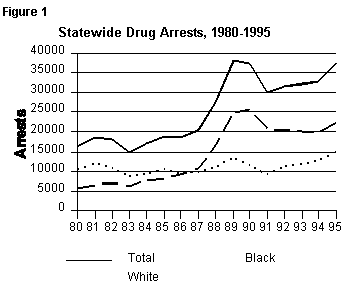
The disparity in the numbers of blacks and whites arrested for drug offenses continued between 1990 and 1995. During this period, at least 200,243 persons were arrested in Georgia for the illegal possession or sale of drugs. Although blacks constitute less than one-third of the population of Georgia,14 64.2 percent of those arrested for drugs were black men and women. Only 35.6 percent were white men and women.
The best measure with which to assess the relative impact of drug arrests on blacks and whites is the ratio of arrests to population. Figure 2 shows shows the comparative ratios of arrests for drug offenses per 100,000 of the white and African-American adult populations in the years 1990-1995. In each year, blacks
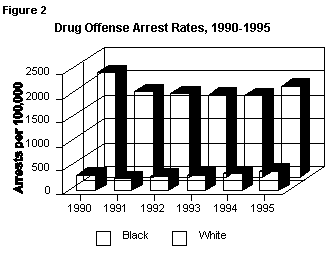
were arrested at a rate five times greater than whites. Our analysis of the arrest data also reveals a strong difference by race in the number of arrests according to the drug involved. The drug of most significance is cocaine-the drug whose use fueled the "war on drugs" nationwide as well as in Georgia and the drug involved in the greatest number of arrests. As shown in Table 1, blacks constituted 83.7 percent of all the arrests in Georgia between 1990 and 1995 for possession of cocaine, and constituted 87 percent of the arrests for its sale .15
Table 1: Total Drug Offense Arrests by Race 1990-1995
| Black | White | |||||
| Number of Arrests | Percent of Total Arrests | Rate Per 100,000 | Number of Arrests | Percent of Total Arrests | Rate Per 100,000 | |
| Cocaine | ||||||
| Possession | 57,701 | 83.67 % | 4,957 | 11,146 | 16% | 319 |
| Sale | 31,559 | 87 % | 2,711 | 4,487 | 12% | 128 |
| All | 89,260 | 85 % | 7,668 | 15,633 | 14.9% | 447 |
| Marijuana | ||||||
| Possession | 25,350 | 42.7 % | 2,178 | 33,833 | 57% | 968 |
| Sale | 4,866 | 36 % | 418 | 8,578 | 64% | 245 |
| All | 30,216 | 41.5 % | 2,596 | 42,411 | 58% | 1,213 |
| Other Drugs | ||||||
| Possession | 1,354 | 27.7% | 116 | 3,532 | 72% | 101 |
| Sale | 8,014 | 44.8% | 689 | 9,823 | 55% | 281 |
| All | 9,368 | 41 % | 805 | 13,355 | 58.6% | 382 |
| TOTAL | 128,845 | 64.2 % | 11,069 | 71,399 | 35.6% | 2,043 |
Source: Arrest data from Georgia Crime Information Center
Comparison of the ratio of arrests to population reveals an even starker racial discrepancy: blacks were arrested for cocaine offenses at a rate of 7,668.4 per 100,000 black adults. Whites, in contrast, were arrested at a rate of 447.2 per 100,000 white adults or one-seventeenth the rate of blacks.16 The rate of black arrests per 100,000 black adults for marijuana offenses is more than double the rate of white arrests per 100,000 white adults, even though, in absolute numbers, morewhites than blacks were arrested for marijuana possession and sale.17 The dramatic difference between blacks and whites in the ratios of arrests by drug type to population is depicted in Figure 3.
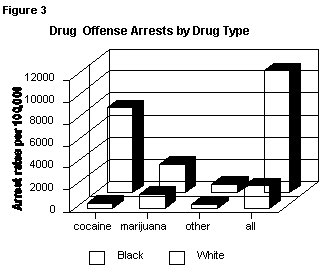 Source: Arrest data from Georgia Department of Corrections. Population
from 1990 Census. Rates calculated on basis of populations of black and
white adults eighteen and over.
Source: Arrest data from Georgia Department of Corrections. Population
from 1990 Census. Rates calculated on basis of populations of black and
white adults eighteen and over.
Rate of Arrests Compared to Rate of Offending Conduct
The difference between black and white arrest rates is stunning. But the greater number and rate of arrests of blacks compared to whites by themselves donot establish discrimination or unequal treatment. If blacks were arrested more frequently because they break the law more frequently, that is, if different arrest rates for blacks and whites reflected different rates of criminal conduct, then the data would not suggest discrimination in the enforcement of the drug laws. Unfortunately, there are no specific data on the number and racial composition of drug users and sellers in Georgia.18 However, anecdotal information available for Georgia and national drug surveys do establish an approximation of the racial composition of the Georgia drug market.
Police, prosecutors, defense attorneys and ethnographers in Georgia interviewed by Human Rights Watch agree that drug use in Georgia is spread across racial and socio-economic lines. Cocaine is used by both races. In its crack form, cocaine is prevalent in lower-income black communities, although white use of crack is increasing. The district attorney for Gwinnett County, for example, told Human Rights Watch that a "sting" in 1992 in which law enforcement personnel posed as crack sellers in a black neighborhood resulted in the arrest of some five dozen people in the first two hours. Two-thirds of those arrested were white.19 Powder cocaine, which is more expensive than crack, is primarily consumed by middle- and upper-income individuals, who in Georgia are primarily white.
The monitoring of drug trends by the U.S. Office of National Drug Control Policy (ONDCP) also indicates multi-racial use of drugs in Georgia. For example, in the Fall 1995 Pulse Check published by ONDCP, ethnographers reported that in Atlanta powder cocaine was used by "white snorters" and crack cocaine was used by African-Americans in their twenties. The preceding Pulse Check had summarized cocaine users in Atlanta as: "late teens, early 20s, whites; older African-Americans."20
While valuable, the anecdotal information cannot be used as a basis for comparison with arrest statistics. In the absence of Georgia specific drug possession statistics, we have utilized drug use rates taken from national household surveys to draw comparisons with Georgia arrest rates. By all accounts, drug use in Georgia does not appear to differ appreciably from national rates. 21
In an equitable criminal justice system, we would expect that racial proportions in arrest rates for possession would resemble racial proportions in drug use.22 In Georgia, however, we find a startling discrepancy. Using the most recent national rates for current illicit drug use, we estimate that in 1994, for example, at least 7,300 black Georgians per 100,000 were current users of illicit drugs compared to 6,000 whites per 100,000.23 Thus blacks apparently use drugs at a rate about 20 percent higher than whites. Yet blacks were arrested for possession of illicit drugs at a proportional rate that was 500 percent greater than whites.
As shown in Table 2, African-Americans in Georgia are also arrested at rates greatly disproportionate to their estimated share of the total drug using population. 24 In 1994, for example, although blacks constituted approximately 14percent of all current drug users, they constituted 58 percent of persons arrested for drug possession.25 Conversely, whites represented 76 percent of the drug users in Georgia, yet they accounted for only 41 percent of those arrested. In other words, a black drug user had a much greater likelihood of being arrested for drug possession than a white drug user.
Table 2: Comparison by Race of Drug Use and Possession Arrest, 1991-1995
| Year | Black | White | ||
| Percent
of Current
Users |
Percent of Arrests | Percent of Current Users | Percent of Arrests | |
| 1991 | 16.97% | 67 % | 72.4 % | 32.6 % |
| 1992 | 13.7 % | 63.5 % | 76.4 % | 36.2 % |
| 1993 | 13 % | 61.5 % | 74 % | 38.1 % |
| 1994 | 14 % | 58.3 % | 76.5 % | 41.3 % |
| 1995 | N/A | 59 % | N/A | 40 % |
Source: Arrests from Georgia Crime Information Center. Figures on drug use calculated from SAMHSA data. Data covers all illicit drugs.
The discrepancy between use and arrest rates for whites and blacks is even greater if we look at the comparative rates for cocaine. Blacks use cocaine at a rate that is two and a half times greater than the rate of whites.26 Yet blacks are arrested for cocaine possession at a rate that is fifteen times greater than whites.27 Furthermore, as shown in Table 3, black users are arrested at a rate greatly in excess of their estimated share of the total population of cocaine users, while whites, conversely, are arrested at a rate substantially less than their share of users.
Table 3: Comparison by Race of Cocaine Use and Possession Arrests
| Year | Black | White | ||
| Percent of Total Current Cocaine Users | Percent of Total Arrests | Percent of Total Current Cocaine Users | Percent of Total Arrests | |
| 1991 | 37.6 % | 85.1 % | 57 % | 14.8 % |
| 1992 | 17.6 % | 84.3 % | 65.9 % | 15.5 % |
| 1993 | 21.8 % | 83.3 % | 57.9 % | 16.4 % |
| 1994 | 22 % | 79.0 % | 62 % | 20.8 % |
| 1995 | N/A | 80.6 % | N/A | 19 % |
Source: Arrest data from Georgia Crime information Center. Figures on drug
use calculated from SAMHSA data.
Marijuana arrests present similar racial disproportions. Between 1990 and 1995, blacks accounted for a larger percentage of the total arrests for marijuana possession than they did of the population of marijuana users. (See Table 4.) In addition, blacks were arrested at an annual rate of 363 per 100,000 compared to a rate of 161 per 100,000 for whites. Although more whites, in absolute numbers, were arrested than blacks, their arrest rates were not comensurate with their share of the marijuana using population.
Table 4: Comparison by Race of Rates of Marijuana Use and Possession Arrests
| Year | Black | White | ||
| Percent of Users | Percent of Arrests | Percent of Users | Percent of Arrests | |
| 1991 | 17 % | 40 % | 73 % | 59 % |
| 1992 | 18 % | 38.6 % | 77 % | 61 % |
| 1993 | 14 % | 40 % | 74 % | 59.5 % |
| 1994 | 13.7 % | 42 % | 76 % | 57.5 % |
| 1995 | N/A | 46 % | N/A | 53 % |
Source: Arrest data from Georgia Crime Information Center.
Figures on drug use calculated from SAMHSA data.
Given the high number of arrests that are for drug sales and the more serious penalties attached to sales, we have attempted to compare the racial proportions of arrests with the racial proportions of the drug-selling population. The effort must be seen as, at best, a crude approximation, because there are no reliable analyses of the drug-selling population by race. Nevertheless, the anecdotal and statistical data that do exist indicate that the drug selling population in Georgia is more mixed racially than the population that is actually arrested by the police.
According to anecdotal information from law enforcement personnel and defense lawyers in Georgia, whites constitute a significant proportion of drug sellers. Police personnel in the Atlanta metropolitan area told Human Rights Watch that at the retail level, that is, regarding sales to individuals purchasing primarily for their own use, blacks dominate the sale of crack cocaine but both blacks and whites sell powder cocaine and marijuana to drug consumers. Methamphetamine, or "redneck cocaine," a drug whose use is growing, is sold almost entirely by whites. The ONDCP's Pulse Check also confirms that in Atlanta, at least, both whites and blacks sell drugs. In the Pulse Check published in the summer of 1995, for example, ethnographers reported that white dealers in Atlanta were selling powder cocaine and young African-Americans were selling crack.28
Data on the prevalence of drug sellers nationwide is available from SAMSHA for the three-year period 1991 to 1993.29 SAMHSA figures, based on answers to questions during their voluntary household interviews, indicate that whites may have comprised 82 percent of the total number of drug sellersnationwide, and blacks comprised 16 percent.30 Given the nature of the population surveyed by SAMHSA, these figures undoubtedly undercount the actual percentage of black sellers. Nevertheless, they suggest, at the very least, that whites constitute at least as many sellers as blacks.
If we assume, as seems reasonable, that the racial composition of the total drug-selling population in Georgia does not differ dramatically from that obtaining nationwide, then the racial breakdown of arrests for drug sales in Georgia is startling. As indicated in Table 1, in the past six years twice as many African-Americans have been arrested for drug sales as whites. Eighty-seven percent of the persons arrested for cocaine sales are black, compared to 12 percent white. Only with regard to sales of marijuana does the whites' percentage of arrests (69.9 percent) begin to resemble their estimated share of the selling population. Firm conclusions would be inappropriate given the speculative nature of the seller population data. Nevertheless, the available data does suggest that black sellers may be arrested in numbers disproportionate to their share of the drug selling population.
Why the Disparate Impact?
Arrest rates reflect both drug-market activity and the choices of police enforcing the drug laws. Taken together, the data discussed above indicate that blacks in Georgia have been arrested at rates far higher than their rate of criminal conduct. Discriminatory purpose or racial bias- conscious or unconscious31-may contribute to police drug law enforcement practices, but we have no valid means of assessing its presence or the extent of its influence. Law enforcement officials interviewed by Human Rights Watch denied their practices were racially biased. Almost every single person Human Rights Watch interviewed in Georgia, including police officials, stated that the racially skewed arrest statistics flowed from one central reality in drug law enforcement: it is easier to make drug arrests in low-income neighborhoods. According to this view, black offenders are not targeted because they are black. Rather, black offenders are arrested morefrequently because the circumstances of their lives and drug transactions make them easier to arrest.
We were told that most of the drug arrests by Georgia police are of lower-level drug dealers and buyers, such as "retail" sellers and consumers, and that most of these arrests occur in low-income minority areas. Retail drug sales in these neighborhoods frequently occur on the streets and between sellers and buyers who do not know each other. That is, the transaction is public and the clientele for street sellers includes many strangers (black and white) who will walk or drive up to a seller at a known location to buy a small amount of drugs for personal consumption. Most of these sellers are black. In contrast, white drug sellers tend to sell indoors, in bar and clubs and within private homes, and to more affluent purchasers, also primarily white.
A number of tactical considerations make it easier to arrest drug offenders who engage in criminal conduct on the streets: they are easier to find and monitor (and catch on videotape). Uniformed police arrest individuals they encounter whom they see engaged in unlawful drug transactions. Undercover officers typically arrest a seller after making one or more drug purchases from that seller, and it is easier for an officer to arrange a buy from sellers accustomed to sell to strangers. "[I]n poor urban minority neighborhoods, it is easier for undercover narcotics officers to penetrate networks of friends and acquaintances than in more stable and closely knit working-class and middle-class neighborhoods. The stranger buying drugs on the urban street corner or in an alley, or overcoming local suspicions by hanging around for a few days and then buying drugs, is commonplace... Police undercover operations can succeed [in working- and middle-class neighborhoods], but they take longer, cost more and are less likely to succeed."32
In other words, blacks may be arrested more frequently because they more frequently engage in drug transactions that are easier to detect and bust.33 Faced with a choice between going after offenders who are easier (faster, cheaper) toarrest versus offenders who will take much more effort, Georgia police not surprisingly have opted for the former.
That choice-concentrating on drug offenders in low-income rather than more affluent neighborhoods-has also been politically pragmatic. As Chief Justice Robert Benham of the Georgia Supreme Court told Human Rights Watch, a concerted effort to root out drug dealing in middle-class enclaves would undoubtedly generate considerable opposition and criticism.34 In contrast, there is no "hue and cry" when the police target low income neighborhoods for drug law enforcement. Indeed, attacking drug dealing in inner city neighborhoods is supported by the neighborhood itself, the general public, the media and political leaders.
The violence, disorder, nuisance and assaults on the quality of life that often accompany public drug markets in low-income communities produce pressure on police departments to commit more resources to those neighborhoods. According to Atlanta police, for example, police departments are complaint-driven organizations.35 They receive few complaints that relatively affluent individuals are engaged in private drug transactions in a bar or office building; those transactions do not create the kind of visible public nuisance and generate the public outrage that prompts complaints. In contrast, residents of low income neighborhoods plagued by drug dealing do complain to public officials and to the police as they seek to free their streets of individuals who make it difficult for them and their children to lead safe and peaceful lives. To their voices are added those of the media, politicians and others who for many different reasons-legitimate concern, the quest for political gain, and so on-point to crime and drug dealing in low income neighborhoods and call for police crackdowns.
It may be that, on closer examination, the racial disparities in arrests are disparities of class. In Georgia, as in many states in the U.S., race and class are to a great extent conflated: a law enforcement system focused on economically disadvantaged individuals is one that more seriously affects minorities, and vice versa.36 But justice is no more served when the poor are disproportionately targetedthan when one minority is. To the extent that police choose to concentrate drug law enforcement in poor and/or black neighborhoods as opposed to more affluent white neighborhoods, those choices raises the question of equal justice. Where the disparate racial impact is readily foreseeable, even if not expressly intended, equal rights principles are implicated.37
Imprisonment
The racially disparate impact of law enforcement evident from the arrest data is also reflected at the other end of the criminal justice system, in the pattern of incarceration.38 Over the last twenty-four years, between 1972 and March 1996, the state of Georgia has sent approximately 41,000 persons to prison for drug offenses.39 Some 27,657 (or 67.3 percent) of those were black. Among those incarcerated were 4,865 young adults between the ages of eighteen and twenty-one. Of these, 3,135 (or 64.4 percent) were black. As shown in Figure 4, more white offenders

were admitted than blacks from 1972 until the late 1980s. Then, with the rise in arrests of blacks for drug offenses that has accompanied the "war on drugs," the number of blacks incarcerated jumped and has since remained consistently higher than that of whites. Since 1990, as shown in Table 5, blacks have consistently accounted for more than three-quarters of persons admitted to prison for drug offenses.40
Table 5: Comparison of Whites and Blacks Admitted to Prison for Drug Offenses
| Year | White | Black | Total | ||
| Number admitted | Percent of admitted | Number admitted | Percent of admitted | ||
| 1990 | 1,045 | 25 % | 3,079 | 74 % | 4,148 |
| 1991 | 940 | 20.9 % | 3,506 | 78.6 % | 4,455 |
| 1992 | 981 | 20.3% | 3,821 | 79.3% | 4,816 |
| 1993 | 1,012 | 19.4 % | 4,160 | 80.1 % | 5,192 |
| 1994 | 1,192 | 19.8 % | 4,793 | 79.9 % | 5,992 |
| 1995 | 1,259 | 20 % | 5,006 | 79.7 % | 6,280 |
| TOTAL | 6,429 | 20.8 % | 24,365 | 78.9 % | 30,883 |
Source: Georgia Department of Corrections.
As shown in Table 6, young black adults consistently accounted for more than 84.9 percent of the admissions of all young adults for all drug offenses over the decade ending in 1995.
Table 6: Admission of Young Adults to Prison for Drug Offenses 1985-1995
| Black | White | |||
| Number | Percent | Number | Percent | |
| All Drug Offenses | 2,571 | 84.9 % | 459 | 15.1 % |
| Possession | 1,399 | 87.2 % | 206 | 12.8 % |
| Sales | 1,172 | 82.2 % | 253 | 17.8 % |
Source: Georgia Department of Corrections
The data show that between 1990 and 1995, black drug offenders were incarcerated at more than twice the rate of white drug offenders: 8.8 percent of blacks compared to 3.6 percent of whites arrested for drug offenses were ultimately admitted to prison (See Table 7). As a result, blacks constitute a growingproportion of those admitted to prison even though they account for a declining proportion of the total number of drug arrrests.41
Table 7: Comparison by Race of Drug Offender Arrests and Imprisonment, 1990-1995
| Year | Black | White | ||
| Percent of Total Arrests | Percent
of Prison
Admissions |
Percent of Total Arrests | Percent of Prison Admissions | |
| 1990 | 68 % | 74 % | 31.7 % | 25 % |
| 1991 | 69.6 % | 78.6 % | 30 % | 20.9 % |
| 1992 | 64 % | 79.3 % | 35 % | 20.3 % |
| 1993 | 62.5 % | 80.1 % | 37 % | 19.4 % |
| 1994 | 60.8 % | 79.9 % | 38.9 % | 19.8 % |
| 1995 | 59.9 % | 78.9 % | 39.8 % | 20 % |
Source: Arrest data from Georgia Crime Information Center. Prison data from Georgia
Department of Corrections.
At first blush the significant difference in incarceration rates is troubling and suggests unwarranted discrimination in sentencing. Upon closer examination, however, most of the discrepancy appears in fact to originate with different incarceration rates according to the drug involved. As indicated in Table 8, on the average, 11.34%
Table 8 : Rate of Incarceration of Arrested Drug Offenders, 1990-1995
| Drug Offense | Average Rate of
Imprisonment |
Rate of Black Arrestees Imprisoned | Rate of White Arrestees Imprisoned |
| Cocaine | 11.34% | 12% | 7.5% |
| Marijuana | 2.07% | 1.6% | 2.3% |
| Other Drugs | 2.04% | .4% | 3.1% |
Source: Arrest data from Georgia Crime Information Center. Prison admissions data
from Georgia Department of Corrections. Note: average rate of imprisonment calculated
by aggregating black and white offenders and their corresponding rates.
of the persons arrested for cocaine offenses are sent to prison compared to 2.07% of those arrested for marijuana offenses.42 Many (59 percent) of the white drug offenders in the 1990-1995 period were arrested for marijuana offenses and only 21.8 percent for cocaine. By contrast, only 23 percent of black drug offenders were arrested for marijuana offenses, while 69 percent were arrested for cocaine. (See Table 1). That is, a much greater percentage of black offenders than white were arrested for the drug offenses carrying the highest imprisonment rate.
Using the average imprisonment rates by drug type to compute the expected number of offenders who would be incarcerated given the drugs for which they were arrested, we calculate that 2,923 white arrestees should have been imprisoned between 1990 and 1995. 43 In fact, 2,590-or 11 percent fewer-were sent to prison. By the same calculations, we would expect that 10,939 of the black arrestees should have been incarcerated. In fact, 11,275 were (a difference of 3 percent).
The difference between the expected and actual number of incarcerated white and black drug offenders reflects that difference between the average rates of imprisonment in all races compared to the actual rate for each race. As shown in Table 8, black cocaine offenders were imprisoned at a rate marginally higherthan the average, and white cocaine offenders were imprisoned at a rate substantially lower than the average. Black marijuana offenders were incarcerated at a rate mariginally lower and white marijuana offenders were incarcerated at a rate marginally higher than the average.
Numerous factors that legitimately influence case processing decisions and outcomes may have produced the actual rate differential. Unfortunately, computerized statewide data does not exist that would enable us to examine differences among offenders with regard to their prior criminal histories44, seriousness of arrest charges, number of counts charged, or youthful offender status eligibility. Without being able to control for these and other relevant race-neutral variables, we are not able to assess, for example, whether black cocaine offenders are incarcerated more frequently than comparably situated whites.45
Length of Sentence
Excluding life sentences, the difference between the length of sentences given white and black drug offenders was small.46 As shown in Table 9, thegreatest difference was for sale of cocaine, for which blacks received a mean sentence that was two years longer than that given whites. Whites received somewhat longer sentences than blacks for the possession of narcotics. Official databases do not, however, provide that data needed to determine the extent to which race-neutral factors, such as the number of counts charged in each case or prior criminal histories, may have contributed to these sentencing disparities.
Table 9: Comparison by Race of Sentences for Drug Offenses, 1990-1995
| Sale | Possession | Traffic king | |||||||
| Cocaine | Narcotic | Marijuana | Cocaine | Narcotic | Marijuana | Cocaine | Narcotic | Mari juan a | |
| Black | 5.9 | 4.7 | 3.4 | 3.7 | 2.7 | 3.2 | 13.1 | - | - |
| White | 4.0 | 4.4 | 3.2 | 3.2 | 3.4 | 3.2 | 13.1 | - | - |
Source: Georgia Department of Corrections. Where data not included, the number of admissions too small for statistical reliability.
Life Sentences
The racial disparity in life sentences imposed for drug offenses is shocking. In the past fourteen years, 560 blacks were sentenced to life in prison for drug offenses compared to 13 whites.47 That is, 97.7 percent of the life sentences for drug offenses were given to African-Americans.
Until March of 1996, drug offenders convicted a second or subsequent time of the sale of certain controlled substances, including cocaine, faced a mandatory life sentence under O.C.G.A. 16-13-30(d). Through a procedural loophole, however, what was to have been a mandatory sentence became discretionary in practice. For a defendant to receive a life sentence for a second conviction, the prosecutor had to give notice prior to trial that he or she intendedto seek the enhanced punishment based on past convictions.48 In most cases, prosecutors chose not to seek the aggravated sentence.49 If the prosecutor filed the pretrial notice requesting a life sentence, the judge had no choice but to impose it if the defendant were convicted. Many prosecutors objected to the law, considering it "ham-fisted"50 and "stupid."51 Perhaps as a result, over 85 percent of those who were eligible to be sentenced to life were in fact sentenced to lesser terms. 52 But as shown in Table 10, of those who were given life, almost all were African-American.
Table 10: Life Sentences for Drug Offenses
| Year | Black | White | All |
| 1990 | 44 | 2 | 46 |
| 1991 | 59 | 2 | 61 |
| 1992 | 133 | 3 | 136 |
| 1993 | 121 | 1 | 122 |
| 1994 | 124 | 3 | 127 |
| 1995 | 79 | 2 | 81 |
| All | 560 | 13 | 573 |
Source: Georgia Department of Corrections.
The disproportionate number of blacks receiving life compared to whites did not mirror the racial distribution of offenders who were eligible for a penalty of life imprisonment. Only 3 percent of the whites who were convicted a second or subsequent time of a qualifying drug offense were sentenced to life imprisonment. By contrast, 15 percent of the blacks who were eligible received lifesentences. 53 In other words, a life-eligible black was five times more likely to receive a life sentence than a life-eligible white.
The injustice apparent from the racial pattern of life sentences is even greater when we look at the ages of those receiving life terms. Since 1982, fifty young adults between the ages of eighteen and twenty-one were sentenced to life . All fifty were black. The convictions which sent them to prison did not include any serious non-drug crimes. Drug sale offenses crimes sufficed within theGeorgia criminal justice system to have young people at the threshold of their adult lives condemned to life imprisonment.54
According to an analysis prepared by the Georgia State Board of Pardons and Paroles in August, 1993, most of the drug offenders who received life sentences were convicted for offenses involving small amounts of drugs. That is, the law was not being used to punish serious offenders. (Indeed, those who deal in greater quantities of drugs, the traffickers, are not covered by the mandatory life sentence statute). Seventy-seven percent of the offenses leading to the first conviction and 79 percent of the offenses leading to the second conviction involvedless than one gram of a controlled substance. Sixty percent of the cases involved drug values of less than US$50.55
Application of the mandatory life sentence statute has been challenged several times as violative of the equal protection guarantees of the federal and state constitutions.56 Despite strong statistical proof of a discriminatory impact, the courts consistently refused to make a finding of unconstitutionality, citing the absence of proof that the prosecutors were motivated by a discriminatory purpose.57
The shocking racial disparity in the mandatory sentences eventually forced the Georgia legislature to act. In March 1996, the state legislature passed legislation to revise O.C.G.A. 16-13-30(d) that was supported by both the prosecutor and defense attorney associations. Under the revised statute, conviction of a second or subsequent drug sale offense, is punishable by ten to forty years or life.58 Prosecutors can recommend a life sentence, but the judge will be able to decide whether or not to impose it. Defense attorneys and civil rights activists hope the new legislation will lead to a less racially skewed pattern of sentencing because the sentencing decision will no longer be concentrated in a single decision-maker: the prosecutor can seek a life sentence, but the judge will now be able to decide whether to impose it.
Although they supported the legislative reform, prosecutors never publicly conceded that the racial pattern of life sentences reflected racial bias. On the other hand, they have never offered an explanation for how relevant race-neutral factors might have caused the dramatic racial disparity. It remains to be seen, of course, whether granting judges more leeway in sentencing second-time drug offenders will lead to a more racially equitable imposition of life sentences. The discrimination apparent in the imposition of the death penalty in Georgia suggests that more fundamental reforms are needed to ensure racial equity.59
Conclusion and Recommendations
The data Human Rights Watch has compiled on drug law enforcement in Georgia, albeit necessarily incomplete, suggest a disturbing pattern of racially disparate impact. The question arises whether Georgia public officials enforce facially neutral drug laws in a discriminatory manner. Human Rights Watch recognizes that law enforcement officials face incessant and evolving challenges to help safeguard communities from crime and disorder. Of necessity, they must set priorities and make continual choices about which crimes and criminals to target and what strategies to adopt to deter crime and to bring criminals to justice. Although discretion is essential to effective performance of their duties, that discretion is not unfettered. It is limited, inter alia, by the principles of equal protection and due process contained in federal and state law and international human rights treaties.
Under federal and Georgia state constitutional law, the racially disparate enforcement of drug laws violates equal protection guarantees if it is undertaken with discriminatory intent or purpose. Contemporary racism in public institutions, however, is frequently subtle, diffuse, and systemic and less likely to be the result of the conscious prejudices of individual actors. As a result, the requirement of proof of intent has been a formidable barrier for victims of discrimination seeking judicial relief.60
International human rights law wisely does not impose the requirement of discriminatory intent. The International Convention on the Elimination of All forms of Racial Discrimination (CERD) defines discrimination as conduct that has the "purpose or effect" of restricting rights on the basis of race.61 CERD has been interpreted as requiring the elimination of practices which have an unjustifiabledisparate impact upon a racial group. It proscribes, for example, race-neutral practices curtailing fundamental rights that unnecessarily create statistically significant racial disparities.62
Assessing whether the harsh impact of drug law enforcement on blacks is justified or necessary requires scrutiny of the goals of that enforcement and the methods used. Because the fundamental human right of equal protection of the law is at stake, more justification is required than, for example, the advantages to the police of following the path of least resistance-inasmuch as drug arrests are easier in certain neighborhoods which only coincidentally happen to be black. It is difficult to conceive of any justification for a pattern of life sentences in which such serious punishment is imposed almost exclusively on black offenders who are primarily small-scale, street level dealers.
In the context of growing debates nationwide over the use of the criminal law to address drug use, doubts about the fairness and justice of enforcing those laws disproportionately against minorities take on even greater significance. There are numerous policy alternatives to current patterns of criminal law enforcement that would reduce adverse racial disparities while continuing to respond to social concerns about public drug dealing and drug abuse.
Advocating specific drug policies is beyond the mandate of Human Rights Watch. As an international human rights group, however, we insist that the right to be free of discrimination cannot be sacrificed to drug control strategies. We recognize Georgia's interest in addressing the public health and social consequences of drug abuse. But the development of drug policies, including the nature and enforcement of criminal laws, must be built on the foundation of respect for racial equality. To assist Georgia to ensure that its drug policies are consistent with international human rights, we recommend:
* Georgia's public officials, lawmakers and the public at large should scrutinize the means used to enforce drug laws and when they have a disparate racial impact, assess their necessity in light of the state's drug objectives. Policies and practices that have a racially disparate impact and are not necessary to meet the state's drug control goals should be modified.
* Georgia should institute police department reporting mechanisms, for the larger cities at least, that will enable the state to monitor the racial impact of drug law enforcement choices made by the departments.
* Georgia should review the collection of data within the criminal justice system and undertake revisions regarding the design of reporting mechanisms and databases that are needed to improve the availability of accurate information relevant for research and policy analysis, including on the racial impact of drug law arrests, prosecution and sentencing decisions. At the very least, the state should ensure that data is gathered and made available that will enable assessment of whether life sentences for drug offenses are imposed in a non-discriminatory manner.
While the custodial sexual abuse of women inmates remains the most notorious problem affecting Georgia prison and jail facilities, other abuses have also been reported.1 Most notably, inmates of numerous local jails have been held in dangerous, filthy and deteriorating conditions, violating their constitutional rights as well as their rights under international law. Moreover, in Georgia's prisons-which, in contrast to its jails, are mostly in good physical state because of a massive prison construction effort-a recent "get tough on prisoners" campaign shows signs of stepping over the line into abuse. Unfortunately, except regarding custodial sexual misconduct, public opinion seems unresponsive to these problems. Indeed, rather than pressuring the authorities to investigate and remedy violations of prisoners' rights, the Georgia public appears more inclined to applaud them.2
Relevant Legal Standards
In challenging abusive conditions or treatment, prisoners and their advocates generally base their claims on the Eighth Amendment to the U.S. Constitution, which prohibits cruel and unusual punishment, although in some instances they rely upon the Fourteenth Amendment's guarantee of due process of law or the Fourth Amendment's protection of privacy. In general, under the Eighth Amendment, prisoners may not be subjected to conditions that are incompatible with "evolving standards of decency" or that deprive them of basic human needs.3 The protection afforded to prisoners by the Eighth Amendment, however, is qualified by the requirement that defendants in prison lawsuits (such as prison or jail officials) must be shown to have acted with a culpable state of mind. In otherwords, abusive conditions or treatment alone-absent sufficient subjective intent-will not be found unconstitutional.
The primary international legal instruments protecting the rights of prisoners are the International Covenant on Civil and Political Rights (ICCPR), ratified by the United States in 1992, and the Convention Against Torture and Other Cruel, Inhuman or Degrading Treatment or Punishment, ratified in 1994. In addition, the more detailed provisions contained in the U.N. Standard Minimum Rules for the Treatment of Prisoners4 and Body of Principles for the Protection of All Persons Under Any Form of Detention or Imprisonment5 provide authoritative guidance to interpret customary and treaty law standards on the humane treatment of prisoners. All of these instruments require that prisoners be treated humanely. Notably, their prohibition on cruel, inhuman or degrading treatment is not qualified by any intent requirement: abusive treatment of prisoners-whatever the state of mind of the person responsible for the treatment-is simply barred.
Jails
Prisoners awaiting trial in Georgia, as well as some post-conviction inmates, are held in county and city jail facilities. Many of these facilities date from the 1920s through 1940s and are physically dilapidated, severely overcrowded, poorly maintained and dangerously understaffed; certain of them, in the words of attorneys from the Civil Rights Division of the Justice Department who recently investigated their conditions, are "unfit for human habitation."6 To the Justice Department's credit, this investigation was initiated after local prisoners' rights advocates forwarded complaints to the Civil Rights Division. The Justice Department's wide-ranging investigation and strong recommendations are commendable.
In reviewing conditions at the Muscogee County Jail (MCJ) last year, for example, the Department of Justice found that the facility (which houses male prisoners) operated at 200 percent of its capacity, with prisoners being forced to sleep on "dilapidated mats on concrete floors."7 At the same time, the jail was chronically understaffed; inmates were left unsupervised for up to six hours of every eight-hour shift. Indeed, the Justice Department's corrections consultant found the MCJ to be "one of the most dangerously understaffed urban jails that I have ever evaluated."8 Besides the obvious security hazard created by the lack of personnel, it also meant that inmates were precluded from all possibility of outdoor exercise.
The MCJ had no classification system by which to segregate dangerous inmates from those vulnerable to abuse, further aggravating inmates' risk of harm. But the system was capable of segregating inmate housing units on another basis-race. African-American inmates, who make up the overwhelming majority of the jail population in southwest Georgia, where Muscogee County is located, were held separately from white inmates. Stressing that this segregation should immediately end, the Justice Department's findings letter pointed out: "There is no penological basis for such a deplorable practice."
In all, the Justice Department noted twenty areas in which the jail needed to improve its treatment of prisoners, including staffing, sanitation, fire safety, health care, ventilation, pest control and correctional policies and procedures. It summed up conditions at the facility as being "particularly egregious" and affirmed that they deprived inmates of their constitutional rights. Concluding with three pages of recommendations, the department's letter warned that unless improvements were forthcoming the federal government would consider initiating a lawsuit to remedy the unlawful conditions.9
Conditions at the MCJ, though shocking, are not unique. At the same time that the Justice Department reported its findings to the Muscogee County authorities, its lawyers wrote similar letters to nine other Georgia counties-Calhoun, Clay, Dooly, Harris, Lee, Marion, Mitchell, Terrell and Turner-threatening to sue if these counties did not improve conditions in their jails.10 Later in 1995, the Justice Department returned to Georgia to investigate the Coffee County Jail, which houses men, women and, for short periods, juveniles: it found that numerous housing areas were dirty and unsanitary; that juveniles were normally held in the "hole," a small, dark and unsanitary punishment cell; that numerous inmates reported not having been allowed outdoor exercise in months; and that the facility wrongly withheld meals as a method of punishment and had recently eliminated inmate lunches after receiving complaints about the food.11 Soon after, in March 1996, the ACLU of Georgia filed suit to remedy conditions at the Pike County Jail. The complaint in that case described broken windows, leaking toilets, exposed wires, and inmates forced to sleep on the floor.
Prisons
During the past decade, Georgia experienced explosive growth in its prison population; in the last three years alone, the number of inmates has increasedby about 9,000-one of the fastest rates of growth in the nation.12 Preoccupied with the crime rate, Georgians want more criminals to go to prison and to stay there longer.13 State politicians, accordingly, vie with one another to offer the toughest, most rigid and most punitive penal policies.14
Besides tougher sentencing laws, Georgia has also followed the national trend toward tougher treatment of prisoners. Beginning last year, the Georgia Department of Corrections (GDC) began implementing a series of restrictions designed to reassure the public that life in a state prison is punishment: removing weightlifting equipment, limiting television and telephone use, charging for medical care of non-indigent inmates, and marking the backs of inmates' shirts to indicate they are prisoners. "Inmates are in prison to be punished for crimes they have committed," declared Gov. Zell Miller in mandating the changes, "and punishment first and everything else second should always be at the center of the Corrections Department."15 This renewed punitive emphasis rapidly led GDC Commissioner Allen Ault, a strong advocate of inmate education, training and rehabilitiation, to resign.
In December 1995, Ault was replaced by Wayne Garner, the former head of the Georgia Board of Pardons and Paroles, who once rescinded a promised parole after the prisoner's sarcastic letter praising prison life was published in alocal newspaper.16 Although Garner opposed a proposed bill to revive the chain gang in Georgia, which failed to pass the state legislation this year, he otherwise has set a markedly harsher tone than his predecessor. Bluntly stating in his first public speech as commissioner that one-third of the state's prisoners "ain't fit to kill," Garner immediately instituted mandatory work assignments and daily four-mile walks for the inmate population, and later ended the long-standing practice of allowing certain trustworthy inmates to take brief visits to their families over the holidays.17
A more troubling aspect of this "tough" treatment has surfaced during a series of intensive searches, described as "shakedowns," held at correctional facilities around the state and designed to uncover weapons, drugs, money and other contraband.18 These searches, conducted by special squads of guards dressed in black, and personally overseen by the commissioner, have resulted in a number of complaints of physical abuse. Some inmates claim that guards have used excessive force against them during the searches: throwing punches, banging heads into walls, jumping on inmates and kicking them.19 Commissioner Garner'spersonal attendance during these bouts of violence is said to help set a tone, suggesting that excessive force, or at least border-line excessive force, is an acceptable measure when it facilitates control. To the GDC's credit, however, it should be noted that one prison official was fired for abusing an inmate.20
Conclusion and Recommendations
It is heartening that Georgia officials, unlike officials in neighboring Alabama, resisted the temptation to reinstitute the chain gang this year. With the chain gang, the abusive treatment of prisoners is reduced to theater, demonstrating to an anxious public-using the spectacle of men shackled together with heavy chains-that crime begets punishment.21 Tough talk is another way to reassure the public. In Georgia's current political climate, however, officials must take special care to ensure that facile political grandstanding does not culminate in serious violations of the human rights of members of the prisoner population.
Other forms of mistreatment of prisoners, by contrast, are not caused by the desire to grab attention but by inattention and indifference. When jails are old, decaying and overcrowded, and the authorities have other priorities for the funds at their command, prisoners may be subjected to enormous and unjustified hardship. At present, Georgia needs to take steps to remedy the results of years of neglect of many of its jail facilities and to ameliorate their inhumane conditions.
In light of both of these considerations, Human Rights Watch makes the following specific recommendations for ensuring the humane treatment of Georgia prisoners:
* The Corrections Committees of the Georgia state legislature should hold hearings to investigate the substandard conditions existing in many localjail facilities, with the goal of pressuring local authorities to take steps to remedy them. For its part, the GDC should certify that every local facility that it relies upon to house excess convicted prisoners is maintained in accordance with domestic and international standards. Local facilities that do not meet such standards should not be used to house inmates under the authority of the GDC.
* The Georgia state legislature should create mandatory and enforceable state standards for county and city jails. The states of Texas and Florida have implemented such standards, and relevant officials from those states could provide guidance in creating standards for adequate conditions and treatment.
* Local officials charged with supervising county and city jail facilities should stop barring independent monitors from entering their facilities and examining conditions there. It should not require the intervention of the Justice Department to bring to light the serious problems existing in many facilities.
* GDC officials should investigate and punish instances of guard misconduct.
* The GDC should reinstitute furloughs, allowing nonviolent trustworthy inmates a few days home with their families. Georgia's furlough policy had proved to be remarkably trouble-free, and the family ties strengthened during furloughs prove their worth in prisoners' easier reinsertion into society upon release, and lower likelihood of recidivism. For similar reasons, the GDC should rescind the limitations imposed on inmates' telephone use.
Overview
For women held in Georgia prisons, incarceration entails not only the loss of liberty but also the possible loss of physical security, dignity and sexual autonomy. Prior to 1992, state employees entrusted with custodial power over the women's prison population engaged in flagrant sexual abuse of their charges, abuse that included rape, sexual assault, sexual harassment and violations of the right to privacy. Although Georgia criminal law formally prohibited sexual contact between prison officials and prisoners, the law was not enforced, and the efficacy of departmental policies arguably barring such abuse was belied by the impunity with which prison staff, including supervisory staff, engaged in sexual relations with prisoners.
After a federal class action lawsuit brought significant public and judicial attention to the spectacle of custodial sexual abuse in 1992, Georgia was compelled to take meaningful steps to put a stop to it. Because of these efforts, the overall atmosphere in its women's prisons has greatly improved from that existing prior to the suit. Nonetheless, sexual contact between officers and prisoners remains a recurring problem and, in some instances, amounts to rape or sexual assault. Moreover, on issue after issue, class counsel have had to prod the Georgia Department of Corrections (GDC) to institute the required reforms. The GDC's somewhat begrudging attitude toward compliance with the mandates of the lawsuit suggests that these reforms may not be deep-rooted nor permanent.
The abuses described in this chapter-including rape, sexual assault, sexual harassment and infringements on prisoners' privacy-clearly violate international human rights law. They also violate U.S. constitutional provisions protecting prisoners against cruel and unusual punishment and guaranteeing the right to privacy. Yet not only has Georgia largely failed to conform to these international and domestic standards; until recently it even failed to enforce its own criminal law provision prohibiting custodial sexual contact.1
Custodial Environment
Consistent with a national pattern, the number of women in Georgia prisons has increased dramatically in the last fifteen years.2 As of March 1996, women constituted 6 percent, or over 2,000 prisoners, of a total state inmatepopulation of about 35,000.3 Until 1989, however, Georgia operated only one prison for women-the Georgia Women's Correctional Institution (GWCI) at Hardwick-in conjunction with a nearby camp facility, Colony Farm. Now it has three prisons: the Washington Correctional Institution (Washington CI), the Metro Correctional Institution (Metro), and the Pulaski Correctional Institution (Pulaski). The GWCI has been converted to a men's facility.
Georgia, like other states, permits male officers to work in its women's prisons.4 Until very recently, male guards outnumbered female guards in two out of three Georgia women's facilities, with only Pulaski having more women than men officers. In late March 1996, however, GDC Commissioner Wayne Garner began transferring male guards out of Washington CI and replacing them with female guards; he plans to continue these staff transfers-and to effect similar transfers at Georgia's other two women's prisons-until there are no male staff in contact positions with women inmates.5 This new policy is being challenged by theGeorgia State Employees Union on anti-discrimination grounds, however, and its future validity is uncertain.6
Although the use of male staff in many positions in women's prisons may be compelled by national anti-discrimination laws, such laws do not prevent states from formulating policies and procedures to ensure against custodial sexual misconduct.7 Without question, the custodial context, in which officers are granted significant power over the daily lives and welfare of their charges, has an inherent potential for abuse. The state, having established a fundamentally unequal relationship between prison staff and prisoners, is responsible for ensuring that staff members do not wrongfully exploit this inequality.
The personal histories of many women prisoners further heighten the potential for custodial sexual abuse. A high proportion of incarcerated women-and, according to Cason class counsel, an overwhelming proportion of the women singled out for abuse-enter the correctional system with a prior history of sexual victimization. Lisa Boardman Burnette, an attorney with Zimring, Ellin & Miller litigating the class action, explained that these women have little awareness of their rights: "[They do not] realize what rape [is], let alone sexual harassment."8
State Legal and Regulatory Protections
Under Georgia law, custodial sexual abuse is a felony punishable by one to three years' imprisonment. Section 16-6-5.1 of Georgia's criminal code provides that a person commits sexual assault when:
he engages in sexual contact with another person who is in the custody of the law . . . or who is detained in [an] institution and such actor has supervisory or disciplinary authority over such other person.
Sexual contact is defined as "any contact for the purpose of sexual gratification of the actor with the intimate parts of a person not married to the actor." The consent of the person in custody is irrelevant.
Until January 1995, when new standard operating procedures were adopted pursuant to a consent order in the Cason litigation, Georgia's statutory ban on sexual contact with a prisoner was not incorporated explicitly into GDC departmental policy. Rather, when seeking to discipline officers and employees for misconduct, the GDC relied on broad provisions barring "personal dealings" with prisoners.
U.S. Constitutional Protections
The Eighth Amendment to the Constitution, which bars cruel and unusual punishment, has been interpreted by U.S. courts to protect prisoners against rape and sexual assault. This constitutional shield is further augmented by the Fourth Amendment's guarantee of the right to privacy and personal integrity, which, in a series of lower court cases, has been interpreted to prohibit male guards from strip-searching female prisoners or conducting intrusive pat-frisks.9
These constitutional protections are enforceable via lawsuits filed by or on behalf of prisoners, or by the U.S. Department of Justice (DOJ). Historically, U.S. prisoners have achieved most of their landmark victories through private litigation, particularly by suits litigated by prisoners' rights groups such as the National Prison Project of the American Civil Liberties Union.
Yet if certain stringent intent requirements are met, the DOJ may criminally prosecute abusive prison officials under general federal civil rights provisions.10 In addition, the DOJ has the statutory right to investigate and institute civil actions under the Civil Rights of Institutional Persons Act (CRIPA) wheneverit finds that a state facility engages in a pattern or practice of subjecting prisoners to "egregious or flagrant conditions" in violation of the Constitution.11
International Legal Protections
The primary international legal instruments protecting the rights of U.S. prisoners are the International Covenant on Civil and Political Rights (ICCPR), ratified by the United States in 1992, and the Convention Against Torture and Other Cruel, Inhuman or Degrading Treatment or Punishment, ratified in 1994. Both treaties bar torture and cruel, inhuman or degrading treatment or punishment, which authoritative international fora have interpreted as including sexual abuse. To constitute torture, an act must cause severe physical or mental suffering and must be committed for a purpose such as obtaining information from the victim, punishing her, or intimidating or coercing her. Cruel, inhuman or degrading treatment or punishment includes acts causing a lesser degree of suffering that need not be committed for a particular purpose.
Abuses Prior to March 1992
Until March 1992, sexual relations between staff and prisoners were an accepted occurrence in the Georgia women's prison system. At GWCI and Colony Farm, members of the prison staff fondled and groped female prisoners, sexually propositioned them, and coerced them into sexual relationships either upon threat of retaliation or in exchange for contraband, favorable treatment and attention. They manipulated women's work schedules and freely called women from their units or work details for sex. A substantial number of GDC employees, including a handful of women, were finally implicated for involvement in custodial sexual misconduct. As Bob Cullen, Cason class counsel, described the situation, "You getthe impression from the staff at GWCI that it was a sexual smorgasbord and they could pick and choose whom they wanted."12
Disciplinary hearings conducted by the GDC after the Cason suit was filed reveal that it was often those in supervisory positions who exploited their position to coerce prisoners into sexual relations. The hearings showed that three men-Lt. James Philyaw, Deputy Warden Cornelius Stanley, and Ray Griffin, then senior ranking officer at Colony Farm-were particularly notorious offenders.
Lt. Philyaw was the night shift supervisor for security at GWCI. According to testimonies at his disciplinary hearing, Philyaw had sex with at least seven prisoners over a five-year period, from 1987 to 1991, while employed at GWCI and Colony Farm. In approaching these women for sex, Philyaw reportedly employed a mixture of compliments, offers of assistance and threats. His relationship with Jane Doe 14 is illustrative. Over a three-month period, he had sexual intercourse with her on repeated occasions. When asked at Philyaw's disciplinary hearing why she submitted to his advances, Jane Doe 14 replied "because he was a lieutenant . . . he could do anything he wanted to me, and no one was going to believe me just like he said."
Similarly, evidence presented at the disciplinary hearing of Deputy Warden Cornelius Stanley indicates that on one occasion Stanley called Jane Doe 39 into his office to discuss problems she was having, groped her breasts and genital area, and said, "I want to fuck you." He then forced her to have sexual intercourse. On later occasions, Stanley visited Jane Doe 39's cell and groped or raped her. Ray Griffin maintained a sexual relationship with Jane Doe 11 both while she was incarcerated and during her parole. According to the disciplinary record, Griffin regularly had sex with her in places such as the storage closet, the restroom, or an office.
In at least one instance prior to March 1992, a prisoner at GWCI was impregnated by a corrections officer. Jane Doe 1 was raped in 1989 by the supervisor on her work assignment. When she told him that she thought she was pregnant, he responded, "I could always beat it out of you."13 Not long after, Jane Doe 1 was reportedly called into the warden's office early in the morning and told that if "[she] did not get an abortion then [she] would not get parole." Despite her unwillingness to undergo the procedure, she was subsequently taken from the prison to have an abortion. She described the whole experience as emotionally wrenching.
Finally, the abuse of women prisoners at GWCI during this period extended beyond sexual contact to privacy violations. In violation of international and domestic standards, women incarcerated in the Mental Health Unit at GWCI, perceived to be suicide risks, were forcibly stripped by male and female staff and placed in restraints, including straightjackets or four-point restraints. In some cases, women were stripped and left hog-tied in their cell.14 The women were then left naked for up to three days where they could be viewed by members of the opposite sex. Although attorney Bob Cullen believes that it is virtually impossible to obtain an accurate assessment of the number of women who were treated this way, since many of the GDC's logbooks vanished, he found that at least sixty-four women incarcerated at GWCI were forcibly stripped and restrained over an eight-month period from 1991-1992.
Impunity for Abuses Prior to March 1992
Sexual misconduct in Georgia women's prisons was facilitated prior to March 1992 by the utter failure of complaint mechanisms, as well as the routine indifference of the leadership at GWCI and within the GDC more generally to allegations of rape and sexual assault. Where women attempted to report abuse, they were met with a general GDC presumption that prisoners lie and that, without staff corroboration, their assertions should per se be dismissed. The few prison employees who attempted to report sexual misconduct by their colleagues were often ignored and even harassed. Only in cases where the abuse simply could not be ignored, as in cases of pregnancy or where another member of the staff happened upon a colleague in the act, was any action taken. Even in these cases, however, the GDC permitted the individual to resign or to transfer to another facility, instead of taking more serious disciplinary action.
The GDC's grievance procedure, instituted by court order in 1990, purports to allow prisoners to complain about "any condition, policy, procedure oraction over which the department of corrections has control."15 Nonetheless, the mechanism's design, which favors conciliation and internal departmental solutions, renders it inappropriate for complaints of custodial sexual misconduct; it was thus rarely if ever employed in this context.
A few allegations of sexual misconduct prior to 1992 were addressed via internal investigations. The GDC had no written policy or procedure covering such investigations, and they were often conducted by the warden, who would interview the prisoner making the allegation or the implicated officers.16 Many of these cases never went any further, though a few of them were turned over to the GDC Internal Affairs division (IAD) located in Atlanta.17 Whatever the procedure, charges against prison staff were rarely substantiated because the testimony of incarcerated women was rarely deemed credible. Where an allegation involved the prisoner's word against the employee's, the GDC seldom took disciplinary action.18
Even where there were compelling reasons to believe that allegations were well-founded, investigations were often blocked. A GDC senior investigator and the current and former directors of Internal Affairs testified in February 1994, in a disciplinary hearing, that prior to March 1992 it was GDC practice to terminate an investigation if the employee resigned.19 The lack of investigation meant, moreover, that the case would not be referred to the district attorney for prosecution, even where the employee admitted to sexual contact with an inmate in violation of the state's felony provision. Bobby Whitworth, then commissioner of corrections, stated that it was:
the policy of [the GDC] prior to 1990 really not to press for prosecution. It was a policy that if we had an officer or a staff member who engaged in sexual relations with a prisoner [he was] either terminated or fired.20
In other words, department employees were able to sexually assault prisoners only at the risk of losing their jobs. Even then, it appears that they may have risked only a temporary loss of employment. In numerous incidents, the deputy commissioner closed investigations where charges of misconduct were substantiated, upheld minor disciplinary sanctions and failed to refer credible allegations to the district attorney for prosecution. Moreover, on at least two occasions, employees who received only minor reprimands persisted in their misconduct.
In short, the GDC actively and knowingly failed to protect women in its custody from the criminal acts of its employees. The GDC's failure to sanction employees appropriately, by dismissing them and referring their cases as appropriate to the district attorney, amounted to complicity in the staff's misconduct and abuse.
Legal Action to Expose and Prevent Abuses
March 1992 marked a turning point in Georgia's handling of custodial sexual misconduct. In that month, an amended complaint was filed in Cason v. Seckinger, a federal class action lawsuit against the GDC.21 The complaint alleged rape, sexual assault and coerced sexual activity, involuntary abortions, and retaliation or threats of retaliation against women who refused to participate in the sexual activities within the prison. Supporting the complaint were the affidavits of ten women, identified only as Jane Does, who either were forced to engage in sexual relations with prison staff or who had direct knowledge of ongoing sexual misconduct within the prison.22
The lawsuit, which was still pending at the time this report went to print, has never resulted in a full trial, though numerous hearing have been held. Under the supervision of the magistrate judge hearing the case, plaintiffs' attorneys and the GDC have worked together to address many of the concerns raised by the suit. The magistrate has also issued a number of orders requiring the GDC to institute reforms. Most notably, in March 1994, he issued a novel order permanently enjoining sexual contact, sexual abuse and sexual harassment of all women incarcerated, now and in the future, by any staff, employee, agent or contractor of the GDC.23 He found that in light of past and continuing problems with sexual abuse such an injunction was necessary to guarantee women prisoners their constitutional rights.
Official Response to Cason
The prisoners' allegations in Cason were reported almost immediately in the Atlanta Journal-Constitution and other local press; then in March 1993 the story was aired on national television. Under intense public scrutiny, the GDC, in negotiation with the plaintiffs' attorneys, launched an investigation and entered a period of internal review. This internal review included a reexamination of some past allegations, disciplinary action against certain staff, and a number of reforms. During the review process, certain key prison officials resigned or retired.
Investigations and Disciplinary Action
In March 1992 the GDC deployed an investigator, Andie Moss, to examine allegations raised by and predating the Cason suit.24 Many of these allegations, found unsubstantiated prior to March 1992, were substantiated upon reinvestigation, and disciplinary action was initiated. According to plaintiffs' attorney Bob Cullen, the change in response to these allegations was due in large part to the GDC's new willingness to give weight to inmate testimony.25 Fifteen employees, including Philyaw, Griffin and Stanley, were suspended and eventually fired or otherwise disciplined for misconduct associated with the litigation.
Beginning in 1994, however, the fired or disciplined employees began to return. In July 1994, Cornelius Stanley was rehired as a lieutenant at a Georgia men's prison. His dismissal for sexual misconduct against female prisoners had no impact on his job status or his pay scale. In fact, he received over $58,000 in back pay, plus damages, when he was rehired.26
Next, in December 1994, the GDC reinstated Jackie Lee, who had been suspended for nearly two years on charges involving custodial sexual misconduct; she too claimed the right to back pay and damages (in a negotiated settlement, she received just over $10,000 in back pay, along with leave and retirement benefits).27 Similarly, Warden Gary Black, who was demoted and reassigned to another office, later filed suit in federal court seeking his job back, as well as $500,000 in pain and suffering and $1 million in punitive damages.28
Failed Prosecutions
For the first time, the GDC also referred many cases of sexual misconduct to the district attorney for criminal prosecution. In October and November 1992, indictments were handed down against fourteen former GWCI or Colony Farm employees on state law charges ranging from sodomy and sexual assault against a person in custody to rape, and a fifteenth defendant was indicted soon after.29 The alleged acts took place between 1983 and 1992 and involved over twenty-five prisoners. Yet notwithstanding this encouraging start, no Georgia corrections employee ever served time in prison for these charges, and only two of the defendants were even brought to trial.
Lt. James Philyaw, the first defendant to be tried, was charged with twenty-one counts of sexual assault and sodomy involving eight women over a period of five years. He was acquitted in June 1993, despite extensive testimony against him.30 The jury deliberated only twenty minutes.
Philyaw's trial was marred by a number of irregularities. To begin with, there were difficulties in seating an impartial jury since the trial was held, pursuant to Georgia law, in the county where GWCI was located-a county that is heavily dependent on the state correctional system for employment. As a result, the jury was heavily weighted with jurors who had friends or relatives working as correctional officers. Moreover, according to witnesses, Baldwin County District Attorney Joseph Briley did not vigorously prosecute Philyaw.31
The original indictments resulted in only two convictions: both based on guilty pleas, with both men sentenced to probation. Indictments in other caseslanguished: some were expressly dismissed, others expired. Briley himself was forced to resign in August 1994 after he was caught on tape making sexual advances to a female staff member.32 The last defendant was finally acquitted of all charges in April 1996.
Not all implicated GDC employees were indicted for allegations of sexual misconduct. According to press reports, shortly after Philyaw was acquitted in June 1993, a Telfair County grand jury declined to indict eight people accused of sexually abusing women incarcerated at Milan CI (a facility opened in 1989 to ease overcrowding at GWCI, which has since closed).33 Briley ascribed the jury's failure to indict to a reluctance among jurors to prosecute or punish corrections employees for acts against convicted criminals.34
In July 1993, in the wake of these unsuccessful prosecutions, GDC Commissioner Allen Ault asked the Department of Justice to conduct a federal inquiry into the situation in Georgia women's prisons.35 Nonetheless, the federal government never invoked its authority under the Civil Rights of Institutionalized Persons Act (CRIPA) to investigate the prisons for violations of federal civil rights, nor did it ever charge any Georgia corrections officer or other GDC employee with federal civil rights violations. At present, even were the will to prosecute to be mustered, the DOJ's slow response has effectively foreclosed federal criminal action on most allegations predating Cason, as there is a five-year statute of limitations on such prosecutions. The inaction by the Justice Department in response to requests for an investigation into Georgia's women's prisons is in stark contrast to its welcome investigation of county jails in the state.
Changes in GDC Leadership and Staffing
The GDC underwent various changes in leadership after March 1992, many of them caused by the Cason litigation and related publicity. In April of that year, a female warden was appointed at GWCI, becoming the first female warden of a women's prison in Georgia. The GDC also created a new supervisory post -that of assistant deputy commissioner for women's services-to oversee the treatment of female prisoners under its jurisdiction. The post proved only temporary, however.
In July 1993, following the airing of an ABC "Day One" television segment on sexual abuse at GWCI, Deputy Commissioner Lanson Newsome resigned and Commissioner Bobby Whitworth was reassigned to the parole board by the governor.36 Whitworth's position on the parole board raises concerns. A number of prominent Jane Does, including Jane Doe 1, who have come before the parole board since 1993 have been denied parole. Although it is impossible to attribute these parole denials to Whitworth's influence, particularly since parole board policies have tightened overall, attorney Bob Cullen told us that a general perception exists within the women's prisons that women are or will be denied parole because of their involvement in the lawsuit.37 Such a perception is likely to have a chilling effect on prisoners who are considering filing complaints.
Continuing Abuses After March 1992
The initial publicity and subsequent court orders stemming from the Cason lawsuit led to significant improvements in the environment at Georgia women's prisons.38 Advocates monitoring the situation noted a reduction in thefrequency and severity of custodial sexual misconduct.39 Most notably, incidents of forced sexual intercourse declined precipitously, almost disappearing. Problems nonetheless persist: attorney Bob Cullen estimates that there have been approximately 370 reported incidents of sexual misconduct since March 1992.40
The following reports are indicative: In May 1993 two kitchen workers at Washington CI were suspended for alleged sexual misconduct with incarcerated prisoners.41 The following month, a teacher at GWCI/Baldwin was suspended and ultimately fired after he forced a prisoner to have sexual relations with him.42 In September 1993 one corrections officer was fired from GWCI/Baldwin, allegedly for engaging in "sexually explicit and suggestive" conversations with a prisoner, sending her cards and flowers, and giving her his home phone number. Another GWCI/Baldwin officer was transferred to a men's facility for sexual misconduct with prisoners and later fired.43 At Metro, a prisoner reportedly had sexual relations with a male corrections officer and a maintenance worker in March and April 1994.44 In addition, there have been at least three cases of a prison employee impregnating an inmate since Cason was filed. In one incident, which occurred in 1994, a male teacher on staff at Washington CI had sex with a woman prisoner; helater brought her a substance thought to be quinine in hopes of inducing a miscarriage.45
Various environmental factors contribute to the continuing problem of custodial sexual misconduct. Prisoners' difficulties in obtaining goods, even relatively minor items, enhance their vulnerability to pressure from prison staff. Unlike other states we visited, prisoners in Georgia do not receive a stipend for their work. As a result, they lack financial independence: they must either rely on state allocations to provide them with personal items, including clothing and personal hygiene supplies, or on their families or friends to purchase them. Until the last couple of years, the women's prisons were sporadically plagued with shortages of sanitary products, including toilet paper. The lack of basic sanitary necessities encouraged problems of sexual misconduct. Similarly, a surprising proportion of the reported instances of sexual misconduct during 1995 stemmed from a new state prison policy banning cigarettes. Imposed in July 1995, it immediately created a tremendous black market in cigarettes and a trade in sex for cigarettes.46
Slow Trend Toward Compliance with Cason Decrees
After media attention to the Cason case died out, doubts began to arise regarding the extent to which Georgia remained committed to the reforms begun in 1992 and 1993. In particular, the GDC's initial enthusiasm for internal scrutiny appeared to waver, and the department had to be compelled, under threat of a contempt citation, to establish a systematic notification process to inform staff and other agents of the court's order banning sexual misconduct, and to institute the necessary staff training on such misconduct. Fortunately, Cason class counsel and the court have remained vigilant and aggressive in pursuing reforms.
Handling of Investigations
For over two years after the allegations in Cason surfaced, the GDC failed to develop an adequate policy or mechanism for investigating sexual misconduct. Although in the summer of 1993 a special investigator was assigned to monitor theissue, she was given no specialized training regarding sex crimes, no written guidelines for conducting investigations, and little material assistance.47
Finally, in November 1994, more than a year after plaintiffs had drafted and proposed a policy to the GDC, the department agreed to adopt new standard operating procedures for investigating allegations of custodial sexual abuse. The investigative procedure that went into effect in January 1995 distinguishes, for the first time, between personal dealings and sexual misconduct, specifically defining what constitutes sexual contact, sexual abuse, sexual harassment, and personal dealings.48 It imposes a strict obligation on staff immediately to report incidents of sexual misconduct to the warden or other designated persons and provides for disciplinary action, up to and including dismissal, for failing to do so. Under the policy, a prisoner may be disciplined as a result of filing a report of abuse only if it is determined that she "made a false allegation or made a material statement which she, in good faith, could not have believed to be true."
During 1995, 156 complaints of sexual misconduct were filed under the new investigative procedure. The resulting investigations had the following outcomes: three cases were referred to the district attorney for prosecution, nine staff were terminated, thirteen staff resigned, five were transferred, one receiveda written reprimand and three were subject to other disciplinary action.49 While he remains concerned that investigators have shown a marked reluctance to credit prisoner testimony, attorney Bob Cullen told us that they have been "roughly abiding by the guidelines" and have been doing a decent job in evaluating complaints.50 In April 1996, however, the lead special investigator resigned from the GDC amid concerns that the department was attempting to undermine the integrity of the investigative process.51
Another potentially serious problem that began to crop up in late 1995 is a trend toward assessing disciplinary reports (DRs) when prisoners' reports of sexual misconduct are found to be unsubstantiated. Obviously the possibility of receiving a DR-which typically results in three weeks of disciplinary segregation-works to discourage women inmates from filing complaints. Class counsel in Cason are seriously concerned about the possibility of the abusive imposition of DRs for good-faith complaints.52
Notification and Training
Until mid-1995, the GDC failed fully to comply with the March 1994 order in Cason. Under the terms of the order, the GDC was to notify its staff about the case and obtain statements from them acknowledging that they read and understood the court's order permanently enjoining sexual misconduct. In April 1995 attorneys on the Cason litigation filed a contempt motion asserting that the GDC had not obtained the requisite acknowledgments from many of the employees working in the women's prisons and that it was seeking unilaterally to limit the scope of the court order. Cason class counsel had learned of the department's low level of compliance upon investigating a case of custodial sexual assault that occurred at Metro CI. The prison employee, a member of the print shop staff, admitted having sex with an inmate but claimed that he had never received noticeof the order barring such conduct. Because he had no notice of the order, he could not be held in contempt of court for violating it.53
Plaintiffs' pressure led the GDC to greatly improve their notification procedures. At present, no one can enter a women's facility without signing a form acknowledging awareness of the rules and of the Cason suit. In addition, notices regarding the suit are posted on the outer gates of the facilities.
The April 1995 contempt motion also showed that the GDC had largely failed to provide the necessary training on custodial sexual abuse to staff and agents working in the women's prisons. Under the pressure of renewed litigation, the GDC recently improved its training program. The department also agreed to educate women prisoners about their right not to be sexually abused and their right to report instances of misconduct.
Conclusion and Recommendations
Much of the custodial sexual abuse described above amounts to torture or cruel, inhuman or degrading treatment or punishment and is therefore prohibited by the primary international human rights treaties that the United States has ratified. Moreover, as found in Cason, it also constitutes cruel and unusual punishment under the U.S. Constitution. Georgia has taken important steps toward ending such abuse. Nonetheless, past practices linger: rape, sexual assault and sexual harassment still occur, while those instances falling within the scope of the criminal law prohibition are not adequately prosecuted.
Human Rights Watch thus strongly urges the Georgia authorities responsible for the corrections and criminal justice systems to act with greater diligence in preventing and prosecuting such abuse. In particular, we believe that the GDC should:
* refer to prosecution all cases of sexual misconduct that fall within the statutory definition;
* use extreme caution in assessing disciplinary reports against prisoners whose complaints of sexual misconduct are found to be unsubstantiated,and discipline only those prisoners whose complaints are manifestly false or made in bad faith;
* publish regular reports of the results of its sexual misconduct investigations and of disciplinary actions taken as a result of such investigations;
* improve its screening procedures for hiring corrections staff;
* collaborate with attorneys litigating Cason to develop further the training programs for staff and women prisoners regarding sexual misconduct; and
* ensure the vigorous enforcement of the new investigative procedure for allegations of custodial sexual abuse.
In addition, Governor Zell Miller should introduce legislation allowing prisoners to be paid for their work.
For their part, Georgia prosecutors should strictly enforce Section 16-5-5.1 of the Georgia Penal Code, which prohibits sexual assault against a person in custody.
Finally, the United States Senate should ratify the Convention on the Elimination of All Forms of Discrimination Against Women.
In February 1996, the Human Rights Watch Children's Rights Project initiated an investigation into the conditions in which children are confined in detention and correctional facilities in Georgia, examining the human rights aspects of their incarceration.1 We concluded that many children are confined in shamefully overcrowded, squalid and unsanitary institutions with inadequate programming. As a result of the overcrowding, institutions can be dangerous places for weaker children who are preyed upon by older, tougher juvenile offenders; in some of the facilities, four boys share housing space intended for one.
Moreover, we found disciplinary measures that are inappropriate and excessive. These included an overuse of isolation (sixty-three days in one case) and locking children in their cells for long periods of time. In addition, four-point restraints, with children bound to a bed at wrists and ankles, are used as disciplinary measures; the same practice is used to restrain children who are believed to be suicidal. Correction officers have also used pepper gas to restrain children. Children with psychological disorders have been punished or ignored instead of being treated by medical personnel.
Despite at least one successful lawsuit against officials responsible for abysmal conditions at one of the facilities, neither the federal government nor state officials have implemented enforceable standards to ensure the safety and well-being of children in the custody of the state of Georgia. In 1995, the Department of Children and Youth Services' $8.3 million budget for new programs was spent exclusively on the bricks and mortar of building new facilities, while the conditions in those institutions remained overcrowded and filthy and the children were all but ignored.2
In the early stages of our investigation, we requested permission to visit juvenile facilities and to conduct interviews with the children living in them, but the Department of Children and Youth Services (DCYS) refused to give us access. In response to our request, Commissioner Eugene Walker wrote, "I would not find your intervention helpful at this time; rather, I believe it would be unintentionallyinimicable[sic] to the broad based political support which I currently have to improve conditions of confinement...."3 In Fulton County, Justice Glenda Hatchett refused Human Rights Watch access to the facility under her authority.4 This refusal to permit access is a retrograde practice and one that we believe should be changed.
Because Georgia officials would not give Human Rights Watch reasonable access to the juvenile facilities, this report is incomplete. Without access, Human Rights Watch is unable to make a full evaluation of the following issues:
* The impact of overcrowding in the facilities;
* The adequacy of the physical environment, including the sleeping arrangements, food, natural light, square footage, toilet facilities, clothing and footwear, bedding, climate control, privacy, freedom to correspond and use the telephone, visitation rights and contacts with the community;
* The use of disciplinary restraints;
* The use of disciplinary isolation;
* The adequacy of educational, recreational and vocational programming; and
* The adequacy of medical care, including treatment for psychological problems.
Despite the lack of access, Human Rights Watch was able, through documents and interviews, to obtain sufficient information to raise serious concerns about the conditions in which children are confined in Georgia. During the course of its investigation, Human Rights Watch conducted interviews with lawyers, judges, staff of the juvenile courts, former and current Georgia state government officials, and experts involved in the juvenile justice system in Georgia and in the U.S. in general.
Overview of Georgia's Juvenile Justice System
In Georgia, a child is considered a juvenile for purposes of delinquency adjudication up to the age of seventeen. The stated object of the juvenile court code is to rehabilitate children, so that they are "secure law-abiding members of society."5 There is a separate juvenile court which adjudicates issues related to children, including delinquency and unruly actions cases, though not family law. In many of the 159 counties of Georgia the juvenile court is not a full-time independent court, but is either staffed by part-time judges or superior court judges presiding over juvenile court cases. The juvenile court has concurrent jurisdiction with the superior court over capital felonies, except in the case of seven enumerated offenses, for which the superior court has exclusive jurisdiction and the child is tried as an adult.
The state's Juvenile Justice Reform Act, enacted in 1994 but still known as Senate Bill 440 (SB440), requires that a child between the ages of thirteen and seventeen be tried as an adult for murder, voluntary manslaughter, rape, aggravated sodomy, aggravated child molestation, aggravated sexual assault, or armed robbery with a gun.6 Other capital felonies may be waived into adult court at the discretion of the district attorney.
DCYS has jurisdiction over children who have been adjudicated delinquent. When a child is adjudicated delinquent he is committed to the state by the judge. The state under the auspices of the DCYS determines whether a child will be confined and, if confined, for how long and where, or placed on probation in an alternative program.
Since the passage of SB440 in 1994, Georgia's juvenile justice system has become more punitive, undermining its stated rehabilitative goal. The law allows juvenile court judges to mandate up to five years of confinement for juveniles convicted under the state's Designated Felony Act.7 Prior to the enactment ofSB440, the limit was eighteen months. SB440 also gives judges the authority to sentence any juvenile adjudicated delinquent to ninety days of confinement in a youth development campus without first committing the child to DCYS, thus removing the DCYS's authority to determine whether to confine juveniles, in some cases.
International Standards
The United Nations Convention on the Rights of the Child (CRC) deals directly with confinement conditions by declaring the child's right to be free from torture and, when detained, to be treated humanely.8 Five other international documents are relevant to children in confinement: the U.N. Rules for the Protection of Juveniles Deprived of Their Liberty (U.N. Rules);9 the U.N. Standard Minimum Rules for the Administration of Juvenile Justice (Beijing Rules);10 the U.N. Guidelines for the Prevention of Juvenile Delinquency (Riyadh Guidelines);11 the Standard Minimum Rules for the Treatment of Prisoners (Prisoners' Rules);12and the Body of Principles for the Protection of All Persons Under Any Form of Detention or Imprisonment (Principles).13 All of the international standards emphasize that children in confinement are entitled to rehabilitative treatment and that states are obliged to provide such treatment. The objective of the treatment is to facilitate a successful reintegration into society.
Federal Responsibility For Institutional Standards
Under international law, when a government takes someone into its custody, it has an obligation to ensure that the conditions in which the person is confined do not violate the person's human rights and that, at the very least, minimal standards of decency are guaranteed. Yet the U.S. federal government has not established specific and enforceable standards for the treatment of children in confinement in the U.S.
The U.S. courts, however, have established general standards under the United States Constitution. The Eighth Amendment to the United States Constitution protects adult prisoners from conditions that amount to "cruel and unusual punishments." Children are entitled to a higher standard of care, as they are not "convicted" of crimes. U.S. constitutional law protects incarcerated children from conditions that "amount to punishment" under the Fourteenth Amendment.14 Although children used to have a constitutional right to rehabilitation andtreatment, the obligation to provide treatment has been overturned.15 Now, under the constitution, children are only protected from "unreasonable restraint."16
Two departments within the U.S. Department of Justice are concerned with the conditions in which children in the justice system are confined. The first, the Office of Juvenile Justice and Delinquency Prevention (OJJDP), was established in 1974 under the Juvenile Justice and Delinquency Prevention Act (the 1974 Act).17 The mandate of the 1974 Act is extremely broad. Its stated purposes include: providing for evaluation of federally assisted juvenile justice and delinquency prevention programs; developing national standards for the administration of juvenile justice; and assisting state and local governments in improving the administration of justice. States that are assisted under the formula grants program established by the 1974 Act used to be monitored by the OJJDP to ensure that status offenders are not held in secure confinement and that children are not held with adults.18
Originally, compliance with these requirements was monitored by the OJJDP. Since the 1980s, however, compliance has been verified essentially through self-reporting by the states, although OJJDP reports that it does conduct periodic field audits to check on the states' reports ensuring that status offenders are properly assigned and that children are not held with adults.19 Otherwise, there is no federal monitoring of the conditions in which children adjudicated delinquent are confined.
While the OJJDP itself has not established standards for the conditions in which children are confined, in 1994 it granted funds to a consulting firm, Abt Associates, Inc. to develop performance-based standards for institutions detaining juveniles. The consultants conducted a comprehensive study about conditions in U.S. children's facilities during the early 1990s for the OJJDP, and weresubsequently commissioned to develop the standards suggested by its study. The project is underway, but to date no standards have been set.
In 1996, Georgia will receive approximately $1.7 million from the OJJDP.20 The funding is used for non-institutional programs focusing on prevention and early intervention. The Children and Youth Coordinating Council, an office affiliated with the Georgia governor's office, is responsible for administering the formula grants from the OJJDP. It is also responsible for monitoring state compliance with OJJDP requirements that status offenders not be held in secure confinement. Human Rights Watch was told that the state is generally in compliance with OJJDP guidelines for status offenders.21
The other Justice Department unit involved with the children in the justice system is the Civil Rights Division - Special Litigation Section, which operates under a mandate to enforce the Civil Rights of Institutionalized Persons Act (Institutionalized Persons Act).22 Under the authority of the Institutionalized Persons Act, the Special Litigation Section can bring actions for equitable relief, such as injunctions and court orders, against any state or political subdivision of a state, or any official of the state, responsible for violating the constitutional rights of persons or any other federal laws protecting the rights of institutionalized persons. Essentially, the Institutionalized Persons Act provides an enforcement mechanism for the constitutional rights of children in confinement, one that is underutilized by the Department of Justice. One attorney with the Department of Justice told us that in her opinion, the department was ignoring children, partly because there was very little sympathy in the current and former administrations for prisoners' rights, and even less interest in protecting child prisoners.
Conditions in Secure Institutions for Children in Georgia
There are twenty-one regional youth development centers (RYDCs) in Georgia that hold both boys and girls.23 These are the facilities in which children are incarcerated prior to adjudication by a juvenile court and, in many cases, following a finding of delinquency while awaiting placement. There are seven youth development campuses (YDCs) which provide secure confinement after commitment to the Department of Children and Youth Services in varying types of facilities, which include two boot camps and the maximum-security Eastman facility, which is run by the Department of Corrections (DOC) but houses juveniles. Only the Macon YDC holds girls.24
The conditions in some of these facilities are in violation of international and U.S. constitutional standards. In March 1993, Legal Aid of Cobb County brought a suit against the Marietta RYDC alleging unconstitutional conditions including overcrowding, unsafe and unsanitary conditions, lack of heat, inadequate bathroom and sanitary accommodations, structural fire hazards, inadequate medical and psychiatric services, inadequate educational services and inadequate access to the courts.25 A similar suit was filed against the Lawrenceville RYDC in March 1996.
As a result of the court's intervention, through orders and the preparation of a comprehensive consent decree, the conditions at the Marietta RYDC have improved significantly.26 Most notably the facility's population no longer exceeds its official capacity.27 Unfortunately for children at other RYDCs, the overcrowding problem at Marietta was solved by transferring children into already crowdedfacilities. Attorneys, judges, social workers and others involved in the juvenile justice system with whom Human Rights Watch spoke during the course of its investigation said the poor conditions that used to prevail at the Marietta RYDC lawsuit are currently the norm at most of the RYDCs.
Overcrowding and Physical Conditions
Rules 27 to 37 of the U.N. Rules for the Protection of Juveniles Deprived of Their Liberty (U.N. Rules) deal specifically with the physical environment that should be created by facilities detaining children. The U.N. Rules generally require that the physical environment promote health and human dignity and to that end the design of the facilities is to be in keeping with the rehabilitative aim of the juvenile justice system. Facilities are required to be small enough to enable individualized treatment, and children should sleep in small dormitories or individual rooms. U.S. constitutional law addresses the symptoms of overcrowding, such as the failure to provide education or the failure to provide sanitary conditions.28 Nonetheless, officials explain that, even though each facility has a designated capacity, in practice there is no way of keeping the population below capacity.
During 1995, the RYDCs operated on average at 191 percent of capacity.29 The YDCs-which house the children committed to the state-were generally not overcrowded, but the trend in these facilities too is toward overcrowding, due in part to the high number of ninety-day commitments now allowed.30 Judges often use the short-term commitment as an easily available punishment, occasionallyeven for status offenders.31 At the Irwin YDC, the program is intended as "shock incarceration, a paramilitary program aimed at accelerating the understanding of crime and punishment."32 Ironically, children committed for ninety days often serve little time in the specially tailored program at a YDC, because they spend most of their ninety days at an RYDC waiting for bed space at a YDC to become available.
As a result of the gross overcrowding and the dilapidated state of many of the RYDC buildings, the conditions in which the children are incarcerated have been described as abysmal and squalid. At the Marietta RYDC prior to the court orders many of the children were sleeping on the floor on old mattresses or thin foam pads. Similar conditions were reported during the first months of this year by visitors to the DeKalb County RYDC and the Fulton County RYDC.33 At the Lawrenceville RYDC, four boys are frequently held in a room intended for one person.34
In the Marietta RYDC children were housed in cells with the toilet facilities outside the cells and were often denied access to those facilities.35 According to a child held there, the whole facility smelled of urine.36 Human Rights Watch was told that a similar strong odor currently exists at the FultonCounty RYDC, particularly during the summer months.37 At the Marietta RYDC there was often no heat, showers and toilets were frequently out of order, and there were serious leaks in many places that caused mildew and mold to collect on the walls. There were infestations of cockroaches, ants and other insects, according to a child held there and visitors.38 The statistical evidence showing RYDCs across the state at 191 percent of capacity gives Human Rights Watch reason to believe that many of the children held at these facilities are suffering conditions similar to those found at Marietta before the lawsuit.
The inadequate classification of children in the facilities can often turn the overcrowding into a highly dangerous situation for the juveniles. Late in 1995 at the Lawrenceville RYDC, a thirteen-year-old status offender who was incarcerated for five days for running away from home was placed in a single-occupancy cell with three other boys. One of the larger, tougher boys raped and sodomized the boy twice. No formal charges have been brought against the alleged assailant.39 Four additional sexual assaults by juveniles against other juveniles are currently under investigation by DCYS officials for the first three months of 1996 at the Lawrenceville RYDC alone.40 This is a strong indication that the Lawrenceville RYDC has failed to provide a safe environment for the children that it holds.
In this overcrowded and sometimes dangerous environment, the children are not provided with activities adequate to divert them or to assist in their rehabilitation. Educational programs, which should be provided by the state Department of Education, are inadequate. Children often are not tested to identifytheir educational level, and schooling is often provided for only a very short period during the day.41
The internationally recognized right to education in incarceration is detailed in U.N. Rules 38 through 46. The purpose of the right, set out in Article 26.6 of the Beijing Rules, is that children should not leave an institution at an educational disadvantage. The institutions in Georgia do not appear to be in compliance with these provisions.
Mental Health Care
In April 1995, two suicides occurred among Georgia's confined juvenile population during a single weekend, one at the DeKalb County RYDC and one at the Richmond County RYDC. Suicide prevention is frequently handled with inappopriate restraints and a complete absence of rehabilitative therapy or care. In one cellblock at the Irwin YDC, suicidal juveniles are actually stripped naked and tied by their wrists and ankles to bare bunks. They share the cellblock with juveniles assigned there as troublemakers.42 The same practice was used at the Marietta RYDC prior to the court orders and as of early 1996, was being used at the Gainesville RYDC.43 Suicide watch at the Fulton County RYDC generally involves stripping a child to his underwear and locking him in a cell by himself with no blankets and no sheets.44
At the Fulton County RYDC, an incident was described to Human Rights Watch in which a child became non-responsive, blocked his toilet with a blanket, spread excrement around his cell and may have eaten some of it. In response to this behavior, staff of the facility ordered him to clean up his room. When he remained unresponsive he was left in his cell in its filthy condition. The initialassessment of his mental condition by a social worker sent to speak with him was that he was "faking it." Only after several hours was he finally removed to the Georgia Mental Health Institution, where it was determined that he suffered from acute drug withdrawal-related problems.45 Other children at the facility were instructed to clean up the disturbed child's cell.
In the wake of the April suicides, Commissioner Eugene Walker of the DCYS described the department's mental health resources as "feeble at best."46 Several of those interviewed by Human Rights Watch had serious concerns about the absence of adequate mental health care. The problem is greatly exacerbated by the severe overcrowding and acute understaffing. This is disturbing because these facilities house a group of children who are particularly in need of psychiatric assistance and who are more likely to suffer psychological disorders.47
Discipline
Incarcerated children should be subject to different disciplinary standards from those that apply to adults, because under international standards the purpose of a child's confinement is not punishment but rehabilitation and treatment.48 Rule 67 of the U.N. Rules prohibits cruel, inhuman or degrading treatment. It specifically prohibits corporal punishment and the use of solitary confinement under any circumstances.
U.S. constitutional law also protects children from conditions that amount to punishment. U.S. constitutional law cases have found that children may not be placed in isolation for purely disciplinary purposes. 49 Rather, they "may only be placed in isolation when they pose immediate threats to themselves or otherpeople."50 Moreover, isolation should be for as short a period of time as is necessary for a child's violent mood to subside.
Although it is usually not intended as a disciplinary measure, children at the RYDCs may spend long periods of time locked into their cells. Due to the overcrowding and understaffing, there are many occasions on which the children are locked down for hours at a time, or even for a full day, because there are not enough staff to monitor the children if they are allowed out of their cells.51 Though the intent is different, this is equivalent to locking a child in his cell for isolation purposes and clearly does not meet the international and U.S. constitutional standards discussed above. Lock-downs have also been used as a disciplinary measure. At the Marietta RYDC prior to the lawsuit initiated in 1993, lock-downs could last for an indefinite period of time, meaning that a child was confined alone, often in his own cell without any indication of how long the confinement would last.52
At another facility, Human Rights Watch interviewed a child who had been sent to a segregation cell for sixty-three days for engaging in minor fights with other juveniles and for insubordinate behavior that did not involve violence, such as failing to place his hands behind his back when security staff called him to attention, failing to look up at security staff, and "mouthing off." He described his time in the isolation cell as "just like eating and sleeping in a bathroom" because the toilet was so close to the bed and he had to eat all his meals in the cell. He was given no books or writing materials in isolation; he could not participate in outdoor recreation, and he was prohibited from using the phone, receiving visitors, or purchasing anything from the store.53
Four-point restraints, with children bound to a bed at the wrists and ankles often face down for several hours, are used as discipline, in contravention of DCYSpolicy.54 Children have been chemically restrained by guards using pepper gas at the DeKalb RYDC.55 Under the DCYS's written policy and procedure manuals, the use of pepper gas is allowed, subject to requirements that other means of control have been exhausted. The policy requires that "other less forceful means of control have been either attempted or ruled out...when imminent or actual danger to either persons or property occurs."56
Children Confined in Adult Facilities
SB440, the new juvenile justice reform legislation, has created a new set of problems for the children who are being tried as adults; under the legislation, a child is tried as an adult if he has committed one of the seven enumerated crimes listed above. Such children are held in pre-trial detention at an RYDC (if there is one locally) or in the adult jail of the county in which they are being held. Following sentencing, boys are sent to Lee-Arrendale Correctional Institution (CI), a facility for male adults. Girls are sent to the Metro CI, the women's prison in Atlanta. Under international standards57 and the 1974 Juvenile Justice and Delinquency Prevention Act, children are supposed to be kept separate from adults,but in practice there is some mixing of the children with the adults in the facility generally, though not in the housing cells. In the DeKalb County jail, where children may be held in pre-trial detention, there is a glass partition between the common area of the wing used for children and the adult sections of the facility. At Lee-Arrendale CI, children attend school with the adults.
Only one girl under eighteen has been convicted under SB440; she is incarcerated at Metro CI. Initially she was placed in solitary confinement to segregate her from the adult population. Subsequently she was allowed to mix with the rest of population, though she sleeps separately.58
Overlong Detention in Regional Youth Detention Centers
The children charged under SB440 who are not held in an adult facility may spend inordinate periods of time in the RYDCs awaiting trial, sometimes living for more than a year in a facility that is not equipped to provide educational or other programs for such long periods of confinement. Their continued presence in the facilities also contributes to overcrowding problems. There are no adequate data collected by DCYS about how long it is taking for children to get to trial, where they are all being held, what conditions they are held in, and what is happening to them when they are sent to the adult facilities to serve their sentences. There is not even a clear idea among corrections department officials of how many are being held in the adult facilities.59 There are no statistics available on these juveniles and therefore no way for the state or federal governments to take their situation into account in the formulation of programs or projection of budgets.
Lack of Services for Children Convicted as Adults
The overall neglect of the children convicted under SB440 is reflected in the lack of educational or other activities provided for them once incarcerated for the long term; there is no separate budget at the Department of Corrections forjuvenile services.60 No programming provisions have been made for the period of detention of the one girl held at Metro CI.61 The boys, all of whom are currently held at Lee-Arrendale CI, are hardly better off. They are educated with the adults, and in many cases they are involved in the same counseling programs as the adults.62 Very few programs aimed at the developmental issues facing thirteen- to seventeen-year-olds, such as problem-solving and anger management, have been instituted at Lee-Arrendale CI by the Department of Corrections, but these efforts need to be expanded greatly.
For the most part, the Georgia corrections department apparently has decided that the children will eventually become part of the adult population and part of the adult programs, so that it is not necessary to spend resources on separate programming. It seems unlikely, however, that teenagers who enter an institution at the age of fifteen and leave as adults at the age of twenty-five will successfully participate in society, after being locked up and ignored.
Conclusion and Recommendations
Georgia's failure to meet basic international human rights standards is a cause for grave concern because those standards place heavy emphasis on the goal of preparing children for their return to society, with treatment as the goal of incarceration, not punishment. Furthermore, the principle of "normalization" in the international standards requires an institution to minimize the differences between life inside and life outside the institution, and to accord children treatment with respect and dignity. Georgia's state laws also require a focus on rehabilitation.63 Yet the conditions described above do not achieve this goal, and the result is, as one Atlanta corrections expert pointed out in 1994, that "youths who enter the stateyouth prisons come out of the system more angry and bitter than they went in, and intent on further terrorizing and victimizing citizens."64
Human Rights Watch offers the following recommendations regarding the human rights aspects of the confinement of children in Georgia.
To the state of Georgia:
* The Georgia state government should develop mandatory standards for the administration of juvenile justice. These standards should at minimum comply with international standards on the conditions of confinement for children and be applicable to all public and private facilities. These standards should include a requirement that detailed and comprehensive statistics be maintained on the children involved in the juvenile justice system.
* Children should not be confined with adults.
* Isolation should never be used as a disciplinary measure.
* Instruments of restraint should be used only where all other control methods have been exhausted and have failed, and only where necessary to prevent the child from causing self-injury or injury to others.
* Physical and chemical restraint should never be used as punishment; the practice of using four-point restraints-tying children to beds by wrists and ankles-as punishment or to prevent suicide must be stopped immediately.
* The physical environment in which the children are confined should ensure that each child has his own bed and mattress and that single-person rooms be used only for one child.
* Sanitary facilities must not be substandard and must provide privacy to children; insect infestations must be eliminated.
* Institutions must protect children from assaults by others and, when such an assault occurs, appropriately discipline the offenders and provide appropriate trauma counseling to the victim.
* The institutions should provide adequate programming and educational instruction.
* Children must receive adequate medical and psychiatric care; potentially suicidal children must receive immediate and adequate psychiatric care.
* Children should be treated by staff with respect and dignity.
To the U.S. Justice Department:
* The Office of Juvenile Justice and Delinquency Prevention should, in accordance with the stated purposes of the Juvenile Justice and Delinquency Prevention Act, develop mandatory standards for the administration of juvenile justice. These standards should at minimum comply with international standards on the conditions of confinement for children and be applicable to all public and private facilities. These standards should include a requirement that detailed and comprehensive statistics be maintained on the children involved in the juvenile justice system.
* The Office of Juvenile Justice and Delinquency Prevention should, in accordance with the stated purposes of the Juvenile Justice and Delinquency Prevention Act, assist state and local governments in improving the administration of justice.
* The Office of Juvenile Justice and Delinquency Prevention should, in accordance with the Juvenile Justice and Delinquency Prevention Act, monitor the states that participate in the formula grants program to ensure that status offenders are not held in secure confinement and that children are not held with adults.
To the U.S. Congress:
* Congress should pass legislation expanding the mandate of the Office of Juvenile Justice and Delinquency Prevention to include a requirement to monitor the actual conditions of confinement for children in the justicesystem and states' compliance with U.S. constitutional law in the conditions of confinement for children.
* The Department of Justice, in accordance with the mandate of the Civil Rights of Institutionalized Persons Act, should regularly initiate investigations into the conditions in which children are confined to determine that they are in compliance with U.S. constitutional law.
* The Senate should ratify the Convention on the Rights of the Child and should declare it self-executing or enact implementing legislation so that it is available to children requiring its protections.
In Georgia, as in most of the rest of the United States, lesbians and gay men lack many basic human rights protections. Anti-gay hate crimes are common, some state legislation and local resolutions condemn gay people, and general prohibitions against discrimination go unenforced when the victims are gay men or lesbians. Still, in large numbers in Atlanta and smaller numbers in communities around the state, lesbians and gay men are speaking out for equality. Unfortunately, this increased visibility has been accompanied by a rise in anti-gay violence and anti-gay legislation and-absent sanctions for sexual orientation-based harms-gay people lack remedies for violence and discrimination against them.
This chapter will review the climate of hostility faced by lesbians and gay men in most of Georgia, anti-gay legislation recently introduced, as well as the persistent violence, harassment, and discrimination that shape the lives of lesbians and gay men in the state. Many of the problems highlighted here affect lesbians and gay men elsewhere in the United States.
Law and Legislation
As discussed below, only one city and two counties in Georgia prohibit any form of discrimination based on sexual orientation. Moreover, no federal legislation prohibits discrimination in employment, housing, public accommodations or other areas in which gay people are frequently targeted for discriminatory treatment.
By contrast, international human rights instruments recognize that gay people are entitled to live free of arbitrary discrimination. For example, the Universal Declaration of Human Rights1 and the International Covenant on Civil and Political Rights (ICCPR),2 while not explicitly referring to gay men andlesbians, both protect the rights of privacy, expression and freedom from discrimination that are essential to the ability of lesbians and gay men to enjoy their human rights.
Discrimination may occur either where a law explicitly singles out certain persons for different treatment or when the law is enforced unequally. As applied, Georgia's state law prohibiting "sodomy" has such a discriminatory effect on lesbians and gay men.3 This law does not explicitly target gay people; it subjects to criminal liability anyone in the state who engages in oral or anal sex (including, therefore, anyone visiting Georgia to attend the Olympic Games who engages in the proscribed activities).4 Georgia's anti-"sodomy" law has served as a rallying point for those who seek to condemn gay people and is frequently cited by legislators in support of proposed anti-gay legislation.5 At times, it also appears to serve as a tool for police to harass gay people, as illustrated by frequent allegations that police solicit gay men and seek to entrap them into violating the law.6 In addition, because many gay men (and others) fear the stigma and discrimination that might result from being charged with violating the "sodomy" law, they reportedly enter plea bargains for lesser charges and pay hefty fines rather than challenge groundless arrests.7
The "sodomy" law first became the subject of national attention when, in 1982, Atlanta police entered the home of city resident Michael Hardwick, found him engaged in sex with another man, and arrested him. Although the districtattorney eventually dropped the charges, Hardwick challenged the law, asserting that he could face the same charges in the future. He argued that the U.S. Constitution's guarantee of the right to privacy protected his right to engage in intimate sexual activity with another consenting adult in his own home. In 1986, the U.S. Supreme Court rejected this argument and upheld the law in a case called Bowers v. Hardwick. In doing so, the court proclaimed that negative "majority sentiments about the morality of homosexuality" justified the law's restrictions.8 On March 11, 1996, the Georgia Supreme Court reiterated that conclusion in a case called Christensen v. State. In that case, the court rejected a challenge that the law violated the privacy rights of all Georgia residents, gay and non-gay alike, as protected in Georgia's state constitution.9
Despite its criminalization of particular acts, regardless of who engages in them, Georgia's "sodomy" law is commonly viewed as a legislative condemnation of gay people. State officials and private actors frequently rely on the law to justify anti-gay actions in a wide variety of contexts, from employment to family law, regardless of the fact that the victim of discrimination has never been charged with or convicted of violating the law.10 For example, in a 1991 case that is discussed further below, Georgia's attorney general withdrew an employment offer he had made to an attorney upon discovering she was a lesbian and had held a commitment ceremony with another woman. He defended his action by arguing that, because she had made her lesbian relationship known to others, the general public might assume that she was violating the "sodomy" prohibition.
Thus, even where criminal charges or sexual behavior are not directly at issue, the law often underlies negative treatment of lesbians and gay men in and outof court. Lesbians and gay men throughout Georgia report that the "sodomy" prohibition reinforces anti-gay sentiment throughout the state, and add that safety, let alone equality, will be an elusive goal for as long as the law is in place.11
The "sodomy" law is the product of an earlier era. But as the movement for gay and lesbian equal rights becomes more visible nationally and internationally, and activists' demands for equal treatment enter the area of "family values," backlash has more recently been expressed in new legislative proposals, which add to a climate of hostility towards gay people. With nearly unanimous approval of the state legislature, for example, Gov. Zell Miller recently signed into law a bill barring recognition of same-sex couples who may someday marry in other states, though no such marriage is yet legal in another state.12 Suspicion and animus toward lesbians and gay men among some Georgia officials were also reflected in several other bills that came before the state's legislature in the 1995-96 session. These included, among others:
* A bill to impose criminal penalties on any librarian who provided minors with access to certain material intended for adults. Although the legislation did not specify which material would be subject to the law, representatives supporting it highlighted several books written for children and young adults that include lesbian or gay characters as being the target of this proposed measure. The legislation was passed by the state Senate without the criminal penalties but with a provision authorizing civil suits to challenge circulation of particular books. Because it stalled in a House committee, the legislation was never sent to the governor for signature.13
* A provision-proposed individually and in the form of riders to numerous other bills-intended to prohibit state support for any programs that would provide education, entertainment, counseling or health care intended for lesbians or gay men. The proposed measure would have banned expenditure of state funds for "anything that tends to assist, support or condone" anything against the law-i.e. the "sodomy" law-in Georgia. Speaking in support of the legislation, one representative explicitly linked its introduction to the state's "sodomy" prohibition and also held out children's books that include gay or lesbian characters in an attempt to gain increased support for the bill. Although the provisions passed in both houses of the legislature, none of the bills to which they were attached gained full legislative approval.14
While such efforts did not succeed, legislation that would provide protection to gay people has also been unsuccessful.15 A 1991 proposal to enhance penalties for bias-motivated violence failed in the legislature because it would have covered hate crimes based on sexual orientation. Of the seven points made in a statement circulated by opponents of the hate crimes bill, six of them criticized the bill's inclusion of sexual orientation.16
In the meantime, although bills were introduced to repeal the "sodomy" law in each legislative session from 1985 through 1995, not one has been approved by the committee to which it was first sent.17
Local Measures
The city of Atlanta is one of the few places in Georgia that provides some protections from discrimination for lesbians and gay men, having established a domestic partnership registry in 1993 to permit unmarried couples (including gay and lesbian couples) to register their partnership with the city18 and having passed an ordinance in 1986 that prohibits discrimination based on sexual orientation in city employment. In preparation for the Olympic games and other events, and in response to the city's gay community, the city plans to open a gay and lesbian visitor center in the summer of 1996. The city also attempted to provide equal employment benefits for city employees with domestic partners, which would have benefited partners of all sexual orientations, but the Georgia Supreme Court struck down this provision in March 1995, after finding that it exceeded the city's authority.19
Elsewhere in Georgia, reinforcing (and reinforced by) the state, local communities have been explicit in their efforts to condemn and stigmatize their gay residents. Cobb County is perhaps the most notorious of these communities. Home to more than fifteen white supremacist groups, which oppose equality for gay people as part of their agendas, Cobb County is also responsible for Georgia's first explicitly anti-gay community resolution. Backed by supporters carrying signs declaring "Jesus Doesn't Want a 'Queer' Nation" and "Thank God for AIDS," Cobb County commissioners adopted a resolution in August 1993 providing that"lifestyles advocated by the gay community...are incompatible with the standards to which this community subscribes."20
The campaign surrounding that resolution highlighted the prevalence of local hostility against gay people. Typical threats of death and destruction left on the Cobb Citizens Coalition's telephone answering machine after the organization posted a billboard saying "Rescind the Resolution" included:
Come get my signature. I'll sign it with a twelve-gauge [shotgun].
Look. We want queers to stay out of Cobb County or we're going to drive you out. Keep your AIDS in midtown. Not in Cobb County.
Listen you bunch of goddamn faggots.... We don't want your gay asses running around here. ... Y'all come messing around here too much, we'll get the boys on you. Y'all need to get your asses out of here. We don't want you around here. Y'all's kind don't belong here. So get the hell on. Bye faggot fairy bastards.21
Opponents of the resolution were not deterred, and following their intensive lobbying, the Atlanta Committee for the Olympic Games withdrew its plan for Cobb County to host the Olympic volleyball matches, and rejected plans to have the Olympic torch carried through the county.22
The Wayne County Commission, however, passed a resolution identical to the one approved by Cobb County. Among other findings, the Wayne and Cobb County resolutions state:
That lifestyles advocated by the gay community are not in fact family units and these matters should not be endorsed by government policy makers, because they are incompatible with the standards to which this community subscribes; and
That gay lifestyle units are directly contrary to state laws.
Based on these findings, the counties declared their plans:
[to] openly and vigorously support[s] the current community standards and established state laws regarding gay lifestyles; [and]
not to fund those activities which seek to contravene these existing community standards.23
Faced with the prospect of having the Olympic torch bypass Wayne County, the commissioners rescinded this resolution in May 1996, despite vigorous protest from some community members, which included death threats to one of the commissioners.24
Hate Crimes
With attacks ranging from stalking, verbal intimidation and tire-slashing to murder, anti-gay violence is a serious problem in Georgia. However, because many lesbians and gay men fear discrimination and social ostracism stemming from being identified as gay, most victims of anti-gay bias crimes remain silent. According to community activists, in some cases police fail to investigate or to take seriously crimes where the victims are gay or lesbian, often leaving those crimes that are actually reported unsolved.25 The regularity and widespread nature of these incidents in Georgia, as in much of the United States, are alarming.26
Although in many cases the attacks or intimidation are carried out by private citizens, the state's failure to establish anti-discrimination protections for lesbian and gay men is a contributing factor. Moreover, public expressions of anti-gay hostility by state and local officials send the message that discrimination, harassment, and violence are permissible. Judicial decisions upholding anti-gay legislation also reinforce social acceptance of such abuse.
In addition to government inaction, the social context of this anti-gay violence is also highly relevant. Some Georgia residents identify some of the fundamentalist churches as fomenting these attacks. While these churches do not instruct worshippers directly to engage in vandalism or harassment, some gays and lesbians in Georgia believe that the churches' insistent condemnation and dehumanization of lesbians and gay men creates an atmosphere in which those attending church find the commission of anti-gay attacks to be understandable, acceptable or even laudable. In particular, gay rights advocates believe that comments such as "Homosexuals are an abomination," "The Bible says that homosexuals deserve the death penalty," and "Gay people have no dignity" tend to encourage abuse of lesbians and gay men without pastors' directly calling for violence.27
The following are a few examples that represent the types of hate-crime attacks suffered by lesbians and gay men in Georgia in recent years. All were carried out by private actors, so far as is known. In some cases, the attackers were identified, tried and punished; in others, the crimes remain unsolved. What is consistent is bias as a motivation.
* Gay men are frequently beaten by hostile individuals in and outside gay bars in Atlanta, according to local gay rights activists. In early 1996, for example, a gay psychologist was attacked while leaving a midtown Atlanta bar. Assailants seriously injured the man's legs by jumping on him repeatedly and broke his wrists, all the while calling him "faggot" and other anti-gay slurs.28
* In a 1993 incident, three teenagers tried to enter a gay bar in the city of Macon. When asked to leave because they were below drinking age, they began taunting bar patrons with anti-gay slurs, then shot two lesbian women, killing one and wounding the other. The perpetrators were caught and imprisoned.
* Outside Macon in Bibb County, a gay man suffered repeated abuse at the hands of his neighbor. After his car was spray painted with the word "fag," and his house vandalized, the neighbor shot and nearly killed him. The victim identified the perpetrator for police, yet no charges were brought.29
* In Willacoochee, a small south Georgia town, a month-long stretch of harassment of a gay couple in the summer of 1993 began when their mailbox was vandalized. Typical of anti-gay harassment, the attacks escalated quickly in intensity-a week later a cross was burned in their front yard. The following month, death threats accompanied by vulgar insults about the men being gay were left on their telephone answering machine; shortly after that, their house burned down in a fire, the source of which remains unidentified.30 The prosecutor's office refused to bringcharges, claiming that there was insufficient evidence to arrest anyone in connection with these crimes.31
* Outside of Carrollton, in Bowden, during 1995 there were frequent attacks on customers at a local gay bar; patrons were threatened inside the bar and assaulted in the parking lot.
* Drivers with car stickers picturing a rainbow flag-a popular symbol of gay identity-are frequently the targets of hostile drivers who try to run them off the road. In 1994, in Cobb County, a gay driver was chased and then forced off of the road. Although the crimes and the suspect's license plate number were reported to the police, local officials declined to press charges, citing lack of evidence.32
As several of the examples suggest, the response of law enforcement agencies is often sluggish. In 1993 in Macon, when a prominent business owner, who was bisexual, was murdered, police ultimately arrested a suspect and the case was determined to be bias-related, but the result came only after the local gay and lesbian community repeatedly pressed local police to conduct a thorough investigation.33 It is not lost on activists that numerous murders of gay men in the Atlanta area-including at least five murders of African-American men who identified as transgendered or dressed in drag-have gone unsolved in the past decade.
Given the pervasiveness of social hostility, and their often legitimate fear of police hostility or indifference, most gay victims do not report crimes against them. A telling example suggests the extent of this problem: In 1994, after a patron of an Atlanta bar frequented by gay men was beaten and robbed in the bar's parking lot, and did report the crime, a police monitor caught his assailants and learned that-though the men admitted to committing thirty such crimes previously-not one had been reported. What is required to combat hate crimes is action by law enforcement bodies to engender confidence among the gaycommunity, to guarantee protection for persons who do report hate crimes, and to prosecute instances of hate crimes vigorously after thorough, impartial and aggressive investigations.34
In addition to verbal and physical attacks against persons and vandalism of their homes, hate crimes include vandalism against businesses or other institutions that the attackers identify as serving gay and lesbian communities. In October 1994, a brick was thrown through the window of Outwrite, the only gay bookstore in Georgia. The incident was reported, but the Atlanta police were not able to identify the perpetrator.35 Likewise, because many people erroneously view HIV/AIDS as a "gay disease," all but a few hospices intended to serve people with AIDS have been forced to close down by local communities. While discriminatory community pressure of this kind is not, of itself, a hate crime, there have been criminal expressions of these same feelings: in Albany, for example, a proposed AIDS hospice was burned down prior to opening.
Employment Discrimination
Because Georgia, like forty other U.S. states, does not prohibit sexual orientation discrimination, when lesbians and gay men are fired for being gay they have little or no redress. Only the city of Atlanta, along with Fulton County and DeKalb County, prohibit sexual orientation discrimination against public employees. None of the other 157 counties in the state prohibits discrimination based on sexual orientation, and gay activists report that anti-gay employment discrimination is common.36 As a consequence, most gay people attempt to hide their sexual orientation out of fear that they will lose all prospects of employment. This is particularly true in smaller communities, but many Atlanta residents also take care to remain "closeted" (ie. to hide their sexual orientation from others).
National attention first turned to anti-gay employment discrimination in Georgia in February 1991, when the Cracker Barrel restaurant chain decided to fire its gay employees. The company issued a press release announcing that it was "founded upon a concept of traditional American values" and that it would not "continue to employ individuals whose sexual preferences [sic] fail to demonstrate normal heterosexual values which have been the foundation of families in our society."37 Immediately thereafter, every employee known to be gay or lesbian was fired. Cheryl Summerville, who worked as a cook for Cracker Barrel for nearly four years, was among those dismissed. Her termination notice read: "This employee is being terminated due to violation of company policy. The employee is gay."38 Despite vocal public objection, Cracker Barrel refused to rescind its policy or rehire the terminated employees. Although Cracker Barrel maintains that its employment policies are confidential, it is widely believed that the policy remains in place today.39
Several months after Cracker Barrel announced its decision to fire gay employees, the Georgia attorney general decided that he, too, did not want a lesbian working for him as an attorney in the Georgia Department of Law. In this case, the attorney general, Michael Bowers, offered Robin Shahar a permanent position as a Department of Law attorney following her graduation from law school. Shortly before she was to start work, Shahar was called into the attorney general's office and notified that her employment offer was being withdrawn based on Shahar's "purported marriage ... [to] another woman."40
Shahar filed suit, asserting that by firing her for holding a religious ceremony of commitment to another woman, Bowers had violated her rights to freedom of association and freedom of religion as well as her rights to equal protection and due process of law. Bowers responded that the public might think Shahar was violating the state's "sodomy" law, which would harm the department's efficiency and credibility. The federal district court agreed, finding that "theefficient and credible operations of the Department require attorneys to refrain from any conduct which appears improper or inconsistent with Department efforts in enforcing Georgia law."41 This argument could presumably be used continuously by Bowers and other state officials to deny lesbians and gay men employment based on their presumed violation of the "sodomy" law. Notably, however, the parallel presumption that non-gay people might also violate the law has never been asserted by Georgia government officials. Shahar's claim is now pending before a full panel of a federal appeals court.
Anti-gay discrimination even extends to relatives of gay men or lesbians. In Warner Robins, a city south of Macon, Nancy Rodriguez took part in an advertising campaign organized by Parents and Friends of Lesbians and Gays (PFLAG) in 1995 to educate about, and protest, anti-gay violence. In the ad campaign, Rodriguez told of her experience as the mother of a son who was murdered by a group of teens with baseball bats in an incident the Federal Bureau of Investigation classified as anti-gay violence. When every Atlanta area media outlet refused to run the ads, PFLAG held a press conference at which Rodriguez spoke. In November 1995, the day after the press conference was broadcast in south Georgia, Rodriguez was fired from her position with an automotive supply and service business.42 Because sexual orientation discrimination is not prohibited in Warner Robins, Rodriguez had no recourse when she lost her job even though she had merely opposed violence based on sexual orientation and acknowledged that her son was gay.
Gay Youth
Commenting on what it would be like for a young person to be openly gay in a high school in rural Georgia, one respondent said simply, "You'd lose your head."43 Lesbian and gay youth face tremendous hostility in Georgia, as is also true elsewhere in the United States.
School, whether junior high or high school, whether public or private, is a particularly difficult battleground for almost all gay youth. Each day requires a struggle against verbal harassment, threats of violence and actual physical abuses. The damage to personal dignity, as well as the risk to personal safety, are considerable and constant. In Atlanta, a leader of a youth support group reported that one student had to change schools four times seeking a safe place in which to attempt to learn.44 Further, junior divisions of the Ku Klux Klan, which encourage harassment of gay students, among others, are still evident in junior high and high schools in various parts of the state, including the Atlanta metropolitan area.45
Children of gay and lesbian parents, regardless of whether they themselves are gay, are also at risk. School authorities reportedly told one lesbian parent that they could not guarantee her son's safety from junior Klan members and other students and encouraged her to send her son to private school.46
Still, no public school system in Georgia has adopted policies specifically to prohibit sexual orientation-based harassment. Absent a clear message from school authorities that such harassment is prohibited, other students come to believe that gay youth "deserve" hostile treatment. Predictably, verbal jabs quickly escalate into physical assaults. When school officials fail to punish these assaults as well, they tolerate a climate in which the assailants believe their acts are condoned, gay students live in terror, and victims' families believe there is no legal recourse so do not pursue complaints.
So scarce are support services for lesbian and gay youth that some young people travel two or more hours to participate in the two support groups that meet in Atlanta.47 Not surprisingly, outside of Atlanta and other major cities, such assistance is even harder to find. This atmosphere underlies a federal governmentstudy showing that lesbian and gay youth "are 2 to 3 times more likely to attempt suicide than other young people."48
Conclusion and Recommendations
Despite increased recognition of the civil rights of lesbians and gay men in some parts of the United States, Georgia remains an unfriendly place for its gay and lesbian population. It is time for state and local governments to act to prevent anti-gay discrimination and violence, both by official and private actors. Officials, up to and including the Governor, should address the atmosphere of hostility against gay citizens by rigorously refraining from commentary or conduct that foments such hostility, and criticizing such commentary or conduct when it arises.
Further, to promote the basic rights of lesbians and gay men in Georgia, we urge Gov. Zell Miller to include in his legislative package bills to:
* repeal O.C.G.A. §16-2-2 (the criminal prohibition of "sodomy");
* assure that, in prosecution of bias crimes, the victim's identity as gay or lesbian does not result in failure to prosecute or mitigation of penalties;
* prohibit discrimination based on sexual orientation;
* prohibit harassment and abuse of lesbian and gay youth in public, and in any youth programs that receive state funding, as well as urging the adoption of related policies at the school district level; and
* assure security for AIDS hospices throughout the state.
We urge local Georgia communities to:
* repeal all explicitly anti-gay ordinances and restrictions;
* improve monitoring of and response to bias crime, including anti-gay bias crime;
* enact ordinances prohibiting sexual orientation discrimination; and
* adopt policies in local school districts prohibiting harassment and abuse of lesbian and gay youth in schools.
We urge the U.S. Department of Justice to:
* actively support reauthorization of the Federal Hate Crimes Statistics Act, which includes a provision requiring collection of statistics regarding anti-gay bias crime; and
* undertake full investigations of bias crimes in Georgia, including anti-gay bias crime, and other actions wherever appropriate.
Finally, we urge the U.S. Congress to:
* pass the Employment Non-Discrimination Act, which prohibits employment discrimination based on sexual orientation;
* pass legislation and support policies that secure safety and equality for lesbian and gay youth in schools and oppose passage of any contrary bills; and
* support reauthorization of the Federal Hate Crimes Statistics Act.
In recent years, socially conservative groups, parents, and elected officials have sought to restrict Georgia residents' freedom of expression in several areas, especially artistic freedom of expression and sex education. These efforts have resulted in attacks on freedom of expression by state, county and local governments, and at public schools and public libraries. The situation in Georgia is consistent with a national trend. According to recent reports, attempts to restrict free expression and access to information are at record levels and are occurring all across the United States.1
Reductions in Georgia state funding for the arts have targeted groups or artists that discuss homosexuality or AIDS and HIV. Art exhibits focusing on contemporary social issues have been removed from public spaces, and books and other literary works with sexual themes have been banned by directors of public libraries under pressure from board members and parents. Access to information through electronic communication has also been restricted: citing concerns ranging from terrorism to trademark theft, Georgia lawmakers have recently passed laws that restrict rights to free expression and privacy on-line.
These impediments to the free flow of information violate domestic and international free expression guarantees. According to the First Amendment to the U.S. Constitution:
Congress shall make no law respecting an establishment of religion, or prohibiting the free exercise thereof; or abridging the freedom of speech, or of the press; or the right of the people peaceably to assemble, and to petition the government for a redress of grievances.
Article 19 of the Universal Declaration of Human Rights states:
Everyone has the right to freedom of opinion and expression: this right includes freedom to hold opinions without interferenceand to seek, receive and impart information and ideas through any media and regardless of frontiers.2
Artistic Works
Artistic works with sexual content, particularly content having to do with homosexuality or AIDS, have been attacked as illegitimate in Georgia. As the following examples indicate, legislators at the state and county levels have sought to silence particular groups by withdrawing public funding for the arts and media, and local officials have prohibited artists from publishing their work.
* In 1994, the State General Assembly passed a resolution condemning the state's public broadcasting service's decision to air Tales of the City, a miniseries based on the works of Armistead Maupin that contained no explicit sex scenes but did contain brief nudity and adult language and, as a direct result of the broadcast, eliminated over $19.6 million from the state budget that had already been approved and designated for a new Georgia Public Television facility.
* In August 1993, Cobb County commissioners-after officially condemning homosexuality-eliminated funds for the arts at the urging of a commissioner who warned that the arts were helping to further a "gay agenda."3 The actions were taken following citizens' complaints about a production at the Theater in the Square of the acclaimed off-Broadway play by Terrence McNally, "Lips Together, Teeth Apart," which discusses AIDS. Theater in the Square had received general support funds from the Cobb County Arts Commission.
* In the city of Marietta in 1995, an assistant principal refused to allow a middle school student's poem, "H.I.V.," to be published in the school's literary journal because it contained the words "queer" and "dyke" to illustrate the persecution of people with HIV/AIDS.4 The school contended that those two words were incompatible with the Cobb County anti-gay resolution.5
Sex Education
Public education in the United States is regulated primarily by state and local-rather than federal-laws. State governments have the primary responsibility for education, including setting minimum standards of education quality, but they may delegate authority to local districts.
Sex education has been a particularly volatile issue in Georgia for at least a decade, including decisions about whether the state or local communities should have control over the content of the instruction. Conservative parents have led a fight to restrict access to information about such issues as contraception, sexually transmitted diseases, and abortion. The current state sex education policy, which was implemented in 1989, requires a minimum course of study in sex education and AIDS prevention-for example, information about HIV infection is introduced in the sixth grade curriculum.
In early 1996, a state senate committee considered a bill that, among other changes, would have required local boards, rather than the state board, to develop courses; required local boards to hold public hearings before making decisions about sex education; prohibited instruction on contraception, AIDS and sexually transmitted diseases below seventh grade (ninth, if local boards desired); and prohibited the presentation of premarital sex or homosexuality as "acceptable" or "inevitable."6 The bill was rejected by the committee, but state Sen. Sallie Newbill,a sponsor of the rejected legislation, told the press that sex education reform legislation would "absolutely" return in the next legislative session.7
Under the existing law, a great deal of leeway in sex education curricula is given to local boards. This has created sharp differences in the policies adopted in different communities. Since 1993, each school district has had a sex education advisory committee, with non-teaching parents making up more than half the membership. The committee must approve the curriculum, and parents may preview materials before classes begin. The law requires that students take sex education unless parents ask in writing for them to be exempted. However, most Cobb County schools, for example, require parents to give permission before their children may participate in a sex education class. State law allows birth control to be described and demonstrated, subject to local approval, but, as in other parts of the U.S., many Georgia school systems choose not to include demonstrations in their curricula.
* In 1994, the Clayton County school board approved a significantly reduced list of supplemental materials for use in the sex education curriculum. The thirteen videos recommended by a newly formed sexuality advisory committee, which focus on abstinence, include films produced by Focus on the Family, a large conservative ministry based in Colorado Springs. A Clayton County health teacher noted, "We are being limited not only in what we can show, but in what we can say."8
* In Gainesville, during the 1993-94 school year, a school superintendent prohibited the performance of The First Time Club, by K. T. Curran, an AIDS-awareness play created for performance in county schools. His objections related to the play's sexual content and its lack of emphasis on abstinence. The play, intended to be performed for teen and young adult audiences, was to be sponsored jointly by the Gainesville Theater Alliance and the Northeast Georgia Medical Center. The sponsors had given a copy of the script to the superintendent to review. As noted above, sex education materials used in the county schools are to be submitted to a sex education review committee. After reading the script, however, thesuperintendent refused to submit it to the review committee, and, instead, wrote a memo to district teachers prohibiting them from booking the play. Upon hearing about the potential controversy, the hospital withdrew its sponsorship, and the play was not performed.9
* Human Sexuality, a standard textbook, was approved by the Georgia Board of Education for use in high schools, and teachers in Fulton County had been using it for five years, when in June 1994, the school board voted unanimously to ban it from schools. A parent had objected to the book for use in high school health education classes for being a "how-to book" and for being too graphic. A committee of school-system curriculum experts had unanimously recommended that schools continue to use the book, but board members complained that the book placed too little emphasis on abstinence.10
School Curricula
Books with sexual and supernatural themes have been the main targets in Georgia schools. In 1994-95, Georgia's schools ranked fifth from the top in the number of books found objectionable by students' parents, according to People for the American Way.11 In Gwinnett County, parents have succeeded in having removed or restricted seventeen books mainly dealing with abortion or teenage sex.
The following are examples of some efforts around the state to restrict access to books:
* Agnes the Sheep, by William Taylor, a 1991 book written for children aged ten and up, was banned in 1994 from the media center at Nesbit Elementary School in Gwinnett County. The following year, the school board upheld the decision of a local school media committee, which hadremoved the book after a parent complained about the book's use of the words "hell" and "damn."12
* Song of Solomon, a novel by Nobel Prize winner Toni Morrison, was removed from required reading lists and library shelves in the Richmond County School District in 1994 after a parent complained that passages from the book were "filthy and inappropriate."13
Adults have also been denied access to books that contain sexual references:
* Nancy Friday's book, Women on Top: How Real Life Has Changed Women's Fantasies, was removed from the Chestatee Regional Library System in Gainesville in 1994 because patrons complained that the book on women's sexual fantasies was "pornographic and obscene" and lacked "literary merit."14
* Three books by Anne Rice, Beauty's Punishment, Beauty's Release, and The Claiming of Sleeping Beauty, were removed from the shelves of the Lake Lanier Regional Library system in Gwinnett County in 1992, following complaints by patrons about the books' sexual content.15
The Internet
Laws intended to regulate the Internet have been passed by the U.S. Congress and the Georgia state legislature during the past two years. In February 1996, President Clinton signed into law the Communications Decency Act (CDA), an amendment to a sweeping telecommunications reform bill.16 The CDA criminalizes on-line communication received by a minor that is deemed "obsceneor indecent" or "patently offensive." The law is now being challenged by Human Rights Watch and other groups on the grounds that "indecent" speech is protected by both the U.S. Constitution and international law.17
In Georgia, two troubling new laws seek to regulate the Internet.18 A 1995 law prohibits the use of computers to provide information that promotes "terroristic acts." The law does not define what might constitute "promoting" terroristic acts, which could presumably be interpreted to include a wide range of constitutionally protected communication, such as reporting about terrorism or providing World Wide Web links to such information.19 Another problematic aspect of the law is that it does not exempt Internet service providers from liability for messages that pass through their services.20
On April 18, 1996, Governor Miller signed the so-called "Internet Police Bill."21 The law contains language that will inhibit the free speech and privacy rights of Internet users, and violates accepted rules of Internet communication.22According to the law, the sender of an electronic mail (e-mail) message is no longer permitted to "falsely identify" him or herself, even though e-mail users commonly use pseudonyms, rather than their full names, in their e-mail addresses. The law also makes it illegal to link a World Wide Web site with another site, without first obtaining permission from the original site. The vague wording of the bill may even make it a crime to mention another person or organization without permission.23 In the realm of on-line media, such a restriction is akin to prohibiting individuals from communicating about or even mentioning one another. Such restrictions would be unthinkable in other media. The Internet (including the World Wide Web), as a public forum, should not unnecessarily impede the free flow of information, which until now Internet users have enjoyed. In a letter to Governor Miller, the Electronic Frontier Foundation, an organization that works to protect freedom of expression and privacy on the Internet, compared the law to
making it illegal to take a copy of a newspaper that is labeled "free" on the top without first obtaining permission from the publisher. Or like making it illegal to look up a friend's phonenumber in the phone book and put it into a neighborhood directory or a bridge club newsletter. The problem is that H.B. 1630 would make criminals out of virtually everyone with a web site (for all web sites link to others) when the sites being linked to would always give permission for the link "makes criminals of the vast majority of us who communicate online."24
Conclusion and Recommendations
The right to free expression is enshrined in the U.S. Constitution and in the Universal Declaration of Human Rights because without the free flow of information, the exercise of all other rights is impaired. Artistic achievement, education, public discourse, private reading, and communication among individuals over the Internet all rely on the ability of the individual to seek and transmit opinions, ideas and information freely. Officials in Georgia have not adequately safeguarded this right, and are likely to face pressure for further restrictions from socially conservative groups. State officials must be willing to face public criticism and to hold communities responsible when those communities seek to infringe on the right to freedom of expression.
Human Rights Watch makes the following recommendations to the Georgia government:
* To ensure that artistic expression in Georgia is protected from political interference, Georgia lawmakers should reject content-based restrictions on funding and other forms of support for the arts;
* Education authorities at the state level should take the necessary steps to ensure that local officials are not permitted to restrict important sex education topics and that their policies are consistent with national standards;
* Public educational efforts should stress the protections regarding expression afforded by the First Amendment and other relevant laws; and
* Recent legislation to regulate the Internet should be rejected as impermissible infringements on Georgians' rights to free expression and privacy, and should be repealed.
Adopted and opened for signature, ratification, and accession by United Nations General Assembly resolution 2200A (XXI) on 16 December 1966. Entered into force 23 March, 1976 in accordance with article 49.
PREAMBLE
The States Parties to the present Covenant,
Considering that, in accordance with the principles proclaimed in the Charter of the United Nations, recognition of the inherent dignity and of the equal and inalienable rights of all members of the human family is the foundation of freedom, justice and peace in the world,
Recognizing that these rights derive from the inherent dignity of the human person,
Recognizing that, in accordance with the Universal Declaration of Human Rights, the ideal of free human beings enjoying civil and political freedom and freedom from fear and want can only be achieved if conditions are created whereby everyone may enjoy his civil and political rights, as well as his economic, social and cultural rights,
Considering the obligation of States under the Charter of the United Nations to promote universal respect for, and observance of, human rights and freedoms,
Realizing that the individual, having duties to other individuals and to the community to which he belongs, is under a responsibility to strive for the promotion and observance of the rights recognized in the present Covenant,
Agree upon the following articles:
PART I
Article I
1. All peoples have the right of self-determination. By virtue of that right they freely determine their political status and freely pursue their economic, social and cultural development.
2. All peoples may, for their own ends, freely dispose of their natural wealth and resources without prejudice to any obligations arising out of international economic co-operation, based upon the principle of mutual benefit, and international law. In no case may a people be deprived of its own means of subsistence.
3. The States Parties to the present Covenant, including those having responsibility for the administration of Non-Self-Governing and Trust Territories, shall promote the realization of the right of self-determination, and shall respect that right, in conformity with the provisions of the Charter of the United Nations.
PART II
Article 2
1. Each State Party to the present Covenant undertakes to respect and to ensure to all individuals within its territory and subject to its jurisdiction the rights recognized in the present Covenant, without distinction of any kind, such as race, color, sex, language, religion, political or other opinion, nationalor social origin, property, birth or other status.
2. Where not already provided for by existing legislative or other measures, each State Party to the present Covenant undertakes to take the necessary steps, in accordance with its constitutional processes and with the provisions of the present Covenant, to adopt such legislative or other measures as may be necessary to give effect to the rights recognized in the present Covenant.
3. Each State Party to the present Covenant undertakes:
(a) To ensure that any person whose rights or freedoms as herein recognized are violated shall have an effective remedy, notwithstanding that the violation has been committed by persons acting in an official capacity;
(b) To ensure that any person claiming such a remedy shall have his right thereto determined by competent judicial, administrative or legislative authorities, or by any other competent authority provided for by the legal system of the State, and to develop the possibilities of judicial remedy;
(c) To ensure that the competent authorities shall enforce such remedies when granted.
Article 3
The States Parties to the present Covenant undertake to ensure the equal right of men and women to the enjoyment of all civil and political rights set forth in the present Covenant
Article 4
1 . In time of public emergency which threatens the life of the nation and the existence of which is officially proclaimed, the States Parties to the present Covenant may take measures derogating from their obligations under the present Covenant to the extent strictly required by the exigencies of the situation, provided that such measures are not inconsistent with their other obligations under international law and do not involve discrimination solely on the ground of race, color, sex, language, religion or social origin.
2. No derogation from articles 6, 7, 8 (paragraphs I and 2), 11, 15, 16 and 18 may be made under this provision.
3. Any State Party to the present Covenant availing itself of the right of derogation shall immediately inform the other States Parties to the present Covenant, through the intermediary of the Secretary-General of the United Nations, of the provisions from which it has derogated and of the reasons by which it was actuated. A further communication shall be made, through the same intermediary, on the date on which it terminates such derogation.
Article 5
1. Nothing in the present Covenant may be interpreted as implying for any State, group or person any right to engage in any activity or perform any act aimed at the destruction of any of the rights and freedoms recognized herein or at their limitation to a greater extent than is provided for in the present Covenant.
2. There shall be no restriction upon or derogation from any of the fundamental human rights recognized or existing in anyState Party to the present Covenant pursuant to law, conventions, regulations or custom on the pretext that the present Covenant does not recognize such rights or that it recognizes them to a lesser extent.
PART III
Article 6
1. Every human being has the inherent right to life. This right shall be protected by law. No one shall be arbitrarily deprived of his life.
2. In countries which have not abolished the death penalty, sentence of death may be imposed only for the most serious crimes in accordance with the law in force at the time of the commission of the crime and not contrary to the provisions of the present Covenant and to the Convention on the Prevention and Punishment of the Crime of Genocide. This penalty can only be carried out pursuant to a final judgement rendered by a competent court.
3. When deprivation of life constitutes the crime of genocide, it is understood that nothing in this article shall authorize any State Party to the present Covenant to derogate in any way from any obligation assumed under the provisions of the Convention on the Prevention and Punishment of the Crime of Genocide.
4. Anyone sentenced to death shall have the right to seek pardon or commutation of the sentence. Amnesty, pardon or commutation of the sentence of death may be granted in all cases.
5. Sentence of death shall not be imposed for crimes committed by persons below eighteen years of age and shall not be carried out on pregnant women.
6. Nothing in this article shall be invoked to delay or to prevent the abolition of capital punishment by any State Party to the present Covenant.
Article 7
No one shall be subjected to torture or to cruel, inhuman or degrading treatment or punishment. In particular, no one shall be subjected without his free consent to medical or scientific experimentation.
Article 8
1. No one shall be held in slavery; slavery and the slave-trade in all their forms shall be prohibited.
2. No one shall be held in servitude.
3. (a) No one shall be required to perform forced or compulsory labor;
(b) Paragraph 3 (a) shall not be held to preclude, in countries where imprisonment with hard labor may be imposed as a punishment for a crime, the performance of hard labor in pursuance of a sentence to such punishment by a competent court;
(c) For the purpose of this paragraph the term "forced or compulsory labor" shall not include:
(I) Any work or service, not referred to in subparagraph (b), normally required of a person who is under detention in consequence of a lawful order of a court, or of a person during conditional release from such detention;
(ii) Any service of a military character and, in countries where conscientious objection is recognized, any national service required by law of conscientious objectors;
(iii) Any service exacted in cases of emergency or calamity threatening the life or well-being of the community;
(iv) Any work or service which forms part of normal civil obligations.
Article 9
1. Everyone has the right to liberty and security of person. No one shall be subjected to arbitrary arrest or detention. No one shall be deprived of his liberty except on such grounds and in accordance with such procedure as are established by law.
2. Anyone who is arrested shall be informed, at the time of arrest, of the reasons for his arrest and shall be promptly informed of any charges against him.
3. Anyone arrested or detained on a criminal charge shall be brought promptly before a judge or other officer authorized by law to exercise judicial power and shall be entitled to trial within a reasonable time or to release. It shall not be the general rule that persons awaiting trial shall be detained in custody, but release may be subject to guarantees to appear for trial, at any other stage of the judicial proceedings, and, should occasion arise, for execution of the judgement.
4. Anyone who is deprived of his liberty by arrest or detention shall be entitled to take proceedings before a court, in order that court may decide without delay on the lawfulness of his detention and order his release if the detention is not lawful.
5. Anyone who has been the victim of unlawful arrest or detention shall have an enforceable right to compensation.
Article 10
1. All persons deprived of their liberty shall be treated with humanity and with respect for the inherent dignity of the human person.
2. (a) Accused persons shall, save in exceptional circumstances, be segregated from convicted persons and shall be subject to separate treatment appropriate to their status as unconvicted persons;
(b) Accused juvenile persons shall be separated from adults and brought as speedily as possible for adjudication.
3. The penitentiary system shall comprise treatment of prisoners the essential aim of which shall be their reformation and social rehabilitation. Juvenile offenders shall be segregated from adults and be accorded treatment appropriate to their age and legal status.
Article 11
No one shall be imprisoned merely on the ground of inability to fulfil a contractual obligation.
Article 12
1. Everyone lawfully within the territory of a State shall, within that territory, have the right to liberty of movement and freedom to choose his residence.
2. Everyone shall be free to leave any country, including his own.
3. The above-mentioned rights shall not be subject to any restrictions except those which are provided by law, are necessary to protect national security, public order (ordre public), public health or morals or the rights and freedoms of others, and are consistent withthe other rights recognized in the present Covenant.
4. No one shall be arbitrarily deprived of the right to enter his own country.
Article 13
An alien lawfully in the territory of a State Party to the present Covenant may be expelled therefrom only in pursuance of a decision reached in accordance with law and shall, except where compelling reasons of national security otherwise require, be allowed to submit the reasons against his expulsion and to have his case reviewed by, and be represented for the purpose before, the competent authority or a person or persons especially designated by the competent authority.
Article 14
1. All persons shall be equal before the courts and tribunals. In the determination of any criminal charge against him, or of his rights and obligations in a suit at law, everyone shall be entitled to a fair and public hearing by a competent, independent and impartial tribunal established by law. The press and the public may be excluded from all or part of a trial for reasons of morals, public order (ordre public) or national security in a democratic society, or when the interest of the private lives of the parties so requires, or to the extent strictly necessary in the opinion of the court in special circumstances where publicity would prejudice the interests of justice; but any judgement rendered in a criminal case or in a suit at law shall be made public except where the interest of juvenile persons otherwise requires or the proceedings concern matrimonial disputes or the guardianship of children.
2. Everyone charged with a criminal offense shall have the right to be presumed innocent until proved guilty according to law.
3. In the determination of any criminal charge against him, everyone shall be entitled to the following minimum guarantees, in full equality:
(a) To be informed promptly and in detail in a language which he understands of the nature and cause of the charge against him;
(b) To have adequate time and facilities for the preparation of his defense and to communicate with counsel of his own choosing;
(c) To be tried without undue delay;
(d) To be tried in his presence, and to defend himself in person or through legal assistance of his own choosing; to be informed, if he does not have legal assistance, of this right; and to have legal assistance assigned to him, in any case where the interests of justice so require, and without payment by him in any such case if he does not have sufficient means to pay for it;
(e) To examine, or have examined, the witnesses against him and to obtain the attendance and examination of witnesses on his behalf under the same conditions as witnesses against him;
(f) To have the free assistance of an interpreter if he cannot understand or speak the language used in court;
(g) Not to be compelled to testify against himself or to confess guilt.
4. In the case of juvenile persons, the procedure shall be such as will take account of their age and the desirability of promoting their rehabilitation.
5. Everyone convicted of a crime shall have the right to his conviction and sentence being reviewed by a higher tribunal according to law.
6. When a person has by a final decision been convicted of a criminal offense and when subsequently his conviction has been reversed or he has been pardoned on the ground that a new or newly discovered fact shows conclusively that there has been a miscarriage of justice, the person who has suffered punishment as a result of such conviction shall be compensated according to law, unless it is proved that the non-disclosure of the unknown fact in time is wholly or partly attributable to him.
7. No one shall be liable to be tried or punished again for an offense for which he has already been finally convicted or acquitted in accordance with the law and penal procedure of each country.
Article 15
1 . No one shall be held guilty of any criminal offense on account of any act or omission which did not constitute a criminal offense, under national or international law, at the time when it was committed. Nor shall a heavier penalty be imposed than the one that was applicable at the time when the criminal offense was committed. If, subsequent to the commission of the offense, provision is made by law for the imposition of the lighter penalty, the offender shall benefit thereby.
2. Nothing in this article shall prejudice the trial and punishment of any person for any act or omission which, at the time when it was committed, was criminal according to the general principles of law recognized by the community of nations.
Article 16
Everyone shall have the right to recognition everywhere as a person before the law.
Article 17
1. No one shall be subjected to arbitrary or unlawful interference with his privacy, family, home or correspondence, nor to unlawful attacks on his honor and reputation.
2. Everyone has the right to the protection of the law against such interference or attacks.
Article 18
1. Everyone shall have the right to freedom of thought, conscience and religion. This right shall include freedom to have or to adopt a religion or belief of his choice, and freedom, either individually or in community with others and in public or private, to manifest his religion or belief in worship, observance, practice and teaching.
2. No one shall be subject to coercion which would impair his freedom to have or to adopt a religion or belief of his choice.
3. Freedom to manifest one's religion or beliefs may be subject only to such limitations as are prescribed by law and are necessary to protect public safety, order, health, or morals or the fundamental rights and freedoms of others.
4. The States Parties to the present Covenant undertake to have respect for the liberty of parents and, when applicable, legal guardiansto ensure the religious and moral education of their children in conformity with their own convictions.
Article 19
1. Everyone shall have the right to hold opinions without interference.
2. Everyone shall have the right to freedom of expression; this right shall include freedom to seek, receive and impart information and ideas of all kinds, regardless of frontiers, either orally, in writing or in print, in the form of art, or through any other media of his choice.
3. The exercise of the rights provided for in paragraph 2 of this article carries with it special duties and responsibilities. It may therefore be subject to certain restrictions, but these shall only be such as are provided by law and are necessary:
(a) For respect of the rights or reputations of others;
(b) For the protection of national security or of public order (ordre public), or of public health or morals.
Article 20
1. Any propaganda for war shall be prohibited by law.
2. Any advocacy of national, racial or religious hatred that constitutes incitement to discrimination, hostility or violence shall be prohibited by law.
Article 21
The right of peaceful assembly shall be recognized. No restrictions may be placed on the exercise of this right other than those imposed in conformity with the law andwhich are necessary in a democratic society in the interests of national security or public safety, public order (ordre public), the protection of public health or morals or the protection of the rights and freedoms of others.
Article 22
1. Everyone shall have the right to freedom of association with others, including the right to form and join trade unions for the protection of his interests.
2. No restrictions may be placed on the exercise of this right other than those which are prescribed by law and which are necessary in a democratic society in the interests of national security or public safety, public order (ordre public), the protection of public health or morals or the protection of the rights and freedoms of others. This article shall not prevent the imposition of lawful restrictions on members of the armed forces and of the police in their exercise of this right.
3. Nothing in this article shall authorize States Parties to the International Labor Organization Convention of 1948 concerning Freedom of Association and Protection of the Right to Organize to take legislative measures which would prejudice, or to apply the law in such a manner as to prejudice, the guarantees provided for in that Convention.
Article 23
1. The family is the natural and fundamental group unit of society and is entitled to protection by society and the State.
2. The right of men and women of marriageable age to marry and to found a family shall be recognized.
3. No marriage shall be entered into without the free and full consent of the intending spouses.
4. States Parties to the present Covenant shall take appropriate steps to ensure equality of rights and responsibilities of spouses as to marriage, during marriage and at its dissolution. In the case of dissolution, provision shall be made for the necessary protection of any children.
Article 24
1. Every child shall have, without any discrimination as to race, color, sex, language, religion, national or social origin, property or birth, the right to such measures of protection as are required by his status as a minor, on the part of his family, society and the State.
2. Every child shall be registered immediately after birth and shall have a name.
3. Every child has the right to acquire a nationality.
Article 25
Every citizen shall have the right and the opportunity, without any of the distinctions mentioned in article 2 and without unreasonable restrictions:
(a) To take part in the conduct of public affairs, directly or through freely chosen representatives;
(b) To vote and to be elected at genuine periodic elections which shall be by universal and equal suffrage and shall be held by secret ballot, guaranteeing the free expression of the will of the electors;
(c) To have access, on general terms of equality, to public service in his country.
Article 26
All persons are equal before the law and are entitled without any discrimination to the equal protection of the law. In this respect, the law shall prohibit any discrimination and guarantee to all persons equal and effective protection against discrimination on any ground such as race, color, sex, language, religion, political or other opinion, national or social origin, property, birth or other status.
Article 27
In those States in which ethnic, religious or linguistic minorities exist, persons belonging to such minorities shall not be denied the right, in community with the other members of their group, to enjoy their own culture, to profess and practice their own religion, or to use their own language.
PART IV
Article 28
1. There shall be established a Human Rights Committee (hereafter referred to in the present Covenant as the Committee). It shall consist of eighteen members and shall carry out the functions
hereinafter provided.
2. The Committee shall be composed of nationals of the States Parties to the present Covenant who shall be persons of high moral character and recognized competence in the field of human rights, consideration being given to the usefulness of the participation of some persons having legal experience.
3. The members of the Committee shall be elected and shall serve in their personal capacity.
Article 29
1 . The members of the Committee shall be elected by secret ballot from a list of persons possessing the qualifications prescribed in article 28 and nominated for the purpose by the States Parties to the present Covenant.
2. Each State Party to the present Covenant may nominate not more than two persons. These persons shall be nationals of the nominating State.
3. A person shall be eligible for renomination.
Article 30
1. The initial election shall be held no later than six months after the date of the entry into force of the present Covenant.
2. At least four months before the date of each election to the Committee, other than an election to fill a vacancy declared in accordance with article 34, the Secretary-General of the United Nations shall address a written invitation to the States Parties to the present Covenant to submit their nominations for membership of the Committee within three months.
3. The Secretary-General of the United Nations shall prepare a list in alphabetical order of all the persons thus nominated, with an indication of the States Parties which have nominated them, and shall submit it to the States Parties to the present Covenant no later than one month before the date of each election.
4. Elections of the members of the Committee shall be held at a meeting of the States Parties to the present Covenant convened by the Secretary General of theUnited Nations at the Headquarters of the United Nations. At that meeting, for which two thirds of the States Parties to the present Covenant shall constitute a quorum, the persons elected to the Committee shall be those nominees who obtain the largest number of votes and an absolute majority of the votes of the representatives of States Parties present and voting.
Article 31
1. The Committee may not include more than one national of the same State.
2. In the election of the Committee, consideration shall be given to equitable geographical distribution of membership and to the representation of the different forms of civilization and of the principal legal systems.
Article 32
1. The members of the Committee shall be elected for a term of four years. They shall be eligible for re-election if renominated. However, the terms of nine of the members elected at the first election shall expire at the end of two years; immediately after the first election, the names of these nine members shall be chosen by lot by the Chairman of the meeting referred to in article 30, paragraph 4.
2. Elections at the expiry of office shall be held in accordance with the preceding articles of this part of the present Covenant.
Article 33
1. If, in the unanimous opinion of the other members, a member of the Committee has ceased to carry out his functions for any cause other than absence of a temporary character, the Chairman of the Committee shall notify the Secretary-General of theUnited Nations, who shall then declare the seat of that member to be vacant.
2. In the event of the death or the resignation of a member of the Committee, the Chairman shall immediately notify the Secretary-General of the United Nations, who shall declare the seat vacant from the date of death or the date on which the resignation takes effect.
Article 34
1. When a vacancy is declared in accordance with article 33 and if the term of office of the member to be replaced does not expire within six months of the declaration of the vacancy, the Secretary-General of the United Nations shall notify each of the States Parties to the present Covenant, which may within two months submit nominations in accordance with article 29 for the purpose of filling the vacancy.
2. The Secretary-General of the United Nations shall prepare a list in alphabetical order of the persons thus nominated and shall submit it to the States Parties to the present Covenant. The election to fill the vacancy shall then take place in accordance with the relevant provisions of this part of the present Covenant.
3. A member of the Committee elected to fill a vacancy declared in accordance with article 33 shall hold office for the remainder of the term of the member who vacated the seat on the Committee under the provisions of that article.
Article 35
The members of the Committee shall, with the approval of the General Assembly of the United Nations, receive emoluments from United Nations resources on such terms andconditions as the General Assembly may decide, having regard to the importance of the Committee's responsibilities.
Article 36
The Secretary-General of the United Nations shall provide the necessary staff and facilities for the effective performance of the functions of the Committee under the present Covenant.
Article 37
1. The Secretary-General of the United Nations shall convene the initial meeting of the Committee at the Headquarters of the United Nations.
2. After its initial meeting, the Committee shall meet at such times as shall be provided in its rules of procedure.
3. The Committee shall normally meet at the Headquarters of the United Nations or at the United Nations Office at Geneva.
Article 38
Every member of the Committee shall, before taking up his duties, make a solemn declaration in open committee that he will perform his functions impartially and conscientiously.
Article 39
1. The Committee shall elect its officers for a term of two years. They may be re-elected.
2. The Committee shall establish its own rules of procedure, but these rules shall provide, inter alia, that:
(a) Twelve members shall constitute a quorum;
(b) Decisions of the Committee shall be made by a majority vote of the members present.
Article 40
1. The States Parties to the present Covenant undertake to submit reports on the measures they have adopted which give effect to the rights recognized herein and on the progress made in the enjoyment of those rights:
(a) Within one year of the entry into force of the present Covenant for the States Parties concerned;
(b) Thereafter whenever the Committee so requests.
2. All reports shall be submitted to the Secretary-General of the United Nations, who shall transmit them to the Committee for consideration. Reports shall indicate the factors and difficulties, if any, affecting the implementation of the present Covenant.
3. The Secretary-General of the United Nations may, after consultation with the Committee, transmit to the specialized agencies concerned copies of such parts of the reports as may fall within their field of competence.
4. The Committee shall study the reports submitted by the States Parties to the present Covenant. It shall transmit its reports, and such general comments as it may consider appropriate, to the States Parties. The Committee may also transmit to the Economic and Social Council these comments along with the copies of the reports it has received from States Parties to the present Covenant.
5. The States Parties to the present Covenant may submit to the Committee observations on any comments that may be made in accordance with paragraph 4 of this article.
Article 41
1. A State Party to the present Covenant may at any time declare under this article that it recognizes the competence of the Committee to receive and consider communications to the effect that a State Party claims that another State Party is not fulfilling its obligations under the present Covenant. Communications under this article may be received and considered only if submitted by a State Party which has made a declaration recognizing in regard to itself the competence of the Committee. No communication shall be received by the Committee if it concerns a State Party which has not made such a declaration. Communications received under this article shall be dealt with in accordance with the following procedure:
(a) If a State Party to the present Covenant considers that another State Party is not giving effect to the provisions of the present Covenant, it may, by written communication, bring the matter to the attention of that State Party. Within three months after the receipt of the communication the receiving State shall afford the State which sent the communication an explanation, or any other statement in writing clarifying the matter which should include, to the extent possible and pertinent, reference to domestic procedures and remedies taken, pending, or available in the matter;
(b) If the matter is not adjusted to the satisfaction of both States Parties concerned within six months after the receipt by the receiving State of the initial communication,either State shall have the right to refer the matter to the Committee, by notice given to the Committee and to the other State;
(c) The Committee shall deal with a matter referred to it only after it has ascertained that all available domestic remedies have been invoked and exhausted in the matter, in conformity with the generally recognized principles of international law. This shall not be the rule where the application of the remedies is unreasonably prolonged;
(d) The Committee shall hold closed meetings when examining communications under this article;
(e) Subject to the provisions of subparagraph (c), the Committee shall make available its good offices to the States Parties concerned with a view to a friendly solution of the matter on the basis of respect for human rights and fundamental freedoms as recognized in the present Covenant;
(f) In any matter referred to it, the Committee may call upon the States Parties concerned, referred to in subparagraph (b), to supply any relevant information;
(g) The States Parties concerned, referred to in subparagraph (b), shall have the right to be represented when the matter is being considered in the Committee and to make submissions orally and/or in writing;
(h) The Committee shall, within twelve months after the date of receipt of notice under subparagraph (b), submit a report:
(I) If a solution within the terms of subparagraph (e) is reached, the Committee shall confine its report to a brief statement of the facts and of the solution reached;
(ii) If a solution within the terms of subparagraph (e) is not reached, the Committee shall confine its report to a brief statement of the facts; the written submissions and record of the oral submissions made by the States Parties concerned shall be attached to the report.
In every matter, the report shall be communicated to the States Parties concerned.
2. The provisions of this article shall come into force when ten States Parties to the present Covenant have made declarations under paragraph I of this article. Such declarations shall be deposited by the States Parties with the Secretary-General of the United Nations, who shall transmit copies thereof to the other States Parties. A declaration may be withdrawn at any time by notification to the Secretary-General. Such a withdrawal shall not prejudice the consideration of any matter which is the subject of a communication already transmitted under this article; no further communication by any State Party shall be received after the notification of withdrawal of the declaration has been received by the Secretary-General, unless the State Party concerned has made a new declaration.
Article 42
1. (a) If a matter referred to the Committee in accordance with article 41 is not resolved to the satisfaction of the States Parties concerned, the Committee may, with the prior consent of the States Parties concerned, appoint an ad hoc Conciliation Commission (hereinafter referred to as the Commission). The good offices of the Commission shall be made available to the States Parties concerned with a view to an amicablesolution of the matter on the basis of respect for the present Covenant;
(b) The Commission shall consist of five persons acceptable to the States Parties concerned. If the States Parties concerned fail to reach agreement within three months on all or part of the composition of the Commission, the members of the Commission concerning whom no agreement has been reached shall be elected by secret ballot by a two-thirds majority vote of the Committee from among its members.
2. The members of the Commission shall serve in their personal capacity. They shall not be nationals of the States Parties concerned, or of a State not Party to the present Covenant, or of a State Party which has not made a declaration under article 41.
3. The Commission shall elect its own Chairman and adopt its own rules of procedure.
4. The meetings of the Commission shall normally be held at the Headquarters of the United Nations or at the United Nations Office at Geneva. However, they may be held at such other convenient places as the Commission may determine in consultation with the Secretary-General of the United Nations and the States Parties concerned.
5. The secretariat provided in accordance with article 36 shall also service the commissions appointed under this article.
6. The information received and collated by the Committee shall be made available to the Commission and the Commission may call upon the States Parties concerned to supply any other relevant information.
7. When the Commission has fully considered the matter, but in any event not later than twelve months after having been seized of the matter, it shall submit to the Chairman of the Committee a report for communication to the States Parties concerned:
(a) If the Commission is unable to complete its consideration of the matter within twelve months, it shall confine its report to a brief statement of the status of its consideration of the matter;
(b) If an amicable solution to the matter on tie basis of respect for human rights as recognized in the present Covenant is reached, the Commission shall confine its report to a brief statement of the facts and of the solution reached;
(c) If a solution within the terms of subparagraph (b) is not reached, the Commission's report shall embody its findings on all questions of fact relevant to the issues between the States Parties concerned, and its views on the possibilities of an amicable solution of the matter. This report shall also contain the written submissions and a record of the oral submissions made by the States Parties concerned;
(d) If the Commission's report is submitted under subparagraph (c), the States Parties concerned shall, within three months of the receipt of the report, notify the Chairman of the Committee whether or not they accept the contents of the report of the Commission.
8. The provisions of this article are without prejudice to the responsibilities of the Committee under article 41.
9. The States Parties concerned shall share equally all the expenses of the members of the Commission in accordance with estimates to be provided by the Secretary-General of the United Nations.
10. The Secretary-General of the United Nations shall be empowered to pay the expenses of the members of the Commission, if necessary, before reimbursement by the States Parties concerned, in accordance with paragraph 9 of this article.
Article 43
The members of the Committee, and of the ad hoc conciliation commissions which may be appointed under article 42, shall be entitled to the facilities, privileges and immunities of experts on mission for the United Nations as laid down in the relevant sections of the Convention on the Privileges and Immunities of the United Nations.
Article 44
The provisions for the implementation of the present Covenant shall apply without prejudice to the procedures prescribed in the field of human rights by or under the constituent instruments and the conventions of the United Nations and of the specialized agencies and shall not prevent the States Parties to the present Covenant from having recourse to other procedures for settling a dispute in accordance with general or special international agreements in force between them.
Article 45
The Committee shall submit to the General Assembly of the United Nations, through the Economic and Social Council, an annual report on its activities.
PART V
Article 46
Nothing in the present Covenant shall be interpreted as impairing the provisions of the Charter of the United Nations and of the constitutions of the specialized agencies which define the respective responsibilities of the various organs of the United Nations and of the specialized agencies in regard to the matters dealt with in the present Covenant.
Article 47
Nothing in the present Covenant shall be interpreted as impairing the inherent right of all peoples to enjoy and utilize fully and freely their natural wealth and resources.
PART VI
Article 48
1. The present Covenant is open for signature by any State Member of the United Nations or member of any of its specialized agencies, by any State Party to the Statute of the International Court of Justice, and by any other State which has been invited by the General Assembly of the United Nations to become a Party to the present Covenant.
2. The present Covenant is subject to ratification. Instruments of ratification shall be deposited with the Secretary-General of the United Nations.
3. The present Covenant shall be open to accession by any State referred to in paragraph 1 of this article.
4. Accession shall be effected by the deposit of an instrument of accession with the Secretary-General of the United Nations.
5. The Secretary-General of the United Nations shall inform all States which havesigned this Covenant or acceded to it of the deposit of each instrument of ratification or accession.
Article 49
1. The present Covenant shall enter into force three months after the date of the deposit with the Secretary-General of the United Nations of the thirty-fifth instrument of ratification or instrument of accession.
2. For each State ratifying the present Covenant or acceding to it after the deposit of the thirty-fifth instrument of ratification or instrument of accession, the present Covenant shall enter into force three months after the date of the deposit of its own instrument of ratification or instrument of accession.
Article 50
The provisions of the present Covenant shall extend to all parts of federal States without any limitations or exceptions.
Article 51
1. Any State Party to the present Covenant may propose an amendment and file it with the Secretary-General of the United Nations. The Secretary-General of the United Nations shall thereupon communicate any proposed amendments to the States Parties to the present Covenant with a request that they notify him whether they favor a conference of States Parties for the purpose of considering and voting upon the proposals. In the event that at least one third of the States Parties favors such a conference, the Secretary-General shall convene the conference under the auspices of the United Nations. Any amendment adopted by a majority of the States Parties present and voting at the conference shall be submitted tothe General Assembly of the United Nations for approval.
2. Amendments shall come into force when they have been approved by the General Assembly of the United Nations and accepted by a two-thirds majority of the States Parties to the present Covenant in accordance with their respective constitutional processes.
3. When amendments come into force, they shall be binding on those States Parties which have accepted them, other States Parties still being bound by the provisions of the present Covenant and any earlier amendment which they have accepted.
Article 52
Irrespective of the notifications made under article 48, paragraph 5, the Secretary-General of the United Nations shall inform all States referred to in paragraph I of the same article of the following particulars:
(a) Signatures, ratifications and accessions under article 48;
(b) The date of the entry into force of the present Covenant under article 49 and the date of the entry into force of any amendments under article 51.
Article 53
1. The present Covenant, of which the Chinese, English, French, Russian and Spanish texts are equally authentic, shall be deposited in the archives of the United Nations.
2. The Secretary-General of the United Nations shall transmit certified copies of thepresent Covenant to all States referred to in article 48.
Optional Protocol to the International Covenant on Civil and Political Rights
Adopted and opened for signature, ratification, and accession by United Nations General Assembly resolution 2200 A (XXI) on 16 December 1966. Entered into force on 23 March 1976 in accordance with article 19.
The States Parties to the present Protocol,
Considering that in order further to achieve the purposes of the International Covenant on Civil and Political Rights (hereinafter referred to as the Covenant) and the implementation of its provisions it would be appropriate to enable the Human Rights Committee set up in part IV of the Covenant (hereinafter referred to as the Committee) to receive and consider, as provided in the present Protocol, communications from individuals claiming to be victims of violations of any of the rights set forth in the Covenant.
Have agreed as follows:
Article I
A State Party to the Covenant that becomes a Party to the present Protocol recognizes the competence of the Committee to receive and consider communications from individuals subject to its jurisdiction who claim to be victims of a violation by that State Party of any of the rights set forth in the Covenant. No communication shall be received by the Committee if it concerns a State Party to the Covenant which is not a Party to the present Protocol.
Article 2
Subject to the provisions of article 1, individuals who claim that any of their rights enumerated in the Covenant have beenviolated and who have exhausted all available domestic remedies may submit a written communication to the Committee for consideration.
Article 3
The Committee shall consider inadmissible any communication under the present Protocol which is anonymous, or which it considers to be an abuse of the right of submission of such communications or to be incompatible with the provisions of the Covenant.
Article 4
1. Subject to the provisions of article 3, the Committee shall bring any communications submitted to it under the present Protocol to the attention of the State Party to the present Protocol alleged to be violating any provision of the Covenant.
2. Within six months, the receiving State shall submit to the Committee written explanations or statements clarifying the matter and the remedy, if any, that may have been taken by that State.
Article 5
1. The Committee shall consider communications received under the present Protocol in the light of all written information made available to it by the individual and by the State Party concerned.
2. The Committee shall not consider any communication from an individual unless it has ascertained that:
(a) The same matter is not being examined under another procedure of international investigation or settlement;
(b) The individual has exhausted all available domestic remedies. This shall not be the rule where the application of the remedies is unreasonably prolonged.
3. The Committee shall hold closed meetings when examining communications under the present Protocol.
4. The Committee shall forward its views to the State Party concerned and to the individual.
Article 6
The Committee shall include in its annual report under article 45 of the Covenant a summary of its activities under the present Protocol.
Article 7
Pending the achievement of the objectives of resolution 1514(XV) adopted by the General Assembly of the United Nations on 14 December 1960 concerning the Declaration on the Granting of Independence to Colonial Countries and Peoples, the provisions of the present Protocol shall in no way limit the right of petition granted to these peoples by the Charter of the United Nations and other international conventions and instruments under the United Nations and its specialized agencies.
Article 8
1. The present Protocol is open for signature by any State which has signed the Covenant.
2. The present Protocol is subject to ratification by any State which has ratified or acceded to the Covenant. Instruments of ratification shall be deposited with the Secretary-General of the United Nations.
3. The present Protocol shall be open to accession by any State which has ratified or acceded to the Covenant.
4. Accession shall be effected by the deposit of an instrument of accession with the Secretary-General of the United Nations.
5. The Secretary-General of the United Nations shall inform all States which have signed the present Protocol or acceded to it of the deposit of each instrument of ratification or accession.
Article 9
1. Subject to the entry into force of the Covenant, the present Protocol shall enter into force three months after the date of the deposit with the Secretary-General of the United Nations of the tenth instrument of ratification or instrument of accession.
2. For each State ratifying the present Protocol or acceding to it after the deposit of the tenth instrument of ratification or instrument of accession, the present Protocol shall enter into force three months after the date of the deposit of its own instrument of ratification or instrument of accession.
Article 10
The provisions of the present Protocol shall extend to all parts of federal States without any limitations or exceptions.
Article 11
1. Any State Party to the present Protocol may propose an amendment and file it withthe Secretary-General of the United Nations. The Secretary-General shall thereupon communicate any proposed amendments to the States Parties to the present Protocol with a request that they notify him whether they favor a conference of States Parties for the purpose of considering and voting upon the proposal. In the event that at least one third of the States Parties favors such a conference, the Secretary-General shall convene the conference under the auspices of the United Nations. Any amendment adopted by a majority of the States Parties present and voting at the conference shall be submitted to the General Assembly of the United Nations for approval.
2. Amendments shall come into force when they have been approved by the General Assembly of the United Nations and accepted by a two-thirds majority of the States Parties to the present Protocol in accordance with their respective constitutional processes.
3. When amendments come into force, they shall be binding on those States Parties which have accepted them, other States Parties still being bound by the provisions of the present Protocol and any earlier amendment which they have accepted.
Article 12
1. Any State Party may denounce the present Protocol at any time by written notification addressed to the Secretary-General of the United Nations. Denunciation shall takeeffect three months after the date of receipt of the notification by the Secretary-General.
2. Denunciation shall be without prejudice to the continued application of the provisions of the present Protocol to any communication submitted under article 2 before the effective date of denunciation.
Article 13
Irrespective of the notifications made under article 8, paragraph 5, of the present Protocol, the Secretary-General of the United Nations shall inform all States referred to in article 48, paragraph I, of the Covenant of the following particulars:
(a) Signatures, ratifications and accessions under article 8;
(b) The date of the entry into force of the present Protocol under article 9 and the date of the entry into force of any amendments under article 11;
(c) Denunciations under article 12.
Article 14
1. The present Protocol, of which the Chinese, English, French, Russian and Spanish texts are equally authentic, shall be deposited in the archives of the United Nations.
2. The Secretary-General of the United Nations shall transmit certified copies of the present Protocol to all States referred to in article 48 of the Covenant.
Second Optional Protocol to the International Covenant on Civil and Political Rights, aiming at the abolition of the death penalty
Adopted and opened for signature by the United Nations General Assembly on 15 December 1989. Entered into force on 11 July 1991 in accordance with article 8 (1).
The States Parties to the present Protocol,
Believing that abolition of the death penalty contributes to enhancement of human dignity and progressive development of human rights,
Recalling article 3 of the Universal Declaration of Human Rights, adopted on 10 December 1948, and article 6 of the International Covenant on Civil and Political Rights, adopted on 16 December 1966,
Noting that article 6 of the International Covenant on Civil and Political Rights refers to abolition of the death penalty in terms that strongly suggest that abolition is desirable,
Convinced that all measures of abolition of the death penalty should be considered as progress in the enjoyment of the right to life,
Desirous to undertake hereby an international commitment to abolish the death penalty,
Have agreed as follows:
Article 1
1. No one within the jurisdiction of a State Party to the present Protocol shall be executed.
2. Each State Party shall take all necessary measures to abolish the death penalty within its jurisdiction.
Article 2
1. No reservation is admissible to the present Protocol, except for a reservation made at the time of ratification or accession that provides for the application of the death penalty in time of war pursuant to a conviction for a most serious crime of a military nature committed during wartime.
2. The State Party making such a reservation shall at the time of ratification or accession communicate to the Secretary-General of the United Nations the relevant provisions of its national legislation applicable during wartime.
3. The State Party having made such a reservation shall notify the Secretary-General of the United Nations of any beginning or ending of a state of war applicable to its territory.
Article 3
The States Parties to the present Protocol shall include in the reports they submit to the Human Rights Committee, in accordance with article 40 of the Covenant, information on the measures that they have adopted to give effect to the present Protocol.
Article 4
With respect to the States Parties to the Covenant that have made a declaration under article 41, the competence of the Human Rights Committee to receive and consider communications when a State Party claims that another State Party is not fulfilling its obligations shall extend to the provisions of the present Protocol, unless the State Party concerned has made a statement to the contrary at the moment of ratification or accession.
Article 5
With respect to the States Parties to the first Optional Protocol to the International Covenant on Civil and Political Rights adopted on 16 December 1966, the competence of the Human Rights Committee to receive and consider communications from individuals subject to its jurisdiction shall extend to the provisions of the present Protocol, unless the State Party concerned has made a statement to the contrary at the moment of ratification or accession.
Article 6
1. The provisions of the present Protocol shall apply as additional provisions to the Covenant.
2. Without prejudice to the possibility of a reservation under article 2 of the present Protocol, the right guaranteed in article 1, paragraph 1, of the present Protocol shall not be subject to any derogation under article 4 of the Covenant.
Article 7
1. The present Protocol is open for signature by any State that has signed the Covenant. 2. The present Protocol is subject to ratification by any State that has ratified the Covenant or acceded to it. Instruments of ratification shallbe deposited with the Secretary-General of the United Nations.
3. The present Protocol shall be open to accession by any State that has ratified the Covenant or acceded to it.
4. Accession shall be effected by the deposit of an instrument of accession with the Secretary-General of the United Nations.
5. The Secretary-General of the United Nations shall inform all States that have signed the present Protocol or acceded to it of the deposit of each instrument of ratification or accession.
Article 8
1. The present Protocol shall enter into force three months after the date of the deposit with the Secretary-General of the United Nations of the tenth instrument of ratification or accession.
2. For each State ratifying the present Protocol or acceding to it after the deposit of the tenth instrument of ratification or accession, the present Protocol shall enter into force three months after the date of the deposit of its own instrument of ratification or accession.
Article 9
The provisions of the present Protocol shall extend to all parts of federal States without any limitations or exceptions.
Article 10
The Secretary-General of the United Nations shall inform all States referred to in article 48, paragraph 1, of the Covenant of the following particulars:
(a) Reservations, communications and notifications under article 2 of the present Protocol;
(b) Statements made under articles 4 or 5 of the present Protocol;
(c) Signatures, ratifications and accessions under article 7 of the present Protocol:
(d) The date of the entry into force of the present Protocol under article 8 thereof.
Article 11
1. The present Protocol, of which the Arabic, Chinese, English, French, Russian and Spanish texts are equally authentic, shall be deposited in the archives of the United Nations.
2. The Secretary-General of the United Nations shall transmit certified copies of the present Protocol to all States referred to in article 48 of the Covenant.
Adopted by the First United Nations Congress on the Prevention of Crime and the Treatment of Offenders on 30 August 1955, and approved by the Economic and Social Council by its resolutions 663C (XXIV) of 31 July 1957 and 2076 (LXII) of 13 May 1977.
Preliminary Observations
1. The following rules are not intended to describe in detail a model system of penal institutions. They seek only, on the basis of the general consensus of contemporary thought and the essential elements of the most adequate systems of today, to set out what is generally accepted as being good principle and practice in the treatment of prisoners and the management of institutions.
2. In view of the great variety of legal, social, economic and geographical conditions of the world, it is evident that not all of the rules are capable of application in all places and at all times. They should, however, serve to stimulate a constant endeavor to overcome practical difficulties in the way of their application, in the knowledge that they represent, as a whole, the minimum conditions which are accepted as suitable by the United Nations.
3. On the other hand, the rules cover a field in which thought is constantly developing. They are not intended to preclude experiment and practices, provided these are in harmony with the principles and seek to further the purposes which derive from the text of the rules as a whole. It will always be justifiable for the central prison administration to authorize departures from the rules in this spirit.
4. (1) Part I of the rules covers the general management of institutions, and is applicable to all categories of prisoners, criminal or civil, untried or convicted, including prisoners subject to "security measures" or corrective measures ordered by the judge.
(2) Part II contains rules applicable only to the special categories dealt with in each section. Nevertheless, the rules under section A, applicable to prisoners under sentence, shall be equally applicable to categories of prisoners dealt with in sections B, C and D, provided they do not conflict with the rules governing those categories and are for their benefit.
5. (1) The rules do not seek to regulate the management of institutions set aside for young persons such as Borstal institutions or correctional schools, but in general part I would be equally applicable in such institutions.
(2) The category of young prisoners should include at least all young persons who come within the jurisdiction of juvenile courts. As a rule, such young persons should not be sentenced to imprisonment.
PART I
RULES OF GENERAL APPLICATION
Basic principle
6. (1) The following rules shall be applied impartially. There shall be no discriminationon grounds of race, color, sex, language, religion, political or other opinion, national or social origin, property, birth or other status.
(2) On the other hand, it is necessary to respect the religious beliefs and moral precepts of the group to which a prisoner belongs.
Register
7. (1) In every place where persons are imprisoned there shall be kept a bound registration book with numbered pages in which shall be entered in respect of each prisoner received:
(a) Information concerning his identity;
(b) The reasons for his commitment and the authority therefor;
(c) The day and hour of his admission and release.
(2) No person shall be received in an institution without a valid commitment order of which the details shall have been previously entered in the register. Separation of categories
8. The different categories of prisoners shall be kept in separate institutions or parts of institutions taking account of their sex, age, criminal record, the legal reason for their detention and the necessities of their treatment. Thus,
(a) Men and women shall so far as possible be detained in separate institutions; in an institution which receives both men and women the whole of the premises allocated to women shall be entirely separate;
(b) Untried prisoners shall be kept separate from convicted prisoners;
(c) Persons imprisoned for debt and other civil prisoners shall be kept separate from persons imprisoned by reason of a criminal offense;
(d) Young prisoners shall be kept separate from adults.
Accommodation
9. (1) Where sleeping accommodation is in individual cells or rooms, each prisoner shall occupy by night a cell or room by himself. If for special reasons, such as temporary overcrowding, it becomes necessary for the central prison administration to make an exception to this rule, it is not desirable to have two prisoners in a cell or room.
(2) Where dormitories are used, they shall be occupied by prisoners carefully selected as being suitable to associate with one another in those conditions. There shall be regular supervision by night, in keeping with the nature of the institution.
10. All accommodation provided for the use of prisoners and in particular all sleeping accommodation shall meet all requirements of health, due regard being paid to climatic conditions and particularly to cubic content of air, minimum floor space, lighting, heating and ventilation.
11. In all places where prisoners are required to live or work,
(a) The windows shall be large enough to enable the prisoners to read or work by natural light, and shall be so constructed that they can allow the entrance of fresh air whether or not there is artificial ventilation;
(b) Artificial light shall be provided sufficient for the prisoners to read or work without injury to eyesight.
12. The sanitary installations shall be adequate to enable every prisoner to comply with the needs of nature when necessary and in a clean and decent manner.
13. Adequate bathing and shower installations shall be provided so that every prisoner may be enabled and required to have a bath or shower, at a temperature suitable to the climate, as frequently as necessary for general hygiene according to season and geographical region, but at least once a week in a temperate climate.
14. All pans of an institution regularly used by prisoners shall be properly maintained and kept scrupulously clean at all times.
Personal hygiene
15. Prisoners shall be required to keep their persons clean, and to this end they shall be provided with water and with such toilet articles as are necessary for health and cleanliness.
16. In order that prisoners may maintain a good appearance compatible with their self-respect, facilities shall be provided for the proper care of the hair and beard, and men shall be enabled to shave regularly.
Clothing and bedding
17. ( I ) Every prisoner who is not allowed to wear his own clothing shall be provided with an outfit of clothing suitable for the climate and adequate to keep him in good health. Such clothing shall in no manner be degrading or humiliating.
(2) All clothing shall be clean and kept in proper condition. Underclothing shall be changed and washed as often as necessary for the maintenance of hygiene.
(3) In exceptional circumstances, whenever a prisoner is removed outside the institution for an authorized purpose, he shall be allowed to wear his own clothing or other inconspicuous clothing.
18. If prisoners are allowed to wear their own clothing, arrangements shall be made on their admission to the institution to ensure that it shall be clean and fit for use.
19. Every prisoner shall, in accordance with local or national standards, be provided with a separate bed, and with separate and sufficient bedding which shall be clean when issued, kept in good order and changed often enough to ensure its cleanliness.
Food
20. (1) Every prisoner shall be provided by the administration at the usual hours with food of nutritional value adequate for health and strength, of wholesome quality and well prepared and served.
(2) Drinking water shall be available to every prisoner whenever he needs it.
Exercise and sport
21. (1) Every prisoner who is not employed in outdoor work shall have at least one hour of suitable exercise in the open air daily if the weather permits.
(2) Young prisoners, and others of suitable age and physique, shall receive physical and recreational training during the period of exercise. To this end space, installations and equipment should be provided.
Medical services
22. (1) At every institution there shall be available the services of at least one qualified medical officer who should have some knowledge of psychiatry. The medical services should be organized in close relationship to the general health administration of the community or nation. They shall include a psychiatric service for the diagnosis and, in proper cases, the treatment of states of mental abnormality.
(2) Sick prisoners who require specialist treatment shall be transferred to specialized institutions or to civil hospitals. Where hospital facilities are provided in an institution, their equipment, furnishings and pharmaceutical supplies shall be proper for the medical care and treatment of sick prisoners, and there shall be a staff of suitable trained officers.
(3) The services of a qualified dental officer shall be available to every prisoner.
23. (1) In women's institutions there shall be special accommodation for all necessary pre-natal and post-natal care and treatment. Arrangements shall be made wherever practicable for children to be torn in a hospital outside the institution. If a child is born in prison, this fact shall not be mentioned in the birth certificate.
(2) Where nursing infants are allowed to remain in the institution with their mothers, provision shall be made for a nursery staffed by qualified persons, where the infants shall be placed when they are not in the care of their mothers.
24. The medical officer shall see and examine every prisoner as soon as possible after his admission and thereafter asnecessary, with a view particularly to the discovery of physical or mental illness and the taking of all necessary measures; the segregation of prisoners suspected of infectious or contagious conditions; the noting of physical or mental defects which might hamper rehabilitation, and the determination of the physical capacity of every prisoner for work.
25. (1) The medical officer shall have the care of the physical and mental health of the prisoners and should daily see all sick prisoners, all who complain of illness, and any prisoner to whom his attention is specially directed.
(2) The medical officer shall report to the director whenever he considers that a prisoner's physical or mental health has been or will be injuriously affected by continued imprisonment or by any condition of imprisonment.
26. ( I ) The medical officer shall regularly inspect and advise the director upon:
(a) The quantity, quality, preparation and service of food;
(b) The hygiene and cleanliness of the institution and the prisoners;
(c) The sanitation, heating, lighting and ventilation of the institution;
(d) The suitability and cleanliness of the prisoners' clothing and bedding;
(e) The observance of the rules concerning physical education and sports, in cases where there is no technical personnel in charge of these activities.
(2) The director shall take into consideration the reports and advice that the medical officer submits according to rules 25 (2) and 26 and, in case he concurs with the recommendations made, shall take immediate steps to give effect to those recommendations; if they are not within his competence or if he does not concur with them, he shall immediately submit his own report and the advice of the medical officer to higher authority.
Discipline and punishment
27. Discipline and order shall be maintained with firmness, but with no more restriction than is necessary for safe custody and well-ordered community life.
28. (1) No prisoner shall be employed, in the service of the institution, in any disciplinary capacity.
(2) This rule shall not, however, impede the proper functioning of systems based on self-government, under which specified social, educational or sports activities or responsibilities are entrusted, under supervision, to prisoners who are formed into groups for the purposes of treatment.
29. The following shall always be determined by the law or by the regulation of the competent administrative authority:
(a) Conduct constituting a disciplinary offense;
(b) The types and duration of punishment which may be inflicted;
(c) The authority competent to impose such punishment.
30. (1) No prisoner shall be punished except in accordance with the terms of such law or regulation, and never twice for the same offense.
(2) No prisoner shall be punished unless he has been informed of the offense alleged against him and given a proper opportunity of presenting his defense. The competent authority shall conduct a thorough examination of the case.
(3) Where necessary and practicable the prisoner shall be allowed to make his defense through an interpreter.
31. Corporal punishment, punishment by placing in a dark cell, and all cruel, inhuman or degrading punishments shall be completely prohibited as punishments for disciplinary offenses.
32. (1) Punishment by close confinement or reduction of diet shall never be inflicted unless the medical officer has examined the prisoner and certified in writing that he is fit to sustain it.
(2) The same shall apply to any other punishment that may be prejudicial to the physical or mental health of a prisoner. In no case may such punishment be contrary to or depart from the principle stated in rule 31.
(3) The medical officer shall visit daily prisoners undergoing such punishments and shall advise the director if he considers the termination or alteration of the punishment necessary on grounds of physical or mental health.
Instruments of restraint
33. Instruments of restraint, such as handcuffs, chains, irons and strait-jacket,shall never be applied as a punishment. Furthermore, chains or irons shall not be used as restraints. Other instruments of restraint shall not be used except in the following circumstances:
(a) As a precaution against escape during a transfer, provided that they shall be removed when the prisoner appears before a judicial or administrative authority;
(b) On medical grounds by direction of the medical officer;
(c) By order of the director, if other methods of control fail, in order to prevent a prisoner from injuring himself or others or from damaging property; in such instances the director shall at once consult the medical officer and report to the higher administrative authority.
34. The patterns and manner of use of instruments of restraint shall be decided by the central prison administration. Such instruments must not be applied for any longer time than is strictly necessary.
Information to and complaints by prisoners
35. (1) Every prisoner on admission shall be provided with written information about the regulations governing the treatment of prisoners of his category, the disciplinary requirements of the institution, the authorized methods of seeking information and making complaints, and all such other matters as are necessary to enable him to understand both his rights and his obligations and to adapt himself to the life of the institution.
(2) If a prisoner is illiterate, the aforesaid information shall be conveyed to him orally.
36. (1) Every prisoner shall have the opportunity each week day of making requests or complaints to the director of the institution or the officer authorized to represent him.
(2) It shall be possible to make requests or complaints to the inspector of prisons during his inspection. The prisoner shall have the opportunity to talk to the inspector or to any other inspecting officer without the director or other members of the staff being present.
(3) Every prisoner shall be allowed to make a request or complaint, without censorship as to substance but in proper form, to the central prison administration, the judicial authority or other proper authorities through approved channels.
(4) Unless it is evidently frivolous or groundless, every request or complaint shall be promptly dealt with and replied to without undue delay.
Contact with the outside world
37. Prisoners shall be allowed under necessary supervision to communicate with their family and reputable friends at regular intervals, both by correspondence and by receiving visits.
38. (1) Prisoners who are foreign nationals shall be allowed reasonable facilities to communicate with the diplomatic and consular representatives of the State to which they belong. (2) Prisoners who are nationals of States without diplomatic or consular representation in the country and refugees or stateless persons shall be allowed similar facilities to communicate with the diplomatic representative of the State which takes charge of their interests or any national orinternational authority whose task it is to protect such persons.
39. Prisoners shall be kept informed regularly of the more important items of news by the reading of newspapers, periodicals or special institutional publications, by hearing wireless transmissions, by lectures or by any similar means as authorized or controlled by the administration.
Books
40. Every institution shall have a library for the use of all categories of prisoners, adequately stocked with both recreational and instructional books, and prisoners shall be encouraged to make full use of it.
Religion
41. (1) If the institution contains a sufficient number of prisoners of the same religion, a qualified representative of that religion shall be appointed or approved. If the number of prisoners justifies it and conditions permit, the arrangement should be on a full-time basis.
(2) A qualified representative appointed or approved under paragraph (1) shall be allowed to hold regular services and to pay pastoral visits in private to prisoners of his religion at proper times.
(3) Access to a qualified representative of any religion shall not be refused to any prisoner. On the other hand, if any prisoner should object to a visit of any religious representative, his attitude shall be fully respected.
42. So far as practicable, every prisoner shall be allowed to satisfy the needs of his religious life by attending the servicesprovided in the institution and having in his possession the books of religious observance and instruction of his denomination.
Retention of prisoners' property
43. (1) All money, valuables, clothing and other effects belonging to a prisoner which under the regulations of the institution he is not allowed to retain shall on his admission to the institution be placed in safe custody. An inventory thereof shall be signed by the prisoner. Steps shall be taken to keep them in good condition.
(2) On the release of the prisoner all such articles and money shall be returned to him except in so far as he has been authorized to spend money or send any such property out of the institution, or it has been found necessary on hygienic grounds to destroy any article of clothing. The prisoner shall sign a receipt for the articles and money returned to him.
(3) Any money or effects received for a prisoner from outside shall be treated in the same way.
(4) If a prisoner brings in any drugs or medicine, the medical officer shall decide what use shall be made of them.
Notification of death, illness, transfer, etc.
44. (1) Upon the death or serious illness of, or serious injury to a prisoner, or his removal to an institution for the treatment of mental affections, the director shall at once inform the spouse, if the prisoner is married, or the nearest relative and shall in any event inform any other person previously designated by the prisoner.
(2) A prisoner shall be informed at once of the death or serious illness of any near relative. In case of the critical illness of a near relative, the prisoner should be authorized, whenever circumstances allow, to go to his bedside either under escort or alone.
(3) Every prisoner shall have the right to inform at once his family of his imprisonment or his transfer to another institution.
Removal of prisoners
45. (1) When the prisoners are being removed to or from an institution, they shall be exposed to public view as little as possible, and proper safeguards shall be adopted to protect them from insult, curiosity and publicity in any form.
(2) The transport of prisoners in conveyances with inadequate ventilation or light, or in any way which would subject them to unnecessary physical hardship, shall be prohibited.
(3) The transport of prisoners shall be carried out at the expense of the administration and equal conditions shall obtain for all of them.
Institutional personnel
46. (1) The prison administration, shall provide for the careful selection of every grade of the personnel, since it is on their integrity, humanity, professional capacity and personal suitability for the work that the proper administration of the institutions depends.
(2) The prison administration shall constantly seek to awaken and maintain in the minds both of the personnel and of the public the conviction that this work is asocial service of great importance, and to this end all appropriate means of informing the public should be used.
(3) To secure the foregoing ends, personnel shall be appointed on a full-time basis as professional prison officers and have civil service status with security of tenure subject only to good conduct, efficiency and physical fitness. Salaries shall be adequate to attract and retain suitable men and women; employment benefits and conditions of service shall be favorable in view of the exacting nature of the work.
47. (1) The personnel shall possess an adequate standard of education and intelligence.
(2) Before entering on duty, the personnel shall be given a course of training in their general and specific duties and be required to pass theoretical and practical tests.
(3) After entering on duty and during their career, the personnel shall maintain and improve their knowledge and professional capacity by attending courses of in-service training to be organized at suitable intervals.
48. All members of the personnel shall at all times so conduct themselves and perform their duties as to influence the prisoners for good by their example and to command their respect.
49. (1) So far as possible, the personnel shall include a sufficient number of specialists such as psychiatrists, psychologists, social workers, teachers and trade instructors.
(2) The services of social workers, teachers and trade instructors shall be secured on apermanent basis, without thereby excluding part-time or voluntary workers.
50. (1) The director of an institution should be adequately qualified for his task by character, administrative ability, suitable training and experience.
(2) He shall devote his entire time to his official duties and shall not be appointed on a part-time basis.
(3) He shall reside on the premises of the institution or in its immediate vicinity. (4) When two or more institutions are under the authority of one director, he shall visit each of them at frequent intervals. A responsible resident official shall be in charge of each of these institutions.
51. (1) The director, his deputy, and the majority of the other personnel of the institution shall be able to speak the language of the greatest number of prisoners, or a language understood by the greatest number of them.
(2) Whenever necessary, the services of an interpreter shall be used.
52. (1) In institutions which are large enough to require the services of one or more full-time medical officers, at least one of them shall reside on the premises of the institution or in its immediate vicinity.
(2) In other institutions the medical officer shall visit daily and shall reside near enough to be able to attend without delay in cases of urgency.
53. (1) In an institution for both men and women, the part of the institution set aside for women shall be under the authority of aresponsible woman officer who shall have the custody of the keys of all that part of the institution.
(2) No male member of the staff shall enter the part of the institution set aside for women unless accompanied by a woman officer.
(3) Women prisoners shall be attended and supervised only by women officers. This does not, however, preclude male members of the staff, particularly doctors and teachers, from carrying out their professional duties in institutions or parts of institutions set aside for women.
54. (1) Officers of the institutions shall not, in their relations with the prisoners, use force except in self-defense or in cases of attempted escape, or active or passive physical resistance to an order based on law or regulations. Officers who have recourse to force must use no more than is strictly necessary and must report the incident immediately to the director of the institution.
(2) Prison officers shall be given special physical training to enable them to restrain aggressive prisoners.
(3) Except in special circumstances, staff performing duties which bring them into direct contact with prisoners should not be armed. Furthermore, staff should in no circumstances be provided with arms unless they have been trained in their use.
Inspection
55. There shall be a regular inspection of penal institutions and services by qualified and experienced inspectors appointed by a competent authority. Their task shall be in particular to ensure that these institutions are administered in accordance with existinglaws and regulations and with a view to bringing about the objectives of penal and correctional services.
PART II
RULES APPLICABLE TO SPECIAL CATEGORIES
A. PRISONERS UNDER SENTENCE
Guiding principles
56. The guiding principles hereafter are intended to show the spirit in which penal institutions should be administered and the purposes at which they should aim, in accordance with the declaration made under Preliminary Observation I of the present text.
57. Imprisonment and other measures which result in cutting off an offender from the outside world are afflictive by the very fact of taking from the person the right of self-determination by depriving him of his liberty. Therefore the prison system shall not, except as incidental to justifiable segregation or the maintenance of discipline, aggravate the suffering inherent in such a situation.
58. The purpose and justification of a sentence of imprisonment or a similar measure deprivative of liberty is ultimately to protect society against crime. This end can only be achieved if the period of imprisonment is used to ensure, so far as possible, that upon his return to society the offender is not only willing but able to lead a law-abiding and self-supporting life.
59. To this end, the institution should utilize all the remedial, educational, moral, spiritual and other forces and forms of assistance which are appropriate and available, and should seek to apply them according to the individual treatment needs of the prisoners.
60. (1) The regime of the institution should seek to minimize any differences between prison life and life at liberty which tend to lessen the responsibility of the prisoners or the respect due to their dignity as human beings.
(2) Before the completion of the sentence, it is desirable that the necessary steps be taken to ensure for the prisoner a gradual return to life in society. This aim may be achieved, depending on the case, by a pre-release regime organized in the same institution or in another appropriate institution, or by release on trial under some kind of supervision which must not be entrusted to the police but should be combined with effective social aid. 61. The treatment of prisoners should emphasize not their exclusion from the community, but their continuing part in it. Community agencies should, therefore, be enlisted wherever possible to assist the staff of the institution in the task of social rehabilitation of the prisoners. There should be in connection with every institution social workers charged with the duty of maintaining and improving all desirable relations of a prisoner with his family and with valuable social agencies. Steps should be taken to safeguard, to the maximum extent compatible with the law and the sentence, the rights relating to civil interests, social security rights and other social benefits of prisoners.
62. The medical services of the institution shall seek to detect and shall treat any physical or mental illnesses or defects which may hamper a prisoner's rehabilitation. All necessary medical, surgical and psychiatric services shall be provided to that end.
63. (1) The fulfilment of these principles requires individualization of treatment andfor this purpose a flexible system of classifying prisoners in groups; it is therefore desirable that such groups should be distributed in separate institutions suitable for the treatment of each group.
(2) These institutions need not provide the same degree of security for every group. It is desirable to provide varying degrees of security according to the needs of different groups. Open institutions, by the very fact that they provide no physical security against escape but rely on the self-discipline of the inmates, provide the conditions most favorable to rehabilitation for carefully selected prisoners.
(3) It is desirable that the number of prisoners in closed institutions should not be so large that the individualization of treatment is hindered. In some countries it is considered that the population of such institutions should not exceed five hundred. In open institutions the population should be as small as possible.
(4) On the other hand, it is undesirable to maintain prisons which are so small that proper facilities cannot be provided.
64. The duty of society does not end with a prisoner's release. There should, therefore, be governmental or private agencies capable of lending the released prisoner efficient after-care directed towards the lessening of prejudice against him and towards his social rehabilitation.
Treatment
65. The treatment of persons sentenced to imprisonment or a similar measure shall have as its purpose, so far as the length of the sentence permits, to establish in them the will to lead law-abiding and self-supportinglives after their release and to fit them to do so. The treatment shall be such as will encourage their self-respect and develop their sense of responsibility.
66. (1) To these ends, all appropriate means shall be used, including religious care in the countries where this is possible, education, vocational guidance and training, social casework, employment counseling, physical development and strengthening of moral character, in accordance with the individual needs of each prisoner, taking account of his social and criminal history, his physical and mental capacities and aptitudes, his personal temperament, the length of his sentence and his prospects after release.
(2) For every prisoner with a sentence of suitable length, the director shall receive, as soon as possible after his admission, full reports on all the matters referred to in the foregoing paragraph. Such reports shall always include a report by a medical officer, wherever possible qualified in psychiatry, on the physical and mental condition of the prisoner.
(3) The reports and other relevant documents shall be placed in an individual file. This file shall be kept up to date and classified in such a way that it can be consulted by the responsible personnel whenever the need arises.
Classification and individualization
67. The purposes of classification shall be:
(a) To separate from others those prisoners who, by reason of their criminal records or bad characters, are likely to exercise a bad influence;
(b) To divide the prisoners into classes in order to facilitate their treatment with a view to their social rehabilitation.
68. So far as possible separate institutions or separate sections of an institution shall be used for the treatment of the different classes of prisoners.
69. As soon as possible after admission and after a study of the personality of each prisoner with a sentence of suitable length, a programme of treatment shall be prepared for him in the light of the knowledge obtained about his individual needs, his capacities and dispositions.
Privileges
70. Systems of privileges appropriate for the different classes of prisoners and the different methods of treatment shall be established at every institution, in order to encourage good conduct, develop a sense of responsibility and secure the interest and co-operation of the prisoners in their treatment.
Work
71. (1) Prison labor must not be of an afflictive nature.
(2) All prisoners under sentence shall be required to work, subject to their physical and mental fitness as determined by the medical officer.
(3) Sufficient work of a useful nature shall be provided to keep prisoners actively employed for a normal working day.
(4) So far as possible the work provided shall be such as will maintain or increase the prisoners, ability to earn an honest living after release.
(5) Vocational training in useful trades shall be provided for prisoners able to profit thereby and especially for young prisoners.
(6) Within the limits compatible with proper vocational selection and with the requirements of institutional administration and discipline, the prisoners shall be able to choose the type of work they wish to perform.
72. (1) The organization and methods of work in the institutions shall resemble as closely as possible those of similar work outside institutions, so as to prepare prisoners for the conditions of normal occupational life.
(2) The interests of the prisoners and of their vocational training, however, must not be subordinated to the purpose of making a financial profit from an industry in the institution.
73. (1) Preferably institutional industries and farms should be operated directly by the administration and not by private contractors.
(2) Where prisoners are employed in work not controlled by the administration, they shall always be under the supervision of the institution's personnel. Unless the work is for other departments of the government the full normal wages for such work shall be paid to the administration by the persons to whom the labor is supplied, account being taken of the output of the prisoners.
74. (1) The precautions laid down to protect the safety and health of free workmen shall be equally observed in institutions.
(2) Provision shall be made to indemnify prisoners against industrial injury, including occupational disease, on terms not less favorable than those extended by law to free workmen.
75. (1) The maximum daily and weekly working hours of the prisoners shall be fixed by law or by administrative regulation, taking into account local rules or custom in regard to the employment of free workmen.
(2) The hours so fixed shall leave one rest day a week and sufficient time for education and other activities required as part of the treatment and rehabilitation of the prisoners.
76. (1) There shall be a system of equitable remuneration of the work of prisoners.
(2) Under the system prisoners shall be allowed to spend at least a part of their earnings on approved articles for their own use and to send a part of their earnings to their family.
(3) The system should also provide that a part of the earnings should be set aside by the administration so as to constitute a savings fund to be handed over to the prisoner on his release.
Education and recreation
77. (1) Provision shall be made for the further education of all prisoners capable of profiting thereby, including religious instruction in the countries where this is possible. The education of illiterates and young prisoners shall be compulsory and special attention shall be paid to it by the administration.
(2) So far as practicable, the education of prisoners shall be integrated with theeducational system of the country so that after their release they may continue their education without difficulty.
78. Recreational and cultural activities shall be provided in all institutions for the benefit of the mental and physical health of prisoners.
Social relations and after-care
79. Special attention shall be paid to the maintenance and improvement of such relations between a prisoner and his family as are desirable in the best interests of both.
80. From the beginning of a prisoner's sentence consideration shall be given to his future after release and he shall be encouraged and assisted to maintain or establish such relations with persons or agencies outside the institution as may promote the best interests of his family and his own social rehabilitation.
81. (1) Services and agencies, governmental or otherwise, which assist released prisoners to re-establish themselves in society shall ensure, so far as is possible and necessary, that released prisoners be provided with appropriate documents and identification papers, have suitable homes and work to go to, are suitably and adequately clothed having regard to the climate and season, and have sufficient means to reach their destination and maintain themselves in the period immediately following their release.
(2) The approved representatives of such agencies shall have all necessary access to the institution and to prisoners and shall be taken into consultation as to the future of a prisoner from the beginning of his sentence.
(3) It is desirable that the activities of such agencies shall be centralized or coordinated as far as possible in order to secure the best use of their efforts.
B. INSANE AND MENTALLY ABNORMAL PRISONERS
82. (1) Persons who are found to be insane shall not be detained in prisons and arrangements shall be made to remove them to mental institutions as soon as possible.
(2) Prisoners who suffer from other mental diseases or abnormalities shall be observed and treated in specialized institutions under medical management.
(3) During their stay in a prison, such prisoners shall be placed under the special supervision of a medical officer.
(4) The medical or psychiatric service of the penal institutions shall provide for the psychiatric treatment of all other prisoners who are in need of such treatment.
83. It is desirable that steps should be taken, by arrangement with the appropriate agencies, to ensure if necessary the continuation of psychiatric treatment after release and the provision of social-psychiatric after-care.
C. PRISONERS UNDER ARREST OR AWAITING TRIAL
84. (1) Persons arrested or imprisoned by reason of a criminal charge against them, who are detained either in police custody or in prison custody (jail) but have not yet been tried and sentenced, will be referred to as "untried prisoners,' hereinafter in these rules.
(2) Unconvicted prisoners are presumed to be innocent and shall be treated as such.
(3) Without prejudice to legal rules for the protection of individual liberty or prescribing the procedure to be observed in respect of untried prisoners, these prisoners shall benefit by a special regime which is described in the following rules in its essential requirements only.
85. (1) Untried prisoners shall be kept separate from convicted prisoners.
(2) Young untried prisoners shall be kept separate from adults and shall in principle be detained in separate institutions.
86. Untried prisoners shall sleep singly in separate rooms, with the reservation of different local custom in respect of the climate.
87. Within the limits compatible with the good order of the institution, untried prisoners may, if they so desire, have their food procured at their own expense from the outside, either through the administration or through their family or friends. Otherwise, the administration shall provide their food.
88. ( I ) An untried prisoner shall be allowed to wear his own clothing if it is clean and suitable.
(2) If he wears prison dress, it shall be different from that supplied to convicted prisoners.
89. An untried prisoner shall always be offered opportunity to work, but shall not be required to work. If he chooses to work, he shall be paid for it.
90. An untried prisoner shall be allowed to procure at his own expense or at the expense of a third party such books, newspapers, writing materials and other means of occupation as are compatible with the interests of the administration of justice and the security and good order of the institution.
91. An untried prisoner shall be allowed to be visited and treated by his own doctor or dentist if there is reasonable ground for his application and he is able to pay any expenses incurred.
92. An untried prisoner shall be allowed to inform immediately his family of his detention and shall be given all reasonable facilities for communicating with his family and friends, and for receiving visits from them, subject only to restrictions and supervision as are necessary in the interests of the administration of justice and of the security and good order of the institution.
93. For the purposes of his defense, an untried prisoner shall be allowed to apply for free legal aid where such aid is available, and to receive visits from his legal adviser with a view to his defense and to prepare and hand to him confidential instructions. For these purposes, he shall if he so desires be supplied with writing material. Interviews between theprisoner and his legal adviser may be within sight but not within the hearing of a police or institution official.
D. CIVIL PRISONERS
94. In countries where the law perm its imprisonment for debt, or by order of a court under any other non-criminal process, persons so imprisoned shall not be subjected to any greater restriction or severity than is necessary to ensure safe custody and good order. Their treatment shall be not less favorable than that of untried prisoners, with the reservation, however, that they may possibly be required to work.
E. PERSONS ARRESTED OR DETAINED WITHOUT CHARGE
95. Without prejudice to the provisions of article 9 of the International Covenant on Civil and Political Rights, persons arrested or imprisoned without charge shall be accorded the same protection as that accorded under part I and part II, section C. Relevant provisions of part II, section A, shall likewise be applicable where their application may be conducive to the benefit of this special group of persons in custody, provided that no measures shall be taken implying that re-education or rehabilitation is in any way appropriate to persons not convicted of any criminal offense.
International Convention on the Elimination of All Forms of Racial Discrimination
Adopted and opened for signature, ratification, and accession by United Nations General Assembly resolution 2106A (XX) on 21 December 1965. Entered into force on 4 January 1969 in accordance with Article 19.
The States Parties to this Convention,
Considering that the Charter of the United Nations is based on the principles of the dignity and equality inherent in all human beings, and that all Member States have pledged themselves to take joint and separate action, in co-operation with the Organization, for the achievement of one of the purposes of the United Nations which is to promote and encourage universal respect for and observance of human rights and fundamental freedoms for all, without distinction as to race, sex, language or religion,
Considering that the Universal Declaration of Human Rights proclaims that all human beings are born free and equal in dignity and rights and that everyone is entitled to all the rights and freedoms set out therein, without distinction of any kind, in particular as to race, color or national origin,
Considering that all human beings are equal before the law and are entitled to equal protection of the law against any discrimination and against any incitement to discrimination,
Considering that the United Nations has condemned colonialism and all practices of segregation and discrimination associated therewith, in whatever form and wherever they exist, and that the Declaration on theGranting of Independence to Colonial Countries and Peoples of 14 December 1960 (General Assembly resolution 1514 (XV)) has affirmed and solemnly proclaimed the necessity of bringing them to a speedy and unconditional end,
Considering that the United Nations Declaration on the Elimination of All Forms of Racial Discrimination of 20 November 1963 (General Assembly resolution 1904 (XVIII)) solemnly affirms the necessity of speedily eliminating racial discrimination throughout the world in all its forms and manifestations and of securing understanding of and respect for the dignity of the human person,
Convinced that any doctrine of superiority based on racial differentiation is scientifically false, morally condemnable, socially unjust and dangerous, and that there is no justification for racial discrimination, in theory or in practice, anywhere,
Reaffirming that discrimination between human beings on the grounds of race, color or ethnic origin is an obstacle to friendly and peaceful relations among nations and is capable of disturbing peace and security among peoples and the harmony of persons living side by side even within one and the same State,
Convinced that the existence of racial barriers is repugnant to the ideals of any human society,
Alarmed by manifestations of racial discrimination still in evidence in some areas of the world and by governmental policies based on racial superiority or hatred, such as policies of apartheid, segregation or separation,
Resolved to adopt all necessary measures for speedily eliminating racial discrimination in all its forms and manifestations, and to prevent and combat racist doctrines and practices in order to promote understanding between races and to build an international community free from all forms of racial segregation and racial discrimination,
Bearing in mind the Convention concerning Discrimination in respect of Employment and Occupation adopted by the International Labor Organization in 1958, and the Convention against Discrimination in Education adopted by the United Nations Educational, Scientific and Cultural Organization in 1960,
Desiring to implement the principles embodied in the United Nations Declaration on the Elimination of Al l Forms of Racial Discrimination and to secure the earliest adoption of practical measures to that end,
Have agreed as follows:
PART I
Article I
1. In this Convention, the term "racial discrimination" shall mean any distinction, exclusion, restriction or preference based on race, color, descent, or national or ethnic origin which has the purpose or effect ofnullifying or impairing the recognition, enjoyment or exercise, on an equal footing, of human rights and fundamental freedoms in the political, economic, social, cultural or any other field of public life.
2. This Convention shall not apply to distinctions, exclusions, restrictions or preferences made by a State Party to this Convention between citizens and non-citizens.
3. Nothing in this Convention may be interpreted as affecting in any way the legal provisions of States Parties concerning nationality, citizenship or naturalization, provided that such provisions do not discriminate against any particular nationality.
4. Special measures taken for the sole purpose of securing adequate advancement of certain racial or ethnic groups or individuals requiring such protection as may be necessary in order to ensure such groups or individuals equal enjoyment or exercise of human rights and fundamental freedoms shall not be deemed racial discrimination, provided, however, that such measures do not, as a consequence, lead to the maintenance of separate rights for different racial groups and that they shall not be continued after the objectives for which they were taken have been achieved.
Article 2
1. States Parties condemn racial discrimination and undertake to pursue by all appropriate means and without delay a policy of eliminating racial discrimination in all its forms and promoting understanding among all races, and, to this end:
(a) Each State Party undertakes to engage in no act or practice of racial discrimination against persons, groups of persons or institutions and to en sure that all public authorities and public institutions, national and local, shall act in conformity with this obligation;
(b) Each State Party undertakes not to sponsor, defend or support racial discrimination by any persons or organizations;
(c) Each State Party shall take effective measures to review governmental, national and local policies, and to amend, rescind or nullify any laws and regulations which have the effect of creating or perpetuating racial discrimination wherever it exists;
(d) Each State Party shall prohibit and bring to an end, by all appropriate means, including legislation as required by circumstances, racial discrimination by any persons, group or organization;
(e) Each State Party undertakes to encourage, where appropriate, integrationist multiracial organizations and movements and other means of eliminating barriers between races, and to discourage anything which tends to strengthen racial division. 2. States Parties shall, when the circumstances so warrant, take, in the social, economic, cultural and other fields, special and concrete measures to ensure the adequate development and protection of certain racial groups or individuals belonging to them, for the purpose of guaranteeing them the full and equal enjoyment of human rights and fundamental freedoms. These measures shall in no case en tail as a con sequence the maintenance of unequal or separate rights fordifferent racial groups after the objectives for which they were taken have been achieved.
Article 3
States Parties particularly condemn racial segregation and apartheid and undertake to prevent, prohibit and eradicate all practices of this nature in territories under their jurisdiction.
Article 4
States Parties condemn all propaganda and all organizations which are based on ideas or theories of superiority of one race or group of persons of one color or ethnic origin, or which attempt to justify or promote racial hatred and discrimination in any form, and undertake to adopt immediate and positive measures designed to eradicate all incitement to, or acts of, such discrimination and, to this end, with due regard to the principles embodied in the Universal Declaration of Human Rights and the rights expressly set forth in article 5 of this Convention, inter alia:
(a) Shall declare an offense punishable by law all dissemination of ideas based on racial superiority or hatred, incitement to racial discrimination, as well as all acts of violence or incitement to such acts against any race or group of persons of another color or ethnic origin, and also the provision of any assistance to racist activities, including the financing thereof;
(b) Shall declare illegal and prohibit organizations, and also organized and all other propaganda activities, which promote and incite racial discrimination, and shall recognize participation in such organizations or activities as an offense punishable by law;
(c) Shall not permit public authorities or public institutions, national or local, to promote or incite racial discrimination.
Article 5
In compliance with the fundamental obligations laid down in article 2 of this Convention, States Parties undertake to prohibit and to eliminate racial discrimination in all its forms and to guarantee the right of everyone, without distinction as to race, color, or national or ethnic origin, to equality before the law, notably in the enjoyment of the following rights:
(a) The right to equal treatment before the tribunals and all other organs administering justice;
(b) The right to security of person and protection by the State against violence or bodily harm, whether inflicted by government officials or by any individual group or institution;
(c) Political rights, in particular the right to participate in elections-to vote and to stand for election-on the basis of universal and equal suffrage, to take part in the Government as well as in the conduct of public affairs at any level and to have equal access to public service;
(d) Other civil rights, in particular:
(i) The right to freedom of movement and residence within the border of the State;
(ii) The right to leave any country, including one's own, and to return to one's country;
(iii) The right to nationality;
(iv) The right to marriage and choice of spouse;
(v) The right to own property alone as well as in association with others;
(vi) The right to inherit;
(vii) The right to freedom of thought, conscience and religion;
(viii) The right to freedom of opinion and expression;
(ix) The right to freedom of peaceful assembly and association;
(e) Economic, social and cultural rights, in particular:
(i) The rights to work, to free choice of employment, to just and favorable conditions of work, to protection against unemployment, to equal pay for equal work, to just and favorable remuneration;
(ii) The right to form and join trade unions;
(iii) The right to housing;
(iv) The right to public health, medical care, social security and social services;
(v) The right to education and training;
(vi) The right to equal participation in cultural activities;
(f) The right of access to any place or service intended for use by the general public, such as transport hotels, restaurants, cafes, theaters and parks.
Article 6
States Parties shall assure to everyone within their jurisdiction effective protection and remedies, through the competent national tribunals and other State institutions, against any acts of racial discrimination which violate his human rights and fundamental freedoms contrary to this Convention, as well as the right to seek from such tribunals just and adequate reparation or satisfaction for any damage suffered as a result of such discrimination.
Article 7
States Parties undertake to adopt immediate and effective measures, particularly in the fields of teaching, education, culture and information, with a view to combating prejudices which lead to racial discrimination and to promoting understanding, tolerance and friendship among nations and racial or ethnical groups, as well as to propagating the purposes and principles of the Charter of the United Nations, the Universal Declaration of Human Rights, the United Nations Declaration on the Elimination of All Forms of Racial Discrimination, and this Convention.
PART II
Article 8
1. There shall be established a Committee on the Elimination of Racial Discrimination (hereinafter referred to as the Committee) consisting of eighteen experts of high moral standing and acknowledged impartiality elected by States Parties from among their nationals, who shall serve in their personal capacity, consideration being given to equitable geographical distribution and to the representation of the different forms of civilization as well as of the principal legal systems.
2. The members of the Committee shall be elected by secret ballot from a list of persons nominated by the States Parties. Each State Party may nominate one person from among its own nationals.
3. The initial election shall be held six months after the date of the entry into force of this Convention. At least three months before the date of each election the Secretary-General of the United Nations shall address a letter to the States Parties inviting them to submit their nominations within two months. The Secretary-General shall prepare a list in alphabetical order of all persons thus nominated, indicating the States Parties which have nominated them, and shall submit it to the States Parties.
4. Elections of the members of the Committee shall be held at a meeting of States Parties convened by the Secretary-General at United Nations Headquarters. At that meeting, for which two thirds of the States Parties shall constitute a quorum, the persons elected to the Committee shall be nominees who obtain the largest number of votes and an absolute majority of the votes of the representatives of States Parties present and voting.
5. (a) The members of the Committee shall be elected for a term of four years. However, the terms of nine of the members elected at the first election shall expire at the end of two years; immediately after the first election the names of these nine members shall be chosen by lot by the Chairman of the Committee;
(b) For the filling of casual vacancies, the State Party whose expert has ceased to function as a member of the Committee shall appoint another expert from among itsnationals, subject to the approval of the Committee.
6. States Parties shall be responsible for the expenses of the members of the Committee while they are in performance of Committee duties.
Article 9
1. States Parties undertake to submit to the Secretary-General of the United Nations, for consideration by the Committee, a report on the legislative, judicial, administrative or other measures which they have adopted and which give effect to the provisions of this Convention: (a) within one year after the entry into force of the Convention for the State concerned; and (b) thereafter every two years and whenever the Committee so requests. The Committee may request further information from the States Parties.
2. The Committee shall report annually, through the Secretary General, to the General Assembly of the United Nations on its activities and may make suggestions and general recommendations based on the examination of the reports and information received from the States Parties. Such suggestions and general recommendations shall be reported to the General Assembly together with comments, if any, from States Parties.
Article 10
1. The Committee shall adopt its own rules of procedure.
2. The Committee shall elect its officers for a term of two years.
3. The secretariat of the Committee shall be provided by the Secretary General of the United Nations.
4. The meetings of the Committee shall normally be held at United Nations Headquarters.
Article 11
1. If a State Party considers that another State Party is not giving effect to the provisions of this Convention, it may bring the matter to the attention of the Committee. The Committee shall then transmit the communication to the State Party concerned. Within three months, the receiving State shall submit to the Committee written explanations or statements clarifying the matter and the remedy, if any, that may have been taken by that State.
2. If the matter is not adjusted to the satisfaction of both parties, either by bilateral negotiations or by any other procedure open to them, within six months after the receipt by the receiving State of the initial communication, either State shall have the right to refer the matter again to the Committee by notifying the Committee and also the other State.
3. The Committee shall deal with a matter referred to it in accordance with paragraph 2 of this article after it has ascertained that all available domestic remedies have been invoked and exhausted in the case, in conformity with the generally recognized principles of international law. This shall not be the rule where the application of the remedies is unreasonably prolonged.
4. In any matter referred to it, the Committee may call upon the States Parties concerned to supply any other relevant information.
5. When any matter arising out of this article is being considered by the Committee, the States Parties concerned shall be entitled tosend a representative to take part in the proceedings of the Committee, without voting rights, while the matter is under consideration.
Article 12
1. (a) After the Committee has obtained and collated all the information it deems necessary, the Chairman shall appoint an ad hoc Conciliation Commission (hereinafter referred to as the Commission) comprising five persons who may or may not be members of the Committee. The members of the Commission shall be appointed with the unanimous consent of the parties to the dispute, and its good offices shall be made available to the States concerned with a view to an amicable solution of the matter on the basis of respect for this Convention;
(b) If the States parties to the dispute fail to reach agreement within three months on all or part of the composition of the Commission, the members of the Commission not agreed upon by the States parties to the dispute shall be elected by secret ballot by a two-thirds majority vote of the Committee from among its own members.
2. The members of the Commission shall serve in their personal capacity. They shall not be nationals of the States parties to the dispute or of a State not Party to this Convention.
3. The Commission shall elect its own Chairman and adopt its own rules of procedure.
4. The meetings of the Commission shall normally be held at United Nations Headquarters or at any other convenient place as determined by the Commission.
5. The secretariat provided in accordance with article 10, paragraph 3, of this Convention shall also service the Commission whenever a dispute among States Parties brings the Commission into being.
6. The States parties to the dispute shall share equally all the expenses of the members of the Commission in accordance with estimates to be provided by the Secretary-General of the United Nations.
7. The Secretary-General shall be empowered to pay the expenses of the members of the Commission, if necessary, before reimbursement by the States parties to the dispute in accordance with paragraph 6 of this article.
8. The information obtained and collated by the Committee shall be made available to the Commission, and the Commission may call upon the States concerned to supply any other relevant information.
Article 13
1. When the Commission has fully considered the matter, it shall prepare and submit to the Chairman of the Committee a report embodying its findings on all questions of fact relevant to the issue between the parties and containing such recommendations as it may think proper for the amicable solution of the dispute.
2. The Chairman of the Committee shall communicate the report of the Commission to each of the States parties to the dispute. These States shall, within three months, inform the Chairman of the Committee whether or not they accept the recommendations contained in the report of the Commission.
3. After the period provided for in paragraph 2 of this article, the Chairman of the Committee shall communicate the report of the Commission and the declarations of the States Parties concerned to the other States Parties to this Convention.
Article 14
1. A State Party may at any time declare that it recognizes the competence of the Committee to receive and consider communications from individuals or groups of individuals within its jurisdiction claiming to be victims of a violation by that State Party of any of the rights set forth in this Convention. No communication shall be received by the Committee if it concerns a State Party which has not made such a declaration.
2. Any State Party which makes a declaration as provided for in paragraph I of this article may establish or indicate a body within its national legal order which shall be competent to receive and consider petitions from individuals and groups of individuals within its jurisdiction who claim to be victims of a violation of any of the rights set forth in this Convention and who have exhausted other available local remedies.
3. A declaration made in accordance with paragraph 1 of this article and the name of any body established or indicated in accordance with paragraph 2 of this article shall be deposited by the State Party concerned with the Secretary-General of the United Nations, who shall transmit copies thereof to the other States Parties. A declaration may be withdrawn at any time by notification to the Secretary-General, but such a withdrawal shall not affect communications pending before the Committee.
4. A register of petitions shall be kept by the body established or indicated in accordance with paragraph 2 of this article, and certified copies of the register shall be filed annually through appropriate channels with the Secretary-General on the understanding that the contents shall not be publicly disclosed.
5. In the event of failure to obtain satisfaction from the body established or indicated in accordance with paragraph 2 of this article, the petitioner shall have the right to communicate the matter to the Committee within six months.
6. (a) The Committee shall confidentially bring any communication referred to it to the attention of the State Party alleged to be violating any provision of this Convention, but the identity of the individual or groups of individuals concerned shall not be revealed without his or their express consent. The Committee shall not receive anonymous communications;
(b) Within three months, the receiving State shall submit to the Committee written explanations or statements clarifying the matter and the remedy, if any, that may have been taken by that State.
7. (a) The Committee shall consider communications in the light of all information made available to it by the State Party concerned and by the petitioner. The Committee shall not consider any communication from a petitioner unless it has ascertained that the petitioner has exhausted all available domestic remedies. However, this shall not be the rule where the application of the remedies is unreasonably prolonged;
(b) The Committee shall forward its suggestions and recommendations, if any, to the State Party concerned and to the petitioner.
8. The Committee shall include in its annual report a summary of such communications and, where appropriate, a summary of the explanations and statements of the States Parties concerned and of its own suggestions and recommendations.
9. The Committee shall be competent to exercise the functions provided for in this article only when at least ten States Parties to this Convention are bound by declarations in accordance with paragraph I of this article.
Article 15
1 . Pending the achievement of the objectives of the Declaration on the Granting of Independence to Colonial Countries and Peoples, contained in General Assembly resolution 1514 (XV) of 14 December 1960, the provisions of this Convention shall in no way limit the right of petition granted to these peoples by other international instruments or by the United Nations and its specialized agencies.
2. (a) The Committee established under article 8, paragraph 1, of this Convention shall receive copies of the petitions from, and submit expressions of opinion and recommendations on these petitions to, the bodies of the United Nations which deal with matters directly related to the principles and objectives of this Convention in their consideration of petitions from the inhabitants of Trust and Non-Self-Governing Territories and all other territories to which General Assembly resolution 1514 (XV) applies, relating to matters covered by this Convention which are before these bodies;
(b) The Committee shall receive from the competent bodies of the United Nations copies of the reports concerning the legislative, judicial, administrative or other measures directly related to the principles and objectives of this Convention applied by the administering Powers within the Territories mentioned in subparagraph (a) of this paragraph, and shall express opinions and make recommendations to these bodies.
3. The Committee shall include in its report to the General Assembly a summary of the petitions and reports it has received from United Nations bodies, and the expressions of opinion and recommendations of the Committee relating to the said petitions and reports.
4. The Committee shall request from the Secretary-General of the United Nations all information relevant to the objectives of this Convention and available to him regarding the Territories mentioned in paragraph 2 (a) of this article.
Article 16
The provisions of this Convention concerning the settlement of disputes or complaints shall be applied without prejudice to other procedures for settling disputes or complaints in the field of discrimination laid down in the constituent instruments of, or conventions adopted by, the United Nations and its specialized agencies, and shall not prevent the States Parties from having recourse to other procedures for settling a dispute in accordance with general or special international agreements in force between them.
PART III
Article 17
1. This Convention is open for signature by any State Member of the United Nations or member of any of its specialized agencies, by any State Party to the Statute of the International Court of Justice, and by any other State which has been invited by the General Assembly of the United Nations to become a Party to this Convention.
2. This Convention is subject to ratification. Instruments of ratification shall be deposited with the Secretary-General of the United Nations.
Article 18
1. This Convention shall be open to accession by any State referred to in article 17, paragraph 1, of the Convention. 2. Accession shall be effected by the deposit of an instrument of accession with the Secretary-General of the United Nations.
Article 19
1. This Convention shall enter into force on the thirtieth day after the date of the deposit with the Secretary-General of the United Nations of the twenty-seventh instrument of ratification or instrument of accession.
2. For each State ratifying this Convention or acceding to it after the deposit of the twenty-seventh instrument of ratification or instrument of accession, the Convention shall enter into force on the thirtieth day after the date of the deposit of its own instrument of ratification or instrument of accession.
Article 20
1. The Secretary-General of the United Nations shall receive and circulate to all States which are or may become Parties to this Convention reservations made by Statesat the time of ratification or accession. Any State which objects to the reservation shall, within a period of ninety days from the date of the said communication, notify the Secretary-General that it does not accept it.
2. A reservation incompatible with the object and purpose of this Convention shall not be permitted, nor shall a reservation the effect of which would inhibit the operation of any of the bodies established by this Convention be allowed. A reservation shall be considered incompatible or inhibitive if at least two thirds of the States Parties to this Convention object to it.
3. Reservations may be withdrawn at any time by notification to this effect addressed to the Secretary-General. Such notification shall take effect on the date on which it is received.
Article 21
A State Party may denounce this Convention by written notification to the Secretary-General of the United Nations. Denunciation shall take effect one year after the date of receipt of the notification by the Secretary General.
Article 22
Any dispute between two or more States Parties with respect to the interpretation or application of this Convention, which is not settled by negotiation or by the procedures expressly provided for in this Convention, shall, at the request of any of the parties to the dispute, be referred to the International Court of Justice for decision, unless the disputants agree to another mode of settlement.
Article 23
1. A request for the revision of this Convention may be made at any time by any State Party by means of a notification in writing addressed to the Secretary-General of the United Nations.
2. The General Assembly of the United Nations shall decide upon the steps, if any, to be taken in respect of such a request.
Article 24
The Secretary-General of the United Nations shall inform all States referred to in article 17, paragraph 1, of this Convention of the following particulars:
(a) Signatures, ratifications and accessions under articles 17 and 18;
(b) The date of entry into force of this Convention under article 19;
(c) Communications and declarations received under articles 14, 20 and 23;
(d) Denunciations under article 21.
Article 25
1. This Convention, of which the Chinese, English, French, Russian and Spanish texts are equally authentic, shall be deposited in the archives of the United Nations.
2. The Secretary-General of the United Nations shall transmit certified copies of this Convention to all States belonging to any of the categories mentioned in article 17, paragraph 1, of the Convention.
* * *
1 International Covenant on Civil and Political Rights, A/RES/2200 A (1966). In Centre for Human Rights, Human Rights: A Compilation of International Instruments, Vol. I, ST/HR/1/Rev.5 (New York: United Nations, 1994), p. 20. Also available at http://www.un.org/Depts/Treaty/.
2 In addition, the U.N. Code of Conduct for Law Enforcement Officials provides that, "In the performance of their duty, law enforcement officials shall respect and protect human dignity and maintain and uphold the human rights of all persons..." (Article 2) and "Law enforcement officials should use force only when strictly necessary and to the extent required for the performance of their duty." (Article 3) The code also states: "No law enforcement official may inflict, instigate or tolerate any act of torture or other cruel, inhuman or degrading treatment or punishment...." (Article 5). Its preamble provides "[t]hat every law enforcement agency...should be held to the duty of disciplining itself...and that the actions of law enforcement officials should be responsive to public scrutiny...." While the code is not binding, it provides authoritative guidance about international human rights norms regarding policing. In Centre for Human Rights, Human Rights: A Compilation of International Instruments, Vol. I, ST/HR/1/Rev.5 (New York: United Nations, 1994), p. 312. Also available at http://www.un.org/Depts/Treaty/.
3 This description of events has been questioned by some observers, who note that the police knew and must have recognized Jerry Jackson (the man who was killed) and were actually following him, not merely responding to a presumed robbery. This scenario may be supported by the aggressive tactics used in the past by another officer on the scene at the motorcycle shop shootout, Officer Ivant Fields. Even though Fields was under investigation for his second shooting in a sixteen-month period, he was not removed to desk duty. [See R. Robin McDonald, "In 16 months, 2 shootings," Atlanta Journal-Constitution, February6, 1996.] Fields's presence at the scene raises additional questions since, according to Lt. Scott Lyle of the Office of Professional Standards (O.P.S.), officers involved in shooting incidents are removed from situations that may require the use of firearms until investigations are completed. [Human Rights Watch telephone interview with Lieutenant Lyle, March 26, 1996.]
4 Ronald Smothers, "Atlanta police face criticism in recent killing by an officer," Atlanta Journal-Constitution, December 29, 1995.
5 After the seriously flawed investigation into the Jackson shooting, Mayor Campbell promised changes at the Atlanta Police Department. In February, the commander of the homicide section, Lt. Rodney G. Christian, was transferred to the Office of Professional Standards (O.P.S.), the internal affairs unit, where he had previously served. It is unclear why, if Lieutenant Christian was responsible for mishandling the Jackson shooting investigation, he has now been transferred to a senior position in the O.P.S.
6 According to Lieutenant Lyle of the O.P.S., his office initiated forty-seven unauthorized-use-of-force investigations in 1995. There has been a downward trend during recent years:134 in 1991; 125 in 1992; eighty-three in 1993; and sixty-one in 1994.
7 Kathy Scruggs, "Angry Harvard changing policies," Atlanta Journal-Constitution, January 11, 1996. Compare this low rate of complaints to the San Francisco Police Department, which has a slightly larger force-approximately 2,000 sworn officers with the San Francisco force compared to 1,500 with the Atlanta Police Department. Yet the San Francisco Police Commission's Office of Citizen Complaints receives 1,000 complaints each year, with approximately half of the complainants alleging unnecessary force or unauthorized action by the police. The San Jose (California) Police Department, which has approximately 1,200 sworn officers, received 198 unnecessary force complaints in 1994 and 122 last year. In other words, the San Jose force is 20 percent smaller than Atlanta's but, if Atlanta's official tally is to be believed, receives three times as many unnecessary force complaints.
8 Human Rights Watch interview with attorney Brian Spears, Atlanta, March 5, 1996.
9 Those with physical signs of mistreatment are photographed by the Public Defender's Office and brought to the attention of the O.P.S.
10 See Samuel Walker and Betsy Wright, Citizen Review of the Police, 1994: A National Survey (Washington, D.C.: Police Executive Research Forum, January 1995), p. 2. Walker and Wright found that 72 percent of the fifty largest cities in the U.S. have some form of citizen review of the police.
11 Administrative Order No. 96-1, "An Administrative Order to Continue the Civilian Review Board, Define its Composition and to Establish the Criteria and Scope of Review for this Board," January 5, 1996.
12 In discussing the C.R.B.'s shortcomings, a former member told Human Rights Watch that it was his understanding that the mayor and police administrators are counting on community policing to address the problem of brutality. While community policing may improve relations with affected communities, there is no reason not to pursue both the C.R.B. and community policing initiatives seriously.
13 Administrative Order No. 96-1. The administrative order does not delineate who may "appeal" an O.P.S. finding.
15 Human Rights Watch interview with Mike Langford, director of the mayor's Office of Community Affairs, which is responsible for re-starting the C.R.B., Atlanta, March 4, 1996. See Administrative Order, Section 3(d).
16 This is not a view shared by others interviewed by Human Rights Watch. When the Atlanta Journal-Constitution requested O.P.S.'s files on forty-four shooting cases, there were delays and the newspaper was not provided with all of the information it requested, as required by state law. Photographs, transcripts of 9-1-1 (emergency) calls, medical examiners' reports and other documents were missing from files. The newspaper was able to ascertain what was missing because O.P.S. did not remove file indices listing the items that should have been in each file.
17 Human Rights Watch telephone interview with Sgt. Dennis Mullen, O.P.S., Atlanta, November 1, 1995.
18 There was unanimous opinion among everyone interviewed by Human Rights Watch that the Civilian Review Board, as it existed during the past several years at least, was worthless. This was the view of attorneys who represent alleged victims of police brutality, reporters who cover the police, public defenders whose clients have been abused by police, at least one former member of the C.R.B., and police officers themselves, most of whom did not know the C.R.B. even existed.
19 Charmagne Helton and Lyda Longa, "Mayor appoints board to review killing by police," Atlanta Journal-Constitution, January 6, 1996.
20 Bill Torpy, "Jailed cop tells of thefts by police," Atlanta Journal-Constitution, February 23, 1996.
21 Bill Rankin, "Badges for sale," Atlanta Journal-Constitution, February 18, 1996. In the absence of any other police monitoring group in the city, the Atlanta Journal-Constitution has played an unusually active role in obtaining information about police misconduct.
26 National statistics suggest that federal prosecutors are much more likely to pursue official corruption cases than civil rights prosecutions. In fiscal year 1994, for example, approximately 35 percent of official corruption cases referred by the F.B.I. to U.S. Attorneys were prosecuted, compared to approximately 3 percent of civil rights referrals. (Information collected from the Executive Office of the U.S. Attorney's office by the Transactional Research Access Clearinghouse, a private research group.)
27 Human Rights Watch interview with Sgt. Dennis Mullen, O.P.S., Atlanta, November 1, 1995.
28 Ibid. Despite repeated requests, the O.P.S. was unable or unwilling to provide us with a precise, or even estimated, sustained rate for abuse complaints. Sergeant Mullen's statement that the sustained rate is "very low" was the only response provided.
29 Human Rights Watch telephone interview with June Green, public safety division of the City Attorney's office of Atlanta, April 5, 1996.
30 Police officers are designated with same rights as public officials in Official Code of Georgia Annotated (O.C.G.A.) Title 45-11-4, which refers to Title 17-7-52, describing special grand jury procedures for public officials.
31 According to the National Association of Criminal Defense Lawyers' grand jury expert David S. Rudolph of Rudolph and Maher, Chapel, South Carolina and Prof. Frederick Lawrence, Boston University School of Law.
32 Georgia state law does not contain a statute specifically addressing use of force by peace officers. The statutes which address use of force are generic and apply to use of force by any person. O.C.G.A. 16-3-21, 16-3-23 and 16-3-24.
33 Human Rights Watch telephone interview with Terry Lloyd, chief of special litigation for the state's Attorney General's office, March 29, 1996.
35 See The State v. Waine L. Pinckney and Willie T. Sauls, Murder, felony murder and aggravated assault with a deadly weapon (eight counts) No Bill (no indictment), February 8, 1996, Fulton County Superior Court, NB 003050. Most of Atlanta is part of Fulton County.
36 Rhonda Cook, "Officers should get medals, says grand juror on case," Atlanta Journal-Constitution, March 2, 1996.
37 Human Rights Watch telephone interview with Melvin Jones, spokesperson with the Fulton County District Attorney's office, April 1, 1996. It is worth noting that the Atlanta Journal-Constitution and the O.P.S. have reported that files regarding police shootings sent to the District Attorney's office in recent years have been lost, which may help explain the lack of action in such cases.
39 Cunningham v. City of Atlanta, Eldrin Bell (former A.P.D. Chief of Police), Officer Charles Traylor, U.S. District Court, Northern District (Atlanta Division) 94-CV-1018-RHH, May 1, 1995. Information provided by the American Civil Liberties Union of Georgia, which represents the plaintiff in this case. The American Civil Liberties Union (ACLU) is a nationwide, nonpartisan organization dedicated to preserving and defending the principles set forth in the U.S. Constitution's Bill of Rights.
42 Bill Robinson, "2 Atlanta officers face probe after beating is videotaped," Atlanta Journal-Constitution, November 11, 1993.
43 Sandra McIntosh, "Atlanta officer cleared of alleged excessive force," Atlanta Journal-Constitution, February 2, 1994.
44 See U.S. v. James William Jackson, Indictment 96-CR-001, U.S. District Court, Northern District (Atlanta Division), filed January 2, 1996.
45 Uwanna Randolph, et. al. v. County of DeKalb, Jarvis, Aderhold, Hammonds, Navas, Ivy, U.S. District Court, Northern District (Atlanta Division) 94-CV-3272, filed December 9, 1994. Prior to this encounter the deputies had attempted, unsuccessfully, to apprehend Hill for several weeks.
46 Human Rights Watch telephone interview with attorney Rufus Smith, Atlanta, February 29, 1996.
47 Maria Elena Fernandez, "Convicted cop to plead for his life today," Atlanta Journal-Constitution, September 19, 1995.
48 Maria Elena Fernandez, "A precinct rocked by scandal," Atlanta Journal-Constitution, March 19, 1994.
50 Maria Elena Fernandez, "Sentencing phase begins after ex-cop found guilty of murder," Atlanta Journal-Constitution, September 9, 1995.
51 Human Rights Watch telephone interview with John Bankhead, Georgia Bureau of Investigations spokesperson, Atlanta, March 28, 1996. The Georgia Bureau of Investigations is responsible for assisting local law enforcement agencies in investigating crimes.
52 Civil servants may request review by civil service boards when they believe they have been fired or disciplined inappropriately.
53 See Ashley v. Stewart, U.S. District Court, Northern District of Georgia, 4:92-CV-0119, filed January 1992.
54 See 18 USC §§241 and 242. §241 states: "If two or more persons conspire to injure, oppress, threaten or intimidate any person in any State, Territory, or District in the free exercise or enjoyment of any right or privilege secured to him by the Constitution or laws of the United States, or because his having so exercised the same...." and §242 states in relevant part: "Whoever, under color of any law, statute, ordinance, regulation, or custom, willfully subjects any person in any State, Territory, or District to the deprivation of any rights, privileges, or immunities secured or protected by the Constitution or laws of the United States...shall be fined under this title or imprisoned...."
55 According to the TRAC data, fifty-seven matters were pending at the end of 1994. The TRAC data were obtained from the Justice Department's Executive Office for U.S. Attorneys. The Civil Rights Division maintains a separate database, with different coding. The Civil Rights Division was unable to provide the same information for 1994 and 1995, as requested by Human Rights Watch, because their data cannot be sorted by state. In an April 8, 1996 meeting, Civil Rights Division representatives did indicate that there had been one indictment of a police officer in a civil rights case in Georgia during 1994.
56 Assistant U.S. Attorney Thomas Withers of Georgia's Southern District, in telephone interview on April 5, 1996.
57 Federal prosecutors are now considering bringing charges against the officers involved in the Jerry Jackson shooting.
58 1996 Department of Justice Congressional Authorization and Budget Submission, Volume I, Civil Rights Division, p. G-8. The Justice Department data are not broken down by the target of the complaint or investigation (e.g. local police officer, federal police officer, corrections officer, etc.), but the report does state that "police and other official misconduct, which constitutes the majority of the complaints reviewed by the Program, continued to receive substantial attention. Law enforcement officials were defendants in nearly half the cases filed in 1994." Nearly half of the total cases filed (seventy-six) would be approximately 35.
59 Ibid. For example, Fiscal Year 1993 figures show 10,206 complaints reviewed, with fifty-nine cases filed, approximately half of 1 percent. Justice Department estimates for 1995 are identical to the 1994 statistics provided.
60 As we noted in our discussion with Roberts, many victims of police abuse do not file formal complaints with any entity, or file complaints only with internal affairs divisions which usually do not forward cases to the Justice Department, leading us to conclude that the complaints received by the Justice Department are only a portion of the actual abuse incidents.
61 In fact, the Fiscal Year 1996 Department of Justice Congressional Authorization and Budget Submission, Volume 1, indicates a loss of four positions in the Criminal Section of the Civil Rights Division during Fiscal Year 1995.
62 According to the Bureau of Justice Statistics, Sourcebook of Criminal Justice Statistics 1994, Department of Justice, Washington, D.C. 1995. This figure includes local full-time police officers, sheriffs' deputies, state police officers, and federal agents.
63 In March 1991, black motorist Rodney King was beaten severely with police batons, kicked and shot with a non-lethal gun called a taser by Los Angeles police after a high-speed chase; the beating was captured on videotape and caused a national uproar and renewed attention on the problem of police brutality. The subsequent acquittal of the brutal officers in state court was followed by violence and looting in Los Angeles and other cities, including Atlanta; two of the officers were eventually convicted in federal court.
64 Human Rights Watch interview, Jerry Miles, Federal Bureau of Investigation, Atlanta, March 1, 1996.
1 Human Rights Watch opposes capital punishment in all circumstances because of its inherent cruelty. Furthermore, we believe that it is often carried out in a discriminatory manner and that the inherent fallibility of all criminal justice systems assures that even when full due process of law is respected, innocent persons are sometimes executed. Because an execution is irreversible, such miscarriages of justice can never be corrected. For these reasons, Human Rights Watch opposes all executions under law, irrespective of the crime and the legal process leading to their implementation.
2 The Georgia death penalty provisions were signed into law by Gov. Jimmy Carter in March 1973. The Supreme Court upheld that statute on July 2, 1976, in the case of Gregg v. Georgia, 428 U.S. 153 (1976). The same day, the court upheld the capital punishment statutes of Florida and Texas. Proffitt v. Florida, 428 U.S. 242 (1976); Jurek v. Texas, 428 U.S. 262 (1976).
3 In its 1995 report, the Georgia Supreme Court Commission on Racial and Ethnic Bias in the Court System found that Georgia's criminal justice system "is biased against economically disadvantaged individuals." See Georgia Supreme Court Commission, Let Justice Be Done, August 1995, p. 4. Poverty level based on the 1990 census.
4 Articles 3 and 6, G.A. Res. 217, U.N. Doc. 1/177 (1948). In Centre for Human Rights, Human Rights: A Compilation of International Instruments, Vol. I, ST/HR/1/Rev.5 (New York: United Nations, 1994), p. 1. Also available at http://www.un.org/Depts/Treaty/.
5 Article 6, G.A. Res. 2200, U.N. GAOR, 21st Sess., Annex, Supp. No. 16 at 52, U.N. Doc. A/6316 (1966). In Centre for Human Rights, Human Rights: A Compilation of International Instruments, Vol. I, ST/HR/1/Rev.5 (New York: United Nations, 1994), p. 20. Also available at http://www.un.org/Depts/Treaty/.
Article 1, G.A. Res. 128, U.N. GAOR, 44st Session (1989). In Centre for Human Rights, Human Rights: A Compilation of International Instruments, Vol. I, ST/HR/1/Rev.5 (New York: United Nations, 1994), p. 46. Also available at http://www.un.org/Depts/Treaty/.
7 As presented on the United Nations web site (http://www.un.org/), May 3, 1996.
8 GA Res. 2106 A (1965). In Centre for Human Rights, Human Rights: A Compilation of International Instruments, Vol. I, ST/HR/1/Rev.5 (New York: United Nations, 1994), p. 66. Also available at http://www.un.org/Depts/Treaty/.
9 CERD has been described as "the international community's only tool for combating racial discrimination which is at one and the same time universal in reach, comprehensive in scope, legally binding in character, and equipped with built-in measures of implementation." 33 UN GAOR Supp. (No.18) at 108, 109 UN Doc. A/33/18 (1978) cited in Theodor Meron, "The Meaning and Reach of the International Convention on the Elimination of All Forms of Racial Discrimination," 79 The American Journal of International Law 283, American Society of International Law, Washington, D.C., April 1985.
10 U.N. Doc. CERD/C/SEWER.967 at par.32 (introductory comments of Mr. Wolfrum).
11 Article 4, American Convention on Human Rights, January 7, 1970, O.E.A./Ser. K/XVI/1.1, Doc. 65, Rev. 1, Corr. 1. Of the hemisphere's thirty-five countries, ten, including the U.S., have not ratified this convention.
12 Inter-American Court of Human Rights, Restrictions to the Death Penalty, Advis. Op., OC-3/83, Series A, No. 3, pp. 80-81.
13 Gino J. Naldi, "Prohibition on the Death Penalty in International Law," Netherlands International Law Review, (Dordecht, Netherlands: Tmcasser Instituute, 1991), Vol. 38, p.377. See William A. Schabas, Abolition of the Death Penalty in International Law (Cambridge, England: Grotius Publications, 1993).
14 European Convention for the Protection of Human Rights and Fundamental Freedoms, November 4, 1950, Article 2, Europ. T.S. No. 5.
15 Sixth Protocol to the Convention for the Protection of Human Rights and Fundamental Freedoms Concerning the Abolition of the Death Penalty, April 28, 1983, Article 1, Europ. T.S. No. 114.
16 U.N. Economic and Social Council,U.N. Safeguards guaranteeing protection of the rights of those facing the death penalty, Resolution 1984/50, May 25, 1984.
19 As of the end of 1992, 44 percent of countries in the world had abolished the death penalty in law or practice. See Amnesty International Report 1993, (London: Amnesty International, 1993), p. 17.
20 In the U.S. context, African-Americans were typically killed by lynchings, usually involving a white mob and the hanging of the victim from a tree limb.
21 A. Leon Higginbotham, Jr., In the Matter of Color: Race in the American Legal Process, (New York: Oxford University Press, 1978), p. 256.
23 Douglas L. Colbert, Challenging the Challenge: Thirteenth Amendment as a Prohibition Against the Racial Use of Peremptory Challenges, 76 Cornell Law Review 1, (1990), p. 79 quoting Michael Belknap, Federal Law and Southern Order (Athens, Georgia: University of Georgia Press, 1987), pp. 22-26.
24 Dan T. Carter, Scottsboro: A Tragedy of the American South (Baton Rouge, Louisiana: Louisiana State University Press, 1979), p. 115.
25 Colbert, p. 80. W. Fitzhugh Brundage, Lynching in the New South: Georgia and Virginia, 1880-1930 (Urbana, Illinois: University of Illinois Press, 1993).
26 "The Pace of Executions: Since 1976 . . and Through History," The New York Times, December 4, 1994, Section 4, p. 3 (supplemented by author with executions which occurred in 1995).
27 Prentice Palmer & Jim Galloway, "Georgia electric chair spans 5 decades," The Atlanta Journal-Constitution, December 15, 1983, p. 15A (observing that Georgia "set national records for executions over a 20-year period in the 1940s and 1950s.")
28 Furman v. Georgia, 408 U.S. 238 (1972). The five judges that made up the majority in Furman concluded that the death penalty was being imposed so discriminatorily, 408 U.S. at 249-252 (Douglas J., concurring), ibid. at 310 (Stewart, J., concurring), ibid. at 364-366 (Marshall, J., concurring), so arbitrarily, ibid. at 291-295 (Brennan J., concurring), ibid. at 306 (Stewart, J., concurring), and so infrequently, ibid. at 310 (White, J., concurring), thatany given death sentence was cruel and unusual. Justice Brennan also concluded that because "the deliberate extinguishment of human life by the State is uniquely degrading to human dignity" it is inconsistent with "the evolving standards of decency that mark the progress of a maturing society." Ibid. at 270, 291.
29 Official Code of Georgia Annotated §§ 16-5-1, 17-10-30.
30 The most death sentences have come from the Chattahoochee Judicial Circuit, which includes Columbus. Four people sentenced to death in Columbus, three of them African-Americans, have been executed.
31 To Georgia's credit, it was the first state to approve a blanket ban on the execution of mentally retarded persons, but only after the 1986 execution of Jerome Bowden. The ban does not go far enough, however, since international human rights law prohibits the execution of anyone who is mentally ill. See United Nations Economic and Social Council Resolution 1989/64 specifically prohibiting the execution of the mentally ill.
32 International human rights law prohibits the execution of juvenile offenders. Article 6(5) of the International Covenant on Civil and Political Rights states: "Sentence of death shall not be imposed for crimes committed by persons below eighteen years of age...." Article 4(5) of the American Convention on Human Rights states: "Capital punishment shall not be imposed upon persons who, at the time the crime was committed, were under 18 years of age...."
33 Dobbs v. Zant, 720 F. Supp. 1566, 1578 (N.D. Ga. 1989), aff'd, 946 F.2d, 1519, 1523 (11th Cir. 1991), remanded, 113 S.Ct. 835 (1993). These practices carry a historical implication of contempt, as African-American men under segregation and back into the era of slavery were often addressed by whites as "boy" or by their first names only.
34 Transcript of Dobbs trial, page 85, part of the record on appeal in Dobbs v. Zant.
35 Dobbs v. Zant, 720 F. Supp. at 1577.
36 More than twenty years after his original trial, the Dobbs case is still pending after the Supreme Court reversed the appellate court's ruling, but not the conviction, finding that the case warranted further consideration in light of new evidence about what transpired during his trial.
37 McCleskey v. Kemp, 481 U.S. 279 (1987).
38 According to the 1990 U.S. census, whites constitute about 71 percent, blacks constitute 27 percent, and all other races combined constitute 2 percent of Georgia's population.
39 Uniform Crime Reporting Program, Federal Bureau of Investigation, 1994.
40 NAACP Legal Defense and Education Fund, Death Row USA, (New York: NAACP LDF, Winter 1995).
43 U.S. General Accounting Office, Death Penalty Sentencing: Research Indicates Pattern of Racial Disparities, (Washington, D.C.: U.S. Government Printing Office, February 1990), p. 5.
44 The studies are discussed extensively in Baldus et al. Equal Justice and the Death Penalty (Boston: Northeastern University, 1990), and in the Supreme Court's decision in McCleskey v. Kemp, 481 U.S. 279 (1987).
45 Baldus et al. Equal Justice and the Death Penalty (Boston: Northeastern University, 1990).
46 For a discussion of the political pressures that often affect state court judges, see Stephen B. Bright & Patrick J. Keenan, "Judges and the Politics of Death: Deciding Between the Bill of Rights and the Next Election in Capital Cases," Boston University Law Review, Vol. 75, 1995, p. 759.
47 Harris v. Alabama, 115 S. Ct. 1031, 1039 (1995), as described in The Crisis in Capital Representation, The Record of the Association of the Bar of the City of New York, Vol. 51, No. 2 (March 1996), pp. 182-3.
48 Of Georgia's 169 Superior Court judges, only fifteen are African-American, with six presiding in Atlanta. Thus, though African-Americans make up 27 percent of the population of Georgia, and a majority of the victims and defendants in criminal cases, only 9 percent of the Superior Court judges are black. It is important to note that there are two African-Americans on the Georgia Supreme Court, one of whom is the Chief Justice.
49 Lingo v. State, 437 S.E.2d 463, 468 (Ga. 1993) (Sears-Collins, J., dissenting, in case in which the majority of the court upheld a prosecutor's striking of eleven African-Americans during jury selection in a capital case).
50 As the Georgia Supreme Court's Commission on Racial and Ethnic Bias recently concluded, "there are still areas within the state where members of minorities, whether racial or ethnic, do not receive equal treatment from the legal system." Georgia Supreme Court Commission on Racial and Ethnic Bias, Let Justice Be Done: Equally, Fairly, and Impartially, Atlanta, August 1995, p. 9.
51 The evidence was gathered and presented in the case of State v. Brooks, Super. Ct. of Muscogee Co., Ga., Indictment Nos. 3888, 54606 (1991). See Death Penalty Information Center, Chattahoochee Judicial District: The Buckle of the Death Belt, Washington, D.C., 1991.
53 Clint Claybrook, "Slain girl's father top campaign contributor," Columbus (Ga.) Ledger-Enquirer, August 7, 1988, p. B-1.
54 The Confederacy, the short-lived self-proclaimed government that the Confederate flag represents, was the collection of states and territories that fought against the central U.S. government between 1861 and 1865 to preserve slavery, among other goals.
55 347 U.S. 483 (1954) (held that racial segregation in the public schools violates the Equal Protection clause of the Fourteenth Amendment to the U.S. Constitution); Brown v. Board of Education, 349 U.S. 294, 300 (1955) also called Brown II, required that desegregation of the public schools proceed "with all deliberate speed."
56 Coleman v. Miller, 885 F. Supp. 1561, 1569 (M.D. Ga. 1995). See also Julius Chambers, Protection of Civil Rights: A Constitutional Mandate for the Federal Government, 87 Mich. L. Rev. 1599, 1601 n.9 (1989). The Ku Klux Klan is a racist white-supremacist organization historically active in the southern U.S. states and engaged in violent harassment of African-Americans, with methods including racially motivated murder and torture.
57 Charts showing most of the prosecutor's capital trials are included in Horton v. Zant, 941 F.2d 1449, 1468-70 (11th Cir.1991), cert. denied, 117 L.Ed.2d 652 (1992). Two other capital cases were tried against white defendants before the prosecutor left office. Tharpe v. State, 416 S.E.2d 78 (Ga. 1992); Fugate v. State, 431 S.E.2d 104 (Ga. 1993).
58 Horton v. Zant, 941 F.2d at 1458.
59 Chattahoochee Judicial District: The Buckle of the Death Belt published by the Death Penalty Information Center, Washington, D.C., 1991.
60 According to the attorney's testimony in Gates v. Zant, 863 F.2d 1492, 1497-1500 (11th Cir. 1989), rehearing en banc denied, 880 F.2d 293 (1989), cert. denied, 493 U.S. 945 (1989).
61 Lingo v. State, 437 S.E.2d 463, 468 (Ga. 1993). See Thompson v. State, 390 S.E.2d 253 (Ga. App. 1990) (state's striking of a social worker who might identify with persons of lower socioeconomic circumstances deemed race-neutral); Berry v. State 435 S.E.2d 433 (Ga. 1993) (state's striking of [seven black] women over the age of fifty based on argument that they might be overly sympathetic to a young defendant or might find the defense attorney's demeanor and style appealing was found to be race-neutral); Minor v. State, 442 S.E.2d 745 (Ga. 1994) (court upheld the prosecution's strike of an unemployed nightclub singer who hadn't worked in more than three years based on the justification that the juror had a "lack of commitment and dedication to the community" and was more of a "free spirit" than someone in a "more traditional job"); Trice v. State, 464 S.E.2d 205 (Ga. 1995) (state's striking of panelmember who was Job Corps employee, where prosecutor alleged prior experience of lack of cooperation by Job Corps employees, deemed race-neutral); Ellerbee v. State, 449 S.E.2d 874 (Ga.App. 1994) (striking of real estate agent, based upon third party (police officer) claim that many real estate agents are arrested for driving drunk after having been out with clients); Kelly v. State, 434 S.E.2d 743 (Ga.App. 1993) (striking of panelmember who had been in present job only four months and might be "unstable member of the community"); Lewis v. State,440 S.E.2d 664 (Ga. 1994) (third party [victim's widow] on whom state relied in executing two strikes could not, upon questioning at remand hearing eighteen months after trial, recall reasons for striking one of them; strike upheld); Burgess v. State, 390 S.E.2d 92 (Ga.App. 1990) (no requirement that state's racially neutral explanations be supported by transcript of voir dire); Howie v. State, 459 S.E.2d 179(Ga.App. 1995)(state's striking of the only two black panelmembers, because they worked in the legal field [even though one was merely a copier for a legal copy service] and were young, deemed race-neutral); Green v. State, 464 S.E.2d 21 (Ga.App. 1995) (state's striking of panelmembers either previously prosecuted for welfare fraud or the same age as defendant deemed race-neutral); and Smith v. State, 448 S.E.2d 179 (Ga. 1994) (state's striking of panelmembers who were divorced, childless, lived in a particular public housing complex, or lived in same area as defendant all deemed race-neutral).
63 Hance v. Zant, 463 U.S. 1210 (1994) (Blackmun, J., dissenting from denial of certiorari); Bob Herbert, "Mr. Hance's 'Perfect Punishment,'" The New York Times, March 27, 1994, p. D17; Bob Herbert, "Jury Room Injustice," The New York Times, March 30, 1994, p. A15.
64 Spencer v. State, 398 S.E.2d 179 (Ga. 1990).
65 Amadeo v. Zant, 486 U.S. 214 (1988).
66 American Bar Association, "Toward a More Just and Effective System of Review in State Death Penalty Cases," American University Law Review (Washington, D.C.), Volume 40, No. 1, 1990, pp. 65-67. For further discussion of the impact of poverty on the imposition of the death penalty due to the quality of representation provided by court-appointed counsel see, Stephen B. Bright, "Counsel for the Poor: The Death Sentence Not for the Worst Crime but for the Worst Lawyer," Yale Law Journal (New Haven, Connecticut), Volume 103, 1994, p. 1835.
67 Hal Strauss, "Indigent legal defense called `terrible,'" Atlanta Journal-Constitution., July 7, 1985, pp. A1, A12.
68 American Bar Association, "Toward a More Just and Effective System of Review in State Death Penalty Cases," American University Law Review, Volume 40, No. 1, 1990.
69 Ross v. Zant, 260 Ga. 213, 393 S.E.2d 244, 245 (1990).
70 Nelson v. Zant, 261 Ga. 358, 405 S.E.2d 250 (1991).
71 Smith v. Kemp, 715 F.2d 1459, 1469 (11th Cir. 1983) (observing that the unconstitutional jury "provision applied to both juries"), application denied, 463 U.S. 1344 (1983), cert. denied, 464 U.S. 1003 (1983).
72 Machetti v. Linahan, 679 F.2d 236, 241 (11th Cir. 1982), cert. denied, 459 U.S. 1127 (1983).
73 Smith v. Kemp, 715 F.2d at 1469-1472. See also id. at 1476 (Hatchett, J., dissenting).
74 Stanley v. Kemp, 737 F.2d 921 (11th Cir.), application for stay denied, 468 U.S. 1220 (1984).
75 Thomas v. Kemp, 800 F.2d 1024 (11th Cir. 1986).
76 Young v. Kemp, Civ. No. 85-98-2MAC (M.D. Ga. 1985) (affidavit of Charles Marchman, Jr.), aff'd, 758 F.2d 514 (11th Cir. 1985), cert. denied, 470 U.S. 1066 (1985).
77 As noted above, the execution of mentally ill persons does not meet international human rights standards.
78 Messer v. Kemp, 831 F.2d 946, 951 (11th Cir. 1987) (en banc), cert. denied, 485 U.S. 1029 (1988).
79 Messer v. Kemp, 760 F.2d 1080, 1097 (11th Cir. 1985) (Johnson, J., dissenting), cert. denied, 474 U.S. 1088 (1986) (Marshall, J., dissenting from denial of certiorari).
81 In 1988, Congress enacted amendments to the Criminal Justice Act creating a statutory right to counsel for federal habeas corpus challenges in capital cases. But, according to federal habeas corpus requirements, the defendant must put every possible and even remote issue into the state post-conviction pleading or risk waiver, meaning that even if a prisoner is provided with federal habeas corpus representation, he or she may not have a claim if no state post-conviction counsel was available or qualified.
82 Stephen Bayliss, Co-Director of the Georgia Resource Center, as quoted in The Crisis in Capital Representation, p. 202.
83 McFarland v. Scott, 114 S. Ct. at 2789 (1994) (Blackmun, J., dissenting). See Benjamin R. Civiletti, Amicus Curiae Brief for Frank Robert West in Wright v. West, 505 U.S. 277 (1992), as cited in The Crisis in Capital Representation, p. 192.
1 See Marc Mauer and Tracy Huling, Young Black Americans and the Criminal Justice System: Five Years Later, (Washington, D.C.: The Sentencing Project, October 1995). According to their analysis, African-Americans constitute 34.7 percent of arrests for drug possession nationwide and African-Americans and Hispanics constitute almost 90 percent of drug possession offenders sentenced to state prison.
2 Michael Tonry, Malign Neglect: Race, Crime and Punishment in America, (New York: Oxford University Press, 1995), p.105. See also, Alfred Blumstein, "Racial Disproportionality of U.S. Prison Populations Revisited," 64 University of Colorado Law Review 743 ( 1993).
3 In preparing this report, Human Rights Watch conducted a series of interviews in Georgia with police officials, prosecutors, defense attorneys and the chief justice of the Georgia Supreme Court.
4 We use the term "drug" to refer to controlled substances covered by Chapter 13 of Title 16 of the criminal code of Georgia.
5 See, for example, Article 2, the Universal Declaration of Human Rights; Article 2, International Covenant on Civil and Political Rights; Article 1, American Convention on Human Rights. See generally, Warwick McKean, Equality and Discrimination under International Law, (Oxford, England: Clarendon Press, 1983).
6 CERD has been described as "the international community's only tool for combating racial discrimination which is at one and the same time universal in reach, comprehensive in scope, legally binding in character, and equipped with built-in measures of implementation." 33 UN GAOR Supp. (No.18) at 108, 109 UN Doc. A/33/18 (1978) cited in Theodor Meron, "The Meaning and Reach of the International Convention on the Elimination of All Forms of Racial Discrimination," 79 The American Journal of International Law 283 (1985).
7 U.N. Doc. CERD/C/SEWER.967 at par.32 (introductory comments of Mr. Wolfrum). In an October 27, 1995 letter to Secretary of State Warren Christopher, Human Rights Watch, the International Human Rights Law Group and the NAACP Legal Defense and Educational Fund urged the United States to address the question of racial discrimination in the enforcement of drug laws in its submission reporting on U.S. law and practice relating to race discrimination to the United Nations Committee on the Elimination of Racial Discrimination.
8 The raw arrest data utilized in this report was provided by the uniform crime reporting program of the Georgia Crime Information Center (GCIC), a division of the Georgia Bureau of Investigation. Incarceration data was provided by the Georgia Department of Corrections (GDC).
9 This report looks only at statewide aggregate data. It does not address local variations in law enforcement practices or drug markets.
10 A review of possible racial bias in different aspects of the Georgia criminal justice system was undertaken by the Georgia Supreme Court Commission on Racial and Ethnic Bias in the Court System, Let Justice Be Done: Equally, Fairly, and Impartially, (Atlanta: Administrative Office of the Courts, August 1995).
11 Official Code of Georgia Annotated (O.C.G.A.)§§16-13-24, 30 and 31 (1995).
12 Georgia law does not distinguish between forms of cocaine, e.g., crack and powder.
13 Data provided by the GCIC include the number of arrests by Georgia police, race of arrestees and drug offenses involved. Arrests by federal agents are not included. The GCIC classifies an arrest according to the most serious crime or charge. If, for example, a person is arrested possessing marijuana and trying to sell cocaine, the arrest is classified as a cocaine sale arrest.
14 According to the 1990 U.S. census, the total population of Georgia is 6,478,216. The number of people classified as white is 4,600,148 ( 71 percent of the total); the number of people classified as black is 1,746,565 ( 27 percent of total), and the number of people classified as all other races combined is 131,503 ( 2 percent of the total). In this report, we address only the impact of the criminal justice system on whites and blacks. The number of persons from other races arrested and imprisoned for drug offenses is minuscule. Neither the GCIC nor the GDC classify hispanics separately from blacks and whites.
15 GCIC figures on the number of arrests for cocaine include arrests for opium and its derivatives (e.g. heroin). Most of the arrests in this category are, however, for cocaine.
16 Rates were calculated on basis of figures for white and black adults over the age of eighteen contained in 1990 census.
17 The total number of arrests for marijuana is considerably less than for cocaine, even though one can assume that in Georgia, as in the nation, marijuana is the most widely used drug. For example, in 1994, marijuana users comprised approximately 80 percent of current (past month) drug users nationwide. The Substance Abuse and Mental Health Services Administration ( SAMHSA) of the U.S. Department of Health and Human Services, "Preliminary Estimates from the 1994 National Household Survey on Drug Abuse," (Rockville, MD: SAMHSA, September 1995), p. 20. SAMHSA conducts annual surveys of drug use based on voluntary household interviews with a nationwide statistical sample. On the basis of these surveys, SAMHSA publishes calculations of the rate or prevalence of drug use by different population categories, including by race, as well as estimates of the total numbers of drug users within those population categories.
18 A household survey of drug use in Georgia has been initiated by the Division of Mental Health, Mental Retardation and Substance Abuse of the Georgia Department of Human Resources and is scheduled to be completed in September, 1996.
19 Human Rights Watch interview, Daniel Porter, district attorney for Gwinnett County, Lawrenceville, Georgia, March 5, 1996.
20 Office of National Drug Control Policy, Pulse Check: National Trends in Drug Abuse (Washington, D.C.: Fall, 1995), p.22; Pulse Check, Summer, 1995, p.20. Pulse Check reports on illegal drug use trends based on information ONDCP obtains from police, ethnographers and epidemiologists working in the drug field. Trends in Atlanta are routinely included. The reports do not, however, provide statistical data on the total numbers or proportions of different races using controlled substances. See also, Claire Sterk-Elifson,Kathleen Dolan, "Metropolitan Atlanta Drug Abuse Trends," in Proceedings of the Community Epidemiologic Working Group (National Institute of Drug Abuse, December, 1994).
21 In the mid-1980s, federal government surveys found significant regional differences in drug use. By the mid 1990s, however, those differences, particularly with regard to cocaine use, had largely disappeared.
22 Drug use rates provide a reasonable proxy for possession rates.
23 The SAMHSA household surveys provide the most comprehensive national data on drug use, but they do not include institutionalized persons, homeless persons not living in shelters and people with less stable residences generally. In this report, Human Rights Watch has used the SAMHSA national figures for the years 1991-1993 and the preliminary estimates for 1994.
24 SAMHSA defines current users as those using drugs at least once within the month preceding the survey date. Human Rights Watch calculated the use percentages for each race from SAMHSA figures on the estimated total number of drug users and the figures for each race. The total drug-using population nationally includes other race and ethnic groups. The SAMSHA surveys also count Hispanics as a separate drug using population. We have not included their use in our calculations both because other races and Hispanics constitute lessthan 2 percent of the population in Georgia and because they are a small percentage of the total population of drug users nationwide.
25 SAMHSA's surveys have consistently shown that in absolute numbers, far more whites use illicit drug, including cocaine, than blacks. SAMHSA data also belies the stereotype prevalent in the U.S. media that crack users are poor African-Americans. According to the 1994 survey, for example, 292,000 whites were current users of crack cocaine compared to 161,000 blacks. SAMHSA, Population Estimates for 1994, September 1995, Table 5 B and D.
26 SAMHSA surveys indicate that between 1991 and 1994, the average percentage of blacks who were current cocaine users was 1.35 percent or 1,350 per 100,000; for whites the average was .55 percent or 550 per 100,000.
27 The average annual arrest rate for cocaine possession for blacks was 826 per 100,000 versus 53 per 100,000 for whites. Even assuming the figures on black use may differ from actual use by a factor of 100 percent, the difference between the arrest rates and the use rates for blacks would still be significant.
28 ONDCP, Pulse Check, Summer 1995.
29 Beginning in 1991, during the household survey SAMHSA asked respondents whether they had sold any illicit drugs during the preceding year. One can assume that self-reporting on illegal conduct may be conservative, and that withholding information would more prevalent with regard to drug selling.
30 Patrick Langan, "The Race Disparity in U.S. Drug Arrests," unpublished manuscript, September 21, 1995. Langan is a senior statistician with the Bureau of Justice Statistics, U.S. Department of Justice. According to Joseph Gfroerer, Chief of Prevalence Branch, Office of Applied Studies, SAMSHA, the results of the questions on drug selling, along with other questions on criminal activity, are not included in the published household survey reports, but are available from SAMSHA.
31 See Charles R. Lawrence, "The Id, the Ego, and Equal Protection: Reckoning with Unconscious Racism," 39 Stanford Law Review 317 (1987).
32 M. Tonry, Malign Neglect, p. 106. See also, Alfred Blumstein, "Youth Violence, Guns, and the Illicit-Drug Industry", 86 The Journal of Criminal Law and Criminology 10, 29 (1995). Other logistical factors may be important as well. For example, low-income purchasers of cocaine buy the drug in the cheap form of single or several hits of crack. They must engage in far more illegal transactions to satisfy their desire for drugs than middle-class consumers of powder cocaine who have the resources to buy larger and longer lasting supplies. The greater frequency of purchases may affect the arrest rates. See A. Blumstein, "Youth Violence," p. 30.
33 As one Georgia public official, who requested anonymity, succinctly explained to Human Rights Watch:"When you want to catch fish, you go where the fishing is easiest."
34 Human Rights Watch interview with Robert Benham, chief justice of the Supreme Court of Georgia, Atlanta, March 4, 1996.
35 Human Rights Watch interview with Police Maj. William Shannon, Atlanta, March 4, 1996.
36 According to the 1990 census, the per capita income of white persons in urban Georgia was three times that of blacks and twice that of blacks in rural areas. One-third of all blackGeorgians are below the poverty line, compared to less than 10 percent of white persons. At the other end of the income scale, approximately 55,000 black households had incomes of more than $50,000 compared to 475,000 white households. We are not aware of any statistical studies of the econmic status of people arrested and incarcerated in Georgia for drug offenses-or other crimes. The consensus, however, is that most of the drug offenders who are arrested are low income.
37 Law professor Michael Tonry argues cogently that policy makers should be held accountable morally and politically for the foreseeable racially disparate impact of the "war on drugs". He advocates the approach used, for example, in criminal law, where acting with knowledge of likely effect can be as culpable as acting with specific intent to cause that effect. Tonry, Malign Neglect, pp.4-5.
38 There are no reliable, comprehensive data available with which to evaluate the racial impact of decisions made at the numerous decision points in the criminal justice system following arrest and prior to incarceration
39 The total of 41,068 persons does not include persons of races other than white and African-American. According to statisticians with the Georgia Department of Corrections, there are extremely few inmates classified as neither white nor black.
40 Table 5 includes persons who may have been convicted of more than one drug offense and who may also have been convicted of non-drug offenses. Data from the Department of Corrections suggests that between 1990 and 1995 blacks received approximately half of the straight probation sentences that were awarded to drug offenders.
41 Incarceration rates were calculated by Human Rights Watch on the basis of Georgia Crime Information Center arrest data and Georgia Department of Corrections prison admission data. In order to permit the most acurate comparison possible with arrest data, calculation of imprisonment rates was based on prisoners with only one drug offense type for the current conviction and who were not also serving time for a non-drug felony. The actual number of inmates serving time at least in part because of one or more drug offenses is greater. If we use that larger pool of imprisoned offenders, the incarceration rate for blacks is 18.9 percent and for whites is 8.5 percent.
42 This is not surprising, as marijuana is commonly considered the least dangerous of the illicit drugs, Georgia law punishes marijuana offenses less harshly than cocaine, and prosecutors and judges reputedly are also more lenient in charging and sentencing decisions for marijuana.
43 For each drug (cocaine, marijuana and other), the average imprisonment rate was calculated by aggregating black and white offenders. The three average imprisonment rates were used to compute the expected number of white and black offenders who would be imprisoned after being arrested for a drug offense.
44 Department of Corrections data suggest there is little difference between white and black drug offenders with regard to prior incarcerations. They show that, between 1990 and 1995, 61 percent of black offenders and 67 percent of white offenders admitted to prison had not previously been incarcerated. On the other hand, 77 percent of black offenders and 39 percent of white offenders who were incarcerated for a drug offense conviction also were serving time for a non-drug felony. Department of Corrections databases do not include data that would permit us to ascertain whether drug inmates were previously convicted for other crimes, whether their history included convictions for which no prison time was served, or even how many times they had been previously incarcerated.
45 The different incarceration rates for white and black drug offenders may, of course, also reflect biases that are not specific to drug cases but which operate throughout the criminal justice system. As the Georgia Supreme Court Commission on Racial and Ethnic Bias concluded, for example,"there are still areas within the state where members of minorities, whether racial or ethnic, do not receive equal treatment from the legal system...[M]ore frequently than intentional acts, there are incidences of bias which appear to result from unintentional conduct or conduct resulting from a lack of awareness....[Moreover,] the system is biased against economically disadvantaged individuals." Georgia Supreme Court Commission, Let Justice Be Done, p. 9.
46 To try to get as accurate a picture as possible of sentences for comparable drug offenses by comparable offenders within the limitations of the available data, we have looked at the sentence length of inmates who have no current non-drug felony conviction, have no prior record of incarceration, who did not receive a life sentence, and who have only one drugoffense type for the current conviction.
47 The Department of Corrections records do not specify whether a life sentence was imposed under O.C.G.A..§§ 16-13-30(d) for drug offenses or for some other offense such as murder or kidnaping. We added a non-drug offense variable to the data classification to screen out any offenders who might have been sentenced for a drug offense but who received a life sentence for a non-drug crime.
48 See Mays v. State, 262 Ga. 90 (1992). In Stephens v. State, 265 Ga. 356, 360 (1995), Justice Thompson noted in his concurring opinion that "O.C.G.A.§§ 16-13-30(d) has been converted from a mandatory life sentence statute into a statute which imposes a life sentence only in those cases in which a district attorney, in the excercise of his or her discretion, informs a defendant that the state is seeking enhanced punishment."
49 Human Rights Watch's review of the life sentences given in different judicial circuits suggests considerable variation in the practices of district attorneys, with some rarely seeking life sentences and others applying the law more consistently.
50 Human Rights Watch telephone interview with Spencer Lawton, district attorney for the eastern judicial circuit of Georgia and president of the Prosecuting Attorneys' Council, Savannah, December, 1995.
51 Human Rights Watch interview with Daniel Porter, district attorney for Gwinnett County, Lawrenceville, March 5, 1996. Porter objected particularly to fact that under the statute small dealers faced mandatory life sentences while major trafficker did not.
52 Percentage calculated from Georgia Department of Corrections data.
53 Limitations in the Department of Corrections database preclude a definitive calculation of the number of offenders who were eligible for life sentences under O.C.G.A.. §§16-13-30(d). Our calculations are based on the most current data available, through December 1995, and reflect the most careful analysis possible within the constraints imposed by the coding of relevant variables in the database. The number of persons eligible for life sentences was considered both by the Georgia Supreme Court and by Georgia's Supreme Court Commission on Racial and Ethnic Bias in the Court System. In Stephens v. State, a 1995 case, the court was presented with data indicating that a "life eligible" African-American had a one in six chance and an eligible white had a one in 167 chance of receiving a life sentence. 265 Ga.356, at 359. The data before the court, however, overcounted the number of persons "eligible" for life sentences because it included offenders convicted of marijuana offenses, although marijuana offenses are not included within the life sentence statute. The Supreme Court Commission looked at data that were broader than that considered in Stephens (it included individuals whose convictions may have included probation or split sentences, whereas the Stephens court looked only at convictions resulting in incarceration) and that covered a longer time frame. The Commission's analysis showed that 0.5 percent of the white offenders having two or more convictions for drug sales received a life sentence compared to 5.7 percent of black offenders.
54 Persons sentenced to life imprisonment for drug offenses are eligible for parole. Human Rights Watch does not have figures indicating how long, on the average, inmates sentenced to life actually serve before release on parole. Those released on parole, however, face a life-long threat of being returned to prison for any subsequent infraction or crime.
55 Lisa Reid, "Drug Offenders with Life Sentences: A Profile," a report prepared by the Georgia State Board of Pardons and Paroles in 1992 and updated as of May 4, 1994.
56 The Supreme Court Commission concluded that the statistics it had reviewed on application of life sentence statute "demonstrate that the outcome of these drug offense cases differ significantly along racial lines" and called for further study on the issue. Supreme Court Commission, Let Justice Be Done, p. 165.
57 E.g. Stephens v. State, 265 Ga. 356 (1995); Hailey v. State, 263 Ga. 210 (1993); Hall v. State, 260 Ga. 596 (1992).
58 The new legislation also expanded the number of drugs that would be covered by the statute.
59 Human Rights Watch, Modern Capital of Human Rights? Abuses in the State of Georgia (New York: Human Rights Watch, June 1996), pp.35-59.
60 See "Developments in the Law: Race and the Criminal Process," 101 Harvard Law Review 1520 (1988).
61 International Convention on the Elimination of All Forms of Racial Discrimination, Par. I, Article 1, 3. In Centre for Human Rights, Human Rights: A Compilation of International Instruments, Vol., ST/HR/1/REV.5 (New York: United Nations, 1994), p. 66. Also available at http://www.un.org/Depts/Treaty/.
62 See CERD, General Recommendation XIV(42) on article 1, paragraph 1, of the Convention, U.N. GAOR, 48th Sess., Supp. No. 18, at 176, U.N. Doc. a/48/18(1993). See also, Theodor Meron, "The Meaning and Reach of the International Convention on the Elimination of All Forms of Racial Discrimination," 79 The American Journal of International Law 283, 287-88 (1985).
1 Human Rights Watch did not conduct an on-site investigation of Georgia prison and jail conditions. Our conclusions in this chapter are based on documentary material, news articles, and interviews with lawyers and others who monitor Georgia's treatment of prisoners.
2 See, for example, Rhonda Cook, "County Jails Deplored, Defended," Atlanta Journal-Constitution, September 19, 1995; Rhonda Cook, "Georgia Prisoners Lose Weightlifting Gear: Get-Tough Program Also Restricts TV, Use of Telephones," Atlanta Journal-Constitution, September 22, 1995. It should be noted that in calling for the harsher treatment of prisoners the Georgia public is following a national trend.
3 See Estelle v. Gamble, 429 U.S. 97 (1976).
4 ECOSOC Res. 663 C (XXIV), July 31, 1957, and 2076 (LXII), May 13, 1977. In Centre for Human Rights, Human Rights: A Compilation of International Instruments, Vol. I, ST/HR/1/Rev.5 (New York: United Nations, 1994), p. 243. Also available at http://www.un.org/Depts/Treaty/.
5 G.A. Res. 43/173, December 9, 1988. In Centre for Human Rights, Human Rights: A Compilation of International Instruments, Vol. I, ST/HR/1/Rev.5 (New York: United Nations, 1994), p. 265. Also available at http://www.un.org/Depts/Treaty/.
6 Letter, Assistant Attorney General for Civil Rights Deval L. Patrick to John L. Leach III, Chair, Lee County Commission, June 1, 1995.
7 Letter, Assistant Attorney General for Civil Rights Deval L. Patrick to Acting City Manager Iris Jessie, Columbus, Georgia, June 1, 1995.
9 The authorities responsible for managing the MCJ state that since receiving the letter they have made an effort to redress some of the deficiencies found, although they disagree with some of the Justice Department's findings and feel hemmed in by budgetary constraints. Explaining that the county "has been caught off guard by the explosion in crime and in the inmate population," one authority acknowledged that the jail was still at least 200 prisoners over capacity. Because of this overcrowding, she said that it was impossible to let inmates exercise on a daily basis, and admitted that some inmates still end up sleeping on the floor. However, she said that the MCJ staff had been increased by about ten deputies, remedying some of the jail's problems, and that medical services had been improved. She also said that the Georgia Department of Corrections was responsible for some of the overcrowding because it is slow to pick up convicted prisoners that fall under its authority. Human Rights Watch telephone interview, Iris Jessie, Acting City Manager, Columbus, Georgia, May 7, 1996.
10 The Muscogee facility is the largest of this group, with an inmate capacity of 575; altogether, a total of 19,000 inmates spent time in the facility last year. Ibid. According to John Cole Vodicka, director of the Prison and Jail Project in Americus, Georgia, who monitors conditions at these facilities and who filed numerous complaints with the Justice Department to initiate the Department's investigation, many counties are resisting all pressure to make improvements. Indeed, the sheriff of the Terrell County Jail, one of the worst facilities, reacted to Vodicka's complaints by denying Vodicka access to the facility and detaining him in handcuffs for several hours one afternoon in mid-1994. Human Rights Watch telephone interview, John Cole Vodicka, April 30, 1996.
11 Letter, Assistant Attorney General for Civil Rights Deval L. Patrick to John Moore, chairman, Coffee County Commission, April 23, 1996.
12 Georgia currently has a prison population of about 38,000 inmates and probation offenders, spread among thirty-eight state correctional institutions as well as a number of county facilities, transitional centers, boot camps and others facilities. Georgia Department of Corrections, GDC Facts at a Glance, March 1996 Update.
13 See, for example, Rhonda Cook, "Crime and Punishment: Lock 'Em Up, It's the Rallying Cry of the '90s," Atlanta Journal-Constitution, March 26, 1995. The article cites polls showing that most Georgians consider crime the state's most important problem.
14 For example, the Republican challenger in the 1994 gubernatorial election promised to end parole in Georgia, while incumbent Zell Miller touted his new crime initiative, which sends repeat offenders to prison for life. Julie Hairston & Michael Hinkelman, "Crime Reform's Price Tag," Atlanta Business Chronicle, October 21, 1994.
15 Rhonda Cook, "Georgia To Make its Prisons Tougher Places," Atlanta Journal-Constitution, September 8, 1995.
16 Inmate Rodney Hall Sr. had received tentative notice that he would be awarded parole, but, after he wrote a letter to a local newspaper sarcastically lauding the prison system, then-parole board Chairman Garner informed him that his parole request was denied. In fact, wrote Garner, "It is my pleasure to inform you [that] you are going to continue your service in prison. Your maximum release date on the sentence you received is the year 2008 - enjoy!" Rhonda Cook, "Inmate Sues After Parole Rescinded," Atlanta Journal-Constitution, August 12, 1995. The ACLU of Georgia is now handling Hall's First Amendment challenge to the retaliatory parole denial. Telephone interview, Gerry Weber, Legal Director, ACLU of Georgia, April 9, 1996.
17 Charles Walston, "Prison Chief Wants Inmates Walking, Working: Daily 4-Mile Trek Now Part of the Jail `Experience,'" Atlanta Journal-Constitution, January 3, 1996.
18 Their results have varied substantially from facility to facility, but serious contraband has been found in some instances. Celia Sibley, "State Conducting Searches for Prison Contraband: Safer Facilities Are Crackdown's Goal," Atlanta Journal-Constitution, March 6, 1996.
19 Human Rights Watch telephone interview, Robert Bensing, attorney, Southern Center for Human Rights, April 8, 1996; telephone interview, Gerry Weber, attorney, ACLU of Georgia; see also Rhonda Cook, "Inmates Allege Abuse by Guards; Corrections Chief Witnessed Search, Denies Charges of Beatings, Damage," Atlanta Journal-Constitution, January 27, 1996.
20 The official, a deputy prison warden, reportedly forced an inmate to strip to his underwear and stand outside in subfreezing weather for half an hour. Rhonda Cook, "Inmate Reportedly Forced Out in Cold in Underwear," Atlanta Journal-Constitution, January 20, 1996.
21 Human Rights Watch believes that chain gangs-which cause inmates unnecessary psychological and physical pain-constitute cruel, inhuman or degrading treatment in violation of international human rights standards. Besides violating the general prohibition on such treatment contained in the International Covenant on Civil and Political Rights, the use of chain gangs violates the specific injunctions of Article 33 of the U.N. Standard Minimum Rules for the Treatment of Prisoners, which provides that: "Instruments of restraint, such as handcuffs, chains, irons and straitjackets, shall never be applied as punishment. Furthermore, chains or irons shall not be used as restraints."
1 Our investigation of custodial sexual abuse in Georgia, part of a larger five-state study of the issue, took place within the context of the federal class action lawsuit aimed at putting a stop to such abuse. Cason v. Seckinger, Civil Action File No. 84-313-1-MAC. In conducting our research, we interviewed current and former prisoners, attorneys and a clinical social worker active in Cason and in the civil damages suits spawned by the abuses at issue in Cason; a former prosecutor responsible for trying prison staff indicted for criminal sexual contact with prisoners; the former assistant deputy commissioner forwomen's services of the Georgia Department of Corrections (GDC); and other individuals with firsthand knowledge about the abuses, including a former GDC employee. We also reviewed the records of disciplinary hearings of correctional officers that corroborate or augment the testimony of the prisoners we interviewed. In accordance with a protective court order in the class action suit, all of the women we interviewed are identified by a pseudonym or by their Jane Doe numbers.
Neither the Cason lawsuit nor our investigation has systematically examined the problem of custodial sexual abuse in Georgia jails. Jail abuses occurring on a systemic scale are much more difficult to address via litigation than are prison abuses. To begin with, there are over 200 city and county jails in Georgia, each with a separate set of responsible authorities and thus a separate set of potential defendants. In addition, jails hold a much more transient population than do prisons-detainees may be held for very short periods-so that, in the absence of constant monitoring, abuses are likely to remain concealed. In short, it would require a large and continuing investment of resources to investigate jail abuses and to initiate legal action to remedy them. Given the absence of an adequate oversight mechanism to monitor jail abuses, however, and given the generally bad state of Georgia jails, we are greatly concerned about the possibility of custodial sexual abuse in the jail system. Indeed, press reports and other sources suggest that such abuse is a recurring problem. See, for example, David Corvette, "Upson County Jailer Charged with Sexual Assault on Inmate," Atlanta Journal-Constitution, July 7, 1992; Scott Marshall, "Some Deputies Rehired at Gwinnett County Jail: All Accused of Sexual Improprieties," Atlanta Journal-Constitution, January 23, 1993; Doug Payne, "Woman Was Twice Victimized by Jailer, her Lawyer Says," Atlanta Journal-Constitution, February 11, 1993 (Marietta City Jail); "Swainsboro: Sheriff Calls for Investigation of Jail-Sex Allegations," Atlanta Journal-Constitution, May 29, 1993 (Emanuel County Jail); Scott Marshall, "Former Chief Jailer Indicted on Sex Assault Charges," Atlanta Journal-Constitution, September 16, 1993 (Clayton County Jail); Cason v. Seckinger, Affidavit, Jane Doe 187, November 4, 1993 (stating that she had sex with a bailiff while held at the Chatham County Jail). In light of the reforms instituted in the Georgia prison system, we urge Georgia officials to accord like attention to addressing the problem of custodial sexual abuse in Georgia jails.
2 Georgia Department of Corrections, "Ten-Year Trend Analysis: Georgia's Female Offender Population Calendar 1983-1992," October 19, 1993.
3 Georgia Department of Corrections, GDC Facts at a Glance, March 1996 Update.
4 Few other countries allow male guards to hold contact positions in women's prisons. Indeed, the U.N. Standard Minimum Rules for the Treatment of Prisoners, an authoritative interpretion of international law norms mandating humane treatment and respect for the human dignity of prisoners, specifically bars the practice. Article 53(3), Standard Minimum Rules for the Treatment of Prisoners, approved by the Economic and Social Council by resolutions 663 C, July 31, 1957 and 2076, May 13, 1977. [In Centre for Human Rights, Human Rights: A Compilation of International Instruments, Vol. I, ST/HR/1/Rev.5 (New York: United Nations, 1994), p. 20. Also available at http://www.un.org/Depts/Treaty/.] Human Rights Watch, nonetheless, is not per se opposed to the use of male staff in women's prisons, as long as the authorities take appropriate precautions to ensure that women prisoners' rights are not compromised by their use.
In Georgia prisons, certain staff positions are restricted to staff of the same sex as the prisoners supervised. Generally such positions are "limited to posts or special security tasks involving frequent or prolonged physical contact with, and/or visual observation of unclothed inmates, and/or where potential invasion of the inmate's privacy is unavoidable in the course of normal facility operations." GDC Standard Operating Procedures, "`Same Sex Contact' Positions," Ref. No. IV002-005 (effective date April 1, 1992). In addition, the GDC recently agreed to a Consent Order in the Cason suit by which only female staff will be assigned to women's housing units. Cason v. Seckinger, Consent Order signed March 7, 1996.
5 Human Rights Watch telephone interview, Mike Light, GDC spokesman, April 17, 1996.
6 Because of the transfers, women correctional officers who had had less than a fifteen-mile commute to work found themselves with a forty-five-mile commute. Represented by the employees' union, a number of these women filed suit in Fulton County Superior Court to block the transfers, claiming that gender-based transfers violate their right to equal employment opportunity, protected by state and national anti-discrimination laws. On April 8, 1996, the court denied the women guards' motion for a temporary restraining order to enjoin the transfers. Without reaching the womens' substantive claims, it found the transfers would not cause irreparable injury to the women. Five women have since filed claims with the federal Equal Employment Opportunity Commission seeking to have the policy reversed. Their cases are presently pending. Human Rights Watch telephone interview, David Finz, attorney, Georgia State Employees Union, April 18, 1996.
7 We note, in addition, that the problem of custodial sexual abuse is not limited to male prison staff, although such abuse is more frequent.
8 Human Rights Watch telephone interview, Lisa Boardman Burnette, May 9, 1995.
9 See, e.g., Canedy v. Boardman, 16 F.3d 183 (7th Cir. 1994); Fortner v. Thomas, 983 F.2d 1024 (11th Cir. 1993).
10 See 18 U.S.C. §§ 241 & 242.
11 See 42 U.S.C. § 1997 et seq. Most recently, the Violent Crime Control and Law Enforcement Act of 1994 gave the Justice Department authority to sue corrections departments and their employees civilly if they have engaged in a "pattern or practice of conduct . . . that deprives persons of rights, privileges or immunities secured or protected by the Constitution or law of the United States." 42 U.S.C. § 14141. Under Section 14141, the Justice Department can obtain a court injunction barring abusive practices. Justice Department representatives take the position that the law applies to corrections officers because they are law enforcement officials, even though the law appears to require a lower standard of proof than CRIPA. Human Rights Watch telephone interview, Department of Justice, May 8, 1995.
12 Human Rights Watch interview, Atlanta, August 4, 1994.
13 Human Rights Watch interview, Jane Doe 1, Atlanta, March 1994.
14 Rhonda Cook, "Official directive to stop hog-tying prisoners ignored," Atlanta Journal-Constitution, September 16, 1992. This method of restraint is called hog-tying because the prisoners are tied like animals in a rodeo: their hands are tied behind their back at the wrists: their knees are bent and their legs are tied around at the ankles; and their ankles are then tied to their wrists. Women prisoners restrained in this manner were left on their stomach, often completely nude. Human Rights Watch telephone interview, Lisa Boardman Burnette, June 6, 1995.
15 Georgia Department of Corrections, Standard Operating Procedures, Reference No. IIB05-0001, November 1, 1990.
16 Deposition of Gary Black, former warden at GWCI, February 21, 1994.
17 Human Rights Watch interview, Lisa Boardman Burnette, Atlanta, August 5, 1994.
19 Testimony of Richard Richards, Edward Walker and Thomas Walton, in the disciplinary hearing of Thomas Walton, February 9, 1994. According to attorney Lisa Burnette, this approach did not necessarily prevent the GDC from rehiring the employee at a future date. Human Rights Watch interview, Atlanta, August 5, 1994.
20 Interview aired on ABC's "Day One," "In the Custody of the State," March 14, 1993.
21 The case was originally filed by attorneys with Georgia Legal Services in 1984 to challenge the constitutionality of Georgia prison conditions. (Georgia Legal Services no longer conducts prison litigation; attorney Bob Cullen, who continues to act as the lead lawyer on Cason, is now in private practice.)
22 Since the complaint was filed, the number of "Jane Does" has risen to over 200 and the pool of plaintiffs has broadened to include prisoners incarcerated at other facilities. The number of Jane Does does not precisely reflect the number of women who have comeforward with allegations of abuse, however. Since January 1995, when a new investigative procedure was instituted, numerous complainants have not felt it necessary to become plaintiffs.
23 The order defines sexual contact as any intentional touching, either directly or through the clothing, of the genitalia, anus, groin, breast, inner thighs, or buttocks, intended to abuse, humiliate, harass, degrade, or arouse or gratify the sexual desire of any person. Sexual abuse, as defined in the order, includes subjecting any person to sexual contact when the person is unable to consent as a result of her custodial status; through the use of coercion; physical or mental incapacitation; or any forceful sexual contact. Sexual harassment is broadly defined as "unwelcome sexual advances, requests for sexual favors, and other verbal or physical conduct of a sexual nature." Cason v. Seckinger, Civil Action File No. 84-313-1-MAC, Permanent Injunction, March 7, 1994.
24 Human Rights Watch interview, Andie Moss, then assistant deputy commissioner for women's services, Georgia Department of Corrections, Atlanta, March 22, 1994.
25 Human Rights Watch interview, Atlanta, August 4, 1994.
26 Rhonda Cook, "Prison guard accused of abusing female prisoners is rehired," Atlanta Journal-Constitution, July 12, 1994.
27 Human Rights Watch telephone interview, Karen Kirk, GDC spokesperson, April 30, 1996.
28 "Prison System Sued," Atlanta Journal-Constitution, December 30, 1994. The case has not yet gone to trial. Human Rights Watch telephone interview, Joseph Ferraro, attorney, Georgia Department of Corrections, February 29, 1996.
29 Under Georgia's penal code, rape, sexual assault against a person in custody and sodomy are three distinct criminal offenses. Oral and anal intercourse are criminalized as sodomy. Where an employee allegedly engages in oral or anal intercourse with a prisoner, the employee is charged with sodomy as well as sexual assault against a person in custody.
Although Human Rights Watch applauds the criminal prosecution of prison staff guilty of sexual contact with inmates, we believe that the crime is predicated on the abuse of custodial authority, not on distinctions between oral, anal and vaginal sex that are irrelevant to this key issue. We are also cognizant of the abusive application of sodomy laws against sexual minorities, particularly in Georgia. For that reason, we believe that instances of custodial sexual abuse should be prosecuted only under Georgia's sexual assault provision, not under its sodomy laws.
30 Rhonda Cook, "Prison guard acquitted on all counts: Prisoners who alleged abuse 'unbelievably upset,'" Atlanta Journal-Constitution, June 24, 1993.
31 Human Rights Watch interview, woman prisoner, March 1994.
32 "Ocmulgee DA was told to quit, GBI report says," Atlanta Journal-Constitution, October 11, 1994.
33 Rhonda Cook, "Federal civil rights probe targets ex-prison worker," Atlanta Journal-Constitution, August 10, 1993.
34 Human Rights Watch interview, Joseph Briley, March 24, 1994.
35 Human Rights Watch interview, Andie Moss, Atlanta, March 22, 1994.
36 Dr. Allen Ault, who had served as GDC commissioner years earlier, became the new commissioner. He resigned in 1995, however, and in December of that year Wayne Garner was appointed commissioner. Judging from Garner's early policies and initial public statements, his primary emphasis in running the Georgia correctional system is on cutting costs and toughening punishments. Neither of these focuses bodes particularly well for efforts to curb custodial sexual abuse.
37 Human Rights Watch interview, Atlanta, August 4, 1994. It is also notable that the parole board has no women members-although Governor Miller has made a total of six appointments to it, all of them have been men. "Voice Missing From Parole Board," Atlanta Journal-Constitution, March 26, 1996.
38 The success of the Cason litigation in curbing serious custodial abuse deserves particular emphasis in light of recent legislative efforts to restrict the ability of federal courts to remedy constitutional violations in the prisons. Given the ineffectiveness of many administrative grievance procedures, lawsuits like Cason are often prisoners' only meaningful avenue for obtaining relief from mistreatment. Recently, despite the success of prison litigation in rectifying abuse and inhumane conditions previously ignored by officials, Congress passed the Prison Litigation Reform Act, which was signed into law by President Clinton on April25, 1996. The new law, which purports to curtail frivolous prisoner lawsuits, will also severely limit the ability of prisoners with legitimate complaints to remedy egregious human rights violations.
39 Human Rights Watch interview, Lisa Boardman Burnette, Atlanta, August 4, 1994.
40 Human Rights Watch interview, Atlanta, February 7, 1996. A substantial proportion of the complaints, particularly the more recent complaints, involve pat searches conducted by female officers.
41 Rhonda Cook, "Two employees suspended over new claims of inmate sex," Atlanta Journal-Constitution, May 1, 1993.
42 Cook, "Prison guard acquitted . . . ."
43 Cook, "Two guards disciplined at prison for women: Charges involving sex lead to firing, transfer," Atlanta Journal-Constitution, September 30, 1993.
44 Human Rights Watch telephone interview, Robin Hutchinson, attorney, February 16, 1995.
45 Human Rights Watch interview, Bob Cullen, Atlanta, August 4, 1994; Human Rights Watch telephone interview, Lisa Boardman Burnette, April 10, 1996.
46 As of February 1, 1996, however, the ban was lifted: all facilities now permit smoking in the outdoor areas.
47 Human Rights Watch telephone interview, Bob Cullen, February 16, 1995.
48 The policy provides that sexual contact shall include, but shall not be limited to:
the intentional touching, either directly or through clothing, of the genitalia, anus, groin, breast, inner thighs, or buttocks of any person with an intent to abuse, humiliate, harass, degrade, or arouse or gratify the sexual desire of any person.
Sexual abuse is defined to include, but not be limited to:
subjecting another person to sexual contact by persuasion, inducement, enticement, or forcible compulsion; subjecting to sexual contact another person who is incapable of giving consent by reason of her custodial status; subjecting another person to sexual contact who is incapable of consenting by reason of being physically helpless, physically restrained, or mentally incapacitated; and raping, molesting, prostituting, or otherwise sexually exploiting another person.
The policy provides that sexual harassment shall include, but not be limited to, "unwelcome sexual advances, requests for sexual favors, or other verbal or physical conduct of a sexual nature." Personal dealings are defined as "contact or business dealings with sentenced females in violation of GDC [policy]. This includes, but is not limited to, giving, receiving, selling, buying, trading, bartering or exchanging anything of value with any sentenced female." Georgia Department of Corrections Standard Operating Procedures, "Investigations of Allegations of Sexual Contact, Sexual Abuse and Sexual Harassment," November 23, 1994.
49 Human Rights Watch interview, Lisa Boardman Burnette, Atlanta, February 6, 1996.
50 Human Rights Watch interview, Atlanta, February 7, 1996.
51 As this report was going to press, Cason counsel were planning to depose members of the investigative team to ascertain whether the GDC had in any way impeded or compromised their investigations. Human Rights Watch telephone interview, Lisa Boardman Burnette, May 1, 1996.
53 He did, however, plead guilty to sexual assault under Section 16-6-5.1 and was sentenced to first-offender probation. He was also fired from his employment with the GDC, receiving a hiring code that bars him from ever again being employed by the GDC or any other state agency. Human Rights Watch interview, Lisa Boardman Burnette, Atlanta, February 6, 1996.
1 The word "children" is used in this chapter to mean any person under the age of eighteen. Article 1 of the United Nations Convention on the Rights of the Child defines a child as "every human being below the age of eighteen years unless, under the law applicable to the child, majority is attained earlier."
2 Human Rights Watch interview, Judge Virgil Costley, Juvenile Court of Newton County, Covington, Georgia, February 26, 1996.
3 Letter to Human Rights Watch from Commissioner Eugene Walker, December 14, 1995.
4 The Fulton County Regional Youth Detention Center was the only facility to which Human Rights Watch attempted to gain access which was not under the control of the DCYS. As chief judge of the Fulton County Juvenile Court, Justice Hatchett had the authority to permit access for Human Rights Watch. Justice Hatchett's clerk cited confidentiality as the reason for her denial, yet access to the juvenile courtrooms was permitted; there, details about the juvenile's personal and family history might be discussed openly by the judge.
5 Georgia Laws 1971. The purpose of the juvenile court code includes: "(1) That children whose well-being is threatened shall be assisted and protected and restored, if possible, as secure law-abiding members of society."
6 Official Code of Georgia Annotated (O.C.G.A.) 15-11-5.
7 O.C.G.A. 15-11-37. Under the Designated Felony Act, the juvenile court and the superior court have concurrent jurisdiction. The district attorney may choose to try a child as an adult instead of as a juvenile. The designated felonies are: kidnapping, attempted kidnapping, arson, aggravated assault, aggravated battery, robbery, armed robbery withouta firearm, attempted illegal possession of a firearm and illegal possession of a firearm.
8 Section 37, G.A. Res. 44/25, November 20, 1989; entered into force September 2, 1990. In Centre for Human Rights, Human Rights: A Compilation of International Instruments, Vol. I, ST/HR/1/Rev.5 (New York: United Nations, 1994), p. 174. Also available at http://www.un.org/Depts/Treaty/.
9 G.A. Res. 45/113, April 2, 1991. In Centre for Human Rights, Human Rights: A Compilation of International Instruments, Vol. I, ST/HR/1/Rev.5 (New York: United Nations, 1994), p. 275. Also available at http://www.un.org/Depts/Treaty/.
10 G.A. Res. 40/33, November 29, 1985. In Centre for Human Rights, Human Rights: A Compilation of International Instruments, Vol. I, ST/HR/1/Rev.5 (New York: United Nations, 1994), p. 356. Also available at http://www.un.org/Depts/Treaty/.
11 G.A. Res. 45/112, March 28, 1991. In Centre for Human Rights, Human Rights: A Compilation of International Instruments, Vol. I, ST/HR/1/Rev.5 (New York: United Nations, 1994), p. 346. Also available at http://www.un.org/Depts/Treaty/.
12 ECOSOC Res. 663 C (XXIV), July 31, 1957, and 2076 (LXII), May 13, 1977. In Centre for Human Rights, Human Rights: A Compilation of International Instruments, Vol. I, ST/HR/1/Rev.5 (New York: United Nations, 1994), p. 243. Also available athttp://www.un.org/Depts/Treaty/.
13 G.A. Res. 43/173, December 9, 1988. In Centre for Human Rights, Human Rights: A Compilation of International Instruments, Vol. I, ST/HR/1/Rev.5 (New York: United Nations, 1994), p. 265. Also available at http://www.un.org/Depts/Treaty/.
All of these standards, except for the Prisoners' Rules, have been recognized by the international community by adoption as General Assembly resolutions. The Prisoners' Rules were approved by the Economic and Social Council by resolutions in 1957 and 1977.
14 Bell v. Wolfish, 441 U.S. 520, 99 S.Ct. 1861 (1979). Sue Burrell, Staff Attorney at the Youth Law Center in San Francisco, Legal Issues Relating to Conditions of Confinement for Detained Children, presented at the NJDA 6th Annual National Juvenile Services Training Institute, 1994. See also Soler et al., Representing the Child Client, (New York: Matthew Bender Publishing, 1994). The Fourteenth Amendment incorporates by reference the standards of the Eighth Amendment, as they apply to children.
15 Pena v. New York State Division for Youth, 419 F. Supp. 203 (S.D.N.Y. 1976).
16 Youngberg v. Romeo, 457 U.S. 307, 102 S.Ct. 2452 (1982).
18 A status offense is an action which, if carried out by an adult, would not be illegal; for example, truancy or running away from home are status offenses.
19 Human Rights Watch telephone interview with Barbara Allan Hagan, OJJDP, May 16, 1996.
20 Human Rights Watch interview, staff member, Children and Youth Coordinating Council, Atlanta, February 26, 1996.
21 Human Rights Watch interview, staff member, Children and Youth Coordinating Council, Atlanta, February 26, 1996. Human Rights Watch was not able to verify this independently because its investigators were not allowed access to the facilities.
22 42 U.S.C. 1997. The Special Litigation Section also has the authority to enforce the right to special education under the Individuals with Disabilities Education Act (IDEA), 20 U.S.C. 1401, and has used that act to enforce educational rights of children with disabilities in confinement. However, most of the IDEA litigation is undertaken by private organizations and law firms at the instigation of the aggrieved individuals.
23 Girls account for approximately 17 percent of the population at RYDCs. Georgia Department of Children and Youth Services, Regional Youth Detention Center Statistical Report, Annual, 1995.
24 Girls account for approximately 15 percent of the population at YDCs. Georgia Department of Children and Youth Services, Youth Development Campus Statistical Report, Annual, 1995.
25 John Doe 1 et al. v. George Napper Jr. et al. Civil Action 193-CV-642-JEC, filed March 26, 1993.
26 In the remainder of this report, references to conditions in the Marietta RYDC describe the situation prior to the litigation in 1993.
27 Human Rights Watch interview, Kathleen Dumitrescu and Kathy Vandenberg, Legal Aid of Cobb County, Marietta, February 23, 1996.
28 Bell v. Wolfish, 441 U.S. 520, 99 S.Ct. 1861 (1979).
29 Georgia Department of Children and Youth Services, Regional Youth Detention Center Statistical Report, Annual, 1995. On March 8, 1996, when Human Rights Watch interviewed a DCYS staffmember, the state of Georgia had bed space for 2,109 children in its RYDCs and YDCs, but on that day 3,024 children were incarcerated in those youth facilities, meaning that facilities were at approximately 150 percent capacity on that day. Human Rights Watch telephone interview, staff member, Department of Children and Youth Services, Atlanta, March 11, 1996.
30 Georgia Department of Children and Youth Services, Youth Development Campus Statistical Report, Annual, 1995.
31 Human Rights Watch interview, staff member, Department of Children and Youth Services, Atlanta, March 11, 1996.
32 Jeff Graves, "Giving young criminals the `boot'," Atlanta Herald, May 7, 1995.
33 Human Rights Watch interview, public defender in DeKalb County, Decatur, February 21, 1996. Human Rights Watch interview, public defender in Fulton County, Atlanta, February 22, 1996. According to Robert Cullen, an attorney in Atlanta who monitors custodial situations, 92 boys are held in space designed for 28. Children are forced to sleep on the floors of the lawyer interview rooms and the children are locked down eighteen hours each day. Human Rights Watch telephone interview, May 6, 1996.
34 Human Rights Watch telephone interview, Edgar Perkerson, Juvenile Court of Gwinnett County, Lawrenceville, Georgia, March 20, 1996.
35 Affidavit of Jane Roe 1, dated February 22, 1993.
36 Affidavit of John Doe 1, dated January 14, 1993.
37 Human Rights Watch interview, public defender in Fulton County Juvenile Court, Atlanta, February 21, 1996.
38 Affidavit of Jane Roe 1, dated February 22, 1993. Affidavit of John Doe 2, dated January 28, 1993. Human Rights Watch telephone interview, Kathleen Dumitrescu, Legal Aid of Cobb County, Marietta, September 26, 1995.
39 Human Rights Watch telephone interview, Edgar Perkerson, Juvenile Court of Gwinnett County, Lawrenceville, March 20, 1996.
40 Public statement by spokesperson for the Department of Children and Youth Services, Jacki Vickers, March 18, 1996.
41 Human Rights Watch interview, EW, February 22, 1996. EW is a child incarcerated by the state of Georgia who requested anonymity. Human Rights Watch telephone interview, Edgar Perkerson, Juvenile Court of Gwinnett County, Lawrenceville, March 20, 1996. Human Rights Watch interview, public defender in DeKalb County, Decatur, February 22, 1996.
42 Jeff Graves, "Giving young criminals the `boot'," Atlanta Herald, May 7, 1995.
43 Human Rights Watch interview, Kathleen Dumitrescu and Kathy Vandenberg, Cobb County Legal Aid, Marietta, February 23, 1996.
44 Human Rights Watch interview, public defender in Fulton County Juvenile Court, Atlanta, February 21, 1996.
45 Human Rights Watch interview, James Fraley, director, Fulton County RYDC, Atlanta, February 22, 1996. Human Rights Watch interview, public defender in Fulton County Juvenile Court, Atlanta, February 21, 1996.
46 Mark Silk, "Two suicides bring probe of lockups," Atlanta Journal-Constitution, April 25, 1995.
47 Mark Silk, "Study: Kids in jail often suffer psychological disorders," Atlanta Journal-Constitution, February 28, 1996.
48 U.N. Standard Minimum Rules for the Administration of Juvenile Justice.
49 Bell v. Wolfish, 441 U.S. 520, 99 S. Ct. 1861 (1979).
50 Pena v. New York Division for Youth, 419 F. Supp. 203 (S.D.N.Y. 1976); Thomas v. Mears, 474 F. Supp. 908 (E.D. Ark. 1979); and Burrell, Legal Issues Relating to Conditions of Confinement for Detained Children, p. 29.
51 Affidavit of John Doe 1, sworn January 14, 1993. Human Rights Watch interview, public defender in DeKalb County, Decatur, Georgia, February 22, 1996. Human Rights Watch interview, public defender in Fulton County, Atlanta, Georgia, February 21, 1996.
52 John Doe 1, et al. v. George Napper Jr., et al. Civil action no. 1 93-CV-642-JEC
53 Human Rights Watch interview, EW, February 22, 1996.
54 Human Rights Watch interview, Kathleen Dumitrescu, Legal Aid of Cobb County, Marietta, September 26, 1995 (by telephone) and February 23, 1996 (in person). Human Rights Watch interview, EW, February 22, 1996. Georgia Department of Children and Youth Services, RYDC Policy & Procedure Manual, Policy No. 9.13, effective January 18, 1996. Georgia Department of Children and Youth Services, Division of Campus Operations, YDC Policy Manual, Policy No. 1018, effective January 18, 1996.
55 Human Rights Watch telephone interview, public defender in DeKalb County, Decatur, January 31, 1996. Human Rights Watch interview, EW, February 22, 1996. The use of such restraints violates U.N. Rules 64 and 67 which prohibit the use of restraints except where all other control methods have been exhausted and failed, and never in the case where it would cause humiliation or degradation or compromise the physical or mental health of the juvenile.
56 Georgia Department of Children and Youth Services, Division of Campus Operations, YDC Policy Manual, Policy No. 1019, Section VI.2, effective January 18, 1996. Georgia Department of Children and Youth Services, RYDC Policy & Procedure Manual, Policy No. 9.12, Section VI.2, effective January 18, 1996.
57 U.N. Standard Minimum Rules for the Administration of Juvenile Justice, Rules 13.4 and 26.3; U.N. Rules for the Protection of Juveniles Deprived of their Liberty, Rule 29; and U.N. Convention on the Rights of the Child, Article 13(c).
58 Human Rights Watch telephone interview, staff member, Children and Youth Coordinating Council, Atlanta, February 12, 1996.
59 Human Rights Watch telephone interview, Michael Shapiro, executive director, Georgia Indigent Defense Council, Atlanta, Georgia, February 12, 1996. Human Rights Watch interview, staff member, Department of Corrections, Atlanta, February 26, 1996.
60 Human Rights Watch interview, staff member, Department of Corrections, Atlanta, February 26, 1996.
61 Human Rights Watch interview with staff member, Department of Corrections, February 26, 1996.
62 For example, they attend sex-offender counseling and substance abuse treatment with adults.
64 George Napper, "Commitment to crime prevention falls victim," Atlanta Business Chronicle, October 28, 1994. Napper was formerly the DCYS Commissioner.
1 Universal Declaration of Human Rights, A/RES/217 A, Arts. 2, 19-20 (1948). In Centre for Human Rights, Human Rights: A Compilation of International Instruments, Vol. I, ST/HR/1/Rev.5 (New York: United Nations, 1994), p. 1. Also available at http://www.un.org/Depts/Treaty/.
2 International Covenant on Civil and Political Rights A/RES/2200 A, Arts. 2, 19, 21, 22, 26 (1966). In Centre for Human Rights, Human Rights: A Compilation of International Instruments, Vol. I, ST/HR/1/Rev.5 (New York: United Nations, 1994), p. 20. Also available at http://www.un.org/Depts/Treaty/. Even though sexual orientation is not explicitly noted as one of the categories on which discrimination is banned, the U.N. Human Rights Committee-the body that monitors and interprets the ICCPR-has considered itincluded under the category of "sex." See, e.g., Toonen v. Australia, No. 488/1992, 50th Sess. (1994).
3 The word "sodomy" is placed within quotes throughout this chapter because there is no consistent legal definition for sodomy, with states around the country using the term to describe a variety of sexual acts.
4 The law makes criminal "any sexual act involving the sex organs of one person and the mouth or anus of another." Official Code of Georgia Annotated (O.C.G.A.) § 16-2-2. The penalty for a conviction ranges from one to twenty years.
5 Author telephone interview with Larry Pellegrini, lobbyist, Georgia Equality Project, Atlanta, May 3, 1996.
6 Author telephone interview with John Greaves, Lesbian and Gay Public Safety Task Force, Atlanta, February 16, 1996.
8 In contrast, the U.N. Human Rights Committee and the European Court of Human Rights have both held that laws, such as Georgia's, which criminalize consensual sexual conduct between adults, violate international human rights guarantees. See, e.g., Toonen v. Australia, No. 488/1992, 50th Sess. (1994); Modinos v. Cyprus, 259 Eur. Ct. H.R. (ser.A)(1993); Norris v. Ireland, 142 Eur. Ct. H.R. (ser.A)(1981); Dudgeon v. United Kingdom, 45 Eur. Ct. H.R. (ser.A)(1981).
9 Advocates maintain that the Georgia law plainly violates constitutional privacy guarantees. In addition, because of the disparate enforcement of the law against gay people and the law's uniquely stigmatizing effect on lesbians and gay men, advocates also believe that the law violates federal and state guarantees of equal protection of the laws.
10 Author telephone interview with John Greaves, Atlanta, February 16, 1996, regarding lesbian and gay parents being deprived of custody of their children either by courts directly or by intimidating threats of former spouses.
11 Author telephone interview with John Greaves, Atlanta, February 16, 1996; Pat Hussain, Atlanta, February 21, 1996. Nineteen other states have "sodomy" laws in place.
12 The Georgia law was passed to address the possibility that Hawaii may recognize same-sex marriages at some point in the future. Specifically, the Georgia law provides:
(a) It is declared to be the public policy of this state to recognize the union only of man and woman. Marriages between persons of the same sex are prohibited in this state.
(b) No marriage between persons of the same sex shall be recognized as entitled to the benefits of marriage.
President Clinton has announced that he does not support equal marriage rights for same-sex couples. Todd S. Purdum, "President Would Sign Legislation Banning Homosexual Marriages," The New York Times, May 23, 1996.
13 Author telephone interview with Larry Pellegrini, Atlanta, May 3, 1996.
15 In a related development, on May 20, 1996, the U.S. Supreme Court, in Romer v. Evans (No. 94-1039), struck down a provision of the Colorado Constitution, (approved by voters in a 1992 state-wide referendum), that not only nullified existing civil rights protections for lesbians, gay men and bisexuals in the state, but also barred the passage of new laws or policies prohibiting discrimination against gay people. In that decision, Justice Anthony M. Kennedy, commenting on the extra constitutional burden placed on homosexuals who seek legislative protection, wrote, "A state cannot so deem a class of persons a stranger to its laws." As this report went to press, the precise effect of the court's decision on Georgia law and practice was unclear.
16 Author telephone interview with Larry Pellegrini, Atlanta, May 3, 1996. At the federal level, the 1990 Hate Crimes Statistics Act authorized collection of statistics for bias crimes,including those based upon sexual orientation. 28 U.S.C. §534. Although the act's effective period ended last year, there is bi-partisan support in Congress for its reauthorization. Author telephone interview with Nancy Buermeier, Human Rights Campaign, April 19, 1996.
18 The only benefit enjoyed as a result of registration is city jail visitation rights.
19 City of Atlanta v. McKinney, 454 S.E.2d 517 (Ga. 1995).
20 See Cobb County Board of Commissioners, Resolution, August 10, 1993. See also Peter Applebome, "Vote in Atlanta Suburb Condemns Homosexuality," The New York Times, August 12, 1993.
21 Author interview with Pat Hussain, Atlanta, February 16, 1996. A member of the Cobb Citizens Coalition, Gary Spahn, who had a "Rescind the Resolution," sticker on the bumper of his car found a new bumper sticker placed there one night, stating, "The Knights of the Ku Klux Klan Are Watching You-and We Don't Like What We See." Dan Hulbert, "`Cobb County Stories,'" Atlanta Journal-Constitution, May 30, 1996, p. D1.
22 Peter Freiberg, "Tiny Group's Olympic Feat," The Washington Blade, August 5, 1994, p. 1.
23 See Cobb County Board of Commissioners, Resolution, August 10, 1993. Efforts to introduce a similar measure were rejected by the Macon City Council in November 1993. Author telephone interview with Larry Pellegrini, Atlanta, February 12, 1996.
24 Kevin Sack, "Vote Dares Committee to Reroute the Torch," The New York Times. May 15, 1996. Author interview with Larry Pellegrini, Atlanta, May 3, 7, 1996. On May 13, 1996, the county council of Spartanburg, South Carolina passed a resolution similar to those approved in Cobb and Wayne counties. The councilman who introduced the resolution, which was rescinded four days later, told reporters that he was reacting to the Olympic Committee's decision to bypass Cobb County because of its anti-gay proclamation. Neighboring Greenville County, South Carolina passed a resolution identical to Cobb County's on May 21, 1996, with a councilmember declaring that he supported traditional family values and would not "support extremism." "County Vote Sets Up Olympics Showdown," The New York Times, May 23, 1996.
25 Author telephone interview with John Greaves, Atlanta, February 15, 1996.
26 Federal Bureau of Investigation, Hate Crimes Statistics 1993, Washington, D.C., p. 14.
27 Author telephone interviews with lesbians and gay men in Georgia who requested anonymity to protect their personal safety, February and March 1996.
28 Author interview with John Greaves, Atlanta, February 16, 1996.
29 Author interview with Johnny Fambro, director, The Rainbow Center, Macon, February 29, 1996. The Rainbow Center is an HIV/AIDS prevention and service organization for rural and middle Georgia.
30 KC Wildmoon, "Couple finds home in Valdosta," The Washington Blade, October 28, 1994, p. 18.
31 Author interview with Larry Pellegrini, Atlanta, May 3, 1996.
32 Author interview with Walter Reeves, Education and Outreach co-chair of Neighbors Network, a non-profit volunteer organization working to counter hate crimes and hate group activity, Atlanta, May 30, 1996.
33 Author telephone interview with Johnny Fambro, February 29, 1996.
34 Although advocates have made police aware of the low crime reporting rates by lesbians and gay men, police departments in the state have refused to pursue suggested alternative assessment techniques to enable crime victims to notify the police without fear that their identity as gay or lesbian will be disclosed publicly. Author telephone interview with John Greaves, Atlanta, February 15, 1996.
35 Author telephone interview with Phil Rashoon, co-owner of Outwrite bookshop, Atlanta, April 5, 1996.
36 Author telephone interviews with lesbians and gay men in Georgia who requested anonymity to protect their personal safety, February and March 1996.
37 Peter Kilborn, "Gay Rights Groups Take Aim at Restaurant Chain That's Hot on Wall Street," The New York Times, April 9, 1992, p. A12.
38 Ibid. See also E. Holtzman, "Bias is Bad Business," The Advocate, April 20, 1993.
39 Author telephone interview with Larry Pellegrini, Atlanta, May 3, 1996.
40 Shahar v. Bowers, 836 F. Supp. 859, 861 (N.D. Ga. 1993), partially affirmed and partially vacated, 70F. 3d 1218 (11th Cir. 1995), vacated and rehearing en banc granted, 78 F.3d 499 (11th Cir. 1996).
42 Author telephone interview with counsel for Rodriguez, Jane Morrison, Atlanta, February 16, 1996.
43 Author telephone interview with a gay man in rural Georgia, who requested anonymity to protect his personal safety, March 4, 1996.
44 Author telephone interview with Stephanie Swann, L.M.S.W., founder and director of YouthPride, an organization serving lesbian, gay, and bisexual youth and young adults through outreach, education, and social services, Atlanta, April 5, 1996.
45 Author telephone interviews with lesbians and gay men in Georgia who requested anonymity to protect their personal safety, February and March 1996.
46 Author interview with Larry Pellegrini, Atlanta, May 3, 1996.
47 Author telephone interview with Stephanie Swann, Atlanta, April 5 1996, and Melanie Rosen, Executive Director, Atlanta Gay and Lesbian Community Center, Atlanta, April 10, 1996.
48 Paul Gibson, "Gay Male and Lesbian Youth Suicide," in Report of the Secretary's Task Force on Youth Suicide, 3-110, 3-115 (Washington, D.C.: U.S. Department of Health and Human Services, 1989). As students grow older and are able to leave school and gain independence from their families, the incidence of contemplated and attempted suicide tapers off dramatically. Joyce Hunter & Robert Schaecher, "Gay and Lesbian Adolescents," in Encyclopedia of Social Work 1055, 1060 (Washington, D.C.: National Association of Social Workers Press, 1995).
1 See, for example, People for the American Way, Attacks on the Freedom to Learn 1994-1995 Report (URL: http://www.pfaw.org), Executive Summary.
2 The same right is enshrined in Article 19(2) of the International Covenant on Civil and Political Rights, which states: "Everyone shall have the right to freedom of expression; this right shall include freedom to seek, receive and impart information and ideas of all kinds, regardless of frontiers, either orally, in writing or in print, in the form of art, or through any other media of his choice." In Centre for Human Rights, Human Rights: A Compilation of International Instruments, Vol. I, ST/HR/1/Rev.5 (New York: United Nations, 1994), p. 20. Also available at http://www.un.org/Depts/Treaty/.
3 Associated Press, "County that Condemned Gays Eliminates Arts Funding," August 25, 1993.
4 People for the American Way, Artistic Freedom Under Attack, Vol. 4, (Washington, DC: 1996), p. 58.
5 See chapter above on "Lesbian and Gay Rights."
6 Cheryl Wetzelstein, "Georgia kills sex-ed reform," Washington Times, March 13, 1996, and Senate Bill 392 (URL: http://www.ganet.state.ga.us/incoming/legmainl.htm).
7 Cheryl Wetzelstein, "Georgia kills sex-ed reform, Washington Times, and Human Rights Watch telephone interview, Julie Edelson, Planned Parenthood, Atlanta, March 29, 1996.
8 People for the American Way, Attacks on the Freedom to Learn, 1993-1994 Report, (Washington, DC: 1995).
10 Betsy White, "Schools drop sex-ed book," The Atlanta Journal-Constitution, June 16, 1994. Elizabeth Winship, Human Sexuality (New York: Workman Books, 1990).
11 People for the American Way, Attacks on the Freedom to Learn,1994-1995 Report.
12 Gail Hagans Towns, "School Watch," The Atlanta Journal-Constitution, November 28, 1995.
13 American Library Association, Banned Books Resource Guide, (Chicago: 1995), p. 60.
16 U.S. Code, Title V, Subsection A, Section 502 "Obscene or Harassing Use of Telecommunications Facilities Under the Communications Act of 1934."
17 Human Rights Watch also opposes the CDA because it could impede the work of our own and similar organizations that transmit graphic accounts of human rights abuses.
18 Georgia is, in effect, attempting to regulate the Web nation-wide or world-wide since no Internet user is able to determine with certainty whether his or her communications will be viewed in Georgia.
19 The World Wide Web's ability to link sites is one of its defining characteristics and chief assets. It permits anyone with access to move seamlessly among a wide range of Web sites-regardless of the physical location of their host computers-to access related information.
20 Official Code of Georgia Annotated at 16-11-37-1 (1995), "Dissemination of information relating to terroristic acts," states: "It shall be unlawful for any person knowingly to furnish or disseminate through a computer or computer network any picture, photograph, or drawing, or similar visual representation or verbal description of any information designed to encourage, solicit, or otherwise promote terroristic acts as defined in Code Section 16-11-37."
21 Official Code of Georgia Annotated at 16-9-93.1, "Computer or telephone network; transmitting misleading data."
22 According to Article 17 of the International Covenant on Civil and Political Rights:
1. No one shall be subjected to arbitrary or unlawful interference with his privacy,family, home or correspondence, nor to unlawful attacks on his honor and reputation.
2. Everyone has the right to the protection of the law against such interference or attacks.
23 Section 1(a) of the law states:
It shall be unlawful for any person, any organization, or any representative of any organization knowingly to transmit any data through a computer network or over the transmission facilities or through the network facilities of a local telephone network for the purpose of setting up, maintaining, operating, or exchanging data with an electronic mailbox, home page, or any other electronic information storage bank or point of access to electronic information if such data uses any individual name, trade name, registered trademark, logo, legal or official seal, or copyrighted symbol to falsely identify the person, organization or representative transmitting such data or which would falsely state or imply that such person, organization, or representative has permission or is legally authorized to use such trade name, registered trademark, logo, legal or official seal, or copyrighted symbol for such purpose when such permission or authorization has not been obtained . . . .
24 Electronic Frontier Foundation, April 16 letter to Gov. Zell Miller (URL: http://kragar.eff.org/pub/EFF/Newsletters/EFFector/HTML/current.html).