“The Root of Humiliation”
Abusive Identity Checks in France
Summary
I can’t count how many times I’ve been stopped. I talk with people who say they’ve never been stopped in their lives, and I say to myself but how can that be?
—Dedé, of North African descent, St. Priest (outside Lyon), July 24, 2011
Most people in France have been stopped and asked by police for proof of their identity—or “contrôle d’identité”—at some point in their lives.
Anyone can theoretically be asked for proof of identity, and a straightforward stop should usually last only a few minutes and involve little more than providing one’s identity card or other proof of identity upon demand by a police officer.
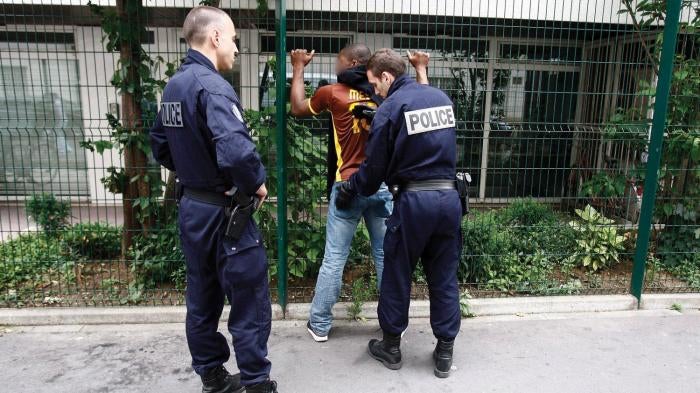
However, research conducted in and around Paris, Lyon, and Lille in 2011 indicates that the identity check system is open to abuse by the French police, who use the system as a central tool in their operations and have broad powers to stop and check individuals regardless of whether they suspect criminal activity. These abuses include repeated checks—“countless” in the words of most interviewees—sometimes involving physical and verbal abuse. Stops can involve lengthy questioning, orders to empty pockets, bag searches, and intrusive pat-downs—including of children as young as 14-years-old, who described having to put their hands against a wall or car to be patted down.
Moreover, statistical and anecdotal evidence indicates that young blacks and Arabs living in economically disadvantaged areas are particularly frequent targets for such stops, suggesting that police engage in ethnic profiling(i.e. making assumptions who is more likely to be a delinquent based on appearance, including race and ethnicity, rather than behavior) to determine who to stop. Many of the youths interviewed by Human Rights Watch for this report said they viewed identity checks to be the sharp edge of their broader experience of discrimination and exclusion in French society.
Such practices are justified by French authorities as security measures and have been court-sanctioned, and there may be some cases, as police officials argue, where there is good reason for police to intervene—such as unruly behavior that prompts calls from neighbors or illegal activity such as smoking marijuana. Moreover, police profiling can be a legitimate preventive and investigative tool, including when suspect descriptions including ethnicity or national origin are based on specific, reliable information. Human Rights Watch recognizes that police officers often face dangerous and threatening situations and must restrain violent individuals to protect themselves and others.
In France, however, there are serious concerns about the way in which identity checks are conducted. There is no written legal basis exists for pat-downs during identity checks. Law enforcement officials too often ignore national and international guidelines that emphasize the importance of respectful treatment. The use of ethnic profiling is discriminatory and contravenes both national and international law when police systematically target certain groups for stops, even when these actions are grounded in unconscious stereotyping rather than intentional policy.
The threat of criminal sanction adds a coercive dimension to identity checks, with failure to cooperate during an identity check potentially leading to administrative or criminal charges, ranging from the minor offense of “refusal to cooperate” to the more serious charges of “insulting an officer” (outrage) and “assaulting an officer” (rebellion).
Excessive use of force, and repeated, insulting, and sometimes violent identity checks are not only unlawful, but also counterproductive—creating and accentuating divides between youth and police. Pent-up anger over police abuses, including (though not limited to) heavy-handed identity checks, played a role in major riots in 2005 in cities across France and appears to underlie countless lower-intensity conflicts between police and young people in urban areas. Such divisiveness and resentment may also negatively affect broader community-police relations and police efficacy, especially if people are reluctant to seek or provide help to the police.
Complicating the issue is lack of adequate documentation of police identification checks. Interviewees said they rarely ask the legal basis for why they are being checked, either because they do not want to appear uncooperative, or from experience believe it is pointless. Police are not obligated to offer individuals any explanation for their actions, or provide a written record of their actions. Nor do French authorities record or publish data on the use of identity checks by police, or track the ethnicity of those stopped.
Without documentation explaining the legal basis for the identity check, there is no way to verify its lawfulness, or provide proof that it involved abuse of power or ill-treatment.
Inconsistent and non-transparent internal recording of identity checks, and lack of information on the ethnic breakdown of identity checks also make it difficult to assess the effectiveness of these operations, verify the lawfulness of a stop, or conduct meaningful official analysis of the impact of police identity checks on minorities—and in particular whether particular groups being affected in a disparate or disproportionate way. As a result, it is extremely difficult to tackle discrimination in policing in France.
The French Code of Criminal Procedure gives law enforcement officers too much discretion to conduct identity checks, leaving ample room for arbitrariness and abuse. Accountability mechanisms, both within law enforcement agencies and through external oversight bodies, do not appear adequate.
Human Rights Watch calls on the French government to acknowledge the problems with identity check powers, and adopt the legal and policy reforms necessary to prevent ethnic profiling and abusive treatment during stops. Failure to do so will allow abuses to go unchecked, and relations between the police and minority youth to deteriorate further.
Key Recommendations
To the Government of France
- Publicly condemn ethnic profiling and pledge to take concrete measures to document, analyze and address the phenomenon.
- Propose legislative reform of Article 78-2 of the Code of
Criminal Procedure to circumscribe precisely identity check powers, including
by:
- Requiring a reasonable, individualized suspicion for all identity checks, pat-downs and searches; and
- Prohibiting explicitly discrimination by law enforcement officers in the conduct of identity checks.
- Support the introduction of stop forms as written documentation of all identity checks, including at a minimum the name and age of the person stopped, the name and unit of the officer making the stop, and the legal basis for the stop. Personal information such as ethnic origin should be recorded only with the individual’s consent.
To the Parliament
- Reform Article 78-2 of the Code of Criminal Procedure to:
- Require a reasonable, individualized suspicion for all identity checks, pat-downs and searches;
- Explicitly prohibit discrimination by law enforcement officers in the conduct of identity checks.
To the Ministry of Interior
- Adopt clear guidance for law enforcement officers with
respect to identity checks, including, at a minimum:
- A requirement to inform all individuals of the legal basis for the stop;
- A requirement to inform all individuals of their rights during a stop;
- Instructions on stops and searches of children;
- Require all law enforcement officers to provide
individuals with a stop form as written documentation of the identity
check, including at a minimum:
- Information about the individual stopped, including ethnicity with the individual’s consent;
- Information about the officer(s) conducting the identity check;
- The legal basis for the identity check;
- Whether a pat-down or search of belongings was conducted; and
- The outcome of the identity check.
- Regularly publish statistics on identity checks, disaggregated at a minimum by location, legal basis, age of the person stopped, and outcome of the stop, and where possible by ethnic identity.
- On the basis of a clear legal framework, adopt clear guidance for law enforcement officers about when and how to perform security pat-downs and search of belongings, and hold officers to account through internal mechanisms for failure to abide by such instructions.
A list of detailed recommendations can be found on page 51.
Methodology
This report is based on Human Rights Watch research conducted in and around Paris, Lyon and Lille between May and September 2011. We interviewed 67 people, including 31 children, about their experiences during police stop and search operations. Some of these interviews were conducted individually and in private, others were conducted in group settings. This figure refers only to those individuals from whom we gathered sufficient and relevant information. Most interviews were set up with the assistance of neighborhood activists, while roughly 35 percent were random interviews in public spaces such as city squares, in front of apartment buildings and stores, and on a basketball court.
This research focused on men and boys because they are far more likely to be subject to identity checks than women and girls.
Forty-six of those interviewed were French citizens of North African descent. 18 of those interviewed were French citizens of African or Caribbean descent. Three of those interviewed were white French citizens (i.e. those from the ethnic majority).
The objective of this study is to assess the impact of police identity checks on minority groups rather than provide quantitative data on differential impact between members of minorities and members of the majority population. Empirical studies conducted by the Open Society Justice Initiative and the European Union Fundamental Rights Agency demonstrate a disproportionate impact of identity checks on minority groups in France, indicating the use of ethnic profiling by law enforcement. The testimonies gathered in the course of this research demonstrate problematic practices in the course of identity checks, the consequences for members of minorities of overly broad police powers, and the impact of abuses on police-community relations.
Of the children we interviewed, 11 were between the ages of 13-15 and 20 were between the ages of 16-18.
In addition to these individual interviews, we spoke with a group of nine adult men (seven blacks, one Arab and one white man) on a basketball court in Paris; a group of ten young adults (eight black and two Arab), all between 18-20 years of age, in front of their building; and a group of eight adults and three children between 15-16 years of age in the Allende neighborhood of Saint-Denis, outside Paris. We also spoke with eight activists, two academics, and two city officials (Paris and Saint-Denis) for their analysis of the impact of identity checks on police-community relations as well as assistance in setting up interviews with individuals subject to stops.
We interviewed two officials in the Paris Police Prefecture and one official in the Préfecture Nord-Pas-de-Calais in Lille. Our two separate requests for a meeting with the Lyon prefecture, and one request for a meeting with the Prefecture of Seine Saint-Denis were denied. We spoke with two representatives of the left-leaning police union Unité SGP Police, and one police officer (also a member of Unité SGP Police) working on the streets of Bobigny. The purpose of these meetings was to ask for the law enforcement perspective on identity checks, including an assessment of the role they play in crime prevention and detection, their efficacy, and their impact on police-community relations. We also reviewed relevant laws, regulations, and jurisprudence.
For all adults, we use only the first name of those interviewed in order to protect their privacy and avoid negative consequences for having spoken with us, except in those cases where the individual requested that their full name be used. Where noted, we have used a pseudonym for adults upon request for the same reasons. In keeping with Human Rights Watch policy, we use pseudonyms followed by an initial for all children.
The focus of the report is on pedestrian stops because these are the identity checks that most affect youth. We note, however, that older interviewees complained about repeatedly being stopped while driving cars or motorcycles.
Terminology
We have translated the French “contrôle d’identité” as “identity check.” We also refer to identity check operations as police stops or simply stops throughout this report.
In this report, the word “child” refers to any person under the age of eighteen. The Convention on the Rights of the Child defines a child as “every human being below the age of eighteen years old unless under the law applicable to the child, majority is obtained earlier.” [1] We also use the term “youth” throughout this report to refer to children and young adults.
The term “black” refers to persons of sub-Saharan African and Caribbean descent. The term “Arab” refers to persons of North African descent. We use the term “white” or “ethnic majority” to refer to the majority population.
Where individuals quoted in this report refer to “French people” they mean white people, without a noticeable immigrant origin from outside Europe. All of the individuals whose testimonies are featured in this report are French citizens.
Any reference to law enforcement officers in this report is intended to encompass both the National Police and the Gendarmerie.
I. Abuses of Identity Check Powers
I don’t even count how many times I’ve been stopped, it’s impossible to say. It’s a habit now.
—Zakaria, 22 years old, Vénissieux (outside Lyon), July 26, 2011
French police have broad powers to stop individuals, young and old, on foot and in cars, motorcycles, motor scooters and bikes, at train stations, shopping malls, in parking lots and on the street, and require them to provide proof of their identity—the identity check (contrôle d’identité). [2]
On a permanent basis, the police have the authority to stop anyone at transportation sites (train stations, airports) without any grounds. [3] When a prosecutor has designated a certain area of a city, police have the power for up to four hours to stop anyone without grounds. [4] Finally, the police may stop anyone when they have grounds to believe he or she has committed or attempted to commit, or is preparing to commit, a crime, or may have information of use to a police investigation. [5] In practice, the identity check has become a central tool in police operations.
French law requires that individuals submit to an identity check. [6] Carrying an identity card is not obligatory for French citizens, and failure to produce one on demand does not incur any sanction. However a citizen must be able to prove their identity to the satisfaction of a law enforcement officer conducting a check. The police are authorized to detain a person for up to four hours for the purposes of establishing their identity under a procedure called “identity verification” (vérification d’identité). [7] This normally involves remaining at the local police station until someone can bring the detained person a valid proof of their identity or the police can establish their identity by some other means.
A variety of law enforcement officials are empowered to conduct different kinds of stops, including different units of the National Police (urban areas) and the National Gendarmerie (rural areas). The Brigades anti-criminalité (BAC) and the riot-control Compagnies Republicaines de la Sécurité (CRS) are the two National Police services most often cited by interviewees who were able to specify who had conducted a given stop.
A straightforward stop involves little more than providing one’s identity card, or other proof of identity, upon demand by a police officer, and will be over in a matter of minutes. Yet many of the identification checks we heard about in the course of this research involved lengthy questioning, intrusive pat-downs, orders to empty pockets, and bag searches. These practices are justified as security measures and have been sanctioned by the courts; there is however no written legal basis for such pat-downs and body searches. We heard from children as young as 14 being required to put their hands up against a wall or a car to be patted down.
Ethnic Profiling
When we asked why they chose us [for a stop]...they said ‘An Arab and a black on a motorcycle in Paris, that scares us.’
—Abdi, 25 years old, Saint Denis, June 28, 2011
What do you want me to say? That it [ethnic profiling] doesn’t exist?
—Christophe Cousin, Head of political and administrative affairs bureau, Prefecture of Lille, September 30, 2011
Visible minorities have complained for years that they are singled out for stops. Sociological studies, grassroots documentation, media reporting, and more recently, quantitative studies all point to a disproportionate number of stops of blacks and Arabs.
Most people in France have been stopped and asked for their papers at some point. For young blacks and Arabs living in economically disadvantaged areas, identity checks are a routine part of life. Everyone interviewed in the course of our research had been stopped numerous times —“countless” in the words of most—from an early age. This research focused on stops of pedestrians. It is important to note, however, that older interviewees complained about repetitive stops while driving cars or motorcycles.
A study conducted by the Open Society Justice Initiative (OSJI) and the French National Center for Scientific Research (CNRS) between October 2007 and May 2008 found that compared to white people, blacks were six times more likely to be stopped, and Arabs were almost eight times more likely.[8] The conclusions were based on observation of over 500 police stops in five locations around Paris as well as at the Gare du Nord and Châtelet-Les-Halles train stations. The study also found a strong correlation between style of dress and probability of being stopped by the police.
The findings of a 2008 survey by the European Union’s Fundamental Rights Agency (FRA) also showed that blacks and Arabs are more likely than whites to be stopped by police in France. The study found that 42 percent of North Africans and 38 percent of blacks said they had been stopped within the preceding 12 months, while only 22 percent of whites said they had been checked in the same period.[9] Of those who had experienced stops, 46 percent of blacks and 38 percent of Arabs (compared to 21 percent of the majority population) in France said the stop had involved a search. These were the highest percentages of all ten countries surveyed, with the exception of Roma in Greece.[10]
These numbers suggest that police are using ethnic profiles—an idea of who is more likely to be a delinquent based on appearance, including race and ethnicity, in determining whom to stop. Police profiling can be a legitimate preventive and investigative tool, when for example suspect descriptions which include ethnicity or national origin are drawn up on the basis of specific, reliable information.[11] But suspect descriptions must include other information useful to identifying an individual; overly broad descriptions based primarily on race, ethnicity, or national origin can lead to unlawful profiling. Profiling is discriminatory and unlawful when police systematically target certain groups for stops, even when these actions are grounded in unconscious stereotyping rather than an intentional policy.[12]
Virtually everyone we spoke with in the course of this research felt they were targeted because of the way they look. Some, like Dixon, a 31-year-old black man interviewed in Paris, attributed it to racism.
It’s a matter of skin color, it’s simple. You have a bit of color, and it’s automatic. It doesn’t bother me one way or the other. You want to waste your time checking me, go ahead. They ask me if I’m French. And I eat Camembert, I drink my Perrier, I’m more French than others, but [to the police] we’re not at home here.[13]
Sami Cherif, 22, agreed, saying: “Facial features play a big role, enormous. Walking in Paris, sitting on the quays at Saint-Michel. With the quays full of people, we’re the ones they’re going to check.” [14] We heard similar sentiments in Lyon and Lille. Twenty-five-year-old Said, of North African descent, was convinced that “if I was called François, I was white and had blue eyes, it wouldn’t happen like this.” [15] A 16-year-old boy , also of North African descent, in Lille was succinct: “I think there’s racism.” [16]
We heard three detailed accounts of blacks and Arabs being stopped and searched while white members of the group or crowd were not.
Halim B., a 17-year-old student in Lille, told us uniformed National Police officers forced him to get off a bus in Lille the week before. He was on his way to school.
The bus stops and the police come on. I was sitting in the back. It was 7:20 in the morning. The bus was full…They pointed to one guy and said, ‘You get up and get off with us.’ I was watching. I thought he was a criminal. And then they pointed at me to get off too. Three people had to get off, and two of them were Arabs. The bus was full. There were plenty of people standing. There were more [white] French on the bus…They [the police] have the right to do these checks whenever they like but honestly I was upset. I felt like I was a burglar, a wanted criminal. I was scared when they told me to get off. I wondered what I’d done. When I got off [the bus], they said, ‘contrôle [identity check], do you have anything illegal on you, empty your pockets.’ They searched my bag and then let me go. I got to school a bit late. Honestly, I wasn’t poorly dressed or anything, I was going to school. They just chose at random.[17]
Moussa S., a 13-year-old boy, was subjected to an identity check and frisk after he responded angrily to being called “dirty negro” (“sale negro”) by a police officer driving by in a car. According to Moussa, his friend of Portuguese descent, walking with him, was not stopped. [18]
Daouda B., fourteen, told us in late June that the last time he was subjected to a police stop had been the day before. He was going with a friend over to the friend’s house.
They [the police] come, they say ‘contrôle de Police,’ they put us in front of the wall, and they took my bag and threw it to the ground. The officer put me up against the wall, he tripped me and I fell to the ground. They searched me and asked me to empty my pockets. They didn’t search my friend because he was white. The guard [of a nearby building] had said that a white guy and a black guy had stolen a collector’s bike from his basement, so they suspected us. [19]
Multiple Stops
Ten interviewees gave accounts of being stopped more than once on a single day, reinforcing the sense of being targeted by the police and heightening resentment. These repetitive stops can occur both in the neighborhood and in other parts of the city. For example, Bilal F., 17 years old, said he had experienced repeat stops on several occasions:
The most I’ve been stopped is three times in one day. About a year ago. The first time was at the Épeule Montesquieu metro stop in Roubaix [outside Lille] in the early afternoon. That was the BAC. There were two or three of them, a normal stop. The second time was at the Porte des Postes metro stop around 6pm. That was the National Police. I told them I’d been stopped by their colleagues and they searched me anyway. They didn’t give me an explanation. The third time was in the street, and it was the CRS. That time I was really drunk. [20]
Farid A. and Khalil N., both 16, and Youssouf M., 17, from Sainte-Geneviève-des-Bois (outside Paris), were stopped repeatedly near the Eiffel Tower on July 14, 2011. Farid explained, “There were six of us. We got stopped three times that day. We come out of the metro, contrôle. We walk 200 meters, another contrôle. We walk 200 meters, and another contrôle. They searched my bag three times. There were a lot of people, but they only stopped us.” [21] Khalil added, “It’s routine in Paris. We know that if we’re a group of young people, they’re going to stop us.”
Eighteen-year-old Abdel, also from Sainte-Genevieve-des-Bois, told us he was stopped three times one night in March, in Juvisy-sur-Orge, a nearby town. “There were a lot of people, but they only stopped me. I was alone. As soon as they say 'contrôle d’identité,’ there’s nothing you can do,” he said. [22]
Molo, a 26-year-old man from Évry (outside Paris), told us that two weeks before we spoke he’d been stopped three times within the space of a few hours: “Once in my car, once at the shopping mall, and once here on the plaza. I work, I don’t deal drugs, I don’t steal. And they know it, but they stop me anyway.” [23]
Abou K., 15 years old from Saint-Denis, said he was stopped four or five times on the Champs Élysées this past New Year’s Day when he was there with a large group of friends. “When they see groups of kids from the banlieues [poor suburbs], they check them. They get nervous when you ask the reason for the stop. They get aggressive and say it’s random. I think it’s profiling.” [24]
Hassan M., 15 years old from Roubaix (outside of Lille), told us he was stopped three times within the space of six hours by the same police officers a week before we spoke.
There were four of us. The first time was at 12:30 p.m. outside the Lille Europe metro stop. Two police officers came to check us, just like that. The second time was at 4:00 p.m. in front of Rihour [metro stop]. It was the same officers. I said, ‘Sir, you just checked me.’ And he said, ‘Don’t ask questions.’ The third time it was around 6:00 p.m., when we were leaving for Lille Europe. That time we didn’t say anything, we just let them check us. It was the same officers. It’s to piss us off. They were waiting for some physical contact so they could take us downtown. [25]
Abdel S., a 16-year-old from Roubaix, told us he was checked by the same police officer twice within the space of four hours. “It was two weeks ago, in my neighborhood. The first time I was alone and the second time I was with a friend. The first time was around 2:00 p.m. and the second time around 6:00 p.m. I told him he’d already stopped me and he said, ‘Well, it’s possible, I can’t remember everyone.’” [26]
Mustafa, a 15-year-old living in Vénissieux, told us in a group interview that once he was stopped twice within five minutes. “Here, in front of my building. I was with three friends. They touch everywhere, everywhere. They take advantage, when you’re little.” He estimated he’d been stopped altogether some twenty times in his life. [27]
Many felt their style of dress—their “look”—played a significant role, with some arguing it was more of a determining factor than ethnicity or race. Fethi Grid, a 28-year-old of Algerian descent, for example, said he thinks the main criteria for stops are “youth and sneakers…race, I don’t know, because whites with a youth look also get stopped.” [28] Others who said they were stopped regularly attributed this to their dress, but also where they live and who they spend time with. Others suggested that race, ethnicity and style of dress were inextricably linked. Gabir S., a 16-year-old in Vénissieux, said “They don’t like us in town. We’re in their environment. It’s the face, the shoes.” [29] Abdul, in Lille, explained, “The look plays a big role, but your face too, and that you can’t change.” [30]
Yannick Danio, spokesperson for the Unité SGP police union, insisted that “style of dress remains [the] principal [factor], origin is in second place, and the neighborhood in third.” He said that stereotyping could lead officers to assume that a person dressed in a Hip Hop style “is inevitably a pot smoker” and would be stopped. [31]
The OSJI/CNRS study mentioned above found that 47 percent of those stopped by the police were wearing clothing associated with youth culture, while they represented only 10 percent of the overall population available to the police in the sites where the study was conducted. The report concluded that style of clothing was an “equally important determinant” of who was stopped.[32]
It may well be true that a black or Arab man dressed in a mainstream manner will not be singled out, whereas a European type dressed in a style associated with the banlieue will be. There are concerns, however, that dress is serving as a proxy for race and ethnicity. As two prominent French sociologists, who participated in the OSJI/CNRS study, have pointed out, targeting individuals on the basis of their style of dress can be a hidden form of racial profiling, in that two out of three people stopped because they are dressed in a “typically youth fashion” will be black or of North African descent.[33]
Council of Europe Commissioner for Human Rights Thomas Hammarberg has stressed that a stop and search must be based on an objective reason: “a reasonable and individualised suspicion of criminal activity.” He has clarified that “The colour of your skin, your dress or visible religious attributes are not objective reasons.”[34]
Intrusive Searches
Each time they search and touch and search and if it’s at the police station they can even strip you.
—Yannis, 25-years-old, Saint Denis (outside Paris), June 28, 2011
The pat-down is systematic. And if you want to provoke a reaction, it’s very easy to push a young person to the edge with the pat-down.
—Issa, community organizer, Paris, May 24, 2011
While stops can involve a relatively quick check of identity papers, they are often much more intrusive. Many of those interviewed for this report had regularly experienced intrusive stops involving security pat-downs and searches of their person and bags. Neither the Code of Criminal Procedure nor any other written law provides any explicit authority to carry out such physical searches. Children as young as 14 years old told us about being forced to put their hands against a wall, spread their legs and submit to an invasive pat-down. Several also said they were forced to take off their shoes. Police pat-downs give rise to one of the most common and strongly-felt complaints about identity checks.
In a group interview in front of their apartment building near the La Glacière metro stop in Paris, all ten participants complained about the constant stops and pat-downs. One 18-year-old black man, who didn’t want to give his name, said the last time for him had been the day before at Pantin (outside Paris) around 8:00 p.m. “They [the police] came, okay everyone against the wall, they touched us everywhere. They took out their teargas canisters, but they didn’t use them.” [35]
Said, a 25-year-old in Lyon, complained, “They touch our private parts more and more. In front of other people, your girlfriend, it’s annoying.”[36] Abdel, 18 years old, told us he had been stopped in Sainte-Geneviève-des-Bois (outside Paris) around 9:30pm along with two friends three days before we spoke with him. “We were sitting in front of a store, three of us, talking. Three police officers came. The search, they touched us everywhere, the penis with their fist.”[37]
The OSJI/CNRS study cited above found disparities between French majority population and French minorities when it comes to pat-downs. In their sample, blacks were four times more likely, and Arabs three times more likely, to be patted down than whites. [38]
Human Rights Watch is particularly concerned about the impact of pat-downs on children. We heard from young children about their recent experiences of identity checks involving pat-downs and bag searches, as well as from older children and adults about their first identity stops.
Abdel, mentioned above, told us about the first time he was ever subject to a police stop. He was 12 years old.
Someone said we’d stolen some cherries from a private garden. There were seven of us, we were coming off the road where the garden was. The police grabbed us by our hands, they searched us. They put their hands in our pockets, they only searched our pockets. They pushed me against a car. Nobody had any cherries. [39]
Hassan M., now 15 years old, was 11 when he was first stopped by the police in the center of Tourcoing, outside Lille.
I still remember. I was coming home from the pool with my little brother, and there was a group of kids getting checked. I said, ‘Hi’, and they [the police] told me to get up against the wall with my eight-year-old brother. We went up against the wall, they searched us. We had our pool bags, they told us to put them down and they searched them. They searched us up and down and the private parts. It made me feel weird, I was trembling a bit. [40]
Ouamar C., a 13-year-old black boy living in Paris, told us he was stopped and searched near his school right before the summer vacation 2011.
I was sitting with some friends…and they came to do a stop. I didn’t talk because if you talk they take you downtown. They opened my bag. They searched my body too. Like every time. They didn’t find anything on me. That was the first time it happened in front of my school. They say, ‘Up against the wall.’ They search, and when it’s over they say thank-you and leave…I was scared at first, now I’m getting used to it.
When we spoke with Ouamar, his last stop had happened two weeks earlier, in his housing estate. “I was with three others, and we were stopped because they thought we had some shit [slang in France for marijuana]…We weren’t doing anything, just listening to music. That was sixth time I’ve been stopped. It started when I was ten. [41]
Cedric A., another 13-year-old black child living in the same neighborhood, told us he’d also been stopped next to his school as summer vacation approached.
Near my school there’s a kind of stadium. There were six of us.They [the police] asked us to not make noise, they searched us, and they told us to stay away from certain people who make trouble. I hadn’t been stopped since January. I think I was eleven when I was stopped for the first time. These checks are normal to see if nothing bad is going on. I’ve never had a problem with the police during a stop. [42]
A 14-year-old from Bobigny, Haroun A., told us his last stop had been a week before we spoke.
I was at the shopping mall with some friends having fun. They [the police] come with their weapons and point them at us. There were three of them. They said: ‘Identity check.’ Two of them had their Flash-Balls [a gun that shoots rubber bullets] in their hands. There were five or six of us. We weren’t doing anything. They just stop us all the time like that. When there’s a group of us, they stop us right away. They asked if we had stuff. They put us against the wall. They search even in our socks and shoes. They didn’t find anything. They don’t always ask for our papers.[43]
Khalil N., now 16, said he was 12 when the police stopped him as he came out of the commuter train station in Sainte-Geneviève-des-Bois. “Up against the wall. Empty your pockets. Empty your bag. The kick on the feet to separate your legs.” [44]
Gabir S., a 16-year-old living in Vénissieux (outside Lyon), told us about the time he and some friends were stopped in the center of Lyon.
We were in the shopping mall near the Part-Dieu train station. There were ten of us, but they [the police] took some others and put us all up against the wall at the mall exit. No explanation. They took two from our group downtown because one of them got angry after they squeezed his balls. [45]
Suleiman S., a 17-year-old, said two months before we spoke he’d been stopped by police along with around 20 others while they were sitting outside the Lille Europe train station around 10:00 p.m. “We were having our little evening, having a good time, talking. They [two BAC cars and a van] came and told us to get down on the ground, with our objects in front of our heads, empty our pockets, take off our shoes. The basics. It’s normal. That’s their method.” [46]
When we spoke with Ismael Y., a 17-year-old in Sainte-Geneviève-des-Bois, his last stop had been three days before.
I was with two friends. I was going out, no problem, and the BAC came by and saw us and they came over to do a stop. They searched us all over, hands against the wall. They hit our feet to keep them apart, and their hands everywhere. ‘Empty your bag, empty your pockets.’ [47]
Insults and Physical Abuse during Stops
I’ve had stops where everything went just fine, but overall there are more idiots on their side [than on ours]. We’re sick of being stopped all the time, but it’s also how they do it.
— Said, 25-years-old, Lyon, July 24, 2011
Treatment during identity checks can vary significantly according to the location, the situation, and the number of individuals. Many of those interviewed said that on some occasions they had experienced uneventful, quick checks during which the police were polite and simply asked to see their papers. However, interviewees also complained of rude and insulting behavior by the police.
One of the most common complaints is the systematic use by the police of the informal, familiar mode of address that is regarded as disrespectful in dealings with public authorities.[48] It is interesting to note that all of those interviewed who compared stops by police and stops by gendarmes said the latter were much more polite and respectful.[49] Almost all of those interviewed had had at least one, if not several, very negative experiences during an identity check. These experiences included primarily verbal insults, but also instances of physical abuse.
Insults
Our interviewees said that, in their experience, insults by police were commonplace. Many insults, they said, were race-neutral. They spoke to us of the police calling children “little clowns,” “queers,” as well as vulgar references to their mothers. Some interviewees also said police had insulted them with reference to their ethnic origins or race.
Moussa S., a 13-year-old boy from Évry (outside Paris), told us that a police officer driving by in a patrol car called out at him “sale negro” [dirty negro]. “I got a little angry so I answered back. So they stopped me. The search, they touched me everywhere, really everywhere. They only checked me, not my friend [of Portuguese descent].” [50] Moussa said the police left when some adult men sitting in a nearby square started walking towards them. Molo, a 26-year-old man from the same town, told us, “Sometimes they drive by, they make monkey noises. I’ve seen it with my own eyes. [51]
Interviewees of North African descent spoke of being called “dirty Arab” (“sale bougnoule,” “sale Arabe”, or “sale Beur”) and “Arab bastard” (bâtard d’Arabe”).[52] Yasine, a 19-year-old from Lille, said he’d been called “sale bougnoule” so many times, “it doesn’t shock us anymore. It’s normal.”[53]
Many interviewees were convinced the police use insults to provoke a response, and shared a sense of both resentment and resignation. Ismael Y., a 17-year-old, explained, “If we insult them we get a fine, but they can do whatever they want. We’re always wrong no matter what.”[54]Durad, 21 years old, spoke for many when he said the police “use insults to provoke us. They are over-equipped. We have cell phones in our pockets, not billy clubs.”[55] An Arab teenager interviewed in a group outside his building in Paris also said, “They insult us, they try to provoke us. Dirty Arab, dirty black. They do it on purpose to put us in prison.”[56] Fethi Grid, 28 years old, complained about the informal you, “comments about my origins, about my family. They try to provoke you to take you into custody. I often fell into the trap when I was younger.”[57]
Physical Abuse
Several of those interviewed by Human Rights Watch told of physical abuse both during identity checks and in the police station after identity checks. None of those we spoke with had made a formal complaint, making it impossible to officially verify their accounts.
Mams, a 26-year-old black man in Évry, told us that in 2008, the police came when he was with about a dozen others. “They told us it was forbidden to be in a group. They made us lie down on the ground, with our arms out and our legs crossed. They told us to sing ‘I love the police, I love the gendarmerie.’”[58]
Said, a 25-year old in Lyon, said that last winter officers with the CRS approached him in the Gambetta metro stop. “They asked for my papers. I gave them my papers, and then right away they strangled me [with their hands]. They said, ‘Don’t come here, go back to the banlieue.’ I was all alone, I was scared. I don’t know why [they did that].” [59]
Ismael Y., a 17-year- old boy in a southern banlieue of Paris, was stopped along with seven or eight friends by the police outside the Sainte-Geneviève-des-Bois commuter train station in early 2011. “When we were there with our hands against the wall, I turned towards him [the officer who was frisking him] and he hit me on the head. I said something like why are you hitting me, and he said to shut up, ‘you want a shot of gas or what?’” [60]
Robert F., a 16-year-old living on the outskirts of Lyon, said:
They hurt us during stops. They twist our arms. They touch way deep, in front of everyone. They take off our shoes. I was stopped the day before yesterday, when I was with two friends. A simple stop, they didn’t find anything. Hands on the wall, the officer who empties your pockets. They like to find any small thing, that way they have a pretext. [61]
Suleiman S., 17, was walking down the street in the town of Tourcoing with his 20-year-old sister in late September 2011 when he was stopped by the police.
There was a group of kids. There were about 12 of them, and two CRS cars came by and stopped them. The kids were screwing around. And they took me in too. The CRS told my sister to go away. They talked to us like we were dogs, not humans. Like we weren’t like them. They called us bastards. They mistreated us. I got a slap because I said something. They asked for our papers and they searched. I didn’t have my papers so they took me in. They called my parents and kept me there for four hours. [62]
Yassine, a 19-year-old in Lille, told us about his experience. About six months prior to our talk in late September 2011, he and a friend had spent the evening at Yassine’s girlfriend’s house. It was a bit after midnight and they started running to catch the last metro.
According to Yassine, a police car ran a red light to stop in front of them. When they found a GPS navigation device on his friend, they were accused of stealing it. Yassine convinced them to take him back to his girlfriend’s house where her mother could verify they’d been there all night. He was handcuffed to two police officers (the other officer stayed behind with his friend), and taken to the girlfriend’s house.
According to Yassine, one of the officers said to him, “If you’re lying, we’re going to break your face.” At the house, the girlfriend’s mother confirmed he and his friend had been there, and he said to the officers, “You see.” “They got annoyed,” Yassine told Human Rights Watch. “They started kicking me. Some kids came to tell them to stop, and they [the police] gassed them.” Afterwards, Yassine said, he was taken to the police station and spent 15 hours in police custody for the crime of insulting an officer (discussed below). In the end he was allowed to leave. “They just dropped it,” he said.
Yassine said he didn’t even think about filing a complaint because he’d already filed three or four complaints for police violence, and all of them had been dropped. Yassine estimates that he has been stopped and searched over 100 times since he was 13 years old. “They’re not all the same,” he concluded. “There are good police officers, but there are also ones like that.” [63]
In some cases documented by Human Rights Watch, a violent reaction by the person being controlled degenerated into something more resembling a brawl than a properly-conducted police intervention. Seventeen-year-old Bilal F., for example, told us how he threw some punches with a police officer. “It was at the Hôtel de Ville in Lille during summer vacation. I was with a friend, waiting for my girlfriend. They [the police] came, two BAC and one in the car. At first they were polite until they touched my balls and I fought with one of them. He took me behind the church… he gave me a slap, we hit each other a bit and then they let me go.”[64]
We also heard several instances of police using excessive force against people intervening in some way in an identity check of others. Sami Cherif, a 22-year-old living in Bobigny (outside Paris), told us a police officer used a stun gun on him in April 2011 when he greeted a friend undergoing an identity check.
I got tasered once, two months ago. They were doing a stop on some kids in front of the entrance [to my building]. I went by and shook hands with my friend, a simple how’s it going, and he [the police officer] tasered me on the shoulder.” [65]
Sami Cherif told us he was also arrested and spent 24 hours in police custody when he intervened while the police were conducting a check on a kid about 11 or 12 years old. “I thought that wasn’t normal, and I told them. They handcuffed me straightaway…It’s simple: during stops they like to play stupid games and if you get sucked in, things go bad.” [66]
Zakaria, 22 years old, also had problems when he walked near a police officer while he was conducting a check on a friend in Vénissieux, outside Lyon, during the summer of 2009. “Once, the cop was doing a stop on a friend of mine, we [he and a friend] walked behind the cop but just like that, not doing anything, and he screamed, ‘Move back, move back,’ and then he shot at us with the Flash-Ball [a weapon that fires rubber bullets]. It didn’t hit us, so then the guy gets his gun and points it at us to make us move back.” [67]
Detention or Charge for “Insulting an Officer”
Those who do object to identity checks or treatment during a stop can be charged with the offense of outrage, or insulting an officer. Under the French Criminal Code, it is a misdemeanor offense to use “words, gestures or threats…of a nature to offend his [a depository of public authority] dignity or the respect due the power with which he is invested.” [68] It is punishable by up to six months in prison and a €7,500 fine. The threat of criminal sanction adds a coercive dimension to identity checks.
We spoke with eight people who had been either taken into custody for outrage and then released, or actually prosecuted on this charge following a contentious identity check. While we cannot conclusively determine they were unfairly charged, the vagueness and broad scope of the law leaves significant room for abuse. Those we interviewed frequently complained that the threat of being accused of outrage effectively silences and disempowers those subjected to police stops. Sami Cherif was still on a six-month suspended sentence for outrage when we spoke with him in late June. He explained, “If a police officer comes to see me and makes fun of me, I’m going to want to say something and then I’ll go to prison for repeat offending.” [69] Thirty-year-old Staiffi from Bobigny told us he doesn’t talk during controls since his conviction two years ago for outrage. He had been stopped in his car in Pantin, outside Paris, and he said all of his papers were in order and asked why they were checking him. “They answered, ‘We don’t give a shit if your papers are in order’. So I answered ‘I don’t give a shit about your [identity] control,’ and they took me downtown.” [70]
Twenty-one-year-old Durad from Lille said he doesn’t plan to go to his court date for outrage because he feels it is unjust. He explained, “I was in Lille Sud to do some shopping. But for them if I was there it was to sell drugs. I only said that I worked, and I asked why I had to show them my papers. As soon as you defend yourself, they take it badly. I spent 18 hours at the police station, they accused me of outrage. I have the court date on October 23, but I won’t go.” [71]
A report of the National Police internal affairs department in 2005 stated that some law enforcement officials tended to resort “sometimes too systematically to allegations of outrage and rebellion (assaulting a police officer).” [72]
Inadequate Safeguards against Abuse
The French Code of Criminal Procedure gives law enforcement officers too much discretion to conduct identity checks, leaving ample room for arbitrariness and abuse. Inconsistent and non-transparent internal recording of identity checks, and the fact that individuals subject to identity checks are not provided any documentation, mean it is very difficult to assess the effectiveness of these operations or to verify the lawfulness of a stop. Furthermore, the absence of any information on the ethnic breakdown of identity checks prevents meaningful official analysis of the impact of police identity checks on minorities, and in particular whether particular groups are being affected in a disparate or disproportionate way . Accountability mechanisms, both within law enforcement agencies and through external oversight bodies, do not appear adequate.
Too Much Discretion in Law
If you ask the reason for the stop, they say ‘routine stop’ or ‘shut up.’
— Aniss, 21 years old, Lyon, July 24, 2011
They say ‘simple routine stop’ but it’s starting to get annoying.
— Said, 25 years old, Lyon, July 25, 2011
French law gives law enforcement officials broad grounds for conducting identity checks. Article 78-2 of the French Code of Criminal Procedure (CPP) authorizes identity checks for crime investigation and prevention, ensuring public order, and immigration control.
Subsection 1 stipulates that stops for crime investigation and prevention must be based on a reasonable suspicion (“one or more plausible reasons”), linked to actual behavior, that a person may have attempted or committed an unlawful act (infraction) or is preparing to commit a crime. [73] This article was modified in 2003; the previous version stipulated that the police had to have an “indication to presume” that a person had committed or was preparing to commit a crime.
Just what constitutes suspicious behavior is largely left to the discretion of the police officer. Authoritative interpretations vary. Courts have found that running away from the police, hiding one’s bag from the police, repeatedly passing by a jewellery store at night, or being obviously drunk are lawful grounds for a stop. [74] But the Court of Cassation has found that seeking to get off a bus to avoid the police did not justify an identity check in the absence of any other motivation. [75] The National Commission on Ethics in Security (CNDS) has said that trying to hide oneself from the view of a police officer “does not constitute in and of itself a threat to public order” justifying an identity check. [76]
Subsection 2 of the same CPP article allows prosecutors to designate an area, for a certain amount of time, where law enforcement officers can stop anyone, regardless of their behavior, and ask for their papers. [77] The prosecutor must justify the order, normally by citing a particular kind of crime on the rise in the designated area.
It is important to note that local police chiefs (commissaires) can, on the basis of an analysis of crime reports, designate an area as particularly crime-ridden, giving police in that area free rein to conduct identity checks without individualized suspicion. [78] In these cases there is no oversight by the prosecutor, and the police authorization is only subject to judicial supervision if an identity check leads to an arrest or other procedure. Intensive policing in areas with high crime rates is a legitimate policy response. However, in the absence of specific information or grounds for suspicion, police profiling in these designated areas to determine whom to stop is unlawful.
Subsection 3 authorizes identity checks to prevent a threat to public order. The law explicitly specifies that the police have the power to stop anyone “regardless of his [or her] behavior]” in these cases. [79]
Finally, subsection 4 allows for random stops at any transport site, such as airports and train stations. [80]
These broad powers leave far too much discretion, in the absence of clear and detailed guidance, to police officers when it comes to choosing whom to stop for an identity check. It is a basic precept of law, well-established in international human rights jurisprudence, that laws must be sufficiently clear and well-defined to limit the scope for arbitrary action and interpretation by law enforcement and judicial authorities. Legal precision is also important so that people know what conduct is prohibited and can regulate their behavior accordingly.
There are examples of good practices. The UK Police and Criminal Evidence Act gives police the power to stop, search, and detain someone only on the basis of a “reasonable suspicion” of wrongdoing. The accompanying Code of Practice explains that:
Reasonable suspicion can never be supported on the basis of personal factors alone without the supporting intelligence or information. For example, a person’s colour, age, hairstyle or manner of dress, or the fact that he is known to have a previous conviction for possession of an unlawful article, cannot be used alone or in combination with each other as the sole basis on which to search that person. Reasonable suspicion cannot be based on generalisations or stereotypical images of certain groups or categories of people as more likely to be involved in criminal activity. A person’s religion cannot be considered as reasonable grounds and should never be considered as a reason to stop and search an individual.[81]
Individuals in France stopped by the police rarely know the legal basis for the stop. Police are not required to offer any explanation and they do not provide any written record of the stop. Many of those interviewed for this report said they do not bother asking on what grounds they are stopped by the police. Those who have asked the reason for a stop said the answers were almost always perfunctory—“routine stop”—and sometimes aggressive.
Krimo B., a 16-year-old in Lille, for example, said when he asked the reason for the stop a police officer told him, “I don’t like your face.” [82] Hassan M., a 15-year-old in Lille, was told “Don’t ask questions.” [83] Sulaiman, a 19-year-old in Saint Denis, said, “If you ask why, sometimes they say, ‘That’s not your problem. We’re doing our job.’” [84] Twenty-two-year-old Zakaria from Vénissieux told us the only time he asked the reason for a stop, the police said, ‘With you we’re forced to treat you all the same.’ [85]
The CNDS has said it is “essential” that police “systematically explain the reasons for identity checks” and emphasized that this is particularly true for children who “may be less able to spontaneously understand the ins and outs of police interventions.” [86] In an interview with Human Rights Watch, Renaud Vedel of the Paris Police Prefecture acknowledged that the police should improve in this regard. “We should explain [the reason for the stop] in order to be more legitimate. We need to work on that.” [87]
The CNDS has also recommended that identity verifications—when individuals are taken to the police station for up to four hours while their identity is being ascertained—be based on “serious motives” and always subject to a police report, noting that the procedure, when insufficiently justified or explained, gives rise to tension and conflict. [88]
We heard accounts of stops that did, indeed, appear justified by the circumstances, where interviewees themselves acknowledged they were drunk in public, smoking marijuana, or smoking cigarettes in a train station. But we also heard of stops where people were simply walking down the street, sitting in a car, sitting in front of a store, running to catch the last train, or returning home late at night. In these cases, the objective justification for the stop is less clear, and the decision to conduct a stop may have been influenced by the appearance, including dress and ethnicity, and the environment—the particular neighborhood—rather than an individualized, objective suspicion.
Laws criminalizing “anti-social” behavior also give the police a wide range of reasons for targeting groups of people, in particular youth, in public places. For example, a 2003 law made it an offense to loiter in the communal areas of an apartment building in a way that impedes access or circulation. [89]
A 20-year-old black man in Paris told us he was arrested along with five friends in the summer of 2010 when they were smoking cigarettes in front of a building. He said he spent two days in police custody and was then charged with illegal loitering in a building. The charges were eventually dropped. [90] A 23-year-old Arab man in Lyon also told us he had been detained on these charges in January 2009. “There were six of us in the hall. They took me downtown, you’re going to laugh, for illegally loitering in the hall of a building. I had just gotten there five minutes before, and they [the police] said they’d been watching for 45 minutes. I spent 24 hours in police custody and then they told me to go home. The four in the group who lived in that building were let go immediately.” [91]
Even in cases where the determination to stop a particular person can be considered legitimate, systematic pat-downs and searches, verbal abuse and physical violence, as discussed in the preceding chapter, are never permissible.
No Recording of Stops
Unless a stop and search leads to the person being taken to the police station, there is no guarantee there will ever be any official record of the stop. As mentioned above, individuals subject to an identity check are not provided any written record of the check.
Any activity by patrol units that is reported back to the police station in real time, including an identity check, is noted in a duty report called the Main Courante Informatisée (MCI). But the patrol officers are supposed to write up all other information in the MCI, such as identity checks that were not called in, once they have returned to the station at the end of their duty. [92] All checks conducted by a given patrol should therefore be in the MCI.
Renaud Vedel in the Paris Police Prefecture acknowledged that this system is not reliable. “A systematic recording of identity checks in the MCI would be a good thing,” he said. “This is the current system but it needs to be really implemented.” [93] Comprehensive records on stops would enable law enforcement bodies to assess their effectiveness, and take steps to limit inefficient use of police time and resources.
Because individuals are rarely told the legal basis for the stop, and are not given any record, there is no way to verify the lawfulness of the stop itself. Nor is there any proof that a stop occurred in the event of mistreatment unless it has been recorded in the MCI. The National Commission on Ethics in Security ( CNDS) has been unable to pursue adequately complaints arising from treatment during identity checks precisely because the police hierarchy was unable to identify the officers involved. [94]
The absence of any information on the ethnic breakdown of stops prevents meaningful analysis of the impact of police identity checks on minorities. The EU Fundamental Rights Agency (FRA) recommends providing a written record, commonly called a stop form, as a means of encouraging both well-grounded stops and greater accountability. [95] Stop forms include, at a minimum, the name and age of the person being stopped, the legal grounds for the stop, the outcome, and the name and unit of the police officer(s) who conducted the stop. Inclusion of personal information about the person stopped, including ethnic origin, is voluntary.
The United Kingdom requires police officers who conduct regular policing stops and searches to issue a stop form, and municipalities in Spain and Hungary have implemented pilot projects. [96] If ethnic data is collected, the systematic use of stop forms enables data collection that can identify broad trends, such as disproportionate stops of particular minorities, as well as provide evidence of specific cases of discrimination.
Effective anti-discrimination policies require reliable information to determine whether there are patterns of particular groups being affected in a disparate or disproportionate way. This is why adequate, disaggregated statistics by ethnicity are so important. The United Kingdom is the only country in the European Union that systematically collects and publishes police data on stops, including voluntary, self-identified information on ethnicity. This has allowed detailed analysis of patterns of discriminatory behavior, in particular with respect to stop and search powers under UK counterterrorism legislation, which does not require a reasonable suspicion of wrong-doing.
While there has been significant debate over the issue in recent years, the French government resists any kind of data collection with reference to race or ethnicity. Official arguments rest on the “republican ideal” enshrined in article 1 of the Constitution declaring France an indivisible republic guaranteeing equality without distinction based on origin, race, or religion. The European Commission against Racism and Intolerance (ECRI) has encouraged French authorities develop a “comprehensive, consistent system for collecting data…to assess the situation regarding the various minority groups in France and to determine the extent of…direct or indirect racial discrimination in different fields of life.” [97] The UN Committee on the Elimination of Racial Discrimination has made similar recommendations. [98]
Inadequate Accountability Mechanisms
Individuals with complaints against law enforcement personnel can seek remedy through internal accountability mechanisms, the criminal justice system, and a newly-created national human rights institute. The National Police has two internal affairs departments tasked with investigating allegations of police abuse: the Inspection Générale des Services for Paris, and the Inspection Générale de la Police National for the rest of the country. Allegations of criminal behavior by any law enforcement officer can be filed directly with the competent prosecutor’s office.
International human rights bodies including the Council of Europe Commissioner for Human Rights, the European Committee for the Prevention of Torture, the UN Committee Against Torture, and the UN Human Rights Committee, have expressed concern over allegations of ill-treatment by law enforcement officers in France and the failure to properly investigate and punish such behavior. [99] In 2009, the UN Committee on the Rights of the Child expressed concern at “the high number of reported incidences of excessive use of force against children by law enforcement officials, in particular by police officers and at the low number of cases which resulted in a prosecution and conviction.” [100] Amnesty International has documented the failure of French authorities to diligently investigate and prosecute police abuse. [101] In 2006, the European Court of Human Rights found France had failed to conduct an effective investigation into the 1993 death in custody of Pascal Taïs due to injuries to the spleen. [102] Victims of abusive identity checks interviewed in the course of this research said they did not report the abuse due to lack of confidence in the system and/or fear of reprisal, notably being charged with outrage.
The National Commission on Ethics in Security (CNDS) has been folded into the institution of the Defender of Rights (Défenseur des Droits), created in law in March 2011; the new institution has a division devoted to oversight of law enforcement bodies.[103] The mandate of the Haute Autorité de Lutte contre les Discriminations et pour l’Egalité (Equal Opportunities and anti-Discrimination Commission) was also incorporated into the new institution. The current Defender, Dominique Baudis, was appointed by the government in June 2011. Unlike the CNDS, which could only receive complaints through the intermediation of parliamentarians, the new Defender of Rights can receive and act on complaints directly from any individual or institution.[104]
Notwithstanding this important improvement, the CNDS itself, the National Consultative Commission on Human Rights, an independent advisory body, and outside observers have raised concerns that the new institution may lack the independence and the specialized knowledge to fulfil its new role in ensuring accountability for police abuse. [105] The Defender is appointed by the executive. Like the CNDS, the Defender of Rights can only recommend a course of action to remedy a wrong; the institution has no power to impose or require sanctions.
III. Impact on Community-Police Relations
When there’s abuse of authority, there’s rejection of authority.
— Aniss, Lyon, July 24, 2011
Eighty percent of the problems with the police start with the stops, they’re at the root of the frustration, the humiliation.
—Rex Kazadi, Villiers le Bel, July 15, 2011
If you are always mean, it inevitably creates tension with young people.
— Thierry Claire, regional secretary of Unité SGP Police union, Lyon, July 27, 2011
Repeated, insulting, and sometimes violent stops and searches have a deeply negative impact on youth-police relations in France. The National Commission on Ethics in Security (CNDS) has cautioned that overreaction by police personnel risks “increasing the already deplorable gulf between law enforcement and young people in disadvantaged neighborhoods.”[106] Pent-up anger over police abuses, including (though not limited to) heavy-handed identity checks, played a significant role in major riots in 2005 and appears to underlie countless lower-intensity conflicts between police and young people in urban areas.[107] If the police are quick to assume the worst of certain youth in certain neighborhoods, those youth are equally prone to see the police as their enemies.
The police argue that identity checks serve a useful purpose in crime detection and prevention. Renaud Vedel of the Paris Police Prefecture, emphasized that when the police intervene following a call, “dialogue is the tool, but if it [the problem or disturbance] is repeated, then it’s the identity check” and that identity checks will be systematic when there is a prosecutor’s designation. He said identity checks were effective because they permit the police to put a stop to a specific public order nuisance, to get to know individuals in a given area and identify repeat offenders, to find wanted individuals, and to identify children at risk. [108] Christophe Cousin, head of the Political and Administrative Affairs Bureau in the Lille Prefecture, also stressed that identity stops were not the “principal entry point” for the police, but are necessary for the police to know who they are dealing with and, significantly, “to show that the police is not inactive, that they are on the ground.” [109]
A beat police officer attached to the Bobigny central police station who is actually on the ground, called identity checks “our only tool.”
It’s not to annoy [them], it’s because someone has called us. We can’t let them ruin life for an entire housing estate. It’s kids between 14 and 20 that do stupid things. If I want to find something, it’s logical that I’m going to stop young people and not the elderly. Ninety percent of the people here are of foreign origin, so it’s normal that most of the people I stop are of foreign origin. It’s not racism; it’s reality talking. If they were Swedes I’d stop them just the same. You get in trouble because you’ve broken something, because you won’t move along, you don’t get in trouble because you’re black. [110]
However, the testimonies gathered in the course of this research, as well as the empirical studies cited above, suggest that race and ethnicity do play a role in whom, when and how the police stop for an identity check. While stops in response to specific complaints or information are justified, numerous stops appear to be conducted on an officer’s initiative. Higher rates of criminal activity in a neighborhood cannot alone provide a justification for stops and searches, in the absence of an individualized suspicion of criminal activity.
Pressure on police to demonstrate effectiveness by the number of arrests—the “quota policy”—raises concerns that the police use identity stops as fishing expeditions, particularly to find illegal drugs or weapons. Thierry Claire, regional secretary of the police union Unité SGP Police for Rhône-Alpes, told us, “The quota policy has led to an increase in [identity] stops…and an 80 percent increase in arrests for drug consumption. That costs time, money, and there’s no prosecution for minors. But it’s easier to get the consumer than the seller.” [111] Christophe Cousin in the Lille prefecture also said, “What can we do when we know there’s [drug] trafficking going on? We can do investigations…but you also have to try to find the stuff and break up the functioning of the networks.” [112]
The crucial question of overall effectiveness is often overlooked. Studies in a variety of countries, including the Netherlands, Sweden, Spain, the United Kingdom, and the United States, demonstrate that using ethnic or racial profiles does not improve “hit rates”—the percentage of stops leading to an actual law enforcement outcome, such as a fine or an arrest—and in some cases actually lowers them. [113] Experiences in Spain, the UK, and the US show that stops are both more justified and more efficient in terms of uncovering illegal behavior when the police are required to clearly articulate the grounds for the stop. For example, when police in one municipality in Spain adopted new procedures and stopped using ethnic profiling, the number of stops per month over a six-month period decreased from 958 in the first month to 396 in the last month, but the hit rate increased from 6 to 17 percent. [114]
Human Rights Watch is unaware of any official statistics indicating how many arrests result from identity checks. Excluding the cases in which a stop degenerated into violence, the vast majority of the stops documented in this report did not lead to an arrest. The OSJI/CNRS statistical study found that 14 percent of the over 500 stops they observed led to the person being detained. There was no way to know whether the individuals were taken into custody for identity verification or for actual police custody in relation to a crime.
The EU’s Fundamental Rights Agency (FRA) survey results are also instructive. Only three percent of Arabs and seven percent of blacks in France said they had been taken to the police station following an identity stop in the preceding twelve months. Only one percent of majority respondents had been. Here too there is no way to know the reason for the detention. It is interesting to note that 18 percent of majority population respondents said they were fined by the police following a stop, indicating that they had indeed committed a minor infraction justifying the stop. These figures were actually lower for blacks (eight percent) and Arabs (nine percent). [115]
The Defender of Children’s Rights, an institution that was incorporated into the new Defender of Rights institution in May 2011, warned in 2009 that the negative image of teenagers in the media and public discourse “favors irrational fears and undermines the social fabric.” [116] The institution pointed out that while violent offenses committed by adolescents have risen over the years, the vast majority of charges against young people involve quality of life offenses (incivilités), and the number of young offenders pales in comparison with adult offenders. [117]
Consistent, detailed, and reliable data on stops and their outcomes—the hit rates, with an additional break-down for the kind of offenses detected—is necessary.
The general approach and behavior of the police, including verbal insults, appears to be one of the main sources of anger and resentment among those we interviewed. Police stops and searches are perceived as the sharp edge of their broader experience of discrimination and exclusion in French society. In a group interview in Lille, three teenagers and two young men said what bothered them most was “the intimidation, the lack of respect, that they treat you like sub-shits, when they talk badly, when they walk like cowboys.” [118]
The FRA survey in ten EU countries including France (mentioned above) found that “majority respondents tended to think that the police were respectful towards them during a stop, whereas more minority respondents indicated that the police were disrespectful towards them”. The results for France clearly reflect this disparity. While 65 percent of majority population respondents in France described police treatment as respectful, only 44 percent of North Africans and 27 percent of blacks felt this was the case. And 32 percent of North Africans and 36 percent of blacks described police treatment as disrespectful.[119]
Older teenagers interviewed by Human Rights Watch were the group most likely to express deep anger, hatred of police, and a willingness to fight back, quite literally, against what they experience as police abuse. Seventeen-year-old Youssouf M. spoke for many when he said of the police, “They like too much to put pressure on us. We hate them.” [120] Some spoke admiringly or boastfully of riots against the police, suggesting that violence is the only way they can make their voices heard.
Adult interviewees, some of whom had had negative experiences when they challenged police conducting a stop, spoke in more resigned terms of survival strategies to avoid problems. For example, Dixon, a 31-year-old black man in Paris, said, “I kind of have to think about who I walk down the street with, I have to ask myself that question.” [121] A community organizer from the outskirts of Paris explained,
If you don’t want to be stopped, you don’t go around in a group, you dress a certain way, you don’t drive a nice car. I have the impression that I looked for it, the times I’ve been stopped. For example, I was in a nice car, I was listening to loud music. You have to adopt a low profile strategy. We know we’re going to be targeted. So in Carrefour [supermarket] I put my hands in my pockets, I open my coat. I don’t want to be stopped at the exit, that’s the supreme humiliation. [122]
The divisiveness and resentment that characterize youth-police relations has a negative impact on broader community-police relations and the effectiveness of police operations. People may be less likely to seek assistance from or provide assistance to the police, undermining the role and legitimacy of law enforcement and crippling the ability of the police to detect and prevent crime. Fethi Grid stated bluntly, “When we have problems, we don’t go to the police. We settle our own accounts.” [123] Christophe-Adji Ahoudian, advisor on youth affairs to the mayor of the 19th district of Paris, complained that “if the approach is distrust rather than respect, everyone is treated the same way. We’re in a society where the police frighten rather than reassure.” [124] Bally Bagayoko, deputy mayor of Saint Denis, agreed, saying the police “themselves sometimes generate insecurity. People who have nothing to do with crime are treated all the same,” leading to frustration and resignation. [125]
Yannick Danio, spokesperson for the police union Unité SGP Police, said stops inspired by the “quota policy” might well get police the desired numbers, but are “counterproductive in security terms” because they damage relations and police access to relevant intelligence. “It’s no longer community policing, it’s just order…there’s no dialogue anymore, and then we see scenes of urban guerrilla warfare.” [126] Tense relations with the local population heighten an already stressful job for police officers, damaging their work conditions and morale.
There has been significant grassroots mobilization around both community-police relations generally, and identity stops specifically. The organization Graines de France, together with local associations, has organized a series of town hall meetings in various cities to bring community members, elected officials, and representatives of the police together to talk through the issues and grievances. Activists in Paris, Lyon, and Lille associated with the Collectif contre le Contrôle au faciès (Collective against Profiling) are raising awareness about the issue. The obligation on police to provide written stop forms following every stop is a principal demand. [127] A network of lawyers is mounting a constitutional challenge to article 78-2 of the Code of Criminal Procedure establishing police powers to conduct identity checks. [128]
There is institutional acknowledgment that police-citizen relations, including police-youth relations, are frayed. French Interior Minister Claude Guéant affirmed in March 2011 that law enforcement personnel should have “more systematic contact with the population” and committed the ministry to “working to improve the relationship between police and the population.”[129] The Paris Police Prefecture has launched an initiative with the theme of police-citizen relations, which should include outreach activities such as consultations in neighborhoods, prone to conflict.[130]Taking concrete steps to address one of the sources of tension—abusive identity checks—would signal a genuine commitment to improving relations.
IV. Relevant National and International Standards
Discrimination, unjustified interference with the right to privacy, and violations of dignity and the right to physical integrity are prohibited under international and French law.
Prohibition of Discrimination
Discrimination is illegal under French law. Article 1 of the French Constitution guarantees “the equality of all citizens before the law, without distinction of origin, race or religion.” The Criminal Code defines discrimination as “any distinction…by reason of their origin, sex, family situation, physical appearance or name, state of health, disability, genetic characteristics, sexual morals or orientation, age, political opinions, union activities, or…membership or non-membership, true or supposed, of a given ethnic group, nation, race or religion.” [131]
The Constitutional Council affirmed in a 1993 ruling that “the practice of generalized and discretionary identity checks would be incompatible with the respect for individual liberty.” [132] The National Commission on Ethics in Security (Commission Nationale de Déontologie de la Sécurité, CNDS), the body that until recently was tasked with examining complaints of unlawful conduct by law enforcement officers, noted in 2008 that “it is not manifest that all police officers have been inculcated with this principle” and stressed that “identity checks without reason and based on profiling should be avoided.” [133]
Targeting members of minorities or particular ethnic groups in policing violates international law. Human rights law prohibits discrimination against anyone, adult or child, on the basis of race, ethnicity, or religion, among other grounds. [134]
Discrimination occurs when there is an unjustified difference in treatment based on a particular characteristic such as race, ethnicity, or religion. When it comes to policing, this means that race, ethnicity, or religious affiliation (real or perceived) cannot be the only or main reason behind an identity check.
As a party to the European Convention on Human Rights, France is required to prevent discrimination against all those within its jurisdiction with respect to all of the rights set out in the Convention.[135]The European Court of Human Rights has applied article 14 of the Convention (non-discrimination) to law enforcement activities, notably in the case of Timishev v. Russia, involving an ethnic Chechen prevented by Russian police officers from crossing an internal administrative border. In that case, the Court found that the decision to restrict Timishev’s right to freedom of movement constituted racial discrimination because based solely on his ethnic origin. The Court further argued that “no difference in treatment which is based exclusively or to a decisive extent on a person’s ethnic origin is capable of being objectively justified in a contemporary democratic society.”[136] The Court has also found that indirect discrimination—patterns of discriminatory impact resulting from policies or practices even in the absence of discriminatory intent—is prohibited by the Convention.[137]
The European Commission against Racism and Intolerance (ECRI), a Council of Europe body, defines racial (or ethnic) profiling as:
The use by the police, with no objective and reasonable justification, of grounds such as race, colour, language, religion, nationality or national or ethnic origin in control, surveillance or investigation activities. [138]
In 2010, ECRI urged French authorities to take measures to combat discriminatory stop and searches, “in particular by clearly defining and prohibiting racial profiling by law, carrying out research on racial profiling and monitoring police activities to identify racial profiling activities.” [139] In 2005, ECRI had already noted that “complaints about discriminatory identity checks…persist” and said it was “especially concerned about information…to the effect that when someone lodges a complaint against a law enforcement official, the latter almost invariably retaliates with a charge of insulting an officer of the law or malicious accusation, which weakens the position of the civil plaintiff.” [140]
The Council of Europe’s European Code of Police Ethics requires police officers to discharge their duties “in a fair manner, guided, in particular, by the principles of impartiality and non-discrimination.” [141] Police investigations should be based on “a reasonable suspicion of an actual or possible offence or crime.” [142]
The UN Committee on the Elimination of Racial Discrimination (CERD) has expressed concern about racial discrimination in the criminal justice system, and said that authorities must “take the necessary steps to prevent questioning, arrests and searches which are in reality based solely on the physical appearance of a person, that person’s colour or features or membership of a racial or ethnic group, or any profiling which exposes him or her to greater suspicion. [143]
In a landmark decision in 2009, the UN Human Rights Committee (HRC) said the identity check of Rosalind Williams Lecraft, a naturalized Spanish citizen, in a train station in Spain amounted to unlawful discrimination. When Williams asked police why she was the only person asked to show her documents, she was told, “It’s because you’re black.” The HRC warned that targeting people with certain physical characteristics or ethnic backgrounds “would not only adversely affect the dignity of those affected, but also contribute to the spread of xenophobic attitudes among the general population; it would also be inconsistent with an effective policy to combat racial discrimination.” [144]
The UN Committee on the Rights of the Child has emphasized that authorities must ensure that all children in conflict with the law are treated equally, paying close attention to “de facto discrimination and disparities, which may be the lack of a consistent policy and involve vulnerable groups of children, such as…children belonging to racial, ethnic, religious or linguistic minorities.” [145] The Committee urges states to engage in training law enforcement professionals who deal with children.
Right to Privacy
Law enforcement officials confirmed to Human Rights Watch that security pat-downs are standard operating procedure. A police officer working in the Seine-Saint-Denis department told us such pat-downs are “routine.” He clarified that the person can refuse to empty their pockets and bags, but that this “will put me on guard, I’m going to go deeper.” [146] Renaud Vedel, Deputy Director of the cabinet of the prefect of the Paris police , explained, “The police don’t know who they are dealing with, so the security pat-down is absolutely necessary. It is a technical procedure that is indispensable for the safety of the patrol.” [147]
The use of security pat-downs during identity checks, while clearly systematic, is grounded in jurisprudence and practice, rather than in any explicit provision of law. Indeed, while actual body (including cavity) searches are regulated in law, there does not appear to be any explicit legal basis for security pat-downs during identity checks. Jurisprudence dating back to 1978 established that the police may engage in a “summary pat-down” [148] while jurisprudence from 1997 defined the security pat-down as “security measure for himself and the public left to the judgment of the judicial police officer intervening on the ground in the context, notably, of an…identity check based on a written order from the prosecutor in conformity with article 78-2 (2)…with the objective of looking for a weapon.” [149] There are no special provisions with respect to pat-downs of children.
Article 203 of the internal regulations for the National Police stipulates that security pat-downs may be performed on individuals who are taken into custody, but does not explicitly sanction their use during checks.&
The National Commission on Ethics in Security (CNDS) concluded in an October 2010 opinion that “systematic security pat-downs during an identity check…in the absence of any reason to suppose that the person is hiding prohibited objects, constitutes a violation of dignity that is disproportionate to the aims.” [150] The CNDS recommended that precise instructions be adopted with respect to appropriate use of security pat-downs. Speaking more generally about the use of coercive powers during identity checks of children, the CNDS recalled that children are “psychologically more fragile…even when their physical appearance is similar to that of an adult.” [151]
The rules governing searches of bags and other belongings are complex. Officers of the judicial police have the right to search themselves any bags during an identity check, while officers not acting as judicial police may only ask an individual to empty their bags for inspection. While legally the individual may refuse, many are unaware of this right, and doing so may lengthen the procedure, invite more intensive scrutiny, and potentially lead to more coercive measures.
International human rights law requires that any interference with the right to privacy be clearly prescribed by law as well as necessary and proportionate. In Gillan and Quinton v. the UK, the European Court of Human Rights found that the “coercive powers…to require an individual to submit to a detailed search of his person, his clothing and his personal belongings” in the absence of reasonable suspicion under the UK’s counterterrorism legislation amounted to unlawful interference with the right to private life because of the lack of clear delimitations on their use and sufficient safeguards against abuse. [152] The court noted the humiliation and embarrassment that public searches of a person’s private items can cause. [153]
The absence of a clear legal basis for physical checks is a serious problem under France’s human rights obligations. Both the European Convention on Human Rights and the International Covenant on Civil and Political Rights require that interferences in liberty, individual privacy, and bodily integrity be in accordance with law—that is that they comply both in substance and procedure with a clear legal basis. The norm setting out the basis must not only exist in the legal system but be accessible and clear and precise enough to be foreseeable to a reasonable degree in its application and consequences.[154] In this way, it should allow a person to regulate his or her behavior to comply with the law, and to remove the risk of arbitrariness. The alleged basis for police to carry out pat-downs and searches does not meet this standard.
The UN Committee on the Rights of the Child has emphasized also that the right to privacy of a child in conflict with the law must be fully respected at all stages of proceedings, including “from the initial contact with law enforcement (e.g. a request for information or identification)” to avoid stigmatization. [155] Children require special legal safeguards and care because of their physical and emotional immaturity, and any recourse to pat-downs and bag searches of children should be strictly necessary and justified by a reasonable suspicion of possession of unlawful or dangerous objects. The guiding principle in the administration of justice involving children should be the best interests of the child.
Use of Force
Police officers in France are confronted with dangerous and threatening situations, and they have the duty to restrain violent individuals to protect others and themselves. All use of force, however, must be justified by the circumstances and limited to the minimum extent necessary.
The French Police Code of Ethics and internal Interior Ministry instructions explicitly prohibit any use of force by law enforcement officials unless strictly necessary and proportionate. This is in keeping with international human rights law which imposes the clear duty on authorities to prevent—through clear laws, regulations and guidance—and punish unjustified use of force. In addition, the Convention on the Rights of the Child protects children from all forms of physical or mental violence, injury, or abuse, including in the course of the administration of justice.
Duty to Respect
National and international guidelines for law enforcement officials emphasize the importance of respectful treatment. The French Code of Ethics of the National Police requires police officers to “demonstrate an absolute respect of all persons, whatever their nationality or their origin, their social situation, or their political, religious or philosophical beliefs.” [156] Failure to abide by the code can give rise to disciplinary sanctions and prosecution. [157] The Council of Europe’s European Code of Police Ethics requires that all police personnel act with “integrity and respect towards the public and with particular consideration for the situation of individuals belonging to especially vulnerable groups.” [158] Finally, the UN Code of Conduct for Law Enforcement Officials calls for officers to “respect and protect human dignity and maintain and uphold the human rights of all persons.” [159]
Recommendations
To the Government of France
- Publicly condemn ethnic profiling and pledge to take concrete measures to document, analyze and address the phenomenon;
- Ensure that the Defender of Rights institution has the
powers, budget, and human resources to fulfil its role in ensuring
accountability for police misconduct, including in particular complaints
of law enforcement discrimination in the exercise of identity check
powers; Propose legislative reform of article 78-2 of the Code of Criminal
Procedure to:
- Require reasonable, individualized suspicion for all identity checks, pat-downs and searches;
- Explicitly prohibit discrimination by police officers in the conduct of identity checks.
- Propose legislative reform to circumscribe precisely law enforcement powers to carry out physical checks such as pat-downs to ensure that they are based only on objective, reasonable, individualized suspicion such as the person is carrying a concealed weapon and poses a threat or is concealing illegal goods;
- Propose legislative reform to regulate law enforcement exercise of stop and search powers when children are involved; and
- Give effect to a stated commitment to improving relations between police and local communities through support for local and national initiatives, including consultations with a broad range of residents. These initiatives should lead to concrete policy measures to address specific concerns.
To the Parliament
- Reform Article 78-2 of the Code of Criminal Procedure to:
- Require a reasonable, individualized suspicion for all identity checks, pat-downs and searches;
- Explicitly prohibit discrimination by law enforcement officers in the conduct of identity checks.
To the Ministry of Interior
- Adopt clear, written guidance for law enforcement officers
with respect to identity checks, including:
- Permissible grounds for conducting a stop;
- Permissible grounds for conducting a pat-down and the manner in which that pat-down is to be conducted;
- Permissible grounds for conducting a search of personal belongings;
- The circumstances and manner in which law enforcement officers may stop and search children;
- A requirement to provide all individuals subject to a stop with information about their rights;
- A requirement to inform all individuals subject to a stop of the legal basis for the operation;
- A requirement that law enforcement officers should, as a general rule, behave in a courteous and respectful manner. This should specify that officers should use the formal “you” in the conduct of all identity checks as a culturally-sensitive measure of respect to all individuals subject to stops, regardless of age, ethnicity or national origin.
- Ensure that all stops are duly recorded by law enforcement officers;
- Require all law enforcement officers to provide
individuals subject to an identity check with a written record—stop
form—including, at a minimum:
- The name and age of the individual stopped;
- The name and unit of the law enforcement officer(s) conducting the stop;
- The legal basis for the stop;
- The time and place of the stop;
- Whether a pat-down and/or search of personal belongings was conducted;
- The outcome of the stop;
- Personal information about the individual, on a voluntary basis, including ethnic origin.
- Ensure that law enforcement officers are not subject to pressure to meet quotas as a measurement of efficiency and clarify that identity checks should never be used to detect criminal behavior without reasonable suspicion;
- Collect, analyze and publish quarterly data on identity checks;
- Ensure accountability for violations of the law enforcement Code of Ethics;
- Ensure diligent investigation and accountability for all complaints of police abuse; and
- Conduct a review of best practices in other countries with respect to identity checks, pat-downs and searches of personal belongings.
To the Defender of Rights
- Ensure diligent investigation and accountability of all complaints of police abuse and violations of the law enforcement Code of Ethics; and
- Consider all possible means to use the expertise on discrimination and law enforcement within the institution to document and publicize abuse of identity check powers, and provide guidance to the government on appropriate remedies.
To the Council of the European Union, the European Commission and the European Parliament
- Adopt a Directive defining and making illegal ethnic profiling. This instrument, binding on all EU member states, should use an inclusive definition, taking as its starting point the one adopted by the European Commission against Racism and Intolerance, which captures the intentional and unintentional aspects of ethnic profiling, the range of law enforcement activities where there is a risk of illegitimate profiling, and emphasizes the need for objective and individualized suspicion.
To the European Parliament’s Committee on Civil Liberties, Justice and Home Affairs (LIBE)
- Hold a hearing on police profiling practices in different countries within the European Union.
To the Council of Europe’s Commissioner for Human Rights and European Commission against Racism and Intolerance
- Ensure that discriminatory police practices constitute a key aspect of continued monitoring of the human rights situation in France, including through timely interventions and during future country visits.
To the UN Special Rapporteur on Contemporary Forms of Racism
- Monitor the impact of identity check powers on minorities in France, and communicate concerns about specific cases or general patterns in a timely fashion.
To the UN Committee on the Elimination of Racial Discrimination, the UN Committee on the Rights of the Child, and the UN Human Rights Committee
- Ensure that the next periodic review of France’s compliance with UN human rights treaties addresses the problems in law and practice relating to identity checks in France, including concerns about ethnic profiling and the impact on children.
Acknowledgments
Judith Sunderland, senior researcher, and Eva Cossé, research assistant, both in the Europe and Central Asia Division of Human Rights Watch, conducted the research for this report. The report was written by Judith Sunderland and edited by Benjamin Ward, deputy director of the Europe and Central Asia Division. Eva Cossé and Alice Farmer, researcher in the Children’s Rights Division, reviewed the report. Veronika Szente-Goldston, advocacy director in the Europe and Central Asia Division, and Jean-Marie Fardeau, director of the Paris office of Human Rights Watch, reviewed the report and contributed to the recommendations. Aisling Reidy, senior legal advisor, provided legal review, and Tom Porteous provided program review. Production assistance was provided by Marina Pravdic, associate in the Europe and Central Asia Division; Grace Choi, director of Publications; Kathy Mills, Publications Specialist; and Fitzroy Hepkins, Mail Manager.
Human Rights Watch is grateful to all those who helped us conduct our research in Paris, Lyon and Lille. We particularly thank Tara Dickman and Aniss Laouaj of the Collectif contre le Contrôle au Faciès; Bolewa Sabourin of Cités en Mouvement; Axiom and the association Norside; BAC-Association d’éducation à la citoyenneté; Alliance; and Lanna Hollo and the Open Society Justice Initiative. We are especially grateful to all the people who agreed to talk to us about their experiences.
Françoise Denayer translated this report into French. Anna Chaplin, office administrator of the Paris office of Human Rights Watch, reviewed the translation.
[1] Convention on the Rights of the Child, article 1, adopted November 20, 1989, G.A. Res. 44/25, U.N. Doc. A/RES/44/25 (entered into force September 2, 1990). France ratified the Convention on the Rights of the Child on August 7, 1990.
[2] French Code of Criminal Procedure (CCP), articles 78-1, 78-2, 78-2-1, 78-2-2, 78-2-3 and 78-2-4.
[3] Article 78-2 of the CCP grants police the power to “stop” an individual to protect public order, investigate and prevent crime, and to enforce immigration control on a road, highway near a land border, in airports, in train stations; or in an area designated by an order of a prosecutor.
[4] CCP, French Code of Criminal Procedure, article 78-2.
[5] CCP, French Code of Criminal Procedure, article 78-2. Police powers to conduct identity checks under this article are discussed in more detail in Chapter 3.
[6] Article 78-2 of the CCP: “Toute personne se trouvant sur le territoire nationale doit accepter de se prêter à un contrôle d’identité effectué dans les conditions et par les autorités de police visées aux articles suivants. ̋
[7] CCP, Article 78-3.
[8] Open Society Institute Justice Initiative (OSJI), “Profiling Minorities: A Study of Stop-and-Search Practices in Paris,” June 2009, http://www.soros.org/initiatives/justice/focus/equality_citizenship/articles_publications/publications/search_20090630 (accessed July 25, 2011).
[9] European Union Agency for Fundamental Rights (FRA), “European Union Minorities and Discrimination Survey. Data in Focus Report. Police Stops and Minorities,” EU-MIDIS, 2010, http://fra.europa.eu/fraWebsite/attachments/EU-MIDIS-police.pdf (accessed October 10, 2011). In France, FRA interviewed 534 Arabs, 466 blacks and 503 members of the majority population.
[10] EU-MIDIS, p. 11. The survey was conducted in all 27 member countries of the European Union. In ten countries, the survey included interviews also with members of the majority population, allowing for comparison. These ten countries were: Belgium, Bulgaria, France, Germany, Greece, Hungary, Italy, Romania, Slovakia, and Spain.
[11] For a detailed discussion of when profiling is legitimate, see Open Society Justice Initiative, Ethnic Profiling in the European Union: Pervasive, Ineffective, and Discriminatory, May 2009, http://www.soros.org/initiatives/justice/articles_publications/ publications/profiling_20090526 (accessed November 16, 2011); European Network Against Racism, Factsheet on Ethnic Profiling, http;//cms.horus.be/files/99935/MediaArchive/publications/ENAR_OSJI%20factsheet%20ethnic%20profiling%20Oct09.pdf (accessed November 16, 2011); and FRA, “Understanding and Preventing Discriminatory Ethnic Profiling: A Guide,” October 2010, http://fra.europa.eu/fraWebsite/attachments/Guide_ethnic_profiling.pdf (accessed October 24, 2011).
[12] FRA, “Understanding and Preventing Discriminatory Ethnic Profiling,” p. 13; OSJI “Profiling Minorities,” p. 19.
[13] Human Rights Watch interview with Dixon, Paris (Glacière neighborhood), July 21, 2011.
[14] Human Rights Watch interview with Sami Cherif, Bobigny, June 30, 2011.
[15] Human Rights Watch interview with Said, Lyon, July 25, 2011.
[16] Human Rights Watch interview with Abdel G., Lille, October 1, 2011.
[17] Human Rights Watch interview with Halim B., Lille, October 1, 2011.
[18] Human Rights Watch interview with Moussa S., Évry, July 23, 2011.
[19] Human Rights Watch interview with Daouda B., Paris (12th district), June 29, 2011.
[20] Human Rights Watch interview with Bilal F., Lille, October 1, 2011.
[21] Human Rights Watch group interview with Farid A., Khalil N., and Youssouf M., Sainte-Geneviève-des-Bois, July 22, 2011.
[22] Human Rights Watch interview with Abdel, Sainte-Geneviève-des-Bois, July 22, 2011.
[23] Human Rights Watch interview with Molo, Évry, July 23, 2011.
[24] Human Rights Watch interview with Abou K., Saint Denis, June 28, 2011.
[25] Human Rights Watch interview with Hassan M., Lille, October 1, 2011.
[26] Human Rights Watch interview with Abdel S., Lille, October 1, 2011.
[27] Human Rights Watch interview with Mustafa A., Vénissieux, July 26, 2011.
[28] Human Rights Watch interview with Fethi Grid, Bobigny, June 30, 2011.
[29] Human Rights Watch interview with Gabir S., Vénissieux, July 26, 2011.
[30] Human Rights Watch interview, Abdul, Lille September 29, 2011.
[31] Human Rights Watch interview with Yannick Danio, spokesperson, Unité SGP Police, Paris, July 1, 2011.
[32] OSJI, « Profiling Minorities, » p. 10.
[33] Fabien Jobard and René Lévy, « Police, justice et discriminations raciales en France: état des savoirs,” in La Lutte contre le racisme, l’antisémitisme et la xénophobie, National Consultative Commission on Human Rights, 2011, p. 181.
[34] Council of Europe Commissioner for Human Rights Viewpoint, "Stop and searches on ethnic or religious grounds are not effective,” July 20, 2009, http://www.coe.int/t/commissioner/Viewpoints/090720_en.asp (accessed October 14, 2011).
[35] Human Rights Watch interview with 18-year-old, La Glacière, Paris, July 21, 2011.
[36] Human Rights Watch interview with Said, Lyon, July 25, 2011.
[37] Human Rights Watch interview with Abdel, Sainte-Geneviève-des-Bois, July 22, 2011.
[38] OSJI, “Profiling Minorities,” p. 34.
[39] Ibid.
[40] Human Rights Watch interview withHassan M., Lille, October 1, 2011.
[41] Human Rights Watch interview with Ouamar C., Paris (12th district), June 29, 2011.
[42] Human Rights Watch interview with Cedric A., Paris (12th district), June 29, 2011.
[43] Human Rights Watch interview with Haroun A., Bobigny, June 30, 2011.
[44] Human Rights Watch interview with Khalil N., Sainte-Geneviève-des-Bois, July 22, 2011.
[45] Human Rights Watch interview with Gabir S., Les Minguettes, Vénissieux, July 26, 2011.
[46] Human Rights Watch interview with Suleiman S., Lille, October 1, 2011.
[47] Human Rights Watch interview with Ismael Y., Sainte-Geneviève-des-Bois, July 22, 2011.
[48] In the French language, the most respectful manner of address is the formal second person plural you (“vous”). Use of the informal second person singular you (“tu”) can be perceived as inappropriately familiar or disrespectful in certain situations, such as exchanges with public authorities.
[49] Fethi Grid, for example, told us: “In the countryside you get the feeling you’re an alien. The gendarmes in the countryside are teddy bears. The police we have, they’re scum. They’re like us. They talk like us, they act like us. In the countryside, it’s “Mister” and “Good-day.” Human Rights Watch interview with Fethi Grid, Bobigny, June 30, 2011.
[50] Human Rights Watch interview with Sega, Èvry, July 23, 2011.
[51] Human Rights Watch, Molo, Èvry, July 23, 2011.
[52] Human Rights watch interviews with Sami Cherif, Bobigny, June 30, 2011; Yassine, Lille, September 30, 2011; Said (not his real name), Lyon, July 25, 2011; Fethi Grid, Bobigny, June 30, 2011; group interview outside building in Paris, July 21, 2011; Abdel, Lille, October 1, 2011; Bilu, Vénissieux, July 26, 2011.
[53]Human Rights Watch interview with Yassine, Lille, September 30, 2011.
[54] Human Rights Watch interview with Ismael Y., Sainte-Geneviève-des-Bois, July 22, 2011.
[55] Human Rights Watch interview with Durad, Lille, September 30, 2011.
[56] Human Rights Watch interview, young Arab in group interview outside building, Paris, July 21, 2011.
[57] Human Rights Watch interview with Fethi Grid, Bobigny, June 30, 2011.
[58]Human Rights Watch interview with Mams, Èvry, July 23 July 2011.
[59] Human Rights Watch interview with Said, Lyon, July 25, 2011.
[60] Human Rights Watch interview with Ismael Y., Sainte-Geneviève-des-Bois, July 22, 2011.
[61]Human Rights Watch interview with Robert, St. Priest, July 24, 2011.
[62] Human Rights Watch interview with Suleiman S, Lille, October 1, 2011.
[63] Human Rights Watch interview with Yassine, Lille, September 30, 2011.
[64] Human Rights Watch interview with Bilal F., Lille, October 1, 2011.
[65] Human Rights Watch interview with Sami Cherif, Bobigny, June 30, 2011.
[66] Human Rights Watch interview with Sami Cherif, Bobigny, June 30, 2011.
[67] Human Rights Watch interview with Zakaria, Vénissieux, July 26, 2011.
[68] French Criminal Code, article 433-5. Resisting arrest (rébellion) is also a crime, punishable by up to six months in prison and a 7,500 Euro fine, and it is not uncommon for someone to be charged with both crimes. Article 433-5 of the French Criminal Code.
[69] Human Rights Watch interview with Sami Cherif, Bobigny, June 30, 2011.
[70] Human Rights Watch interview with Staiffi, Bobigny, June 30, 2011.
[71] Human Rights Watch interview with Durad, Lille, September 30, 2011.
[72] Cited in the European Committee for the Prevention of Torture report, Rapport au Gouvernement de la République Française relative à la visite effectuée en France par le Comité européen pour la prévention de la torture et des peines ou traitements inhumains ou dégradants (CPT) du 27 septembre au 9 octobre 2006, December 2007, http://www.cpt.coe.int/documents/fra/2007-44-inf-fra.pdf (accessed November 19, 2011).
[73] CCP, Article 78-2, subsection 1. The term “infraction” in French refers to full range of unlawful acts, from very minor offenses (“contraventions”) to felony crimes. This section also provides for identity checks if there is reason to believe an individual may be able to provide information relevant to an ongoing investigation.
[74] “Les cadres juridiques et les actes de la mission de police judiciaire,” http://didier.simeoni.perso.sfr.fr/page706.htm (accessed November 21, 2011).
[75] Court of Cassation, 2ème chamber civile, judgment of 4 March 1999.
[76] CNDS 2008 report, p. 55.
[77] CCP, Article 78-2, subsection 2.
[78] Human Rights Watch interview with Renaud Vedel, Paris, July 23, 2011; Thierry Claire, Lyon, July 27, 2011.
[79]CCP, Article 78-2, subsection 3. The Constitutional Council ruled it was lawful to conduct checks for public order purposes « regardless of [an individual’s] behavior », but said that the authorities « must justify, in all cases, the particular circumstances creating the threat to public order that motivated the stop. » Constitutional Council Decision no. 93-323, August 5, 1993.
[80] CPP, Article 78-2, subsection 4.
[81] Code of Practice, Section 2.2. This circumscribed power and detailed guidance contrasts with the overly-broad stop and search powers under UK counterterrorism legislation, which gave rise to significant abuse and evidence of ethnic and religious profiling. For a detailed analysis, see Human Rights Watch, “Beyond Suspicion: Stop and Search under the Terrorism Act 2000,” July 2010, http://www.hrw.org/reports/2010/07/05/without-suspicion-0. The power was suspended in early 2011 pending adoption by Parliament of reformed powers.
[82] Human Rights Watch interview with Krimo B., Lille, October 1, 2011.
[83] Human Rights Watch interview with Hassan M., Lille, October 1, 2011.
[84] Human Rights Watch interview with Sulaiman, Saint Denis, June 28, 2011.
[85] Human Rights Watch interview with Zakaria, Vénissieux, July 26, 2011.
[86] CNDS, La déontologie des forces de sécurité en présence des mineurs, 2008, p. 55, http://www.la-cnds.I eu/rapports/ra_pdf/Etude_Mineurs.pdf (accessed October 13, 2011).
[87] Human Rights Watch interview with Renaud Vedel, Deputy Director of the Cabinet of the Police Prefect of Paris, , and Sébastien Durand, police commissioner and technical advisor on crime prevention and public relations, Paris Police Prefecture, Paris, July 23, 2011.
[88] CNDS rapport 2008, p. 56.
[89] Law no. 2003-239 of 18 March 2003 on internal security, article 61. This is a misdemeanour offense punishable by up to 3 months in prison and a 3.750 Euro fine, or double the prison sentence and fine where accompanied by threats.
[90] Human Rights Watch interview with 20-year-old black man, Paris, July 21, 2011.
[91] Human Rights Watch interview with Polo, Lyon, July 24, 2011.
[92] Human Rights Watch interview with Renaud Vedel, July 23, 2011; Human Rights Watch interview with Thierry Claire, Lyon, July 27, 2011.
[93] Human Rights Watch interview with Renaud Vedel, Paris, July 23, 2011.
[94] Based on a review of CNDS complaints. See for example CNDS Complaint No. 2010-18.
[95] FRA, “Understanding and Preventing Discriminatory Ethnic Profiling,”, p. 53.
[96] Ibid.
[97] ECRI report on France, 2010, p. 45.
[98] CERD Concluding Observations, 2010, para. 12.
[99] Report of Mr. Alvaro Gil-Robles, Commissioner for Human Rights, on the Effective Respect for Human Rights in France following his visit from 5 to 21 September 2005, para. 180; Concluding Observations of the Committee Against Torture : France, April 3, 2006, CAT/C/FRA/CO/3, para. 15; Rapport au Gouvernement de la République française relatif à la visite effectuée en France par le Comité européen pour la prévention de la torture du 27 septembre au 9 octobre 2006, Concluding Observations of the Human Rights Committee: France, July 22, 2008, CCPR/C/FRA/CO/4, para. 19;
[100] UN Committee on the Rights of the Child, Concluding Observations: France, June 11, 2009, CRC/C/FRA/CO/4, para. 54.
[101]Amnesty International, France: The search for justice, 2005, http;//www.amnesty.org/en/library/info/EUR21/001/2005 (accessed November 19, 2011); Public Outrage: Police officers above the law in France, 2009, http;//www.amnesty.org/en/library/info/EUR21/003/2009 (accessed November 19, 2011).
[102] European Court of Human Rights, Taïs v. France, judgment of June 1, 2006, available at www.echr.coe.int.
[103] Other independent rights bodies were also folded into the new institution: the Mediator of the Republic and the Defender of Children’s rights).
[104] The Prime Minister, the Mediator of the Republic, the Defender of Children’s Rights, and the Equal Opportunities and anti-Discrimination Commission were also able to trigger investigations by the CNDS.
[105] CNDS, La CNDS en 2009, novembre 2009, http://lesrapports.ladocumentationfrancaise.fr/BRP/094000554/0000.pdf (accessed October 17, 2011) ; National Consultative Commission on Human Rights, « Avis sur le projet de loi organique relatif au Défenseur des droits adopté par le Sénat en juin 2010, » September 30, 2010, http://www.cncdh.fr/IMG/pdf/10.09.30_Avis_Defenseur_des_droits_PLO_Senat.pdf (accessed October 17, 2011) ; and Amnesty International, « La CNDS et le Défenseur des droits, » November 2008, http://amnesty.org/en/library/asset/EUR21/002/2009/en/Of9502b8-f444-11dd-a33d-b736a7e6033a/eur210022009fra.pdf (accessed October 17, 2011).
[106] CNDS 2008 report, p. 54.
[107] See for example, Jonathan Laurence, “Understanding Urban Riots in France,” Brookings Institute New Europe Review, December 1, 2005, http://www.brookings.edu/articles/2005/1201france_laurance.aspx (accessed November 20, 2011); Laurent Bonelli, “Les raisons d’une colère, ” Le Monde Diplomatique, December 2005, http://www.monde-diplomatique.fr/2005/12/BONELLI/12993 (accessed November 20, 2011).
[108] Human Rights Watch interview with Renaud Vedel, Paris, July 23, 2011.
[109] Human Rights Watch interview with Christophe Cousin, Head of the Political and Administrative Affairs Bureau, Lille Prefecture, Lille, September 30, 2011.
[110] Human Rights Watch interview with a beat police officer, Bobigny, July 22, 2011.
[111] Human Rights Watch interview with Thierry Claire, Lyon, July 27, 2011.
[112] Human Rights Watch interview with Christophe Cousin, Lille, September 30, 2011.
[113] For an in-depth discussion, see Open Society Justice Initiative, “Ethnic Profiling in the European Union,” May 2009. Studies include: Bernard Harcourt, “Rethinking Racial Profiling: A Critique of the Economics, Civil Liberties and Constitutional Literature, and of Criminal Profiling More Generally,” The University of Chicago Law Review, vol. 71, No. 4, Fall 2004; E.J. van der Torre and H.B. Ferwerda, Preventive Searching, An Analysis of the Process and the External Effects in Ten Municipalities (The Hague: Beke, Arnhem. Politie & Wetenschap, Zeist 2005); Paul Quinton, Nick Bland et. al., Police Stops, Decision-Making and Practice (London: Home Office, 2000); Claes Lernestedt, Christian Diesen, Tove Pettersson and Toren Lindholm, “Equal before the Law: Nature or Culture,” in The Blue and Yellow Glasshouse: Structural Discrimination in Sweden (Stockholm: Swedish Government Official Reports, 2005); and David A. Harris, Profiles in Injustice: Why Racial Profiling Cannot Work (New York: New Press, 2002), pp.219-222.
[114] Open Society Justice Initiative, “Ethnic Profiling in the European Union,” 2009, pp. 54.
[115] EU-MIDIS, p. 12.
[116] Defender of Children’s Rights, “Rapport Thématic: Enquêtes de Terrain,” http://www.defenseurdesenfants.fr/pdf/ENQUETE_PAJ.pdf (accessed October 17, 2011), p. 138.
[117] Ibid., p. 137.
[118] Human Rights Watch group interview, Lille, September 30, 2011.
[119] EU-MIDIS, p. 13. 15 percent of majority respondents said treatment was disrespectful. 23 percent North Africans, 34percent blacks, and 18 percent majority said treatment was neither respectful nor disrespectful.
[120] Human Rights Watch interview with Mamadou, Sainte-Geneviève-des-Bois, July 22, 2011.
[121] Human Rights Watch interview with Dixon, Paris, July 21, 2011.
[122] Human Rights Watch interview with community organizer, Paris, May 24, 2011.
[123] Human Rights Watch interview with Fethi Grid, Bobigny, June 30, 2011.
[124] Human Rights Watch interview with Christophe-Adji Ahoudian, advisor on youth affairs to the mayor of the 19th district of Paris, May 24, 2011.
[125] Human Rights Watch interview with Bally Bagayoko, Deputy Mayor, Saint Denis, May 23, 2011.
[126] Human Rights Watch interview with Yannick Danio, spokesperson, Unité SPG Police, Paris, July 1, 2011.
[127] See the Collectif’s website : http://stoplecontroleaufacies.fr/slcaf/presentation-et-objectifs/
[128] Jérome Bouin, “ Des avocats s’attaquent au contrôles au faciès, ” Le Figaro, May 23, 2011, http://www.lefigaro.fr/actualite-france/2011/05/23/01016-20110523ARTFIG00498-des-avocats-s-attaquent-aux-controles-d-identite.php
[129] “Police: Guéant veut ‘des contacts plus systématiques’ avec la population,”, AFP, March 15, 2011, http://www.lepoint.fr/politique/police-gueant-veut-des-contacts-plus-systematiques-avec-la-population-15-03-2011-1306920_20.php (accessed November 20, 2011).
[130] Human Rights Watch interview with Sébastien Durand, police commissioner and technical advisor on crime prevention and public relations, Paris Police Prefecture, Paris, November 17, 2011.
[131] Criminal Code, article 225-1.
[132]» Constitutional Council Decision no. 93-323, August 5, 1993, http://www.conseil-constitutionnel.fr/conseil-constitutionnel/root/bank/pdf/conseil-constitutionnel-10491.pdf (accessed October 13, 2011)
[133] CNDS 2008 report, p. 54.
[134] International Covenant on Civil and Political Rights (ICCPR), article 26; International Convention on the Rights of the Child, article 2; International Convention on the Elimination of All Forms of Racial Discrimination; European Convention on Human Rights (ECHR), article 14. France has not ratified Protocol 12 to the European Convention which creates a stand-alone right to freedom from discrimination.
[135] France has neither signed nor ratified, Protocol 12 to the Convention for the Protection of Human Rights and Fundamental Freedoms (CETS No.: 177) which prohibits discrimination on race, color and several other protected grounds, in the enjoyment of any right set forth by law or by any public authority.
[136] European Court of Human Rights, Timishev v. Russia, judgment of December 13, 2005, available at www.echr.coe.int, para. 58-59.
[137] European Court of Human Rights [Grand Chamber], D.H. and Others v. the Czech Republic, judgment of November 13, 2007, available at www.echr.coe.int. The former European Commission on Human Rights also held that discrimination based on race could in certain circumstances amount to degrading treatment and found a violation of Article 3 in relation to the application of immigration policy based on race, East African Asians v United Kingdom, Commission report of 14/12/1973, Decisions and Reports 78 A/B/5, para. 207.
[138] ECRI General Policy Recommendation No. 11 on Combating Racism and Racial Discrimination in Policing, CRI (2007)39, adopted June 29, 2007 and published October 4, 2007, http://www.coe.int/t/dlapil/codexter/Source/ECRI_Recommendation_11_2007_EN.pdf (accessed October 24, 2011), p. 4.
[139] ECRI 2010 report, para. 143 (p. 43).
[140] ECRI 2005 report, para. 109 (p. 28).
[141] European Code of Police Ethics, https://wcd.coe.int/com.instranet.InstraServlet?command=com.instranet.CmdB.obGet&InstranetImage=1277578&SecMode=1&Docld=212766&Usage=2 (accessed November 19, 2011), article 40.
[142] Ibid., article 47.
[143] UN CERD, General Recommendation 31 on the prevention of racial discrimination in the administration and functioning of the criminal justice system (2005), http://www2.ohchr.org/english/bodies/cerd/docs/GC31Rev_En.pdf, para. 20 (accessed October 17, 2011).
[144] UN Human Rights Committee (HRC), Decision: Rosalind Williams Lecraft v. Spain, Communication No. 1493/2006, July 27, 2009, para. 7.2.
[145] Committee on the Rights of the Child, General Comment No. 10 (2007), Children’s Rights in Juvenile Justice, U.N. Doc CRC/C/GC/10, 25 April 2007, http://www2.ohchr.org/english/bodies/crc/comments.htm (accessed November 5, 2011), para. 6.
[146] Human Rights Watch interview with a beat police officer, Bobigny, July 22, 2011.
[147] Human Rights Watch interview with Renaud Vedel, Paris, July 23, 2011.
[148] Cour d’Appel d’Aix-en-Provence, June 28, 1978 (Gaz.Pal. 1979 I 79).
[149] Tribunal de Grande Instance de Grenoble, January 29, 1997 (JCP 1997 IV 2054).
[150] CNDS, Opinion no. 2009-211, adopted October 4, 2010, http://www.la-cnds.eu/avis/avis_2011/Avis_2009-211.pdf (accessed October 21, 2011).
[151] CNDS 2008 report, p. 56.
[152] European Court of Human Rights, Gillan and Quinton v. the UK, judgment of January 12, 2010, paras. 63 and 87.
[153] Ibid., para 63.
[154] See the jurisprudence of the European Court of Human Rights in Sunday Times v. the UK, April 26, 1979, Series A No. 30, para. 49; Kruslin V France, judgment of April 24, 1990, Series A No. 176, para. 27; and Amuur V France, judgment of June 25, 1996, Reports 1996-III, para. 50.
[155] Committee on the Rights of the Child, General Comment No. 10 (2007), para. 64.
[156] Décret no. 86-592 du 18 mars 1986 portant code de déontologie de la police nationale, Article 7, http://www.interieur.gouv.fr/misill/sections/a_l_interieur/la_police_nationale/deontologie/code-deontologie/ (accessed October 14, 2011). The Code of Ethics for Agents of the Municipal Police has the same provision.
[157] Ibid., Article 6.
[158] European Code of Police Ethics, article 44.
[159] UN Code of Conduct for Law Enforcement Officials, adopted by General Assembly resolution 34/169 of 17 December 1979, http://www2.ohchr.org/english/law/codeofconduct.htm (accessed November 19, 2011), article 2.