Forbidden
Institutionalizing Discrimination against Gays and Lesbians in Burundi
Introduction
On April 22, 2009, the president of Burundi, Pierre Nkurunziza, signed into law a new criminal code that contains a provision making sexual relations between people of the same sex illegal for the first time in the country’s history.
The law was a fierce blow to lesbian, gay, bisexual and transgender (LGBT) people in Burundi, who only in recent years, and in very small numbers, had begun to come out, organize, and demand that their rights be respected. The Association for Respect and Rights for Homosexuals (Association pour le Respect et les Droits des Homosexuels, ARDHO), was founded in the capital, Bujumbura, in 2003, initially as a support group for LGBT people. Inspired by what they saw as a global wave in favor of LGBT rights, members began traveling to gay rights conferences in other African countries; educating themselves and others about HIV/AIDS and other sexually transmitted diseases; and speaking out on Burundian radio stations about discrimination they faced in their daily lives.
While some “came out” to their families and friends as gay or lesbian,[1] most remained “closeted” outside of the safe space provided by ARDHO, afraid of rejection or even disownment. Still, they saw positive signs: as Théophile, age 26, told us, “I thought that we were in a wave of change–I had discussed my homosexuality with my friends and neighbors, and they were tolerant. When people take the time to try to understand, they become a bit more open-minded.”
Burundian LGBT people were devastated when in November 2008, the National Assembly voted in favor of adding an article to the proposed new Criminal Code that would penalize same-sex relations between consenting adults. Burundian lawyers and politicians, along with international experts, had spent two years revising the old criminal code, which dated to 1981, but the National Assembly’s human rights commission added the anti- homosexuality provision at the last minute.
The commission was apparently under pressure from President Nkurunziza, who made statements on television condemning homosexuality as a “curse,” and whose offices telephoned lawmakers seeking to influence their votes. Even before the law went into effect, it had an impact on LGBT people, undermining their trust in state authorities. Several days after the Assembly vote, Nick, a young gay man in Bujumbura, told us, “Today I saw a policeman in the supermarket and he started talking to me. I suddenly looked at his uniform and remembered the new law and I was afraid. I realized he wasn’t trying to arrest me, but it made me uncomfortable in any case.”
ARDHO joined forces with international organizations dedicated to LGBT equality, AIDS activism, and human rights (including Human Rights Watch), as well as with Burundian civil society organizations, to lobby the Burundian Senate to reject the discriminatory provision. In February 2009, the Senate did so in an overwhelming 36-7 vote. But in March, the ruling party, the National Council for the Defense of Democracy-Forces for the Defense of Democracy (Conseil National pour la Défense de la Démocratie-Forces pour la Défense de la Démocratie, CNDD-FDD), organized a mass march against homosexuality in Bujumbura. The party bussed in thousands of students and residents of rural areas to protest.
Against this backdrop, the National Assembly, to whom the Senate version was returned for approval, refused to accept the Senate’s removal of the provision against homosexual conduct. Despite appeals from figures ranging from Nobel Peace Prize-winner Archbishop Desmond Tutu to then French Minister for Human Rights Rama Yade, on April 22 President Nkurunziza promulgated the criminal code, with the provision in place.
Two days later, Human Rights Watch and 62 other Burundian and international human rights organizations issued a joint statement calling for the provision–article 567 of the new Criminal Code–to be removed. The article provides for up to two years in prison for “whoever engages in sexual relations with a person of the same sex.” The organizations stated that the law violates the rights to privacy and to non-discrimination enshrined in the International Covenant on Civil and Political Rights, the African Charter on Human and Peoples’ Rights, and the Universal Declaration of Human Rights. They also expressed concern that the law would hamper Burundi’s efforts to fight AIDS.
From November 2008, when the National Assembly first passed the discriminatory law, through May 2009, shortly after the criminal code was promulgated, Human Rights Watch carried out in-depth interviews with 16 members of Burundi’s LGBT community, all of them young people between 17 and 37. We spoke to them about their childhoods, about when and how they first realized they were gay or lesbian, and about how this identity affected their lives. They told us heartbreaking stories of being beaten by parents, chased out of their family homes, threatened by police officers, silenced in school, and subjected to sexual violence. The abuses and discrimination they endured, for which they felt they had no protection from the state, made them second-class citizens in Burundi long before the passage of article 567.
But their narratives also contained kernels of hope. Mike, who dreams of going into politics one day, participated in a school debate on homosexuality; as he looked around the classroom, one student after another gradually raised their hands to say they supported gay rights. Anneyoncé fought depression by writing songs. Cynthia, briefly kicked out by her father for speaking out on the radio about gay rights, was first taken in by an understanding boss and then accepted back home after other relatives convinced her father to accept her.
Pascal, a biology student, found his calling in teaching workshops on protection against HIV and other sexually transmitted diseases for men who have sex with men. Yves, after learning he was HIV positive, drew strength from other members of the LGBT association, who didn’t judge him for his HIV status.
Human Rights Watch teamed up with photographer Martina Bacigalupo to create portraits of ten of these young people, many of whom feel that their very identities have been rendered criminal by Burundi’s new law. In these pages, we allow them to speak for themselves. We hope that others will draw lessons from these narratives and will work to restore the rights of people like Mike, Anneyoncé, Cynthia, Pascal, and Yves.
Testimonies
These testimonies have been edited from the original for clarity and length. The names of the speakers in some cases have been changed and their identities in the photographs concealed for reasons of privacy and security.
Carine, age 37

“I can’t change... They’ll have to put me in prison like the others.”
I grew up in a small town. When I was 16, a neighbor – a man who was 10 years older than me – left his bike at my house. I borrowed his bike without telling him, and came back too late. He found me in the path – in the bush – and he took me by force. I didn’t know before that a man could take you by force. That was my first sexual encounter with a man.
I felt it was my fault since I had taken his bike. I didn’t tell my parents, because I thought they would punish me. I never talked about this with anyone – not until years later. I’ve thought sometimes that maybe it’s because of that that I’m a lesbian. But actually, even before, I wasn’t attracted by men. I was attracted to women, I just didn’t know what this was.
I was around 19 or 20, in boarding school, when I first had a relationship with a girl. My family realized I was a lesbian, though I never openly declared it. They told me I should change my life, and I tried to change, and that didn’t work.
When I was 27 or 28, my family kicked me out of the house for a year. They told me I should marry, and said that if I didn’t change, I should go. Men used to come by my house and ask my mother and brother for permission to marry me. These men knew that I was a lesbian, but they thought I could be forced.
Before my mother’s death, she wanted to know if there had been a change in my body – if I still had female parts. She wanted to look at me in the shower, I said, “No mother, it’s not my body that has changed. I have female parts; it’s my head that’s different.” She never pardoned me before her death.
I live with my brother now. He understands me, but we can’t talk openly about this. He has to love me, because he knows that I am what I am.
I am the only known lesbian in my town. I had a job as a teaching assistant at a Catholic school, but the nuns started to suspect me, to follow me, to follow all my steps, and eventually fired me.
At another former job, there was a girl that I liked. A driver lived in the same compound with us and also liked the girl. One day he came to my room and said he had something to tell me. He pushed me into the room, took the key and locked me in. He was shouting, “Where is my girlfriend? Where is my girlfriend?” He showed me a rope in his pocket and said, “I’m going to kill you. Where is the girl?” He shut me in my room for 30 minutes.
I went to the tribunal [court] to file a complaint, and they said, “Yes, that man is at fault.” Then I started to worry that the man could talk about the relationship I had with the girl, and I let it go.
I joined the gay association in Bujumbura after I met a member who was a friend of the family. He told me, “In the association we talk about our lives, the lives lived by homosexuals, and we try to see if there can be change.”
I would like this law [against homosexuality] to be changed, because it’s important for me, and also for my friends. I can’t change my life. They’ll have to put me in prison like the others.
Johnson, age 24
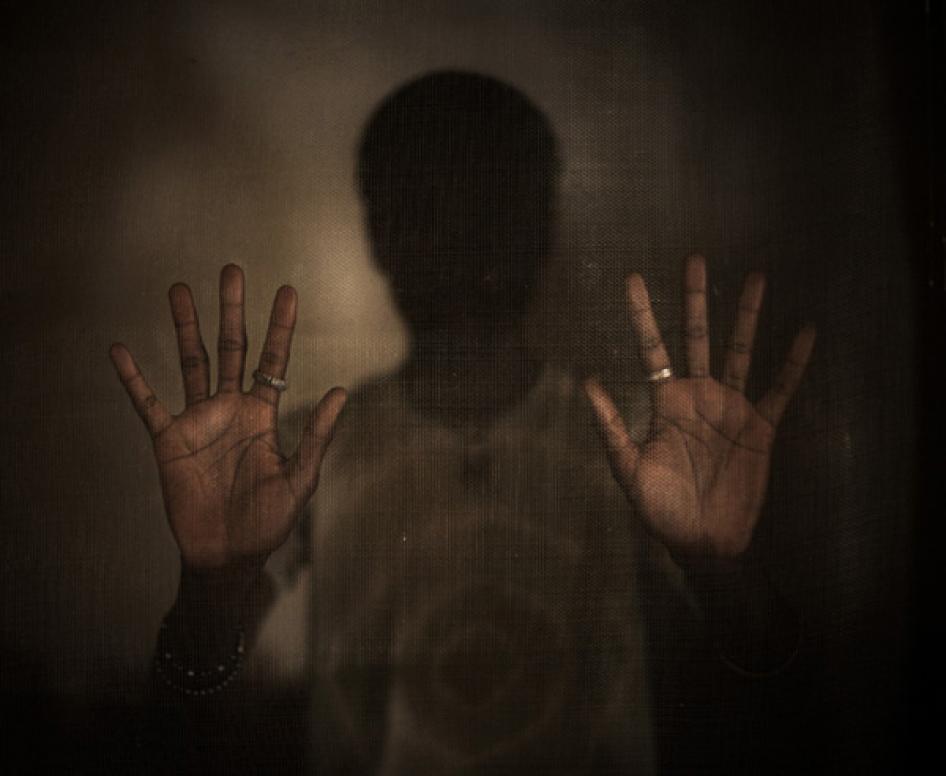
“The woman who took me in when I was kicked out from home said, ‘It’s God who gives this to people, and you cannot change what God gives you.’”
After my mother died in 1994, I grew up with my father. In 2004, my father rejected me. It was
April 16. He found out I was homosexual.
At first, he heard rumors. My father’s wife mistreated me, and said things about me to my father – that I behaved badly, and that I was homosexual. My father said, “My son’s not homosexual, don’t say that.”
Then one day my father said he had to talk to me. He said, “Come sit here, you can tell the truth. Is it true what they say about you, that you are homosexual?” I said, “No, it’s not true,” because I was afraid. Most Burundians think this is taboo – they don’t understand what homosexuality is. My father said, “I’ve heard this a thousand times, that you like boys.” I said, “My father, all of this is lies.” He said, “I’m going to follow you closely. If I find out that this is true, I will choose the punishment to give you.”
There was a boy in my neighborhood who was also gay. We understood each other. We walked around together and people would criticize us, saying, “Those boys act like girls.” They threatened to hit us, to throw rocks at us, they whistled at us, but we tried to ignore it and keep walking. One day my cousin came when I was walking with this boy. He said, “Why do I always find you together? What are you talking about? What are you hiding?” I said, “Leave us alone, this is my private life. I don’t interfere with your private life.” He said, “I’m going to go tell my uncle.” I said, “If you want, go tell him.”
My cousin started fighting with my friend. A lot of people came to watch, and my cousin told them that we were homosexuals. They took my friend to the police to put him in jail.
I was summoned by the police to explain what had happened. I said that I didn’t know why my cousin had attacked my friend. The police said, “Why do they say that you are homosexuals?” I was afraid to tell the truth. I knew that if you say that, they might think you are a demon. They can’t understand you. They think you’re crazy. I said, “No it’s not true, I couldn’t even think of doing that.” The police were convinced and they let my friend out.
My father heard about these things and asked if it was true. He said, “The fight your cousin had with your friend: it was your fault.” I said, “It’s not true. What can I say to convince you?”
One day, a little girl in the neighborhood saw me kissing my friend. The girl went to my aunt and said, “It’s true, they’re homosexual.” My aunt brought the little girl to my father and she told what she had seen.
I saw how my father was getting angry. He hit me, and said, “How many times have you said no, no, when you’re doing that?” I said, “My father, what did I do?” He said, “How can you deny this when there is someone describing what you did?”
My father kept hitting me. He said, “From today, take all your things and leave. Go find somewhere to live with your dirty behavior.”
I moved in with a Muslim friend who is divorced with four children. She is “gay-friendly.” Some people criticize her for taking me in, but one of her sons was born like me, so she understands me. She says “I can tell my son is like you, so I understand. Even if our religion doesn’t support people who act like you, what can I do when it’s my own son? It’s God who gives this to people, and you cannot change what God gives you.” She’s like a mother to me.
My father, my brothers, they still don’t understand what homosexuality is. I want them to realize, “He’s our son – even if he’s like that, we can’t reject him.” I am not in contact with my father anymore. It’s each to his own. If I run into him in the street, he doesn’t even shake my hand. He said to me, “I don’t even want to see your face.”
Théophile, age 26
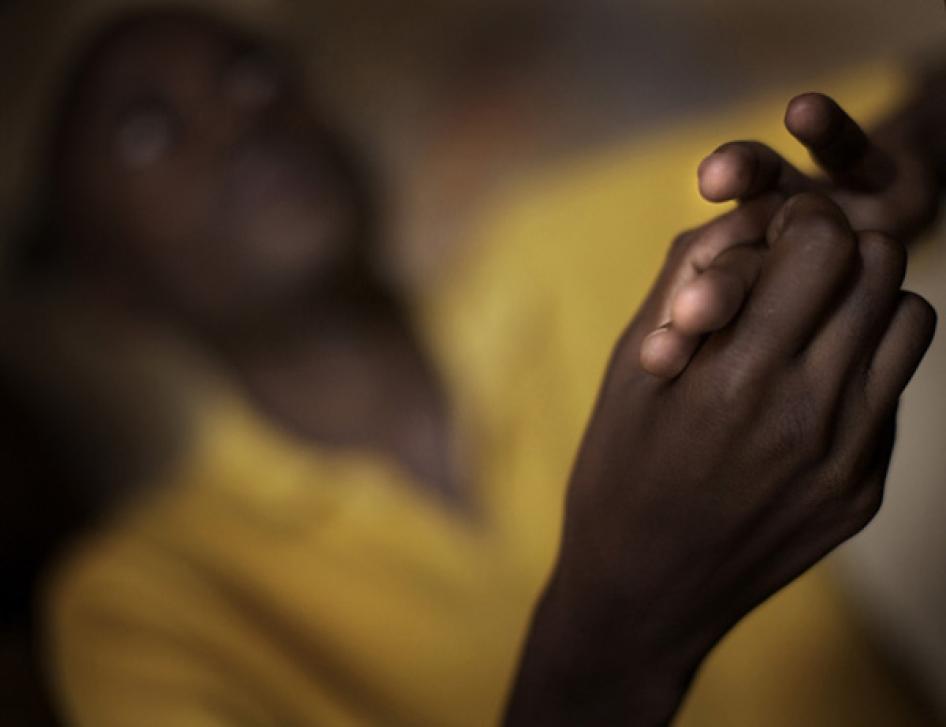
“When I heard about the new penal code, I didn’t understand why they did this. Homosexuality has always existed, and it’s never caused any problems. I don’t understand this overreaction.”
I knew from a very young age, 11 or 12 years old, that I was attracted to boys and not girls. I lived in the interior, and had never heard of homosexuality. I didn’t see anyone else like me, and thought it was something that would pass. When I went to secondary school in Gitega, I heard there were other gays there, but they were timid and didn’t speak out. Me, I did talk to my friends. I like when I’m able to tell people I’m gay, because it makes my heart feel better. My friends are a bit understanding. Most of them accepted me, supported me when others insulted me in the road. Some were afraid of what others would think if they saw me with them, but they didn’t judge me.
My brother was aware, but never accepted that I could be like that. He said, “You make me ashamed.” He refused to walk down the road with me and tried to pretend we weren’t brothers. But some of our mutual friends talked to him, saying “It’s ok, he’s not the only one.”
I was once at Africana Bar and was dancing with a young guy, and his brother beat me up. He called me into the toilets and said, “I have something to tell you,” and then he beat me up seriously. He said, “I don’t want my little brother to be a faggot like you.” The manager called over the guy when he saw I was bleeding and told him to ask forgiveness.
When I heard about the new penal code, I didn’t understand why they did this. Homosexuality has always existed, and it’s never caused any problems. I don’t understand why this overreaction. I thought that we were in a wave of change – I had discussed my homosexuality with my friends and neighbors, and they were tolerant. When people take the time to try to understand, they become a bit more open-minded – when they see how you live, that you live a decent life. So the new law was a step backward. I will now live in fear that they can trap me at any time.
I’m a member of the gay association in Bujumbura. It’s very important to me, because you find people who are like you, who understand you, who support you. You don’t feel alone anymore.
Mike, age 17
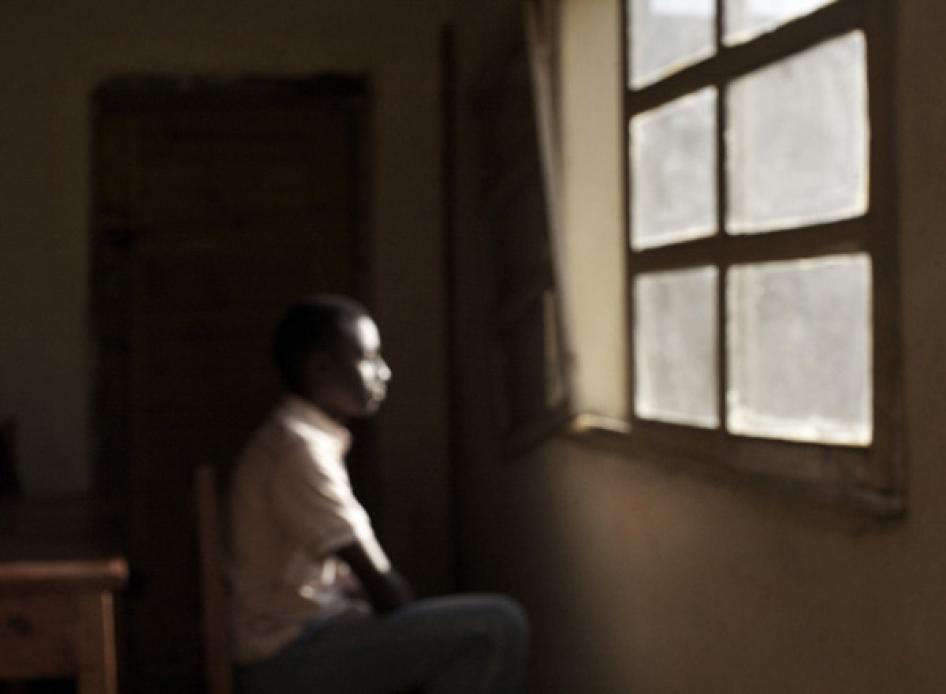
“Many youth are closed-minded about homosexuality because they don’t understand exactly what it is.”
I realized I was gay at 14 years – I often thought about boys. I didn’t really know what homosexuality was. I had heard people talk about it, but had not really paid attention. I talked about this with friends, and at first they said these are just ideas, they are fantasies. But now they are cool, they are understanding. They accept me as I am.
Right now, I’m in secondary school at one of the best schools in Bujumbura. I love going to school to see my friends – I love the social life. After the end of my general humanities studies, I want to do a degree in business management. I would also love to do courses in English, to be able to work throughout the East African community, in Kenya, maybe, or Rwanda. I would like to represent a large business, or even start my own.
I would also love to be a deputy or senator. Politics interests me a lot. What I like most in politics is the possibility of innovation. Right now, they do things that have been done for 20 years, or for an eternity. I think there are many things to reform. In society there should always be reforms, because nothing is complete.
I don’t understand how a group of people can restrict the rights of another category, as small a minority as it may be. Many youth are closed-minded about homosexuality because they don’t know exactly what it is. They think it’s an evil incarnated within people that must be destroyed, and they form false ideas about it, and the ideas they have, they transmit. There is a sort of group pressure, a group-think – and some people feel that if they see certain things differently, they won’t be part of the group. But there are others who are understanding.
In class one day we had a debate about homosexuality. Some argued in favor, and some against. Some talked about morals, and others, we talked about how morals change as time passes and that you have to accept the other as he is, if you want to be accepted as you are. The majority of the class was against it. Those who said they were in favor of homosexuality raised their hands timidly, but I looked around and thought, if there are even a few people who are in favor, that’s already something. As the debate went on, their spirits lifted and even those who had started out timidly were making strong arguments.
Ainigmas, age 18
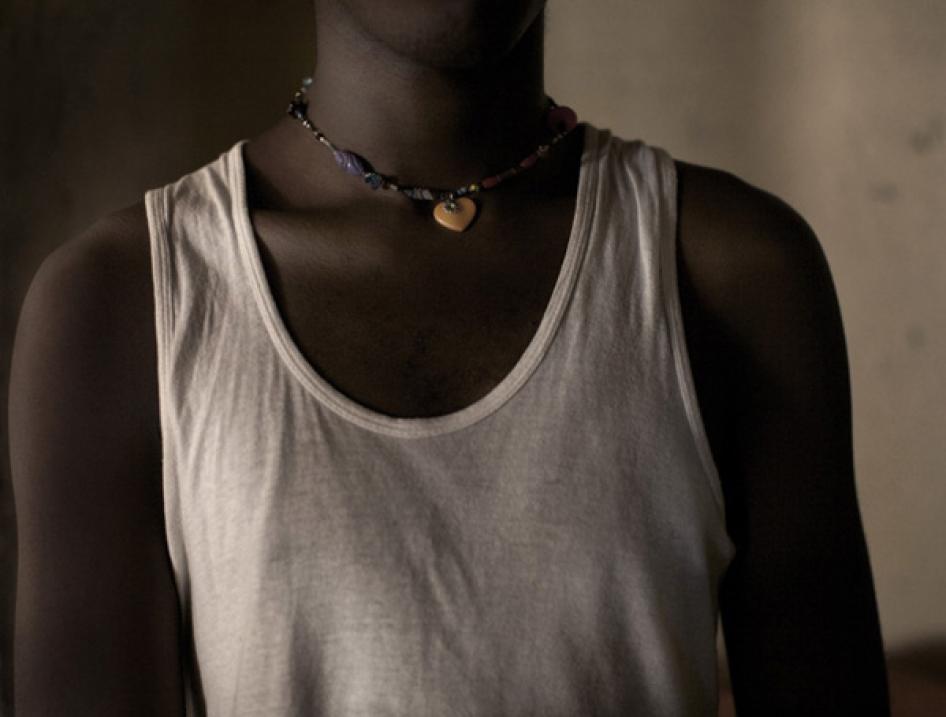
“I thought to myself, ‘Even if it’s not possible, this is what I want.’”
I’ve been gay since I was little. When I was three, I already liked to try on my sister’s skirts and my mother’s high heels. When I was seven, I realized I liked boys. I thought to myself, “Even if it’s not possible, this is what I want.” As I got older, around ten, I tried to camouflage by playing football with the boys. But in spite of that, I never managed to change my way of being, my walk, and my tastes.
Since I was very young, I made jewelry. I used to make simple bracelets, then more complicated ones. Then I started making rings and beaded bags. Sometimes I sell these things – my friends come and order them. I wear jewelry, too, and people are now used to it, because since I was very young, I wore this. I would like to become a designer, for fashion and for hair.
My being gay has always annoyed people who don’t understand me. People threatened to kill me, to beat me, and they went and gossiped about me to anyone who was willing to listen. Once a friend in the US sent me money and I bought an expensive telephone. There was a guy in the neighborhood who was a drunk and a member of a gang. Each time I passed, he and his friends would say bad things about me. They would say that I prostituted myself for money, even though I have never done this. One day he slapped me and took my telephone. He did it because I was gay; he thought I had prostituted myself for the telephone.
I can’t talk about these problems with my family. I don’t talk with my big brother, who beat me up all the time when I was little. He was a member of Sans Echec [a Tutsi youth militia that carried out violence against Hutus in the 1990s during Burundi’s civil war] and has always hung out with people who are brutal. I was closest to my older sister, but she died in a car accident five years ago. We had a sort of complicity between us. When she went out secretly, it was me who opened the door for her at three in the morning. My big sister knew I was gay – she could see this, although I didn’t talk about it.
But if I told my mother, she would die. Even when I put in an earring, she almost had a heart attack.
Nick, age 25
“I took three months to pray, because people said that [homosexuality] was bad. I prayed that I would change, but it didn’t succeed.”
When I was 18 a girl fell in love with me. We had an experience, we kissed, but it didn’t go farther. I realized that maybe I was gay. I took three months to pray, because people said that was bad, that God had burned Sodom because of this. I prayed that I would change, but it didn’t succeed.
Finally I told the girl. She said that she understood, and that others shouldn’t judge me, because she didn’t and she was the one who was in love with me.
When it didn’t work out with the girl, I also told my sisters. This provoked many days of argument. My older sister said perhaps I had been bewitched, but my little sister understood.
With my father, we don’t talk about it. One time I was with my father and we heard a broadcast about homosexuality on the radio. I said, “What do you think about that? What would you do if you had a son who was gay?” He said, “I would disown him.” I also had a professor who was talking in class one day about the law that was proposed, and he said, “If I had a homosexual child, I would banish him from my family.” Normally I participate in class a lot, but since he said that, I am afraid to raise my hand.
I’m studying business administration and marketing, and I finish next year. I would like to work in a bank or open my own business. This is why I don’t tell my father – if I’m disowned, I won’t have the means to get started in life. Maybe when I’m financially independent I can tell him, but if I tell him now, he could even cut off the money for my studies.
Recently a policeman called to me when I was at market, and asked for my ID. When I showed it to him he said, “Oh you are a boy!” I said yes. He said, “Soon you’ll be in prison.” I said, “Who?” He said, “You, the homosexuals, if the law is signed.” Now, I’m afraid that if that police officer sees me again, he could imprison me on the spot.
Pascal, age 22
“I feel like I’m in a prison. I need to be free.”
When I was four or five, I first felt affection for someone of the same sex, and I felt a desire to wear women’s clothes. At home, they beat me, starting when I was five or six, because they were afraid I would be gay. I didn’t yet know what homosexuality was. They said, “You risk being like a girl, but you’re a boy.” They thought that by beating me, they could change me.
As I got older, they continued to beat me. My mother said, “If you continue to act like a homosexual, I will throw you out.” I started to closet myself, and I didn’t identify myself as a homosexual, even up to now.
I had a cousin who was also gay. Four years ago, when the family learned this, they had a meeting and decided to throw him out, to no longer consider him a member of the family. He took refuge in South Africa. His sisters have reached out to him since, but his brothers and his parents refuse. He hasn’t ever come back to Burundi. He says “You know, now I don’t even feel like seeing my family.” He has been too traumatized.
I didn’t want to risk this. I still needed my family. I was young and had nothing. But I feel at times that I’m in a prison. I think that after I’ve finished secondary school, I will leave my family. I need to be free.
Through my cousin, I heard there was a gay association, but at first I was afraid to join. I thought, if people find out, it will be terrible for my family. But the others explained that they worked discreetly and that no one would find out.
I’m glad I made this decision. I no longer feel like I’m locked in prison all the time. I can be open here. I feel it’s like a true family, of people who understand me.
I also learned a lot about homosexuality. I knew I was like that, but didn’t know it was innate for many people. I also learned about prevention, about how to avoid catching diseases that could affect us. Now I am in charge of MSM [men who have sex with men] and HIV/AIDS in the association. I give trainings and work with other civil society organizations to promote knowledge of HIV/AIDS and sexually transmitted diseases. I gave one training for male sex workers, most of whom were chased out of their families because they were gay. Many had to abandon their studies. I also gave a training for peer educators on HIV/AIDS.
I’m in my last year of high school, studying science, particularly biochemistry. I want to study medicine and be a doctor. I would love to be a doctor specializing in MSM. Here in Burundi we don’t have any health services for MSM.
For instance, in 1999 I was walking home from a club at 3 a.m. with a friend who is transsexual. On the way, we encountered a group of five thieves. We realized they were coming for us and I worried they would attack us. I ran as fast as I could, but they kept coming. I fell in a drainage ditch and hurt my legs. I was injured and it hurt, but I didn’t move. I listened as they trapped my friend Jimmy. They terrorized him, saying, “We see you often, you dress like a girl.” And then they raped him, saying “If you don’t accept it, we will kill you.”
I waited in the ditch until they left, and went home. The next night I went to see Jimmy and apologized for not being able to save him. I told him to go to the hospital and get an HIV test, because he could have caught it. He said, “How am I going to explain I was raped even though I’m a man? They could realize I’m a homosexual and I could be put in prison.” We didn’t know anything then about organizations that could help him, because our association wasn’t created until 2003.
About the penal code, I would like to say that our Burundian society is ignorant about this question of homosexuality. They know we exist in the country, that we are among their sons, but they try to ignore this and they forget there are consequences. Because of the new law in process, we are afraid to self-identify and demand our rights. And if we are forbidden from giving trainings about prevention, the rate of AIDS will increase, even though we have a program in Burundi to decrease AIDS.
Yves, age 31
“The gay association has helped me to build my self-confidence. The people here don’t judge me, even though I’m HIV positive.”
When I was 8, I knew that I was different. I felt that I was a girl, but I hid the fact from other people, and even from myself, because I did not really know what I was. My mother used to beat me and forbade me from playing with girls. “You’re a boy, so you play with boys!”
I was expelled from college in 2002 in my first year of hotel and tourism studies – I wanted to work in a travel agency. My teachers graded me down on my exams to ensure that I would fail and they ended up succeeding. When my mother found out, she said “I told you. You have to hide it. You have to be like the others”. My brother said, “I’m ashamed of you.”
After that I had to stay at home because I didn’t have the money to leave, which meant that I had to put up with all the insults. That situation lasted about a year. All my friends were forbidden from coming to see me.
I was locked up in my own home. I was a prisoner.
Gradually, my mother began to understand that this was how I was and that I couldn’t do anything about it and said: “You are still my child.”
One day, in 2003, I met some boys in the street who said: “If you refuse to have sex with us, we’re going to tell your mother what you get up to with men.” I had to go with them in order to save my honor in the eyes of my mother.
Shortly afterwards, I went to have an AIDS test and was told that I was seropositive. It was October 31, 2003, at exactly 12:00.
Now I have to take medication every day. I often have skin problems, rashes which are itchy and painful. The doctors told me that I ought to go elsewhere in order to receive more modern treatment, but I do not have the funds. Sometimes I cannot leave my house because I am in too much pain, am covered with spots and am running a temperature.
I have a boyfriend who lives in the interior of the country. He is seropositive as well. It was love at first sight. For him, too. He said to me: “Before we really get involved, I have to tell you one thing: I’m seropositive.”
I told him that I was too and we have been in a relationship for the past year and a half. He will finish his studies this year and I will be waiting for him.
The gay association has helped me to build my self-confidence. Before, I didn’t have many friends, but the people here don’t judge me, although I’m seropositive. There is a spirit of solidarity here and we can discuss our problems, for example, the fact that it’s difficult for us to find work. Everybody turns me down because they see me and understand immediately what I am. Now, it’s even more difficult with this new law.
This law disgusts me. People will no longer go for tests for fear of being judged and this will lead to a major health problem. Even people who have been raped will not be brave enough to speak out. AIDS will spread among the population.
Cynthia, age 25
“I was shocked when I heard about the new law against homosexuality. I want them to give us liberty. We are people like everyone else. It’s God who created us. The law won’t change us.”
I was born a girl, but when I was 10 or 11, I felt like I wanted to be a boy. I didn’t know the word “lesbian” or “homosexual.” When I was 16, my mother asked, “Why do you always wear boys’ clothes?” I said I wanted to be a boy.
When I was 18, she found a boy for me to marry. I said, “I don’t want to marry a boy, I want to be with a girl.” She said, “Then you have to leave this home.” But she realized she couldn’t force me. She gave up on it, and I stayed with my family. I was lucky: my mother is Congolese and had met open lesbians in Kinshasa, so she already knew what this was.
But then I gave an interview on the BBC when they were discussing the new law. My father heard it and was angry. He said, “Even if you do these things, you shouldn’t be so public, because I could have problems. I don’t want you in the house anymore.” I left the house and went to live with my boss from the restaurant where I work. I lived there for five months.
Eventually my mother, my aunt, my niece, they said to my father, “You can’t chase away your daughter like that. She didn’t choose to be like that.” Finally my father said I could come back, and now I feel like my family accepts me.
Lesbians in Burundi are not yet open. There are still places I go where people don’t accept me because I’m lesbian. There are many lesbians, but they don’t want to join the association because they could have problems with their families. Some lesbians live with their girlfriends, but they do it secretly, as friends. I know other women who are lesbians, but are married.
I had two male friends who tried to rape me because I am a lesbian and they didn’t like that. They knew that I had never slept with a man and they were curious to know if I was still a virgin. They tried to take me by force. But they couldn’t, because I was stronger than them. We fought, and I went home. I no longer talk to them. Now I am looking for friends who are not barbaric or criminal, for people who understand me.
I was shocked when I heard about the new law against homosexuality. I want them to give us liberty. We are people like everyone else. It’s God who created us. The law won’t change us.
Anneyoncé, age 20
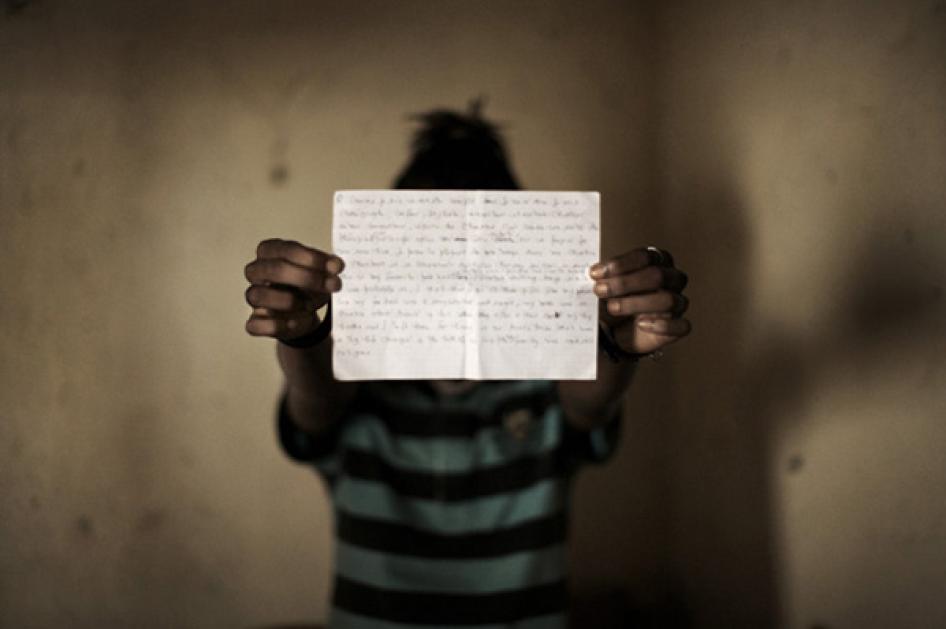
“Sometimes I feel I’m not worth anything, I can’t stop thinking about how to kill myself because I feel like nobody loves me and everyone’s rejecting me.”
I don’t have much to say about my life, except that I never asked myself questions about whether I like girls or boys. I always knew I was gay, since I was very young. The only thing that drives me crazy is that I constantly receive threats from people saying they’re going to beat me up if I don’t change. I’m constantly insulted and hooted at in the street, it’s truly impossible to ignore. Every day when I get home, I thank God for having protected me throughout the day.
I’m an artist, singer, and songwriter. Writing songs, it’s like a form of therapy for me, because after having poured everything out on paper I feel good. This is my favorite pastime and the only way I feel free and can be myself. Because sometimes I feel I’m not worth anything, I can’t stop thinking about how to kill myself because I feel like nobody loves me and everyone’s rejecting me.
It will be difficult to change things in Burundi. Some of our politicians are not very open-minded. Maybe one day that will change. I’m fed up with suffering but can’t do anything to change it, just keeping hope that one day gays will have their rights.
[1] Those individuals interviewed by Human Rights Watch for this project all identified as gay or lesbian, though they sometimes made reference to bisexual and transgender friends. A broad spectrum of LGBT identities exists in Burundi, as elsewhere; see Human Rights Watch, Together, Apart: Organizing around Sexual Orientation and Gender Identity Worldwide, June 11, 2009, www.hrw.org/en/reports/2009/06/10/together-apart.