MAP 1: Nepal and Bhutan
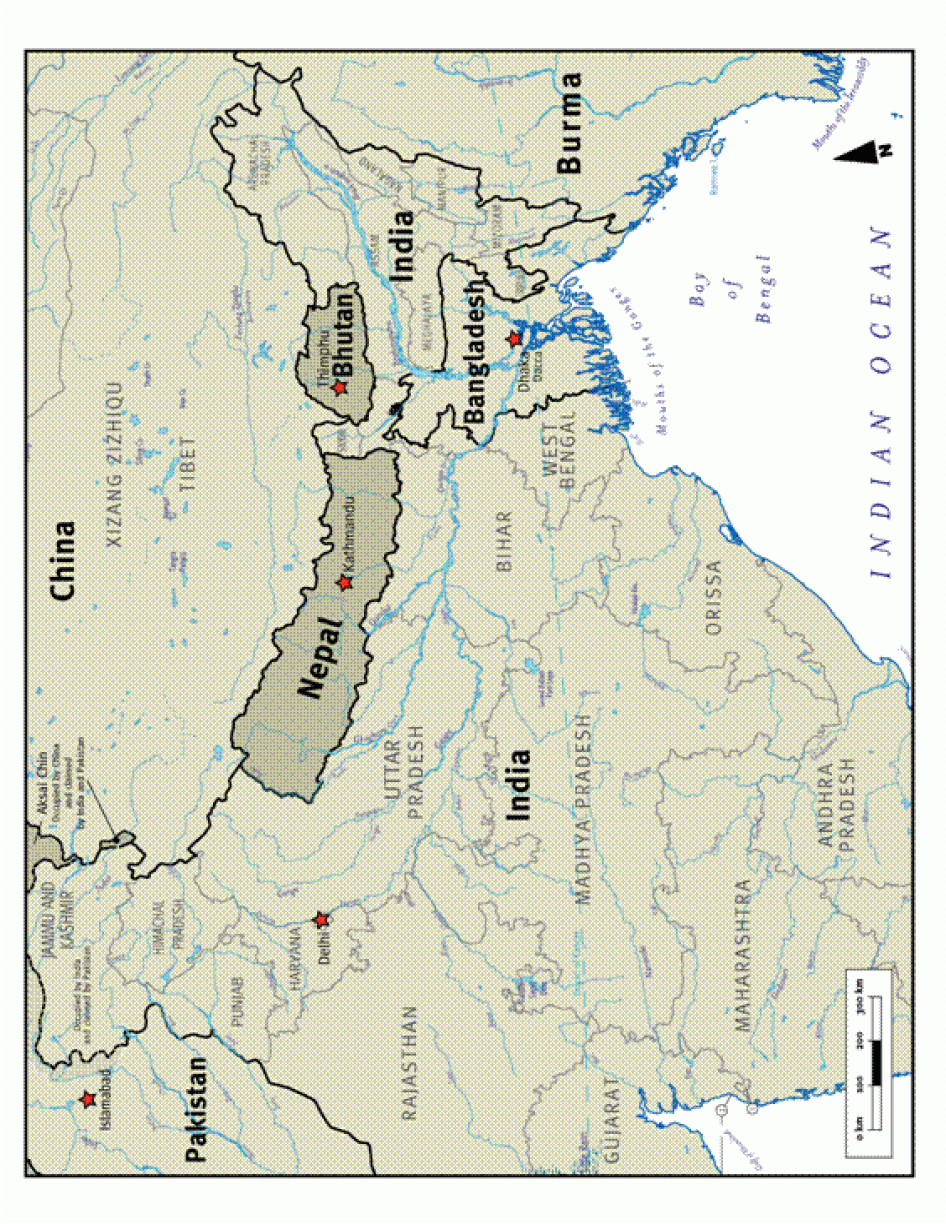
MAP 2: Location of Bhutanese Refugee Camps in Nepal

GLOSSARY
2003 Guidelines
Sexual and Gender-Based Violence against Refugees, Returnees and Internally Displaced Persons: Guidelines for Prevention and Response. A manual originally produced in 1995 by the Office of the United Nations High Commissioner for Refugees (UNHCR) for addressing gender-based violence. UNHCR updated the manual in 2003.
Bhutanese Refugee Women's Forum (BRWF)
An refugee women's organization focusing on income-generation, health, and women's rights with representation in all seven refugee camps housing Bhutanese refugees in Nepal.
Camp Management Committee (CMC)
The camp management committee (CMC) is the refugee-run administration in the camps. The CMC is headed by the camp secretary and is made up of representatives from each sector in the camp. The CMC has committees that coordinate birth and death registrations, food distribution, and health programming, and that determine responses to social problems, like disputes within families or between neighbors.
Camp Secretary
The head of the camp management committee in a refugee camp. The camp secretary is elected by refugees.
CEDAW
Convention on the Elimination of All Forms of Discrimination against Women.
Children's Forum
A children's group under The Lutheran World Federation focusing on children's rights and participation with representation in all seven camps.
Counseling Board
The counseling board is made up of elected representatives from the CMC. The counseling board serves as a community justice mechanism to resolve day-to-day problems in the camps.
CRC
Convention on the Rights of the Child.
Discrimination against Women
Article 1 of CEDAW defines discrimination against women as "any distinction, exclusion, or restriction made on the basis of sex which has the effect or purpose of impairing or nullifying the recognition, enjoyment or exercise by women, irrespective of their marital status, on a basis of equality of men and women, of human rights and fundamental freedoms in the political, economic, social, cultural, civil or any other field."
Domestic Violence
Domestic violence, also called "intimate partner abuse," "battering," or "wife-beating," refers to physical, sexual, psychological, and economic abuse that takes place in the context of an intimate relationship, including marriage. Domestic violence is one of the most common forms of gender-based violence and is often characterized by long-term patterns of abusive behavior and control.
Gender-Based Violence (GBV)
Violence that is directed against a person on the basis of gender or sex. It includes acts that inflict physical, mental, or sexual harm or suffering, threats of such acts, coercion, and other deprivations of liberty. Examples of gender-based violence are sexual violence, domestic violence, emotional and psychological abuse, trafficking, forced prostitution, sexual exploitation, sexual harassment, and harmful traditional practices (e.g. female genital mutilation, forced marriage, or widow cleansing).
IASC Task Force
The Inter-Agency Standing Committee (IASC) is made up of member United Nations agencies and invited nongovernmental organizations. In March 2002, the IASC created a special task force to address sexual exploitation in humanitarian crises. The task force drafted a plan of action that includes a core set of principles for a code of conduct for United Nations employees and aid workers.
Implementing Partners/Implementing Agencies
Organizations that have subcontracted with UNHCR to carry out aid work in the camps. In Nepal, the World Food Programme (WFP) provides food aid; the Nepal Red Cross Society distributes food and non-food rations; the Asian Medical Doctors Association (AMDA) provides primary health care; The Lutheran World Federation (LWF) provides water, housing, and sanitation; Caritas provides education; and the Nepal Bar Association provides legal counseling and legal representation for victims and alleged perpetrators of serious crimes, including gender-based violence.
Inspector General's Office (IGO)
The UNHCR Inspector General's Office (IGO) is based in UNHCR's Geneva headquarters. The IGO investigates allegations of misconduct by UNHCR staff.
Joint Verification Team (JVT)
The Joint Verification Team is made up of representatives from the governments of Bhutan and Nepal. The JVT verified refugees in Khudanabari camp and categorized them to determine eligibility for repatriation to Bhutan and the conditions of such repatriation.
Refugee Coordination Unit (RCU)
The Refugee Coordination Unit (RCU) is the Nepalese government authority in Jhapa and Morang districts that implements all government policy in the seven camps. RCU offices are stationed in each camp to oversee administration. Two Nepalese government officials staff each camp, and the district-level RCU office is based in Chandragadhi, Jhapa district.
Sector Head
The sector head is an elected member of the refugee-run camp management committee. The sector head is responsible for addressing problems in his or her sector, usually comprised of two to five subsectors. He or she forwards unresolved cases to the camp secretary or RCU.
Sexual and Gender-Based Violence (SGBV)
See Gender-Based Violence. UNHCR and its implementing partners use the term SGBV; however, this report uses "gender-based violence" to acknowledge that sexual violence is usually gender-based.
Sexual Exploitation
The IASC Task Force defines sexual exploitation as any abuse of a position of vulnerability, differential power, or trust for sexual purposes; this includes profiting monetarily, socially, or politically from the sexual exploitation of another.
Subsector Head
The subsector head is an elected member of the refugee-run camp management committee. The subsector head is responsible for addressing problems in his or her subsector and forwarding more serious cases to the sector head.
UNHCR
The Office of the United Nations High Commissioner for Refugees (UNHCR) is mandated with the protection and care of refugees. UNHCR and the government of Nepal jointly administer the Bhutanese refugee camps.
Verification and Categorization Process
Nepal and Bhutan have implemented a bilateral verification and categorization process in Khudanabari camp in order to verify whether camp residents are Bhutanese, and to categorize them as evicted Bhutanese citizens, voluntary migrants, non-Bhutanese, or Bhutanese who have committed crimes.
Women's Focal Point
The women's focal point is an elected member of the camp management committee. She is responsible for supporting women in the camps by counseling them and channeling their complaints to appropriate entities, including UNHCR, the RCU, and health care providers.
I. SUMMARY
Sometimes I was beaten so badly I bled. My husband took a second wife. I didn't agree…. He said, "if you don't allow me to take a second wife, then the ration card is in my name, and I'll take everything." I have asked my husband for the health card and ration card and they don't give it to me…. I have not gotten approval to get a separate ration card.
-Interview with Geeta M. (not her real name), Bhutanese refugee camps, Nepal, March 26, 2003
Bhutanese women who are living as refugees in Nepal, many for more than a decade, confront not only the hardship of life in refugee camps, but also the injustice of gender-based violence and discrimination. Refugee women and girls have reported rape, sexual assault, polygamy, trafficking, domestic violence, and child marriage in the camps. Women suffering domestic violence are unable to obtain safety or their full share of humanitarian aid because of discriminatory refugee registration procedures and inadequate protection measures. The registration system also prevents married refugee women from applying for repatriation or rations independently and prohibits them from registering children not fathered by a refugee.
More than one hundred thousand Nepali-speaking Bhutanese refugees live in seven refugee camps jointly administered by Nepal and the Office of the United Nations High Commissioner for Refugees (UNHCR) in southeastern Nepal. The refugees fled or were forcibly evicted from their homes in Bhutan in the early 1990s, when the Bhutanese government introduced highly discriminatory citizenship policies targeting the ethnic Nepalese population. For twelve years, the government of Bhutan has asserted that the refugees are not Bhutanese nationals or are voluntary migrants who relinquished their citizenship when they left Bhutan. The governments of Bhutan and Nepal finally initiated a process for verifying and categorizing refugees in 2001. This process has drawn international criticism for lacking transparency, excluding UNHCR, and failing to assess refugees' claims to Bhutanese citizenship fairly.
In the camps, UNHCR and the government of Nepal have failed to protect refugee women's rights adequately. A key source of this failure is the continued use of a registration and ration distribution system based on household cards listed under the name of the male household head. Human Rights Watch interviewed Bhutanese refugee women who had suffered domestic violence and who, despite having separated from their husbands, were not able to obtain their own ration cards. Most instead made ad hoc arrangements with the refugee camp management to collect their food rations separately, thus relying on the mercy of the management rather than a system fair to women. These women encountered problems accessing rations meant to be shared within one household such as stoves, blankets, and soap. They were unable to obtain separate housing, leaving them to find refuge with other family members in already overcrowded huts or to create makeshift arrangements with partitions.
Following investigations of sexual exploitation and abuse by aid workers in refugee camps in West Africa, several cases of sexual exploitation involving refugee aid workers surfaced in Nepal in October 2002. A subsequent investigation led to findings indicating negligence by UNHCR and the government of Nepal in preventing and responding to widespread and long-standing gender-based violence in the camps. Victims encountered inadequate support services and a male-dominated refugee camp leadership that often ignored gender-based violence or meted out harmful settlements.
Since October 2002, UNHCR has made encouraging progress in many areas of implementing a coordinated prevention and response plan to gender-based violence in the camps. UNHCR conducted an immediate investigation and invested resources into addressing gender-based violence. UNHCR and Nepal took measures to introduce new reporting and referral systems, improve security, increase the numbers of field-level UNHCR staff by 25 percent, amend the code of conduct for employees of UNHCR and implementing partners, including refugee aid workers, and pursue remedies through the Nepalese criminal justice system.
The biggest gap in the response to gender-based violence has been the handling of perhaps the most pervasive problem in the camps: domestic violence. While domestic violence cases involving hospitalization reach UNHCR, "less serious" cases, including psychological abuse or a pattern of arguments in which the male partner regularly hit, slapped, or otherwise used physical violence, are still often handled by refugee camp management and the Refugee Coordination Unit (RCU) of the government of Nepal. Despite improvements in awareness and procedures for handling sexual exploitation and rape, refugee women suffering domestic violence still struggle to push their cases through the camp management bureaucracy. The methods that camp management and the RCU employ to resolve domestic violence cases focus on reconciliation and inadequately address women's own wishes, safety, and access to services. Women's inability to obtain a separate ration card or independent housing exacerbates these problems, and exposes them to further violence.
Limitations in Nepalese law and UNHCR policies also obstruct full protection for survivors of gender-based violence and women and girls' ability to seek redress through the criminal justice system. No existing Nepalese law specifically addresses domestic violence. Furthermore, a thirty-five-day statute of limitations under Nepalese law for registering rape and sexual offense cases with the police has allowed many assailants to escape criminal prosecution. This short statute of limitations is one reason that the refugee aid workers and Nepalese government employees accused of sexual exploitation in October 2002 have not been prosecuted. Inside the camps, many victims and perpetrators of gender-based violence continue to live close to each other. UNHCR has cited constraints such as lack of space in the already overcrowded camps and concerns that relocation would constitute collective punishment of the families of alleged perpetrators. Victims have the option of relocating, but as they are reluctant to leave their neighbors and community, they perceive such relocation as further punishment.
These problems occur in the context of a protracted refugee situation and flawed categorization process that puts refugees at risk of statelessness. In June 2003, the Bhutanese and Nepalese governments announced the results of a verification and categorization process that lacked transparency and fell far short of international standards. The format of the interviews prevented women from fully participating in the verification and categorization process and forced those who suffered sexual violence in Bhutan to recount their traumas in front of all-male panels of Bhutanese and Nepalese government representatives. The governments of Bhutan and Nepal announced that in the first camp to be categorized, only 2.5 percent of refugees will have the option to return to Bhutan with full citizenship, while the rest face an uncertain future.
International law protects the right not to be arbitrarily deprived of one's nationality and establishes state responsibility to provide protection against violence, to punish perpetrators of violence, and to prohibit discrimination on the basis of sex. Both Nepal and Bhutan must fulfill their commitments to protect the human rights of women and children as demonstrated by their ratification of the Convention on the Elimination of All Forms of Discrimination against Women (CEDAW) and the Convention on the Rights of the Child (CRC). As member states of the United Nations, they are also bound to uphold the Universal Declaration of Human Rights, which is recognized as reflecting customary international law.
The government of Nepal and UNHCR should act decisively to protect women from discrimination and violence, including by improving the response to domestic violence, amending the camp registration system, and promoting changes in Nepalese domestic law. These actions are not only important remedies for Bhutanese refugee women in Nepal, but also set an important precedent for the implementation of UNHCR guidelines addressing gender-based violence in refugee situations globally.
Bhutan and Nepal must also resolve the refugee situation through a timely and fair process that adheres to international standards and protects the rights of all refugees, including women and children. Both countries should ratify the 1951 Refugee Convention and other major international human rights treaties.
This report is based on interviews with 112 refugees in the following camps in Jhapa and Morang districts of southeastern Nepal during March and April 2003: Khudanabari, Beldangi I, Beldangi II, Timai, Goldhap, and Sanischare. Of these 112 interviews, thirty-seven were with refugees serving on elected camp management committees, members of refugee-run nongovernmental organizations (NGOs) operating in the camps, teachers, or health workers. Human Rights Watch conducted an additional thirty-eight interviews with concerned United Nations agencies and NGOs, including the Geneva, Kathmandu, and Bhadrapur offices of UNHCR, all the aid agencies working as implementing partners in the camps, UNICEF, refugee advocacy groups, and Nepalese NGOs. We also conducted nine interviews with Nepalese government officials and police, including the foreign minister and camp-level administrators of the RCU. In New York, Human Rights Watch interviewed representatives of Bhutan to the United Nations.
All names and identifying information of the refugees interviewed have been changed to protect their confidentiality. For the same reason, certain identifying information has been withheld for other interviewees where necessary. In this report, "child" refers to anyone under the age of eighteen.
II. RECOMMENDATIONS
To the Government of Nepal
·Amend provisions in Nepalese law that hinder justice in gender-based violence cases.
oReform the Country Code to substantially lengthen the thirty-five-day statute of limitations for reporting rape and other sexual offenses.
oChange the definition of rape in the Country Code to be gender-neutral, and to include any physical invasion of a sexual nature without consent or under coercive circumstances.
oEnact the Domestic Violence (Crime and Punishment) Bill, 2002. Incorporate proposed amendments from advocacy groups that improve women's protection from domestic violence.
oStrengthen sexual assault legislation and include specific measures to protect child survivors of sexual assault and abuse.
oSimplify procedures for obtaining a legally admissible medical report for rape cases by eliminating the need for a requisition letter from the police, reducing the number of doctors required, and admitting medical reports from private hospitals that meet acceptable standards.
·Reform Nepalese laws that discriminate against women.
oChange nationality laws so that Nepalese women can pass their nationality on to their children.
oEnact reforms to the marriage laws that will ensure women's rights and equality with respect to entrance into marriage, during marriage, and at its dissolution, and with respect to polygamy.
oAmend custody laws so women who marry a second time are allowed to retain custody of their children.
·Eliminate gender discrimination in the refugee camp registration and ration-distribution system.
oProvide registration documents to all refugees on an individual basis.
oEnsure that women who have separated from their husbands, or who are in abusive relationships, can request and obtain separate ration cards.
oReform the household card system by listing both male and female household heads. Issue female-headed households their own ration cards.
·Issue birth certificates to all refugee children in coordination with UNHCR.
·Improve prevention and response to gender-based violence in the camps by revising the Bhutanese refugee camp rules and by posting more female police officers in the camps and state hospitals.
·Empower women and children's organizations in the camps by allowing them to register with the government of Nepal, thus allowing them to apply independently for outside funding.
·Implement a fair and timely verification and repatriation process to Bhutan.
oEnsure women's participation in the verification and categorization process. Include women interviewers on the Joint Verification Team.
oInvite UNHCR to help facilitate and monitor the verification and repatriation process.
oCreate a fair and independent appeal process with sufficient time for refugees to present their appeal to an impartial third party.
oAnnounce and implement a timeline for the categorization and repatriation of the six camps yet to be verified.
·Ratify the 1951 Refugee Convention and other major human rights treaties.
To the Government of Bhutan
·Amend the citizenship laws so that women, men, and children are protected from arbitrary denationalization and statelessness.
·Protect women and children's rights during the repatriation and reintegration process as outlined in the Agenda for Protection, adopted by UNHCR and states at the Global Consultations on International Protection in 2002.
·Grant all returning refugees full citizenship and facilitate their return to their original homes.
·Implement a fair and timely verification and repatriation process.
oEnsure women's participation in the verification and categorization process. Include women interviewers on the Joint Verification Team.
oInvite UNHCR to help facilitate and monitor the verification and repatriation process, including by allowing UNHCR to establish a presence in Bhutan.
oCreate a fair and independent appeal process with sufficient time for refugees to present their appeal to an impartial third party.
oAnnounce and implement a timeline for the categorization and repatriation of the six camps yet to be verified.
·Ratify the 1951 Refugee Convention and other major human rights treaties.
To the Office of the United Nations High Commissioner for Refugees (UNHCR)
·Implement fully existing guidelines on the protection of refugee women and children, including the Agenda for Protection, adopted by UNHCR and states at the Global Consultations on International Protection in 2002.
·Establish psycho-social services in each camp with trained service-providers who can provide regular and skilled counseling to victims of gender-based violence, and who can conduct trainings for refugees, camp leadership, RCU officials, the police, and implementing partners.
·Continue to implement awareness and training programs about prevention and response to gender-based violence for refugees, the government of Nepal, and aid agencies.
oEnsure that trainings and response efforts address all forms of gender-based violence and discrimination, including rape, domestic violence, trafficking, child marriage, forced marriage, and polygyny.
oImplement specialized gender-training programs to enhance the knowledge and attitudes of Refugee Coordination Unit (RCU) administrators, police, and senior management of the aid agencies.
oTrain camp management committee members and women's focal points to handle better and appropriately refer gender-based violence cases. Training should include counseling techniques and UNHCR should provide ongoing support and supervision.
·Take a proactive approach to improving monitoring, reporting, and referral systems for gender-based violence and child abuse.
oEnsure that all gender-based violence cases, including domestic violence, are brought to the attention of UNHCR, addressed appropriately, and followed up by UNHCR.
oIdentify and assist victims of gender-based violence or child abuse who may be unable to come forward on their own on a periodic and timely basis.
oMonitor for cases of suspected kidnapping or trafficking.
·Cooperate with United Nations agencies and nongovernmental organizations (NGOs) to advocate for legislative changes in Nepal to protect women and children's rights.
·Empower women and children's organizations in the camps.
oProvide greater autonomy, training, and resources to the Bhutanese Refugee Women's Forum so that it can more effectively work on awareness-raising, outreach, and empowerment of women.
oSupport the Children's Forum to conduct outreach to children and establish more regular communication with the camp leadership in order to identify and monitor children at risk.
·Establish a confidential environment for gender-based violence victims to seek assistance by providing separate offices for women's focal points and by conducting information campaigns to sensitize the refugee community, Nepalese government, and Nepalese press about the importance of keeping identifying information about victims confidential.
·Promote transparency and accountability by providing public information on follow-up actions taken against international staff removed from their positions in Nepal in 2002.
·Eliminate gender discrimination in the refugee camp registration and ration-distribution system.
oProvide registration documents to all refugees on an individual basis.
oEnsure that women in abusive relationships can request and obtain separate ration cards.
oReform the household card system by listing both male and female household heads. Issue female-headed households separate ration cards.
·Urge the government of Nepal to issue birth certificates to all refugee children.
·Continue to press the government of Bhutan to permit UNHCR to establish a presence in Bhutan to facilitate and monitor repatriation.
To Humanitarian Aid Agencies
·Ensure that protection of refugees is an element of all programs in the camps.
oImprove the training and gender-sensitization of aid workers, including senior management and refugee aid workers, and ensure they understand, uphold, and promote the IASC core principles for protecting refugees from sexual abuse and exploitation.
oReport cases of gender-based violence through the appropriate referral mechanisms and support the ability of refugees to identify and address these problems.
oTake immediate disciplinary action against aid workers, including refugee aid workers, who have committed gender-based violence.
·Amend existing provisions in the refugee camp school guidelines so that students cannot be expelled for relationships with their teachers.
·Recruit and retain more female aid workers. Prioritize increasing the number of female teachers working at the high-school level.
·Ensure that medical protocols for gender-based violence are accessible and confidential.
·Cooperate with United Nations agencies and NGOs to advocate for legislative changes in Nepal to protect women and children's rights.
To the United Nations Children's Fund (UNICEF)
·Cooperate with UNHCR and other humanitarian agencies to ensure protection of refugee children from gender-based violence and child abuse. Provide support for teacher training programs and the Children's Forum.
·Insist that the government of Nepal issue birth certificates to refugee children and register as refugees those children with a refugee mother and non-refugee father.
·Promote the rights of refugee children at all stages of the verification, categorization, and repatriation process, especially children at risk of separation from their families or statelessness.
·Cooperate with United Nations agencies and NGOs to advocate for legislative changes in Nepal to protect women and children's rights.
To International Donors
·Continue to provide designated financial and logistical support to UNHCR and refugee host governments to improve programs designed to protect refugee women and children from gender-based violence and discrimination.
·Insist upon and provide financial assistance for issuing individual registration documents to all refugees.
·Continue to provide financial and logistical support to refugees trapped in protracted refugee situations.
·Strongly pressure Bhutan and Nepal to implement a fair and timely verification, categorization, and repatriation process that adheres to international standards and protects women and children's rights.
·Emphasize to Bhutan and Nepal the importance of including UNHCR in the verification, categorization, and repatriation process.
III. BACKGROUND
Crackdown on Ethnic Nepalese in Bhutan
In the 1970s and 1980s, the Bhutanese government introduced a series of repressive citizenship laws and "Bhutanization" policies that focused on the political, economic, and cultural exclusion of ethnic Nepalese living in southern Bhutan ("Lhotshampas").[1] The Bhutanese government, a hereditary monarchy dominated by the Ngalongs, perceived the growing ethnic Nepalese population and their formation of a political party as a threat to Bhutan's cultural and political order.[2] The Citizenship Acts of 1977 and 1985 included several provisions permitting the revocation of citizenship. The government began enforcing the 1985 Act in a discriminatory manner through a 1988 census, resulting in the mass denationalization of thousands of Lhotshampas in violation of international human rights law.[3] The census was implemented only in southern Bhutan, and reports suggest that local government officials made arbitrary census classifications designed to push the Nepali-speaking community out of Bhutan. The government of Bhutan also introduced a "one nation, one people" policy in 1989 that forced the practice of Drukpa culture nation-wide through a compulsory dress code and the termination of Nepali language instruction in schools.[4]
In the early 1990s, the Bhutanese government crushed resistance by ethnic Nepalese and others who protested the policies through large public demonstrations and the formation of a political party calling for a multi-party democracy. Some ethnic Nepalese were involved in violent activities, such as the burning of schools and attacks on government officials. The government closed schools and suspended health services in southern Bhutan. Members of the Bhutanese police and army imprisoned, raped, and tortured many of those who were directly, indirectly, or incorrectly presumed to be associated with the demonstrations. Government forces also destroyed houses and forced many ethnic Nepalese off of their lands.[5]
State Persecution of Ethnic Nepalese Women and Girls in Bhutan
Human Rights Watch interviewed refugee women who suffered sexual violence, arbitrary arrest and detention, and other serious rights violations during the forced deportations in the early 1990s. Responsibility for these abuses lay with the Bhutanese police and army, who were often acting to enforce the policies of government officials, including village heads, block-level administrators, and district officers. In some cases, men, women, and children had to perform forced labor. When their husbands or other relatives fled the country, women were often punished or threatened, including with arrest, because the whole family was labeled "anti-national." Female heads of household, disabled women, and girls, often more vulnerable because of their status in society, were among those abused. As will be discussed later, this widespread persecution contradicts the Bhutanese government's claim that the majority of the refugees were not fleeing human rights abuses but voluntarily migrated to Nepal. A woman in her late thirties who lived in Samdrup Jongkhar district recounted her experiences in 1992:
My husband had taken a second wife and left me. I had three children, two daughters and one son. At the time of the census, the dzongdha [district official] called me to bring proof of my citizenship. I brought proof, but the dzongdha said it's not right. After two days, the army was brought by the block head [local official]. At nighttime they knocked on the door. I didn't open it and then they forcibly entered. They told me, "We have heard your brother comes to your house. Is this so?" I said, "I don't know where he is." Then they hit me with the gun. They kicked me and I fell down. I stood up and then they kicked me again, and I fell down again. They said we have to torture you, then only will you tell us where your brother is. Then the army tore my clothes. It was torture; they raped me. It was the army, two of them raped me while the others held me down. The next morning I went to my relative's house, but they told me not to stay with them because maybe the army would come and do the same thing to them. One week later I fled [to Nepal].[6]
A young woman told Human Rights Watch she was raped by Bhutanese police in the early 1990s in the course of the campaign against ethnic Nepalese. She said, "The police took my family and accused us of having connections with Indians. I said 'yes, we have connections with them because we live close to the border.' And then the officer raped me. I was thirteen years old at the time. They raped me three or four times a day for seven days. They had taken me from my house along with two other girls, my aunt's daughter, and daughter-in-law. After that, we didn't feel like staying there. I felt my life was at risk."[7]
Many other women fled Bhutan because of the physical threat or fear of sexual violence. Saraswati D., a widow, recalled why she left Bhutan:
[In 1991] in Bhutan, the army came and said I had to entertain them, but I didn't. Seventeen people came and threatened me. They said, "You should be the wife of seventeen of us," and tried to pull me, to take me to the military base. I said I'd rather die. They hit me on the chest with the butt of the rifle and I shouted and fell. They said they'd come the next day. I couldn't stay in my house, I had two small children. We hid in the goat shed, in the pit where all the goat manure was. The next day they came at 9 p.m. They searched the house and threw away all the foodstuffs. The next night we decided to leave. I don't want to explain my journey out of Bhutan because I will cry.[8]
One woman, whose case is typical of many other refugees, was compelled to sign a "voluntary migration certificate" in the early 1990s after being abused and threatened. Pratima M. said:
The head of the village called me to his house for the census. I was sick and unable to go. He came with a policeman and arrested me. I spent seven days in jail. They made me carry stones, plough, and cook lots of food. On the sixth day my daughter came to visit me. The policeman said I had to give him my daughter. I was sleeping with my daughter and the policeman came with a gun at midnight. My daughter and I screamed and the policeman ran away. Then my neighbors came and stayed with me. After seven days, the policeman took me to the dzongdha [district official]. They gave me documents to sign, I didn't know what it said because it was in the Dzongkha script. The officer gave me Rs. 6000 [U.S.$231] and told me I had to leave. He said, "all your neighbors have gone to Jhapa [Nepal], you also go."[9]
A Protracted Refugee Situation
Tens of thousands of people had fled human rights abuses in Bhutan or were forcibly deported by 1992. Before they crossed the border into India, the Bhutanese government forced many to sign "voluntary migration certificates," thus surrendering their rights to Bhutanese citizenship under the nationality laws. Initially, refugees fled overland to West Bengal and Assam in India. However, harassment from the Indian police forced them to move on to Nepal.[10] The refugees settled on the banks of the Mai River in southeastern Nepal, where they endured unsanitary living conditions, disease, and inadequate supplies. International NGOs began operations to aid the Bhutanese refugees, and in 1991, the government of Nepal and UNHCR established refugee camps. By mid-1994, approximately eighty-six thousand refugees resided in the camps.[11]
Currently, more than one hundred thousand Bhutanese are registered in seven refugee camps in Nepal, including a significant number of children born in the camps.[12] Some ten thousand non-registered refugees live outside of the camps in Nepal and another fifteen thousand live in India.[13] Nepal and UNHCR jointly administer the refugee camps with the World Food Program (WFP) providing basic food assistance. Several NGOs operate as implementing partners in the delivery of aid, including The Lutheran World Federation (LWF), Caritas, the Nepal Red Cross Society, the Asian Medical Doctors Association (AMDA), and the Nepal Bar Association, Jhapa Unit.
The crisis of the early 1990s has evolved into a protracted dispute with most refugees in Nepal wanting to invoke their right to return to Bhutan while the government of Bhutan refuses them entry on the grounds that they are illegal migrants or "anti-nationals."[14] Like the majority of the world's refugees, the Bhutanese refugees are trapped in a "protracted refugee situation," meaning they have been living in exile for more than five years and do not have the immediate prospect of a durable solution by voluntary repatriation, local integration, or resettlement in a third country.[15] Refugees in these situations often suffer from lack of funding because high-profile crises involving large-scale refugee movements capture the bulk of international attention and resources. They must not only struggle to meet basic survival needs, but must also face the social and economic problems that arise after years of refugee life.
The Bhutanese refugee camps in Nepal have been cited as a model because of the quality of basic services and the school system, and the involvement and leadership of refugees in daily administration. Human Rights Watch observed many positive features of the camps, including well-designed water and sanitation systems, free education until tenth grade, and the provision of a full food basket by WFP and UNHCR.[16] In addition to the refugee-led camp administration, other refugee organizations operate in the camps, providing skills training, workshops on health issues, and activities for children.[17]
Success in some aspects of service-provision may obscure the fact that the Bhutanese refugees nevertheless suffer from hardships typical of protracted refugee situations. Refugees are frustrated by their inability to seek employment and to pursue higher education. UNHCR and health care workers have identified an increasing incidence of mental health problems like depression and anxiety, particularly among women. Twenty-four refugees have committed suicide since June 2001, and another six have attempted suicide.[18] Based on comparisons with reported suicides in surrounding areas, the incidence of suicide in the refugee camps is approximately four times that of the incidence in the local Nepalese population.[19] Though they receive basic food rations and huts, the type of assistance that is sufficient for short-term emergencies is inadequate for long-term living. Refugees live in overcrowded conditions where up to eight people share one hut. They also receive clothes only once a year, and have to seek low-paying informal work so that they can supplement their diet, buy extra clothes, or pursue higher education.
Two common problems associated with protracted refugee situations are dwindling resources and tense relationships between refugees and local communities. As will be discussed below in more detail, the programmatic choice to minimize UNHCR staffing in the camps contributed to grave problems in the administration of justice, especially in cases of gender-based violence. Furthermore, refugees cited local threats and attacks by Nepalese as their most critical security issue. Especially in the camps located on main roads or near the town of Damak, local Nepalese men come into the camps, often drunk, and either taunt the refugees or pick fights. Some local Nepalese men have also been implicated in sexual harassment and violence against refugee women and girls.
A Flawed Categorization Process
Negotiations between Bhutan and Nepal over the refugee situation have stretched over a decade. A breakthrough in the tenth round of ministerial talks in December 2000 led to the creation of a Joint Verification Team (JVT) comprised of representatives from the governments of Bhutan and Nepal to verify and categorize the refugees. A May 2003 Human Rights Watch briefing paper, "We Don't Want to be Refugees Again," discusses serious shortcomings of the verification and categorization process including the lack of transparency, a highly flawed four-tier categorization system, and the failure to include UNHCR as an international monitor.[20] The verifications have proceeded slowly-the categorization results for Khudanabari camp, the first and only camp to be categorized (approximately 10 percent of the refugees) were released in 2003, more than two years after the process first began. The two governments have still not initiated a categorization process in the remaining six camps nor set a timeline for doing so.
In June 2003, Bhutan and Nepal announced the categorization results for Khudanabari camp, stating that only 2.5 percent of the refugees were forcibly evicted Bhutanese who could return to their lands and property in Bhutan with full citizenship. Seventy percent were deemed "Bhutanese who voluntarily migrated," which means they will have the option of returning to Bhutan, but they will not be able to reclaim their original land and property, and they will have to fulfill burdensome requirements to regain Bhutanese citizenship.[21] Without citizenship and a UNHCR presence to monitor their repatriation, returning refugees may not have full access to education, employment, and freedom of movement within the country.[22] The JVT classified 24.5 percent of the refugees from Khudanabari camp as non-Bhutanese, leaving them at high risk of statelessness.[23] The JVT designated the remaining 3 percent as having committed crimes. These refugees may include individuals whose only "crime" was the peaceful expression of political views.[24] The lack of an independent and fair appeal process compounds the injustice of the categorization results. The JVT gave refugees merely fifteen days to appeal and only if the refugees could provide new evidence. Well over 90 percent of the refugees submitted appeals.[25]
Refugee children who were placed in categories two ("voluntary migrants") and four ("those who committed crimes"), and who must therefore reapply for Bhutanese citizenship if their families choose to return to Bhutan, will be at particular risk for statelessness. Under the 1985 Bhutan Citizenship Act, applicants for citizenship must be twenty-one if neither parent is a Bhutanese citizen and fifteen if one parent is a citizen. These age limits will affect the vast majority of refugee children. Since the Bhutanese government plans to reinstate citizenship for only 2.5 percent of categorized refugees, most children will have at least one parent who is not a citizen. Returning refugee children and young adults will not be able to apply for citizenship and will be stateless inside of Bhutan; consequently, they may not be able to access public education nor move freely around the country.[26]
Women's Limited Participation in the Verification and Categorization Process
In the refugee verification and categorization process carried out in Khudanabari camp, the JVT excluded women from meaningful participation in the verification interviews. Women did not have the same opportunity to answer interview questions as men, they had no access to female interviewers, and they were unable to have independent interviews even if they were separated from their husbands. By failing to make the verification and categorization process gender-sensitive, the JVT has denied women the opportunity to have their claims fairly considered, with detrimental consequences for their resulting categorization and terms of repatriation. Furthermore, women and children who had found safety by living separately from abusive heads of household remain linked and dependent on them for purposes of verification and repatriation.
Interviewees told Human Rights Watch that although the format of the interviews was supposed to include individual interviews with each adult member of the household, the JVT directed most questions to the male head of household, and asked just one or two questions, if at all, of other members. As Kala G., a forty-seven-year-old woman from Khudanabari camp stated, "They asked my husband about why he left Bhutan. But I was not given a chance to tell my story, and I was tortured [in Bhutan] more than he was."[27]
The group format of the interviews as well as the absence of women on the JVT made it difficult for rape, domestic violence, and sexual assault survivors to discuss either their reasons for flight or their hesitations to return. Except for one woman on the Nepal team who was later replaced, the JVT was comprised entirely of men. Furthermore, most rape victims told Human Rights Watch that they were assaulted by army and police personnel with the full complicity of local Bhutanese government officials, rendering interviews with Bhutanese government officials intimidating.
The failure to promote women's full participation in the verification and categorization process contravened international standards for refugee screening procedures and contributed to the controversial categorization results the JVT announced for Khudanabari camp in June 2003.[28] Only 2.5 percent of the refugees were deemed bona fide Bhutanese who had been forcibly evicted, and are therefore now eligible to return with full citizenship. The JVT divided the rest of the refugees into voluntary migrants, non-nationals, and criminals.
Human Rights Watch obtained the categorization results of refugees we had interviewed in March and April 2003. The JVT placed all of the women we interviewed who had been raped, imprisoned, or who had been assigned forced labor prior to their flight from Bhutan in categories two ("voluntary migrants") and three ("non-Bhutanese"). The JVT's categorization of women who fled from persecution as "voluntary migrants" raises serious doubts about the legitimacy of the verification and categorization process, as these women qualify as refugees under international law.[29] The JVT has not shared the criteria it used to categorize refugees as "non-Bhutanese." Many of those categorized as "non-Bhutanese" reported to Human Rights Watch that they had Bhutanese citizenship and fled the country or had been forced to sign voluntary migration forms. Examples of faulty and unclear categorizations include:
·Chandra Maya R. and her family were classified as "voluntary migrants." She had been persecuted by local government officials after other members of her family had left the country. They threatened that unless she left as well, they would burn down her house. She was arrested, interrogated, and made to perform forced labor in 1993. Her husband was tortured by the police.[30]
·Kira Maya R. was classified as "non-Bhutanese." She possesses citizenship documents from Bhutan and was gang-raped in 1992 by soldiers of the Bhutanese army.[31]
·Devi C. and her family were categorized as "voluntary migrants." Devi C.'s brother-in-law was arrested by the police for his involvement with a political party promoting democracy. Police and government officials threatened and detained several members of this party and their relatives. The police threatened Devi C.'s husband with arrest in 1998 if his brother left the country upon his release from jail. When they discovered her brother-in-law had fled, Devi C., her husband, and children left Bhutan because they feared arrest.[32]
The results from Khudanabari camp have also raised serious concerns about the splitting apart of households because many families that were interviewed together had their members placed in different categories, with some being allowed to return to Bhutan and others not.[33] These split categorizations violate Bhutan and Nepal's international human rights obligations to address family reunification positively and in a humane manner, and to act with the best interests of the child as a primary consideration.[34] AHURA-Bhutan, a local human rights group, documented that 192 families were split between categories, with most family members categorized as "voluntary migrants" and "non-Bhutanese."
The governments of Bhutan and Nepal have violated the rights of refugees by carrying out a verification and categorization process lacking transparency and fairness, thus affecting refugees' ability to exercise their right to return home. This process has failed to ensure that past abuses against women in Bhutan were taken into account during the interviews and that women could participate on an equal basis with men.
Ethnic Nepalese Women's Status in Bhutan
The problems women and girls face in the refugee camps reflect the discrimination and abuse they experienced in Bhutan. Nepali-speaking Bhutanese women and girls confronted harmful cultural practices within their Nepalese community and violations of their human rights by the Bhutanese state. Many women in the camp reported enduring domestic violence, child marriage, abandonment, bigamy, and legal discrimination in the marriage and citizenship laws when living in Bhutan. Although many women were farmers, men were considered the household heads and wielded primary economic power as land and property were registered under their names. Saraswati D. recounted the hardships that cultural norms posed to her as a widow, "I was age five when I got married. I first moved to my husband's house at age fifteen. After my husband died, when other men worked in my fields I would be accused of having special relations with them. Fields have to be ploughed with oxen by men. But because I was afraid of rumors, I ploughed the fields by myself at night with a spade. I did all the work that men did and I couldn't ask for help."[35]
Several women also talked about their experiences with domestic violence, which often ended with their husband abandoning them and taking a second wife. Abandoned women are still considered married to the first husband except in cases of jari, in which a woman's second husband must pay the equivalent of a dowry to the first husband. Polygamy is legal in Bhutan.[36] Women whose husbands took second wives were usually not consulted, and suffered economic abandonment and loss of status in the household.
Many people in Bhutan are poor and live in isolated, mountainous areas. Especially in impoverished communities, many women have little or no education. Women do not have equal representation in political affairs. There are no women's organizations operating independently of the Bhutanese government, and there is still little awareness about women's rights and the need for gender-specific services. Although Bhutan ratified CEDAW in 1981, it has yet to submit an initial country report.
Nepali-speaking Bhutanese women also faced restrictions under the Bhutanese "one people, one culture" policy, which mandated a national dress. This prevented them from wearing their traditional sari, even, according to some refugees, on their wedding day. Other women reported having their hair forcibly cut, as long hair is a valued trait in Nepalese culture. By enforcing the uniform dress code today, the Bhutanese government infringes upon the rights of the ethnic Nepalese community still living in Bhutan to practice their own culture.[37]
Women's Status in Nepal
Over the past twelve years, Bhutanese refugee women have been under the protection and jurisdiction of the government of Nepal. Despite progress made by the Nepalese women's movement in recent decades, women and girls still suffer inferior social, economic, legal, and political status compared to men. Girls experience discriminatory treatment from birth, and strict gender roles prevent women from cultivating economic independence and social autonomy. Girls are considered burdens to the family and less valuable than sons, who are expected to care for parents in their old age.
Low education levels among girls and women, paternalistic laws, and pervasive gender-based violence prevent women from enjoying their human rights. Rampant poverty, lack of awareness about deceptive and coercive methods employed by human traffickers, and an open border between Nepal and India contribute to thousands of Nepalese women and girls being trafficked for sex work and forced labor in India each year.[38] Discrimination against women includes legalized polygyny and a law that prevents women from retaining custody of their children if they remarry.[39] Shortcomings in the law that inhibit successful prosecutions for gender-based violence cases are discussed in later sections.
While there is a growing women's movement in Nepal and increasing government cooperation, discrimination against women remains pervasive. There have been some recent victories for the women's movement, for example the passage of progressive legislation improving women's property rights, increasing punishments for rape, and legalizing abortion.[40] However, women previously convicted of having an abortion or committing infanticide under former anti-abortion laws remain incarcerated.[41]
IV. DISCRIMINATION IN REGISTRATION PROCEDURES AND ACCESS TO AID
Gender discrimination in camp registration policies and in Nepalese law has deprived many Bhutanese women and children from enjoying equal and full access to humanitarian aid and has also prevented some women from passing their Bhutanese nationality to their children. UNHCR and the government of Nepal have implemented a registration system based on household cards listed under the name of the male household head. They have failed to ensure that all refugee women have independent access to their full entitlement of aid, which is especially critical for women leaving polygynous or abusive households.[42]
Discrimination against Women and Children in Refugee Registration
The government of Nepal does not register children who have a refugee mother but a non-refugee father. This discriminatory policy denies children rations of food, clothes, and other goods, and makes them ineligible for repatriation to Bhutan. These registration procedures violate children's right to be free from discrimination based on the sex of their parent or legal guardian.[43] Moreover, the practice of allowing refugee men to register children born of non-refugee women, but not allowing the same for refugee women with children fathered by non-refugee men, discriminates on the basis of sex. In the refugee camps, this policy may also violate children's right to acquire a nationality and render them stateless.[44]
One twenty-seven-year-old rape survivor said she was unable to register her child conceived as a result of the rape because she could not name the father. Crying, she told Human Rights Watch:
I was raped. The problem is that the child is not registered in the camps because she doesn't have a father. She doesn't get clothes. I have submitted a number of applications to the camp management committee. I even went to Chandragadhi.[45] The CDO [chief district officer] said they would reply, but they haven't replied. It was last year that I visited.[46]
In another case, a twenty-three-year-old refugee woman who married a local Nepalese man has two children who have not been registered. After she married, she left the camps to live with her husband. Facing difficulties in her marriage, including her husband's refusal to register the children and herself as Nepalese citizens, she returned to her parents and siblings in one of the camps. Although her own rations were reinstated, the RCU has kept her application for the children to be registered as Bhutanese refugees "pending" for the last three years. Without Nepalese citizenship or registration as Bhutanese refugees, these children are stateless. She told Human Rights Watch:
I have rations, but my children don't. I have to look for the future of my children and would like to go back [to Bhutan] with my family. It's my husband's choice if he wants to join us or not. In the camps, the children's registration is not done. I couldn't get them admission in the nursery school. Their birth registration is not done outside [in Nepal] or here [in the camps]…. I applied two or three years ago for the children to be registered in the camps, and it has been kept pending since. I just wrote yet another application to the RCU's office one week ago.[47]
The inability of refugee women to register their children not only deprives them of aid packages, such as food rations and access to nursery school, but also prevents them from participating in the verification and categorization process that would allow them to be repatriated to Bhutan. Maya S. from Khudanabari camp recounts, "I married a local person…but then we had problems and I came back to the camp. My husband later came to join me. I have a daughter who is three and a son age seven. I have asked the RCU, but they said my children won't get rations until the [JVT] team comes again, which may be after months or years.[48] I asked again one week ago and they said that I won't get a chance to register my children now. When I went to the verification interview, they snapped my photo but not of my children. During the interview, I asked them to write down the names of my children, but they didn't write down their names."[49]
Human Rights Watch interviewed camp-level and district-level officials from the government of Nepal's Refugee Coordination Unit. When asked about the policy toward children born of mixed marriages, one camp-level administrator replied, "If a woman marries outside the camp, then if they have children, the children are not registered. But the children of a Bhutanese refugee man and Nepalese woman will get rations."[50] Another administrator confirmed this policy: "If an outside [Nepalese] woman is brought into the camps, the children will be registered, but there is no rule like that for outside men. This is the rule of Nepal under an understanding with UNHCR: inheritance is only through the father, not the mother."[51]
Camp administrators base registration procedures on Nepalese law, which discriminates against women by denying them the ability to transfer citizenship to their children. Section 9 of the constitution of Nepal states that a child "whose father is a citizen of Nepal at the birth of the child shall be a citizen of Nepal by descent" and that "[e]very child who is found within the Kingdom of Nepal and the whereabouts of whose parents are not known shall, until the father of the child is traced, be deemed to be a citizen of Nepal by descent."[52] Any child with a Nepalese father and a non-Nepalese mother automatically acquires Nepalese citizenship, but this is not the case for a child with a Nepalese mother and non-Nepalese father. Correspondingly, any child with a registered Bhutanese refugee father may be registered in the camps, but camp policy denies registration to children with a registered Bhutanese refugee mother and Nepalese father.
Non-Registration of Ration Cards in Women's Names
Under the current registration and ration card system, Bhutanese refugee women are often unable to obtain ration cards in their own names. Although there are isolated cases of household cards being issued to women, married women are generally listed under their husband's household card. Adult women who are single, divorced, or widowed are often "absorbed" into their father or brother's household card. This practice denies women independent and equal access to their full aid entitlements and if they are in abusive relationships, may jeopardize their safety. Human Rights Watch interviewed one twenty-one-year-old woman, Tara D., who was beaten repeatedly by her husband to the point where she was hospitalized twice. She eventually tried to commit suicide. She said:
Now I am living separately. But my ration is still with my parents-in-law. They say bad things [insults] but I do it my way. I get my [food] rations, but not other benefits, like clothes. I have talked about it in the office, but no one replied. I asked again, I was called, and I asked for a separation. They said this is new for us, we need to discuss it more. That was three months ago. The subsector head supports me. He gives my husband's share to me when my husband is away. The subsector head found a place for me to build a new hut. I had a goat and I sold it to buy materials for a new hut. I have not been given anything. I borrowed money from others and have not been able to pay it back yet. When it rains, the whole place gets drenched.
I think that everything should be settled, and my in-laws should not say these things to me. The ration should be separate. I should have all materials for my hut, especially as the rainy season is coming. UNHCR came to see me. It has been one month. They asked about the suicide, wrote it down, and left. I want a separate ration card because all of the benefits go to my husband's family only-like the utensils for filling water and the hut.[53]
Several women told Human Rights Watch they had attempted to obtain a separate ration card but were denied their request. The government of Nepal will issue a separate ration card to a woman only if she obtains a legal divorce.[54] Many women preferred to separate from their husbands without filing for divorce because the change in status could endanger their custody of their children and their property rights on return to Bhutan. Women who remarry may lose custody of their children under Nepalese law.[55]
Most women said they made ad hoc arrangements with their subsector head to collect their food rations separately from their estranged husband. However, they had problems accessing rations meant to be shared within one household, such as stoves, blankets, and soap. Additionally, they were unable to obtain separate housing, leaving them to find refuge with other family members in overcrowded huts or to partition off the original hut and live in one small corner.
Other refugee crises have demonstrated that having registration and ration distribution systems organized around male household heads can lead to situations in which men squander the household's rations on alcohol and gambling or use it as leverage to keep women and children in abusive relationships.[56] This system also puts refugee women at the mercy of an often male-dominated camp management. Recognizing such potential for abuse, a series of UNHCR protection guidelines over the past decade have recommended issuing refugee women their own registration documents and individual access to humanitarian aid.[57]
The 2003 Sexual and Gender-Based Violence Against Refugees, Returnees and Internally Displaced Persons: Guidelines for Prevention and Response emphasize as a fundamental principle that:
Equal access to and control of material resources and assistance benefits and women's equal participation in decision-making processes should be reflected in all programmes, whether explicitly targeting sexual and gender-based violence or responding to the emergency, recovery or development needs of the population.[58]
The guidelines emphasize that an important method for ensuring equal access to aid and protection is to "[p]rovide registration cards to all adult refugees (male and female)."[59] However, an informal review conducted by UNHCR and the World Food Programme (WFP) in early 2003 concluded that the cost of redesigning the registration system in Nepal would not justify the benefits.[60]
The current registration policies fail women by preventing them from obtaining an independent ration card even if they separate from an abusive husband. Upon the request of Tara D., whose situation is described above, a researcher from Human Rights Watch raised her case with a camp-level RCU administrator. He replied, "I think this case is quite satisfactorily settled. She's receiving special protection from the subsector head. If she has complaints, then she doesn't know who to go to. She should go to LWF [The Lutheran World Federation] for additional housing materials." The administrator ignored the fact that Tara D. could not request additional materials without a separate ration card and that she faced difficulties with other types of rations as well. He further explained, "A ration card cannot be separated. [If a woman wants to live separately] [t]hey can set up a partition in the hut. Only if the woman takes another husband can the ration card be changed. The RCU changes it, UNHCR has to give a separate hut, and LWF gives separate materials."[61]
Even when the camp management committee and the RCU forwarded cases to UNHCR, most women we interviewed were still not able to obtain a separate ration card because of the camp registration policies. Geeta M. reported:
I was in class eight when we got married. I had a child, and my husband started mistreating me. He had an affair with another girl. I was beaten several times. Sometimes I was beaten so badly I bled. I told the sector head. My husband took a second wife. I didn't agree, but I had lots of pressure from the neighbors so I agreed. He said, "if you don't allow me to take a second wife, then the ration card is in my name, and I'll take everything." There was a fight involving my brothers, and I was taken to the police. The case couldn't be decided by the camp secretary and the counseling board, so it went to the RCU. Since it was a case of bigamy, it went to UNHCR.
I live separately with my child in an extended hut. My husband and his wife live with his parents. We're all on the same ration card. UNHCR asked me if I wanted freedom and independence. I want the husband and wife to be booked [have criminal charges brought against them]. Under Nepali law…I want them to be punished under the law of bigamy. I have asked my husband for the health card and ration card and they don't give. Two months ago I gave a request to have a separate ration card. There are two camp supervisors from the RCU. They don't listen to me because they are friends with my husband, who used to be a sector head. I have not gotten approval to get a separate ration card. Instead, my sector head promises me that I can get my share.[62]
The household registration and ration card system discriminates against all women, and especially affects those in abusive relationships or in polygynous households. In the refugee camps, men often take second wives and effectively abandon the first wife and her children. In other cases, first or second wives choose to leave abusive marriages and seek independence from their husbands. Human Rights Watch interviewed fourteen Bhutanese refugee women in abusive relationships and in bigamous marriages who were unable to obtain separate ration cards. Although they had often severed all ties, a woman and her children would still be linked to her husband on the household card, reducing their ability to access their full share of rations. In most cases they collected their portion of food rations separately on distribution days, but had to improvise separate living arrangements.[63] They could not obtain their own set of household goods like a stove, cooking utensils, and soap.
Twenty-five-year-old Ganga P. was brutally beaten by her husband, who threatened her with a knife. She sought help from her sector head and the counseling board, but was told to return to her husband. She told Human Rights Watch:
I am the second wife. We stayed together for two months. I was beaten up and requested to stay separately. My husband agreed. We have not had a conversation since. My ration card is still with him. I collect my own share [of food] and have no problems with rice. But there is a misunderstanding about soap. The policy is that we're not allowed to get separate ration cards. I had asked the subsector head and sector head and was told it can't be separated.[64]
The current registration and ration distribution system also affects children's access to rations. If their parents are separated, children in the camps often live with their mother. Typically, these children, along with their mothers, access their food rations through ad hoc arrangements with the subsector head, but have less access to other types of household goods.
Children living with their fathers may also face difficulties obtaining their share of aid. Youth advocates from the Children's Forum highlight abuse from fathers and stepmothers as one of the most pressing children's problems in the camps. At times, the abuse takes the form of depriving children their full food rations. One refugee mother, Maya N., said she works as an agricultural laborer outside of the camps in order to earn extra money to buy food for her children, who live with their father and stepmother. She told Human Rights Watch:
My first husband took a Tamang girl as a second wife. Now he beats my four children. My children are treated badly by the second wife and are not given their share of food. My son says he doesn't get food. I want him to shift to my new husband's ration card. I cut rice in the village from 7 a.m. to 4 p.m. I get Rs. 50 [U.S. $0.64].[65] I have to work all day long in the heat, for the benefit of the children.[66]
Maya N. remarried and is now on the ration card of her second husband. He refuses to apply for Maya N.'s children to switch to their ration card. Because of the current camp registration policies, she is unable to obtain her own ration card and to ensure independently that her children receive their aid entitlements.
V. GENDER-BASED VIOLENCE IN REFUGEE CAMPS
The unequal status of women and girls in society generally increases sharply their vulnerability to gender-based violence during humanitarian crises. All too often, they suffer or must flee the risk of sexual violence in situations of armed conflict. They may also encounter violence while traveling to safety. In refugee camps, disruptions to community support structures, unsafe physical surroundings, separation from families, and patriarchal governing structures often heighten women and children's vulnerability to gender-based violence.[67] Problems with camp location and design may exacerbate these problems. For example, many Burundian refugee women and girls in Tanzania were raped while traveling long distances to collect firewood.[68]
In protracted refugee situations, additional factors contribute to gender-based violence. Refugees are often frustrated by their long-term refugee status and unemployment. Rates of alcoholism as well as anxiety and depression may be high. Competing international crises and seemingly intractable refugee situations may result in "donor fatigue." In some cases, as funding and international attention has decreased, the combination of scarce resources and male-dominated camp leadership and distribution structures has exposed refugee women and girls to exploitative situations where they exchanged sexual favors for aid supplies.[69] The longer a refugee situation persists, the more entrenched refugee-run management structures may become, and the presence of international NGOs and UNHCR often diminishes. Empowering refugees in camp administration is often a desired and positive outcome, but, in many cases, their governing structures involve harmful traditional practices and conflict-resolution methods that perpetuate gender-based violence. In these situations, victims frequently cannot access support services or seek remedies for violations of their rights.
Sexual exploitation in refugee camps received international attention after the release of a report by UNHCR and Save the Children-UK in 2002 that detailed the widespread practice of refugee children exchanging sex with humanitarian aid workers in order to access food, housing supplies, and other goods in refugee camps in Guinea, Liberia, and Sierra Leone.[70] If appropriate preventive and remedial mechanisms are not in place, refugees may be vulnerable to sexual exploitation by humanitarian aid workers, police, and government officials. Discriminatory practices reducing women's participation and leadership in refugee settings and women and girls' unequal social, legal, and economic status place them at particular risk of sexual exploitation.
Guidelines for Preventing and Responding to Gender-Based Violence
The West Africa "sexual exploitation" scandal provided impetus for a re-evaluation of United Nations and NGO employee codes of conduct as well as methodologies for addressing gender-based violence in humanitarian crises. The Inter-Agency Standing Committee (IASC), a body of U.N. agencies and NGO invitees, established a Task Force on Protection from Sexual Exploitation and Abuse in Humanitarian Crises (IASC Task Force) in March 2002.[71] The IASC Task Force's mandate was "to make recommendations to eliminate sexual exploitation and abuse by humanitarian personnel and the misuse of humanitarian assistance for sexual purposes."[72] The IASC Task Force identified core principles for a code of conduct for all humanitarian workers in its Plan of Action.[73]
UNHCR has independently developed a number of guidelines and manuals to ensure the protection of refugees, internally displaced people, and returnees.[74] Among the most important guidelines for the protection of refugee women are the 1991 Guidelines for the Protection of Refugee Women and the 2003 Sexual and Gender-Based Violence Against Refugees, Returnees, and Internally-Displaced Persons: Guidelines for Prevention and Response.[75] UNHCR also integrated the core principles delineated by the IASC Task Force into its own code of conduct.[76]
UNHCR and its implementing partners use the following definition for gender-based violence:
[G]ender-based violence is violence that is directed against a person on the basis of gender or sex. It includes acts that inflict physical, mental or sexual harm or suffering, threats of such acts, coercion and other deprivations of liberty…. While women, men, boys and girls can be victims of gender-based violence, women and girls are the main victims.
[Gender-based violence] shall be understood to encompass, but not be limited to the following:
a) Physical, sexual and psychological violence occurring in the family, including battering, sexual exploitation, sexual abuse of children in the household, dowry-related violence, marital rape, female genital mutilation and other traditional practices harmful to women, non-spousal violence and violence related to exploitation.
b) Physical, sexual and psychological violence occurring within the general community, including rape, sexual abuse, sexual harassment and intimidation at work, in educational institutions and elsewhere, trafficking in women and forced prostitution.
c) Physical, sexual and psychological violence perpetrated or condoned by the State and institutions, wherever it occurs.[77]
The 2003 Guidelines outline key risk factors for gender-based violence in refugee situations, such as the collapse of social and family support structures; location in a high crime area; poor design of services and discriminatory social structures in the camp; predominantly male camp leadership, unavailability of food, fuel, and income generation opportunities; lack of police protection and security patrols; lack of UNHCR and NGO presence in the camp; lack of individual registration and identity cards; and hostility of the local population. These factors, in combination with individual vulnerabilities, armed conflict, discriminatory cultural practices, and weak and gender-biased legal systems set the stage for gender-based violence.[78]
Gender-Based Violence in Nepal's Refugee Camps
The problem of gender-based violence in the Bhutanese refugee camps punctured the camps' image as a "model" in late 2002, when UNHCR received reports about sexual exploitation of refugee children and requested its Inspector General's Office (IGO) to review the allegations and examine the conduct of UNHCR offices in Nepal.[79] The results of the investigation team's findings became public in November 2002, documenting eighteen cases of sexual exploitation, including rape and sexual harassment, of refugee women and children.[80] The perpetrators were two Nepalese government officials whose salaries were paid by UNHCR and fifteen refugee men (mostly school teachers) working for NGO implementing partners.[81] Refugee girls comprised the vast majority of victims in these cases. In addition to sexual exploitation by refugee aid workers and officials, the team discovered many other cases of gender-based violence within the refugee community, including rape, attempted rape, sexual assault, child marriage, forced marriage, and domestic violence.[82]
A humanitarian aid worker told Human Rights Watch that the two government officials involved in the sexual exploitation cases were a police officer stationed in one of the camps and an RCU official not stationed in the camps. The police officer encouraged a local man to rape a refugee woman in early 2002, and allegedly received a bribe to rape her himself. He did not rape the woman, but beat her at her home and then again at the police station, where he threatened to charge her with prostitution. The aid worker told Human Rights Watch:
The official, who was in a managerial position, was sexually harassing refugee women in his office…. There was a case of a [repeated] rape of a disabled girl, this was by an aid worker…. There were many cases of teachers being involved with their students. They would impregnate the girls, who were then kicked out of school. Nothing would happen to the teachers, they would continue to teach and went out with other girls.[83]
A young refugee woman emphasized the impact of the school-based sexual exploitation cases: "In one case a twenty-five-year-old teacher made a fourteen-year-old student pregnant. The community does not like it because then they will feel afraid to send girls to school."[84] In some cases, the camp management committees or the parents of the student and teacher would "settle" the case by encouraging their marriage.
Attention to the sexual exploitation cases illuminated the broader and more pervasive problem of gender-based violence in the camps. The UNHCR investigation team also found that refugee women and girls suffered sexual assault and domestic violence perpetrated by other refugees, local Nepalese residents, and intimate partners. In such cases, refugee women and girls were doubly victimized-first by their assailants, and then by the minimal response by the government of Nepal and UNHCR. They received inadequate and even harmful settlements meted out by the refugee camp management committees. Whether perpetrators were refugee aid workers, other refugees, or members of the local Nepalese community, the victims of gender-based violence had few avenues for redress. Refugees were forced to navigate a bureaucratic and male-dominated camp management system in which they first had to approach the refugee subsector head, who, if unable to resolve a situation, would refer the issue to the sector head, who might then pass the case on to the camp secretary, RCU, or police.[85] These two bodies might then refer it to the refugee-run counseling board, a conflict-resolution body that is part of the elected camp management committee. The camp management committee did not regularly refer cases to UNHCR.[86]
The camp management committees and counseling board did not have the appropriate training, gender-sensitivity, or legal authority to resolve gender-based violence cases. They often responded to domestic violence cases by dismissing women's complaints and advising them to live happily with their husbands, detaining abusive husbands for one night as punishment, or creating written agreements for the couple to commit to changing their behavior. These methods left refugee women with few options for finding safety and often reinforced cycles of abuse. Deep social stigma inhibited many women from reporting domestic violence, and in the cases where they dared to seek help, the response by the camp management committee could compound the injustices women faced. Radhika S., who along with her co-wife had suffered chronic emotional abuse and threats of murder from her husband, started to live separately from him. She remembers the shame she felt about how her case was handled:
They [the camp management committee and counseling board] assumed our problems were because we were not having sexual relations. They advised my husband to spend fifteen days with each wife. But I didn't want that, I just wanted him to care for me. They told me if I want a husband, I need to cook food for him. He came to me because he was forced, he was angry, and I wanted a happy atmosphere. We shared a bed but we didn't have sex. And people laughed at this situation, they laughed at me, saying that I wanted sex.
When the case was taken to the counseling board, they said we have to stay together. I didn't agree because I knew everything would just repeat. I told my story first, we argued there [in front of the counseling board], and he denied everything. The sector head was there, the subsector head was there, there were lots of people listening. For them it is a comedy.[87]
A refugee whose case was not lost at the subsector or sector-level and who appeared before the counseling board could expect to tell her story in front of large crowds and to receive little redress. The hearings and final judgments often humiliated and further traumatized victims. The UNHCR investigation team discovered cases where rape victims, including children as young as five years old, were given public apologies and a token compensation of only ten rupees (U.S. $0.13). One aid worker told Human Rights Watch that there were "many cases where young girls were raped and these cases were settled by turning them into early marriages. Parents often felt they had no other option. It was regularized into a social situation. [There were] more than thirty cases where rape victims were forced to marry their assailant."[88]
Survivors of gender-based violence were often unable to obtain appropriate medical assistance, legal aid, or counseling services. Staff at the Asian Medical Doctors Association (AMDA) hospital issued a medical certificate citing "internal damage" to a five-year-old girl raped by a seventeen-year-old boy instead of sending her to a government hospital where she could get a legally admissible medical report.[89] Refugees and aid workers with inadequate training were often responsible for providing therapy and counseling for victims. In one camp, an aid worker relied upon tranquilizers for treating patients. In other cases, the counseling provided to victims exposed them to danger, as in one woman who was advised to stay with her husband despite severe and repeated physical and sexual violence.[90]
The Government of Nepal and UNHCR: A Case of Negligence
The government of Nepal and UNHCR did not have adequate complaint mechanisms for reporting gender-based violence, and often failed to provide protection when refugees brought cases to their attention. UNHCR did not implement programs for effective prevention and response despite several indications about the problems confronting women and girls in the camps.
UNHCR had an insufficient presence in the refugee camps and visited them irregularly, contributing to the denial of justice and protection for those who suffered gender-based violence. As one observer noted, UNHCR and implementing partners felt that since "refugees were electing their leaders, they were legitimate leaders to whom responsibility for camp protection and administration of justice could fully be delegated."[91] Refugee camp management committee members did not have appropriate skills for addressing gender-based violence cases. Furthermore, the refugee leadership's political priorities and male-dominated composition translated into injustices against survivors of gender-based violence. Many refugee women told Human Rights Watch that their abuser's friendship with their subsector head or sector head prevented them from obtaining help. In one case, a student raped by a refugee aid worker felt she had no options for protection. She and her friends were afraid to report the case because the perpetrator was related to a powerful figure in the camp management committee.[92]
The absence of response mechanisms obstructed survivors' access to legal and medical assistance. The Nepalese camp police, whose positions are funded by UNHCR, were often unwilling to record complaints, and some posts did not even have log books. Police sometimes beat alleged perpetrators of violence.[93] The police, AMDA, and UNHCR did not have a coordinated referral system to handle gender-based violence cases requiring medical assistance, including access to the AMDA ambulance. One source told Human Rights Watch that refugees had to pay for their travel expenses to the hospital. AMDA had no medical report form for gender-based violence cases, and there were few female health care workers to accompany or provide medical services to victims.[94]
Although the three Nepal offices of UNHCR received several indications of gender-based violence in the camps for almost two years, they failed to act. In December 2000, OXFAM, which had been working in the camps for several years, conducted a survey of refugee women that suggested alarming levels of domestic violence. The report stated that Bhutanese refugee women "are subject to harassment and abuses by refugee male members and also host communities." The report noted complaints that Bhutanese refugee women are "sometimes also sexually abused by male staff of service delivery agencies."[95] Several other organizations also warned of gender-based violence in the camps to no avail.[96] Even after UNHCR headquarters issued recommendations about the appropriate measures to take regarding sexual and gender-based violence in the wake of the West Africa "sexual exploitation" scandal, the Nepal country offices failed to implement any real reforms.
UNHCR did not take significant action to address gender-based violence on an individual or camp-wide basis even when refugees approached them directly. In a UNHCR-facilitated consultation with refugee representatives and NGOs in July 2001, refugees raised their concerns about girl trafficking, rape, suicide, discrimination, and child marriage. The refugees highlighted alcoholism and its links with quarrels between married couples and the sale of rations, polygamy-related problems, and the widespread occurrence of domestic violence coupled with social sanctions against reporting such cases. They also perceived a rising incidence of rape cases.[97] UNHCR also documented individual cases of gender-based violence as early as October 2001 and during the summer of 2002.[98]
UNHCR did not refer any cases of gender-based violence for legal prosecution, instead relying upon the settlements meted out by the counseling boards. Senior international staff in Nepal were aware that the counseling boards "resolved" some gender-based violence cases by ordering apologies and token compensation but still failed to take action.[99] As one source told Human Rights Watch, "Cases came before UNHCR-brought by refugees-all sorts of SGBV [sexual and gender-based violence] cases, [including] rape of children. The response was not totally absent, but it was inadequate. There was no follow-up with perpetrators, or with victims in terms of psycho-social care, legal help. In many cases, UNHCR did not meet with victims directly. The CMC structures were failing [refugees], for example there were rapists who were repeat offenders."[100]
Citing the terms of its agreement with Nepal, UNHCR decided to end or reduce funding in September 2002 for "informal" refugee organizations operating in the camps.[101] Three of these organizations had been vocal about gender-based violence and child abuse in the camps. As grassroots networks, the Bhutanese Refugee Women's Forum (BRWF) and the Children's Forum often identified and supported women and children survivors of violence. The Children's Forum monitored the camps for child abuse and forwarded cases to The Lutheran World Federation. If cases reached UNHCR, the staff had no system to forward them to the Bhadrapur office and failed to respond to many cases.[102] The third organization, Bhutanese Refugees Aiding Victims of Violence (BRAVVE), provided training in weaving and other income-generating activities to economically and socially marginalized groups like widows, women heads of households, and people with disabilities.
Eliminating funding for these groups would have likely meant that many incidents of violence would remain unreported, limiting survivors' access to support services and gravely undermining efforts to improve women and children's status in the camps. In the context of instituting reforms in the camps in late 2002, UNHCR addressed the problem by incorporating BRWF, the Children's Forum, BRAVVE, and other refugee organizations as "activities" under existing subagreements with organizations like LWF and AMDA.
VI. EVALUATING REFORM: STRENGTHS AND GAPS IN THE RESPONSE TO GENDER-BASED VIOLENCE
After the Inspector General's Office completed its investigation in November 2002, UNHCR initiated a comprehensive program to prevent and respond to the overall problem of gender-based violence in Nepal's refugee camps. These included streamlining reporting and referral procedures; increasing security and a regular UNHCR presence in the camps; establishing mass information campaigns to raise community awareness about gender discrimination and gender-based violence; improving medical protocols and other victims' services; signing a subagreement with the Nepal Bar Association to provide legal counseling and representation to gender-based violence survivors and actively pursuing prosecutions; and ensuring the retention of women and children's organizations in the camps. To address gender-based violence by humanitarian workers, UNHCR amended their subagreements with implementing partners to include a code of conduct for all employees (see Appendix A).
In late 2002, UNHCR also removed three international staff members from their posts in Nepal on grounds of gross negligence. UNHCR has not provided any public information on follow-up procedures or disciplinary measures taken regarding these three staff. Sharing information in a transparent manner on internal protocols for disciplinary action and the outcome of such proceedings is essential for setting a rigorous standard of accountability for UNHCR's employees, its partners, and the staff of other United Nations agencies.
As of July 25, 2003, UNHCR had documented eighty-four cases of gender-based violence.[103] Thirty-eight victims were children, and one victim was male. These include thirty-six cases of rape, thirteen cases of domestic violence, thirteen sexual and physical assault cases, and seven cases of child marriage.[104] UNHCR also reported that thirty-five additional refugee women and girls are missing from the camps.[105] Many of these girls and women may be trafficking victims.
Human Rights Watch interviews with refugees suggest the actual numbers of gender-based violence are higher. Fears of retaliation and social stigma still prevent survivors from coming forward,[106] and Human Rights Watch talked to domestic violence victims in particular who felt that existing mechanisms could not address their problems. In other situations, women and children may have reported their cases, but they are still being handled at the camp management level rather than being forwarded to UNHCR.[107]
UNHCR has demonstrated commitment to establishing a coordinated response to gender-based violence and has made progress implementing the recommendations of the Inspector General's Office; however, distressing gaps remain. Victims continue to live in the same vicinity as their assailants. Many domestic violence victims face the same problems they did before the new policies were put in place. And as detailed above, the camp registration and ration-distribution system prevents women separated from their husbands from accessing their full share of aid.
This chapter describes both the strengths and gaps in the response to gender-based violence in the Bhutanese refugee camps in Nepal. The following sections address the effect of changes in UNHCR staffing and the guidelines for humanitarian aid staff, and the challenges confronting refugee women serving in the camp management committees or as women's focal points. This chapter also examines security measures, reporting and referral systems, and the response to domestic violence. Lastly, it highlights problems with ensuring confidentiality for victims and obstacles to seeking redress through the Nepalese criminal justice system.
Security
UNHCR and the government of Nepal improved security measures in all seven refugee camps in the first part of 2003. However, in interviews with Human Rights Watch, refugees still cited security as a serious problem. Previously, Nepalese police were reluctant to work in the refugee camps because they did not have the resources or systems to handle security problems.[108] The Nepalese government and UNHCR have installed phone lines in each police station, allowing for immediate calls for an ambulance, to UNHCR, and for outside police reinforcements. Refugees do not have access to phone lines elsewhere in the camp, but they can use radio equipment to contact a radio operator room staffed twenty-four hours a day at the UNHCR office in Damak.[109] Police officers are now stationed inside the camps around-the-clock compared to a limited daytime presence previously, and as of July 2003, there is one female police officer stationed in each camp.[110] UNHCR has increased its staff to have one field assistant in each camp daily, an improvement over the earlier situation of employing only two field assistants to cover all seven camps.
The design of the camps facilitates safety in some respects and hampers it in others. Every two huts share a latrine, saving refugees from risky trips to distant or poorly-lit parts of the camp at night. The Lutheran World Federation has helped create a water and sanitation system that ensures consistent and year-round access to water inside the camps. Refugees also receive kerosene and stoves as part of their assistance packages. However, the location of the camps presents difficulties. Timai and Goldhap camps are located close to the Nepal-India border and, along with other camps, have experienced cases of trafficking in refugee women and girls. The proximity of several camps to the town of Damak or to major thoroughfares has allowed refugees to participate in life outside of the camps, but has also meant that members of the local Nepalese community sometimes enter the camps and harass the refugees.
Women, men, and children all report problems with local Nepalese coming into the camps, often inebriated, and harassing them.[111] A forty-five-year-old male subsector head said, "[d]runk local people come in the camp. They tease women, they beat people. There have been some serious cases."[112] Kalpana K., a seventeen-year-old girl, said, "I don't like it when they tease me. It happens more right outside of the camp. There are gangs of people outside of the camp. They have the wrong intention. They talk in such a manner, pretending they're going to marry you immediately. Some women…fall prey to these men."[113]
Women and girls interviewed by Human Rights Watch said they fear sexual violence. Sapana S., who is twenty-three, reported that, "being a refugee, especially women, we feel insecure in the camp. [Our concern is] mainly the sex cases, if we have to work at night, we should take guard, otherwise the situation could get very difficult."[114] A girl in tenth grade said:
The locals threaten us, they come inside the camp and drink. They come near my home, everyday they come, I can't count how many, ages sixteen to twenty-five. Boys from the camp learn from them and imitate them. They speak filthy words. They can do illegal acts to us. Even to small girls. In my sector there was a case involving a three or four-year-old girl baby. This organization [UNHCR] should be strict. The government of Nepal should also make strict rules.[115]
Guidelines for Humanitarian Aid Staff
Human Rights Watch found that UNHCR and its implementing partners had made significant progress in encouraging compliance with a code of conduct for employees. The government of Nepal is amending the camp rules with input from UNHCR and implementing partners. However, these revisions remained incomplete as of July 2003. UNHCR has adopted the core principles outlined in the code of conduct developed by the IASC Task Force and has amended its subagreements with implementing partners accordingly (see Appendix A). UNHCR has also drafted a Manual on Inter-Agency Practices and Procedures outlining detailed procedures for prevention and response to gender-based violence in the camps. Government representatives, UNHCR, implementing partners, and refugee representatives will all sign the final product.[116]
Implementing agencies instituted reforms in their internal guidelines and their staffing practices. They ensured that all refugee workers who were implicated in cases of sexual exploitation and abuse were dismissed if they had not already resigned, and agreed to share information so they do not hire individuals with records of abuse from other agencies.[117] Caritas-Nepal also issued updated guidelines for the camp schools. These include a code of conduct based on the IASC core principles that all staff must sign, and the promotion of protection against gender-based violence through education.[118] Although Caritas has repealed discriminatory rules that expelled pregnant girls from camp schools, the revised guidelines still provide that any student involved in a "love affair" with a teacher or another student may be expelled.[119]
In January 2003, the RCU, UNHCR, and all implementing partners formed an Inter-Agency Protection Working Group (PWG) to discuss and coordinate response to all protection issues in the camps, with a special emphasis on gender-based violence. Additional camp-level PWGs exist in six camps and include camp-level representatives of the RCU, police, UNHCR, implementing partners, camp management committee, and other refugee organizations.
Despite the changed policies, there is substantial resistance to the reforms among implementing partners. A reliable source familiar with the NGO response told Human Rights Watch:
The initial response from the NGOs has not been satisfactory. At the Kathmandu level there is understanding, but not at the Damak and Birtamode level. The management is not sensitive to the issue.… They have a tendency to downplay the violence as social problems-girl students and elopements…. The NGOs were supposed to conduct investigations of misconduct by their staff. But it was done inappropriately. Victims were interviewed by panels that were intimidating, it was not appropriate for kids.… There has been a specific set of recommendations to recruit female teachers and not have young males teaching older female students…. These recommendations have not been implemented.[120]
The senior management of these organizations in Damak and Birtamode expressed resentment and at times anger about the resources and attention they felt UNHCR compelled them to dedicate to gender-based violence. They noted that renewal of their contracts depended on the introduction of these changes. Many of these senior managers felt that "SGBV" had become overblown, that UNHCR was imposing outside values and strategies on the culture of the refugees, and that sexual relationships between beneficiaries and refugee staff working with their agencies were acceptable.
The attitudes and statements of these senior managers undermine efforts to develop organization-wide commitments to fighting gender-based violence. Several voiced the opinion, "It's not our problem." Although all were complying with new requirements, they did not exhibit sensitivity to why they should be addressing gender-based violence and minimized the problems in the camps. Human Rights Watch interviewed one senior manager of an implementing agency who said, "Boys will be boys" and who had been reluctant to dismiss workers involved with sexual exploitation cases.[121] Another manager said, "I think UNHCR created the SGBV problem. For example, I saw two cases. One was a nine-year-old girl who had been raped six months before, there was no physical evidence. One was a five-year-old girl…there was no physical evidence. In both cases, it could be attempted rape, but not rape."[122] Such attitudes show that senior management of the implementing agencies still has little grasp of the causes and forms of gender-based violence. Without understanding and commitment, these managers cannot play an effective role in preventing and responding to abuse.
Human Rights Watch interviewed many senior managers of implementing agencies who expressed concerns about applying the code of conduct to "incentive workers," refugees who receive a small stipend for their work with an agency. As one manager said, "I am an aid worker. The refugees receiving incentives to work with us are not aid workers."[123] This comment reflects a contentious debate globally regarding appropriate methods for preventing and responding to gender-based violence in refugee camps. Some NGOs and refugees have questioned whether locally recruited, and sometimes unpaid, refugees constitute humanitarian aid workers, whether NGOs hold protection responsibilities, and whether outside agencies should create policies contravening local "cultural" practices like child marriage.[124] For example, another senior manager said, "I feel it is too restrictive to forbid relations between refugee incentive workers, teachers, and students. They are from the same community. Who are we to say they should at least be eighteen? I feel strongly about this."[125]
The 2003 Guidelines take a clear and firm position on these issues. A key premise of the Guidelines is that for gender-based violence to be addressed effectively and sustainably, all involved parties must understand the dynamics of power and their own responsibilities. As the 2003 Guidelines note, gender-based violence is rooted in unequal power relations: "Exploitation and abuse occurs when this disparity of power is misused to the detriment of those persons who cannot negotiate or make decisions on an equal basis."[126] Humanitarian aid workers, including refugee staff, command resources and hold positions of authority in refugee settings. Teachers and food distribution coordinators belong in this category, even if they are volunteers. According to the IASC Task Force:
Humanitarian workers are obliged to create and maintain an environment which prevents sexual exploitation and abuse and promotes the implementation of their code of conduct. Managers at all levels have particular responsibilities to support and develop systems which maintain this environment.[127]
Based on Human Rights Watch research in eastern Nepal, an important area for intervention is a targeted gender-sensitization program for senior management, as well as a forum where they can openly discuss their attitudes and concerns. One senior manager said, "Refugees want to live by their own norms. They may not want to report these cases. Should we go dig it out? This is a conservative society. If a girl is raped, she wants to hide it. If we give light to these issues, are we protecting her?"[128] Ongoing training programs or workshops could provide managers the opportunity to voice such opinions and to learn why UNHCR is promoting certain approaches.[129] Senior managers must understand that silence deprives victims of essential services and support and creates an environment of impunity for perpetrators.
Women's Leadership
An essential aspect of promoting women's equal access to material resources and decisions affecting themselves and their community is to increase women's participation in leadership. The camp management committees introduced a required 50 percent participation rate from women in each camp in 2003. One of the top two positions in each camp must also be filled by a woman. The increasing participation of women in distribution committees, the counseling board, and senior leadership could have important long-term benefits for the status of women in the camps. However, their placement in these positions is not enough. Many women in leadership positions emphasized the need for greater training so that they could perform their jobs more effectively.
Although women now comprise one half of the camp management committees, many assumed their positions with less experience than their male counterparts. Women refugees require adequate training and support to become effective and not just symbolic members of camp management. Because men had traditionally held many of these positions, women leaders also confront discrimination from other refugees. Human Rights Watch interviewed many newly elected women who called for more sustained training. Beena M.'s comments depict the disempowering effect that assuming responsibilities without adequate preparation and support can have:
I have been a sector head for three months; I have no previous experience. Actually I didn't feel like working for the CMC, I didn't feel capable, but all my friends encouraged me. The orientation was for one day. They described our responsibilities, but no learning was there. I am discouraged. I have told the subsector heads not to bring cases to me. They should solve cases at their level because they're very experienced. There should be some training-maybe that is why I don't know my responsibilities. There should be some kind of training on how to handle cases. I don't know anything. Suppose a birth case comes and they need to apply for rations. Once the form came and I didn't even know where to sign the form. The form was rejected.[130]
Several female camp management committee members and women's focal points expressed to Human Rights Watch their deep frustration that social prejudices undermined their leadership even when they had significant experience and the required skill sets for their positions. One women's focal point said, "Women speak, but people don't listen. The community doesn't accept the decisions of women, they accept the decisions of men."[131] A member of the camp management committee said, "Right from the beginning I was on the counseling board. Though I have been working [in the CMC] from the beginning, though I've been in a leadership post, people still don't listen. As a woman, I understand women's problems. But whatever male members say, we have to go along with that."[132]
The Bhutanese Refugee Women's Forum and the Children's Forum are two under-utilized allies in the effort to develop women's leadership and to address gender-based violence. Both raised the issue of violence against women and children prior to public coverage of the issue in November 2002 and were ignored or snubbed by the camp management committees, RCUs, and aid agencies. In an interview with Human Rights Watch, leaders of the Bhutanese Refugee Women's Forum expressed a desire to register as an independent NGO with the government of Nepal, but said that their request for autonomy repeatedly had been denied.[133] Given their potential to help train and educate women and children and to promote leadership skills, these two organizations should be strengthened.
UNHCR Staffing
UNHCR has taken several steps since the end of 2002 to address staffing problems related to gender-based violence in the Bhutanese refugee camps in Nepal. These include the investigation by the Inspector General's Office, work with implementing partners to change their guidelines and staffing policies, and coordination with lawyers to prosecute cases within the Nepalese criminal justice system. The UNHCR office in Damak now employs a full-time SGBV specialist and four new protection staff with legal backgrounds.[134] They have also increased staffing levels in the camps, organized various community awareness campaigns and trainings, and clarified reporting procedures.
UNHCR's efforts represent encouraging progress, but also demonstrate how future operations in sensitive situations should organize their changes in staffing differently. The influx of resources into Nepal for increased staffing and SGBV programming are an important indicator of UNHCR's commitment to addressing these issues meaningfully. However, UNHCR staff experienced high levels of turnover immediately after the "sexual exploitation" scandal broke. In order to address the situation, UNHCR rotated several international staff into Nepal for one to three months. This strategy resulted in a number of new and transient staff working in a sensitive situation. Refugee women's advocates said that as soon as they learned to trust and develop good working relationships with UNHCR officers, the officers would leave.
Refugee women's advocates reported that they had to produce the survivors of gender-based violence repeatedly to tell their stories to each new UNHCR team. Ambika T., a women's focal point in one camp, said with frustration:
There is no permanent person among UNHCR officials. They visit our camp twice a week. We have to bring the cases to them and the victims have had to describe their cases repeatedly. It is mental torture for them, and I get complaints from the victim. Then people don't like to come to me with their problems. They complain about the women's focal point. The people think if a case is taken to UNHCR it will be kept pending, but if handled here with the CMC, it would be settled.[135]
Reporting and Referral Systems
Reporting and referral systems have improved since the initial investigation by the Inspector General's Office. UNHCR has tried to increase community awareness about gender-based violence and reporting mechanisms through workshops, has established guidelines so that cases of gender-based violence are forwarded to UNHCR, and has strengthened the position of the refugee women's focal point as a direct channel through which refugee women can make complaints. In recent cases involving child victims of rape and attempted rape, camp officials appropriately referred the children's cases through the system and the children were able to receive immediate medical attention, support services, and legal aid.
Despite these improvements, serious problems continue to plague the response to gender-based violence in the camps, at the expense of refugee women and children's safety. Refugees, camp management committee members, women's focal points, and RCU administrators presented conflicting information as to how different types of gender-based violence cases should be treated. Human Rights Watch interviewed camp management committee members and RCU administrators to find out which cases they forwarded to UNHCR and which cases they resolved within camp management. They indicated that only the most egregious cases of gender-based violence, usually rape or trafficking, would be forwarded to the police and UNHCR. They often treated domestic violence as "petty" cases, despite domestic violence involving patterns of abuse and control that can have serious psychological and economic consequences for victims, and that can lead to injury or death.
One RCU administrator explained, "We forward cases of murder, theft, and rape. The cases settled in the RCU are small cases. We do counseling, help to make agreements. We deal with smaller theft, alcoholism, if one beats another one, and if a person tries to forcibly rape [but does not succeed], then we treat it here."[136] Pandu R, who had served on the CMC since 1992 and is currently the chief of the counseling board in one of the camps, said:
For petty cases, we do verbal counseling, if the case is difficult we forward to the RCU or police. For example there was a case where some boys tried to rape a fifteen-year-old girl. They fled. She felt really down and ashamed. She took poison and was taken to the hospital. This was about three months ago. The case is pending, the culprits have ran away, and UNHCR is informed. This is the kind of case that is referred [out]-we haven't referred too many cases. We see [domestic violence] cases sometimes. We make an agreement.[137] Some cases come again. Some get resolved, sometimes we have to again give a warning and then a final warning. If cases come many times, we then forward to the police.[138]
Cases of domestic abuse of children also do not receive adequate attention and response. Camp management committee members often handle these cases and do not regularly forward them to UNHCR and the RCUs. A coordinator for the Children's Forum complained about the reporting and referral system. She told Human Rights Watch:
We inform the camp management committee about child abuse cases. We have to remind them two or three times for each case. They take it for granted and do not attend to them. We see twelve or thirteen cases in each camp per month…. [The CMC] gives no answer. We follow up and ask what happened, only then do we get some sort of response. Beatings happen when people are drunk. Even after counseling it still keeps on repeating. There should be punishments for the parents. If one parent is punished, the rest will feel fear…. They should take the responsibility from the subsector head and give it to the RCU, because people fear them more.[139]
Response to Domestic Violence
The response to domestic violence continues to be weak and leaves women at risk for abuse. Camp management and the RCU often minimized domestic violence as "petty cases." The methods they employed to resolve domestic violence cases focused on reconciliation and did not adequately address women's own wishes, safety, and access to services. These responses also often failed to reflect the best interests of children.
Human Rights Watch interviewed several victims of domestic violence who confronted the same obstacles as before the new response to sexual and gender-based violence was implemented: difficulty pushing cases through a camp management bureaucracy, public hearings in front of the counseling board that were often humiliating, and a pervasive acceptance of violence that normalized it as a part of the culture. The camp management forwarded domestic violence cases involving beatings that required hospitalization to UNHCR, but left "less serious" cases, including psychological abuse or a pattern of fights involving physical violence, to subsector heads, sector heads, the counseling board, the camp secretary, the RCU, and women's focal points.[140]
The case of Nar Maya P., a thirty-seven-year-old woman with four children, ages nine to sixteen, exemplifies these problems:
My husband drinks a lot. He promises he won't drink, but it only lasts two days. He starts drinking, quarreling, fighting with me, the whole night will be spent quarreling. When he's drunk, he accuses me of having relations with another man. He says he won't take care of a woman like me. I have the support of my children, and the neighbors also support me. That becomes another reason for me to get beaten. He accuses me of bribing the neighbors.
I've only been reporting these problems for the last five months even though it has been a problem for six years. I always thought things would change, but now I've started reporting it. He drinks and comes, he accuses me, "you are a prostitute, you are mad." I receive all sorts of insults. He's beaten me with his hand so far, but I have to be alert. He picks up anything, like sticks and the kikuri [a traditional knife]. He drinks every day and he fights every alternate day. He threatens he will leave.
I had given application to the RCU, because I can't tolerate it anymore. I asked for separation, to get my own rations, I've been tortured too much. In that case, the RCU said, "Okay, fine, let's see if he will improve. Let him come here and sign. Let's experiment."[141] He only went for three-four days. Three times they have given him the chance to improve-the first time they gave him one month, the second time fifteen days, the third time, seven days. Afterwards, they passed the case on to the camp secretary.
The subsector head encourages me to wait and see. He says I should cook food and give it to my husband. But he will never change, he's been given enough time. I have clearly mentioned in the RCU application-I would like to stay separately so the children can study. My children never get to study at home, I advise them to study at the neighbors' houses. Then my husband accuses me of having other husbands.
The women's focal point has been supporting me, she is always there. The camp secretary has advised me to go to the police, but my husband would get a beating. I didn't support it, I said if the camp secretary wanted to go fine, but that I wouldn't go. The focal point encouraged me yesterday to follow up with the RCU. But when I went to the RCU in the past, every time he [my husband] was given another chance. I couldn't control my tears.[142]
Members of camp management, the women's focal points, and the RCUs approached most domestic violence cases guided by a philosophy of family reconciliation. Most of those interviewed by Human Rights Watch seemed unfamiliar with the dynamics of domestic violence that result in women repeatedly returning to abusive partners or feeling reluctant to file lawsuits or "police cases" against them. Without appropriate training, camp management, police, and RCU administrators learning of domestic violence cases often classified them as "quarrels between husband and wife," without recognizing long-term patterns of abuse and control and the corresponding needs for counseling, safety, and independence.
Refugee women were often concerned about their own and their husband's reputations, or felt that they needed to stay with an abusive husband for the sake of their children. One women's focal point observed, "Most women think of their family, of defamation, and they suppress [themselves.] They only seek help when it is intolerable."[143] Many clung to hopes of living happily with their husband. To address domestic violence adequately, individuals handling such cases should be trained to address these issues in ways that do not compromise the safety and long-term well-being of women and children.
Kina R. is a refugee woman victimized by domestic violence. She told Human Rights Watch, "My husband drinks and he sells the rations and he drinks. Sometimes he sells his share [of the rations], sometimes the whole family's. We fight, sometimes big and sometimes small. There are so many fights. I have to be very understanding, for the sake of the children."[144] Kina R. raised her problems with her subsector head and the counseling board, who will observe her husband for one year. Her situation has not improved. She said:
When I talk to the subsector head, he says "We are already trying, but he [the husband] doesn't listen. Both of you should be living together happily." I haven't talked to the women's focal point. I feel sometimes I shouldn't have brought the case, I think of the children. I still hope he will change.[145]
Some women are afraid to bring domestic violence cases forward because they fear retaliation from their husbands and they cannot expect adequate protection. A BRWF camp secretary told Human Rights Watch, "Women don't want to speak out. Ultimately she has to go back to him, so she doesn't want to jeopardize her safety."[146] Durga S. told Human Rights Watch:
My husband is suspicious whenever I talk to anybody else. Since he brought a second wife, I am beaten frequently. I was beaten badly and everyone told me I needed help. I thought, "What will I say, they'll ask questions." On my thighs, there were blue marks. He had beaten me with a belt and with his hands. He has already hit me, why should I show everyone-people will talk badly about us. Another time I did go and I told lies to the hospital authorities, I said I had fallen down. I used to tell the subsector head and he would say, "live together properly." I don't want a case. Even when you asked to speak with me, I was wondering what I would say…. My husband threatens to kill me and throw me away. He beats me if he thinks I'm reporting it to someone.[147]
Interviews with the women's focal points, Bhutanese Refugee Women's Forum, and social subcommittee and counseling board members all suggest that domestic violence is commonplace in the camps. Alarmingly, at least three attempted suicides in the refugee camps are linked to young women with histories of domestic violence.[148] After the scrutiny and overhaul of camp reporting and referral mechanisms for sexual and gender-based violence, the failure to develop services to meet the needs of domestic violence victims reflects an unacceptable minimization of intimate partner violence. One women's focal point, who ought to understand the dangers posed by a blanket policy promoting family reconciliation, said, "Mostly I see cases between husband and wife. They come repeatedly. The first time I listen to their problems and give the wife counseling. The second or third time in the follow-up, we tell them to be good and stay together. Sometimes at home they still have problems."[149]
Response to Other Forms of Gender-Based Violence and Discrimination
In addition to domestic violence, Human Rights Watch found a wide range of gender-related problems in the Bhutanese refugee camps. These problems often stemmed from practices that discriminate against women. They included polygyny, child marriage, forced marriage, and trafficking of women and girls. The response of UNHCR and its implementing partners to these problems was also disappointing. The practice of polygyny combined with discriminatory registration policies compromised women's independent access to rations and made them vulnerable to abuse. Even when a man takes a second wife and is living completely separately, first wives are often bound to their husbands for registration and repatriation. Women rarely had a say if their husbands brought in a second wife. Radhika S. related:
I got married when I was thirteen. I had one child in Bhutan and then no more. My husband wanted more children so he talked about remarrying. He liked my own sister. Because I had a problem having more children, I had to agree. My husband threatened that if I didn't give permission, he would leave me. I said, "at least don't bring my own sister," but he didn't listen. Then my husband brought a third wife. The quarrels got bigger, and sometimes he said that he would kill us. I really feared that he would do it.[150]
Human Rights Watch interviewed many women, both young and old, who got married as teenagers. The younger women described their early marriages in the context of "elopement," or running away with a boy when their families did not approve of the match. Parents often disapproved if the children were young or if it was an inter-caste pairing. In many cases, interviewees said they eloped voluntarily. In other cases, especially when a girl had become pregnant, it was unclear whether she was pregnant as a result of sexual assault or an affair, and whether she truly consented to the marriage. The camp management committee, the girl's family, and the women's focal point often responded by trying to "restore the girl's honor" by ensuring that she got married. Sanchu B., a women's focal point said, "There are cases of girls getting pregnant-they [the family and camp management committee] find out the responsible person and they get married."[151]
As of September 10, 2003, thirty-five refugee women and girls were "missing" from the camps.[152] The refugee camps are close to the Nepal-India border and in the past few years there have been confirmed instances of girls and women trafficked from the camps. In previous years, Maiti-Nepal, a national anti-trafficking NGO, has intercepted refugee women and girls at the border that it suspects to be potential victims of trafficking.[153] Indian police have discovered others, months or years later, involved in sex work in Mumbai. One mother whose daughter has been missing for almost a year shared her agony, as well as the poor communication she has had with camp authorities. She said:
I have five children, but one is missing. She is thirteen years old. In the evening, a girl had come and went away with my daughter. Someone saw her at Kakarbhitta.[154] After a long interval, there was a call from the Mumbai police. This information was given to others, to UNHCR and the RCU. No one has come to speak to me. I feel she won't know how to come back home, she doesn't know how to read. Days pass, at night I can't sleep. Children don't know how much we love them.[155]
The frequency of "elopements," in which girls disappear for a few days and then return newly married, dulled the immediate reaction required to intervene in a trafficking case. More information campaigns about the warning signals of trafficking and the importance of informing a friend or family member when eloping are critical for implementing an effective response. In one case, two young women disappeared from a camp in the company of some local boys. Although a representative from UNHCR conducted an initial interview with the parents, they failed to follow-up adequately. They assumed it was an "elopement" case and did not know the women were still missing a week later until informed by Human Rights Watch researchers.[156]
Women's Focal Points
The "women's focal point" has been an instrumental part of the strategy to address gender-based violence in the camps. The refugee woman in this position facilitates direct access to UNHCR so that individuals can avoid the multiple layers of camp management in cases of gender-based violence, and provides a resource for those who desire support for women's issues at the camp-level. One women's focal point described her duties like this:
My main responsibilities are to look after women's problems. Like fights between husband and wife and to support women if they are being suppressed by their neighbors. The types of cases we see are attempted rape, bigamy, attempted suicide due to fights at home, and suicide by rope. In most cases, women think of their family and defamation and they suppress it. If it is intolerable, then they come. People don't know about the women's focal point, they usually come referred through others.[157]
Some confusion remains about the role of the women's focal point among refugees and even other refugee workers. As the maternal and child health supervisor in one camp said "women come to the focal point for problems. There have only been two cases, only high cases reach her. Most fights get settled at the sector level."[158] In some camps, refugees perceived the women's focal point's responsibilities to be confined to cases of rape and suicide, whereas in other camps, refugees approached the women's focal point about a range of issues including domestic violence and polygyny. Human Rights Watch interviewed some refugee women who did not realize they could approach the women's focal point directly, instead believing they had to go through their subsector head and sector head first. Kina R., whose husband was selling the family's rations for alcohol said, "I am not talking to the women's focal point…. I want to go step by step, not go directly to the women's focal point."[159]
The women serving as women's focal points felt overwhelmed and without exception sought more training. Sanchu B. said, "I require training for counseling as it is difficult."[160] Ambika T. summarized the feelings of the others when she reflected, "I have too much load, no mental rest. There is an overburden of work, I feel I will go crazy with all the counseling I have to do. There are so many cases pending. While cooking, I think of how to solve these cases, even while sleeping. I don't have training, I don't know how to deal with them."[161] While they demonstrated great resolve and commitment, most also questioned whether they would be willing to fill the position after their one-year term finished. Kumari G. said, "Sometimes I am frustrated and I feel like leaving, but I want to stick it out for a year."[162]
The absence of trained counselors providing regular services in the camps has meant that women's focal points often serve as counselors themselves, a burdensome responsibility for one refugee woman in each camp. To complement the legal and medical response to gender-based violence, UNHCR should introduce more psycho-social services in the camps. Psychologists, social workers, and counselors have the skills to work with victims of gender-based violence on a sustained basis in order to address issues like domestic violence and long-term trauma. Women's focal points, critical links in the reporting and referral system, should receive more training on how to work with women and children experiencing gender-based violence, but also should be able to refer these cases to qualified service-providers for counseling.[163]
Breaches of Confidentiality
The inability of women's focal points and other involved individuals to ensure the anonymity of persons seeking help and the confidential treatment of their cases threatens the effectiveness of the overall response to gender-based violence in the camps. Ensuring confidentiality is a critical feature of any response to gender-based violence, both to protect a victim's privacy and safety, and to minimize the risk of social stigma. A system that fails to protect confidentiality may deter victims from reporting their cases and accessing services. Renu M., a women's focal point, discussed the difficulty of maintaining confidentiality in the overcrowded camps:
I try to keep cases confidential. But the police come to visit, and it is congested, so everyone knows. We try to meet privately, but because it is congested, it is not possible, and I need to report in twenty-four hours. We have the intention that the family, myself, and the unit head should be the only ones to know. But if you take someone to the hospital, there is a queue, so everyone sees. I don't feel it is possible, the huts are so close together, and immediate treatment has to be started. There is a position for the women's focal point, but there is no separate office. It should be private-it is difficult to meet with people privately.[164]
Several factors contributed to the lack of confidentiality accorded gender-based violence cases. Some camp management members and Nepalese authorities do not understand their obligation to exercise discretion about how they discuss cases. For example, when a Human Rights Watch researcher approached a police officer for an interview, he began talking about a recent rape case in detail in front of a gathering crowd before the researcher quickly changed the topic and arranged for a private interview. Counseling board sessions are often open for interested bystanders to watch. Arrests and police beatings of suspected perpetrators of gender-based violence also draw large crowds.
Problems with Administration of Justice
Many victims of gender-based violence are unable to pursue remedies through the criminal justice system because of constraints in Nepalese law. As noted earlier, there are no domestic violence laws and the thirty-five-day statute of limitations prevents many survivors of violence from filing lawsuits. An additional constraint for prosecuting rape cases is the narrow definition of rape, which excludes forced oral sex and other invasive forms of sexual assault.[165] One alternative for children is to file cases under the Children's Act for cruel and unusual treatment. Under this law, cases can be filed for up to one year after the incident, however the maximum punishment is only one year in prison and five to ten thousand rupees [U.S.$65-130]. However, no cases of sexual abuse against children have been prosecuted under the Children's Act.[166]
Despite these limitations, UNHCR has facilitated and tracked the prosecution of seventeen cases, which has resulted in ten convictions. As of this writing, the remaining seven cases are pending, awaiting police investigation or a court hearing.[167] None of these cases involved the Nepalese government officials or refugee aid workers implicated in the 2002 sexual exploitation scandal because complaints were not made within the thirty-five-day statute of limitations or the families did not wish to file a lawsuit.[168] The convictions included cases of attempted rape, rape, and gang rape, and resulted in jail sentences ranging from three to fifteen years. In a case involving trafficking of women, one refugee was sentenced to a cumulative total of seventy-five years in prison.[169] One perpetrator was convicted of a lighter public offense for attempted sexual assault and was sentenced twenty-eight thousand rupees [U.S.$364] or six months in jail.[170]
Survivors of sexual assault must undergo burdensome procedures to get medical reports that are legally admissible in Nepal's courts. They must first get a requisition letter from the police and then they must go to a government hospital where they are examined by three government doctors. Some of the refugee camps are not located near a government hospital, necessitating long journeys just to reach an authorized doctor. These requirements are especially difficult to comply with at night and result in victims having to wait several hours, or even longer, before they can take a bath or go home. One UNHCR protection officer said:
Because the courts will not recognize an examination by the doctors at AMDA hospital, we had to take the victim to Mechi Zonal hospital. We finally got them in at 9 p.m. Somehow the requisition letter was not passed to the medical supervisor so the three doctors had not been called. The exam was not done until the next morning at 9:30 a.m. [In the government hospitals,] rape cases are not considered emergencies unless the victims are teenagers, or they are bleeding and injured. Usually there is only one doctor at the hospital at night.[171]
In addition to constraints in Nepalese law and medico-legal procedures, refugees face obstacles when filing complaints with the police. The burden of finding the name and full address of the perpetrators rests with the victim. If the victim cannot provide this information, some police will not register the case. Furthermore the police request that the victim be present to register the case and to sign the forms; they do not allow parents to file on behalf of their children.[172]
UNHCR and the government of Nepal have also failed to resolve the problem of victims and perpetrators continuing to live in proximity to each other in the camps. Victims may fear retribution, experience harassment, or simply feel uncomfortable crossing paths with their assailant. In a 2002 case, after a woman made a complaint against a teacher on behalf of her child, the teacher's mother beat her so severely she was hospitalized for more than a month.[173] UNHCR has given survivors the option of moving to another camp or resettlement to a third country, but they are often reluctant to leave their neighbors and community. Nepal has refused to allow UNHCR to relocate alleged perpetrators outside of the camps and UNHCR has been reluctant to transfer them between camps as they consider such a move "collective punishment" for the alleged perpetrator's family. Because it is bound to confidentiality in cases that are not prosecuted, UNHCR cannot warn new communities about the perpetrators' histories and fears that they will commit additional crimes if moved to new surroundings.[174]
VII. INTERNATIONAL STANDARDS
This report addresses the responsibilities and sometimes failures of governments and UNHCR to protect Bhutanese refugee women from discrimination and gender-based violence in Nepal. International customary and treaty law protect the human rights of refugees.
Nepal has a series of international obligations to ensure the rights of all persons, including Bhutanese refugees, who are "within its territory and jurisdiction."[175] Donor and resettlement governments also have responsibilities to protect and assist refugees. When donor governments adequately fund the refugee programs of host governments such as Nepal, or agencies such as UNHCR, they are fulfilling their international cooperation obligation.[176]
Nepal is obligated to protect refugees from human rights abuses defined in, among other treaties, the International Covenant on Civil and Political Rights (ICCPR) and the Convention against Torture and other Cruel, Inhuman or Degrading Treatment or Punishment.[177] Both Bhutan and Nepal are party to the Convention on the Elimination of All Forms of Discrimination against Women (CEDAW) and the Convention on the Rights of the Child (CRC).[178] They must ensure that domestic law and its enforcement meet their international obligations to protect the rights of women and children.
International law protects the right of women and children refugees to be free from discrimination in the enjoyment of their rights.[179] They also have the right to be protected from violations of their bodily integrity.[180] Women refugees, as "persons," must also be treated equally before courts and tribunals,[181] including in the verification and categorization process described in this report.[182]
Although primary responsibility resides with governments when they fail to protect refugees, the U.N. General Assembly has entrusted UNHCR with providing international protection to refugees, and with seeking permanent solutions for the problem of refugees by assisting governments.[183] This protection "revolves around ensuring that refugees and others in need of international protection are recognized and granted asylum, and that their basic human rights are respected in accordance with international standards."[184] UNHCR has formulated several important policies and guidelines that give detailed guidance on how the agency should perform these functions. For example:
- The agency's role in camp settings is governed by its Handbook for Emergencies,[185] which gives detailed guidelines for setting up and administering assistance and protection in refugee camps.
- The agency's obligations toward refugee women and children are set out in its Guidelines on the Protection of Refugee Women,[186]Sexual and Gender-Based Violence Against Refugees, Returnees, and Internally-Displaced Persons: Guidelines for Prevention and Response,[187]Guidelines on Protection and Care of Refugee Children (Guidelines on Refugee Children),[188]and Guidelines on Policies and Procedures in Dealing with Unaccompanied Children Seeking Asylum.[189]
Protection from Violence
International human rights law establishes state accountability for abuses by private actors and requires states to show due diligence in preventing and responding to human rights violations.[190] The due diligence requirement extends to a government's responsibility to address violence against women. In her first report, the U.N. Special Rapporteur on violence against women, its causes and consequences emphasized, "In the context of norms recently established by the international community, a State that does not act against crimes of violence against women is as guilty as the perpetrators. States are under a positive duty to prevent, investigate and punish crimes associated with violence against women."[191]
The United Nations reaffirmed this obligation in the Declaration on the Elimination of Violence Against Women, stating that governments have an obligation to "prevent, investigate, and, in accordance with national legislation, punish acts of violence against women, whether those acts are perpetrated by states or by private persons."[192] A state's consistent failure to do so amounts to unequal and discriminatory treatment, and constitutes a violation of the state's obligation to guarantee women equal protection of the law.[193]
Declarations in international conference documents, notably the 1994 Cairo Programme of Action on Population and Development and the 1995 Beijing Declaration and Platform for Action, have led to increasing recognition of women's rights to sexual autonomy.[194] The Platform for Action establishes that "human rights of women include their right to have control over and decide freely and responsibly on matters related to their sexuality, free of coercion, discrimination and violence."[195] When a woman confronts violence and discrimination, her right to make decisions about her sexual relations, as well as her right to physical security and bodily integrity, are violated.[196]
Violence against women includes abuse by intimate partners, and states are legally obligated to ensure that laws governing marital relations are non-discriminatory and criminalize violations of bodily integrity. The Special Rapporteur on violence against women has noted that a government's responsibility to prevent and respond to domestic violence is not confined to enacting domestic violence laws and punishing perpetrators of domestic violence. Its obligations extend to providing funding and support for complementary mechanisms, including victim support services, shelters, documentation of domestic violence, training for government personnel, and education.[197]
The CEDAW Committee recommends that effective complaints procedures and remedies, including compensation, should be provided to survivors of gender-based violence.[198] More specifically:
(t) States parties should take all legal and other measures that are necessary to provide effective protection of women against gender-based violence, including, inter alia:
(i)Effective legal measures, including penal sanctions, civil remedies and compensatory provisions to protect women against all kinds of violence, including, inter alia, violence and abuse in the family, sexual assault and sexual harassment in the workplace;
(ii)Preventive measures, including public information and education programmes to change attitudes concerning the roles and status of men and women;
(iii) Protective measures including refuges, counseling, rehabilitation and support services for women who are the victims of violence or who are at risk of violence.[199]
Gaps in Nepalese law violate women and girls' right to protection from violence and preclude the punishment of perpetrators. The thirty-five-day statute of limitations for registering complaints about rape and other forms of sexual violence tightly constrains victims' options.[200] This provision fails to account for factors like social stigma, fear of retaliation, and lack of awareness about legal protections that may inhibit a survivor of sexual assault from coming forward immediately. Procedural obstacles, including the responsibility placed on the victim to name a perpetrator, and the burdensome requirements for obtaining legally admissible medical evidence also impede survivors' ability to prosecute cases. The lack of domestic violence legislation obstructs survivors of partner violence from finding legal redress and creates an environment of impunity for abusers.
Human rights law also requires that governments address the legal and social subordination women face in their families and marriages. CEDAW provides that states "shall take all appropriate measures to eliminate discrimination against women in all matters relating to marriage and family relations."[201] In particular, states are required to afford to women the right to enter into marriage only with their free and full consent,[202] equal rights with their spouses in marriage and during any separation or divorce,[203] equal parental rights and responsibilities,[204] and equal rights with regard to the number and spacing of their children.[205]
CEDAW explicitly acknowledges social and cultural norms as the source of many women's human rights abuses and obliges governments to take appropriate measures to address such abuses. CEDAW requires states to "modify the social and cultural patterns of conduct of men and women, with a view to achieving the elimination of prejudices and customary and all other practices which are based on the idea of the inferiority or the superiority of either of the sexes or on stereotyped roles for men and women."[206]
Discriminatory provisions in Nepal's polygamy laws, and the lack of enforcement that permits men freely to take second wives illegally, make women vulnerable to emotional, economic, and physical abuse. The Country Code permits a man to take a second wife without the permission of his first wife in several situations, including if she is childless or if she has physical or mental health problems.[207] Women are not granted similar permission to take a second husband, and while women only have three months to file complaints alleging polygyny, men have one year to file a case alleging polyandry. In General Recommendation No. 21, the CEDAW committee noted that "[p]olygamous marriage contravenes a woman's right to equality with men, and can have such serious emotional and financial consequences for her and her dependents that such marriages ought to be discouraged and prohibited."[208]
By implementing discriminatory camp registration procedures that prevent refugee women from fully escaping abusive relationships, the government of Nepal and UNHCR have failed to fulfill their joint obligation to prevent and effectively respond to gender-based violence. UNHCR must insist that Nepal change camp registration procedures to avoid violating two of UNHCR's "key commitments to refugee women."[209] These include the responsibility to:
Register refugee women individually and provide them with relevant documentation to ensure their individual security, freedom of movement and access to essential services. Refugee women and men are to participate equally in the registration process….
Ensure refugee women's direct and indirect participation in the management of food and non-food item distribution so that these goods are directly controlled by adult female household members.[210]
The discriminatory camp registration procedures in Nepal's refugee camps are also not in conformity with several UNHCR Executive Committee conclusions and U.N. General Assembly resolutions calling for the elimination of discrimination against refugee women, protection from gender-based violence, and full access to humanitarian aid. A 1991 Economic and Social Council resolution encourages "Member States and relevant organizations to provide access to individual identification and registration documents, on a nondiscriminatory basis, to all refugee women and, wherever possible, children, irrespective of whether the women and children are accompanied by male family members."[211]
Gender Discrimination in the Transfer of Citizenship
CEDAW and the CRC prohibit gender discrimination with respect to acquiring or passing on a nationality. CEDAW provides that states "shall grant women equal rights with men with respect to the nationality of their children" and the "same rights and responsibilities as parents, irrespective of their marital status, in matters relating to their children."[212] The CRC protects children from discrimination in the enjoyment of their rights, including the right to acquire a nationality "irrespective of the child's or his or her parent's or legal guardian's…sex…or other status."[213] Nepalese law violates international human rights law by denying women the ability to transfer citizenship to their children and by preventing children from enjoying their right to acquire a nationality free from discrimination based on their parent's sex.[214] Camp procedures follow Nepalese law and prevent Bhutanese refugee women from registering their children if they do not have a refugee father registered in the camps.
These discriminatory registration procedures may result in the violation of refugee women's other civil and political rights. International human rights law guarantees women equal rights with men as to marriage, including the "same right freely to choose a spouse."[215] However, camp registration procedures may prevent a refugee woman from marrying the partner of her choice because she may fear that her children will lose eligibility for Bhutanese citizenship and aid in the camps. Furthermore, she may be unable to exercise her right to return to Bhutan once repatriation starts if doing so would separate her from her children.[216] International human rights law enshrines freedom of movement and the right to return to one's country in the UDHR and ICCPR.[217]
These discriminatory registration procedures may also render children stateless and deprive them of access to humanitarian aid like food, clothes, and shelter. Under international human rights law, every child has the right to acquire a nationality.[218] The CRC requires "State Parties to ensure implementation of these rights in accordance with their national law and their obligations under the relevant international instruments in this field, in particular where the child would otherwise be stateless. States Parties [should] undertake to respect the right of the child to preserve his or her identity, including nationality."[219]
Participation in the Verification and Categorization Process
The governments of Nepal and Bhutan have international human rights obligations to ensure that women are able to participate in the verification and categorization process on an equal basis with men. Article 2(d) of CEDAW stipulates that states must refrain from any practice that discriminates against women and ensure that public authorities and institutions also comply with this obligation.[220] Article 15(4) of CEDAW further provides that "States Parties shall accord to men and women the same rights with regard to the law relating to the movement of persons and the freedom to choose their residence and domicile." By using a camp registration system that prevents women from applying for repatriation independently, by directing interview questions to male heads of households, and by failing to employ techniques to address gender-specific problems, the governments of Bhutan and Nepal have not met their obligations to refrain from discriminatory practices against refugee women.
The governments of Bhutan and Nepal must take special measures to facilitate the participation of women in the verification and categorization process. Article 4(1) of CEDAW clarifies that the "[a]doption by States Parties of temporary special measures aimed at accelerating de facto equality between men and women shall not be considered discrimination."[221] UNHCR's 1991 Guidelines on the Protection of Refugee Women sets international standards for promoting women's full participation in refugee status determination interviews. These guidelines direct authorities to:
- "afford opportunities for the women as well as the men in a family to provide information relevant to the determination of refugee status";
- "implement gender-sensitive techniques during interviews, including giving women the opportunity to be questioned out of the hearing of members of their family";
- "institute programmes to ensure that women have equal access to the procedures for voluntary repatriation so that those who want to return are able to do so and that those fearing return are provided protection against refoulement"; and
- "employ women as interviewers and interpreters for purposes of determining status."[222]
VIII. CONCLUSION
Bhutanese refugee women and girls in Nepal continue to suffer from gender-based violence and discrimination without avenues for adequate redress. Successful prevention efforts must address women's status in the camps, including discrimination against women in the camp registration system and insufficient training and support for women's leadership.
The government of Nepal should take immediate steps to reform the camp registration and ration distribution system to remove the existing gender bias. They should amend the camp rules and cooperate with UNHCR to improve the prevention of and response to gender-based violence. Nepal cannot fulfill its international human rights obligation to punish perpetrators of violence without addressing the shortcomings in its laws. The thirty-five-day statute of limitations for reporting sexual offense cases and the lack of legislation addressing domestic violence tightly restrict survivors' access to justice. These constraints combined with camp-level initiatives to "reconcile" domestic disputes give abusive men leeway to commit violence with near impunity.
UNHCR's recent efforts to prevent and respond effectively to gender-based violence, though an important step forward, will fail if UNHCR does not ensure that women have independent access to humanitarian aid and if it does not treat domestic violence with the same seriousness as sexual violence. Despite significant progress in establishing a coordinated response to sexual violence cases, victims of domestic violence confront numerous obstacles that prevent them from obtaining either safety or redress. Ongoing information campaigns and more active outreach and monitoring are necessary for identifying and responding effectively to sexual assault, domestic violence, and trafficking cases.
As the repatriation process gains momentum, Bhutan, Nepal, UNHCR, and international monitors have a responsibility to guarantee that gender-based violence programming is not abandoned, and that refugee women's rights are fully respected at each step. In order to do so, Nepal should grant Bhutanese refugee women the ability to register their children regardless of the nationality of the father. Nepal and Bhutan should revise the verification and categorization process to meet international standards, and take active measures to promote women's full participation in the process. Bhutan should ensure women's human rights during repatriation and reintegration, and should grant full citizenship to all returning refugees.
The discrimination and violence that Bhutanese refugee women in Nepal confront reflect a chronic and widespread problem among displaced populations worldwide. The international community must fulfill its obligation to share responsibility for the protection of refugee women and children. Through financial aid, political pressure, and technical assistance, international donor governments, development institutions, and humanitarian organizations should ensure that guidelines and commitments to protecting refugee women do not just remain on paper, but result in decisive and lasting change.
APPENDICES
Appendix A-UNHCR-Nepal Subagreement Amendment: "Standards of Conduct"
Subagreements between UNHCR-Nepal and its implementing partners now include the following amendment:
Standards of Conduct
Securing Protection from Sexual Exploitation and Abuse
Sexual exploitation and sexual abuse may occur in many different forms. Sexual exploitation is defined as any abuse of a position of vulnerability, differential power or trust for sexual purposes; this includes profiting monetarily, socially or politically from the sexual exploitation of another. Sexual abuse is actual or threatened physical intrusion of a sexual nature, including inappropriate touching by force or under unequal or coercive conditions.
- Sexual exploitation and abuse by personnel working on Project/sub-Projects funded by UNHCR, constitute acts of serious misconduct and are therefore grounds for disciplinary measure, including summary dismissal.
- Sexual activity with children (persons under the age of 18) is prohibited regardless of the age of majority or age of consent locally.[223] Mistake belief in the age of a child is not a defense.
- Exchange of money, employment, goods or services for sex, including sexual favours or other forms of humiliating, degrading or exploitative behaviour is prohibited. This includes any exchange of assistance that is due to beneficiaries.
- Sexual relationships between personnel working on Projects/Sub-Projects funded by UNHCR, and beneficiaries of assistance undermine the credibility and integrity of the work of the UN, and UNHCR in particular, and are strongly discouraged since they are based on inherently unequal power dynamics.
- Where personnel working on UNHCR Projects/Sub-Projects develop concerns of suspicions regarding sexual abuse or exploitation by a fellow worker, whether in the same agency or not, he or she must report such concerns via established reporting mechanisms.
- Personnel of Agencies, both nongovernmental and governmental, working on UNHCR-funded Projects and Sub-Projects are obliged to create and maintain an environment that prevents sexual exploitation and abuse and promotes the implementation of their code of conduct. Managers at all levels have particular responsibilities to support and develop systems that maintain this environment.
These six standards are not intended to be an exhaustive list. Other types of sexually exploitative or abusive behaviour may be grounds for disciplinary measures, including summary dismissal.
In entering into cooperative arrangements with UNHCR, Agencies and Governments undertake to inform their personnel of the six core principles listed above and work to ensure adherence to them. By signing a Sub-Project Agreement with UNHCR, the Parties to the Agreement undertake to abide by and promote these principles. The failure of partner agencies to take preventative measures to prevent abuse, investigate allegations of abuse and to take disciplinary actions when sexual exploitation or sexual abuse is found to have occurred, will constitute grounds for termination of a Sub-Project Agreement with UNHCR.
Appendix B-Selected Web Resources on Gender-Based Violence in Refugee Settings
Guidelines
http://www.rhrc.org/resources/gbv/gl_sgbv03.html
UNHCR, Sexual and Gender-Based Violence against Refugees, Returnees, and Internally Displaced Persons, Guidelines for Prevention and Response, 2003.
http://www.reliefweb.int/idp/docs/references/protsexexpPoARep.pdf
IASC Task Force, "Report of the IASC Task Force on Protection from Sexual Exploitation and Abuse in Humanitarian Crises," 2002.
UNHCR, Guidelines on the Protection of Refugee Women, 1991.
UNHCR, Refugee Children: Guidelines on Protection and Care, 1995.
Reports
http://www.womenscommission.org/reports/ifnotnow/index.html
Ward, Jeanne. "If not now, when? Addressing Gender-Based Violence in Refugee, Internally Displaced, and Post-Conflict Settings. A Global Overview," 2002.
http://www.rhrc.org/pdf/gbv_vann.pdf
Vann, Beth. "Gender-Based Violence: Emerging Issues in Programs Serving Displaced Populations," 2002.
http://www.womenscommission.org/pdf/unhcr.pdf
Women's Commission for Refugee Women and Children, "UNHCR Policy on Refugee Women and Guidelines on their Protection: An Assessment of Ten Years of Implementation," May 2002.
http://www.hrw.org/reports/2000/tanzania/
Human Rights Watch, "Seeking Protection: Addressing Sexual and Domestic Violence in Tanzania's Refugee Camps," 2000.
For More Information
Office of the United Nations High Commissioner for Refugees
The Reproductive Health for Refugees Consortium
http://www.womenscommission.org
The Women's Commission for Refugee Women and Children
ACKNOWLEDGMENTS
Nisha Varia, Asia researcher for the Women's Rights Division, authored this report based on research conducted in refugee camps in Nepal with Therese Caouette, consultant to the Women's Rights Division. Janet Walsh, deputy director of the Women's Rights Division; Alison Parker, acting director of Refugee Policy; Rory Mungoven, director of Global Advocacy; Zama Coursen-Neff, counsel to the Children's Rights Division; James Ross, senior legal advisor; and Joseph Saunders, deputy director of the Program Office, reviewed the report. LaShawn R. Jefferson, executive director of the Women's Rights Division, Therese Caouette; Iain Levine, director of the Program Office; and Shiva Eftekhari, Sandler Fellow to the Women's Rights Division, also provided useful input. John Emerson formatted the maps and Erin Mahoney, Andrea Holley, Fitzroy Hepkins, and Veronica Matushaj provided production assistance.
Thanks also go to several staff at UNHCR for their detailed comments on the report, particularly Giulia Ricciarelli-Ranawat, protection officer, UNHCR Branch Office, Kathmandu, Nepal, and Douglass Cubie, UNV associate protection officer, UNHCR Sub-Office, Damak, Nepal. We also appreciate the feedback provided by Sapana Pradhan-Malla, president, the Forum for Women, Law, and Development, Nepal; the Women's Commission for Refugee Women and Children, New York; and Beth Vann, global GBV technical advisor, Reproductive Health for Refugees Consortium. Human Rights Watch takes full responsibility for any errors or omissions in this report.
We are grateful to the many individuals and organizations that contributed to this research. UNHCR Nepal, Ratan Gazmere, the Bhutanese Refugee Women's Forum, the women who served as women's focal points in the camps we visited, and Rajkumar Khati all deserve special thanks for their support in Nepal. We greatly benefited by the translation assistance provided by Radha Adhikari, Dilu Khatiwoda, Nar Maya Monger, and Mohan Tamang. We would also like to acknowledge the permission granted by the government of Nepal to conduct research in the refugee camps.
Human Rights Watch sincerely thanks all the individuals who agreed to be interviewed for this report. Their willingness to spend time with us and share information and experiences made this report possible.
The Women's Rights Division of Human Rights Watch gratefully acknowledges the support of the Dobkin Family Foundation, the Ford Foundation, the Moriah Fund, the Oak Foundation, the Streisand Foundation, and the members of the Advisory Committee of the Women's Rights Division.
Human Rights Watch
Women's Rights Division
Human Rights Watch is dedicated to protecting the human rights of people around the world.
We stand with victims and activists to bring offenders to justice, to prevent discrimination, to uphold political freedom and to protect people from inhumane conduct in wartime.
We investigate and expose human rights violations and hold abusers accountable.
We challenge governments and those holding power to end abusive practices and respect international human rights law.
We enlist the public and the international community to support the cause of human rights for all.
The staff includes Kenneth Roth, executive director; Michele Alexander, development director; Rory Mungoven, advocacy director; Carroll Bogert, associate director; Barbara Guglielmo, finance director; Lotte Leicht, Brussels office director; Steve Crawshaw, London office director;Maria Pignataro Nielsen, human resources director; Iain Levine, program director; Wilder Tayler, legal and policy director; and Joanna Weschler, United Nations representative. Jonathan Fanton is the chair of the board. Robert L. Bernstein is the founding chair.
Its Women's Rights Division was established in 1990 to monitor violence and discrimination against women throughout the world. LaShawn R. Jefferson is the executive director and Janet Walsh is the deputy director. Marianne Mollmann and Nisha Varia are researchers; Shiva Eftekhari is the Sandler fellow; and Erin Mahoney is the associate. Kathleen Peratis is chair of the advisory committee.
Web Site Address: http://www.hrw.org
Listserv address: To receive Human Rights Watch news releases by email, subscribe to the HRW news listserv of your choice by visiting http://hrw.org/act/subscribe-mlists/subscribe.htm
[1] Mathew Joseph C., Ethnic Conflict in Bhutan (New Delhi: Nirala Publications, 1999), pp. 129-164. "Lhotshampas" refers literally to "people living in the south." Ethnic Nepalese began migrating to southern Bhutan in the nineteenth century and many were granted Bhutanese citizenship by the 1958 Nationality Law. Under this law, an adult may obtain Bhutanese citizenship by owning land, residing in Bhutan for ten years, and taking an oath of loyalty to the King.
[2] Ben Saul, "Cultural Nationalism, Self-Determination, and Human Rights in Bhutan," International Journal of Refugee Law, vol. 12 (2000). Bhutan is home to three major ethnic groups: the ruling Ngalongs live in the west, speak Dzongkha, and belong to the Drukpa Kagyugpa sect of Buddhism; the eastern Sarchops speak Tsangla and belong to the Nyingmapa sect of Buddhism; and the southern Lhotshampas speak Nepali and are primarily Hindu. The government of Bhutan feared a repetition of the events in neighboring Sikkim, where a growing Nepalese population had supported a 1975 merger with India, and in North Bengal, India, where the militant Nepalese Gorkha National Liberation Front (GNLF) led an unsuccessful but bloody uprising seeking a separate Nepali state. Yeshey Dorji, the deputy permanent representative of Bhutan to the United Nations, explained Bhutanese fears as follows: "What has happened in the neighborhood is very disturbing. Look at Sikkim, Darjeeling, Ladakh. In Sikkim, the original inhabitants are now only 17 percent of the population." Human Rights Watch interview, New York City, May 6, 2003.
[3] Article 15(2) of the Universal Declaration of Human Rights (UDHR) states, "No one shall be arbitrarily deprived of his nationality." Universal Declaration of Human Rights G.A. Res. 217A (III), U.N. GAOR, 3d. Sess., pt. 1 at 71, U.N. Doc. A/810 (1948). Section 3 of the 1985 Bhutan Citizenship Act retroactively made 1958 the cut-off date for citizenship by registration. In these cases, a person had to provide land tax receipts or other proof of residency from on or before December 31, 1958. Vague provisions in the 1985 Act permitted government officials to strip individuals of their citizenship arbitrarily; for example, section 6(c) permitted the denationalization of any naturalized citizen who "has shown by act or speech to be disloyal in any manner whatsoever to the King, Country and People of Bhutan." For a more detailed analysis of the 1985 Bhutan Citizenship Act and international human rights law, see Amnesty International, "Nationality, expulsion, statelessness and the right to return," September 2000 and Tang Lay Lee, "Refugees from Bhutan: Nationality, Statelessness, and the Right to Return," International Journal of Refugee Law, vol. 10, no. 1-2 (1998).
[4] AHURA Bhutan, "Bhutan: A Shangri-La without Human Rights," March 2000; Amnesty International, "Bhutan: Human Rights Violations against the Nepali-Speaking Population in the South," December 1992; Amnesty International, "Bhutan: Forcible Exile," August 1994; and Tessa Piper, "The Exodus of Ethnic Nepalis from Southern Bhutan," April 1995 [online], http://www.unhcr.ch/refworld/country/writenet/wribtn.htm (retrieved March 1, 2003).
[5] Amnesty International, "Bhutan: Human Rights Violations;" Amnesty International, "Bhutan: Forcible Exile;" andPiper, "The Exodus of Ethnic Nepalis from Southern Bhutan."
[6] Human Rights Watch interview with Kira Maya R., Bhutanese refugee camps, Nepal, March 24, 2003. All names of refugees we interviewed have been changed to protect their identity. Other identifying information, including the name of the refugee camp where the interview took place, has been omitted for the same reason.
[7] Human Rights Watch interview with Phul Maya L., Bhutanese refugee camps, Nepal, March 28, 2003.
[8] Human Rights Watch interview with Saraswati D., Bhutanese refugee camps, Nepal, March 26, 2003.
[9] Human Rights Watch interview with Pratima M., Bhutanese refugee camps, Nepal, March 23, 2003.
[10] D.N.S. Dhakal and Christopher Strawn, Bhutan: A Movement in Exile (New Delhi: 1994), quoted in Lee, "Refugees from Bhutan."
[11] Amnesty International, "Forcible Exile," p. 3. By mid-1992, refugees' reports of arbitrary arrests, torture, and rape in Bhutan had diminished, but they continued to face threats of large fines and imprisonment if they did not sign "voluntary migration certificates" and leave the country. Small numbers of Bhutanese seeking refuge continued to arrive in the camps through the 1990s.
[12] According to the government of Nepal, 102,140 refugees live in the camps jointly administered by Nepal and UNHCR. Refugee Coordination Unit, Ministry of Home Affairs, Nepal, November 30, 2002. There are also a small number of Sarchops refugees and asylum-seekers in eastern Nepal. This group of Bhutanese refugees and asylum-seekers primarily fled Bhutan in 1996 and 1997. E-mail message from UNHCR Sub-Office, Damak, Nepal to Human Rights Watch, September 1, 2003. The Sarchop refugees fled persecution in Bhutan, including arbitrary arrest and prolonged detention without charge or trial, for their political views. Amnesty International, "Bhutan: Crack-down on 'anti-nationals' in the east," January 1998.
[13] U.S. Committee for Refugees, World Refugee Survey 2002 (Washington, D.C.: 2002), pp. 149-152 (citing Nepalese authorities).
[14] See footnote 217 for a discussion of the right to return. Representatives of the government of Bhutan have argued that the refugees are voluntary migrants who followed their political leaders out of Bhutan in the early 1990s. "The people were misled by their leaders, they were told they should go stay in the refugee camps for a few months where they would get huts and food, and that a few months later they would return in triumph…. They told people living in India and Nepal to come live in the camps, and they would be rewarded with land in Bhutan." Human Rights Watch interview with Yeshey Dorji, the deputy permanent representative of Bhutan to the United Nations, New York City, May 6, 2003. Bhutanese law defines "anti-nationals" as "those aversed [sic] to the development of the Kingdom of Bhutan and those who assist the enemies." Thrimshung Chhenpo Tsa Wa Sum (Law on Treason and Anti-Nationals), 1957, art. 1. Bhutanese law criminalizes "anti-national" activities such as treason, undermining the security and sovereignty of Bhutan by creating or attempting to create disaffection among the people, creating hostility or misunderstanding between the government and the people of Bhutan, and promoting or attempting to promote feelings of hatred between different religious, racial, or language groups. The law provides that such acts can be punished by imprisonment or death. The National Security Act, 1992, clause 4.
[15] Jeff Crisp, "No Solutions in Sight: The Problem of Protracted Refugee Situations in Africa," UNHCR Evaluation and Policy Analysis Unit: Working Paper no. 75, 2003, p. 1. Over 60 percent of the ten million refugees cared for by UNHCR at the end of 2002 were caught in protracted refugee situations. Jeff Crisp and Ray Wilkinson, "Crises Without End or Solution," Refugees, vol. 4, no. 129 (2002), p. 23
[16] Many people observed that the quality of education offered in the refugee camps was superior to the education found in an average public school in Nepal. Refugees receive a ration of 2,100 kilocalories per person per day, a number that meets standards set by the World Health Organization.
[17] The refugee organizations include the Bhutanese Refugee Women's Forum (BRWF), the Children's Forum, and Bhutanese Refugees Aiding Victims of Violence (BRAVVE).
[18] E-mail message from Douglass Cubie, United Nations Volunteers (UNV) associate protection officer, UNHCR Sub-Office, Damak, Nepal, to Human Rights Watch, September 1, 2003.
[19] E-mail message from Giulia Ricciarelli-Ranawat, protection officer, UNHCR Branch Office, Kathmandu, Nepal, to Human Rights Watch, August 15, 2003. UNHCR records and follows up on all known reported suicide and attempted suicide cases. E-mail message from Douglass Cubie, UNV associate protection officer, UNHCR Sub-Office, Damak, Nepal, to Human Rights Watch, September 1, 2003.
[20] Human Rights Watch, "'We Don't Want to be Refugees Again,' A Human Rights Watch Briefing Paper for the Fourteenth Ministerial Joint Committee of Bhutan and Nepal," May 19, 2003, available at: http://hrw.org/backgrounder/wrd/refugees/. The Bhutanese and Nepalese governments have agreed upon a system of categorization into four groups: (1) bona fide Bhutanese who were forcibly evicted, (2) Bhutanese who voluntarily migrated, (3) non-Bhutanese, and (4) Bhutanese who have committed crimes.
[21] Under the 1985 Bhutan Citizenship Act, citizenship through naturalization requires: twenty years of residency in Bhutan; the ability to speak, read, and write Dzongkha proficiently; good knowledge of the culture and history of Bhutan; good moral character; no "record of imprisonment for criminal offenses in Bhutan or elsewhere"; and "no record of having spoken or acted against the King, country and people of Bhutan in any manner whatsoever." Most refugees will not be able to fulfill the Dzongkha proficiency requirement. The vagueness of several provisions in the 1985 Bhutan Citizenship Act permit arbitrary interpretations that make returning refugees vulnerable to discrimination. The government of Bhutan issued an application form to refugees for citizenship that states, "The re-applicants shall not be associated with activities of any anti-national organizations/individuals." Government of Bhutan, Form KA-(C): Terms and Conditions for Re-Application, June 18, 2003. This provision could prevent refugees who participated in peaceful demonstrations, and their relatives, from obtaining citizenship.
[22] Human Rights Watch, "We Don't Want to be Refugees Again."
[23] As the JVT has not explained the criteria it used to categorize refugees, it is possible that many of those placed in this category are indeed Bhutanese and will be denied their right to return to Bhutan.
[24] Given Bhutan's treatment of political dissidents in the past, these activists could be subject to criminal trials without due process of law or suffer other human rights abuses during their time in pre-trial or post-conviction custody.
[25] E-mail message from AHURA Bhutan, Kathmandu, Nepal, to Human Rights Watch, July 7, 2003.
[26] Human Rights Watch, "We Don't Want to be Refugees Again." Without citizenship or appropriate security clearance documents, children in Bhutan cannot take qualifying national exams and may be barred from high school.
[27] Human Rights Watch interview with Kala G., Khudanabari camp, Nepal, March 21, 2003.
[28] The Executive Committee ("ExCom") is UNHCR's governing body, and has passed a conclusion calling upon States, relevant United Nations organizations, and NGOs to "[p]rovide, wherever necessary, skilled female interviewers in procedures for the determination of refugee status and ensure appropriate access by women asylum-seekers to such procedures, even when accompanied by male family members…[and to p]rovide for informed and active consent and participation of refugee women in individual decisions about durable solutions for them," ExCom Conclusion No. 64 (1990). Since 1975, ExCom has passed a series of conclusions at its annual meetings. The conclusions are intended to guide states in their treatment of refugees and asylum seekers and in their interpretation of existing international refugee law. While the conclusions are not legally binding, they constitute a body of "soft" international refugee law. They are adopted by consensus by the ExCom member states, are broadly representative of the views of the international community, and carry persuasive authority.
[29] Convention Relating to the Status of Refugees ("Refugee Convention"), 189 UNTS 150, 1951, entered into force April 22, 1954. In 1967 a Protocol was adopted to extend the Refugee Convention temporally and geographically. Protocol Relating to the Status of Refugees, 19 UST 6223, 606 UNTS 267, 1967, entered into force October 4, 1967. Article 1(A) of the Refugee Convention defines a refugee as a person who, "owing to a well-founded fear of being persecuted for reasons of race, religion, nationality, or membership of a particular social group or political opinion, is outside the country of his nationality and is unable or, owing to such fear, is unwilling to avail himself of the protection of that country." Neither Nepal nor Bhutan are party to the Refugee Convention.
[30] Human Rights Watch interview with Chandra Maya R., Bhutanese refugee camps, Nepal, March 24, 2003.
[31] Human Rights Watch interview with Kira Maya R., Bhutanese refugee camps, Nepal, March 24, 2003.
[32] Human Rights Watch interview with Devi C., Bhutanese refugee camps, Nepal, March 24, 2003.
[33] The JVT treated individuals above the age of twenty-five, single or married, as separate family units from their parents and siblings. E-mail message from Giulia Ricciarelli-Ranawat, protection officer, UNHCR Branch Office, Kathmandu, Nepal, to Human Rights Watch, September 10, 2003.
[34] Convention on the Rights of the Child (CRC), U.N. Doc. A/44/49, 1989, entered into force September 2, 1990, arts. 3(1), 9, and 10(1). Bhutan ratified the CRC on August 1, 1990 and Nepal ratified it on September 14, 1990. ExCom Conclusion No. 84 (1997) urges "States and concerned parties to take all possible measures to protect child and adolescent refugees, inter alia, by: preventing separation of children and adolescent refugees from their families and promoting care, protection, tracing and family reunification for unaccompanied minors."
[35] Human Rights Watch interview with Saraswati D., Bhutanese refugee camps, Nepal, March 26, 2003.
[36] United States Department of State, "2002 Country Reports on Human Rights Practices: Bhutan," March 31, 2003 [online], http://www.state.gov/g/drl/rls/hrrpt/2002/18310.htm (retrieved on May 30, 2003). Bhutanese men may marry more than one woman with the permission of the first wife.
[37] The right of persons to participate in their own culture is well-established under international law. The UDHR, recognized as customary international law, states in article 22 that "Everyone, as a member of society … is entitled to realization, through national effort and international co-operation and in accordance with the organization and resources of each State, of the economic, social and cultural rights indispensable for his dignity and the free development of his personality"; and in article 27, that: "Everyone has the right freely to participate in the cultural life of the community…." The International Convention on the Elimination of All Forms of Racial Discrimination (CERD) recognizes the "right to equal participation in cultural activities." CERD, 660 U.N.T.S. 195, entered into force Jan. 4, 1969, art. 5(e)(6). Bhutan signed the CERD in 1973. Under article 18 of the Vienna Convention on the Law of Treaties, a state that has signed but not yet ratified a treaty is obliged to refrain from acts that would defeat the object and purpose of a treaty. See also, International Covenant on Economic, Social, and Cultural Rights (ICESCR), G.A. Res. 2200 (XXI), 21 U.N. GAOR Supp. (no. 16), U.N. Doc. A/6316, entered into force January 3, 1976, art.15 and International Covenant on Civil and Political Rights (ICCPR), 999 U.N.T.S. 171, entered into force March 23, 1976, art. 27.
[38] Human Rights Watch, Rape for Profit: Trafficking of Nepali Girls and Women for India's Brothels, (New York: Human Rights Watch, 1995); United States Department of State, "2002 Country Reports on Human Rights Practices: Nepal," March 31, 2003 [online], http://www.state.gov/g/drl/rls/hrrpt/2002/18313pf.htm (retrieved on May 30, 2003). No reliable data exists on the magnitude of trafficking in Nepal, but local NGOs estimate 5,000 to 12,000 girls and women are trafficked each year, primarily to India for sex work.
[39] Polygyny refers to men having more than one wife and polyandry refers to women having more than one husband. Polygamy encompasses both. The Country Code states, "No male shall, except in the following circumstances, marry another female or keep a woman as an additional wife during the lifetime of his wife or where the conjugal relation with his first wife has not been dissolved under the law: [i] If his wife has any contagious venereal disease and has become incurable; [ii] If his wife has become incurably insane; [iii] If no child has been born or remained alive within ten years of the marriage; [iv] If his wife has become lame and unable to walk; [v] If his wife has become blind of both eyes; [vi] If his wife has lived separately after obtaining her partition share under No. 10 or No. 10A of the Chapter on Partition." Muluki Ain 2020 [Country Code 1963], chapter on Marriage, no. 9. The Country Code also stipulates a woman may only have custody of her children older than five years if she has not "eloped" (remarried). Muluki Ain 2020 [Country Code 1963], chapter on Husband and Wife, no. 3(2).
[40] Nepal Civil Code Act, 2059 (Eleventh Amendment, 2002). The eleventh amendment to the Civil Code changed Nepal's 1963 Country Code (Mulaki Ain 2020) to protect the inheritance rights of daughters and widows; the property rights of divorced women; and the unrestricted right to an abortion up to the twelfth week of pregnancy. The eleventh amendment also increased the punishment for rape up to fifteen years and removed several provisions discriminatory toward women from the Country Code.
[41] Center for Reproductive Rights, "Nepal's King Urged to Continue Commitment to Human Rights by Releasing Women Imprisoned for Abortion," New York, July 1, 2003 [online], http://www.reproductiverights.org/pr_03_0701Nepal.html (retrieved July 17, 2003); The Center for Reproductive Law and Policy and Forum for Women, Law and Development, Abortion in Nepal, Women Imprisoned (New York and Kathmandu: CRLP and FWLD, 2002). Some women who were convicted of infanticide had still births or induced abortions. E-mail message from Sapana Pradhan-Malla, president, FWLD, Kathmandu, Nepal, to Human Rights Watch, August 15, 2003.
[42] This report does not discuss the plight of non-registered women. In some cases, refugee women failed the refugee status determination interview at the screening post at Kakarbhitta on the India-Nepal border, possibly because of their unfamiliarity with and fear about the screening procedures. In other cases, they arrived after the screening post closed in January 2001 (screening resumed in September 2003). Some women from the local Nepalese community have also married into the camps. None of these women or their children are able to access aid packages, and it is unclear whether they will have a chance to accompany their families to Bhutan. Human Rights Watch interviewed several Nepalese women who had married into the camps, and who experienced psychological and physical abuse from their husband's families because they were seen as burdens on the household's resources.
[43] CRC, art. 2(1).
[44] CRC, art. 7. UNHCR guidelines on the protection of refugee children outline its responsibilities to prevent statelessness among refugee children and to protect stateless persons, in part by ensuring that the births of all refugee children are registered. UNHCR, Refugee Children: Guidelines for Protection and Care (Geneva: UNHCR, 1995), p. 104. ExCom Conclusion No. 47 (1987) urges States to "take appropriate measures to register the births of refugee children born in countries of asylum," and ExCom Conclusion No. 85 (1998) affirms this guideline, drawing particular attention to "children of refugees and asylum-seekers born in asylum countries who could be stateless unless appropriate legislation and registration procedures are in place and are followed."
[45] Chandragadhi is the town where the district offices of the RCU and police are headquartered in Jhapa district.
[46] Human Rights Watch interview with Rita D., Bhutanese refugee camps, Nepal, March 28, 2003.
[47] Human Rights Watch interview with Ratna G., Bhutanese refugee camps, Nepal, April 3, 2003.
[48] The JVT does not set camp registration or ration distribution policies. The reason for the RCU administrator's reference to the JVT is unclear, but he gave Maya S. incorrect information about how to pursue registration for her children and eventually rejected her application.
[49] Human Rights Watch interview with Maya S., Khudanabari camp, Nepal, March 24, 2003.
[50] Human Rights Watch interview with camp-level RCU administrator, Bhutanese refugee camps, Nepal, March 27, 2003.
[51] Human Rights Watch interview with camp-level RCU administrator, Bhutanese refugee camps, Nepal, April 1, 2003. In an e-mail message to Human Rights Watch, a protection officer with the UNHCR Sub-Office in Damak said that UNHCR does not agree with the current policy. E-mail message from Douglass Cubie, UNV associate protection officer, UNHCR Sub-Office, Damak, Nepal to Human Rights Watch, September 1, 2003.
[52] Nepal Const, arts. 9(1) and 9(2).
[53] Human Rights Watch interview with Tara D., Bhutanese refugee camps, Nepal, April 1, 2003.
[54] This practice partly stems from concerns of "double registration" in which members of one household apply for separate ration cards and then pool the rations, effectively doubling their aid package. However, this policy fails to acknowledge the legal and social barriers that women must consider before filing for divorce. This policy is also discriminatory against women because men are listed as the household heads on the ration cards and it is generally women who must find alternative housing and aid if they separate.
[55] Nepal Country Code, No. 3(2) of the Chapter on Husband and Wife.
[56] See Human Rights Watch, Seeking Protection: Addressing Sexual and Domestic Violence in Tanzania's Refugee Camps (New York: Human Rights Watch, 2000), p. 33.
[57] UNHCR, Guidelines on the Protection of Refugee Women (Geneva: UNHCR, 1991); UNHCR, Sexual Violence Against Refugees (Geneva: UNHCR, 1995); and UNHCR Sexual and Gender-Based Violence Against Refugees, Returnees, and Internally Displaced Persons: Guidelines for Prevention and Response (Geneva: UNHCR, 2003).
[58] UNHCR, Sexual and Gender-Based Violence, p. 25.
[59] UNHCR, Sexual and Gender-Based Violence, p. 51. ExCom Conclusion No. 64 (1990) calls upon States to "[i]ssue individual identification and/or registration documents to all refugee women; [and] provide all refugee women and girls with effective and equitable access to basic services…."
[60] Human Rights Watch interview with Courtney Mitchell, programme officer, World Food Programme, Kathmandu, Nepal, March 18, 2003.
[61] Human Rights Watch interview with camp-level RCU administrator, Bhutanese refugee camps, Nepal, April 1, 2003.
[62] Human Rights Watch interview with Geeta M., Bhutanese refugee camps, Nepal, March 26, 2003.
[63] Most women moved into other relatives' huts, added a partition to a relatives' hut, or built a separate dwelling from materials they independently purchased.
[64] Human Rights Watch interview with Ganga P., Bhutanese refugee camps, Nepal, March 26, 2003.
[65] Throughout this report, the exchange rate used is 78 Nepalese Rupees to the U.S. dollar, the rate on July 31, 2003.
[66] Human Rights Watch interview with Maya N., Bhutanese refugee camps, Nepal, March 26, 2003.
[67] Beth Vann, Gender-Based Violence, Emerging Issues in Programs Serving Displaced Populations (Arlington, VA: Reproductive Health for Refugees Consortium, 2002); Jeanne Ward, If Not Now, When? Addressing Gender-based Violence in Refugee, Internally Displaced, and Post-conflict Settings, A Global Overview (New York City: Reproductive Health for Refugees Consortium, 2002).
[68] Human Rights Watch, Seeking Protection, p. 45.
[69] UNHCR and Save the Children-UK. Sexual Violence and Exploitation: The Experience of Refugee Children in Liberia, Guinea, and Sierra Leone (Geneva/London: UNHCR/SC-UK, 2002).
[70] Ibid. Sexual exploitation refers to "any abuse of a position of vulnerability, differential power, or trust for sexual purposes; this includes profiting monetarily, socially or politically from the sexual exploitation of another." Inter-Agency Standing Committee, "Report of the Task Force on Protection from Sexual Exploitation and Abuse in Humanitarian Crises," June 13, 2002 [online], http://www.unicef.org/emerg/IASCTFReport.pdf (retrieved March 18, 2003).
[71] The IASC includes several United Nations agencies and voluntary organizations that provide humanitarian assistance. A full list of members and standing invitees can be found at http://www.humanitarianinfo.org/iasc/membership.asp.
[72] IASC, "Report of the Task Force," p. 1.
[73] IASC Task Force, "Plan of Action," June 13, 2002, p. 1 [online] http://www.humanitarianinfo.org/iasc/poasexualexploitation.doc (retrieved March 18, 2003). The six core principles are (1) sexual exploitation and abuse are grounds for termination of employment; (2) sexual activity with children is prohibited regardless of age of majority or local age of consent; (3) exchange of money, services or other goods for sex is prohibited; (4) sexual relationships between humanitarian workers and beneficiaries are strongly discouraged as they are based on unequal power dynamics and undermine the integrity of humanitarian aid work; (5) aid workers must report concerns regarding sexual abuse by a fellow worker via established agency mechanisms; and (6) humanitarian workers and agencies are obliged to create and maintain an environment that prevents sexual exploitation and abuse and promotes the code of conduct.
[74] In 2002, UNHCR and states adopted a joint "Agenda for Protection" after the Global Consultations on International Protection, eighteen months of discussion among governments, NGOs, refugee experts, and UNHCR. The Agenda for Protection is a program of action for improving the protection of refugees and asylum-seekers around the world. Two of its six goals address finding durable solutions for refugees and meeting the protection needs of refugee women and children. Although it is not a legally binding document, the Agenda for Protection carries political weight and reflects a broad consensus on actions that can and should be taken to achieve agreed goals in refugee protection. UNHCR, Agenda for Protection (Geneva: UNHCR, 2003).
[75] There are several other UNHCR manuals which address gender-based protection issues, including UNHCR, Handbook for Emergencies (Geneva: UNHCR, 2000); UNHCR, Refugee Children: Guidelines on Protection and Care (Geneva: UNHCR, 1994); and UNHCR, Reproductive Health in Refugee Situations: Interagency Field Manual (Geneva: UNHCR, 1999).
[76] The UNHCR Code of Conduct may be found in the 2003 Guidelines.
[77] UNHCR, Sexual and Gender-Based Violence, p. 11. Emphasis in original.
[78] UNHCR, Sexual and Gender-Based Violence, p. 22. For more information on gender-based violence in refugee settings, see Appendix B.
[79]The Inspector General's Office conducts investigations of alleged misconduct by UNHCR staff. The IGO undertook two field investigations to Nepal between October 2002 and January 2003.
[80] Binaj Gurubacharya, "U.N. investigates reports of sexual abuse by aid workers in Bhutanese refugee camps in Nepal," The Associated Press, November 19, 2002.
[81] Ibid. UNHCR, "Information Note," December 6, 2002.
[82] UNHCR, "Information Note," December 6, 2002. UNHCR, "Information Note," December 24, 2002. Human Rights Watch interview with a humanitarian aid worker who wished to remain anonymous, August 2003.
[83] Human Rights Watch interview with a humanitarian aid worker who wished to remain anonymous, June 2003.
[84] Human Rights Watch interview with Sabitra B., Bhutanese refugee camps, Nepal, March 31, 2003.
[85] This bureaucratic process is outlined in the Camp Rules which state, "Any minor dispute among refugees will first be referred to the subsector head, sector head, camp management committee, camp secretary or counseling board in that order. In case of violation of Nepalese law, the case will be referred to the camp supervisor or to the police in-charge." Refugee Coordination Unit, Government of Nepal, "Camp Rules," March 1995, no. 13. The camp management committees addressed most cases of gender-based violence even if they violated Nepalese law.
[86] Human Rights Watch interviews with refugees in Beldangi I, Beldangi II, Sanischare, Timai, Khudanabari, and Goldhap camps, March and April 2003.
[87] Human Rights Watch interview with Radhika S., Bhutanese refugee camps, Nepal, March 26, 2003.
[88] Human Rights Watch interview with a humanitarian aid worker who wished to remain anonymous, June 2003. UNHCR stated that as of June 30, 2003, there were four reported cases of gender-based violence survivors who had married their assailant. However, they note this does not include cases of child marriage. E-mail message from UNHCR Branch Office, Kathmandu, Nepal to Human Rights Watch, July 22, 2003.
[89] Human Rights Watch interview with a humanitarian aid worker who wished to remain anonymous, August 2003.
[90] Ibid. The woman's husband once fractured her wrist and inserted a bamboo stick into her vagina. UNHCR Nepal staff failed to meet with the victim soon after the occurrence of that round of violence. According to UNHCR, field and protection staff have since met with the woman and are assisting her with splitting her ration card from that of her husband. E-mail message from Giulia Ricciarelli-Ranawat, protection officer, UNHCR Branch Office, Kathmandu, Nepal, to Human Rights Watch, September 10, 2003.
[91] Human Rights Watch interview with a humanitarian aid worker who wished to remain anonymous, August 2003.
[92] Ibid.
[93] Human Rights Watch interviews with refugees in Beldangi I, Beldangi II, Sanischare, Timai, Khudanabari, and Goldhap camps, March and April 2003.
[94] Human Rights Watch interview with a humanitarian aid worker who wished to remain anonymous, June 2003.
[95] Meena Poudel, "Oxfam Bhutan Violence Report," Oxfam-GB in Nepal, December 2000.
[96] Human Rights Watch interview with a humanitarian aid worker who wished to remain anonymous, June 2003. The Center for Victims of Torture discussed these problems in a report in 2002; AMDA, in a reproductive health survey conducted in May 2002 discovered that 83 percent of refugees reported knowing about rape in their communities; and the Community Service Alliance (CASA) performed an evaluation raising concerns about the increasing incidence of child abuse and the disappearance of a child.
[97] Human Rights Watch interview with a humanitarian aid worker who wished to remain anonymous, August 2003.
[98] Ibid.
[99] Ibid.
[100] Ibid.
[101] E-mail message from Giulia Ricciarelli-Ranawat, protection officer, UNHCR Branch Office, Kathmandu, Nepal, to Human Rights Watch, September 10, 2003. UNHCR's agreement with the Nepalese government stipulates that UNHCR cannot financially support any organization not registered in Nepal.
[102] Human Rights Watch interview with a humanitarian aid worker who wished to remain anonymous, August 2003.
[103] E-mail message from Giulia Ricciarelli-Ranawat, protection officer, UNHCR Branch Office, Kathmandu, Nepal to Human Rights Watch, August 18, 2003.
[104] Ibid. The thirty-six rape cases include rape, gang rape, attempted rape, statutory rape, and marital rape. UNHCR also documented three sexual harassment cases, two trafficking cases, two "inappropriate behavior" cases, two attempted sexual abuse cases, one molestation case, three cases of spouse abandonment, and two cases of alleged prostitution.
[105] E-mail message from Giulia Ricciarelli-Ranawat, protection officer, UNHCR Branch Office, Kathmandu, Nepal, to Human Rights Watch, September 10, 2003.
[106] Ibid. In some cases, refugee families have refused to disclose the identity of child victims to UNHCR because of the social stigma associated with gender-based violence and with talking to UNHCR, who are seen as mainly working on gender-based violence cases.
[107] UNHCR has documented and is responding to additional cases involving family disputes, including those over rations, and polygamy-related disputes. In an e-mail to Human Rights Watch, UNHCR clarified that these cases are classified as SGBV only if they involve violence. E-mail message from UNHCR Branch Office, Kathmandu, Nepal to Human Rights Watch, August 18, 2003. UNHCR did not explain what type of ration or polygamy-related dispute would not involve some form of economic or psychological violence.
[108] Human Rights Watch interview with Nepalese police officer, Beldangi II camp, April 8, 2003.
[109] E-mail message from Giulia Ricciarelli-Ranawat, protection officer, UNHCR Branch Office, Kathmandu, Nepal to Human Rights Watch, September 10, 2003.
[110] E-mail message from Douglass Cubie, UNV associate protection officer, UNHCR Sub-Office, Damak, Nepal to Human Rights Watch, September 1, 2003.
[111] The RCU issued instructions to enforce the no-alcohol policy in the camps in August 2003. E-mail message from Douglass Cubie, UNV associate protection officer, UNHCR Sub-Office, Damak, Nepal to Human Rights Watch, September 1, 2003. Human Rights Watch lacks sufficient information to assess the impact of this directive.
[112] Human Rights Watch interview with Dilli T., Bhutanese refugee camps, Nepal, April 3, 2003.
[113] Human Rights Watch interview with Kalpana K., Bhutanese refugee camps, Nepal, March 28, 2003.
[114] Human Rights Watch interview with Sapana S., Bhutanese refugee camps, Nepal, March 28, 2003.
[115] Human Rights Watch interview with Shanti D., Bhutanese refugee camps, Nepal, March 28, 2003.
[116] The Manual on Inter-Agency Policies and Practices was first developed by UNHCR Tanzania. UNHCR Nepal tailored the manual for Nepal with the assistance of Beth Vann, global GBV technical advisor, Reproductive Health for Refugees Consortium. Vann spent one week in eastern Nepal in April 2003 to provide training and guidance to UNHCR and implementing partners. E-mail message from Giulia Ricciarelli-Ranawat, protection officer, UNHCR Branch Office, Kathmandu, Nepal to Human Rights Watch, September 1, 2003.
[117] Human Rights Watch interview with UNHCR Branch Office, Kathmandu, Nepal, March 18, 2003. Revised guidelines call for the dismissal of teachers who have relationships with students and for referral of their cases to the RCU and UNHCR. Caritas Nepal, Guidelines for Bhutanese Refugee Camp Schools (Jhapa: Caritas Nepal, 2003), p. 20. Caritas Nepal had initially refused to dismiss teachers implicated in cases of inappropriate relationships with students, and instead gave them the opportunity to resign. Only a few were dismissed upon UNHCR insistence. Human Rights Watch interview with a humanitarian aid worker who wished to remain anonymous, August 2003.
[118] Caritas Nepal, Guidelines for Bhutanese Refugee Camp Schools, p. 43.
[119] Caritas Nepal, Guidelines, p. 14.
[120] Human Rights Watch interview with a humanitarian aid worker who wished to remain anonymous, June 2003.
[121] Human Rights Watch interview with a senior manager from an implementing agency, Jhapa, Nepal, March 24, 2003.
[122] Human Rights Watch interview with a senior manager from an implementing agency, Jhapa, Nepal, March 25, 2003. This attitude undermines the gravity of attempted rape. In interviews with Human Rights Watch, staff from implementing partners, RCU administrators, and refugee leadership often made a significant distinction between "rape" and "attempted rape." The way this distinction is made could lead to a trivialization of attempted rape and undermine how such cases are reported, referred, and addressed.
[123] Human Rights Watch interview with a senior manager from an implementing agency, Jhapa, Nepal, March 21, 2003.
[124] Human Rights Watch interview with Iain Levine, former co-chair of the IASC Task Force, New York City, September 10, 2003.
[125] Human Rights Watch interview with a senior manager from an implementing agency, Jhapa, Nepal, April 9, 2003.
[126] UNHCR, Sexual and Gender-Based Violence, p. 13.
[127] IASC Task Force, "Plan of Action," p. 1.
[128] Human Rights Watch interview with a senior manager from an implementing agency, Jhapa, Nepal, April 9, 2003.
[129] A workshop on SGBV for implementing partners, Nepalese government officials, and refugee representatives took place in April 2003. Trainers included UNICEF-New York, Beth Vann, global GBV technical advisor, and UNHCR Headquarters. E-mail message from Giulia Ricciarelli-Ranawat, protection officer, UNHCR Branch Office, Kathmandu, Nepal, to Human Rights Watch, September 10, 2003. Continuing opportunities for training are important as changing attitudes is a long-term process, as new challenges associated with implementation arise, and as new staff join.
[130] Human Rights Watch interview with Beena M., Bhutanese refugee camps, Nepal, April 2, 2003.
[131] Human Rights Watch interview with Kumari G., Bhutanese refugee camps, Nepal, March 26, 2003.
[132] Human Rights Watch interview with Saraswati D., Bhutanese refugee camps, Nepal, March 26, 2003.
[133] Human Rights Watch interview with Kamala S., BRWF Camp Secretary, Bhutanese refugee camps, Nepal, March 30, 2003.
[134] E-mail message from Douglass Cubie, UNV associate protection officer, UNHCR Sub-Office, Damak, Nepal to Human Rights Watch, September 1, 2003.
[135] Human Rights Watch interview with Ambika T., Bhutanese refugee camps, Nepal, April 4, 2003.
[136] Human Rights Watch interview with camp-level RCU administrator, Bhutanese refugee camps, Nepal, April 1, 2003. See footnote 122 regarding attitudes about attempted rape.
[137] Counseling Boards often resolve cases by creating written agreements outlining behavior to which both parties must abide.
[138] Human Rights Watch interview with Pandu R., Bhutanese refugee camps, Nepal, March 31, 2003.
[139] Human Rights Watch interview with Dhan Maya S., Bhutanese refugee camps, Nepal, March 29, 2003.
[140] In September 2003, UNHCR stated that domestic violence cases are increasingly brought to their attention from different channels, in part due to their renewed daily presence in the camps. E-mail message from Giulia Ricciarelli-Ranawat, protection officer, UNHCR Branch Office, Kathmandu, Nepal, to Human Rights Watch, September 10, 2003.
[141] Human Rights Watch interview with Nar Maya P., Bhutanese refugee camps, Nepal, March 29, 2003. In this case, Nar Maya P.'s husband was asked to sign a piece of paper each day promising not to drink or to beat his wife. When he failed to comply with this rule, no action was taken, including responding to Nar Maya P.'s application for separate rations.
[142] Human Rights Watch interview with Nar Maya P., Bhutanese refugee camps, Nepal, March 29, 2003.
[143] Human Rights Watch interview with Yasoda D., Bhutanese refugee camps, Nepal, March 31, 2003.
[144] Human Rights Watch interview with Kina R., Bhutanese refugee camps, Nepal, March 31, 2003.
[145] Ibid.
[146] Human Rights Watch interview with Sita L., BRWF camp secretary, Bhutanese refugee camps, Nepal, April 2, 2003.
[147] Human Rights Watch interview with Durga S., Bhutanese refugee camps, Nepal, March 31, 2003.
[148] E-mail message from UNHCR Branch Office, Kathmandu, Nepal to Human Rights Watch, August 15, 2003.
[149] Human Rights Watch interview with Sanchu B., Bhutanese refugee camps, Nepal, April 2, 2003.
[150] Human Rights Watch interview with Radhika S., Bhutanese refugee camps, Nepal, March 26, 2003.
[151] Human Rights Watch interview with Sanchu B., Bhutanese refugee camps, Nepal, April 2, 2003.
[152] E-mail message from Giulia Ricciarelli-Ranawat, protection officer, UNHCR Branch Office, Kathmandu, Nepal, to Human Rights Watch, September 10, 2003.
[153] Human Rights Watch interview with a humanitarian aid worker who wished to remain anonymous, June 2003. and E-mail message from UNHCR Branch Office, Kathmandu, July 22, 2003. Maiti-Nepal told UNHCR that it had intercepted twenty-five refugee women and girls over two years. UNHCR has confirmed two trafficking cases.
[154] Kakarbhitta is an open border crossing between Nepal and India.
[155] Human Rights Watch interview with Lila B., Bhutanese refugee camps, Nepal, April 1, 2003.
[156] Human Rights Watch interview with Tila M., Bhutanese refugee camps, Nepal, March 24, 2003; Human Rights Watch telephone interview with UNHCR protection officer, UNHCR Sub-Office, Bhadrapur, Nepal, March 24, 2003.
[157] Human Rights Watch interview with Yasoda D., Bhutanese refugee camps, Nepal, March 31, 2003.
[158] Human Rights Watch interview with Rupa K., Bhutanese refugee camps, Nepal, March 27, 2003.
[159] Human Rights Watch interview with Kina R., Bhutanese refugee camps, Nepal, March 31, 2003.
[160] Human Rights Watch interview with Sanchu B., Bhutanese refugee camps, Nepal, April 2, 2003.
[161] Human Rights Watch interview with Ambika T., Bhutanese refugee camps, Nepal, April 4, 2003.
[162] Human Rights Watch interview with Kumari G., Bhutanese refugee camps, Nepal, March 27, 2003.
[163] According to Beth Vann, a GBV specialist who conducted a one-week training in the camps, the women's focal points should also receive more support and regular supervision. Human Rights Watch interview with Beth Vann, global GBV technical advisor, Arlington, VA, August 29, 2003.
[164] Human Rights Watch interview with Renu M., Bhutanese refugee camps, Nepal, March 28, 2003.
[165] Muluki Ain 2020 [Country Code 1963], chapter on Rape, no. 1. Rape is defined as "a sexual intercourse with any girl, widow or married woman, if below the age of sixteen, in any manner whether with or without consent, and if above the age of sixteen without her free will and consent in any manner with physical force, coercion or undue influence deemed to be a rape." The rape laws do not protect boys or men.
[166] E-mail message from Douglass Cubie, UNV associate protection officer, UNHCR Sub-Office, Damak, Nepal to Human Rights Watch, September 1, 2003. According to Cubie, all previous prosecutions relying upon the Children's Act relate to cases of child labor.
[167] E-mail message from Giulia Ricciarelli-Ranawat, protection officer, UNHCR Branch Office, Kathmandu, Nepal, September 10, 2003. UNHCR has hired a female Nepalese lawyer and has implemented a subagreement with the Nepal Bar Association to provide refugees with legal representation.
[168] Human Rights Watch interview with a humanitarian aid worker who wished to remain anonymous, June 2003. The RCU administrator accused of sexually harassing refugee women was reassigned to another post-not because of the sexual exploitation allegations, but because he made eight fraudulent travel claims.
[169] E-mail message from Giulia Ricciarelli-Ranawat, protection officer, UNHCR Branch Office, Kathmandu, Nepal, September 10, 2003.
[170] In three cases, UNHCR ensured the implementation of newly enacted provisions of Nepalese law regarding the holding of court hearings in camera. This was the first time in Nepal that these provisions were applied to a sexual offense case. E-mail message from Douglass Cubie, UNV associate protection officer, UNHCR Sub-Office, Damak, Nepal, to Human Rights Watch, September 1, 2003 and e-mail message from Giulia Ricciarelli-Ranawat, protection officer, UNHCR Branch Office, Kathmandu, Nepal, to Human Rights Watch, September 10, 2003.
[171] Human Rights Watch interview with UNHCR official, UNHCR Sub-Office, Bhadrapur, Nepal, April 8, 2003.
[172] Ibid.
[173] Human Rights Watch interview with a humanitarian aid worker who wished to remain anonymous, June 2003. The woman was hospitalized in Kathmandu for a month. Despite this, the NGO Caritas initially refused to dismiss the teacher.
[174] Human Rights Watch interview with Giulia Ricciarelli-Ranawat, protection officer, UNHCR Branch Office, Kathmandu, Nepal, July 22, 2003. UNHCR is currently conducting a mapping exercise of alleged perpetrators and victims to explore relocation within the same camp. E-mail message from Giulia Ricciarelli-Ranawat to Human Rights Watch, September 10, 2003.
[175] See ICCPR, art 2. One of Nepal's obligations is not to send refugees to a place where their lives or freedom are under threat from persecution, or nonrefoulement, provided for in article 33 of the Refugee Convention. Nepal is not party to the Refugee Convention; however the government is still bound by nonrefoulement as an accepted principle of international customary law. International customary law is defined as the general and consistent practice of states followed by them out of a sense of legal obligation. That nonrefoulement is a norm of international customary law is well-established. See, e.g., ExCom Conclusion No. 17, Problems of Extradition Affecting Refugees, 1980, and No. 25, General Conclusion on International Protection, 1982.
[176] The Preamble to the Refugee Convention underlines the "unduly heavy burdens" that sheltering refugees may place on certain countries and states "that a satisfactory solution of a problem of which the United Nations has recognized the international scope and nature cannot therefore be achieved without international cooperation." Numerous conclusions of UNHCR's Executive Committee also reiterate the need for international protection responsibility sharing, particularly to assist host countries in coping with large refugee influxes. Governments are also playing a critical protection and responsibility function when they agree to take in or "resettle" refugees.
[177] Convention Against Torture and Other Cruel, Inhuman or Degrading Treatment or Punishment, U.N. G.A. Res. 39/46, 39 U.N. GAOR Supp. No. 51, p. 197, U.N. Doc. E/CN.4/1984/72, Annex, 1984, entered into force June 26, 1987, and acceded to by Nepal on March 1, 1971.
[178] Convention on the Elimination of All Forms of Discrimination against Women (CEDAW), G.A. Res. 34/180, U.N. Doc. A/34/46, 1979, ratified by Nepal on May 22, 1991 and by Bhutan on September 30, 1981.
[179] See ICCPR, art. 2(1): "Each State Party to the Covenant undertakes to respect and to ensure to all individuals within its territory and subject to its jurisdiction the rights recognized in the present Covenant, without distinction of any kind, such as race, color, sex, language, religion, political or other opinion, national or social origin, property, birth or other status." See also, CEDAW, art. 1; CRC, art. 2.
[180] See, e.g. ICCPR, art. 6 (right to life), art. 7 (freedom from torture, cruel, inhuman or degrading treatment).
[181] See ICCPR, art. 14(1).
[182] The Human Rights Committee has broadly interpreted the phrase "suits at law" for which article 14(1) applies, in addition to criminal cases. See, e.g. Yl. v. Canada, No. 112 (1981).
[183] Statute of the Office of the United Nations High Commissioner for Refugees, GA Res. 428(V), December 14, 1950.
[184] "UNHCR's Protection Mandate," UNHCR 2002 Global Appeal, p. 21.
[185] UNHCR, Handbook for Emergencies.
[186] UNHCR, Guidelines on the Protection of Refugee Women.
[187] UNHCR, Sexual and Gender-Based Violence.
[188] UNHCR, Guidelines on Refugee Children.
[189] UNHCR, Guidelines on Policies and Procedures in Dealing with Unaccompanied Children Seeking Asylum (Geneva: UNHCR, 1997).
[190] In its General Recommendation 19 on violence against women and state obligations, the Committee on the Elimination of Discrimination against Women (CEDAW Committee) emphasized: "States may also be responsible for private acts if they fail to act with due diligence to prevent violations of rights or to investigate and punish acts of violence." CEDAW Committee, General Recommendation No. 19, para. 9.
[191] Special Rapporteur on violence against women, its causes and consequences, "Preliminary Report Submitted by the Special Rapporteur on violence against women, its causes and consequences, Ms. Radhika Coomaraswamy, in accordance with Commission on Human Rights resolution 1994/45," (Fiftieth Session), U.N Document E/CN.4/1995/42, November 22, 1994, para. 72.
[192] Declaration on the Elimination of Violence against Women, G.A. res. 48/104, 48 U.N. GAOR Supp. (no. 49) at 217, U.N. Doc. A/48/49 (1993), art. 4.
[193] See CEDAW, art. 15, and ICCPR, art. 26. See also, Committee on the Elimination of Violence Against Women (CEDAW Committee), General Recommendation 19, Violence against women, (Eleventh session, 1992), Compilation of General Comments and General Recommendations Adopted by Human Rights Treaty Bodies, U.N. Doc. HRI\GEN\1\Rev.1 at 84 (1994) (contained in document A/47/38), para. 6. For further discussions of international obligations with respect to violence against women by private actors, see Dorothy Q. Thomas and Michele Beasley, "Domestic Violence as a Human Rights Issue," Human Rights Quarterly, vol. 15, no. 1 (February 1993); Human Rights Watch, Global Report on Women's Human Rights (New York: Human Rights Watch, 1995), pp. 39-44, and Ken Roth; "Domestic Violence as an International Human Rights Issue," in Rebecca J. Cook, Human Rights of Women: National and International Perspectives (Philadelphia: University of Pennsylvania Press, 1994), p. 326.
[194] United Nations, Programme of Action of the United Nations International Conference on Population and Development (New York: United Nations Publications, 1994), A/CONF.171/13, 18 October, 1994 and United Nations, Beijing Declaration and Platform for Action (New York: United Nations Publications, 1995), A/CONF.177/20, 17 October 1995.
[195]United Nations, Beijing Declaration and Platform for Action, paragraph 223.
[196] ICCPR, art. 23; and UDHR, arts. 3 and 16.
[197] Special Rapporteur on violence against women, its causes and consequences, "Preliminary Report Submitted by the Special Rapporteur on violence against women, its causes and consequences, Ms. Radhika Coomaraswamy, in accordance with Commission on Human Rights resolution 1995/85," (Fifty-second Session), U.N Document E/CN.4/1996/53, February 6, 1996, para. 141.
[198] CEDAW Committee, General Recommendation 19, art. 24(i).
[199] Ibid.
[200] Muluki Ain 2020 [Country Code 1963], chapter on Rape, no. 1.
[201] Ibid., art. 16(1).
[202] Ibid., art. 16(1)(b).
[203] Ibid., art. 16(1)(c). See the Universal Declaration of Human Rights, art. 16, for rights to marry, equal rights during marriage and at its dissolution, and requirement for free and full consent.
[204] CEDAW, art. 16(1)(d).
[205] Ibid., art. 16(1)(e).
[206] CEDAW, art. 5(a).
[207] Muluki Ain 2020 [Country Code 1963], chapter on Marriage, no. 9. See footnote 39 for the text of the law.
[208] CEDAW Committee, Equality in marriage and family relations, General Recommendation 21, (thirteenth session, 1992), Compilation of General Comments and General Recommendations Adopted by Human Rights Treaty Bodies, U.N. Doc. HRI/GEN/1/Rev.1 at 90 (1994), no. 14. The Human Rights Committee has said: "It should also be noted that equality of treatment with regard to the right to marry implies that polygamy is incompatible with this principle. Polygamy violates the dignity of women. It is an inadmissible discrimination against women. Consequently, it should be definitely abolished wherever it continues to exist." Human Rights Committee, General Comment 28, Equality of rights between men and women, para. 24.
[209] Although the manuals are not binding law, they provide a set of guidelines by which the behavior of UNHCR and governments may be judged. The U.N. General Assembly has endorsed the Guidelines on the Protection of Refugee Women and several ExCom conclusions related to the protection and participation of refugee women. U.N. G.A. Res. 43/117/OP8 (A/Res/43/117), G.A. Res. 44/137/OP9 (A/Res/44/137), G.A. Res. 45/140/OP6 (A/Res/45/140), and G.A. Res. 48/116/OP6 (A/Res/48/116).
[210] UNHCR, Sexual and Gender-Based Violence, p. 30. The other three commitments are to develop integrated country level strategies to address sexual and domestic violence, ensure 50 percent representation of women in all management committees, and the provision of sanitary materials to all women and girls of concern to UNHCR.
[211] U.N. Economic and Social Council Resolution 1991/23, OP5, May 30, 1991. See also G.A. Res. 35/135 (A/Res/35/135), G.A. Res. 47/105 (A/Res/47/105), G.A. Res. 50/182 (A/Res/50/182), and G.A. Res. 52/132 (A/Res/52/132). ExCom Conclusion No. 91 (2001) states "refugees should be registered on an individual basis," and several other conclusions provide specific protections for refugee women, including ExCom Conclusions No. 39 (1985), No. 64 (1990), and No. 73 (1993).
[212] CEDAW, art. 9(2) and art. 16(1).
[213] CRC, art. 2(1).
[214] Nepal Const, art. 9(1) and art. 9(2). The constitution states that "a person…whose father is a citizen of Nepal at the birth of the child shall be a citizen of Nepal by descent" and that "[e]very child who is found within the Kingdom of Nepal and the whereabouts of whose parents are not known shall, until the father of the child is traced, be deemed to be a citizen of Nepal by descent."
[215] UDHR, art. 16(1); CEDAW, art. 16; and ICCPR, art. 23(4).
[216] Judgment of T.A. Aguda, Judge of Appeal in Attorney General of Botswana vs. Unity Dow, certified judgment of the Court of Appeal Civil Appeal, No. 4/91, Botswana, June 11, 1992, p. 60. In the landmark Unity Dow vs. Attorney General case in Botswana, the High Court and Court of Appeal found elements of Botswana's 1982 Citizenship Act discriminatory because the courts restricted the right of Batswana women married to non-national men to pass their nationality to their children. The Court of Appeal noted, "it is totally unrealistic to think that you could permanently keep the child out of Botswana and yet by that not interfere with the freedom of movement of the mother. When the freedom of the mother to enter Botswana to live and to leave when she wishes is indirectly controlled by the location of the child, excluding the child from Botswana is in effect excluding the mother from Botswana."
[217] Article 13 of the UDHR states, "Everyone has the right to freedom of movement and residence within the borders of each State. Everyone has the right to leave any country, including his own, and to return to his country." Article 12(4) of the ICCPR states, "No one shall be arbitrarily deprived of the right to enter his own country." In addition to its legal basis under treaty law, the right to return has increasingly been recognized as a norm of customary international law. See"Current Trends in the Right to Leave and Return," U.N. Doc. E/CN.4/Sub.2/1985.
[218] UDHR, art. 15(1); ICCPR, art. 24(3); and CRC, art. 7(1).
[219] CRC, arts. 7 and 8(1).
[220] CEDAW, art. 2(d).
[221] CEDAW, art. 4(1).
[222] UNHCR, Guidelines on the Protection of Refugee Women, pp. 36-43.
[223] Executive Heads of Agencies (Governmental or NGO) may use their discretion in applying this standard where a staff member is legally married to someone under the age of eighteen but over the age of majority or consent in both their country of citizenship and the country in which they are stationed.