
• Iranian security forces arrested more than 65 Arab residents during security sweeps in Iran’s Arab-majority Khuzestan province since late 2011 according to local activists. The Iranian government should immediately charge or release those arrested. Authorities should also investigate reports by local activists that two detainees have died in Intelligence Ministry detention facilities in the past week.
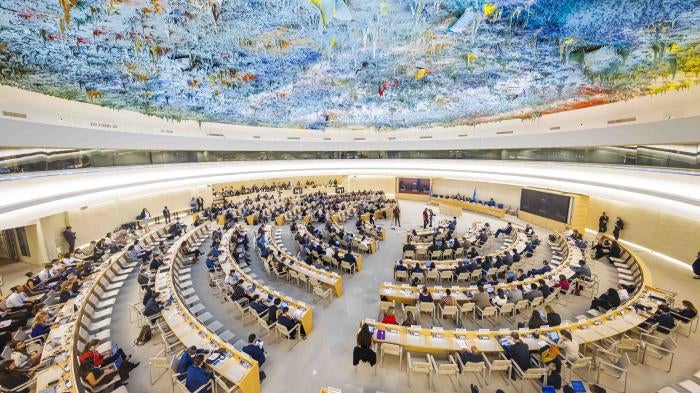
  • Since Iran’s crackdown against anti-government protests following the 2009 presidential election, the human rights crisis in the country has only deepened. Human Rights Watch is particularly concerned about the broad-based targeting of civil society activists, including lawyers, students, women’s rights activists, and journalists, and a sharp increase in the use of the death penalty. Yet the government’s record of cooperation with international institutions, particularly with UN mechanisms, remains extremely poor. Most strikingly, Iran continues to refuse access to UN special procedures despite their longstanding and repeated requests for invitations to visit. No special rapporteurs have visited the country since 2005. The government has also demonstrated its lack of commitment to cooperation through its continued failure to implement UN expert bodies’ recommendations. In July 2011 the Iranian government announced its unwillingness to cooperate with or allow access to the newly-appointed Special Rapporteur on Iran. The position was created by the UN Human Rights Council in March 2011 in response to the worsening rights situation in Iran.

Reports

Iran

  • Feb 7, 2012
    Iranian security forces arrested more than 65 Arab residents during security sweeps in Iran’s Arab-majority Khuzestan province since late 2011 according to local activists. The Iranian government should immediately charge or release those arrested. Authorities should also investigate reports by local activists that two detainees have died in Intelligence Ministry detention facilities in the past week.
  • Feb 2, 2012

    The Iranian government has been intimidating and detaining relatives and friends of foreign-based Persian-language journalists to obtain information or silence them.

  • Jan 30, 2012

    Iranian authorities should immediately release dozens of labor and independent trade union activists imprisoned for speaking out peacefully in defense of workers. Convictions solely for the peaceful exercise of freedom of association and assembly should be quashed, and charges should be dropped against others facing prosecution for these reasons.

  • Jan 25, 2012

    Iranian authorities should immediately charge or release at least 10 journalists and bloggers arrested since the beginning of 2012. The arrests appear to be part of the government’s most recent campaign to disrupt the free flow of information ahead of parliamentary elections scheduled for March 2.

  • Jan 22, 2012

    Iranian authorities in 2011 carried out more than 600 executions and imprisoned more journalists and bloggers than any other country, according to the Human Rights Watch World Report 2012 Iran chapter.  

  • Dec 23, 2011
    All parties involved with the UN plan to resolve the situation of Camp Ashraf residents should work to make sure it is carried out safely and effectively, Human Rights Watch said today. Everyone involved, especially the Iraqi authorities and the Mojahedin-e Khalq organization, should guarantee the safe transfer of Camp Ashraf residents to a protected site for refugee status determinations.
  • Dec 20, 2011

    Iran and Turkey’s cross-border attacks in Iraqi Kurdistankilled more than a dozen civilians and displaced thousands between mid-July and November 2011, including in areas that did not appear to have military targets.

  • Dec 16, 2011
    We are writing to you before the December 31 announced closure of Camp Ashraf (also known as Camp New Iraq) to urge the government of Germany to take proactive steps to help prevent the stand-off between the Iraqi government and the leadership of the Mohjahedin-e Khalq (MEK) from deteriorating further at a critical moment in Iraq’s precarious transition to democratic rule.
  • Dec 16, 2011
    We are writing to you before the December 31 announced closure of Camp Ashraf (also known as Camp New Iraq) to urge the French government to take proactive steps to help prevent the stand-off between the Iraqi government and the leadership of the Mohjahedin-e Khalq (MEK) from deteriorating further at a critical moment in Iraq’s precarious transition to democratic rule. France has a unique role as host to the MEK leadership as well as good relations with the government of Iraq.
  • Dec 15, 2011
    We are writing to you before the December 31 announced closure of Camp Ashraf (also known as Camp New Iraq) to urge the government of Italy to take proactive steps to help prevent the stand-off between the Iraqi government and the leadership of the Mohjahedin-e Khalq (MEK) from deteriorating further at a critical moment in Iraq’s precarious transition to democratic rule.